pull up a chair

where wisdom gathers, poetry unfolds and divine light is sparked…

Category: angels among us

the pigeon man of lincoln square

the police called me last night. a few times.

they were calling because an old man, an old bent-over man, one with a black canvas satchel slung over his shoulders, too-big janitor’s pants held up by suspenders, was shuffling along on a sidewalk, beside a busy city street, on a cold december tuesday, yesterday, at 2:15 in the afternoon.

probably, he was headed off to the fire hydrant, the red one, just by the bank at lawrence and western, where the pigeons, for years now, have counted him one of their flock.

the old man was walking, past a bank parking lot, when another old man, one driving a chevy van, pulled out of the lot. must not have seen him. the man in the van hit the one with the satchel.

the old man died.

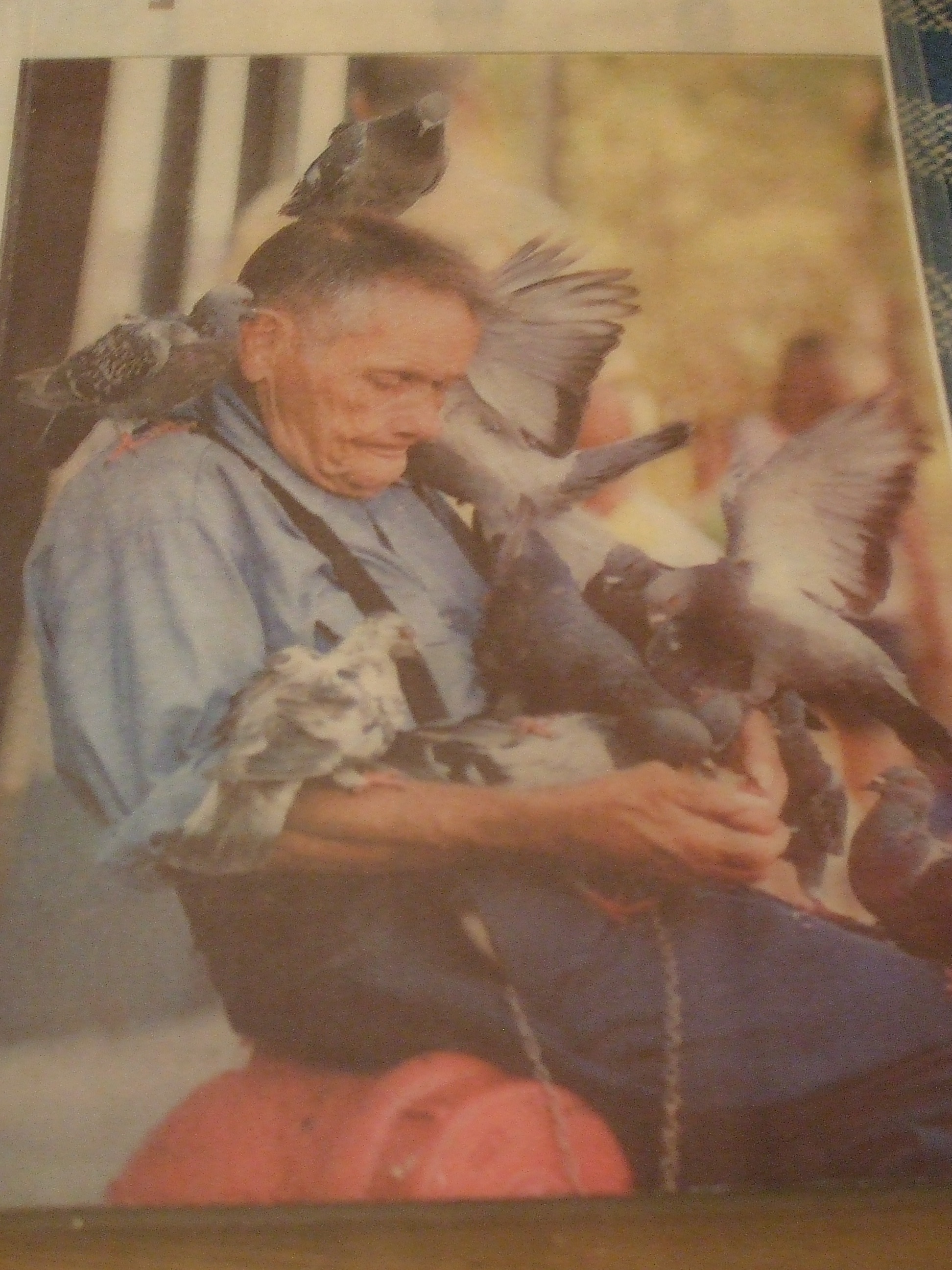
the old man was joe zeman. but most everyone called him the pigeon man of lincoln square. cops couldn’t tell who it was. except for a newspaper story, one laminated, tucked in the satchel, one with a little rectangular label up in the corner, scribbled with the words, “for who ever.”

except for that story, one that showed him, in color, feathered with pigeons, one that told his story, the cops and the doctors who pronounced him dead at the hospital had no clue who he was.

the pigeon man’s life was like that. barely a soul had a clue who he was. mostly, only the pigeons.

that’s why the cops called me. they knew i knew a bit of his story. i wrote the one they found in his satchel. two years and three months later, almost to the day, and he still carried it–maybe half a dozen laminated copies of it–wherever he went.

the cops needed someone to call. needed to know if there was a soul in the world who might care to know what happened to joe.

there was no one, save for the pigeons. and me.

here’s just a bit of the pigeon man’s story, the one he carried till he fell down and died:

“except for the lips, you would think he was made out of stone, the man who sits, hours on end, on the red fire hydrant on western avenue, just north of lawrence, pigeons by the dozens perched on him.

“pigeons on his head. pigeons on his shoulders and right down his arms. pigeons poised on each palm. pigeons clinging to his chest. pigeons on his lap. pigeons on his thighs. pigeons, of course, perched on each foot.

“the pigeons peck and coo, occasionally flutter their wings. sometimes even scatter. but not the man, the man is motionless. you might mistake him for a statue.

“joseph zeman,” 77 when he died, “can sit for hours, barely flinching a muscle,” i wrote. “except for those lips.”

i wrote how he cooed right back to the birds. how he kissed them, right on their iridescent necks, flat on the point of their sharp little beaks. how he nuzzled them, rubbed his nose in their wings, the herringbone of feathers all black and charcoal and pewter and white. how he called them by name, his favorites. how he worried when one was missing in action.

i wrote how up in the attic where he lived a few blocks from the hydrant he kept track, in a neat little ledger, of whatever dollar bills might have been slipped in his hand, dropped by the side of his hydrant.

how he used the money for his pigeon supplies, the unpopped popcorn kernels, the bags of white rice, the loaves of deerfield farms enriched white bread, the maurice lenell oatmeal cookies, the plain old birdseed that comes in 50-pound sacks, which he broke down, each night, into zip-top plastic bags.

i wrote too, because he took me up to his attic, because he was proud to show off his deeply-thought method, of the old baby food jars he filled, each morning and night, with rice or popcorn, seven jars in all, and tucked in his satchel, each time he shuffled off to the hydrant.

twice a day, at least, once in the morning, once in the late afternoon, the pigeon man returned to his roost.

but the part of the story that’s stayed with me all these years was the part where he explained why he was drawn to the pigeons.

“all my life i had so much backstabbing at home, real problems there. i got to love the animals more, so trustworthy. fifty years, all i heard was ‘shut up, shut up.’ i needed help at home ‘cause i was handicapped. they took advantage of me. epileptic fits since the day i was born.

“because i had so much trouble at home, i learned not to say nothing, keep to myself. so they came up to me [the pigeons]; i appreciated the friendship out of a bird more than a person. they’re wordless. they come up with pure appreciation.”

zeman, who for 47 years ran a newsstand downtown, said that he considered sitting on the hydrant the most important work he had ever done.

“i’m really advertising to the public how easy it is to be good without an attitude; it’s just as easy to show decency as it is to hate today.”

zeman, a man without much schooling, understood how when he took to the hydrant, raised both his arms, palms upward–the veneration pose, really–as thousands of cars and trucks and smoke-spewing city buses rumbled by, drivers craning their necks to take in the sight of the stooped little man covered in pigeons, he really did resemble a modern-day st. francis of a city.

matter of fact, up in his little attic, he had boxes and boxes of st. francis postcards, each one printed with the peacemaker’s prayer: “lord, make me an instrument of your peace. where there is hatred, let me sow love…”

matter of fact, zeman once grabbed a stack of the postcards, maybe a hundred or so, and gave them to me. i tucked them all in the drawer of my desk, here where i do all my typing. i keep them, right there, to remind me of the wisdom of the lost soul who found his peace with the pigeons.

just yesterday afternoon, before the phone rang, before any cops called to ask what i knew, i had reached in my drawer for a calculator, and my hand ran into the stack, spilled and scattered, making a mess in the old pine rectangular drawer.

i started to shove the cards back into a stack, but then, for some reason, i picked up the top one, and i read it through to the very last line, which just happens to be, “and it is in dying that we are born to eternal life.”

thinking back on the day, i know that the clock ticking beside me had to have been just after two in the afternoon.

that was the hour when the pigeon man of lincoln square breathed his last breath.

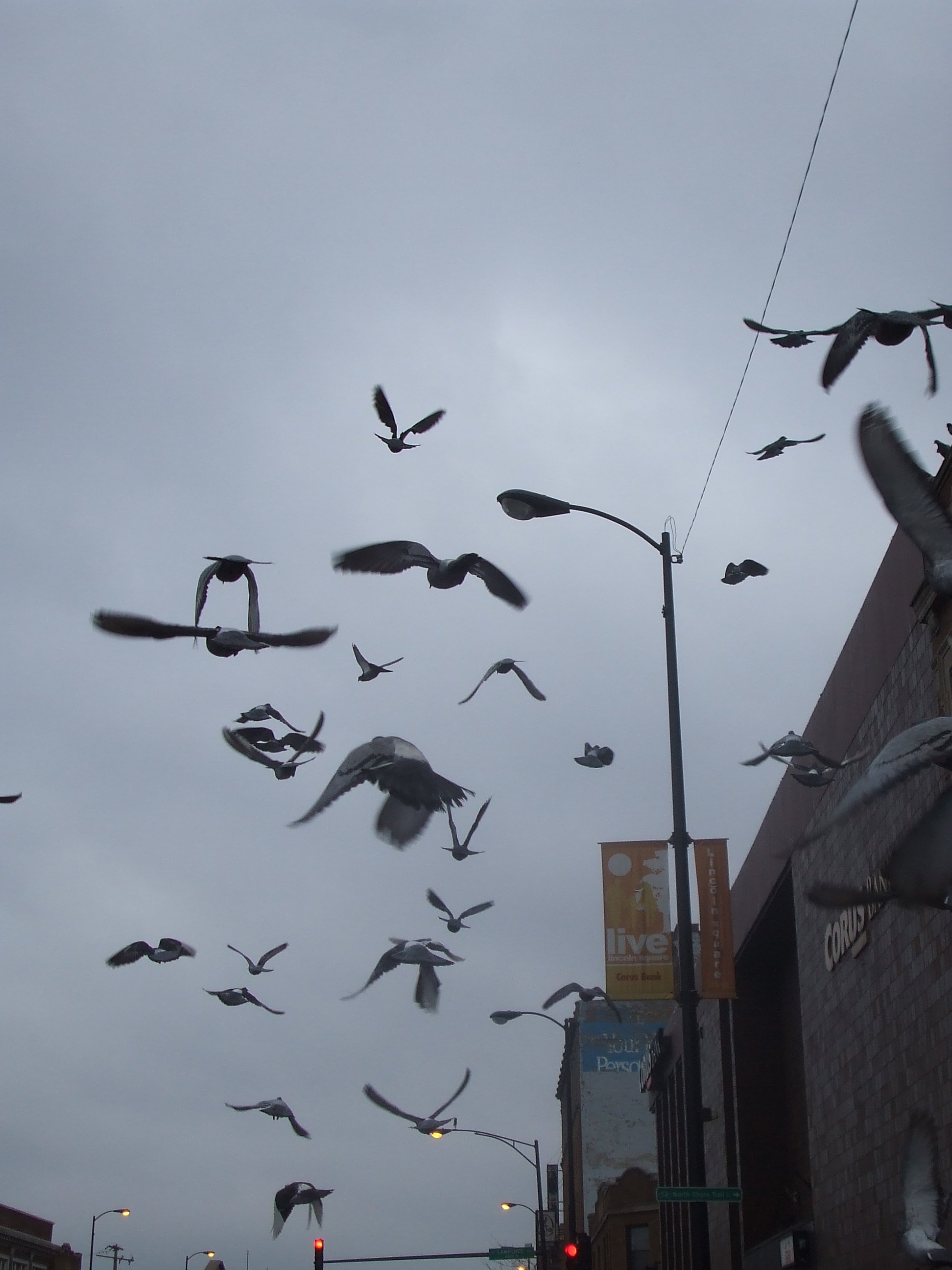
that was the hour the great gray raincloud of pigeons, the ones who for nearly 10 years had kept watch on the hydrant, had fluttered down as soon as a little stooped man slid off his satchel, settled onto his cold metal roost, raised both his arms, palms upward–the pose of st. francis–that was the hour the birds must have let out a most mournful coo.

this morning, for almost the first time in a decade, the hydrant is empty. the pigeons are perched. but the little man with the gentlest heart is not coming.

not ever again, amen.

oh, goodness. i’m back from my respite. and thank heaven there’s a place where i could tell joe zeman’s story. carry it close to your heart, maybe. scatter some seed for the birds today. think of the man who found solace only in the birds of the city, birds often shooed and thought to be pests. the picture above is my desk drawer. i too had a laminated copy of the newspaper story, one the pigeon man gave me. i keep it off in another drawer. but last night, i nestled it next to the prayers of st. francis. seemed the right thing to do, as i remembered the man who taught me so much.

i’m thinking i’ll pull up a chair, meander, at least every wednesday, smack dab in the thick of the workweek. but as happened today, what i thought i would write got nudged to the side so i could tell the pigeon man’s story. that means i’ll be back friday to tell the one i intended to tell today. we’ll find a flow here, as we settle into a rhythm that’s new. till then, just wander back when you can, you might find something waiting.

oh, and one other thing, thank you so much for the beautiful thoughts you spilled as the chair wrapped up its whole long first year. i am touched. deeply.

every year, a cast of characters


every year. count on it. there will be characters. they will be many. they will be deeply, richly, crazily creviced, shadowed, colored.

it is as much the order of the seder as the haggadah itself. the table will spill with character. ooze with it. rumble, tumble, jumble, full of characters.

wafting just above, that’s character no. 1. the tall one, that is.

that’s ted. rebbe ted. the one wrapped in japanese prayer robe, tied with obi. the one raising the first of four glasses of vintage manishewitz. the one we drive miles to be with every pesach.

ted, a rabbi and cantor without a congregation these days, is a therapist; spends his working hours trying to screw on people’s heads, or at least screw them on a little less wobbly than when they first wandered in.

but mostly, always, ted is a character. ted’s eyes, i think, must gleam even when he’s sleeping.

at ted’s seder, things are, um, unorthodox. ted reaches in a bag and pulls out yarmulkes from around the world. sometimes he wears his tibetan temple headdress. he always wears his japanese robe.

at ted’s, you do some chanting. you close your eyes and chant the vowels. you do not close your lips when chanting vowels, he tells you, and thus you assume a posture of openness that ted thinks the world truly deeply needs. you chant deeply, ahhhhhhhhh.

at ted’s, you eat sumptuous french hors d‘oeuvres. (and then you find out, oops, they are not kosher for passover; maybe that’s why they tasted so good.)

i tell you the story of ted because in bringing my children to ted each year i bring them to one of the most essential gifts a parent can give a child: the gift of the one who’d never paint by numbers, the iconoclast, the eccentric, the character. the deep and rich and soul-expanding knowledge that life is splashed with vibrant colors.

one of those colors is the color ted.

it brings unending joy to me to bring my children to tables where i know they will hear voices they do not hear at home. home is where the grounding happens. home is where you learn that the parachute has a safety cord, and you can pull it any time.

other people’s launch pads are where you learn to lift your foot off the ledge, set it in mid-air, and feel the fall, but then the updraft, carrying you, lifting you to places you’d never see from the safety of that concrete ledge.

last night we soared with ted. heard his salty brand of politics. took in his dash of new-age mysticism. felt the gestalt of letting go of that by which we’d been enslaved. watched him raise a yale sweatshirt, oy, to teach a lesson on hebrew light and perfection. (right there, spelled out on yale’s emblem, in hebrew letters, who knew? found out that centuries ago, at the founding of yale, patrician of patrician schools, hebrew was required study. ted, by the way, went to yale.)

tonight we congregate again. at another table of eccentrics. they will be the ones with whom we’ve worked for decades. the ones with whom i’ve “sedered” for 25 years, before husband, before children, and every variation since. a cast of newspaper kooks. my boys, all eyes and ears, will learn much that i won’t teach them.

besides the wine glasses filled with jelly beans (the kinder version of fruit of the vine), the flogging each other with scallions, yes, scallions, the pulling out of little plastic plagues, there is the annual putting of passover lyrics to broadway tunes.

we drive home each year, from nights one and two, with bellies aching. not from all the passover matzo kugel. no, no. from laughing ’til our sides feel split in two.

we are blessed. so very blessed.

all my life, far back as i can remember, i have loved the odd ball. the duck who waddled to his or her own drum beat. at my mid-century mark, i survey the landscape of my life and see i’ve assembled quite some cast of characters.

my almost-man-child told me recently that one of the most lasting lessons he learned from his uncle david was when david spoke of a brilliant friend of his, a friend with phD in sanskrit, a friend who studies global drumming and, for a long while, drove a cab in new york city. david, it seems, told my almost-man-child: “he really is a kook.” and my almost-man-child told me that the way he said it, he knew that uncle david meant that to be a kook is a very noble thing. “that’s how i learned i should never march to other people’s drummers,” said my boy who decidedly does not.

my prayer this pesach, my prayer that already has been heard on high, is that all the children, not just my boys, hear a world of many drummers. and come, as often as they can, to a table that spills with kooks and characters and bold eccentrics, a table, every first-night seder, led by rabbi ted.

who, by the way, i love with all my heart. even if he makes me close my eyes and chant the vowels.

do you collect characters? do you see the beauty in those who color outside the lines? do you, if you have children, or love children, or are a child at heart, seek out tables where you know they–and you–will hear voices unlike the ones they–and you–hear at home?

mama altar

it started as i drove home from the grocery, my eyes stinging with tears.

i’d gone in to grab some orange juice, a perennial thirst in this house. ran into my friend adreine, who runs the front end, who over the years, as she’s rung up my eggs, shoved my gallons of milk down the beltway, has filled me in on her longing, her longing to please grow a baby. all around her it seems, everyone else is getting good news, getting pregnant. not adreine. she, nearly 40, has had month after month of the no news that is very sad news in the baby department. as we talked, i wiped a tear from right by her eye, her beautiful, beautiful eye.

then i drove home, crying too.

i know what it is to bang on the locked gates of heaven and feel like nobody’s home, nobody’s listening. i know what it is to want, more than anything, the round lump of baby in your so-aching arms.

just a few days before the grocery i’d walked into a quite crowded room but could not miss the lightbeams shining from a friend. a friend who this time, for the first time, wore a billowy top that shouted, without hesitation, “i’m pregnant. i’m waiting.”

the beam on her face reminded me of ones i’d once worn. i couldn’t help–again–my own tear or two, moved by the joy of remembering. but as we talked i found out she too knew what it was to hold her deep breath. she’d lost one little girl, and she was scared, scared to trembling, that she could lose this one too. not that there was any reason she would. just because she’s a mama who’s been there. and once you’re there, it’s terribly hard to not think you’ll land there again.

i’ve been in that place myself. know what it is to wear a miracle ’round your middle. know what it is to hold your breath for nine very long months, so afraid that the miracle could so slip away. i too lost a little girl. once stared at the fuzzy gray lines of a baby stone still in my womb. looked into her face as she slipped through my fingers. left her behind in a little wood box, dug into the earth, on my papa’s own grave, in the drizzly cold of a cemetery, 12 years ago.

i know the dark and the light of fertility. i know its abyss and its mountaintop. i know the breathlessness of the ascent, and the gasping for air when you’re pushed off the trail.

i am forever a woman whose heart was seared by the loss and the triumph of childbirth.

i am, i’m afraid, a card-carrying member of the sisterhood for life.

and you do not abandon your sisters.

you build them an altar. you say a prayer, yes. but, even more, you build a prayer tableau and you take it to the next power.

you gather the makings of your prayerful intentions, the physical manifestation of what it is you are asking. it’s something that women, indigenous wise women, have been doing for ages. my friend mary ellen has taught me. my mother, who builds may altars, has too.

it’s there when you’re not. it’s there when you wander past, reminding. nudging: whisper a prayer. don’t forget. don’t leave those women alone. hold them close in your prayer.

and so, spurred by those faces, one in deep longing, the other in deep hope, i came home and started to gather.

i gathered talismans of hope and believing. of my own dreams that had finally come true. i pulled from my top drawer the little pregnancy test, the one that i’ve kept since the cold afternoon when the plus sign turned pink and my dream that would never come true, started to come. i reached in the drawer by my bed, lifted the armbands of delivery, one for mama, one for baby. i plucked the most blessed mother of all. and a gold-winged angel to boot. i snatched a few tulips from the kitchen, decided blood red was a color quite apt. i even remembered the tiniest prayer book, one that once was my mother’s. and then i laid them all on a rectangle of lace made by the grandma i never knew, the one who, at 40, gave birth to the man i called papa.

i made an altar for the mamas to be. the two that i know and the hundreds and thousands i don’t.

we are a sorority who share a particular pain, often unspoken. sometimes you haven’t a clue who your sisters are.

but once you’ve been where they are, you can never again look into the eyes of a woman afraid, a woman desperately longing for life, and not join her brigade.

you pray, and you pray mightily. you get down on your knees. you beg at the locked gate of heaven. you make deals, if you have to. and you pray to God that you do not hear only the echo of your deep incantation lost in the canyon of No.

you know what it is to hear the sound of your heart cracking. you do not leave a mama abandoned. you do not leave her to tremble, to quiver alone.

you muster the force deep inside you. you envision a babe, safe and asleep, in her arms. and you pray to God that someone is listening, someone comes through for those mamas.

if there is a sorority of promise, you are signed on. for ever, for life. and so i bow down at the altar.

please, whisper a prayer for the mamas. for adreine, for trish, and for all of the ones whose names we don’t even know.

grammy tuesday

as long as anyone around here can remember, certainly as long as two of ‘em truly can remember, tuesday is synonymous with only one thing: grammy.

thirteen years. six hundred seventy six tuesdays. give or take only about one or two a year. at the very least, it’s 650 tuesdays.

that’s nearly two solid years of her life (ah, what a math wizard, i am…), utterly completely devoted to the love and tending of her only two grandsons.

from the get-go, grammy tuesdays have had rules different from the rest of the week. she is two parts indulgence, one part old-fashioned mama. there will be elbows off the table, chew with your mouth closed. keep your bottom on the chair. comb your hair. tuck in your shirttails. patch the hole in the knee of your jeans.

she keeps us, and our house, in line. she will fix the wobbly neck of the lamp. glue the leg of the chair. rig up a rather impressive concoction to keep the cold air from blowing in under the door. and once she threatened to rebuild the inside of the toilet tank, the part where the water whooshes down into the bowl, does its thing. i told her to stop.

she reminds us to turn out the lights behind us. to not let the water run. to recycle every scrap in the house. she launches into her shpiel about keeping the world fit for her grandsons’ grandsons.

she reminds me i forgot to water the herb garden. forgot to deadhead the daffodils. forgot to haul in the porch furniture.

she thinks it a waste that we still have the little white lights strung on the crabapple. can’t believe i let the little one stay up ’til past nine, on a school night. asks for the umpteenth time if i’ve gone through the toys and the clothes to give to the place where the people have little to none.

oh my.

she is, in many ways, my walking, talking conscience. sometimes i’m sure it makes me crazy, leaping over this should, dodging that.

but you know something: i love her like crazy. she’s my mama. and i know i’m lucky to have one. right here in my house, every tuesday.

my papa died a long time ago, 26 years ago saturday. my mama was my age now when he died. she was 50. ever since, she once told me, she’s turned over her life to making life better for all those around her. a vocation of mercy.

wednesdays are soup kitchen. thursdays, for a long time, were a very poor school in what was once called the slums of the city. the rest of the week she is running a roast chicken to someone, cleaning the trail in the woods for the schoolchildren.

tuesdays, though, she saves for her boys. tuesdays are a day for chef boyardee, that gummy blah pasta in red runny sauce, a something their mama would scorn. tuesdays are a day for cinnamon toast and alphabet letters, all mixed, smack in the mid of the morning. for sitting on laps and reading of eagles. for building train tracks that curve ‘round the room. for going to the zoo. for getting the animal fries.

tuesdays are days for listening to stories while mommy types in the other room. for keeping things calm while mommy pulls out her hair. for making chicken rice grammy, a thing that i loved when i was a girl and now i eat it again, many a tuesday.

she’ll be here any minute, because it’s half an hour ‘til nine. and she is, like clockwork, always too early. maybe she can’t wait to come. maybe she knows that we need her.

oranges-and-chocolate brigade

i got to thinking about frozen people. got to thinking about folks with no choice about being in the cold.

what got me thinking were the folks i was passing as i made my way through the bone-chilling day. the crews cutting down trees, their limbs barely moving as they hoisted their saws in their orange puffy suits. a guy, red-cheeked, frost-bearded, standing in the middle of the road with a pole, measuring something that couldn’t wait ’til a day with bearable temperatures.

i thought of the mail carriers, the garbage haulers, the firehose aimers. i thought of the crossing guards, the meter readers, the ruptured water main fixers. i thought of my friend who bundles up like an inuit, she says, and walks 20 minutes to work, her cheeks so numb she probably can’t smile when she gets there, not for a good half an hour.

then i really got to thinking about frozen people. i started thinking about dirt man and tax man and refrigerator man. i thought about shorty and squeaky and a guy named everett, who’d built himself a multiplex of boxes up on a platform so the rats couldn’t get in, down in the bowels of the city, down under lower wacker drive.

i met the whole civilization of under-street inhabitants a year or so ago, when i tagged along with two saints, named frank and kay fennell.

frank and kay do an amazing, uncomplicated thing: they flip open the trunk of their car, they fill it with boxes of home-cooked food, and every thursday night, for 17 years now, they drive down to the depths of the city.

they cruise the streets of lower wacker, park, stick their heads around corners, poke behind pillars. they open their trunk, spoon hot food on plates, pour glasses of water. they feed the hungry. and this time of year, they feed the near frozen.

you might have heard all the news bulletins. the city is begging the homeless to come in off the streets, off the sidewalks where they stretch out on a pile of flimsy blankets, inch as close as they can to the heating vents at the bases of shimmering towers.

well, the folks who call the streets home, aren’t much interested in leaving. they’ve got reasons aplenty why they can’t stand the shelters. and if you ask questions, if you listen, you hear the pain, you hear the fear that keeps them locked where they are.

i wrote here the other day that my first instinct when arctic winds hit is to hunker down, to draw into my cave. well, sometimes, i told myself as i thought about frozen people, you need to dig beyond that. sometimes you need to pull up your second instinct.

and that’s when i hatched what you might think is a laughable idea.

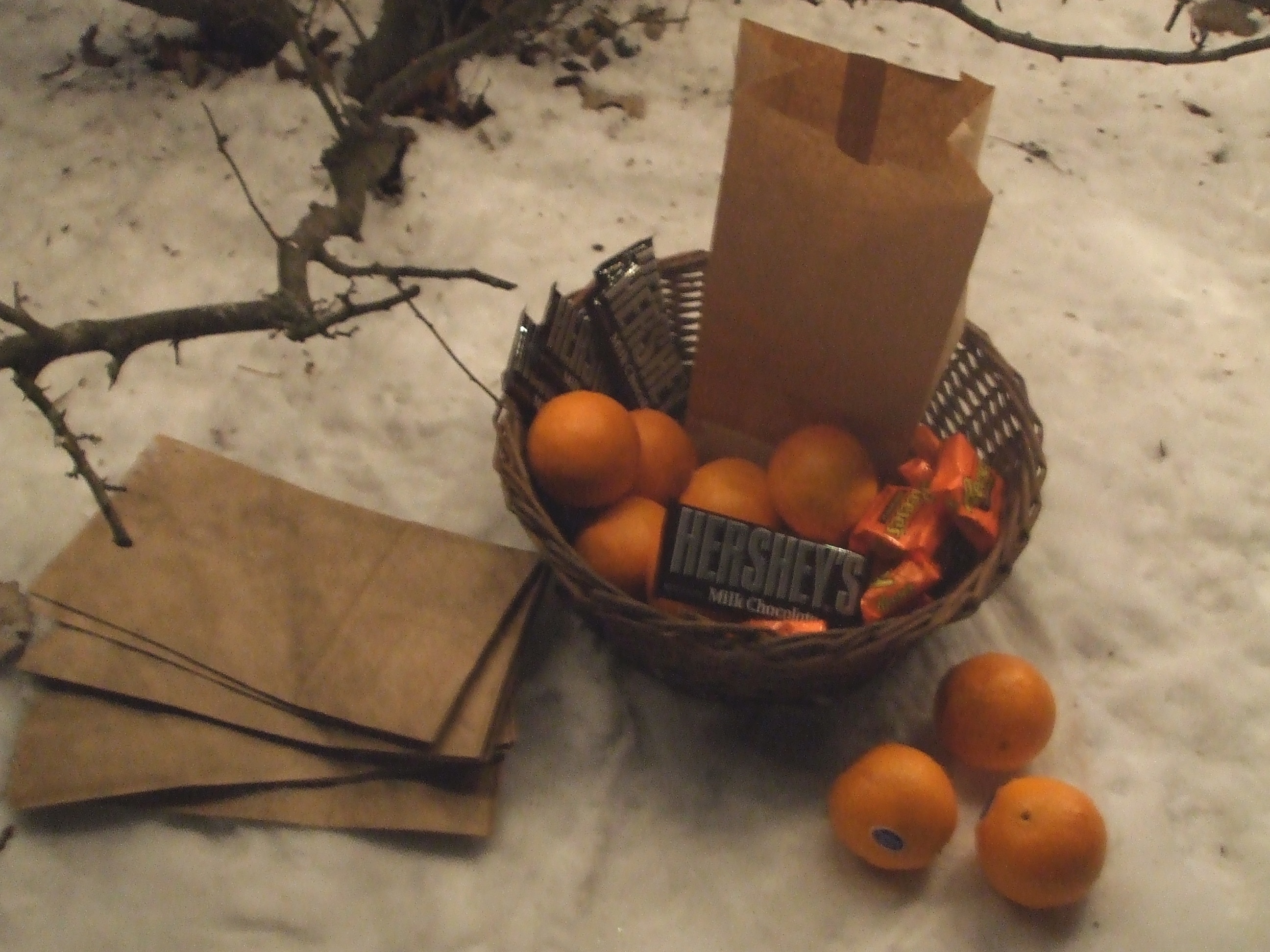
but, heck, this world needs something to laugh about almost as much as it needs something else: the courage of plain old anybodys to get up, to get out of their houses, to walk up to a stranger, a cold, hungry stranger, to hand him or her a brown paper bag, a bag filled with oranges and chocolate and the solid conviction that if we don’t notice the cold hungry stranger, if we don’t let him or her know that he or she isn’t forgotten, we might as well pack it up, call it a day, shut out the lights, sign off the planet.

i call it the oranges-and-chocolate brigade.

my guardian angel in these matters, kay fennell, once told me: “we decided it was our job to sustain [these people] for whatever their next step would be. and that might be just to stay alive for the next 24 hours.”

so i went to the store, got oranges and hershey bars, reese’s cups, too. grabbed a stash of brown bags and started to fill. this morning i’m headed down to the bowels of the city, where dirt man and tax man were last seen on the grubby old blankets inside torn cardboard boxes, desperately trying to keep their flesh and their blood at least half alive.

before i even get there, i know, i’ll pass the men who hawk papers in the middle of oncoming lanes. or one of the folks who hover at intersections, dodging green lights, with the signs in their raw, frozen fingers. “homeless, please help.”

it’s not much, oranges and chocolate in a brown paper bag. but it’s fuel in the cold. and it might be something a little more than that.

it might maybe say, in case anyone’s listening, that we will not let the cold and the hungry lay down one more night thinking the world has forgotten, the world has gone cold. that’s a lot to ask of plain oranges and chocolate. but if we don’t ask, who will not wake, frozen, all through?

here’s the plot, simply: take a few lunch bags. toss in oranges and chocolate, anything else that you fancy. haul ‘em into your car. you don’t need to drive to the depths of the city to find cold folk. how ‘bout this: when you see someone out working, someone without much of a choice, roll down your window, stop your car. reach out your arm, get out from behind the wheel, even. put your brown bag in his or her hand. smile. say what you will. then go on your way. or bring ‘em home for a hot home-cooked dinner. your choice. always your choice.

report back…

in his words…

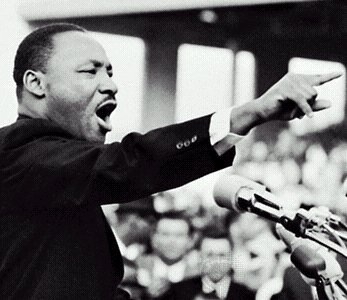
“I have a dream that one day on the red hills of Georgia the sons of former slaves and the sons of former slave owners will be able to sit down together at the table of brotherhood.

“I have a dream that one day even the state of Mississippi, a state sweltering with the heat of injustice, sweltering with the heat of oppression, will be transformed into an oasis of freedom and justice.

“I have a dream that my four little children will one day live in a nation where they will not be judged by the color of their skin but by the content of their character.

“I have a dream today.

“I have a dream that one day, down in Alabama, with its vicious racists, with its governor having his lips dripping with the words of interposition and nullification; one day right there in Alabama, little black boys and black girls will be able to join hands with little white boys and white girls as sisters and brothers.

“I have a dream today.”

–martin luther king, jr., august 28, 1963

before the page turns

before the last page flips over and away, it seems fitting to say, in no particular order…

this was the year my bones got less wobbly thanks to a dancer named donna; my broken-necked boy got rescued, he did, thanks to guardian angels and samaritans, too.

a little girl with a brain tumor reminded me how simple it is, when she nestled next to her mama and proclaimed this lasting truth: “i can read, i can whistle, i have a loose tooth; my life is complete.”

another sweet girl with a brain tumor didn’t make it, but she got up out of her wheelchair and walked across the finish line, she did.

a quartet of builders pounded their hearts into my farmhouse kitchen, and everywhere i look, everything i touch, i see them, i feel them; one blessed builder didn’t live to see the end of this year and for him i will forever ache, and forever be thankful.
a wise editor named ross urged me to tell the whole truth in a tale that finally brought my skeleton out of the closet; an even wiser woman named linda gave me the courage, the backbone, to do so.

a wizened man from ecuador told my sweet will how he walked to this country, would let nothing keep him away; another from mexico told of crossing the desert for three days with nothing but orange peels and hard candy.

a plaza filled with passionate people would not let the world deny nor forget the suffering in darfur, and my boys, thank God, were there to soak in the passion, to add their voice to the outcry.

a college kid with pierced ear and huge heart fell in love with my rambunctious child, offering hope that someone out in the world might see the golden light in his aura.

a golden-haired girl, with a platinum heart, loved that same little kid, and filled his wednesdays with light, every week through the summer.

standing in the emergency room with one trembling 5-year-old, my dear friend and neighbor ran to our rescue, interrupting her birthday to let him leap to her arms and out of the terrifying horrible place.

month after month, our friends at the soup kitchen bathed us in gratitude, humbled us deeply with the simple act of telling us our supper was something.

two soccer coaches, our first taste of the game, cared not about winning; were gentle and sweet as two coaches could possibly, imaginably be.

friends jane, jan and judy, old hands each, took me by the hand, by the elbow, the shoulder, and got me through the great rite of my firstborn’s bar mitzvah.

my blessed magnificent rock of a friend, one from way back in the newsroom, flew here to stand in my kitchen, to be by my side, and teach my sweet will the fine art of ghetto fried rice.

a sweet woman named molly left a shabbat basket on my stoop, melting me thoroughly with her random act of deep kindness.

a man named dorel, who can no longer make words, delighted me endlessly with the gleam in his eye as we went over and over simple sounds, ah, buh and k, kat.

when the going got rough, i stood back and watched a man named pete be the consummate father, showering love on a kid he wouldn’t let get dumped.

on the other end of the line, when i needed him most, my old ER doc friend said the words i most needed to hear, and stayed on the line ’til all was clear.

a farmer named henry, week after week, quietly, wordlessly grew for the world the purest produce that i’ve ever tasted; his sister, the word smith, puts his stories in print, and reminds every one of us of the infinite wisdom buried deep in the earth.

in a million other ways, the friends who i love bathed me in goodness and light, made me laugh, dried my tears, held my hand, held me up. from the ones who brought donuts before dawn to our hospital bedside, to the ones who pushed me off the great blogger ledge, i ask and i beg God to bless them with grace and with all that is good.

it’s been one stunning year, and we’re here at the end. God bless you. God keep you. take a deep breath, take a dive once again…..

if perhaps you have someone who stood out in your year, for their kindness, their goodness, their most amazing grace, tack their tale here. no need to name names, we’ll all get the gist….

eggs, cheese, an ungodly hour

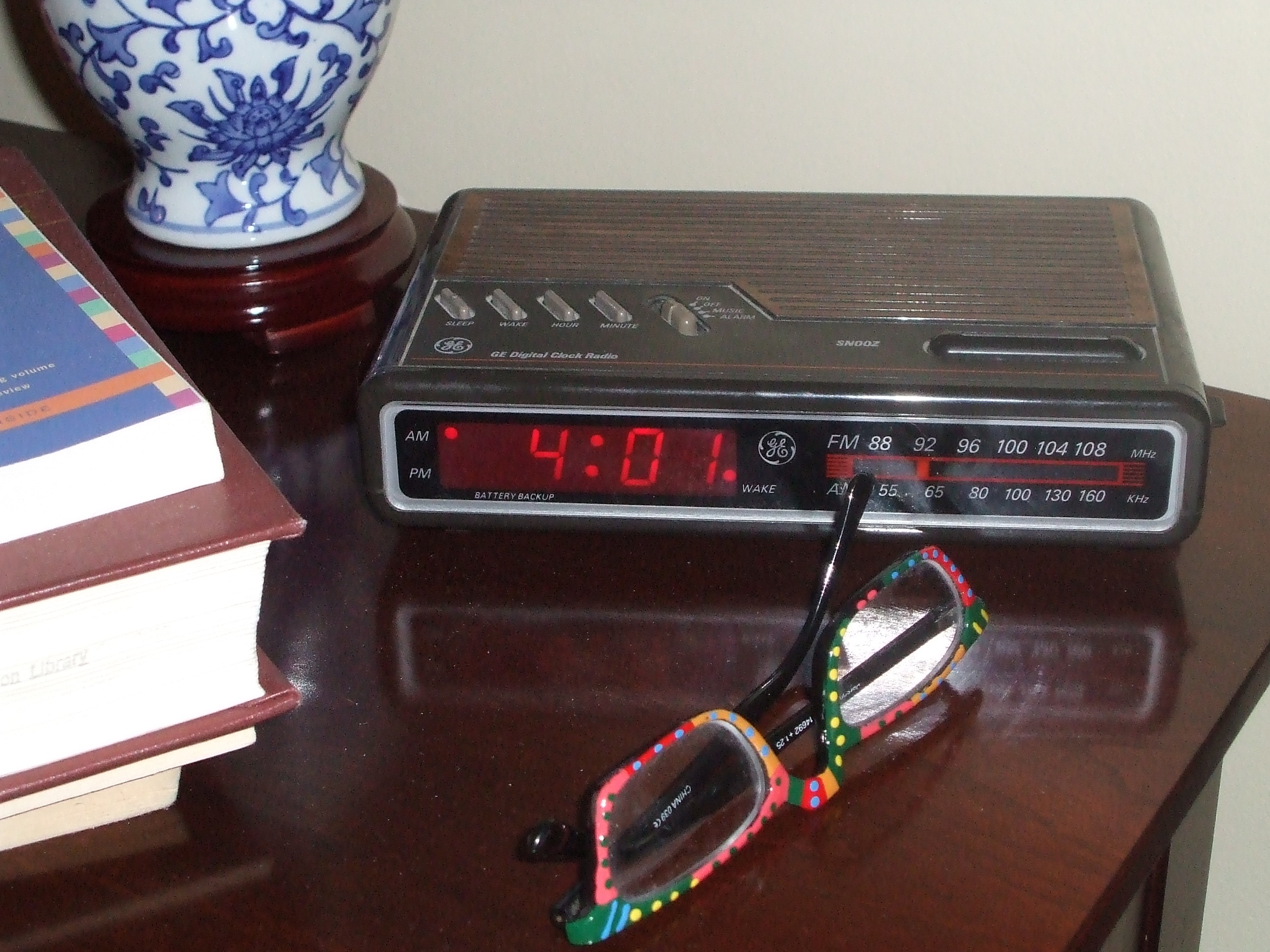
soon as the numbers beside my bed flash 4:01 sunday morn, i’ll be unearthing myself from the covers, stretching a wary toe out into the cold and the black of christmas eve before most of the world gets with the program.

it’ll be time, as it has been for the past four christmas eve mornings, to wake a sleeping boy, now an almost-man child, and head out with our shopping bags and our crates of clementines to a soup kitchen where we’ll be the ones to turn on the lights.

and no doubt i’ll be carrying with me the story of nina.

for two christmases, nina was my compatriot in this pre-dawn drill of cooking the yummiest, oozingest christmas eve breakfast that ever there was.

nina, she took the hard part. a one-time caterer, now a mother of two–two girls under three, mind you–she went to town on her end of the deal. and i’m tellin’ you, the woman could cook.

you see, nina had a heart the size of montana. once, on one hour’s notice, when no one showed to cook sunday-night supper, she turned her little family’s tuna noodle casserole into tuna noodle for 40, and dashed it straight to the soup kitchen.

but the thing about nina was that she was admittedly, emphatically, not a morning person, and certainly not with two little ones who needed to wake up to their mama. so she took what she called the day job, gave me the night job, or at least the still-dark-out start of the shift.

she made the strata, a haute strata, mind you, a huge one, a strata bulging with eggs and imported cheeses, sausage, potatoes and God only knows what. what i know is that when i plated it up to that long line of hungry souls in the chill of christmas eve morn, their eyes how they glistened, their tummies they growled.

my end of the deal has to do with the 4 and the zeroes flashing at the side of my bed, nudging me up out from the covers. has me shuffling down the hall to rustle the sleeping heap i call my firstborn son. it’s been my job to gather all that goes with the strata: the cocoa, the candy canes, the great mound of marshmallows. since it’s christmas eve after all, and the folks we’re feeding are homeless or sheltered in bunks down below from the kitchen, 12 to a room, we go for fresh-squeezed orange juice, serious stand-up coffee doused with industrial-sized shakes from the cinnamon shaker, and sweet breads of cranberry walnut or orange and pecan.

for back-to-back christmas eves it worked just like that. we were a team, in touch through the phone. i’d talk to nina the day before to go over the plan. then, once home, and starting to wilt, i always called nina to give her play-by-play praise from the men and the women who came back for seconds and thirds of her strata.

i never met nina the first year, but i fell in love with her over the phone. and i wasn’t supposed to meet her the second year.

only there in the dark, on a christmas eve that was frost-bitingly cold, as we pulled to the back stairs to unload, i was startled by carlights at 4:40 a.m.. in a dark south evanston alley, you don’t want to be running into just anyone. and since nina always made such a fuss about not being up before dawn, she was the last one i expected to find there under the hood of a great arctic parka. i’d never seen her before, but i knew in an instant who those big brown eyes belonged to. “nina?” i called out. “what in the world are you doing awake?”

“we were running behind,” she started explaining. “we stayed up late doing the tree and never got to deliver the strata, so we just decided to stay up and bring it over now,” she said, laughing. and then barely a blink later, the vision under the fur-trimmed hood was gone in the dark of the too-early morn.

as always, the strata had the hungry and even the not-so-hungry coming back for more. and more. as always, i called later that morning to pass along every last kudo.

that was the last time i talked to wonderful, generous, spontaneous nina.

two months later, late at night, my phone rang. it was my friend harriett who lines up the cooks and the servers for soup kitchen; she was sobbing. in between sobs, i made out the words: “nina died this morning. she just died.”

nina was 37, tops. her little girls, the ones who couldn’t wake up without her, were 3 and 2. her husband, michael, the one who made the pre-dawn strata delivery, he was left alone in an emergency room, bundling together her things. nina had had a headache the day before, and within hours of walking into the ER, the doctors were telling her husband they were so sorry, she’d died. it was an aneurysm that couldn’t be stopped.

i decided then and there on the phone that night that every christmas eve breakfast from then on in would be in the spirit of nina, nina who could not do enough for the world.

i called starbucks, hoping for a gift card for each soup kitchen soul. i went begging at the bread store, asking if i could pick up any unsold bread or sweet rolls to take it up a notch.

i was thumbing through strata recipes, looking for one that might be like nina’s. then my friend harriett called. the strata would be taken care of, she told me. nina’s father and michael, her husband, would make it. they’d drop it off, in true nina style, the night before, but of course.

so last christmas eve, nina’s strata was, once again, the absolute hit of the soup kitchen counter.

and i, the one spooning it out onto plates, couldn’t stop thinking of the love of two men, her father, her husband, side-by-side in nina’s kitchen, carrying on, following nina’s instructions, line by line, layering their grief with the generous heart of the woman who all of us so achingly missed.

here’s a thought: what if i get michael to share nina’s recipe, and all of us whip up a batch of sweet nina’s strata? and then, in the spirit of the woman with the unstoppable heart, we give it away to someone who needs reason to glisten this holiday season.

a candle for georgie…

phone rang a little while ago. asking for more than a prayer. there’s a little guy, his name is georgie, he’s 9. he is fighting for his life tonight. his mama, a saint among us, is an old dear friend of mine. she’s at his side at children’s memorial as i type. she and his papa, another saint, are keeping watch. georgie is an angel, surrounded by saints. he’s been struggling his whole life long. most recently, most unfairly. if you kneel down tonight, whisper his name in your prayers. if you don’t kneel, please whisper his name anyway. they could use a flicker of light in their darkness.

every time i turn a knob…

which, as you might imagine, is a hundred times a day in a working kitchen, with two boys, a fat cat, a hungry husband and me. and every single time, since i found out, i think of danny. danny screwed in every one of those ice box catches, as they are called in hardware speak. there are 17 of them in the farmhouse kitchen, and another 23 drawer pulls.

danny, who is no longer, sweated over every last one of all of them.

on a july day so hot he was licking away sweat from his upper lip before the third catch was on, danny and his power driver had at it. during a chapter in the kitchen construction that was nearly a stand-still, they called in danny. to come to our rescue. danny was the kind of guy who comes to your rescue: solid, quiet, get-the-job-done.

danny killed himself exactly three weeks ago today. leaving behind a wife he loved, and three kids, 5, 3, and newborn.
hung himself, danny did.

despondent over lord knows how many things. but one of the things was that he’d been rehabbing his own house, trying to make it stretch for his stretching family. he’d dug a new foundation, right up against the old one. and the rains came one september spell. literally washed his foundation out. the house caved in. danny, 38, wore the weight of it on his taut, slim shoulders.

and every time i turn a knob, i see danny. see a hundred frames of danny getting the job done.

a house, a house lived in by souls who love it, who honor it, who keep an ear open to its many whisperings, is, as any archeologist would tell you, an artifact layered with history and meaning, heartbreak and miracle.

the knobs for me will forever be danny, danny’s heartbreaking story.

besides the fact that we were finally getting knobs on cabinets that had hung naked for weeks, the drama of the week that danny came was that danny had a baby coming any minute. his third baby.

see, danny had grown up on our watch. back at our old house, he was the smart, young kid on the job. the carpenter with the degree in economics from lawrence university, one of those really fine midwest liberal arts schools that pull in really smart kids who might not look toward the coasts. danny could push a pencil, but he thrilled at banging a hammer.

they were a team of four, the builders, our builders, jim&friends. and we loved them. i don’t know how you have a house filled with men hammering and sawing and building your dreams and not love them. each one had a role, a schtick, a something you could count on. characters on the stage of your life for however long the job takes, you await their coming in from the wings each morning, you stand and applaud when they have just sung their hearts out–even when they sing with a hand plane or a power driver.

not long after wrapping up our job in the city, danny decided he needed to hang up his tool belt and become something of which his wife would be proud: an accountant. he took the tests, passed on his first try. danny was always a smart kid. he tried crunching numbers for awhile. but he just didn’t get the buzz that comes from building houses for a living. so he went out on his own, his little family growing right along with his business.

but we needed him this summer. the building had, for a number of reasons, gotten way behind.

the day he showed up, everyone knew we were back on track. he stayed late the night he put the knobs on. we came home to a dark house, but a house with polished-nickel knobs shining.

danny kept coming all week, getting the job done. his wife had the baby the next tuesday. he didn’t come to our house that day. but he came back soon after. he was beaming. he talked about kathy, the kids, he was beaming.

i never talked to him after his house caved in in september. i should have. i was dreaming up some kind of benefit concert, something that would get some cash in his hands. i never got past dreaming.

then jim called one dreary november morn, right before thanksgiving. jim who had worked beside danny since danny was a 15-year-old kid looking to make money during summers in high school. jim who said he cried like a baby when he got the call.

“you remember danny,” he started, oddly. as if. as if i wouldn’t remember.

“he took his life.”

it’s been three weeks. and every time i reach for the knob….i think of those kids, this christmas. i run my fingers slowly over the polished-nickel knob. bless you, danny. bless you.