pull up a chair

where wisdom gathers, poetry unfolds and divine light is sparked…

the power of five

power of five. four at zoo

this is us.

power of five. five.

this is the rest of us.

there are five of us. four boys + me. i’m number 2, and these days, the only one living near our center of gravity, our mama.

my mama ran into a little bump a week or so ago. and ever since, the five of us have been circling her like electrons to the proton that started it all. which, scientifically, she more or less is.

my mama, you know, if you’ve been pulling up a chair for a while, is one deep-of-the-earth mama. she’s often reminded me of those heavy-bottomed tipsy toys that never fall over, no matter how hard you push. (and before you go imagining my mama with a big heavy bottom, STOP!, she has nothing of the sort. she always prided herself on how she had to eat a whole pan of fudge to keep some weight on her skinny bones. what i mean is she’s taken more than her share of hits over the years, and she never ever wobbles. it’s rather uncanny.)

i’ll never forget one scene with my mama: it was at the kitchen door of the house where we did most of our growing up. the long black funeral car, the one that would carry us off — the five of us plus our mama — to the funeral home where we’d say one last rosary over my papa, before he was carried off — in a hearse — to the church and then to the cemetery, that funereal car had just pulled into our circle drive. you could hear its somber idling, telling us it was time, time for what we so deeply dreaded. but before she put her hand to the knob, my mama gathered us in a tight little circle. i was sniffling back sobs, and i know i wasn’t the only wet-eyed one in the bunch. but not my mama. she looked us solid in the eyes — mothers of five have a way of looking straight into five pairs of eyes all at once — and she said four words that i’ll never forget: “do your father proud.”

there’s another scene that i can’t help recalling: it was shortly after i’d miscarried my sweet baby girl, and the doctor kindly let me keep her beautiful little self. so i’d tucked her into the most beautiful wood box i could find, and with all the ceremony of yet another funeral, we drove — my husband, my firstborn, and me, clutching the box — into the cemetery, and up to the spot where, in the rain, we spotted my mama, with her foot to the blade of a shovel, standing atop my papa’s grave. she was digging a spot for her unborn granddaughter, right on the chest of my papa. “she’ll always be safe,” my mama whispered. and before we left, she handed me the sack of flower bulbs she’d brought along, thinking we might want to tuck in more beauty, along with our sweet little girl.

those are only two scenes. but they’re pretty much all you need to know about my mama to understand why the five of us — scattered just about as widely as you can be in this country and still be in the same country; from maine on the northeast, to long beach in southern california, from the mountains of northern arizona to the plains of toledo, ohio — tightened our orbit around her, soon as word went out that, in her words, she’d “flunked her physical,” on the eve of her 83d birthday.

somewhere deep inside, without anyone ever saying it, we all know that we are her lifeline (as she has ever been ours), and, marvelously, we all have a job. i’m the nurse, so it’s a good thing i’m closest in miles. i’m in charge of reading all the medical gobbledygook and driving to far-flung diagnostic outposts. brother number 2 is the one who will always always make her laugh, laugh so hard you just might wet your pants, but we won’t talk about that. another brother, the caboose at number 4, is the one we call the encyclopedia. he looks everything up, and knows the answer before the question is asked. and there’s the artist, brother 3, whose depth is immeasurable, and who always has had a connection with our mama that makes me think that in a past life they were strolling the side streets of paris together, ducking into ateliers of painters and thinkers, both of them in their french berets, their gauloises cigarettes dangling from chic cigarette holders. and then there’s the oldest, the one who takes his birth order to heart, and tries mightily to keep us in line. he’s the one who remembers every birthday, and slips in a $20 bill for each of his nephews, harkening a brand of uncle that is increasingly rare — and delectably sweet.

we’re it, the whole of the life squad. and, deep down, we know it. and, despite the miles and difference in time zones, and thanks to the miracles of texting and email, and the occasional phone call, we’ve all felt the centrifugal tug that’s pulled us tightly together. so tightly that before the doctor had even come into the wee little examining room yesterday, brother 4 had looked up and sent a link explaining the funny word i’d spotted on the medical report. by the time the doctor strolled in, i’d swallowed whole the national institutes of health take on this matter.

but the best part flowed in the hours after that appointment, after my mama and i walked out with sheafs of paper, and a date on the calendar. i’d be lying if i didn’t say our hearts felt a few pounds heavier in our chests. i’d be lying if i didn’t say i felt rather alone and a little bit wobbly (i’m still a student in my mama’s wobble-free school), and suddenly december was looking as gray as the snow clouds building in the late november sky.

but then, without asking, brother 4, the one with whom i’ve always shared far more than just that explosive BAM monogram, he announced he’d be here, right at our side. and not too many hours later, brother 3 said he too was mulling flight options.

and suddenly all my aloneness was wiped away, in that miracle that comes when you’re one of a gaggle. when your mama once looked you all in the eye, and admonished: do your father proud.

we will do our papa proud. we will be right there with our mama, as he so tenderly would have been. we will kiss her on the forehead as they roll her through the double doors, and we will try to keep the comedian from making her laugh so hard she tugs at her stitches. we are fully equipped, the five of us, to hold each other up, and most of all, to hold up our rock-solid sweet blessed mama, the one who’s always always there to rush to our rescue.

it’s what life brings when lived to the power of five.

so that’s the news of the week, here at the old maple table. pray for our mama, who will recover and be strong as an ox, as ever. undaunted by the week’s news, she’s joining me tonight in the kitchen of the homeless shelter where we’ll cook for folks whose lives are far more of a struggle than we’ll ever know. that’s how my mama keeps teaching lessons. she’s the tipsy toy that won’t topple, and she’s taught us all to try to live that very way.

when you travel through life’s tight spots, who clenches your hand and carries you forward? do you have brothers and sisters who lighten the load?
locked-in

patrick and mary jo

it all came rushing back to me this week. how, over the years and years, i’ve stumbled on the deepest meanings of this glory called life when i’ve had a notebook in my hands, a reporter’s notebook, and when that notebook served as front-line ticket to the most extraordinary unfoldings of human character. of life at its most unimaginable, and the human capacity to thread the needle, not merely survive but triumph. not merely endure but discover laughter. wipe away tears, hold trembling hands, feel my own soul up and catapulted. i’ve walked away a million times asking, “could i do that? could i be so brave? so profoundly capable of discovering the beautiful beneath the devastating?”

all week i’ve been immersed in reporting a story about a 20-year-old kid with locked-in syndrome. what that means, he says, is that it feels like — for the past three years, ever since an aneurysm in his brainstem ruptured during surgery — he’s “locked inside a freezer.”

what it means is that this kid, named patrick, the captain of his high school’s swimming and water polo teams, woke up in the early morning hours of 10-10-10 with a killer headache after his senior-year homecoming dance. and, somehow, he got dressed and made it to his mother’s bedside where he told her it was a 9 out of 10 on the pain scale, and they needed to get to the ER.

what it means is that that headache turned out to be a bulge in the artery that flowed blood into his brain; he’d had an earlier aneurysm — that’s what the bulge was — when he was 10. he’d had surgery back then, and except for a ban on “collision sports,” he’d gone on as ever. a red-haired eddie haskell of a kid, one who’d charm the pants off all the grownups in the room, but soon as no one was looking, launch one of the antics for which he remains legendary (the six moving violations he managed to accumulate on his first solo driving expedition; the time he locked his junior high teacher out of the classroom; the night he snuck out of the house at 3 a.m. to work out at the gym, ignoring the fact that his mother had forbidden it since he had a final exam that morning in a class he was just barely passing).

what it means is that 15 hours into the 22-hour brain surgery to repair the aneurysm, just after the surgeons had stepped away from the operating table to study an image on a screen, to try to figure out how to untangle this tangled mess, the darn thing blew, meaning it bled for 45 minutes into his brain stem — the control tower of the brain — and his lower brain.

what it means is that when patrick woke up from that life-or-death surgery, he was, as his father puts it, “in between,” a place no one had ever considered. it means he was wholly paralyzed except for the blink of his eyes, and the capacity to move his eyeballs up or down.

and within the week of his waking up, everyone realized he had full cognitive powers — even though he couldn’t utter a sound, or even swallow. he could still make you laugh, he still wielded his full armament of four-letter expletives, and eventually, he would be able to write 1,000-word college papers, some of them funny enough to take to the stand-up comedy stage (which his beloved nurse, mary jo, has done).

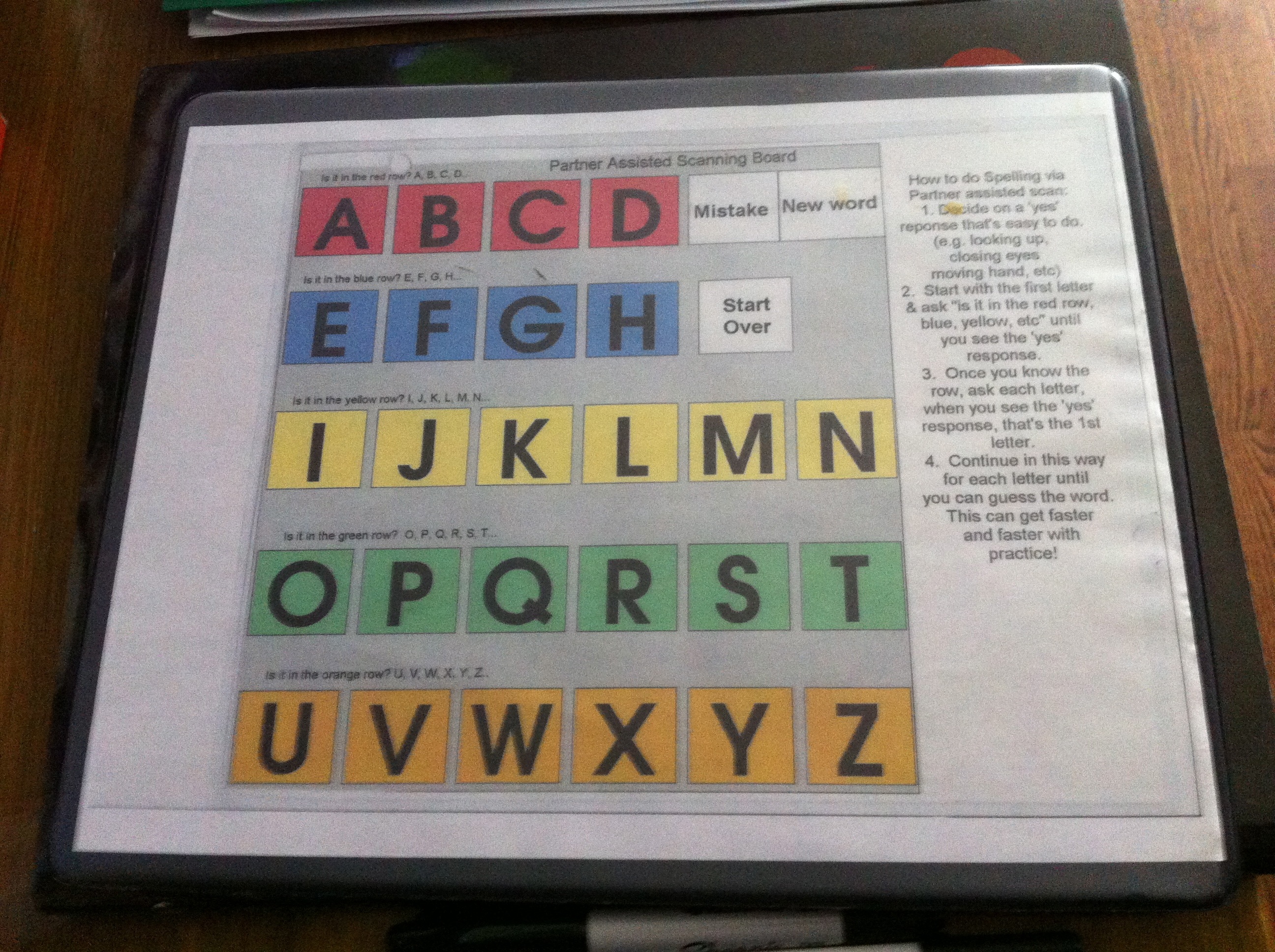
patrick is “locked-in,” a rare syndrome most poignantly and poetically described in the book, “the diving bell and the butterfly,” (also a movie of the same title) by jean-dominique bauby, who before he suffered a massive stroke in 1995 had been editor-in-chief of french elle, and who composed his memoir one blink at a time, the very same way patrick now communicates. using a color-coded “spell board,” in which the lines of the alphabet are arranged in five different-colored blocks, each beginning with a vowel, letters are recited until patrick shifts his left eye up, meaning “that’s the letter i want,” and the letter is recorded, a string of blinked spellings that make even a four-letter word an exercise in slow-mo determination.

anyway, that’s what i’ve been immersed in this week, and the thought that washes over me — as i consider that i have a boy the exact same age, who on 10-9-06 suffered a broken neck that by the grace of God did not leave him locked-in — is how blessed every tiny blessing is: the gift of getting out of bed, or brushing our teeth, and tiptoeing down the stairs into a waking-up kitchen. the gift of making a sound. the gift of taking a bite out of a sandwich.

i’m on deadline this morning writing the story of patrick and a filmmaker putting voice to his story, and someone i love just walked in to say she needed to talk, so i am suddenly utterly distracted, and my heart is pounding through my chest: i think i am about to remember all over again, what a blessing it is to be wholly alive….sometimes i have no notebook in hand when what matters most hits me.

spellboard

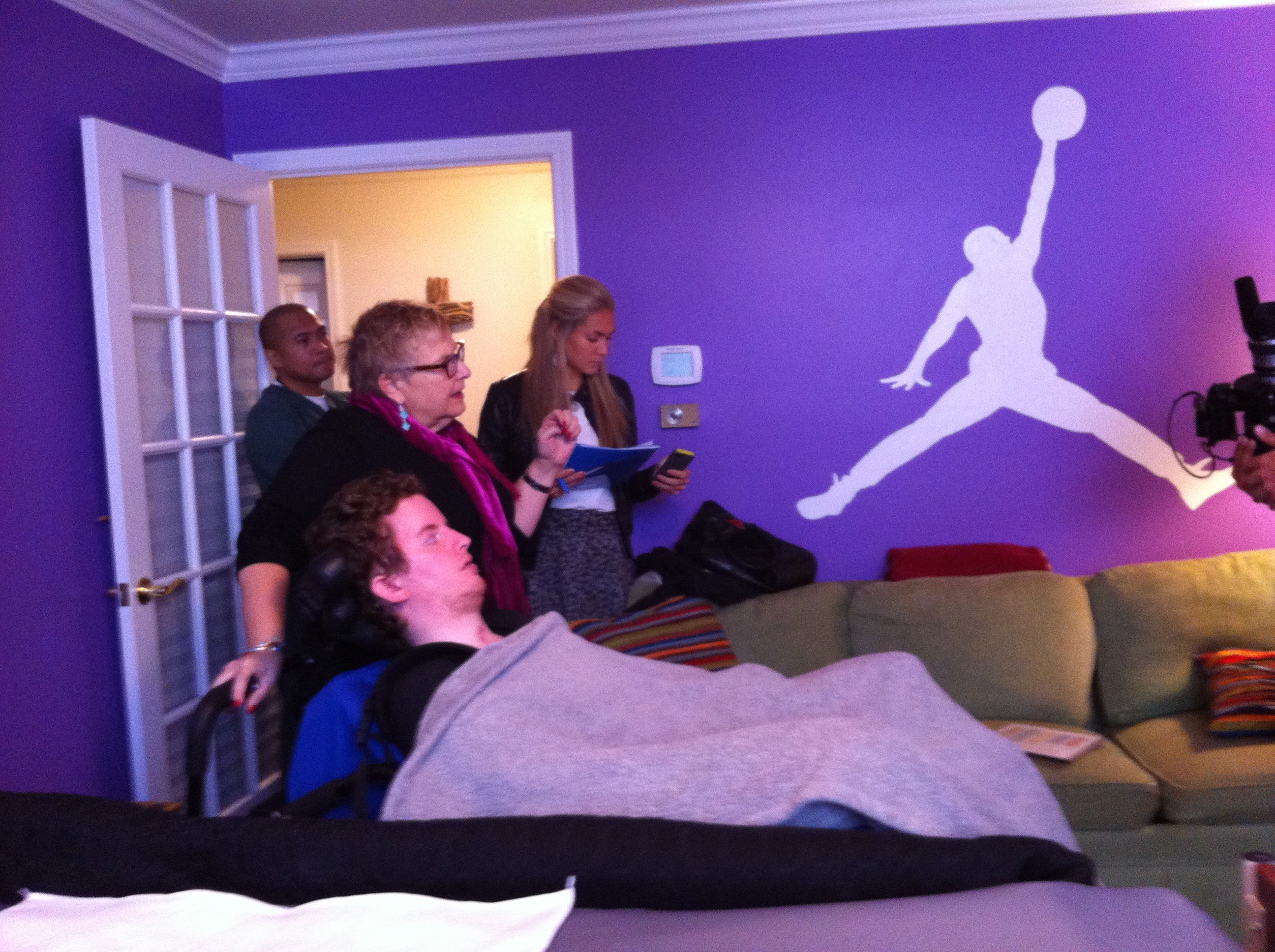
that’s patrick way up above, under the blanket, with his beloved and glorious nurse, mary jo, and the filmmaker. colleen, and yet another caregiver. and just above is the spell board, patrick’s sole link to utterance of any sort. here’s how it works: someone recites the colors, “red, blue, yellow, green, gold,” and when you get to the color of the line that holds the letter, patrick looks up; then you begin reciting the litany of alphabet letters in that particular line. again, when you hit the letter patrick wants you to add to the spelling-in-progress, he looks up. over and over it goes till the word, the sentence, the paragraph is spelled out

consider your blessings. every little one. that’s the profound simple message this week

bit by bit (or, the wisdom of being lost)

bit by bit TK flyaway

the hard perch of the airport chair was where i sat for a good half hour after he’d slipped down the gullet that led to the plane that would carry him into the pink-soaked sun-setting sky.

i wasn’t budging till that plane rolled down the tarmac, till it pulled him into the twilight, into the far off far off.

i thought much during that chunk of an hour of how the heart is a vessel that needs determined attention. a heart doesn’t stretch to its widest capacity, not without a long curriculum of tending and exercise. not without short chapters in being pulled to the pinching point, and then finding our way, home through the maze.

my not-so-little one took his first solo flight into yesterday’s sunset. flashed his own boarding pass, lugged his own suitcase, squeezed no one’s hand this time when the plane lifted off, that glorious gallump from earthbound to air.

he’d been hoping and wishing and pining for a chance to go back to a place he loves, back to the global village he called home all last year, back to friends who’d wrapped him in their arms and their hearts and carried him through a landscape that forever changed his worldview. he squeezed me so tight the night i clicked on his ticket, i thought i’d teeter down the stairs. this week, as monday turned to tuesday and wednesday, and finally to thursday, he could barely keep from counting down every last hour.

but then, at gate C 27 at the far end of the concourse at the world’s second-busiest airport, he realized just what he was about to do, what he’d never done before. and once i kissed him — loudly, too loudly — on the forehead, once i’d discovered the angel named “christina” who promised to get him where he needed to be on the other end, in boston, he looked away, into the place where you look when you’re blinking back tears, and talking down all the worries that have come tumbling out of your heart and settled solidly in the pit of your throat.

i watched that young boy of mine, that boy whose heart carries him straight into the face of his fears sometimes, i watched him hand his boarding pass — a bit crinkled by then — to the nice man at the door to the jetway. i watched him tug one last time on his suitcase on wheels. i watched his little boy legs, decked out in hiking shorts and basketball socks, and i felt my heart melt away.

i know it’s not easy for him to get on a plane, to sleep on someone’s hard floor. i know he gets horrible headaches sometimes.

but i know, more than that, that this is a kid who leads with his heart. and who, despite the wobbles and the oh-what-did-i-get-myself-into’s, never backs down from fear. he gives a tug to the wheels and doesn’t look back. he turns round the bend and into the mouth of the plane.

i sat there, nose to the vast span of glass, and saw this short trip for a good bit of what it was: an exercise in finding his way, an exercise in letting a boy discover deep down inside just how resilient he is, just how deeply he can count on the heart that pounds in the chest of his 80-pound self.

his biggest worry as we’d driven to the airport was what if, once he got off the plane, he couldn’t find his way to the baggage claim? what if his dear and wonderful friend — and the whole seventh-grade welcome committee — couldn’t convince the TSA agents in boston to let them slide through security to get to the gate where the intrepid traveler would be getting off the plane?

you’ll find your way, i told him. you’ll stay calm, most of all. you’ll use your brain. and your common sense. and you’ll look for signs. and ask for help if you need it. there are kind people everywhere.

not a bad prescription for all of us, for all of life, come to think of it.

and maybe that’s why, more than anything, i could hold my own breath and let him walk down that accordion-pleated tube all on his own: because as much as i want to hold him tight — no, more than i want to hold him tight — i want him to feel the rush of wind at his cheeks, i want him to know the sturdiness of those well-muscled calves, i want him to know the intricacies of his own inner compass, and the invincibility of that very fine, very deep heart.

isn’t that one of the many definitions of love: to put wings to dreams? to launch early soarings that build to some day’s long flight?

isn’t all of childhood a trajectory of ascend and retreat, climb and tumble, kiss the hurt and try all over again? aren’t we always aiming to loosen the training wheels, to give the children we love the power and knowledge that there is not a hill  too high to try to crest? and how will they take in the view from the mountaintop if we don’t plonk them on the starter slopes, whisper in their ear that we know they can do it, and we’ll be here to catch them if and when they need us?

just last week i read a fascinating article about the latest frontier explored by howard gardner, the harvard educator who first advanced the notion of multiple intelligence. in a new book titled “the app generation,” gardner and his co-author, katie davis, consider the ways kids growing up with infinite apps at the touch of their smartphone screen will navigate this new world. the professors probe “app-dependent” versus “app-enabled,” and try to steer us toward the latter.

but the point they made that’s had me thinking all week is when they mentioned how, in a GPS world, kids today barely stand a chance of getting lost, of finding themselves directionless (in a literal, compass-like sense), and thus how they might never get to know the glorious rush of bewilderment followed by clarity. of walking aimlessly and without mooring, before digging deep, relying on internal and external cues to find their way out of the maze — be it city streets, or out in the woods. or in the A terminal of boston’s logan international airport.

so, sitting there in the hard airport chair, training my eyes on the plane that did not budge, i relished this moment, this breathtaking adventure of letting my big-hearted boy dip deep into the vast tool box that’s already his.

he’ll soar home through the stars come sunday eve, and there at the gate will be his papa and i, open-armed and ready to wrap him in once again. the brave sojourner, back where — for now — he belongs most of all.

godspeed, sweet traveler. you teach your mama so very much. xoxoxo

the art of getting lost: do you remember a time when you hadn’t a clue where you were, and needed to find your way? is it a lesson you’ve considered passing along? and do you remember your first solo flight? and what wisdom did you bring home, tucked in your traveler’s bag? 

make-believe b & b

company coffee

if you put your ear to the floorboards around this old house, you might pick up a hum. a particular hum. a hum that’s more like a purr. (it would be found amidst the gnarling and churning that comes with waiting for news, editor news.)

that hum, i’ve come to determine, is the purr of an innkeeper in the making. a girl who makes believe she’s running the best sort of b & b. not one for money, but one for pure love. in recent weeks, we’ve had a long and sumptuous string of company. company of the very best kind: overnight, nestling deep into the morning. sometimes, day upon day.

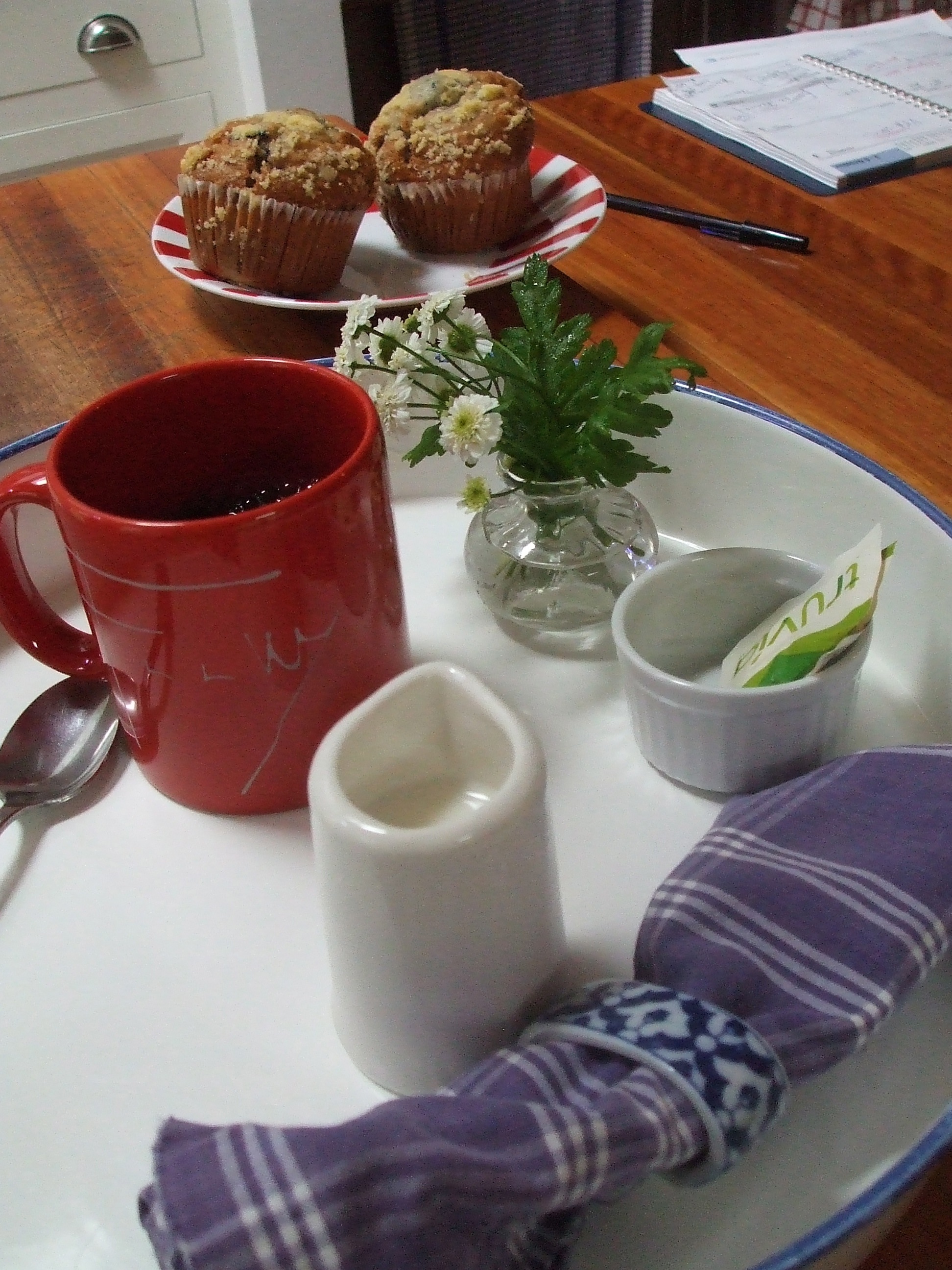
overnight company affords moments that in-and-out company does not. overnight company affords these things: curling under a blanket, on the couch, as the stars turn on, burn deep into the night; ferrying trays of coffee and cream and wee little vases of wee little blossoms up to the bedroom door; settling in for long conversation that courses through the homework hour, as you practice the fine art of juggling your math tutoring skills along with your conversational curiosities. overnight company makes a wednesday night prestidigitate into the feel of the night before christmas.

overnight company is being wrapped in angora threads, throwing the blanket of friendship across both of your backs — yours and that of your overnight friend — and each of you pulling tight on your end of the threads.

overnight company allows for slow unspooling inspection of every last inch of the heart and the soul. or at least a good hearty guffaw deep in the hours of darkness. and, sometimes, a revelation or three.

because home is the wellspring of my heart, welcoming people i love into these chambers is the highest art in the art known as hospitality, a word with 14th-century roots, one that wends its way through old french and on into latin, where it’s derived from hospes, “guest,” and has come to mean “friendliness to guests,” (or if you mis-read as i first did, friendliness to ghosts. egad).

it’s the french knots and tiny twists embroidered into the course of the stay — be it a mere 18 hours, or as long as five days or even (gasp) two weeks. it’s filling the fridge and the pantry with the very deliciousness a particular friend savors, a secret you know because you’ve spent the years of your friendship paying attention. it’s stacking fluffy towels on the broad-lapped armchair, and punctuating the stack with a dark-chocolate sweet, and a french herbal soap. it’s tucking a water bottle and a vase of bright blooms at the bedside, because you’re aiming for beauty and full-throttle comfort, and stumbling in the dark for a drink in the night is hard on the toes and no fun, besides. it’s planning a dinner that’s at once unassuming and deeply satisfying, one that’s best if slow-cooked and accomplice to the trick of filling the house with wafting clouds of garden-clipped herbs and spices and fruits of the season.

it’s waiting at the train station. or driving into the city to fetch your overnight visitor. it’s clearing the deck for as much or as little conversation as the friend has hours or inclination.

it’s the blessing of hearing the footsteps from overhead as you’re down in the pre-dawn kitchen, slicing pumpkin-y bread, and popping the garnet-jeweled seeds out of the pomegranate’s oozing belly. it’s knowing the next face you see coming round the bend is one you’ll never get enough of. and there, over early morning swirl of caffeine, you begin the day, emboldened by this rare gift of starting the hours together.

over the years i’ve learned that i’m far more inclined toward one-on-one conversation. will take a tete-a-tete over a horde any old day. give me deep. never mind a room that’s buzzing with noise.

i savor a conversation that doesn’t drown out the tick or the tock of a clock in the next room over, a conversation that allows the pauses to speak as robustly, as tellingly, as the pop and the sizzle of the words. i am drawn to burrowing, deep in the heart, as well as under the deep stack of afghans tucked by the fire. and i find it best done in ones and twos.

it’s all the romance — and, really, the architecture — of friendship. of considering each and every sensory vessel a channel into the heart, into the endosperm of why we’re here in the first place: to find our shared thoughts, to hold our visions up to the light, to march in each other’s company, to hear the sound of our footsteps in tandem. to discover we’re not all alone. not always, anyway.

much of it comes, i’m certain, from my years curled up with fairy tales and picture-book pages. i was a dreamer early on, and always will be. maybe it comes from wanting so deeply to be tucked under the covers at night. or maybe it’s simply because the sound of a china teacup tinkling against a saucer or spoon, is a song that sings to my delicate heart. maybe it comes from knowing how enchanted it felt to be ushered into a wise woman’s greenhouse, one tucked at the back of a great gothic castle long long ago, and the crisp-edged memory of being served from a pitcher of fresh-squeezed orange juice and offered a plate of pepperidge farm buttery cookies, all dappled in afternoon sunlight. all whispering into my ear how very welcomed i was — how much i mattered — in that magical envelope of time and place.

or maybe it’s simply that i feel bound, sometimes, by the walls of my heart, and i turn to whole-body expression to tell the ones that i love just how deeply i love them: i cook for them, clean for them, tuck treats onto pillows or trays and carry it all to their door. i can’t always find all the words, so i wrap them in the swirl of all that i love.

it’s a bold hope that they won’t leave this old house without this knowing tucked in their heart: they are loved without bounds, forever and ever. amen.

how did you learn the art of hospitality? who were your shining lights and teachers? and what are the little remembrances — the french knots and tiniest stitches of hospitality — that melted your heart and made you know you were so very welcome in the life of someone you love? 

gobsmacked by everyday prophets

Dew Drops

proph-et (n.) 1. (in some religions) a person believed to have been sent by God to teach people about his intentions. 2. a person who predicts the future. 3. a person who promotes or supports a new belief or theory.

and so it is that as we motor along the patched asphalt roads of our everyday, suddenly we screech to a stop when we realize, right before our eyes, a wise soul, a prophet, a shaker-upper has flung his or her wisdom splat in the middle of the lane. stuck there, not able to never mind, not able to turn the wheel and steer around it, we succumb to the roadblock. loosen our grip on the wheel, stare wide-eyed through the windshield, soak up every last tidbit of what’s there in a pile clogging the throughway.

sometimes that’s what it takes to get us to pause, to pay attention.

and so it was, not so many days ago, when sitting in the dim-lit auditorium where our synagogue holds the talk part of sunday school. the rabbi was up at the front, at the mike, sipping his starbucks grande whatever. and, once again, the conversation seemed to be steering into one of those ones i’ve heard far too often. the topic, more or less: how in the world do you talk to your kids about God, when you’ve no clue who or what that might be?

i’ve learned to sit on my hands. to mostly not raise one or the other. over the years, i’ve made it clear on several occasions that i DO have a clue who that is. that i find the Holiness all around and within. that it’s there at the dawn when i tiptoe outside and find the heavens alight with pinpoints of stars. that it’s there when the voice on the other end of the line breathes hope into my emptiness. that it’s there when the words that spill from the mouth of the child i’m tucking in bed hit me with a compassion i’d not expect from a grownup, let alone a 12-year-old who can’t for the life of him untangle the distributive property upon which his pre-algebra homework is hinged.

i’d more or less surrendered to the conversation, felt myself sinking lower and lower — in spirit and chair. but then, the long lanky fellow a few seats to the east in my row, he raised his hand. now, i know this fellow to be wise, and i know he’s lived through some tragedy. his wife died when his children were little, one still in diapers, one just past toddling. he speaks with a gravely voice, the result of a cancer.

here’s what he said: “when my son asked why people die, i said: because it means we have a limited number of days, so how we live matters.”

it means we have a limited number of days, so how we live matters… 

i sat there, low in my spring-loaded chair, and suddenly bolted upright. humbled. stunned. turning the words over and over in my head, as if marbles i held to the light. examining, absorbing.

how we live matters….

these words from a father to son, a son who’d just lost his mother.

i did what i do when i know i’ve heard wisdom: i reached for my backpack, i pulled out a pen and my red little moleskin. i loosened the elastic snap that holds open the next empty page. i scribbled. i suddenly was wide awake and taking in every word of this conversation, no longer the same old, same old.

all week i’ve drifted back to that moment. when suddenly, out of the almost dark, a gravely voice spoke words that stirred me, top to bottom, inside to out.

i was knocked over by what he said — especially since i’ve too heavy a dose of black irish soul, the sort that too often fears the end is just around the next bend, and this notion of using that as a wedge to take it up a notch, to live each blessed day as if it could be the last or the second to last, is rather a zap to the noggin, to the soul.

but even more i was knocked over by the blessed truth that we never know where the wisdom will come, we never guess the prophets around us. and that’s why it matters that we stand at attention. that we live on the lookout — for wisdom, for truth, for gentlest kindness and full-bodied compassion.

if instead of sinking low in our chairs, if instead of surrendering to the ho-hum humdrum we think is unfurling, we stay awake to the possibility that someone far wiser than we’ll ever be is about to brush up against us, pass along a kernel of all that’s holy and wise and forever.

and that’s why this mystery called life is so utterly and wholly capable of taking our breath away — without drumroll or siren — and filling it in with high-octane Holy.

so, who’s your prophet of late? and what wisdom was plopped in your lap?

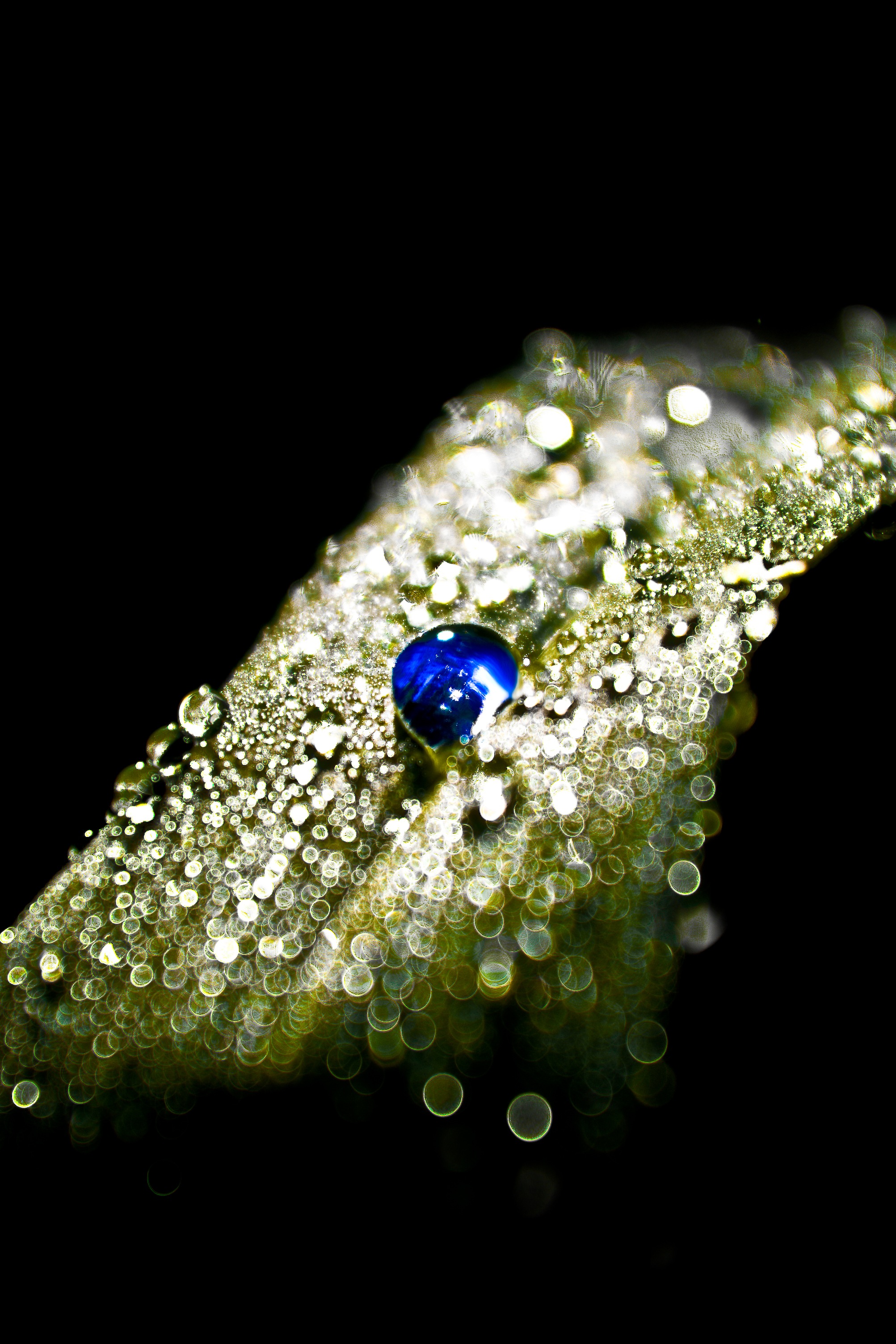
photo credit above: my sweet will kamin. a morning’s dew captured in magnificent light. not unlike the gift of the prophet….

ministrations of waiting

bulbs

they are the necessary lulls. the pauses between breath. the sometimes awful, often angst-filled hours of not knowing. of waiting.

of not yet filling in the blanks with answers just around the bend.

i am waiting now. waiting now that one editor has signed off, has passed along a final manuscript to another, to the one who decides. who deems yea, or hmm, maybe you should take another crack at this….

and if you are composed of the filaments and synapses that are mine, this is where all sorts of goblins filter in. you begin to imagine conversations. you picture emails. most of them begin, “i’m so sorry….”

you imagine the worst. you imagine, because at some deep sad level it must reflect the deepest reflection of your vision of your soul, that you’ve not measured up. will never measure up.

i’d thought it might be wise to not put these words to paper (so-called paper, anyway). but then i thought, oh geez, too many of us share this plight. we doubt ourselves before we’re given one chance to rise up, to shine.

so here i wait. and while i wait, i realize that the wisest thing for me to do — besides turn the dial on the little voices that fill my head, that convince me of my unworthiness — is to get about the business of tending to the oft-pushed-aside quotidian. the season’s turning calls to me. the night’s chilled air begs attention. there are bulbs to tuck into the gashes of the earth. there are long-frond ferns who beg for warmth inside, who promise green through winter. or at least through thanksgiving.

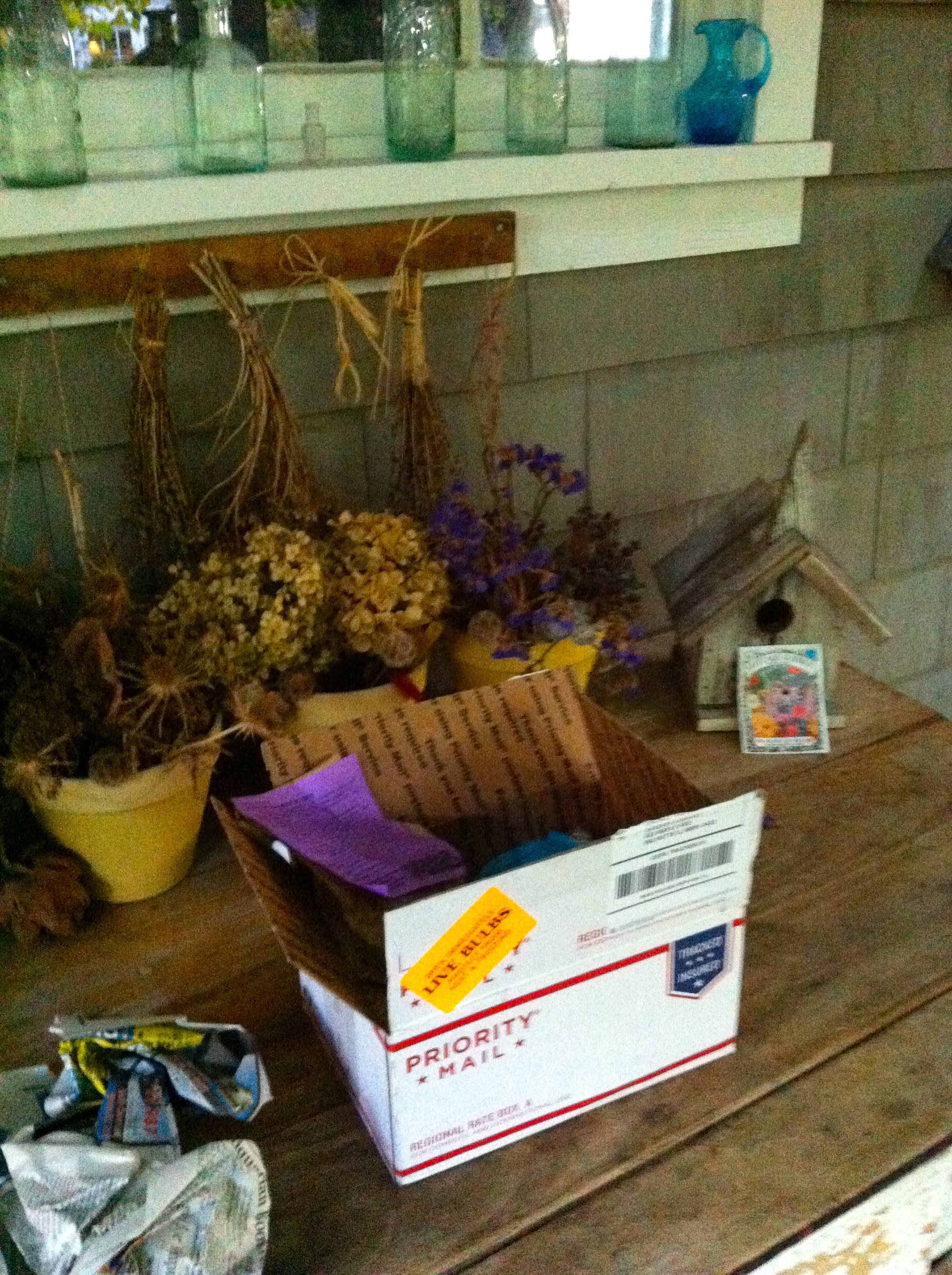
i missed last year’s call to tuck in for winter slumber. i was far away, and could not tend to the bulbs, the fronds, the birds that have come to depend on me. so i’ve been out already this morning, out since well before the inky dawn was rubbed away. i was out with my buckets of seeds, i was out unearthing bulbs from the layers of crinkled newspaper that blanket them, that i pray kept them safe enough through the night that grew colder while i was not paying attention.

the earth does that: turns on and on without heed to whether we are paying attention. if we notice, if we tuck the bulbs before they freeze, well then glory is the prize come springtime. if not, if we blew it, weren’t worthy of the glory, well then the earth will not crack, no green shoot will rise, no heirloom hyacinth or bread-and-butter daffodil will trumpet.

i will soothe myself with the apothecary of the home and garden that i’ve claimed as my surest cure for almost anything that ails me. i will slow cook. and dig in the garden. i will sit in dappled light, with sweaters round my shoulders. i will drink in arcing sunlight, and winged shadow. i will tend the tender shoots and leaves that depend on me. i will practice believing that the pause is not about my falling short, but rather simply for another reason.

i will try. this practice doesn’t come without its stumbles. this practice is emboldened with a sturdy trowel, and a box of bulbs begging to be tucked where they will thrive. after a long winter’s pause.

do you too suffer the plight of the deep gnawing misgiving? the cursed lack of faith? the scourge of never thinking you are good enough? 

holy lights

holy lights

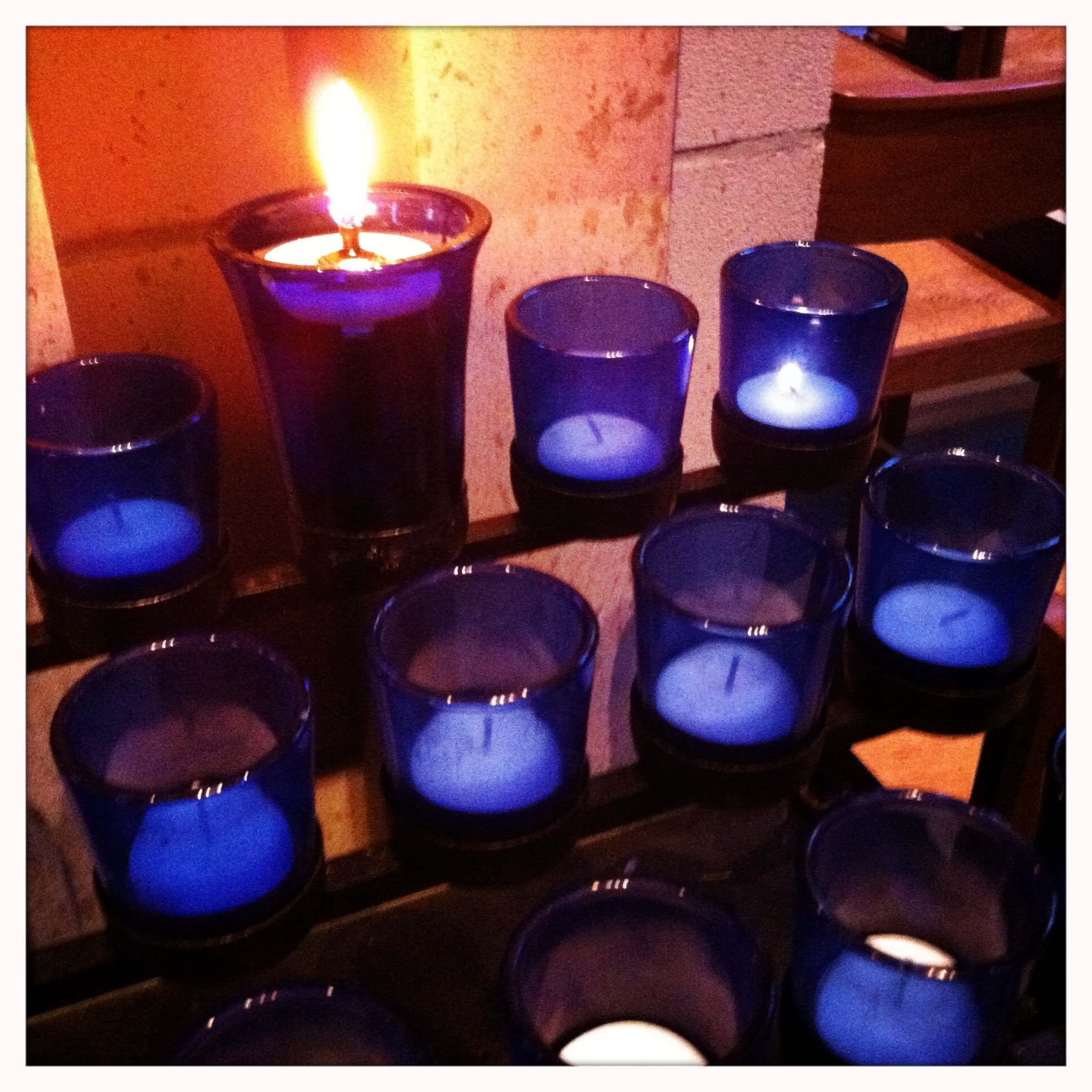
you might think i was lighting vigil lights for my exhausted self, trying to keep the juices flowing just a few more sentences, a few more rounds of edits and revisions. but, in fact, i dipped into my files to find a snap from one of the holiest places i have ever knelt: deep inside the thick stone walls of the monastery by the bend in the charles river, far off now, in 02138.

i’m lodging it squarely on the page this morning because today, as i madly type, at least one more day, i am bringing to the table two bits of holy wonder: the first is a peek inside that monastery, a lovely video clip of a day in the life of brother geoffrey, brother superior of the society of st. john the evangelist. it’s the closest thing i’ve found to taking you by the hand, shoving open the oh-so-heavy oak-timbered doors, and tiptoeing across the hushed stone floors. for those among us who hunger for the occasional dose of monasticism, here’s your peek inside.

the next bit of wonder — and it truly is nothing short of modern-day miracle — is a mind-blowing interview with the new pope, francis, as he sits down with the self-proclaimed atheist founder of the italian newspaper, la repubblica.

there is a deep ecumenical thread to what’s brought to this table, and i certainly haven’t had much to bring from my old catholic church in recent years, but this pope francis is worth a watch. a close watch. and i am watching more and more closely all the time.

at rather a quick clip, he is racking up reasons to pay attention: he reaches into the throngs and embraces the disabled (he lifted into his arms a boy with cerebral palsy, a modern-day pieta, indeed — and on easter sunday, no less). he washes the feet of the sinners. he flicks away the papal apartment, opting instead for austere and simple digs. he drives a used car, for cryin’ out loud (and urges all priests and nuns to do the same). and, best of all, he wouldn’t know a prada if it hit him in the head.

well, check out this latest: he calls up common folk — that’s right, he dials them on his own, gets them on the line — and invites them over for a splash of coffee and conversation. and he sure doesn’t limit his phone calls to confirmed believers. he reaches out to anyone who’s reached out to him, or who might simply offer a stimulating hour’s conversation.

but even more than what he’s doing, it’s what he’s saying that makes me lean in close, listen hard, widen eyes, and fist-bump the heavens, holy hallelujah.

of gays, he said: “A gay person who is seeking God, who is of good will — well, who am I to judge him?”

on abortion and contraception: church hierarchy has been “obsessed,” the word he used, the word that stole headlines.

but i think it’s in the next few lines that the true wisdom is found:

“We have to find a new balance; otherwise even the moral edifice of the church is likely to fall like a house of cards, losing the freshness and fragrance of the Gospel. The proposal of the Gospel must be more simple, profound, radiant. It is from this proposition that the moral consequences then flow.”

here’s the link to the whole of that interview, in the jesuit magazine, america.

and my favorite line from that entire interview:

“I see clearly,” the pope continues, “that the thing the church needs most today is the ability to heal wounds and to warm the hearts of the faithful; it needs nearness, proximity. I see the church as a field hospital after battle. It is useless to ask a seriously injured person if he has high cholesterol and about the level of his blood sugars! You have to heal his wounds. Then we can talk about everything else. Heal the wounds, heal the wounds….”

…the church as a field hospital after battle….heal the wounds, heal the wounds…

ah, but it’s the latest interview, the one in the italian-language repubblica, that i set out to bring here (it’s dizzying, there is so much unfurling so swiftly from the vatican…).

even the big thinker andrew sullivan had his socks knocked off, by the latest. called the pope nothing short of “revolutionary,” and what he said, “miracle.”

i’m thinking that’s precisely the prescription for these times, a revolution laced with miracles.

one last bit of papal poetry, a line worth etching into your living room walls:

“God is the light that illuminates the darkness, even if it does not dissolve it, and a spark of divine light is within each of us.”

finally the link to andrew sullivan’s musings in his blog, “the dish,” and the repubblica interview itself.

as sullivan puts it: “I urge you to read it, whether you are an atheist, an agnostic, a believer or anything in between.”

and i do, too. get comfy. please, pull up a chair.

now, back to typing, stirred by revolution. your thoughts on the vatican’s radical resident, the first in a very long time?  

the holiness of work

holiness of work this

the dry spell had been long. the dust, collecting in my throat. the days of wondering where i was meant to be. aching for a path, a sense of how to find the clearing, through the thicket, up the side of the mountain.

some days i swore i’d lost my soul. found myself pounding out tales of how to clear a plugged drain (talk about ironic). oh, sure, i liked the plumbers all right. didn’t mind learning a thing or two about the ways of my sink. but really? i’d left the bedsides of dying children, picked up pen and notebook, to find myself 30 years later, making sure the world knew how to un-plug that drain.

clearly, that was not my steady diet. i spiced it up with the occasional soulful musing. saying goodbye to kids headed off to college. saying goodbye to my own. but it was, more days than i wanted it to be, an exercise in driving me to madness.

i could barely remember those days this week as i sat, morning after morning, in the shifting light. heard the chatter from just beyond the screen, as the sparrows had it out with the cardinals. and no one appreciated the stalking ways of my fat striped cat.

but there i was, red pen in hand, poring over pages that are typed-out vessels from my heart. more like prayer cards, each and every one. it’s called editing, but really it’s distilling. distilling to the essence, paring away excess. cutting to the bone.

it happens to be essential to the craft of writing, but really it’s essential in this odyssey called life.

we are each of us, processing machines. we wander through the day, absorbing this and that, taking in that long tale, and this winding one. if we’re thinking, paying attention, we are always on the lookout for the essence, the gospel take-away, the distillation of heart and mind and soul.

one by one, we take the offerings of the day, hold them to the light, sift and sort. decide which ones serve up sustenance, which ones merely upholstered the day in wit and whimsy.

so that’s the task i’m attending to right now. whittling down page after page, sentence after sentence, to its essence. its holy spark, if there is one. others will be the judge.

and as i slowly turned the pages, as the red pen traced progress in the margins, i found myself bathed in an undiluted sense of the holy. maybe, just maybe, it’s baptism, all over again. a new beginning. maybe after all the years, i’ve stumbled on the deep pure vein that connects me, that i’ve been trying to find for what feels like forever.

holiness. it’s why i set out on my journey long ago. it’s the wind beneath my wings.

and it came up and tapped me on the heart this week. seeped in through the holes in the screen door. filled the kitchen.

there’s work to be done, from now till tuesday, when the next deep round of edits are due. this whole month is pretty much a blur of tight deadlines, one cascading atop another. thank God i live with someone who understands the urgency, and the long long dry spell that preceded it.  he seems to know that it’s a prayer i am offering to the heavens. because really that’s what this is.

and it’s the holiest work i’ve ever done.

thank God it found me. i’ve been searching for so long.

so that’s the update from here at the news desk. whirling madly toward the deadline. a dear friend visiting for the weekend, the joy of trying to sustain calm amid deep-down palpitations. so i’ll simply pay closer attention to whatever it is i’m doing in the moment. extract more essence. 

and the question: what’s your holy work? and how did it find you?

99 psalms: prayer-poems that “refuse to leave us unattended”

99 psalms

it was nearly 17 months ago, on a hot saturday’s afternoon, with little sleep the night before, that i climbed the stairs of a gray triple-decker (boston vernacular for what chicagoans call the “three-flat”), just down the lane and around the corner from harvard square. there i met a bearded gentle man, a man who presided over an aerie where birds came to the windows, where sunrise poured into the living room, and sunset washed the kitchen in a rose-tinted rinse. cabinets were stacked with pottery, cobalt rough-hewn plates, heavy to the hand; mugs whose handles met the flesh of your palm with solid tenderness. and books, books lined the walls, floor to ceiling, in half the rooms.

the bearded bespectacled man was mark burrows. he was, for 11 months, our landlord. and he will be, for life, my lighthouse keeper and my teacher.

mark (for in this moment i address him as a friend) is a professor of poetry and divinity, a scholar of mysticism, and a historian of medieval christianity. in that first walk-through of the two-bedroom-two-office apartment for rent, as i spied the titles on his desk, i knew i needed to live there. i needed to inhale the essential texts, and the poetry and prayer that breathed there.

almost a year ago, mark, who is now teaching theology and literature at the university of applied sciences in bochum, germany, published the luminous “prayers of a young poet” (paraclete press, 2013), a collection of 67 poems of rainer maria rilke, the great german poet. that book, the first english translation of rilke’s prayers in their original form, evoked for poet jane hirshfield, “leonardo da vinci’s notebooks — it shows the same mix of surety, roughness, genius, and the sense of a precipitous creative speed.”

rilke explores “the poetry of search,” or as burrows writes, “poetry that ponders darkness.”

just weeks ago, my teacher, professor burrows, published another translation of a poet whose work dares to explore the often unexplored landscape — the soul in exile. this time, burrows put his considerable intellect to the work of a poet i’d not ever known, one who goes by the pen name of SAID.

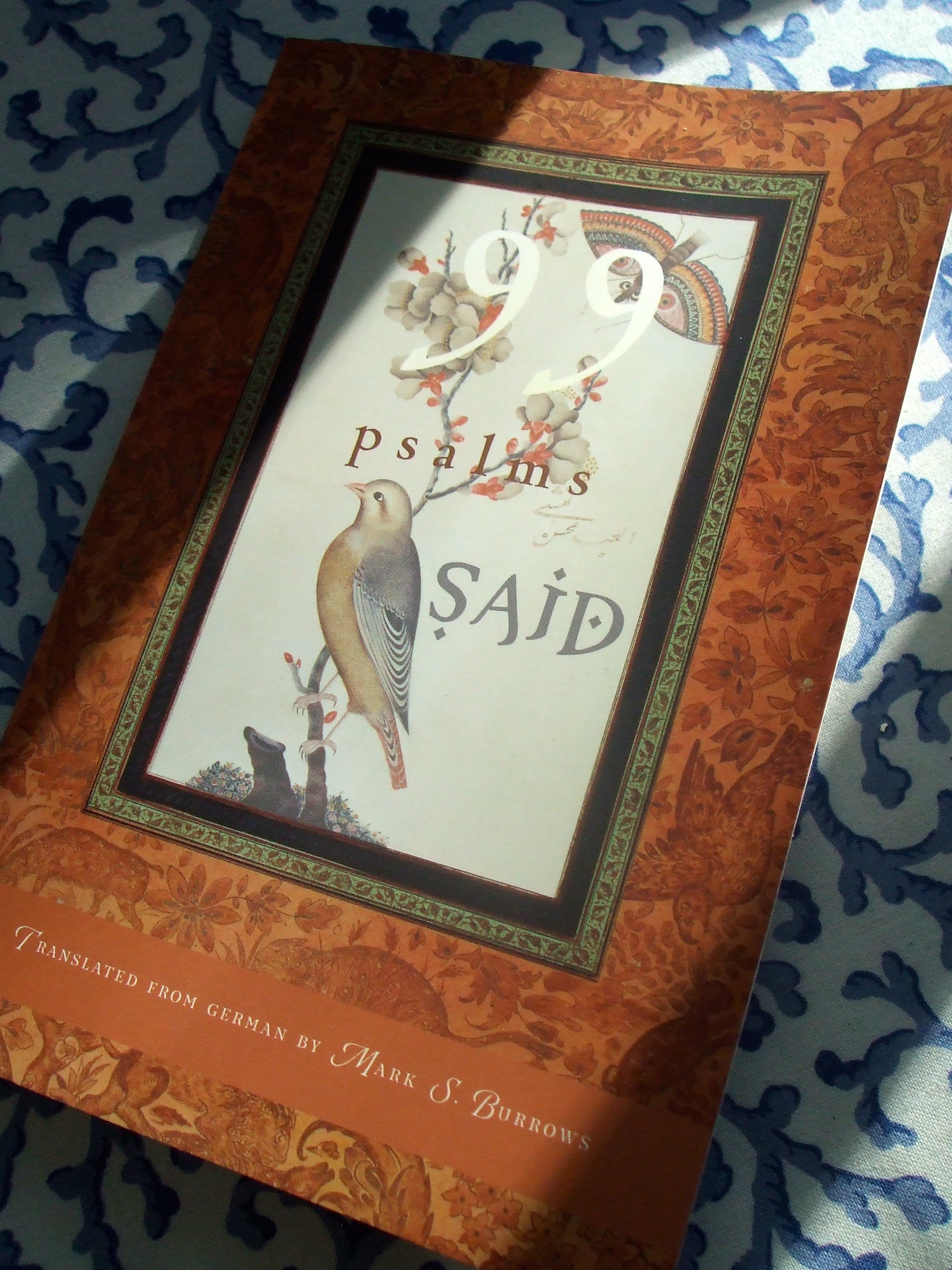
the book is titled, “99 psalms: SAID,” translated from german by mark s. burrows (paraclete press, 2013).

born in tehran, SAID emigrated to germany as an engineering student in 1965, but he abandoned those studies to pursue a writing career, and through the power of his poetry, has become a prominent figure in the german literary scene.

burrows first encountered SAID, he recalls, on a “dreary, rain-soaked night” in munich’s old city hall in may of 2010, at a poetry reading held in conjunction with the second ecumenical Kirchentag, a massive gathering sponsored by the roman catholic church and the protestant church of germany.

as SAID took to the microphone, burrows writes that he noticed the audience leaning forward, the better to absorb what flowed next.

“the psalms he chose…were blunt, vivid, and often startling in their language and imagery. none betrayed any trace of sentimentality…the fierce directness of their language conveyed a marked impatience with intolerance, probing the ambiguities of life with an unflinching honesty in order to remind us — if we had forgotten — that ‘purity isn’t the sister of truth.'”

burrows goes on to write that “these are psalms that cry out against the confidence of zealots, with their claims of righteous authority over others — crusaders, campaigners, and jihadists alike.”

in other words, the exile SAID writes poems of exile, “psalms arising from a ‘no-man’s-land.'” he employs a metaphor of wind as “a hope that reaches beyond religious differences and across the growing disparities between the affluent and poor,” as burrows writes.

in the tradition of the hebrew psalmist, SAID’s works are poems of praise and lament. burrows writes that “the poems we need are often the ones that refuse to leave us unattended.” they remind us “to look beyond what we know, or think we know.”

these poems, writes burrows, “bear witness to the heart’s descent into loneliness and despair, and gesture to the ascents we also know in moments of compassion and generosity.”

as always, poetry does the work of capturing the unspoken, unformed fragments of our heart, of our deepest imagination. the poet, as the butterfly catcher, employs the vessels of language to net, to gather, to collect the flitting-about, untethered, winged idea, the moment.

the poet does the work so we — the reader, the listener, the lonely pilgrim — can stake some claim of understanding in a landscape that until the moment of the poet’s poetry has escaped us.

the poet places us, solidly, in territory at once familiar and foreign. we trip upon the syllables of the imagination, and we find ourselves breathless at the poet’s deep knowing, at the exhilarating moment of loneliness collapsed. we recognize, we understand anew the depths of the human spirit, in wordform before un-uttered.

SAID addresses his psalms to “lord,” though not one bound by any religious tradition. he is certainly a late-modern psalmist, and his prayer poems speak to the complexities of the tangled fractious world in which we live. he explores the human condition with more urgency, perhaps, than he explores the divine. and therein is tension, poetry that refuses to leave us unattended.

one last thing, before i leave you with a psalm or two: about the 99 psalms, the number ninety-nine in the muslim tradition is the precise number of names by which Allah — God — is known. there remains one name — “the last/ the hidden” — that is unknowable, beyond us. so too with the 99 psalms; we are left wondering about the one beyond, the one which, perhaps, is written but not known, or not yet written. what might the unknowable tell us? why are we left not knowing?

here, a pair of SAID psalms that “refuse to leave you unattended”:

[Psalm 35]

lord

pray

that we recognize you

when you come

destroy the go-between gods

with their grand airs and their daily needs

set your seal upon your houses

and don’t be afraid of our nakedness

let the cypresses be your messengers

for they stand upright and whisper

and don’t try to convert the wind

[pause for silence.]

and now, one other, though choosing only one was tough, indeed…

[Psalm 10]

lord

spread wide your arms

and protect us

from the multitudes of your guardians

stand by those who wander

who’ve not lost the gift of hearing

and listen within their solitude

stand by those too

who stay and wait for you

[silence, once again…]

chair friends, i come to you on a wednesday, because in the publishing world these days, blogging about a book is one way to cast wider the net. and today was the day they asked me to write. 

i ask: is there a poem in your life — or especially in your now — that refuses to leave you unattended? and what about the 100th psalm, do you wonder what it asks or says? 

of a pig and a spider and bearing the unbearable….

charlottes web

maybe it was all the hours curled up on my patchwork quilt, pretending i had a fever so i could stay home to read instead of going to church. maybe it was the time travel. or the slipping quietly into someone else’s heart, someone’s secret hideaway. but the hold that children’s books had on me, has never lifted.

i tiptoe my fingers across the bookshelves, and feel the quickening in my heart. there’s miss rumphius, and her lupine seeds. there’s the secret garden, and orphaned mary lennox slipping into the secret locked garden of her uncle’s great house on the yorkshire moors. there’s the little house in the big woods, where laura ingalls wilder made me feel the icy morning cold and hunger for the prairie porridge. there’s tasha tudor, she who launched a thousand dreams and made me see the magic in a single tulip’s petal.

and then there’s charlotte and her web. and wilbur who ever breaks my heart and fills it up again.

so no wonder when the call went out from my sweet boy’s reading teacher for grownups to come to class, to bring along a book that they read and re-read in days gone by, i turned rather swiftly to a spider and a pig and a girl named fern whose cry for justice never has died down.

“where’s papa going with that ax?” said fern to her mother as they were setting the table for breakfast.

“out to the hoghouse,” replied mrs. arable. “some pigs were born last night.”

“i don’t see why he needs an ax,” continued fern, who was only eight.

“well,” said her mother, “one of the pigs is a runt. it’s very small and weak, and it will never amount to anything. so your father has decided to do away with it.”

“do away with it?” shrieked fern. “you mean kill it? just because it’s smaller than the others?”

and so, with those four questions, fern leaped to the top of my hero’s heap.

and as kate diCamillo writes in the foreward to the 60th edition of e.b. white’s classic, “charlotte’s web,” the crux of its miracle is this: “within the confines of its pages , something terrible, something unbearable, happens. and yet, we bear this unbearable thing. and in the end, we even rejoice.”

later, diCamillo goes on: “it is also e.b. white’s promise to his reader: things will continue; life will go on. it will be beautiful, astonishing, heartbreaking. and as long as you keep your eyes and heart open to the wonder of it, as long as you love, it will be okay.”

talk about religion.

no wonder it is among the holiest acts to slide a charlotte’s web, a miss rumphius, a secret garden, into the hands of a child, one whose circles are just beginning to expand beyond the being fed, and tucked in at night, beyond the reminders to brush teeth, and the taping of bandages across skinned knees.

it is through the pages of a beautifully wrought, deeply inscribed book that a child slaps on her or his first explorer suit, and sets sail across rocky seas, and steps into tangled shadowed woods.

while that child might get lost in the depths of those pages, forget that he’s curled under the covers in his very own bedroom, with his very own baseball trophies lined across the sill, and his very own mama banging pots and pans down in the kitchen, the holy resurrection of reading is that the terrors and the unbearability and the broken hearts belong inside the pages. and in time, that child can shake it off, and tuck the whole heart-stretching exercise back between the covers. yet go forward, having held on tight through the tug and pull and breath-catching, and be just a squidge more ready to encounter the real-life bumps and hurricanes. or simply to understand those encountered by fellow travelers.

and isn’t that, in the end, the children’s gospel, and the scripture that carries them to mountain tops and certain shores?

because i’ve been enchanted all week with a particular spider and a pig, and scribbling madly in the margins, i thought i’d leave you with a few fine links for more reading. one, from the american museum of natural history, that tells the backstage tale of the curator in the museum’s department of insects and spiders on whom e.b. white heavily relied for scientific detail on the Aranea cavatica, the species of barn spider to which charlotte belonged.

the closing paragraph of that article is worth typing out here (bold-faced emphasis per moi):

The publisher, Harper & Brothers, had misgivings about the death of the heroine in what was essentially a children’s book but “on this point [White] refused to budge,” writes Sims in The Story of Charlotte’s Web. “Natural history could not be dodged: Charlotte’s species of spider dies after spinning its egg sac.” White’s choice stands the test of time. Charlotte’s Web is as popular and enduringly poignant as when Eudora Welty first described it in her 1952 review. “What the book is about,” Welty wrote, “is friendship on earth, affection and protection, adventure and miracle, life and death, trust and treachery, pleasure and pain, and the passing of time. As a piece of work it is just about perfect, and just about magical in the way it is done.” 

here’s the link to that spidery web….

and if you’re in the mood for a bit more reading about e.b. white and pigs, here is a marvelous piece by my dear friend betsy o’donovan, on why white’s essay “death of a pig” — inspiration for “charlotte’s web” — is such a magnificent piece of story craft. and as an added dose of russian-doll magic, the betsy link will link you straight to a re-reading of white’s class — and heart-wrenching — “death of a pig.”

be gentle to spiders and runt piglets this week. and cheer little girls — and boys — who speak out against axes and injustice.

with my first load of edits and revisions, and a truly tight calendar to complete the final manuscript and send it off to the copy editors’ desk, i am writing night and day over here, and thinking madly when fingers aren’t touching the keyboard. the next month will be a blur. but then the heaviest load will be behind me once again……

savor your reading, and do tell: what children’s classics were etched into the blank slate of your heart?