pull up a chair

where wisdom gathers, poetry unfolds and divine light is sparked…

when summer comes easy: things i wish i’d known

i was watching butter melt into a bath of milk and sugar and cinnamon when it dawned on me: there is something about this summer that there’s never been before. and it’s not just that the kid i love so much is leaving in less than 60 days, though that’s the thing that’s somehow at the root of it all.

watching butter pool across milk, apparently, is a stirring prompt for early-morning philosophizing, for checking one’s soul, and seizing a revelation or two. what i realized, as i whipped up blueberry bread pudding on a wednesday, no less, whipped it up simply because the kid i love loves bread pudding, loves it best in summer when the season’s rotund little berries the color of night are tossed in with abandon, is that somehow this summer’s defining watch word is easy, as in stripped of all the junk — my junk — that usually gets in the way.

easy as in not worrying. not worrying about the clock, or deadlines, or whether he’s home at the stroke of midnight or half an hour later. easy as in surrendering to the whims of the day, plopping onto the couch, finding his hand at the end of my fingers, wrapping mine around his, and then simply sitting there for enough innings to figure out who’s playing who, and who might be ahead, all the while weaving in the sorts of questions and curiosities that come in the lulls of lazy baseball.

i am, for this one short sweet summer, devoting my days and my nights to simply, softly, loving my kid. savoring every single thing about him. i am relishing as if there’s no tomorrow, because in some ways there isn’t. there really isn’t. except for the way tomorrow affords us the joy — the possibility — of trying all over again. each day another chance to love in the ways we hope and dream and know we can love.

i am, this short sweet summer, sinking deep and certainly into one and only one thing: mothering with all my heart. mothering without getting in my own worrisome way. (and truth truly be told, i’m mothering with all my heart because somewhere along the line it’s the one place in my life where i found my deepest wholest holiness, and i am not wanting to let that go…)

makes me think i sure wish i’d known to be this sort of mother at the other end of this equation, when i was just starting out, a quarter-century-plus ago. i remember how, back in the daze of a newborn living, breathing, squalling, hungry-like-clockwork baby, i armed myself with charts — breastfeeding charts and safety pins moved from bra strap to bra strap, my highly-evolved method for tracking which breast for how long, at what intervals — seeking solace in sharp-angled grids and penciled-in numbers. i steeled myself against the uncertainties and vicissitudes of toddlerhood by worrying about whether we were five minutes late to dump ourselves into the station wagon for the short drive to nursery school — as if someone at the schoolhouse door was doling out demerits — for the mothers who failed to make it on time. the soundtrack of my life was worry upon worry upon worry. no wonder firstborns wind up so crazily cross-wired.

i wish, some time before this very last summer of my very last kid (i know there are only two, and the way i phrase it it sounds like there’ve been a good half dozen), in these countdown weeks before he hauls off to college, i wish i’d realized how lovely it is to be, well, carefree. or as close as i’ll ever come, anyway. (someone once told me i was calm like a swan and after thinking, oh, honey, you sure don’t know me, i shot back, “yea, smooth on the surface, but paddling like heck underneath.”)

truth is, the credit for this newfound way of lazy-being goes to the kid himself. he’s intent on one thing this summer: savoring each and every hour of each and every day. savoring it even when he’s flipping burgers and shaking the baskets of fries for long hours at the short-order grill where he picks up a paycheck. savoring the nights with his toes buried in sand, the moon overhead, and the blankets around him filled with his gaggle of friends. savoring the long drives and deep conversations, the kinds best unspooled from behind the wheel, when two or three pile into the old sedan and clock miles up and down the leafy winding road that hugs the shoreline here in chicago. plopping himself on the bench where i sit at the kitchen table, stretching out his long-and-getting-longer legs, and idly clicking his phone while shooting me the occasional question. his mantra: gotta make the most of this. gotta love this summer.

and so i take my cues from the master. delighted to be tutored in the fine points of taking it slow. in savoring. in tossing aside the occasional heart-jabbing worry.

i am finding the succulence of summer. the succulence of mothering at its juiciest essence. i am letting the soft breeze blow across my bare toes. tossing out the to-do lists and time clocks. and making bread pudding on any old wednesday.

i am learning to summer — to mother — on the very last page of the chapter that ends just before one of us shoves off to college. if only i’d known all along.

how did you learn to savor — be it a season, or simply an hour? or is it something you’re still trying to learn? who have been your most unforgettable teachers, and what are the lessons they’ve taught?

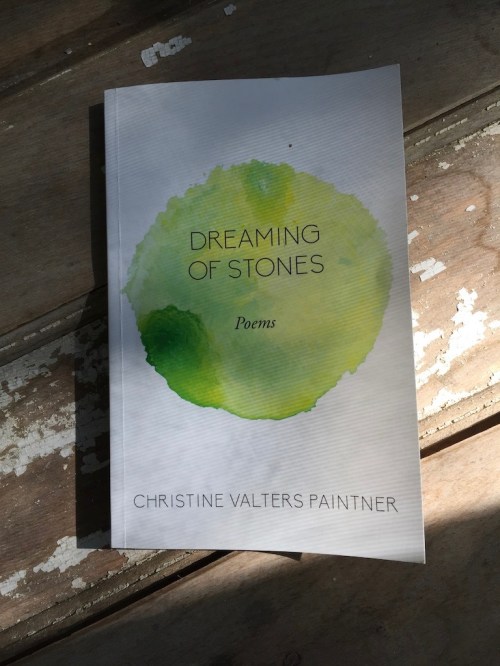
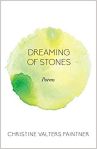
p.s. because i didn’t want it to get lost in the shuffle, i posted yesterday (a rare thursday post) my latest chicago tribune review of a book for the soul, in this case, the glorious christine valters paintner’s dreaming of stones: poems, a glorious volume of which i wrote (in part): “Paintner is fluent in the lush language of earth and sky as well as the otherworldly, the mysterious beyond. Born and raised in New York City, she is old-soul Celtic, through and through. Her poems rise out of the monastic practice of dwelling in silence, and hers, often, is a churchless god. A god who can’t — and won’t — be confined. A god who belongs to any and all.” 

special edition: book for the soul

IMG_2140

how unlike me to post on a thursday, but i’d already had thoughts about tomorrow, and didn’t want this latest book for the soul to get lost. i’ve been waiting weeks and weeks for this to run in the chicago tribune, because i can’t post here till my book for the soul reviews run there. at long last! i’ve been dying to tell you more about this most amazing soulful “urban monk,” christine valters paintner, who is among the most soulful souls i’ve run across in my kitchen table literary travels, where i follow tributaries and estuaries, one after another, never knowing where one will lead, never knowing what amazement i will bump into. i’d been reading another one of her books, “the soul’s slow ripening: 12 celtic practices for seeking the sacred” — mentioned here — when suddenly from the daily mail there tumbled this newest collection of her poems. call it serendipity, or call it “the gods smiled.” (i’ll take the smile…) i promise if you click over to abbey of the arts, and poke around for a while, you will be restored, refreshed, refueled, and ready to tie on your hiking shoes and head for the celtic ruins of wherever christine leads you. my dream, as of a few months ago, is to one day trek the wild ancient places of western ireland with christine. i feel drawn to her sacred discipline, to her profound and soulful poetry and wisdoms. i hope you do too.

‘Dreaming of Stones’: Poetry collection offers spiritual solace

W4WDZ2OUV5B7XAPXCZWLXRYA2A

By BARBARA MAHANY | CHICAGO TRIBUNE |

Dreaming of Stones: By Christine Valters Paintner, Paraclete, 96 pages, $18

To enter the pages of Christine Valters Paintner’s “Dreaming of Stones” feels akin to wandering the undulations of Celtic wilds, the barren landscape that cloisters timeless secrets and truths. It’s not hard to imagine ancient ruins off in the mist-drenched distance. Nor to hear the cry of North Atlantic winds, sweeping across moor and mountain. It’s haunting and it’s beautiful.

Most of all, it’s to find yourself at home in a place you’ve never been — the very definition of soulful retreat.

And so it is in this first full poetry collection by Paintner, a writer, painter and Benedictine oblate who moved to the west coast of Ireland in 2012. She now calls herself the abbess — or “urban monk and part-time hermit” — of Abbey of the Arts, a virtual monastery and global ecumenical community that combines contemplative practice and the arts.

No less than Richard Rohr, the best-selling spiritualist and Franciscan friar, writes that Paintner’s poems “have both a mystical and earthly sensibility, drawing us to the transcendent as well as the immanent presence of the divine.” Paintner herself writes that “poetry is language carved down to its essence,” and she calls these 80 poems “little love notes to the world.” Love notes of the soul, perhaps.

Paintner is fluent in the lush language of earth and sky as well as the otherworldly, the mysterious beyond. Born and raised in New York City, she is old-soul Celtic, through and through. Her poems rise out of the monastic practice of dwelling in silence, and hers, often, is a churchless god. A god who can’t — and won’t — be confined. A god who belongs to any and all.

The poems here are distillations of the most enduring wisdoms — love, hope, heartache, the unfolding of time — penned with a painstaking eye on the earthly. Carved out of the raw stuff of existence, especially in these troubled times, these dispatches offer safe harbor for taking stock, seeing the sacred, absorbing the solace.

And as with all the finest poetry, it’s the unwritten volumes beyond the words that hold our lingering attention. To enter these poems is to slow time, to pause long enough to grasp what might otherwise have escaped us.

The poems here might as well be prayers — many of them anyway. Others put words to lasting truths.

In one of the collection’s six sections, in a poem titled “St. Gobnait and the Place of Her Resurrection,” Paintner writes: “Is there a place for each of us, / where we no longer yearn to be elsewhere? / Where our work is to simply soften, / wait, and pay close attention?”

Or, pages later, in “St. Brigid and the Fruit Tree,” this: “Your tears splashed onto / cold stony earth, ringing out / like bells calling monks to prayer, / like the river breaking open to / the wide expanse of sea. … There will always be more grief / than we can bear … Life is tidal, rising and receding, / its long loneliness, its lush loveliness, / no need to wish for low tide when / the banks are breaking.”

In her afterword, Paintner writes of her devotion to the great poet Rainer Maria Rilke and “the way he wrote about the God of darkness and mystery, the God who loves the questions rather than the answers.” She shares that inquiry. And it’s her hope, she writes, that those who find their way through “Dreaming of Stones” find “a moment of sanctuary” in its pages.

The poet’s prayers, then, are answered. This collection — probing the mystery and the darkness, embracing the god of question not answer — indeed carves out sanctuary in a most turbulent landscape, amid these wild, wild times.

Barbara Mahany’s latest book,“The Blessings of Motherprayer: Sacred Whispers of Mothering,” was published last spring.

Twitter @BarbaraMahany


notes from poetry school

IMG_2059

“…the great poet should not only perceive and distinguish more clearly than other men [sic], the colours or sounds within the range of ordinary vision or hearing; he should perceive vibrations beyond the range of ordinary men, and be able to make men see and hear more at each end than they could ever see without his help. … it is therefore a constant reminder to the poet, of the obligation to explore, to find words for the inarticulate, to capture those feelings which people can hardly even feel, because they have no words for them; and at the same time, a reminder that the explorer beyond the frontiers of ordinary consciousness will only be able to return and report to his fellow-citizens, if he has all the time a firm grasp upon the realities with which they are already acquainted…

“the task of the poet, in making people comprehend the incomprehensible, demands immense resources of language; and in developing the language, enriching the meaning of words and showing how much words can do, he is making possible a range of emotion and perception for other men, because he gives them the speech in which more can be expressed.”

t.s. eliot, “what dante means to me”

“perceive vibrations beyond the range of ordinary [inhabitants of this moment in time on this place called earth], and be able to make [those souls] see and hear more at each end than they could ever [otherwise] see…”

that’s the essence of it to me. the whole draw toward language, toward poetry in particular, the knowledge that at the far reaches of this thing called our capacities we might — if we work at it, if we think about it — possess the possibility of capturing the ephemeral, the ineffable, the slipping-through-our-fingertips. those quivers of human heart and spirit that shimmer just beneath the surface, but once illuminated prompt us — each and every one of us — to sigh in recognition. “i am not alone.” i too know that pain, that joy, that loneliness. that hallelujah of the heart. the long dark night of the soul.

it’s why from the beginning, in writing — be it the stories i scribbled as a child, sprawled across my bedroom’s braided oval rug, or later in chasing and telling the stories of heartbreak and crime and injustice for the chicago tribune — i reached toward poetics, i reached toward those combinations of words that shattered through the barriers of the every day.

i never set out to write poems, i still don’t (i’ve written one to my name and it’s locked in a drawer, just as my mother tells me she too has reams locked in drawers, some burned along the way), but i have always always sought to understand the work, the magic, that poetics does, so that i too could weave it into the plainspoken sentences as i try to write my way through life.

the more deeply i read, the more deeply i study the powers of poetry, the more amazed i am by its otherworldly capacities. the more i ache to reach its borders.

why write? because we are plopped onto this planet as if a babe in the woods. there are mixed-up trails all around, and we are finding our way, every one of us. some are born with illuminators nearby. some are not. we all stumble onto lessons, onto truths, endure trials and temptations. come out wiser, if we’re paying attention. if we’re listening and keeping close watch. if along the way, we can trace the trails, write what we see and hear and come to understand, well then don’t we begin to serve as cartographers for those in the woods with us? might we cover more of the woods if we all share what we etch in our notebooks?

writers write, painters paint, dancers dance. we all illuminate the coursings of the heart in the movements that most stir us. poetry — the art of distilling the unseen, unheard, but often felt gyrations and quiverings of the heart and soul — poetry enters it all.

we reach beyond the range of the ordinary, we illuminate what’s often lost. we aim to hold it high, to whisper, “behold this holy moment, study its undulations, its depths and inclines. extract a droplet of wisdom.” and go on with your humdrum day.

that’s what i thought about at poetry school last week. that’s what i wrapped myself in. and carried home in my backpack.

***

culled from my notebook:

books you might choose to read, all highly recommended:

scott cairns, Recovered Body (especially, “The Recovered Midrashim of Rabbi Sab”)

denise levertov, The Stream and the Sapphire (poems that wrestle with faith and doubt)

mary karr, Sinners Welcome (her poem, “Descending Theology: Nativity,” reimagining the birth in the barn, leaves me limp, the poem i should read every Christmas morning…)

lucille clifton, Blessing the Boats: New and Selected Poems 1988 – 2000, winner of the National Book Award


how do you try to capture the ineffable? and why does it matter to see and hear what’s beyond ordinary range? your thoughts on eliot’s thoughts up above? 

i can’t leave the chair this morning without a cannon’s blast of birthday blessings for my beautiful firstborn, who is off in DC, without an actual mailing address (he’s living in a condo not yet on the market and for some reason the developer can’t give him a reliable street address nor the promise that any mail would actually be delivered…), and who is turning 26 tomorrow. the only thing worse (for the mama, anyway) than a kid having a birthday far far from home, is not being able to send a single care package! so, not that he’d wander by to read this, but i am sending all the love in my heart and then some. i send prayers as well, mountains of them. may this year ahead illuminate all that is good and joyful in you and around you and because of you. i love you to the moon. have since long before you were born. xoxoxoxo

willie yawn

oh, dear God, i love this child, love him far beyond the borders of my humble little heart….

once upon a poetry school…

dispatch from 06510, aka PoetryLand

I could barely sleep the night before it all began — though truth is, it’s because my firstborn was flying across the continent, rising out of a blood-red cell on the weather radar map (“insane,” he declared the weather, as the hour grew later and later, long past the scheduled time for takeoff) and it made no matter that I was 1,800 miles from the epicenter of his Texas-sized storm, mothers don’t leave their firstborns to fly unwatched. I prayed that plane to safe landing, round 4 in the morning, and then I tossed and turned, awaiting Poetry School.

I’d flown some 750 miles all my own to get here, where, for one short week, I’m deep in make-believe. Making believe that I am back in college — make that cobblestone, storybook college. Lugging past Gothic towers and campaniles with my book bag, my syllabus, my three-ring binder, and reams and reams of poems in my tousled-pewter noggin.

Because I’ve homework due at the clang of the school bell today (and because I’m typing on my itty-bitty screen), I might need to practice the art of brevity (though I could go on and on). For the first time since perhaps eighth grade, my homework is to memorize — and recite — a poem, Wendell Berry’s “Manifesto: The Mad Farmer Liberation Front.” And I’ve lines to go before I shlep up the very steep hill to P School.

I will tell you this, though: In my wildest dreams I couldn’t have dreamed up a more bespoke week for my little monastic self. I’m holed up in the apartment of the boy I love, the one who’s deep in study of the law. (The gnawingly haunting thing is that he’s not here, and while I love being wrapped in this charmed aerie overlooking the steeples and bell towers of New Haven, I feel the ghost of him everywhere, hear echoes of his life here, but it’s all just beyond my fingertips, and the proximity without the presence makes my whole self ache in that way that absence does.)

I’ve carved a path to all the quirky eateries, where alongside folks with purple hair and piercings by the dozens I gorge on voluminous veggie salads, and don’t worry that anyone’s cocking a quizzical eyebrow.

But best of all, it’s the red-brick Jeffersonian quadrangle at the top of Prospect Hill. Inside the labyrinth of corridors and classrooms, I’ve found a place that hits you between the eyeballs with capital-K Kindness, the rarest of commodities in the world these days. The etched-in-brick gestalt, clearly, is “do no harm.” Not to the spirit of those around you, not to the power grid, the water table, and certainly not to Mother Earth. Heck, all the plates and cups and forks and knives in the Old Refectory are compostable. Meat is decidedly absent at nearly every communal grazing; God save the cows, apparently. Everybody smiles. Oh, and prayers come in every religion under the sun.

(I suppose I should mention this is Divinity School, after all, one founded by those sturdy-spined Congregationalists back in 1822, and in the two centuries since, a whole parade of notable senators, preachers, and statesfolk have prayed their way through these hallowed halls.)

In a looming seminar room at the top of a stairs, where sky-high windows let in sun or shadow, howl of wind or rain thrashing against the panes, a rare professor — rare in that he, too, is kind above all, and brilliant — teaches us to pull back every thread of every poem, to pay attention to the white space, the word choice, the lack of comma or capital, and most of all to ask what question the poem is begging of us?

I’d be lying if I didn’t let on that on Day One, I fell in love with my compatriots in the class (officially titled, “Reading Poetry Theologically”), and I’ve only fallen deeper and deeper as the days, and tender revelations, have unfurled.

There’s the 17-year-old from the Upper East Side who every day rides 2.5 hours each way on the train from Grand Central Station, and makes it home each night because, she told us, her mother “believes in family dinner.” She could double for an angel that girl, with her alabaster skin and tumbling blond curls, and when she told us how her father died when she was only six, and how for years, she hated any God who could let that happen, I was not the only one wiping away a tear.

Before we get to the oldest in the class — she’s “past 80” is all she’ll let on, but we know she’s older than the Episcopal priest who confesses to being 82 — here’s the rest of the class list: the poet, the journalism professor, three priests in total, one priest’s wife, and a chaplain from Hong Kong. (Oh, and me, too.)

Elaine, aka Past 80, is a story all her own (and I am over-the-moon for her, and pray we’ll become penpals). Suffice it to say, you might mistake her for, well, Geraldine Page in her role as Truman Capote’s doddering discombobulated decades-older cousin in “A Christmas Memory,” in the way she comes to class with cardigan buttoned askew, short gray bob flying every which way (as does mine, by the way), and shiny beads in ropes and ropes and more ropes. After telling you she was forever too qualified to get the teaching job she’d longed for, she recites her litany of degrees, sounding not unlike the Twelve Days of Christmas: one PhD, three masters, and two bachelor’s degrees. (She will also tell you her first husband left her — and their three young children — for his secretary, and then she’ll whisper an epithet.) While compiling her alphabet of degrees, she spent a few years in Alabama where she criss-crossed the back roads with her pen and notebooks, gathering oral histories for her dissertation on Southern white pastors and the Civil Rights Movement, and yesterday at (meatless) lunch, she had me and a table full of bent-close listeners riveted by her tales. And then she pulled from her satchel, a copy of that very book, published just last year; “only took 26 years to get it published,” she quipped, giggling. For so demure a gentle soul (and one who’s emphatically hard of hearing, besides), she can spin one mean yarn.

Oh, there’s so much more. But I can hear the lines of Manifesto whispering to me now….

…Go with your love to the fields. Lie easy in the shade. Rest your head / in her lap. Swear allegiance / to what is nighest your thoughts. / As soon as the generals and the politicos / can predict the motions of your mind, / lose it. Leave it as a sign / to mark the false trail, the way / you didn’t go. Be like the fox / who makes more tracks than necessary, / some in the wrong direction. / Practice resurrection.

And I’ve syllables and pauses to learn by heart. So I can rise at Poetry School, and not be mortified.

Brilliant, and kind, professor, pointing to poet gallery at Poetry School, aka “Reading Poetry Theologically” at Yale Divinity School

Pray tell, what one poem might you choose to memorize? And if poetry’s not your thing, how have you tiptoed out on a limb most recently?

wisdom: extracting / seeking


before i pack my bags for summer camp for nerdy nerds (the so-called camp i’m going to has a pack list rife with yellow highlighters, five-tab binder, reams and reams of pages; dictionary, encouraged), i am dipping back into my nursing days, and wielding ice bags and ibuprofen like nobody’s business.

i’ve been up every hour on the hour through the night, employing what amounts to a giant-sized sock filled with ice, tied round the not-yet-swollen cheeks of my now-college-bound kid, the one who had his wisdoms extracted yesterday. excavated would be a more apt choice of verb, the friendly oral surgeon whispered, suggesting muscle (perhaps pick axes?) — more than usual — might have been involved. not exactly the last hurrah of high school anyone would wish for…

soon as we round the bend on impending swelling, soon as pudding and jello gives way to mushy mac-and-cheese (a second-day staple), once this escapade in extracting/excavating wisdom fades into the sunset, i am seeking wisdoms all my own: i’ll scramble to pack the last of my poetries and hop a plane to NYC, whereupon i’ll glide my way to new haven, aka elm city, where an empty apartment waits for me, and a whole div school besides.

in the rarest fluke of my non-adventurous days, i somehow found myself signing up for a one-week summer course, “reading poetry theologically,” at yale divinity school, a bastion of ecumenicism (with a strong dash of anglicanism) since 1822. i’d have signed up for this first week too, when a tantalizing class in henri nouwen was stretched across the days, but those wisdom teeth got in my way, so i’m signed up for next week’s poetry, taught, curiously, by a professor named david mahan, and i’ll soon find out if he’s my distant cousin who’s done away with his closing syllable, lobbed off his exclamatory y. (ours is not a name — with or without all its syllables — you bump into very often.)

i never was much for camp of the mosquito-and-sunscreen variety. never did like that kool-aid poured from vats, the red stuff they called bug juice, as if that would warm me to its redness. but i am positively twitterpated at the notion of making believe i’m back in school. the thought of loping down the cobblestones, my book bag swinging by my side, well, it’s akin, i’d think, to how cinderella felt when she traded in her whisk broom for her sparkly shoes.

for anyone who wants to play along at home, the reading list of poets (a brilliantly eclectic mix of voices, the very sort i love the most) includes: gerard manley hopkins, wendell berry, scott cairns, lucille clifton, denise levertov, mary karr, langston hughes, louise erdrich, and the glorious (new to me) r.s. thomas, an anglican priest from wales, often ranked as one of the three great english-language poets of the 20th century, alongside yeats and eliot, and often called “poet of the hidden God.” (be still my hidden heart.)

as was the case back in our year of thinking sumptuously, when in one academic year my appetite for binging at the course-list trough was forever whetted, i’ll send along a dispatch of whatever poetic morsels stir my hungry heart.

and now, before the timer pings reminding me to grab an ice pack, here’s the latest book for the soul, an exploration deep into islam, and my review of Muhammad: Forty Introductions, by Michael Muhammad Knight, as it ran in the pages of the Chicago Tribune last week:

‘Muhammad: Forty Introductions’ is a soul-stirring primer on Islam

IMG_1929‘Muhammad: Forty Introductions’

By Michael Muhammad Knight, Soft Skull, 320 pages, $16.95

Review by Barbara Mahany Chicago Tribune

When Michael Muhammad Knight — whom The Guardian of London has called “the Hunter S. Thompson of Islamic literature” — set out to teach a religious studies seminar on classical Islam at Kenyon College in Ohio, he promptly realized that no single snapshot served to introduce his mostly non-Muslim students to the great prophet Muhammad, “Messenger of God.”

Instead, the professor settled on 40 such snapshots, or “introductions,” drawn from a broad swath of voices — the canonical as well as the marginalized — citing ancient Islamic scholars, French philosophers, and even “Star Wars” (though not in equal measure).

His “Muhammad: Forty Introductions” is part gonzo devotional, part Muslim primer, and, ultimately, a soul-stirring portal into a personal vision of Muhammad.

The narrations Knight turned to are a bedrock of Islam: the hadith, an oral tradition of “news” or “reports” of Muhammad’s sayings or doings, a tradition that traces its lineage of authenticity through a chain of teachers, resting in proximity to the prophet himself. Hadiths — apart from the Qur’an — serve as instruction for Muslims looking for guidance in how to live their lives. As Knight put it, “I want to know Muhammad’s way of being human.”

Knight is a novelist and essayist who converted to Islam at 16, traveled to Islamabad at 17 to study at a madrasa, then got a master’s degree at Harvard Divinity School and a Ph.D. at the University of North Carolina. In gathering 40 hadiths, the author followed the ancient Islamic literary tradition of the arba’in, wherein scholars over the millennia have collected and curated 40 hadith, often by theme. For Knight, who rose to literary fame with his 2003 self-publication of his novel “The Taqwacores,” now considered a cult classic and a “manifesto for the Muslim punk movement,” his “Forty Introductions” is a decidedly contemporary collection, reaching into queer theology, feminist commentary and core Islamic teachings.

Something of a crash course in Muhammad, Knight’s intellectually charged collection of fragments makes for a multi-textured, many hued mosaic. In a revelatory aside, Knight acknowledges that for every student of Muhammad, the prophet becomes a “montage of images, an arrangement of moving parts.” This fragmentation is inevitable — and necessary — he writes: “the ingredients of my Muhammad often come to me as shattered pieces that have been chipped away from something else.”

Alternating between the professorial and the personal, Knight hits his highest notes when he pushes away from the seminar table and bares his own soul. “Some hadiths soften my heart and bring me to tears,” he writes toward the end of the book. “I cling to the image of Muhammad as a gentle grandfather who lets his daughter’s sons Hasan and Husayn climb onto his back as he prays.”

While the introductions he’s chosen cover a full range and complexity — from Muhammad’s physical appearance to his family life, infallibility, legal authority and mystical nature — and while Knight boldly puts one interpretation or argument up against another (a seamless synthesis is hardly the point here), it seems particularly telling that he chooses as his closing introduction Islam’s parallel to the Golden Rule:

“The Messenger of God (God bless him and give him peace) said, ‘One of you does not believe until s/he loves for another what is loved for self.’ ”

And then, Knight reminds why this, of all teachings in all religions and world views, matters most in the end.

“Claimants upon a religious tradition have numerous modes by which they can disqualify each other as illegitimate. You pray wrong; you dress wrong. You read the wrong books, or perhaps read the right books wrong. Your prophetology is wrong. Your preferred scholarly authorities are wrong. Your opinions about permissible and forbidden acts are wrong. This hadith reminds us that we can get everything right … and still fail as Muslims on the grounds that we’re selfish pricks.”

Muhammad, the professor reminds us, came “to perfect the noble traits.” For emphasis, he adds: “Muhammad reminds us that becoming less of a selfish prick would confront many of us as an epic struggle. Being a good person isn’t the easy part.”

Knight, by way of his 40 Muhammadan introductions, illuminates the way.

Barbara Mahany’s latest book, “The Blessings of Motherprayer: Sacred Whispers of Mothering,” was published last spring.

Twitter @BarbaraMahany

back to the summer-camp question: what would be your rendition of the ideal mosquito-free summery week away, with or without a tent? 

and before we go, i am sending the biggest smushiest birthday blessings to beloved nan, whose big birthday is today, and beloved amy, whose blessed day was yesterday. love you both to the moon and stars and back…..xoxoxo

let the page turn begin…

summer read

the summer porch is back in business, the sacred art of staring through screens into the first light of dawn and the lingering hours of twilight into starlight and moonlight. there’s a big old wicker chair in there, once dragged in from the hand-me-down bin, one pointed straight into the white pine and the little bird house on a pole where all day long the sparrows or chickadees flit and dart and chatter. i’ve taken up my position therein, and as many hours as the day will allow, that’s where you’re most likely to find me.

even this weekend. by day’s end, long after nightfall, both boys i birthed will be asleep in this old house (thunderstorms, don’t dare fudge our flight paths). the older one is flying home late tonight to be here when the not-so-little-anymore one walks across the graduation stage on sunday. it’s a weekend that’ll be packed with as much high-altitude soaring as we — and a host of jubilant high-schoolers — can possibly pack in, but just as emphatically i plan on planting myself for a few long hours of soulful conversation out there in the room on the verge of the garden. there’s a whole lot of catch-up to catch up on, the sort best done when knees rub against knees, when the folds of skin on someone’s face are squinched or softened in real time, right before your eyes.

i admittedly won’t be doing much turning of pages this weekend — not the literal kind, anyway. in the midst of a real-life page turn, bound pages are usually put aside. so while i dash off to fill the fridge, pin up the welcome home and happy graduation signs, and pick up the rented white dinner jacket (it’s new trier, and that’s the way they’ve done graduation since at least 1936), i am leaving you with the summer reading roundup i wrote for the chicago tribune.

it apparently ran in the paper a couple weeks ago (saturday, may 18), but for the life of me i can’t find it, so here tis, in its original form. my lovely editor asked me to pick three books i’d want to slow read this summer, three that might especially stir the soul, so i went with three whose glorious magnificent writers are no longer among us. mary oliver and w.s. merwin both died within the past few months — mary O. in january, merwin in march. brian doyle died just two years ago; he was only 60.

i promise you a sumptuous summer — at least in the reading corner — should you crack open any one of these…

Pause to reflect on three greatssoul books summer

By Barbara Mahany

There are those for whom summer reading is synonymous with plot-thick page-turners, guzzled beachside or poolside, covers splattered with sunscreen. For others, the indolent season takes an opposite tack: it’s all about catch-up, savoring deep dives into the life lists of authors who’ve long been our polestars. Especially when death brings the coda, in the wake of a beloved author’s last penned utterance. It’s in the spirit of relishing these now-extinguished luminaries’ earlier works, titles forgotten or celebrated, that these three collections constitute a summer’s holy trinity…

The Essential W.S. Merwin

By W.S. Merwin, edited by Michael Wiegers, Copper Canyon, 200 pages, $18

The fittingest way to fill the silence that followed the death in March of W.S. Merwin, the late great Poet Laureate of the United States, who had received every major literary accolade, including two Pulitzer Prizes and the National Book Award, is to crack open the collection of his poems and prose deemed “Essential.” 

Apt title, indeed, as this definitive distillation traces a poetic legacy that’s been said to have “changed the landscape of American letters,” a compilation spanning seven decades of Merwin’s often spare unpunctuated poetry, translations, and lesser-known prose narratives. 

Merwin was, is, and always will be essential. 

“Through daily practice and attention, [Merwin] has created an incredible model for a way of existing on earth,” writes Michael Wiegers, editor-in-chief of Copper Canyon Press, who was tasked with culling nearly 50 books of Merwin poetry and another eight books of his prose. “His poems have defined for future generations what is possible in poetry and in life.”

That truth resonates through these breathtaking pages, be it Merwin’s urgent pleas to attend to this imperiled planet, or his heart-piercing excavations of the unconscious, as in his miracle of a three-line poem, “Separation,” exposing the raw edge of grief. It’s poetry turned saving grace: “Your absence has gone through me / Like thread through a needle. / Everything I do is stitched with its color.” 

Poring slowly over these pages—essential as they are—just might be the wisest prescriptive, balm for the soul, in the wake of the poet’s final absence. 

Long Life: Essays and Other Writings

By Mary Oliver, DaCapo, 120 pages, $16

The January death of Mary Oliver, Pulitzer Prize-winning poet, high priestess of seeing the sacred in the natural landscape—be it weeds poking through asphalt, or a goosefish stranded at low tide—prompted a great reprise of her most memorized lines, among them, “Tell me, what is it you plan to do with your one wild and precious life?”

But her 2004 “Long Life: Essays and Other Writings,” a slim and lesser-referenced volume, holds a cache more than worthy of slow reading, pen in hand for all the underlining and asterisk-ing that begs to be inked. Poems, Oliver calls her “little alleluias,” a “way of offering praise to the world.” Prose, she explains, is more cautious, flowing forward “bravely and, often, serenely, only slowly exposing emotion.” 

You’ll find those alleluias sprinkled throughout “Long Life”—and they will take your breath away, even if only a single line, such as this untitled dab: “All the eighth notes Mozart didn’t have time to use before he entered the cloudburst, he gave to the wren.”

But it’s the essays, slowly unspooling, that might hold you in rapt attention, even on a lazy summer’s afternoon. Take, for instance, her introduction to Ralph Waldo Emerson, the great New England Transcendentalist, whom Oliver refers to as “a failed churchman,” as she extols his genius, and reminds us “the heart’s spiritual awakening is the true work of our lives.”

Traversing the few-square-mile landscape of her Cape Cod environs, Oliver finds beauty—and wisdom and prayer—in the quotidian: the town dump, the rain, her mud-caked dog. She never fails to see the sacred. And she declares, almost as anthem: “I walk in the world to love it.”

A Book of Uncommon Prayer: 100 Celebrations of the Miracle & Muddle of the Ordinary

By Brian Doyle, Sorin Books, 192 pages, $14.95

This might be the book to reach for on the rainiest, gloomiest of summer days. For it will soon have you humming. It’s joy, it’s whimsy, it’s bursting-at-the-seams blessing upon blessing. 

Tucked in this gem of a pocket-sized book, you’ll find a centenary of prayers for cashiers and checkout-counter folk, in celebration of the wicked hot shower, for little brown birds in lavender bushes, for folks who all day long “hold up STOP signs at construction sites & never appear to shriek in despair or exhaustion,” for opossums, “you poor ugly disdained perfect creatures.” And—take a breath!—in thanks for “hoes & scythes & spatulas & toothbrushes & binoculars & the myriad other tools & instruments that fit our hands so gracefully & allow us to work with a semblance of deftitude.”

And that’s just the start of it. 

No wonder Mary Oliver (see high priestess of poetry, above) praised his “passion for the human, touchable, daily life.” And Cynthia Ozick declared that “to read Brian Doyle is to apprehend, all at once, the force that drives Mark Twain and Walt Whitman and James Joyce and Emily Dickinson and Francis of Assisi and Jonah under his gourd.” 

Doyle, a poet, writer, and longtime editor of the esteemed Portland Magazine at the University of Portland, died in May, 2017, of complications from brain cancer. He’d won three Pushcart Prizes, and the American Academy of Arts and Letters Award in Literature. 

If you wake up and the day happens to be sunny, not rainy, turn to page 66, where you’ll find that Doyle—the prayerful poet for all occasions—has penned a very fine prayer of thanks for suntan lotion. “Which smells good; which smells like relaxed; which smells like giggling children in peculiar and hilarious bathing suits; which smells like not-working; which evokes summer…”

You might be tempted to pen Prayer No. 101: Prayer of lamentation for the inimitable, irreplaceable Brian Doyle. And so, amen.

Barbara Mahany’s latest book,“The Blessings of Motherprayer: Sacred Whispers of Mothering,” was published last April. Twitter: @BarbaraMahany

what’s on your summer reading list?

the very last school bell: a litany of thank you, thank you, thank you


i’m guessing you thought i might explode by the time today came along — today, the day my once-upon-a-prayer miracle child, the Egg Who Wouldn’t Take No For An Answer, the one who made me an Old Mother in the obstetrical books, born just shy of 9-11, the kid who all but grew up here at the chair (he was new to kindergarten the day this began), today’s the very last day he saunters out the door to high school. the day you might say my front-line duties are downgraded/diluted/shoved to the side, as i move one step back to where i mother from a little bit farther away, from impending long distance, from text and phone call flung from cell phone tower to cell phone tower clear across the heartland, 357 miles kitchen door to college door. 

i actually thought i’d weather it without too much percussion. 

i was wrong. 

somewhere in the last couple days — maybe it was when that sweet boy reached his lanky arms across this old maple table and said the before-dinner prayer the other night, the last Grammy Tuesday of a quarter-plus-century, when he thanked God for a Grammy who was there every step of the way, to take him to toddler gymnastics, most every soccer match he ever played, who pored over spelling books with him, and helped him figure out his math, and then cooked his very favorite orange chicken or her famous 3-4-5 stew, to boot. or maybe it was the night before last when he paused in the dark at the top of the stairs and asked if he could give me an extra-tight hug — it hit me. washed over me like the tidal wave i should have expected. 

all i could think of was thank you. thank you, Universe and heavens above, for this unlikeliest Wonder that i’ll ever know. the one i’ll never ever get over. 

thank you to the whole litany of heroes big and small who have made this adventure in loving and growing a human so very extraordinary. 

thank you — for there’s no finer place to begin — to the mighty big brother who, long ago, declared the impending wonder his “dream come true!” and never once wavered from thinking so. and never once acted as if the late-stage expansion to our little family was an interloper, or any sort of nuisance. (heck, in all these years, i’ve never heard either one yell at, poke, prod, or otherwise seriously incense the other; that eight-year buffer does much to dilute filial rivalry.)

thank you to the five-star teachers, the coaches, the counselors, the school-bus drivers, Other Mothers, and tribal elders who’ve aided, abetted, and leapt into Superhero togs and tights on an as-needed basis. thank you to the dispensers of band-aids and bubble gum, forgotten soccer shoes and sharpened pencils, all along the way. to the school nurses who quelled the queazy tummy and oh-so-calmly called me at home when he got klonked on the playground. thank you, thank you, to the kindergarten teacher who made him giggle each and every day (and whom he declared his “very favorite ever” till well into high school). the first-grade teacher who tucked love notes in his pencil case, and chased away the butterflies. the second-grade teacher who called no attention to the fact that alphabet letters were not lining up into legible words, and certainly not into readable sentences. to the third-grade teacher who never taught him cursive (it’s a lost art, i’m told), but taught volumes on kindness. and on through to the seventh-grade social-studies teacher he wants to grow up to be.

and then there’s high school, where a phalanx of first-rate teachers and stellar human beings — biology, debate, and american studies, in particular — made him love even impossible subjects, and imparted wisdoms far beyond text books. and where anyone willing and brave enough to steer an american teen through the labyrinth — and pitfalls — of modern adolescence is more than a superstar in my little book.

to the brilliant journalist and editor and outside-the-box thinker in cambridge, MA, who invited us all to spend a year of sumptuous thinking in 02139, and gave the kid a chance to live out his never-say-no, “We Need to See the World!” philosophy. one that gave him a flotilla of friends from around the world (and a mighty fine Common App essay for college, besides). 

to the glorious one who, early on, helped him figure out how to tie his shoes, hold a pencil, and cut with a knife, when those dag-nab things confounded him. and who, to this day, has never stopped looking out for him. to the extra-special soul who taught him all about puns, and irony, and the first few chapters of critical thinking, and to whom he owes his very proud (albeit scant) claim to Game of Thrones origins (that glorious teacher’s very own kid just happens to be showrunner, writer, and co-creator of Thrones, and back in the day she regaled us in real time with tales of the curious show in the making — one whose name i never failed to mix up, forever calling it Crown of Thorns, which it was certainly not). 

thank you to the brilliant pediatric nurse practitioner who nursed our boy back from a nasty concussion (or two), and defended his case before the high school’s board of inquisitors. thank you to every single wizard who helped him iron out the kinks of growing up in a deeply digital, over-pressurized world. thank you to those rare and heavenly friends of mine who have always, always, talked to him as if he was their peer. and who dialed up the shine in his eyes. (wink-wink to the one who sent him the many-paged letter of wisdoms he keeps tucked in his bedside drawer, and to the one over whom he now towers and loves with all his heart as she fuels him with big ideas and ways to wrestle injustice in the world.)

thank you for the grandma and grandpa from far away who have sent love notes and trinkets and holiday treats — and countless knock-knock jokes and infinite, infinite love, year after year, phone call after phone call, since the hot august day he was born. thank you for the upper-east-side aunt who is, hands down, the very best giver of ahead-of-the-curve boy gifts that ever there was. thank you to the auntie now in maine who once upon a time, among other weekly adventures, wrapped him in aluminum foil, and led him by the hand into the world of unlimited arts and creation. and to the cincinnati aunt who drives as many hours as it takes to be here for most any special occasion — or plain old sunday brunch. and to the uncles who have loved him up close and long-distance for all of his years. especially the ones who sit down beside him and engage in deep and long-winding conversation (and don’t mind at all being listed as the one to call, God forbid, in any emergency). and make him laugh out loud at their bottomless jokes.

there really aren’t words to capture the love that’s grown between my sweet boy and my mama. it’s one of the breathtakingest loves i’ve ever seen. he simply adores her. takes her by the hand and whirls her in circles, their own imaginary waltzes. sets aside most saturdays for lunch with her, treats her to hot dog and fries and silly conversation. sees in her a tenderness that she might have reserved just for him. 

and thank you, of course and emphatically, to his most beloved band of brothers, the comrades in arms who together have taken on the ups and downs of boyhood, straight through to high school graduation. the antics they try to hide from parents, and the ones we’ve watched wide-eyed — and proud. a boy couldn’t wish for more loyal — or hilarious — or tender sweet, true-to-the-end friends.

thank you to his papa, who has loved him lavishly and wisely. and without whom i’d be lost. (and whose particular thank yous are spelled out in real-time, in words spoken not typed.)

and thank you, most of all, to the God who gave him to us. who gave me one more chance to try out these mothering tricks, to traverse the twists and turns of the tight mountain pass. to test my patience, and melt me all over again. to leave my mark on the world, in the indelible form of the Boy with the Extra-Big Heart. 

watch over him, angels, saints and heaven above. he’s my treasure. and he’s just about ripe for the world.

amen.

forgive my diving into the long and winding particular here. i’d meant to make it more decidedly universal, but got caught along the way, in all the nooks and crannies of remembering. i could have strung together a litany of “chairs” from over the years, monster fighter, reading by the light of double DD, heart to heart. all of which are sealed here — and, some, in the pages of my trio of books. 

my beautiful brave friend robbie died this week. her wisdoms are sealed against my heart. she was so rare, and so very very brave. here’s a bit of her beauty, her capacity for pointing us toward what most mattered….may her memory be a blessing forever.

who are the heroes — especially the unsung ones — in the world that is yours? the ones who might never realize just how much they matter?

prayer for comings and goings

gyroscope

gy·ro·scope  /’jira-skop/  n. a device used to provide stability or maintain a fixed direction, consisting of a wheel or disk spinning rapidly about an axis that is free to alter in direction. a device for measuring or maintaining orientation and angular velocity. it is a spinning wheel or disc in which the axis of rotation is free to assume any orientation by itself.

“device for maintaining orientation.”

sometimes i think my job is to be the human gyroscope. to keep it all straight. to keep all afloat. at speeds all their own. above all: to maintain orientation.

sometimes, even my own.

today is one of those days when the gyroscope in me is working overtime. before i was even awake i was tracing the map in my head of where people i love — children i love — are scattering today. one is climbing into a van with a van full of friends and a summer’s worth of clothes and rolling from new haven, to new york, to washington, to the rolling hills of virginia, then back to d.c. for a long, hard summer playing like a tv lawyer.

yet another of my kids (there are only two, lest i make it sound as if there are dozens and dozens) is marching into his last friday of high school. then he and the little flock i’ve come to love (as if my own), they are scattering like pool balls all across the country: wisconsin, new york, indiana, michigan, ohio, and, yes, illinois. (how apt that the heartland is draped in these particular boys, a heart-filled flock if ever there was.)

years back, when my firstborn headed off to massachusetts, and i stayed behind in sweet chicago, i got my first taste of this re-mapping that mamas do. i imprinted the hills of western massachusetts, pioneer valley, into my imagination. i knew the streets and inclines he loped day after day. and as i’d talk to him, the pictures in my head traveled along. on days when i wasn’t talking to him, i imagined where he trekked. you learn, when you’re someone who loves faraway, how to plunk yourself far far from where you dwell. the size of the space inside your head, it reaches as far as it needs to stretch. adds a live pulsing dot onto the map of the globe. you find yourself scanning the news for hot spots near any one of your very own dots. but mostly, you unreel a whole new reel of picture shows, one for each faraway someone you love.

i woke up this morning wanting more than anything to do like i’d always done when they were little, and we were about to go on a road trip. we’d pile into the wagon, check all the seatbelts, shuffle the water jug away from their feet, be sure the snack bag was reachable. then, before i shifted the car into reverse, we all paused, bowed our heads and muttered the mixed-up prayer that was our own: “holy garden angels protect us.” (one of us once dropped a syllable in guardian and it’s stuck ever since.)

this morning my prayer would be a bit more complex. it’s been nuanced over the years, textured with shadow, with depth and, yes, patches of darkness. the pleadings are at once as unfettered as ever — please let us land safe and whole wherever it is we’ve set out to go — and far more intricate, taking into account the particular inclines and tight mountain passages that come when the journeys are of the real-world, unchaperoned, higher-altitude ilk.

my instinct — no matter how far from home the journey begins — is always to reach toward the ones i so love, spread my arms and my safe-keeping prayers across and around them. i picture the prayer shawl, the one we draped over their shoulders the day they first chanted the Torah, the one we’ve pulled off the shelf for each of their blessings. all these years and journeys later, it’s the sacred cloth i yearn to lay on their shoulders, to wrap round their backs, as they bow their sweet heads, and my job — my holiest job — is to anoint them with my prayers. and my love.

dear holy God, God of adventure and challenge, God of steep inclines and precipitous drops, dear God, steady their footfall. soften the blows. dial up the everyday triumphs and occasional joys. most of all, bring them home, safe and sound and whole. and, yes, steady me, as i try my hardest to maintain orientation. no matter what comes.

amen. and with love.

what’s your prayer for comings and goings? 

what it takes: an inventory of the heart

a woman i have come to love dearly, a woman as close to human sunshine as might be, birthed an idea a few months back, to gather women on the eve of mothering day, for a special mothers’ mass at the lovely little catholic church in the leafy little town where we live. she asked if i’d write something, and then tiptoe to the altar and read the words, something of a reflection at the end of mass. i said yes, of course.

a handful of the lovely women who were there asked if i would please, please, please give them a copy of what i wrote, because they wanted to give the words to women they loved for mother’s day. of course i said i would, so here they are. 

Long, long ago, so long ago now I can barely remember, but back in the day before there was anyone on the planet who called me his mama, before I was the first one anyone thought to call in the deep dark of the night or the soul, before I was the one who two humans were certain would know where to find any lost object under the sun, get them out of any imaginable jam or tight-spot or pickle, before I was the one who pinch-hit as therapist, philosopher-in-chief, laundress, driver, nursemaid, human alarm clock, short-order chef, in-house theologian, and occasional dispenser of wisdom or knowledge or simply Advil and band-aids, I had no clue how clueless I was in the mothering department. 

I think maybe I thought it was going to be like babysitting. Only without having to peek out the window to see if the grownups were pulling in the driveway. And without having to race around the house — in the two minutes between the crunch of the tires in the drive and the turn of the key in the back door — hiding evidence of the pillow fight and the popcorn disaster and the mess in the bathtub that made the little darlings — oops! — an hour late for bed. 

And, maybe I thought, when it was your turn to be the grownup, your turn to haul in the groceries, hold the keys to the car, give up your window seat on the airplane, at least you got to pick the names of the little rascals you’d be watching — for the next 20 years. And then some.

Nope, no one could have truly clued us in, into this life-leap that catapulted us into motherhood. No one could have sounded loudly enough the early warning system. No one could have made you believe, no matter how many times they whispered it in your ear: This will be the hardest wholesale rewiring of who you thought you were in the world. And it will test your every instinct for survival, for faith, for long-distance endurance.

Fact is, you were hardly alone — though you might have felt you were stranded on a godforsaken island — when, in those early days, you were totally flummoxed by the wee swaddled bundle, the one who weighed in at less than two sacks of flour, for crying out loud (oh, and, yes, it did that too — cried out loud. Till you were certain DCFS — or your mother-in-law — might be called, and you’d be revealed as not-yet-ready-for-licensing in the maternal department). 

Who would have feigned surprise, if, once or twice — or dozens of times a week those first couple weeks — you’d strongly considered returning said bundle to the delivery room that delivered that babe in the first place?

After all, in the deep darkness of those late noisy nights, you’d plotted it out, hatched your escape route: Come the next inky twilight, you’d just mosey back to the maternity ward, drop the squawky bundle at the nurse’s station, attach a Post-it note that read something along these lines: “So sorry. This is way more than I ordered. You really should find someone better suited to the job. I’m afraid I’ll break/scar/ruin (insert your own disaster verb here) the little sweetheart.”

But then, in the next instant, when those matchstick-sized fingers curled into the fleshy folds of your neck, or clung to your breast as if you were the life raft (which you were), or when you inhaled a whiff of that newborn-baby scalp, or marveled at the chubby thigh that was dimpled — and delicious — from the get-go, you surrendered all over again. 

You felt that hot streak of motherlove rise up from deep down inside, and you knew — even though you had not one clue how — that you were in this for the long haul. And there is no turning back. 

No turning back from the toughest job you’ll never get fired from. Even when you swear to your best, best friend that you really blew it this time. 

No turning back from the job that promises to test all the parts of you that you were actually proud of, and all the other ones you’ve always known you were sorely lacking.

No turning back from the closest you might ever come to knowing what it means to be the first-response rescue squad, to save the gosh-darn day (even if all that means is that you find the lost cellphone just before you toss the dirty jeans into the sudsy washtub). To be the one and only who can soothe sobs, make the hurt go away, quell the queazy tummy.

Here’s a little noticed omission: If you flip through the dictionary, and dawdle in the M’s, you’ll find the definition for Motherhood severely lacking. You’ll find no mention of the resilience that’s required, or the capacity for your heart to triple in size, exponentially, year after year. 

You’ll find not a word about the long nights of courage when the little numbers on the thermometer keep rising, and all you can do is walk in circles, draw the bath, climb in and pray. 

You’ll read nowhere about the cavernous hours you spend pacing as the minute hand on the clock ticks round and slowly round, until the click at the door — the one you begged the heavens to hear before your heart pounded through your chest — until the click finally comes.

You won’t see mention of the tossing-turning nights, the ones when you lie awake, playing and replaying the playground scene, the one your little one tearfully spilled into your arms, as you tucked him goodnight and he told you why he can’t go back to school. Ever. 

No, motherhood in all its nooks and crannies can hardly be charted for all its dips and inclines, its shadows and, yes, its radiant graces. 

To be a mother is to sign on for life. To take your seat in the front row of a love affair — a heart-to-heart entanglement — one that unspools from inception, and knows no pause. 

Some days, yes, you’ll be the teacher. But, more often, you’ll be the one who’s soaking up lessons you’d otherwise never have had the guts to tackle. And your little person, so often, will be the one who’s spilling wisdom, speaking truth, and doling out humility by the cupful.

Truth is: You thought you were loving to the outer limits of your heart, then, one dark afternoon you’ll never forget, just after the stranger called to say she’d found your kid unconscious, lying on the Green Bay Trail, bloodied and banged up, thrown from his bike, after you’d raced to the ER, prayed every prayer under the sun and the moon and the night stars, you held your breath for one long hour while the doctor read the CT scan that would tell you if your kid’s spinal cord was severed, and during that hellish 60 minutes, you’d already decided, so help you God, that you’d be the one to give him bed baths the rest of his life, and to sit by his pillow reading Hemingway and Twain and Seuss and 101 Dumb Baseball Jokes till the end of time, if that’s what it came to. And when the all’s-clear sign finally came, you dropped to your knees and swore to God you would never, for an instant, take for granted the messy kid who could not, for the life of him, pick up the killer piles off his bedroom floor. And whose beautiful mind is the one piece of him you were not willing to surrender. Not even in your hour of deepest darkness.

And then, too soon, comes the day when you leave that kid on some leafy college quad, or watch her board the flight to boot camp, and your knees will shake, and your heart will feel like its cracking — so much so you’re tempted to drive to the ER, because maybe, you think, this is a real live heart attack, this pain that’s piercing through your chest — and you walk away — from that college quad or that airport terminal — more alone than you ever knew you could feel — and you wonder where all the hours went, and if you taught the kid everything you really should have made sure she knew. And did you tell her often enough: I love you, just the way you are.

And you think back over the fevered nights, and the dawns when the retching at the toilet would not end. And the tears spilled over mean words hurled on the playground. And the countless negotiations you endured — bargaining for one more hour before curfew, one more text before lights out, one more bite of broccoli before you’re allowed up from the table.

And you ask yourself — how in the world did you do it? 

And you take a census of this woman you have grown to be, this mother you’ve become, and you realize who you are is mightier than the fiercest wind, and tenderer than a balmy April’s breeze. You’ve weathered tornadoes of the heart, and sailed on interludes of giggles and long walks squeezing hands.

You’ve stood up to bullies and talked down the coach who tried to cheat your kid. You’ve defended and pleaded and apologized for the wrongs your kid did not intend. You’ve gone woozy when you spied the gash in your kid’s head, and held him down with kisses as they stitched him back together. You’ve melted into tears when the stranger called to thank your kid for sticking up for hers — in front of an entire lunch table, God bless him. 

And you’ve gotten up in this blessed beautiful church to tell anyone who’d listen: The holiest job I’ve ever done, the one that soared my heart to heights that I’d have never known, the job that took my broken self and made me whole, it’s the sacred call to mothering. 

And it is for the strong of heart. And it is all of us. Every blessed one of us. 

So help us, Mother God. Amen.

and so, on the eve of this next round of Mothering Day, blessings to all who mother in all forms of the life-giving verb. especially to my very own Original Mother Nature, and my very own “other mother,” my mother-in-heart, who happens to be mother to the man i love for life….to everyone for whom this day comes with crushing heartache. and for every someone who has found deep inside herself capacities and wonders she’d never have imagined. may we all be blessed. this old world desperately needs a whole lot of mothering. xoxox

tell us your signature tale of motherlove: who taught you, and what were her most lasting lessons?

p.s. photos up above are, left to right, my mama shielding me from raindrops (and everything else) the day we brought sweet Will home from the hospital, and — eight years later — the day sweet Will shielded me from raindrops the day we brought sweet Teddy home from the hospital. 

p.s.s. a few years ago, at the mothers’ mass at old st. pat’s, our little church downtown, i gave a version of these very remarks; my sunshine friend asked me to give the same reflection, but of course i tweaked for this week’s mass. because writing, like mothering, is an endless exercise in revision. 

TK _ WK hug

my sweet boys the day we left the taller one at law school…(almost two years ago)

waffling

IMG_1549

waffling, as in waffles (and bacon and hash browns and berries, etc., etc.) by the dozens and dozens…

i’m doing my arithmetic. multiplying quarter cups and teaspoons by multiples. i’m firing up the waffle iron. dumping hash browns in a vat. i’m making first-friday, end-of-high-school brunch for however many high school boys decide to swoop through the front door any hour now.

mostly, i’m squeezing every last drop of joy out of this bumper crop of boys i love. boys i’ve known, some of them, since they were wee tots. i’ve watched first days of kindergarten, first school-bus ride, first loose tooth, first sleepover, first at bat and strike out, too. i’ve watched this crop from almost the beginning, the whole lot of them. i’ve been nothing more than a bit player at the margins of their childhoods, but i’ve been keeping close watch, and i’ve been listening. i’ve known of dark shadows haunting some of them, and scary monsters that would not go away.

across the years, i’ve grown to love this brood. i’ve watched as they’ve reached out to weave a tapestry of love, a band of brothers, if ever there was. i’ve watched them surround the boy i love the night he got cut from soccer. i’ve watched them pile out of a van, bearing ice-cream cake and cookies, the night the kid i love got sidelined in the middle of tryouts, after getting kicked in the head in a scramble at the goal, and the trainer could not let a would-be concussion back onto the field. i’ve listened as i drove them mile after mile. remember back to second grade, when one tried to teach the others the intricacies of quadratic equations. heard them race to read 100 books one summer. watched them run around the neighborhood giggling, chasing make-believe superheroes on their phones. and, in the latest interlude, i’ve listened closely as each one reached for college dreams, listened closely as heartaches came and they leapt in to console each other, to bear the hurt together, share the load, shake it off, and laugh the night away after all. they are each other’s front-line rescue squad of heart and soul. theirs is a deep-grained bond, a glorious brand of friendship i wish could be bottled, sold on supermarket shelves. we’d all do well to learn a thing or two from their thick-or-thin inseparability, their faith in each other’s goodness, their forgiveness at ordinary bloopers.

it’s a blessed thing to love not just your own, but a whole flock of little rascals. to blink your eyes and see them not as little rascals shyly coming to the door, but grown men (with shoes twice the size of mine) now looking me in the eye, engaging in nuanced conversation about the politics or the heartache of the day.

i’m going to miss the lot of them — their cacophony rising from the basement where they gather with nothing more risqué than pretzel twists and gatorade, where they drape themselves amoeba-like on arms of chair, on beanbags, on the treadmill track (unplugged and motionless, at least most of the time). i’m going to miss the way they swarm the kitchen, locusts sucking up whatever crumb of carb or sugar they can find. i’m even going to miss the rides to school, where conversation keeps time with NPR, and we engage in everything from venezuela to william barr or the latest bit of drama from the high school halls (i only catch the latter if i’m listening really really closely).

they’re a bunch of boys so good, so unblemished, it gives me hope — a bumper crop of hope — for the world.

missing the whole lot of them might make it a bit more tolerable to imagine missing only one. the one and only who’s been haunting these halls all by his lonesome for the last eight years. ever since the steamy august day we dropped his big brother off at college, and motored down the highway, wiping away the tears that would not end.

we take our goodbyes in sips and bits. makes it far more bearable than one big final gulp. we animate those leave-takings with the wrappings of joy. with one more excuse to fire up the waffle iron, crank the oven, haul out the maple syrup by the gallon.

long ago, when i too was a high school senior and my mom and dad were out of town, i somehow invited every single girl in my class (that would be a few hundred) for may day breakfast before the school bell ring. i somehow thought of that the other day, and thus the invitation for the flock of high school senior boys. thank goodness it’s not the entire class. i’d be neck-deep in waffles, if it were.

i’m getting off easy here this morning. waffles for 20 oughta be a breeze.

what are the rites and rituals of goodbyes that have animated your years? and while we’re at it, anyone have a simple plot for keeping waffles, bacon, sausage and hash browns hot and to the table?