
pull up a chair

where wisdom gathers, poetry unfolds and divine light is sparked…

Category: caretaking the world

love thy neighbor ain’t always easy but it’s where it begins

maybe my world is shrinking, or maybe pragmatism comes with creaky knees and hair turned pewter white. once upon a time i dreamed i might figure out a way to end world hunger. nowadays i spend my days worrying about how to make peace on the little block of houses where i live.

i’ve somehow shrunken my visionary zeal, realized i’m no melinda french gates and will never swipe the planet of those scourges — polio and TB and cluster bombs — that wreak a hardly-holy hell.

what consumes me nowadays is the hard task of human beings bumping up against each other with their curious quirks and rough spots. long ago, when i had my nose in books about saving the planet from the scourge of hunger, when i failed to set the dinner table cuz i was on the phone with a friend in tears, my mama used to drive me nuts with her refrain: “charity begins at home.” i thought that was just another way of getting me to mind my chores.

but, decades later, i get it. i get how hard it is to attend to the one simple command at the core of nearly every world religion: love thy neighbor.

yes, love the lady who shrieks out her window. love the guy whose dog barks through the night. love the ones who park their fancy car in the middle of the alley and don’t think they might be blocking your way.

it’s in the fine grain that we stumble. and that where the grit pits our knees.

it’s pie in the sky — and a cheap way out — to talk in platitudes. it’s a whole other thing to meet that someone on the sidewalk, to look into her eyes, and talk it out. to say i am so sorry you were hurt. to say, i’ll fix it. to invite someone in for coffee — after she’s made it clear she doesn’t much like the way you leave your christmas lights strung up till easter.

i’m not the one who’s in trouble at the moment. but i happen to know that of the eight houses on my side of the block, four are deep in scuffles. and it sickens me to know that in a single ZIP code we cannot find a way toward peace.

and it throws me back to that radical jesus, and maimonides not too long after, and buddha, and mahatma gandhi and mother theresa too, all of whom made it seem so clear, who gave us three words to live by: love thy neighbor.

work it out.

dig deep in your soul’s well, and pull up forgiveness. find compassion. try to imagine how deeply the hurt must be for someone to yell out their window to “mind your own ******’ business.”

this humanity is complicated stuff. not everyone seems to have read the same play book. and no matter how hard we wish, we cannot write the script, nor spew the lines for all to recite.

so how to be the instrument of peace? how oh how, is the question i ask over and over. i don’t have too many answers here. but i do know this: my one holy task, the one way i am choosing to spend my days, is to try. to wake up every morning with that code in mind. to catch myself in the rough spots, just before the fall. and to ask if there’s a kinder, gentler, humbler way to be.

it’s down here in the weeds of our own backyards where the hardest part comes. where it boils down to something more than everyday civility. where if someone’s house was burning, i might run toward the window to catch whatever was being thrown out the windows. where if someone fell on the sidewalk, bleeding, i’d run and hold her hand. wipe her tears. cradle her till the doctors came.

it’s not so hard to send off money to the middle east. what’s hard is walking down the sidewalk, or watering the garden, when someone turns the other way.

it’s in the squeeze of that human vise when we need call on our better, finer, wiser, kinder angels, to not only turn the other cheek, but to figure out a way to span the divide. to sow love where there is hurt. to be the living, breathing instrument of peace.

for that i pray. day after day after day.


diana butler bass, an author and historian who calls herself a public theologian, is someone whose voice i’ve been listening more intently to these past couple years. she points her focus on the intersection of modernday culture (often political culture) and religion and spirituality, and she scythes through any hint of hypocrisy and flat-out baloney. she stands, unflinchingly, for the good. this past week, she was writing about bread and wine and wisdom, and i stumbled into this one paragraph (bolded below) which held me for a long while. wisdom is something i look for, hope for, reach for. i love the way bass takes the hard turns in our lives and sets them as the building blocks upon which the wisdom rises. i love that “bad choices” is part of her mix of what might lead to wisdom. it’s not just that we’re the recipients, that bad things “just happen to us.” sometimes, she wisely puts it, we bring the dark times on. we can be culpable. we can stumble. and do dumb things. words we wish we could stuff back in our mouths. invitations we wish we didn’t turn down. chances we wish we were brave enough to have tried. she makes me wish i could turn back the clock of time just long enough across the arc of my life to tap little me on the shoulder to let me know the dark days i was stepping into were going to be the days that in the end would grow me into the wise old woman i’d long prayed i’d  become. here’s diana on hard-won wisdoms…

Central to bread and wine is the exact same principle: In order to become what they are, they must be transformed from one thing into another. When a leavening agent is introduced to flour and water, it becomes a dough that bakes into bread. When yeast consumes the sugar in juice, it ferments the fruit and turns it into wine. Wheat and fruit are, in effect, broken down and simplified by an outside agent, turning them into bread and wine. That’s what fermentation does.

But this process takes time. Bread must be worked, kneaded, left to rise, reworked, and baked. Wine is the result of weeks or months or even years of yeasts breaking down sugar and slowly turning fruit into alcohol. Bread and wine are staple foods for everyone, and yet they demand great patience of bakers and vintners. Neither happens immediately. One must learn the craft of these foods over time. They cannot be rushed. Staples, yes. Slow foods, absolutely. The best things to grace our tables — those things that sustain us and give us joy — result from an intentional and gradual undertaking.

Wisdom is like that, too. How does one pursue wisdom? Where do you find it? Perhaps it is like bread and wine. It begins as something else — an experience, a loss, suffering, bad choices. But when some leaven — like the Spirit — is introduced, these original ingredients are transformed into wisdom through a process of fermentation that takes time. Wisdom cannot be rushed. You learn, you craft, you wait. Eventually, what was becomes something else — something lasting and satisfying.


i didn’t mean for this to line up quite so charmingly, but another thing that utterly grabbed me this week was this bit of poetry sent by my beloved poet friend win. it’s a poem called “butter knife.” bread and butter, how perfect. but first a word about win, who this year started up a wisdom gathering she sends out every monday morning. it’s called metta monday, and in it she gathers up a bouquet that stirs me, fuels me, and often draws out a tear. her well is deep, and she harvests broadly, drawing on sages and poets and zen masters. i’m not quite sure how you’d sign up for it, but if you leave word here, i will be sure win finds you. she starts your week with a rocketblast of all you need to make it to the other side. . .

click here for butter knife, a poem by hollie mcNish about wonder, and specifically about the wonders and wizardry of the human body and the interplay between blood, sweat, tears and the soul….where “teardrops can be conjured out of thoughts…” it’s a beauty! we might all climb on the hollie mcNish train….

do you have a story to tell of watching love blossom and break through darkness?

summer reading: the writer who gave us spider webs and a little mouse, plus other wisdoms

elwyn brooks white, best known to those who loved him as “andy,” and best known to you and me alphabetically as “e.b.,” taught me as much about love as just about any author i’ve ever read. and that includes the sacred texts of just about any religion i’ve happened upon.

every time i’ve pored over the words of charlotte’s web, or stuart little, or “death of a pig,” among the most masterful essays put to paper, i’ve felt the walls of my heart widen, and the bottom go deeper. perched against pillows in the old four-poster bed where both our boys inhabited the dreamland of their youths, i recall the sobs coming in echoes––from the one who was reading and the one being read to––as i choked my way through the tear-blurred words at the top of a still-splotted page 171: “she knew he was saying good-bye in the only way he could. and she knew her children were safe.” (i can’t even type that last sentence now without the tears coming again, filling my sockets.) “. . . she never moved again.” and then “. . .no one was with her when she died.”

we are reading, of course, of a spider. a spider we have all come to love, named charlotte.

and any writer who could make me love with all my heart an arachnid is a writer about whom i can never ever know enough. so it was with purest, geyser-like joy that i turned the pages this week of the first-ever fully illustrated biography of the legendary elwyn brooks white.

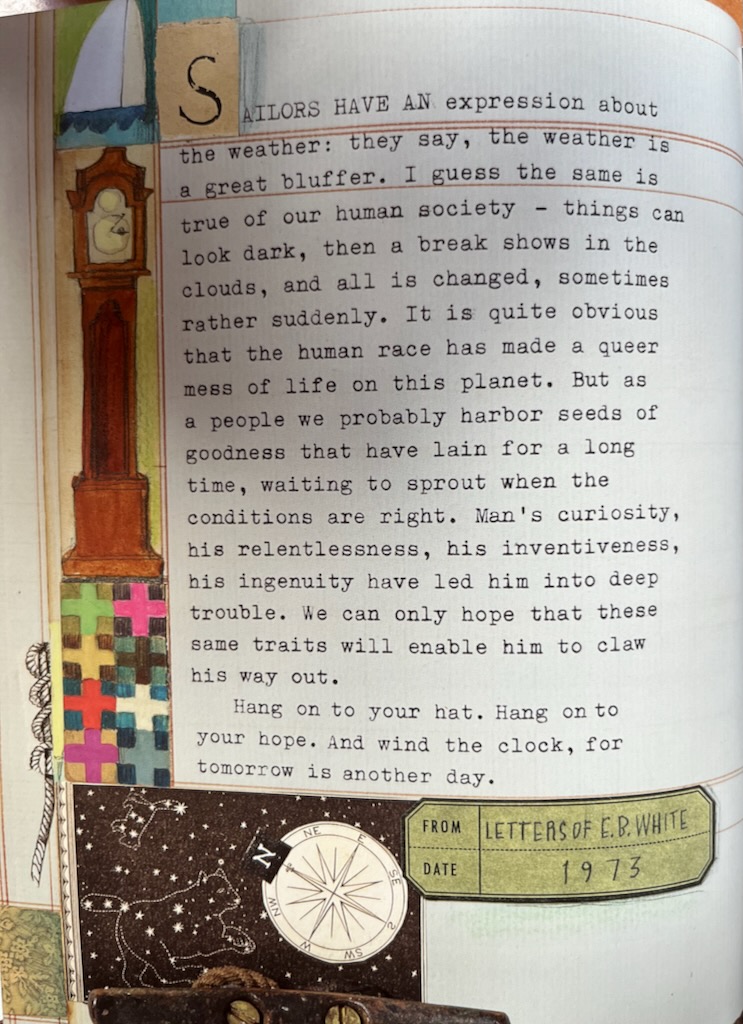
part collage, part scrap book, with excerpts of e.b.’s letters, and sketches, and reprints of early drafts and revisions in his own handwritten manuscript, Some Writer! The Story of E.B. White, by the caldecott honor winner melissa sweet, is at heart a love story told of one of the great disciples of love in its quietest, most undeniable forms.

e.b.’s life’s work, as he saw it, and as he wrote in a letter to a reader of charlotte’s web, boils down, pretty much, to this:

love these days seems to be a commodity of which the world is running short. but andy, or e.b., set out to make us see it, and feel it deep in our bones, by telling us the stories, as he put it, “of the small things of the day, the trivial matters of the heart.” he calls those matters “the only kind of creative work which i could accomplish with any sincerity or grace.”

e.b. white

well, dear andy, my gratitude to you is etched on the chambers of my heart, a graffiti of the highest order. to teach a child that love comes in the corner of a barn or even atop the manure pile where wilbur the pig so merrily huddled, well, that’s a blessing pure and certain. and imperative, i’d argue. and too often missed, i’d add.

because he’s earned his post as ballast for my wobbly, sometimes-too-tender heart, wasn’t i delighted when i turned to page 132 in this charmed and charming illustrated biography, and found this excerpt from andy’s letters, which seemed to me a prescriptive for these hard times and the dark clouds under which we find ourselves:

“things can look dark, then a break shows in the clouds, and all is changed, sometimes rather suddenly. it is quite obvious that the human race has made a queer mess of life on this planet. but as a people we probably harbor seeds of goodness that have lain for a long time, waiting to sprout when the conditions are right.

i’ll stop there with my old friend e.b., because that’s the line i want to consider, the line i want us to latch onto and live.

and so, what a curious thing that the next wise soul i wandered into this week was one olga jacoby, a german-jewish englishwoman and mother of four adopted children, who, in 1909 at age 35, had received a terminal diagnosis from her doctor, and sat down to write him a letter on the subject of living and dying without religion, but with moral courage, kindness, and a stunning receptivity to beauty. their correspondence would unfold until jacoby’s death four years later, and her letters, “by turns funny, touching, and intensely sad,” were published posthumously and anonymously by her husband in 1919.

in her first letter, to “my dear doctor,” she boiled down her belief to this:

“To leave a good example to those I love [is] my only understanding of immortality.”

and a year into her diagnosis she illuminated that notion:

“. . . More and more to me this simplest of thoughts seems right: Live, live keenly, live fully; make ample use of every power that has been given us to use, to use for the good end. Blind yourself to nothing; look straight at sadness, loss, evil; but at the same time look with such intense delight at all that is good and noble that quite naturally the heart’s longing will be to help the glory to triumph, and that to have been a strong fighter in that cause will appear the only end worth achieving. The length of life does not depend on us.”

and, she leaves us with this bedrock of lived truth:

“. . . Love, like strength and courage, is a strange thing; the more we give the more we find we have to give. Once given out love is set rolling for ever to amass more, resembling an avalanche by the irresistible force with which it sweeps aside all obstacles, but utterly unlike in its effect, for it brings happiness wherever it passes and lands destruction nowhere.”

who teaches you on the subject of love? what seeds of goodness harbor in you, and how will you coax them to sprout? and how might you put into practice the avalanche of irresistible force practiced by spiders and pigs alike (at least in the rich imagination of one e.b. white) and that, to the dying mother of four, was the most lasting thing that ever there was?

Some Writer! came to me, as so many of the best so-called children’s books do, by way of my best longest friend, auntie mullane, the children’s librarian, who prescribed it as the sure cure for summer blues, or any blues that might befall us in this dark-clouded era.

e.b. white on a rope swing, 1976

where my rabbit hole led me this week. . .

one in a series of summertime esoterica, in which for no particular reason my attention is drawn to this, that, or the other thing…

deep in my summertime poking-around ways, a pursuit of reading akin to ambling barefoot through dew-sodden grass, i found myself the other day burrowing into a rabbit hole, following the trail of a late-19th-century theologian with radical ideas and gloriously poetic prayers. (i might just as effortlessly follow the trail of what to do with too much zucchini, or why banana-peel-steeped waters are so fine for my fledgling tomatoes…it’s a carousel of wonders here on curiosity row…)

walter rauschenbusch (1861-1918)

the theologian of the week, here in rabbit-hole land, is one walter rauschenbusch, the late 19th-century clergyman and theologian who led the Social Gospel movement in the U.S., and whose work is said to have influenced a litany of great 20th-century social-justice warriors, among them martin luther king jr., desmond tutu, lucy randolph mason, reinhold niebuhr, and george mcgovern. his animating idea was that not just individuals but the whole of society needed to work toward what he termed “the kingdom of God” on earth, a place where justice and peace as well as equal rights and a democratic distribution of economic power were holy and necessary works, ones that demanded constant and unrelenting effort. 

rauschenbusch’s radical theology, it seems, was informed by eleven years working as a baptist pastor in NYC’s aptly-named Hell’s Kitchen, where he presided over the funerals of hundreds of children who died from the ravages of impoverishment—malnutrition, domestic violence spurred by overcrowded tenements, or any of the other ills born of economic destitution. 

rauschenbusch wrote: “I began to realize that God hates injustice and that I would be quenching God’s spirit within me if I kept silent with all of the social sin of the world around me.”

of the hundreds of children’s funerals over which rauschenbusch presided (many of them for children younger than five), he wrote:

“At each funeral I would find myself crying out to God, ‘Why do the children have to suffer in this manner?’ I recall on one occasion one of the church members, a single father who worked at a factory for 12 hours each day. His daughter was dying at home and calling out for her daddy. The employer refused to allow the father to go home to be with his daughter in her last hours.

“It was not uncommon to see grown men near our church just begging for work, just so they and their families could survive.

“It was in this context that I began to understand sin in a new and radical way. Baptists had always been known as railing and condemning the sins of alcoholism, smoking, gambling, and sexual promiscuity, such as were exemplified in the lives of the many prostitutes who lived and worked very close to our church. . . .

“The radical conclusion that I came to was this: all of these personal sins which were so obvious to everyone were somehow connected to the sin of structural injustice. So many people saw no hope, no way to extricate themselves from their living hell, their dead-end street. So many would resort to alcoholism. Women would feel compelled to become a prostitute so they could feed themselves and their families. Charles Dickens in his writings helped us see and somewhat feel the environment that could ensnare anyone who was trapped in a world of deprivation and desperation.

“The less obvious sins to most Baptists and other conservative leaders were those that were represented by the vast gulf between those who were extremely opulent, you might say ‘filthy rich,’ and the vast majority of people who were barely able (and oftentimes not able) to get by.”

finding wisdoms from the past for these arduous times is, perhaps, too futile a pursuit. but i believe in the endosperm of hope. and rauschenbusch’s prayers––and his theology––seem apt for a dusting off. and, besides, his prayers are beautifully wrought.

my eye was caught first by one of those prayers, the evening prayer (below) but as i kept reading it was the line above––“I began to realize that God hates injustice and that I would be quenching God’s spirit within me if I kept silent with all of the social sin of the world around me.”––and the children’s funerals that informed it, that clutched me at the gut and won’t let go.

here, as a place to begin, is but one of his prayers, with particular resonance for one who delights in all of creation, especially the trials and triumphs just beyond my own back door:

FOR OUR WORLD, OUR EARTH

O God, we thank You for this universe, our great home; for the vastness and richness of our cosmic environment; for the manifoldness of life on the planet of which we are a part.

We are thankful for the morning sun and the clouds and the constellations of stars.

We rejoice in the salt sea and the deep waters and green leaves of grass.

We thank You for our sense by which we experience earth’s splendor.

We would have souls open to all this joy, souls saved from being so weighted with care that we pass unseeing when the thornbush by the wayside is aflame with beauty.

Enlarge within us a sense of fellowship with all that lives and moves and has being in space and time, especially with all who share this earth as their common home with us.

Remembering with shame that in the past, we human beings have all too often exercised high dominion with ruthless cruelty, we admit that the voice of the earth, which should have gone up to You in song, has been a groan of travail.

May we so live that our world may not be ravished by our greed nor spoiled by our ignorance.

May we hand on earth’s common heritage of life, undiminished in joy when our bodies return in peace to You, our Great Mother who has nourished them.

and here is the beginning of his evening prayer: 

LORD, we praise thee for our sister, the Night, who folds all the tired folk of the earth in her comfortable robe of darkness and gives them sleep. Release now the strained limbs of toil and smooth the brow of care. Grant us the refreshing draught of forgetfulness that we may rise in the morning with a smile on our face. Comfort and ease those who toss wakeful on a bed of pain, or whose aching nerves crave sleep and find it not. Save them from evil or despondent thoughts in the long darkness, and teach them so to lean on thy all-pervading life and love, that their souls may grow tranquil and their bodies, too, may rest. And now through thee we send Good Night to all our brothers and sisters near and far, and pray for peace upon all the earth.

if you’re interested, here’s a link to a PDF of rauschenbusch’s 1910 collection of prayers, For God and the People: Prayers of the Social Awakening.

in the book’s preface, rauschenbusch explained the collection’s genesis: “The language of prayer always clings to the antique for the sake of dignity, and plain reference to modern facts and contrivances jars the ear. So we are inclined to follow the broad avenues beaten by the feet of many generations when we approach God. We need to blaze new paths to God for the feet of modern [women and] men.”

amen, pastor rauschenbusch, amen.


as long as we’re quoting old white men, i admit to being an admirer of the writings of that old-time radio humorist garrison keillor, who has mellowed beyond measure with age. in an ode to summer’s slow pace the other day, he wrote this about morning light, one of the blessings that comes with waking early, a habit i consider essential to the deep breathing of my soul:

It’s a revelation of delight, of our Creator’s delight in His creation, and though we’re brought up to be skeptical, wary of big hopes, prepared to deal with the injustices of life, still the dawn light argues with stoicism and you see the beauty of the ordinary


what ordinary beauties or big ideas captured your imagination this week?

and here’s a harder question (to ponder in your own soul): what shall we do so as not to stay silent in the face of the social sin of the world?

and happy blessed blessed day to my beloved andrea, who makes me laugh hard and often, and whose goodness seems vaster than the circumference of this big blue globe. (A is one of the chair friends who reads dutifully nearly every week, and more often than not sends along a note that melts me or makes me laugh every time…)

this is what mothering looks like. . .

a few years ago, maybe many years ago, i wrote something of a proclamation on mothering, the verb. in my feisty little voice, i argued — as vehemently as a girl taught to be polite could argue –– that, gosh darn it, mothering was not an art that belonged exclusively to those who happen to have pushed a wee squawker from her womb, nor only to those who’ve clutched babies to her bosom, anatomically-aligned attachments. i argued that we should be honoring not simply the noun — those who are mothers — but the verb — those who mother. 

it’s an all-inclusive distinction, one i tried to describe thusly:

yes, every last someone who has stroked a brow, wiped a tear, dabbed chocolate off a little cheek, fluffed a pillow, tucked in the covers, whispered bedtime prayers, set an extra place at the table, stretched a meatloaf, picked the peas out of the pasta salad, kissed a bloody knee, kept a retching belly from falling in the toilet bowl.

yes, every pair of arms that’s lifted a dead-weight child in the pool, played red rover till the cows came home, bent half-over to push a kid on training wheels around and round the block, turned the pages of good night moon so many times you find yourself chanting good night to the mittens when no one’s in the room.

you get the point.

i believe it as firmly as i believe anything. and in fact, in the many hours i’ve spent curled in my window seat in recent days, i found myself with nose in a book that argues — again, vehemently yet politely — that we are missing out on a whole lot of God if we think of God only as a white-bearded fellow perched on a throne with a sword and a scepter, a God as king, imperial ruler and judge, as wielder of power, and slayer of sinners. (for the record, that has never been my image of God, and i admit to images, being of the simple kind who need pictures to go along with my favorite passages. and the picture i saw is a tender God, one with arms that reach, and a palm that cradles, or presses against the small of my back. and as i’ve grown and deepened into the mystery, i now sense God without image at all. i sense God in the shiver that runs up my spine when i encounter the beautiful or the unbearably tender, and i find God in the interplay — the ineffable force — that animates hearts and draws us — any of us, all of us — into each other.)

the book i’ve been reading — She Who Is: The Mystery of God in Feminist Theological Discourse, by Elizabeth A. Johnson , a brave and brilliant theologian who happens to be a roman catholic nun –– says this: 

“God is that on which you lean your heart, that on which your heart depends, ‘that to which your heart clings and entrusts itself,’ in Martin Luther’s memorable phrase.”

the truth is, it’s all mystery, and we reach for metaphor so our little minds can find something to seize. how do you put words to the inexplicable, the unknowable? you simply know what you know. 

but in considering a God imbued with the feminine, a God more mother-like, a God, as johnson writes, of “gentleness and compassion, unconditional love, reverence and care for the weak, sensitivity, a desire not to dominate but to be an intimate companion and friend,” i scan the landscape of my recent days, and i spell out this litany of what mothering — the verb that belongs to all who employ tender loving empathies and unending expression of gentle kindness — looks like:

mothering is the knock at the door on a rainy morning, not long after dawn, and the friend who is standing there with a handful of field-plucked flowers and a soggy brown bag of parsley and spinach and ramps, foods she grabbed from the farmer’s market, knowing from her own daughter’s deadly cancer that these are the foods that should fuel me. and she knew without asking how very much i wished i could get to the market, though i couldn’t quite yet.

mothering is my beloved husband who, every morning, makes certain the feeder is filled with seed and the bird bath fully watered, for he knows the joy i absorb watching the birds flit hither and yon. mothering is the pizza he drove into the city to fetch because it oozes the things i love — spinach and mushrooms and cheese and a heavenly red sauce –– and he is intent on fattening me my way. mothering is the rod stewart and kim carnes tapes he played all morning long to try to convince me the rasp in my so-called voice (paralyzed vocal cord caused by the surgery) was a sexy addition to life here on the homefront.

mothering is the friends who don’t back down, who don’t shy away, who know without asking just when to barge in, and when to stay quiet. and who keep coming back, week after week, willing to walk at a snail’s pace, or pick up a vacuum and suck up the kitchen-floor crumbs that are driving me batty. 

mothering is my aunt who tucked a tiny enamel cross in an envelope and scribbled these words on a note card: “hope i’m helping you carry your cross!” and then wrote that as soon as her daughter could drive her up here from cincinnati, she wanted to sit side-by-side under an apple tree “to make your ‘hurts’ hurt less.”

mothering is the courage to go the distance, even when the distance is wholly uncharted and fraught with shadows and plenty of bumps. and what you need more than anything is a friend who won’t cower and run for the hills. 

mothering is the way some listen for the fears tucked in an otherwise straightforward sentence, and who don’t shush those hauntings away, but make room for it all, the light, the darkness, the liminal. 

mothering is the text message that comes out of nowhere and makes you laugh till the slits in your side tell you to stop. because laughter is always, always, a curative. and it can carry you for hours, the echo of its joy refusing to fade.

mothering is this holy earth unfurling its tight buds and its blossoms into frothy meringues of cumulus white and lavender blue. mothering is the dawn that reminds me again and again that the light will shatter the night. mothering is the papa bird who tucks the seed into mama’s beak, an iteration of kissing i’ll not soon forget.

mothering is without gender, independent of obstetrical status. mothering, quite frankly, is simply another name for “love as you would be loved.”

mothering, quite simply, is what God does. 

blessed mothering to all of you who mother and mother and mother –– even if you don’t realize…

birthday blessings to one of the wise women among us, our beloved lamcal, who fetched me from the darkness last night, and plunked me into a circle of pure and undeniable love, even when i wasn’t sure i was up for an outing. she’d sensed it might do my soul wonders, despite my bodily wobbles and squeaks, and she was oh so very very right on the money. i sat last night in a circle of holy holy pilgrims, who poured out their hearts and their blessings. and sent me forth. happy birthday, wise one….

lest you miss it, here’s the week’s query: tell a story of a time you were so deeply mothered — perhaps by an unlikely motherer — you’ve never forgotten.


and i’m leaving you this. because it’s glorious:

Go Deeper than Love

Go deeper than love, for the soul has greater depths,
love is like the grass, but the heart is deep wild rock
molten, yet dense and permanent.
Go down to your deep old heart, and lose sight of yourself.
And lose sight of me, the me whom you turbulently loved.
Let us lose sight of ourselves, and break the mirrors.
For the fierce curve of our lives is moving again to the depths
out of sight, in the deep living heart.

~ D.H. Lawrence ~

p.s. even though the picture above is overt mothering with a literal mother cradling her literal baby (moi and my firstborn, the law professor) i had to reach for it today, because that tenderness, that love, is the very thing fueling me right now, as i reach out of these past upturned weeks and set my sights fervently, fiercely, on doing everything i can to keep on loving my boys –– and all of this life –– with every ounce of tender lovingness i can squeeze out of me…..so help me, MotherGod….

equal time for equal mothering: this is saying goodbye one college drop off and that’s the kid who graduates next week. my miracle baby. . .

nursing tender things along. . .

barely perceptible nub of palest green, on the first outpost of the left branch of what might once again be my peewee hydrangea…see it?

i found myself crouching down as low as i could go the other day—likely lower than a girl with slits in her side should wisely have gone. but i was intent on inspection. i was searching clumps of stick for little nubs of green. of life. of any sign that the last shrub i planted in the fall — the day before the frost came — had survived the long winter. 

it was a long winter for plenty of us — certainly for my garden, newly planted in the weeks not long after the dreaded fence went up next door, and indeed for me. 

and yet now the season of birth and rebirth is upon us. from every bough and limb, from every red bird’s throat, the song of springtime’s hallelujah bursts forth and keeps on forthing. 

i find myself particularly intent on the tendernesses of this holy spring. i am crouching down low day after day, keeping watch for signs of life, coaxing beauties to unfurl.

poor mama robin laid her egg on a porch railing. oops. fear not, all now is well.

seems a wise posture, that of nursemaid to the birthing earth. it’s one i am learning to mimic as i consider my own deeply tender places, as i picture the convulsions of my poor little lung that likely has no clue what hit it, and why all the folderol and commotion a week or so ago. but it is now doing its darnedest to sew itself back to whole, pressing tight the seams that now are held in place with metal threads. the miracle of the human body is not unlike the miracle of holy earth, and as i slowly walk my garden’s edge, stooping here or there to lend a hand — lifting clematis vine to its fallen trellis, rescuing a robin’s egg mislaid on a railing’s edge — i am breathing in the tender caretaking ways of the God who so tenderly holds us in God’s sacred trusted hand. or so i imagine. none of us has a clue really just what form this God of ours inhabits, so from time to time i apply my storybook imaginings to make it all more apprehensible. i understand the naiveté of picturing a God who scoops me in God’s hand, but somewhere deep in that vision there is a grain of holy comfort. there is an image put to the ineffable. and right in here, i need that image.

i’m not the first to put pictures to my God, and i know i’m not the last. it’s a hard task here on earth to imagine the Divine goodness that inhabits all the cosmos, and surely all the heavens, and then the questions come: is heaven the holy light deep in our hearts? is heaven that palpable knowing that we are held by a goodness beyond our wildest imagination? once upon a time the nuns taught that heaven had a pearly gate, and was carpeted in clouds. oh, lord, they shouldn’t teach such things to wide-eyed little children; it can take a long long time to revise the picture reel inside your head, and why waste time in lala land when God is so much more and vaster and infinitely deeper.

i am spending many chunks of time pondering the presence of God in this messy chapter of my life. what i know is this: when i was deep in the dark tunnel of an MRI that scanned the vessels of my brain, and told not to flinch a single muscle for 45 excruciating minutes, i surrendered to the softest arms i’ve ever known. i imagined them as the arms of God, cradling me. and in that space of utter peace, i rested. and did not flinch, did not cough, did not exercise the itch or cramp in my shoulder; i found the holy wherewithal to do precisely as the doctor ordered. 

and that is how i pass the hardest hours. i go deep down under. into the place where God and angels dwell. i’ve no knowledge of this landscape. it’s all uncharted and unknown. but when i go there i am safe. and i am cradled in what feels like love. and that to me is how it feels when i walk my garden’s edge, crouch down low, and lift a hand to bud or vine or mislaid egg. we are all nurturing each other along. God and all of us. and i’ve no idea just how it works, or what it is. but i know i sense a holiness that i am choosing to call my God.

amen.

(i fully grasp that i’m going out on limbs here, groping along in wholly naked ways, but if i don’t use these hours of my life to plumb the deepest questions, to fumble for the truest answers i know, then what worth will these struggles hold? we have a chance to be our best selves in our darkest hardest hours. and these are mine. so far. so why not open the book and see what stirs? i’m impelled to wonder and to muse aloud….)

mama robin, safely atop her mislaid egg. photo by kerry, who saved the egg and whose porch is mama’s birthing room….

and now a few morsels, as has been my way in this year of gathering up bouquets of wisdoms…

Julian of Norwich, an English anchoress who experienced a vision in 1373 and wrote about it in a work titled Showings or Revelations of Divine Love — the earliest surviving book by a woman in the English language. my friends at the SALT Project (emmy-award-winning visual storytellers with a spiritual bent; check them out) laid this excerpt out as a poem. i found it lovely….

And in this he showed me a little thing
the quantity of a hazelnut,
lying in the palm of my hand, as it seemed.
And it was as round as any ball. 

I looked upon it with the eye of my understanding,
and thought, ‘What may this be?’
And it was answered generally thus,
”It is all that is made.”

I marveled how it might last,
for I thought it might
suddenly have fallen to nothing
for littleness. 

And I was answered in my understanding:
It lasts and ever shall, for God loves it.
And so have all things their beginning
by the love of God. 

In this little thing I saw three properties.
The first is that God made it.
The second that God loves it.
And the third, that God keeps it.


+ Julian of Norwich


 as has been my habit in recent months, i mark the turning of each month by turning to the pages of Henry David Thoreau’s The Journal: 1837–1861. here’s a dreamy entry from the ninth of may when thoreau was 34 and aswirl in the warmth of mid-Spring. (may our warmth please come….) 

May 9. It is impossible to remember a week ago. A river of lethe flows with many windings the year through, separating one season from another. The heavens for a few days have been lost. It has been a sort of paradise instead.

Saw a green snake, twenty or more inches long, on a bush, hang­ing over a twig with its head held forward six inches into the air, without support and motionless. What there for? Leaves generally are most beautiful when young and tender, before insects or weather has defaced them.

These are the warm­-west-­wind, dream­-frog, leafing­-out, wil­lowy, haze days. Is not this summer, whenever it occurs, the vireo and yellowbird and golden robin being here? The young birch leaves reflect the light in the sun.

Mankind seen in a dream. The gardener asks what kind of beans he shall plant. Nobody is looking up into the sky.

a little dictionary for those of us who don’t know our greek: lethe: “forgetfulness,” from the river in Hades that causes drinkers to forget their past.


one more thing a brilliant woman sent me this week when i was inquiring whether a certain “tiny retreat” (that’s how it was billed) had a virtual component, for those of us whose lives are pretty zoom-y these days…..

“Be who God meant you to be and you will set the world on fire.”

Catherine of Siena

finally, a profound note of thanks, to the brilliant and bold mountain-mover of a friend i have in poet and scholar (and my former cambridge landlord) mark burrows, who sent a note to all who were at the zoom book launch a few weeks ago (a lifetime ago!), and who implored you to add a little amazon review to my “languishing” Book of Nature. well, the book isn’t languishing but its state of review sure was. i have no understanding of the algorithms of amazon, but apparently, without reviews, you’re sunk. glub. glub. glub. so mark, unbeknownst to me, rallied the forces and got the reviews boosted from 3 to 11, currently. in a million years i couldn’t have done what he did. in these otherwise upturned days, the human species has shown me in brilliant colors just how magnificently we all can be, and love is pouring forth with the might to rocket me to the holy moon, which was magnificent last night if you happened to notice.

so, thank you, blessed blessed mark. and thank every one of you who in your own magnificent ways has stepped to my side in this curious curious walk through springtime 2023…..

love, bam

of thin places and the deep soul of my ancient peoples

i remember perfectly the first time i heard mention of a “thin place.” i was on holy ground, a farm smack dab in the middle of abe lincoln’s homeland. beau’s farm was the name of the farm, an organic farm, an organic farm that rose from an almost impenetrable shadow of grief. deep grief. beau was a marine, a strapping handsome fellow, who died down the road from the farm, home on leave from iraq, when he drowned. his mother, a woman i’ve come to love dearly, once told me that losing beau was “just like being hung, that moment when they pull that thing out from under you,” when the sheriff comes to the door, rings the bell at just past dawn to break the news.

beau’s mama was lost to grief for two long years. but then, she told me, she started to notice little beauties. she’d toss an old dried plant to the ground; and it’d grow.

“it dawned on me, after all those months, i was noticing beauty,” she once told me as we walked the gravel drive to where the peacocks pecked and strutted in their pen. and as i once wrote in the pages of the chicago tribune, “that’s when she realized. realized maybe the one place where she could plant her sorrow, turn it into something beautiful, something lasting, was the almost seven acres that surrounded her old white resurrected farmhouse. . .”

terry starks is beau’s mama’s name; she lives up in maine now, where she still turns earth and life into something beautiful, something lasting.

terry starks was the first to tell me of thin places. she told me the hay loft in her barn was where she went to cry when the tears seemed to have no end. she told me she was drawn there because the loft was surely a thin place, a place where the veil between heaven and earth is lifted. where you can all but feel the arms of God reaching out toward you.

it’s the celts who see the world that way, who know that ours is a topography of the sacred. who live attuned to soulful rhythms most others miss.

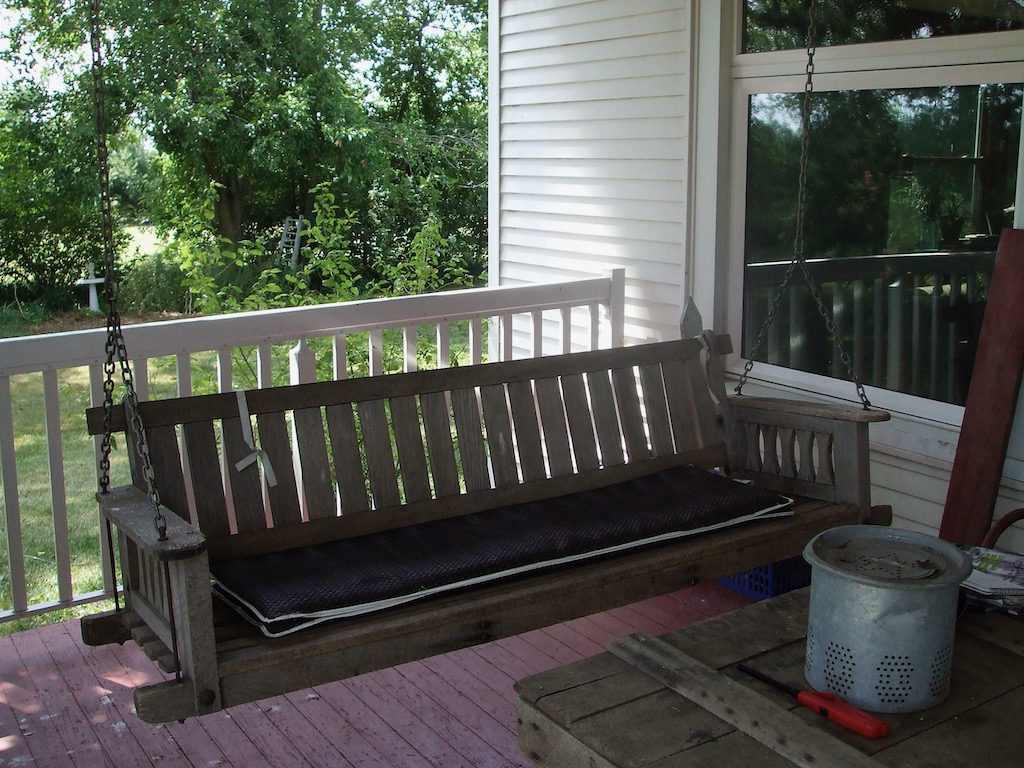
i remember sitting on the porch swing at beau’s farm, as beau’s mama poured her hard-won wisdoms as if a pitcher without bottom. i absorbed more gospel that day on beau’s and beau’s mama’s farm than i’ve absorbed most days of my holy blessed life.

ever since, i’ve been drawn deeper and deeper into the wisdoms of the celts, a holy people who traipse the hills and vales and rocky shorelines of my ancient roots.

because today happens to be a day when plenty of folk haul out green beer and soda bread, i decided to haul out just one of many passages from The Book of Nature, my little book due to be birthed just the other side of the weekend, on the vernal equinox, day of equal light and shadow, when all of us might look upon each other’s faces for the very first time, reason to rejoice if you ask me. it’s a passage from a chapter on the dawn. and i picked the photo way up above because i took it on the day i drove to beau’s farm, and it fits blessedly with how the celts see the sun. and because i was thinking of thin places, i decided to tell terry’s tale as the long way in to how the celts have taught me so very many things. thin places, among the litany.

here tis. . . a passage from The Book of Nature…

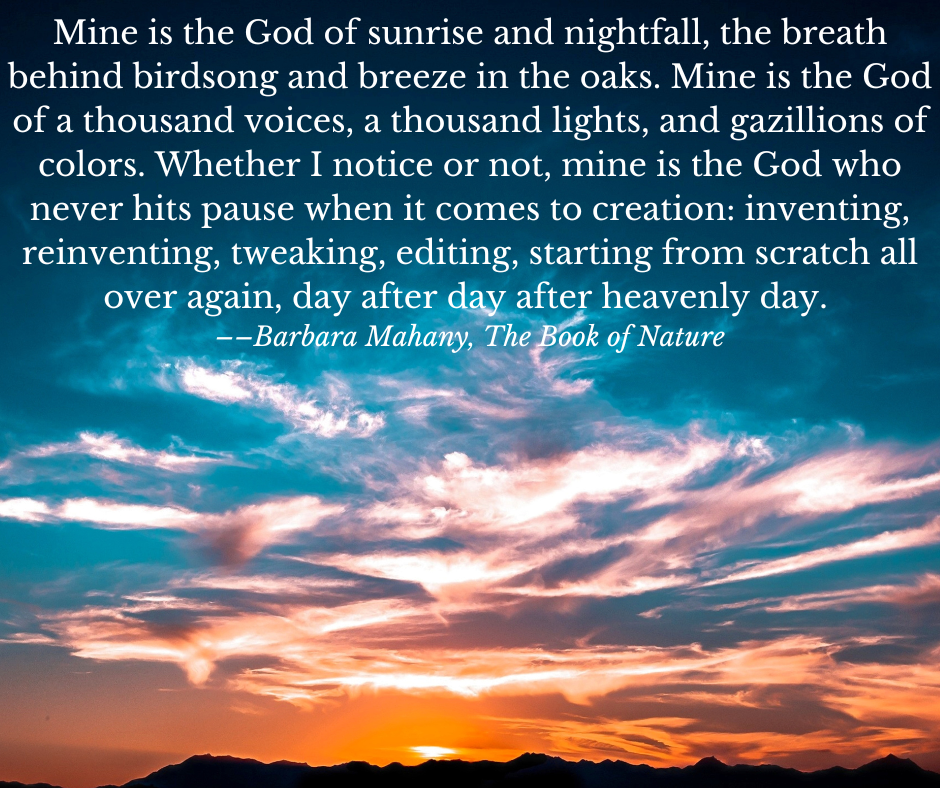
God was considered “the Sun behind all suns,” as the author George MacLeod once wrote. The whole of creation was dappled with the light of the sun as it journeyed across the sky. Wherever its light fell, there was God filtering through, an earthly translation of the divine infusion. And the perpetual Celtic praise song rose up with the dawn. Celtic gentlemen—farmers and herders and fishermen, set off to work in the predawn darkness—doffed their hat at the first light of the sun, and bowed in blessing. The Carmina Gadelica, a collection of Gaelic prayers and chants, is filled with start-of-day blessings, as the Celts were wont to offer up benediction for every chore and implement and God-given element of every day, from milking to weaving to shearing the sheep, from fire to wind to sprinkling of water. And certainly for the miraculous return of the morning’s first light. Mystic and teacher Alexander Scott, who grew up in the west of Scotland and kept Celtic ways alive in his nineteenth-century books, wrote that his were a people “listening for God in all things, ‘in the growth of the tree, in the rising of the morning sun, in the stars at night, and in the moon.’” 

–Barbara Mahany, The Book of Nature


of the many, many stories i wrote over the almost 30 years, the story of beau’s farm was one of the ones i hold closest to my heart. here’s a link, should you care to read it. with love, from terry’s scribe. (apologies if you need a subscription to open the link.)


thanks to a friend i love with my whole heart, i stumbled on another wise soul with buckets of beauty to grace the world. a poet-activist-performer named andrea gibson, now a cancer survivor whose words might take your breath away. andrea identifies as queer, and uses the pronoun “they;” and they are known for their trademark honesty and bare-naked vulnerability, traits i find irresistible and blessed beyond words. here are just a few lines i couldn’t keep from scribbling down:

when it comes to hearts i want always to be size queen…

i love you because we both showed up to kindness tryouts with notes from the school nurse that said we were too hurt to participate….

when your heart is broken, you plant seeds in the cracks and pray for rain.

before i die, i want to be somebody’s favorite hiding place, the place they can put everything they know they need to survive, every secret, every solitude, every nervous prayer, and be absolutely certain i will keep it safe. i will keep it safe.

andrea gibson

one more morsel for this blessed day, a poem from billy collins, once poet laureate of the united states, and a poet with plenty o’ irish roots . . .

Questions About Angels
by Billy Collins

Of all the questions you might want to ask
about angels, the only one you ever hear
is how many can dance on the head of a pin.

No curiosity about how they pass the eternal time
besides circling the Throne chanting in Latin
or delivering a crust of bread to a hermit on earth
or guiding a boy and girl across a rickety wooden bridge.

Do they fly through God’s body and come out singing?
Do they swing like children from the hinges
of the spirit world saying their names backwards and forwards?
Do they sit alone in little gardens changing colors?

What about their sleeping habits, the fabric of their robes,
their diet of unfiltered divine light?
What goes on inside their luminous heads? Is there a wall
these tall presences can look over and see hell?

If an angel fell off a cloud, would he leave a hole
in a river and would the hole float along endlessly
filled with the silent letters of every angelic word?

If an angel delivered the mail, would he arrive
in a blinding rush of wings or would he just assume
the appearance of the regular mailman and
whistle up the driveway reading the postcards?

No, the medieval theologians control the court.
The only question you ever hear is about
the little dance floor on the head of a pin
where halos are meant to converge and drift invisibly.

It is designed to make us think in millions,
billions, to make us run out of numbers and collapse
into infinity, but perhaps the answer is simply one:
one female angel dancing alone in her stocking feet,
a small jazz combo working in the background.

She sways like a branch in the wind, her beautiful
eyes closed, and the tall thin bassist leans over
to glance at his watch because she has been dancing
forever, and now it is very late, even for musicians.


nothing would delight me more than to see some of you, or all of you, come tuesday night, when i am shoving aside my worries about stepping up to speak in front of a crowd any bigger than the one or two who might share this old maple table on any given morning. we’ll gather to mostly rejoice in what’s become a holy sacred bond, one woven over time, through shared wisdoms, devoted kindness, good grace and humor. and i promise to read one or two passages from The Book of Nature, and even talk a little bit about how it came to be. it’s the first of my five books that wasn’t first birthed here, but its pages are filled with wisdoms learned here, steeped here, refined here. so you all have a thread in the whole cloth it became. and i can imagine no finer benediction than to begin the book with you. so see you tuesday, march 21, the vernal equinox at 7 p.m. chicago time.

now, what celtic wisdoms fuel your every day? and where are the thin places in your life where the veil between heaven and earth is at its thinnest, and you too feel it lifted for a blessed glance of the sacred beyond?

when it comes to hearts, i always want to be known as size queen…

of walls and bridges…

before: when sunlight had a place to play

been thinking a lot about walls and bridges this week, because it seems the only thing to do about a wall is to try to build a bridge. something of a wall––a six-foot-three-inch, solid-cedar wall––was dropped into our little world this week. it’s a wall i’d known was coming. a wall i’d been warned was on the wishlist all of three years ago. that’s a lot of breath-holding, spring to fall to summer, again and again and again. but held it i did. savored every drop of sunlight shafting in. counted my blessings in dapplings and plashes of sunshine’s incandescence, delighted in the way the light danced upon the wicker and the shingled walls of the little room we call “the summer house.” stood there just soaking in the breeze.

after…

it’s gone now.

and once i cried (the day i heard it’d been ordered, paid for, and soon to be arriving), once i dried those tears, i did what mightier folk than me have shown me what to do, and how to do it: how to build a bridge. starts with chin up, and turn the better cheek. if a wall was coming and i couldn’t stop it, i pretty much shrugged my shoulders and decided i’d take it like a grownup, take it with as open a heart as i could muster. and i’ve been mustering. all summer we’ve been gardening side by side, my next-door-neighbor friend and i. i dug up all the plants that wouldn’t grow in the dark at my house, and now they’re growing in the light at hers. on her side of the six-foot-three-inch fence.

since i’ve been at this digging thing for a few decades now, i’ve told her the few secrets and wise things i’ve learned the hard way. fact is, she’s smart as a whip and a whip-crack study, figures things out in a flash. and best of all she’s not afraid to get her hands muddy, or to spend a whole darn day on her hands and knees scrubbing. i’d say there’s grown genuine affection in our weeks of garden talk. we’ve sprouted something even a wall can’t eclipse.

and then this week the fence was no longer something i needed to picture in my head; it’s right outside, the whole long stretch of it. i wish it was a picket. i wish it let even a little dab of light through, but it doesn’t.

once the sun slides low, it gets dark out there. the light no longer plays.

so i got to work digging. dug myself a garden plot where before there’d been an isthmus of grassy lawn that stretched without end, it seemed. my old garden––along the western edge, a patch of peonies, an oak leaf hydrangea, some happy happy ferns––it’s pinched and stunted in mid-sentence it seems. things will need to be moved, and the few i moved already, to escape the metal posts being banged into the ground, they seem to have died in protest.

but i’ve a new garden now. one that will catch the morning sun. one i’ll delight in, once it starts to bloom. once the butterflies come in, and the birds nibble at the seed, and the bumblebees imbibe the succulence. and three years ago i bought myself a fantabulous bird house that will rise up on a bird-house post from somewhere in that garden, and it will be the pretty thing my eye is drawn to, the birds are drawn to. and i intend to come to love what i’ll pretend is my cloister garth. my place to soak in the sacred that animates this holy earth.

it’s not the only bridge i had to build this week, which got me to thinking hard about the ways i want to live my life. i will always always try to be the one to turn the other cheek. to search for the glowing heart of humanity –– or do i mean the sacred? the divinity? –– buried deep down inside, in the shadow of whatever hurts and scars have made it hard to see. i turned to thinking about the long line of blessed radicals, even the one whose name has been so deeply abused by so-called christians. i thought about the good samaritan. i thought about gandhi and martin luther king, jr. i thought about how, in the face of hurling hatreds, they listened only to the sound of love. how they always, always chose the bridge, and broke the walls.

what it really means to practice love is to do it when it’s hard. when things you dearly love are being taken away. when ones you love are sometimes even the ones doing the hurting. whatever are the million things that make it hard to muster, to offer, to model, to practice love.

we all need practice. it’s try and try and try again. stumble, skin your knees, and try again. the question is: will we try, or will we walk away, and leave a trail of hurt and hearts that only serve to harden?

and while i was thinking of all that, i stumbled on these words that fell right in line with all my thinking of walls and bridges…

SOMETIMES

we need a bridge and sometimes we are the
bridge. No one I know has escaped
troubled waters, rough seas and challenging,
scary days. There are times in our lives
when we could use a little help, and other
times when we are given the chance to be
that help for someone else. It really doesn’t
matter where you are right now. What
matters is that you remember we are
stronger together, and taking a hand is
just as important as offering one.

paul boynton

what bridges are begging to be built in your world this week? (a question for quiet contemplation….no self-disclosure needed…)

so far i’ve built a path of limestone stepping stones in what’s now a skinny gangway between garage and fence, but it’ll some day have a picket gate, and i plan to line that stretch of fence with avian residences (aka bird houses) and i need to find wee plants that don’t mind growing in the dark. and today, since my page proofs still aren’t here, i’m headed to the nursery to pluck myself some bushes that will bloom in spring and blossom into berries when the autumn comes. and there’s a long list of perennials i’ve always wished i had a place for, and now i do. so my bridge promises delight even in its earliest iterations.

bittersweet

bittersweet: the autumnal flame in the woods

in which we commence a summer’s reading…(there’s a stack of books on my desk, with titles from a british children’s classic, the little grey men, by someone named “b.b”., to the poems of jane kenyon, to a pair of books that mine the intersection of psyche and soul. i begin, curiously, there…)

what caught my eye was this:

bittersweet”: a tendency to states of longing, poignancy and sorrow; an acute awareness of passing time; and a curiously piercing joy at the beauty of the world. the bittersweet is also about the recognition that light and dark, birth and death––bitter and sweet––are forever paired. “days of honey, days of onion,” as an arabic proverb puts it. . . .to fully inhabit these dualities––the dark as well as the light––is, paradoxically, the only way to transcend them. and transcending them is the ultimate point. the bittersweet is about the desire for communion, the wish to go home.

it’s a passage from a book titled, bittersweet: how sorrow and longing make us whole, and it’s by a writer i’ve never before read. her name is susan cain, a lawyer-turned-author, who, in 2012, wrote a best-seller titled quiet: the power of introverts in a world that can’t stop talking. susan cain seems to be sliding my deepest truest traits under her magnifying lens. i likely never would have bumped into her, except that her work caught the eye of maria popova, the cultural critic and genius behind the marginalian, a weekly e-compendium of esoterica and wonder, whose work always catches my eye. 

bittersweet.

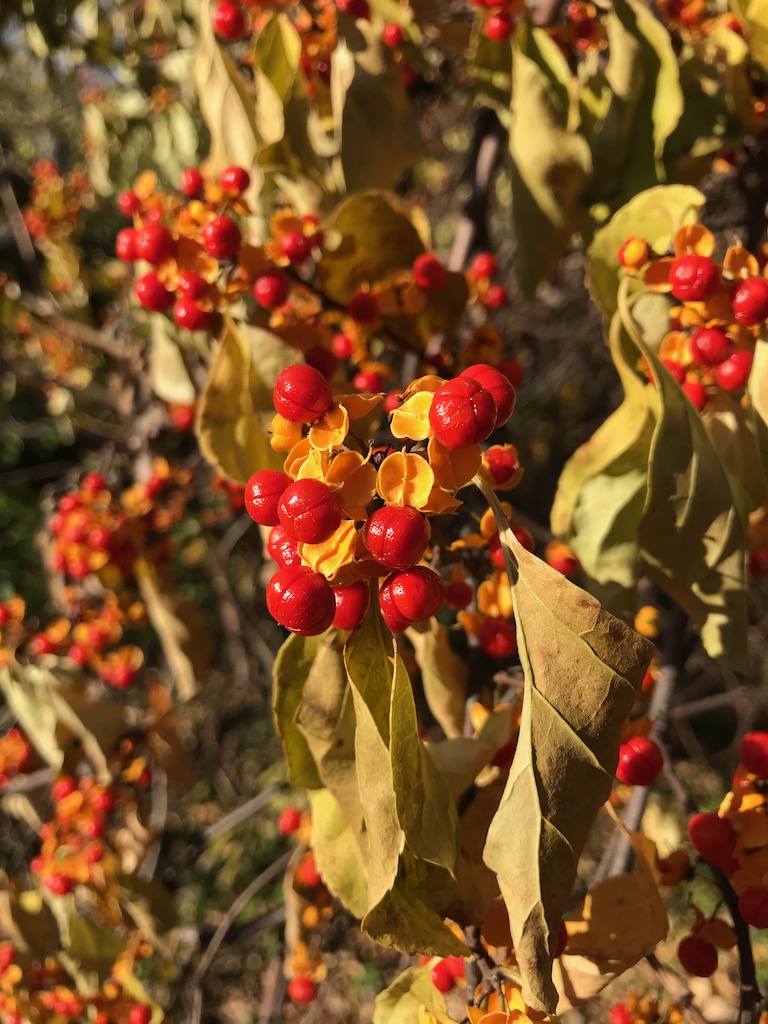
i’ve never put that name to how i am in the world. bittersweet: it’s a beautiful name, the name of an autumnal berry, persimmon in color, that has appeared to me on a trail up ahead as if the woods were aflame. but i’ve not pinned it to a way of being, of seeing, of sensing. and yet it fits as if it’s the long-missing piece to the jigsaw that is me. 

i might define or describe it as living with a profound antenna to the pains––and the beauties––in the world, and longing to heal or to salve or to simply be present. fully present. because you realize the beautiful is out there, is possible, and you think that if you reach far enough, work hard enough, imagine the whole of it, you just might bring it to life, the beautiful you believe in. 

and when, for one reason or another, you can’t, it can be crushing. 

the first time i got a sense that i might be wired in what i might now recognize as a bittersweet way was all the way back in first grade when mrs. leslie, my unforgettable teacher with the “eyes in the back of her head” (so she told us), called me to her desk just before lunchtime one day, and asked me to stay in from recess, along with david pugliese, a classmate who, it turned out, had a brain tumor, back when brain tumors in children had no possible cure. so david and i stayed in the classroom while everyone else ran out to play. for 59 years now, i’ve thought of david pugliese and how very unfair it was that he had to have a tumor in his beautiful, soft-spoken brain. i remember quietly playing games in that quiet classroom while the shrieks and the shouts from the playground seeped in from the underside of the door, day after day for as long as david was there. every time i think of david, my heart hurts. all these decades later.

bittersweet: perceiving pains and longing to fix them. because you believe in the beautiful, the sacred, the whole. 

it’s not the same as being shadow-souled, which is another name for depressed. though the bittersweet among us can feel the weight of too many worries. and we can be accused of being depressed. our hours of silence might easily be mistaken for something other than turning deep into our worries about the world, or someones we love, or someones we just barely know. sometimes we slip so deeply into the heartache of someone else’s agonies we can’t escape the weight of it. 

i’ve long known that deep sorrows pulse through me. a short list of bittersweet clues might be these (cain’s book has a checklist for gauging your level of bittersweetness): i know i love a foggy day, and the mournful cry of the geese veeing across the sky. i know the interplay of shadow against sunlight is where my eye always falls; it’s textural, it’s nuanced, it draws my deepest attention.

maybe yours too.

(cain diagnosed me [and you, if you sense a shared sensibility here]: “a true connoisseur of the places where light and dark meet.”)

i am equally awake to what’s beautiful, what’s tender, sometimes piercingly so. it’s a perpetual tug down there in my heart and my soul, where sometimes the rope starts to fray.

i’ve been told since i was little that i should remember to see the glass as half-full, celebrate sunshine, sing to the rain clouds to make them go away. i remember the quiz i once found in the pages of a newspaper, and how i filled in the answers and found out, according to the quizlet, i ranked among those with “low-grade depression.” i remember once writing (here on the chair) about how, in the discordant minor-key wail of a lone goose’s night cry, i heard the echo of my own unbound sorrow in the days and weeks after my firstborn went off to college, and i remember how someone i loved called to scold me after reading my words, to tell me that i should feel blessed, not on the precipice of perpetual tears. and, by the way, he added, i might want to check in with a therapist. 

and, yes, keeping close watch on the news of the world, and where the world shatters, i feel my heart shattering too. i’ve long known that empathy is a double-edged gift, and one that i’d never surrender. i know that it hurts––sometimes unbearably so––to slip into the shoes or the soul of someone who’s aching, who’s broken, or limping, or shattered. i know i sometimes wear it too heavily, and that it pushes me into long hours of quiet.

but i’ve never fully considered how that pierced sense of the heart might also be the very pulse beat that propels the push toward the good, toward that which heals, toward that which reaches for communion of the empathetic kind. i’ve never before seen it against a truth found in this line from middlemarch, george eliot’s epic 19th-century novel:

“…by desiring what is perfectly good, even when we don’t quite know what it is and cannot do what we would, we are part of the divine power against evil—widening the skirts of light and making the struggle with darkness narrower.”

“widening the skirts of light and making the struggle with darkness narrower.” now there’s an assignment.

nor have i ever framed it in the way of Gregory the Great, the bishop of rome in the late-sixth and early-seventh century, who spoke about “compunctio, the holy pain, the grief somebody feels when faced with that which is most beautiful,” as described by Owe Wikström, a swedish professor of the psychology of religion. “the bittersweet experience stems from human homelessness in an imperfect world, human consciousness of, and at the same time, a desire for, perfection. this inner spiritual void becomes painfully real when faced with beauty. there, between the lost and the desired, the holy tears are formed.”

“between the lost and the desired, the holy tears are formed…”

this world we’re yearning for, cain writes, is present in all world religions: in the judeo-christian realm, it’s the Garden of Eden or the Kingdom of Heaven; sufis call it the Beloved of the Soul. c. s. lewis called it “the place where all the beauty came from.”

buddhists teach that we might aim “to participate joyfully in the sorrows of the world.” 

just the other day, at a celebration of 20 years of OnBeing, krista tippett closed the proceedings with a call for joy-seeking even in this broken world. imperative joy, i immediately coined it. not mamby-pamby cheery whistling-in-the-dark, but honestly, authentically (to borrow the word from contemporary psychobabble), set out to plot a map of barely noticeable, utterly quixotic joys each and every day. (that’s a thought hole to burrow in some other day, though it wouldn’t hurt––especially now––to begin to seek joy in this epoch of considerable shadow.)

an old hasidic tale, one cain tells in her book, has it that a rabbi noticed an old man in his congregation seemed indifferent to any talk of the divine. so the rabbi hummed a poignant melody, a song of yearning. “now i understand what you wish to teach,” said the old man. “i feel an intense longing to be united with the Lord.” it’s in the minor-key chords, the song of the heart crying, that some of us hear most perceptibly.

naomi shihab nye once wrote: “before you know kindness as the deepest thing inside, you must know sorrow as the other deepest thing.” 

maybe that’s the beautiful secret of the bittersweet, a condition, a way of being i am only just beginning to deeply consider, after a lifetime of intensely feeling the sorrows that swirl ever and always. and just as intensely believing the beautiful is shimmering somewhere within our holiest reach.

it’s the start of my summer’s reading, and it seems a choice place to begin….

what’s on your summer reading list? or your bittersweet thoughts?

victorian engraving of bittersweet and wild chicory

empty nest

once the adrenaline died down, more fire-hydrant surge than all-out combat, once i paused my pounding on the window, realized how close i’d come to thrusting my fist right through the glass, shattering and bleeding sure to pre-empt the rescue i’d attempted, once i took a breath, my first impulse was to think maybe i’d jinxed it.

it must be my fault for letting out their secret. maybe i shouldn’t have extolled the wonders of the nest right before my eyes.

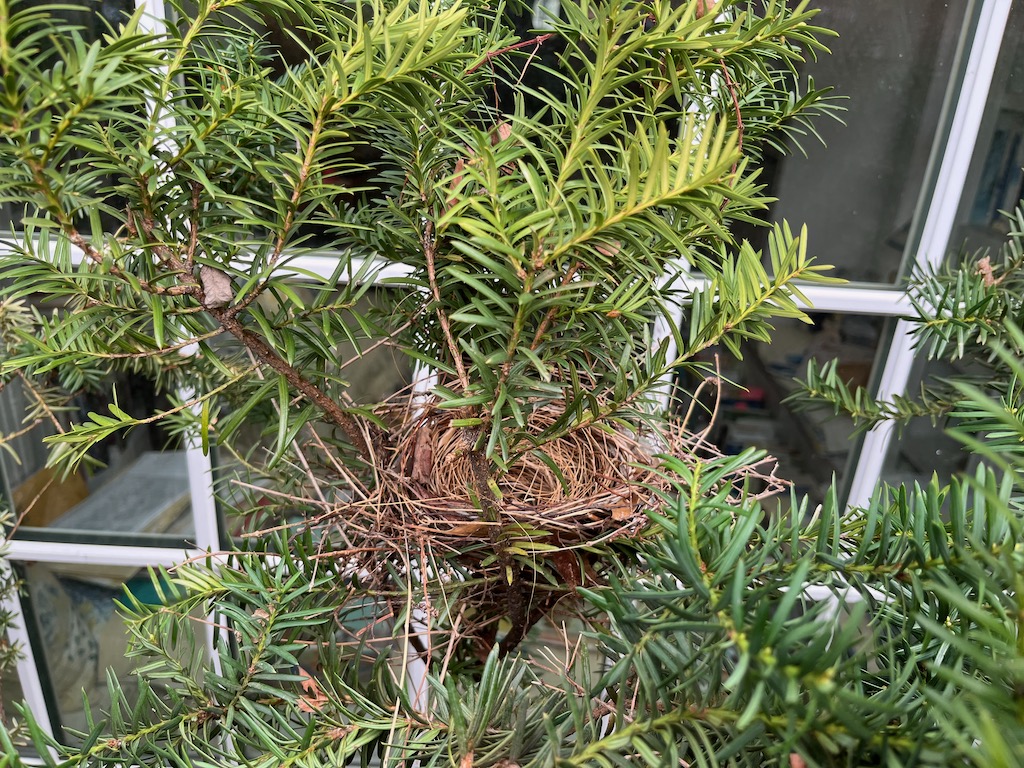
here’s what happened: mama and i were, as we’d been for weeks, co-existing peacefully, she on her side of the glass, blanketing her babies in her downy feathers, me tap-tapping away here on the word-churn machine. it was late saturday afternoon, just one short day and a half after i’d spun the tale of how mama cardinal and i were expectantly working toward our deadlines: mine, a book in the making; hers, a clutch of eggs.

she’d been on the nest 15 days and counting. i delighted at the way she punctuated our shared workspace –– seemingly out of the blue –– by belting out an abbreviated string of song, as if she’d suddenly been overcome by the jubilance of nesting. any day now, i would have heard the wee peep-peep-peeps of nestlings, seen the blur of pointy beaks thrusting skyward for an airdrop of worm.

but then, at nearly six o’clock that fateful evening, without so much as a peep of warning, in those final hours of what eliot so rightly termed “the cruellest month,” there suddenly arose from the bushes such squawking as i’ve never heard. i turned and saw furiously flapping wings — mama and papa both, each on separate branches of the ordinary evergreen that for two weeks now had been the nursery for their nest, the closest i had ever come to northern cardinal observation deck, a broodling in the works. while the two of them squawked and flapped, i noticed the third player in this late-breaking drama. it was furry, brown, and little. its stripe down the back gave it away: a chipmunk. a very hungry and extremely nasty chipmunk, if you don’t mind my editorializing. i leapt into life-guard mode, pounded hard as i could pound from my side of the glass. gave a holler to my own mother, ensconced in her armchair in the other room. as if she could help me here in dire land. at first my pounding seemed to confound the furry one, he turned down the branch, as if in exit. but then, he must have had a second thought, for up he turned, and scampered head-first into the nest. oh, dear god, such horror i’ve not witnessed. this was full-tilt assault. this was nature at its cruelest. and i stood witness. after plumbing the hollow of the nest, the hungry varmint turned and ran. i couldn’t swear to what i saw, but it would not be wrong to think i saw him clutching something in his mouth.

poor mama sat there flapping. her squawks slowing but not quieting. she circled the branch a few lonely times and then resumed her post. we both tried to catch our breath. i tried to convince myself that all was not lost, perhaps the casualty count was one and only one. and, besides, mama stood her post straight through to nightfall, never once lifting her belly from what she surely must be guarding with her life. only then, when darkness eclipsed my keeping watch, did i surrender too; turned off my desk lamp, whispered benediction, and tiptoed off, unsure of what the dark would bring.

alas, when dawn came, i threw off my blankets and hurried down the stairs. no mama. i’d thought i heard a muffled squawk not too too long after dark. i now presume the furry thing returned, finished the deed. the dastardly, dastardly deed.

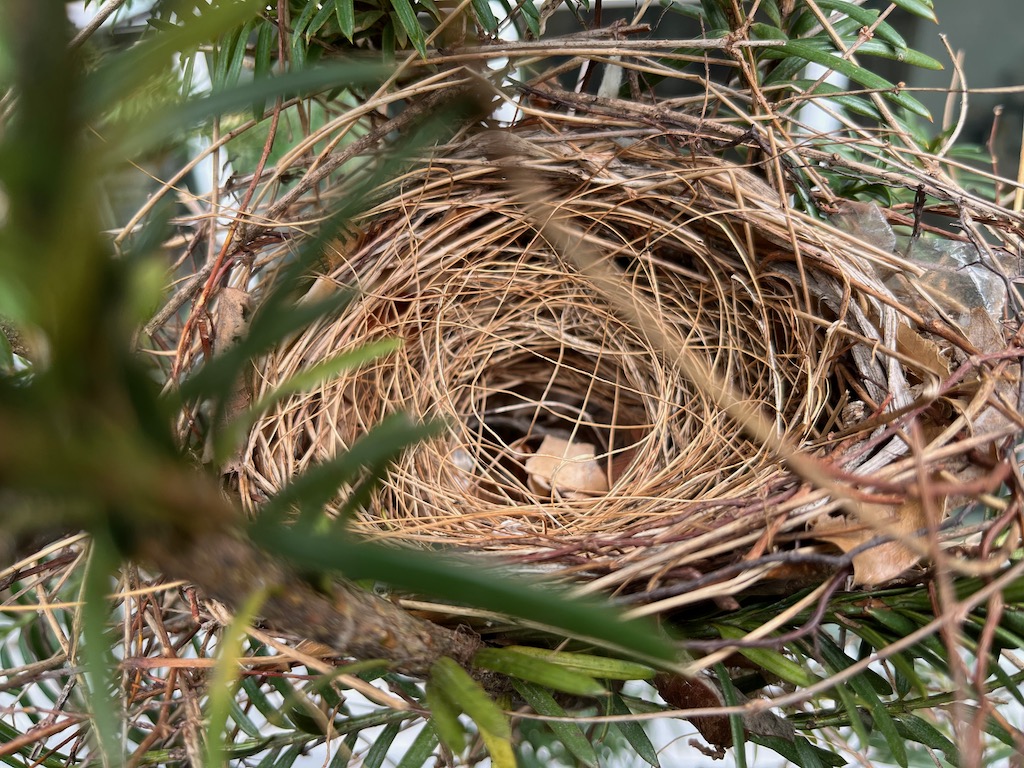
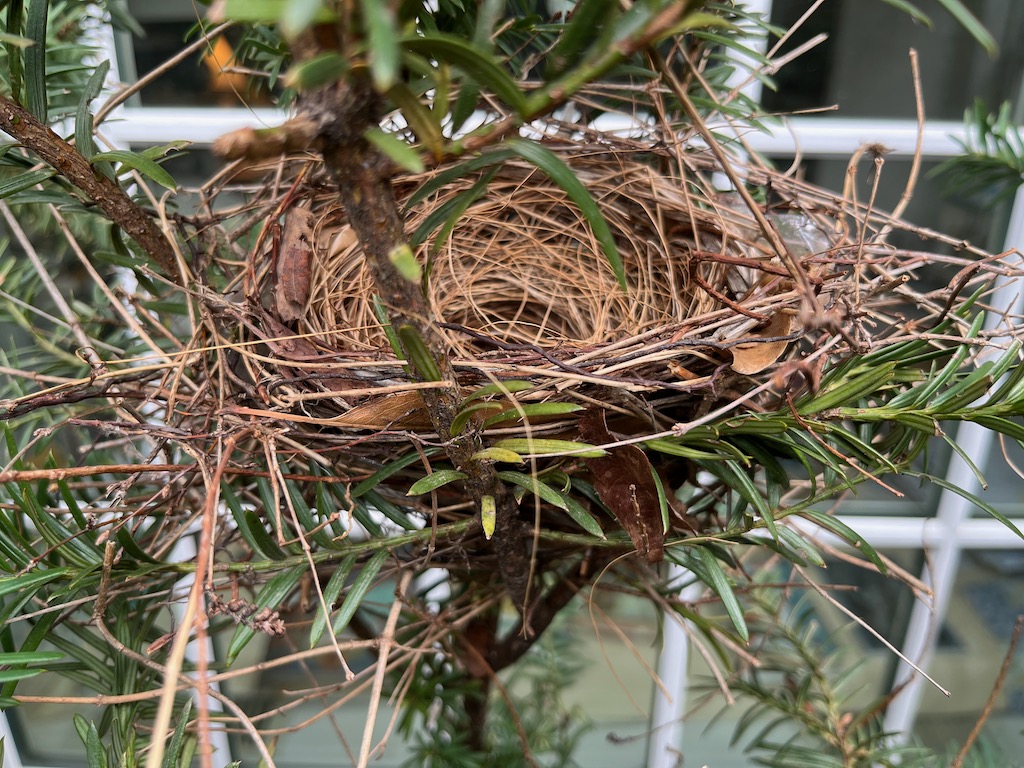
and so, the nest is empty. quite literally as i have just now hauled a step ladder out the door and, clinging for dear life, i climbed and pulled back branches, and indeed there is not a sign of life. just the artistry of their construction, right down to the shiny cellophane they might have thought to employ as something of a rain guard, what with all the rainy weeks of april.

turns out, the cardinals never had more than a one in three chance at making it out of the nest. despite their predilection for deeply tucking away their vernal constructions — remnants of a summer past, a bricolage of bits, dried grasses, thread-thin sticks, that cellophane wrapper perhaps from someone’s pack of cigarettes — the northern cardinal ranks near the sorry cellar of the nesting-survival charts, a long tumble down from the ash-throated flycatcher who scores the highest chance of flying from the nest, with seven of ten baby flycatchers flying. only the lowly house sparrow (11 percent chance) and the european starling (16 percent) fare worse than the red birds, and both sparrow and starling are invaders, anyway, non-native species snuck in as unintended cargo on some north america-bound vessel.

it hurt to sit here the first few days, the silence pounding in my ear. the absence of mama’s brown and red tail feathers protruding from the tuft of evergreen in which she so adeptly hid her nest.

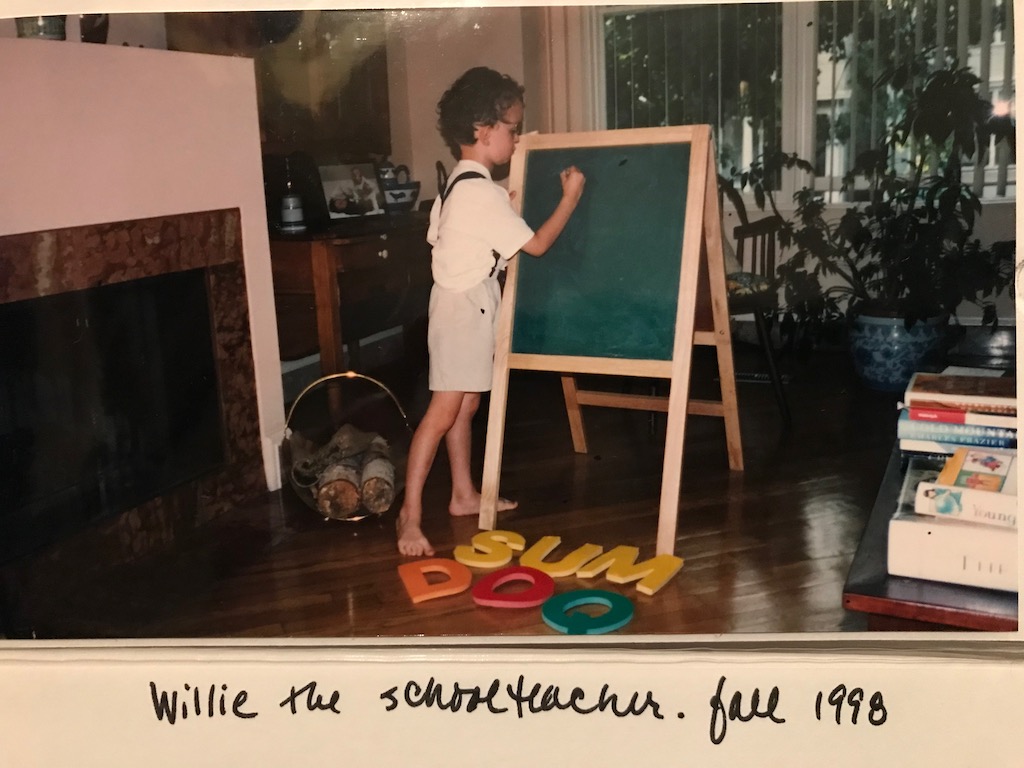
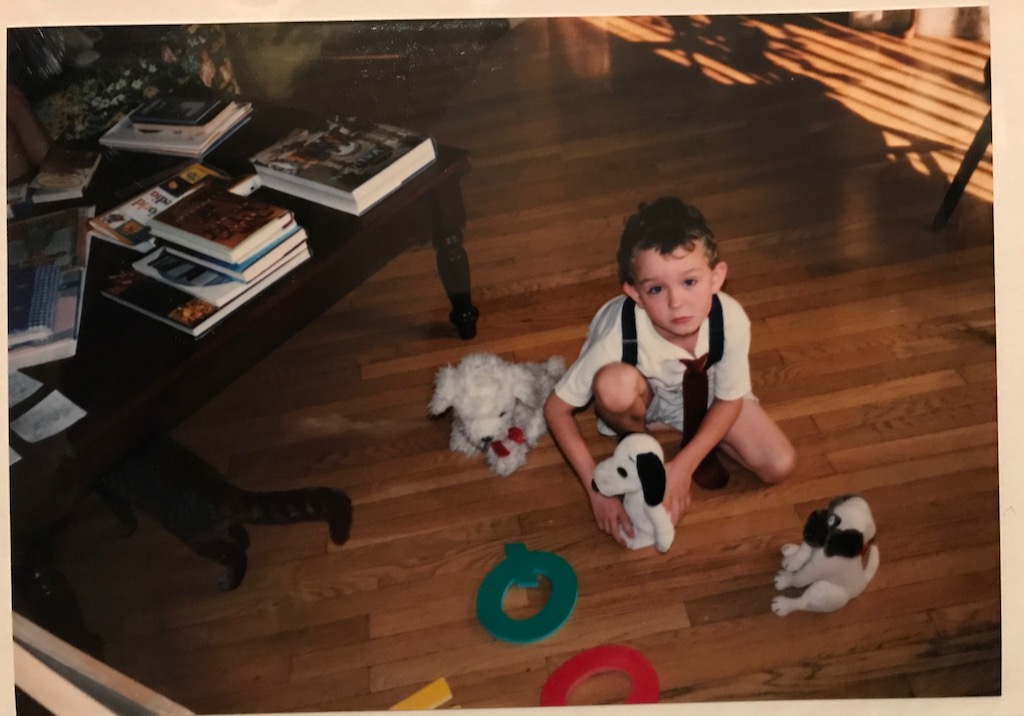
and then i started to consider my own empty nest, a consideration that comes, of course, as mothering day approaches. i think as much now about mothering as i ever have. though it consumes fewer hours of my focus, and fewer drives hither and yon, my fascination only deepens. i think often of how rare — how blessed — it is to know so fluently the whole makings of any life, let alone these two i love so dearly. day by day, it seems, the adventures pick up pace. the twists and turns in their narratives expand my own sense of being alive, being witness to lives unfurling each according to his own storyline. from my perch here at the old homestead, where i am reliably on watch and ever present, i follow two young men carving out paths that couldn’t be more different and yet entwine in ways that make me see the shared origins loud and clear and undeniably. the little boy who once could stare at a tv screen for interminably long times, he is carving out a path to be the very voices, the very storytellers, he once listened to. and the one who once set up an easel in the living room, encircled the room with every stuffed critter from his toy box, donned suspenders and necktie, scooped up a clutch of alphabet letters, and commenced a lecture on the fine points of S-U-M and Q, he looks toward a life in lecture halls filled with legal scholars in the making. let the record show it was snoopy who got first crack at his fledgling professorial skills.

my job here — simply loving through and through — will never ever be done. they might not need me (not so often anyway) to rouse them from their slumbers, to ferry them to the school house door, to shiver on their sidelines, but i’ve come to understand that my unique brand of loving means i’ll never find a way to lay aside aside my worries and my sometimes overly rambunctious fears. the phone calls these days are farther in between, the texts often unanswered, but my contemplations and my prayers deepen by the month. i’ve started worrying in a whole new way about this world we’re leaving to their keeping. i once held out hope that they could right our many, many wrongs. but now i wonder if we’re too far gone, this world so broken in so many places.

i look to mama bird, and her now hollowed nest. there is stunned silence out my window. no flicker of a sighting of mama now at it once again. she makes me think hard about the seasons of mothering, how some are full to bursting, and others pulse with a kind of aching, a sorrow for the hours out of reach, a longing for the more tactile days when every flinch and whimper was within our watch. her empty nest makes me think hard about the one i call my own, at once emptier and fuller than i can sometimes truly comprehend.

no wonder mothering never ever loosens its holy grip on me.

may your motherings be ever blessed, in whatever ways you love and hold those you count as your dearest rarest treasures.

now empty…

exercise in empathy, another name for prayer

A screenshot of a video released by the Ukrainian Police Department Press Service of military helicopters, apparently Russian, flying over the outskirts of Kyiv, February 24, 2022 

can you imagine? can you imagine waking up with your bedroom windows shaking, a distant thump unmistakably drenching you in dread, even in the liminal fog of your pre-dawn dreams? 

can you imagine lifting your newborn from the crib, cradling him against your breast, and running in the cold to the nearest subway shelter, where you will then spend hours upon endless hours, hearing the faint cacophony of what you know to be bombs exploding on a land you call your own?

can you imagine? 

can you imagine rushing to your kitchen, clearing shelves of whatever might fuel you in the long hours ahead, grabbing your dog, your kids, your passport, and climbing behind the wheel of a car with only a half tank of gas, a tank you meant to fill the day before but one of the kids got cranky so you thought you’d put it off? 

can you imagine if you were due to show up for an MRI to see how far the cancer had spread, how fractured was the tibia, the hip, the wrist, but now the air-raid sirens blare through the dawn and you have to weigh a trip to the hospital or the nearest border? 

can you imagine watching your father fill his duffle bag, turning toward the door, pausing to kiss you on the forehead, watching the tears well up in your mother’s eyes, seeing how her hand now is shaking, how she clutches the sleeve of your father’s coat, and how he pulls himself away, unlocks the door and steps out into darkness? and your mother fills the sudden emptiness with a wail you’ve never heard before?

can you imagine holding a ticket to a flight out in the morning only to awake to find the airports all are closed, bombed in the night, and no air space is safe for flying?

imagining is imperative. imagining is how we weave the invisible threads that make us one united people, that make us begin to know what it is to walk in another’s hell. 

imagining is the birthing ground of empathy. 

and empathy fuels our most selfless urgent prayer. 

empathy––a necessary precondition for loving as you would be loved, the necessity of imagining another someone’s pain or fear or desperation, for sometimes imagining nothing more complicated than cold or hunger or exhaustion so overwhelming you’re sure your heart is on its last full measure––empathy is the exercise that puts form and fuel to prayer, that enfolds its stripped-down architecture in the flesh of humanity. be it agony, or terror. be it frenzy, or dizzying confusion.

empathy is what lifts our prayer out of the trench of numbness, muttering words we memorize but do not mean. empathy fine chisels each and every prayer. catapults us beyond our own self-obsessed borders, across time zone or geography. conjoins our circumstance with that of someone we have never met, someone whose predicament is dire, and is––in fact––beyond our most ignited imagination.

truth is, our empathy cannot take us the whole distance. cannot––despite our deepest straining––plant us in the fiery pit of what it is to be awaking to the bombs, watching the ones we love walk into the inky darkness, not knowing for weeks if they’re dead or alive, maimed or shackled, or someone else’s prisoners of war.

but it’s the place to begin.

and isn’t the whole point of praying to reach across the emptiness, the void, to unfurl the one first filament that might begin to bring us side-by-side, in soul and spirit if not in flesh? 

don’t we sometimes pray as if to hoist another’s leaden burden onto the yoke of our own shoulders? 

isn’t the heart of it to lift us as one? we’re not here as parties of one, churning up our own little worries, butting our place to the front of the God line. we’re here to pay attention. to scan for hurt and humiliation, to go beyond, far beyond, lip service and throw-away lines.

imagination––the exercise of empathy––is a God-given gift, it’s the thing that equips us to love as you would be loved. without it, our every petition is flat. is a waste of our breath, really.

we invoke the hand, the heart of God, yes. but isn’t it our business, our holy business, to get about the work of trying to weave us into true holy communion?

it is our empathies that just might save us as a people, that just might move us toward the place where all our prayers rise in echo, from all corners, nooks, and crannies.

it’s not often we wake up to war. but we did this week. and so we will in the weeks and weeks to come.

i awake now in unending prayer. another name for exercising empathies, to stay awake to the suffering now inflicted on ones we’re meant to love. even if we’ll never know their names.

***

i searched for a prayer for peace, and came circling back to this, from ellen bass; it is a prayer for all, no matter to whom or what or how you pray:

Pray for Peace

Pray to whomever you kneel down to:
Jesus nailed to his wooden or plastic cross,
his suffering face bent to kiss you,
Buddha still under the bo tree in scorching heat,
Adonai, Allah. Raise your arms to Mary
that she may lay her palm on our brows,
to Shekhina, Queen of Heaven and Earth,
to Inanna in her stripped descent.

Then pray to the bus driver who takes you to work.
On the bus, pray for everyone riding that bus,
for everyone riding buses all over the world.
Drop some silver and pray.

Waiting in line for the movies, for the ATM,
for your latte and croissant, offer your plea.
Make your eating and drinking a supplication.
Make your slicing of carrots a holy act,
each translucent layer of the onion, a deeper prayer.

To Hawk or Wolf, or the Great Whale, pray.
Bow down to terriers and shepherds and Siamese cats.
Fields of artichokes and elegant strawberries.

Make the brushing of your hair
a prayer, every strand its own voice,
singing in the choir on your head.
As you wash your face, the water slipping
through your fingers, a prayer: Water,
softest thing on earth, gentleness
that wears away rock.

Making love, of course, is already prayer.
Skin, and open mouths worshipping that skin,
the fragile cases we are poured into.

If you’re hungry, pray. If you’re tired.
Pray to Gandhi and Dorothy Day.
Shakespeare. Sappho. Sojourner Truth.

When you walk to your car, to the mailbox,
to the video store, let each step
be a prayer that we all keep our legs,
that we do not blow off anyone else’s legs.
Or crush their skulls.
And if you are riding on a bicycle
or a skateboard, in a wheelchair, each revolution
of the wheels a prayer as the earth revolves:
less harm, less harm, less harm.

And as you work, typing with a new manicure,
a tiny palm tree painted on one pearlescent nail,
or delivering soda or drawing good blood
into rubber-capped vials, twirling pizzas–

With each breath in, take in the faith of those
who have believed when belief seemed foolish,
who persevered. With each breath out, cherish.

Pull weeds for peace, turn over in your sleep for peace,
feed the birds, each shiny seed
that spills onto the earth, another second of peace.
Wash your dishes, call your mother, drink wine.

Shovel leaves or snow or trash from your sidewalk.
Make a path. Fold a photo of a dead child
around your Visa card. Scoop your holy water
from the gutter. Gnaw your crust.
Mumble along like a crazy person, stumbling
your prayer through the streets.

–Ellen Bass

how did you learn to pray?

a note in an age of war: when the first reports started seeping in, when the news broke the other night that shelling had started along the northern, eastern, and southern borders of ukraine, it wasn’t long till i found myself thinking of all of you here at the chair. i knew we would all be huddled on the edge of our armchairs, keeping watch, keeping terrible watch. made me wish that every once in a while we could be together in real time, with our real faces and voices. our hearts and souls come to life. maybe after two years without company, without mornings when i set out mugs and bowls spilling with clementines, i am getting hungrier for human contact. made me wonder if maybe one day soon we should gather in a zoom room. i’ll leave this as a thought. i know we’re a gaggle of rather shy souls, but even us shy ones sometimes hunger for company. true company.

p.s. haven’t heard a peep from any editors so my wait for edits continues….