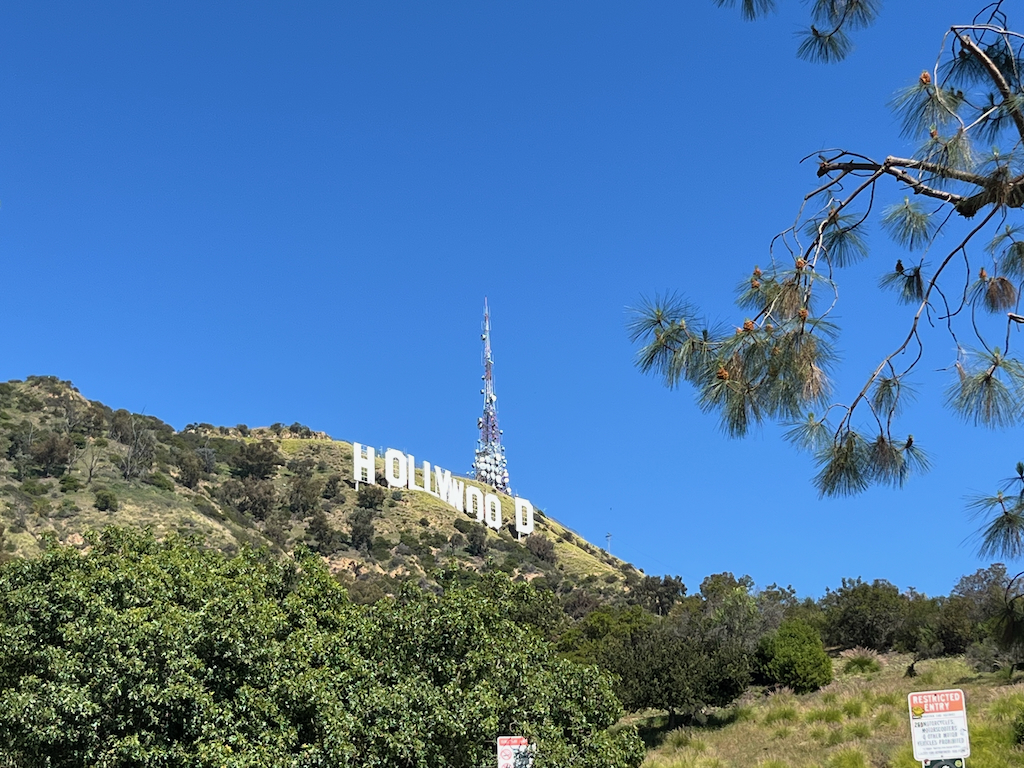
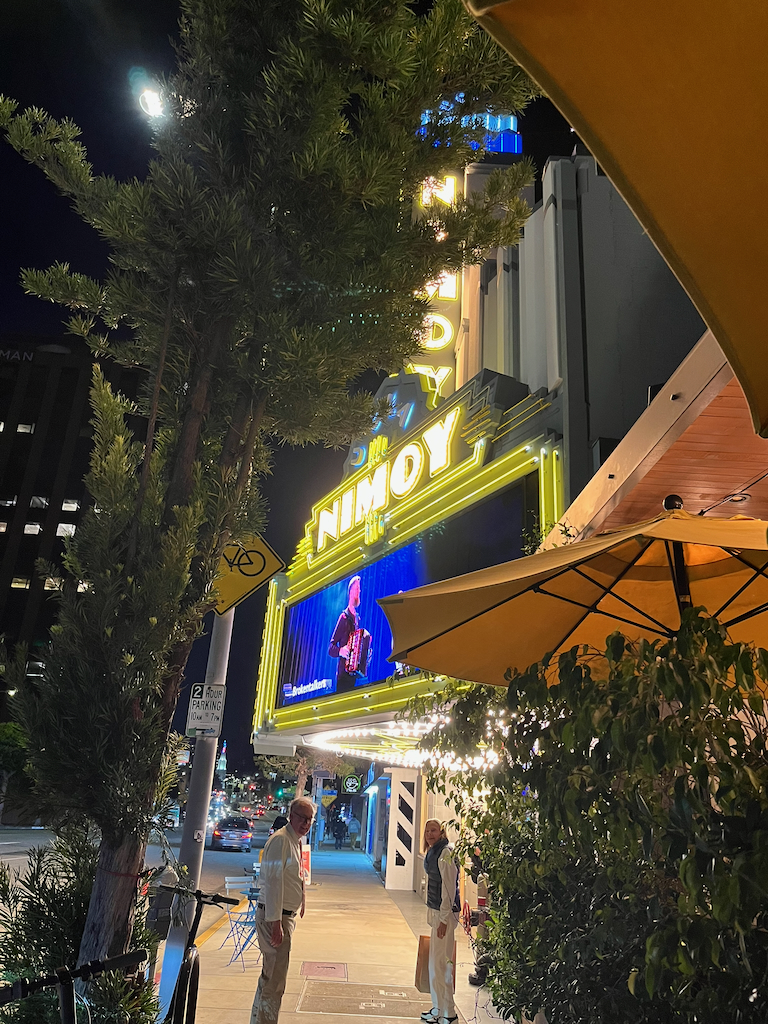
there are no palms out my window. no kitschy drive-ins in sunset shades of bubblegum pink and peach and aqua. no deco movie-house spires piercing the clouds, lit up in the night, ablaze with neon beacons.
instead, there is drab. limbs without leaves. birdhouses atilt thanks to gale-force winds in recent days. patches of snow still dot the brick walk back to the sodden alley, where a potage of wet leaves and muck and the detritus of winter all signal: these are the middlelands, where exotic is distant, and gray the predominant shade.
i’m home. and decidedly taking note of the vast gap—chromatic and otherwise— between LA and chicago. LA and my leafy little village. yes, there is a grand grand lake. but the waves are nowhere near pacific. and the water’s edge not so dramatic.
we live here in the middlelands. in more ways than geography. and it made me wonder. it made me think.
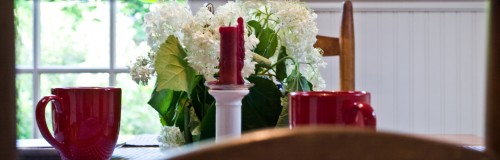
this old house is more than familiar. i know it by heart. it’s held me for decades now. i know its creaks, and which doors stubbornly refuse to close. i know which light switch is finicky. and just how to light the front middle burner.
we hold each other’s whispers.
this old house has heard me cry. and felt that rapid clip of my footfall when racing toward the door, because someone i love is knocking.
this old house knows my ways. how, pretty much, day after day, i awake before dawn, sit my bum on this bench, this bench where the cushion conforms and the wide-plank maple below is scuffed from all the years of my soles rubbing against the grain.
we humans make home where we are. where we land. but, now home from the land of abundant abundance—abundant color, abundant whim and whimsy, abundant greenscape and vertiginous terrain—i wonder how the drab infuses me. are we a less colorful people for the monochrome we’re up against?
or is home, in the end, the comfort that’s closest to the skin? the factor that completes the equation?
it’s something of a koan: might we be more colorful souls if we lived amid color? or do we make up for the lack thereof by sparking our very own rainbows?
is it the familiar, the cozy comfort of our surrounds, that’s the deeper, truer source of what fuels us?
how best to eke what we can out of this one shot of life?
to step into the unfamiliar is to open the lid on the sorts of queries we’d otherwise miss. which might be the wisest reason of all to pack up a suitcase and head—for a spell—for the hills—hollywood’s or beyond.
i know i’ll adjust, because that’s what we do. we could live in a box if we had to.
the bright hues of the city of angels will fade. i’ll forget the neon of the nimoy lighting the night.
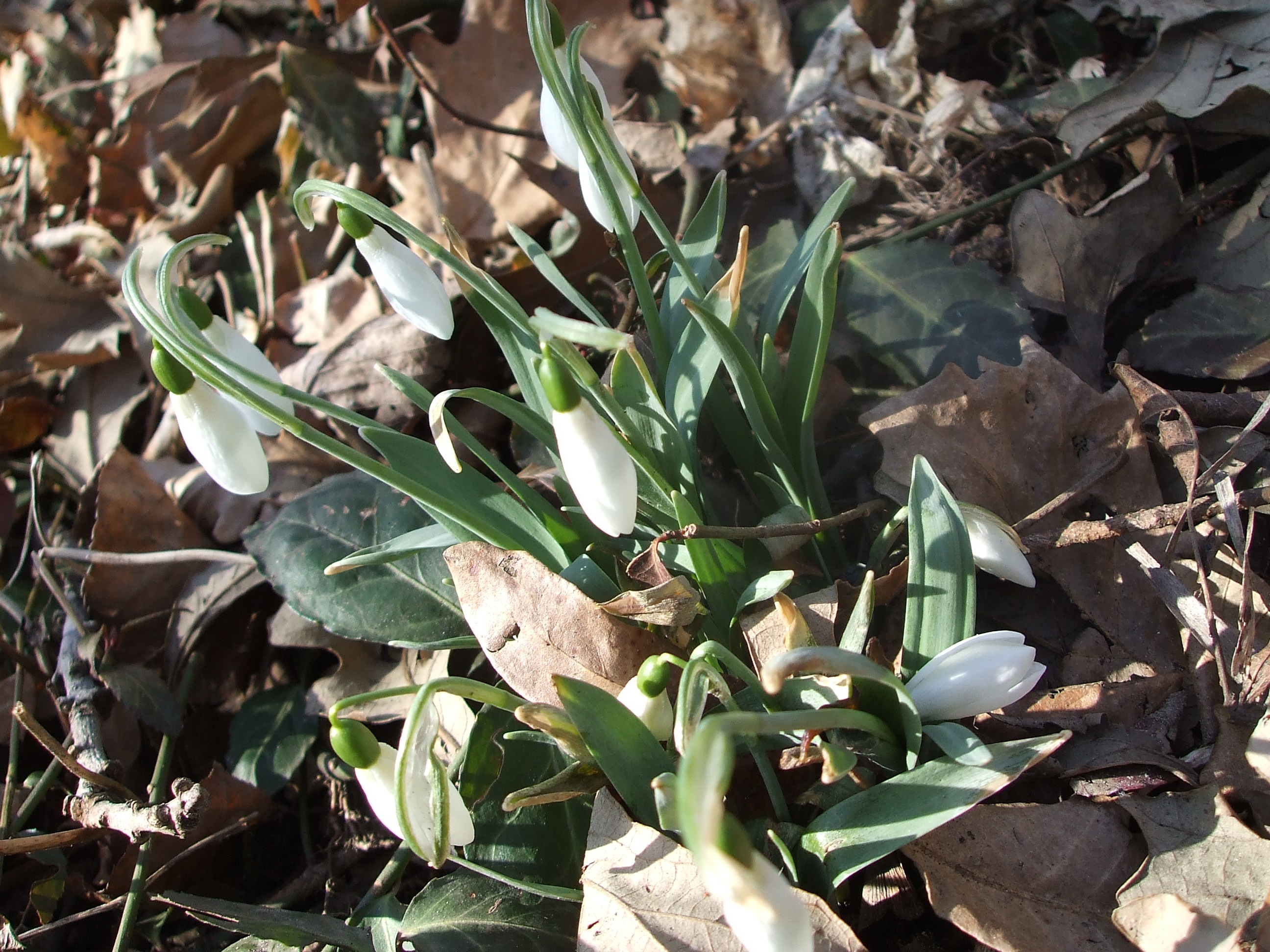
snowdrops: harbinger of spring on the rise
any day now, the snowdrops will rise, and the redbud will break out in a string of little red knots strewn along each branch. the pace of home will pick up, will sweep me into the current, and once again i’ll find myself sated.
but for now, in the interlude, in the space between there and here, i am wondering just how much it affects us deep down in the soul. and if, in our time here, we’d be wise to consider the backdrop in which we settle our lives.
it might account for the fact that day after day, here in the drab land, i slip my old arms into the nubbiest sweater of gray you ever did see: my uniform in winter, here where gray is a hue of many colors.
have you a place you’ve visited that made you wonder why you didn’t call it home? and what might your life be like if you up and transplanted your very sweet self? (mistake not the questions stirred for any serious thought of transplant; for one, i could never afford SoCal; for two, i’ve no intention of pulling up stakes, no matter how sumptuous someplace else might be…)
time and again, i find myself drawn into the orbit of pablo neruda, the late great chilean poet-diplomat and nobel laureate. time, in particular, is a subject at the core of my many contemplations. in Elemental Odes, neruda’s collection of odes to everyday objects—tomatoes, artichokes, soap—he laid out his most explicit instruction for how to hold time:
Listen and learn. Time is divided into two rivers: one flows backward, devouring life already lived; the other moves forward with you exposing your life. For a single second they may be joined. Now. This is that moment, the drop of an instant that washes away the past. It is the present. It is in your hands. Racing, slipping, tumbling like a waterfall. But it is yours. Help it grow with love, with firmness, with stone and flight, with resounding rectitude, with purest grains, the most brilliant metal from your heart, walking in the full light of day without fear of truth, goodness, justice, companions of song, time that flows will have the shape and sound of a guitar, and when you want to bow to the past, the singing spring of transparent time will reveal your wholeness. Time is joy. —Pablo Neruda
photo credit above: will kamin, 2011. AP photography senior portfolio, new trier high school.
i tend to ground myself in the world in all its nitty-gritty. that mattered (critically) when i was a nurse (don’t you dare inverse a systolic for a diastolic, when it comes to blood pressure reading), and in all my decades of chasing after news, the truth—and every grimy detail—was what we sought. thus, when i peruse the bookshelves of my local free library (the world’s most generous invention, to be sure), i am nearly always in the down-low where no windows are, where the endless rows of fact not fiction reside.
i’m decidedly non-fictionally inclined.
but this week i was lulled into the rooms upstairs, the rooms where sunshine streams through sky-high windows, and where make-believe is the order of the room. in other words, i crept up to where the fiction is. and in the writings of one irish novelist, a fellow i’d give anything to sit with in any irish pub, or better yet to stroll the rocky coastline of the continent from which half my peoples come, i found the surest cure for running from the blues.
niall williams is his name, an irishman, who is but a year younger than me, and who has gathered wisdom as an old stone takes on a mossy coat. i can almost see the glint in his eye, as from some quiet post in the corner of a dimly-lit, crossbeamed room, he’s kept closest watch on the quirks and comedies of human nature. and on the heartbreak too. as the tenderness he kneads into his prose and paragraphs has left me gasping more than once (and i am only eight chapters in).
the book is this is happiness, as prescriptive a title as a girl in search of antidote might want.
the irishman had me at chapter 1: “It had stopped raining.” (that’s the chapter in its entirety.)
chapter 2 picked up where 1 left off: “Nobody in Faha” (the fictional irish town that just happens to be a spot on the map not far from where my non-fictional peoples hailed) “could remember when it started.” by the third sentence of that second chapter, i was ready to shove up my shirtsleeves and not move an inch till i’d turned the last page. it went like this: “[Rain] came straight down and sideways, frontwards, backwards, and any other wards God could think of. It came in sweeps, in waves, sometimes in veils. It came dressed as drizzle, as mizzle, as mist, as showers, frequent and widespread, as a wet fog, as a damp day, a dreeping, an out-and-out downpour.”
and on it goes, plip-plopping along, this incantatory passage that soon enough tells us that the unrelenting rain came “like a blessing God had forgotten he had left on.”
this is nothing less than bliss in garamond font (a literary typographic detail nearly always spelled out at the back end of any book); and most certainly for a girl who penned a paragraph of her own, in her most recent book, that unfurled in uncannily kindred ways. c’est moi:
“Rain, like most of us, has its moods. In its more laconic hours, it comes on unsuspectingly, without folderol, timpani, or cymbal crashing, the barest slip of a presence and suddenly you’re bespattered. On the days when rain is tempestuous, furious, raging, it rattles the heavens, cleaves the night, pummels the trees, and sends all the world—even the puddle-paddling robins—running for cover. Betwixt and between, it’s the master of a thousand voices, from the salubrious plopp—the drop with a splatter—to the militaristic rat-a-tat-tat, when the rain tries to pretend it’s a handful of pebbles thrashing your windows, and on to the audible gulp when a downpour is frothing your gulleys. The Brits, reliably saturated in the subject, offer a lengthy lexicon for precipitation’s multiple personalities: there’s a basking (drenching in heavy shower); a drisk (misty drizzle); a fox’s wedding (sudden drops out of clear blue sky); a hurly-burly (thunder and lightning); a stotting (rain so hard it bounces up off the ground); and, for closers, thunner-pash (heavy shower with thunder). Because it’s so elemental, the life stuff of our very existence, the celestial surge that fills our rivers and waters our crops, rinses away the detritus, bathes all the woods, and the sidewalks as well, it’s been the subject of intense preoccupation and prognostication for a long, long time. time. Since ever ago.” (p. 85, The Book of Nature)
is there not a hint here of shared joy in precipitatory romps? can you not feel the two of us––niall et moi––luxuriating in the many, many wondrous ways to say “the rain is unrelenting”?
i am hardly alone in my enamorment of mr. williams. my best best friend, a longtime children’s librarian in the los angeles public schools, couldn’t stop texting me pictures of its pages this week, and, soon after, when i mentioned to a beloved literary friend (a sister chair, who might reveal herself below) that i’d fallen into novel love, she reminded me that she’d told me so a few years back. as always, i am late to my own party.
in any case, here’s what the new yorker had to say back at the dawn of 2020, in the year of our covid, when happiness whirled onto the world stage.
This Is Happiness, by Niall Williams (Bloomsbury). This elegiac novel is as unhurried as its setting: Faha, a village in western Ireland, “unchanged since creation” until, in the late fifties, electricity arrives. The narrator, now elderly, reminisces about that time; having come from Dublin as a teen-ager, to live with his grandparents after the death of his mother, he conceived a hopeless passion for three sisters. “We spend most of our lives guarding against washes of feeling, I’m guarding no more,” he promises. The novel’s description of a lost rural life style, and the gaps between a young man’s romantic expectations and the inescapable letdown of reality, is comic and poignant in equal measure.
all of which is to say that bibliotherapy is one of the world’s great cures for whate’er ails you. and even more so when it ferries you off to a wee irish village “where story was a kind of human binding,” where church pews were filled as if by unwritten order, where front doors were never closed in daytime nor backdoors locked at night, and where, we’re told, “religion lasted longer … because we were an imaginative people, and so could most vividly picture the fires of Hell.”
and wherein the self-described antiquarian narrator notes in passing, “i know it seems unlikely that Faha then might have been the place to learn how to live, but in my experience the likely is not in God’s lexicon.”
the world these days is wearying. and worrying, too. my week began with a funeral, a breathtakingly beautiful one that wove buddhist and roman catholic threads but was tragic nonetheless, and was followed by a seder where the weight of gaza and jerusalem bore down on every heart. by week’s end, i’d heard tell that my kid was nearly carjacked, and a dear friend who lives alone (and has borne already more than too much suffering) is on the cusp of twelve rounds of godawful, pray-to-God-it-works chemo for the newly-diagnosed cancer in her lungs.
the blooms outside my kitchen door were doing all they could to boost the perfumed quota in the vernal air, and the robins busied themselves constructing scrappy nests in my window box along the alley. (do not ask me to tell you the tragic tale of the mama robin who was tangled in a dessicated grapevine, nor of the nest no longer in the works.) all the earth’s wonderment––glorious as it is as winter erupts into spring––is ephemeral, is here, then, poof, it’s gone.
but what i find on the page is lasting. can be read and read again. can be indelibly inked into the files of our mind.
and so, this week, a newfound balm and friend was found. and i’ll be tucked away in faha, on the fictional irish coast, for as long as the pages will carry me. bibliotherapy rarely fails me.
what carried you away this week?
here’s a jolt of joy that took my breath away this week: the great christian mystic richard rohr, a franciscan friar and ecumenical teacher, and his new mexico-based Center for Action and Contemplation saw fit to surprise me by clipping an excerpt from The Book of Nature in his daily meditations on wednedsay. that he chose a favorite passage, the story of brother lawrence, the barefoot monk who saw God in the pots and pans of his parisian monastery kitchen, and was struck by the innate holiness of a nuck-naked little tree, only charmed me all the more. here’s a peek at the preaching of the trees.
and from this week’s commonplacing. this morsel from DH Lawrence:
The vast marvel is to be alive… The supreme triumph is to be most vividly, most perfectly alive. Whatever the unborn and the dead may know, they cannot know the beauty, the marvel of being alive in the flesh. The dead may look after the afterwards. But the magnificent here and now of life in the flesh is ours, and ours alone, and ours only for a time. We ought to dance with rapture that we should be alive and in the flesh, and part of the living, incarnate cosmos. I am part of the sun as my eye is part of me. That I am part of the earth my feet know perfectly, and my blood is part of the sea. My soul knows that I am part of the human race, my soul is an organic part of the great human soul… There is nothing of me that is alone and absolute except my mind, and we shall find that the mind has no existence by itself, it is only the glitter of the sun on the surface of the waters.
Every morning the good news pours through the field
touching every blossom every stem and each of them,
on the instant offers to be part of it— offers to lift and hold, willingly the vast burden of light
all day. In my life I have never seen it to fail— flower after flower
leaf after pearly leaf, to the acre, to the massy many, is silvered, is flooded;
and such voices spangle among it— larks and sparrows— all those small souls—
are everywhere tossing the quick wheels of pleasure from their red throats as they hang on—
as though on little masts of golden ships, to the tops of the weeds— and that’s when I come—
that’s when I come, crying out to the world: oh give me a corner of it to lift also, to sing about, to touch with my wild hands—and they do.
and this from annie dillard‘s the writing life, prose laid out as a poem by my friends at SALT Project:
One of the few things I know about writing is this: spend it all, shoot it, play it, lose it, all, right away, every time.
Do not hoard what seems good for a later place in the book, or for another book; give it, give it all, give it now.
The impulse to save something good for a better place later is the signal to spend it now.
Something more will arise for later, something better. These things fill from behind, from beneath, like well water.
Similarly, the impulse to keep to yourself what you have learned is not only shameful, it is destructive.
Anything you do not give freely and abundantly becomes lost to you.
You open your safe and find ashes.
and finally, this goodbye to “poetry’s colossus,” helen vendler, whom i was blessed to call my teacher in our year of sumptuous thinking…
and blessings to you, and thanks for whirling by….
p.s. the other two books in my bibliotherapy stack (above) are william’s history of the rain, which had me at the title, and letters from max: a book of friendship, an epistolary collection between a poet and a playwright: sarah ruhl, the twice pulitzer-finalist playwright who was once teacher to poet max ritvo and quickly became dear friends, and as max’s cancer grew worse, their connection deepened. suleika jauoad ran an excerpt the other day in her isolation journals, and i ran to the library to grab a copy.
i called it the year of thinking sumptuously. the year we closed up our house, packed a few necessities (including a gray striped cat who nearly had a heart attack on the plane), and flew to beantown. there, we motored north to the republic of cambridge, wended our way through harvard square, parked at the corner of franklin and putnam streets, promptly climbed three steep flights of stairs, and settled in for a year best described as “trying to catch a drink from a firehose.”
i drank mightily, slurping down my chin. and i never minded one sloppy bit.
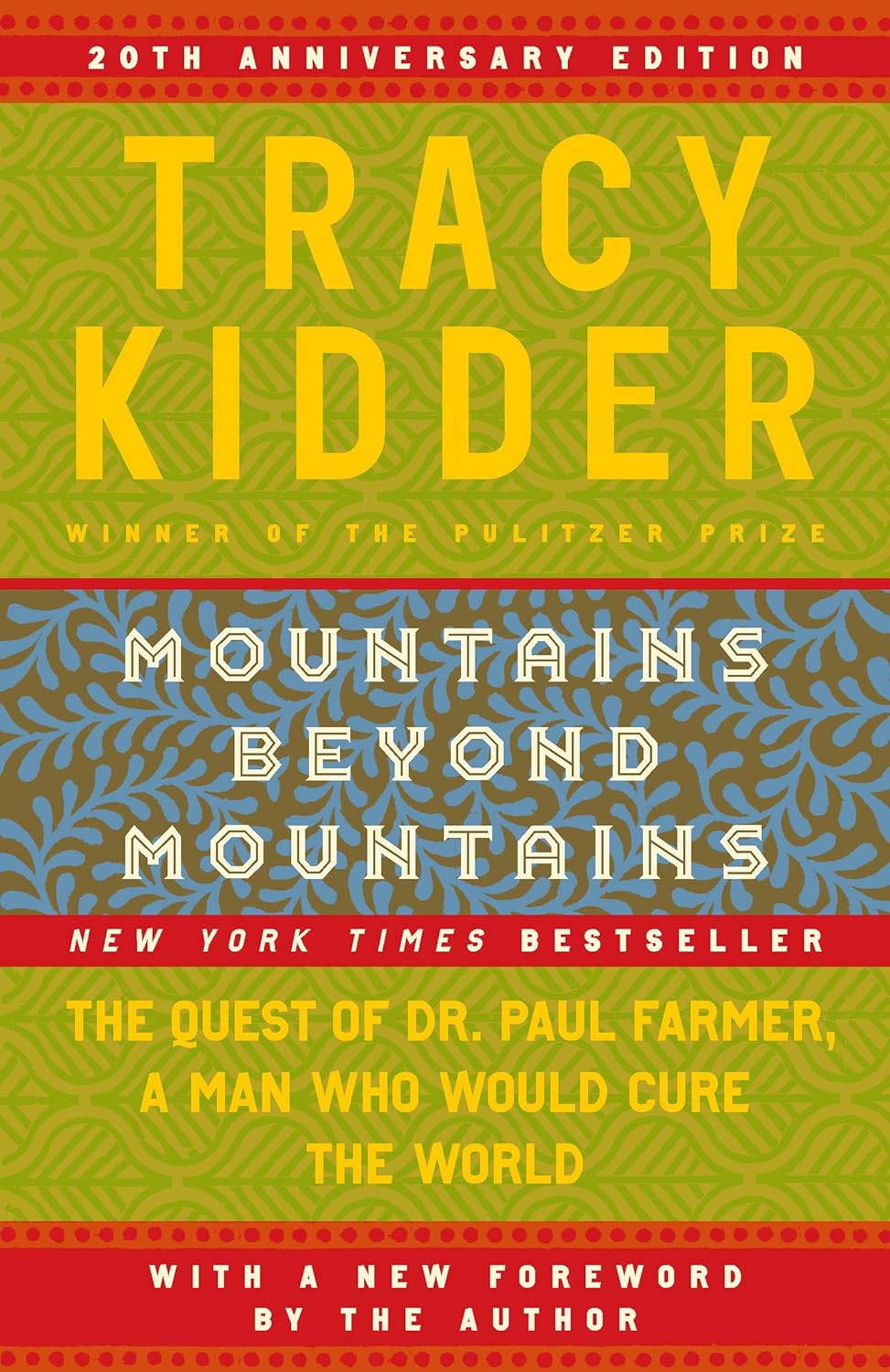
i studied poetry with helen vendler, english literature with james wood, and global health with the late great dr. paul farmer, the physican, anthropologist, and humanitarian who sought “to cure the world,” as tracy kidder so put it in the subtitle of his 2003 telling of farmer’s unparalleled devotion to his patients in haiti, mountains beyond mountains.
i went for coffee with harvey cox, my beloved bicycle-pedaling professor for “religion 1004: religious revolutionaries and spiritual pioneers.” i was mesmerized by henry louis gates who lectured brilliantly in his “intro to af-am studies,” a class in which i sometimes wanted to shake my fellow students who were busy browsing facebook while an american treasure, professor gates, held me spellbound with his elocution and encyclopedic knowing.
and i befriended souls i will never let drift from my heart.
we were among 24 journalists — and the occasional mate (we mates called ourselves the “co-vivantes” as opposed to going by the more pedantic “affiliate,” which made me sound like a corporate afterthought). the journalists came from across the u.s and around the globe: war correspondents; a chilean radio legend; a middle east reporter who regularly trekked to far-flung tents and underground bunkers to interview the taliban; videographers who covered conflagrations the world over; combat photographers; and writers who made words flow like golden-glimmering honey.
and, this weekend, in what feels like something of a mirage-like oasis amid a very dry desert, we are headed back to 02139, for a massive jampacked three-day binge of catching up and storytelling and sumptuous thinking. it’s been ten years since i romped the cobbled streets of cambridge, climbed the footworn steps of lecture halls, and opened wide the gullet that is my brain, trying and trying to quench an insatiable thirst for knowledge, wisdom, and the occasional epiphany.
it’s as sweet a reunion as i might sketch on my wildest imagination pad.
reunion (n.)
c. 1600, “act of coming together again,” from re– “back, again” + union; or from French réunion (1540s). Meaning “a meeting of persons of previous connection” is from 1820.
what’s sweetest about this coming together again is that amid a life deep-cut with facets light and dark, our nieman year stands out as among the most brilliantly glistening in my allotment of sunlight. i loved that year. felt alive, and young and hungry. even though i was the only one who was already mother to a college kid, and a sixth grader at the time. i loved that rare chance to go back again to college steps, to squirm into those awkward seats with flip-top desks, to carry heavy loads of notebooks, to run through packs of pens at quick clip, so voraciously did i pour ink onto the spiral-bound college-ruled notebook pages. i loved it so much because i knew with every cell in my being how blessed it was, the chance to be immersed in all those things that my first go at college had missed.
and now, the chance to go back, to re-union.
it’s a rare thing to get to go back to a page in your life story where you felt most stirringly alive. especially after weeks and months when my constant prayer has been for more such hours in my one sweet lifetime.
going back again is, too, a way of marking time. surveying the span between then and now. all the life that’s filtered in, the chapters that have tested me, the long nights i lay worrying, the hours when i drank in sweet and long-prayed-for triumphs. in ten years, my tally is one that stops me in my tracks and makes me savor all the more. so, so much in but a single decade.
turns out the decision to go hasn’t been easy in the end: we’d planned to have one brother from portland, maine, fly in to be with my mom, so i could go away knowing he was nearby. but there’s a shooter on the loose in the pine tree state, the army reservist who killed at least 18 in lewiston, 30 miles from portland, and my brother’s family is on lockdown, and his kids are afraid. i thought hard about not going, but my mom insists i go. and a couple wise women concur. took one look at me and chimed in that i needed it!
so, with a somewhat torn heart, i’ll fly off along with my very own nieman fellow and the kid, now 23, who once insisted we say yes to cambridge, because, he reasoned way back then, “we need to see the world!”
i know i’ll fly home sated, yes, but i know too that i’ll come home hungrier than ever. wonder begets a hunger for more wonder. and that’s as it should ever be. it just might be the magic potion that cures all ails.
“seek out what magnifies your spirit.”
that’s a nugget i stumbled across this week, culling a list of the seventeen most lasting truths that cultural critic maria popova has gleaned in her seventeen years publishing “The Marginalian” (formerly Brain Pickings), the weekly missive she describes as the “record of my reading and reckoning with our search for meaning.”
Seek out what magnifies your spirit. Patti Smith, in discussing William Blake and her creative influences, talks about writers and artists who magnified her spirit — it’s a beautiful phrase and a beautiful notion. Who are the people, ideas, and books that magnify your spirit? Find them, hold on to them, and visit them often. Use them not only as a remedy once spiritual malaise has already infected your vitality but as a vaccine administered while you are healthy to protect your radiance.
Maria Popova
protect your radiance, indeed. above all else: magnify your spirit.
steeple of marquand chapel at yale divinity school
before i pack my bags for summer camp for nerdy nerds (the so-called camp i’m going to has a pack list rife with yellow highlighters, five-tab binder, reams and reams of pages; dictionary, encouraged), i am dipping back into my nursing days, and wielding ice bags and ibuprofen like nobody’s business.
i’ve been up every hour on the hour through the night, employing what amounts to a giant-sized sock filled with ice, tied round the not-yet-swollen cheeks of my now-college-bound kid, the one who had his wisdoms extracted yesterday. excavated would be a more apt choice of verb, the friendly oral surgeon whispered, suggesting muscle (perhaps pick axes?) — more than usual — might have been involved. not exactly the last hurrah of high school anyone would wish for…
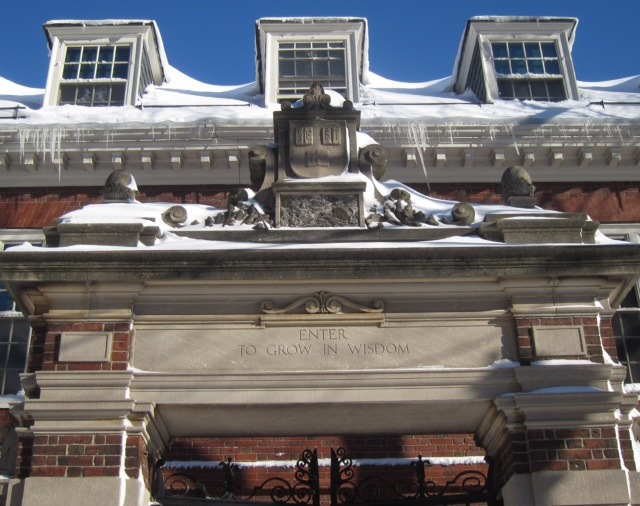
soon as we round the bend on impending swelling, soon as pudding and jello gives way to mushy mac-and-cheese (a second-day staple), once this escapade in extracting/excavating wisdom fades into the sunset, i am seeking wisdoms all my own: i’ll scramble to pack the last of my poetries and hop a plane to NYC, whereupon i’ll glide my way to new haven, aka elm city, where an empty apartment waits for me, and a whole div school besides.
in the rarest fluke of my non-adventurous days, i somehow found myself signing up for a one-week summer course, “reading poetry theologically,” at yale divinity school, a bastion of ecumenicism (with a strong dash of anglicanism) since 1822. i’d have signed up for this first week too, when a tantalizing class in henri nouwen was stretched across the days, but those wisdom teeth got in my way, so i’m signed up for next week’s poetry, taught, curiously, by a professor named david mahan, and i’ll soon find out if he’s my distant cousin who’s done away with his closing syllable, lobbed off his exclamatory y. (ours is not a name — with or without all its syllables — you bump into very often.)
i never was much for camp of the mosquito-and-sunscreen variety. never did like that kool-aid poured from vats, the red stuff they called bug juice, as if that would warm me to its redness. but i am positively twitterpated at the notion of making believe i’m back in school. the thought of loping down the cobblestones, my book bag swinging by my side, well, it’s akin, i’d think, to how cinderella felt when she traded in her whisk broom for her sparkly shoes.
for anyone who wants to play along at home, the reading list of poets (a brilliantly eclectic mix of voices, the very sort i love the most) includes: gerard manley hopkins, wendell berry, scott cairns, lucille clifton, denise levertov, mary karr, langston hughes, louise erdrich, and the glorious (new to me) r.s. thomas, an anglican priest from wales, often ranked as one of the three great english-language poets of the 20th century, alongside yeats and eliot, and often called “poet of the hidden God.” (be still my hidden heart.)
as was the case back in our year of thinking sumptuously, when in one academic year my appetite for binging at the course-list trough was forever whetted, i’ll send along a dispatch of whatever poetic morsels stir my hungry heart.
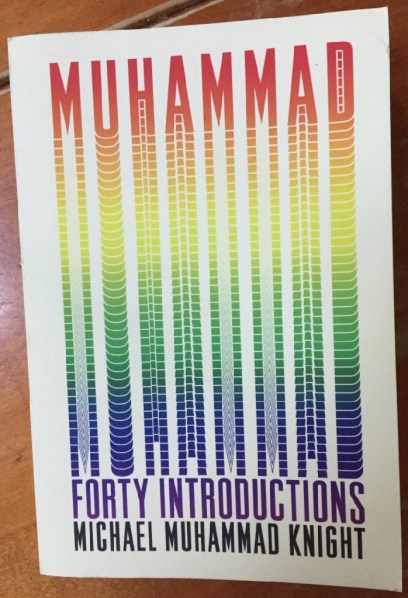
and now, before the timer pings reminding me to grab an ice pack, here’s the latest book for the soul, an exploration deep into islam, and my review of Muhammad: Forty Introductions, by Michael Muhammad Knight, as it ran in the pages of the Chicago Tribune last week:
‘Muhammad: Forty Introductions’ is a soul-stirring primer on Islam
‘Muhammad: Forty Introductions’
By Michael Muhammad Knight, Soft Skull, 320 pages, $16.95
Review by Barbara Mahany Chicago Tribune
When Michael Muhammad Knight — whom The Guardian of London has called “the Hunter S. Thompson of Islamic literature” — set out to teach a religious studies seminar on classical Islam at Kenyon College in Ohio, he promptly realized that no single snapshot served to introduce his mostly non-Muslim students to the great prophet Muhammad, “Messenger of God.”
Instead, the professor settled on 40 such snapshots, or “introductions,” drawn from a broad swath of voices — the canonical as well as the marginalized — citing ancient Islamic scholars, French philosophers, and even “Star Wars” (though not in equal measure).
His “Muhammad: Forty Introductions” is part gonzo devotional, part Muslim primer, and, ultimately, a soul-stirring portal into a personal vision of Muhammad.
The narrations Knight turned to are a bedrock of Islam: the hadith, an oral tradition of “news” or “reports” of Muhammad’s sayings or doings, a tradition that traces its lineage of authenticity through a chain of teachers, resting in proximity to the prophet himself. Hadiths — apart from the Qur’an — serve as instruction for Muslims looking for guidance in how to live their lives. As Knight put it, “I want to know Muhammad’s way of being human.”
Knight is a novelist and essayist who converted to Islam at 16, traveled to Islamabad at 17 to study at a madrasa, then got a master’s degree at Harvard Divinity School and a Ph.D. at the University of North Carolina. In gathering 40hadiths, the author followed the ancient Islamic literary tradition of the arba’in, wherein scholars over the millennia have collected and curated 40 hadith, often by theme. For Knight, who rose to literary fame with his 2003 self-publication of his novel “The Taqwacores,” now considered a cult classic and a “manifesto for the Muslim punk movement,” his “Forty Introductions” is a decidedly contemporary collection, reaching into queer theology, feminist commentary and core Islamic teachings.
Something of a crash course in Muhammad, Knight’s intellectually charged collection of fragments makes for a multi-textured, many hued mosaic. In a revelatory aside, Knight acknowledges that for every student of Muhammad, the prophet becomes a “montage of images, an arrangement of moving parts.” This fragmentation is inevitable — and necessary — he writes: “the ingredients of my Muhammad often come to me as shattered pieces that have been chipped away from something else.”
Alternating between the professorial and the personal, Knight hits his highest notes when he pushes away from the seminar table and bares his own soul. “Some hadiths soften my heart and bring me to tears,” he writes toward the end of the book. “I cling to the image of Muhammad as a gentle grandfather who lets his daughter’s sons Hasan and Husayn climb onto his back as he prays.”
While the introductions he’s chosen cover a full range and complexity — from Muhammad’s physical appearance to his family life, infallibility, legal authority and mystical nature — and while Knight boldly puts one interpretation or argument up against another (a seamless synthesis is hardly the point here), it seems particularly telling that he chooses as his closing introduction Islam’s parallel to the Golden Rule:
“The Messenger of God (God bless him and give him peace) said, ‘One of you does not believe until s/he loves for another what is loved for self.’ ”
And then, Knight reminds why this, of all teachings in all religions and world views, matters most in the end.
“Claimants upon a religious tradition have numerous modes by which they can disqualify each other as illegitimate. You pray wrong; you dress wrong. You read the wrong books, or perhaps read the right books wrong. Your prophetology is wrong. Your preferred scholarly authorities are wrong. Your opinions about permissible and forbidden acts are wrong. This hadith reminds us that we can get everything right … and still fail as Muslims on the grounds that we’re selfish pricks.”
Muhammad, the professor reminds us, came “to perfect the noble traits.” For emphasis, he adds: “Muhammad reminds us that becoming less of a selfish prick would confront many of us as an epic struggle. Being a good person isn’t the easy part.”
Knight, by way of his 40 Muhammadan introductions, illuminates the way.
Barbara Mahany’s latest book, “The Blessings of Motherprayer: Sacred Whispers of Mothering,” was published last spring.
back to the summer-camp question: what would be your rendition of the ideal mosquito-free summery week away, with or without a tent?
and before we go, i am sending the biggest smushiest birthday blessings to beloved nan, whose big birthday is today, and beloved amy, whose blessed day was yesterday. love you both to the moon and stars and back…..xoxoxo
it’s a tundra out there. i’ve just crunched across the hard crust of snow, coffee can of fat black seed in tow. if ever the birds depend on me, the pewter-haired one who clangs around as if the keeper of the flocks, it’s on a dawn like this. even the wind is shivering.
inside this toasty-warm old house, we’re dwelling in the rarest of quiet pauses. the soon-to-be college kid has turned in his last exam, and might sleep till dusk. it’s the first day in eons that there’s not a single essay or snatch of homework for me to pester him about. he has literally zippo, zilch in the to-do pile, which means i, too, am off whatever hook we mothers impale ourselves.
i’m going nowhere on a day as cold as this. and, till nightfall, have every intention of plunking myself right here, at the old maple table, where i keep watch on flash of scarlet at the feeder, in the boughs. i’ve got all i need within reach: a mug that’s warm and filled with morning brew, a stack of books so tall it sometimes teeters.
all week, i’ve been deep in the pages of mary oliver. one by one, i’ve pulled her books off my shelves, and pored over line after line. i’ve been drawn especially to her prose, the long sentences as stitched with poetry as any of her verse. i inhaled upstream: selected essays, and a poetry handbook, her 1994 master class in the making of a poem.
reminded me — as i scribbled notes on sound (did you know our alphabet is divided into families of sound? and that besides good old vowels and consonants, there are semivowels and mutes? a mute, it seems is most important in the realm of poetry; a mute, mary tells us, “is a consonant that cannot be sounded at all without a vowel, and” — here’s the interesting part, where the little bitty alphabet letter seems to take on menacing character — “suddenly stops the breath.” the mutes are k, p, t, as in ak, ap, at.) — and as i was saying before i interrupted myself, being inside the pages of mary oliver’s masterclass reminded me of the glorious semester i spent studying poetry with helen vendler, the great literary critic and mastermind of poetry, who every monday and wednesday at 1 o’clock on the dot, marched into harvard’s emerson hall, plonked her satchel on the desk and dove in. with nary a hello. we had 60 minutes to squeeze in all there was to know about lyric poetry — from ancient to modern — and she would shave off not a second for distractions such as long-winded greetings. helen vendler was one of those treasures, a lioness of american poetry, whose every poetic utterance you knew was met with full-stop attention far beyond the cambridge city limits, and had she not been such a gentle-souled professor in her sensible shoes, dabbing tissues at her nose in between recitations of pound and eliot and coleridge, you might have shuddered in her presence. but in fact we all sat hushed, even the snotty little harvard first years who hush for almost no one. (i was already pewter-haired, as this was amid our nieman year, our year of living sumptuously, when we all went off to college at the ripe old age of 55.)
and, yes, it’s something of a magic trick, a measure of her writerly powers, that mary oliver could make the pages of a book feel as alive as a living, breathing, whole-semester class.
it was in the fresh wake of her death — just a week ago — that this reading felt almost sacramental. it was a reverential rite, absorbing her wisdoms with a measure of urgency, a sense of hurry-before-she-slips-too-far-away. read against the sharp edge of the final bracket of her life, her words and wisdom felt infused with the prophet’s cry. and, certainly, in her returning over and over to themes of the eternal cycle, life to death to life in newly configured form, there was a peace that rose from the pages, from the knowing. if anyone who’d walked among us was welcoming that last great surrender, it was mary O who all along had seen the glistening beauties in the mystery of death, who lived and breathed the truth of life’s brevity, who asked again and again, how will you live this one wild and precious life?
because i’m reading mary O with an eye toward a talk on thomas merton and the Book of Nature, i took notes, lots and lots of notes.
here are just a few that insisted they make their way into my notebooks — and now, perhaps, yours too:
“Beauty has its purposes, which, all our lives and at every season, it is our opportunity, and our joy, to divine.” So writes Mary O in Upstream, and then she goes on to witness the dawn of day across a 20-acre field in winter: “The sun has not yet risen but is sending its first showers over the mountains, a kind of rehearsal, a slant light with even a golden cast. I do not exaggerate. The light touches every blade of frozen grass….The still-upright weeds have become wands, encased in a temporary shirt of ice and light….It is the performance of this hour only, the dawning of the day, fresh and ever new. This is to say nothing against afternoons, evenings, or even midnight. Each has its portion of the spectacular.” (“Poe claimed he could hear the night darkness as it poured, in the evening, into the world….I will hear some sound of the morning as it settles upward.”)
Later, she writes: “For me it was important to be alone; solitude was a prerequisite to being openly and joyfully susceptible and responsive to the world of leaves, light, birdsong, flowers, flowing water….To the young these materials are still celestial; for every child the garden is re-created. Then the occlusions begin.”
A bird, she writes, “was, of course, a piece of the sky.” “…This is not fact; this is the other part of knowing, when there is no proof, but neither is there any way toward disbelief.”
Of a great-horned owl, swooping through the forest, she writes: “When I hear it resounding through the woods, and then the five black pellets of its song dropping like stones into the air, I know I am standing at the edge of mystery….”
Knowledge, she writes, entertained her, shaped her, and ultimately failed her. “Something in me still starves. In what is probably the most serious inquiry of my life, I have begun to look past reason, past the provable, in other directions. Now I think there is only one subject worthy of my attention and that is the precognition of the spiritual side of the world and, within this recognition, the condition of my spiritual state.”
“I would say that there exist a thousand unbreakable links between us and everything else, and that our dignity and our chances are one. The farthest star and the mud at our feet are a family….we are at risk together. We are each other’s destiny.
“For me the door to the woods is the door to the temple.”
and this, the closing lines of poetry handbook, is the one i’ll leave with you to ponder for the day:
“For poems are not words, after all, but fires for the cold, ropes let down to the lost, something as necessary as bread in the pockets of the hungry. Yes, indeed.”
—Mary Oliver, “A Poetry Handbook”
may our own occlusions be swept away by wonder and the telltale tingle of the spine that reminds us we’re in the presence of the holy, the infinite, the ever….
which line above from mary O most stirs you? or which did you unearth this week?
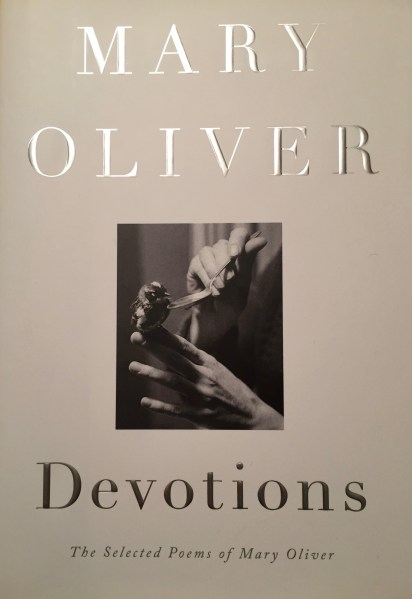
Mary Oliver spoon-feeding tiny feathered friend, close-up from the cover of Oliver’s 2017 “Devotions,” a collection of poems spanning five decades. photo by Molly Malone Cook, Mary’s life partner
Mary Oliver, a Pulitzer Prize-winning poet whose work, with its plain language and minute attention to the natural world, drew a wide following while dividing critics, died on Thursday at her home in Hobe Sound, Fla. She was 83.
so begins the New York Times obituary for Mary O, polestar of poetry as prayer for some of us, for many of us. for me, most certainly.
as with most every death that shakes you at the marrow, my first response was cloudy, was confused. why, out of the blue yesterday, was a dear friend sending me lines from Mary O poems in the middle of an ordinary afternoon? then i looked again, closely, at the subject line and saw the dates spanned by hyphen, 1935 – 2019, our vernacular shorthand for “death has come.” it sank in slowly, as if my brain cells refused to register.
it’s not everyday that a death in the news so dizzies me, jerks me into momentary disbelief before settling with a thud, one that opens into sorrow. but mary O had long ago burrowed deep inside my soul; i’d made a whole room for her in wherever is that place that holds our heaven-sent synapses and soarings.
mary O had the gift of belonging to each and every one of us who read her, who memorized her lines, who traced our fingertips across the page, all but absorbing the unspoken, the shimmering sacred, she infused between the words, the images. to read a mary oliver poem is, often, to feel “the telltale tingle of the spine,” as nabokov so unforgettably put it. it’s as much what mary oliver doesn’t say, the unspoken, that catapults off the page, that reverberates, that catches in your chest, your throat, your mind, and lies there pulsing while you absorb the holy inference, the Truth.
mary oliver takes us by the hand, and down the trodden path into the woods, along the marsh, the tide pool, the ocean’s noisy shore. we sit beside her on the sodden log. keep watch with her as she keeps watch on the box turtle slithering into the pond. we hear the cry of the owl, the heron, the kingfisher, the red bird, the stirring in the trees. we are right beside her, footsteps behind her, always, when we enter into her poetry.
she was for me — and maybe for you, too — my polestar of prayerful poetry, the poetry of astonishment, the poetry of the Book of Nature. she was my doorway into all those poets — w.s. merwin, david whyte, wendell berry, terry tempest williams (i’ll think of more) — whose critical attention teaches us to see the divine — feel the divine, know the divine — in the stirrings of the earth and sky, those poets who remind us that the holy is all around, and it’s ours to enter any time. all it asks is that we open — even just a crack — the doorways of our soul.
mary O opened those doorways every time.
i met her once. sat in the same room, breathed the same air. shared words, shared silence. listened. laughed. it was heavenly, but i’d dreamed of more. had hoped to trek to cape cod when she was there, and i was in cambridge. hoped to comb the beach with her. walk the woods. then, when she up and moved to florida, i rearranged my dreams. imagined sending her a letter, asking if perhaps she’d meet with one of her disciples. i fully imagined sitting beside her on that log, listening, absorbing. learning.
she was, though, famously, intensely private. and it’s that thin-shelled soul, the porous, almost fragile cell wall of self that i recognize. that i honor with my distance. i’d not dare disturb.
i did though send her a letter. i had to once. i wanted to begin my first book, slowing time, with a mary oliver epigraph, her poem “praying;” these lines especially…
just pay attention, then patch
a few words together and don’t try to make them elaborate, this isn’t a contest but the doorway
into thanks, and a silence in which another voice may speak.
so i wrote her, asked if i could please have permission. her assistant wrote me back. but the letter came from mary O’s writing place, and that was close enough for me. (that and a letter from wendell berry are among the two treasures in the narrow drawer of my writing table.)
i never met her. but she knew me — or so it felt as her words slipped over me, put voice to my heart’s beat, my breath, my prayer, my hope, my faith. and that’s what made her my patron saint of poetry. delicate as the little bird she spoon feeds up above, a close-up from the cover of her last collection, her life’s work, bound. 455 pages.
devotions, indeed.
Her poems, which are built of unadorned language and accessible imagery, have a pedagogical, almost homiletic quality.
so says the new york times, which goes on to say:
For her abiding communion with nature, Ms. Oliver was often compared to Walt Whitman and Robert Frost. For her quiet, measured observations, and for her fiercely private personal mien (she gave many readings but few interviews, saying she wanted her work to speak for itself), she was likened to Emily Dickinson.
Ms. Oliver often described her vocation as the observation of life, and it is clear from her texts that she considered the vocation a quasi-religious one. Her poems — those about nature as well as those on other subjects — are suffused with a pulsating, almost mystical spirituality, as in the work of the American Transcendentalists or English poets like William Blake and Gerard Manley Hopkins.
i say, simply, thank you, mary O. thank you, thank you, thank you.
When it’s over, I want to say: all my life
I was a bride married to amazement.
I was the bridegroom, taking the world into my arms.
When it’s over, I don’t want to wonder
if I have made of my life something particular, and real.
I don’t want to find myself sighing and frightened,
or full of argument.
I don’t want to end up simply having visited this world.
bless you, mary O. may astonishment be yours eternally.
what’s your holiest line or poem from mary oliver?
four years ago, it was the sound of his footsteps i knew i would miss more than nearly anything.
the thud of his footfall onto the floor of the room up above, the footfall that signaled to me, down below, that the boy i love had clomped out of bed, or trundled down the stairs, that he soon would be rounding the bend, showing his face, his radiant face, at the old kitchen door.
his footsteps are back.
and my heart couldn’t be more tickled, delighted, dancing its own little jig.
the thud of the footfall is one of those percussive refrains woven into the rhythms of this old house, of any old house, and it’s a sound you might take for granted — it belongs with the particular click of the doorknob, or the way the car door slams off in the distance, and your heart knows before you know that someone you love is now home. you might take it for granted until suddenly, without forethought, it’s silenced, it’s absent. until all you hear is the hollow emptiness of no more footsteps — or door clicks, or car door slamming in the not-so-far distance.
it’s a quiet that crushes you. the unspoken sonic abyss of the someone who’s gone.
and now, with the thuds and the clomps and the rushing of water from the tap in his bathroom once again punctuating the soundtrack of this old house, i find my old heart quickening, picking up its rhythm, pounding just a wee bit harder, as once again — in that way that happens to mothers — i wrap my whole self — body and mind and heart and soul — around this interlude of pure wonder and blessing.
indeed, it’s way more chaotic around here than just one week ago, when this old house contained only three peoples plus a crotchety cat. and the lumbering fellow we’ve added to the equation, once he and his papa pulled down the alley, unloaded the mountains of boxes and lamps and speakers and papers, he’s set this old house percolating once again with his particular cacophonies. yes, there was a hammer pounding a wee bit late into the night. and the avalanche of stuff hauled out of his room and into the upstairs hall, it could tangle you into a knot, and snuff out your breath if you happened to trip and tumble deep down in its clutches.
but a bit of a miracle’s unfolding. i’d call it the answer to a prayer, except that i never dared to pray for it.
the boy i love, the boy who graduated in a cloud of glories at his college on the hill, he moved back to chicago thinking he’d rent a studio apartment, try to pay rent while teaching in an inner-city classroom, before he heads back off to law school and PhD school, before he spends a life trying to right wrongs and carving out justice. but then, as he pulled his duffle bags and moving boxes back into his boyhood room, as he perused the websites of apartment listings, as he realized the rent for a space not much bigger than his room at the bend in the stairs might be tough to afford, he started to rearrange his thinking — and his old room that bore the totems of middle and high school and selves long past.
he pulled posters off the wall, peeled campaign stickers off his closet door. took down the little boy bulletin board i’d bought the day we moved into this old house. he cleared his book shelves of boyhood favorites, took down the hobbit and twain and j.k. rowling; slid in hobbes and kant and aristotle. hung his hard-won college diploma just above his old desk, the desk where he calculated his way through fifth-grade math, and where he typed his junior theme. he must have measured the proximity between the door of his old room and that of his little brother, the one he says he came home to be close to.
he’s decided to stay.
he’s perched his french press coffee pot next to my gurgling electric one. he’s added his paltry few spices onto the shelf next to mine. he’s plugged in his speakers, and asked if we could pull up the old navy carpet so he can stride on the birds-eye maple that’s too long been shrouded. he’s decided, for now, that home will be in the place with a room all his own, and a sprawling kitchen just down the stairs (the commercial-grade six-burner cookstove and his mother’s built-in grocery service might have helped tip the scales in the refueling department).
for now, he’s sticking nearby.
for now, he and i are sitting down to breakfast, lunch and dinner. we’re taking long walks. we’re holding our breath — together — as he puts muscle to hammer and tries to sink nails into plaster. we’re sitting out in the summer porch, listening to night sounds. we’re backfilling all of the stories that hadn’t had time to be told.
sure, my days are topsy-turvy. and this house feels certain to burst. and the washing machine moans from over-exertion.
but for four long years i could only wish for such chaos. i didn’t dare to hope that the day would come that we’d once again breathe the same air, inhale the same sounds, delight in shared and unscripted hilarities, ones unfolding in real time, and in the same time zone.
i’m practically giddy at the truth that this kid is wise enough, and tender enough of heart, to buck the prevailing post-graduation currents, to simply and humbly move back home, for the sheer gift of deepening the bonds with his little brother, and his grandmother who is now 84, and who every tuesday of his growing up years devoted her days and attentions to him. he is seizing the days before they are gone.
he didn’t take a job in DC, didn’t post himself in the heart of manhattan. all that might come. but for now, he’s taking a pause, taking time for what matters.
back in december he told me that he was looking to do the most meaningful work in the years between college and law school, “and, honestly, mommo,” he said, via long distance, “i can’t think of anything more meaningful than being there for tedd,” his little kid brother, now on the cusp of going off to high school.
as poignant as anything this week, and pulsing too very near the surface, is my knowledge — keen knowledge — that not too many miles away i have a very dear and deeply beloved friend who is in a hospital, suffering unimaginable devastations, and she might be robbed of the chance to whirl in this very dear thing, in her children’s sweet presence, in days that tumble lazily one to the next. please God, i beg, down on my knees, let my beautiful friend and her most blessed children share in this, the holiest dance.
for me — a girl who preaches deep-breathing the blessing of each and every framed moment of time — the unanticipated gift, the knowledge that we might grab a few years we’d not known were coming our way, this feels to me like the gift of a lifetime, this sweet holy homecoming.
and it comes with its very own soundtrack: the sound of a particular footfall, sinking deep and deeper into my heart.
bless you, sweet will, and welcome back home.
worry not about the tomes slid off the boyhood book shelf, they are safe and sound with me, and will soon find a home on yet another shelf, one of the many that line the walls of this old house. a prayer request: for my beautiful friend in the hospital, for gentle soft hours to come her way.
and a question: what are the sounds of your heart’s dearest soundtrack, the ones that tell you someone you love is heading toward home? or the ones that make your heart tick as mighty as ever could be?
here is an essay i wrote this week for the nieman storyboard, a writerly nook of the nieman foundation for journalism at harvard that explores the craft of longform narrative and storytelling in all its guises. this was an essay that took particular courage. you’ll read why. you can read it below, or see it here on the storyboard, where you might decide to poke around and find a host of marvels and morsels….
I’ve written about my mother’s cancer. And the string bean of an unborn baby who slipped through my fingers in the dark of the hollowest night, amid clots of blood and a wail of primal grief.
I’ve written about the abyss of the hour when I paced an emergency room, waiting to hear if my older son’s spinal cord had been severed when he flew from his bike to a trail in the woods. I even once dared to write — in the pages of the Chicago Tribune, my hometown newspaper — how I became anorexic my senior year of high school, and, in the flash of a few short spring months, plunged from glory to shame in my infamy as the homecoming queen who had to be hospitalized after dropping 50 pounds.
But saying out loud that I look for and find God nearly everywhere I wander? That scared me.
Especially among my fellow journalists, for whom skepticism is religion. Pulling back Oz’s curtain, taking down the too-powerful, those are the anointed missions. To stand before an imagined newsroom and say I bow to the Almighty source of all blessing, I believe in the Unknowable, the Invisible, a force I know to be tender and endless and ever in reach, a magnificence that animates my every hour, that is to stand before the firing line. That is to expose yourself, I feared, as unfit for Fourth Estate duty.
But I did it. Led by a deep, still voice.
Now, it’s all bound in a book, called Slowing Time: Seeing the Sacred Outside Your Kitchen Door (Abingdon Press, 2014). And, as of Oct 7, you’ll find it in bookstores, on Amazon, even on the shelf of my town’s library.
The burning question for a journalist who’d dare to chart the spiritual landscape is how, using the tools of the craft, do you toughen the fibers, sharpen the edges, of a subject that, by definition, is formless? How do you put hard-chiseled words to believing, indeterminate act that it is?
For me, it boils down to three non-negotiables: Pay exquisite attention, even when it’s your soul you’re sliding under the examiner’s lens; root yourself in the earthly while soaring toward the heavenly; and don’t flinch. Your edge comes from your capacity to pull back the veil where others dare not.
Paying Attention.
It struck me recently that my paying-attention curriculum, the part that came from syllabus as much as natural-born curiosity, began in the halls of a college of nursing, where in shiny-linoleum-tiled classrooms, in the fall of 1976, a whole lot of us — sophomore nursing students on a four-year track — began to learn to see the world through a nurse’s dare-not-miss-a-detail eyes.
My very first assignment, once a white nurse’s cap had been bobby-pinned to my run-away curls, was to bathe a woman who was dying of a cancer. I was taught, straight off, to look deep into her eyes, to read the muscles flinching on her face, to hear the cracking of her words as she tried to tell me how warm she liked her bath, and which limb hurt too much for me to lift it.
And on and on, the learning went — as I became a pediatric oncology nurse at Chicago’s Children’s Memorial Hospital, and watched the waning light in the eyes of a 15-year-old boy at the hour of his death. As I gauged the depth of blue circling the lips of 6-year-old girl with cystic fibrosis. As I buried the sobs of a wailing father against my shoulder, as he absorbed the diminuendo of his 12-year-old daughter’s final breaths.
At the precipice of life and death, I learned to live a life of close examination. And when I made the leap from nursing to newsroom, a narrative twist brought on by the sudden death of my father, and an off-handed comment after his funeral that I ought to try my hand at journalism, I only broadened my lens. Paid keener attention to the singular detail that revealed the deeper story.
Root yourself in the earthly.
Even if I’ve never broadcast the holiness that informs my every day, it’s always been there. It was front and center, back in 1985, when I criss-crossed the country, documenting the faces and forms of hunger in America, for a 10-part series unspooled in the Tribune. It was a pilgrimage that put flesh to my own personal gospel: One that drove me to see the face of God in everyone whose path I happened to tread, everyone whose story spilled into my notebooks. From ramshackle cabins in Greenwood, Mississippi, to urine-stenched stairwells in Chicago’s Cabrini-Green, high-rise housing hell.
I never set out to be a religion writer, though when the slot opened once at the Tribune, I gave it a moment’s consideration. Nor did I ever set out to expose the whispers and truths of my soul. All I wanted was to hold up to the light the stories of everyday sinners and saints who so richly animate the grid, urban or rural or spaces between. It was in the backwash of the forgotten, the pushed aside, the indomitable that I noticed the glimmering shards.
In my own way, always drifting toward stories that fell in the crosshairs of human struggle or anguish and rose in crescendo toward triumph or wisdom gained, I was gathering notes on the human spirit, and never surprised when I felt the hand of God — like a thud to the heart, or, more often, a tickle at the back of my neck.
There’s an ancient Hebrew text, one with echoes of Plato’s “Allegory of the Cave,” that teaches us that while we can’t see God, we can see God’s shadows. The more etched the shadows, the more we know God, according to the teaching. It’s wisdom that drives me to tether my prose in the concrete, to allow the metaphor to spring from the particular, to capture a glimpse of the Holy from the depths of ordinary.
Don’t flinch.
Back in 2006, my then 13-year-old, who’d scored enough in bar mitzvah gifts to cash in on a refurbished MacBookPro, bequeathed his old laptop to me. As part of the deal, he built me a website one December night when the winds whistled in through the cracks in the door. He told me I could handle a blog. I shivered.
Then I started to type. Called it “Pull Up a Chair.” Set out to write about the heart and soul of the home front.
Each weekday morning for a year, I rose before dawn, poured a tall mug of caffeine, and I wrote. Exercised narrative muscles I’d never known were there. Connected dots in the course of free-flowing sentences. Sometimes felt the particular buzz that tells you you’ve tapped just the right vein. The one, in my case, that flowed from my heart to my soul. I’ve been writing that blog ever since. Nearly eight years of accumulated essays.
By day, I forged on with the daily grind of newspapering. But what happened at dawn – the writing that drew me into places I’d never explored aloud – it freed a particular voice. What had been un-utterable became a tremulous whisper, and, in time, a brave clear call.
Along the way, I’ve endured what might be the hardest lesson: The one where I find myself plumbing depths that are truer than true, though I’d never quite put them to words. As in: “I seem to hum most contentedly when my canvas has room for the paint dabs of God. When I hear the wind rustling through pines, when I take in the scarlet flash in the bushes, when I trace the shift in the shadows through the long afternoon, that’s when I feel the great hand of the Divine slipping round mine, giving a squeeze. That’s when I know I am not deeply alone. But, rather, more connected than in a very long time.”
Or: Writing of the sleepless night when, in desperation, I reached for a rosary I’d not fingered in years. “It’s the [rosary] I squeezed till my fingers turned white when they threaded the wire into the heart of the man who I love, the man who I married. And when they dug out the cancer from the breast of my mother. And that I would have grabbed, had I known, on the crisp autumn night when the ambulance carried me and my firstborn through the streets of the city, his head and his neck taped to a stretcher. I prayed without beads that night, I prayed with the nubs of my cold, clammy fingers.”
Call me crazy — or oddly courageous — to invite readers under my bedsheets, where I finger the rosary. To whisper aloud the words of my prayer, not cloaked in cotton-mouthed vagaries, but laid bare in the most intimate script, the one that unfurls from my heart to the heavens.
Instead of playing it safe, instead of turning and running, I plunge forward. I follow the truth. I say it out loud. And then I hit “publish.” Often, I find myself queasy. Call a dear friend. I rant, and I fret. Consider deleting the post. Then the emails come in, the ones that tell me I’ve captured a something someone never quite noticed, something that gave them goosebumps. And therein, I discover communion, in its deepest iteration. That’s how you learn not to flinch.
The story of how my book came together — how hundreds of pages were sorted and sifted and whittled and culled, how words written in silence at my old kitchen table would emerge to be passed from friend to friend — is, like most things spiritual, an amalgam of the mystical and the prosaic.
It all traces back to books I spied on the desk of the Cambridge professor who would become our landlord during our Nieman year. I knew, once I saw the stacks of poetry and divinity titles, that his book-lined aerie, the top floor of a triple-decker just off Harvard Square, was the one we needed to rent. What I didn’t know is that the gentle-souled professor would soon introduce me to a Boston book editor he termed, “the best of the best.” Nor that I would fly home to Chicago at the end of that Nieman year with a contract and an end-of-summer deadline for a book I’d loosely conceived of as a Book of Common Prayer, believing it’s the quotidian rhythms that hold the deepest sparks of the Divine, and it’s in the rush and the roar of the modern-day domestic melee – held up to the light — that I find improbable holiness.
And so, what had been occasional dabblings into the sacred realm — written over seven years, refined over one summer — became a tightly woven tapestry that now, as I read from beginning to end, feels something like a banner. Or maybe a prayer shawl in which I quietly, devoutly, wrap myself.
I’m braced – I hope – for the cynicism, or maybe worse, sheer dismissal. A dear friend, one whose book spent the summer on the New York Times best-seller list, gave me what amounts to a lifeline: “The real reviews,” she said, “come in handwriting and human voices.” Already, those voices have begun to trickle in, to tell me they’re staining the pages with coffee rings as they read and ponder and read some more. To tell me they’re giving the book to their dearest circle of friends. To tell me they’ve underlined and scribbled in the margins. To tell me one particular essay carried one reader through the week-long dying of her mother.
I’ve found my holiness slow and steady. It crept up unawares, almost. I never expected that I’d write a prayerful book, with my name on the cover, and my heart and my soul bared across its pages.
But nothing has ever felt quite so right. Nothing so quietly sacred.
Barbara Mahany is an author and freelance journalist in Chicago, who writes these days about stumbling on the sacred amid the cacophony of the modern-day domestic melee. She was a reporter and feature writer at the Chicago Tribune for nearly 30 years, and before that a pediatric oncology nurse. She tagged along on the 2012-13 Nieman fellowship of her husband, Blair Kamin, the Tribune’s longtime architecture critic.
any minute now, i’m hoping, the red truck might pull up to the curb — or what was the curb back before the mountains of charcoal-gray polar crust accumulated there, and eclipsed the sharp edge where front yard meets street.
if all goes as planned, there will be a larger-than-life rectangle poking out from under the blankets that billow, blankets intended to keep the rectangle’s smooth white planks from getting splattered with road salt as the red truck sped down the tollway from the pig barn just this side of the state line. the pig barn is where the planks and the nails and the smooth white baseboard and trim turned into a bookcase, all at the hands of my old friend jim. jim who wields hammer and jigsaw and who for the past 15 years has been building our dreams, one nook and one cranny at a time.
that is all to say that i’m at long last due to get that bookcase today. one i ordered up months and months ago ( i might not splurge on haircuts or pairs of jeans without holes in the knees, but i will fork up the cash to buy me a wall of pressed-tight spines). it’s a bookcase that’s soon to be home to the five unpacked book boxes hauled home from veritas U., and the dozen or so tumbling towers of tomes i plonked on my office floor in those long-ago weeks (two years and counting) when i left my downtown newspaper office and made this old garage my forever writing room.
there’s hope that i’ll be home alone for a good chunk of this weekend, and my fingers are itching to get at those books, to pull each one from the depths and the dark of its shipping box. to flip through the pages and sink back in time, back to the couch in cambridge where i looked over rooftops and scrawled in the margins. made notes. thought with my pen, in ink. where, for one sumptuous year, i tumbled and soared over the landscape of learning — learning of poetry and slave-trading, jim-crow atrocities, abolitionists and everyday saints, as well as the art and craft of narrative writing.
all those books — all those old friends: the poet donald hall; frederick douglas; virginia woolf; zora neale hurston; the list goes on and on — are tucked inside, and pulling them, one-by-one, from the shadow, hoisting them up to a shelf, will be an exercise in remembering, in discovering all over again just why as a civilization we believe in the sealing of words to the page.
it’s testament, all of it, to the power of being shaken to tears, the delight of traipsing upon a brand-new accumulation of letters whirred into a word we’d never imagined, the riveting thought that stirred me to pulling the tip of my pen clear beneath the words, as if to memorize, to absorb, to never forget the electrical force of that particular idea.
i boxed the books by semester, so with each tearing back of the seam, i’ll enter a particular epoch in the year that unlocked channels in my mind and deepened my heart and my soul. you can’t open a book, can’t draw your eyes across line after line and not emerge with new layers of knowing, of wondering, of hungering. not if the book’s worth the ink soaked into the page.
and that’s why it matters that those books emerge from their boxes and their vertical teetering stacks. a book belongs at arm’s reach. a book begs to be pulled from the shelf, to be shared, to be slipped in the hand of someone who might want to know, to discover. or to be sprawled once again across your very own lap, so you can read and repeat and recite. memorize a particular collection of words, and the wisdom for which it’s the key.
they’re overdue, all those tomes, to rise from the floor and climb up the walls. soon as the red truck rolls along, they’ll get on with their reason for being: to offer, over and over, the very words that lead us into the heart of truth, beauty and wisdom.
best done when perched on a shelf, ready for dispatch with determined tug of the spine.
some days writing is sheer exercise. you rumble your fingers in hopes of keeping them limber, and the brain cells to which they’re connected. this was one of those days — with 85 distractions, here, there and everywhere.
because i can’t bear to leave you with such thin offerings, i am turning to one of the books from another shelf in this old house: abraham joshua heschel’s “i asked for wonder: a spiritual anthology.” the editor, samuel h. dresner, culled heschel’s writings for those passages — “so compelling are his sentences that a paragraph literally chokes from wealth,” dresner writes — that are the heart of the matter.
here’s one titled, “degrees”:
…Awareness of God does not come by degrees from timidity to intellectual temerity; it is not a decision reached at the crossroads of doubt. It comes when, drifting in the wilderness, having gone astray, we suddenly behold the immutable polar star. Out of endless anxiety, out of denial and despair, the soul bursts out in speechless crying.
and so i leave you with heschel, and keep my own eye trained out the window. searching and hoping for a sighting of the shiny red truck and the rectangle certain to put my life back in order. or at least some fraction of it, perhaps.
what books do you pull most often from your best-loved shelf?
it was nearly 17 months ago, on a hot saturday’s afternoon, with little sleep the night before, that i climbed the stairs of a gray triple-decker (boston vernacular for what chicagoans call the “three-flat”), just down the lane and around the corner from harvard square. there i met a bearded gentle man, a man who presided over an aerie where birds came to the windows, where sunrise poured into the living room, and sunset washed the kitchen in a rose-tinted rinse. cabinets were stacked with pottery, cobalt rough-hewn plates, heavy to the hand; mugs whose handles met the flesh of your palm with solid tenderness. and books, books lined the walls, floor to ceiling, in half the rooms.
the bearded bespectacled man was mark burrows. he was, for 11 months, our landlord. and he will be, for life, my lighthouse keeper and my teacher.
mark (for in this moment i address him as a friend) is a professor of poetry and divinity, a scholar of mysticism, and a historian of medieval christianity. in that first walk-through of the two-bedroom-two-office apartment for rent, as i spied the titles on his desk, i knew i needed to live there. i needed to inhale the essential texts, and the poetry and prayer that breathed there.
almost a year ago, mark, who is now teaching theology and literature at the university of applied sciences in bochum, germany, published the luminous “prayers of a young poet” (paraclete press, 2013), a collection of 67 poems of rainer maria rilke, the great german poet. that book, the first english translation of rilke’s prayers in their original form, evoked for poet jane hirshfield, “leonardo da vinci’s notebooks — it shows the same mix of surety, roughness, genius, and the sense of a precipitous creative speed.”
rilke explores “the poetry of search,” or as burrows writes, “poetry that ponders darkness.”
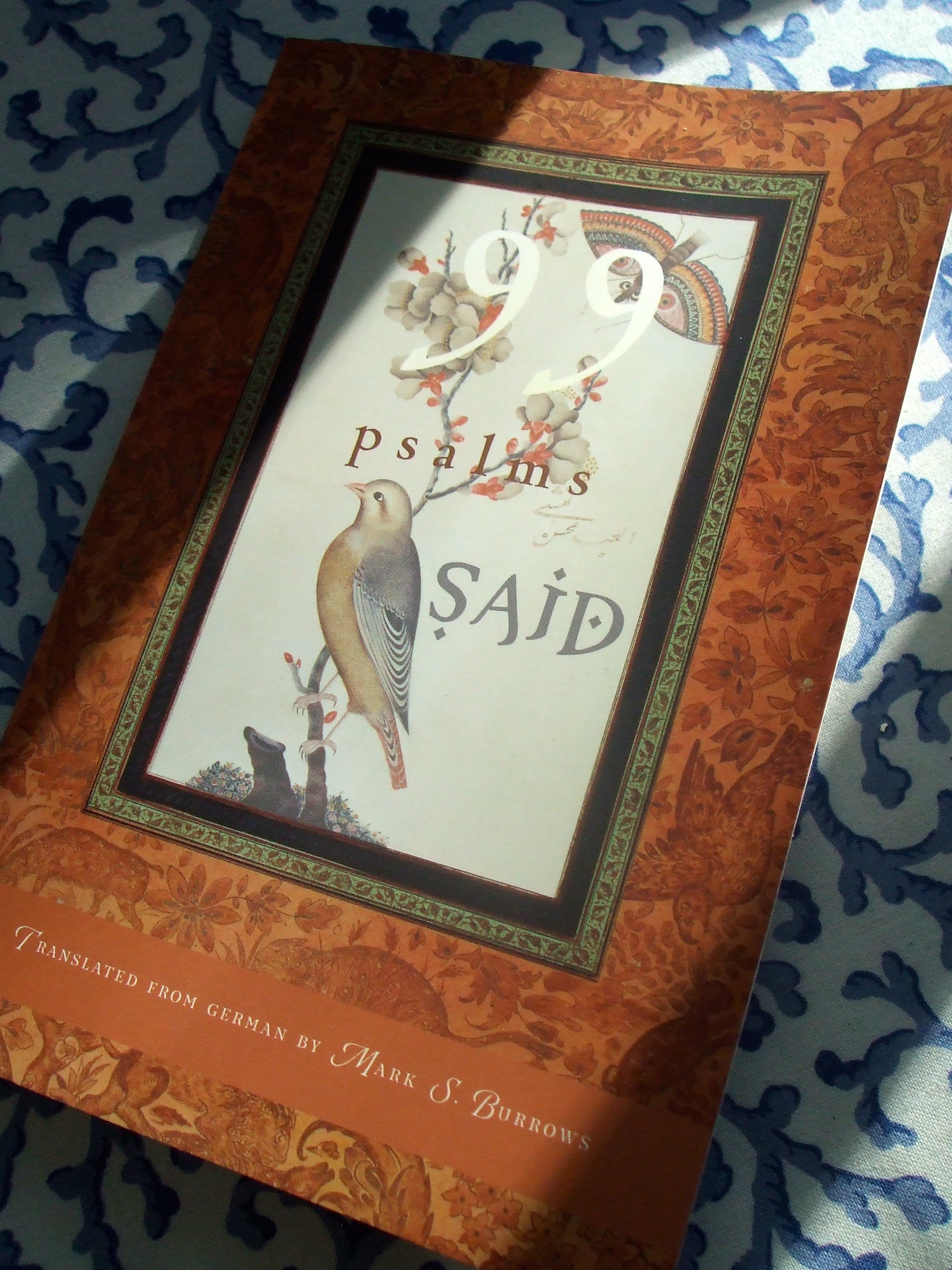
just weeks ago, my teacher, professor burrows, published another translation of a poet whose work dares to explore the often unexplored landscape — the soul in exile. this time, burrows put his considerable intellect to the work of a poet i’d not ever known, one who goes by the pen name of SAID.
the book is titled, “99 psalms: SAID,” translated from german by mark s. burrows (paraclete press, 2013).
born in tehran, SAID emigrated to germany as an engineering student in 1965, but he abandoned those studies to pursue a writing career, and through the power of his poetry, has become a prominent figure in the german literary scene.
burrows first encountered SAID, he recalls, on a “dreary, rain-soaked night” in munich’s old city hall in may of 2010, at a poetry reading held in conjunction with the second ecumenical Kirchentag, a massive gathering sponsored by the roman catholic church and the protestant church of germany.
as SAID took to the microphone, burrows writes that he noticed the audience leaning forward, the better to absorb what flowed next.
“the psalms he chose…were blunt, vivid, and often startling in their language and imagery. none betrayed any trace of sentimentality…the fierce directness of their language conveyed a marked impatience with intolerance, probing the ambiguities of life with an unflinching honesty in order to remind us — if we had forgotten — that ‘purity isn’t the sister of truth.'”
burrows goes on to write that “these are psalms that cry out against the confidence of zealots, with their claims of righteous authority over others — crusaders, campaigners, and jihadists alike.”
in other words, the exile SAID writes poems of exile, “psalms arising from a ‘no-man’s-land.'” he employs a metaphor of wind as “a hope that reaches beyond religious differences and across the growing disparities between the affluent and poor,” as burrows writes.
in the tradition of the hebrew psalmist, SAID’s works are poems of praise and lament. burrows writes that “the poems we need are often the ones that refuse to leave us unattended.” they remind us “to look beyond what we know, or think we know.”
these poems, writes burrows, “bear witness to the heart’s descent into loneliness and despair, and gesture to the ascents we also know in moments of compassion and generosity.”
as always, poetry does the work of capturing the unspoken, unformed fragments of our heart, of our deepest imagination. the poet, as the butterfly catcher, employs the vessels of language to net, to gather, to collect the flitting-about, untethered, winged idea, the moment.
the poet does the work so we — the reader, the listener, the lonely pilgrim — can stake some claim of understanding in a landscape that until the moment of the poet’s poetry has escaped us.
the poet places us, solidly, in territory at once familiar and foreign. we trip upon the syllables of the imagination, and we find ourselves breathless at the poet’s deep knowing, at the exhilarating moment of loneliness collapsed. we recognize, we understand anew the depths of the human spirit, in wordform before un-uttered.
SAID addresses his psalms to “lord,” though not one bound by any religious tradition. he is certainly a late-modern psalmist, and his prayer poems speak to the complexities of the tangled fractious world in which we live. he explores the human condition with more urgency, perhaps, than he explores the divine. and therein is tension, poetry that refuses to leave us unattended.
one last thing, before i leave you with a psalm or two: about the 99 psalms, the number ninety-nine in the muslim tradition is the precise number of names by which Allah — God — is known. there remains one name — “the last/ the hidden” — that is unknowable, beyond us. so too with the 99 psalms; we are left wondering about the one beyond, the one which, perhaps, is written but not known, or not yet written. what might the unknowable tell us? why are we left not knowing?
here, a pair of SAID psalms that “refuse to leave you unattended”:
[Psalm 35]
lord
pray
that we recognize you
when you come
destroy the go-between gods
with their grand airs and their daily needs
set your seal upon your houses
and don’t be afraid of our nakedness
let the cypresses be your messengers
for they stand upright and whisper
and don’t try to convert the wind
[pause for silence.]
and now, one other, though choosing only one was tough, indeed…
[Psalm 10]
lord
spread wide your arms
and protect us
from the multitudes of your guardians
stand by those who wander
who’ve not lost the gift of hearing
and listen within their solitude
stand by those too
who stay and wait for you
[silence, once again…]
chair friends, i come to you on a wednesday, because in the publishing world these days, blogging about a book is one way to cast wider the net. and today was the day they asked me to write.
i ask: is there a poem in your life — or especially in your now — that refuses to leave you unattended? and what about the 100th psalm, do you wonder what it asks or says?





 ‘Muhammad: Forty Introductions’
 all week, i’ve been deep in the pages of mary oliver. one by one, i’ve pulled her books off my shelves, and pored over line after line. i’ve been drawn especially to her prose, the long sentences as stitched with poetry as any of her verse. i inhaled upstream: selected essays, and a poetry handbook, her 1994 master class in the making of a poem.
 devotions, indeed.


 the wall, peeled campaign stickers off his closet door. took down the little boy bulletin board i’d bought the day we moved into this old house. he cleared his book shelves of boyhood favorites, took down the hobbit and twain and j.k. rowling; slid in hobbes and kant and aristotle. hung his hard-won college diploma just above his old desk, the desk where he calculated his way through fifth-grade math, and where he typed his junior theme. he must have measured the proximity between the door of his old room and that of his little brother, the one he says he came home to be close to.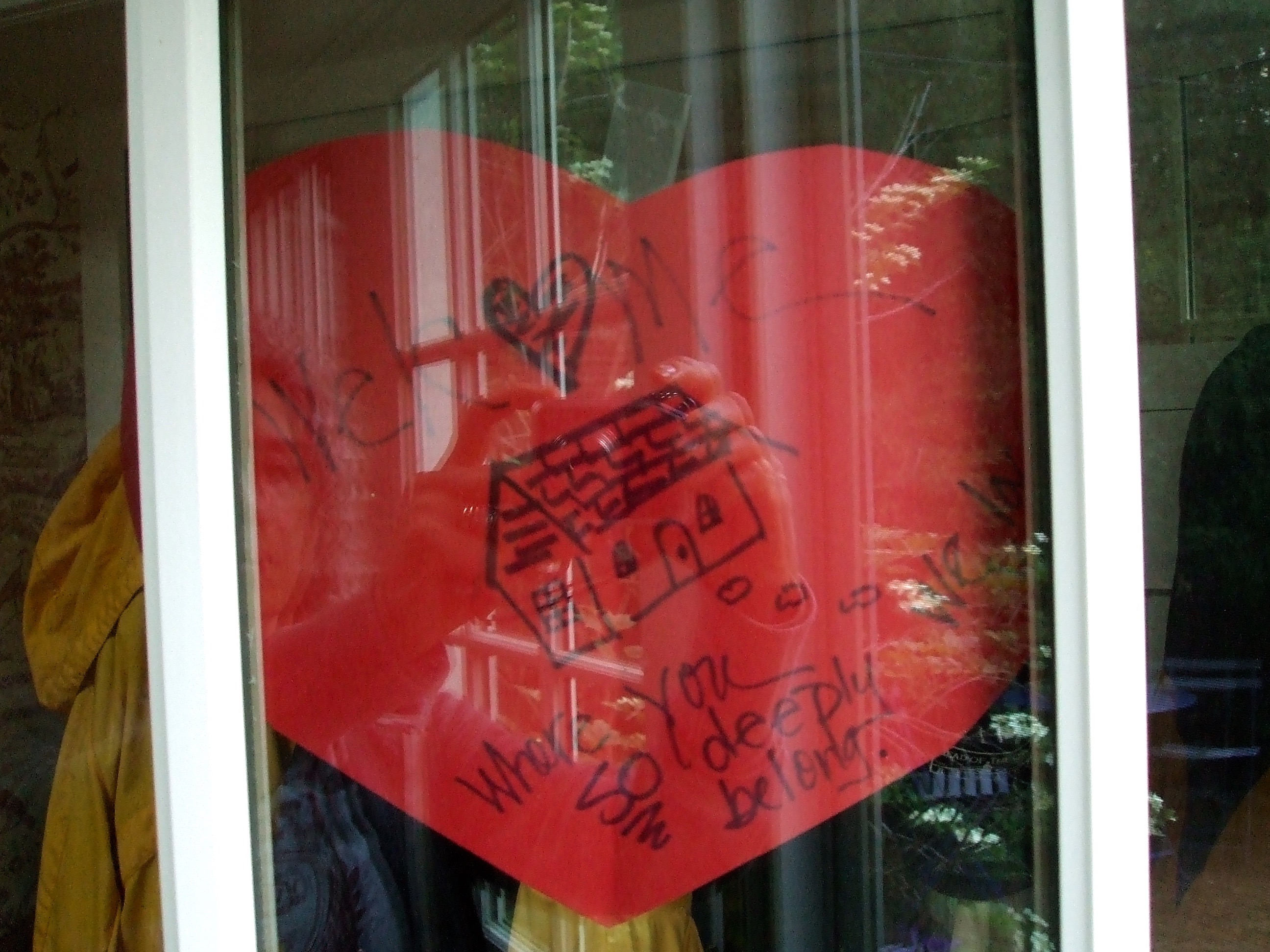


 pull up a chair