pull up a chair

where wisdom gathers, poetry unfolds and divine light is sparked…

Tag: billy collins

paean to the poets, and to those who planted poetry’s seeds in us
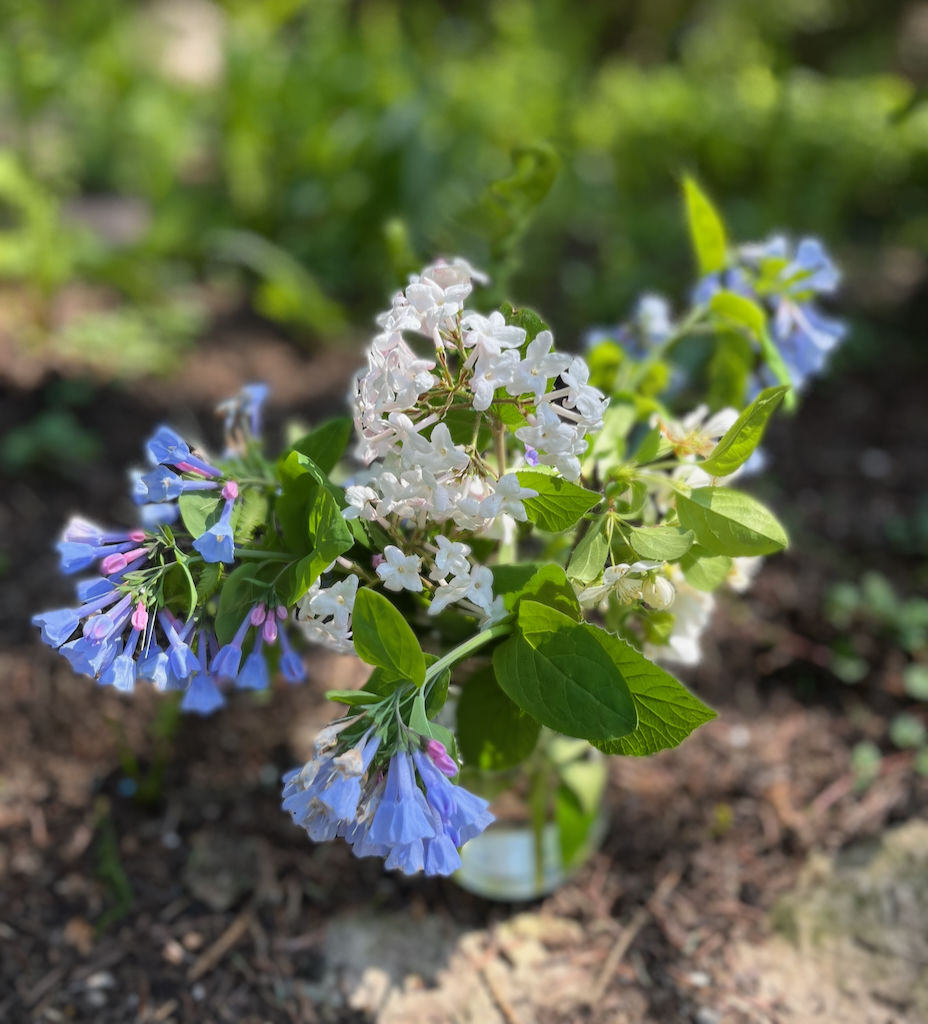
woodland bouquet: bluebell, viburnum, brunnera, flowering crab

in the house where i grew up, poetry was never far away. poetry was my mother’s native language. she awoke us with it. and recited it when we were sick in bed. she spoke of emily and hopkins as if both were neighbors down the lane who’d saunter by for tea and verse. amid especially harried afternoons, when the quintet of us were driving her mad, she’d tuck herself away in the living room and declare it off limits as she lit her rare cigarette, and cracked open a tome of poem after poem. indeterminate time later, she emerged resuscitated—by rhyme scheme or distance away from us, we never did discern (nor did it matter to us dare-not-trespass peepers who kept close and curious watch through the crack of the kitchen door).

most memorable of all perhaps (at least to my wee mind), was the occasional sunday morning recitation of lines i’ve long since etched into my heart’s smooth fibers. while missing sunday mass was never an option, the renegade in my mother was known to let loose sotto voce emily D’s rebellious defense of liturgical absence: “Some keep the Sabbath going to Church – / I keep it, staying at Home – / With a Bobolink for a Chorister – / And an Orchard, for a Dome —” 

so much of who my mother is is captured in those twenty-five words. therein lies the supernatural capacity of any poem that echoes across the landscape of our lives.

and yet, never did i imagine that grown-up me would so embrace my mother’s poetic passion. in a house where words and wit were play things, and my father’s witticisms kept us on our toes, it seems my mother’s way with words is the one that snuck in sideways. and stuck firmly to my ribs. to this day, it shakes me to my rafters.

i am drawn to the ineffable, the liminal, the say-it-slant; i am drawn to the knowing that fills in the silence, the epiphany barely glimpsed in passing. i ache to grasp the depths and heights that crowd the wordless void.

or, as my muse maria popova once wrote: “language is not the content of thought but the vessel into which we pour the ambivalences and contradictions of our thinking, afloat on the current of feeling and time. when the vessel becomes too small to hold what we pour into it, language spills into poetry. in this respect, poetry serves the same function as prayer: to give shape and voice to our unspoken and often unspeakable hopes, fears, and inner tremblings — the tenderest substance of our lives, to be held between the palms and passed from hand to compassionate hand.”

as the hallmarkian labeling of april as poetry month* (see below) is all but wrapped for the year, i thought i’d plop a few poetic musings here on the make-believe maple table, all snipped from my commonplace source, as a way of holding poets, poetry, and poetics up to the flickering light. 

this, then, is my ode to the awe and wonder that propels each and every line of poetry, and its power to catapult us into that which cannot be contained in any string of prose. herewith, a litany of poets (and a rare scholar) on the great work and mystery of poetry: 

jane hirshfield: “Poetry's work
 is the clarification 
and magnification 
of being.”
 

billy collins: “all babies are born with knowledge of poetry, because the lub-dub of the mother’s heart is in iambic meter. then, life slowly starts to choke the poetry out of us.” 

robert ultimo, a classics scholar who has taught the art and science of writing for the last quarter century, and now twice weekly sends brilliant missives via his Writing Smartly blog, put it pithily: “Prose wants to describe the husk, but poetry wants the seed.”

ralph waldo emerson: “For poetry was all written before time was, and whenever we are so finely organized that we can penetrate into that region where the air is music, we hear those primal warblings and attempt to write them down, but we lose ever and anon a word or a verse and substitute something of our own, and thus miswrite the poem.”

marie howe: “poetry holds . . . what can’t be said. It can’t be paraphrased. It can’t be translated. The great poetry I love holds the mystery of on being alive. It holds it in a kind of basket of words that feels inevitable. There’s great, great, great prose, gorgeous prose. You and I could probably quote some right now. Poetry has a kind of trancelike quality still. It has the quality of a spell still.

“I mean, maybe the first poem was a lullaby a woman sang to her child, the incantatory, “Everything is OK, everything is OK, everything is OK. I’m here, go to sleep.” Or we prayed for rain, or we thanked the Gods for the corn, or we sang to the deer we were going to catch. But it’s interrelational. It’s incantatory. It feels as if its roots can never wholly be pulled out from sacred ground.”

 t.s. eliot: “the great poet . . . should perceive vibrations beyond the range of ordinary men [and women], and be able to make [them] see and hear more at each end than they could ever see without [the poet’s] help. … It is therefore a constant reminder to the poet, of the obligation to explore, to find words for the inarticulate, to capture those feelings which people can hardly even feel, because they have no words for them; and at the same time, a reminder that the explorer beyond the frontiers of ordinary consciousness will only be able to return and report to his fellow-citizens, if he has all the time a firm grasp upon the realities with which they are already acquainted…

“The task of the poet, in making people comprehend the incomprehensible, demands immense resources of language; and in developing the language, enriching the meaning of words and showing how much words can do, he is making possible a range of emotion and perception for other men, because he gives them the speech in which more can be expressed.”

eavan boland, the great Irish poet, once said: “Poetry begins where certitude leaves off.”

and let us close with christian wiman, who gets the last but not final word: “Let us remember … that in the end we go to poetry for one reason, so that we might more fully inhabit our lives and the world in which we live them, and that if we more fully inhabit these things, we might be less apt to destroy both.”
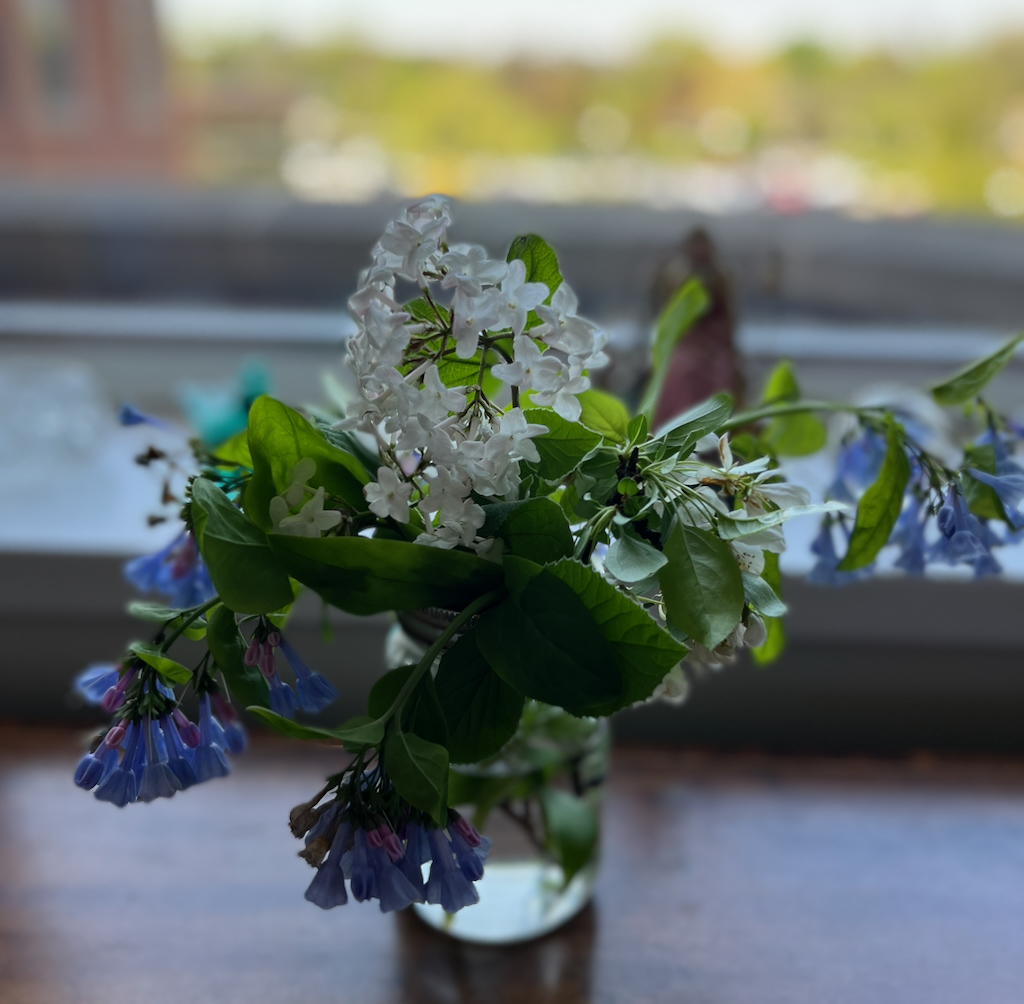
i brought the woodland to my mama, who over the decades has brought so, so much to me….not least, poetry. . .

are you inclined to poetry, or are you more cozy inside prose? either way, who sparked the earliest such seeds in you, and when do you first remember them sprouting?

*about that poetic designation: should you be even a tad curious about how it is that the fourth month of the gregorian calendar found itself with the appellation national poetry month, the chair comes lurching to the rescue: twas the decision in 1996 of the academy of american poets who chose it for a host of reasons, not least being a poetic bit of playful towel-snapping contra to t.s. eliot’s claim that “april is the cruellest month.” pragmatically, the pedagogues among the poets decided the penultimate month of the school year was the perfect period to pack in piles and piles of poems. and should you be even remotely curious about which poem snares the title as most-read (at least in modern times), it’s claimed to be the ode to daffodils from ol’ will wordsworth, who, out wandering “lonely as a cloud” with his little sister dorothy in april of 1802, came upon a belt of yellow-bellied bloomers. exclaimed, he did:

“I wandered lonely as a cloud That floats on high o’er vales and hills, When all at once I saw a crowd, A host, of golden daffodils.”

perhaps you have another that you’d consider your very own personal most-read poem . . . (all contenders welcome!)
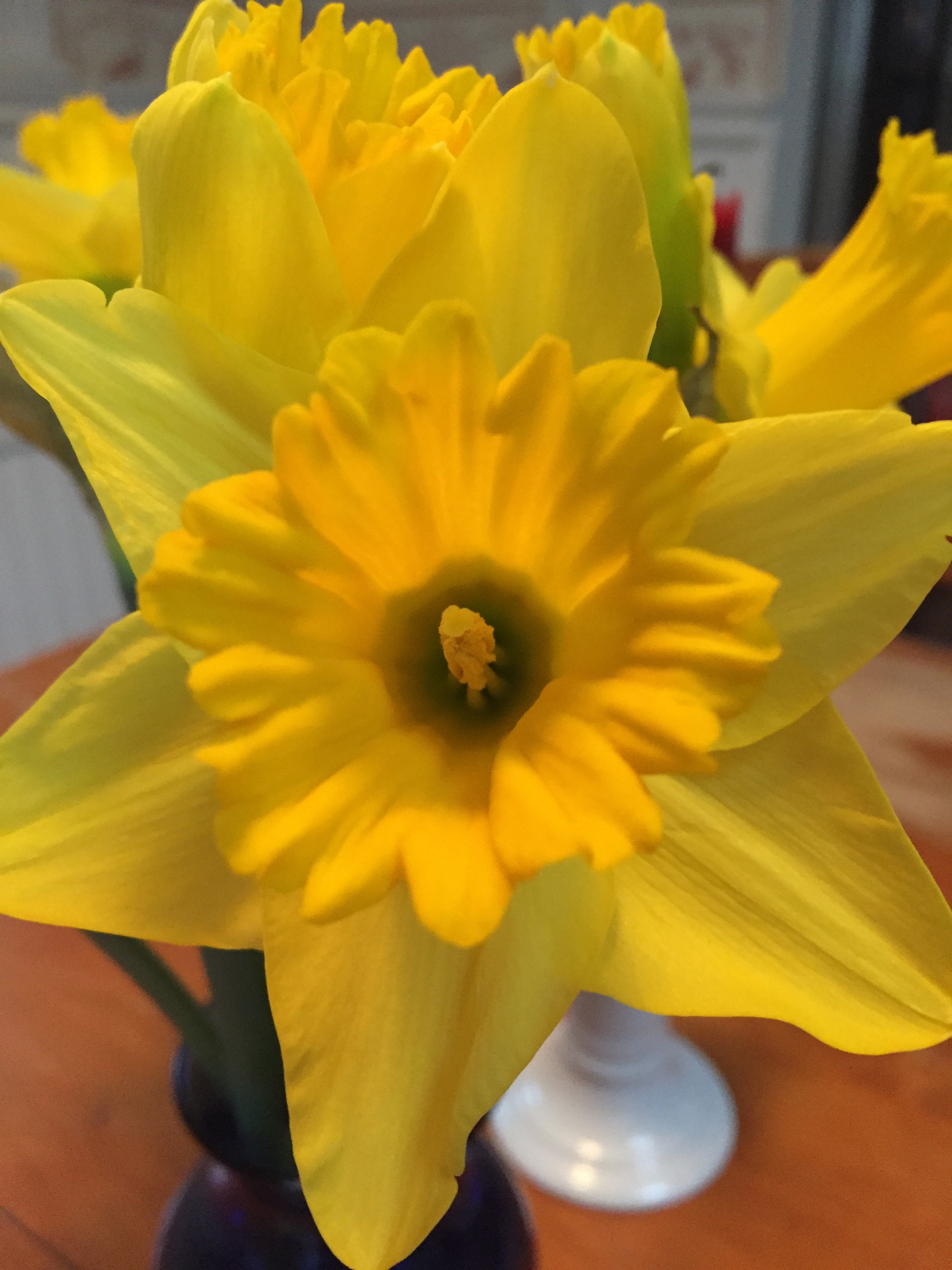
of thin places and the deep soul of my ancient peoples

i remember perfectly the first time i heard mention of a “thin place.” i was on holy ground, a farm smack dab in the middle of abe lincoln’s homeland. beau’s farm was the name of the farm, an organic farm, an organic farm that rose from an almost impenetrable shadow of grief. deep grief. beau was a marine, a strapping handsome fellow, who died down the road from the farm, home on leave from iraq, when he drowned. his mother, a woman i’ve come to love dearly, once told me that losing beau was “just like being hung, that moment when they pull that thing out from under you,” when the sheriff comes to the door, rings the bell at just past dawn to break the news.

beau’s mama was lost to grief for two long years. but then, she told me, she started to notice little beauties. she’d toss an old dried plant to the ground; and it’d grow.

“it dawned on me, after all those months, i was noticing beauty,” she once told me as we walked the gravel drive to where the peacocks pecked and strutted in their pen. and as i once wrote in the pages of the chicago tribune, “that’s when she realized. realized maybe the one place where she could plant her sorrow, turn it into something beautiful, something lasting, was the almost seven acres that surrounded her old white resurrected farmhouse. . .”

terry starks is beau’s mama’s name; she lives up in maine now, where she still turns earth and life into something beautiful, something lasting.

terry starks was the first to tell me of thin places. she told me the hay loft in her barn was where she went to cry when the tears seemed to have no end. she told me she was drawn there because the loft was surely a thin place, a place where the veil between heaven and earth is lifted. where you can all but feel the arms of God reaching out toward you.

it’s the celts who see the world that way, who know that ours is a topography of the sacred. who live attuned to soulful rhythms most others miss.

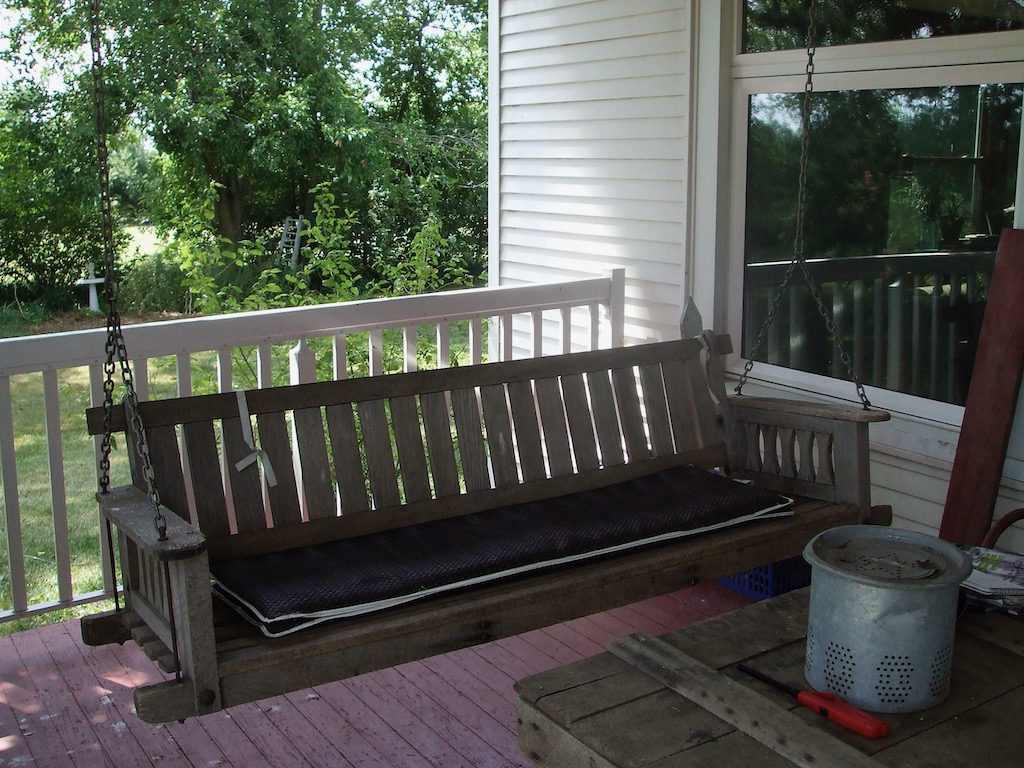
i remember sitting on the porch swing at beau’s farm, as beau’s mama poured her hard-won wisdoms as if a pitcher without bottom. i absorbed more gospel that day on beau’s and beau’s mama’s farm than i’ve absorbed most days of my holy blessed life.

ever since, i’ve been drawn deeper and deeper into the wisdoms of the celts, a holy people who traipse the hills and vales and rocky shorelines of my ancient roots.

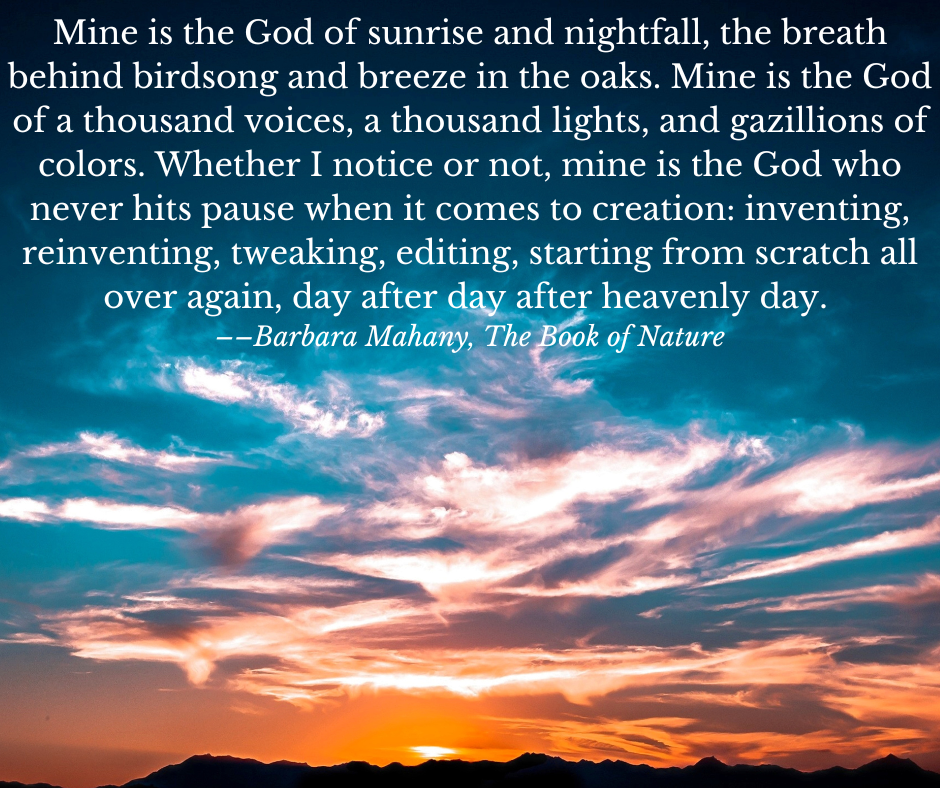
because today happens to be a day when plenty of folk haul out green beer and soda bread, i decided to haul out just one of many passages from The Book of Nature, my little book due to be birthed just the other side of the weekend, on the vernal equinox, day of equal light and shadow, when all of us might look upon each other’s faces for the very first time, reason to rejoice if you ask me. it’s a passage from a chapter on the dawn. and i picked the photo way up above because i took it on the day i drove to beau’s farm, and it fits blessedly with how the celts see the sun. and because i was thinking of thin places, i decided to tell terry’s tale as the long way in to how the celts have taught me so very many things. thin places, among the litany.

here tis. . . a passage from The Book of Nature…

God was considered “the Sun behind all suns,” as the author George MacLeod once wrote. The whole of creation was dappled with the light of the sun as it journeyed across the sky. Wherever its light fell, there was God filtering through, an earthly translation of the divine infusion. And the perpetual Celtic praise song rose up with the dawn. Celtic gentlemen—farmers and herders and fishermen, set off to work in the predawn darkness—doffed their hat at the first light of the sun, and bowed in blessing. The Carmina Gadelica, a collection of Gaelic prayers and chants, is filled with start-of-day blessings, as the Celts were wont to offer up benediction for every chore and implement and God-given element of every day, from milking to weaving to shearing the sheep, from fire to wind to sprinkling of water. And certainly for the miraculous return of the morning’s first light. Mystic and teacher Alexander Scott, who grew up in the west of Scotland and kept Celtic ways alive in his nineteenth-century books, wrote that his were a people “listening for God in all things, ‘in the growth of the tree, in the rising of the morning sun, in the stars at night, and in the moon.’” 

–Barbara Mahany, The Book of Nature


of the many, many stories i wrote over the almost 30 years, the story of beau’s farm was one of the ones i hold closest to my heart. here’s a link, should you care to read it. with love, from terry’s scribe. (apologies if you need a subscription to open the link.)


thanks to a friend i love with my whole heart, i stumbled on another wise soul with buckets of beauty to grace the world. a poet-activist-performer named andrea gibson, now a cancer survivor whose words might take your breath away. andrea identifies as queer, and uses the pronoun “they;” and they are known for their trademark honesty and bare-naked vulnerability, traits i find irresistible and blessed beyond words. here are just a few lines i couldn’t keep from scribbling down:

when it comes to hearts i want always to be size queen…

i love you because we both showed up to kindness tryouts with notes from the school nurse that said we were too hurt to participate….

when your heart is broken, you plant seeds in the cracks and pray for rain.

before i die, i want to be somebody’s favorite hiding place, the place they can put everything they know they need to survive, every secret, every solitude, every nervous prayer, and be absolutely certain i will keep it safe. i will keep it safe.

andrea gibson

one more morsel for this blessed day, a poem from billy collins, once poet laureate of the united states, and a poet with plenty o’ irish roots . . .

Questions About Angels
by Billy Collins

Of all the questions you might want to ask
about angels, the only one you ever hear
is how many can dance on the head of a pin.

No curiosity about how they pass the eternal time
besides circling the Throne chanting in Latin
or delivering a crust of bread to a hermit on earth
or guiding a boy and girl across a rickety wooden bridge.

Do they fly through God’s body and come out singing?
Do they swing like children from the hinges
of the spirit world saying their names backwards and forwards?
Do they sit alone in little gardens changing colors?

What about their sleeping habits, the fabric of their robes,
their diet of unfiltered divine light?
What goes on inside their luminous heads? Is there a wall
these tall presences can look over and see hell?

If an angel fell off a cloud, would he leave a hole
in a river and would the hole float along endlessly
filled with the silent letters of every angelic word?

If an angel delivered the mail, would he arrive
in a blinding rush of wings or would he just assume
the appearance of the regular mailman and
whistle up the driveway reading the postcards?

No, the medieval theologians control the court.
The only question you ever hear is about
the little dance floor on the head of a pin
where halos are meant to converge and drift invisibly.

It is designed to make us think in millions,
billions, to make us run out of numbers and collapse
into infinity, but perhaps the answer is simply one:
one female angel dancing alone in her stocking feet,
a small jazz combo working in the background.

She sways like a branch in the wind, her beautiful
eyes closed, and the tall thin bassist leans over
to glance at his watch because she has been dancing
forever, and now it is very late, even for musicians.


nothing would delight me more than to see some of you, or all of you, come tuesday night, when i am shoving aside my worries about stepping up to speak in front of a crowd any bigger than the one or two who might share this old maple table on any given morning. we’ll gather to mostly rejoice in what’s become a holy sacred bond, one woven over time, through shared wisdoms, devoted kindness, good grace and humor. and i promise to read one or two passages from The Book of Nature, and even talk a little bit about how it came to be. it’s the first of my five books that wasn’t first birthed here, but its pages are filled with wisdoms learned here, steeped here, refined here. so you all have a thread in the whole cloth it became. and i can imagine no finer benediction than to begin the book with you. so see you tuesday, march 21, the vernal equinox at 7 p.m. chicago time.

now, what celtic wisdoms fuel your every day? and where are the thin places in your life where the veil between heaven and earth is at its thinnest, and you too feel it lifted for a blessed glance of the sacred beyond?

when it comes to hearts, i always want to be known as size queen…