pull up a chair

where wisdom gathers, poetry unfolds and divine light is sparked…

coffee 101

the morning it happened, the boy came down the stairs bleary-eyed. words came out more in grunts than real syllables. but i figured it out.
“k’i tr kff?
“plzzz?”
the grunts were distinct, there were four of them. one string and an add-on. each ended in a question. that i could tell from the upswing of the grunt. it was a request. and it was insistent.
translation: “mother dearest, could i try some of that black brew i’ve been smelling for years now, and that this morning i definitely need?
“please?”
i braced against the edge of the counter. held on as my knuckles turned a paler shade of pink. i’d been waiting for this. seen it coming in keen concentration, in the way that he watched how i did it.
not much to watch, since i’m straight-up with my brew. i make it so thick and so octaned, a spoon, if i stirred it, would stand without listing. might even salute, what with the hairs on its spine sticking straight up, at fullest attention, indeed. come to think of it, poor spoon might shimmy, buzzing from all that high octane.
i’ve no need for dumbing it down, my morning’s refreshment, that is. not a splash from a cow, nor a spoonful of sweet stuff. i put nothing in it. drink buck naked, i do. just me and the beans and a wee dash of water.
if i could get away with beans in a cup, i might try that. ah, never mind. it’s the sucking i’d miss. and the swirling around of the hot steaming brew before it goes down the pipe, rumbles my tummy.
i’d seen the boy peeking over my shoulder. caught him inhaling. the mug on the counter, i mean. the cumulus cloud of cafe-vapor that wafts from the pot as i pour.
ever since his manhattan auntie supplied him with his very own card, he’s been transgressing at starbucks, ordering frothy, whip-creamy concoctions, all with an undertow of c-o-f-f-e-e (maybe if i spell, i’m thinking, he won’t be quite so tempted). when he was little he didn’t mind a spoonful of haagen-dazs in the offending flavor; in fact, i’d find him licking that spoon. a kindergartner with a taste for the bean.
so i was hardly stunned at the question. it’s j-j-just, well, i wasn’t quite ready to share.
you see, when i went shopping for mates long ago, i specifically issued a bulletin that i was seeking a soul who would not steal my brew. not in the morning. not after dinner on the nights when the table was spilling with pies and cakes and good conversation, and a fresh pot of coffee seemed the perfect bedtime, um, lubricant. conversational lubricant, of course.
stingily, i have brewed me a pot every morning of my married life–oh, except for the 8-1/2 months of each pregnancy when i could not be in a room with the wretched concoction of colombian beans and lake michigan water–and not once have i shared so much as a drop. at least not with the tall guy who wanders the kitchen, searching for cereal bowls, avoiding the pot. he is strictly an orange juice man.
puffy-chested, i have boasted at the sheer genius of falling in love with a man who does not partake of my deeply personal habit. that brew is mine and mine alone. i make eight cups, i drink eight cups. no scuffling over the beans or the roast, or the straightup-ness of my own private method.
until now.
until the morning after the freshman in high school found himself with a mere four hours of sleep. and the stuff in the pot that his mama was clutching close to the heart, hmm, it smelled like just the right cure for his bleary-eyed blues.
so, near trembling, i poured. the occasion was worthy of cameras (which of course i grabbed). he needed a bit of a lesson, it seemed. knew this wouldn’t be going down straight, the way real drinkers drink it.
his virgin cup would be slow, would be easy.
i showed him the spoon and the carton. told him to pour till just the right color he saw. when brown turned to beige, he surrendered the 2-percent. i saw how his eyes brightened, though, when i mentioned that out in the real world he might bump into actual cream. the notion seemed not to alarm him. perhaps, after all, he was more of a man than i knew.
he asked for sugar. i gave him the raw stuff. some packet i’d stashed in my pocket, bored, i suppose, as i sat at some faraway table. carried it home for just such a crossing the threshold.
he sipped, and i knew right then i was sunk.
he smiled.
that smile i knew from myself. it’s the smile of deep satisfaction. when the brew hits your tongue, hits your brain, hits your soul. sort of a one-man-band of caffeine delight. the drums were drumming, the harmonica humming. even the cymbals were clanging. the boy was liking the brew.
i am working to keep him at bay. i don’t think it wise for a youth of 14 to go supercharging his innocent pistons.
he did report that the sip in the morning aided him all through the day. or at least the math test at 10, that unforgettable day when my hold on my pot was first loosed.
i am no longer the sole owner and proprietor of the one appliance that matters. me and the coffeemaker, we’ve got company. and he’s asleep in the bed just above.
perhaps i can teach him the wonders of tea. or, like his father, to face the world on nothing but orange juice.
but i fear that the ballots are already counted. me and the beans: 1. boy and beans: 1.
we’re in for a lifetime of sharing.
yo, kid, i ask only this: don’t, for the life of me, drink without thinking. do not, whatever you do, leave me to wake up to a house with no brew.
that might sink me, to reach for the black stuff and find nothing but syrupy goo that’s baked onto a pot when it’s thoughtlessly drained.

slow to wake up to the real world, i am wondering, those of you who share walls with more than your sweet little self, did you find it a challenge to let go of your stranglehold on what brewed? and those of you who live all alone, do you ever mind when company drains that there pot? any and all of you, do you recall your very first cup? what words of wisdom would you share with one just starting to octane? any refinements on the perfect coffee equation? do not hold back here, people. this is a whole lifetime of sipping we’re launching.

digging resurrection

i can conjure few tasks where one of the essential ingredients is dried blood. but there i was, the lady in black, digging small graves all over the yard, one hand on the trowel, one hand in the pouch of dried blood.
like the wounds of some civil war battlefield, i sprinkled behind me a crimson-red trail. tossed blood to the wind, let it rain on each grave. a solemn benediction, indeed. a hope that what lay there would not be absconded, stripped from the tomb before its due time.
i felt the urge, but didn’t give in, to tuck little white crosses above each piled mound.
such are the demands of the autumnal garden.
just after the equinox cast its lengthening shadows, you see, i was out planting my bulbs.
i was digging for resurrection, come spring.
but this hot september morning, a morning that had me perspiring and red as a tulip in march, there as i dug in my great swaths of color-to-be, there was little to whisper of promise.
instead there abounded death and destruction. an odd mix of voodoo and witchcraft. with a pinch of botany to boot.
the bulbs, some fat, some not so, wrapped in a papery-sheath, looked each like a fat clove of garlic, or a whole stinky head. every last bulb, a life cycle on hold.
and the holes where i lay them were often disturbing a worm. a worm sliced in half, i would think, is disturbed. the mouth of my trowel, without warning or even a knock, had come crashing through roofs of many a subterranean bedroom. the worms, alas, were rudely awakened.
and then there was my sorceress’ phalanx of amulets and prescriptions: the dried blood; the bulb-booster fertilizer (actually bone and feather that’s ground to a meal, if you can stomach such sinister fuels); the odoriferous something i bathed each of the bulbs in, something they promised would keep the chipmunks and squirrels from making quick lunch of my tulips and squill and tete-a-tete daffodils.
such folly, this.
or is it?
if it works, if i cross my fingers, if the stars align, if just the right rainfall and snowfall bring drink to my bulbs, if the freeze doesn’t sink in too deep, if the blood does what it’s supposed to (and no, not bring on the vampires), well, then, i’ll have me a garden come march and april and may.
just when i’ll need it, i think. when i’m thisclose to pulling my hairs out, when i want to burn every boot in the house and all of the mittens and the scarves and the tassle-topped hats, as well.
i am planting my sanity-keeper, really.
that’s what a bulb does.
it gets you through the long, barren winter. the winter when white, darkening to sooty gray-black, is the prevailing hue of the world on the other side of the glass.
ah, but not when you’ve planted a yard full of bulbs. then, you see whole other colors. colors no one, besides you and your kaleidoscope eyes, can manage to see.
a bulb is license to imagine a landscape, to muse on the underground labor. to know that something’s at work, life is stirring, awaiting the bell for rebirth.
you look out your window in winter, you see the cobalt blue of the siberian squill, great pooling puddles of it. you see the double-white of the mount hood tulips, there by the path to the door. poking out through the soil, just after the snowdrops, that most blessed first wisp of survival.
you’ve made it, the bulb chorus will tell you. you survived the long cruel winter.
ah, but before there is resurrection, there must be death. it’s the very crux of the matter, the root of the definition, spelled out right there on page 1545 of webster’s unabridged: “a rising from the dead, or coming back to life.”
and so, on a day when the sunlight is golden. on a day when the leaves are just starting to blush and run out of green ink, i sink trowel into earth.
i am the digger of graves. into each wound in the dirt, i lay to rest all that i’ve gathered, all i could not leave behind.
stood there at the garden shop, i did, drooled over all of the choices. you would think i was picking penny candy. tossing this bulb and that in my little brown bag.
lord knows, i never remember which is which by the time i get home. that’s when the sorting begins. the purplish hyacinths, the bulbs that make your skin sort of sting, they go in one pile. and the all of the rest, herded like so many sheep. each kind to its own little flock. little bitty scilla–can something so breathtaking come from so little? dare i attempt a tulip at all, seeing as the squirrels come from miles for a bite of a tulipy lunch?
then in my head, the plotting begins. the mapping out of the graveyard. who gets buried where? what finds itself locked in solitary confinement? who gets tossed in together?
the interment could stretch on for hours, but i too often get tired.
by the end of the morning, there were lots of mass graves. i’ll leave my bulbs to wrestle it out. shove and push, make a fuss, all through the winter.
i won’t hear even a whimper. for i’ve buried them and muffled them too. the inches of compost, the droplets of blood, the piles of hoped-for snow, it is the buffer, it keeps me from knowing just how raucous a crowd i’ve buried out there in my cemetery masquerading as a bright blooming bouquet, come the months after the nothing, the silence, the waiting.

do you go bulb crazy too? do you ever feel like some sort of a witch, plying your botanical craft? partaking of wizardry there in your soils? i’m always amazed that what feels like so much on my hands and my knees some autumnal day, comes up so sparsely in spring. i do plant in the hundreds. must we go for the thousands and thousands to get what i call the shopping-mall swath? anyone yet picked up a trowel, dug up a grave for your garden-to-come? and, mostly, what of the promise of life to come, bounded up in a paper-sheathed, tucked-under-ground bulb?

what if…

what if

i was lurching to a stop, at a light leaping toward red, and that’s when the thought was birthed in my head. oh, it had been pulling at me all morning. i felt the weight of it from the moment my eyes opened, let in the light.

i was having trouble letting go of the great sacred hours of saturday. it had been a day of pure oxygen. i had nowhere to be other than prayer. i did nothing worldly.

i only drove at the end of the day, when the dark came. all day i walked to the place where the prayer was in pews. i walked with my boys; we weren’t in a hurry. the little one filled his pockets with acorns, sat off in a corner when we got there, played games with the corns and their caps. the other boy, wrapped in his prayer shawl, stood beside me, sat beside me, prayed beside me. their papa, this year, was far far away.

we spent enough hours in the place where the prayer was–coming and going all day–that we followed the arc of the sun.

the morning light, white, filtered through glass the color of cafe au lait, poured in from the east, lit my pages of prayers from the top, spilled toward the bottom.

by late afternoon, the light streaming in from the west was golden. some in the pews wore sunglasses. i let the sun in without filter, practically blind me.

when the sun fell, when the light fell, the rabbi lit a bright candle. for a few minutes, it was the only light in the great-ceilinged chamber.

then, it was over and we stepped out into the twilight. walked home one last time.

it was the light and the words, and the pushing away of the everyday, that drew me into a place where i want to return. the rabbi kept saying yom kippur is the one day, the one 25 hours of the year, when we brush up closest to God; we taste paradise, he told us. i believed him. i felt the stirring inside me.

i felt the touch of the fingers of God, up near my temples, up where the prayers settle and launch back into orbit. up where my thoughts rustle like grasses.

i felt time itself transform. it was not a staccato of chock-a-block minutes. but, rather a plane with no beginning or end. it was a mist that carried me. took me deep into a place where the world could not enter. it was sacred and slow and without measure. i had no hunger. other than that of wanting the day to last forever.

and then came the next day. and everything about it, it seemed, was hard. there was breakfast to make and errands to run. and a whole week ahead. i felt the wallop of monday galloping towards me.

i was on my way home from the mall where i’d gone to buy knobs for a door that resisted the ones i’d already bothered to try. that’s when the words came.

what if?

what if we let go, just for a spell, of all the constraints and let time return to its essence? what if we put out our hands and cupped as much as we could? what if these were our very last hours? what if we allowed each minute to sink deep into our soul?

would we be racing to malls? or would we be breathing? filling our lungs with the warmth of a sun that hasn’t gone out yet.

would we know if a monday followed a sunday? would we care? we have lassoed the moments of time, coerced them into ill-fitting forms.

oh, i know, i know. we have lives to lead, jobs to fulfill, mouths to feed.

but might we maybe have gone overboard? gotten so locked into clocks and calendars that we never, only maybe once a year, and only if we must, tell time we’re not paying attention.

we are, instead, wholly indulging in the gift of the light and the breeze. we are sinking our hands and our heart and our soul into the timeless. we are digging holes for a bulb, kneading bread dough, rocking our children. we are watching the waves, holding a butterfly, listening to air flutter the leaves of the trees.

the gift of shabbat and the sabbath offer that very reality. one day of each week. from sundown to sundown. for years now, i’ve said i wanted to follow the laws of the sabbath: not drive, not do any labor. pull into a place that knows no end or beginning. knows only the light of the sun and the stars and the moon.

what if each day we honor one blessed hour, or one blessed chunk of an hour? what if we give time its due? not lock it, and chain it, and wrap it around us.

but rather, allow it to flow through our hands, each sacred drop tasted for all that it is: the closest element in the world to paradise itself.

if we give it a chance.

if we let it sink into our skin, in through our eyes and our ears. if we taste it. if we suck on the marrow of time. if we stop and we marvel. the difference between any one moment and the next might be the difference between life, and life no longer.

each moment is sacred.

if only we notice.

if only we live as if we grasp the whole of that truth…

it’s my job to go out on a limb. it’s my blessing to have a place to do so. to say so. i netted this thought before it floated away. here it is now, you too can enter the thought. it’s ours now to share. to look at, consider. to release or let flap for awhile. do any of you make a practice of releasing time from its trappings? how do you do so? do you long to do it more often? what ways do you strip the world from the worldly? seek just a taste of the divine, the everlasting?

a word of deep sadness: a boy who filled a room with his strength and his sunshine died on saturday afternoon. in his mother’s arms. his name was nick. he had just turned 16. he and i shared tuesdays in a small room where we tried to get our bones stronger. he’d been fighting the ravages of cancer since he was four. but he never let on. my little one loved him. so did i. you couldn’t know nick and not love him. maybe nick is part of why each moment feels sacred today. be at peace, sweet friend. be at peace. your mama, and papa and all those who love you, peace to you too.

and finally, that photo up there. it’s from my will. the boy who’s a manchild these days. i usually don’t tell you his name. but the photo is his. and you should know where it came from. i asked him to go out with his lens, and catch a moment that felt timeless. full of light. inspired. up there is what he brought home. i could stare at that moment all day…thank you, sweet will.

the sins that won’t float away

that there seagull is eating my sin. more of a late-afternoon goute (that’s french for a taste when tummies are growling, a ways after lunch, not long before dinner). and if i were a beach-combing bird, i too, might dive for a nibble of honeycake, albeit spiced by the devil.

but, oh, dear mr. gull, that crumb was not meant for a snack; it was my sin and i’d tossed it away.

that, friends, is yet another one of the beauties of being the mama in a house where much of the world is seen through a lens that is jewish.

i now know from tashlikh.

of all the poetry i find in things jewish–from the lighting of friday night candles to bring on the sabbath bride, to the sanctification of each blessed moment of the day, from opening your eyes at the dawn to fluttering them closed at the nightfall–i think tashlikh is among the most poetic. practical, too.

at the start of the days of awe, the most blessed stretch from rosh hashanah, the new year, to yom kippur, the day of atonement, you walk onto the sands of the beach, or to the banks of a river, you take a fine hunk of bread (or honeycake; more on that later), and you toss it, casting away each one of your sins.

the custom, i read, has roots in antiquity. the romans had a similar ceremony. when the floods came, and they did, believe me, in the land of the aqueduct, before maybe all of the wrinkles were quite ironed out, the god-fearing romans would toss stalks of grain into the swift rising waters.

it was their fervent desire to unruffle the feathers of gods who might resent their wresting of foods from the earth, a.k.a. plowing the fields. sounds a bit like throwing a steak to the lion. but nonetheless, their grains they did cast.

up in old germany too, they tossed as well. petrarch, the 14th-century poet and thinker, tells of watching folks in cologne toss things in the rhine. (the book that i read doesn’t spell out what sorts of things, but i don’t think he means whatever was left of their picnics.) which means the christians borrowed from pagans. and now the jews have taken over the franchise.

except for the likes of me. i like tossing my crumbs and my sins, all in one swoop. i find standing at the water’s edge, on a day when the sun is strong on my back and the breeze is soft on my cheeks, rather superior to tiptoeing into a little dark closet, where to kneel on a kneeler is to feel all the bumps in my knees. and i rather dislike the sound of the sliding wood door. the one between you and the priest, and the baring of all of your sins.

i’ll take the beach, please.

and so will my little one. the one who seems to have deep theological stirrings, even if he can’t quite get a grip on his pencil. even if he can’t make a capital G that doesn’t look like one of his Os laid down and died before making it home.

he was all over the very first outing to the beach, old challah in hand. we all lined up at the water’s edge, dropped our heads. he thought we should all drop to our knees too. then stand up, raise our hands to the sky, in some sort of salute, before tossing.

then, as soon as the first of the chunks hit the water, he shouted what all of us saw. “it’s coming back. it’s coming back. the sin is not going away.”

he was right, all right. it takes a mighty fat hunk of the bread to beat out the tide (such as it is in a lake as opposed to an ocean). which is why, i suppose, the writings on tashlikh prefer that you stick to the rivers.

the boomerang factor in lakes is a bit of a problem. at least and especially when you are in need of the water to take away sin.

eventually, after a few sodden re-throws, we got one or two of our sins to float out to sea. or, in our case, farther out in the lake.

but the young theologian was never convinced. “they’ll come back,” he warned the whole ride home. skeptic. or commonsensical thinker?

sure enough. next afternoon, just after i’d finished using my outside voice inside, just after he’d trespassed across the wide-plank pine floors in his soccer cleats, he found what he was looking for: “mom. see. your sin came back. because you were just mean. i knew it would float back.”

it is one thing to feel heavy of heart all by your lonesome. it is wholly another to have your sins announced and broadcast, as if play-by-play in the top of the eighth. and you now are losing, 0 to 1.

me and the one trying hard to get a grip on this sin thing, we tried it again. went back to the beach. not on rosh hashanah when you’re supposed to, when we did it the first time. we went again on any old wednesday. this time i brought the honeycake. the getting-stale honeycake that no one wanted to eat. i figured it would suffice for the casting of sins, take two.

that’s when the gull came. gobbled that sin before it had even a chance to come back to the shore. but at least it is gone now.

my theological one, however, remains unconvinced. he thinks this casting of sins needs some revisions. lying in bed just last night, on his slow road to dreamland, he offered this six-year-old thinking:

“they just float back to you, the sins. in the sea water from far, far away, they go up and down, up and down, and then they come, back to our house. and then the seagulls and all kinds of stuff, it makes more sin when it gets all yucky. and then in the winter when snow comes it gets digged in. and it will rot in a hole in the beach.”

what he’s thinking might work is: “we can get a shovel, and put all of our sins in a hole, and before you cover it up, you crinkle it up, and then you put sand over it, and wait for a wave to cover it up.”

he told me a sin is when you say a bad word. then he offered examples. “dumb,” he told me, was the first bad word that he learned.

but then, the son of a catholic, he must have been pondering levels of sin, advanced and not-so-advanced, sort of like lessons in swimming. “mom,” he began, “what if you said the bad word quietly?”

the boy, clearly, has much in his head on the subject of sin. it is not such a bad thing, i don’t think. he is learning his way in the world, a world where a playground each day, brings new assaults. kicks in the shin. and words i wince to hear.

each one of us, somehow, needs to learn what feels right, what feels wrong. and what of forgiveness.

if it works for my boy to take a shovel and dig a deep hole. to toss all of his thoughts that aren’t so nice. and his words that are dumb. well then, we’ll dig. and we’ll crinkle it up. and we’ll chase away gulls. and any old bird that thinks a sin is a snack.

when really it’s garbage, and we don’t want it back.

seeing as there are scholars among you, does anyone know how other religions cast away sin? while sin is not something i think about every day, i have been thinking of late. and i think it worth pondering that in this increasingly secular world, there is room–and a ritual–for cleansing the parts of our selves that don’t get scrubbed in any old shower. i think watching a child come to understand that we all have impulses that aren’t so nice, but oh-so-human, is rather a blessed position. do any of you have a tashlikh sort of story to tell?
and for those of us who will spend tomorrow in fasting and prayer and atonement, may each one of us–and everyone not in a synagogue–find that place of forgiveness, and the infinite blessing to start over again. trying not to succumb to temptations dumb, or plain stupid.

the nuts that poing on your head

don’t know about you, but where i live these are dangerous days. might want to don armor for walking to school. don’t even think about dashing. at least not on the sidewalk, where the volume of slippery droppings has grown to the point that it’s rather like walking on marbles.

which basically is what it is.

what i mean is: acorns are falling. are raining. are storming from high up above. this here’s a deluge.

and sometimes—like when i’m untwisting my ankle that just took a ride on the top of a marble, i mean an acorn–i think there should be signs. little warnings. “beware: acorns above and below, and fallings besides. tread at your own risk.”

now i’ve got nothing against them. rather like the chubby-cheeked nut that looks to be wearing a siberian hat, pulled down over its ears.

in fact, me and the nut go way back. a whole decade ago i tromped through the woods with a fellow who insisted we as a nation had the next great snack food laying thick in the woods. the squirrels, he suggested, were all over it. didn’t even need ads.

and the native americans, some 4,000 years earlier, had been hip to the next food sensation.

the man who i tromped with was convinced we should all be chomping acorns for breakfasts, lunches and dinners. and snacks in between. and he’s been chewing and spitting for 25 years, in search of the elusive sweet acorn.

ken asmus is his name. and it’s the woods near kalamazoo (now there’s a town with a name, don’t you think?), back over in michigan, where he does the bulk of his tromping. but he gets packets each week from folks all over the planet who think they’ve sunk their bicuspids into the nut of his dreams. he’s tasted acorns from romania, czechoslovakia, south korea, china, even from france. mais oui.

he has, by word of mouth and the strange ways things work in the world of botanical esoterica, become pretty much the planet’s chief taster of acorns. egad.

and for my day job, i got to taste with him.

blkkhh. is pretty much the thing i remember.

you see, the acorn is a snack you can’t just swipe from the ground, like you do with, say, maybe the saskatoon (the wild berry he’d eaten for breakfast, back on the day that i visited, and who ever forgets meeting a chap who gives you a chance to use saskatoon in a sentence?).

nope. the acorn is a food you must work for.

unless of course you are a squirrel, and then you come equipped with a something right there in your saliva that zaps out the bittery taste of the acorn.

that nasty taste, the one that might make you spit, is there by design. yup, back on the day when the whole world was created, the one who’s in charge even remembered to put in some tannin. that’s tannic acid, and it works as a natural pesticide. how nifty is that?

tannic acid, though, is water soluble. meaning you can wash it away. which the native americans figured out four millennia back.

as early as 346, after the year of our lord, north american natives had devised elaborate methods of crushing the acorns in bedrock mortars, then dunking them in sandy hollows of riverbanks where water was poured over the resulting fine flour until it turned from yellow to white. the natives then cooked it into a mush, eaten hot or cold, cut into squares, or wrapped in leaves and baked in a pit covered in mud.

acorns have been found in archeological digs dating back to 17,000 b.c. which pretty much makes it one of the oldest foods in the world.

a little more recently, in case this makes you want to run out and try some, henry david thoreau considered the acorn a favorite nosh, and called it, “the neglected nut.” john muir, the great naturalist, dined regularly on the acorn bread of the covelo indians in northern california.

so you might want to think twice before stomping your shoe on a nut with such lineage. (and do not fear here, before we go, i will give you my long-harbored acorn cheescake recipe, so you too can have acorns for dinner tonight. or maybe only dessert.)

beyond the pantry, the little nut of the day has much merit. considering it takes six to 24 months to mature up there on the limbs of the oak tree, it is, rightly i’d say, a long-pedigreed symbol for patience. and the acorn grows only in oaks of a certain maturity (that means old, but it’s a polite way of saying so), thus, all around, it is a nut you must wait for. the original slow food, perhaps.

back in rome, ancient rome even, the acorn was built into buildings, on the top of a column, alongside a door, a decoration reminding the anxious old romans, “patience, my friend, is a virtue.”

a bit farther north, the nut of the quercus (that’s latin for oak, don’t you know?) was not lacking either. there’s a fine norse legend that thor, something of a grand poobah in norse-land, once sat out a thunderstorm under an oak tree, and escaped without so much as a singe. so up norse-way, even today, an acorn might be set on a windowsill in the belief that no lightning will come strike your house.

in the 1600s, the acorn was used in sobering ways. literally. a juice extracted from that ol’ bitter nut was foisted on “habitual drunkards,” according to books of the times, and thought to a.) cure them, or b.) give them the strength to withstand the temptations of liquor.

so there you go. consider all that as you traipse through the traps set by all of the towering oaks. when you’re hit in the noggin, know that the nut that just poinged you, is not any nut but a nut of rich and considerable heritage.
then scamper around, collect all that you can, and in no more than a week, you’ll be cookin’. like some sort of squirrel, gone to culinary academy.

here’s the recipe promised, to get you back to your earliest tree-tasting roots…

oh, i should mention this comes from an ex-hippie up in the hills of northern california (but of course). her name, really, is sueellen ocean. and she ditched the san francisco bay, back 31 years, with two toddlers and the hope to live off the land. she learned the hard way, the tummy-ache way, how to turn acorns to dinner.

when she got electricity, in 1991, she sat down at a keyboard and typed up her recipes, into a 35-recipe cookbook and field guide called “acorns and eat ‘em,” which i had on my bookshelf forever, but seem to have squirreled away. hmm. i’ll have to call her, up there in the mountains.

do not fear. i scribbled this down, before the pages were lost. here, then, is her prize-winning guide to…

acorn cheesecake, the recipe:
start with a graham cracker crust. use a preformed crust or grind 2 cups of graham crackers and pat them into a glass pie pan.

filling:
1 8-oz. package cream cheese
1/4 C. honey
2 egg whites
1/2 C. leached, ground and strained acorns (see note)
1/2 C. applesauce
topping:
1 C. berries

let cream cheese soften at room temperature. mix filling. blend well. (a potato masher works nicely). add filling to crust. bake at 400 degrees for 10 minutes, then turn oven down to 325 degrees for 25 minutes. it should set nice and firm. add your favorite topping, strawberries or blueberries.

note: for leached and ground acorns, do this: crack acorns and slip them out of shells. put in a blender with water, then grind to a fairly fine texture. pour acorn and water mix into a jar, with at least five times as much water as acorns. put in the refrigerator. each day, for seven days, pour off the water and add fresh water. on the seventh day, acorns are ready. strain and use in your favorite recipes.

have at it, friends. i just love being your very own missus euell gibbons. the wonders of nature, the lore underfoot, i bring it all to you gladly and full of light heart. there is grace, i’m convinced, even in nuts that fall on your head. if only we stop to consider. which is what you just did. anyone else ever chomped an acorn? or dare to try one? anyone with a nutty tale to tell? or your very own recipe for acorn lasagna (sueellen’s got one, of course…)

cricket farm

looks like the bowels of the basement. which it is. back there’s where we stash all of the extras: the big pot for once-a-year stews, paper towels, the beer we’ve had for maybe a decade.
(note to visitors: don’t ask for a beer ’less you like yours, um, aged. cooled and warmed, we pay no mind. just go on stashing our just-in-case beers.)
behind that tall gate, the one with the slats to keep out, maybe, the sheep, it apparently is also where we hatch us our crickets. where they pop out of eggs, grow their legs, and those noisemakers too.
not sure if you need a certificate from the village for harvesting crickets, but our crickets seem to have arrived before all of the paperwork.
just up and moved in. all of a sudden, one night in the week that’s just passed, i was strolling in the dark, on my way up to bed, past the top of the stairs that lead to the basement, and i heard it. the loudest darn sound coming up from the basement, well, since maybe some sheep in some previous domestic administration.
i stopped and i cocked my ear. jiminy cricket, we had us a herd. i thought of tiptoeing down. but then paused in the middle of thinking. hmm. these crickets might be awfully bothered if i got in the way of their wednesday night hoedown. and what if one clung to my jammies? i did not want to cuddle with crickets, once i arrived up under the sheets.
so instead, i turned off the lights once again. and i left the crickets to lock legs and swing with their partner.
you can imagine, i’m sure, that this was very big news in the morning. the little one had to see for himself.
so, braver than me it appears, he flicked on the light and descended.
i heard a good bit of scuffling from parts down below as i stood and pre-empted the bacon attempting to blacken, there at the stove.
cricket hunting, apparently, is no easy sport. no quiet one, either. you must turn over the laundry, shove aside plungers, all in an effort to eyeball one of the chirp-making jumpers.
he returned with the look of a boy disappointed. he’d seen not a one. but he heard them all right. i was not alone in my knowledge of the great cricket invasion.
that night, we conducted an experiment. nothing too over-the-top. involved just some banging of doors and skittering hither and yon. the perfect experiment, i think, for a boy who’s been banging for years and hadn’t a clue that such an activity could actually be labeled scientific.
what we did here was run in and out, up and down, and listen.
what we concluded was: the crickets in the basement outnumbered and out-chirped the ones out under the stars.
what we wondered was: why in the world had our house become the midwest headquarters of the september convention of crickets?
did they like the smell of our old musty basement? do they thrive in a room where there is less than no order? hmm. maybe they mistook it for a wilderness outpost.
i know i’ve had that thought as i stumble in to sort through the laundry.
seeing as we were hosting such a loud gathering, i started to wonder how we might feed them. did the little scientist, the one whose brain is absorbing all sorts of fantastical facts in first grade, happen to know what they eat, seeing as he had a small herd in a jar in his classroom?
why, yes, he did. he had an answer all right: “yellow goo.”
oh, swell. i’ll go out and i’ll get some today.
excuse me, sir, in what aisle might i find the goo that is yellow, as opposed to the goo that is green?
i envision it now. they’ll kick me right off this hallowed north shore.
round two of the science involved making a chart. “time. sound. visible.” those are the columns. the little observer, along with his grown-up, pen-holding assistants (it’s a big job), tracked the time when the chirps reached their peak. or he started to, at least. that apparently lost its allure shortly after 2:50, the first and last entry.
we go on, me and the cricket-recorder and our whole host of trespassing bugs. if only we could catch one, lay eyes on it for more than one giant leap, we might set up a booth.
like mario, the boy from the new york city newsstand who makes a star of a misplaced country cricket, one who chirps mozart and opera, even “onward christian soldiers,” for crying out loud, in one of my all-time favorite newbery winners, “the cricket in times square.”
we might draw less of a crowd, though, seeing as the street where i live is a little less traveled than the subway station under times square.
i rather delight in being a keeper of crickets. find it grand to have pets that need no bowls of fresh water. nor long nightly walks. nor shots that cost hundreds of dollars,
i say bring the outside inside. share the roof. though i might not set tea for the fox. the fox, who’s been nosing around, right in the middle of daylight, is a whole ’nother story.
and this was the story of crickets, who’ve taken over my cellar.
saves tuning the radio, i will tell you in closing, as i fade into the daylight. i’ve got a frequency now, no one could ever imagine.
the crickets, as long as they stay down where it’s dark, are mighty fine musical guests.
excuse me, it’s time for their lessons, i see. i’m trying to teach them some mozart. then all we need is a station, and the next book you read will be all about me and my three tenors with wings.

i was wondering if maybe the cricket brigade read that daily meander, midsummer night’s squeaks, a month or so back, and considered it some sort of lingering invitation. they arrived not long after their story appeared. perhaps they were sniffing out glory. whatever. do you have a tale you could tell, one of some sort of critter invasion? have you a wild flock of fleas? or perhaps a visit from mrs. opossum? i find sharing my space with itinerant nature just the thing to enliven a house otherwise altogether too human. would you agree? or are you vehemently opposed to all trespassers?

desperately seeking a soak

blkkkh, i can hear you saying, well, be grateful i didn’t give you a close-up. oh, i’ve got ‘em. look like detective shots, kind they show in the courtroom, documenting evidence. when the tub is a crime scene.
hmm. there’s an idea. i should have thought of it sooner, me and my crime-scene photography.
maybe i could haul ‘em to court. the ones who leave hairs in my tub. long hair. short hair. gunk from the soccer field too. even the cat leaves his hairs. praise the lord he doesn’t leave fleas. (apparently, he’s been leaving those elsewhere, but that is a whole ‘nother story.)
woe is me is the point here. with a modest question to pose: is it too much to ask, at the end of a very long day, to trudge up the stairs, yank back the shower curtain, and yearn to climb in for a soak, when, dang, there in the tub it looks as if we’re collecting for one of those outfits that sends hair off to the hairless? a charitable endeavor, indeed. but need we collect in the one single tub in this house?
see, that there is the problem. it’s a mathematical one. i live in house with three boys–four, if you count the cat, and since he sits in the tub whenever he can i think it’s legit to count him. i grew up with four brothers.
long as i can remember, i’ve been out-tubbed.
only one of us around here finds any pleasure–supreme pleasure, really–in sitting in hot smelly water. oh, the water can smell of whatever’s on hand. lavender. lavender & acacia. sweet orange essential oils and sea salt, according to the inventory on hand at the moment. but, hey, i’m not above calgon.
the point is i like my smelly waters to smell, well, nice. like i’m floating in some persian garden, perhaps. or adrift in the adriatic. certainly not lake michigan, the nearest large body of water. the one that last i checked had a certain perfume of eau de ailwives, those shiny dead fish that wash up to the beach, make it a harsh place for a stroll. more like walking a slippery graveyard.
but back over here to the tub. i know i am at risk in this matter. could come off like some sodden spoiled brat. here i am, for cryin’ out loud, on the swank northern shore of chicago. i live in a house with more bedrooms than people. but in the bathroom department we are, um, lacking. and not just by neighborhood standards.
see, we didn’t think that we cared. all we wanted when we moved in this house was to get rid of the godawful brown faux walnutty cabinets. and the tile in all shades of brown. with light fixtures that redefined you’ve-got-to-be-kidding.
despite the fact that it took months to accomplish (meaning for a whole long spring and a summer, all four of us shared a very small room with only a sink and a shower), we basically did very little. swapped out the vanity. put in tiles i’ve seen yanked out all over town (apparently our taste is rather outdated, er, oh-so-last-century). against the builder’s advice, left the tub as it was. with a shower pounding down in it. which is where all the hairs and the gunk come to swirl. and then lay, dying, dehydrating, becoming caked-on and requiring a blade for removal.
which, if you put your brain cells together, means that in this house one does not leisurely strip off one’s clothes and tiptoe into the tubby-tub-tub.
nope, one–that would be me but i’m attempting to not make this personal–stomps down to the basement, grabs a sponge and industrial cleaner. one then scrubs and scours, collects hair and assorted detritus in a waterproof hazardous waste sack, carries by the tip of thumb and forefinger joined in an O (as if what’s in there could come out and bite), at the end of a very long arm, and marches it out to the alley.
one then returns and rinses, so as not to suffer industrial-strength lesions all over one’s bare naked skin.
then, and only then, does one get down to the business of taking a bath.
it is all rather exhausting. and by the time my poor aching bones have done all that scrubbing and hauling. by the time my lips have muttered every bad word i can think of, well, sometimes i am no longer so keen for a bath.
so i leave. haul off to bed. unsoaked. unsoothed. unwrinkled.
that’s it. that’s the beauty of baths as i know them. i am spared from the after-bath wrinkles. since i don’t get to soak, not so long anyways, i don’t go to bed with fingers that look like shriveled-up raisins, that odd little thing that skin does when it’s ready to exit the tub.
isn’t that kind of the boys i share my tub with? they and their hairs and their soccer-field-bike-trail-baseball-diamond-kickball gunk are saving my skin from the ravages of too long a soak.
all i ask is one before i succumb.
a girl at the end of a very long day just needs to drown all of her worries, her headaches, her leg pains in a tub that’s exploding in suds.
maybe i should go buy me a bucket, a very big bucket indeed, one i could jam myself into, and soak till the raisins appear. maybe the boys will service my make-believe tub, run back and forth with pitchers of hot steamy water, next best thing to a faucet.
you can see that i’m suffering, lacking from lack of a good honest soak. i’ve presented my case, even shown photos, and the verdict i’m sorry is in: the girl is desperately long overdue for the oldest relaxant known to civilization. the girl needs to find her a river for bathing. even a barrel will do.
case dismissed. throw her a washcloth.

the world, once again, is divided: there are bathers, and there are those who only take showers. a shower, for me, is for when i’m in some sort of a hurry. i am, decidedly, longingly, a bath girl. how does the bath line up in your constellation of watery pursuits? what accoutrements do you haul to the tub? do you soak long? do you soak hot? do you share the tub with a phalanx of folk who lose their hairs in the shower. leave them behind for you to clean up? anyone know the name of a fine public bath house? and finally, so i can vicariously savor the pleasures of bathing, what is your perfect equation for the bathtub equivalent of prozac?

a sorority of suds

it is while the clanking wraps up at the table, while the last few stories are shared, the last of the forks scrapes the sugary goo off a pie plate. that’s when the forces start gathering out in the kitchen, circling the sink, picking up wind. rolling up sleeves.
that’s when, quite often, the very best part of the dinner begins. the washing the dishes. when the crowd is exclusively women. sorry, boys, but this here’s a sorority of suds. at least in tone, if not strictly according to X versus Y chromosomes.
i mean i’ve got a brother, the one out in maine, who’s spent enough years in a kitchen in clogs, that he can muscle his way through a sink in mere minutes. and he’s sweet as the pie that he’s scraping off plates.
but this is not about time. it’s about content.
and the content when women and water and syrupy soap–oh, and a tall stack of plates, a few pots, whatever else can’t go in the washer–coagulate in the sink-side equation, it makes your head swirl. like the suds down the drain.
oh, that’s when we get down to what’s really on tap. the backstories and tangents that, to my taste, are truly dessert. or maybe even the main course.
there is something about lining up, unassigned, in makeshift assembly, not unlike some dishwashing factory, just knowing one will take suds, one will take towel, all will have at it, that brings out the earthy rock bottom of women.
it’s a rhythm that’s ancient, i think. we could be there at the river’s edge, washing and rinsing, letting spill whatever’s pent-up, trying not to let it crust-over. or it might be a well in a village. or that most sacred of gatherings at a sink, a newborn’s first bath, when mother takes daughter takes baby and shows her just how it’s done. how the soft spot must be tenderly touched, and how to hold up that back without letting it slip down the drain, or onto the floor, where a new mama is fairly certain her newborn will slide if she’s not careful. dreadfully careful.
not so different with dishes, although the beauty of dishes, is there isn’t much thought. every plate in the world, far as i know, comes in one of three flavors: round, square or oval. okay, maybe even a triangle, somewhere in soho, i’d guess. but the surface is smooth, or smooth enough, and the technique is as old as the one employed at the river’s edge, long long ago. you dunk and you rub it in circles. then you rinse and you dry.
not much to it.
so while you go through the motions, you get down to business, serious business. you tell the part of the story you didn’t want the children to hear. or the husbands. or assorted grownups there at the table.
with your hands underwater, bracelets there on the counter, you bare all. you tell the part of the surgery that truly gave you the heebie-jeebies. you recount the words of the fight that nearly made you storm out the door. you tell, for the umpteenth time, how you were so sick and tired of being the only one in the house who seemed to notice the piles of laundry, the emptiness of milk cartons, the gunk at the pit of the bathtub.
you tell stories that do not belong in the dining room. they’re a tad impolite. but hysterically funny. or decidedly juicy. the only occupational hazard is dropping a plate, or one of the glasses you got for your wedding, because the words you just heard make you react in a way not conducive to holding slippery pieces of crystal and china.
the other night a flock of us flowed into the kitchen. no one assigned tasks, we just fell into place. two washed, one dried. one floated. a girl, not long ago too little to be at the sink, was wordlessly welcomed. she’s growing up now, time to learn the fine art of rolling up sleeves, joining the party. i stood beside her, watched the way she did such a fine job. i watched her listening, realized she might be learning a thing or three about being a woman. about how women hold back the good stuff, till they’re under the water.
then, with the soap and the towel right by their side, they dish. oh, baby, they dish.

disclaimer: oh boy, am i headed for hot water if i don’t add this exclusion to the rule. of course i’ve had many a night with fine conversation among men and women there at the sink. the suds seem to do that, bring out the frothier side of whoever is sudsing. but in general, it’s a woman’s privilege to be among the ones doing dishes. don’t you agree? feel free to protest, of course….
do you love to dish? would you plan a dinner for 20 just so you have scads and sinkfuls of dishes?
also, i realized the other night there are, of course, at least two schools of cleaning up after a dinner party. there are those, like me, who cannot go to bed till nearly every last napkin ring is tucked away, so deeply do i love waking up to a sparkling clean kitchen. but a very dear friend, a friend i adore, declared that she is of the other school, for a beautiful reason. it’s psychological, she said, she loves to wake up to the lingering reminder, sprawled all over the dining room table, and into the kitchen, that she had fine souls gathered for food and deep conversation. she waits till the next morning, purposely, so she can make the dinner last. which school are you? or is there yet another in which you’re enrolled?
finally, at long last
the lazy susan awoke from its summertime laziness. i restocked top to bottom over the weekend. so take a spin. it’s autumnal over there. we are back off the oh-so-lazy summer schedule. thanks for patiently letting me kick back for a while there….

the page most splattered

of all the pages, of all the books that line the walls of this old house, page 82 in one of them is the one that looks like jackson pollock left his calling card.

it’s so splattered, it needs a wash-n-rinse, but the binding, i am thinking, might protest. might fall apart, instead of only being wobbly.

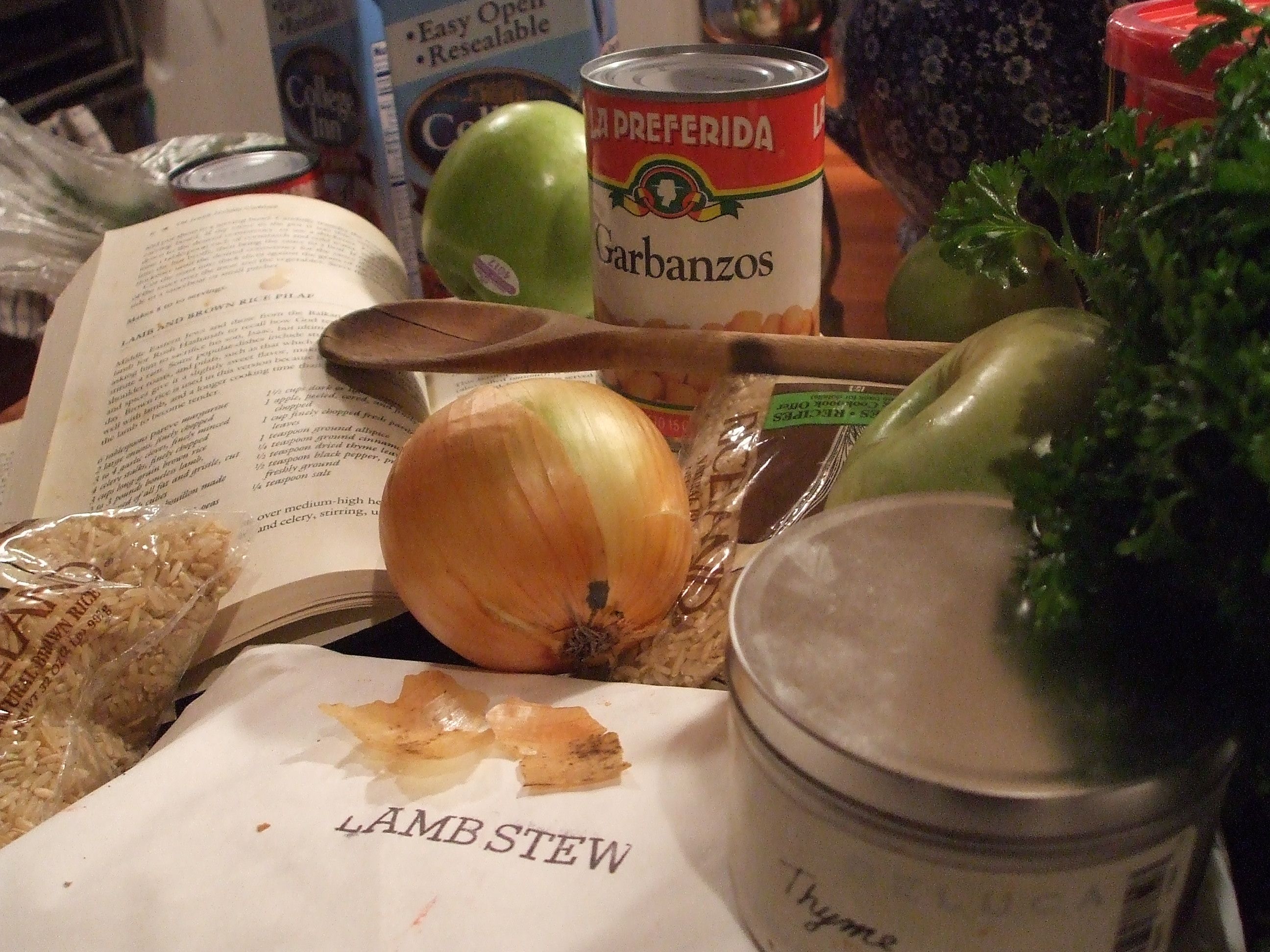
looks like there’s a big fat splat of bloody lamb juice that landed just last night, a cooking asteroid that crashed into the page. don’t tell the county health department but i’m pretty sure the crusted-over little bit of once-mushy brown-rice-and-broth is now, um, 17 years old. i even think there’s a fleck of dried-on apple skin.

ykkh, you’re thinking, that page is gross. downright revolting, you might even whisper to the neighbors.

in fact, it’s most delicious. and all the splatters attest to that. i do believe that you can rank the zeitgeist of a dish by the number of splatters on the pages, tucked away there on your bookshelves.

page 82 is the one that as a cooking coalition we love the best. we return to more than any other.

and the darn thing there is we do so usually only once a year. see, me and the man i married we do not do a lot of rhumbas in the kitchen. not together anyway. oh, sure we slather bagels. he scrambles eggs sometimes. on winter afternoons, he goes gaga for making chili the cincinnati way (that is, with as many carbohydrates in the bowl as you can fit: pasta, beans, onions, oyster crackers, and i am leaving out a few, believe me). i steer clear, far as i can run.

the one dance we do do, the one we return to every year, is the one page 82 refers to as “lamb and brown rice pilaf,” but we call it, simply, succinctly, rosh hashanah stew. that’s the thing we make together.

and not to brag or anything, but we make it rather swell. i chop, he stirs. i stir, he chops. last night he even volunteered to be the one to stay up to midnight on the cool patrol so we could tuck it in the fridge without melting all the cottage cheese.

when you start with five pounds of chopped-up leg of lamb, add buckets of brown rice, gallons of broth, you wind up with a vat that demands shelves be removed so it can spend the night sleeping in the ice box.

we make it in industrial-sized amounts because the only way to eat lamb stew is in a crowd. a crowd that every year gets big and bigger. tonight i think there’re 85. only kidding. but it almost feels that big.

we’ve been eating lamb stew since our beginning, and that, of all the ingredients, is the one that makes it most delicious.

a hundred years ago, the day after the night that my beloved hauled me over the threshold (he really did, up and grunted, i don’t say these things so lightly) just home from our mountain-hiking honeymoon, i rubbed my aching legs and my brand-new husband set out to stir tradition.

he yanked some book right off the shelf, a book i’d given him and inscribed before i knew i’d be his bride. the jewish holiday cookbook, it is simply called. and i wrote something to the effect of how i hoped his home would always be warm and glowing at its heart. i did not think i would be in that kitchen, back in the days when the jewish-catholic hurdle seemed too high to climb.

i can’t recall why he landed on 82, the page that starts and ends it all. perhaps it was the cinnamon and apples. or the allspice and onions. or the gobs of lamb.

but i do remember, as if this very day, him standing there at the teeny-tiny table chopping, chopping, chopping. i do recall the landlady coming to check on all the racket.

and that, as you so deeply dearly know, is what makes every thing worth cooking once a year so sweet you’d lick the spoon, the pot, even the pot lid.

page 82 is no longer just a way to get a pot onto the table. it is not some step-by-step follow the bouncing lamb.

it is, in all its splattered glory, the essence of who we are: catholic girl gives jewish cookbook to boy she thinks will cook in someone else’s kitchen. but instead he cooks from it on the day their life at home begins. for years and years now it’s been ladled onto plates at tables that have moved from house to house to house.

there’ve been babies at those tables, now big enough to shave. and pregnant bellies that could barely stand the smell. my mama’s sat there, bald from chemo once, not so hungry that hard year. there’ve been friends who’ve moved. and one who died. there’ve been friends who came as couples, now are split apart. and sometimes, like tonight, we welcome back those who’ve been away, far far away, far too long.

it’s a coming-and-a-going sort of dish, the kind that holds a life together.

the ingredients, year after year, are all the same. but the story of the serving is always slightly changed. that’s what makes it rich, the richest stew i know.

and that’s the point of all the splattered pages: they hold the journey of your life. you crack open the book, to a page that needs no marker. and all the stories spill right out, there beside the wooden spoon. you are not just filling the house with cookstove perfume, the alchemy of meat and spice and autumn fruits. you are crowding the kitchen and the dining room with all the souls from all the years.

it brings us back, it carries us forward. that’s the point of splattered pages. the stuff that sticks there, it’s not just flecks of rice and old dried apple; it’s our hearts, and all of those we’ve loved.

and here, so you can do the same, page 82, not quite so splattered.

blair’s lamb stew, a recipe…..
from “the jewish holiday cookbook: an international collection of recipes and customs,” by gloria kaufer greene

6 Tbsp margarine
2 lg onions
3-4 cloves garlic, minced
4 celery stalks, chopped
3 cups long-grain brown rice
2 to 3 pounds boneless lamb, trimmed of fat and gristle, cut into 1/2 inch cubes
6 cups beef broth or bouillon
2 15- to 16-ounce can chick peas, drained
1-1/2 cups dark or light raisins
1 apple, chopped
1 cup finely chopped fresh parsley
1 tsp ground allspice
1/4 tsp ground cinnamon
1/2 tsp dried thyme
1/2 tsp black pepper, preferably freshly ground
1/4 tsp salt

in 5- to 6-qt pot or dutch oven, over medium high heat, melt the margarine; then cook onions, garlic, celery, stirring till tender.

add rice and cook, stirring, one minute longer.

then add lamb cubes, and stir till brown on all sides.

stir in broth, chickpeas, raisins, apple, parsley, allspice, cinnamon, thyme, pepper and salt. bring to a boil, then cover and lower heat. simmer covered, for about 45 minutes or until all liquid is absorbed.

toss with a fork before serving.
makes about 8 servings.

invite people you love. lick the plate.
note: we use more garlic, apple, raisins and lamb than called for, just to make it yummier.

okay, friends, that’s a long one. but before i go, one simple question: what’s the dish in your house that tells your whole life story? the one you come back to every year, or once a week?
because my questions never end, do you have a cooking partner? one you share the chopping with? tell us of the rhumbas in your kitchen. i wish we did it more. we always say we will. tell us what it’s like. please.

in awe

for a girl who grew up whispering “glory be to the Father,” whenever i felt afraid. for a girl who pedaled her bike to early mass in the mornings, thinking my soul would shine, really shine, like a glow-in-the-dark pair of lungs. for a girl who once wondered if there was a chance, even a slim one, that she too could turn into saint, a 20th-century saint, complete with three miracles, canonization, the whole deal.

for a girl like that it is a curious thing that today, when she walks into synagogue, up the steps, into the room where the sunlight streams in, the sunlight that pours over the pages of prayers that are written in hebrew, she will be filled with awe.

but it’s true. over the years this most blessed day, rosh hashanah, the holy new year, has seeped into my soul, into the cracks and the tight places. has filled me with longing and coming home, too.

i am as at home in the prayers of the new year as i am anywhere else. i tingle at this time of year. if that’s awe, and i think that it is, i’ve got it.

the stretch here, from rosh hashanah today until yom kippur 10 days away, is called, you might know, the days of awe.

awe for the God who gives life, who gives harvest, and who writes our names in His book. we are inscribed now. you might hear the scritch-scratch of the pen. God writing your name and your days up ahead. today it is written. on yom kippur it is sealed.

it is not only that that stirs me. it is everything else. it is the bite in the air as the autumn rolls in. and the rustle up in the trees. the old leaves are drying, are wrinkling, are getting ready to fall.

and then, always, the light. the synagogue where i pray has a whole eastern wall that is old leaded glass. the light plays there. it draws me in. in the midst of a prayer i might look up at the light, watch it. see the dust floating there, suspended. like some sort of prayer. on its way up to God, but not there yet.

and the voices. the chanting in hebrew of words and in minor-key notes that will stick in my head, that i’ll be humming for days. because they move me. because i don’t want to leave the place that they take me.

and the sound of the shofar. the ram’s horn that is blown, that could rattle the walls. talk about feeling a current run through your spine. it’s a collect call from God.

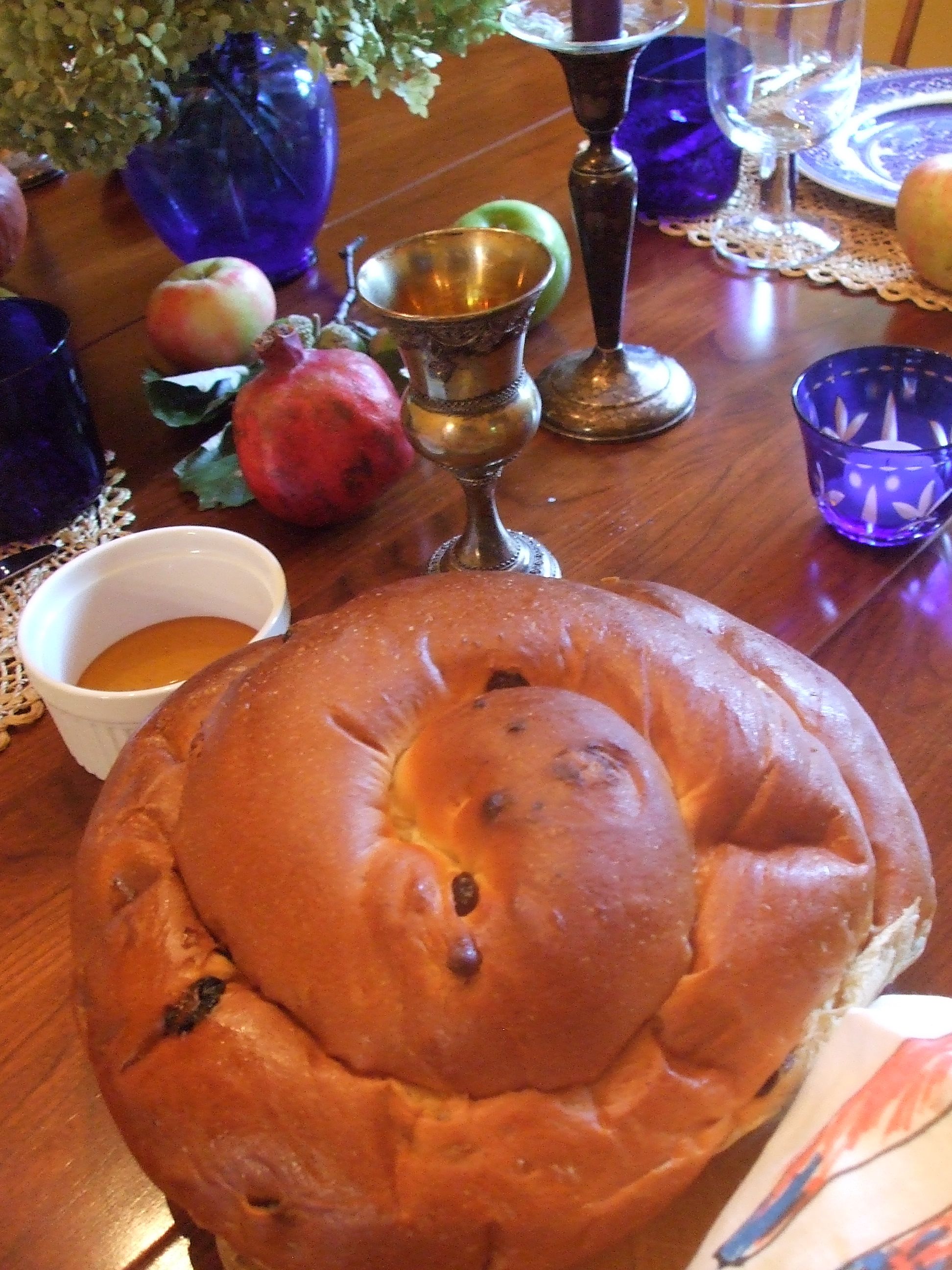
and then at home, it’s all apples and honey and the round spiraling challah, the sweet bread. all around there is sweet golden honey it seems.

these are the days at the end of the harvest, when the nectar is tapped. that’s how it was long long ago, when the jews left their fields and gathered for prayer. they knew the God of the rain and the sun and the wind.

i know Him too.

and that’s where the awe comes. here i am thousands and thousands of years later. i’ve not seen a goat or a sheep since i was out at some farm in the zoo. i don’t know what it is to feel the sun beat down on my back as i break through dry earth, hard as a rock.

but the prayers, some of them, echo the sound of a people who are of the fields and the flocks, and very hard labor. and i hear in their words how something so simple as rain from the clouds might be a tap on the shoulder from God, a whispering, “Here I Am.”

i know this God. and i am in awe that i now understand how to listen for him in two different tongues. i know the God of the church, the one who i kneel to, make the sign of the cross, swallow holy communion.

but i know, too, the God of the synagogue.

i feel that God wrapped around me like some sort of prayer shawl. i am at home with the God of the sweet autumn light. and the honey and apples.

i took a road, some ways back, that i’d never expected. but it is a road that i’ve watched very closely. i’ve studied it, taken its bumps, and come up the inclines.

it’s carried me home.

not sure how meandery all this is. but that’s the definition of meditation, and that’s what i did here. i followed the trail of my thoughts wherever they went. and this here is what flowed. have you found, over the years, a road you never knew you would take? but once you walked it, you found yourself coming to understand it was taking you somewhere? and the journey, no matter how far or how twisted, was as much of a blessing, as the getting there was?

to everyone, jew or not jew, i wish you a most blessed new year, a day of awe, a string of days of awe, l’shanah tovah.

p.s. stay tuned for middle eastern lamb stew. it’s our rosh hashanah tradition and it’s coming tomorrow…..five pounds of lamb are in the fridge, waiting for alchemy. even people who hate lamb, beg to come back for more. i’m not kidding. i’ll tell you the story, give you the roadmap tomorrow. you’ll be drooling. bring forks.