pull up a chair

where wisdom gathers, poetry unfolds and divine light is sparked…

Category: home

public health announcement: check your darn radon

so, in the latest twist and turn over here in medical odyssey land, a very fine pair of doctors looked into my lungs the other day, and saw yet another odd thing. and the oddest thing is, they don’t think it’s cancer in the other lobe, but they do think it might be radon. RADON! the number one cause of lung cancer in never smokers.

because we were zooming, the doctors were able to see the room behind me, and a room you might note for its decidedly not modern detail. it’s a fairly old house, though not old by historic standards. it’s 1941, which means it’s older than 1970 when homes started to be built with attention to radon, a radioactive gas naturally occurring in the earth. i’ve been breathing here for twenty-two years.

the good doctors wanted to know if we’d ever checked for radon. yes, yes, i quickly answered, sounding just like the girl who sat near the front of the classroom, waving her hand whenever she knew the answer—especially when she knew it faster than everyone else. (i am poking fun at myself here, lest you not see that!) anyway, back to the radon and the trusty detector i got two years ago when i first learned i had mysterious lung cancer. soon as the doctors finished their question, i pointed straight to the detector so the good doctors could see where i’d tucked it. um, not so good, they replied in unison.

the very good doctor explained that radon can only be detected in the first few inches off the ground, and it has to be measured at the lowest point in the house, where the foundation rubs up against ol’ mother earth. that meant the basement. where i’d never measured, even though i’ve been down there an hour a day walking on the treadmill for as long as we’ve lived here, all twenty-two years.

don’t you know that the second we got off the phone i was lickety-split in the basement with that little detector that until then had always flashed green, giving me the falsest assurance that all was well at chez 522.

took but five minutes for that ol’ detector to turn yellow (not so good) then red (get outa here folks!). and as i felt my heart sinking, and my tummy beginning a series of flipflops, i scampered back up the stairs, to report the damage to my fellow breather in this old house.

any minute now the radon detector lady is going to be knocking at the door with her super-duper testing devices. she’ll track our radioactive gas over the weekend, and come back monday to fetch it and read it. she will write up her report and pass it over to the very kind guy who will come to our rescue, apparently boring a hole through to the earth below, sucking out the noxious gas, and blowing it out through the roof. the mechanics of this are unbeknownst to me, but whatever they want, they can do. PVC pipes running through the living room? no problem. please, just save what’s left of my lungs.

in the meantime, i’ve let my doctor know the results of my home-testing detector, one thought to be accurate. and she’s snared me an appointment with the top pulmonologist at U of C, though i can’t get in till november. i’m thinking this stuff they see in my right upper lobe (my left lower is the lobe now missing) might explain why i get so exhausted, and why i sometimes feel pale as a semi-ghost. and why when i try to breathe and talk and walk, one of the three has to go.

so why i am divulging all this before i know more, before i have answers? because my doctor, who i loved at first sight, told me that too few people are aware of the dangers of radon; i know that, for me, it was merely what sounded like an infomercial droning on in between dramas, or noise on the car radio.

but, people, it’s real. and i have the holes in my lung to prove it, it seems.

my doctor, already known as the world pioneer of a particular lung cancer mutation, suggested we team up together for an awareness campaign. i’m all in. and i wasn’t willing to wait for definitive answers. i’m starting with this, and with you, my beloved, breathable chairs.

what i know is this: my lung is missing a part, my breathing doesn’t come easy too often of the time, and my detector is flashing red rings. i don’t want any of that to happen to you.

my doctor says that chicago is especially bad, with higher naturally occurring radon than other places. but she says that too few of us know. too few of us think of it.

here’s what the EPA, that now shaved-to-the-bone federal department charged with saving our air among other things, has to say about radon: “Radon is a radioactive gas that forms naturally when uranium, thorium, or radium, which are radioactive metals break down in rocks, soil and groundwater.”

gets a wee bit more vivid when you turn to plain ol’ google, now powered by AI: “Radon is a naturally occurring radioactive gas, invisible and odorless, produced by the breakdown of uranium in soil, rock, and water. It can seep into buildings, particularly through cracks and openings in foundations, and accumulate indoors, posing a lung cancer risk if inhaled. Testing and mitigation are crucial for managing radon exposure.”

radioactive, invisible, risk, and crucial, are all words that grab my attention. mightily.

it’s never too early to be warned of a risk that might mess with your lungs, so while i wait for vicki the radon detector to knock on the door, i want you to know that if you happen to live in an old house (the kind i’ve always loved best), and it sits on the ground, or worse yet, was plopped in a hole in the ground (the standard for two-story-or-more construction), you might wanna look into your radon.

i’ve no desire to be the poster child for radioactive invisible gases that can eat away at your lungs, but if that’s who i am then so be it. i offer my troubled breathing for your protection. please, please consider it.


and because that’s rather a dark chunk of news to drop on your laps this morning, i bring you one magnificent poem to even things out.

barbara ras

appropriately, it’s titled, “you can’t have it all,” and it’s glorious…..the poet is barbara ras, an american poet, translator, and publisher, born in new bedford, mass., and traveled extensively in central america. she’s been honored with the walt whitman award, and both guggenheim and breadloaf fellowships. her most recent poetry collection is The Blues of Heaven (University of Pittsburgh Press, 2021), preceded by The Last Skin (Penguin Books, 2010), One Hidden Stuff (Penguin Books, 2006), and her first collection Bite Every Sorrow (Louisiana State University Press, 1998). soon as my radioactive gas is dashed from this ol’ house and my edits are all wrapped up, i am diving deep into ras…..

YOU CAN’T HAVE IT ALL
by Barbara Ras

But you can have the fig tree and its fat leaves like clown hands
gloved with green. You can have the touch of a single eleven-year-old finger
on your cheek, waking you at one a.m. to say the hamster is back.
You can have the purr of the cat and the soulful look
of the black dog, the look that says, If I could I would bite
every sorrow until it fled, and when it is August,
you can have August and abundantly so. You can have love,
though often it will be mysterious, like the white foam
that bubbles up at the top of the bean pot over the red kidneys
until you realize foam’s twin is blood.
You can have the skin at the center between a man’s legs,
so solid, so doll-like. You can have the life of the mind,
glowing occasionally in priestly vestments, never admitting pettiness,
never stooping to bribe the sullen guard who’ll tell you
all roads narrow at the border.
You can speak a foreign language, sometimes,
and it can mean something. You can visit the marker on the grave
where your father wept openly. You can’t bring back the dead,
but you can have the words forgive and forget hold hands
as if they meant to spend a lifetime together. And you can be grateful
for makeup, the way it kisses your face, half spice, half amnesia, grateful
for Mozart, his many notes racing one another towards joy, for towels
sucking up the drops on your clean skin, and for deeper thirsts,
for passion fruit, for saliva. You can have the dream,
the dream of Egypt, the horses of Egypt and you riding in the hot sand.
You can have your grandfather sitting on the side of your bed,
at least for a while, you can have clouds and letters, the leaping
of distances, and Indian food with yellow sauce like sunrise.
You can’t count on grace to pick you out of a crowd
but here is your friend to teach you how to high jump,
how to throw yourself over the bar, backwards,
until you learn about love, about sweet surrender,
and here are periwinkles, buses that kneel, farms in the mind
as real as Africa. And when adulthood fails you,
you can still summon the memory of the black swan on the pond
of your childhood, the rye bread with peanut butter and bananas
your grandmother gave you while the rest of the family slept.
There is the voice you can still summon at will, like your mother’s,
it will always whisper, you can’t have it all,
but there is this.


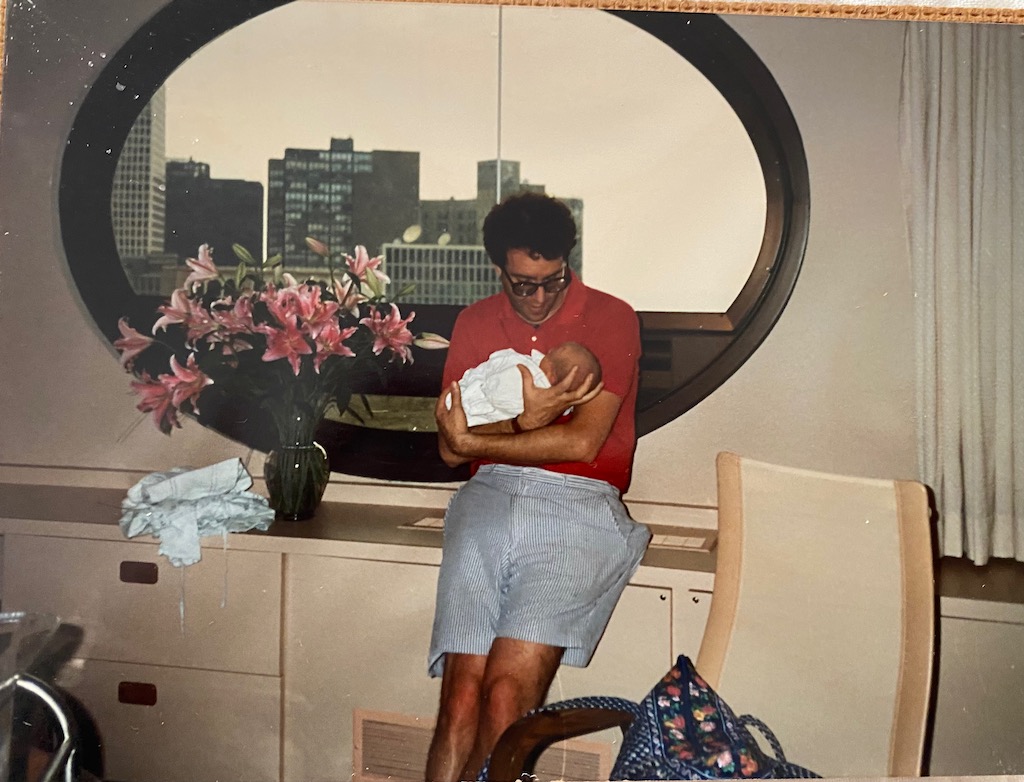
most importantly of this fine day, it’s my beautiful beautiful miracle boy’s 24th birthday. two dozen sumptuous years of loving the kid whose insistence on “seeing the world” prompted us leap outa the nest, and spend a year of thinking sumptuously in yet another one of the current administration’s targeted campuses, the one in cambridge, MA. he is perhaps the sweetest soul on the planet, with the tenderest heart. he’s the first to reach for my hand any time there’s a step to descend or a sidewalk that might be riddled with bumps. his birthing, two dozen years ago on the night just passed, was dicey there for a while, but with every drop of sinew and soul that i had, i did what the doctor ordered and got him delivered to safety, soon nestled as close to my heart as any human can be. happy birthday, teddster. love, love, love, your ol’ mama.
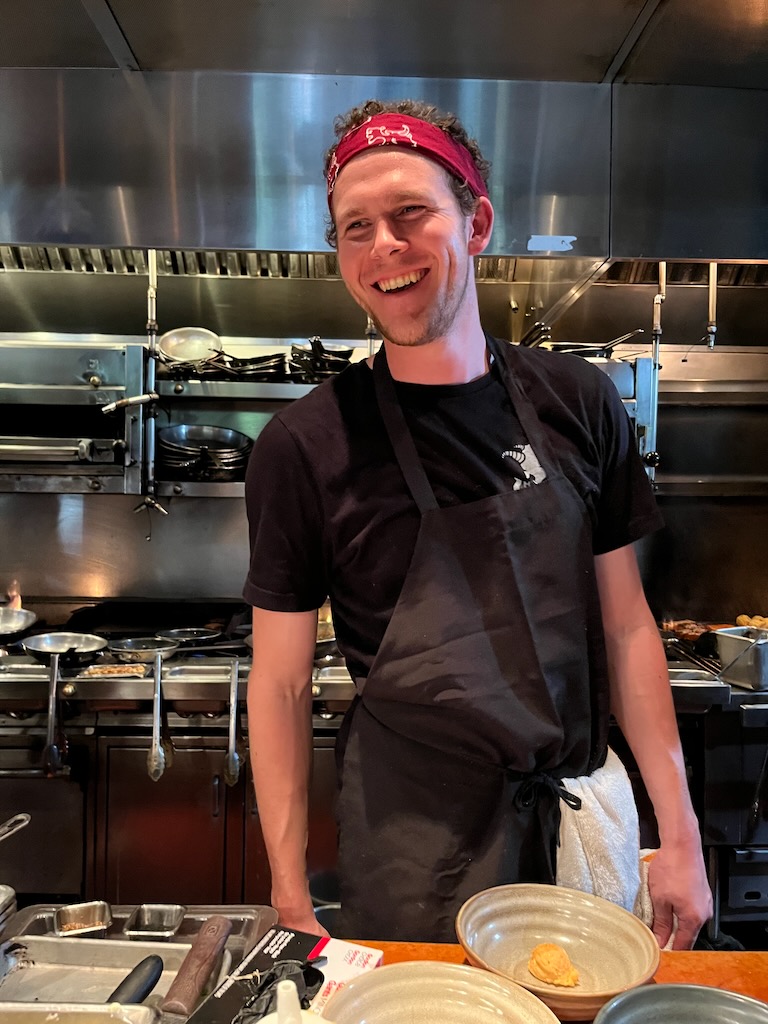
is that not a face you could love till the end of all time?

standing at the doorway of time

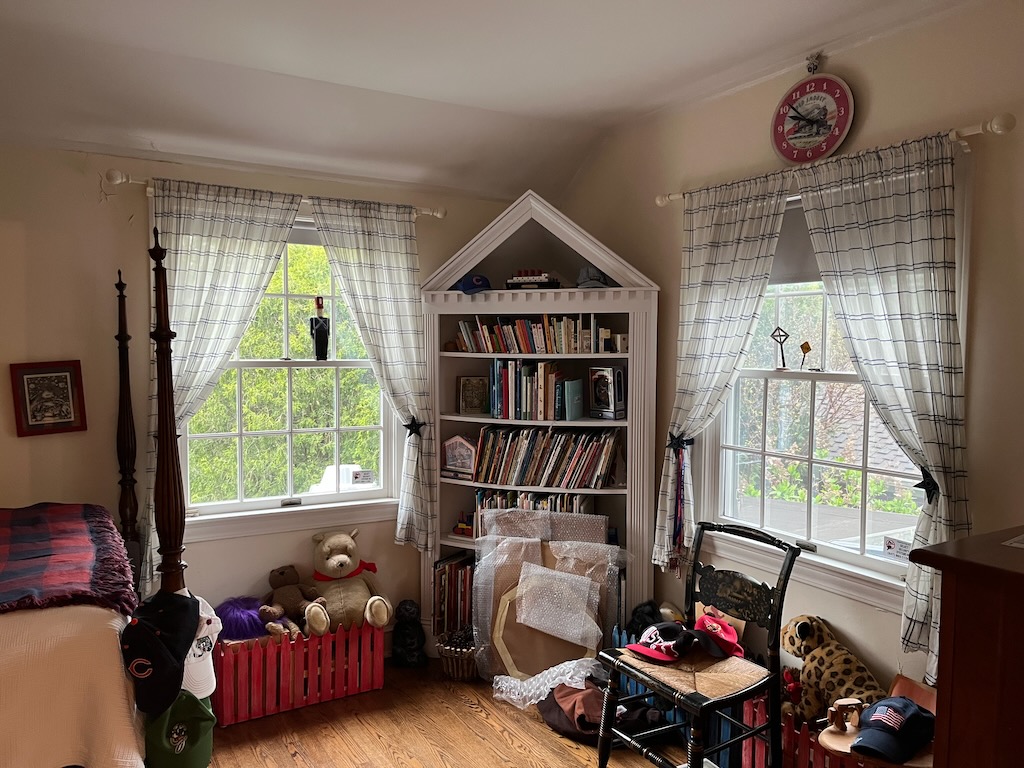
i found myself standing in a bedroom doorway the other day, staring. you might have thought i’d momentarily lapsed into freeze frame, but my mind was whirring wildly. it must be a sign of the times — my times, my where-did-the-years-go, i-remember-all-that-unfolded-in-this-storybook-room flash in time. 

i call it a kodak-carousel moment, a name in itself that dates me. as obsolete a term as there might be here in the age of slide shows on phones. no need to plunk in the slides, the film framed by cardboard, a portrait in miniature, and click-click-click to advance. 

the kodak carousel in my mind was playing and replaying the little boy room, the room where my miracle baby grew up. the room where we once stacked his baseball jersey and glove, his ballcap of his very first team, on the eve of his very first game. the room where a fallen-out wiggly tooth was laid to rest (in hope for the fairy) under the pillow. the room where night after night we prayed he would please fall asleep so we could tiptoe our escape without raising a plaintive cry. 

i suppose i’ve made something of a museum of that room. added a few paper-wrapped hand-me-downs tucked in a corner (a safe spot for storage) but otherwise it’s all as it was. the alphabet rug, where i taught two boys their ABCs. the four-poster bed where my grandma once slept, a bed where i too slept for years, and then both of our boys. and now whoever comes to visit. the bins of blocks and bears and hand puppets, too. a whole childhood frozen in time. 

and i won’t touch it. 

the drawers of the dresser are filled these days with extra sheets, and art project makings. no longer stuffed with little boy PJs, and shorts and T shirts, size small. but if you open the top drawer on the right you can still find a vial filled with the teeny-tiniest babies of teeth. i couldn’t bear ever to toss those. 

in time, an old house starts to show its cracks. and chips in the paint. and squeaks in the floorboards, and layers of impenetrable grease in the vent of the diner-grade six-burner cookstove. 

i fear i might be blind to the blemishes as the house crumbles around me. 

all i see is the room where i tucked into bed one reluctant sleeper, night after night, for sooo many years. where he learned how to read, and chased away night-prowling monsters. and another (the room at the bend in the stairs) where we brought home the boy with the broken neck. where he wrote his essays to get into college, and years and years later studied for LSATs. (and just a few weeks ago, home for easter, sat at the old desk and recorded a lecture for all of his first-year law students.)

i look at the pillows on the old four-poster bed, and remember the nights and the mornings we propped up against them, turning the pages of books that left us—both reader and readee—with tears soaking our cheeks. charlotte’s last web. or giggling at the antics of a big raspberry-hued rascal named Ted. or that little monkey named George. 

it seems a holy thing. to pause, to turn back in time. to anoint each moment, each memory, with the deepest form of thanksgiving. to soak in to the deepest fiber of your soul those hours you thought might never end. 

i hope, in that ephemeral fluidity of time, we can rewind the clock, even if only in our soul, to finger each hour, each grace, as if the bead of a rosary. to press it against the whole of who we are now. day by day each of us more graced. as we fill ourselves with accumulation of blessing we’ve lived. the boy who defied every odd of a very old singular ovary, the pregnancy that lasted all nine months, the chromosomes that aligned just as prescribed. the life that was given to me. the years upon years of joy, of undiluted wonder, that grew up in that room where i now stood. soaking it in. soaking and soaking. 

saying my prayers once again. 


yesterday was a glorious day in the life of the soul, and in the life of the church i was born into. it was a stunner of a moment as we listened, in italian, to the first then the middle name of the new Il Papa. in all the italian we didn’t yet know that for all of his life, he was just Bob. Bob the priest. Bob the cardinal. now Leo the Pope.

as i wrote to my boys in the flurry of texts that then punctuated the day, “i feel close as i’ve felt in a long time that God had an actual hand in worldly affairs. this world needs a voice unafraid to speak to worldly power, and proclaim the rule of God. it’s a paradigm the polar opposite of so much idolization in this world. peace and love are not vagaries. huge swaths of the world desperately need both.” 

there is much to learn and to listen to from this unlikely pope from chicago’s very own south side. a pope who roots for the sorry sorry white sox, a pope who loves an aurelio’s slice. a pope, we learn, with creole roots. a pope whose grandparents identified as black in a turn-of-the-century census from new orleans’ seventh ward. a pope who left for peru as a very young priest, to work with the poor. a pope with the courage to set straight those who misread Catholic theology—no matter their office, nor the power they wield. i have been praying with all my heart for a voice of true courage in this world. and this morning, i am thinking that in time the moral arc of the universe does sometimes bend toward justice.

what doorways to time have you found yourself staring into of late? and what stirred through your heart at the news of the new Il Papa?

happy blessed almost birthday to a most beloved chair who, around here, goes by the name lamcal. a wise woman of the highest order.

and happy mothering day to all. because, in my book, mother is a verb, and if you gather here you do it magnificently. xoxox love, bam

the pretty way

long a proponent of “the pretty way,” the winding way to wherever i’m headed, i am up against the GPS current, the Waze current, those little voices that come out of the ubiquitous boxes in our lives that try to tell us what to do––and the shortest, fastest, sometimes blandest way to do it.

it’s one thing when running late to a doctor’s appointment on a rainy afternoon when the roads are under construction. but not so when the afternoon is a span of time unmoored from anything else, except an eventual need to show up somewhere.

i am seizing one of those days today, as i drift north and a little bit west and steer myself toward a corner of the world i’ve never seen, a corner called “the driftless” (and if i ever employed my caps lock key, that d would be a D, as in a capital proper-name letter). it’s a corner as dramatic as any in these middlelands of the continent, a chunk of 8,500 square miles described as “a sudden maze of hills” and bluffs and valleys below, rising out of the flatlands of southwestern wisconsin.

it’s the land that time (or at least a good chunk of the ice age) forgot. while the glaciers of 500 bazillion years ago steamrolled the behoozies out of the rest of these parts, they never rolled through the driftless, leaving time to do its thing: cold water streams kept on carving through rock, sculpting and clearing and doing as they pleased. the meltwater from parts beyond incised valleys and bluffs, sinkholes and springs, caves and labyrinthine cave systems. and so, in the midst of a topography best described as pancake, suddenly there is capital D drama.

i could do with a good dose of topographical drama. and today’s the day i’m making it happen. because there’s not a Siri in the world who will point me the ways i want to go, i’ve had to revert to pen and ink, and scribbled my route onto an index card. 90 to 20 which turns into 69, quick right onto 81, then city road G/N and, at last, onto 23. u.s. highways and state roads, roads with alphabetical options, and streets with no names at all. that’s how i’ll get where i’m going.

and all the while i will marvel, and gawk. might even put the car in reverse, to gawk all over again (don’t tell the designated “careful driver” in the family, he who would insist on seizing my wheel).

it’s all a way of seizing time. of gulping down as much as you can of the wonders not too far beyond our very own windows. for the most part, my days trace and re-trace old, familiar routes. and for a homebody like me, that’s a very fine thing. if given my druthers, i’d stay curled in my window seat for hours on end. but, when distant parts call, i’m intent on getting there my way.

which is always, always the wiggledy way.

the way that makes me so blessedly thrilled to be drinking it in.


luci shaw is as dear a soul as she is a fine poet. and this morsel from luci fell on my path this week, in a resurrected interview with Image Journal. here’s luci’s take on why we write:

I have a magnet on my file cabinet that says, Write to learn what you know. So often the physical jotting of words in a journal or on a screen is like a key opening a lock. We know more than we know. When that door is opened, we find unsuspected treasures that can become available to others in our writing. This is a mystery. Because words and ideas have been recorded for centuries, they are available to enlarge our own thinking. We can connect with the words of the great writers of the past—Shakespeare, Milton, Spenser, Dante, Donne—because they were written down and preserved. It is magical to realize that their ideas are still flying, reaching over hundreds of years into our lifetimes, and as we read them, their revelations are transferred into our modern minds. I just wrote a poem inspired by a saying of Tertullian, an early church father, about birds, and the cross they make with their wings when flying.


and a little dose of poet and zen monk jane hirshfield to wind up the week….

To Drink

I want to gather your darkness
in my hands, to cup it like water
and drink.
I want this in the same way
as I want to touch your cheek—
it is the same—
the way a moth will come
to the bedroom window in late September,
beating and beating its wings against cold glass;
the way a horse will lower
his long head to water, and drink,
and pause to lift his head and look,
and drink again,
taking everything in with the water,
everything.
––Jane Hirshfield

how might you make the most of time today?

p.s. i’m headed to mineral point, wisconsin, for a weekend of Book of Nature extravaganzas, beginning with a saturday morning nature hike through a wooded (and likely muddy) preserve, followed by an afternoon book talk in a charming book store called The Republic of Letters, followed by a gathering at a new cook shop, followed by my first from-the-pulpit sermon at Trinity Episcopal Church on sunday morning. then it’ll be back home the windiest way i can wiggle…(here’s a little recording the mineral point chamber of commerce posted who knows where…)

hungry for color

it hits this time of year, at this point in the turning of globe when we’re deep in shadow, and the world out our window is endlessly, endlessly, drainingly gray. even i, a self-proclaimed fangirl of the cloudiest day, a girl who thrills at billows of fog, those days when the sunlight can’t find its way in — even i get a bit itchy for hues beyond pigeon and charcoal and smoke, all close kin in the family of gray.

which is precisely why that shock of scarlet and pink boldly inserts itself in the february calendar. we need a little color. and the heart-shaped holiday brings it on. coils and coils of red, beribboned with oyster pink or flamingo. maybe even dashes of fuchsia.

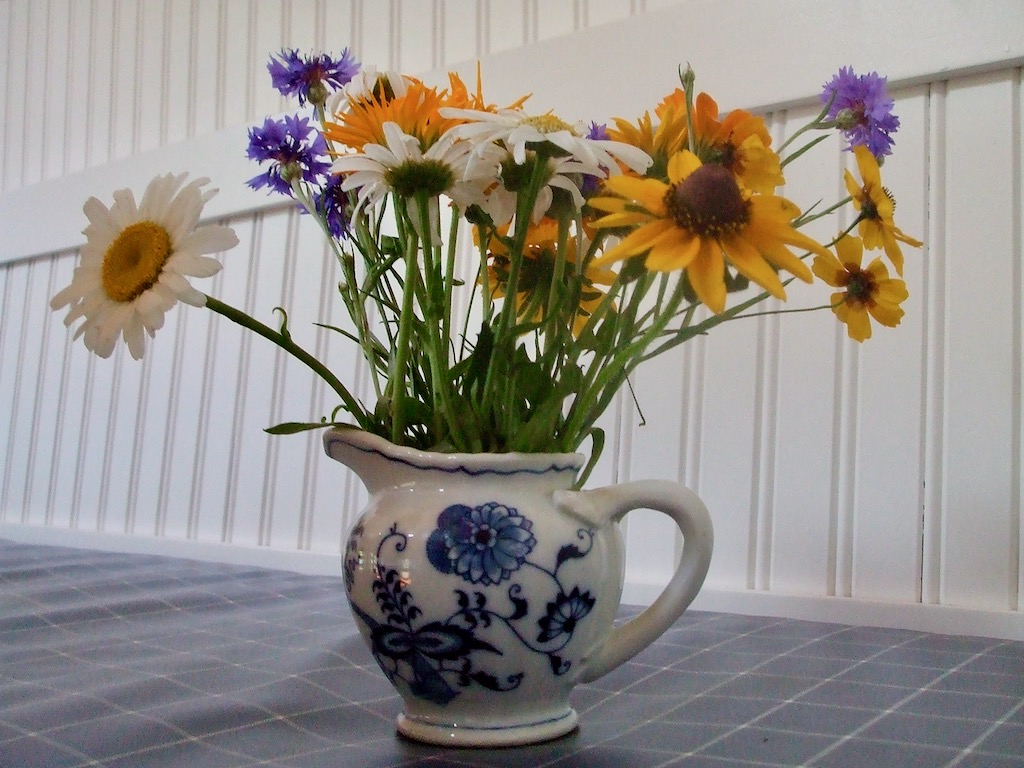
i detected this color deficiency (more of a self-diagnosis) when i realized that all through the week i was clicking and clicking on dizzying droplets of anything resembling “other-than-gray.” and when i caught myself daydreaming, once again, of a riotous, bouquet-gathering, summery cutting garden — zinnias and cosmos and blue bachelor’s buttons all rising up like a botanical box of jazzy crayolas (preferably the 64-pack in which those waxy rainbow-hued sticks stand shoulder-to-shoulder as if choir-robed darlings marched into their multi-row loft).

and so, in hopes of sating your own chromatic hungers, i bring you a compendium of colors from a painter, a cook, a maven of tulips, and a poet.


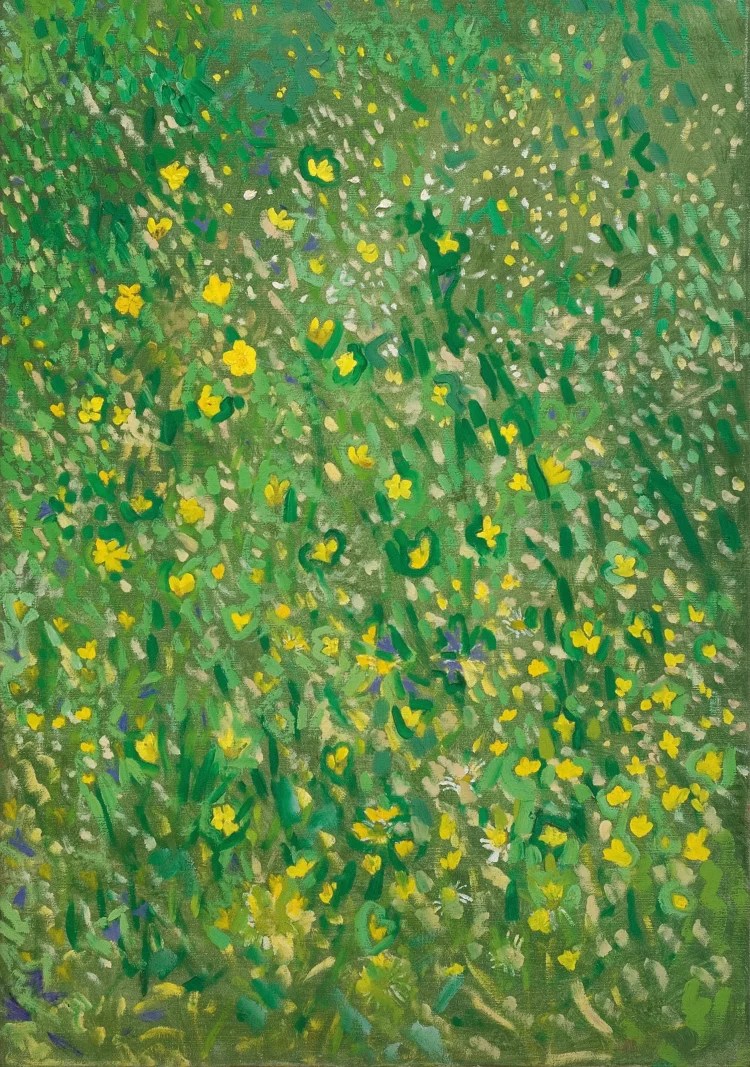
jean cooke’s “The Blumenthal,” 1995

first up: the painter, whose style of garden i aim to emulate, mostly because it’s been said that her “rambling garden was unkempt to imperfection.” jean cooke is her name, and she was considered one of britain’s greatest woman painters of the twentieth century. described, too, as a remarkable, bird-like woman, the london gallery that shows her work, goes on to describe her “ungardening” thusly:

Cooke’s neglect of her garden—she sometimes called it ‘ungardening’—was partly a reflection of her priorities: her painting and the care of her children. Beyond these demands there was little energy to give less pressing concerns. Grass went unmown, fences unmended and trees unpruned. But the messy garden was not entirely accidental. The disarray was cultivated over an extended period of time and helped Cooke to create a new subgenre in works such as The Wild Plum Tree, which drew upon aspects of both landscape and garden painting traditions. Whereas Claude Monet’s waterlily pond was scrupulously tended, Jean Cooke’s rambling garden was unkempt to imperfection just as her painting required. Whereas earlier paintings such as Grassland had used the Sussex coastline to create landscape-scale wilderness, by the mid-eighties when she began painting spring blossom in earnest her own garden had achieved a similarly expansive quality.

piano-nobile gallery
jean cooke at work in her unkempt imperfection

and in a nod to cupid’s holiday cusping on the near horizon, here’s a tad of insight, should tulips be the thing you choose to send your true love:

“rococo”

“As far as I’m concerned, …[tulips] are the best, indeed the only flowers to send or receive on Valentine’s Day. Wild, irrepressible, wayward, unpredictable, strange, subtle, generous, elegant, tulips are everything you would wish for in a lover. Best of all are the crazy parrot tulips such as ‘Rococo’ with red and pink petals feathered and flamed in crinkly lime-green. ‘When a young man presents a tulip to his mistress,’ wrote Sir John Chardin (Travels in Persia, 1686), ‘he gives her to understand by the general red color of the flower that he is on fire with her beauty, and by the black base that his heart is burned to coal.’ That’s the way to do it.”

– Anna Pavord, wonderful British garden writer and bulb lover, in The Curious Gardener: A Year in the Garden, 2010

on the subject of wild women who tend toward the vivid end of the paint pot, there is the utterly marvelous and delicious emily nunn, formerly of the new yorker and the chicago tribune. she is a food writer like no other, and in recent years she has devoted her not-inconsiderable genius to the subject of salads. her newsletter often has me giggling straight off my chair. and her salads are beyond delicious more often than not. it delights me to introduce you to the one and only emily nunn’s department of salads, along with a peek at but one of emily’s many-hued produce concoctions….


and finally, let’s wrap this up with a wonder from mary O that i had never seen before, from a slim little volume i’d not known of till just last week when a wonder of a woman hosted a candlemas gathering and asked us all to bring a.) a candle, and b.) a poem about light. and thus i discovered house of light, mary oliver’s 1990 collection of poems. since the subject of this one is van gogh, it seems perfectly suited as a prescriptive for those who find themselves suffering a little color deprivation.

EVERYTHING   by Mary Oliver

No doubt in Holland,
when van Gogh was a boy,
there were swans drifting
over the green sea
of the meadows, and no doubt
on some warm afternoon
he lay down and watched them,
and almost thought: this is everything.
What drove him
to get up and look further
is what saves this world,
even as it breaks
the hearts of men.
In the mines where he preached,
where he studied tenderness,
there were only men, all of them
streaked with dust.
For years he would reach
toward the darkness.
But no doubt, like all of us,
he finally remembered
everything, including the white birds
weightless and unaccountable,
floating around the towns
of grit and hopelessness––
and this is what would finish him:
not the gloom, which was only terrible,
but those last yellow fields, where clearly
nothing in the world mattered, or ever would,
but the insensible light.

and with that i shall wonder, where did you find color this week?

jean cooke’s “springtime through the window,” 1980s

the roof and the trees under which i grew up

i’d told myself that ever since the night my papa died, when i walked in that dark house, his tennis sweater flung over the back of a kitchen chair, as if he’d breeze through any minute, the night when i sat in the den afraid and unwilling to take in a breath, for i didn’t want to let go of the last one i breathed when he was alive, i’d told myself that house was mostly hollow to me. 

it’s held a chill for me ever since. 

i didn’t think i’d much miss it.

but then i drove back the other day. drove back to walk through the rooms where no sound was stirring, not even the whir of the furnace. drove back to see rooms emptied, the rugs a radiograph in reverse where the geometries of now-taken-away furniture shone bright against decades-worn dim. where you could make out the plot where my mama’s four-poster bed had been, and the circular table beside it. where the den, too, was a checkerboard of absence, chairs and a couch lifted and moved. 

this week my mama moved out of the house where she lived, the house she called home, for six whole decades. long long ago, when my papa got a job in chicago (an ad man in the age of the Mad Men), and they’d moved us again from a faraway city, she’d picked that house out of many along the north shore of lake michigan because it was the house with the oaks. more than a half dozen big old oaks. maybe a whole dozen once upon a time. my mama loves big trees and big skies. the house gave her both. 

my mama moved into that house in 1963, with four of us under third grade; two, still tricycle-bound. one of us, the fifth among us, was born to that house. never knew another till the day he went off to college. we used to joke that he and my mama are the only northerners among us. all the rest were born south of the mason-dixon line. we all grew up, though, on brierhill road, a winding dead end of a street carved into the woods. a golf course just across the way made for sixty years of unobstructed sunsets for my mama, who kept watch dusk after dusk through the kitchen window. the creek and the crawdads, the green pond, and the logs in the woods made for my playthings, the topography of all my imaginings.

i made my way back there this week, after it was mostly emptied, when i knew i could be alone. i wanted to walk room to room to room, and up the stairs to my old bedroom at the top of the stairs. the room where you can still find my sixth-grade scribble on the wall in the closet’s back corner. the room where so many nights i looked up and out through the oaks into the stars and the moon, where i rocketed all of my prayers and my dreams. 

as i drove there, to the house at the bend in the road, i thought of all that had happened there. how i got married there, under the trees, breezing through the garden gate flanked by all four brothers. how, ten years before that, we’d sat round the kitchen table the night after my papa died, and tried to make sense. i thought how that was the house from which i was taken to hospitals, especially the time at the end of high school, and how our family pediatrician (yes, he really truly was Dr. Kamin, the most beloved housecall-making pediatrician that ever there was) came in the middle of nights when i was burning with fever. i thought how i’d close the door to my room in those sodden sulky middle-school years when i was sure no one loved me, and how during high school i’d yank the telephone cord from the kitchen round into the dining room, as far as i could uncoil it, to steal a wee bit of sanctuary amid the roar of a family of seven. 

and then i walked the rooms, poked into drawers, shooshed away cobwebs, and inhaled it all one last time. when i got to the oaks out back, looked into the grove where my little girl log cabin once had stood, when i counted the feeders that still swayed in the november breeze, i felt the tears begin to pool in my eyes.

maybe the old house wasn’t so hollow to me, after all. maybe the old house where we’d all grown up, the house that had so long harbored my mama, maybe it would be hard to leave behind, to say a proper goodbye––and thanks–– to. 

my tears spilled one last time on that bumpy old earth under the oaks on brierhill road. 

i stooped to pluck one last acorn, now tucked in my snow coat’s pocket, and then i climbed in my own red wagon, the one that has ferried my very own boys through their growing-up years, back and forth plenty of times to their grammy’s. and i drove ever-so-slowly away. 

but not without whispering a very deep blessing for the house that held us all, and mostly my mama, for so very blessedly, blessedly long. 

what do you miss most about the house where you grew up?

our job is to savor. . .

i’ve been especially partial to summer for precisely three decades — or 10,958 days — now, for my firstborn was born on the very first full day of the season precisely 30 years ago yesterday. i fell instantly in love. deliriously so. with my firstborn, yes, but also with the way the summery light slanted in on the long june morning i waited for him, and the new days thereafter, and every start of summer since, as it always brings me back to the solstice when the dial on my summer-savoring machine was cranked up infinite notches. 

truth is, i’ve savored summer’s start for as long as i can remember: it was the day my mama picked us up at the schoolhouse gate, end-of-year report cards in hand, and took us out for grilled cheese and fries. it was the day we trotted into the library and signed ourselves up for the summer reading brigade, an adventure i thought of as something of a secret society that promised me long afternoons with nose curled in a book, and the sheer delight of marching up to the children’s librarian with my summer-reading-club card, and my latest finished book, awaiting the inky stamp she’d press onto my card that felt like a passport, proof to me and the world that i was a serious reader. (or so i imagined.)

i was told just the other day that more than ever my job is to savor, that i’d make more room in my life, proportionally diminish the grief (that a diagnosis of cancer inevitably brings) if i made a point of savoring those joys that i love, each and every day. 

grief, this wise person explained, doesn’t ever go fully away. the things that bring it on, the things that break our hearts into pieces, can’t be erased. but they can settle into nooks and crannies of our souls where they might go quiet, or lose some of their sting. and, yes, it’s true too that those slumbering griefs will still make unannounced appearances all on their own schedule and of their own accord. grief, i’ve found over the many, many years, likes to catch you in the throat when you are, say, stumbling down a grocery store aisle, and suddenly you see the thing that makes you think of your long-gone papa, or the baby you lost, or your life before you worried about cancer cells running amok. 

but, the wise person explained, the more room we make in our life for those things that aren’t grief, the more alive and less strangled we might feel. 

so, savor it is. specifically, savor this summer, the unspooling of week upon week with barely an inkblot on the docket. no deadline, no due date. just one simple job: to savor.

it’s not such a tough assignment: conjure the things you love, the things that bring in the joy — or the peace or the grace or the wonder — as the tide to the shore, as the river that flows only forward and over the rocks and onto the sea. 

it’s a job, in fact, that belongs to all of us always. it’s just that cancer — or any one of those indelibly stamped diagnoses, or the sudden loss of someone or something you love — sharpens the urgency and the focus. if you don’t want to be strangled, if you’re searching for a light to come in through the cracks, a place to begin is racking up joys. an abacus of joy, one bead at a time. joy counting in plainest arithmetic. intricate, intricate calculus of the heart and the soul.

my joys are so, so simple. they rise from the garden, from the mud stained on my knees and under my fingernails. they are stirred at the cookstove. they flutter my heart when i curl into my old wicker chair and listen to mama wren warbling to her babies. 

when i lean my head against the chest of the boy i once birthed, when i drink in the tick and the tock of his heart, the surest steadiest lullaby i’ve ever known. when someone i love calls on the phone. or leaves a note tucked in the box by the door. when the sunset dizzies me.

the point, i’m told, is to root myself in all the things that make me feel most alive. the ones that slow the pounding in my heart. the ones that might make me giggle. the ones that make me know someone out there is listening. 

here’s to summer, the season when savoring is fresh in the air.


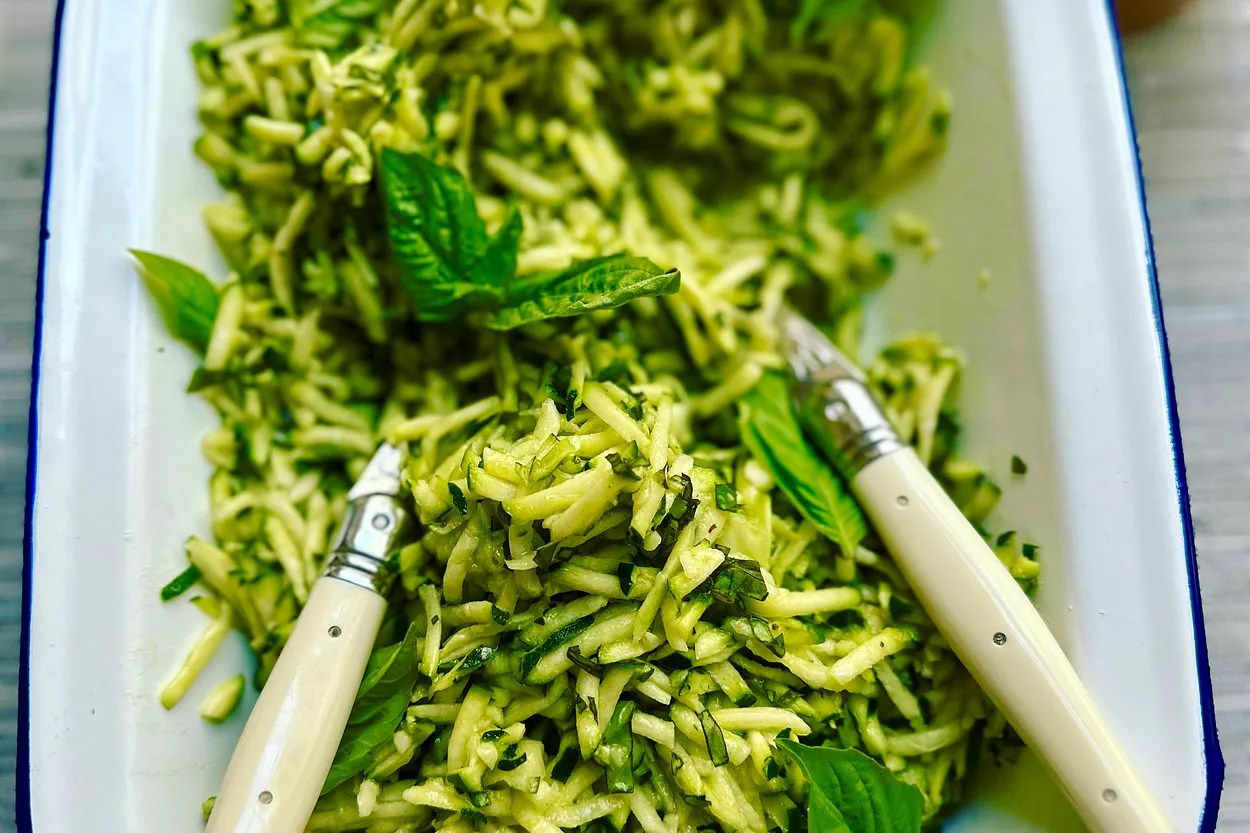
and here’s a roadmap to joy that converges multiple routes: herbs from the garden, simmering caramelized onions, squeezing a lemon, and summery salad. it’s nutritious and delicious and it comes from my friends at NYT Cooking, where they never ever lead me astray, nor off the path of the straight road to Joy. 

it’s not a pretty salad in a rainbow-y sense, but oh my it’s delicious. i promise. sometimes joy comes in plain clothes and drab colors (it can be sneaky like that….) here’s to joy, however it comes…`

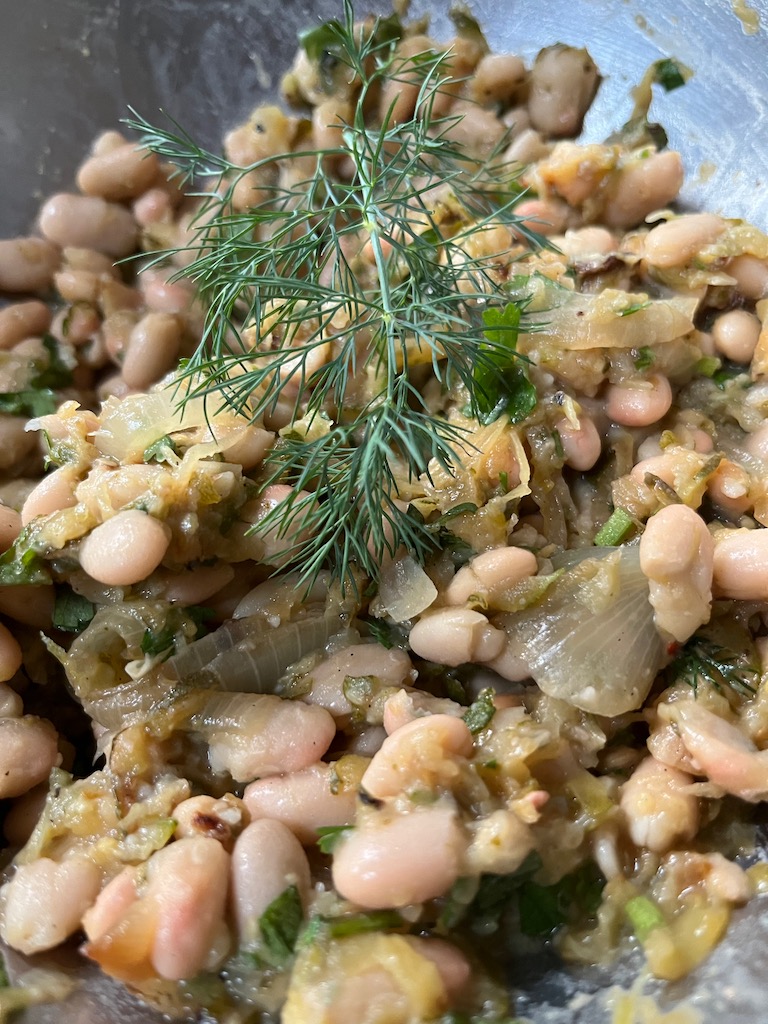
Caramelized Zucchini and White Bean Salad
By Yossy Arefi for The New York Times
Time: 45 minutes, plus cooling and chilling
Yield: 6 servings

Start with a big pile of shredded zucchini and onions, and marvel at how much it cooks down as it browns and caramelizes. Toss that potent blend with creamy white beans and herbs –– it’s easy as that! The mint adds brightness, and pairs well with other soft herbs, like parsley, dill and basil. The caramelized zucchini mixture makes a great base for bean salad, but it can be used in many other ways: Make a big batch and toss it with pasta, serve it on top of ricotta-slathered toast, or top a flatbread with it; you really can’t go wrong, says the Times.

INGREDIENTS

2 large zucchini, shredded on the large holes of a box grater
1 large yellow onion, thinly sliced
4 tablespoons olive oil
1⁄2 teaspoon red-pepper flakes
Kosher salt and freshly ground pepper
2 (15-ounce) cans white beans, like cannellini, rinsed
1 lemon, plus more if needed
1⁄2 cup roughly chopped mint
1⁄2 cup roughly chopped parsley, dill or basil

PREPARATION 

Step 1
Wrap the shredded zucchini in a clean kitchen towel and gently squeeze it to remove excess moisture. 

Step 2
In a large nonstick skillet over medium-high heat, combine the zucchini and onion with 3 tablespoons olive oil, the red-pepper flakes, 1 teaspoon salt and a few grinds of pepper. Cook the mixture, stirring occasionally, until the water has evaporated and the zucchini and onion turn golden brown, 25 to 30 minutes. You will have to stir more often toward the end of cooking to prevent burning. 

Step 3
Add the cooked zucchini mixture to a large bowl along with the beans. Zest and juice the lemon over the top and add the remaining 1 tablespoon of olive oil; stir gently to combine. Let the mixture cool to room temperature, then add the herbs and stir gently. Season to taste with salt, pepper and additional lemon juice, if desired. Serve at room temperature or cold. 


someone wise sent this beauty…

A Prayer

Refuse to fall down
If you cannot refuse to fall down,
refuse to stay down.
If you cannot refuse to stay down,
lift your heart toward heaven,
and like a hungry beggar,
ask that it be filled.
You may be pushed down.
You may be kept from rising.
But no one can keep you from lifting your heart
toward heaven
only you.
It is in the middle of misery
that so much becomes clear.
The one who says nothing good
came of this,
is not yet listening.


and, as she so often does, mary oliver preaches:

The Summer Day

Who made the world?
Who made the swan, and the black bear?
Who made the grasshopper?
This grasshopper, I mean —
the one who has flung herself out of the grass,
the one who is eating sugar out of my hand,
who is moving her jaws back and forth instead of up and down —
who is gazing around with her enormous and complicated eyes.
Now she lifts her pale forearms and thoroughly washes her face.
Now she snaps her wings open, and floats away.
I don’t know exactly what a prayer is.
I do know how to pay attention, how to fall down
into the grass, how to kneel down in the grass,
how to be idle and blessed, how to stroll through the fields,
which is what I have been doing all day.
Tell me, what else should I have done?
Doesn’t everything die at last, and too soon?
Tell me, what is it you plan to do
with your one wild and precious life?

+ Mary Oliver


what will you savor as summer begins its unspooling?

a mother’s heart finds its place in a canyon of moving boxes

dispatch from 20009: in which canyons of boxes in every room are ours to conquer, moi and the one i birthed first. . .

i write to you this dawn from the singular place on the planet i wanted to be this week, a point on the map now highlighted in illuminating shades of radiant. a kid i love is a professor now, and i am here where, in my book, a mother belongs: by his side, tearing open his boxes, tallying the lost and found, turning a blueprint of rooms into a place called home. 

i’ve planted the kid in five points on the map since the day he left home for college, and each one for its season became a place i peered in on, checking the weather, counting the miles, watching police reports. his dot became mine by extension. 

i’ve spent years now considering places called amherst and new haven, portland, manhattan, and now the nation’s capital, specifically adams morgan, a neighborhood where RBG graces the banners that waft from the light poles, with the words “live your truth.”

the kid has decidedly hopscotched across the country over the course of the last decade. but his itinerant days might be over, as a tenure-track post prompts me to think i’d better get used to the latest in zip codes. and, anyway, unpacking boxes, finding places on shelves, has become my sub-specialty. it’s a task i take on with all the love in the world. i don’t think i’ll ever extinguish the place in my heart that tells me my number one job on the planet is to soften the blows, trod the circuitous path, keep stretching my arms clear across the landscape, and always, always find space and time for side-splitting giggles and tears when they spill from both of our eyes. 

the kid is 29 but nowhere in the manual i was handed in the delivery room can i find a line telling me there’s a time when the mothering stops. mothering over the decades is a three-dimensional wonder: it deepens and widens, is layered with strata of life’s most wrenching and glorious moments. just last night as we were giggling and whispering our way to sleep––me on un-sheeted bed (we’re working our way from kitchen to bedroom), him on inflatable mattress––i told him how even though i see the professorial glasses he wears these days and feel the heft of his six-foot-three pillar of flesh and bone when he wraps his arms around me, i also see plenty often a flashing picture show of his life at various points along his continuum: i see––clear as clear could be––the wet and squirmy little thing placed in my outstretched arms the very first time; i see the six-month-old who let out a belly laugh for the very first time; i see the toddler who looked up from the kitchen table one breakfast and asked, as if it was the most ordinary of questions for a three- or four-year-old, “mommy, what is facetious?” meaning what does it mean, this very long word not normally found in preschool vocabulary. and, yes, i see the kindergartener who set up a lecture hall in our living room, with a circle of stuffed-animal pupils, a chalkboard and easel, and 26 spongy alphabet letters. the professor wore suspenders and tie and bare feet, and instructed his class on the fine points of D, O, and Q.

it’s a curious thing, this mothering the grown human being. there are those, i’ve been told, who believe a mother’s role is to step into the distant background, loosen the grip on the ups and the downs of those you’ve loved every day of their lives. i’m not among them, though i can go––and i have––whole weeks without more than a short burst of texting. i find it only gets richer and richer, the closest i know to “love as you would be loved.” mothering to me is a spectacular testing ground: day after day, i re-define and refine the extraordinary intricacies of loving, of where to position myself in the tableau of his life, how much of the weight to bear, and when to stand silent and when to come running. 

what i know, after a lifetime of fumbles, of occasional hits and plenty of misses, is this: the width of my brain has only grown wider over the years, as each of my boys carry me into realms i’d otherwise never explore. and my heart and my soul, they’ve at once defied the laws of physics, both deepening and rising to depths and heights i’d never ever imagined. and so, as long as i’m needed and able, i shall tear away the endless strips of packing tape till my fingers are raw and my boy has a place to call home, his very own faraway home. six hundred miles from mine.


since i’ve been busy unpacking this week, i’ve not had much chance to gather up a commonplace-y bouquet. but i did find this, from the late great bard, leonard cohen, on sainthood:

“What is a saint? A saint is someone who has achieved a remote human possibility. It is impossible to say what that possibility is. I think it has something to do with the energy of love. Contact with this energy results in the exercise of a kind of balance in the chaos of existence. A saint does not dissolve the chaos; if he did the world would have changed long ago. I do not think that a saint dissolves the chaos even for himself, for there is something arrogant and warlike in the notion of a man setting the universe in order. It is a kind of balance that is his glory. He rides the drifts like an escaped ski. His course is the caress of the hill. His track is a drawing of the snow in a moment of its particular arrangement with wind and rock. Something in him so loves the world that he gives himself to the laws of gravity and chance. Far from flying with the angels, he traces with the fidelity of a seismograph needle the state of the solid bloody landscape. His house is dangerous and finite, but he is at home in the world. He can love the shape of human beings, the fine and twisted shapes of the heart. It is good to have among us such men*, such balancing monsters of love.”

Leonard Cohen

“achieved a remote human possibility. . . ” contemplate that for a while….


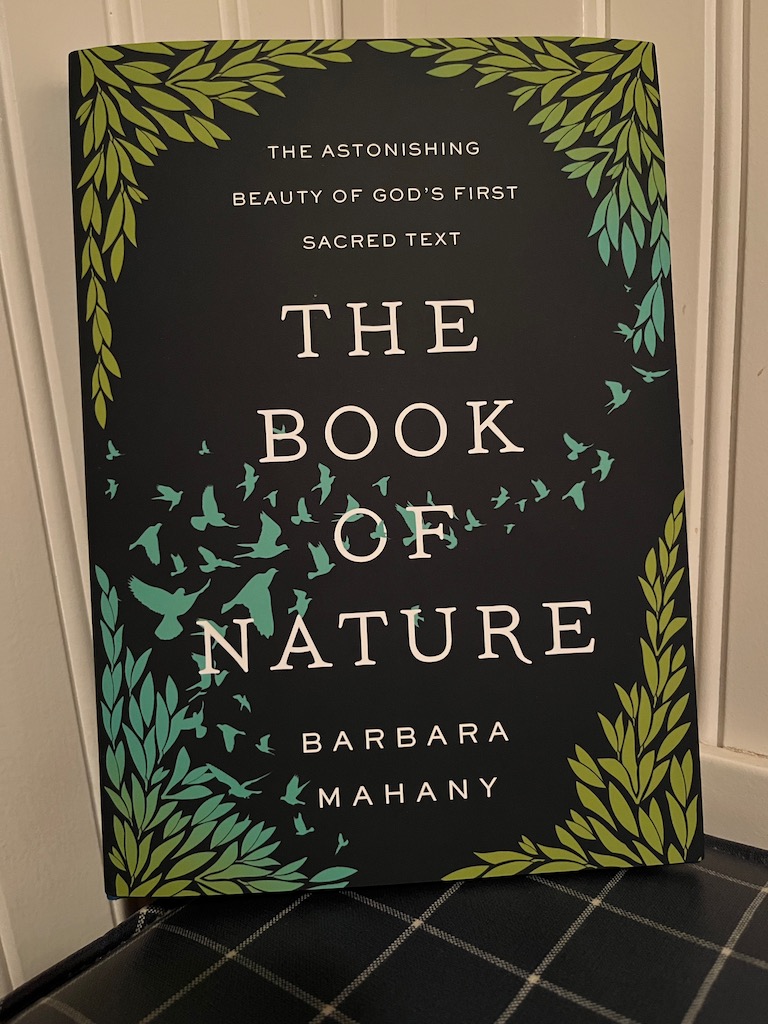
in book news: it seems hard copies of The Book of Nature have been plopping onto front stoops all over these united states, and heavenly folk, especially friends of the chair, have been sending along snaps, each of which makes my heart do a little bit of a gallop. it’s still a couple weeks till the official pub date––the vernal equinox, march 21; bring on the springtime, bring on the book!––so these early sneak-peek arrivals are both surprise and delight. and i am hoping to set that book soaring with a grand circle of chairs, as night falls on that first day of spring. see here for more details, should you be so inclined. (we’re gathering on march 21 at 7 p.m. central time, via zoom, one of the rare silver linings to emerge from our years in pandemic––or at least i count it as a silver lining, bringing me poets and thinkers from all across the globe.)

before i get back to uprooting books from their boxes, here’s the question (to ponder or drop us your thoughts): of all the mothers you’ve known or watched from some distance or close proximity, what are/were the defining qualities that allowed you to see and see clearly just what it means to love in the deepest mothering way? (and, remember, mothering for me is a verb not tied to any particular gender or state of procreativity, but rather to any and all who love with a tender loving attention and care, and the undying prayer that in some way they might both lighten another’s load and magnify the wonder of being alive…)

new year cleanse

despite being a fundamentally punctual soul, i tend to be late for plenty of things. in life, that is. 

got married at 34. first baby at 36. last one at just shy of 45. so i shouldn’t be too surprised that we’re two weeks into the new year and i’ve finally gotten around to realizing it’s high time for a cleanse.

i’m not talking refrain from fuzzy bubbly, nor gulping goopy green drinks in an effort to roto-root my insides. i’m talking one of those good old-fashioned retreats from the noise and the headaches that too often encumber the festooned days of fa-la-la december.

fact is, after a string of weeks that brought to this old house canceled christmas eve flights, hacked bank accounts, more late nights than i’m used to, a general level of cacophony, and too many comings and goings, i am full-on frazzled. 

i dream of hot bubbly baths. and towering monastery walls (of which i’m on the inside, safely ensconced, and far from the harsh, harried world). i imagine quietude. not a decibel louder than that of a page turning, a firelog crackling, or a kettle of soup lazily simmering. 

i long for unfettered days, with nowhere to go, and no one to answer to.

it takes some of us a good bit of time to snap our synapses into order again, to de-frazzle our wee little nerves, to fill our heads and our souls with pure fresh breathable oxygen. 

i basically long for a DIY friary, with compulsory silence. and menial chores. 

yes, chores. and, yes, the more menial the better.

since this is a prime time of year to be confessional, and confession is a fine first stop on the monastic road, i’ll go first, and––ahem––admit to one or two quirks when it comes to the ways i unjangle my nerves: over the years, i’ve found uncanny pacification in hoisting bucket and mop. yes, i’m a serial cleaner. i often reach for fleece-lined yellow rubber gloves when i’m in need of mollifying. vacuuming dehydrated bits of the vacated christmas-y tree (wee little thing that it was) tends to quell my wobbliest self. scrubbing spots off the floor puts me together again. de-greasing the stove = the short route to nirvana.

you can bet your brill-o pad that soon as the college kid slips out the door and onto the tarmac this weekend, i’ll be peeking behind the bedroom door he’s all but barricaded these past many weeks (the better to bar me from tsk-tsking the mess). i’ll be switching out sheets, spritzing sweet herbal poofs in the air, rinsing the crud out from the drains. call me loony (if you didn’t already) but i tap into rarefied bliss when armed with squeegee and lysol. 

only then, when every last wrinkle is smoothed, and the faucet and sink twinkling like venus, will i settle into my preferred mid-january posture: squished in a nook with a book. decidedly monk-like. and i might not look up for days. should the phone ring, i’ll not hear it. should the phone ping, i’ll play possum. 

of course, this isn’t the only way to take on the starter month, the one roz chast (yet another of my new yorker supernovas) vividly declared the “cruellest.” (see new yorker cover above)

i realize i’m hardly alone in pondering new-year restoratives. just the other day, blithely turning the pages of the new york times, i found––in the food section, no less!––even the recipe mavens were proffering thoughts on how to muddle through the 31 days. here’s longtime writer melissa clark on the matter: 

“maybe there’s another way to look at it,” she begins. “what if january could be quiet and centered, a period of calm reflection when it’s too cold to go out and no one wants or expects anything social from you anyway? to me this is the ideal moment to hide in your house, cozy up near the stove and simmer a nice pot of stew. go low and slow—after all, you’ve got plenty of time this month.”

sign me up, missy!

while i set my sights on the distant shores of far-off february (when things might really turn dreary), i’ve decided to up my january game, and thus will subscribe to a slight monastic upgrade: 

as a firm believer that one shouldn’t starve while immersed in abstemious mode (a fancy way to say spartan), i plan on stocking my make-believe monastery with sumptuous soups, breads so grainy they give your incisors a run for their money, and, true to time-tested friarly ways, a good vintage to wash it all down (mine will be an $8.99 prosecco from ol’ trader joe).

here’s what i’m stirring this morning: 

Carrot-Leek Soup With Miso
By David Tanis* (annotations by babs) 

4 servings

INGREDIENTS
2 tablespoons olive oil
4 cups peeled, cubed carrots (from about 6 medium carrots)
2 medium leeks, white part only, chopped
Salt and black pepper
8 cups water or vegetable broth
2 tablespoons yellow or white miso
1 small lime
Thinly sliced chives, for garnish (optional) 

PREPARATION
Step 1
Heat olive in a heavy pot over medium heat. When the oil glistens or ripples (both signs that it’s hot enough), add carrots and leeks. Season generously with salt and pepper, and stir to coat well. Sauté for a minute or 2, then add broth (Tanis insists lightly salted water simmered with leeks and carrots is plenty tasty enough; count me among the not-yet-convinced). Bring to a boil over high heat, then reduce to a simmer. As soup simmers, taste and add salt as needed. Cook until carrots are soft, about 15 minutes. 

Step 2
Once the soup is cooled, reserve 2 cups liquid, then purée the remaining contents of the pot in a blender. (Alternatively, use an immersion blender in the pot.) Use reserved liquid to adjust the purée’s thickness, adding just enough so the consistency is that of a thin milkshake. 

Step 3
To serve, heat soup and whisk in miso. Divide among 4 bowls. Grate a little lime zest over each bowl. Quarter the lime and add a good squeeze of lime juice into each bowl. Scatter with chives, if using. 


well, that was a long-winded way to bring you a root-vegetable recipe. but this space for me is what a gym might be to a gymnast. it’s where i practice my twists and turns, and aim to stick my landings. as a long-ago failed athlete, i ply no bodily tricks, and confine myself to maneuvers of nouns, verbs, and a host of dangling modifiers. 

because levity is a proven balm for most ails, i’m adding a bonus here this morning, and showing you a snap of what this ol’ monk shall be wearing during her retreat from the world. if it seems i’m on some sort of new yorker binge, it’s unintentional, and pure coincidence. but the one thing i got for christmas this year was this fine pair of cat’s pajamas (new yorker cartoon cats splattered up and down legs, sleeves, and even the pockets), which arrived in the post just the other day and which i just might never take off (the ad on the new yorker shop site shows new yorkers wearing these things out and about. even in art galleries, and on the stoops of their brownstones). i solemnly vow only to wear mine inside the friary.

what’s your preferred prescription for those chunks of the year when you’re in need of deep hibernation?

p.s. thank you roz chast for your eternal and forever brilliance. new yorker cover above, by dear roz!

grounding

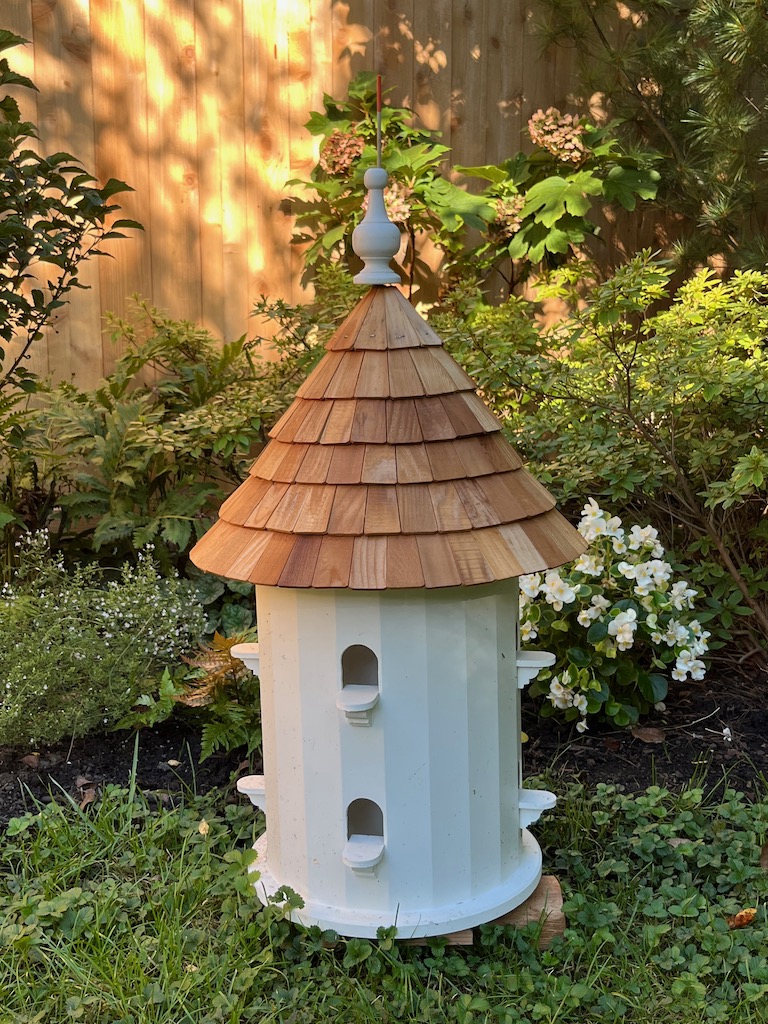
birdhouse awaiting its post, in my new walled garden
pants for which my mother might disown me.

I wasn’t long off the plane, the suitcase barely unpacked, the clothes not halfway down the chute, and I was leaping into my oldest, most tattered, hand-me-down shorts (I seem to have a whole wardrobe of tattered ill-fitting hand-me-down shorts, these are the ones with the hem that dangles in front and disappears somewhere behind) and the t-shirt so ancient it’s bearing the name of a slick Andy Warhol launched in the very late ’60s. I call these my gardening clothes. The muddier they get, the more merrily I and they hum.

I had grounding to do. Grounding for me is quite literal. It’s a psychological balm and it comes with a trowel. I literally slice into the earth to draw out what amounts to a steadying potion, the closest I know to nerve-soothing elixir. 

September had gotten away from me. I’d intended a few weeks of quiet. So go such intentions. The holy communion of saints must be guffawing up in the clouds. 

So out I trotted into my back twenty; what once seemed endless expanse is now (thanks to the neighbors’ newly-erected 6.5-foot solid-cedar wall) most generously described as a wee jewel box of growing potential. My plot has shrunk, so it seems, but the newly defined outlines merely raise the ante. It’s a petit point of a garden I’m after. A tapestry of tiniest botanical stitches. 

I was soon on my knees. Fitting in ferns with their feathery fronds. Tucking in anemones with upstanding names, names that made them feel like royalty (Honorine Jobert — I imagine an empress) and names that sound like poetry in motion (Whirlwind — imagine them asway in September’s gentle breezes). 

Balms come in a thousand disguises. There are balms to swallow, and balms to chew. Balms that cover you in sweat, and balms that make you smell of chlorine. Took me a long, long time to find a balm that didn’t hurt me (plain old eating vexed me for decades). At last, though, I found healing balm in the sacred ground that surrounds this old shingled house. I found it watching the shadows play catch-me-if-you-can. And I found it watching the red bird alight on my window sill. I found it pretending I live in a cloister, and this is my garth. My prayer bench draped in clouds; my kneeler in clumps of compost. 

Maybe it was the long time coming that makes it more sacred. Maybe it’s remembering how emptiness once felt. And how distant that hollow is now. Maybe it’s facing the truth that there will still be days when the emptiness rises, when I feel my nerves starting to jangle, and tears are on the verge. Those are the days when I need to remember that something akin to a heavenly flow is just beyond the kitchen door. And I can tap into it with merely a trowel.

It’s quietly waiting there in the garden, my potpourri of barely detectable perfumes (lavender and heirloom hyacinth) and ones that knock your socks off (Korean spice viburnum); and leaves in shapes that might have been scissored in some far-off French lace factory. And then there are all the wild things who know they need no invitation. They’re the animators, the ones that chirp and chatter and squawk and belt out their twilight arias. Wide-bellied bees gather gold dust right before my eyes; butterflies flit and flutter and all but land on my shoulder. Even hummingbirds roll through town, on their way to tropical jungles where they’ll blend in with all the other primal screams of ruby and gold and shimmering emerald. It’s a menagerie out there, and I play the role of devoted observer, the one who quietly putters, poking plants here, there, and anywhere I can squeeze one more in. 

It’s all merely excuse for getting as close to the thrum of the earth as I can. It’s there where the worms wriggle, and the trees find their succulence, where the anemone roots and the chipmunks play chase, that I hear the undeniable, deeply permeable notes of heaven’s indelible undying song. 

I am grounding myself for the winter ahead. Grounding myself from the September and the summer behind….

welcome to autumn, the season of turning within….

for reasons that escape me, i seem to have decided that i will employ the shift key on my keyboard from time to time, and occasionally tap out a sentence complete with capital letters. sometimes makes for easier reading, i’d imagine. so i am — on occasion — giving it a Whirl. 

where or how do you find grounding? was it hard for you to find?

make room for joy. always make room.

from what i know, from what i hear, and from what i gather, there’s a miasma of gloom hovering over the landscape, not unlike an early morning fog that forgets to scuttle away once the sun burns down. 

it’s a despair in general and in particular. it’s a despair that has long been casting its shadow, as we seem to be dwelling in an epoch of upheavals. from a rage that’s spilled even into the lanes of the little village where i live (did i really deserve a middle finger for driving exactly the speed limit on a curvy hill?) to venom poured onto airwaves and social media feeds (excuse me for backing away from all but a quick scroll for news), it’s gotten harsh out there. and institutions we counted on seem to be pulling out the rug.  

but i read something this week that reinforced what’s become my saving grace, though reading it helped me to see more clearly that i needn’t feel guilty for reaching toward my apothecarial shelf of simplest balms. i’ve been making a practice of stitching the tiniest joys into my day, and pausing long enough and deeply enough to let them sink deep down into the crevices, the nooks and crannies and channels of the soul where the life spark burns. 

i might pause in my dashing down the walk to listen to the gurgle of my bubbling fountain. i might plop in a wicker chair to watch the slanting sunlight turn golden a flapping hydrangea leaf. i might catch mama wren ferrying a worm to her chirpy little ones. they’re the littlest wisps of joy, the things that percolate my heart and soul and each and every summer’s day.

what i read this week were wisdoms from mary pipher, an american clinical psychologist, long rooted in lincoln, nebraska (which in my book certifies her down-to-earth wisdoms as deep as the roots of the prairie dropseed that rolls across the miles). pipher, whose wisdoms are too boundless to be bottled, is best known for reviving ophelia: saving the selves of adolescent girls, her 1994 rescue guide for an america she calls a “girl-destroying place,” and more recently she’s written women rowing north, a book on aging gracefully. (note to self: please read.)

this week, though, she wrote an op-ed for the new york times, in which, after outlining the simple joys with which she unfurls her day––a morning cup of coffee, watching the sun rise over a lake, listening to the sounds of sparrows, the commonest of common birds––she writes that she is “leading a double life.”

Underneath my ordinary good life, I am in despair for the world. Some days, the news is such that I need all my inner strength to avoid exhaustion, anxiety and depression. I rarely discuss this despair. My friends don’t either. We all feel the same. We don’t know what to say that is positive. So, we keep our conversations to our gardens, our families, books and movies and our work on local projects. We don’t want to make one another feel hopeless and helpless.

Many of us feel we are walking through sludge. This strange inertia comes from the continuing pandemic, a world at war and the mass shootings of shoppers, worshipers and schoolchildren. In addition, our country and our planet are rapidly changing in ways that are profoundly disturbing. We live in a time of groundlessness when we can reasonably predict no further than dinnertime. The pandemic was a crash course in that lesson.

As we are pummeled with daily traumatic information, more and more of us shut down emotionally. I can hear the flatness in the newscasters’ voices, see the stress in my friends’ faces and sense it in the tension of the workers at my sister’s nursing home. We are not apathetic; we are overwhelmed. Our symptoms resemble those of combat fatigue.

Mary Pipher

she goes on to write that in an age where ukraine and afghanistan and yemen are everyday news, and the horrors therein threaten to numb us, where the american political landscape some days resembles an extreme-wrestling match, nothing short of world-class coping skills are called for. and thus she lists three of her wellsprings: her grandmother who raised five children on a ranch during the dust bowl and the great depression; thich nhat hahn, the buddhist monk and zen master; and her years-long study of psychology. 

her wisdoms are these: her grandmother urged her to “be the person you want to live with every day of your life,” and on the last day of her life she told mary that her life goal had been “to leave the world a better place;” from thich nhat hahn, who’d witnessed great suffering in vietnam, she not only absorbed his practices of mindfulness, anchoring herself in the present moment, but also his deepest teaching about our interconnectedness with all of life, a worldview that finds healing through reaching out to the frightened, the hungry, the ravaged in all its forms; and, from psychology, pipher learned that the best way to cope with suffering is to face it, feel it in our bones, explore it, extract its meaning, and then muster the resources to move forward. here she prescribes: “find ways to balance our despair with joy.”

maybe take a minute to let each one of those soak in. . . 

“be the person you want to live with. . .”

“present moment. beautiful moment. . .”

“action is an antidote to despair. . .”

Most of us cannot be great heroes. However, we all have the capacity to be ordinary heroes.

to be an ordinary hero is to find someone close to home who’s hurting, and be the healing balm. resist the urge to flip back someone else’s insolence. even on a day when you might prefer pure silence, invite in someone whose days are defined by loneliness. make your front stoop or your back porch a place where the welcome sign is often posted. 

go about the business of gathering up simple joys; know that they’re the fuel to carry you across the long and lonely miles. revel in the red bird who alights just beyond your window sill, and serenades the coming darkness. follow a butterfly across your garden. watch the night stars turn on. keep an eye out for the fireflies’ first flickering. 

make room for joy. joy is a necessary oxygen for both soul and psyche. without it, we shrivel, furl inward, gasp for breath amid the not-unlimited allotment of days we have here. 

those joys needn’t be grand, needn’t strike up any band. we’re on the hunt here for simple joys, barely detectable threads of joy; weave them through your day.

they just might embolden you for the long haul, the long and seemingly unbearable haul. 

where will you find joy today? how will you make room?

i just yesterday got page proofs for my next book, The Book of Nature: The Astonishing Beauty of God’s First Sacred Text (pub date: march 21, 2023), and that means i will be underwater for the next two weeks making sure there are no runaway commas, or words wrongly landed amid a sentence. it’s nerve-wracking and eye-straining, but it moves me closer to the finish line. i might not get a chance to circle back to reply to comments for awhile, but sooner or later, i promise i will. and soon as i can i’ll show you how pretty someone made the pages of my little book. till then, take care, and take joy, as tasha tudor always insisted…

photo above by will kamin.

p.s. here’s a little joy that slipped under the transom yesterday, when my beloved brother brian found my little book available for pre-order in — get this!!! — park slope and switzerland. excuse me while i gulp. (the actual cover, which i’ve not yet been told i can share, is peeking out from under the pre-order banner on the community bookstore, now a shop added to my must-visit list. xoxoxo thank you little bookstores, online and real-world.)