the question of happiness
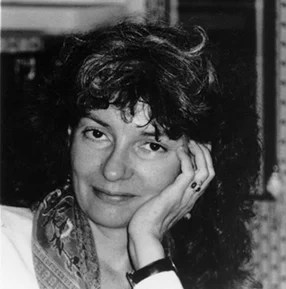
jane got me started. jane kenyon, the poet. she’s the one who got me thinking here.
but before i bring jane into this conversation, a conversation sparked by one of her poems, this one titled simply “happiness,” i feel compelled to consider the case of happiness, the subject dragged squarely into our attention.
happiness, i fear, has been shoved to the back of the pursuit shelf (it was a founding pursuit, after all) as it seems to have taken on hallmarkian gauze. it’s blurred at the edges. and if it were a color, it might be some sort of bubblegum pink. it’s joy lite, watered down, saccharine—or so it seems, in this dark historical moment.
it might seem an out-of-reach luxury. what with bombs dropping from skies, drones the latest iteration of lethal birds. who has room for bubble-generator happiness when dread is the common denominator?
i’m going out on a ledge here: i’ll guess i’m not alone in claiming it essential, life-sustaining, worthy of our attention. it’s the active-dry yeast in our days that just might keep us from collapse. rains down out of nowhere, quite oft; dissolves just as quickly.
at simple glance, i’ll concede, it might seem, well, silly.
joy, its elder sister, worthier of pursuit, perhaps. a bit more dignity there. never mind ebullience—a whole other rainbow, happy on steroids, so happy your toes start to wiggle.
we’re talking happiness, pure and simple here.
and that’s where jane comes in. jane, the poet laureate of new hampshire when she died in 1995, at 47 of leukemia, seized that ephemeral quiver, and did the hard work that poets do: she aimed to put words to it. reached for moments that just might capture it. opened her voluminous soul to allow you, too, to peek in. to understand what she was talking about. to grasp, even for a moment, that happiness—especially in the darkest of times—will always be wafting just beyond the margins, out of sight, seemingly out of reach. and then, kaboom! in it will ride on the breeze. tickle us deep down in that joy-registering station. the one where suddenly we realize we are not alone, and not in the dark.
happiness, she makes us think, just might be mightier and more imperative than we imagine. than we’ve cheapened it to seem.
if you’re of the God-believing ilk (and i’ve made it rather clear here that i am), i wonder if that fleeting stirring of the heart or soul, that sense that for a minute there someone cranked the burner and the chemistry inside has suddenly changed, i wonder if it’s a mistake to call it merely happiness. maybe, more aptly, it’s a moment of God. maybe the God we try and try to define, to understand, to see in living color, maybe God comes sometimes in the cloak of a tickling joy, another name for plain old, pedestrian, under-sold happiness.
i wonder if, sometimes, the ineffable, ephemeral, mysterious God drops in, out of the blue, draws us into the swift-running river of radiant light, gives us a dunk, before dropping us back on the sandy bank, uncertain of what’s just happened. and all we know to call it is happiness. but really it’s more. so, so much more.
i’ll let jane take her crack at this; see if you see what she means. maybe she will convince you.
Happiness
There’s just no accounting for happiness,
or the way it turns up like a prodigal
who comes back to the dust at your feet
having squandered a fortune far away.
And how can you not forgive?
You make a feast in honor of what
was lost, and take from its place the finest
garment, which you saved for an occasion
you could not imagine, and you weep night and day
to know that you were not abandoned,
that happiness saved its most extreme form
for you alone.
No, happiness is the uncle you never
knew about, who flies a single-engine plane
onto the grassy landing strip, hitchhikes
into town, and inquires at every door
until he finds you asleep midafternoon,
as you so often are during the unmerciful
hours of your despair.
It comes to the monk in his cell.
It comes to the woman sweeping the street
with a birch broom, to the child
whose mother has passed out from drink.
It comes to the lover, to the dog chewing
a sock, to the pusher, to the basket maker,
and to the clerk stacking cans of carrots
in the night.
It even comes to the boulder
in the perpetual shade of pine barrens,
to rain falling on the open sea,
to the wineglass, weary of holding wine.
+ Jane Kenyon
happiness, she makes clear (rather than argues), is one of life’s glues. it’s on its own clock, plays by its own rules. it might lie in wait: ready to leap out from the geranium pot you found on the bargain shelf; lurk in the email that arrives out of the blue, the long lost college friend you’d thought had forgotten you. happiness, i know, comes in rooms filled with cancer. and just as surely drifts into the grocery store checkout line. it doesn’t seek invitation (and just as blithely ignores our most ardent invites, the times we’re down on our knees begging and pleading). happiness, often, is one short splice from the ever-after reel. extended play is not in its repertoire.
maybe its beauty, its levity comes from its uncharted choreography. it comes and it goes, all of its own accord. and it surely never stays long. but it peeks from just around the corner every once in a while. while enough to make us sense it might be out there; lurking. worthy of pursuit, after all.
happiness—fleeting, sometimes forgotten—is what keep us from crumbling. a pinch of it here, a dab there. its work is beyond proportion. not unlike salt, another life-sustaining grain, happiness, no matter how sparse, just might save us. and, surely, it’s worthy of our keenest attention.
that faint quiver of heart: be on the lookout.
it just might be God, in yet another disguise.
where do you find happiness? can you describe it?
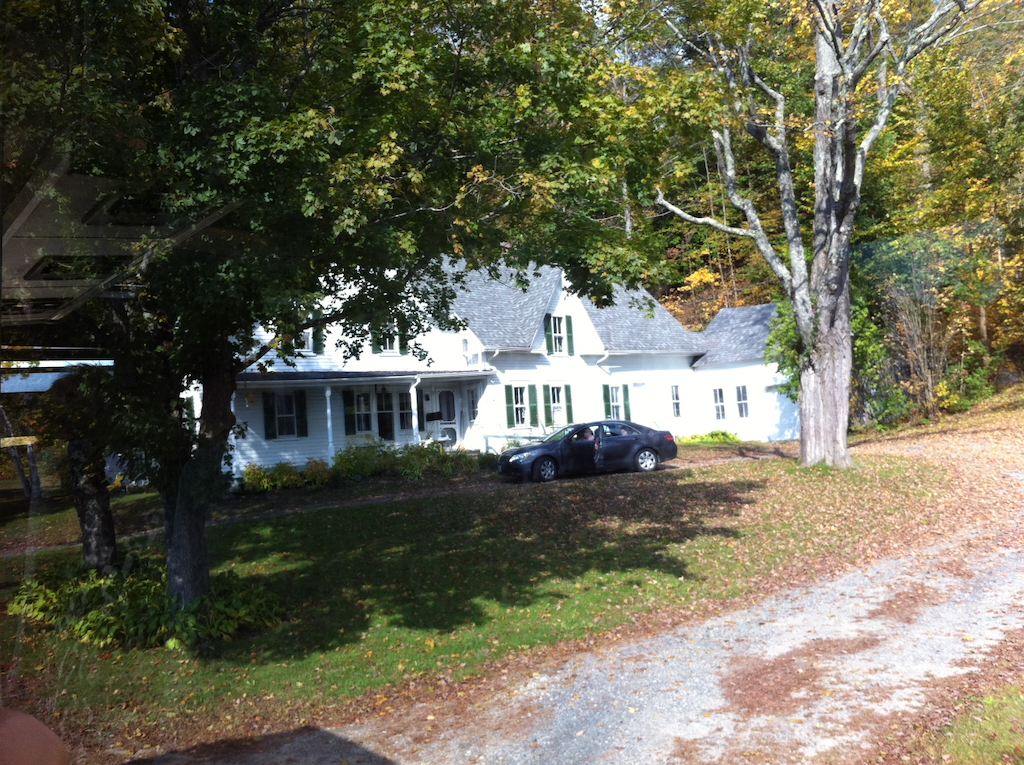
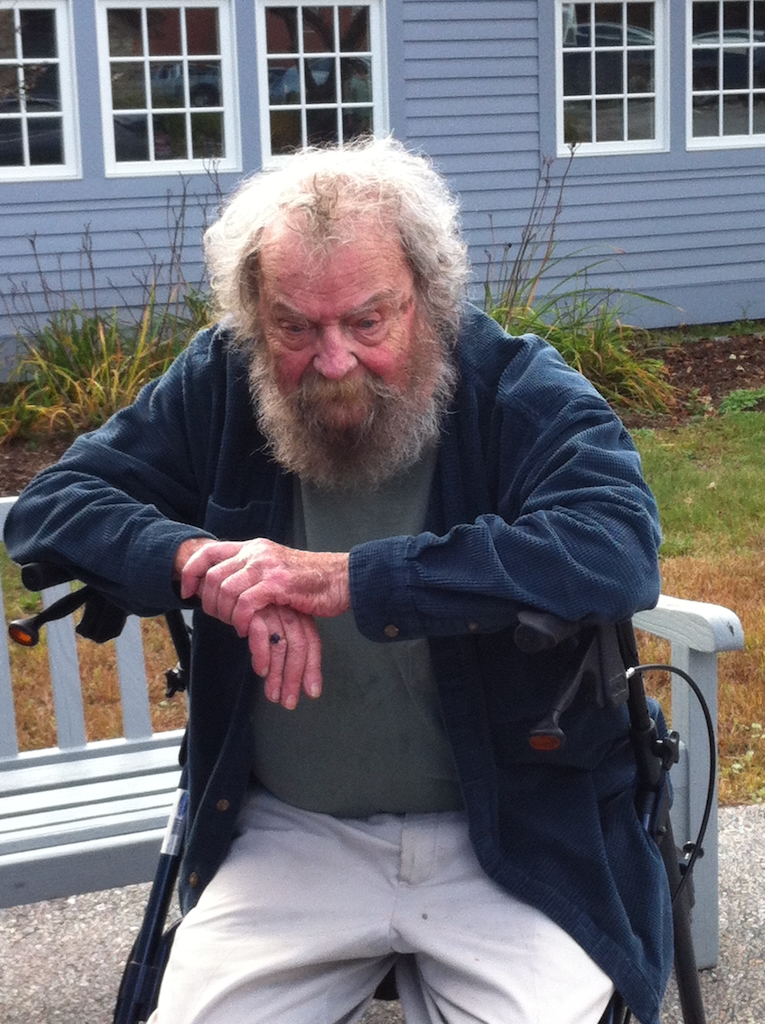
jane kenyon dwells among my innermost circle of poets. i sat in her house once, the white clapboard house at eagle pond farm in new hampshire; swapped letters with her late great husband, the poet donald hall. her poems, pouring from the pen of a daughter of the heartland, rattle me in their stripped-bare simplicities, their unadorned arrows. she takes my breath away with lines so clear they settle forever in my vernacular: “otherwise,” “let evening come”. . .
in case you’re still here, and willing to ride along for a bit of a binge, a few things:
this marvelous short film from friends at the SALT Project, where we hear jane reading her poem, “otherwise” . . .
this link to a short bit of consideration of her most well-known poems.
and this fascinating article from Reformed Journal (self-described as “meaning open, curious, progressive, more interested in building bridges than walls, while still standing in the historical line of Christian orthodoxy”) exploring Jane’s work, where i found these few grafs worth a copy and paste:
Finding God
Jane Kenyon was born (23 May 1947) and raised in rural Ann Arbor, across the road from a working farm, attending a one-room schoolhouse for the elementary grades. She enjoyed the rural upbringing; her imagination flourished in the pastoral setting. Especially, then, her stays at Grandmother Kenyon’s large boarding house in downtown Ann Arbor posed a strange and dangerous world. At Grandmother’s boarding house, young Jane’s imagination took an unexpected turn. One day, after Jane helped Grandmother collect trash from the University of Michigan students’ rooms, they marched down to the basement incinerator. Recollecting the scene in an unfinished essay, “Childhood, When You Are in It,” Kenyon wrote, “As we worked, Grandmother talked about hell, a lake of fire, burning endlessly, or about the Second Coming of Christ, which would put an end to the world as I knew it.” Fearful thoughts for an eight-year-old child.These thoughts didn’t leave her. In her poem “Staying at Grandma’s,” Kenyon wrote:
“You know,” she’d say, turning
her straight and handsome back to me,
“that the body is the temple
of the Holy Ghost.”The Holy Ghost, the oh, oh. . .the uh
oh, I thought, studying the toe of my new shoe
and glad she wasn’t looking at me.
Religion at Grandmother’s house was comprised of rooms full of theological horrors and restrictive rules.
Partly rebellious by nature, and partly aware of her own capacity for wrongdoing, young Jane simply went home and announced that she was done with religion forever. Her adamancy persisted while she was a student at the University of Michigan during the 1960s, but since it was a trait of that era to test all things, for good or bad, Kenyon decided to give religion one more try. She attended a Unitarian church one Sunday morning, and left convinced of the correctness of her youthful choice.
Having married poet Donald Hall in 1972, Kenyon moved in 1975 with her husband to his ancestral farm in New Hampshire. The enterprise was not without risk. Hall gave up his position and benefits as a literature professor at the University of Michigan; Kenyon gave up a lifetime tied to Ann Arbor for a new culture. Just how quickly that culture encroached upon them became evident one Sunday morning when Hall suggested they attend South Danbury Christian Church. One might call it a social obligation–friends and family would expect to see them there. Nonetheless, by Kenyon’s recollection, minister Jack Jensen, referred to Rilke, and something stirred in her. She sought advice from Jensen, and he pointed her first to the early mystics–Julian of Norwich, St. Therese, and others–then to the gospels. Soon she and Hall were involved in Bible studies. The “little rebel” as she once called herself, bowed down at the altar of the Christian Trinity.
Faith and Art
Kenyon’s Christian belief, however, would be sorely tried in the remaining years before her death on 22 April 1995 of leukemia. Bouts of acute bipolar depressive disorder that had hounded her since her youth, and then the physical toll of fighting off cancers, first of her salivary gland and then of leukemia, exacted their physical, psychological, and spiritual toll. How can one begin to understand the remarkable interplay of both the joys and trials of her life and also the crisp honesty of her art? Two things help us.
From her earliest lines, Kenyon devoted herself to the lyric poem, searching for what she called “the luminous particular.” The aim of the lyric poem is to take an event or experience of particularly impressive quality upon the poet, but to craft it with such telling detail, crisp language, and physicality of imagery that the reader feels this is his or her poem. The reader enters and owns it, rather than the poet simply declaring. The poem thus requires absolute honesty and exacting care by the poet.
the article goes on, but this is the gist i wanted to leave here, at the ol’ maple table…..
blessings on you this week….
love, bam
 pull up a chair