
a literary form for the slipperiest of minds
by bam
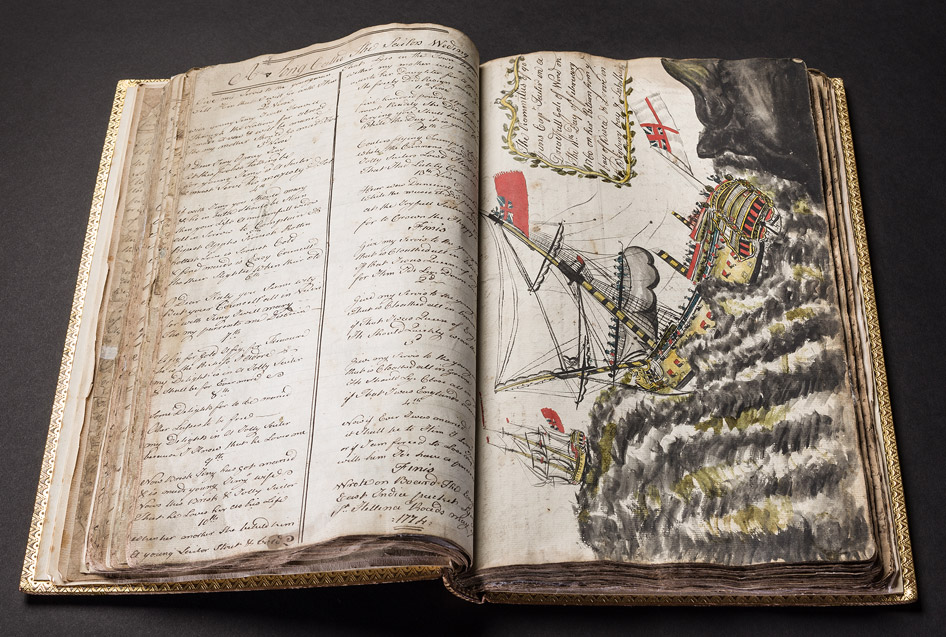
more and more, the literary form into which i ease is one that traces roots to the ancients. to pliny, the great naturalist, whose mind must have been a beehive of sorts back in first-century rome. it’s an enthusiasm for accumulation that courses its path on through the renaissance when humanists, especially, were anxious to lock down their thoughts, keenly aware of the tragic loss of ancient learning, as libraries were so often, too often, the sites of military revenge. it’s a form that wends its way on and on through the centuries, straight through the twentieth, when mark twain, thomas hardy, ralph waldo emerson, and henry david thoreau, to name but a few, all partook of the habit. and here we are now, with plenty of us keen practitioners of the urge to gather up bits of literary esoterica and assorted ephemera before they skitter away. i think of myself, more often than you might imagine, as a rag picker of ideas in any which size, from the itty-bitty and poetic to the mindbogglingly big.
humans, it seems, like to scribble things down.
may our scribbling never cease.
the fancy name for this scribbling is commonplacing, the literary form the italians once named zibaldone, “a salad of many herbs,” in culinary terms, or a “hodgepodge” more broadly. we’re contemplating here the hodgepodge.
it’s the mosquito netting of the mind, of wonders and thoughts before they escape. or, as the 13th-century dominican monk, vincent of beauvais, once explained, it was “the multitude of books, the shortness of time, and the slipperiness of memory” that compels one to scribble.
count me in on the slippery mind.
vincent’s not-so-slippery solution: a ginormous tome, totaling 4.5 million words (someone counted!), an exhaustive compendium of all medieval knowledge, which he titled speculum maius (literally “great mirror”), speculum a word he chose because it contained “whatever is worthy of contemplation (speculatio), that is, admiration or imitation.” and thus he set out, over the course of his monastic lifetime to gather all the “flowers” (his word), or best bits of all the books he was able to read, in a selfless quest to save others the strains (time, money, trips to the library) of doing so themselves.
over the last many months, as the population of this old house has dwindled to two, and the stories to tell are fewer and fewer, my efforts here seem to have morphed into a looser, yet more concentrated consideration of the bountiful ideas and thunderbolts i bump into across the arc of a week.
there is something so natural about the human instinct to share what we’re thinking. of course there are those who might protest, who might consider me rude for shoving a book or a page or a picture in your face. but, when you think of it, isn’t that the instinct that drives so much of social media? (i often think we’ve gone overboard there, but that might be because too often it’s the magnification of any or every passing brain burp and not necessarily ones that might leave us enlightened. and too often amount to plain old overgazing at navels, or hair-raising nastiness and gut-wrenching vulgarity. but i digress…)
i’ve been keeping what amounts to my salad of many herbs for years and years now, and that urge seems to have spilled over to here, where week after week sometimes i seem to be assaulting you with the few morsels i’ve found most delicious in recent days. it’s a way, i suppose, of collectively swelling our brains. and our souls, most certainly.
in the spirit in which i bring my rag picking here, i like to think of us sitting side-by-side, cozy against the pillowy confines of an armchair broad enough for two. and in the gentlest, yet conspiratorial whisper, i offer you a page or a passage, my eyes widened and sparkling with glee, as if to say, wait’ll you see this one. what wonderments or deep thoughts spring to your mind?
any one of these next morsels is worthy of long and deep consideration. here are the ones that struck me this week:
these first two come from maria popova, whom i’ve referred to in the past as the high priestess of cultural commentary, and one of the most voracious gatherers of ideas i’ve encountered in recent years. her online literary journal, now known as The Marginalian, has been described as a compendium of hundreds of thousands of entries “that search for meaning, cross-linking ideas and connecting metaphysical dots.” here’s where she thunderbolted me this week:
“joy is a stubborn courage we must not surrender.”
“. . . love — whether we call it friendship or family or romance — is the work of mirroring and magnifying each other’s light. Gentle work. Steadfast work. Life-saving work in those moments when life and shame and sorrow occlude our own light from our view, but there is still a clear-eyed loving person to beam it back. In our best moments, we are that person for another.”
another place i often turn for soulful sustenance is Emergence magazine, a wellspring that explores the timeless connections between ecology, culture and spirituality. in a recent talk, titled “memory, praise, and spirit,” the filmmaker, composer, sufi teacher, and driving force behind Emergence, emmanuel vaughan-lee, opened with these words:
“The mystics say that we are like a seed; that we hold the blueprint for our highest potential within us, and that much of spiritual practice, regardless of what tradition, is unlocking that potential.”
and i close with this one from the great james baldwin, a passage from his 1964 collection of intimate but somewhat little-known essays, titled nothing personal. this passage is from the fourth of the four essays collected there:
“One discovers the light in darkness, that is what darkness is for; but everything in our lives depends on how we bear the light. It is necessary, while in darkness, to know that there is a light somewhere, to know that in oneself, waiting to be found, there is a light.”
i could write an essay on any one of the above, but instead i invite you to chew on each or any one. each one, a morsel worthy of your time, your mind, your soul.
which one spurs you and stirs you the most, and what deep thoughts spring to your mind?
i’ve written before of commonplacing. here at the chair, and in my latest book, The Book of Nature, on pages 87 and 88. it’s a habit i can’t get enough of, an urge i can’t quench.

 pull up a chair
you had me at “ancients”! Great job!! I will look forward to reading the rest…!!!
ancients are you!
So I screenshotted this: “Lifesaving work in those moments when life and shame and sorrow occlude our own light from our view, but there is still a clear-eyed loving person to beam it back. In our best moments, we are that person for another.”
Tomorrow is the first of six sessions of the grief support group that I facilitate. I hope and pray I that I beam the participants’ light back to them. Often they do that for each other.
ohhhh, it thrills me to think you found something worth carrying along to a life-giving grief support group. bless you, bless you for the holy work you do. xox
It is you who help to expand our minds! You, who is the Vincent to us. You, who encourage us to research deeper into the authors and saints you mention. You, who have given us hope that there are others like us in the world. You, who fill us with wonder and happiness on a Friday morn.
oh, PJT, i adore you, and all our kindred curious spirits who never cease to be amazed……xoxo
Because I have long spangled my commonplace books with quotes and anecdotes that shimmer for me so, I’m still a magpie, always on the lookout for the luminous! These days I’m a bit less apt to scribble things down. Here and there I still love to pair and post words I’ve archived with a photo I’ve taken. Your essay today, though, made me stop and realize that I’ve been off on a different but related tangent: I’ve been selecting quotes I love and embroidering my interpretation of their meaning. This is not speedy work, but it affords me hours and hours of quiet contemplation, and this in turn buoys my spirits. Rather than using the term ‘slow stitching’ (which has become quite a popular pastime), I guess you could say what I’m up to right now is ‘slow commonplacing’! The quotes you shared today are lovely. xx
OH DEAR GRACIOUS!!!! you are letting your inspirations draw your needle and thread?!?!?! you simply amaze!!! i love the quiet and necessarily slow allowance for contemplation. i’d not heard the term slow stitching of course, but love that you are already ahead of the curve, and in a class of your own, with “slow commonplacing.” i wish we could share photos in these comments cuz i would love to see even one such meditation…..
you are a wonder. and as you know, but others might not, you are indeed the magpie i write of at the tippy top of page 88 in BoN.
in which i write thusly: “I’ve a heavenly friend, a fellow hoarder as it were, who describes her incessant gathering as that of a magpie, feathering her nest with gathered-up swatches of beautiful epiphanic language, in singular words and wisdoms.”
and i suppose in the paperback edition coming out in the spring of 2025, i should add an asterisk and a footnote noting your latest adventure in magpie feathering…..
Yes, I’ve always wanted to interpret and illustrate some of my favorite quotations with needle, thread, and fabric. At some point I may share a photo or two of the pieces I’m currently working on, but first I have to finish them! In the meantime, it’s lovely to sit and sew quietly here at the chair and contemplate the cornucopia of thought-provoking poets and sages you set before us. Happy commonplacing! xoxo