pull up a chair

where wisdom gathers, poetry unfolds and divine light is sparked…

Tag: springtime

springtime’s reluctant suitress

i was, for reasons that escape me, something of a reluctant suitress this year. the season’s slow-building seductions did little to seduce. i turned a blind eye. gave the cold shoulder. 

harumph.

spring wasn’t an easy sell this time round. it came on thin, and unconvincingly. it taunted, played catch-me-if-you-can. and i couldn’t. couldn’t catch it. 

i worried it might wholesale evade me this year. where was the catch in the throat, in the heart, in the soul, that usually caught me? had i been numbed, beaten down by the thrum of the world? was the malaise of the moment eclipsing the vernal exuberance?

but then, this week, it opened the spigot, came on rushingly, came on like a buttery rivulet poured on a mound of mash. i couldn’t resist. 

i fell hard. have found myself dizzily staring out windows. even more dizzily tracing the garden’s edge. staring. marveling. asking again and again how it does it. how it knows. how, year after year, for all the inhales and exhales of the millennia of this holy Earth, does it find the oomph to give forth again and again and again?

if there’s wisdom in this year’s slow coming—and we know there is, for the earth is the vessel of wisdom without end—it must be one of patience. of giving it time. no need to go anxious when the oomph isn’t there. “live the questions,” taught rilke, in the one phrase we’re most apt to remember. but it came at the end of a wisdom more fulsome in the whole:

“Be patient toward all that is unsolved in your heart and try to love the questions themselves, like locked rooms and like books that are now written in a very foreign tongue. Do not now seek the answers, which cannot be given you because you would not be able to live them. And the point is, to live everything. Live the questions now. Perhaps you will then gradually, without noticing it, live along some distant day into the answer.” 

so much of life swirls in the liminal time of not knowing, of waiting, of dwelling in the not-yet. 

so this spring was for me. i knew what the calendar said. i knew how the sun had crossed its equinox, how light and shadow had fallen in equal measure and we were now slithering toward light and more light.

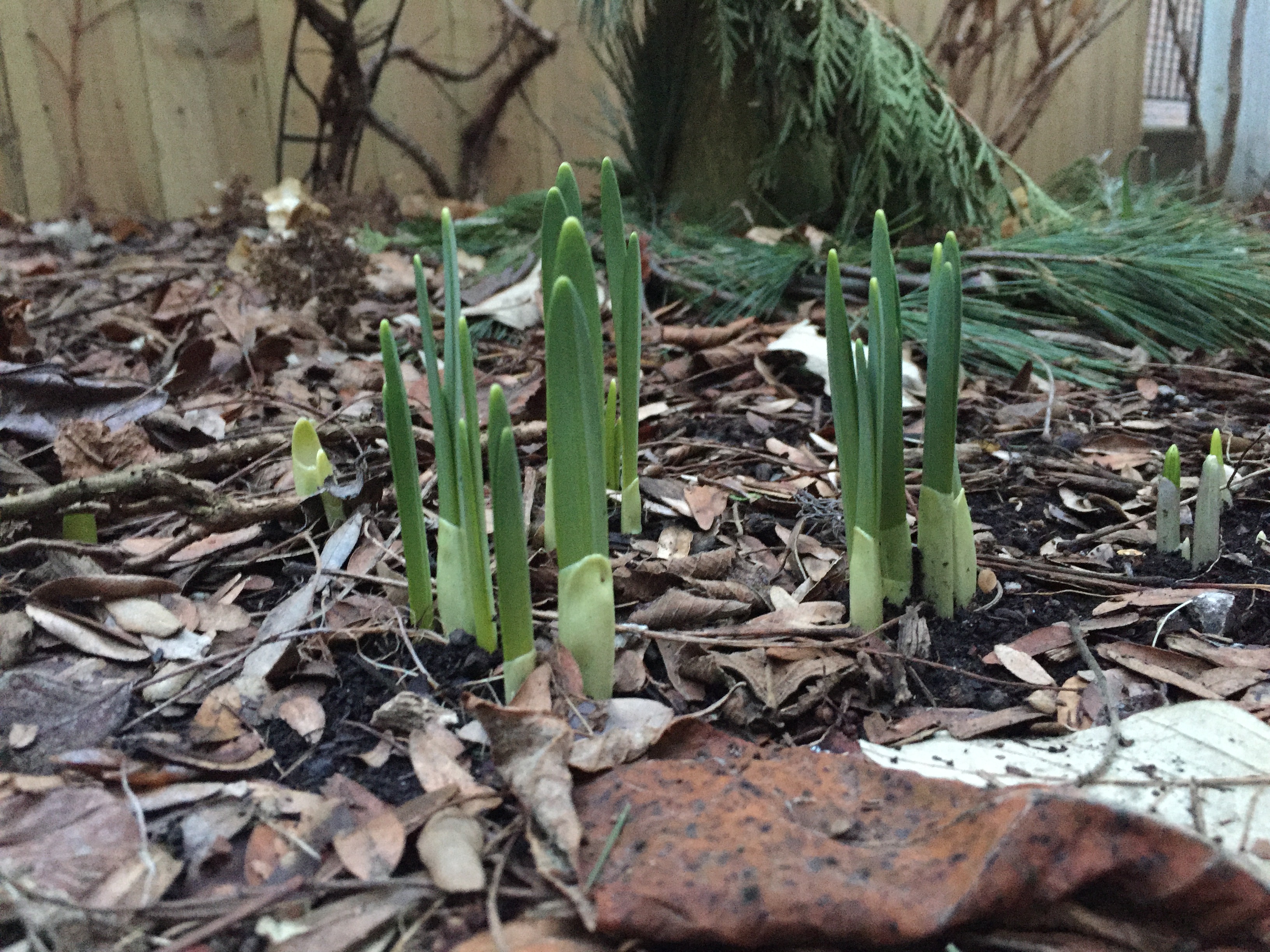
but the light out my window didn’t convince me. nor the nubs of green pushing up from their winter’s retreat. maybe it was the noise of the world blocking the sense that something lush and luscious might really be coming. 

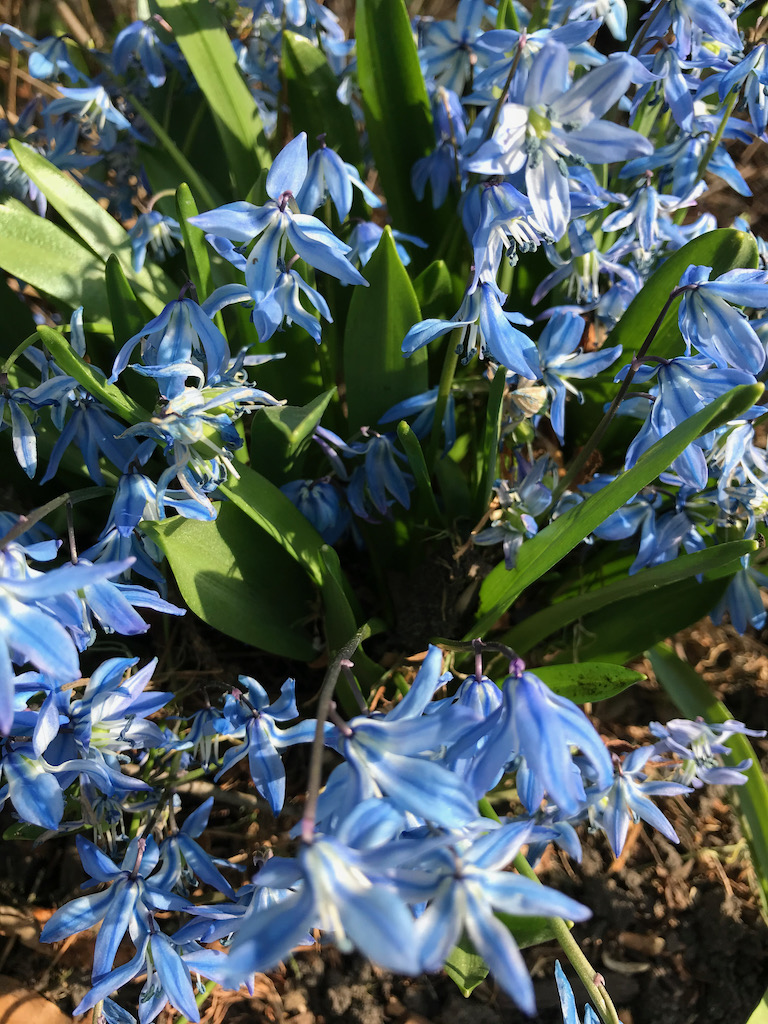
and then the abundance came. the climbing hydrangea emphatically leafed and greened, all but tapping at my kitchen window, come rub your nose in us. the viburnum buds about to burst with their pyrotechnic perfumery. the nodding heads of bluebell and snowflake. the aubade of the cardinal. the rampant rufflings of feather as sparrow mounts sparrow in the delirious dance of procreation. 

and when the wind blows, which it has quite often this year, magnolia petals take flight, filling the air with what appear to be wings. a fluttering of perfumed birds playing on the breeze.

fibonacci spiral

it might have been the question mark of a woodland fern unfurling that first stopped me on a path this week. a flock of inquiry rising from the garden, in all the shadowed places. it’s the mystery of the universal spiral that catches me by the throat, the fibonacci spiral a leitmotif of all creation. born of the mysterious fibonacci sequence of 1, 1, 2, 3, 5, 8, 13, 21—wherein each number is the sum of the preceding two, beginning with 0—the spiral is the geometry laid upon that very grid. a geometric pattern constructed by connecting the corners of squares whose side lengths are consecutive fibonacci numbers, the spiral (sometimes known as the golden spiral) pervades the cosmos, from the spiral in a sunflower, to the question mark arising from my garden, to the scales of a pine cone, to the swirls of the chambered nautilus. 

chou Romanesco, or Romanesco cauliflower

i sometimes imagine God so delighting in the whorl that the divine enthusiasms couldn’t be tamped, and thus its profligate presence wherever we look: into the vast galaxies above or the dappled woodlands below.

i often sense the spiral is but a trace of the soul’s very geometry, the innermost chamber tightly held at the apex. but what i don’t know is whether we spend our lives unfurling, from the nucleus of the sacred from which we divide and multiply in the womb, or whether ours is a journey inward, inching closer and closer into the fertile and eminently holy nub. 

is it furl or unfurl? twining in or unspooling beyond?

such are the questions that arise from the earth’s thawing, such are the questions put before me, whirling within me, as the season begs only one thing: come close, bend low, watch what arises. from the earth, yes, but more so your soul. 


a poem plucked from the book of garden wisdoms….

this is the recipe of life
said my mother
as she held me in her arms as i wept
think of those flowers you plant
in the garden each year
they will teach you
that people too
must wilt
fall
root
rise
in order to bloom
The Sun and Her Flowers by Rupi Kaur


what stopped you in your tracks this week?

a few summers ago, in one of the wonders of my life, my beloved friend kat the priest handed me a ticket to a summer course at yale divinity school, a course i came to call my “poetry school.” my firstborn (now the law professor) was at law school there at the time, and for the summer had shuffled off to DC, meaning there was an empty apartment where i could play house–or college–for the week. so every morning i shuffled down the lanes of new haven and settled in for a day of poetries with a professor who happens to be named david mahan–yes, exactly like my last name, only without the “y”. when he wasn’t brilliantly teaching poetry, he was running a glorious something called the Rivendell Institute, which “seeks to examine and advance the contribution of a Christian vision of life to human flourishing and the common good within the academy and contemporary culture.” within the institute there is another something called the Rivendell Center for Theology and the Arts (RCTA), and their mission is “curating conversations between a variety of interlocutors.” long story short, this week, in their spring issue of Among Winter Cranes, RCTA published an excerpt from my Book of Nature, and since publishers love eyeballs, here’s the link to the essay, On Paying a Particular Attention.
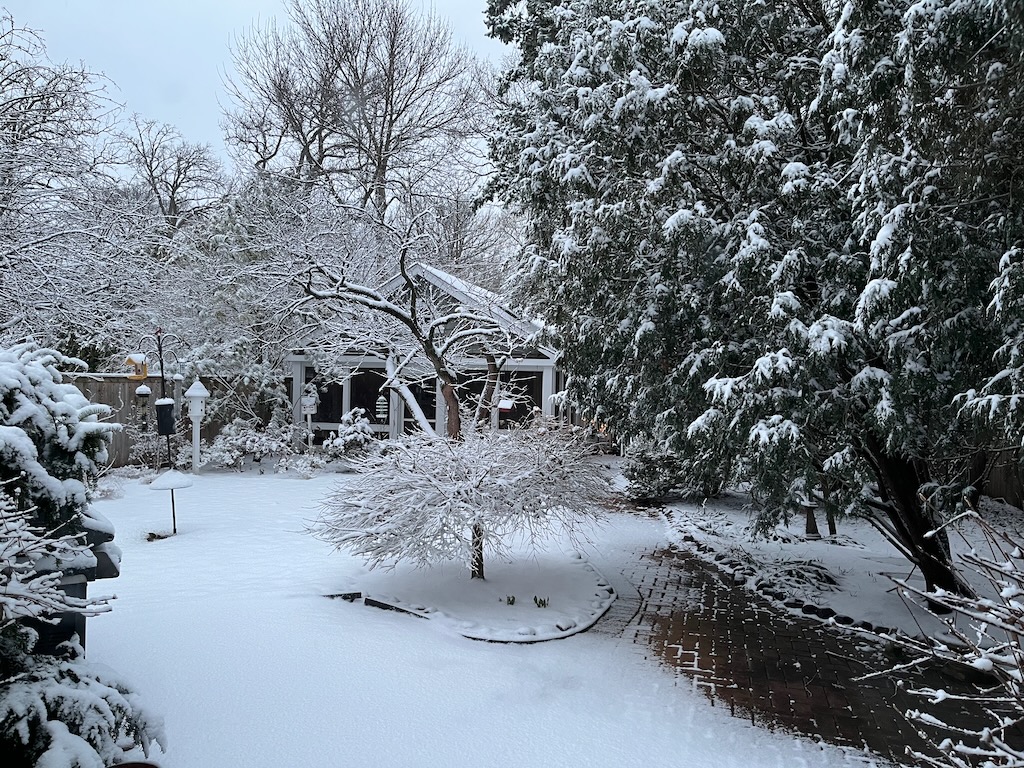
spring might be sprung, but i’m not springing

vernal equinox out my backdoor

they say it’s spring out there. celestial lines were crossed in the wee, wee hours of yesterday, and, for a flash there, light and shadow fell in equal measure. 

i don’t feel the light though. not in sync with springtime’s beckoning. i’m inclined still to hunker down in winter’s shadow. 

for reasons i can’t quite fathom, i’m not ready this time ’round for the seasonal advance. i still feel wintry in my bones. the light change is too abrupt for me, too ice-white for me. my inner metronome is far too slow for the prestissimo that’s rising. i don’t mind the cardinal’s vernal song, though, rung out from treetops high, and piercing through still-frigid air. but i’m not seasonally adjusted. i’m lagging at least two lopes behind. 

i can’t tell if it’s that my winter felt circumvented. or that i’m wishing for all of time to freeze in place. since the world is rather dire these days, that cannot be a wise solution. in that regard, i’ll take time in double measure. may we all wake up on the morning of eight november, 2028, with a whole new glimmer in our eyes. and the present firmly in the past.

i’m feeling somewhat stuck. hardly welcoming of burgeoning to come. and that’s a most peculiar state for me. 

might the whole universe be toppled on its head, upside down and inside out? 

the one sure sign that spring is here is that when i awoke, just hours after equinox, the world i saw was dumped with snow. which in these parts is something of a rite of spring. tulips rise, and snowflakes fall. my mother swears she knows it’s spring when she slides on her winter boots and brushes all the glops of snow off her daffydills. 

no wonder we of the four-quarter year take spring in slow, uncertain sips. there is no fine delineation, as if the calendar and earth set their clocks in synchronous coordination. 

on a day when snows fell in glops, and then proceeded to melt in same-sized gloppings, and on the day when headlines kept insisting the springtime was upon us, i heard a thump at my door, and therein found prescriptive for my seasonal laggings. 

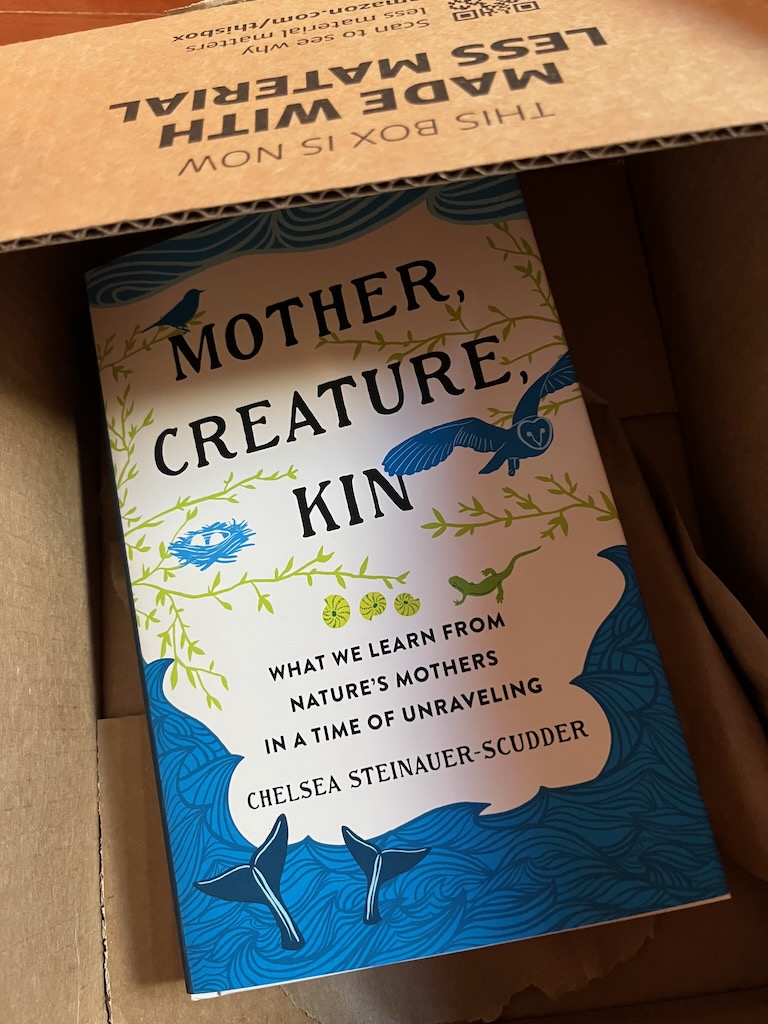
there, in a plain brown box, lay a book i’d been awaiting. my friend chelsea steinauer-scudder, as intelligent and beautiful a writer as could be, became a mother back when she and i were reading books and writing in the zoom rooms that covid carved. i’d first read chelsea in the pages of emergence magazine, a wunder site (online and print magazine, as well as creative production studio) that probes the depths of ecology, culture, and spirituality, and where she was a writer and editor for five years. when i saw she’d be leading reading circles (braiding sweetgrass, among them) and ones for the craft of nature writing, i signed up, and cemented myself to what would otherwise have been a front-row seat. 

chelsea grew up on the great plains of oklahoma and the sandhills prairie of nebraska, where for a time her papa researched bison, fire, and native plant communities, so she comes to her native landscape––language enfolding the sanctity of earth––with what seems an effortless fluency, as if she grew up breathing it. which, of course, she did. and then she went on to harvard divinity school, where she earned a masters in theological studies, and ever since she’s been writing sumptuously, focusing her work, in her words, “on the confluence of relationship to place with experiences of the sacred.”  

her first book, Mother, Creature, Kin: What We Learn from Nature’s Mothers in a Time of Unraveling (Broadleaf Books), is what brought the thud to my front stoop. it’s due out april 8, but my copy landed yesterday. and it might be the cure i needed to lull me into spring. 

a.) it gives me excuse to curl under a blanket for a day or two, and b.) here’s what i’m about to bathe in, passages such as this:

“I wish to invite you into a kind of mothering that is wild and porous. The kind that draws blood, that loves and fears, rejoices and doubts, that exposes where we are most deeply vulnerable and from there stretches us into what is beyond us. I mean the kind of mothering that works within uncertainty and mystery. The kind that leaves soil beneath our fingernails and seeds in our hair.” 

she writes about mothering and being mothered by places. ecological mothering. she defines ecological motherhood as: a shared, place-based responsibility to nurture and support human and more-than-human life. she writes of the karmic cycle of rebirth, a subject aptly plucked from the vernal syllabus. she writes of the silent flight of barn owls, of nursing and endangered right whales, of real and imagined forests, eroding salt marshes, and newly planted gardens. 

she writes that the protagonists of these stories have been teaching her facets of mothering (a verb that she, like me, insists is not tied to gender nor obstetrics). those facets belong to us all, no matter our life’s work: “language, belonging, entanglement, community, edge work, homemaking, and how to think about the future.”

my friend chelsea just might nudge me over my springtime bump, and land me softly on the vernal side….


as i await the vernal skip in my own heart, i scan the literary landscape for those others who, along with chelsea, might nudge me there. and no surprise, i turn to two favorites, the great naturalist and writer, aldo leopold, and the poet mary oliver, who drew the sacred from her every path and passage.

“One swallow does not make a summer, but one skein of geese, cleaving the murk of a March thaw, is the spring.”

aldo leopold

North Country

In the north country now it is spring and there
     is a certain celebration. The thrush
has come home. He is shy and likes the 
     evening best, also the hour just before
morning; in that blue and gritty light he
     climbs to his branch, or smoothly
sails there. It is okay to know only
     one song if it is this one. Hear it
rise and fall; the very elements of your soul
     shiver nicely. What would spring be
without it? Mostly frogs. But don’t worry, he

arrives, year after year, humble and obedient
     and gorgeous. You listen and you know
you could live a better life than you do, be
     softer, kinder. And maybe this year you will
be able to do it. Hear how his voice
     rises and falls. There is no way to be
sufficiently grateful for the gifts we are
     given, no way to speak the Lord’s name
often enough, though we do try, and

especially now, as that dappled breast
     breathes in the pines and heaven’s
windows in the north country, now spring has come,
     are opened wide.

––Mary Oliver

a little peek at what a few other authors have to say of Mother, Creature, Kin. may i call your attention to the one who writes that this beautiful book belongs in the company of works by Ursula LeGuin, Rachel Carson, Terry Tempest Williams, and Robin Kimmerer, to name a constellation of the highest-reaching lights…

are you finding yourself in springlike mode, and what sights and sounds and scents are stirring you there?

nursing tender things along. . .

barely perceptible nub of palest green, on the first outpost of the left branch of what might once again be my peewee hydrangea…see it?

i found myself crouching down as low as i could go the other day—likely lower than a girl with slits in her side should wisely have gone. but i was intent on inspection. i was searching clumps of stick for little nubs of green. of life. of any sign that the last shrub i planted in the fall — the day before the frost came — had survived the long winter. 

it was a long winter for plenty of us — certainly for my garden, newly planted in the weeks not long after the dreaded fence went up next door, and indeed for me. 

and yet now the season of birth and rebirth is upon us. from every bough and limb, from every red bird’s throat, the song of springtime’s hallelujah bursts forth and keeps on forthing. 

i find myself particularly intent on the tendernesses of this holy spring. i am crouching down low day after day, keeping watch for signs of life, coaxing beauties to unfurl.

poor mama robin laid her egg on a porch railing. oops. fear not, all now is well.

seems a wise posture, that of nursemaid to the birthing earth. it’s one i am learning to mimic as i consider my own deeply tender places, as i picture the convulsions of my poor little lung that likely has no clue what hit it, and why all the folderol and commotion a week or so ago. but it is now doing its darnedest to sew itself back to whole, pressing tight the seams that now are held in place with metal threads. the miracle of the human body is not unlike the miracle of holy earth, and as i slowly walk my garden’s edge, stooping here or there to lend a hand — lifting clematis vine to its fallen trellis, rescuing a robin’s egg mislaid on a railing’s edge — i am breathing in the tender caretaking ways of the God who so tenderly holds us in God’s sacred trusted hand. or so i imagine. none of us has a clue really just what form this God of ours inhabits, so from time to time i apply my storybook imaginings to make it all more apprehensible. i understand the naiveté of picturing a God who scoops me in God’s hand, but somewhere deep in that vision there is a grain of holy comfort. there is an image put to the ineffable. and right in here, i need that image.

i’m not the first to put pictures to my God, and i know i’m not the last. it’s a hard task here on earth to imagine the Divine goodness that inhabits all the cosmos, and surely all the heavens, and then the questions come: is heaven the holy light deep in our hearts? is heaven that palpable knowing that we are held by a goodness beyond our wildest imagination? once upon a time the nuns taught that heaven had a pearly gate, and was carpeted in clouds. oh, lord, they shouldn’t teach such things to wide-eyed little children; it can take a long long time to revise the picture reel inside your head, and why waste time in lala land when God is so much more and vaster and infinitely deeper.

i am spending many chunks of time pondering the presence of God in this messy chapter of my life. what i know is this: when i was deep in the dark tunnel of an MRI that scanned the vessels of my brain, and told not to flinch a single muscle for 45 excruciating minutes, i surrendered to the softest arms i’ve ever known. i imagined them as the arms of God, cradling me. and in that space of utter peace, i rested. and did not flinch, did not cough, did not exercise the itch or cramp in my shoulder; i found the holy wherewithal to do precisely as the doctor ordered. 

and that is how i pass the hardest hours. i go deep down under. into the place where God and angels dwell. i’ve no knowledge of this landscape. it’s all uncharted and unknown. but when i go there i am safe. and i am cradled in what feels like love. and that to me is how it feels when i walk my garden’s edge, crouch down low, and lift a hand to bud or vine or mislaid egg. we are all nurturing each other along. God and all of us. and i’ve no idea just how it works, or what it is. but i know i sense a holiness that i am choosing to call my God.

amen.

(i fully grasp that i’m going out on limbs here, groping along in wholly naked ways, but if i don’t use these hours of my life to plumb the deepest questions, to fumble for the truest answers i know, then what worth will these struggles hold? we have a chance to be our best selves in our darkest hardest hours. and these are mine. so far. so why not open the book and see what stirs? i’m impelled to wonder and to muse aloud….)

mama robin, safely atop her mislaid egg. photo by kerry, who saved the egg and whose porch is mama’s birthing room….

and now a few morsels, as has been my way in this year of gathering up bouquets of wisdoms…

Julian of Norwich, an English anchoress who experienced a vision in 1373 and wrote about it in a work titled Showings or Revelations of Divine Love — the earliest surviving book by a woman in the English language. my friends at the SALT Project (emmy-award-winning visual storytellers with a spiritual bent; check them out) laid this excerpt out as a poem. i found it lovely….

And in this he showed me a little thing
the quantity of a hazelnut,
lying in the palm of my hand, as it seemed.
And it was as round as any ball. 

I looked upon it with the eye of my understanding,
and thought, ‘What may this be?’
And it was answered generally thus,
”It is all that is made.”

I marveled how it might last,
for I thought it might
suddenly have fallen to nothing
for littleness. 

And I was answered in my understanding:
It lasts and ever shall, for God loves it.
And so have all things their beginning
by the love of God. 

In this little thing I saw three properties.
The first is that God made it.
The second that God loves it.
And the third, that God keeps it.


+ Julian of Norwich


 as has been my habit in recent months, i mark the turning of each month by turning to the pages of Henry David Thoreau’s The Journal: 1837–1861. here’s a dreamy entry from the ninth of may when thoreau was 34 and aswirl in the warmth of mid-Spring. (may our warmth please come….) 

May 9. It is impossible to remember a week ago. A river of lethe flows with many windings the year through, separating one season from another. The heavens for a few days have been lost. It has been a sort of paradise instead.

Saw a green snake, twenty or more inches long, on a bush, hang­ing over a twig with its head held forward six inches into the air, without support and motionless. What there for? Leaves generally are most beautiful when young and tender, before insects or weather has defaced them.

These are the warm­-west-­wind, dream­-frog, leafing­-out, wil­lowy, haze days. Is not this summer, whenever it occurs, the vireo and yellowbird and golden robin being here? The young birch leaves reflect the light in the sun.

Mankind seen in a dream. The gardener asks what kind of beans he shall plant. Nobody is looking up into the sky.

a little dictionary for those of us who don’t know our greek: lethe: “forgetfulness,” from the river in Hades that causes drinkers to forget their past.


one more thing a brilliant woman sent me this week when i was inquiring whether a certain “tiny retreat” (that’s how it was billed) had a virtual component, for those of us whose lives are pretty zoom-y these days…..

“Be who God meant you to be and you will set the world on fire.”

Catherine of Siena

finally, a profound note of thanks, to the brilliant and bold mountain-mover of a friend i have in poet and scholar (and my former cambridge landlord) mark burrows, who sent a note to all who were at the zoom book launch a few weeks ago (a lifetime ago!), and who implored you to add a little amazon review to my “languishing” Book of Nature. well, the book isn’t languishing but its state of review sure was. i have no understanding of the algorithms of amazon, but apparently, without reviews, you’re sunk. glub. glub. glub. so mark, unbeknownst to me, rallied the forces and got the reviews boosted from 3 to 11, currently. in a million years i couldn’t have done what he did. in these otherwise upturned days, the human species has shown me in brilliant colors just how magnificently we all can be, and love is pouring forth with the might to rocket me to the holy moon, which was magnificent last night if you happened to notice.

so, thank you, blessed blessed mark. and thank every one of you who in your own magnificent ways has stepped to my side in this curious curious walk through springtime 2023…..

love, bam

the itch that comes in not-yet-spring

in which, once again, i bring you a wee bouquet, this time an assemblage from the springtime garden. . .

it creeps in unawares, something like a mosquito circling your pillow deep in the night. barely there at the edge of your consciousness, then suddenly smack dab and nettlesome straight in your face. 

it’s the itch that comes in the chill of not-yet-real-spring. in the the days when drab is the only real color you see out your window. when the world seems to be broadcasting its thousand ways to be brown. or gray. or washed-out leftover green. at least that’s how it is in my humble neck of the woods. 

a week or so ago i finally managed to heave the bundles of pine that had all but petrified over the winter. and all that was left in the pot by the door was left-behind scraps of last autumn’s sheddings. and then suddenly, smack dab like the pesky mosquito, i could stand it no longer. 

the drab had taken its toll, the drab stirred me to action: to pick up my keys, lope to the wagon, and drive into the distance. i passed garden store numero one, where the guys were heaving large satchels of loam, with nary a pansy in sight. i motored on, further south, and a wee bit west, into the lot of the big box store, where an old man shivered inside the cash register shack, and the very bare shelves carried only one thing: the bright yellow fluttering faces i’d suddenly craved.

i snatched up three little flats, and carried them home, where the itch of not really spring has been quelled for the moment. it’s too cold for the trowel, so i’ll leave them perched where they are. but my morning’s botanic adventure, the first of the season, is giving me reason to hope. and hope is the thing that animates the first blush of spring.

once the snowflakes recede, and the thermostat warms, once march turns to april, and brings on the palette of exuberant spring, we might actually, actually turn the page on old winter.

don’t hold your breath. . . . or put away your mittens. . .


it seems my mailbox in the middles of the week finds itself with flag up, and something luscious tucked inside. this poem from joyful, wise, and wonderful lamcal, who has been a font of wonder for me for all the years she’s been pulling up a chair.

this is actually anne sexton’s poem, the 20th-century american poet known for her highly confessional works, though this confession radiates with joy.

if i was ever pushed to pick the one sub-genre of poetry that most speaks to me, it’d surely be domestic poetries. those quotidian hours and ordinary nooks and crannies of our everyday lives that are made sacramental through the simple holy practice of paying attention. perhaps you’ll consider joy the next time you towel off in your cannon bath towel, or make a chapel of your eggs. oh, anne sexton, thank you. and, even more so, lamcal. xoxo

Welcome Morning

There is joy
In all:
In the hair I brush each morning,
In the Cannon towel, newly washed,
That I rub my body with each morning,
In the chapel of eggs I cook
Each morning,
In the outcry from the kettle
that heats my coffee
Each morning,
In the spoon and the chair
That cry “hello there, Anne”
Each morning,
In the godhead of the table
That I set my silver, plate, cup upon
Each morning.
 

All this is God,
Right here in my pea-green house
Each morning
And I mean,
Though often forget,
To give thanks,
To faint down by the kitchen table
In a prayer of rejoicing
As the holy birds at the kitchen window
Peck into their marriage of seeds.
 

So while I think of it,
Let me paint a thank-you on my palm
For this God, this laughter of the morning,
Lest it go unspoken.
 

The Joy that isn’t shared, I’ve heard,
dies young.

       —Anne Sexton


and since april (on the morrow) is poetry month, why not one more, from one of my patron saints of poetry, mary oliver? the line i’ve emphasized in bold is the one i know by heart. i live for holiness visible, entirely. i’m guessing you do, too.

not yet in bloom, but wishful thinking…

Leaves and Blossoms Along the Way

If you’re John Muir you want trees to
live among. If you’re Emily, a garden
will do.
Try to find the right place for yourself.
If you can’t find it, at least dream of it.

When one is alone and lonely, the body
gladly lingers in the wind or the rain,
or splashes into the cold river, or
pushes through the ice-crusted snow.


Anything that touches.
 

**God, or the gods, are invisible, quite
understandable. But holiness is visible,
entirely.
 

Some words will never leave God’s mouth,
no matter how hard you listen.
 

In all the works of Beethoven, you will
not find a single lie.
 

All important ideas must include the trees,
the mountains, and the rivers.
 

To understand many things you must reach out
of your own condition.
 

For how many years did I wander slowly
through the forest. What wonder and
glory I would have missed had I ever been
in a hurry!
 

Beauty can both shout and whisper, and still

it explains nothing.

The point is, you’re you, and that’s for keeps.
 

~ Mary Oliver ~

(Felicity)


c.s.lewis

and, finally, because this took my breath away in that way that only the Inklings could and can, here’s c.s. lewis trying to put language to the ineffable, talking about “the inconsolable longing for we know not what.”

he’d felt this longing his whole life – it came to him during moments of almost unbearable beauty: “[t]hat unnameable something, desire for which pierces us like a rapier at the smell of bonfire, the sound of wild ducks flying overhead, the title of The Well at the World’s End, the opening lines of ‘Kubla Khan’, the morning cobwebs in late summer, or the noise of falling waves.”

have you ever heard a lovelier expression for a searching for the sacred, no matter what name you put to it? i call it Holy God. and in my heart, i genuflect each time i utter those blessed words.


what visible holiness did you stumble upon this week, and might the itch to bring on springtime have buzzed by your nose this week? how’d you satisfy the itch?

the algorithms of life in all its speeds…

some weeks, it feels like the crank on the faucet is wide open and what comes surging forth is akin to fire hydrant velocity. it just keeps coming, the news, bad and good and all in between. this was one of those weeks where i could barely steady myself between one and another. it started with a phone call, early monday morning, from an emergency room. someone i love was calling, crying, needed me and needed me fast. that’s pretty much all that mattered this week. but of course it was only the beginning of the cascade of 1,001 other thoughts, decisions, realities.

somewhere in there good news came too. and somewhere in there i got my second Moderna COVID vaccine.

seems these long months of COVID, of unnatural tethering to dorm rooms and home turf, of worries that you’ve been exposed, of navigating degrees of caution and leniency, it’s worn most of us ragged. i worry most about kids whose lives are disproportionally filled with histories of dark american chapters: kids born in the shadow of 9/11; kids who might never live a valentine’s day without remembering parkland and the unending video of high schoolers with hands over their head filing out from the building once the coast was clear, helicopters ominously hovering just over the school rooftop; kids who’ve now spent two years of college looking over their shoulder, submitting to swabs up their nose every few weeks, kids with no clue of an all-campus party.

sometimes i wish the world would break forth in birdsong, in pastel petal, in tenderly unfurling leaves. sometimes i wish we could breathe all that in, feel steadied, feel braced, feel fresh air in our lungs. isn’t it genius, then, that should we bother to look out the window, should we bother to lace on our shoes, it’s all right there, ready to take our worn-ragged selves and fill us with those quiet healing balms that stitch us together again?

we need this springtime, and the summer that follows, the slow, steady summer, the season of indolence. we all need a break from the rush and the roar of the news and the heartbreak.

we need to all catch our breath. and stockpile joys for a minute or two.

because this poem always rights me, i offer naomi shihab nye’s “kindness”….

KINDNESS
by Naomi Shihab Nye

Before you know what kindness really is
you must lose things,
feel the future dissolve in a moment
like salt in a weakened broth.
What you held in your hand,
what you counted and carefully saved,
all this must go so you know
how desolate the landscape can be
between the regions of kindness.
How you ride and ride
thinking the bus will never stop,
the passengers eating maize and chicken
will stare out the window forever.

Before you learn the tender gravity of kindness,
you must travel where the Indian in a white poncho
lies dead by the side of the road.
You must see how this could be you,
how he too was someone
who journeyed through the night with plans
and the simple breath that kept him alive.

Before you know kindness as the deepest thing inside,
you must know sorrow as the other deepest thing.
You must wake up with sorrow.
You must speak to it till your voice
catches the thread of all sorrows
and you see the size of the cloth.

Then it is only kindness that makes sense anymore,
only kindness that ties your shoes
and sends you out into the day to mail letters and purchase bread,
only kindness that raises its head
from the crowd of the world to say
It is I you have been looking for,
and then goes with you everywhere
like a shadow or a friend.

how do you steady yourself in the weeks when the hydrant is gushing?

and so we wait…

IMG_1376

down where the earthworms stir, there must be stirring. all the science books say so. but from here, at my kitchen window, it takes some convincing to buy into the notion that this here is springtime.

i know the calendar says so. i know sun and planet earth did their vernal doh-si-doh, as big ol’ sun inched its way north across the equator at 4:58 p.m. (chicago time) day before last, and suddenly spring had sprung. but round here, there’s not much springing to be spied. we’re in the crouch-down-low days of earliest spring, when your knees have to get in on the act if you really want to catch mama earth in her opening numbers.

the surest sign that earth is a rumbling is what’s happening up in the trees. and i don’t mean the leaves. i mean the cardinals, flitting and chasing and carrying on like red-feathered banshees. males chasing males. aerial cartwheels. rabid games of catch-me-if-you-can. male and female flirting like nobody’s business. pheromones must be filling the air. the occasional female butting in on somebody else’s romance. (oh, the vociferous protest!) it would be safe to assume baby cardinals — flocks and flocks of them — will soon offer proof of unseen ornithological joinery.

me, i’m just stationed here at my old maple table, filling my hours with words — birdsong as backdrop. my lifework seems to have settled into the sedentary task of reading and writing. my eyes and six of my fingers seem to be the only moving parts of me many a day. my brain, though, and my soul and my heart, they’re all deeply engaged. it’s just that, from the outside, you can’t see them expanding. sort of like the hard work of mama earth in springtime. sort of like what’s happening down where the earthworms wriggle. (or start to think about wriggling, anyway.)

the stacks by my side seem to grow taller and taller. occasionally teeter. if i’m not careful i’m going to turn into a hoarder. a hoarder of big ideas and snippets of poetry. not a bad affliction. this week alone i welcomed these fine friends to my flock: the late essayist and editor brian doyle (a book of uncommon prayer: 100 celebrations of the miracle & muddle of the ordinary and god is love: essays from portland magazine); historian and storyteller extraordinaire jill lepore (these truths: a history of the united states; brilliant!); diarist etty hillesum (considered the adult counterpart to anne frank, her diary and letters, written during the darkest years of nazi occupation, testify to the possibility of compassion in the face of devastation, and the combined work —  diary and letters bound in a single volume — is titled an interrupted life: the diaries, 1941-1943 and letters from westerbork); two jewish books of blessings called “benchers,” prayers and songs in hebrew and english (for a class i’m teaching). and finally, and emphatically, mary oliver’s long life: essays and other writings. in the wake of her death, i have found myself reaching back into her bookshelf, finding titles i’d not known before. long life is a beauty, one from which i scribble and scribble, taking notes like a chimney — a poetry chimney — puffing up bellows of something like holy incense.

here are just a few bits i couldn’t help but add to my Mary O. litany:

30. “What can we do about God, who makes then breaks every god-forsaken, beautiful day?” — Long Life, p. 17 

31. “I walk in the world to love it.” — Long Life, p. 40

32. “All the eighth notes Mozart didn’t have time to use before he entered the cloudburst, he gave to the wren.” — Long Life, p. 88 

and then there are these two longer passages, which i tucked into my ever-growing file, titled “book of nature notes”:

“This I knew, as I grew from simple delight toward thought and into conviction: such beauty as the earth offers must hold great meaning. So I began to consider the world as emblematic as well as real, and saw that it was—that shining word—virtuous. That it offers us, as surely as the wheat and the lilies grow, the dream of virtue.

“I think of this every day. I think of it when I meet the turtle with his patient green face, or hear the hawk’s tin-tongued skittering cry, or watch the otters at play in the pond….” (Long Life, p. 87) 

“A certain lucent correspondence has served me, all my life, in the ongoing search for my deepest thoughts and feelings. It is the relationship of my own mind to landscape, to the physical world — especially to that part of it with which, over the years, I have (and not casually) become intimate….  

“Opulent and ornate world, because at its root, and its axis, and its ocean bed, it swings through the universe quietly and certainly. … And it is the theater of the spiritual; it is the multiform utterly obedient to a mystery.

“And here I build a platform, and live upon it, and think my thoughts, and aim high. To rise, I must have a  field to rise from. To deepen, I must have a bedrock from which to descend.…  

“It is the intimate, never the general, that is teacherly. The idea of love is not love. The idea of ocean is neither salt nor sand; the face of the seal cannot rise from the idea to stare at you, to astound your heart. Time must grow thick and merry with incident, before thought can begin.

“It is one of the perils of our so-called civilized age that we do not yet acknowledge enough, or cherish enough, this connection between soul and landscape — between our own best possibilities, and the view from our own windows. We need the world as much as it needs us, and we need it in privacy, intimacy, and surety. We need the field from which the lark rises — bird that is more than itself, that is the voice of the universe: vigorous, godly joy.”  (Long Life, pp. 89-91)

and thus, my dispatch from the muck days of spring….

what’s expanding your soul this week?

if you look closely enough……

IMG_1347

you might have to get down on your knees. or bend like an origami human. you definitely might need your magnifying glass, but if you look closely enough — say, at the tips of the twigs you’ve hauled into your house, the ones that “force” the vernal tide — you might, just maybe, see the first droplets of spring.

the earth is turning. really it is. even on the days we don’t notice.

hildegard of bingen, one of the wise women whose words i’ve been deep in all week (simone weil is the other), calls it “viriditas,” the green energy of the divine pulsing through the entire universe, the animating force, the goodness that charges the world with life, beauty, and renewal — literally with “greenness.” you might call it “hope,” pure and certain.

the surest time to catch a glimpse, i’d wager, is now, in the dregs of early march, when the world is grey-on-grey-on-grey tableau. and any shock of pigment — a dab of green, the cardinal’s red, shock-of-shocks forsythia yellow — is enough to set off alarm bells inside. the ones that let you know you’re almost at the goal post. the goal being nothing short of survival — winter survival. (for those who need booster shots of assurance, here in the middle west, and most of the u.s., this weekend brings time change — aka “daylight savings time” — in which we spring forward our clocks, and gain an hour of sunlight at twilight.)

as i type this, flakes are tumbling from the sky. i might need snow boots to go find me some viriditas. but, to my thirsty little heart, i find it astonishing in the highest order that just when we’re flagging, just when we start scrounging around for the oxygen tanks, the ones that will keep us from gasping, the arbors and twigs leap into action. sap starts running. birds chime their love songs. holy mackerel. it’s as if all the universe is conspiring, whispering in our deepest inner ear: “have hope, have hope, resurgence will come.”

the eternal cycles. the rhythms as ancient as time. viriditas. ebb and flow. the turning wheel of the seasons. winter thawing to spring. grey exploding in green. to some it’s little more than sunlight + chlorophyll. to the rest of us, it’s something akin to surround-sound proof that we’re deep in the clutch of heaven on earth. and so blessed to be here.

what wisps of hope have you stumbled upon in these grey days of march?

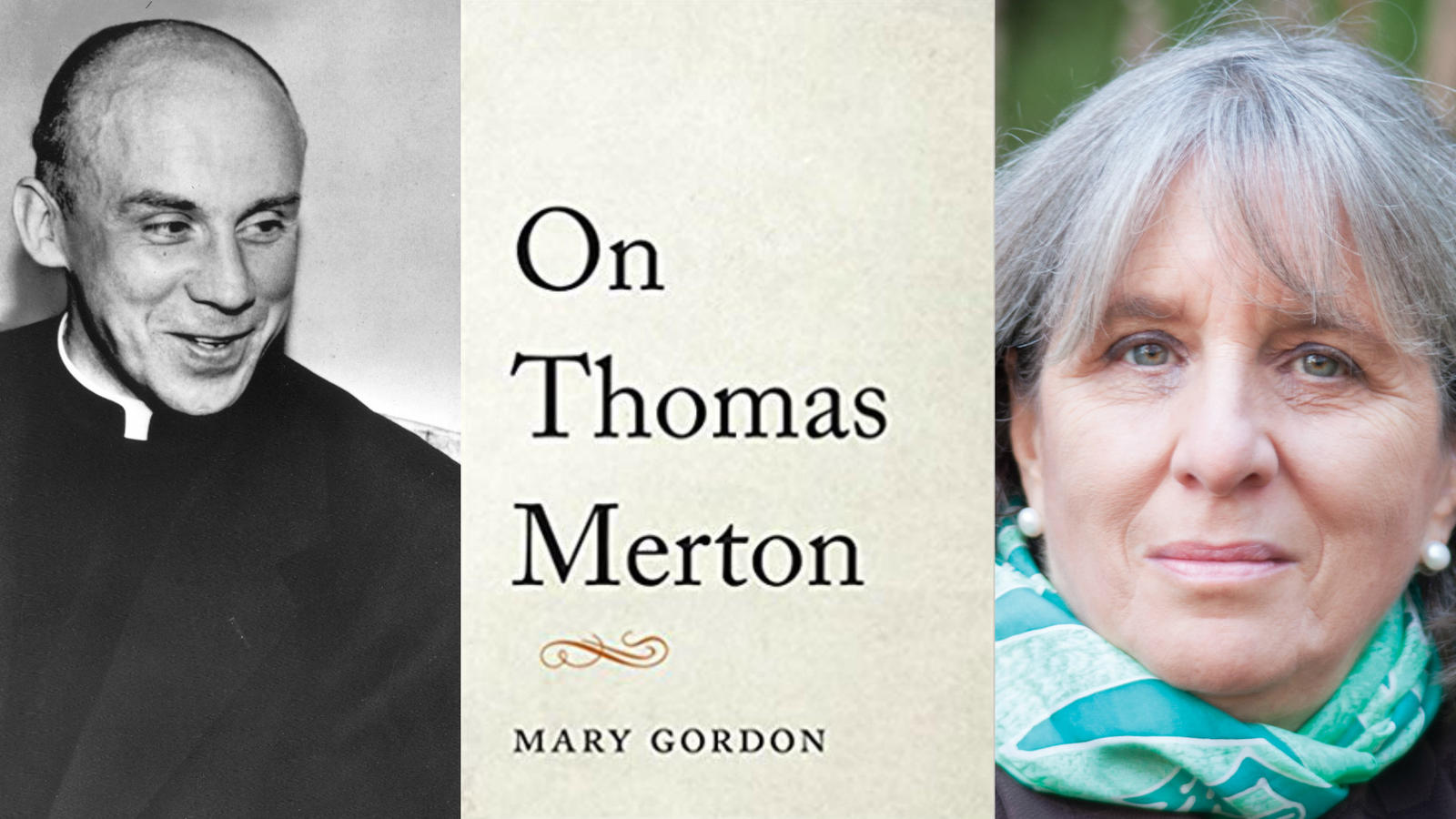
ct-1550008015-2yfsw8e0l5-snap-imagemy roundup of books for the soul for the tribune is now my one soulful book you might want to read. budget cuts keep chipping away at newspapers, and the latest cuts cut away two of my three soulful reads in my monthly (or so) roundup. here’s the first of the one-book-at-a-time reviews, a fascinating read from mary gordon who takes on a literary critique of the writer-monk of gethsemani, thomas merton.

Mary Gordon illuminates the literary works of Thomas Merton

Barbara Mahany

Mary Gordon — novelist, memoirist, professor of English at Barnard College — has long proved herself to be a Catholic voice engaged in deep and nuanced dialogue with the Church. She is fluent in its rhythms, its mysteries, its illuminations — and its darkness. She is a truth-teller, one not afraid to name her church’s sins, nor unwilling to see through its complexities to its radiant core.

Gordon’s capacity to dwell in duality, to circle her subject from all perspectives, to call it as she sees it, positions her squarely as a critic — both literary and cultural — robustly qualified to take on Thomas Merton, the celebrated mid-20th-century monk and writer with a worldwide ecumenical following. In her new slim but soulful volume, “On Thomas Merton,” Gordon plants herself on her firmest footing: “I am a writer. I wanted to write about him, writer to writer.”

She opens her exploration by pinpointing the tension at the heart of Merton: “(I)n becoming a Trappist,” she writes, “he entered an order devoted to silence, and yet his vocation was based on words.”

Merton, author most famously of “The Seven Storey Mountain,” belonged, Gordon writes, to the post-World War I period “when Catholicism was intellectually and aesthetically chic.” He was one of a heady crop of distinguished literary converts, along with G.K. Chesterton, Evelyn Waugh and Graham Greene.

Before he entered the monastery as a Trappist monk at Gethsemani, the abbey outside Louisville, Kentucky, Merton had been engaged in urgent conversation with the modern world. It’s a conversation that never ceased, not until the hour of his death in a Thai cottage, some 20 miles outside Bangkok, in 1968. He’d been granted special permission to leave his hermitage to address a world interfaith conference, in a talk titled “Marxism and Monastic Perspectives.”

While Gordon begins her examination of Merton’s works on a sympathetic note, fully understanding “the conflict between being an artist in solitude and being a human in the world,” further adding that his is “a spiritual test that combines the ascetic and the aesthetic,” she cuts the writer-monk little critical slack. In her scope is a litany that includes Merton’s autobiography, “The Seven Storey Mountain,” his 1941 novel, “My Argument with the Gestapo,” and finally his seven-volume, 2,500-plus-page Journals — “longer than the whole of Proust,” Gordon notes.

It’s her bracing honesty along the way that makes her final coda so penetrating. Wrapping up her assessment of “My Argument with the Gestapo,” she writes, “more than likely he would have been marginalized or disappeared,” had he not gone on to publish “The Seven Storey Mountain.” No wonder the reader startles to attention when, one page later, Gordon declares the journals “Merton’s best writing.” She explains: “I detect a much greater sense of spiritual vitality in his journal passages than I do in his books that are self-consciously ‘spiritual.’…(F)rom the very first pages of the journals, everything he describes using sensory language shimmers and resonates.”

Studded with excerpts, Gordon’s meticulous probing of literary Merton points the curious reader toward the richest veins — in effect mapping the Merton catalogue, pointing out the places to begin, or, for a reader already well-versed, sharpening the prism through which he’s understood.

Because she’s regarded Merton with the necessary distance of critic, Gordon’s closing passages — in which she throws down her guard — rivets our attention. “I close the volumes of the journal, and I weep.”

She places him alongside those other martyrs of 1968, Martin Luther King Jr. and Robert Kennedy. The greatness of Merton, she writes, lies in his “life lived in all its imperfectability, reaching toward it in exaltation, pulling back in fear, in anguish, but insisting on the primacy of his praise as a man of God.”

It’s an intimate literary portrait, stitched through with Merton’s own threads. Ultimately, it’s a prayerful one. And the prayer echoes far beyond its final page.

Barbara Mahany’s latest book,“The Blessings of Motherprayer: Sacred Whispers of Mothering,” was published last spring.

Twitter @BarbaraMahany

perceptible growth

perceptible growth

i must be one of those people who needs things klonked over my head. and thus, the simple act of walking past my kitchen window yesterday took my breath away. a quick glance out the window set my eyeballs in direct gaze of what had been the straggly, misbehaving leathery-brown vines that snake along my garden fence.

only, the thing was, yesterday — just a day after the day before when i swear the straggles were mostly stripped naked, without more than a paint drop of green anywhere in sight — they had decided to erupt in a tapestry of sawtooth-edged leaves and cauliflower buds that come july or august will unfold into nodding white hydrangea heads.

that’s the thing about spring: it catches you unawares. it all but grabs you by the cheekbones, holds you in its clutches, and bellows in your face: “there is growth by the hour here, something beautiful is unfolding.”

and then the one-two punch: “pay attention. it could happen to you.”

yes, my wise old professor of a vine seemed to be telling me, even you. even after all these weeks and months of feeling about as fruitful as a stripped naked, leathery-skinned vine, even you might be growing just beneath the surface. perhaps not yet erupting into cauliflower-budded bloom, but keep the faith; there is rumbling, stretching, reaching for the depths and heights. even you, little pewter-haired flower, even you just might be unfolding by the month — if not the week or day (let us not set our growth expectations too high here…).

it’s why spring makes me dizzy.

it’s why, i think, God invented the season of promiscuous advancement and rambunctious take-your-breath-away-ness. because it comes after the long season of stillness, of winter’s deep-down stirrings, the ones that can’t be seen. and then, the very instant we’re at the end of our hope rope, the days when we’re sagging like nobody’s business, God decides to wallop us with undeniable, whirling-all-around magnificence.

the flocks of feathered things arrive as if a river, saturating sky and bough with their shots of color and their song. the trees practically poke us in the eye, with frilly, lacy shades of velvet green and white and caution yellow and lipstick pink, as if slathered with a paint brush. and then there’s the best-of-show for those who dare to bend their knees and crouch down low: there, just above the crust of earth, that’s where all the tenderest unfurlings are. that’s where fern literally unwinds from its tight-wad comma — or is it a question mark? it’s where the itty-bitty baby leaves first reach for sky. it’s where you might even spy a worm, drowsy from its long winter’s snooze, out and about for its first seasonal constitutional (if one can apply such a noun to a walk without legs), slithering in between the rising stems of daffodil and lily of the valley.

year after year, it happens: i fall deliriously in love with the opening-up hours and days and weeks of spring, the ones where the volume is dialed to blaring, so clogged-ear folk like me can’t help but catch the message, the one that beats a billboard along the side of the highway.

if it can happen to a bush, you might find yourself thinking, i suppose it could happen to plain old me. i suppose i too just might be unfurling in the tight spots deep within. i suppose i too could dare to believe that something bright and beautiful dwells deep down inside. and something gentle, too. and, like the magnolia or the hydrangea vine, if i dared to let it out, if i found the faith to strut my stuff, the stuff that God has tucked there for a certain purpose, maybe the world around me might glow a little bit more heaven-sent.

it’s the wisdom and the glory of the book of spring: the world bursts into beautiful all around, undeniably all around, so that we too might know that at the end of our seasons when no growing, no perceptible beauty is apparent, there is something breathtaking astir, something take-your-breath-away just beneath the surface, coming soon to bloom.

what lessons do you extract from the beauties — or the heartbreaks — of the spring?

bleeding heart dew

and one more little wisp from the pages of The Blessings of Motherprayer…..

wonder

permeable season: necessary (and overdue) rinse for the soul

door closed

closed off: awakening earth, behind glass

door wide open

open wide: nothing but screen between birdsong + me

it’s not yet warm, certainly not at this early hour. so i sit wrapped in layers of sweater, with a blanket besides. my down vest is within easy reach. and so is my steamy-hot first mug of coffee. ah, but the sunlight says yes, and the birdsong is begging: open the door, let in the dawn.

and so i surrender.

the glass-paned french door is swung on its hinges, and nothing but screen stands between me and the cool april morn. it’s door-opening season, windows-ajar time of year. even if a smidge on the chilly side.

it’s the necessary ablution of springtime. the rinse of the outdoors rushing in. stale wintertime, out; vernal cleansing, in.

despite the goosebumps parading up and down my fleshy forearms, i am awash in the warbles of avian romance, as males of the species put on a flash-dance of song. there is much feeding of worms out there in birdland, the tender exchange of squirmy invertebrate passed from beak to beak, a wet juicy kiss if ever there was. and one that wiggles, to boot.

my furnace, not yet stilled for the summer, bellows like nobody’s business. it’s doing its darnedest to chase out the chill i am defiantly, purposely, ushering in.

whoever invented the quartet of seasons (hmmm, who might that be?) must have had the insider’s intimate knowledge when it came to the care and maintenance of the human soul. because, i tell you, by the final stretch of april, when winter’s gone longer than long and mittens aren’t yet tucked away, we’re nearly gasping for a good strong dose of undiluted solar infusion.

truth is, i wouldn’t mind being pinned to a clothesline right about now. just dangling out in the breeze, chasing my wrinkles and worries away.

folks i know and love are practically bursting at the seams, ready to shake off the sluff of being stuck inside for far too many weeks. and sitting here, amid the swells of this early morning’s stirrings, i’m bristling to attention with each and every quarter note flung from the throat of my warblers and robins.

it’s as if our pores, every last one of them, need the cobwebs and grime air-blasted out. that peculiar affliction known as spring cleaning, it’s a must for our souls as well every last tile and nook crusted with the long winter’s crud.

i, for one, need a good long march through the woods. i ache to crouch low to the leaf-caked earth, to inspect for fungi and frond slowly unfurling. i yearn for a log to call out my name, to beg i plop down my bum, pull a cake or a grape from my pocket: plein air piquenique, i call it. a feast for the senses, garnished with goosebump.

it’s why the first duke of wellington invented the rubber-soled boot. and why mr. charles macintosh invented the dew-proof, rain-repellant mackintosh jacket. so that fools like me could take to the logs, and the awakening woods when our souls cried out in deep dire need of the airing that comes on the brightening end of winter.

margaret atwood once wrote that in the spring, at the end of the day, you should smell like dirt. i say bring on the pungent, the woodsy perfume, of knees drenched in dirt, and shoes oozing with muck.

we’re long overdue for that most essential turn of the seasonal dial: the one that stirs us to life, to revivification; the one that quickens the pulse in our tired old ticker, and brings on the proof, living and breathing and warbling, that the beautiful, the tender, it comes, hallelujah.

how do you indulge in the vernal effusion?

and two more little wisps from The Blessings of Motherprayer….

springtimes

practicing presence

xoxox may your week wrap you in blankets and blankets of birdsong and tender breathtaking beauties…xoxox

holy ground

IMG_7249

from Pope Francis’ encyclical, June 2015, quoting Ecumenical Patriarch Bartholomew:
“It is our humble conviction that the divine and the human meet in the slightest detail in the seamless garment of God’s creation, in the last speck of dust of our planet.”

in these hours when my heart feels hollowed, i find myself staring out windows, through panes of glass, into the garden, sweeping my eyes across the mostly fallow faded landscape. mostly, all i feel is empty. the thrum of a heart’s ache drowning out the usual song. but then, i fine-tune my attention, i look more closely. i am drawn out the door and into the rinse of springtime’s particular shade of sunlight.

it hurt, at first, to imagine this year’s garden absent its cheeriest animator, the old striped cat curled into his napping coil, occasionally opening an eye, giving chase to a robin, lumbering back to the spot where he crushes whatever nubs tried to grow beneath him.

but then i started to tiptoe down the bluestone walk. i plopped onto the stoop just beyond the kitchen door, beside the mailbox that holds all my garden tools. i looked for signs of life, of earth’s wintry crust breaking open, giving way, cleaving apart so the season’s first stirrings had room to trickle back to the surface, bursting forth.

more than any year in a long long time, this month of march has my fingers — and my heart — yearning to dig in the dirt. to brush away dried and shriveled grasses. to cut back stems and sticks that reach to nowhere. to nip and tuck and prune. to break apart the winter’s hard-pounded soil, to comb through clumps, sprinkle seeds, tuck in roots. to make way for the earth to bloom in the ways it so insistently blooms, hope-filled spring after long hard winter, again and again, year after year. no matter the pounding our hearts have taken.

it’s holy ground, the acres and acres that invite us in, to begin a close and careful examination. to witness the astonishments the earth offers up, offers forth.

IMG_7252and so, this Good Friday, this holy friday, i walk in silence, and i whisper the prayer of the earth once again unfurling in beauty. earth knows just how parched our soul might be in this the season of starting over again.

it’s the garden, the woodland, the gurgling of the winter’s thaw in the creek, these are the places that animate the coming back to life — of the earth, and the curled-up spirit within me. the one that just might find the courage to reach once again for the softness of springtime’s return.

i take to heart the words of dear pope francis, above quoting the patriarch bartholomew. i subscribe to the belief that God wrote the Book of Nature, and that each and every unfurling tendril, each and every bulb that shoots down roots and shoots up that periscope of green, each and every quivering of feather or leaf, it’s all here to whisper the presence of the Divine and Holy Wisdom. all we need do is plunk ourselves amid its quiet narrative, all we need do is pay attention, and the lessons and learnings will tumble upon us. breathe healing into our brokenness. breathe hope into our hollows. breathe, again and again, the story of resurrection, of life tiptoeing in to all the moments and places where we thought only death was left in the wake.

may this Good and holy Friday fill you with prayer. and with hope to wash away your deepest sorrow. should you prefer a more solemn meditation for this day of crucifixion, i offer this post from the past, the eloquence of silence.

how do you find hope in the shadow of your sorrow?

snowdrops