pull up a chair

where wisdom gathers, poetry unfolds and divine light is sparked…

Tag: paying attention

ten: a decade of keeping close watch

img_8717

a decade is long. a decade is 10, of course. but in this particular case, a decade is the distance between a little boy who was five, and finding his way through kindergarten, and now, a sophomore in high school, a sophomore wishing he was in a faraway high school. a decade is the distance, too, between a boy of 13, an eighth grader who dared his mama to type her way into the dawn (otherwise known by the hardly poetic verb blogging), and the man he is today, 23, and heading to law school.

a decade, too, is the distance i’ve grown since the dawn of december 12, 2006, when i tiptoed into the dim light of my writing room, once the garage of this old house, and sat down to type.

what i wrote that long-ago morning was this:

we are looking for everyday grace. i believe that in quietly choosing a way of being, a way of consciously stitching grace and Beauty into the whole cloth of our days, we can sew love where before there was only one moment passing into another. making the moment count, that’s what it’s about here. inhaling, and filling your lungs and your soul with possibility. learning to breathe again. learning to listen to the quiet, blessed tick and the tock of your heart. filling your soul with great light so that, together, we can shoosh away the darkness that tries always to seep in through the cracks, wherever they might be. please, pull up a chair….

everyday grace, surely, is the shimmering something we’ve found, the holiest thing. it’s there when you look, when you pay close attention. but it’s so easily missed. you need to attend to your post in the watchtower of life. need to be on the lookout, ever on the lookout. you’ve no idea where or when it will come, the everyday grace. it doesn’t arrive with trumpet blast, nor even a rat-a-tat drumroll. true grace is not seeking applause. simply the certain knowledge that it’s just brushed by, grazed against the contours of your heart and your soul. and it leaves you, every time, just a little bit wiser, a little more certain that Holy is all around.

and the quiet we set out to find, it’s infused every square inch of this space. in a world torn at the seams by incivility, in a world where, day after day, tenderness is trampled under the hard boot heels of hate and bullying and a toughen-up attitude, we’ve stayed gentle. we’ve traded in tenderness. we’ve held up a radiant grace, a blessedness that stitches hearts into a whole. and we’ve done it right here on the internet, the mad-dash highway that seems to traffic in all the things that this table is not.

when i think across the arc of years since i first faced the blank black screen (for back in the day, the words here were white against a canvas of black, an inside-out contrast that drove at least one dear friend cockeyed and made her dizzy besides), i tick through this litany: two grade-school graduations, one each from high school and college; a move halfway across the country, and a move back home; a whole presidency, and too many tragedies to begin to count. over the decade, i left my newspaper job, wrote two books, grew a garden, simmered a few stews, stirred countless bowls of porridge, dried even more tears. i’ve kissed goodbye two beloved friends, and a father-in-law like no other. we’ve watched a kid learn to read, another learn to row, nursed and buried a very old cat, counted stars, chased after the moon, sent my mama off to surgery twice, but mostly marveled at her devotion for tuesday night dinners, plied week after week for nearly two dozen years.

in all this sacred time here at the table, i’ve made and deepened friendships. i’ve stood back and watched strangers reach out across the way, find shared communion, grow close in friendships all their own. i’ve listened closely, taken notes, as the two boys i love have wound their way through the landscape of their lives. i’ve loved them in double time as i put their words, their stories, to ink. i’ve netted a moment or two worth savoring, worth holding to the light, worth keeping as long as i’m alive — and then some.

i hadn’t much clue where this typing would go, back on the first day i started. i certainly never dreamed that 10 years later, i’d still be typing, finding my way. i hadn’t a clue that here, in the sacred space of our shared creation, i’d find the holy bliss i’d always been after. i suppose i’ve always been a make-believe girl, and here, at the table, i used the one sure thing i know — words typed into inklings, carved into thoughts, emerged as insights — to claim a space i knew was possible: a place where radiance lights the way, and gentle truth is our guidepost.

on the dawn that marked the first full whirl around the sun (a year that had me writing five days a week, every single weekday), i wrote:

we set out — me and my soul and my fingers — to see where we’d get if we were dropped, one distant december, in the snowiest woods. if we stayed there for a year, groped around, poked under leaves, sat by a babbling brook. looked skyward. counted moonbeams and twinkling stars.

some days, i swear, my ol’ boots, the ones i wear when i’m hiking, meandering about in the woods, they felt like 100-pound weights on each foots.

more often, though, i was barefoot and running through meadows. i was catching a glimpse of the butterfly wing. feeling the gentle fingers of God on my shoulder. hearing the sound of my heart thumping, and thumping some more.

i only kept doing the smartest thing i know if what you want is to get from place A to place Somewhere: i put one foot in front of the other. kept my eyes mighty peeled. my heart too.

and look, here, where we are.

we made it through the woods, all right. but the thing is, along the way, i found a something in the woods that fills my lungs, that makes my blood run quick. that gives me something to think mighty hard about.

i’m thinkin’ maybe the woods is a beautiful place, a place that offers me and my soul just what we need.

with all my heart, thank you and bless you for making this a most beautiful space in the holiest decade of my one sweet life. more to come….

amen.

love, bam xoxox
img_8714

what lit your way through the last holy decade? 

rapt

rapt

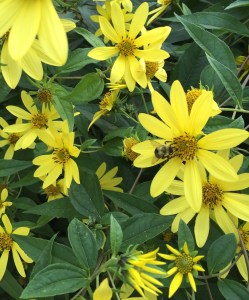
you could bury your nose in it. the honeybees do.

rapt-beewe’re easing into the deep of it. or perhaps it’s that the deep is deepening and we’re being immersed. being wrapped in it. rapt.
rapt would be my posture of late.

rapt /rapt/ adj. 1. completely fascinated and absorbed. 2. literary filled with intense and pleasant emotion.

oh, i am rapt.

i seem to glisten through the days. and the nights. oh, the nights. it’s alive and it’s soft all over. it’s september, once summer surrenders. once the hot air balloon, and the sauna, finally exhale. and the next inhale is crisp, is cooler, and the light now has shifted. the edges, to my eyes anyway, are sharp, exquisitely so. the colors are deeper, more amber, molasses. the bright white of summer has faded. i can make out the fine grain again.

by night, the windows are open, and the hum doesn’t come from air conditioners down the block anymore. they’ve gone quiet — at last. now, the night belongs to the low-simmering song of the cricket, and the rising chorus of dawn. and the breeze. curtains quiver. bedsheets do too. rather than flinging them off, i’m just as apt to pull them taut around my shoulders, up to my chin. and the moon. did you happen to drink that one in? the harvest moon on the rise last night, the one that ignited the blue-black, silver-stitched dome, the one that cast moon shadow every which way. the one that promises even more when it rises tonight, in its fullest wholeness.

and by day, by day i’ve had hummingbirds dancing all week. a trinity of humming hummers, of hovering wings, darting and dodging, and dashing in for a drink, a deep-throated drink. whole chunks of minutes have passed, as i stop and i stare. enraptured. they seem not to mind when i tiptoe quite close. when i stand just under the branch or the wire where they’ve plunked their wee bums, and take my turn at drinking them in.

out my kitchen window, the hydrangea blooms droop. not that they’re withering, or giving up for the season. they’re simply so zaftig they can’t seem to bear their own weight, their heft, their marvelousness. so they sag, this way and that. and all i can see through the panes of the window are the voluptuous blooms that invite in the honeybees and the rare fluttering monarch.

these are the days when to be alive is to be rapt in prayer. i know i am. all day, hour upon hour, i feel the brushstroke of the Divine gentle against the nape of my neck, the small of my back, the bare flesh of my arms. and, surely, it’s prayer that keeps my heart pulsing.

every blessed act of each day — whole strings of the tiniest, mostly unnoticed (tucking a fresh vase of blooms by the side of my little one’s bed, sliding an after-school snack onto the counter, knowing he’ll see it, hoping he’ll know it’s a whispered “i love you” set out in apples and crackers and cheese) — each one is a prayer without words. each one is my heart and my soul offering up the closest i know how to come to turning my hours over to God. to saying thank you for the breath and the heartbeat. thank you for the chance to brush up against the holiness that is this amber-drenched september day, this one latest chance to absorb, yes, to inhale, yes. but even more to put my enrapture to work, to say thank you in my own small acts of paying attention, in my own small acts of love and tender kindness.

because all around me is God’s immeasurable magnificence, a tapestry of jeweled stitches in which i am rapt. so deeply vigorously rapt.

rapt-endnote

 are you rapt? and what is stirring your holy rapture? 

p.s. and in case you wondered about those pins and needles of last week: no word yet. 

hummingbird wisdom, continued

h-bird-6

six months ago, my dear and longtime friend mary ellen sullivan died. she was a writer, a chronicler of joy, i called her when i sat down to write her obituary, trying to distill her essence into a few short sentences and paragraphs that swept across the arc of a life too short. a month or so after she died, i found out she’d written me into her will, appointed me the keeper of her “creative work.” it’s a mantle i accept with heavy heart. a week ago, on a hot august afternoon, i met her brother in her emptied-out apartment, and he handed me boxes and boxes and boxes, her creative work, in all its iterations. it was perhaps the heaviest load of papers i’ve ever tried to lift. i didn’t wait long to open the lid of one of the boxes, to lift pages, to begin to read, to inhale the story of a life i knew well, a story told this time in mary ellen’s own words. i all but felt her beside me, or sitting across the table. i knew the intonations, the emphases of every single sentence. i knew she’d tiptoe into my dreams. i knew she’d left wisdom that i was to unearth, to not let die along with her.

night after night, i pulled up to the kitchen table, not far from the screen door, where the breeze blew in, not far from the night sounds, the buzzsaw of cicada, the chirp of the crickets. i’d pile a stack of journals and notebooks and paper-clipped papers to my left, papers lifted from the boxes that waited in the dark of another room, the load of mary ellen’s boxes.

it was, i tell you, like sitting down with a dear friend, pulling in close enough to brush knees against knees. it was as if i’d said, “so tell me your story,” and thus she began, in whispers. i’d known these chapters in real time, and here i was, reading, hearing the whole of it in details sometimes so intimate i closed the book and tucked it aside. i promise you my tender heart is guiding me through what’s mine to shepherd to light, and what’s best tucked away.

i read page after page from the writing classes she’d take, from the book about africa she’d long hoped to write, to publish.

and then i picked up this: two stapled pages, curled and yellowed at the edges, typed in a font from computers of long ago, early HP perhaps. i read the first sentence, and started to tremble. i had a hard time reading through tears, but this is what i began to read…

“If I were to die in five minutes, I would miss sleeping, and the warm wood of my apartment floor. I would miss talking to Barbie on the phone on Saturday mornings with a cup of coffee in my hands. I would miss running errands in the neighborhood and going for long hard runs after work when the air is clean and cool and gives you the shivers when your sweat starts to dry. I would miss the ocean most of all. Any ocean, any beach. The feel of wet sand between my toes and the waves breaking over my body and the sand going from warm to cool in the early evening when the sun starts to set and everyone but me and my family leave the beach and we just sit there and talk and read and watch the sand turn purple and the water a deep blue and the sky orange and very beautiful. I will miss running in the water and splashing so much that you might as well go swimming so you do.

“I’ll miss kissing a man for the first time…..”

and then, i tell you, i could barely read, the tears were falling so hard, so fast. (they are now, truth be told….) so i waited, and breathed, and wiped away the tears, and i looked back at the page, the page trembling in my hands by then, and i read the litany of things my friend would miss, if she were to die in five minutes, five minutes from the moment she wrote all those words. in fact, she died on march 13, 2016, far sooner than she’d ever imagined. she never thought the ovarian cancer would kill her. she fully intended to vanquish the cancer. to become someone who had had cancer.

but my friend who died, who wrote this litany in a writing class, an exercise titled, “death is the name,” who wrote this thinking death was the last thing that would ever happen to her (yes, i see the unintended word play, and i’m ignoring it), whose words i now inhaled half a year after she had died, she wrote that she’d miss her down comforter, and staying up late by herself and “the freedom the night gives.” she wrote that she’d miss the first taste of an expensive dinner, and the last gritty drop of a bottle of red wine. she wrote that she’d miss hot baths and getting lost in paperbacks.

her sentences grew more and more beautiful, the deeper she sank into the exercise, wrapping herself in the velvet cloak of worldly magnificence.

i was struck, hard and deep, by the simplicity of the litany. the depth and dimension of each pulsing joy, now taken away.

she made me think hard about how our lives are stitched of thin but mighty threads, glimmering delicate threads, threads we’d be wise to notice, to run our fingers across, again and again, for they’re what’s woven into the beautiful whole.

our lives, she made me realize once again, are a textured tapestry of heartache and joy, of blessing and softness and shadow and light, of everyday wonders that awake us to the moment, so the moments slow to a pause, so we behold each blessed minute of our awareness, our awakeness, so each hour is relished for the gift that it is. so not an hour goes by unnoticed.

“if i were to die in five minutes,” she wrote. and i read those words six months after she did. and thus, each word came to me as if shouted through a megaphone: be awake. pay attention. savor the blessed, the beautiful.

the warmth of the mug you hold in your palms? notice it. bless it. you’ll so miss it when it’s gone, when you’re gone.

a question and a challenge: what would you miss, what blessing upon blessing across the quotidian arc of your day? make a list, compile your litany. and then, pay closest attention today. and tomorrow. and the day after. my friend mary ellen would love you for that.

i titled this “hummingbird wisdom, continued,” because my friend mary ellen was all about the hummingbird. she wrote a blog called, on the wings of the hummingbird. and she once wrote these words explaining her captivation with the hover-winged bird:

“My favorite description of the hummingbird magic comes from Ted Andrews, who wrote the seminal book on animal totems called ‘Animal Speak.’ He says, ‘There is something inside the soul of all of us that wants to soar through sunbeams, then dance midair in a delicate mist, then take a simple bath on a leaf. There is something in our souls that wants to hover at beautiful moments in our lives, making them freeze in time. There is something in us that wants to fly backwards and savor once more the beautiful past. Some of us are just hummingbird people.’

“Guilty as charged.” — Mary Ellen Sullivan, May 30, 2012

i heard the wind howl

blustery day pooh

i heard the wind howl, that shiver-your-spine whistle of late november, the one that tells you the world is being stirred. the one that always reminds me, always stops me in my tracks, whispers: there’s a force infinitely bigger than you, there’s a force to lean into.

it’s the sound of something’s coming. it’s the sound of batten the hatches. and yesterday afternoon it wasn’t much longer till i heard the words, “snow advisory.” followed by “three to six inches.”

once again, i find my soul pulled by the world around me. i’m just a puppet on a string, i sometimes think, and i let my prayerfulness be defined by slip-sliding myself into the Big Book of Nature, the one all around, the one that whirls and whistles and blossoms and withers, the one that drenches and parches, sometimes stirs not a leaf, and some days makes like we’ve stepped inside the waring blender.

when the whistle begins to blow, when autumn’s shrill cry rattles the window panes, seeps in through the eighth of an inch under the door (old houses don’t know from taut construction), i commence the pulling-in posture. i might take to the couch, i might take to the underside of the afghan. or, just as likely, i might press my nose to the glass. wait. watch. scan the heavens for sign of storm coming.

i suppose it’s a sign of my spiritual weakness, my saintly shortcoming, that i’ll take a dose of drama any old day. gets the juices rolling, i find. shakes me into my senses. heightens my paying-attention antenna. i pretty much dare you to see tree trunks bending in half, posing in downward dog of the woods, and not snap to salute.

but then, once i’m wide-eyed, i begin to go deep and deeper inside. prayers take off. i am grateful for walls, yes, and roof overhead. grateful, so grateful, for that box in the basement that cranks all the heat. i’m grateful for days that don’t demand i leave the house. grateful for 10-quart kettles that simmer with bones and broth and whatever the produce bin has offered up for the cause (the cause, of course, being kitchen-sink soup, a name that i now realize needs some revision).

once those elemental gratefuls are out of the way, i sink deeper still. as i scan the sky for sooty snow clouds, survey the heavens, i begin to survey my own deep-down depths. there is much down there deserving of contemplation, there is much coursing, much that begs to be unearthed, lifted, turned over to the one who stirs the wind.

year after year, it’s the first winter storm that packs the mightiest wallop, the one that throttles us back to our proper perspective: we are defenseless if left to our own devices. we’d be battered without whatever, whomever, blankets us, keeps us safe from the elements.

my second instinct on days when the weather report is written in caps, with long strings of exclamation marks, and maybe even an asterisk or three, is to make like auntie em in the wizard of oz, to head out the door to batten those hatches: anchor the bird houses, strip the landscape of soon-to-be-flying projectiles, slip the old glass bottles off the ledge in the summer porch. and, of course, dump seed for the birds, make sure the water basin is filled, should any one of the soon-to-be-scattered flocks decide a pre-emptive guzzle is in order.

it seems especially apt this year, as the landscape of the world at large and the more private one i know best are both so cloaked in sadness, it’s apt that the wind is calling us out of ourselves, pressing our nose to the glass, stirring the breeze deep inside, rustling up prayer. we’re about to be shaken into our places again.

november’s wind is the call to attention. we’d do best to listen.

and pray.

in searching for an image of winnie-the-pooh and the blustery day, i realized our well-worn copy of a.a. milne’s masterpiece, illustrated by the ever-charming e.h. shepard, has gone missing, which is a terrible thing to discover. so i made do with a frame from the original disney version. and i am so sad for the page that’s missing in action.

what calls you to attention in these blustery days of november?

i spy: hope

snowdrops

sometimes i wonder how the world knows. how it knows that we’re worn-down ragged, out of breath, slogging.

sometimes i wonder how, just at the very minute and second we need the globe to turn just enough for light to fall at just the right angle, for warmth to rise, thermal watt building on thermal watt, sometimes i wonder how deep in the earth the stirring begins, and as the baby’s head crowning at birth, the tender resilient slips of green, of spring, come nudging their way through sodden leaf and over-stayed winter?

how is this turning earth, this warming, awakening, how is it quite so intricately wired to the stirrings deep down in my heart? how, so often, does it answer the call before breath is put to the words?

winter aconiteah, but here’s the rub: it comes with no more sound, no more folderol, than it takes for a leaf to ease out of the way, for the rubbing-up of shoot against snow crust, against compost in the making. the coming of spring, the turning of season, comes in barely perceptible measure.

you need to crouch down low. you need to step outside with intention, with searching. you need to scan the landscape, not from a distance, but close as your knees will bend.

sometimes, you need to pull your hand from your pocket. you need to brush away the sodden. you need to play peek-a-boo with what’s birthed. winter aconite, the nodding head of yellow, the one just above, it’s coaxed from its slumber by radiant light. light that barely perceptibly turns up the heat. shakes off winter.

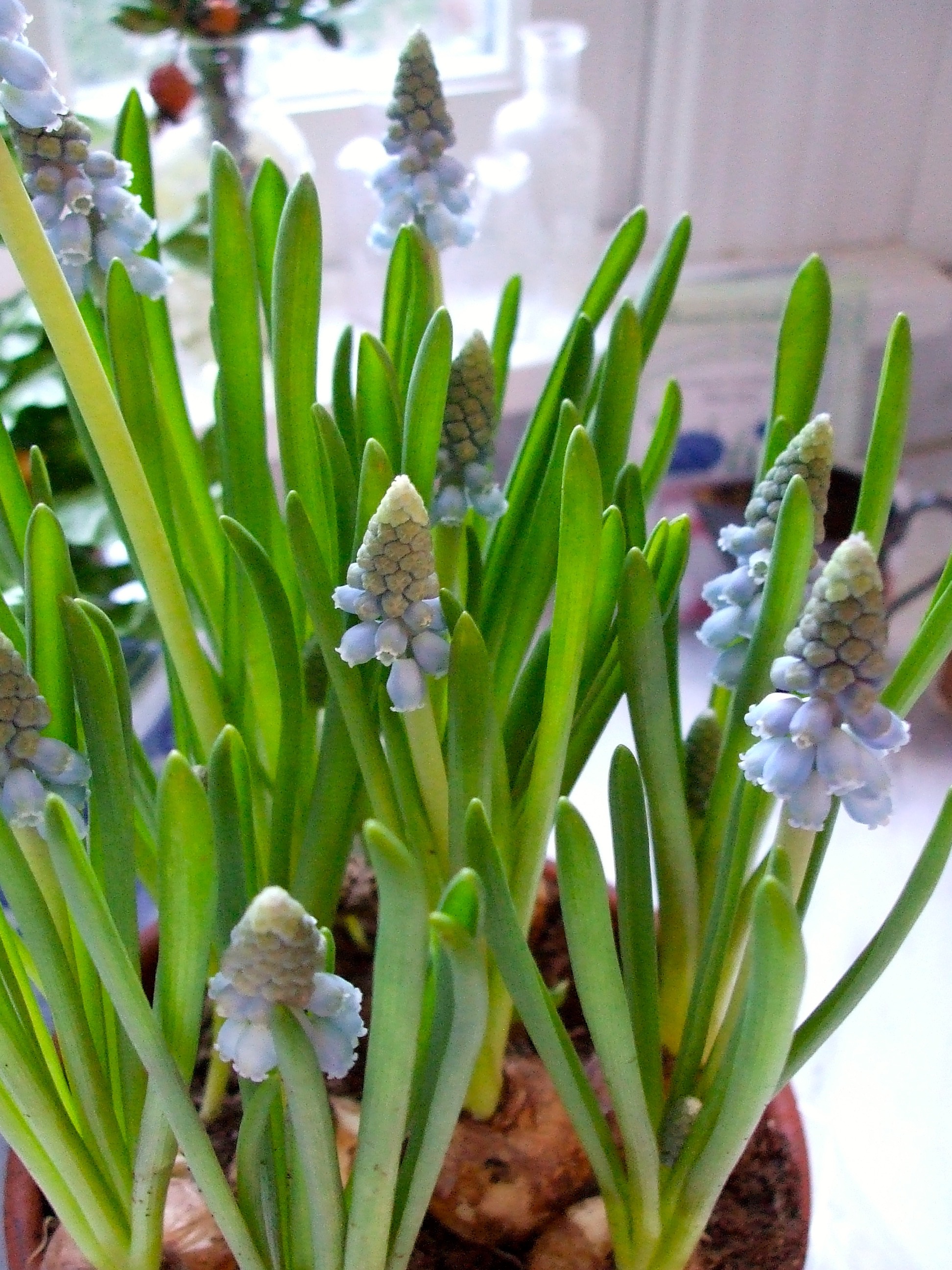
grape hyacinthand indoors, too, you begin to get restless. you scamper around tossing out dried snips of winter. you trade up for pots stuffed with bulbs, bulbs with the girth of a garlic clove, bulbs that exist for one purpose: to shoot for the sky, unfurl, offer up color and configuration that befuddles the imagination.

who thinks of these things, you wonder? who stacks bud upon bud, a pinecone-like stacking of color and softest perfume, the one that beckons the bees, brings on procreation of the pollinated kind.

and so it begins again, the circle of life. of bursting forth after months of quiet, of stillness, out in the garden. after snow tumbling upon snow. and cold so cold a two-legged someone could barely survive.

but the growing things grow. the winter does not strike them down, not most of them anyway.

the birds come back on a river of wind. warm wind.

the buds return to the branch.

our hearts give a startle. pump with a two-step again.

just when we think we’re on our last wavering gasp. spring comes. promise again.

hope for another round.

and so is written the script, the one that some of us need year after year, never quite learning its lessons fully enough, lastingly enough. we need to be knocked upside the head — knocked by the crocus and snowdrop and the quiet little aconite. professors masquerading as delicate petals.

“hold on,” they whisper, “just a few breaths longer, just a few breaths past when you think you can’t go on. the awakening will come. the birth breaking out of the bleak.”

even the sticks plonked in the vase of warm water: they’ve wriggled with life, with color, with what seemed impossible. and now blooms:

forsythia open

so the lesson is this: the season that comes after the long hard winter, the season that comes with the light and the slow-rising warmth, it is the moment when impossible surrenders. when we breathe in hope. fill our lungs with believing again. when all around we are stirred to remembering, rebirth will come. in one way or another, in ways expected or not. it’s our job to crouch down low. to inspect with intention. to note the stirrings, and breathe in the possible.

the promise of spring comes on quiet, rustles just barely. it demands our attention, those of us who are taught by the turning of season. soon enough it will rise to crescendo. but now, for those who listen to its opening measure, the spring is whispering the promise of delicate but most certain hope.

some fridays i can barely muster a whisper. this is one of those fridays. i’m leaning on pictures more than words to whisper the miracles unfolding all around. i need to bundle up and inhale me some springtime. we’re just on the verge, but the verge it is here. and it beckons…

have you been out inspecting for springtime’s awakening? and if so, what’s tickled your fancy?

bulbs through earth


as if a dream…

as if a dream

the last flicker of red tail light just faded from the alley. i’d pressed my cheek as close to the glass as i could press — short of stepping out into the near frozen morning — straining to see the last dab of red glow fading away.

and, like that, poof, he’s gone.

my little christmas dream, my wish come true, has come to its hollow end. the boy i love is headed back to the college on the faraway hill, where, alone in his dorm room, the light through the window will burn. the green slope between red-brick dorms, one after another all in a square, it will be empty, will echo with the whisper of the few faint footsteps. the kid i love is among the one or two in the college who’ve been granted permission to type straight through the new year.

so christmas here was cut short, cut short by a very long thesis due in two short weeks — or, as i count it, 17 days, six hours and 19 minutes.

christmas this year was condensed. distilled to its short sweet essence.

which, in many ways, made it all the more delectable, all of it tumbled one delicious moment atop another. until last night, as i was clearing the christmas feast dishes, and the lurch in my belly made itself known. he’s leaving again, i remembered. before the dark of the dawn fades, he will be gone, i remembered.

so this morning, i did what mothers too often do: i watched the light fade away, into the too-far distance.

we wait, some sweet homecoming moments, for the light to come in through the distance. and then, on the other end of the dizzying spell of squeezing a hand that’s grown far bigger than ours, and bending low for a kiss to the brow of the sleeping man who’s back in his old twin bed, on the other end of shoulder pressed against shoulder at the cookstove, or plopping on the edge of each other’s bed for one or two thoughts shared in the dark, there comes the hour when the light pulls away, into the darkness again.

and so, in the space in between, we immerse ourselves deep in the holiest way to live: at full and piercing attention. stripping away the parts of ourselves that might otherwise get in our way — the part of ourself that, say, might prefer to do things a particular way; the part of ourself that normally flinches when butter and oil are splattered all over the cookstove (and the wall and the floor), but not this hour when it’s the college kid plying his craft of brussels sprouts bathed in a sizzling skillet of garlic and fat upon fat; the part of ourself that hadn’t planned on going to church on the far end of a one-hour traffic jam, but once we got there, well, i found myself awash in tears at the joy spread across the kid’s face as he remembered the church where he’d once made his first holy communion.

so it goes, when there’s only so much time — and you’re graced with the knowledge that, soon as it begins, it’s tumbling toward the close. you shrug off all the little things that don’t matter. you set your divining rod onto high alert. and you whirl through the short spell — the too-short spell — of 63 hours and change (including sleep time) and you inhale as if through a double-wide straw.

which, from time to time, is a very fine way to practice the art of being alive. as if the edges of your consciousness were bordered with a high-voltage fence. where, if you drifted into unconsciousness, into not paying-attention, a wee little zap to the noggin would jostle you back into full-throttle live-in-the-moment.

i remember how, in the days just before our wedding, a wise someone whispered to me a trick i’ve tried to ply ever since, even though the original instruction was only meant to pertain to the bride’s walk down the aisle: freeze frame the moment, the wise person intoned. take snapshots in your head, all along the way. that way you’ll never forget it.

and so, i attempt to pull that old trick from my toolkit whenever the occasion demands. as it did this christmas. as it did this very short spell when all i wanted was the one thing i found under the tree: both my boys, and their papa, nestled shoulder to shoulder for unbroken hours.

the little guy practically couldn’t let go. we were hunkered down watching a movie, and there were the little one’s arms, draped wholly across his big brother’s chest. loping down a city sidewalk, the big one flopped his very long arm down and around the little one’s cap-covered curly-haired head.

the two of them stayed up late all three nights. i drifted to sleep hearing their hilarity rise up the stairs, around the bend, and into my bed. last night i woke up long enough to hear a line i promised myself i’d memorize, but then, darn it, i woke up and couldn’t quite remember. all i know is it was something about, “you’re the best brother that ever there was.”

which, really, is all i need to remember, to know.

i wished for one thing for christmas. i wished for one thing my whole life long: that through trial and error, and stumble and fall, and mistake after blunder, i might over time figure out how to live and breathe love in a way that was purely contagious, that spread like a rash.

i wished for a womb of love, long long ago. i prayed that the boy i was about to birth would always, always know that love was his beginning and middle and end. i’ve lived and breathed to untangle wires, sandpaper rough spots; to make what unfolds in this house a pure bath of tender-hearted, full-throttle kindness. with a fat dollop of joy.

and this christmas i watched it unfold, one slow frame at a time.

i’ve got the whole roll tucked in my heart.

happy blessed boxing day, and how was your very own christmas?

willie ala brussels sproutsmr. firstborn, ala splattering brussels sprouts, ala christmas feast….


an invitation

an invitation

the invitation is broader and deeper than simply offering you a date and a time and a place. yes, there is that (details below). but the invitation i’m gently laying here at the table, it’s a doorway, an entering in….

the invitation is to slow time, to savor, to pay attention, to carve out quietude in the rush and the whirl of your every day.

we’ve been circling around those notions for years now, here at the chair. and somehow, in a mystical, magical, marvelous way, those quiet ideas have tucked themselves into the pages of a book, a book that might plop onto my front stoop any hour now. while i’ve not yet lifted it out from a box, haven’t felt its weight hard against my palms nor flipped through its pages, haven’t marveled forward and back that words typed here in the murky first light of so many mornings have found their way off the screen and onto the page. spelled out in ink — a newsgirl’s primary intoxicant.

but i’ve seen proof that those pages are finally off the printing press. they’re bound, slipped between covers.

any hour now, i’ll christen those pages with my freshly spilled tears.

so it’s time for the invitation.

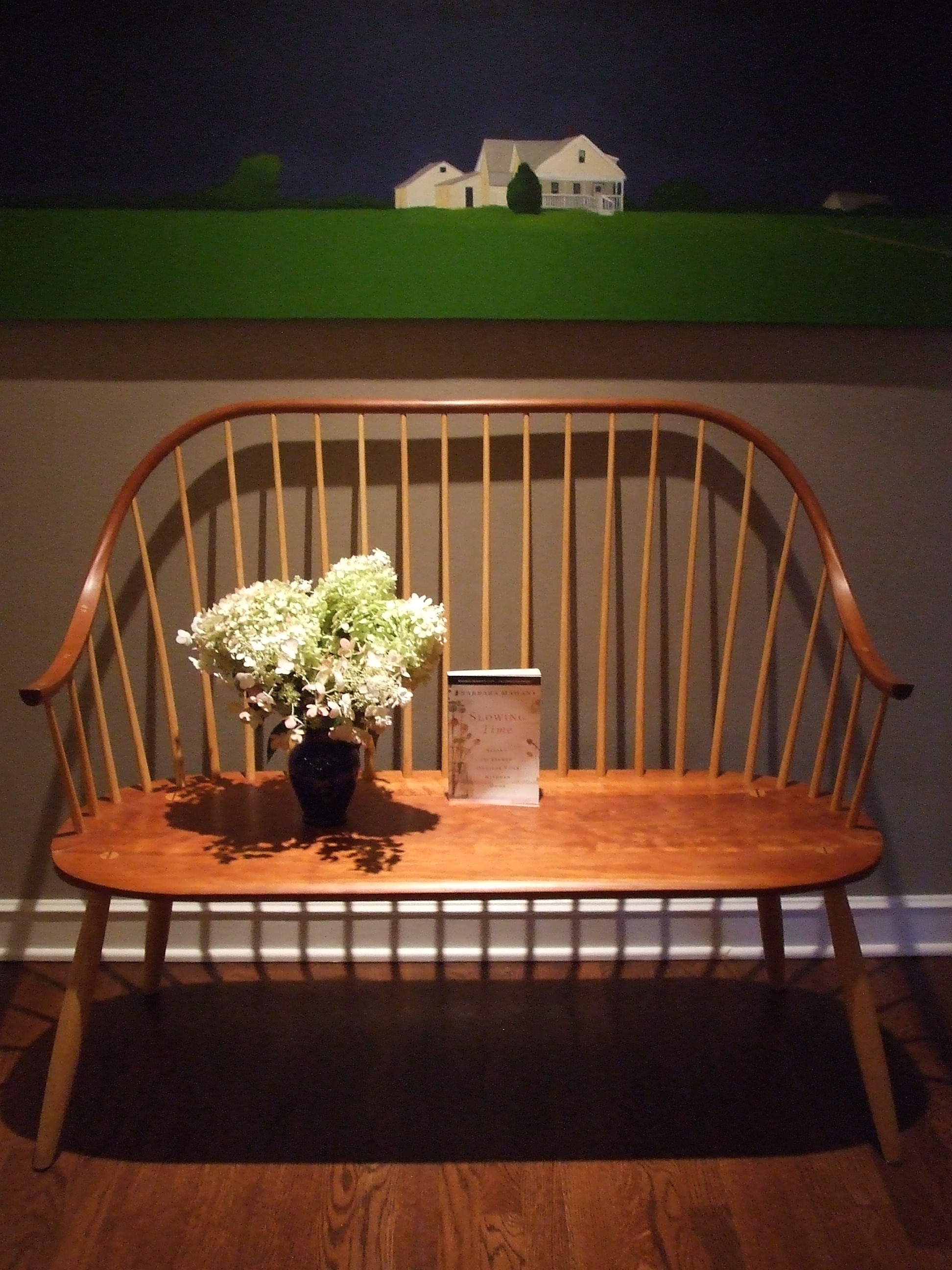
for starters, consider the book, Slowing Time: Seeing the Sacred Outside Your Kitchen Door (Abingdon Press, Oct. 7, 2014), a portable iteration of this old chair. why, you can take it wherever you go. you can bring it to bed, tuck it under your pillow. you can spill it with crumbs (and not have to worry that your keyboard gets jammed with a bit of a cracker). you can climb into a tree, and turn its pages. you can even slink in the bathtub (and not have to worry about glug-glugging your screen under the bubbly suds). it’s the chair unleashed. the chair on the loose. we’ve snipped the cords and numbered the pages.

ah, but there’s something even more enticing than the fact that Slowing Time, the book, can follow you anywhere, can go where’er you go.

and that’s where the invitation begins: my prayer all along has been that what’s tucked in the pages of Slowing Time is simply a field guide into the depths of your holiest hours. my hope is that it might become your whispered companion. a place to begin to contemplate how your life might look and feel and radiate if we dial down the noise, hit pause, and sift through the mess for the shards of the Sacred.

it’s a sketch pad, really, in which the flickers of half-baked ideas clothe themselves in words. and those words become the stepping path into the woods, into the depths. or at least point you in intriguing direction.

professor elisa new, beloved poetry scholar at harvard, talks about how a poem is a “communal resource, a convening space — written in a language we all understand.” it’s a place, she says, “where one human being has tried to make meaning, using a tool — the language we all share — that belongs to all of us. and so, by entering into inquiry, discussion, and interpretation of that poem, we can fully engage in that activity so central to the humanities, that activity of human conversation about what it is really to be human.”

and so, too, with the words you find spilled on the pages of Slowing Time, it’s an invitation to “shared inquiry.” and its words are, at heart, prayer unfurled in plainspoken prose. one someone’s prayer searching, searching for companion — be that gentle journeyer God, or the soulmate you find along your stumbling way, or sitting just inches across from you.

after all, the geometry of the old maple table, and the chairs that are tucked up against it, is the circle. heart linked to heart, hands within squeezing range, eyes close enough together that we can catch the sparkle on a joy-filled day, or the empty hollows in the hours when sadness or grief has eclipsed the light.

it is in those circles of our life — the circles we create out of love, or even when carved by accident of geography — that we find communion. and our own plumbing of the depths becomes shared inquiry, scaffolded exploration. a safe zone, where even our rawest tender spots can be laid before us, with no fear of harm or scorn or raised eyebrow.

still, though, it is in solitude, and in the sanctuaries of time we’ve hollowed out of the day, that the deepest paying attention begins.

as with so many spirit-filled vespers, slowing time — here at the table over the years, most lately every friday morning — has become a practice. practice, as in trying over and over and over to hew closer to the anointed edge at our most blessed core. practice, as in a ritual that surrenders to a rhythm. and, as with all holy acts, the holiness is found burrowing into the nooks and the crannies of a place — an interior, our interior — at once familiar and still to be explored.

it is the nautilus of prayer.

and it is the invitation that pulses at the heart of Slowing Time: use these words, little more than one pilgrim’s prayer, to lead you deeper into your own heart’s vault. settle in. deep breathe. catch the light. embrace the shadow.

and, once you’ve breathed Holiness in and in and in again, lift your eyes, and discover the light of the circle around you, within you. there is Holiness abounding, and it’s ours, radiant with grace.

and here’s the date-time-and-place invitation:

Slowing Time begins here: Reading, Conversation and Book Signing 

Wednesday, September 17 (feast of St. Hildegard of Bingen, the great medieval mystic, composer, writer, visionary)

7 p.m. to 9 p.m.

Francis Xavier Warde School at Old St. Patrick’s Church

120 South DesPlaines Avenue, Chicago

(leave it to Old St. Pat’s to prompt the heavens to rain down books before the publication date…)


yet another reading, after the actual publication date of Oct. 7, is now inked onto the calendar of a marvelous magical bookshop in Evanston:

Slowing Time Reading and Conversation

Bookends & Beginnings bookstore, a magical bookshop tucked in an alley that feels as if it’s popped off the pages of Harry Potter. Co-hosted by Evanston Public Library. To reserve a seat, please contact Bookends and Beginnings at 224-999-7722.

Thursday, Oct. 9

6 to 7:30 p.m.

1712 Sherman Avenue, Alley #1, Evanston

bookendsandbeginnings.com

and yet another marvel:

Slowing Time Reading and Conversation and Autumnal Joys

Women & Children First, a Chicago literary landmark in magnificent Andersonville, is hosting a reading, conversation and celebration of autumn, Season of Awe.

Wednesday, Oct. 29

7:30 p.m.

North Clark Street, Chicago, IL

womenandchildrenfirst.com

more readings to come…..stay tuned.

and now a question: how do you slow time? (oh, and what will be your crumb of choice to spill onto the pages and clutter the book binding gulley?)

slowing time cover

bushed.

bushed teddy exhausted

it’s not familiar terrain. not a channel to which i am often tuned. not among my minimal daily requirements.

fact is, i’m not often bushed. not even tired, particularly.

most days, i rocket-bolt out of bed. spend the day pinging from R to Z to Q — often curlicue-ing around the Q — then ponging back to B, C, and maybe W for the end-of-day denouement.

what i mean is: tired, the state of being, is not notched in my gear shift. i was born with my eyes wide open, i’m told (for i’ve little first-hand recollection thereof). and nowadays i’m married to a fellow who thinks one of the funniest things about me (and, yes, his list is long) is that i can’t stand to sleep with the shades drawn. i might miss, say, the first tumbling snowflake. or the pit-a-pat of plopping rain. might not be tickled awake by the first shard of dawn’s light.

full-throttle is my natural gear. and it’s where i’ve been hovering for the last few weeks, as the tick-tock toward my sweet boy’s turn on the bimah (that’s hebrew for altar) drew closer and closer. why, there were flowers to plop onto tables, and argyle socks to pull from the drawer. there were old friends flying in for a few nights’ rest under our eaves. and whole flocks of butterflies to chase from my little guy’s tummy. i was lucky if i’d get an hour or three of big ZZZs before bolting awake. and then i’d just lie there, drumming up worries, till finally i’d surrender and haul myself out from under the sheets.

no wonder me and the sweet boy above have assumed a similar posture: sprawled out and weary. pretty much unable to flinch even a muscle.

took me a few nights to dial down the rev in my engines. didn’t catch a full night’s sleep till just last night. meaning it’s been close to a month since i snoozed more than just a few hours. meaning my days have stretched on and endlessly on, running on fumes, my tank teetering precipitously toward E for empty.

i’ve been craving dark green leafies. and considering frying up liver and onions (far as i got in that department, was the consideration and swift dismissal). i wondered if red blood cells might be in order, a booster pack infused via least nettlesome route.

fear not, i’ll right this old teetering ship. i’ll find my mo-jo again. all it’ll take is a few slow turns of the globe. a few nights curled under the sheets. i’ll be good as new in no time.

which makes it excellent timing that just this week the latest issue of northwestern university’s alumni magazine is spilling out of mailboxes across the planet. back on the very last page, under the heading, “purple prose,” a pun on the school color more than a diss on the exaggerated writing, there spill a few words, all penned by me.

while i practice my deep-breathing exercises and shop for those dark leafy greens, i thought i’d leave you with yet another essay on the art of paying attention, and why it so matters.

without further ado, from the pages of northwestern magazine, curl up and consider this:

STOP, LOOK AND LISTEN

By Barbara Mahany

It was in the murky shadows of an auditorium, on a wintry Sunday morning when I might have wished I’d stayed under the covers, that I noticed the man down the row who raised his hand to add to the voices talking about God and death and the fathomless unknown.

Because I know this man to be wise, and not one to speak unless there’s something worth saying, and because I know this man buried his wife when their two little children were barely old enough to go to school, I listened. Because the man speaks in a rasp — sounds like chunks of gravel chafing against each other deep in his throat — it took determined listening.

This is what I heard, unspooled in one unbroken tendril: “When my son asked why people die, I said, ‘Because it means we have a limited number of days, so how we live matters.’ ”

And suddenly I knew I’d heard the words of a prophet there in the shadows on a Sunday morning. And, suddenly, I was so deeply grateful I’d climbed out from under the covers.

I couldn’t stop thinking of what he said — “… we have a limited number of days, so how we live matters.”

Nor could I stop thinking that he’d first spoken those words to a young boy who’d lost his too-young mother, a boy who would no longer climb into her lap, feel her arms wrap around him, a boy who’d had no choice in absorbing the astringent truth of his father’s lesson: Our days are limited, pay attention to how you live.

I’ve been a disciple of paying attention for years. I’d known — because my own father died, too young at 52, before I had a chance to say goodbye — that our days are numbered. But it was in the way that raspy voice framed those two truths into a single conditional equation, that it stirred me as never before.

In fact, it was the very gift of paying attention — of not turning to my so-called smartphone during yet another Sunday morning’s conversation at the synagogue — that allowed me to take in the words of the wise man a few seats to the east of where I’d plopped with my paper cup of cardboard-box coffee.

It’s become more urgent than ever, this practice of paying attention, especially in this world so terminally distracted by Attention Deficit of the Worst Disorder.

It’s the only way I know — short of climbing behind the monastery walls — to slow the mad-dashing, to quiet the incessant noise, to breathe in and out deeply. To awake to the sacred that surrounds us, that lifts us out of the meaninglessness that numbs us, that corners us into thinking there’s no sin in “killing a few hours.”

We have a limited number of days, so how we live matters.

Here’s how I try to stitch holiness into the quotidian hours of the everyday: I set my alarm an hour earlier than I need to be roused. I tiptoe down the stairs and out into my garden. I quiet my soul. I might catch a sliver of moon. Or the first shards of sunlight. I drink in the birdsong. I crouch down low, take in the poetry of the morning’s dew, the glass-beaded luminescence that captures the slant of the sun, refracts it, refines it, illumines the dawn.

It’s that first hour that fine-tunes my soul for the day. And it’s a rhythm, a depth, I try to hold onto, no matter what the day hurls my way.

It’s become what’s aptly called “a practice.” Practice for slowing my deep inner clock. Practice for opening all of my pores — each of the sensory channels, those vessels that draw in the holy — for the countless moments of grace that might otherwise escape me. Practice as in something I try again and again, hoping one of these days I might get it right.

Nearly every world religion, or any mindfulness for that matter, insists on the wisdom of looping back at regular intervals, hitting the pause, blocking out chatter and tuning in to the still, small voice that you might only hear if you’re quiet. Truly quiet. And paying exquisite attention to the whispers all around. The ones that remind us of our own small place on the globe. And our too-short stay here.

The ones who, in the murky shadow of a Sunday morning, might call out from the darkness, and utter the few short words that, months later, urge us — still — to deeper and deeper attention:

“We have a limited number of days,” spoke the father to his motherless son. “So how we live matters.”

And we listened.

Barbara Mahany ’82 MS is a longtime Chicago journalist. Her first book, Slowing Time: Seeing the Sacred Outside Your Kitchen Door (Abingdon Press), will be published in October.

dear chair friends, how do you re-juice your tank when it’s drained to near empty? 

p.s. photo above is young T shortly after stepping down from the bimah, and his chanting of the Torah. fairly certain he was lifted by angels up there, for he soared to heights neither he nor i had ever imagined. 

an attentive life

fern attentive life

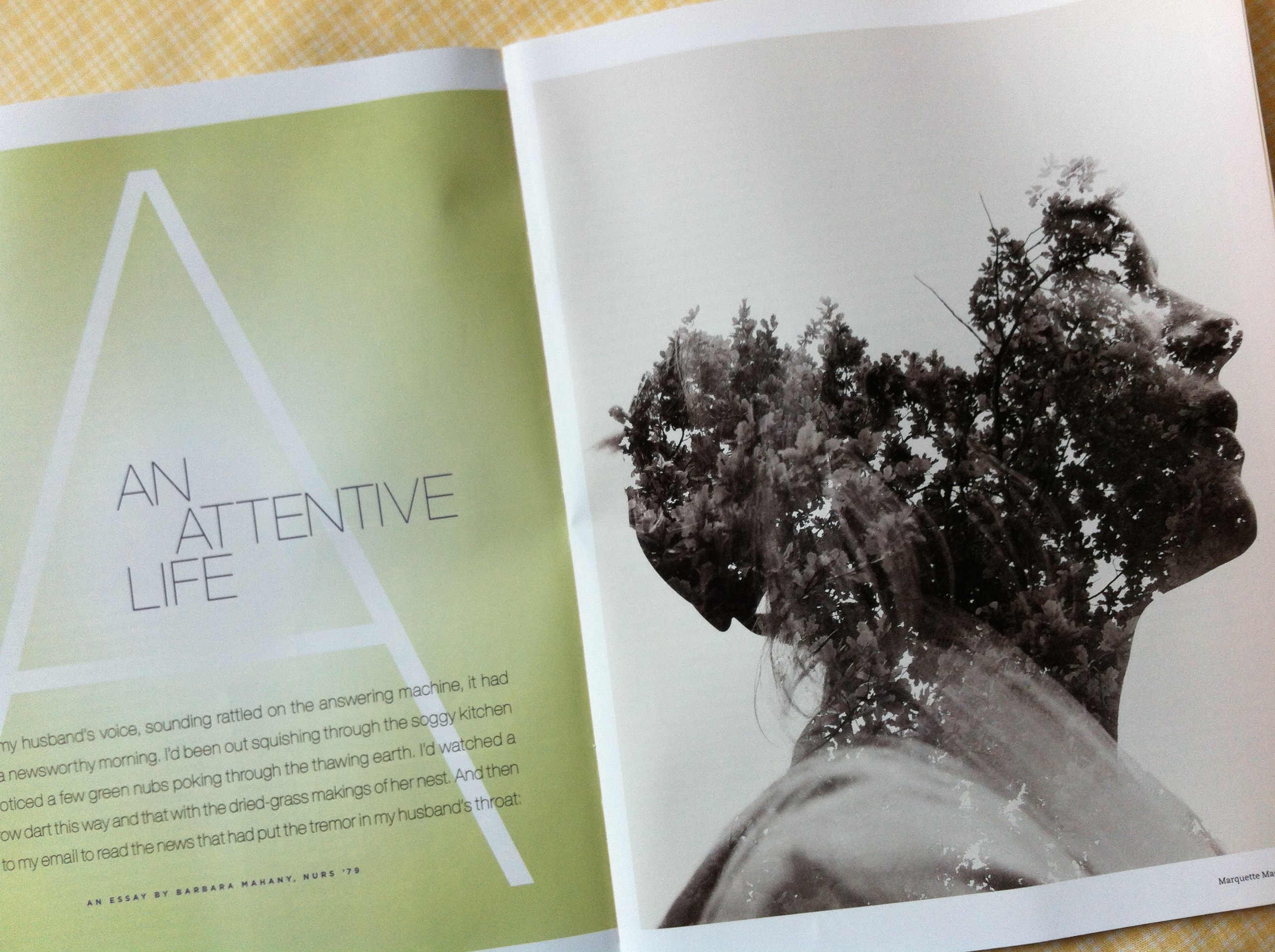
because i’m motoring up to my college reunion today, here’s an essay i wrote for the summer issue of marquette magazine, in which i realize how that jesuit curriculum was the birthing ground of paying attention, most especially, for me, in the college of nursing…

An Attentive Life

An Essay By Barbara Mahany, Nurs ’79

Until I heard my husband’s voice, sounding rattled on the answering machine, it had hardly been a newsworthy morning. I’d been out squishing through the soggy kitchen garden. I’d noticed a few green nubs poking through the thawing earth. I’d watched a mama sparrow dart this way and that with the dried-grass makings of her nest.

And then I scrambled to my email to read the news that had put the tremor in my husband’s throat: A dear friend, one who’d just finished a year of god-awful chemo, a friend who is mother to a 17-year-old who only a week ago had scored the trifecta of Ivy League acceptance letters and to a 13-year-old who’s not too tough to cry when soccer flattens him, had just gotten word that her cancer is back. Back with a vengeance. And her doctors now narrow her hope: only to stretch out her days so, for now, she can pack her daughter’s college trunk and send her son back onto the soccer field for one more season.

The words that won’t stop rattling through my breath, my brain, my every heartbeat are these: The holiest way to live this blessed life is by paying full-throttle attention.

If our days are numbered —and they are, though it sometimes takes the urgency of a day like today to sharpen the edge of that raw truth —we really can’t afford not to notice, not to bristle at the brush strokes of the divine that sweep up against us, leave us with goose bumps, remind us that the holy is all around and that if we listen, really listen, we just might hear the sacred breath that whispers, “Here I am.”

It took me the better part of a half-century to figure it out, but I’ve come to believe that prayer is the practice of paying attention.

Like the chambered nautilus I unearth from the sandy shore, the uncoiling of wholly attentive prayer is at once simple yet intricate. A discipline never easy, nor is it insurmountable. It’s a mindfulness, a sensory awakening that opens all the channels coursing straight to the pulse point deep inside, the one that attunes us to true knowing. It can feel sometimes as if someone is squeezing our hand in the dim darkness of our days or wrapping us in mighty muscled arms that will not let us stumble or turn to run and hide.

At heart, the prayer of paying attention is a deeply human act that ushers in the otherwise unknowable. It’s what fills in the emptiness of our otherwise hollow living-breathing selves.

It comes in many forms. It’s the wide-eyed scanning of sky that prompted me, one late summer’s night while driving home through a leafy woods, to notice the rising cheddar wheel of a moon and drive like a madwoman to the edge of a lake, where I watched that lunar orb ooze tangerine strands across the inky waters, arcing toward the high point of heaven’s dome. Slack-jawed, I marveled all the while.

Or it’s the keen-eared concentration that allowed me not to miss when a man sitting down the row in a shadowy auditorium mentioned that, soon after his wife died, he explained to his young son: “The reason people die is because it means we have a limited number of days, so how we live matters.”

I can’t imagine the text of my life absent such heaven-sent wonder and wisdom.

Mary Oliver, the poet saint, writes: “Attentiveness is the root of all prayer.” And reminds us that our one task as we walk the golden-glowing woods or startle to the night song of the spring peepers rising from the wetlands is “learning to be astonished.”

Ever astonished.

“I want to live my life in epiphany,” says poet and Renaissance scholar Kimberly Johnson. “I want all my pores open.” This way of living at full attention, she says, “is unmediated experience. My antennae are tuned to stuff that exists beyond the social sphere.”

It’s why she’d gladly spend a day nestled beside a gurgling brook on a mountain trail. It’s a way to gulp down undiluted holiness, never watered down, not dimmed by the cacophony of a world that seems to be forgetting how to listen.

The holiest way to live this blessed life is by paying full-throttle attention.

Celtic tradition puts a name to the places in the world where the veil between heaven and earth is lifted, where the whispers of the divine are most discernible: “Thin places,” the Celts believe, are the places to which we are pulled as if tide pools where we can bathe in that for which we are so parched.

The first time I heard the phrase, I was walking between rows of runner beans with a farmer friend whose firstborn son, a U.S. Marine home on leave from Iraq, had been killed when his old car missed the bend in a country road and he drowned in a pond not five miles from his mother’s central Illinois farm. My farmer friend pointed to the hayloft of the old barn, a gap-toothed slat-roof barn where shafts of light streamed in, a mosaic of illumination and shadow. “That’s my thin place,” she told me. “That’s where I go to cry in the arms of God.”

Curiously, Celts and Jews and Ignatius Loyola, among others, share that pulsing sense that every moment of the day — the most ordinary moments of every day — are vessels of the holy. And all we need do to anoint that holiness, to make it evident, unmistakable, is to bless it with our attention. And our simple prayer.

So for Jews, there are some 100 blessings stitched across the hours of the day, from the blessing for awaking to the one for slipping on undergarments. In Celtic tradition, prayers are whispered for getting up, lighting the fire, milking the cow and on through the day, until the prayer for snuffing out the candles when the house is darkened for the night.

A glorious expression of that Celtic belief in abounding holiness is the insistence that we “learn to play the five-stringed harp,” that being the five senses that will bring us nose to nose, skin to skin, ear to ear with the divine.

In the Ignatian way, the credo is clear: Find God in all things. Not only all good things. All things. The great Jesuit poet Gerard Manley Hopkins wrote: “… for Christ plays in ten thousand places … ” Thomas Merton put it: “The gate of heaven is everywhere.”

In a word, it’s “hierophany,” the place where secular and sacred meet. It’s all around, and it’s a belief that dates back to ancient Greece. We’re not tripping over a novel concept here. This is no New Age enlightenment.

“It’s one of the most fundamental spaces in my life, this space where the horizontal, the secular, meets the vertical, the ultimate; literally, the shape of the cross,” says Guggenheim Fellow, poet and best-selling author Eliza Griswold, the journalist who wrote The Tenth Parallel: Dispatches from the Fault Line Between Christianity and Islam. “That’s poetry, where everyday time is punctured by the sacred. And my calling is there, the places where sacred and secular meet.”

I’ve long been a student in the great school of God’s world as it surrounds me. I’ve long been hellbent on breaking open the fragile — and the monumental — offered up by the limbs and the leaves and the rippling streams and the star-stitched night sky.

There is metaphor all around. It’s deep and it’s profound, and I am drinking it in as if cool waters through a straw.

And more than in John Muir’s woods or on the banks of Thoreau’s Walden Pond, my ears have perked to the scritch scratch of heaven on earth right here in the dappled sunlight as it pools across the wide pine planks of my old house or plays peekaboo among the tangled vines of my rambunctious secret garden just outside the kitchen door.

I needn’t travel far to find the holy. Though it did take time — the better part of decades — to learn to listen for the sacred murmurings, to let them soak deep down to where I was hungriest, most hollow, to figure out that all along I’d had the fine-boned instrument to draw the music in.

And, recently, it struck me that my paying-attention curriculum, the part that came from syllabus as much as natural-born curiosity, began in the halls of Marquette’s College of Nursing, back at the old college, the one appended to St. Joe’s Hospital. There, in shiny linoleum-tiled classrooms in the fall of 1976, the whole lot of us began to learn to see the world through a nurse’s dare-not-miss-a-detail eyes.

My very first assignment, once that white cap had been bobby-pinned to my curly locks, was to bathe a woman who was dying of a cancer whose origin I can’t recall. I was taught, straight off, to look deep into her eyes, to read the muscles flinching on her face, to hear the cracking of her words as she tried to tell me how warm she liked her bath and which limb hurt too much for me to lift.

And on and on the learning went. As I watched the waning light in the eyes of a 15-year-old boy at the hour of his death. As I gauged the depth of blue circling the lips of a 6-year-old girl with cystic fibrosis. As I buried the sobs of a wailing father against my shoulder while he absorbed the diminuendo of his 12-year-old daughter’s final breaths. At the crosshairs of life and death, I learned to live a life of close examination.

Some three decades ago, because by then I was working in a newspaper newsroom and forgot to pay attention to the paperwork of my life, my nursing license expired. So, short of retaking my boards, I can’t claim to be a registered nurse any longer.

But, the truth is, I needn’t hold a license to practice the exquisite art of paying attention. It’s a hard-won curriculum, indeed. But it’s one that’s dissolved the hard edge between heaven and messy earth. It’s the undercurrent of all my prayer. And it’s what aligns my every breath with all that is most holy.

Barbara Mahany, Nurs ’79, once a pediatric oncology nurse, is a freelance journalist and the author of Slowing Time: Seeing the Sacred Outside Your Kitchen Door (Abingdon Press), to be published in October 2014.

and how, dear friends, did you learn to pay exquisite attention? 

attentive life MU mag

fat ‘n’ sassy: measuring joy in micrometres

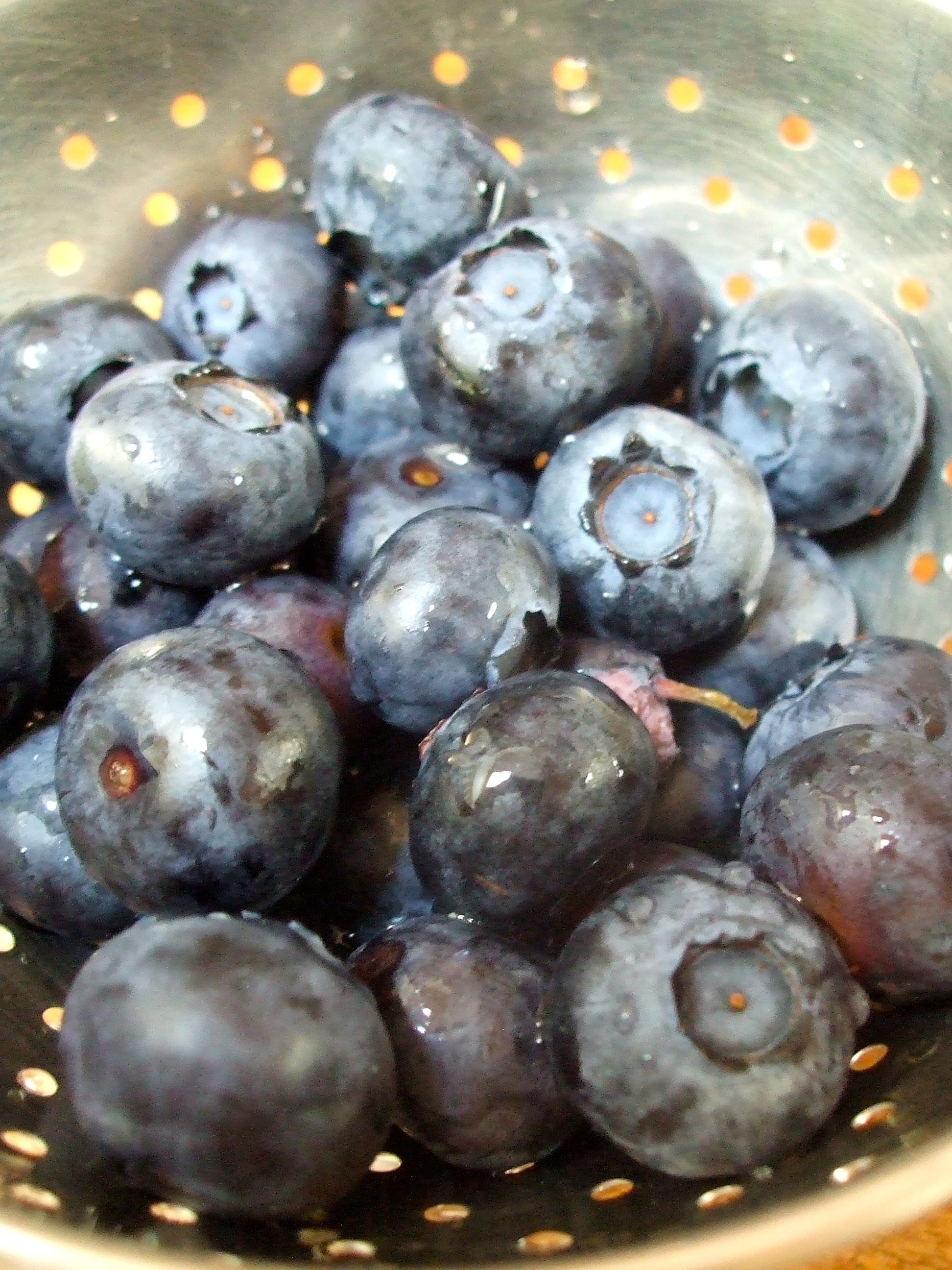
fat and sassy blueberries

it doesn’t take much. never really does. the end-game, though, is everything: the skip in the heart when sweet leaflets of joy come wafting down from the clouds.

and so it was with the blueberry basket. i was paying little mind, going about the motions of putting food to the plate, en route to the mouth, at last to the tummy. i reached in the cold box that keeps these modern conveniences — and here i wonder, are we losing something, relying on refrigeration instead of plucking them straight from the bush? so early, and already so distractible, i am…

anyway, i was mentioning the cold box, the ice box, in my grandma’s vernacular, the one that keeps those little globes of summer from going flat, like old tires on a bicycle that’s not been ridden in months. i reached and grabbed the berry basket, the one hauled home from the store, alas not the farmer’s field.

i started to pour, to dump the blue balls of summer and that’s when i noticed: these were blueberries at their most swollen, blueberries who’d pushed out their skins to the point of near bursting, and then pumped the insides with that delectable potion of sweet-tart-and-pucker. these were blueberries fat ‘n’ sassy and filled with pizazz.

and so it was, at that very moment, that i felt my heart do a bit of a double-beat.

sometimes, that’s all it takes: joy measured in micrometres. a dimension the science books tell me is used in measuring infrared radiation wavelengths, the diameter of wool fibers, and the heft of cells and bacteria. human hair, you might wish to know, measures in at some 90 micrometres (the spelling of the international bureau of weights and measures, as opposed to the ingrained auto-correct that keeps slapping my hand, trying to get me to flip my “r” and my “e,” to do away with this british affectation of science). there’s a fancy abbreviation for micrometre/micrometer, but most keyboards can’t fathom it, so among common folk, the abbreviation is “um,” as in that ungodly pause when we’re fishing for words. a water droplet of fog, for instance — yes, they measure these things (though not necessarily with yardstick) — is sized up at roughly 10 to 15 ums.

but back to the blueberries, near doubled in girth, in micrometres. a measuring tape slapped round their middles right now, at the height of summer’s rising crescendo, when the cicadas start rubbing their parts, their noise-maker parts, and the hum of near august vibrates into the night, it might make a Vaccinium corymbosum (or highbush blueberry) blush with indigo pride. they’re packin’ a wallop right now.

and that’s all it took. that one increment of immeasurable heart tickle, it was all the delight i needed to add a skip to my summery morning. the air out the window was cool, northern-michigan cool. the berries in my bowl were zaftig. the day had nowhere to go but skittering southward. i’d reached the glory spot before my coffee had cooled one joule (dipping back into the annals of science, we pull out the word for a standard measure of heat energy, or thermodynamics).

with all these berries inflated to seasonal highs, i reckon, it must be time to crank the oven and beckon the boy in this house whose favorite page of mark bittman’s how to cook everything: simple recipes for great food (macmillan, 1998) is the one that’s splattered with smeared bits of butter and very old droplets of egg white (more than 10 to 15 ums, i assure you). the boy, now asleep in his bed, dreams day and night of blueberry cobbler, the dish he calls his finest (never mind only) baking hour.

it goes something like this, and it’s more than worthy of those fat sassy globes that define summer at its puckeriest.

blueberry cobbler

yield: 6 to 8 servings

provenance: mark bittman’s dear friend john willoughby, who found it in a southern boardinghouse, so you know it must be lip-smackin’ good.

4 to 6 cups blueberries, washed and well dried.

1 cup sugar, or to taste

8 Tbsps. (1 stick) cold unsalted butter, cut into bits, plus some for greasing the pan

1/2 cup all purpose flour

1/2 tsp. baking powder

pinch salt

1 egg

1/2 tsp. vanilla extract

1. preheat the oven to 375 degrees Fahrenheit. Toss fruit with half the sugar, and dump in lightly buttered 8-inch square or 9-inch round baking pan.

2. combine flour, baking powder, salt and 1/2 cup sugar in food processor, and pulse once or twice (or, simply mix in a bowl, the old-fashioned way, with big spoon and muscle power). add butter and process for 10 seconds, or old-fashioned way, cut into flour-sugar mixture with pastry cutter or two knives, crisscrossing through the mound. by hand, beat in the egg and vanilla.

3. drop this mixture onto the fruit by tablespoonfuls; do not spread it out. bake until golden yellow and just starting to brown, 35 to 40 minutes. dollop onto plates. please wait for joules to dissipate, or you’re apt to burn your tongue.

savor under the summer night’s star-stitched sky. or as sweet spot to your morning’s coffee.

cobbler

‘scuse me, while i go rouse the boy, and spin the dial on the oven.

and how do you take your puckery berries?

a wee bit of housekeeping: if you peek up above, to the few bold words under the title “pull up a chair,” you might notice there’s a new line, “the book: slowing time,” which means there’s a new place to poke around here at the table. seeing as this blessed book, Slowing Time: Seeing the Sacred Outside Your Kitchen Door (Abingdon Press, October 2014), is rolling toward the printing press any week now, and seeing as the real live bound galley arrived in a pouch on my front stoop last night, it seems high time to give Slowing Time its very own place to call home here where it all began. you’ll find a few bits of news, some very kind words that have rolled in under the transom in the last week or so, and whatever else you might care to know in the book department. click here to peek.

and may your third full week of july be sweet as a bowl of fat blueberries, cobblered or not….