pull up a chair

where wisdom gathers, poetry unfolds and divine light is sparked…

Tag: morning prayer

bee season

when you happen to tiptoe outside into the dewy sop of dawn, just after the light breaks through, you might hear a noise, at that liminal hour when noise is one thing there’s not. not much of, anyway. 

i was standing there with my mug and my prayers, when all of a sudden i heard it. the sound of a mosquito buzzing your ear, only amplitudes louder. it’s not as loud as the nighttime’s cicada, nowhere near it. it’s the buzzsaw of dawn, when the bees are up early and nose-deep in work. 

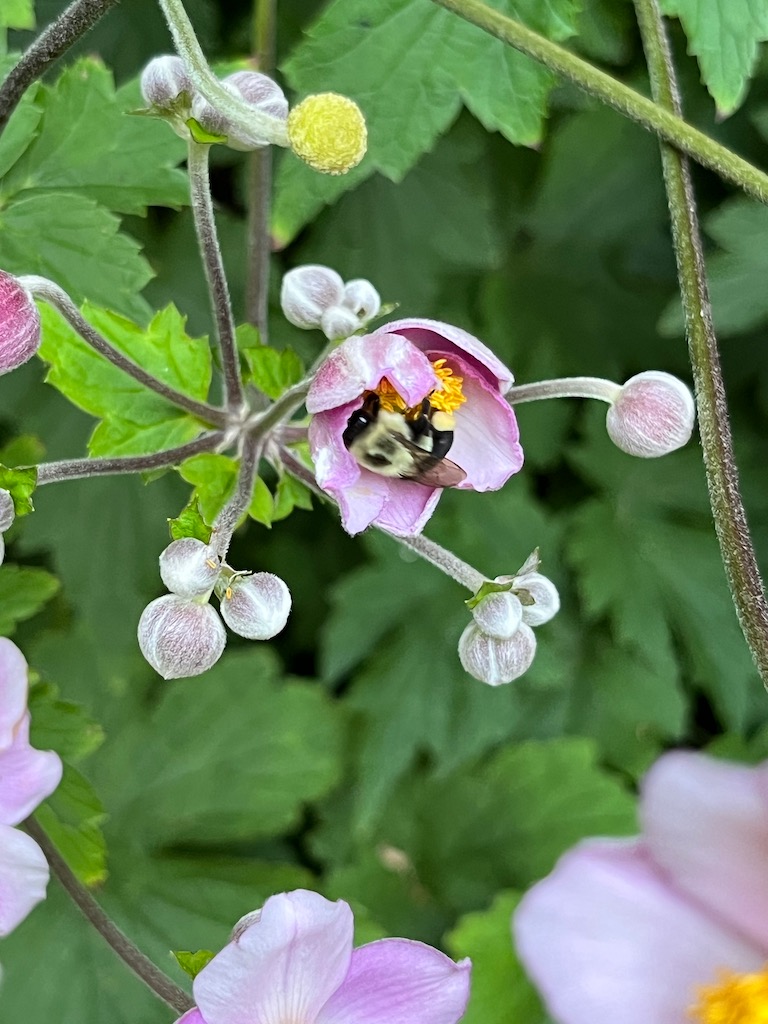
i followed a pair, fat, fuzzy, all full of themselves. full of unctuous beads of gold-dazzled pollen. looked like they’d rolled in a can of it. which they more or less did, dive bombing into the gold-dusted pincushions that rise from the swirl of anemone petals.

because i tend to read nature in a scriptural way, meaning i stand there in the face of a question, connecting the dots, unpuzzling the parable, i wondered what lesson i might extract from the bee, while the bee was drowsily, drunkenly, extracting its pollen-y porridge. 

what i came up with was unrelenting. unrelenting as in the bee, morning after morning, rises up from the hive, zigzags out the door, and plows ahead with his one holy task: he gathers up gold dust, the baseline of honey. it’s the task he was born to, a task he can’t shirk. a task he dives into with unrelenting enthusiasms.

i stood there for a while marveling at all there is in the tableau of dawn. the breeze already stirring. the moon now off the clock, back under the covers. or maybe just hiding back behind clouds. one or two birds were up and starting to chirp. but centerstage, in my attentions at least, was that fine pair of harvesting bees.

i thought about the perfect harmony of this early hour. how all of creation plays its own part. 

i thought about my own holy task and not being daunted. i don’t really know yet what exactly i’m up against — none of us do. but, i took a note from the bees: head down, nose first, gather up gold dust wherever you can.

be unrelenting. don’t be distracted. or daunted. even on days when it’s harder than hard: nuzzle your way into the gold dust, suck up what you can. 

it’s the reason you’re here on this holy earth.

maybe the bee understands: his days in the hive, they’re numbered. just like yours and like mine. so he gets down to business. gathering all that he can.

i let that sink in, while i kept up my watch, mesmerized by the bee who would not be dissuaded, distracted, or daunted. 

bee season brings lessons. but you need to perk up your ears. 


among the gold-dusted pollens i gathered this week was one heavenly spoken-word poet, podcaster, and author: amena brown. “a breathtaking blend of poet, prophet and pioneer,” one reviewer wrote. “her life and words will bless your soul.” no less than richard rohr, the modern-day mystic, and his center for contemplation and action pointed me in her direction. and what a direction it is. have a listen:

amena brown: “She Said How Do You Know When You’re Hearing From God”

i ran out and bought the book from which it came, so knocked off my socks by it was i. and i was only going to share the first verse. or two. but i can’t bear to leave out a one. it’s a bit long. and worth every drop. thank you, amena, for sharing your wonder…

She said, “How do you know when you are hearing from God?”
I didn’t know how to explain
It is to explain the butter grit of
  cornbread to a mouth that just
  discovered it has a tongue
The sound of jazz to ears that only ever
   thought they’d be lobes of flesh
The sight of sunsets to blinded eyes
   that in an instant can see
To fail at the ability to give words to
   how the scent of baked bread can
   make the mind recall a memory
Every detail
Of a house, a room, a kitchen, a
   conversation
Like explaining to a newborn baby this
   is what it feels like to be held
My words never felt so small, so
   useless, so incapable

I wanted to say
Put your hand in the middle of your chest
Feel the rhythm there
I wanted to say you will find the holy
  text in so many places
On crinkly pages of scripture
In dusty hymnals
In the creases of a grandmother’s smile
The way she clasps her hands
The way she prays familiar, with
 reverence as if to a dignitary and friend
The way she sings a simple song from
  her spirit and porches turn to cathedrals

I learned from my great-grandmother
   how to pray
How to talk to God
How to listen
Watching her and the other silver-
   haired church mothers gather in her
   living room
Worn wrinkled hands on top of leather
   bibles well traveled

They prayed living room prayers
   because you don’t have to be inside
   the four walls of a church to cry out to
   the God who made you
Because no matter where you sing or
   scream or whisper God’s ears can
   hear you

And despite what the laws say or what
   our human flaws say
God’s ears don’t play favourites
God’s ears don’t assess bank accounts
   or social status before they attune
   themselves to the story your tears or
   your fears are telling

God’s ears are here for the babies
For the immigrant, for the refugee
For the depressed, for the lonely
For the dreamers
The widow, the orphan
The oppressed and the helpless
Those about to make a mess or caught
   in the middle of cleaning one up
Dirt don’t scare God’s ears
God is a gardener
God knows things can’t grow without
   sun, rain and soil

I want to tell her to hear God
You have to be willing to experience
   what’s holy in places many people
   don’t deem to be sacred
That sometimes God sits next to you
   on a barstool
Spilling truth to you like too many beers
That God knows very well the dance
   we’ll do
When we love ourselves so little that
    just about anyone will do

That God cares about the moments we
   find ourselves
On the edge of a cliff
On the edge of sanity
On the edge of society
Even when we have less than an inch
   left of the thread that’s been holding
   us together

I want to tell her God is always waiting
Lingering after the doors close
And the phone doesn’t ring
And we are finally alone
God is always saying
I love you
I am here
Don’t go, stay
Please

I try to explain how God is pleading with us
To trust
To love
To listen
That God’s voice is melody and bass
   lines and whisper and thunder and
   grace

Sometimes when I pray, I think of her
How the voice of God was lingering in
   her very question
How so many of us just like her
Just like me
Just like you
Are still searching
Still questioning, still doubting
I know I don’t have all the answers
I know I never will
That sometimes the best thing we can
   do is put our hands in the middle of
   our chest
Feel the rhythm there
Turn down the noise in our minds, in
   our lives
And whisper,
God
Whatever you want to say
I’m here
I’m listening

– Amena Brown


and one last wonder, sent my way this week, from rebecca solnit’s 2004  Hope in the Dark, her counterpoint to a world in despair, an exploration of hope as “an embrace of the unknown and the unknowable.”.

Hope is not a lottery ticket you can sit on the sofa and clutch, feeling lucky. It is an axe you break down doors with in an emergency. Hope should shove you out the door, because it will take everything you have to steer the future away from endless war, from the annihilation of the earth’s treasures and the grinding down of the poor and marginal…

To hope is to give yourself to the future – and that commitment to the future is what makes the present inhabitable. 

Rebecca Solnit

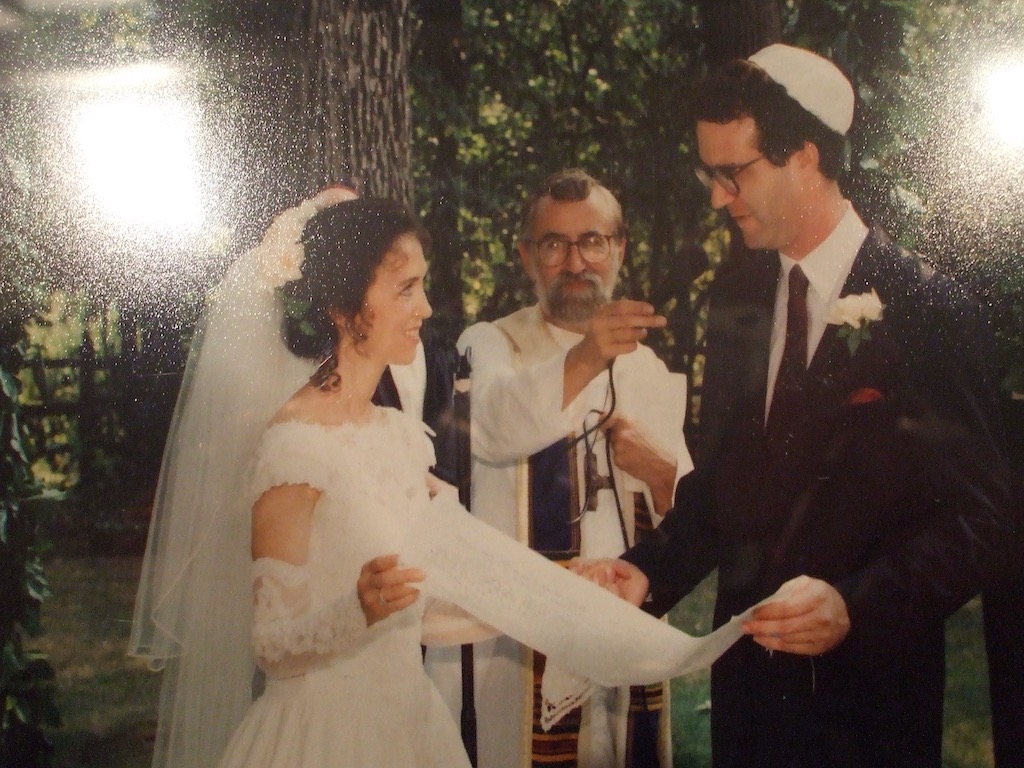
finally, finally, but maybe sweetest for last: 32 years ago i married the love of my life. my tall sequoia of a sweet and steady soul. he has been my ballast all these holy blessed years, and never more than now, so one big giant i love you from me.
how were you unrelenting this week? and did you gather up gold dust?

anointing the hours

except for the centenarians among us, this is our first go-around with pandemics. and so, uncharted as it all is, little should surprise us. i stand somewhat surprised, though, that somehow — in the depths and folds of these blurry hours, where day upon day feels indistinct, where were it not for the winding of clocks on wednesdays, the old-lady shop on thursdays, the watering of plants on saturdays, i might never know what day is unfolding around me  — i seem to have tumbled into an ancient, ancient practice. one rooted in the quiet turning of pages of glorious books. one rooted in prayer, in the sanctification of time, the anointing of hours.

it must be the little old monk in me.

i am utterly transfixed by the notion of the liturgy of the hours, the divine office (opus dei — the work of God), lauds, vespers, compline. morning prayer now begins my every day. morning prayer with candle burning beside me, casting its flickering light on skin-thin pages that turn with a crinkle as i slide the ribbons from section to section: invitatory, psalm, antiphon, collect, confession, thanksgiving.

the lexicon is almost as old as time. the notion of fixed-hour prayer, paying keen attention to the seasons of the day — the shifting of light and shadow — is a practice shared by all the great religions: buddhism, hinduism, islam, judaism, christianity.

the early christians borrowed it, of course, from the jews, who were commanded to pray the holiest prayer, the sh’ma, upon rising and retiring, and who stitched 100 blessings into the arc of the day, lifting the most quotidian of acts — washing hands, hearing thunder, beholding the bloom of the almond tree — into the realm of the holy. the psalms, written by the most brilliant hebrew poets, were read by jews — including jesus and his earliest disciples –as “encounters with God, as stimulating and nourishing a spiritual mystery,” according to william storey, a liturgical historian.

by the fourth century, in the early roman empire, bishops instituted morning and evening prayer in the early cathedrals. in the sixth century, along came st. benedict who wrote down “the rule,” and with it the trellis of prayer that infused the monastery, calling the monks to arise in the darkness, to walk under the cloak of stars to the oratory where the night vigil was sung, and through the day, when the great bell was rung, to drop their work in mid-act — be it the stirring of soup, or the tending of bees — and encounter the angels in the sung prayer of the psalms. (i love that benedict refers to any chiming clock as a “portable monastery,” and instructs that “every chiming hour is a reminder we stand in God’s presence.” i will now consider myself to be “winding the monastery” every wednesday and sunday morning.)

all these centuries later, little old me picked up on the notion about six weeks ago. (no one ever pinned me precocious.)

what i know is this: tiptoeing down the stairs in the dark, hoisting my 2,974-page leather-bound tome, striking a match, kindling a wick, bowing my head, breathing in silence, it grounds me, and infuses my day. even my dreams, some nights.

reciting the words, inscribed millennia ago, whispered by generations before me, from all corners of this wobbling globe, beginning with a daily confession of sins, bends me into a posture of humility that seems so necessary — so countercultural — in this awful, awful age of much too much bombast. i’m enchanted. i’m sometimes disturbed (the god of biblical vengeance is not one i know). i’m always, always quieted. set straight for the day. beginning my day in the recitations launches me into the holy work st. paul instructed: pray ceaselessly. make the work of your day, the quiet of your day, make it all living breathing prayer.

i’m not alone in my preoccupation. rilke and ts eliot, hildegard of bingen and kathleen norris, certainly thomas merton, all were drawn to the undulations of stillness and prayer.

brother david steindl-rast, in his glorious little book, music of silence, writes that monastic prayer is a tradition “that regards each hour of the day and night as having its own distinct message for us.” he implores: “make everything we do prayer.” hour by hour, from night watch’s invitation to “trust in the darkness,” to laud’s morning question — “whom can i make a little happier” in this gift of a new-born day? — brother david draws us into the certain knowing that hour upon hour begs our attention, invites sharper focus on divine intention.

it’s all the sacred practice of paying attention. beholding the beauty, the blessing of each anointed minute and hour. in the same way i’m gobsmacked by the shifting of seasons across the year, i am rapt by the seasons of light and shadow in a day, the invitation to be immersed in each hour’s offering.

i turn to that brilliant radiant rabbi whom i revere, abraham joshua heschl, for one last illumination here, one to carry through this whole blessed day:

he who has realized that the sun and stars and soul do not ramble in a vacuum will keep his heart in readiness for the hour when the world is entranced. 

for things are not mute:

the stillness is full of demands, awaiting a soul to breathe in the mystery that all things exhale in their craving for communion.

out of the world comes the behest to instill into the air a rapturous song for God…

a few of the books i’ve been burrowing into, include these: 

  • a beautiful treasure of a book: Seven Sacred Pauses: Living Mindfully Through the Hours of the Day by Macrina Wiederkehr. (brilliantly recommended by jackie, a dear friend of the chair)
  • Rainer Maria Rilke’s Book of Hours: Love Poems to God
  • Thomas Merton: A Book of Hours…..
  • David Steindl-Rast: Music of Silence

and, if you’d like to poke around online, and hear magnificent gregorian chant (a meditation for another day) try Brother David Steindl-Rast’s Angels of the Hour 

how do you anoint the hours of your day?

the liturgy of dawn

IMG_7454

for years now, that banged-up tin has been ferrying my loads of seed from house to trough for feathered friends…

it begins, of course, in the dark. it begins when i release the loose cocoon, the flannel cocoon, that’s enwrapped my wisps of dream. i flip back the sheets and plant my soles wobbly on the ground. the vestments these days are nearly always variation on the same: stretchy yoga pants, long-sleeve T, bare feet, and the snuggliest sweater i can find.

there’s the splashing and dabbing in the room where water flows. then it’s down the stairs, around the bend, and into the kitchen where the ministration of the coffee begins. beans + water = the next-best reason i get out of bed, the first hot chalice of coffee, the one around which i wrap my palms, deep breathe and drink.

sometimes i play a game. tell myself the coffee has to wait. i can’t partake till i’ve gone outside, till i go deep into the liturgical practice of dawn. but some days i’m more gentle with myself: i pour the steamy black brew and tiptoe toward the door.

before i turn the knob, i pause to lift the lid on the old white tin, the one quite near the door, the one that holds the excuse for going outdoors. a banged-up coffee can, just big enough to hold a dose of seed for all my birds, awaits. i scoop and fill, now fully armed for my morning’s task.

i step beyond the kitchen. i step into the dawn.

that’s where i find the holiness every time. i stand beneath the dome, some mornings star-stitched, but this morning a vast gray puff of cloud. the morning song was no quieter for the lack of starlight. the morning song, already, was at full salute. a trill from the thicket to my left, a piercing cry from way on high and somewhere to my right.

not far off, i hear the morning train, paused at the station. it’s the only hint that other humans inhabit my morning hour. and because this is the april that yearns to be winter, my bare feet felt every ounce of cold. i dashed back in for boots before trudging across the ooze to dump my mix of seeds and nuts and plump dried fruit in the trough for birds.

and not a minute after dumping, the first of two papa cardinals came flitting in. chirped a certain note of gratitude, then filled his beak, and then his belly.

it’s the liturgy of the dawn. the carved-out fraction of an hour that settles deep into my soul. that makes one day richer than another. it’s where my prayer takes root. oh, there might be a whisper here or there, as i shake off sheets and tumble toward the pile of clothes. but it’s not till i’m alone, under the dome of dawn, that the deep-down prayer, and the deep-down quiet settle in.

just yesterday, someone asked me how i find the way to slow time, how i set my own internal clock to a rhythm that allows the sacred to seep in.

“well, it begins with the dawn,” i said. it begins when i’m all alone, just me and God and the birth of another blessed day. (truth be told, i still miss my old fat cat, the furry acolyte who met me at the door, who rubbed his ears against my ankles, followed me to the prayer bench where i often plop on days that don’t insist on abbreviated vespers.)

once i’ve inhaled deeply of the dawn, once i’ve filled my ears with the song of the feathered choristers, watched the flocks swoop in for their fill of what i’ve dumped from my old banged-up coffee can, once i’ve watched the curled-up buds on all the boughs, taken measure of their proximity to blossoming, i lay down an undercoat of prayer. i name the ones for whom the blessings are most urgent. i name the ones i love, one by one, as if the mere pronunciation of their name is an anointing. and then i press those prayers into place through the simple act of breathing. isn’t prayer sometimes simply intermingling earthly breath with the breath of the Divine, heaven’s reach swirling down to lift us from our leaden station? isn’t prayer the posture that takes away what weighs us down, that shares the yoke? that wraps us in the hold that whispers, “you’re not alone. this isn’t yours to carry all by your weary worn-out self…”

it’s the holy hour that pulls me from my bed. the one certain anchor to begin another day. the grace of dawn is my beginning. as if a golden-threaded vestment into which i slip my arms, it’s the only wrap i know that holds the hope of peace throughout the hours still to come.

how do you squeeze in the grace that fills the hours of your day? 

IMG_7450

cradled

sunflowers

cradled (v.) hold something gently and protectively.

that’s the dictionary doing what it does: defining.

and then we come to the part i always love best, the underpinning of every word, its linguistic DNA, its etymology, its roots reaching back in time, across oceans, deep into the vault of centuries past. and here we read this (from my friends at the online etymology dictionary):

cradle (n.) “baby’s bed,” c.1200, cradel, from Old English cradol “little bed, cot,” from Proto-Germanic *kradulas “basket” (cognates: Old High German kratto, krezzo “basket,” German Krätze “basket carried on the back”). From late 14c. as “device for holding or hoisting.”

in the sixteenth century, circa 1500, the etymologists tell us, the noun slipped into its form as a verb, and that’s how i like it best. to be cradled. to cradle.

i was humming around in my head, coursing the bumps and the vales of my brain, in search of a word that means “what’s keeping me from wafting away.”

“grounded” didn’t work because it sounded like i’d been sent to the doghouse. “tethered” came close, but only if you pictured a space walker tied to a lifeline, the sort that NASA so solidly builds, a lifeline that allows for floating, drinking in the sights of the heavens. literally. “tethered,” if you pictured a leash, did not work.

and then, in that way that sometimes makes you feel there’s an angel plopped on your shoulder, leaning in, whispering words in your ear, suddenly, out of the vapors, “cradled” appeared. and all at once, i felt my shoulders go soft, in that exhale of a way. when you whoosh out your worries and cares, and all’s right with the world, as robert browning once put it (“song from pippa passes”).

and so i am — we are all — being cradled. each and every day. breathing or not. we are cradled in great tender arms that hold us. i particularly love the notion from the german Krätze, “basket carried on the back.” breathe that one in for a moment.

right in here — the past luscious whirling days — i’ve been feeling a wee bit lightheaded, and my heart’s been pounding so hard i worry, as i so often do, that it just might give up the ghost. so, as if my life depended on it this morning, i pulled myself out from under the sheets. and i tiptoed out to the holy cathedral just outside the kitchen door, the one that vaults to the heavens, the one that this morning was lit by a crescent of moon. looked to me, more than anything, like one big eye winking at me. God’s eye?

and all around me, the dawn’s soft cool blanket fluttered, as if on a clothesline. the cardinals, cloaked in scarlet as always, were up and chirping away — it’s fairly hard to beat a cardinal out of bed. the dew glistened. my toes took a bath when i tiptoed across the yard to fill the feeder with seed.

i stood there breathing. feeling the arms wrap around me. winking back at the moon. then, i looked to my old shingled house, melted at the buttery light of the kitchen, glowing. sighed a deep sigh of thanks for the house that never fails to keep me safe.

i stood there for a short little bit, unfurled my morning vespers, felt the soles of my feet sinking soft into the earth that holds us, always holds us. and then i puttered back toward the kitchen, where a lunch box awaited, and upstairs, a growing boy slept.

as i poured my first mug of coffee, i stopped to drink in a clutch of sunflowers that peeked from the old chipped milk pitcher. i thought of the blessed beautiful friend who had scooped up those wide-faced wonders from the farmer’s market. and then i climbed the stairs to wake the sleeping boy.

i pressed my cheek against his, longer than i usually do. i drank him in, my sweet sleeping child. and, as i’d been doing all morning, i leaned; this time, on him. i leaned on all of these wonders — winking moon, chattering bird, morning’s dew pearled, old blessed friend, and miracle child — and fortified myself for the hours to come.

i was cradled.

the cradle is there, always there. if we’re willing to climb to the basket strapped to the back — the glorious, heavenly back — that carries us, even on days when we’re dizzy.

what cradles you? as in what are the wonders that hold you gently, protectively?