pull up a chair

where wisdom gathers, poetry unfolds and divine light is sparked…

Tag: blessing

summer is for cooking. no, really.

when the day presents itself as sooty afghan, gray and soft and without shadow. when the air is cool, so cool that cranking the oven is not an act of self-destruction. when the bins at farmers’ market are nearly tumbling to the parking lot below, so weighted by their zaftig field-plucked wares. well, on summer days like that the itch to cook begins.

and so it was the other morning i woke up with eggplant visions. eggplant layered lushly with cheesy-herby oozy pillows in between. all bathed in marinara. baked. dubbed summer’s abbondonza eggplant lasagna.

i promised easy reading here in summer time. and thus, below, i keep my promise, with nothing more strenuous to read than a grocery list of things to gather, and step-by-step notes so you can play along.

abbondonza eggplant lasagna, with more than a few idiosyncratic twists

(as always, i read a few recipes, extract a few cues and follow my whims from there. this began from something that zipped by me on instagram, and led me to a website called mediterranean something or other, and wound up so delicious i gobbled two oozy squares the size of my dinner plate. my annotations below in italics, which is basically me talking back to the recipe. . .)

Ingredients

2 to 3 eggplants (about 1 ½ pounds), sliced lengthwise into ½-inch thick slices (about 10 to 12 slices)
1 zucchini, sliced into coins (or honestly any shape you choose)
1 pint cherry tomatoes
Extra virgin olive oil
Kosher salt
1 large egg
1 15-oz tub part-skim ricotta cheese
1 ½ cup part-skim mozzarella cheese, divided
½ cup grated Parmesan cheese, divided
3 garlic cloves minced (i squeezed mine through garlic press)
1 teaspoon dried oregano
10 oz frozen spinach, thawed and fully dried (wring out all the water)
1 cup packed chopped fresh parsley
½ cup packed chopped fresh basil, ⅔ ounce
Black pepper to your liking
2 generous cups marinara sauce of choice (i used trader giotto’s organic tomato basil marinara)

Instructions

  • Season the eggplant slices on both sides with kosher salt and set aside for 20 to 30 minutes (if you don’t have the time, this step can be optional). i skipped this part, because i didn’t have time and because i recently read that these days eggplant has been cured of its bitterness.
  • Meanwhile, preheat the oven to 400 degrees F and position a rack in the middle.
  • Wipe the eggplant slices very well with a paper towel (you want to dry it well and remove any excess salt), then arrange on parchment-lined baking sheet (or two if needed). Brush both sides of the eggplant with extra virgin olive oil. Roast in the heated oven until the eggplant softens and becomes pliable (about 15 to 20 minutes or so on the first side, at least another 10 minutes for the B side, which might be because i have a cranky old oven). to this step i added sliced zucchini, and a tub of cherry tomatoes, similarly brushed with oil, and roasted on their own sheet pan.
  • While the eggplant, zucchini, and tomatoes are roasting, prepare the ricotta filling. In a mixing bowl, beat the egg. Add the ricotta, 1 cup mozzarella, ¼ Parmesan, garlic, oregano, spinach and chopped herbs. Add a small pinch of kosher salt and black pepper to your liking. Mix well to combine. i wandered out to my so-called farm (a raised bed alongside the back alley) and snipped a cup’s worth of basil and another of flat-leaf parsley; the freshness filled the air surrounding my cutting board.
  • Remove the eggplant, zucchini, and cherry tomatoes from the oven. Lower the heat to 375 degrees F.
  • Prepare a 9 x 13-inch baking dish. Pour a bit of the pasta sauce (i used 1 cup of trader joe’s marinara) and spread it out into one layer. Lay a few eggplant slices (anywhere from 4 to 6 and it’s fine if they overlap a bit). Next, add half the zucchini slices and half the roasted cherry tomatoes. Spread 1/2 of the ricotta filling, then spread a thin layer of the sauce. Repeat the process in the same pattern. Spread the final layer of sauce and follow with the remaining ½ cup mozzarella cheese and ¼ cup of Parmesan.
  • Cover the dish tightly with foil. Bake in the heated oven for 15 to 20 minutes, then carefully uncover and return to the oven. Bake for another 10 to 20 minutes or until the cheese has melted and the edges of the lasagna turn a nice golden brown.
  • Let the lasagna rest for 10 minutes before cutting and serving.
  • Slice and savor. And then daydream about it till you get around to making it again.

not all who wander to the chair believe in the stove as kitchen essential, and thus for those good souls and anyone else who never minds a blessing, here’s a treasure sent to me weeks back by dear beloved chair friend nan. it’s a blessing from kate bowler, who is herself something of a wonder. a four-times NYT best-selling author, a professor of american religious history at duke divinity school, the scholar who wrote the book on the prosperity gospel, a wife and mother and 35-year-old when she was diagnosed with stage IV colon cancer, deemed incurable, and now (nine years later) is cancer-free, she’s taken as her mission “giving you permission to be human.” fully human: warts, dents, soft spots, wonders, glories, whole truths and nothing but the truths.

i’ve been in a room where kate was speaking and she is hilarious. and self-deprecating. and doesn’t present herself as the eighth wonder of the world (which isn’t always the case at writing festivals that showcase those who’ve gained fame by building sentences that grow into paragraphs that fly off the shelves and rack up fine profits). so, with no further ado, and deep thanks to our beloved nan, here is a blessing from kate that, to my mind, gets to the heart of so much that matters:

the blessing above is from kate’s book of blessings, co-written with the lovely jessica richie, and titled “The Lives We Actually Have: 100 Blessings for Imperfect Days.”

may all of us work to be the ones who notice the light in their eyes, or when that light dims, and to always not be afraid of scooting up close, close as need be, to their suffering.

and that’s the news from the summer kitchen this week. xox

where did you find blessing this week, at the cookstove or otherwise?

holy week, promised land, and the spiritual practice of making do…

“why is this night different from all other nights?”

year after year for all the years we’ve been circling ’round tables when the paschal moon is at its plumpest and pinkest, telling and retelling the story of exodus — of plagues and passover and a promised land just out of reach — that question, the first of the four questions traditionally asked by the youngest, sharpens the focus on the holy act of separating time. setting aside particular hours, according to particular rising and setting of the moon in the heavens, lifting those hours out of the ordinary, sanctifying. making holy. erecting cathedrals of time, in the words of abraham joshua heschel, the late great rabbi and thinker, who wrote:

Judaism is a religion of time aiming at the sanctification of time. Unlike the space-minded man to whom time is unvaried, iterative, homogeneous, to whom all hours are alike, quality-less, empty shells, the Bible senses the diversified character of time. There are no two hours alike. Every hour is unique and the only one given at the moment, exclusive and endlessly precious.

Judaism teaches us to be attached to holiness in time, to be attached to sacred events, to learn how to consecrate sanctuaries that emerge from the magnificent stream of a year. The Sabbaths are our great cathedrals; and our Holy of Holies is a shrine that neither the Romans nor the Germans were able to burn; a shrine that even apostasy cannot easily obliterate.

this year, the question — why this night? — carried particular resonance. and its sister question, why is this week different from all other weeks, begins to burrow into the holiest questions quivering just beneath the surface of all this 20-second hand washing, and bleach-and-water spritzing and tying of masks round our smiles.

in a week woven with tradition — with particular prayers in particular places, particular recipes, particular gatherings year after year after year — it’s all broken open. it’s all in shards and pieces we assemble and reassemble as best we can.

i think here of the japanese art of kintsugi, beholding the beauty in the brokenness, not occluding or hiding the cracks, but filling them in with rivers of shimmering radiant metals, gold or silver or platinum. deeply understanding the infinite wisdom of rumi, the sufi mystic: “the wound is the place where the Light enters you.” or the resounding redemptive truth of hemingway’s glorious line from a farewell to arms“the world breaks everyone and afterward many are strong in the broken places.”

and in this old house where we weave passover and holy week, where the retelling of the parting of the sea, the fleeing from evil pharaoh, the pestilence and boils and locust and darkness, the slaying of the firstborn (the litany of plagues that visited upon egypt) interlaces with the stories of the last supper, the betrayal of judas, the flogging and crowning with thorns, the crucifixion, i found salvation in the spiritual practice of making do.

and there, in the straining of imagination, in the redefining and refocusing on the essence at the root of each strand of tradition, in scouring the pantry, in testing the powers of my own ingenuity, i began to see in sharp focus the extraordinary blessing in reinvention, in improvisation, in the promised land just beyond my reach. in the imperative of bypassing any and all shortcuts. working just a little bit harder. discovering joy at each tiny triumph.

take the chicken marbella.

IMG_1425over the decades since the silver palate cookbook was first published in 1979, and over the decades at the passover seder where i’ve marked the first night of prayer for 36 years, that glorious rendition of chicken and olives and prunes has become synonymous with the jewish rite of spring. add to that the fact that my home-bound freshman in college happens to love it, practically licks the plate of it. (and these days — passover or not — i’ll climb any mountain to bring him one iota of everyday ordinary un-quarantined joy.)

IMG_1432i’d decided a week ago that, come heck or high water (an apt expression in the season of red sea crossing), i was going to muster up a pan full of that vernal succulence. eyeing the few parts of chicken in this old house, i tucked away a package of breasts at the back of the freezer, knowing i might not fetch another till this pandemic is ended. i happened to find just enough dried prunes in the pantry to realize i was halfway there. olive oil, oregano and garlic, i scrounged up with little worry. brown sugar, ditto. white wine i found in the dark and dingy corner of the basement. it was the spanish olives that presented the hurdle. so i made do: i found a few lonely olives, black ones not green, at the back of the fridge. and i stirred it all up like nobody’s business, rejoicing all along the way that i’d found a way — through scrounging + improv — toward chicken marbella.

next up was the seder plate: where in the world does one look for a roasted shank bone in the depths of pandemic? and was i really going to sacrifice one of the six lowly eggs in the fridge for a ceremonial platter of symbols? i was not. so off to the cupboard i trotted, reached for my half-dehydrated markers and scissors. grabbed a sheet of printer paper, and voila, shank bone, egg, and — the hardest procurement of the week — one square of matzo, all kosher for passover. haroset — the apple, walnut, cinnamon and wine meant to remind of the mortar used by the slaves who built pharaoh’s pyramids — that came courtesy of the many-years-old bottle of manischewitz concord grape wine stored in that same dingy corner of the basement, and a stash of walnuts left over from christmas.

but, when we sat down to our laptop, dialed into our zeder (seder by ZOOM, the cyber salvation of the red-ringed siege), we had ourselves a proper seder table, from marbella to matzo, the ingenuity way.

all that making do, all that finding my way — deciding what’s worth the effort, what doesn’t matter — it’s becoming a meditation in mindful distilling. take nothing for granted. turn in to your own toolbox of tricks. never mind the easy way. do away with the unnecessary.

have you noticed that barely-enough makes for extraordinary? have you sensed the keener attention you pay when so little is taken for granted? when i sliced into a ripening pineapple the other morning, and discovered it was perfectly golden and sweet, not hard and pale yellow as it sometimes can be, i felt a sigh of pure joy riveting through me. you would have thought i was an arctic explorer staking my flag in the pole, so triumphant did i feel at suddenly beholding my cache of pineapple perfection. when’s the last time you remembered for days how sweet your pineapple was?

and so it is in the time of corona. when a trip to the grocery store — or a ride on the el, or rubbing elbows with the stranger wedged in beside you at the movies or museum or ballpark — without fear of catching a potentially fatal infection might never again be taken for granted.

we are all, collectively, living and breathing improvisation. expanding the boundaries of what we thought we could do (heck, i’m now very best friends with the sourdough starter bubbling away at the back of my fridge, and i’m zooming into book groups all over the globe, chanting with monks hundreds of miles away). we are looking out for each other in ways we might not have before (sending meals to ER departments, sharing seeds with the neighbor next door).

the brakes have been halted on this mad-paced world. and yes, it’s filled with heartbreak upon heartbreak. jobs are being cut (i lost one of mine). paychecks are being slashed (happened here, too). magnificent glorious souls are breathing their very last breath afraid and alone (dear God, praise the nurses and doctors who step into those holiest of shoes). the obituaries (some of them being written in the room just above) will make you weep (and they do, day after day).

but inside of all the uncharted fear, and the bureaucratic ineptitude that might make you furious, this holiest week is upon us, and it’s teaching us lessons we might never have otherwise learned.

in the nooks and the folds of making-do, i’m paying closest attention to those deepest essentials. and therein lies the holy way home.

what making-do moments have you encountered this week? and what lessons spilled forth?

a housekeeping note: you might have noticed that all week long, in the comments of each week’s post, i’ve been tucking away especially succulent morsels i happen to come across in my cyber adventures. as we’ve long considered this our shared kitchen table, it seems more than apt to leave little bits of deliciousness all week long. so be sure to click back, and scroll through the comments, where i’ve left a bevy of links and snippets of poetry. 

before i go, here’s one i clipped from a letter the great george saunders wrote to all the fledgling writers at kenyon college whose spring quarter was snatched away. he wrote a beautiful long letter, but this one paragraph i saved just for you:

from George Saunders to Kenyon writers:

There’s a beautiful story about the Russian poet Anna Akhmatova. Her husband was shot and her son arrested during the Stalinist purges. One day she was standing outside the prison with hundreds of other women in similar situations. It’s Russian-cold and they have to go there every day, wait for hours in this big open yard, then get the answer that, today and every day, there will be no news. But every day they keep coming back. A woman, recognizing her as the famous poet, says, “Poet, can you write this?” And Akhmatova thinks about it a second and goes: “Yes.”

may we all find poetry, even amid the pandemic….

IMG_1429

and now i enter deep into my holiest hours….the triduum of holy week….

(p.s. that’s our zoom seder screen shot above, same characters year after year after year. beloved mary schmich, the brilliant pulitzer-prize-winning chicago tribune columnist, wrote about it….here.)

take to the woods

take to the woods

i’m starting to think that maybe the woods are where i belong. maybe all this noise is begging retreat. maybe it’s time to craft my storybook hut in the woods, the one i’d always dreamed of, night after night, when i was a girl with the patchwork quilt pulled up to my nose, when i stared beyond my swiss lace curtains into the limbs that all but scratched at my windows.

maybe it’s time to turn off the news, the constant drip of a poison that’s starting — no, that’s taken it’s toll. it gets harder by the day to shirk off the ugly talk, to shove away the stories of fights erupting from school hallways to the chambers of congress.

maybe this is why God invented quiet places, places where we could slip away, ponder the beautiful. pay more attention to a leaf curled and fallen. sit and stare at a patch of golden light, dappled and quivering across a mossy log.

or maybe we just have to stay right where we are. love harder. exercise radical kindness. be as gentle as we can possibly be.

i’m running out of ideas — and maybe some measure of hope — and the sphere of my loving seems to be turning closer and closer to home. if i can love one someone up the steep incline. if i can soften one morning, let alone a whole day. if i can just keep stitching hour after hour with words and with something that’s pure, something that begs and receives my whole heart…

will that carry me — carry us — across the desolate landscape?

blessedly, my work doesn’t wait for the world to right itself. my work stares at me, day after day, from the blank screen awaiting digital scratch marks. i’m wrapping myself in a litany of stories, reading my way into knowledge. i’m drawn for reasons beyond me into the world of blessing — celtic blessing, jewish blessing, the blessing of a thousand traditions. i’m not sure why (though i surely could hazard a guess). the deeper i read, the more wholly i contemplate those things that bring balm to the soul.

here’s a line worth considering, from rachel naomi remen’s “my grandfather’s blessings: stories of strength, refuge, and belonging”:

“…a prayer is about our relationship to God; a blessing is about our relationship to the spark of God in one another. God may not need our attention as badly as the person next to us on the bus or behind us on line in the supermarket. everyone in the world matters, and so do their blessings. when we bless others, we offer them refuge from an indifferent world.” 

i am wrapping myself in stories and thoughts and words of pure blessing. it’s the safest, softest place i know.

sc-books-spiritual-roundup-1004-20171003-001

and before i go, a roundup of books for the soul — from Oct. 2 — that i’ve not yet remembered to plonk here at the table (this, i believe is the unedited version). each one is a feast. and may you be blessed. 

‘The Happiness Prayer’ by Evan Moffic reviewed in this week’s spiritual book roundup

By Barbara Mahany, for the Chicago Tribune

The Happiness Prayer: Ancient Jewish Wisdom for the Best Way to Live Today
By Evan Moffic, Center Street, 208 pages, $25

The title of Evan Moffic’s newest and richest book (this is his fifth) might have you thinking this is some short-course to that elusive human condition, happiness. You might mistake it for an E-Z three-step program. Follow the prescription and simple joys will envelop you.

No such thing.

Truth is, the wisdom packed into “The Happiness Prayer” could last you a lifetime. Certainly another few millennia.

Moffic begins with an ancient prayer, the Eilu Devarim, literally “these are the words…,” an enumeration of 10 commands meant to be recited every morning as the foundations of sacred living (honor those who gave you life; be kind; keep learning; invite others into your life; be there when others need you; celebrate good times; support yourself and others during times of loss; pray with intention; forgive; look inside and commit).

In the richest rabbinic tradition, Moffic — who went to Stanford University to study history on his way to law school, but wound up in rabbinic school and has since been called one of the great minds of an up-and-coming generation of American Jewish thinkers — enfolds each wisdom with story upon story, drawing from Hebrew text and Torah, from centuries-old parables and modern-day research.

His elucidation is profound, and his stories, beyond charming. But what makes this a priceless work is that Moffic, Senior Rabbi of Congregation Solel in Highland Park, draws deeply from his pastoral role in the trenches of life at its most vulnerable — it’s messy, it’s wrenching, and sometimes it’s simply beautiful. His words — after eight years as Solel’s senior rabbi, and another three at a downtown congregation — ring with authenticity. This is not pie-in-the-sky prescriptive. Page after page, Moffic is the rabbi we’d love to call our own — wise and kind, humble and good beyond words.

He makes us ache to reach for a sacred happiness that comes from living true and well, and making room in our everyday for “the fingerprints of God.”

Poetry of Presence: An Anthology of Mindfulness Poems 
Edited by Phyllis Cole-Dai and Ruby R. Wilson, Grayson Books, 248 pages, $21.99

The power of poetry, often, is its capacity to sneak up from behind and pry open the heart. Or the soul. It’s in that unanticipated moment when the truth of the poem rushes in, and packs its indelible wallop. That’s when a poem, for some of us, becomes a prayer.

“Poetry of Presence,” an anthology that serves as a gathering space for many of the most soulful poets of now and long ago, is a collection of mindfulness best taken one page at a time. Each poem holds enough wisdom, enlightenment, concentrated attention to linger for days. As with the richest anthologies, the editors here (Phyllis Cole-Dai and Ruby R. Wilson) have done the hard work of gathering the poets and poems that deserve to be read and read often.

From Margaret Atwood to Billy Collins, Kathleen Norris to Alice Walker, the poets found here belong in permanent collections of any bookshelf that leans into soul-tingling awareness. These are poems to stir the soul of those not inclined toward straight-on religion, who prefer to “tell it slant,” as Emily Dickinson might put it.

“These poems remind us to live ‘undefended,’” writes Father Richard Rohr, the great modern-day spiritualist, author, and founder of the Center for Action and Contemplation. “To stand deliberately and consciously as witnesses of the present moment. To gaze upon existence from the place of Divine Intimacy. To reach out from that place to those who suffer. Living this way takes lots of practice.” And this anthology, Rohr counsels, would be a wise companion.

The Blue Songbird
By Vern Kousky, Running Press, 40 pages, $16.99

The soul of the child is so porous, so unfettered with a lifetime’s layers of scarring, the way in is often so spare — clean lines of a drawing, a few words scattered across the page. So it is with “The Blue Songbird,” a children’s picture book whose message is blessed for young or old: finding your voice, your own sweet song in a world of noise, sometimes demands coming home to yourself.

It’s a parable, unfurled with a Japanese sense of aesthetic, in washed-out watercolors and swooping lines and tall stacks of type, one that tells the tale of a little songbird who awakes to the songs of her siblings but “could never sing like they could sing.” When the little bird cries to her mama, the wise mama bird instructs her — in the ways of all prophets — “You must go and find a special song that only you can sing.”

Of course, this is the set up for a totemic tour in search of Truth, all in the guise of bird-to-bird exchanges. Crane and owl, penguin and crow, point little bird closer and closer to what she’s searching to find. When she finds she’s merely circled the globe, and come home to her nest, she’s crestfallen. But when she opens her mouth? Song pours forth.

Parables are at the heart of ancient spiritual text, the story form from which divine instruction is drawn. Vern Kousky, the author of this sweet tale, makes his message quite clear: Search far and wide, but don’t be surprised when you find your own song deep within. The distance to self-discovery is one not measured in miles, but rather in depths. And once divined, the question, as poet Mary Oliver once asked, is this: “Tell me, what is it you plan to do with your one wild and precious life?”

And with the song that is yours alone?

chair question, for anyone who’s scrolled down to here: what, oh what, is balm for your soul? 

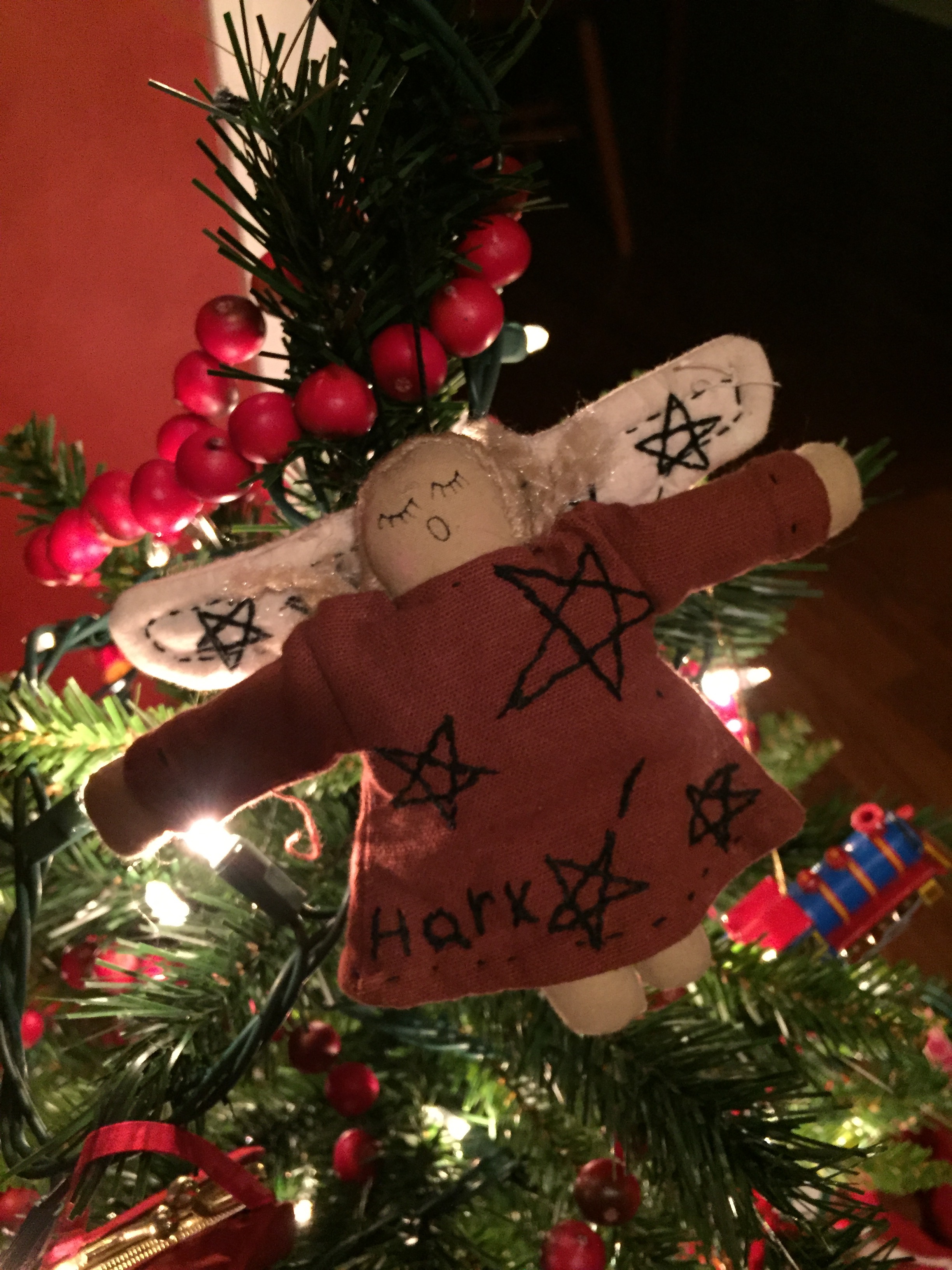
hark!

hark

arms wide-open, it’s the dawn that follows the silent night. night of awe. dawn of darkness lifting. the dawn, i pray for you, when the outlines of all your blessings come sharply, crisply, indelibly into focus.

when, perhaps, you find yourself all alone, nestled inside the flutterings of your heart and your soul, and all the Christmases of all the years before come tumbling softly, and this particular one, perhaps, leaps out from the pile because this is the Christmas when you’ve unwrapped a particular glimmering knowing from under your tree.

maybe it’s the simmering of newfound love. maybe it’s the weight finally shrugged off your shoulders. maybe, after all the hours of darkness, you’ve found your way to the flickering light off in the distance, and you’re home now, finally home.

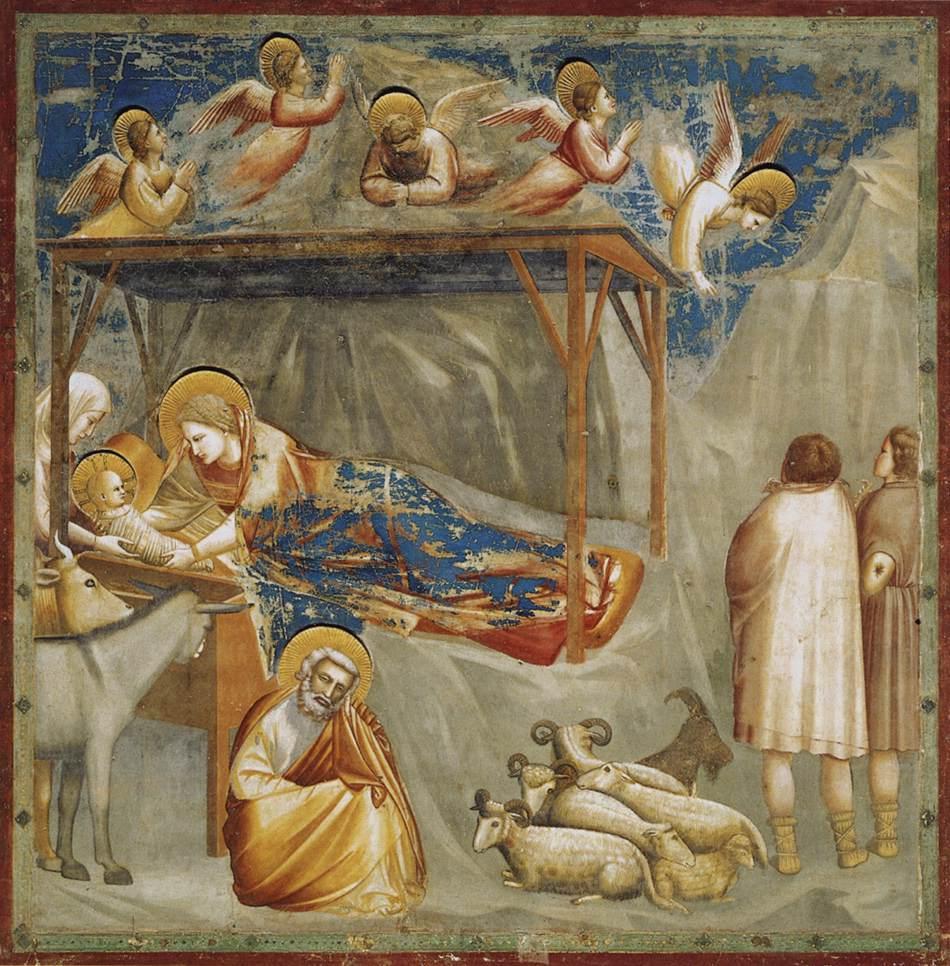
maybe it’s that the story of Christmas — the blessed virgin mother and holy child, the newborn babe laid in the straw, the star of wonder lighting the heavens, the beasts of the pasture poking their noses into the barn, drawn by all of the stirrings — maybe the story of Christmas this year awakens a place deep inside you that’s too long been numb to the hope, and the light, that nativity brings. that nativity lays quietly at the cusp of your heart.

come, open the gift. open the possibility of wonder. of glistening light. wrap yourself, for even just this one sacred hour, in the hush and the whisper of peace. peace on earth, please. but peace in your very own kingdom — you can make that happen if you take hold of wonder, if you chase out the noise, if you close your eyes (or open them wider than ever), and open your heart. breathe deep. inhale the Divine, animator of all that’s wonder-filled, that’s breathtaking.

that’s what i pray you find this blessed morning, under your tree, tucked in your heart. may this dawn of quiet at last, this day-breaking hour of stillness, seep deep into your every channel of wonder, into the depth and breadth and whole of your soul, and fill you with Christmas at its holiest.

amen. and merry blessed Christmas.

here’s one last little wintery blessing, from the pages of slowing time….

Meme-CountYourBlessings

may yours be a sumptuous, most heavenly day…..

footsteps straight to my heart

willie diploma wall

four years ago, it was the sound of his footsteps i knew i would miss more than nearly anything.

the thud of his footfall onto the floor of the room up above, the footfall that signaled to me, down below, that the boy i love had clomped out of bed, or trundled down the stairs, that he soon would be rounding the bend, showing his face, his radiant face, at the old kitchen door.

his footsteps are back.

and my heart couldn’t be more tickled, delighted, dancing its own little jig.

the thud of the footfall is one of those percussive refrains woven into the rhythms of this old house, of any old house, and it’s a sound you might take for granted — it belongs with the particular click of the doorknob, or the way the car door slams off in the distance, and your heart knows before you know that someone you love is now home. you might take it for granted until suddenly, without forethought, it’s silenced, it’s absent. until all you hear is the hollow emptiness of no more footsteps — or door clicks, or car door slamming in the not-so-far distance.

it’s a quiet that crushes you. the unspoken sonic abyss of the someone who’s gone.

and now, with the thuds and the clomps and the rushing of water from the tap in his bathroom once again punctuating the soundtrack of this old house, i find my old heart quickening, picking up its rhythm, pounding just a wee bit harder, as once again — in that way that happens to mothers — i wrap my whole self — body and mind and heart and soul — around this interlude of pure wonder and blessing.

indeed, it’s way more chaotic around here than just one week ago, when this old house contained only three peoples plus a crotchety cat. and the lumbering fellow we’ve added to the equation, once he and his papa pulled down the alley, unloaded the mountains of boxes and lamps and speakers and papers, he’s set this old house percolating once again with his particular cacophonies. yes, there was a hammer pounding a wee bit late into the night. and the avalanche of stuff hauled out of his room and into the upstairs hall, it could tangle you into a knot, and snuff out your breath if you happened to trip and tumble deep down in its clutches.

but a bit of a miracle’s unfolding. i’d call it the answer to a prayer, except that i never dared to pray for it.

the boy i love, the boy who graduated in a cloud of glories at his college on the hill, he moved back to chicago thinking he’d rent a studio apartment, try to pay rent while teaching in an inner-city classroom, before he heads back off to law school and PhD school, before he spends a life trying to right wrongs and carving out justice. but then, as he pulled his duffle bags and moving boxes back into his boyhood room, as he perused the websites of apartment listings, as he realized the rent for a space not much bigger than his room at the bend in the stairs might be tough to afford, he started to rearrange his thinking — and his old room that bore the totems of middle and high school and selves long past.

he pulled posters off DSCF1241the wall, peeled campaign stickers off his closet door. took down the little boy bulletin board i’d bought the day we moved into this old house. he cleared his book shelves of boyhood favorites, took down the hobbit and twain and j.k. rowling; slid in hobbes and kant and aristotle. hung his hard-won college diploma just above his old desk, the desk where he calculated his way through fifth-grade math, and where he typed his junior theme. he must have measured the proximity between the door of his old room and that of his little brother, the one he says he came home to be close to.
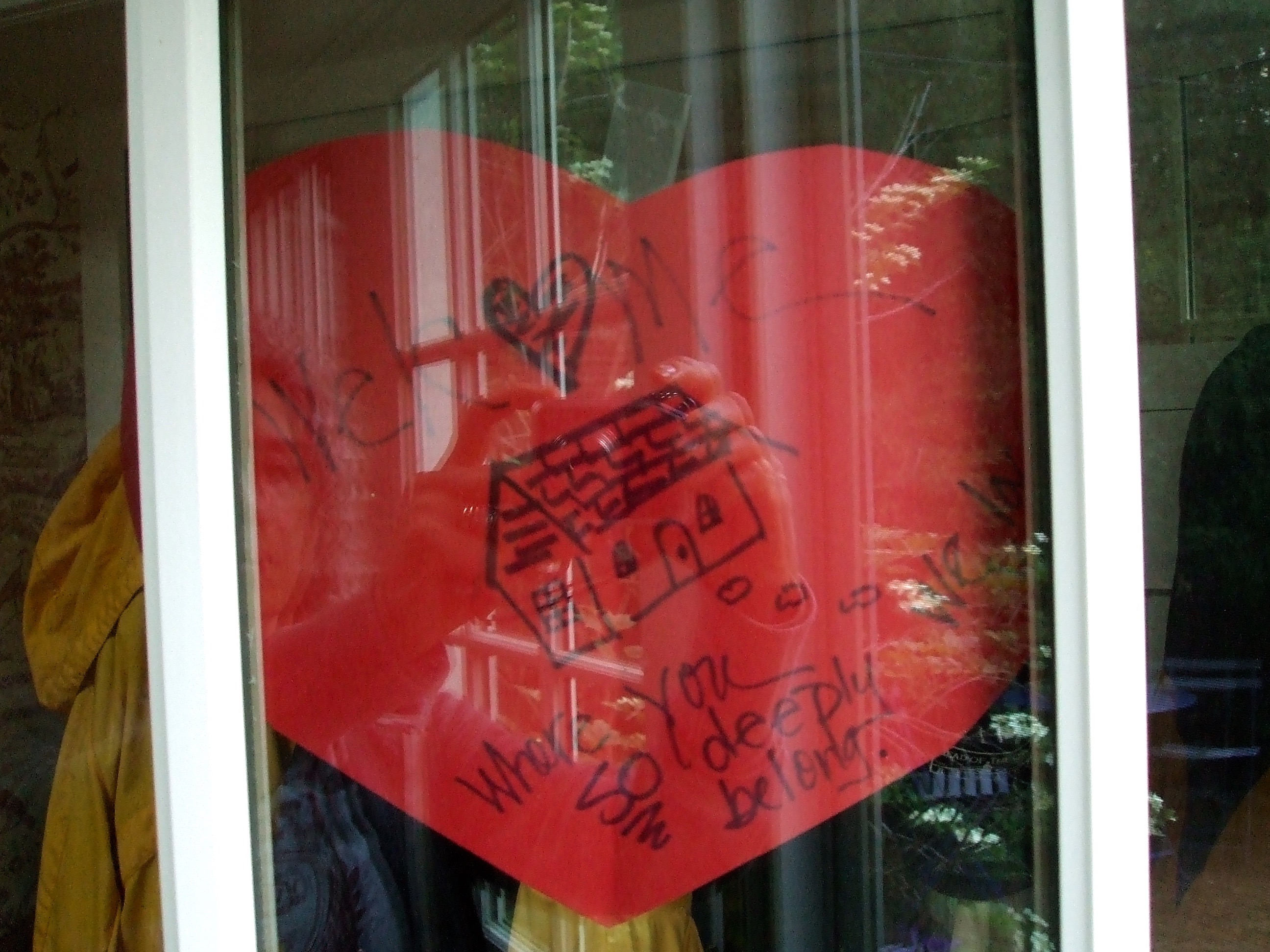
he’s decided to stay.

he’s perched his french press coffee pot next to my gurgling electric one. he’s added his paltry few spices onto the shelf next to mine. he’s plugged in his speakers, and asked if we could pull up the old navy carpet so he can stride on the birds-eye maple that’s too long been shrouded. he’s decided, for now, that home will be in the place with a room all his own, and a sprawling kitchen just down the stairs (the commercial-grade six-burner cookstove and his mother’s built-in grocery service might have helped tip the scales in the refueling department).

for now, he’s sticking nearby.

for now, he and i are sitting down to breakfast, lunch and dinner. we’re taking long walks. we’re holding our breath — together  — as he puts muscle to hammer and tries to sink nails into plaster. we’re sitting out in the summer porch, listening to night sounds. we’re backfilling all of the stories that hadn’t had time to be told.

sure, my days are topsy-turvy. and this house feels certain to burst. and the washing machine moans from over-exertion.

but for four long years i could only wish for such chaos. i didn’t dare to hope that the day would come that we’d once again breathe the same air, inhale the same sounds, delight in shared and unscripted hilarities, ones unfolding in real time, and in the same time zone.

i’m practically giddy at the truth that this kid is wise enough, and tender enough of heart, to buck the prevailing post-graduation currents, to simply and humbly move back home, for the sheer gift of deepening the bonds with his little brother, and his grandmother who is now 84, and who every tuesday of his growing up years devoted her days and attentions to him. he is seizing the days before they are gone.

he didn’t take a job in DC, didn’t post himself in the heart of manhattan. all that might come. but for now, he’s taking a pause, taking time for what matters.

back in december he told me that he was looking to do the most meaningful work in the years between college and law school, “and, honestly, mommo,” he said, via long distance, “i can’t think of anything more meaningful than being there for tedd,” his little kid brother, now on the cusp of going off to high school.

as poignant as anything this week, and pulsing too very near the surface, is my knowledge — keen knowledge — that not too many miles away i have a very dear and deeply beloved friend who is in a hospital, suffering unimaginable devastations, and she might be robbed of the chance to whirl in this very dear thing, in her children’s sweet presence, in days that tumble lazily one to the next. please God, i beg, down on my knees, let my beautiful friend and her most blessed children share in this, the holiest dance.

for me — a girl who preaches deep-breathing the blessing of each and every framed moment of time — the unanticipated gift, the knowledge that we might grab a few years we’d not known were coming our way, this feels to me like the gift of a lifetime, this sweet holy homecoming.

and it comes with its very own soundtrack: the sound of a particular footfall, sinking deep and deeper into my heart.

bless you, sweet will, and welcome back home.

DSCF1243

worry not about the tomes slid off the boyhood book shelf, they are safe and sound with me, and will soon find a home on yet another shelf, one of the many that line the walls of this old house. a prayer request: for my beautiful friend in the hospital, for gentle soft hours to come her way.

and a question: what are the sounds of your heart’s dearest soundtrack, the ones that tell you someone you love is heading toward home? or the ones that make your heart tick as mighty as ever could be?