
hummingbird wisdom, continued

six months ago, my dear and longtime friend mary ellen sullivan died. she was a writer, a chronicler of joy, i called her when i sat down to write her obituary, trying to distill her essence into a few short sentences and paragraphs that swept across the arc of a life too short. a month or so after she died, i found out she’d written me into her will, appointed me the keeper of her “creative work.” it’s a mantle i accept with heavy heart. a week ago, on a hot august afternoon, i met her brother in her emptied-out apartment, and he handed me boxes and boxes and boxes, her creative work, in all its iterations. it was perhaps the heaviest load of papers i’ve ever tried to lift. i didn’t wait long to open the lid of one of the boxes, to lift pages, to begin to read, to inhale the story of a life i knew well, a story told this time in mary ellen’s own words. i all but felt her beside me, or sitting across the table. i knew the intonations, the emphases of every single sentence. i knew she’d tiptoe into my dreams. i knew she’d left wisdom that i was to unearth, to not let die along with her.
night after night, i pulled up to the kitchen table, not far from the screen door, where the breeze blew in, not far from the night sounds, the buzzsaw of cicada, the chirp of the crickets. i’d pile a stack of journals and notebooks and paper-clipped papers to my left, papers lifted from the boxes that waited in the dark of another room, the load of mary ellen’s boxes.
it was, i tell you, like sitting down with a dear friend, pulling in close enough to brush knees against knees. it was as if i’d said, “so tell me your story,” and thus she began, in whispers. i’d known these chapters in real time, and here i was, reading, hearing the whole of it in details sometimes so intimate i closed the book and tucked it aside. i promise you my tender heart is guiding me through what’s mine to shepherd to light, and what’s best tucked away.
i read page after page from the writing classes she’d take, from the book about africa she’d long hoped to write, to publish.
and then i picked up this: two stapled pages, curled and yellowed at the edges, typed in a font from computers of long ago, early HP perhaps. i read the first sentence, and started to tremble. i had a hard time reading through tears, but this is what i began to read…
“If I were to die in five minutes, I would miss sleeping, and the warm wood of my apartment floor. I would miss talking to Barbie on the phone on Saturday mornings with a cup of coffee in my hands. I would miss running errands in the neighborhood and going for long hard runs after work when the air is clean and cool and gives you the shivers when your sweat starts to dry. I would miss the ocean most of all. Any ocean, any beach. The feel of wet sand between my toes and the waves breaking over my body and the sand going from warm to cool in the early evening when the sun starts to set and everyone but me and my family leave the beach and we just sit there and talk and read and watch the sand turn purple and the water a deep blue and the sky orange and very beautiful. I will miss running in the water and splashing so much that you might as well go swimming so you do.
“I’ll miss kissing a man for the first time…..”
and then, i tell you, i could barely read, the tears were falling so hard, so fast. (they are now, truth be told….) so i waited, and breathed, and wiped away the tears, and i looked back at the page, the page trembling in my hands by then, and i read the litany of things my friend would miss, if she were to die in five minutes, five minutes from the moment she wrote all those words. in fact, she died on march 13, 2016, far sooner than she’d ever imagined. she never thought the ovarian cancer would kill her. she fully intended to vanquish the cancer. to become someone who had had cancer.
but my friend who died, who wrote this litany in a writing class, an exercise titled, “death is the name,” who wrote this thinking death was the last thing that would ever happen to her (yes, i see the unintended word play, and i’m ignoring it), whose words i now inhaled half a year after she had died, she wrote that she’d miss her down comforter, and staying up late by herself and “the freedom the night gives.” she wrote that she’d miss the first taste of an expensive dinner, and the last gritty drop of a bottle of red wine. she wrote that she’d miss hot baths and getting lost in paperbacks.
her sentences grew more and more beautiful, the deeper she sank into the exercise, wrapping herself in the velvet cloak of worldly magnificence.
i was struck, hard and deep, by the simplicity of the litany. the depth and dimension of each pulsing joy, now taken away.
she made me think hard about how our lives are stitched of thin but mighty threads, glimmering delicate threads, threads we’d be wise to notice, to run our fingers across, again and again, for they’re what’s woven into the beautiful whole.
our lives, she made me realize once again, are a textured tapestry of heartache and joy, of blessing and softness and shadow and light, of everyday wonders that awake us to the moment, so the moments slow to a pause, so we behold each blessed minute of our awareness, our awakeness, so each hour is relished for the gift that it is. so not an hour goes by unnoticed.
“if i were to die in five minutes,” she wrote. and i read those words six months after she did. and thus, each word came to me as if shouted through a megaphone: be awake. pay attention. savor the blessed, the beautiful.
the warmth of the mug you hold in your palms? notice it. bless it. you’ll so miss it when it’s gone, when you’re gone.
a question and a challenge: what would you miss, what blessing upon blessing across the quotidian arc of your day? make a list, compile your litany. and then, pay closest attention today. and tomorrow. and the day after. my friend mary ellen would love you for that.
i titled this “hummingbird wisdom, continued,” because my friend mary ellen was all about the hummingbird. she wrote a blog called, on the wings of the hummingbird. and she once wrote these words explaining her captivation with the hover-winged bird:
“My favorite description of the hummingbird magic comes from Ted Andrews, who wrote the seminal book on animal totems called ‘Animal Speak.’ He says, ‘There is something inside the soul of all of us that wants to soar through sunbeams, then dance midair in a delicate mist, then take a simple bath on a leaf. There is something in our souls that wants to hover at beautiful moments in our lives, making them freeze in time. There is something in us that wants to fly backwards and savor once more the beautiful past. Some of us are just hummingbird people.’
“Guilty as charged.” — Mary Ellen Sullivan, May 30, 2012

 my father wasn’t there, had been gone 10 long years by then, so my brothers, all four of them, took me by the arms. i’d walked down the stairs i’d once tumbled down as a clumsy little girl, the ones where i sat after bee stings, on afternoons when my mama dried my tears. we’d walked out the front door, my brothers and i, arm in arm in arm, the five of us, and threaded through the garden gate. the late august garden was in bloom; my mother had made sure of that. and there, at the dip at the bottom of a sloping lawn, where the chairs gave way to chuppah, was the tall, dark, quite handsome fellow to whom i would wed my life.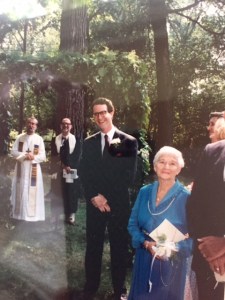


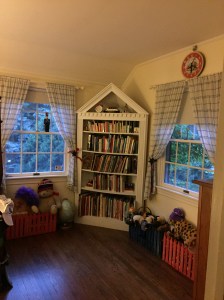 made a room that’s something of a relic of the boyhoods i so loved. the ones where books were tucked in corners, slid from shelves, pages turned. the boyhoods populated by wooden blocks and trains. now, a little chair sits empty. the alphabet rug, the one i once bought for a nursery, it’s off at the cleaners and the rug repair shop. i seem to be preserving a chapter of our lives, pressing it onto the pages of my heart. a little part of me, perhaps, is hoping that some day a new crop of little people will climb the stairs, turn the corner and see the wall of books, and the bins of blocks and puppets. but mostly, i think, i’m making a room for me, the mama who will never ever forget.


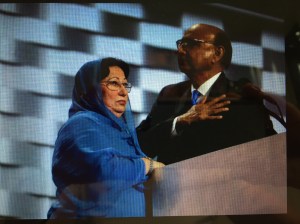 i admit to tears — tears when the muslim immigrant father pulled his shiny copy of the Constitution from the pocket beneath his impeccably-pressed suit jacket. tears when his hajib-shrouded wife, the gold star mother of their fallen soldier son, stood by his side, without saying a word, looking as if this stage might be the last place in the world she wanted to be, except that deep in her heart she had a son whose story she would not let be silenced. the goosebumps began when the father, in his halting english, tinged with middle-east lilt, recounted how immediately after migrating to the u.s. from the united arab emirates he’d taken his three sons to visit the jefferson memorial. the father recited the words, the ones etched in white Georgia marble, jefferson’s words swearing “hostility against every form of tyranny over the mind of man,” that so spoke to his son, whose name was Humayun, the son who had grown up to be a soldier and who died in iraq, an army captain who charged into death to save his soldiers. on june 8, 2004, when an explosives-laced taxi barreled through the gate of the army base he was there to protect, Capt. Humayun Khan told his soldiers to hit the dirt while he ran 10 steps toward the taxi, 10 steps before the car bomb exploded. the son, who had dreamed of becoming a military lawyer, is now buried, with bronze star and purple heart, in arlington national cemetery.



 miss rumphius, the great aunt of barbara cooney, the great children’s book writer and illustrator, is little and old when we meet her on the very first page of the very fine book. she lives in a little house overlooking the sea, on an island in maine. but she hadn’t always been old, we are told. she had been young, and she dreamed, and she longed to travel the world. when she was young, she spent her days by her grandpapa’s side in his wood-carving shop, where he chiseled away at great chunks of trees, making them into curly-cues and cherubs and figureheads for the prows of great sailing ships, ships that would criss-cross the seas. and, sometimes, when her grandpapa got too busy to finish his paintings of sailing ships and faraway places, he would let little alice (for that was her name before she was called miss rumphius) pick up his paint brush and “put in the skies” of his paintings. and in the evenings, when she sat on her grandpapa’s lap, curled up for the great and nearly lost art of unspooling stories, she told him she too wanted to sail the world like those ships, and, someday, live beside the sea. her grandpapa said that was all well and good, but there was a third thing she must do: “you must do something to make the world more beautiful.”

 pull up a chair