pull up a chair

where wisdom gathers, poetry unfolds and divine light is sparked…

gravitational pull

i can’t stay away. 

etched on a map, you might not notice; its tucked-away nature is but the flint of its charm: a treasure in almost plain sight. i might have zipped by a thousand times. it only took once for curiosity’s lure to draw me into its fold. and now it won’t let me go.

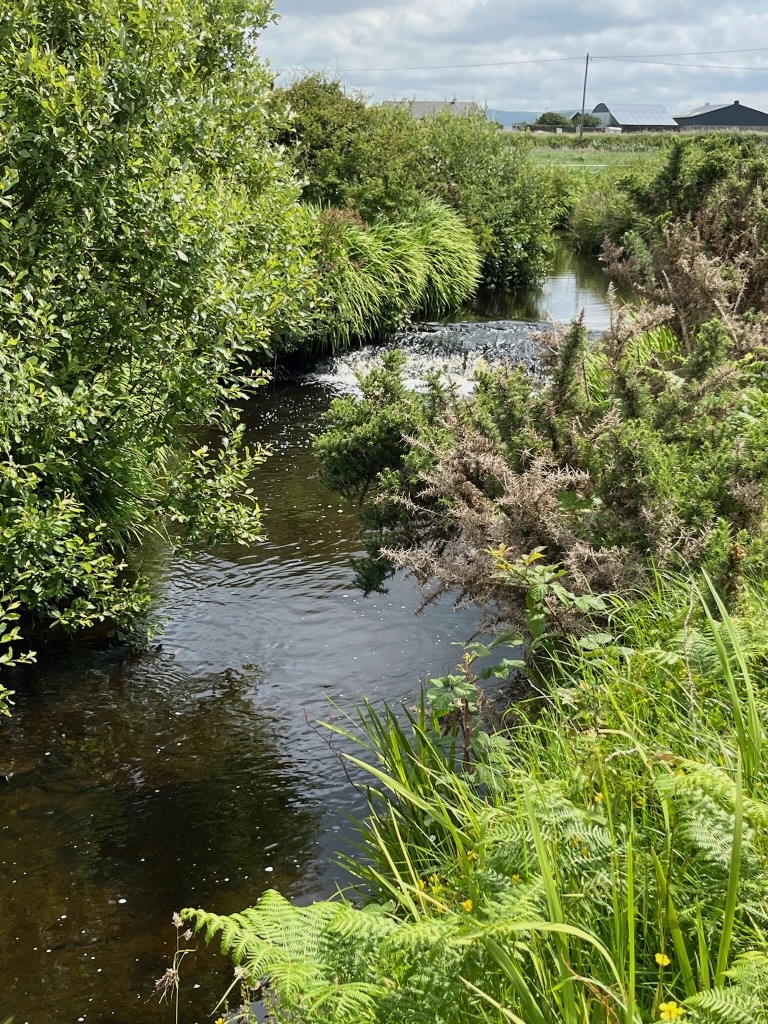
i’m coming to think of it as my footpath to the wellspring where the sacred stirs me, a nowhere-else-like-it sanctuary under the arbors, carved into the banks of a slow-flowing channel, a serpentine zig and a zag, through patches of woodland and birdsong. 

as far back as i can remember, the woods behold wonder to me. my biography would be laced with a trail through woodlands and ponds and gurgling creeks. the never-ending acres of lily of the valley where my papa once drove me as a wee girl of three. the woods across from the house where i grew up, a copse that came to life in my imagination, one day a pioneer’s outpost, the next day a place to pretend i’m laura ingalls wilder in the big woods. 

trailheads beckon. the barely-noticed aperture into the brush, where suddenly suburbia is leagues and leagues away. maybe it’s my imaginative overdrive, or my storybook tendencies. but give me a path, and a parting of trees leaning this way and that, and my feet cannot but go forward.

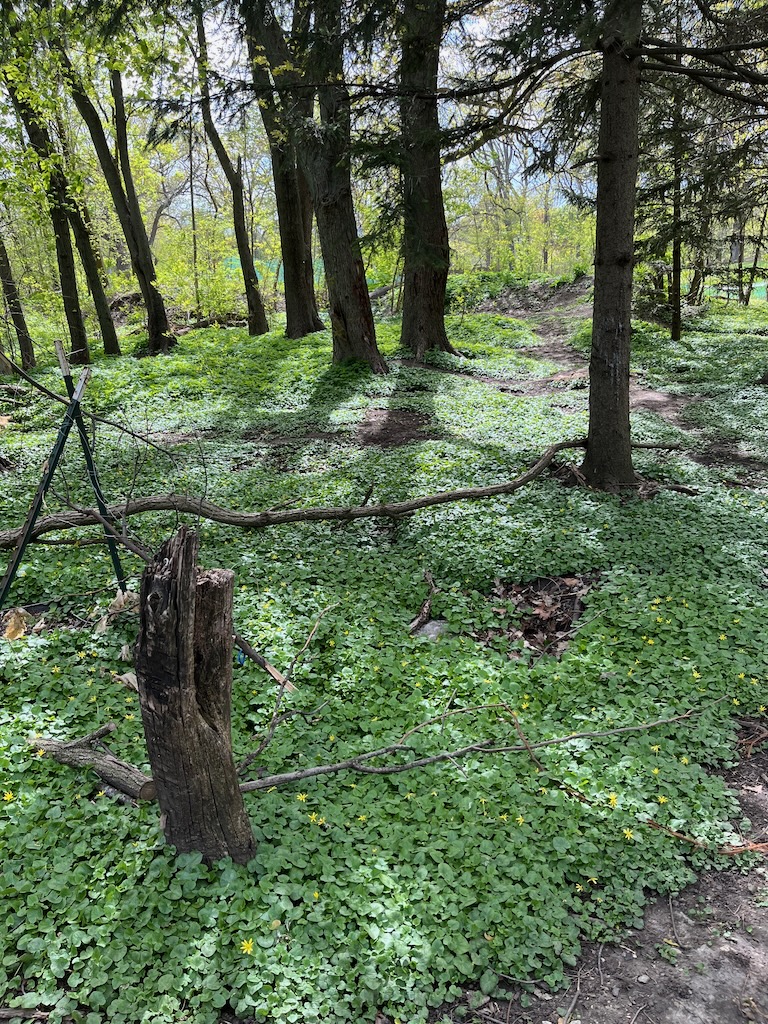
so it was on mother’s day morn when at last i found myself at the trailhead i’d vaguely noticed in the making. trees had been felled, and buckthorn burned by the wheelbarrow full. logs were yanked from where they’d fallen, and laid in a line, woodchips carpeted the paths in between. a woodland trail that meanders along and through a woods both ancient and newly imagined. 

enchanted at first footfall, the only way to describe it. the ups and the downs, the dappling of light, and the peek-a-boo shadow. i walked with my eyes and my mouth wide open. over and over i marveled. 

it’s a woods best described as delicate, at least in the moment—a petit point of vernal ephemerals stitched into the hillsides. springtime at its tenderest, springtime in may when it’s no longer tenuous. 

it’s a place that suddenly holds inexplicable pull on me. enough to lurch me out of my wintry posture, curled over a book or an alphabet keyboard, snug in the nook by the wall-to-wall windows. it’s a place that lured the prayer right out of me. a place to dwell in my quietest stillness. 

it’s my axis mundi, you see. 

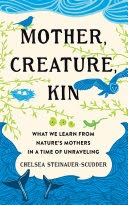
my friend chelsea steinauer-scudder, a breathtaking writer and author of the new book, mother, creature, kin: what we learn from nature’s mothers in a time of unraveling (broadleaf), explains: “i’ve heard countless stories of what i’ve come to think of as axis mundi experiences: encounters that have pulled someone into a deep experience of felt belonging upon the tiny bit of Earth that they find themselves upon. 

“…within the study of religion, an axis mundi is a sacred pole, literal or figurative, which is fixed in a particular place, connecting Earth to the realms of heaven, underworld, and divine. “

these holy places might be a mountain (the Mauna Kea on Hawaii’s Big Island, known by the Indigenous peoples to be the umbilical cord, “the place from which the world emerged”), a cosmic tree (Norse mythology), the Ka’aba in Mecca (which pilgrims encircle seven times, as within it is the stone believed to have been handed to Adam as he was banished from Eden, so his sins would thus be forgiven). 

or, in my case, an undulating woodland path along what in fact is a sanitation canal, though i pretend for the life of me that it’s an idyllic stream or a creek. one that just happens to shimmer an odd shade of aqua, a phosphoresence that might signal toxins astir. 

my friend chelsea goes on to write that “we are a species in need of centers,” and within us there is encoded “an inherent capacity for place-based awe.”

those are the places with gravitational pull. a pull from the deepest well. the sacred well. 

or, as chelsea distinguishes between the capital-A Axes Mundi (the most sacred of places so recognized by cultures or religions), and the small-a axes mundi (the ones you and i might call our own), the ones i know best are the quotidian, intimate ones, defined as “small, daily irruptions of majesty, those any-place encounters with the sacred.”

no surprise then that i can’t stay away. it’s an itch that can’t be scratched till i double-knot my sneakers, and try to remember sunscreen (i never do). 

and it’s walking through a poem, quite literally. the soundscape a montage of birdsong and trill, punctuated with quarter notes and a screech that scares off the feeble.

these are the verses i walked among on just one of my mornings traipsing along the trail: common yellowthroat; red-bellied woodpecker; swainson’s thrush; red-winged blackbird; northern cardinal; blue jay; goldfinch; baltimore oriole; rose-breasted grosbeak; gray catbird; and a hairy woodpecker to boot. it’s as if the crayola crayon box was suddenly feathered in flight. 

and in the flora department, a whole other poem: bloodroot, bluebells, celandine poppy, and columbine. lily of the valley, trout lily, spring beauty, wood anemone, and blue cohosh. jack-in-the-pulpit, shooting star, mayapples, and dutchman’s breeches. 

all these names, which whirl in me thanks to the Original Mother Nature who schooled me, got me to wondering who in the world gave the names to the winged flocks and the leafy ones too. the stories behind names are their own wonders. the ones from folklore and legend are the ones that charm me most: jack-in-the-pulpit is said, of course, to resemble a preacher spreading the Good Word; the trout lilies’ mottled leaves resemble the markings of the freshwater fish; and dutchman’s breeches clearly resemble the pantaloons of one who’d also wear wooden shoes.

those, though, are merely the preamble curiosities, the ones that loosen my soul, open me up to the prayer that burbles up whilst sauntering deeper and deeper, per God’s gravitational pull, unwilling to pause till i get there. to the place where i go to feel as saturated with the sacred as i do of the sun when at last i plop onto the stump of a log, and consecrate the most blessed moment of being.

where is your axis mundi?


wislawa szymborska

and before we part, a poem worth pondering, from the late, great polish poet and nobel prize-winner, wislawa szymborska

Life While-You-Wait

Life While-You-Wait.
Performance without rehearsal.
Body without alterations.
Head without premeditation.

I know nothing of the role I play.
I only know it’s mine. I can’t exchange it.

I have to guess on the spot
just what this play’s all about.
|Ill-prepared for the privilege of living,
I can barely keep up with the pace that the action demands.
I improvise, although I loathe improvisation.
I trip at every step over my own ignorance.
I can’t conceal my hayseed manners.
My instincts are for happy histrionics.
Stage fright makes excuses for me, which humiliate me more.
Extenuating circumstances strike me as cruel.

Words and impulses you can’t take back,
stars you’ll never get counted,
your character like a raincoat you button on the run?
the pitiful results of all this unexpectedness.

If only I could just rehearse one Wednesday in advance,
or repeat a single Thursday that has passed!
But here comes Friday with a script I haven’t seen.
Is it fair, I ask
(my voice a little hoarse,
since I couldn’t even clear my throat offstage).

You’d be wrong to think that it’s just a slapdash quiz
taken in makeshift accommodations. Oh no.
I’m standing on the set and I see how strong it is.
The props are surprisingly precise.
The machine rotating the stage has been around even longer.
The farthest galaxies have been turned on.
Oh no, there’s no question, this must be the premiere.
And whatever I do
will become forever what I’ve done.
~ Wislawa Szymborska ~

(Poems New and Collected 1957-1997, trans. S. Baranczak and C. Cavanagh)

not all gravitational pulls are without hazard

standing at the doorway of time

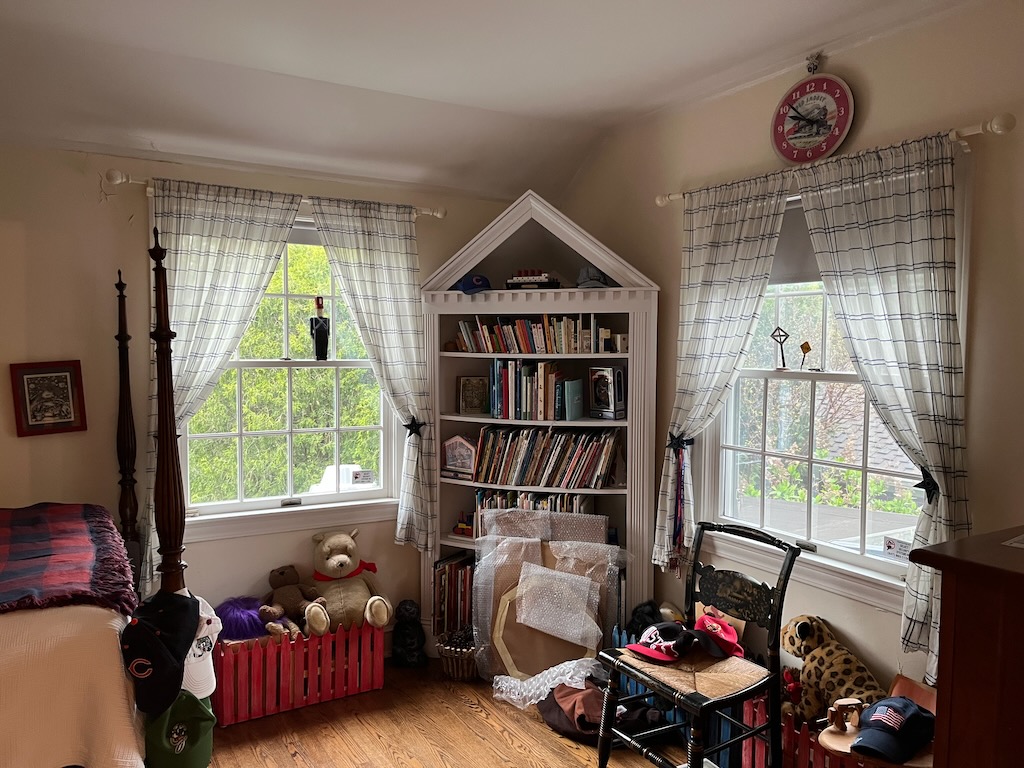
i found myself standing in a bedroom doorway the other day, staring. you might have thought i’d momentarily lapsed into freeze frame, but my mind was whirring wildly. it must be a sign of the times — my times, my where-did-the-years-go, i-remember-all-that-unfolded-in-this-storybook-room flash in time. 

i call it a kodak-carousel moment, a name in itself that dates me. as obsolete a term as there might be here in the age of slide shows on phones. no need to plunk in the slides, the film framed by cardboard, a portrait in miniature, and click-click-click to advance. 

the kodak carousel in my mind was playing and replaying the little boy room, the room where my miracle baby grew up. the room where we once stacked his baseball jersey and glove, his ballcap of his very first team, on the eve of his very first game. the room where a fallen-out wiggly tooth was laid to rest (in hope for the fairy) under the pillow. the room where night after night we prayed he would please fall asleep so we could tiptoe our escape without raising a plaintive cry. 

i suppose i’ve made something of a museum of that room. added a few paper-wrapped hand-me-downs tucked in a corner (a safe spot for storage) but otherwise it’s all as it was. the alphabet rug, where i taught two boys their ABCs. the four-poster bed where my grandma once slept, a bed where i too slept for years, and then both of our boys. and now whoever comes to visit. the bins of blocks and bears and hand puppets, too. a whole childhood frozen in time. 

and i won’t touch it. 

the drawers of the dresser are filled these days with extra sheets, and art project makings. no longer stuffed with little boy PJs, and shorts and T shirts, size small. but if you open the top drawer on the right you can still find a vial filled with the teeny-tiniest babies of teeth. i couldn’t bear ever to toss those. 

in time, an old house starts to show its cracks. and chips in the paint. and squeaks in the floorboards, and layers of impenetrable grease in the vent of the diner-grade six-burner cookstove. 

i fear i might be blind to the blemishes as the house crumbles around me. 

all i see is the room where i tucked into bed one reluctant sleeper, night after night, for sooo many years. where he learned how to read, and chased away night-prowling monsters. and another (the room at the bend in the stairs) where we brought home the boy with the broken neck. where he wrote his essays to get into college, and years and years later studied for LSATs. (and just a few weeks ago, home for easter, sat at the old desk and recorded a lecture for all of his first-year law students.)

i look at the pillows on the old four-poster bed, and remember the nights and the mornings we propped up against them, turning the pages of books that left us—both reader and readee—with tears soaking our cheeks. charlotte’s last web. or giggling at the antics of a big raspberry-hued rascal named Ted. or that little monkey named George. 

it seems a holy thing. to pause, to turn back in time. to anoint each moment, each memory, with the deepest form of thanksgiving. to soak in to the deepest fiber of your soul those hours you thought might never end. 

i hope, in that ephemeral fluidity of time, we can rewind the clock, even if only in our soul, to finger each hour, each grace, as if the bead of a rosary. to press it against the whole of who we are now. day by day each of us more graced. as we fill ourselves with accumulation of blessing we’ve lived. the boy who defied every odd of a very old singular ovary, the pregnancy that lasted all nine months, the chromosomes that aligned just as prescribed. the life that was given to me. the years upon years of joy, of undiluted wonder, that grew up in that room where i now stood. soaking it in. soaking and soaking. 

saying my prayers once again. 


yesterday was a glorious day in the life of the soul, and in the life of the church i was born into. it was a stunner of a moment as we listened, in italian, to the first then the middle name of the new Il Papa. in all the italian we didn’t yet know that for all of his life, he was just Bob. Bob the priest. Bob the cardinal. now Leo the Pope.

as i wrote to my boys in the flurry of texts that then punctuated the day, “i feel close as i’ve felt in a long time that God had an actual hand in worldly affairs. this world needs a voice unafraid to speak to worldly power, and proclaim the rule of God. it’s a paradigm the polar opposite of so much idolization in this world. peace and love are not vagaries. huge swaths of the world desperately need both.” 

there is much to learn and to listen to from this unlikely pope from chicago’s very own south side. a pope who roots for the sorry sorry white sox, a pope who loves an aurelio’s slice. a pope, we learn, with creole roots. a pope whose grandparents identified as black in a turn-of-the-century census from new orleans’ seventh ward. a pope who left for peru as a very young priest, to work with the poor. a pope with the courage to set straight those who misread Catholic theology—no matter their office, nor the power they wield. i have been praying with all my heart for a voice of true courage in this world. and this morning, i am thinking that in time the moral arc of the universe does sometimes bend toward justice.

what doorways to time have you found yourself staring into of late? and what stirred through your heart at the news of the new Il Papa?

happy blessed almost birthday to a most beloved chair who, around here, goes by the name lamcal. a wise woman of the highest order.

and happy mothering day to all. because, in my book, mother is a verb, and if you gather here you do it magnificently. xoxox love, bam

springtime’s reluctant suitress

i was, for reasons that escape me, something of a reluctant suitress this year. the season’s slow-building seductions did little to seduce. i turned a blind eye. gave the cold shoulder. 

harumph.

spring wasn’t an easy sell this time round. it came on thin, and unconvincingly. it taunted, played catch-me-if-you-can. and i couldn’t. couldn’t catch it. 

i worried it might wholesale evade me this year. where was the catch in the throat, in the heart, in the soul, that usually caught me? had i been numbed, beaten down by the thrum of the world? was the malaise of the moment eclipsing the vernal exuberance?

but then, this week, it opened the spigot, came on rushingly, came on like a buttery rivulet poured on a mound of mash. i couldn’t resist. 

i fell hard. have found myself dizzily staring out windows. even more dizzily tracing the garden’s edge. staring. marveling. asking again and again how it does it. how it knows. how, year after year, for all the inhales and exhales of the millennia of this holy Earth, does it find the oomph to give forth again and again and again?

if there’s wisdom in this year’s slow coming—and we know there is, for the earth is the vessel of wisdom without end—it must be one of patience. of giving it time. no need to go anxious when the oomph isn’t there. “live the questions,” taught rilke, in the one phrase we’re most apt to remember. but it came at the end of a wisdom more fulsome in the whole:

“Be patient toward all that is unsolved in your heart and try to love the questions themselves, like locked rooms and like books that are now written in a very foreign tongue. Do not now seek the answers, which cannot be given you because you would not be able to live them. And the point is, to live everything. Live the questions now. Perhaps you will then gradually, without noticing it, live along some distant day into the answer.” 

so much of life swirls in the liminal time of not knowing, of waiting, of dwelling in the not-yet. 

so this spring was for me. i knew what the calendar said. i knew how the sun had crossed its equinox, how light and shadow had fallen in equal measure and we were now slithering toward light and more light.

but the light out my window didn’t convince me. nor the nubs of green pushing up from their winter’s retreat. maybe it was the noise of the world blocking the sense that something lush and luscious might really be coming. 

and then the abundance came. the climbing hydrangea emphatically leafed and greened, all but tapping at my kitchen window, come rub your nose in us. the viburnum buds about to burst with their pyrotechnic perfumery. the nodding heads of bluebell and snowflake. the aubade of the cardinal. the rampant rufflings of feather as sparrow mounts sparrow in the delirious dance of procreation. 

and when the wind blows, which it has quite often this year, magnolia petals take flight, filling the air with what appear to be wings. a fluttering of perfumed birds playing on the breeze.

fibonacci spiral

it might have been the question mark of a woodland fern unfurling that first stopped me on a path this week. a flock of inquiry rising from the garden, in all the shadowed places. it’s the mystery of the universal spiral that catches me by the throat, the fibonacci spiral a leitmotif of all creation. born of the mysterious fibonacci sequence of 1, 1, 2, 3, 5, 8, 13, 21—wherein each number is the sum of the preceding two, beginning with 0—the spiral is the geometry laid upon that very grid. a geometric pattern constructed by connecting the corners of squares whose side lengths are consecutive fibonacci numbers, the spiral (sometimes known as the golden spiral) pervades the cosmos, from the spiral in a sunflower, to the question mark arising from my garden, to the scales of a pine cone, to the swirls of the chambered nautilus. 

chou Romanesco, or Romanesco cauliflower

i sometimes imagine God so delighting in the whorl that the divine enthusiasms couldn’t be tamped, and thus its profligate presence wherever we look: into the vast galaxies above or the dappled woodlands below.

i often sense the spiral is but a trace of the soul’s very geometry, the innermost chamber tightly held at the apex. but what i don’t know is whether we spend our lives unfurling, from the nucleus of the sacred from which we divide and multiply in the womb, or whether ours is a journey inward, inching closer and closer into the fertile and eminently holy nub. 

is it furl or unfurl? twining in or unspooling beyond?

such are the questions that arise from the earth’s thawing, such are the questions put before me, whirling within me, as the season begs only one thing: come close, bend low, watch what arises. from the earth, yes, but more so your soul. 


a poem plucked from the book of garden wisdoms….

this is the recipe of life
said my mother
as she held me in her arms as i wept
think of those flowers you plant
in the garden each year
they will teach you
that people too
must wilt
fall
root
rise
in order to bloom
The Sun and Her Flowers by Rupi Kaur


what stopped you in your tracks this week?

a few summers ago, in one of the wonders of my life, my beloved friend kat the priest handed me a ticket to a summer course at yale divinity school, a course i came to call my “poetry school.” my firstborn (now the law professor) was at law school there at the time, and for the summer had shuffled off to DC, meaning there was an empty apartment where i could play house–or college–for the week. so every morning i shuffled down the lanes of new haven and settled in for a day of poetries with a professor who happens to be named david mahan–yes, exactly like my last name, only without the “y”. when he wasn’t brilliantly teaching poetry, he was running a glorious something called the Rivendell Institute, which “seeks to examine and advance the contribution of a Christian vision of life to human flourishing and the common good within the academy and contemporary culture.” within the institute there is another something called the Rivendell Center for Theology and the Arts (RCTA), and their mission is “curating conversations between a variety of interlocutors.” long story short, this week, in their spring issue of Among Winter Cranes, RCTA published an excerpt from my Book of Nature, and since publishers love eyeballs, here’s the link to the essay, On Paying a Particular Attention.

Dear God, thank you.

Dear God,

Um, I hate to be so bold but we could have used him a little bit longer. (You undoubtedly already know that.) Things are pretty rough around here. Whole swaths of this holy earth, and the people who populate it, seem to have lost their minds. And maybe their souls. 

As You most certainly know, and definitely must have heard, his was the rare voice that could drown out the ungodly noise. The cacophonies of greed and grievance, the ugliness of sin and the Self that thinks it’s higher and mightier. He didn’t let up when it came to the terrible, terrible traumas of war—newborns bombed in hospital nurseries; toddlers drowning in turbulent seas, washing to shore, as if cast-aside flotsam; whole families entombed in the rubble of raining-down concrete and rebar in murderous twists.

He called it where he saw it: called out the avarice of modern capitalism and consumerism, diagnosed it as the fundamental root of the exploitation and suffering of the poor and the vulnerable. Named it “the Devil’s dung.”

He minced not a word in a letter to American bishops this February, when in the wake of the current administration’s drastic deportation campaign, he wrote that while nations have the right to defend themselves, “the rightly formed conscience cannot fail to make a critical judgment and express its disagreement with any measure that tacitly or explicitly identifies the illegal status of some migrants with criminality.”

He didn’t stop there: “The act of deporting people who in many cases have left their own land for reasons of extreme poverty, insecurity, exploitation, persecution or serious deterioration of the environment, damages the dignity of many men and women, and of entire families, and places them in a state of particular vulnerability and defenselessness.”

Il Papa, il mio papa!

Oh, dear God, thank you immensely for making his lifetime line up, at least for a while, with mine. I was starting to fall off the edge there, till the first puff of fumata bianca arose from the Vatican chimney back on March 13, 2013, and the bells from St. Peter’s rang through the city.

Dear Francis filled my lungs again. He preached the version of You that I’d long pressed to my heart, the One taught to me by my post-Vatican II Sisters of Loretto, they who puffed cigarettes behind the convent, traded in their flowy black habits for street clothes and lipstick, all while strumming guitars and singing kumbaya, and all while watching films like “The Red Balloon,” where we little Catholics were meant to evoke the godly meaning from the metaphor.

He was, far as I could tell, a walking-talking, put-your-money-where-your-mouth-is, “love as you would be loved” kind of a guy. He colored wildly outside the lines, as if to shake us out of our stupors, our thinking the ways of the world were the only ways there were. As if to remind that love, honestly, could shatter the worst kind of walls, break through to the tender core at the heart of us all—the one You nestled inside all of us when You breathed us into being. 

His time as the 266th charge of the Church was something of a Kodak carousel of indelible encounters, the ones you cannot forget because they sear you so soundly. (p.s. He was mighty fine with the pen, as well; at least one modern poet called him “the most literary pope of the modern Vatican.”)

He took on no airs. Which made his message all the more of a wallop. He seemed to be saying that we too, in our fumbling, bumbling, banged-up bodies, we too could reach for the heavens. 

His message, quite simply, was to remind that we’re all equipped and ready to cut a swath of radical love through this world. 

And what I really loved about the beloved Argentian Jesuit were the moments when he reached out his arms, and cradled the sobbing child, especially the little boy whose atheist papa had died, and the boy was so very worried about what would happen to his papa. When the little guy was all but choking on his sobs and the words to his question, “Is my dad in heaven?” Francis called out to the little boy, “Come, come to me, Emanuele. Come and whisper it in my ear.” And everyone sobbed, while Francis quelled the boy’s fears and spoke to the crowd: “What a beautiful witness of a son who inherited the strength of his father, who had the courage to cry in front of all of us,” Francis said. “If that man was able to make his children like that, then it’s true, he was a good man.”

Or the little ones born with an extra chromosome who sometimes wandered curiously right onto the altar in the middle of Mass, or a homily, and instead of shooshing the child away, he stood there beatifically smiling, clutching their soft little hand. And went right on with his papal business.

Pope Francis embraces Vinicio Riva, the man with neurofibromatosis.

Or that indelible image of Your Francis first kissing then cradling the man with the eruptions of leathery tumors curdled across his face, his scalp, and clear down his neck. 

And what struck me most, dear God, when I awoke Monday morning to the news that he’d died in the night, was the sudden stunning realization of how breathtakingly he had died—a lesson for us all, and surely for me. I believe he knew these were his last days on earth, when he insisted on leaving the hospital, and knew that until he breathed his last he would teach his last most lasting lessons. In the last week of his life, he visited with 70 prisoners in Rome’s Regina Coeli Prison, from a balcony overlooking St. Peter’s Square he blessed the crowds, and in his Easter Sunday sermon he begged for mercy for “the vulnerable, the marginalized, and the migrants.” He also sent an emissary to preach compassion to the nation’s second-highest ranking executive officeholder and fairly recent convert to Catholicism. 

And then, and only then, he breathed his last. 

I barely have words for the emptiness left in Francis’s wake. It’s rare these days to find a soul who’s proven her or himself worthy of speaking such penetrating truth that the whole world turns an ear to listen. 

We listened, and some of us shouted silent hallelujahs every time. 

We are a world with a spinning moral compass. Up seems down, and right and wrong are inside out and sideways. Hate is cloaked, too often, as a return to the old ways. Truth is chopped into bits and spit back out in bilious flows. 

Are we meant to be the collective voice to fill the new and jarring silence? Is that the point? He constructed the paradigm, handed us the blueprints, and now it’s us who must step to the line, to be brave now? 

Maybe it’s a blessing that much of the world is weeping. Maybe, if we follow our tears, we’ll dig down and rise up. Maybe, like Francis, we can look out at the battle field that is the world and make of ourselves the field hospital set to begin to stanch the bleeding, and work to heal some of the wounds. 

Anyway, God, we’re on it. And thank you, thank you, thank you.

Love, BAM

what memories or moments of Francis most lastingly speak to you?

photo above is from the little video i managed to capture when i managed to all but stumble into the path of the oncoming PopeMobile this past summer in St. Peter’s Square….

and p.s.s. a letter to God, i figured, called for capitals. thus, i made rare use of the shift key this morning….

the nautilus of sacred time

last night, from my wooden pew in the great stone nave that is the church where i pray, i listened to the words spoken from the pulpit, and i imagined back in time to the night in a garden when the man and God wept. i imagined his betrayal. i imagined how he was tried on charges trumped, convicted by the roar of a deafened and deafening crowd, then stripped, and flogged, and soon told to carry the cross upon which he would breathe his last and die.

i thought of who this man-God was: how he’d upturned the tax-collectors’ tables, and the moneychangers’ too. i thought of how profoundly he lived and breathed the words of Torah, how he prayed the sh’ma; the v’ahavta, too. (“you shall love Adonai your God with all your heart, with all your soul, and with all your might.”) and i listened to the priest who, in his sermon, said that the man, named Jesus, had on this holy night gathered his disciples, the ones who’d turned over their lives to him and his teachings, and how just before the grueling hours in the garden, he’d shared the Seder, the Passover meal, and one last time taught his truest, lasting lessons.

before he did, though, he broke rank, broke tradition, this soul who lived not by worldly rule. he rose amid the telling of the exodus from egypt, took off his outer robe, poured water in a basin, tied a towel around his waist, and began to wash the dusty feet of those who’d gathered one last time. this man soon to be accused of claiming to be king took on the servant’s role: he bent, pressed his knees to the floor, and one by one, he washed away the grime.

and then he spoke his one last teaching:

“I give you a new commandment,” he began in the hours before betrayal, “that you love one another. Just as I have loved you, you also should love one another. By this everyone will know that you are my disciples, if you have love for one another.”

as i wrapped myself in the whole of those words, spoken by the Jesus who would soon be crowned with thorns, the priest called us to come forward, to bare our bumpy calloused feet, the ones with toes oddly angled, and nails often yellowed or purpled or however one’s toes age. and then we knelt. and washed each other’s feet, a posture of utter and bottomless humility. “thou shalt love as you are loved.” we poured warm water from a pitcher, and we grabbed a freshly folded towel, and wiped each toe and heel and sole. we washed each other’s feet, an act of reverence in which we’re at once stripped of all pretense, exposed—and yet and yet, we’re met with tender loving kindness, our naked flesh bathed and dried, wiped of earthly dust.

against all of this, a newsreel spooled through my mind. in particular, a single prisoner held behind merciless bars. i was stunned in the contrast: how sacred time, year after year, returns us to the ancient, timeless themes, the ones my parents learned and lived, and their parents too. and theirs, and theirs.

i thought of how starkly this year the sacred story stands against the backdrop of the worldly news. how trumped up charges are once again in play. how there are those who’ve been stripped and shorn. made to sit in ungodly postures, crammed like urchins in a tin can. locked behind bars. held by merciless guards.

that newsreel cracked open in my mind a way of seeing the night of betrayal, the trial and the dusty road to golgotha in dimension i’d not seen quite so viscerally before.

as we knelt and washed each other’s feet, i would later read, a senator who would not be refused, who would not leave the prison gate, had persisted. had finally sat beside the man who’d all but disappeared. gave him but a simple glass of water. “love as you would be loved.”

this year, as the world stands gasping, as cruelties beyond our imaginations play out, i found myself wrapped in the timelessness of sacred time. how its truths have not been quashed. how all the cruelties of humankind have still not stilled, nor silenced, the one command of every sacred text: “love as you would be loved.” stand up to evil. kneel and wash the feet of the stranger just beside you. gnarly toes and crusty heels and all.

sacred time is dauntless. worldly time will crumble in our hands.

the rhythms of the church, of sacred time, again and again, point our attention to the timeless. this year, more than ever, i am on my knees and crying out for mercy.

i am cradled in the nautilus of sacred, sacred time where the cruelties of humankind crumble in the face of Holy Breath.

as the altar last night was stripped of every cloth, as every candle snuffed, and we filed out in silence, so too i leave this table unadorned today. and i ask no question. i leave you in silence, in whatever prayers you pray.

may you be blessed in this holy time.

a p.s.: this good friday is especially deep for me this year, as two years ago today i was wheeled into surgery, and came out minus half a lung, and with a worldview forever changed. i see through a clearer lens now, the lens that cancer brings. and i embrace each holy hour like never before. i am, for the first time in at least a decade, home with all my boys this weekend: the law professor, the line cook, the critic, all gathered for the easter-pesach weekend. it gets no holier than this. dear God, for this blessing, i am eternally, eternally grateful.

the great kaleidoscope

“it’s like we’re the great kaleidoscope, all little pieces, but every time you turn it, it’s different. so you and i are made up of exactly the same stuff, but every one of us is unique. there’s only one in all the world. and the same with every petal of a pansy….i’m the star thistle, and the grass, and the dirt. i am you; you are me.”

i tumbled into this most breathtaking old soul, majestic soul, and i shall let her do the talking today. i quickly grew so enchanted by her voice, her deep and gravely voice, a voice that must have traveled rocky roads, that i began to take notes, and i am leaving those notes here: part transcript, part poem. i’m not catching every word but the words i’m catching are those i do not want to lose. it’s as if a great elder has come today to impart something. to share a light, the light she came to know was her one thing to share. to leave with the world.

may we all be so.

may we all by illuminated by this nearly 96-year-old, who is a veritable masterpiece of all that matters. 

and here are notes, in prayer form, in poetry…

that i can still breathe easy
i don’t want to have just visited this world
i want to be a child of wonder and astonishment

i’m having my second childhood now, my happy childhood
i was always the outsider, i was always pointed at,
i always felt terribly self-conscious
so i have fun now

i’m just learning about play
because i didn’t know what play was when i was a child
i think play means exploring, experimenting, being curious,
looking, seeing, being in the body
not being afraid

it’s about the miracle and mystery of being alive

“we shall not cease from exploration
and the end of all our exploring
will be to arrive where we started
and to know the place for the first time”

that’s t.s. eliot.

i had cancer once
and . . .
and afterwards i had surgery
and i felt like i had to give myself a reaon that i was spared.
that i got my life back
and then, over many years,
i saw that i had
something to give, my light

something ineffable that i don’t know
that light of harmlessness and harmony
and singing and being joyful and rejoicing and being grateful

we’re here to experience the wonder of being in a body. . .
to know that we are each other
that we’re the same
we’re made of all the same stuff . . .
we’re little bits of stars, we’re dust

it’s like we’re the great kaleidoscope
all little pieces
but every time you turn it, it’s different
so you and i are made up of exactly the same stuff,
but every one of us is unique.
there’s only one
in all the world.
and the same with every petal of a pansy….

i’m the star thistle, and the grass, and the dirt.
i am you; you are me.

. . . my prayer is to go gently
and as much aware of myself leaving with gratitude and joy
and the satisfaction, “i’m done, i’m outa here. and it’s ok”
it’s all such a mystery

thanks, i wanna say thank you
not try to figure anything out, or understand it

but just be in awe

what’s the secret?
it’s go slow
for me . . .

[breaks into song. . .]

this beautiful film was made by two south african filmmakers who go by first names only as far as i can tell, justine and michael. their mission: to explore our shared humanity. their enterprise is known as reflections of life, formerly green renaissance. i do believe there is a trove worth plumbing…..i do not know the name of this blessedly beautiful nonagenarian so i shall name her simply Wisdom.

as we enter into supremely holy time, in both the jewish and the christian spheres, (are we not always in supremely holy time?), our friend here prompts the question how will you choose to live in awe?

no exit

there seems so little worth my saying these days. the stock markets plunge. the pink slips abound. research labs, the ones that might save lives, are all but padlocked. it’s been argued that measles might be cured with megadose of good ol’ vitamin A, and why not wipe out bird flu by letting it run rampant? (i could not find either fix in my old nursing texts, circa 1976.) 

the urge for me to go mum and wait it out has never felt stronger. i use my political voice in other realms, but feel reticent to bring it here, which has brought me a wee bit of backlash from one or two who think i ought to use this platform as a public square for political discourse. 

i’ve always considered this a space away from the melee, a place where we play by otherworldly rules of kindness, gentleness, mercy. (over my dead body, those will never be abandoned—here or elsewhere.) the mission here, from the very start, has been to train our focus on the timeless truths that course through the quotidian. politics, as worldly as it gets, is messy. by definition, a battle of wills and ways. there’s little room for sacred, and sacred is my aim.

maybe 1,217 posts in 220 months is far exceeding my welcome. maybe the age of trump is my flashing exit sign. but maybe that’s false surrender. 

maybe i’m just too chicken to face the backlash sure to come even if i try to frame my arguments in civil discourse. the flummox here is that the ones i love who see things another way, they are not hearing the same news i am. that’s the breakdown. or a breakdown. the definition of trusted news source seems to have brittled over the years. when i say trusted, i mean objectively combing through the facts, listening to a swath of voices, each expert in her field. (being a talk show host, or a peddler of ivermectin does not make you an expert, in any way, shape, or forum.) and, forgive my peculiarities, but i like my facts delivered without sass, or ridicule, or put-down. vengeance makes me rhymes-with-comet.

“trusted” in the age of trump seems to mean “you see things the way i do, so i will choose to listen to you.” and, by the way, “i’ll trust you’ve done our homework.” all else is evil. is out to get us. is symptom of demented mind.

we cannot converse if our words and thoughts and big ideas whiz by on orbits all their own. and without a grain of truth to stand on, we’re not standing and we have no standing. if i’m in my silo, and you’re in yours, and ne’er the twain shall meet, then we might as well build a wall and cut the continent in half. you take mountains, we’ll take prairie. no one gets the five great lakes. 

even my propensity for gathering bits of poetry and prose is feeling rather flimsy. is it hyperbole to say we’re on the verge of the collapse of democracy? what to call the dismantling of a century of intricate, mold-breaking science and biotechnology? what happened to the beatitudes—blessed are the meek, the poor in spirit, the meek, the merciful? whither the golden rule: love as you shall be loved? be it in africa, or gaza, or ukraine; in blue cities, red swaths, or canada or mexico or greenland? 

though i’m tempted to hold back on poetries this week, to leave this simply as a placeholder, i shall forge quietly ahead with one or two worth tucking in your noggin.

Once upon a time,
When women were birds,
There was the simple understanding
That to sing at dawn
And to sing at dusk
Was to heal the world through joy.
The birds still remember what we have forgotten,
That the world is meant to be celebrated.

When Women Were Birds by Terry Tempest Williams


from my friends at SALT Project, a bit of anne lamott (whose birthday is april 10) laid out in verse form. this is from an interview in 2011 with NPR’s michele norris, a once-upon-a-time chicago tribune writer, who asked annie how the meaning of easter had changed for her over the years:

When I was 38,
my best friend, Pammy,
died, and we went shopping
about two weeks before she died,
and she was in a wig
and a wheelchair. 

I was buying a dress
for this boyfriend I was trying to impress,
and I bought a tighter,
shorter dress than I was used to.
And I said to her,
“Do you think this makes my hips look big?”
and she said to me, so calmly,
“Anne, you don’t have that kind of time.” 

And I think Easter has been about
the resonance of that simple statement;
and that when I stop,
when I go into contemplation and meditation,
when I breathe again and do the sacred action
of plopping and hanging my head
and being done with my own agenda, 

I hear that, ‘You don’t have that kind of time,’
you have time only to cultivate presence
and authenticity and service,
praying against all odds
to get your sense of humor back. 

That’s how it has changed for me.
That was the day my life changed,
when she said that to me.
+ Anne Lamott


and here’s a little nudge from former u.s. secretary of labor robert reich on speaking up in these tough times:

Every one of us has a town square. It may include our social media accounts, our local book club, or our dinner table. Use your town square to speak out in favor of democracy and against what [that which you see as anathema to decency]. Do not shy away from difficult conversations; seek them out. Engage the curious. Educate those who seek information. We all have a role to play, so don’t assume your voice is too faint or your platform too small.

point taken, mr. reich. point taken. i’ll talk decency anywhere and everywhere.


and finally, as i’ve spent these past few weeks tapping out a manuscript for what might be a book, i found these closing lines from WS Merwin’s poem remembering his mentor, John Berryman, to be well worth taking to heart:

I asked how can you ever be sure
that what you write is really
any good at all and he said you can’t

you can’t you can never be sure
you die without knowing
whether anything you wrote was any good
if you have to be sure don’t write


do you remember the most beautiful thing you read this week, or saw this week, the thing that gave your heart a lift????

woozy

if this white diet lunch (white bread, white turkey, clear chicken broth) looks blurry, that’s because 10 days of bland’ll blur you…

with every key i type, my little self gets woozier. i am a poster child today for the prehistoric side of medicine, in which (as one dear friend has said) we can zap folks into outer space and land them on the moon, but we do not know how to clear out one’s insides short of filling them with Drain-O, and starving them besides. 

yes, yes, i’ve had this date on my calendar for months now. after my last attempt at this adventure in inner exploration got canceled at the last minute when my doctor got around to reading my medical history and realized i have uncharted and “torturous” insides. so they signed me up for the Drastic Plan, not the ordinary one for ordinary insides, but the special class for those who present gastroenterologists with high hurdles and sinuous turns in which to get tangled. 

they are knocking me flat out, with full-strength, full-bore anesthesia, because who in the world wants to be even half-awake when dead ends and cul-de-sacs are bumped into. 

i’ve had a guide or two, holding my hand through this gut-wrenching adventure. i was pointed to the aptly named White Diet, for all you are allowed to eat are things the color of freshly-fallen snow, a few of which have not touched my lips in half a century: white bread, white potato, white cottage cheese, white turkey slices, white insides of cucumber (oddly, though they must be peeled and seeded). if it’s white, it’s allowed. but only for a week. then one moves onto the part where things get serious, and clear. for three days now i’ve sustained myself on black coffee (color’s back!), clear apple juice, clear chicken broth, clear electrolyte gatorade. i tried coconut water and i gagged. and that’s as far as i will go in the TMI department (that’s too-much-information, mom!)

i am thus waving my white flag here, and surrendering to the woozies. before i pass out here at the keyboard (fear not, my trusty driver and lifelong handholder will get me safely to the hospital and back), i am going to fling you one or two juicy morsels (both from Mary Os) i found for you this week, and then i shall quietly slink away to await the end of this torturous two weeks. 

here’s an irony: i stumbled on a top-secret recipe for true irish scones, and because i occasionally indulge in self-torture (kidding, mom!) i am passing it along. because it looks delicious (cream and irish butter have a way of working their charms) and because a girl can dream even when she’s starving. this comes from my friends at Food 52, who might have snuck it out of someone’s east village kitchen:

Copycat Mary O’s Irish Soda Bread Scones
By Nea Arentzen
these irish soda bread scones were inspired by Mary O’s, an irish soda bread shop in new york’s east village not named for one of the chair’s patron saints of poetry, the other Mary O (only in new york would you find a specialty soda-bread shop). apparently, they serve theirs with homemade blackberry jam and Kerrygold butter, but Nea, the baker here, opts for store-bought strawberry jam instead. either way, she writes, you can’t go wrong. she adds this baking note: “the dough comes together quickly and all in one bowl, then i scoop it into mounds in a cupcake tin for extra height and stability.”
Serves
12 large scones
Prep time: 10 min
Cook time: 40 min

4 cups (480 grams) all-purpose flour
1/2 cup (100 grams) granulated sugar
4 teaspoons baking powder
1/2 teaspoon baking soda
1 1/2 teaspoon kosher salt
3/4 cups (170 grams) unsalted butter, cold and cut into cubes
1 cup raisins
2/3 cups buttermilk (or milk plus 1/2 teaspoon lemon juice)
2/3 cups heavy cream, plus more for egg wash
1 egg yolk
strawberry jam, to serve
softened butter, to serve
flakey sea salt, to serve

1. Heat the oven to 425 degrees F with a rack placed in the center position. Generously grease a 12 cup cupcake tin.

2. In a large bowl, stir together the flour, sugar, baking powder, baking soda, and salt. Add the cold, cubed butter and press into the flour with your fingers until it resembles coarse sand and no large butter clumps remain. Do this quickly as you don’t want the butter to have time to soften too much.

3. Stir in the raisins, then drizzle in the buttermilk and cream. Use your hands to scoop and fold the dough together until the flour is absorbed, trying to mix and press as little as possible. Gently scoop the dough into the cupcake tin, evenly dividing between the 12 cups.

4. In a small bowl, mix the egg yolk with 2 tablespoons heavy cream. Brush over each scone. Bake until golden brown and a toothpick inserted into the center comes out mostly clean, 22 to 25 minutes. (If using a kitchen thermometer, it should read at least 190 degrees F.)

5. Serve warm with jam, butter, and flakey sea salt.

and now for this bit of inspiration from another most beloved Mary O:

i cannot leave this post without sending the biggest birthday trumpet blast to two of my beloveds who happen to have back-to-back birthdays, auntie M today, and sweet P yesterday. the world, my world, is a taste of heaven here because their hearts beat alongside mine. i love them both with every ounce i’ve got.

taking a cue from Mary O, what noble things are you thinking of this week? and what’s the most improbable thing you’ve tried lately?

spring might be sprung, but i’m not springing

vernal equinox out my backdoor

they say it’s spring out there. celestial lines were crossed in the wee, wee hours of yesterday, and, for a flash there, light and shadow fell in equal measure. 

i don’t feel the light though. not in sync with springtime’s beckoning. i’m inclined still to hunker down in winter’s shadow. 

for reasons i can’t quite fathom, i’m not ready this time ’round for the seasonal advance. i still feel wintry in my bones. the light change is too abrupt for me, too ice-white for me. my inner metronome is far too slow for the prestissimo that’s rising. i don’t mind the cardinal’s vernal song, though, rung out from treetops high, and piercing through still-frigid air. but i’m not seasonally adjusted. i’m lagging at least two lopes behind. 

i can’t tell if it’s that my winter felt circumvented. or that i’m wishing for all of time to freeze in place. since the world is rather dire these days, that cannot be a wise solution. in that regard, i’ll take time in double measure. may we all wake up on the morning of eight november, 2028, with a whole new glimmer in our eyes. and the present firmly in the past.

i’m feeling somewhat stuck. hardly welcoming of burgeoning to come. and that’s a most peculiar state for me. 

might the whole universe be toppled on its head, upside down and inside out? 

the one sure sign that spring is here is that when i awoke, just hours after equinox, the world i saw was dumped with snow. which in these parts is something of a rite of spring. tulips rise, and snowflakes fall. my mother swears she knows it’s spring when she slides on her winter boots and brushes all the glops of snow off her daffydills. 

no wonder we of the four-quarter year take spring in slow, uncertain sips. there is no fine delineation, as if the calendar and earth set their clocks in synchronous coordination. 

on a day when snows fell in glops, and then proceeded to melt in same-sized gloppings, and on the day when headlines kept insisting the springtime was upon us, i heard a thump at my door, and therein found prescriptive for my seasonal laggings. 

there, in a plain brown box, lay a book i’d been awaiting. my friend chelsea steinauer-scudder, as intelligent and beautiful a writer as could be, became a mother back when she and i were reading books and writing in the zoom rooms that covid carved. i’d first read chelsea in the pages of emergence magazine, a wunder site (online and print magazine, as well as creative production studio) that probes the depths of ecology, culture, and spirituality, and where she was a writer and editor for five years. when i saw she’d be leading reading circles (braiding sweetgrass, among them) and ones for the craft of nature writing, i signed up, and cemented myself to what would otherwise have been a front-row seat. 

chelsea grew up on the great plains of oklahoma and the sandhills prairie of nebraska, where for a time her papa researched bison, fire, and native plant communities, so she comes to her native landscape––language enfolding the sanctity of earth––with what seems an effortless fluency, as if she grew up breathing it. which, of course, she did. and then she went on to harvard divinity school, where she earned a masters in theological studies, and ever since she’s been writing sumptuously, focusing her work, in her words, “on the confluence of relationship to place with experiences of the sacred.”  

her first book, Mother, Creature, Kin: What We Learn from Nature’s Mothers in a Time of Unraveling (Broadleaf Books), is what brought the thud to my front stoop. it’s due out april 8, but my copy landed yesterday. and it might be the cure i needed to lull me into spring. 

a.) it gives me excuse to curl under a blanket for a day or two, and b.) here’s what i’m about to bathe in, passages such as this:

“I wish to invite you into a kind of mothering that is wild and porous. The kind that draws blood, that loves and fears, rejoices and doubts, that exposes where we are most deeply vulnerable and from there stretches us into what is beyond us. I mean the kind of mothering that works within uncertainty and mystery. The kind that leaves soil beneath our fingernails and seeds in our hair.” 

she writes about mothering and being mothered by places. ecological mothering. she defines ecological motherhood as: a shared, place-based responsibility to nurture and support human and more-than-human life. she writes of the karmic cycle of rebirth, a subject aptly plucked from the vernal syllabus. she writes of the silent flight of barn owls, of nursing and endangered right whales, of real and imagined forests, eroding salt marshes, and newly planted gardens. 

she writes that the protagonists of these stories have been teaching her facets of mothering (a verb that she, like me, insists is not tied to gender nor obstetrics). those facets belong to us all, no matter our life’s work: “language, belonging, entanglement, community, edge work, homemaking, and how to think about the future.”

my friend chelsea just might nudge me over my springtime bump, and land me softly on the vernal side….


as i await the vernal skip in my own heart, i scan the literary landscape for those others who, along with chelsea, might nudge me there. and no surprise, i turn to two favorites, the great naturalist and writer, aldo leopold, and the poet mary oliver, who drew the sacred from her every path and passage.

“One swallow does not make a summer, but one skein of geese, cleaving the murk of a March thaw, is the spring.”

aldo leopold

North Country

In the north country now it is spring and there
     is a certain celebration. The thrush
has come home. He is shy and likes the 
     evening best, also the hour just before
morning; in that blue and gritty light he
     climbs to his branch, or smoothly
sails there. It is okay to know only
     one song if it is this one. Hear it
rise and fall; the very elements of your soul
     shiver nicely. What would spring be
without it? Mostly frogs. But don’t worry, he

arrives, year after year, humble and obedient
     and gorgeous. You listen and you know
you could live a better life than you do, be
     softer, kinder. And maybe this year you will
be able to do it. Hear how his voice
     rises and falls. There is no way to be
sufficiently grateful for the gifts we are
     given, no way to speak the Lord’s name
often enough, though we do try, and

especially now, as that dappled breast
     breathes in the pines and heaven’s
windows in the north country, now spring has come,
     are opened wide.

––Mary Oliver

a little peek at what a few other authors have to say of Mother, Creature, Kin. may i call your attention to the one who writes that this beautiful book belongs in the company of works by Ursula LeGuin, Rachel Carson, Terry Tempest Williams, and Robin Kimmerer, to name a constellation of the highest-reaching lights…

are you finding yourself in springlike mode, and what sights and sounds and scents are stirring you there?

artisanal peace

closest i got to Il Papa, when i found myself accidentally at the barricades that clear the way for the Pope-mobile

sages are in short supply, it seems. certainly now, and certainly on the global scale. i scan where i can, ever on the lookout. and wasn’t my eye caught when i read the words “artisanal path” to “handmade peace.”

tell me more, my little heart shouted. 

though it sounded a bit like a recipe for earthy bread or hand-thrown plates, the sort that rise from the potter’s wheel, i sensed the subject here was far more urgent, and in dire need of replenishing. not what you’d find on any pantry shelf. 

hand-crafted peace, peace constructed with care and attention. peace that we at home can build, without scissors or glue or a potter’s spinning wheel.

i clicked on a duly-provided link, and wasn’t one iota surprised to find that Il Papa, our most beloved Francis, was the one who not only dared to raise his voice above the blather, but considered it a requisite of his job’s description.

he is, after all, shepherd to a farflung flock. but more than that, he’s a prophet, which, according to the definition i found in richard rohr’s brand-new the tears of things: prophetic wisdom for an age of outrage, means a radical change agent, teacher of a moral alternative, and deconstructor of every prevailing order. rohr reminds us of the prophets of ancient times, the ones described by isaiah and ezekiel, whose job it was to hold the powers that be “maddeningly honest.”

bring on the prophets, please.

in these times, francis, our dear pope who from his hospital bed in rome reached out to the suffering of gaza, is the rare voice to which all the world will sometimes listen. thank holy God, he speaks the language of love without condition, clause, or pause. there are those among us, in this age of outrage, who might do well to listen. especially when they claim to take instruction from the very same God who whispers to Il Papa

the new york times calls him “an increasingly lonely moral voice on the world stage.”

all the more reason to listen. and listen hard.

“peace is crafted; it is the work of our hands,” francis began at a prayer vigil in the central african republic back in 2015, “it is built up by the way we live our lives.” he was speaking to an audience of children, teens, and young adults in bangui, the capital of the central african republic, when that country was in the midst of a sectarian war between Christians and Muslims, and thousands had been killed, and more than a million displaced from homes, their properties looted or destroyed.

this artisanal path, “built up by the way we live our lives,” is spelled out, it turns out, in francis’s Against War: Building a Culture of Peace, a book i’ve ordered from my local bookstore, as it’s one with permanent claim to a slot on my bookshelf. 

it’s not that i think i can build a culture of worldwide peace, though once upon a time i dreamed of such things. the point here, from the wee bit i’ve read, is that peace is a sphere we build bit by bit, as we travel through space and time, and it’s built by even the most unassuming of gestures, attitudes, and actions.

what the pope is saying, and what the world ought listen to, is that the tiniest empathies and kindnesses matter: giving cuts in the grocery line, waving someone into your expressway lane; taking time to take the call, dropping the tupperware of soup on your neighbor’s stoop. biting your tongue when you’re tempted to snap, and, yes oh yes, turning the other cheek, a trait i’m told no longer belongs in a world of dog eat dog. 

what a game changer: here’s the head of a church that counts 1.39 billion baptized among its ranks, and he too concurs that we needn’t be rocket scientists in the art of magnanimous charitable persuasion to make a dent in the realm of ever-spreading goodness. 

for one thing, it’s fairly contagious. if you’re out-of-the-blue kind to me, if you take my breath away with some wonder act of yours, chances are i’m inclined to be a copy cat and try the same. if for no other reason than the pure joy of watching someone be surprised you’ve not just slammed the door in their sorry, sorry face. 

here’s where Il Papa begins his artisanal path to handmade peace, with this fulsome criticism of the futility of war: 

“war is not the solution, war is madness, war is a monster, war is a cancer that feeds off itself, engulfing everything!”

that’s all i needed to keep on reading. and what i found, and what you’ll find should you decide to play along, is a compendium of his most outstanding commentaries on war and peace during the first nine years of his pontificate. 

here are a few of the nuggets you just might choose to tuck in your peace-gathering pockets. 

because one can’t best the pope when it comes to eloquence and voice, i am quoting from the book, here on in, and plucking five that leap out the most….

1.) seeing the world as one human family living in one common home.

The stars in the sky shine down on every single person — from the beginning of time to today — and learning “to look at the stars” will be “the most effective vaccine for a future of peace,” he said in Ur, Iraq, in 2021.

“Anyone with the courage to look at the stars, anyone who believes in God, has no enemies to fight. He or she has only one enemy to face, an enemy that stands at the door of the heart and knocks to enter. That enemy is hatred,” the pope said.

“There will be no peace as long as we see others as them and not us,” he said. Humanity lives under one heaven, under the gaze of one God who desires his children to be “hospitable and welcoming” to each other on earth.

2.) reconciling with one’s enemies and embracing unity in diversity.

The pope told young people in the Central African Republic that the first step toward being a peacemaker was “never hate anyone. If someone wrongs you, seek to forgive.”

“We only win if we take the road of love,” he said, and, with love, “you will win the hardest battle in life” and find peace.

But “we need to pray in order to be resilient, to love and not to hate, to be peacemakers,” and “you must be courageous,” he added. “Courageous in love, in forgiveness, in building peace.”

3.) the difficult art of dialogue and listening, which can sometimes be as hard as building a bridge over an abyss.

Pride and arrogance must be eradicated from one’s own heart, he told young people at a congress of the educational project, “Scholas Occurrentes,” in 2016. “Our world needs to lower the level of aggression. It needs tenderness. It needs gentleness, it needs to listen, it needs to walk together.”

Dialogue is “the capacity to listen, not to argue immediately, to ask,” he said. “Everyone wins in dialogue; no one loses” because “it is about agreeing to proposals so as to move forward together.”

Dialogue is to put oneself in the other’s place, “to form a bridge” and “persuade with gentleness.”

4.) peace is a constant journey of “getting one’s hands dirty,” concretely working for the common good.

“Our path leads us to immersing ourselves in situations and giving first place to those who suffer,” he said in Assisi for the World Day of Prayer for Peace in 2016.

Feeling responsible for helping others and refusing to be indifferent cleanses the heart and requires the “purification” and conversion that can only come from God, he said in Irbil, Iraq, in 2021.

This new order must meet humanity’s desire for justice, equality and participation, he said in his World Day of Peace message in 2020. A democratic society recognizes everyone’s rights and one’s duties toward others, which can temper a harmful, unbridled understanding of freedom.

5.) living the beatitudes is to bring heaven––and peace––to earth.

In his homily in Baghdad in 2021, the pope said, “We do not need to become occasional heroes, but to become witnesses, day after day,” embodying the wisdom and love of Jesus.

Jesus changed history “with the humble power of love, with his patient witness. This is what we are called to do,” he said, and “that is how the world is changed: not by power and might, but by the beatitudes.”

People who live the beatitudes “are helping God to fulfill his promises of peace,” he said. “This is the way; there is no other.”


in these tumultuous times, i am turning hungrily to prophets and sages in the news and on my dusty bookshelves. i’m inclined to not fill this space with my own blather, but rather to bring any lights that might dapple our paths. it’s always a tug-of-war to quiet the chair or keep it going with whatever bits i find. this doesn’t seem like the time to turn to silence. so my aim is upped to break through blather and bring voices that will wedge open our hearts, and like a doorstop, keep it wedged till we get through to the other side….

what voices broke through to you this week?