pull up a chair

where wisdom gathers, poetry unfolds and divine light is sparked…

Category: springtime

day job: washing windows

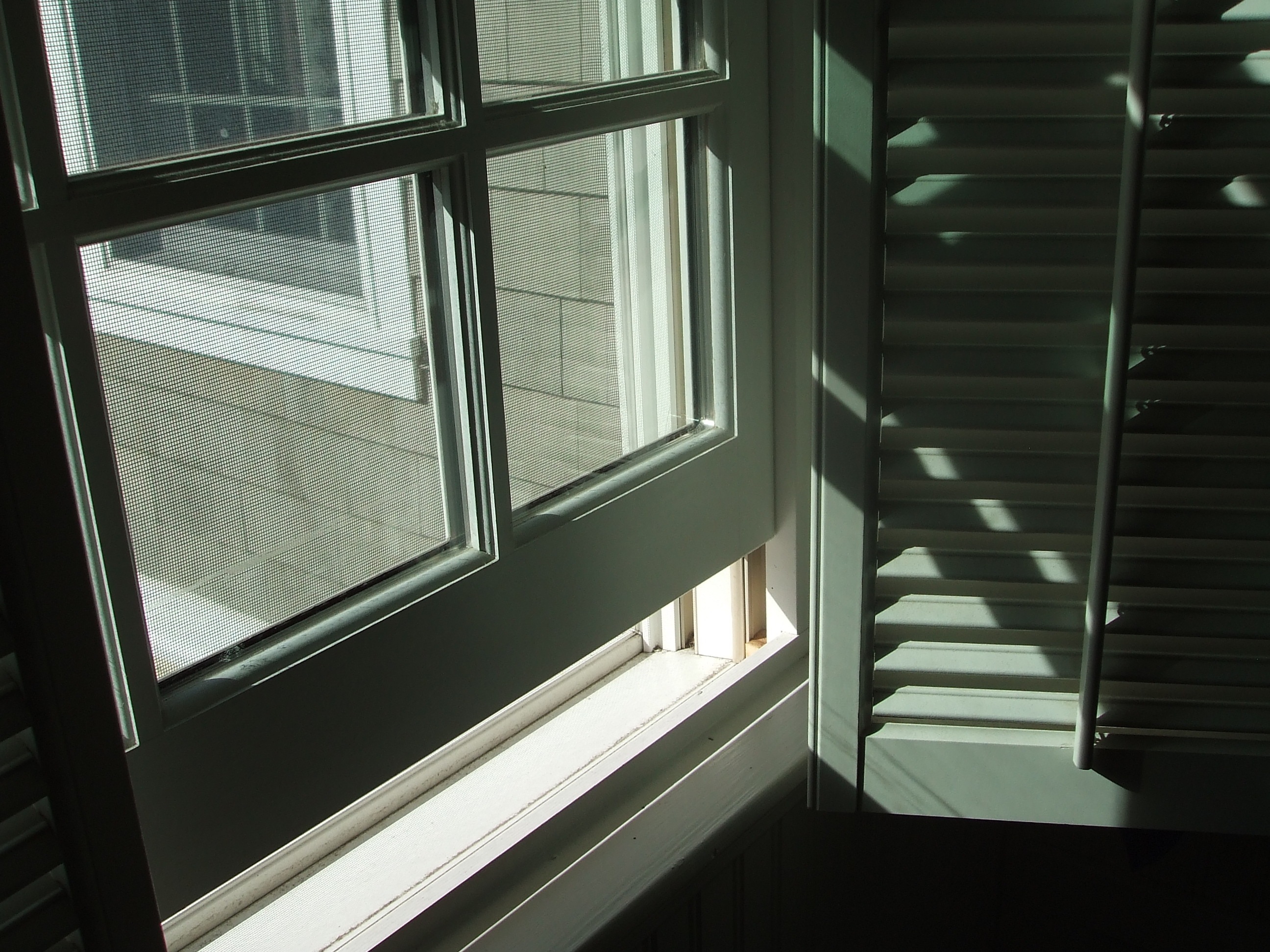
it’s an occupational hazard, or at least this week it was. i’ve been spritzing, rubbing, wiping streaks from windows all around.

my glass, egad, so streakless, poor pigeon crashed beak-first into what it thought was sky. (fear not, i went in search of him, poor feather-fallen thing, but he was nowhere to be found, which means i can assume that his neck remained intact; by the way, i promptly scotch-taped cutout bird to prevent another crash. did you know that window crashes kill a billion birds a year? someone counted.)

but back to window wiping.

all this wild-eyed doing away with smudge and splot, the goo that’s left from winter, it has nothing to do with me going nuts with newfound vernal light. and it’s not, i promise, from inhaling ammonia fumes.

no no, you see, in the latest wrinkle of my investigative life, i am testing cleaners. green cleaners to be precise. trying to determine if saving the sweet earth might mean giving up some sheen.

it is, i suppose, spring cleaning under duress.

were it not for story deadline, would i be spritzing up a storm?

truly, probably not. but fact of the matter is i do appreciate the leap on clean that it inspired.

oh no, here we go again. me and my fixation on making messes clean. no no, i do protest, it’s not the messes i detest (though they do get under my skin, make me kind of antsy, remind me i’m a slob at heart, just one pile away from giving in to inner pigpen), it’s the dirt.

ah yes, it’s doing away with dirt that gets my juices bubbling.

i was i love lucy, all except the rag tied ‘round my head, madly sudsing up this house.

the more you ditch the dirt, i find, the more determined you become. what starts out as surface cleaning quickly takes a dive. you find yourself quite suddenly excavating grime. there you are in cracks and shadows mining shmutz of origin unknown.

i was reading of the jewish ritual of cleaning house for passover, the bread-free springtime festival that hovers around easter, and i kid you not the sisterhood recommended toothpicks and q-tips for getting into crevices. that is armament the likes of which this catholic girl has rarely seen.

and then, as if the toothpicks aren’t enough, the night before the eve of passover, the whole family ventures through the house, in search of furtive crumb that might be clinging to a crack. this time armed with feather, spoon and candle, papa leads the way. any crumb that’s confiscated will be burned in ritual offering the next morning. all this spelled out in the holy book.

and that wouldn’t be a guide to springtime cleaning.

though it could be.

what is it, i wonder, that has us as a species so finely wired that when the clock ticks march, we are stirred to shake the rugs? to grab the feather duster? all right, at least to dial up the kleen brigade, and make a date for superkleen with extra wax?

maybe it’s got something to do with all the pure new light, the angle that it slants, how it catches on the dust fields in ways it never did in winter.

or maybe there’s some chemical that surges when the daylight savings time clicks in, and suddenly all over, we feel the need to shake the feathers from our nest.

speaking of feathers, it seems i was not the only one under this shingled roof who got into the nesting groove this week.

seems that mama sparrow has been sizing up my house, looking high and low for a place to call her own. spied herself a little cove, she did, right above the woodwork that surrounds the new front door. the very one, of course, where i’ve been madly cleaning glass.

my mama saw her darting in and out. i saw her picking sticks, like she was bargain hunting in the basement of filene’s, i tell you, sifting through the racks of sticks, deciding just which one. plucking this stick, wiggling it around, dropping stick back to the ground. maybe she didn’t like the way it looked against her feathers.

my mama, ever full of common sense and what lurks around the corner, pointed out that if mrs. sparrow and her brood spend their hatching days right above my door, well, i’ll be wiping lots of springtime goo from panes of glass.

this springtime cleaning thing might take me through to summer.

anyone else out there doing the feather-duster dance?

equal parts: light and dark

seven minutes past seven tonight, chicago time, the sun will slide into absolute right angle, beam its rays straight on the equator. not angled north or south. dead on. bingo. that’ll mean, at long last, no matter how you cut it, it’s spring.

vernal equinox, defined: the planet halved by sun. equal light for all. until tomorrow, when the slant slides north. when south moves into shadow.

spring, the season of exodus and resurrection, of life unfurling, but, too, life falling from the nest. or, sadder yet, getting pushed. it’s death and life all over. to be reborn, the preachers shout, you first must die.

the whole top half of the world is shaking off its winter death. but death, i tell you, comes too in spring. hand in hand with life. this is the season of light and shadow.

it’s seesaw season, yin and yang. it’s stripping off old skin, it’s starting over. it’s tender and it’s green, beginning green. green before the chlorophyll goes gaga.

it’s chirping and it’s warbling. it’s worms being dropped in squawking mouths—life to bird but death to worm. it’s watching mama tend her brood. it’s watching, if you’re lucky, baby owl flap first wings, a sight you won’t forget.

it’s the season of awe. the season of heartbreak. everything feels tender all over. even me, some days.

it’s asparagus thin as pencils. it’s fungi grown in forest shadows. it’s raindrops swelled and pouncing. it’s puddles ripe for rubber boots.

it’s strawberries, so many, you break out in a rash. and then you bite another, dripping red right down your chin. rash, be damned; you drip.

it’s waiting an entire year for star magnolia to explode in cloud of white, perfumed. and then spring wind rips through, stripping branches naked. magnolia tatters piled on the ground. you ache as you pick up pieces. begin the year-long wait again.

it’s holding your breath as heirloom hyacinth bats its smoky lavender lashes, and then you wake up next morning to find the possums had a hoe-down and broke the stalk in two.

it’s going mad with the endless fields of iridescent blue, the siberian squill, that for a few short weeks makes us drylanders think we’re living in the midst of cobalt pools. each nodding head, a mere three inches off the ground. they grow in dappled light and shadow, but only where the earth is long undisturbed. blue ribbon, then, for keeping bulldozer at bay.

the japanese, enlightened, teach that the beauty of the cherry blossom is its evanescence. the very fact that any minute a breeze might blow and blossoms will be scattered. they understand the essence of the season. they might, more than most, be keen to what it’s teaching: behold the blossom. it won’t last for long. inhale the perfume. rub up against the velvet petal.

the italians have a word, tristesse. “beautiful sorrow,” i was told it meant. knowing what you love won’t last. and so you love more deeply. is this the truth of spring?

if you listen to the change in season, if you hold it to your heart, it unlocks all sorts of lessons ripe for plucking.
here are my promises for spring, the season full of promise…..

i will wake up, not with blaring alarm, but gently, with the beads of first light tapping me on my lids.

i will stretch before the sun, bow down, be humbled.

i will make my first stop each morning beyond the kitchen door, in the garden. i will listen to the morning song of whoever’s beat me to the punch.

i will crouch down, inspect the growing things. take note of miracles that unfold in dark of night and light of day when i’m not looking, hunched inside, tapping at a keyboard.

i will make the bent willow basket on my old lady bike the vehicle of choice for ferrying loaves of bread and jugs of milk. don’t forget the berries, plump and sweet.

i will rescue broken flowers and ferry them to my window sill infirmary, where i’ll apply remedies and potions, or simply watch them fade away in peace.

i will swipe the fuzz from my dryer filter, pile it, and lay it at the foot of my big spruce. i might post a little sign: “fuzz, free for all nest-building birds. help yourself.”

i will cry if blustery afternoons wreak havoc on my blossoms. i’ll do the same in case of ice or pelting sleet. i will nurse the hurt, deep breathing, until the stinging goes away. like my knees when i was little and went skidding from my bike.

i will, some night, dine on nothing but the tender shoots of spring. i’ll wash it down with vernal wine, dry and white and new.

i will, as many mornings as i can, stuff myself with strawberries.

i will slosh through puddles.

i will take my little one by the hand and we will jump. see how high we can make the puddles splash.

i will, if i find a baby bird fallen from the nest, whisper a proper benediction as i perform a proper burial. lay a sprig of springtime flowers. teach my boys to do the same.

i will try to read the night sky.

i will watch the sun come up, thermos of coffee planted in the sand beside me.

i will, if i’m in the mood, wrap eggs in onion skins, and marvel at the marbled shades of creme de caramel.

i will master the shortest shortcake ever. then bury it under avalanche of berries.

i will plot my plantings yet again. tuck them into warming soils. hope. pray. sprinkle incantations. and water, too.

i will marvel at these days of yin and yang. and i will drink deeply from the season’s spring-fed well.

that’ll get me started. how ’bout you?

blue vs. blues

it hit me, as it often does, in the blink between up and sleep. not even fluttering eyes, and already the lunge ball gets me. right in the belly.

the weight of the week just past, the specter of the week ahead. it doesn’t usually collide on the weekend, but this weekend it did. saturday morning felt too much like a monday. a blue monday, most of all.

so i did what makes no sense. i didn’t dive into the taxes, which was but one of the dark clouds looming. i didn’t dive into cleaning, which, check this out, i need to do for work (a journalistic foray into the land of cleaning without toxins).

i did not do a one of the things on my nerve-wracking, energy-sapping, tummy-rumbling list.

nope, i grabbed for old spoons and plates. i found solace in old willow china, chipped around the rim. i found delight in antique silver, worn to dull through decades of thumbs and fingers, lips and tongues, slurping, spooning, licking, lifting.

i ditched the deep red cloths of winter, pulled out the checks of blue and white. laid blue on blue on blue. watched the morning light stream in. it made blue shadows on the wall.

i tossed, at last, a mound of old dead apples, apples that long ago required cpr. i dusted out the wooden bowl in which they spent the winter. tucked it on a shelf.

filled an english pitcher with fists full of daffodils.

all the while, i worked alone.

the gods of sleep, they blessed me. even though they forgot to protect me from the onslaught of waking up with a lead weight in my belly, they kept everyone else in the house in slumber till i woke them at half past ten.

you can imagine, i’m sure, what three unbroken hours of solitude and silence do to soothe a harried mama’s heart.

i found, in setting a springtime table, that i was chasing away the blues. or keeping them at bay, anyways.

i have, since long ago, a little girl keeping watch as my grandma put out silver napkin rings and damask napkins, egg cups and a silver rack for toast that i might have thought would hold up bills and letters, or baby bicycles perhaps, found joy in setting tables.

i’m neither martha stewart, nor minimalist when it comes to tables. you won’t find me glue-gunning little bunnies, nor waxing autumn leaves.

but you will find me sighing as i put out plates given to me long ago, by a man whose house we bought who’s probably no longer still alive. and you will find me thinking all about the friend who gave me old spoons for turning 50.

as i set the table, i gather souls, some of whom i’ve not seen for decades. but who are never farther than the drawers and the cupboards where i keep old things, beautiful things. things sometimes chipped, often worn, but always with a story.

i set stories on my table. weave a half century, now, of history into what you might see as simply plate and spoon and cup. but not me.

i run my fingers over the plate of a gentle man who wept as he left behind the house he’d carved with light. i lift the cobalt glass i first gasped at when i spied it on a shelf at a store that is no longer, a young bride picking the things she’d set on her table till death did they part.

i have no clue if my grandma soothed her jagged nerves unfurling damask cloth, making paper place cards affixed with bunny cut-outs, or jolly santas with rosy cheeks. she would never have let on, if in fact she did.

but i know that by the time my boys tumbled down the stairs and came upon a springtime table, i was less a frazzled mama and more a woman who’d found a balm in bringing stories to my table.

anyone else find solace in the laying of a table? in the textures and the patterns, the colors and the curves? in, most of all, the stories and the souls who are carried to the table?


crack the windows

i stood there trying to brush my teeth, but something caught my eye. something bright and beautiful and liquid. it was the morning slant of light, pouring through the shutter slats. the morning slant of late winter’s light. the light on the cusp of the equinox, when each day the sun, more pure it seems than the day before, inches higher in the sky.

the light in late winter is arresting. it stopped me, all right. pulled me to the shutters, where i couldn’t help but pull them back. i felt hungry, suddenly, for the light. the light so white, so rich, so dense, it filled my every pallid pore. i wanted to drink it, to bathe in it, to let it spill all over my wintry leather shell.

so i did the only sensible thing: i cracked open the window. i let in light. i let in air. the air, chilly once again, did not quite match the light. these are tricky days, when air and light do shifting tango. just the other day, in sync. now, bright but chilly.

but still, once the window opened, i bristled at the brisk cold air. a fine bristle. a healthy bristle.

and smelling real fresh air, as opposed to the stale stuff of winter, i left the window open. let the house exhale. a big long puff of winter air—the air of smoldering logs and simmering soups, the air of baking bread and barking coughs—i let it out.

i let in air of spring arriving.

i think of big-bosomed nurses, long ago. of nurses in white starched caps. with ample arms. shoving open windows in the depths of winter. long ago, clean air, clearing air, had much to do with sanitation. shooshing out the germs. as if the germs would follow rules. follow nurses’ orders.

i tried, lamely, to do the same. i have no bosom, none to speak of. my arms aren’t ample. hardly. but still i ordered out the germs.

and in the next breath, i wiggled finger, coaxing fresh air to come in. to swirl around. to fill the rooms. to fill my lungs.

how often do we think of air? usually only when it chokes us. sometimes, when it takes our breath away. or when it cleanses.

which is what it did to me, my house.

my house is breathing in and out. my house, i hope, is getting pure. what a power, so invisible. the air, i think, is just like God. take a breath. a deep one. fill your lungs.

herbs in winter, er, spring

okay, so five minutes ago it was winter. and most likely, another three and it’ll be winter again. last week at this time, out my window, it was the arctic tundra. only thing missing was the mush dogs.

now, it’s a vast ocean of blkkh. isthmuses of scant white surrounded by sog (the ground when it’s turning to sponge). small continents of sooty dirt gray melting inch by inch into more sog.

but the slant of the sun, and the scant touch of warm in its rays, sends message to brain cells: stay alert. there might be an end to the winter.

now i might be an avowed winter baby, love nothing so much as a warm woolen sweater, my nose pressed to the glass, watching the cotton puffs fall from the sky. but even the winteriest among us need a small pharmacopoeia of sorts to get through.

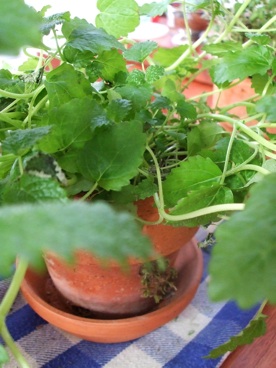
my elixir of choice, the one i take daily, multiple times a day if i can, is the herb. not dried in a bottle. not crumbly inside of a jar. but real and alive, bright green on my sill.

i’m telling you the thing that gets me through winter, the thing that keeps red blood in my veins, is the three pots of herbs that grow just to the west of my faucet.

they keep me, well, green. i snip and i sprinkle all winter. i am plowing deep into faux summer, even if only through the gardeny taste that swirls on my tongue. fresh and just picked, right here in the months of the snows.

i bite into the clean of cilantro. i melt for the tender tendrils of thyme. i spice things up with my ruffly basil.

i make believe it’s my garden. i clip and i water. i turn to the rays of the sun, so my herbs they can be coaxed to trigger the chlorophyll. (or however that works.)

but still, i am sorry to say, with regular regularity, my herb pots they shrivel and die. i might get a few weeks out of the basils. the lavender rarely lasts a few days. and the thyme it takes time before it turns crumbly and brown. not unlike those herbs in the bottles. but eventually it indeed turns to crumbly.

and i, sisyphean in style and psyche, i trod a path right back to the produce patch at my grocery. pluck myself one more pot of basil at $2.29. not a high price for midwinter sanity. if in fact it’s keeping me sane. (those around me might tell you it’s not.)

i do know it’s keeping me pink–pink in the cheek, pink in the heart. i eat them for breakfast and dinner. snip them on cheese on my toast. toss with abandon into the stew. adorn like a madwoman each plate, basil poking from the mashed potatoes, thyme branches strewn like the wreath of a hero atop the breast of the chicken.

and if i manage time for some lunch, i eat them then too. i reach in the drawer for my kitchen shears, pretend that i’m clipping an orchard of espaliered apple when only it’s a 4-inch expanse of basil, or the lone stem of lemony balm.

if you’ve been poking around here awhile you might have noticed a trend: i am a girl who leans heavy on growing things. i am a girl who needs gardens. even in the dark days of winter.

so i strongly advise (and i’m not one for advising) that if you can, if you don’t mind the suggestion, you dash to the store, any old supermarket, and you buy the start of your garden.

these herbs, they have history. it’s not like they’ve just been invented. they’ve been around for a very long time, and they seem to have a solid reputation for making for all sorts of miracles.

a quick run through the herbalist, in alphabetical order:

basil, they gave as house gifts in renaissance england because, well, it kept the house flies away.

bay they once planted to protect from lightning strikes. the caesars were certain it kept conspiracies, hmm, at bay. in the 1700s, in england, it was thought to do in the devil. the priestesses of apollo chewed a wad of the stuff before spewing a prophesy. not long after, wise folk prescribed placing it under your pillow to bring on dreams, prescient in nature.

chervil, a sure cure for hiccups. sipped in a tea, that is. (sipped in a broth on holy thursday, it reminded the sippers of the resurrection of christ. says so right here in a book.)

coriander is one of which to be careful. ol’ pliny, the first-century agrarian, cautioned against too much of the seed, which he found had narcotic tendencies.

dill, diluted in water, is the thing to soothe colicky babies.

lemon balm is a tad schizophrenic. on the one hand, it was recommended to scholars to sharpen their memory; on the other hand, it was doled out to insomniacs who found slumber in its sleep-inducing powers.

marjoram, thought to have been touched by venus, is big in the love potion department. italians bunched it in nosegays and gave it away to banish sadness. how lovely.

mint will whiten your teeth.

oregano is boldly medicinal, prescribed over the ages for everything from toothaches to opium addiction.

parsley was first eaten by romans; the greeks long before them made wreaths for weddings and sports games, but only fed it to horses.

rosemary, get this, was put under the nuptial mattress to a.) increase faithfulness, and b.) keep away insects and mildew. who knew?

tarragon, thought to fight off fatigue, was slipped into shoes in the middle ages just before trodding off on a pilgrimage. a pre-cursor to dr. scholl, i suppose.

lastly comes thyme, an all-purpose herb if ever there was one. athenians made liquors of it, bathed in it, burned it in temples. egyptians embalmed with it. i thought it was good on my cottage cheese.

and so, there you go, an alphabet of herbs for your daily consumption. grow them. sniff them. stuff them under your mattress. not a bad sport for the winter.

now, i was going to share a little herb recipe here. i had oh so many choices. but i swear i’ve run out of room. so i promise, the lazy susan this weekend, will proudly display one of these choices. you get to vote. 1. sage apple cake. 2. baked snapper with onion and balm. 3. simple tomato sauce. all courtesy of “herbs in the kitchen: a celebration of flavor,” by carolyn dille (i’m not making that up) and susan belsinger. vote and vote often. this is chicago, you know…..

urging on the equinox

“hey, lady, what’s with the sticks? what’s with the sticks sticking straight up from the glass?”

i can hear you saying that. hear you thinking, oh my she’s gone mad, here in the unrelenting arctic of winter.

mais, non.

it’s just the latest of my little home experiments to grope for the rope, to pull through this dark tunnel of white, white and more white. and cold. did i mention the cold, barreling once again at us from up where the polar bears roam?

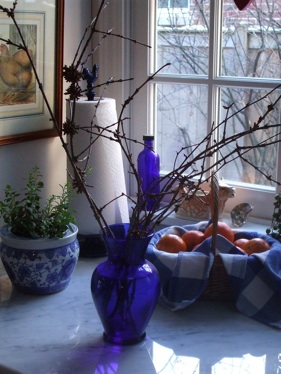
those sticks, friends, are not just any sticks. they are the sticks of the forsythia, a flowering shrub, a cloud of pure lemony yellow, whose very name, it seems, begs us to force, to force spring to bloom.

force me, the forsythia beckons.

and my mama–the true keeper of these sorts of knowledge–she reminded me, tapped me on the shoulder, said, “don’t forget the forsythia.”

february, apparently, is prime time for forsythia. for the forcing of sticks in general. forcing them into bloom, that is. rather than forcing though, i like to think that i’m coaxing, i’m urging, i’m begging a break in the please-bloom-for-me department.

so, intent on seducing some spring from my sticks, i trudged out through the deep drifts of the snows, felco no. 2 pruners in hand. looking like some kind of a nut case–once again–i dodged and i darted, all around the forsythia bush. i clipped a long one here, a not-so-long one over there, going always for the sticks with the big balls of nubs. those would be blooms in the making.

once i made for the house, and dunked them in water, of course.

now, being the daughter of a woman who merely cuts and plunks in warm water, no muss and no fuss, i, decidedly different, decided i needed to research this task.

i consulted a few books, did a little digging online. and these are the 10 commandments i came up with:

1.) do not cut before february 1, the l’il sticks need to slumber on ol’ mama bush. if they haven’t had sufficient sleep, out in the cold, they won’t even think of opening their lids.

2.) when you’re out at the bush, cutting like a madperson, try if you can to cut on an angle. apparently this gives the stick more of a throat for guzzling water–once you and your sticks are inside.

3.) speaking of madpersons, one tome tells to use a hammer (once sticks are cut, obviously), to smash the poor ends of the stick, the last inch or two only, as if this too will give the poor stick more capacity for taking in fluids. eesh.

4.) okay, once in from the snows, try very hard to imagine it’s spring, and then, you creative devil, you, try to recreate it, there in the cold and the drafts of your sweet little house.

5.) for best blooming, do not plunk your sticks straight in the vase, the books tell me, but rather submerge them in a tub of cool water. for 24 hours. (be careful to step around them when you step into the shower, should that be the tub of submersion.) if you haven’t a bath for your sticks, misting, they tell us, will do. mist like a rainforest though. mist with reckless abandon.

6.) once soaked, but not soggy, your sweet little sticks are ready to stand and perform.

7.) find a spot, sunny and warm, but not straight in the glare or the heat of the sun. (the sun, remember, that big yellow star allegedly on the payroll for purposes of keeping us warm? ha.)

8.) change the water every few days. our little sticks do not like drinking water turned mucky.

9.) one final tip: if any blooms start to bloom under water, dispense with those blooms. they are so much fodder for bacteria, the books tell me, and they’ll do in the whole bunch much sooner.

10.) stand back and admire. in less than two weeks, more likely just one, you’ll have a whole shock of spring blooming there on your ledge.

now, here’s the part where i come clean: i broke at least two and a half of those commandments, two venial sins and one half of a mortal one. i did not cut on an angle, i did not hammer the heck out of my sticks, and i did not soak in the tub, not with my sticks i did not. being at least a little bit of my mother’s daughter, i pretty much ran in the house, misted, and dunked. and the misting i only did after the fact, after i culled the whole list of commandments.

but you know what? it’s only been a few short days since i was out nipping away with my pruners. and, truth be told once again, i was a serious doubter. oh, yes, i was willing to play along with this forcing of spring, but i really couldn’t imagine that i had on my hands much besides a nice bunch of sticks in a vase. i was the skeptical queen of the sticks.

well, you can already guess where i’m going here: those sweet little sticks, at three days and counting, are already performing. where once there was brown and more brown, no life in sight, suddenly there is green. the softest, tenderest most vernal green. all up and down. all over those sticks.

the sticks, they are telling me: do not give up. do not lose hope. spring it is coming; it’s clinging and waiting on a stick that’s well within your grasp.

the show is unfolding. i have a sense it’s one i don’t want to miss. and i hope, neither do you.

p.s. not only forsythia are willing to bring on the equinox early; february is the month to beg a few branches of the crab apple, cherry, almond or plum, japanese quince, pussy willow, rhododendron, azalea, and the serviceberry. don’t give up hope. plenty bloom in a mere week or two. cherry, almond and plum should bloom in two to four weeks; japanese quince could take four; rhododendron and azalea might take four to six weeks. but that still beats march 21, the day the world turns to spring.


vernal whisperings

if you listen, you can hear the first stirrings of winter loosening its grip. yes, the snow moon, that great white orb that cast its full light on the cold cruel landscape of last night, made it hard to see anything that was not white, or bluish white, a color even colder.

but in fact, and despite the wind chill, this is the day when myth and legend begin their vernal whisperings. there’s the old folktale about the ground hog and his shadow. but that doesn’t much catch my fancy.

what does catch it, locks it in its grip, is something i knew little about. until now. it is the jewish festival of tu b’shevat, the new year of the trees.

it is, it seems, all about vernal whisperings, the first hint of promise that all this, the harsh and the cold and the barren, will soon melt away.

as a woman married to a jew, as a woman who embraces spirit and rite and story and all things of the earth, this little holiday seems made for souls like me.

i had had an inkling that the holiday i had a hard time pronouncing (tu-bish-vat, more or less) had something to do with trees or planting trees. in fact, it is said that this is the day when God decides how bountiful the fruit of each tree will be in the coming year.

in israel, this is when the almond tree awakes from its winter sleep, erupting in clouds of tissue-white flowers, the first blossom of spring.

in ancient times, tu b’shevat marked the day of tithing. it clanged the final bell on the fiscal year. all fruits borne before this day, belonged to the harvest of the last year, and must be divided accordingly, a portion to the poor, a portion to the temple in jerusalem.

all of that was lovely enough.

but then i heard something about a special seder of seven fruits.

and that’s when i knew i needed to dig a little deeper. that’s when i discovered the thinking of the 16th-century jewish mystics.

known as the kabbalists, these deeply spiritual thinkers believed that we elevate ourselves by the eating of certain fruits on tu b’shevat. if done with holy intention, they taught, sparks of light hidden in the fruit could be broken open from their shells, freed to float up to heaven, to the great divine, completing the circle of the renewal of life.

oh my.

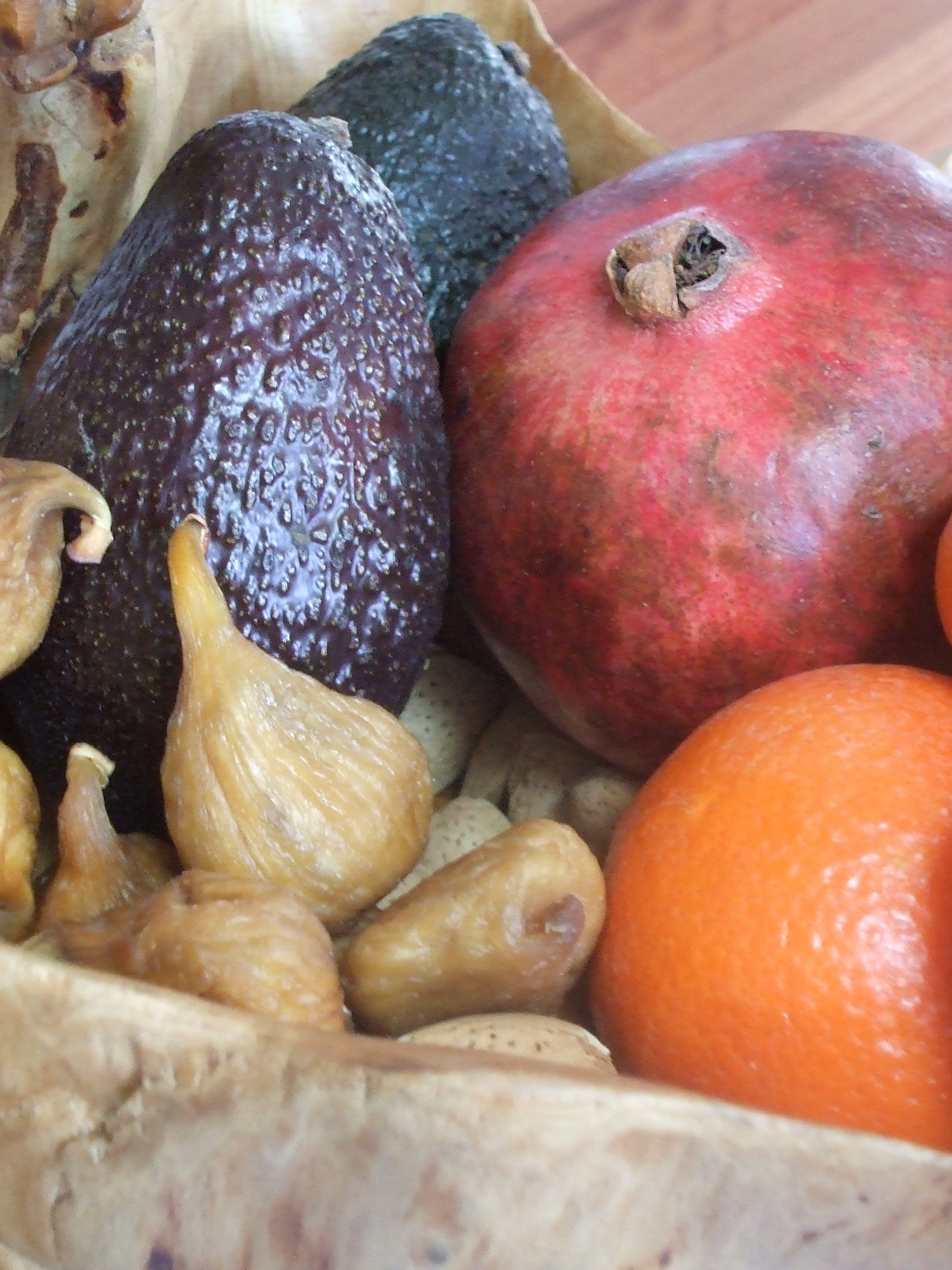
they go on, these marvelous mystics. they talk not about seven fruits, but ten. they break them into categories corresponding to four levels of creation. there are the fruits that need no protection, and can be wholly eaten; grapes and figs, among them. there are fruits that require protection but only at the heart; olives, dates and persimmons would be among these. then there are the fruits that need full protection, the pomegranate and avocado, both of which hide inside a leathery shell. the fourth realm, purely spiritual, by definition has no fruits: it’s just pure spirit.

the holiness of each fruit or nut is, according to the kabbalists, the soft edible part, the part you can bite into. the pits or inedible parts were thought to be impure. and the shells were the protection of the holiness. (makes you feel kindly toward that ol’ banana peel, eh?)

reciting blessings–there is a particular line from the torah for each fruit or nut, believe it or not–helps to release the holy spark of life flow trapped within them, the kabbalists believed.

ah, but the act of chewing, they tell us, kicks it all into some sort of spiritual overdrive.

get this: chewing is more powerful than reciting blessings, they believed, because humans have 32 teeth, and that is the precise number of times the word “elohim,” or God, appears in the story of creation.

goodness. it is morsels like that that make it so delicious to dig deep into something of which you once knew so little, but deep in your soul feel so drawn to. it’s the marvelous adventure, open to all of us, of cracking deep into the book of religions other than the one we knew first. it’s the weaving and steeping, the absorbing and unfolding, that i swear enriches the broth.

but back to the fruits, and the part that i think is the absolute swooningest.

along with the fruits of the seder, the kabbalists said there must be four glasses of wine at the meal. you begin, they taught, with a white wine. each glass after that adds more and more red wine, so that each glass deepens in color. the first glass represents the cold whiteness of winter, the next, the pale buds of spring, onto the deep rose of the height of summer, and finally the crimson of the autumn leaves before they fall from the trees.

you needn’t be jewish to want to drop to your knees on that one, the breathtaking progression, the resonance of the fruit of the vine with the rhythms of earth, the unfolding. a whole sensory reminding that the changing of season is a blessing beyond blessing.

and this is a day when we pause, when we listen, for the first stirrings of the deep underground.

abraham joshua heschel, the great 20th-century jewish scholar, writes magnificently of the sanctification of time in judaism. here is one thought to ponder:

“judaism teaches us to be attached to the holiness of time, to be attached to sacred events, to learn how to consecrate sanctuaries that emerge from the magnificent stream of the year.”

and so tonight, as i light the shabbat candles, usher in tu b’shevat, a sanctuary i never really knew until now, i will sit down to a feast of the earth’s promise, to fruits and nuts and wine. i will behold the shifting of the seasons, the absolute truth of the returning of life.

yes, now winter is making itself abundantly present. but from the heart of the fruits, will break open great sparks of holiness, wafting toward heaven. from each sip of my ever-blushing wine, the taste of the turning of time.

i will know as i eat and drink that beneath the cold hard snow, the fruits of spring are stirring. are whispering sacred incantations. vernal incantations.