pull up a chair

where wisdom gathers, poetry unfolds and divine light is sparked…

Category: springtime

gravitational pull

i can’t stay away. 

etched on a map, you might not notice; its tucked-away nature is but the flint of its charm: a treasure in almost plain sight. i might have zipped by a thousand times. it only took once for curiosity’s lure to draw me into its fold. and now it won’t let me go.

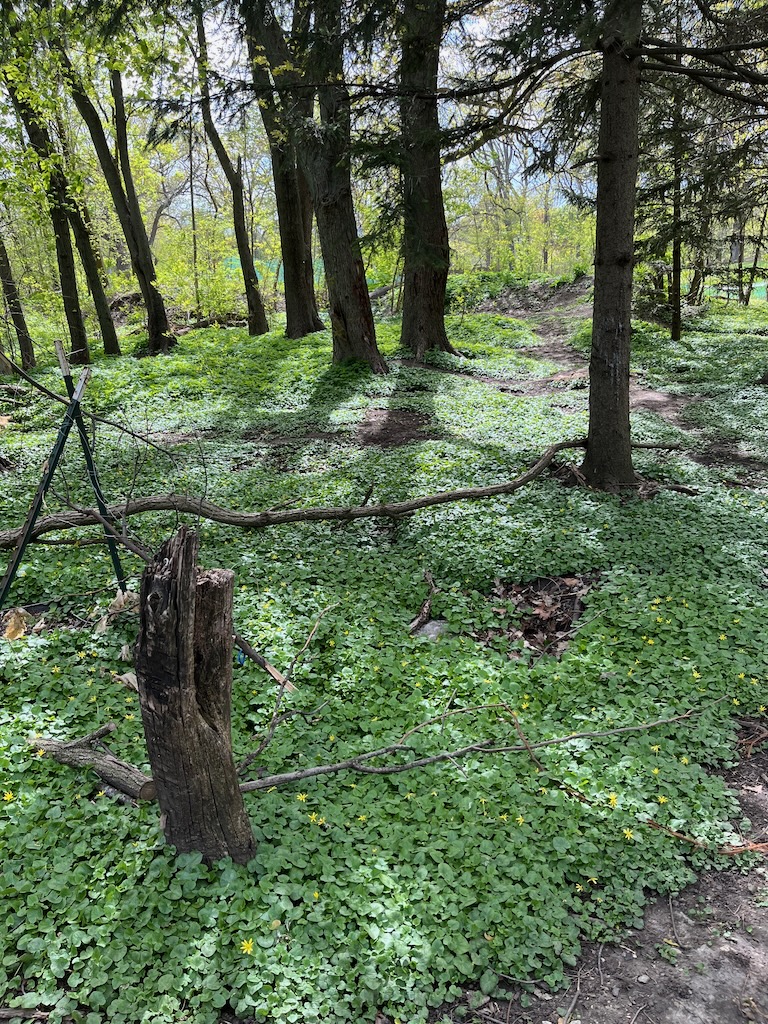
i’m coming to think of it as my footpath to the wellspring where the sacred stirs me, a nowhere-else-like-it sanctuary under the arbors, carved into the banks of a slow-flowing channel, a serpentine zig and a zag, through patches of woodland and birdsong. 

as far back as i can remember, the woods behold wonder to me. my biography would be laced with a trail through woodlands and ponds and gurgling creeks. the never-ending acres of lily of the valley where my papa once drove me as a wee girl of three. the woods across from the house where i grew up, a copse that came to life in my imagination, one day a pioneer’s outpost, the next day a place to pretend i’m laura ingalls wilder in the big woods. 

trailheads beckon. the barely-noticed aperture into the brush, where suddenly suburbia is leagues and leagues away. maybe it’s my imaginative overdrive, or my storybook tendencies. but give me a path, and a parting of trees leaning this way and that, and my feet cannot but go forward.

so it was on mother’s day morn when at last i found myself at the trailhead i’d vaguely noticed in the making. trees had been felled, and buckthorn burned by the wheelbarrow full. logs were yanked from where they’d fallen, and laid in a line, woodchips carpeted the paths in between. a woodland trail that meanders along and through a woods both ancient and newly imagined. 

enchanted at first footfall, the only way to describe it. the ups and the downs, the dappling of light, and the peek-a-boo shadow. i walked with my eyes and my mouth wide open. over and over i marveled. 

it’s a woods best described as delicate, at least in the moment—a petit point of vernal ephemerals stitched into the hillsides. springtime at its tenderest, springtime in may when it’s no longer tenuous. 

it’s a place that suddenly holds inexplicable pull on me. enough to lurch me out of my wintry posture, curled over a book or an alphabet keyboard, snug in the nook by the wall-to-wall windows. it’s a place that lured the prayer right out of me. a place to dwell in my quietest stillness. 

it’s my axis mundi, you see. 
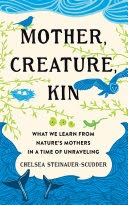
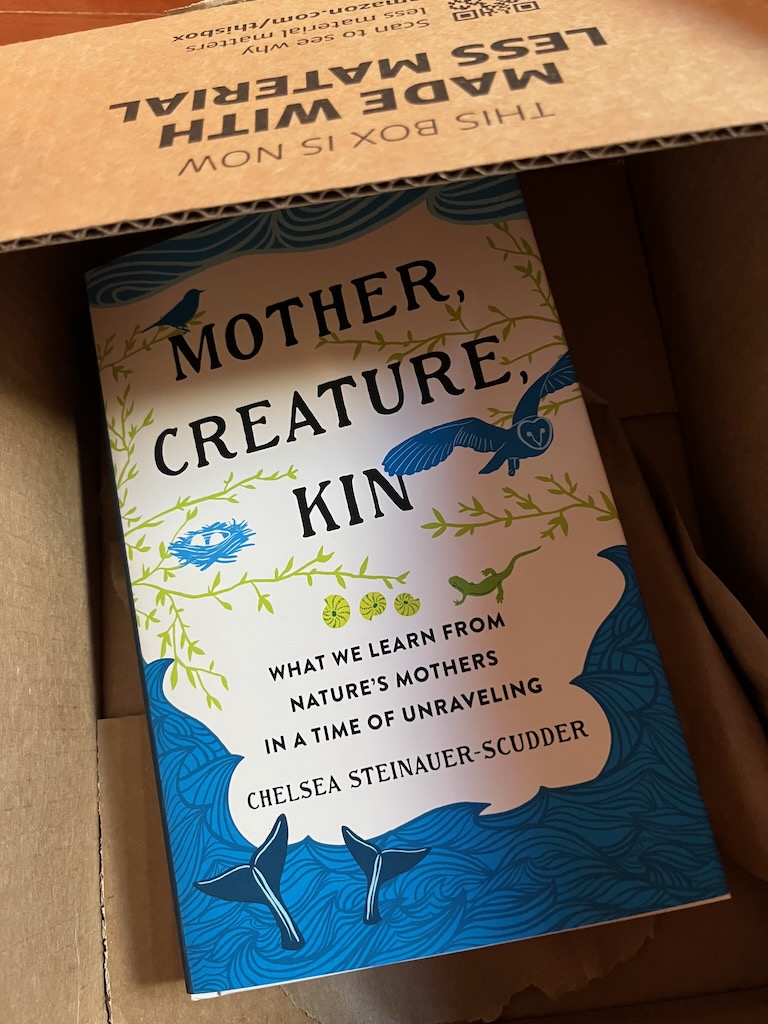
my friend chelsea steinauer-scudder, a breathtaking writer and author of the new book, mother, creature, kin: what we learn from nature’s mothers in a time of unraveling (broadleaf), explains: “i’ve heard countless stories of what i’ve come to think of as axis mundi experiences: encounters that have pulled someone into a deep experience of felt belonging upon the tiny bit of Earth that they find themselves upon. 

“…within the study of religion, an axis mundi is a sacred pole, literal or figurative, which is fixed in a particular place, connecting Earth to the realms of heaven, underworld, and divine. “

these holy places might be a mountain (the Mauna Kea on Hawaii’s Big Island, known by the Indigenous peoples to be the umbilical cord, “the place from which the world emerged”), a cosmic tree (Norse mythology), the Ka’aba in Mecca (which pilgrims encircle seven times, as within it is the stone believed to have been handed to Adam as he was banished from Eden, so his sins would thus be forgiven). 

or, in my case, an undulating woodland path along what in fact is a sanitation canal, though i pretend for the life of me that it’s an idyllic stream or a creek. one that just happens to shimmer an odd shade of aqua, a phosphoresence that might signal toxins astir. 

my friend chelsea goes on to write that “we are a species in need of centers,” and within us there is encoded “an inherent capacity for place-based awe.”

those are the places with gravitational pull. a pull from the deepest well. the sacred well. 

or, as chelsea distinguishes between the capital-A Axes Mundi (the most sacred of places so recognized by cultures or religions), and the small-a axes mundi (the ones you and i might call our own), the ones i know best are the quotidian, intimate ones, defined as “small, daily irruptions of majesty, those any-place encounters with the sacred.”

no surprise then that i can’t stay away. it’s an itch that can’t be scratched till i double-knot my sneakers, and try to remember sunscreen (i never do). 

and it’s walking through a poem, quite literally. the soundscape a montage of birdsong and trill, punctuated with quarter notes and a screech that scares off the feeble.

these are the verses i walked among on just one of my mornings traipsing along the trail: common yellowthroat; red-bellied woodpecker; swainson’s thrush; red-winged blackbird; northern cardinal; blue jay; goldfinch; baltimore oriole; rose-breasted grosbeak; gray catbird; and a hairy woodpecker to boot. it’s as if the crayola crayon box was suddenly feathered in flight. 

and in the flora department, a whole other poem: bloodroot, bluebells, celandine poppy, and columbine. lily of the valley, trout lily, spring beauty, wood anemone, and blue cohosh. jack-in-the-pulpit, shooting star, mayapples, and dutchman’s breeches. 

all these names, which whirl in me thanks to the Original Mother Nature who schooled me, got me to wondering who in the world gave the names to the winged flocks and the leafy ones too. the stories behind names are their own wonders. the ones from folklore and legend are the ones that charm me most: jack-in-the-pulpit is said, of course, to resemble a preacher spreading the Good Word; the trout lilies’ mottled leaves resemble the markings of the freshwater fish; and dutchman’s breeches clearly resemble the pantaloons of one who’d also wear wooden shoes.

those, though, are merely the preamble curiosities, the ones that loosen my soul, open me up to the prayer that burbles up whilst sauntering deeper and deeper, per God’s gravitational pull, unwilling to pause till i get there. to the place where i go to feel as saturated with the sacred as i do of the sun when at last i plop onto the stump of a log, and consecrate the most blessed moment of being.

where is your axis mundi?


wislawa szymborska

and before we part, a poem worth pondering, from the late, great polish poet and nobel prize-winner, wislawa szymborska

Life While-You-Wait

Life While-You-Wait.
Performance without rehearsal.
Body without alterations.
Head without premeditation.

I know nothing of the role I play.
I only know it’s mine. I can’t exchange it.

I have to guess on the spot
just what this play’s all about.
|Ill-prepared for the privilege of living,
I can barely keep up with the pace that the action demands.
I improvise, although I loathe improvisation.
I trip at every step over my own ignorance.
I can’t conceal my hayseed manners.
My instincts are for happy histrionics.
Stage fright makes excuses for me, which humiliate me more.
Extenuating circumstances strike me as cruel.

Words and impulses you can’t take back,
stars you’ll never get counted,
your character like a raincoat you button on the run?
the pitiful results of all this unexpectedness.

If only I could just rehearse one Wednesday in advance,
or repeat a single Thursday that has passed!
But here comes Friday with a script I haven’t seen.
Is it fair, I ask
(my voice a little hoarse,
since I couldn’t even clear my throat offstage).

You’d be wrong to think that it’s just a slapdash quiz
taken in makeshift accommodations. Oh no.
I’m standing on the set and I see how strong it is.
The props are surprisingly precise.
The machine rotating the stage has been around even longer.
The farthest galaxies have been turned on.
Oh no, there’s no question, this must be the premiere.
And whatever I do
will become forever what I’ve done.
~ Wislawa Szymborska ~

(Poems New and Collected 1957-1997, trans. S. Baranczak and C. Cavanagh)

not all gravitational pulls are without hazard

springtime’s reluctant suitress

i was, for reasons that escape me, something of a reluctant suitress this year. the season’s slow-building seductions did little to seduce. i turned a blind eye. gave the cold shoulder. 

harumph.

spring wasn’t an easy sell this time round. it came on thin, and unconvincingly. it taunted, played catch-me-if-you-can. and i couldn’t. couldn’t catch it. 

i worried it might wholesale evade me this year. where was the catch in the throat, in the heart, in the soul, that usually caught me? had i been numbed, beaten down by the thrum of the world? was the malaise of the moment eclipsing the vernal exuberance?

but then, this week, it opened the spigot, came on rushingly, came on like a buttery rivulet poured on a mound of mash. i couldn’t resist. 

i fell hard. have found myself dizzily staring out windows. even more dizzily tracing the garden’s edge. staring. marveling. asking again and again how it does it. how it knows. how, year after year, for all the inhales and exhales of the millennia of this holy Earth, does it find the oomph to give forth again and again and again?

if there’s wisdom in this year’s slow coming—and we know there is, for the earth is the vessel of wisdom without end—it must be one of patience. of giving it time. no need to go anxious when the oomph isn’t there. “live the questions,” taught rilke, in the one phrase we’re most apt to remember. but it came at the end of a wisdom more fulsome in the whole:

“Be patient toward all that is unsolved in your heart and try to love the questions themselves, like locked rooms and like books that are now written in a very foreign tongue. Do not now seek the answers, which cannot be given you because you would not be able to live them. And the point is, to live everything. Live the questions now. Perhaps you will then gradually, without noticing it, live along some distant day into the answer.” 

so much of life swirls in the liminal time of not knowing, of waiting, of dwelling in the not-yet. 

so this spring was for me. i knew what the calendar said. i knew how the sun had crossed its equinox, how light and shadow had fallen in equal measure and we were now slithering toward light and more light.

but the light out my window didn’t convince me. nor the nubs of green pushing up from their winter’s retreat. maybe it was the noise of the world blocking the sense that something lush and luscious might really be coming. 

and then the abundance came. the climbing hydrangea emphatically leafed and greened, all but tapping at my kitchen window, come rub your nose in us. the viburnum buds about to burst with their pyrotechnic perfumery. the nodding heads of bluebell and snowflake. the aubade of the cardinal. the rampant rufflings of feather as sparrow mounts sparrow in the delirious dance of procreation. 

and when the wind blows, which it has quite often this year, magnolia petals take flight, filling the air with what appear to be wings. a fluttering of perfumed birds playing on the breeze.

fibonacci spiral

it might have been the question mark of a woodland fern unfurling that first stopped me on a path this week. a flock of inquiry rising from the garden, in all the shadowed places. it’s the mystery of the universal spiral that catches me by the throat, the fibonacci spiral a leitmotif of all creation. born of the mysterious fibonacci sequence of 1, 1, 2, 3, 5, 8, 13, 21—wherein each number is the sum of the preceding two, beginning with 0—the spiral is the geometry laid upon that very grid. a geometric pattern constructed by connecting the corners of squares whose side lengths are consecutive fibonacci numbers, the spiral (sometimes known as the golden spiral) pervades the cosmos, from the spiral in a sunflower, to the question mark arising from my garden, to the scales of a pine cone, to the swirls of the chambered nautilus. 

chou Romanesco, or Romanesco cauliflower

i sometimes imagine God so delighting in the whorl that the divine enthusiasms couldn’t be tamped, and thus its profligate presence wherever we look: into the vast galaxies above or the dappled woodlands below.

i often sense the spiral is but a trace of the soul’s very geometry, the innermost chamber tightly held at the apex. but what i don’t know is whether we spend our lives unfurling, from the nucleus of the sacred from which we divide and multiply in the womb, or whether ours is a journey inward, inching closer and closer into the fertile and eminently holy nub. 

is it furl or unfurl? twining in or unspooling beyond?

such are the questions that arise from the earth’s thawing, such are the questions put before me, whirling within me, as the season begs only one thing: come close, bend low, watch what arises. from the earth, yes, but more so your soul. 


a poem plucked from the book of garden wisdoms….

this is the recipe of life
said my mother
as she held me in her arms as i wept
think of those flowers you plant
in the garden each year
they will teach you
that people too
must wilt
fall
root
rise
in order to bloom
The Sun and Her Flowers by Rupi Kaur


what stopped you in your tracks this week?

a few summers ago, in one of the wonders of my life, my beloved friend kat the priest handed me a ticket to a summer course at yale divinity school, a course i came to call my “poetry school.” my firstborn (now the law professor) was at law school there at the time, and for the summer had shuffled off to DC, meaning there was an empty apartment where i could play house–or college–for the week. so every morning i shuffled down the lanes of new haven and settled in for a day of poetries with a professor who happens to be named david mahan–yes, exactly like my last name, only without the “y”. when he wasn’t brilliantly teaching poetry, he was running a glorious something called the Rivendell Institute, which “seeks to examine and advance the contribution of a Christian vision of life to human flourishing and the common good within the academy and contemporary culture.” within the institute there is another something called the Rivendell Center for Theology and the Arts (RCTA), and their mission is “curating conversations between a variety of interlocutors.” long story short, this week, in their spring issue of Among Winter Cranes, RCTA published an excerpt from my Book of Nature, and since publishers love eyeballs, here’s the link to the essay, On Paying a Particular Attention.

spring might be sprung, but i’m not springing

vernal equinox out my backdoor

they say it’s spring out there. celestial lines were crossed in the wee, wee hours of yesterday, and, for a flash there, light and shadow fell in equal measure. 

i don’t feel the light though. not in sync with springtime’s beckoning. i’m inclined still to hunker down in winter’s shadow. 

for reasons i can’t quite fathom, i’m not ready this time ’round for the seasonal advance. i still feel wintry in my bones. the light change is too abrupt for me, too ice-white for me. my inner metronome is far too slow for the prestissimo that’s rising. i don’t mind the cardinal’s vernal song, though, rung out from treetops high, and piercing through still-frigid air. but i’m not seasonally adjusted. i’m lagging at least two lopes behind. 

i can’t tell if it’s that my winter felt circumvented. or that i’m wishing for all of time to freeze in place. since the world is rather dire these days, that cannot be a wise solution. in that regard, i’ll take time in double measure. may we all wake up on the morning of eight november, 2028, with a whole new glimmer in our eyes. and the present firmly in the past.

i’m feeling somewhat stuck. hardly welcoming of burgeoning to come. and that’s a most peculiar state for me. 

might the whole universe be toppled on its head, upside down and inside out? 

the one sure sign that spring is here is that when i awoke, just hours after equinox, the world i saw was dumped with snow. which in these parts is something of a rite of spring. tulips rise, and snowflakes fall. my mother swears she knows it’s spring when she slides on her winter boots and brushes all the glops of snow off her daffydills. 

no wonder we of the four-quarter year take spring in slow, uncertain sips. there is no fine delineation, as if the calendar and earth set their clocks in synchronous coordination. 

on a day when snows fell in glops, and then proceeded to melt in same-sized gloppings, and on the day when headlines kept insisting the springtime was upon us, i heard a thump at my door, and therein found prescriptive for my seasonal laggings. 

there, in a plain brown box, lay a book i’d been awaiting. my friend chelsea steinauer-scudder, as intelligent and beautiful a writer as could be, became a mother back when she and i were reading books and writing in the zoom rooms that covid carved. i’d first read chelsea in the pages of emergence magazine, a wunder site (online and print magazine, as well as creative production studio) that probes the depths of ecology, culture, and spirituality, and where she was a writer and editor for five years. when i saw she’d be leading reading circles (braiding sweetgrass, among them) and ones for the craft of nature writing, i signed up, and cemented myself to what would otherwise have been a front-row seat. 

chelsea grew up on the great plains of oklahoma and the sandhills prairie of nebraska, where for a time her papa researched bison, fire, and native plant communities, so she comes to her native landscape––language enfolding the sanctity of earth––with what seems an effortless fluency, as if she grew up breathing it. which, of course, she did. and then she went on to harvard divinity school, where she earned a masters in theological studies, and ever since she’s been writing sumptuously, focusing her work, in her words, “on the confluence of relationship to place with experiences of the sacred.”  

her first book, Mother, Creature, Kin: What We Learn from Nature’s Mothers in a Time of Unraveling (Broadleaf Books), is what brought the thud to my front stoop. it’s due out april 8, but my copy landed yesterday. and it might be the cure i needed to lull me into spring. 

a.) it gives me excuse to curl under a blanket for a day or two, and b.) here’s what i’m about to bathe in, passages such as this:

“I wish to invite you into a kind of mothering that is wild and porous. The kind that draws blood, that loves and fears, rejoices and doubts, that exposes where we are most deeply vulnerable and from there stretches us into what is beyond us. I mean the kind of mothering that works within uncertainty and mystery. The kind that leaves soil beneath our fingernails and seeds in our hair.” 

she writes about mothering and being mothered by places. ecological mothering. she defines ecological motherhood as: a shared, place-based responsibility to nurture and support human and more-than-human life. she writes of the karmic cycle of rebirth, a subject aptly plucked from the vernal syllabus. she writes of the silent flight of barn owls, of nursing and endangered right whales, of real and imagined forests, eroding salt marshes, and newly planted gardens. 

she writes that the protagonists of these stories have been teaching her facets of mothering (a verb that she, like me, insists is not tied to gender nor obstetrics). those facets belong to us all, no matter our life’s work: “language, belonging, entanglement, community, edge work, homemaking, and how to think about the future.”

my friend chelsea just might nudge me over my springtime bump, and land me softly on the vernal side….


as i await the vernal skip in my own heart, i scan the literary landscape for those others who, along with chelsea, might nudge me there. and no surprise, i turn to two favorites, the great naturalist and writer, aldo leopold, and the poet mary oliver, who drew the sacred from her every path and passage.

“One swallow does not make a summer, but one skein of geese, cleaving the murk of a March thaw, is the spring.”

aldo leopold

North Country

In the north country now it is spring and there
     is a certain celebration. The thrush
has come home. He is shy and likes the 
     evening best, also the hour just before
morning; in that blue and gritty light he
     climbs to his branch, or smoothly
sails there. It is okay to know only
     one song if it is this one. Hear it
rise and fall; the very elements of your soul
     shiver nicely. What would spring be
without it? Mostly frogs. But don’t worry, he

arrives, year after year, humble and obedient
     and gorgeous. You listen and you know
you could live a better life than you do, be
     softer, kinder. And maybe this year you will
be able to do it. Hear how his voice
     rises and falls. There is no way to be
sufficiently grateful for the gifts we are
     given, no way to speak the Lord’s name
often enough, though we do try, and

especially now, as that dappled breast
     breathes in the pines and heaven’s
windows in the north country, now spring has come,
     are opened wide.

––Mary Oliver

a little peek at what a few other authors have to say of Mother, Creature, Kin. may i call your attention to the one who writes that this beautiful book belongs in the company of works by Ursula LeGuin, Rachel Carson, Terry Tempest Williams, and Robin Kimmerer, to name a constellation of the highest-reaching lights…

are you finding yourself in springlike mode, and what sights and sounds and scents are stirring you there?

sunshine girl

i tend toward the grays. and i don’t mean the pewter locks atop my head. i refer here to my meteorological preferences.

i’m of celtic persuasion, which means a pigeon-colored sky, preferably with mists rolling in, a landscape without shadow, for clouds are in the way, that’s the sort of day that wraps me like an afghan dropped from heaven’s hutch, makes me feel cozied by the hearth, deeply much at home. 

give me a gray day and i all but purr. 

this week, though, has been anomaly. the sunbeams of this latest swatch of springtime have been pouring in full proof, and voluptuously so. sunbeams so pure, so concentrated, i’ve bridled the urge to stick out my tongue and lick them––as if a gelato on a cone. or gulp, as if a nectar in the most delicate cut-glass flute that ever was.

it wasn’t lost on me how novel it was for me to be fixated––and bedazzled––by the motes of sunlight shafting in. it shook me from some rafters i’d not even realized had boxed me in. i was paying attention to my paying attention. an attunement to the nth power. and the simple substance that transfixed me was but one of that elemental trilogy: sunlight, water, air. 

to live in a state of fine-grained attentiveness is the instructive of every sage or prophet who’s walked this sunlit earth. for us to notice celestial shifts, as winter turns to spring, as the great star is jimmied higher into sky, must be God’s rapturous delight.

and i must have been more sun-starved than i realized after a long and washed-out winter, for i couldn’t keep myself inside the house this whole week long. i was all but stripping bare my crepe-papery arms and legs, so my famished flesh could guzzle sun. and, every chance i got (and even those i didn’t have), i found myself down on my knees, at the garden’s edge, wherever tender growing things gave me excuse to coax and coddle and slapdash in the dirt. 

from nearly sun-up to sundown, i was out and about, clocking miles on my soles, slip-sliding along a river trail, dodging red-winged blackbirds who tried to perforate my noggin. and, when my legs and knees were tuckered out, i sat splotched in sprees of golden light as i perched, robin-like, atop a rock or stoop, keeping watch on flutterings in trees. 

i’m not typically a sunshine girl. despite a nomenclature suggesting otherwise.

my papa and me (aka his “sunshine girl”)

long long ago, there was a fine irishman––my witty papa––who pinned a moniker on me back in the days when i’d take him by the hand and maybe reach just beyond his knees. he called me his sunshine girl, his one and only, and it’s a name that makes my knees go limp even to this day. 

i’ve not heard his voice in 43 years, but i can see the glint in his eyes, the way the pilot light burned bright and brighter, as he warmed up to pronounce the words, deeming me his sunlit girl. 

i rather fail my reputation.

in the long years of his absence, i’ve grown more inclined to sunshine’s shadowless counterpart, the days some define as “the color of bad weather.” i protest, tend to be of a mind with leo da vinci, the polymath and painter, who insisted “a gray day provides the best light.”

though not this golden-glowing week. and not without exception.  

like the poets emily D and annie dillard, i like my light in slants, or as dillard put it once: “i’m a collector” of such angled penetrations. the oblique is how i see things best.

most days, pure drenched feels too exposed. the white light of summer’s height makes me wither. 

springtime, though, is tender season. and the sunlight comes in slant, in perfect concentration. and every once in a rare while, in days as delicious as the sun-drenched string that was this week, i’ll gulp my yearly dose of solar plenty. and i’ll gulp it without pause. 


speaking of sunshine and the irish, here’s a line that made me laugh aloud this week:

“the sad truth is that, like fish, the looks of the irish are not improved by sunshine . . .”

—Niall Williams, This is Happiness, page 193


and as is my wont, i’ll bring mary oliver into the conversation, as she came to mind more than once when i was down on my garden knees this week: in “the summer’s day,” she writes:

“I don’t know exactly what a prayer is. /  I do know how to pay attention, how to fall down / into the grass, how to kneel down in the grass, / how to be idle and blessed.”

and, lastly, i zoomed into a poetry conversation with the poet (and yale institute of sacred music professor) christian wiman the other day, and he was asked to read a poem that shocks right through him, and here’s the one he read: 

Prayer
by Carol Ann Duffy

Some days, although we cannot pray, a prayer
utters itself. So, a woman will lift
her head from the sieve of her hands and stare
at the minims sung by a tree, a sudden gift.

Some nights, although we are faithless, the truth
enters our hearts, that small familiar pain;
then a man will stand stock-still, hearing his youth
in the distant Latin chanting of a train.

Pray for us now. Grade 1 piano scales
console the lodger looking out across
a Midlands town. Then dusk, and someone calls
a child's name as though they named their loss.

Darkness outside. Inside, the radio's prayer —
Rockall. Malin. Dogger. Finisterre.

(the four names in the last line are towns called out on BBC radio’s nightly “shipping forecast” for the various seas around the british isles, waters divided into 31 sea areas, including rockall, malin, dogger, and finisterre. the broadcast litanies, especially the late-at-night ones, are for many britons––including carol ann duffy––a familiar touchstone: the announcer’s voice reciting the sea areas all around the islands, one by one, forecasting the weather. and, higher up, minims are the half-notes in a page of musical notation)

of all the meteorological options, which one most floats your boat? and how and why?

amid the dizzyings of springtime…

i imagine it’s been well-established that i am of the homebody persuasion. the sort of girl who thrums inside the cozy confines of space and time i know by heart. to plop behind the wheel and point myself in a direction i’ve not been is, well, to stretch me. to accelerate the tempo of my little heart, to bring on the rumblies in my tummy. and so it was as i set out for The Driftless (a topography that deserves every drop of its capital consonants) a week ago today.

for starters, i got lost. yes, yes, after dutifully trying to follow my index-card directions through country roads and farmer fields, i decided maybe it was safer to let the little voice tell me where to go rather than glancing down and trying to find the numbers i had scribbled. well, news flash: there are TWO mineral points in ol’ wisconsin, and the one i was steered toward was the one in otherwise unmarked farrow field. that little voice announced, “you’ve arrived. your destination is on the right,” whilst i looked up and saw literally nothing but an undulating plot of shaved-off stalks. hmm. this must not be, i intuitively surmised.

i was miles from nowhere, and 67 miles from where i needed to be. where the world’s loveliest host had a turkey meatloaf in the oven, and asparagus steaming in a skillet. ah, but in due time, rollercoastering along country roads, past baby calves (yes, i know it’s redundant, but i like to say it that way) all gathered under little calf-ling igloos, which must be the latest in dairy husbandry for each baby calf had its own domed shelter, and a place to escape the drifting snows, past rock formations that felt prehistoric or laid there by ancient peoples, through towns that time forgot and that i prayed still stuck to old ways, and not the toxic juice that’s infected so very much of old america, i pulled in the gravel lane that was my destination.

and, from the first footfall inside the charming farmhouse, i was home. daffodils and aldo leopold awaited on the bedside table, and the bed itself was a cloud of comforters. each morning that sunrise above greeted me from the kitchen windows. and each morning, it took my breath away, and filled me with holy airs.

the folks i met were as fine and fluent in the poetries of earth as any souls i’ve met along my way. i met a farmer who plows his field with draft horses, and writes letters back and forth with wendell berry (be still my heart!). and another farmer who used to cook at chez panisse. (yes, that chez panisse, the one in berkeley CA, where alice waters revolutionized the kitchen.) i scrubbed pots and pans beside a woman whose heart must pump in gold. and i heard tales of keeping watch on eagles’ nests.

and then, come sunday morning, after hiking through the woods, and talking books in a charming indie book store (where croissants were rising in the ovens behind me), i took to the pulpit in a little country church to deliver what you might call the sermon, but which the priest referred to as a “reflection” since i’ve not passed the sermon-licensing exams. and as i wove threads from the doubting thomas gospel and the book of nature’s sometimes tangible God, i looked out on a congregation of fine souls who were listening in a way i’ve never known: heads cocked, a posture of deep attentiveness, eyes on the pulpit, you could hear a pin drop in that blessed church. and i saw how good souls are hungry for a word of wisdom with their sunday-morning coffee. if this is church, and i do believe it is, may we become a people who know to carve out time to put down phones, dial down the pings, and find our way to wherever it is the holy wisdoms come.

not an hour later, the whole adventure in soul-stretching reached its crescendo when every last soul at the basement coffee hour stood and raised an arm toward me, or laid a hand on my shoulders, and at the behest of the priest, father christian was his name, blessed me with a prayer that had me all but gulping back a walloping sob. when i felt the tiny hand of father christian’s little boy, a kid with special needs, squeezing my left arm, i really truly nearly lost it, as they say. instead, i held his hand and together we squeezed and prayed all the way to the last amen.

and then i motored home, not quite the way i got there. and forever deepened and shifted by the glorious goodness of my new friends who dwell in the driftless.


i came home, of course, to sunlight-blocking moon, and a garden erupting in springtime’s accelerandos. and i spent a good bit of week deep-breathing all of that, and getting mighty muddy too. but i also came home to friends who are grieving inconceivable losses. and when i found this prayer-poem from jan richardson, i knew i needed to pass it along. so, here, too, for all of you is a poem to keep for when grief comes to you or someone you love, or even someone you might not know too well at all. jan is a poet, artist, ordained minister in the united methodist church. i was introduced to her years ago now, by my very own night chaplain (slj to all of you, a regular visitor here at the chair). and as jan’s life was torn open by the sudden death of her husband, she has only deepened. and her work all the more mesmerizing. this is from not long after the death of her husband, when she was coming up on her first valentine’s day without him. her words are among the truest i’ve ever read. she is pure blessing.

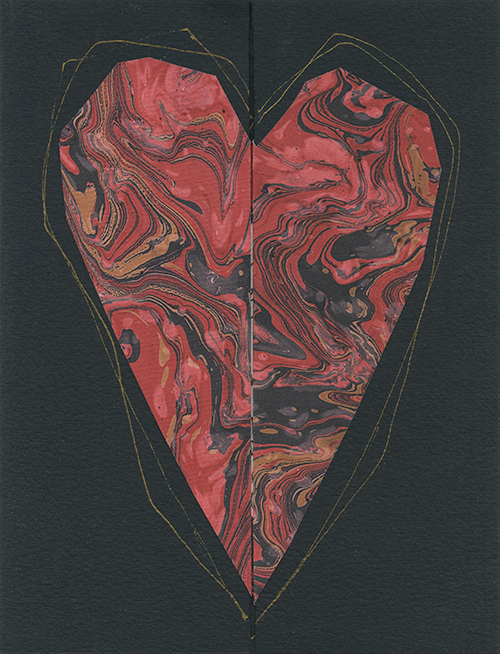
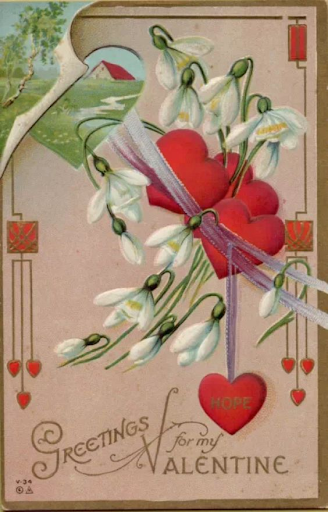
Image: Valentine © Jan Richardson

Blessing for the Brokenhearted

There is no remedy for love but to love more.
—Henry David Thoreau

Let us agree
for now
that we will not say
the breaking
makes us stronger
or that it is better
to have this pain
than to have done
without this love.

Let us promise
we will not
tell ourselves
time will heal
the wound,
when every day
our waking
opens it anew.

Perhaps for now
it can be enough
to simply marvel
at the mystery
of how a heart
so broken
can go on beating,
as if it were made
for precisely this—

as if it knows
the only cure for love
is more of it,

as if it sees
the heart’s sole remedy
for breaking
is to love still,

as if it trusts
that its own
persistent pulse
is the rhythm
of a blessing
we cannot
begin to fathom
but will save us
nonetheless.

—Jan Richardson

This blessing appears in Jan’s book, The Cure for Sorrow.

gremlins seem to be lurking here this morning, so let us see if we can fling this to the cyberwires that carry this from my kitchen table to yours. question for the day, besides “will this work?” is where did you find holiness this week? 

and here is a special wink and nod for the great good souls i didn’t get to mention above: the glass sculptor who sailed the world before planting herself on high street, in downtown mineral point. the ones who’d taught for years and years in alaska before sinking deep roots in driftless loam. the bibliophile who opened an indie bookstore, and thought to attach a cooking school besides. and most of all to jane, my storytelling hostess whose graces left me nothing short of gobsmacked.

when springtime lives up to its billing: equal parts shadow and light

according to celestial alignments, the shadow now is equal, light and dark. the sun has crossed the equator, and here on the northern half of the orb, spring is upon us. except that as i type, snow is blanketing my tender spring tendrils, and the walk is slick, and, well, tis the very picture of springtime here in the heartlands, where you’re wise not to count your blooms before the ides of may.

my heart too is heavy, beating in time with that of a mother i know who is off in the mountains of northern california searching for her blessed daughter who went hiking from the tassajara zen mountain center on monday, and five days and cold dark nights later still has not been found. i ask for prayers for caroline.

motherhearts are a communal collective. we cannot pause the pounding against our own chest wall, we cannot sleep soundly, when we know profoundly of another mother in unimaginable distress. be it the mothers of syria, or gaza, or israel’s kibbutzim, or my long-ago newsroom compatriot now strapped into her hiking boots, hearing only the echo of her own cry as she walks the remote yet exquisite topography where, somewhere, her firstborn is lost, is lying, is awaiting her mama’s arms and a wrapping in blankets.

my prayers have been looping nonstop, clouding out most other thoughts, since i first heard word. caroline’s mama is a woman of incredible, unbreakable faith. the notes she is sending back home, here in chicago, bolster my faltering. “my gratitude and hope outweigh my fears,” she wrote in her last short update, teaching me a thing or two about how to be strong in the face of the unbearable.


because the promise of springtime is, indeed, equal parts shadow and light, i turn to the poets for a dappling of light. and we begin with emily, the belle of amherst, and quickly turn to the little-known artist who inspired her:

“to be a flower,” emily dickinson wrote in her 1865 poem, “bloom,” considered a pre-ecological work, “is profound responsibility.”

clarissa munger badger

a passionate lifelong gardener, emily D (“a keen observer of the house of life who made of it a temple of beauty,” as cultural critic maria popova once put it) had fallen under the spell of wildflowers as a teenager while composing her herbarium of 424 blooms native to new england. but, writes popova, it was an “uncommonly beautiful” book her father gave her just before she turned thirty that rocket-blasted her poetic passion for nature’s own garden: wild flowers drawn and colored from nature by the botanical artist and poet clarissa munger badger (may 20, 1806–december 14, 1889).

published in 1859, the same year charles darwin’s on the origin of species shook science, badger’s book “contained twenty-two exquisite scientifically accurate paintings of common new england wildflower species — violets and harebells, the rhododendron and the honeysuckle — each paired with a poem bridging the botanical and the existential: some by titans like percival and longfellow, some by long-forgotten poets of her time and place, some by badger herself,” writes popova.

seven years later, badger brought her brush to the beauty of wildflowers’ domestic counterparts, the blooms of greenhouse and garden: the pansy and the lily, the day-blazing geranium and the night-blooming cactus, the tulip and the rose, and once again pairing her paintings with poems, she celebrated garden flowers as “brilliant hopes, all woven in gorgeous tissues,” as “stars… wherein we read our history.”


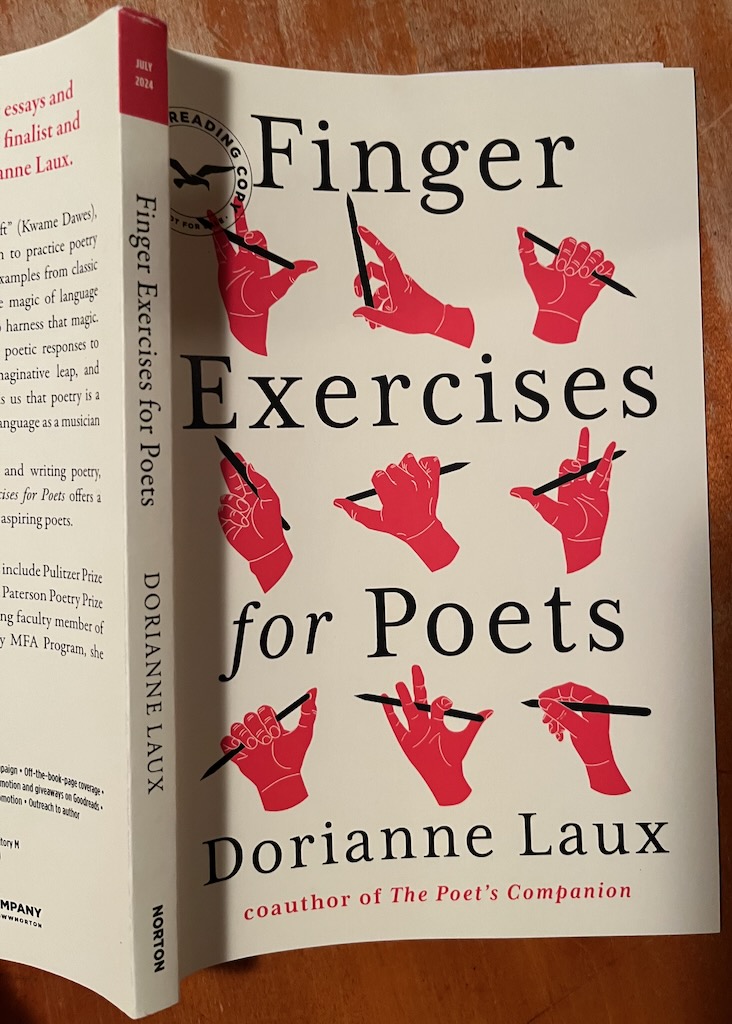
another poet, one i dream of sitting down to dinner with, or more in keeping with her ilk, plopping on a porch swing, she with cigarette burning orange against the black of night, me, merely pumping my merry little legs. dorianne laux is her name, and you’ve seen me write of her here. she has a brand new craft book, companion of sorts to her earlier the poet’s companion, and the new book, finger exercises for poets, is “an engaging invitation to practice poetry alongside a master,” and it’ll be out this july from w.w. norton & company. (they still send me advance reader copies; bless them.)

here’s a passage i knew i needed to share, from glorious, glorious dorianne’s introduction:

“My instrument is the immensity of language, the techniques and effect of crafting images, shaping sound and rhythm, creating new combinations with the single notes of words, each colliding or coming together, meshing or crashing, standing firm or tumbling. There are eighty-eight keys on a piano, six hundred thousand words in the English language. The patterns, the sequences, and permutations of both are endless. For me, language is another kind of music.

“I practice poetry. This book invites you to practice along with me.”


and i close, this snowy spring morning, with yet another master of language, and truth-telling: james baldwin. (this comes to me from a french monk whose writing i follow; laurence freeman is his name, and here’s a bit of what he sent this week from the bonnevaux centre for peace, in the southwest of france): “toward the end of his life, baldwin gave a television interview in which he was asked to reflect on the essential subject of his classic, groundbreaking novel, giovanni’s room. baldwin’s answer is an extraordinary meditation on love, and in particular, how it can serve a kind of educational purpose in our lives.” here’s what baldwin said, laid out as a poem. 

Q: What’s the novel, Giovanni’s Room, about?

Baldwin’s answer:

It’s about what happens to you
if you can’t love anybody.
It doesn’t make any difference
whether you can’t love a woman,
or can’t love a man —
if you can’t love anybody,
you’re dangerous.
Because you’ve no way
of learning humility.
No way of learning
that other people suffer.
No way of learning
how to use your suffering,
and theirs, to get from one place
to another.

In short, you fail the human
responsibility, which is
to love each other.

+ James Baldwin

what are the lessons of love you learned in this week of shadow and light?

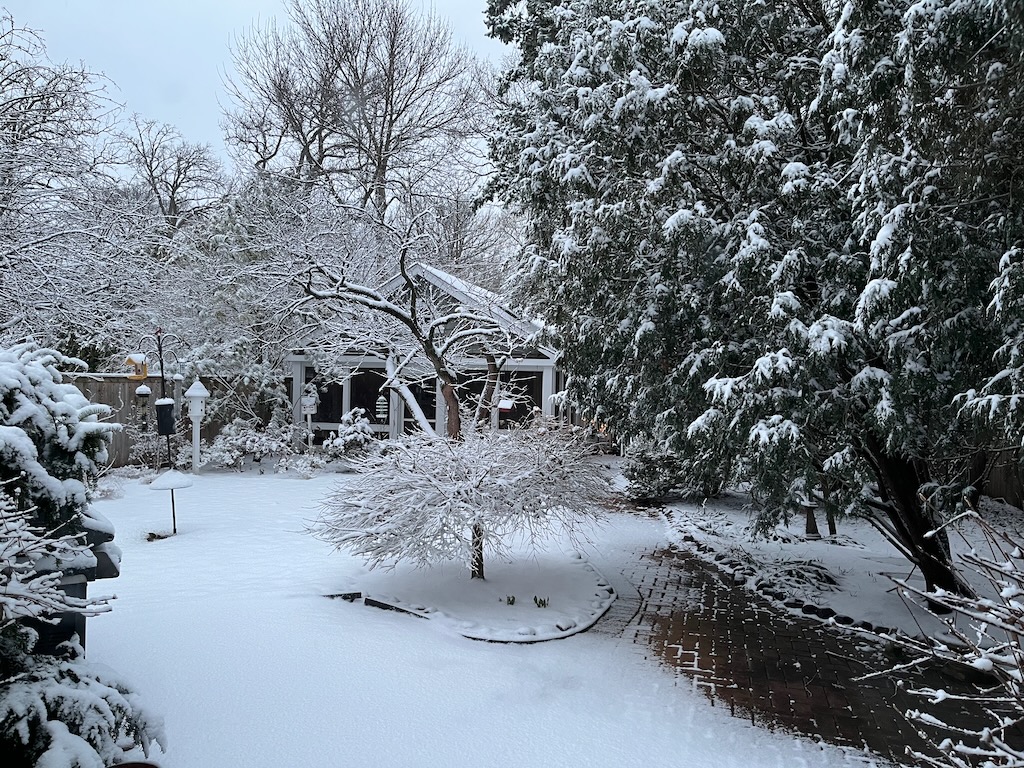
my “springtime” garden, whitened.

p.s. illustration at the top is indeed one of clarissa munger badger’s beauties. and i will ask once again, please please offer up prayers for rescue for blessed, blessed caroline, her mama, her papa, and all who are holding their most sacred breath…..

hungry for color

it hits this time of year, at this point in the turning of globe when we’re deep in shadow, and the world out our window is endlessly, endlessly, drainingly gray. even i, a self-proclaimed fangirl of the cloudiest day, a girl who thrills at billows of fog, those days when the sunlight can’t find its way in — even i get a bit itchy for hues beyond pigeon and charcoal and smoke, all close kin in the family of gray.

which is precisely why that shock of scarlet and pink boldly inserts itself in the february calendar. we need a little color. and the heart-shaped holiday brings it on. coils and coils of red, beribboned with oyster pink or flamingo. maybe even dashes of fuchsia.

i detected this color deficiency (more of a self-diagnosis) when i realized that all through the week i was clicking and clicking on dizzying droplets of anything resembling “other-than-gray.” and when i caught myself daydreaming, once again, of a riotous, bouquet-gathering, summery cutting garden — zinnias and cosmos and blue bachelor’s buttons all rising up like a botanical box of jazzy crayolas (preferably the 64-pack in which those waxy rainbow-hued sticks stand shoulder-to-shoulder as if choir-robed darlings marched into their multi-row loft).

and so, in hopes of sating your own chromatic hungers, i bring you a compendium of colors from a painter, a cook, a maven of tulips, and a poet.


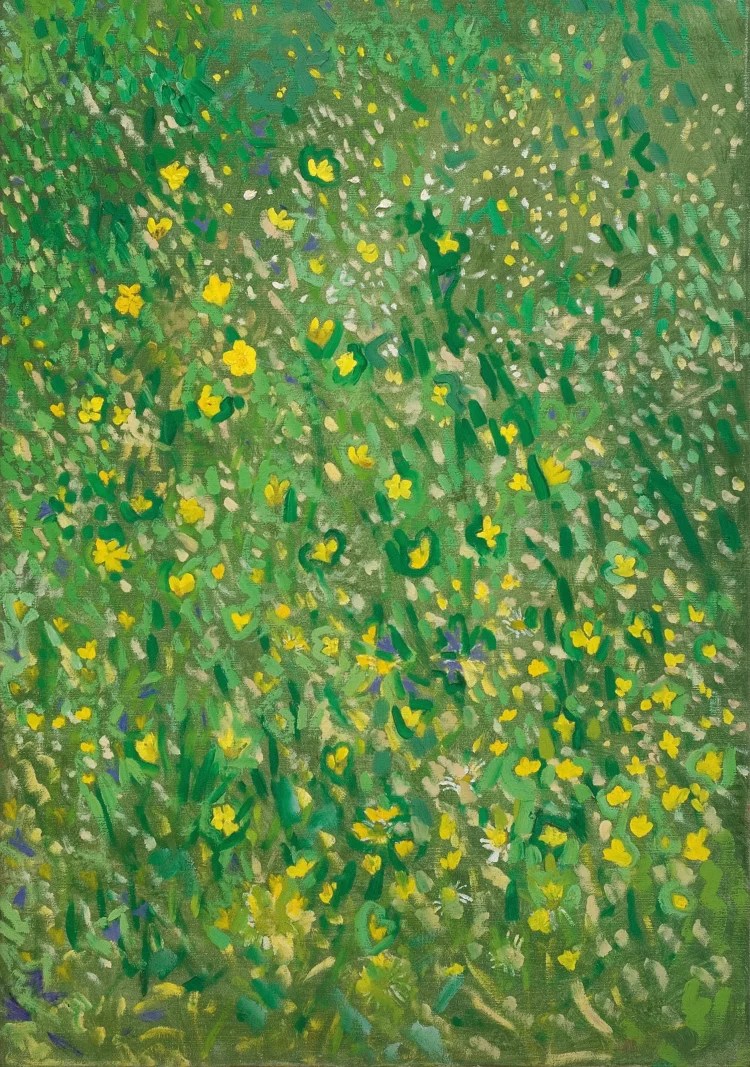
jean cooke’s “The Blumenthal,” 1995

first up: the painter, whose style of garden i aim to emulate, mostly because it’s been said that her “rambling garden was unkempt to imperfection.” jean cooke is her name, and she was considered one of britain’s greatest woman painters of the twentieth century. described, too, as a remarkable, bird-like woman, the london gallery that shows her work, goes on to describe her “ungardening” thusly:

Cooke’s neglect of her garden—she sometimes called it ‘ungardening’—was partly a reflection of her priorities: her painting and the care of her children. Beyond these demands there was little energy to give less pressing concerns. Grass went unmown, fences unmended and trees unpruned. But the messy garden was not entirely accidental. The disarray was cultivated over an extended period of time and helped Cooke to create a new subgenre in works such as The Wild Plum Tree, which drew upon aspects of both landscape and garden painting traditions. Whereas Claude Monet’s waterlily pond was scrupulously tended, Jean Cooke’s rambling garden was unkempt to imperfection just as her painting required. Whereas earlier paintings such as Grassland had used the Sussex coastline to create landscape-scale wilderness, by the mid-eighties when she began painting spring blossom in earnest her own garden had achieved a similarly expansive quality.

piano-nobile gallery
jean cooke at work in her unkempt imperfection

and in a nod to cupid’s holiday cusping on the near horizon, here’s a tad of insight, should tulips be the thing you choose to send your true love:

“rococo”

“As far as I’m concerned, …[tulips] are the best, indeed the only flowers to send or receive on Valentine’s Day. Wild, irrepressible, wayward, unpredictable, strange, subtle, generous, elegant, tulips are everything you would wish for in a lover. Best of all are the crazy parrot tulips such as ‘Rococo’ with red and pink petals feathered and flamed in crinkly lime-green. ‘When a young man presents a tulip to his mistress,’ wrote Sir John Chardin (Travels in Persia, 1686), ‘he gives her to understand by the general red color of the flower that he is on fire with her beauty, and by the black base that his heart is burned to coal.’ That’s the way to do it.”

– Anna Pavord, wonderful British garden writer and bulb lover, in The Curious Gardener: A Year in the Garden, 2010

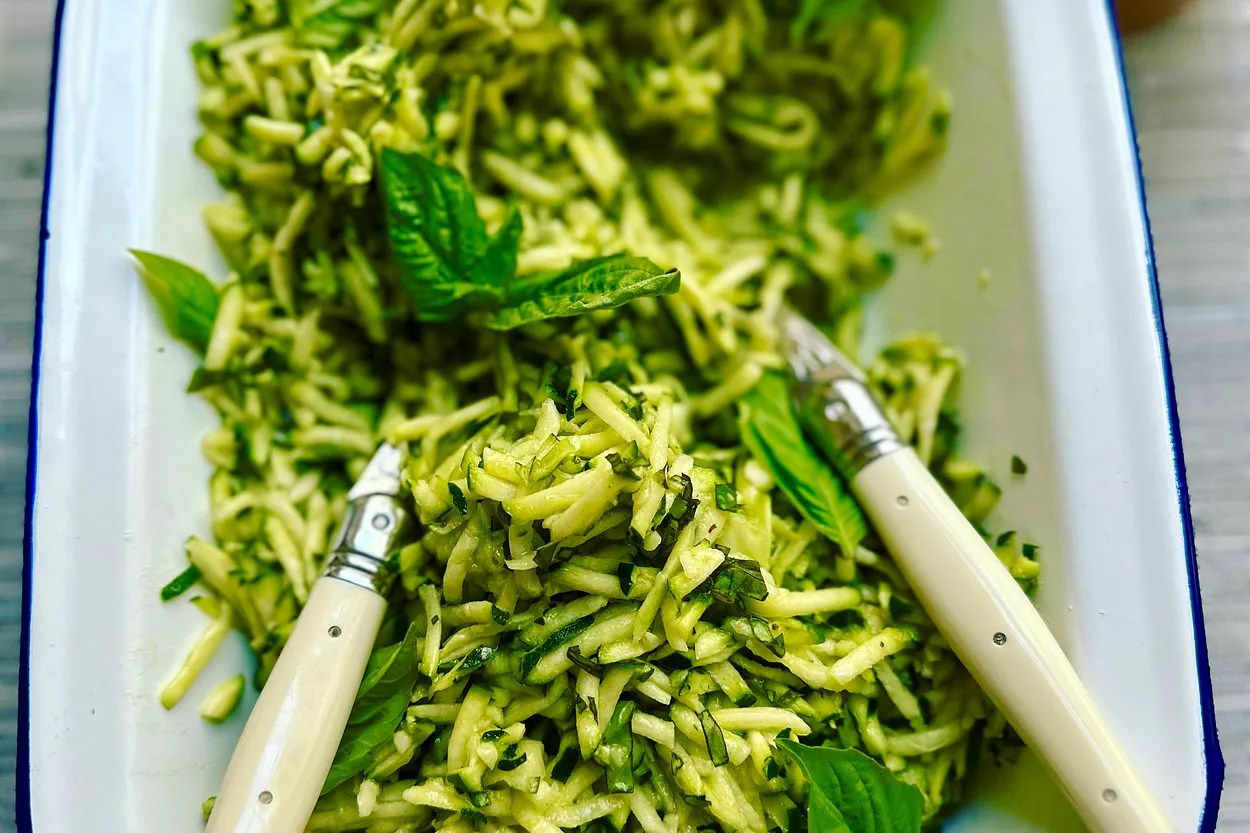
on the subject of wild women who tend toward the vivid end of the paint pot, there is the utterly marvelous and delicious emily nunn, formerly of the new yorker and the chicago tribune. she is a food writer like no other, and in recent years she has devoted her not-inconsiderable genius to the subject of salads. her newsletter often has me giggling straight off my chair. and her salads are beyond delicious more often than not. it delights me to introduce you to the one and only emily nunn’s department of salads, along with a peek at but one of emily’s many-hued produce concoctions….


and finally, let’s wrap this up with a wonder from mary O that i had never seen before, from a slim little volume i’d not known of till just last week when a wonder of a woman hosted a candlemas gathering and asked us all to bring a.) a candle, and b.) a poem about light. and thus i discovered house of light, mary oliver’s 1990 collection of poems. since the subject of this one is van gogh, it seems perfectly suited as a prescriptive for those who find themselves suffering a little color deprivation.

EVERYTHING   by Mary Oliver

No doubt in Holland,
when van Gogh was a boy,
there were swans drifting
over the green sea
of the meadows, and no doubt
on some warm afternoon
he lay down and watched them,
and almost thought: this is everything.
What drove him
to get up and look further
is what saves this world,
even as it breaks
the hearts of men.
In the mines where he preached,
where he studied tenderness,
there were only men, all of them
streaked with dust.
For years he would reach
toward the darkness.
But no doubt, like all of us,
he finally remembered
everything, including the white birds
weightless and unaccountable,
floating around the towns
of grit and hopelessness––
and this is what would finish him:
not the gloom, which was only terrible,
but those last yellow fields, where clearly
nothing in the world mattered, or ever would,
but the insensible light.

and with that i shall wonder, where did you find color this week?

jean cooke’s “springtime through the window,” 1980s

nursing tender things along. . .

barely perceptible nub of palest green, on the first outpost of the left branch of what might once again be my peewee hydrangea…see it?

i found myself crouching down as low as i could go the other day—likely lower than a girl with slits in her side should wisely have gone. but i was intent on inspection. i was searching clumps of stick for little nubs of green. of life. of any sign that the last shrub i planted in the fall — the day before the frost came — had survived the long winter. 

it was a long winter for plenty of us — certainly for my garden, newly planted in the weeks not long after the dreaded fence went up next door, and indeed for me. 

and yet now the season of birth and rebirth is upon us. from every bough and limb, from every red bird’s throat, the song of springtime’s hallelujah bursts forth and keeps on forthing. 

i find myself particularly intent on the tendernesses of this holy spring. i am crouching down low day after day, keeping watch for signs of life, coaxing beauties to unfurl.

poor mama robin laid her egg on a porch railing. oops. fear not, all now is well.

seems a wise posture, that of nursemaid to the birthing earth. it’s one i am learning to mimic as i consider my own deeply tender places, as i picture the convulsions of my poor little lung that likely has no clue what hit it, and why all the folderol and commotion a week or so ago. but it is now doing its darnedest to sew itself back to whole, pressing tight the seams that now are held in place with metal threads. the miracle of the human body is not unlike the miracle of holy earth, and as i slowly walk my garden’s edge, stooping here or there to lend a hand — lifting clematis vine to its fallen trellis, rescuing a robin’s egg mislaid on a railing’s edge — i am breathing in the tender caretaking ways of the God who so tenderly holds us in God’s sacred trusted hand. or so i imagine. none of us has a clue really just what form this God of ours inhabits, so from time to time i apply my storybook imaginings to make it all more apprehensible. i understand the naiveté of picturing a God who scoops me in God’s hand, but somewhere deep in that vision there is a grain of holy comfort. there is an image put to the ineffable. and right in here, i need that image.

i’m not the first to put pictures to my God, and i know i’m not the last. it’s a hard task here on earth to imagine the Divine goodness that inhabits all the cosmos, and surely all the heavens, and then the questions come: is heaven the holy light deep in our hearts? is heaven that palpable knowing that we are held by a goodness beyond our wildest imagination? once upon a time the nuns taught that heaven had a pearly gate, and was carpeted in clouds. oh, lord, they shouldn’t teach such things to wide-eyed little children; it can take a long long time to revise the picture reel inside your head, and why waste time in lala land when God is so much more and vaster and infinitely deeper.

i am spending many chunks of time pondering the presence of God in this messy chapter of my life. what i know is this: when i was deep in the dark tunnel of an MRI that scanned the vessels of my brain, and told not to flinch a single muscle for 45 excruciating minutes, i surrendered to the softest arms i’ve ever known. i imagined them as the arms of God, cradling me. and in that space of utter peace, i rested. and did not flinch, did not cough, did not exercise the itch or cramp in my shoulder; i found the holy wherewithal to do precisely as the doctor ordered. 

and that is how i pass the hardest hours. i go deep down under. into the place where God and angels dwell. i’ve no knowledge of this landscape. it’s all uncharted and unknown. but when i go there i am safe. and i am cradled in what feels like love. and that to me is how it feels when i walk my garden’s edge, crouch down low, and lift a hand to bud or vine or mislaid egg. we are all nurturing each other along. God and all of us. and i’ve no idea just how it works, or what it is. but i know i sense a holiness that i am choosing to call my God.

amen.

(i fully grasp that i’m going out on limbs here, groping along in wholly naked ways, but if i don’t use these hours of my life to plumb the deepest questions, to fumble for the truest answers i know, then what worth will these struggles hold? we have a chance to be our best selves in our darkest hardest hours. and these are mine. so far. so why not open the book and see what stirs? i’m impelled to wonder and to muse aloud….)

mama robin, safely atop her mislaid egg. photo by kerry, who saved the egg and whose porch is mama’s birthing room….

and now a few morsels, as has been my way in this year of gathering up bouquets of wisdoms…

Julian of Norwich, an English anchoress who experienced a vision in 1373 and wrote about it in a work titled Showings or Revelations of Divine Love — the earliest surviving book by a woman in the English language. my friends at the SALT Project (emmy-award-winning visual storytellers with a spiritual bent; check them out) laid this excerpt out as a poem. i found it lovely….

And in this he showed me a little thing
the quantity of a hazelnut,
lying in the palm of my hand, as it seemed.
And it was as round as any ball. 

I looked upon it with the eye of my understanding,
and thought, ‘What may this be?’
And it was answered generally thus,
”It is all that is made.”

I marveled how it might last,
for I thought it might
suddenly have fallen to nothing
for littleness. 

And I was answered in my understanding:
It lasts and ever shall, for God loves it.
And so have all things their beginning
by the love of God. 

In this little thing I saw three properties.
The first is that God made it.
The second that God loves it.
And the third, that God keeps it.


+ Julian of Norwich


 as has been my habit in recent months, i mark the turning of each month by turning to the pages of Henry David Thoreau’s The Journal: 1837–1861. here’s a dreamy entry from the ninth of may when thoreau was 34 and aswirl in the warmth of mid-Spring. (may our warmth please come….) 

May 9. It is impossible to remember a week ago. A river of lethe flows with many windings the year through, separating one season from another. The heavens for a few days have been lost. It has been a sort of paradise instead.

Saw a green snake, twenty or more inches long, on a bush, hang­ing over a twig with its head held forward six inches into the air, without support and motionless. What there for? Leaves generally are most beautiful when young and tender, before insects or weather has defaced them.

These are the warm­-west-­wind, dream­-frog, leafing­-out, wil­lowy, haze days. Is not this summer, whenever it occurs, the vireo and yellowbird and golden robin being here? The young birch leaves reflect the light in the sun.

Mankind seen in a dream. The gardener asks what kind of beans he shall plant. Nobody is looking up into the sky.

a little dictionary for those of us who don’t know our greek: lethe: “forgetfulness,” from the river in Hades that causes drinkers to forget their past.


one more thing a brilliant woman sent me this week when i was inquiring whether a certain “tiny retreat” (that’s how it was billed) had a virtual component, for those of us whose lives are pretty zoom-y these days…..

“Be who God meant you to be and you will set the world on fire.”

Catherine of Siena

finally, a profound note of thanks, to the brilliant and bold mountain-mover of a friend i have in poet and scholar (and my former cambridge landlord) mark burrows, who sent a note to all who were at the zoom book launch a few weeks ago (a lifetime ago!), and who implored you to add a little amazon review to my “languishing” Book of Nature. well, the book isn’t languishing but its state of review sure was. i have no understanding of the algorithms of amazon, but apparently, without reviews, you’re sunk. glub. glub. glub. so mark, unbeknownst to me, rallied the forces and got the reviews boosted from 3 to 11, currently. in a million years i couldn’t have done what he did. in these otherwise upturned days, the human species has shown me in brilliant colors just how magnificently we all can be, and love is pouring forth with the might to rocket me to the holy moon, which was magnificent last night if you happened to notice.

so, thank you, blessed blessed mark. and thank every one of you who in your own magnificent ways has stepped to my side in this curious curious walk through springtime 2023…..

love, bam

waiting. . .

i decided to give you a pretty picture of this season erupting, but doing it in slo-mo. this is korean spice viburnum waiting to open wide its little throats and let out its intoxicating perfumes. this is waiting, the spring edition.

waiting is the word of the week. word of the year, in fact––so far, anyway. i’m on the other side of surgery––and have the tic-tac-toe board crisscrossing my side to prove it. they got out what they needed to get out (i hope), though it was more than we’d been betting on. so now i’m waiting.

waiting is a quilt of many textures. sometimes it washes over me, with a calm that takes the sting away. sometimes i feel my heart kick into higher, faster gear. i try hard to turn off the nozzle that lets the worries out. but even my secondborn tells me i do too much of that. and he’s only been keeping watch for twenty-one of my years (and he is 300 miles away right now, so he’s out of range for any current worries; job one for me is to project calm to the one with the very, very giant heart). it’ll take two weeks for the blessed souls in the pathology lab to do what all they do to lay out the specifics of this little dervish that somehow found its way to the bottom of my lung. and that gives me time to sink slowly into the bath of this new reality.

waiting gives the human species time to settle in, to realize you’ve taken more steps into the unknown than you’d ever imagined you would. and you’re calmer––and maybe braver––than you’d ever ever imagined you could be (most of the time anyway). of all the worries i’ve worried over the years, i never added lungs to the list.

just the other week, i read a lovely line from a 96-year-old, a woman who knew she was on the last pages of her life, and so she scribbled out her truths for her children, her grandchildren, and her many greats. when asked what might be the most important thing she’d realized as she rounded the final bend, she simply said: “i wish i hadn’t spent so many hours worrying, cuz most of those worries never came to be.”

mostly, what waiting does is make me savor every minute. stepping out into the balmy springtime air. tucking my nose into the soon-to-be blossoms. listening to the owls hoot at 5:15 a.m. marveling at the miracles of modern medicine that can do so very very much, and for the most part do it so very lovingly. (i fell in love with my nurses, emily who stayed all night with me, and clare who worked by day. the care with which they changed dressings, filled syringes, listened to my questions, they made me so so proud that i was once one of them. and they made me realize how very much even their most basic medical tasks translate into a language that feels like love. i was a stranger to them when i was rolled into my cubicle of a room, but by shift’s end i was sad to see them leave. if you’re a nurse, believe me when i tell you you’re a living saint. to make the scared and fragile and confused feel safe and tended to is a sacred act, is sacramental, in that it lifts even the most perfunctory of duties into the closest thing i know to benediction.)

a few of things i marveled at this week, while idling in my wait station: my friend the nurse practitioner who, when she found out how much it hurt to try to lie down in bed, ordered up a giant wedge pillow that made last night a whole lot less bumpy. having two of my three boys right by my bedside all week long. one of ’em had me laughing (sidesplittingly is not such an apt description here, though it might have stretched some stitches) within hours of getting to my little room. (i was on the heart transplant floor, and, believe you me, i did not miss for a minute how blessed i was to be there only for a chunk taken out of my little lung.)

yet another surround-sound marvel in this week one of the two-week wait: the promise of springtime, that life bursts forth year after year after year. we live in an eternal spiral, and i am on for the holy blessed sumptuous ride. stepping into the still soft air, watching the goldfinch nibble at the thistle seed, rejoicing as the daffodils tossed off their snowy caps to rise and shine again, golden periscopes of spring. it felt to me like the arms of God were wrapping round me in the form of this gentle greening world.

in book world, one fine thing happened: there is a lovely lovely journal, the EcoTheo Review––a quarterly put out by a collective of poets (mostly), writers, and artists who plumb the depths of wonder and beauty in this world, and who claim as their mission, to “celebrate wonder, enliven conversations, and inspire commitments to ecology, spirituality, and art.” and they published a conversation we’d had a few weeks back about The Book of Nature, which you can read here. the editor who spent hours in our exchange of thoughts, Esteban Rodriguez is his name, is himself a poet, and one of the kindest, gentlest souls i’ve been blessed to come to know. it more than more than made up for the half dozen book events that got wiped off the calendar.

while i wait in these days ahead (and try so hard not to worry!), i’m going to be on watch, to soak up and see every blessed wonder and beauty in this holy world. i don’t want to miss a drop. i am following the instruction of richard rohr, the modern-day mystic, who asked:

Where is this God being revealed? Not in the safe world, but at the edge, at the bottom, among those where we don’t want to find God, where we don’t look for God, where we don’t expect God.

i’m going to look for God in every nook and cranny along this waiting way. because i’m fairly certain God comes in a thousand thousand forms: in the gentle touch of the nurse who poked my arm, in the bouquet dropped on my front stoop, in the tub of soup that now takes up a shelf in the fridge, in the box that’s on its way from zingerman’s deli in ann arbor, and in every last note and gentle text that simply says, “you got this, and i am here beside you.”

God comes most certainly in the hours when our waiting gives God more than plenty time to tap us on the heart, the soul, the noggin. i’m on watch while i wait…

where did you find God this week, or whatever is the name you give to the all-embracing goodness that i call the holy Author of it all?

she blossomed, my olfactory factory….

the itch that comes in not-yet-spring

in which, once again, i bring you a wee bouquet, this time an assemblage from the springtime garden. . .

it creeps in unawares, something like a mosquito circling your pillow deep in the night. barely there at the edge of your consciousness, then suddenly smack dab and nettlesome straight in your face. 

it’s the itch that comes in the chill of not-yet-real-spring. in the the days when drab is the only real color you see out your window. when the world seems to be broadcasting its thousand ways to be brown. or gray. or washed-out leftover green. at least that’s how it is in my humble neck of the woods. 

a week or so ago i finally managed to heave the bundles of pine that had all but petrified over the winter. and all that was left in the pot by the door was left-behind scraps of last autumn’s sheddings. and then suddenly, smack dab like the pesky mosquito, i could stand it no longer. 

the drab had taken its toll, the drab stirred me to action: to pick up my keys, lope to the wagon, and drive into the distance. i passed garden store numero one, where the guys were heaving large satchels of loam, with nary a pansy in sight. i motored on, further south, and a wee bit west, into the lot of the big box store, where an old man shivered inside the cash register shack, and the very bare shelves carried only one thing: the bright yellow fluttering faces i’d suddenly craved.

i snatched up three little flats, and carried them home, where the itch of not really spring has been quelled for the moment. it’s too cold for the trowel, so i’ll leave them perched where they are. but my morning’s botanic adventure, the first of the season, is giving me reason to hope. and hope is the thing that animates the first blush of spring.

once the snowflakes recede, and the thermostat warms, once march turns to april, and brings on the palette of exuberant spring, we might actually, actually turn the page on old winter.

don’t hold your breath. . . . or put away your mittens. . .


it seems my mailbox in the middles of the week finds itself with flag up, and something luscious tucked inside. this poem from joyful, wise, and wonderful lamcal, who has been a font of wonder for me for all the years she’s been pulling up a chair.

this is actually anne sexton’s poem, the 20th-century american poet known for her highly confessional works, though this confession radiates with joy.

if i was ever pushed to pick the one sub-genre of poetry that most speaks to me, it’d surely be domestic poetries. those quotidian hours and ordinary nooks and crannies of our everyday lives that are made sacramental through the simple holy practice of paying attention. perhaps you’ll consider joy the next time you towel off in your cannon bath towel, or make a chapel of your eggs. oh, anne sexton, thank you. and, even more so, lamcal. xoxo

Welcome Morning

There is joy
In all:
In the hair I brush each morning,
In the Cannon towel, newly washed,
That I rub my body with each morning,
In the chapel of eggs I cook
Each morning,
In the outcry from the kettle
that heats my coffee
Each morning,
In the spoon and the chair
That cry “hello there, Anne”
Each morning,
In the godhead of the table
That I set my silver, plate, cup upon
Each morning.
 

All this is God,
Right here in my pea-green house
Each morning
And I mean,
Though often forget,
To give thanks,
To faint down by the kitchen table
In a prayer of rejoicing
As the holy birds at the kitchen window
Peck into their marriage of seeds.
 

So while I think of it,
Let me paint a thank-you on my palm
For this God, this laughter of the morning,
Lest it go unspoken.
 

The Joy that isn’t shared, I’ve heard,
dies young.

       —Anne Sexton


and since april (on the morrow) is poetry month, why not one more, from one of my patron saints of poetry, mary oliver? the line i’ve emphasized in bold is the one i know by heart. i live for holiness visible, entirely. i’m guessing you do, too.

not yet in bloom, but wishful thinking…

Leaves and Blossoms Along the Way

If you’re John Muir you want trees to
live among. If you’re Emily, a garden
will do.
Try to find the right place for yourself.
If you can’t find it, at least dream of it.

When one is alone and lonely, the body
gladly lingers in the wind or the rain,
or splashes into the cold river, or
pushes through the ice-crusted snow.


Anything that touches.
 

**God, or the gods, are invisible, quite
understandable. But holiness is visible,
entirely.
 

Some words will never leave God’s mouth,
no matter how hard you listen.
 

In all the works of Beethoven, you will
not find a single lie.
 

All important ideas must include the trees,
the mountains, and the rivers.
 

To understand many things you must reach out
of your own condition.
 

For how many years did I wander slowly
through the forest. What wonder and
glory I would have missed had I ever been
in a hurry!
 

Beauty can both shout and whisper, and still

it explains nothing.

The point is, you’re you, and that’s for keeps.
 

~ Mary Oliver ~

(Felicity)


c.s.lewis

and, finally, because this took my breath away in that way that only the Inklings could and can, here’s c.s. lewis trying to put language to the ineffable, talking about “the inconsolable longing for we know not what.”

he’d felt this longing his whole life – it came to him during moments of almost unbearable beauty: “[t]hat unnameable something, desire for which pierces us like a rapier at the smell of bonfire, the sound of wild ducks flying overhead, the title of The Well at the World’s End, the opening lines of ‘Kubla Khan’, the morning cobwebs in late summer, or the noise of falling waves.”

have you ever heard a lovelier expression for a searching for the sacred, no matter what name you put to it? i call it Holy God. and in my heart, i genuflect each time i utter those blessed words.


what visible holiness did you stumble upon this week, and might the itch to bring on springtime have buzzed by your nose this week? how’d you satisfy the itch?