pull up a chair

where wisdom gathers, poetry unfolds and divine light is sparked…

Category: season change

spring might be sprung, but i’m not springing
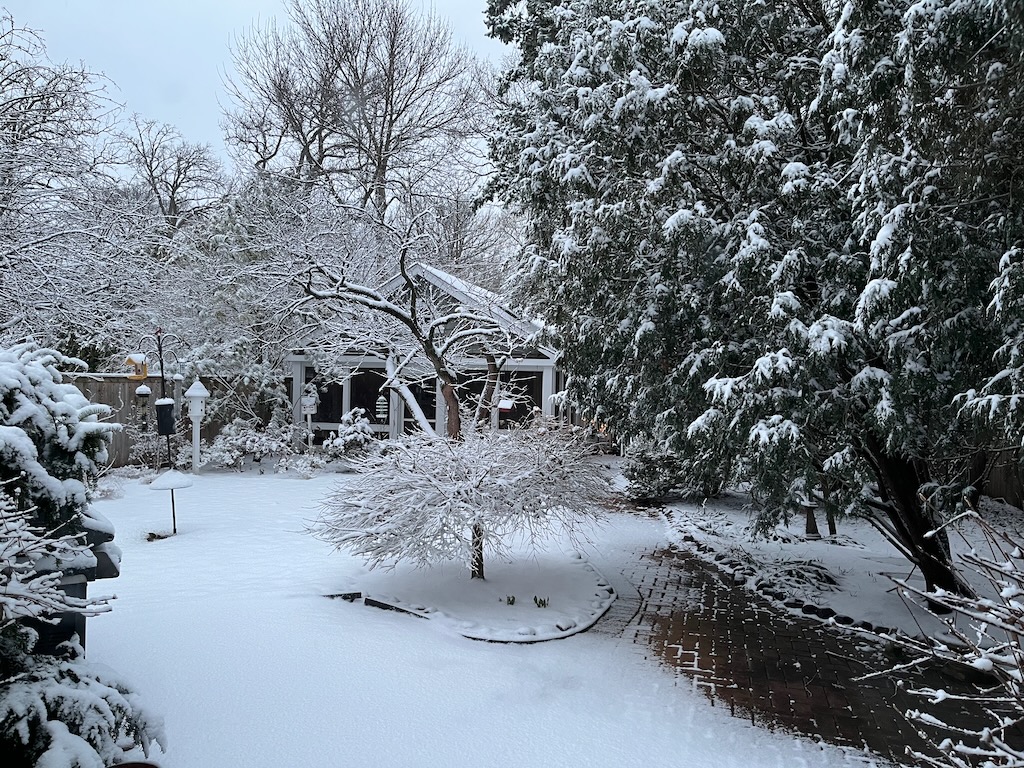
vernal equinox out my backdoor

they say it’s spring out there. celestial lines were crossed in the wee, wee hours of yesterday, and, for a flash there, light and shadow fell in equal measure. 

i don’t feel the light though. not in sync with springtime’s beckoning. i’m inclined still to hunker down in winter’s shadow. 

for reasons i can’t quite fathom, i’m not ready this time ’round for the seasonal advance. i still feel wintry in my bones. the light change is too abrupt for me, too ice-white for me. my inner metronome is far too slow for the prestissimo that’s rising. i don’t mind the cardinal’s vernal song, though, rung out from treetops high, and piercing through still-frigid air. but i’m not seasonally adjusted. i’m lagging at least two lopes behind. 

i can’t tell if it’s that my winter felt circumvented. or that i’m wishing for all of time to freeze in place. since the world is rather dire these days, that cannot be a wise solution. in that regard, i’ll take time in double measure. may we all wake up on the morning of eight november, 2028, with a whole new glimmer in our eyes. and the present firmly in the past.

i’m feeling somewhat stuck. hardly welcoming of burgeoning to come. and that’s a most peculiar state for me. 

might the whole universe be toppled on its head, upside down and inside out? 

the one sure sign that spring is here is that when i awoke, just hours after equinox, the world i saw was dumped with snow. which in these parts is something of a rite of spring. tulips rise, and snowflakes fall. my mother swears she knows it’s spring when she slides on her winter boots and brushes all the glops of snow off her daffydills. 

no wonder we of the four-quarter year take spring in slow, uncertain sips. there is no fine delineation, as if the calendar and earth set their clocks in synchronous coordination. 

on a day when snows fell in glops, and then proceeded to melt in same-sized gloppings, and on the day when headlines kept insisting the springtime was upon us, i heard a thump at my door, and therein found prescriptive for my seasonal laggings. 
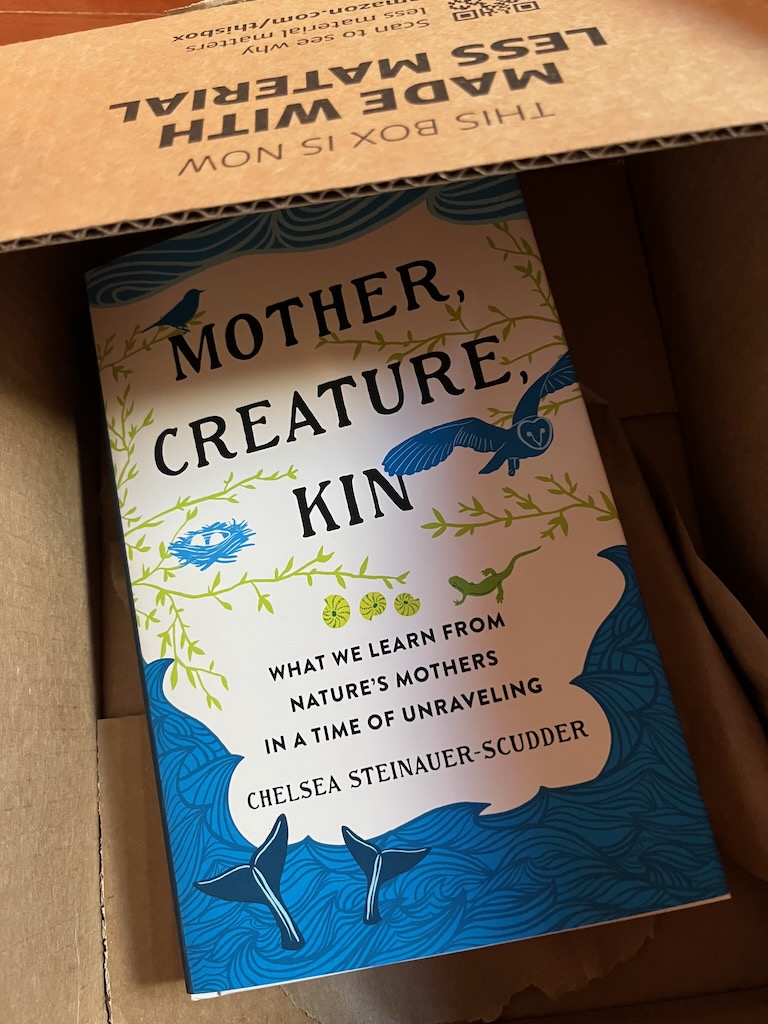
there, in a plain brown box, lay a book i’d been awaiting. my friend chelsea steinauer-scudder, as intelligent and beautiful a writer as could be, became a mother back when she and i were reading books and writing in the zoom rooms that covid carved. i’d first read chelsea in the pages of emergence magazine, a wunder site (online and print magazine, as well as creative production studio) that probes the depths of ecology, culture, and spirituality, and where she was a writer and editor for five years. when i saw she’d be leading reading circles (braiding sweetgrass, among them) and ones for the craft of nature writing, i signed up, and cemented myself to what would otherwise have been a front-row seat. 

chelsea grew up on the great plains of oklahoma and the sandhills prairie of nebraska, where for a time her papa researched bison, fire, and native plant communities, so she comes to her native landscape––language enfolding the sanctity of earth––with what seems an effortless fluency, as if she grew up breathing it. which, of course, she did. and then she went on to harvard divinity school, where she earned a masters in theological studies, and ever since she’s been writing sumptuously, focusing her work, in her words, “on the confluence of relationship to place with experiences of the sacred.”  

her first book, Mother, Creature, Kin: What We Learn from Nature’s Mothers in a Time of Unraveling (Broadleaf Books), is what brought the thud to my front stoop. it’s due out april 8, but my copy landed yesterday. and it might be the cure i needed to lull me into spring. 

a.) it gives me excuse to curl under a blanket for a day or two, and b.) here’s what i’m about to bathe in, passages such as this:

“I wish to invite you into a kind of mothering that is wild and porous. The kind that draws blood, that loves and fears, rejoices and doubts, that exposes where we are most deeply vulnerable and from there stretches us into what is beyond us. I mean the kind of mothering that works within uncertainty and mystery. The kind that leaves soil beneath our fingernails and seeds in our hair.” 

she writes about mothering and being mothered by places. ecological mothering. she defines ecological motherhood as: a shared, place-based responsibility to nurture and support human and more-than-human life. she writes of the karmic cycle of rebirth, a subject aptly plucked from the vernal syllabus. she writes of the silent flight of barn owls, of nursing and endangered right whales, of real and imagined forests, eroding salt marshes, and newly planted gardens. 

she writes that the protagonists of these stories have been teaching her facets of mothering (a verb that she, like me, insists is not tied to gender nor obstetrics). those facets belong to us all, no matter our life’s work: “language, belonging, entanglement, community, edge work, homemaking, and how to think about the future.”

my friend chelsea just might nudge me over my springtime bump, and land me softly on the vernal side….


as i await the vernal skip in my own heart, i scan the literary landscape for those others who, along with chelsea, might nudge me there. and no surprise, i turn to two favorites, the great naturalist and writer, aldo leopold, and the poet mary oliver, who drew the sacred from her every path and passage.

“One swallow does not make a summer, but one skein of geese, cleaving the murk of a March thaw, is the spring.”

aldo leopold

North Country

In the north country now it is spring and there
     is a certain celebration. The thrush
has come home. He is shy and likes the 
     evening best, also the hour just before
morning; in that blue and gritty light he
     climbs to his branch, or smoothly
sails there. It is okay to know only
     one song if it is this one. Hear it
rise and fall; the very elements of your soul
     shiver nicely. What would spring be
without it? Mostly frogs. But don’t worry, he

arrives, year after year, humble and obedient
     and gorgeous. You listen and you know
you could live a better life than you do, be
     softer, kinder. And maybe this year you will
be able to do it. Hear how his voice
     rises and falls. There is no way to be
sufficiently grateful for the gifts we are
     given, no way to speak the Lord’s name
often enough, though we do try, and

especially now, as that dappled breast
     breathes in the pines and heaven’s
windows in the north country, now spring has come,
     are opened wide.

––Mary Oliver

a little peek at what a few other authors have to say of Mother, Creature, Kin. may i call your attention to the one who writes that this beautiful book belongs in the company of works by Ursula LeGuin, Rachel Carson, Terry Tempest Williams, and Robin Kimmerer, to name a constellation of the highest-reaching lights…

are you finding yourself in springlike mode, and what sights and sounds and scents are stirring you there?

when writerly rabbit holes swallow you whole….

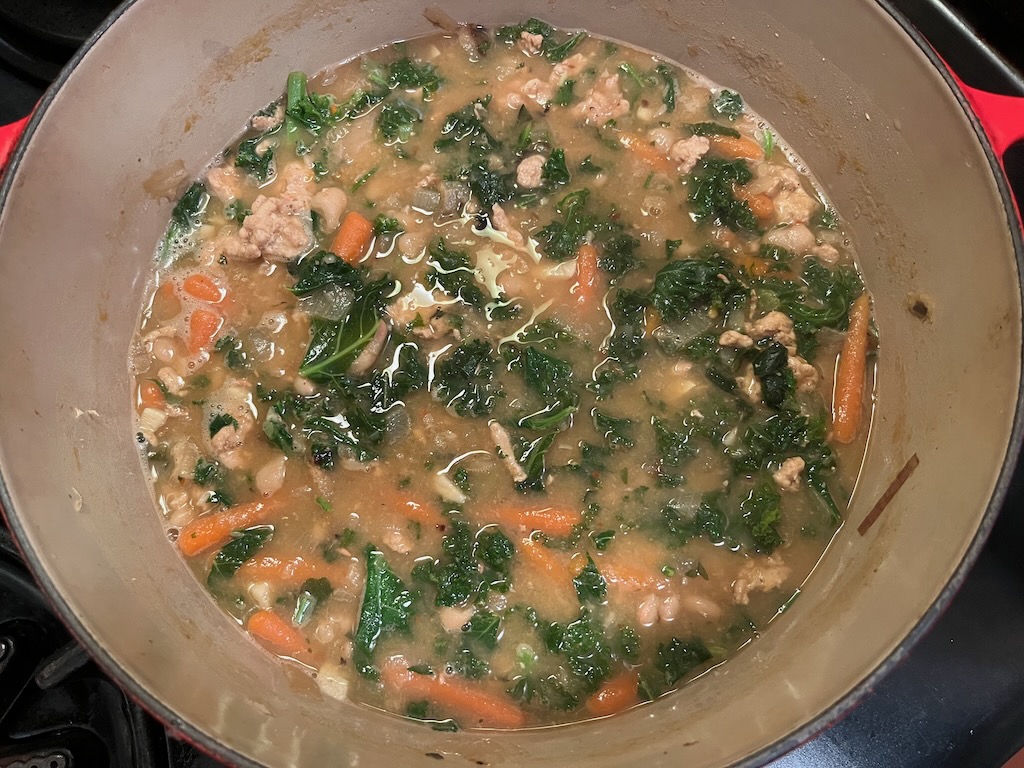
in which a writing assignment, one that’s wholly captured my imagination, has taken over my gray matter (the stuff inside my head, not the pewter hairs that spring from it), and precluded most any other human activity—save for the occasional re-fueling at the cookstove to keep from puddling to the floor, famished. and for which i’ve shared my simmering salvation down below…

excuse me while i type over here. i seem to have fallen down-down-down into an engrossing writerly rabbit hole, and as the week’s worn on, i’ve only found myself burrowing deeper and deeper. it’s been a while since i’ve chased a thread of idea down to where the earthworms wriggle and the bunnies make hutches. and while i admit that my inner mad-scientist might be vividly on display here, in the way that i can’t put down my wild-eyed pursuit, there is a preponderance of joy stirring the madness. 

i love chasing ideas. love untangling cognitive threads. discovering new ways of thinking i’d not known of before. love when one read leads to another and another. and then it’s my task to slice it, and dice it, and make it all make sense. extra points if it comes out poetic.

i’ve been a rabbit-hole writer as long as i’ve been slapping verbs and nouns into sentences. back in high school, i decided to write a mega theme paper on the misuse of wealth in america, and pretty much took hostage the dining room table for weeks on end. if anyone wanted easter dinner that year, they were going to have to shove aside my teetering stacks of tomes chronicling the gatsby brigade of modernday over-conspicuous consumption. years later, when the tribune set me off on a cross-country steinbeckian journey, zigzagging the continent from the deep woods of maine to the pacific northwest and plenty of points between, chronicling stories of hunger in america for a 10-part series, i distinctly remember my editor, a rumpled import from the new york times, sauntering over to my cubicle and insisting i unchain myself from my keyboard to at least stand under a shower, or swim a lap in a pool, long enough for one or two big ideas to snap into place. i was never much for taking breaks. 

granted, writing that way might have been bad for the eyes and tough on the spine and the wrist, but i kept at it (one night, in the thick of telling a murderous tale, my writing partner and i took turns falling asleep on a very fat phone book). until i birthed a wee child. and said child insisted on eating. and i was the source, the one and only. swiftly realizing that typing while nursing had its drawbacks, i reluctantly succumbed to the art of the pause. 

lo and behold, i discovered epiphany. 

amazing things happen in the chambers of the mind when you stop hard-charging the thoughts. when you allow a synapse to slow to a pokier pace. 

more often than i wish to admit, some elusive sentence has snapped into place while rinsing a plate under the faucet. and a sugarplum of a word has skydived in from seeminly nowhere. so i’ll concede that there’s virtue in lifting my head from the writerly hole.

but now that this old house is mostly empty again, there’s no stopping me. except that there is still one other mouth to feed. (fear not, he feeds himself well and is happy to do so on the nights i relinquish my post at the cookstove.) and besides, chopping and stirring, i’ve found, provides fine syncopation for the drumming of thoughts while assembling an essay.

soup by the kettleful is my solution. all it takes is one afternoon of onion slicing, garlic mincing, and the tossing in of a few other things. and by nightfall, and the night after too, you’ve got plenty to slurp from your bowl. 

my ode to autumn, lemony white bean soup with turkey and tuscan kale, is what i bring you this week with the promise that it is utterly, perfectly, shlurpably delicious. it comes, as so much of my best cooking does, from my very fine friends at NYT Cooking, one of the perqs of seven-day-a-week home delivery, the last house this side of the block to still believe in turning actual newsprint pages.

Lemony White Bean Soup With Turkey and Greens
By Melissa Clark
Total Time 45 minutes

INGREDIENTS
Yield: 4 servings

3 tablespoons olive oil
1 large onion, diced
1 large carrot, diced
1 bunch sturdy greens, such as kale, broccoli rabe, mustard greens or collard greens
1 tablespoon tomato paste
3⁄4 teaspoon ground cumin, plus more to taste
1⁄8 teaspoon red-pepper flakes, plus more to taste
1⁄2 pound ground turkey
3 garlic cloves, minced
1 tablespoon finely grated fresh ginger
1 teaspoon kosher salt, plus more to taste
1 quart chicken stock
2 (15-ounce) cans white beans, drained and rinsed
1 cup chopped fresh, soft herbs, such as parsley, mint, dill, basil, tarragon, chives or a combination
Fresh lemon juice, to taste

PREPARATION

Step 1: Heat a large pot over medium-high for a minute or so to warm it up. Add the oil and heat until it thins out, about 30 seconds. Add onion and carrot, and sauté until very soft and brown at the edges, 7 to 10 minutes.

Step 2: Meanwhile, rinse the greens and pull the leaves off the stems. Tear or chop into bite-size pieces and set aside.

Step 3: When the onion is golden, add tomato paste, 3⁄4 teaspoon cumin and 1⁄8 teaspoon red-pepper flakes to the pot, and sauté until paste darkens, about 1 minute. Add turkey, garlic, ginger and 1 teaspoon salt, and sauté, breaking up the meat with your spoon, until turkey is browned in spots, 4 to 7 minutes.

Step 4: Add stock and beans, and bring to a simmer. Let simmer until the soup is thick and flavorful, adding more salt if needed, 15 to 25 minutes. If you like a thicker broth, you can smash some of the beans with the back of the spoon to release their starch. Or leave the beans whole for a brothier soup.

Step 5: Add the greens to the pot and simmer until they are very soft. This will take 5 to 10 minutes for most greens, but tough collard greens might take 15 minutes. (Add a little water if the broth gets too reduced.)

Step 6: Stir herbs and lemon juice into the pot, taste and add more salt, cumin and lemon until the broth is lively and bright-tasting. Serve topped with a drizzle of olive oil and more red-pepper flakes, if desired.


and because even amid my mad musing this week, i still found myself melted by poetry, i bring you this beauty…

End of Summer

An agitation of the air,
A perturbation of the light
Admonished me the unloved year
Would turn on its hinge that night.

I stood in the disenchanted field
Amid the stubble and the stones,
Amazed, while a small worm lisped to me
The song of my marrow-bones.

Blue poured into summer blue,
A hawk broke from his cloudless tower,
The roof of the silo blazed, and I knew
That part of my life was over.

Already the iron door of the north
Clangs open: birds, leaves, snows
Order their populations forth,
And a cruel wind blows.
—Stanley Kunitz 

named the tenth poet laureate of the united states in the autumn of 2000, kunitz was 95 at the time. his poetry was said to get richer with age. and one of his lifetime’s most pervasive themes probed the simultaneity of life and death. “it’s the way things are: death and life inextricably bound to each other,” he once explained. “one of my feelings about working the land [as a gardener] is that i am celebrating a ritual of death and resurrection. every spring i feel that. i am never closer to the miraculous than when i am grubbing in the soil.” he once told the new york times: “the deepest thing i know is that i am living and dying at once, and my conviction is to report that dialogue. it is a rather terrifying thought that is at the root of much of my poetry.” kunitz won the pulitzer prize in poetry in 1959. he died in 2006. (boldface emphasis mine…)

“my conviction is to report that dialogue. . .” and thus is the reason writers fall into rabbit holes…


i was looking high and low for a roz chast cartoon of a madwoman pulling her hair out, for illustrative purposes above. but, alas, i could not find. though ed koren’s wild-haired woman did come in a close second, and in the end i opted for the wanna-be writer above, courtesy of mr. koren…

see you next week when if all goes well i hope to tell you the story of how i got myself a new name last week, and a hebrew one at that…

in the meantime, are you, like me, one who prefers to tie on the blinders and not come up for air till the task is completed, or are you of the sort who finds that leisurely attending to a task makes for all-round saner existence? 

when springtime lives up to its billing: equal parts shadow and light

according to celestial alignments, the shadow now is equal, light and dark. the sun has crossed the equator, and here on the northern half of the orb, spring is upon us. except that as i type, snow is blanketing my tender spring tendrils, and the walk is slick, and, well, tis the very picture of springtime here in the heartlands, where you’re wise not to count your blooms before the ides of may.

my heart too is heavy, beating in time with that of a mother i know who is off in the mountains of northern california searching for her blessed daughter who went hiking from the tassajara zen mountain center on monday, and five days and cold dark nights later still has not been found. i ask for prayers for caroline.

motherhearts are a communal collective. we cannot pause the pounding against our own chest wall, we cannot sleep soundly, when we know profoundly of another mother in unimaginable distress. be it the mothers of syria, or gaza, or israel’s kibbutzim, or my long-ago newsroom compatriot now strapped into her hiking boots, hearing only the echo of her own cry as she walks the remote yet exquisite topography where, somewhere, her firstborn is lost, is lying, is awaiting her mama’s arms and a wrapping in blankets.

my prayers have been looping nonstop, clouding out most other thoughts, since i first heard word. caroline’s mama is a woman of incredible, unbreakable faith. the notes she is sending back home, here in chicago, bolster my faltering. “my gratitude and hope outweigh my fears,” she wrote in her last short update, teaching me a thing or two about how to be strong in the face of the unbearable.


because the promise of springtime is, indeed, equal parts shadow and light, i turn to the poets for a dappling of light. and we begin with emily, the belle of amherst, and quickly turn to the little-known artist who inspired her:

“to be a flower,” emily dickinson wrote in her 1865 poem, “bloom,” considered a pre-ecological work, “is profound responsibility.”

clarissa munger badger

a passionate lifelong gardener, emily D (“a keen observer of the house of life who made of it a temple of beauty,” as cultural critic maria popova once put it) had fallen under the spell of wildflowers as a teenager while composing her herbarium of 424 blooms native to new england. but, writes popova, it was an “uncommonly beautiful” book her father gave her just before she turned thirty that rocket-blasted her poetic passion for nature’s own garden: wild flowers drawn and colored from nature by the botanical artist and poet clarissa munger badger (may 20, 1806–december 14, 1889).

published in 1859, the same year charles darwin’s on the origin of species shook science, badger’s book “contained twenty-two exquisite scientifically accurate paintings of common new england wildflower species — violets and harebells, the rhododendron and the honeysuckle — each paired with a poem bridging the botanical and the existential: some by titans like percival and longfellow, some by long-forgotten poets of her time and place, some by badger herself,” writes popova.

seven years later, badger brought her brush to the beauty of wildflowers’ domestic counterparts, the blooms of greenhouse and garden: the pansy and the lily, the day-blazing geranium and the night-blooming cactus, the tulip and the rose, and once again pairing her paintings with poems, she celebrated garden flowers as “brilliant hopes, all woven in gorgeous tissues,” as “stars… wherein we read our history.”


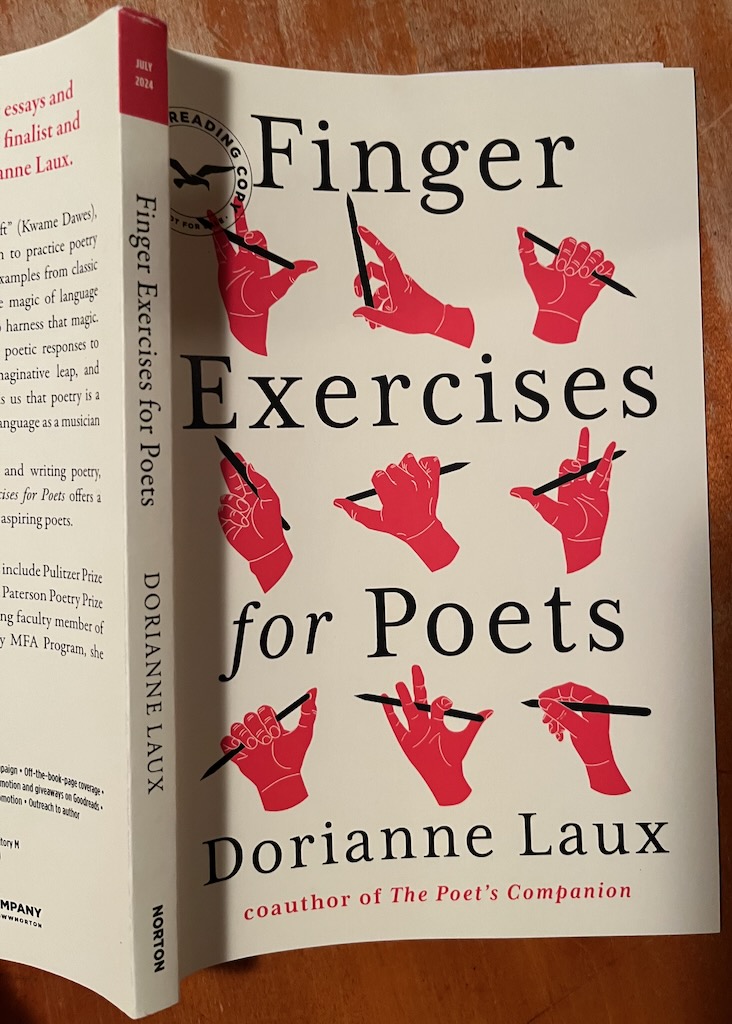
another poet, one i dream of sitting down to dinner with, or more in keeping with her ilk, plopping on a porch swing, she with cigarette burning orange against the black of night, me, merely pumping my merry little legs. dorianne laux is her name, and you’ve seen me write of her here. she has a brand new craft book, companion of sorts to her earlier the poet’s companion, and the new book, finger exercises for poets, is “an engaging invitation to practice poetry alongside a master,” and it’ll be out this july from w.w. norton & company. (they still send me advance reader copies; bless them.)

here’s a passage i knew i needed to share, from glorious, glorious dorianne’s introduction:

“My instrument is the immensity of language, the techniques and effect of crafting images, shaping sound and rhythm, creating new combinations with the single notes of words, each colliding or coming together, meshing or crashing, standing firm or tumbling. There are eighty-eight keys on a piano, six hundred thousand words in the English language. The patterns, the sequences, and permutations of both are endless. For me, language is another kind of music.

“I practice poetry. This book invites you to practice along with me.”


and i close, this snowy spring morning, with yet another master of language, and truth-telling: james baldwin. (this comes to me from a french monk whose writing i follow; laurence freeman is his name, and here’s a bit of what he sent this week from the bonnevaux centre for peace, in the southwest of france): “toward the end of his life, baldwin gave a television interview in which he was asked to reflect on the essential subject of his classic, groundbreaking novel, giovanni’s room. baldwin’s answer is an extraordinary meditation on love, and in particular, how it can serve a kind of educational purpose in our lives.” here’s what baldwin said, laid out as a poem. 

Q: What’s the novel, Giovanni’s Room, about?

Baldwin’s answer:

It’s about what happens to you
if you can’t love anybody.
It doesn’t make any difference
whether you can’t love a woman,
or can’t love a man —
if you can’t love anybody,
you’re dangerous.
Because you’ve no way
of learning humility.
No way of learning
that other people suffer.
No way of learning
how to use your suffering,
and theirs, to get from one place
to another.

In short, you fail the human
responsibility, which is
to love each other.

+ James Baldwin

what are the lessons of love you learned in this week of shadow and light?

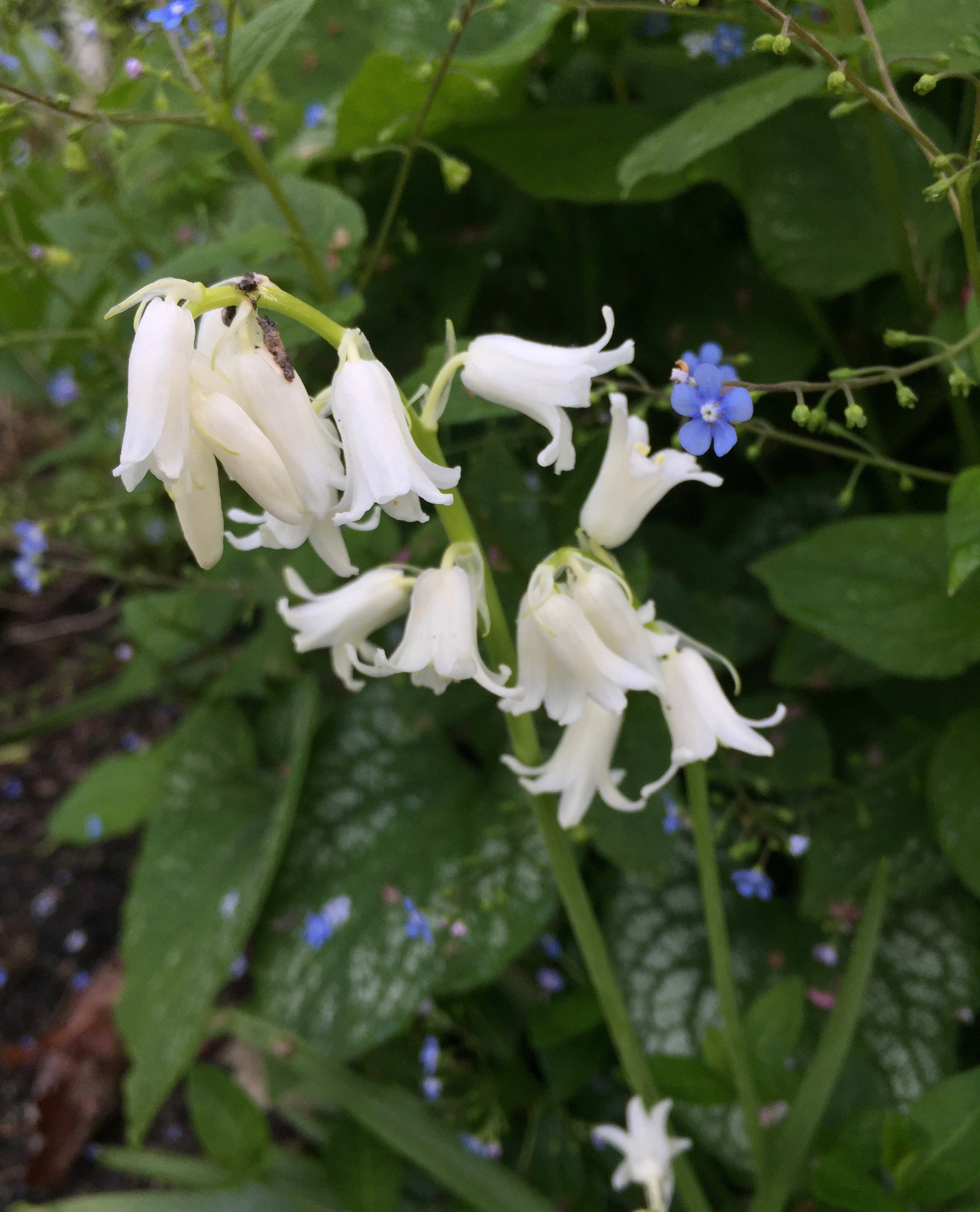
my “springtime” garden, whitened.

p.s. illustration at the top is indeed one of clarissa munger badger’s beauties. and i will ask once again, please please offer up prayers for rescue for blessed, blessed caroline, her mama, her papa, and all who are holding their most sacred breath…..

turn, turn, turn . . .

“Ecclesiastes was onto something,” i wrote, as i dove into a meditation on the notch-by-notch turning of the dial, the dance between heaven and earth that is the shifting of season, as one fugue surrenders to another and another, over and over and over again.

and here we are again, at another cusp. the autumnal equinox. tonight (or, rather, tomorrow morning in the wee wee hours) at 10 minutes to 2 here in the heartland, central time zone.  

in my musing on seasons, in the pages of that latest little book of mine, the book of nature, i prattled on a bit longer. . .

“Each season, in four quarter turns, brings forth its own headlines. There’s the yin and yang of spring, the season of exodus and resurrection, of equal parts heartbreak and magic. ‘The fizz and the roar of the land coming back to life again,’ is how Robert Macfarlane brilliantly captured the vernal animations. There’s summer with its invitation for indolence, for taking it slow, savoring, all but licking your plate of its succulence. And autumn, the season that changes its tense, is letting-go time, the beginning of burrowing in, when the shadow grows longer and sunlight goes amber, when half the globe is stripping to its essence, revealing its unadorned spines. Then there’s winter, the stillest of all, when deep-down stirrings are all but invisible, and we learn to keep faith. Sometimes I think God couldn’t decide which channel was best, so the heavens kept jabbing the clicker. 

“It’s a wonder reel that never ends, yet never truly repeats—a koan for the ages. 

“I often contemplate the geometries of time, how the year is not an inescapable circle, a shape that would get us nowhere, but rather it’s a spiral, and from one winter to the next we’re never the same, always ascending, closer to the holiness we were meant to be—or so that’s the hope and the plan, anyway. Maybe that’s why God keeps this seasonal show on autoplay: maybe God knows how dense we are in the figuring-it-out department, how some of the lessons we need to review. Over and over and over again. Most especially at the fraying hems of the seasons when the doubt begins to creep in, the fear that we’ll never be loosed from whatever it is that tangles and knots us, and God needs to show us those few immutable threads: Resurrection comes. Quiet must follow exuberance. So too dormancy. Surrender to earth’s holy rhythms, the very ones that pull the tides and the flocks, paint the woods, star- stitch the night sky. Expect heartbreak. Await healing. Start all over again. 

“’The seasons are our scripture text,’ writes Celtic spiritualist Christine Valters Paintner. ‘This earth we are riding keeps trying to tell us something with its continuous scripture of leaves,’ echoes William Stafford, a poet and pacifist who referred to himself as ‘one of the quiet of the land.’ To the ancient Celts, the unfolding of the seasons read as ‘gospel without haste.’ And Walt Whitman, America’s latter-day Homer, put something of a military spin to it when he wrote that ‘nature marches in procession, in sections, like the corps of an army.'”

i prattle on a few pages more. but i’m already thinking anew about seasons. life, when we’re paying attention, comes in all sorts of seasons. some, clocked by the sun. some, by the tumults and percolations from deep down in our hearts and our souls.

the season of my soul that i’ve been dwelling in all these past months is one that opened in mystery, back when every day was bringing another scan, another long wait, another doctor’s uncertainty. then, when the surgeon finally extracted the answer, “it’s cancer,” i landed in shock and bewilderment. and ever since i’ve been encountering an underworld, a sometimes murky, sometimes brilliantly glistening world potholed with reams of unanswered questions and populated by fellow travelers who nearly always, uncannily, know just what to say and just what i’m thinking. it’s those fellow travelers who have thrown me life rope after life rope. just when i begin to feel the walls closing in, one of them pings me with hope. or pure simple kindness. or laugh-out-loud irreverence (eileen N i am looking at you!).

one thing i know, which i am going to be thinking about for a long time to come (and trying desperately to put into words), is how love truly is a magnetic force field all its own. i can be teetering at the edge of some quicksand-y bog, and all of a sudden, out of the blue, kindness will come. and kindness, love’s gentle sister, can shatter the darkness to shards. kindness makes you not all alone. kindness holds your hand and squeezes it so tightly it won’t let you dangle. or drop. or run out of air.

just this week, a brilliant brilliant poet friend of mine sent me a note. and it might have been one of the wisest, kindest, gentlest things i’ve read in a long time. he wrote:

“You have spent a lifetime thinking and feeling deeply.  In my experience of living like that, I’ve found that pains are more painful and joys more joyful.  I think it also means that you are better able to face the sort of scary stuff you’re now facing.  I hope that your lifetime of thinking and feeling deeply gives you the strength to deal with this face-to-face…whatever ‘this’ ends up being.”

and so, my prayer as i look to my first post-surgical scan in the weeks just ahead, is that i begin to move now into a season where the edges aren’t so raw, and the fears aren’t quite so suffocating. there is love all around, and i know it will save me. no matter what comes.

tell a story of a kindness that saved you.

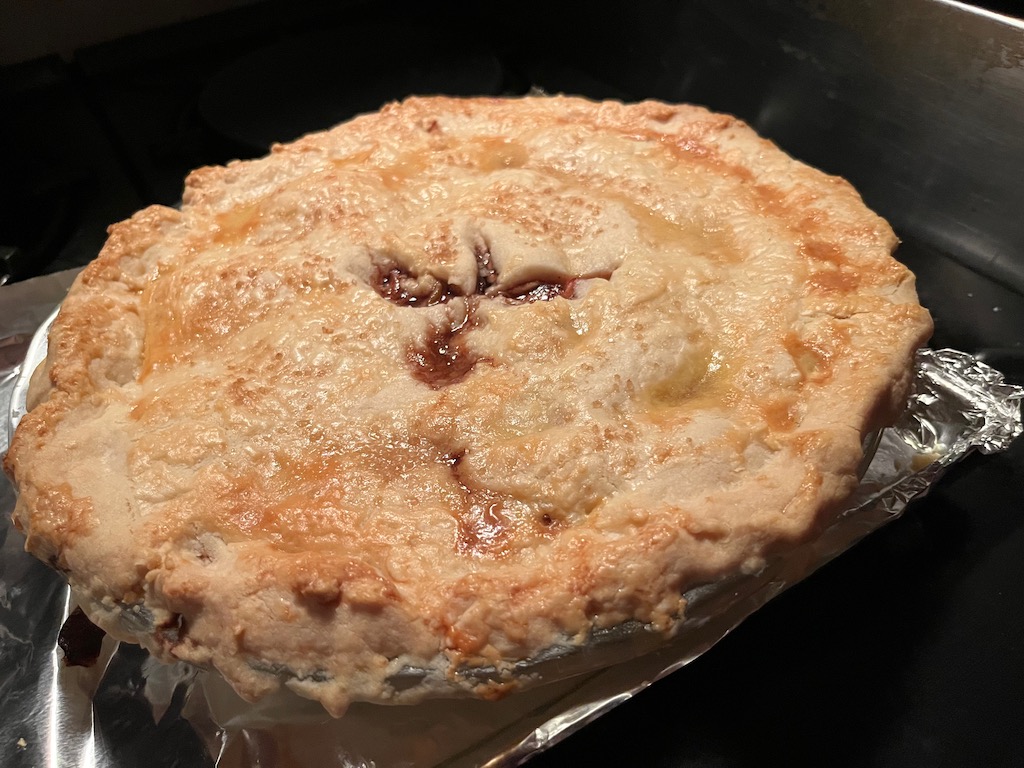
the apple slices above, already doused in caramel-y bath, are my sweet line cook’s first attempt at pie baking. his slicing alone impressed the heck out of me. just a month into the job at one of chicago’s finest eateries and the kid is picking up tricks. and pie recipes too. pretty sweet living at our house.

may this autumn, season of awe, of turning in and deepening, enrobe you in the brilliance you reach toward….

and a big giant thank you to each and all of you who have lavished me with kindnesses and love in this long season now turning…

p.s. i’m writing this from a hotel in ohio where tonight, squeaky squawky voice and all, i am getting up to a podium and giving a keynote address on the blessed book of nature…

voila!

the itch that comes in not-yet-spring

in which, once again, i bring you a wee bouquet, this time an assemblage from the springtime garden. . .

it creeps in unawares, something like a mosquito circling your pillow deep in the night. barely there at the edge of your consciousness, then suddenly smack dab and nettlesome straight in your face. 

it’s the itch that comes in the chill of not-yet-real-spring. in the the days when drab is the only real color you see out your window. when the world seems to be broadcasting its thousand ways to be brown. or gray. or washed-out leftover green. at least that’s how it is in my humble neck of the woods. 

a week or so ago i finally managed to heave the bundles of pine that had all but petrified over the winter. and all that was left in the pot by the door was left-behind scraps of last autumn’s sheddings. and then suddenly, smack dab like the pesky mosquito, i could stand it no longer. 

the drab had taken its toll, the drab stirred me to action: to pick up my keys, lope to the wagon, and drive into the distance. i passed garden store numero one, where the guys were heaving large satchels of loam, with nary a pansy in sight. i motored on, further south, and a wee bit west, into the lot of the big box store, where an old man shivered inside the cash register shack, and the very bare shelves carried only one thing: the bright yellow fluttering faces i’d suddenly craved.

i snatched up three little flats, and carried them home, where the itch of not really spring has been quelled for the moment. it’s too cold for the trowel, so i’ll leave them perched where they are. but my morning’s botanic adventure, the first of the season, is giving me reason to hope. and hope is the thing that animates the first blush of spring.

once the snowflakes recede, and the thermostat warms, once march turns to april, and brings on the palette of exuberant spring, we might actually, actually turn the page on old winter.

don’t hold your breath. . . . or put away your mittens. . .


it seems my mailbox in the middles of the week finds itself with flag up, and something luscious tucked inside. this poem from joyful, wise, and wonderful lamcal, who has been a font of wonder for me for all the years she’s been pulling up a chair.

this is actually anne sexton’s poem, the 20th-century american poet known for her highly confessional works, though this confession radiates with joy.

if i was ever pushed to pick the one sub-genre of poetry that most speaks to me, it’d surely be domestic poetries. those quotidian hours and ordinary nooks and crannies of our everyday lives that are made sacramental through the simple holy practice of paying attention. perhaps you’ll consider joy the next time you towel off in your cannon bath towel, or make a chapel of your eggs. oh, anne sexton, thank you. and, even more so, lamcal. xoxo

Welcome Morning

There is joy
In all:
In the hair I brush each morning,
In the Cannon towel, newly washed,
That I rub my body with each morning,
In the chapel of eggs I cook
Each morning,
In the outcry from the kettle
that heats my coffee
Each morning,
In the spoon and the chair
That cry “hello there, Anne”
Each morning,
In the godhead of the table
That I set my silver, plate, cup upon
Each morning.
 

All this is God,
Right here in my pea-green house
Each morning
And I mean,
Though often forget,
To give thanks,
To faint down by the kitchen table
In a prayer of rejoicing
As the holy birds at the kitchen window
Peck into their marriage of seeds.
 

So while I think of it,
Let me paint a thank-you on my palm
For this God, this laughter of the morning,
Lest it go unspoken.
 

The Joy that isn’t shared, I’ve heard,
dies young.

       —Anne Sexton


and since april (on the morrow) is poetry month, why not one more, from one of my patron saints of poetry, mary oliver? the line i’ve emphasized in bold is the one i know by heart. i live for holiness visible, entirely. i’m guessing you do, too.

not yet in bloom, but wishful thinking…

Leaves and Blossoms Along the Way

If you’re John Muir you want trees to
live among. If you’re Emily, a garden
will do.
Try to find the right place for yourself.
If you can’t find it, at least dream of it.

When one is alone and lonely, the body
gladly lingers in the wind or the rain,
or splashes into the cold river, or
pushes through the ice-crusted snow.


Anything that touches.
 

**God, or the gods, are invisible, quite
understandable. But holiness is visible,
entirely.
 

Some words will never leave God’s mouth,
no matter how hard you listen.
 

In all the works of Beethoven, you will
not find a single lie.
 

All important ideas must include the trees,
the mountains, and the rivers.
 

To understand many things you must reach out
of your own condition.
 

For how many years did I wander slowly
through the forest. What wonder and
glory I would have missed had I ever been
in a hurry!
 

Beauty can both shout and whisper, and still

it explains nothing.

The point is, you’re you, and that’s for keeps.
 

~ Mary Oliver ~

(Felicity)


c.s.lewis

and, finally, because this took my breath away in that way that only the Inklings could and can, here’s c.s. lewis trying to put language to the ineffable, talking about “the inconsolable longing for we know not what.”

he’d felt this longing his whole life – it came to him during moments of almost unbearable beauty: “[t]hat unnameable something, desire for which pierces us like a rapier at the smell of bonfire, the sound of wild ducks flying overhead, the title of The Well at the World’s End, the opening lines of ‘Kubla Khan’, the morning cobwebs in late summer, or the noise of falling waves.”

have you ever heard a lovelier expression for a searching for the sacred, no matter what name you put to it? i call it Holy God. and in my heart, i genuflect each time i utter those blessed words.


what visible holiness did you stumble upon this week, and might the itch to bring on springtime have buzzed by your nose this week? how’d you satisfy the itch?

the vicissitudes of spring. . .

in the dark, i tiptoed down the stairs just now. saw the shimmer of white splattered across the front stoop, reflecting the light of the now shrinking Worm Moon, the moon who takes its name from the squirmers arising from winter’s slumber. any worms out there now might consider zippered jackets. same too for all the dear little green things now courageously, audaciously, sticking their necks out, inching their way up and out from deep earth’s underbelly, where they too have been whiling away the winter doing what green things do in their off-months.

to be a springtime bulb here in the middlelands of the continent, where windswept plains and lake-effect snows are part and parcel of the choreography well into april, is to be of hearty mettle. is to be one who tempts the fates. might as well whisper, “dare you to snow on me.” and yet, the heavens do, springtime after springtime, disgorge their fluffy crystals, dump an icy load. as if a test to see who survives, who withers. it’s lord of the flies, garden variety.

there are those of us who’ve been known to awake to such horrors––our tenderlings adorned in icy crystals––who race out the door, a rescue squad in rubber boots, shaking off the snow, applying blankets to the wounded.

i marvel every time at the ones who bounce back. who shake off the mounds of snow, and go right on punctuating march and april with their crayola-crayon-box colors.

and i think of them as parables, consider the wisdoms they suggest. it’s not too hard to draw a straight line from their vernal trials to the ones we humans face. the waning weeks of this winter have dumped a few harsh snows my way, snows that left me just a little bit knocked back. i’ve stared into the abyss of fear, and found that just like those rescue squads who race outside with brooms and blankets to clear away the snow, life drops down its own brigade of heroes, the ones who steady us in our deepest wobbles, the ones who dry our tears. have you ever noticed how much kindness comes in our darkest hours?

i find the gospel of the season, these liminal weeks when the last gasps of winter blow our way, and the full-on percolations of spring aren’t yet arrived, is one of holding onto hope. the leitmotif––don’t be felled by that which falls upon you––is played out, over and over, just beyond my windowpanes. yes, it snows and crushingly so. but then the melt comes. the stems and stalks and itty-bitty buds, undaunted.

i find a hint of fortitude in glancing out the door in the wake of melt, once the day warms up enough to chase away the fluffy stuff, in seeing the green things shake off their trials, sticking their necks out just a wee bit further. i dig deep and decide i, too, will do as the daffodils. i’ll be brave, and set my sights on bursting forth in fullest color. and along the way, i’ll trust in all of those who come running with broom, blanket, and the curative powers of simple kindness.


on the subject of march, i turn to henry david thoreau and his journals, to see what he had to say on the matter.

here, we dip into  The Journal: 1837–1861, with entries from March 21, 1853. thoreau was thirty-five and pondering a different kind of thaw. 

March. 21. Morning along the river. 

Might not my Journal be called “Field notes?”

I see a honey­bee about my boat, apparently attracted by the beeswax (if there is any) in the grafting-­wax with which I have luted it. There are many; one is caught and killed in it.

P.M.—To Kibbe Place.

It is a genial and reassuring day; the mere warmth of the west wind amounts almost to balminess. The softness of the air mollifies our own dry and congealed substance. I sit down by a wall to see if I can muse again. We are affected like the earth, and yield to the elemental tenderness; winter breaks up within us; the frost is com­ing out of me, and I am heaved like the road; accumulated masses of ice and snow dissolve, and thoughts like a freshet pour down unwonted channels. Roads lead elsewhither than to Carlisle and Sudbury. Our experience does not wear upon us. It is seen to be fabulous or symbolical, and the future is worth expecting. In all my walking I have not reached the top of the earth yet.


and, finally, i snipped a few lines from a poem of george herbert, the seventeenth-century poet-priest, on the subject of prayer. i love his litany of metaphors for what prayer is, and find that i might meditate on any one of his multiple choices, the last line here most especially, “the soul in paraphrase, heart in pilgrimage”:

George Herbert, “Prayer (I).”
 

PRAYER the Churches banquet, Angels age,
Gods breath in man returning to his birth,
The soul in paraphrase, heart in pilgrimage . . .

may the prayers that rise from you this month be ones of resilience, of shaking off the snows that fall. and may our hearts always be in pilgrimage. where do you find wisdom in the stirrings of this cusp of hallelujah’s spring?

the darkness is coming…don’t be afraid.

it’s dark now, the cloak of night not yet lifted on the world out my windows. each pane of glass, at this early dark hour, is a mirror. as i shuffle about the kitchen, cranking up heat, scooping out coffee beans, the night sky grows faintly milkier. the ink of the sky drains away, tucked in the bottle till it’s needed again.

this weekend, the night comes sooner. the darkness tiptoes in. the lights will burn sooner. i say, be not afraid.

the darkness for me — and maybe for you — is wonder. is blessed. is there where the burrowing, and the deepening begin. i’m not afraid of the dark. i strike a match, haul out the candles, maybe even the logs for the fire. i say, bring it on. bring me the folds of introspective depth to sink into. give me unbroken prairies of quietude. let me finish a thought, and follow that one with another, a game of thoughtful pied piper, wending and winding through the tall grass of soulful contemplation.

because i used to haunt the sorts of bookstores that ought to post “no trespassing” signs for those who sneeze at the first whiff of dust, i have tucked in my bookshelves all sorts of tomes — some skinny, some fat — with provenance unknown. one of those, perhaps the skinniest i own, is cooper edens’ if you’re afraid of the dark, remember the night rainbow. cooper edens, i picture with daisies strewn in his hair, a true berkeley hippie of the hallucination age. among the gentlest spirits that ever there was.

i’ve read that his parents, bless them, encouraged day dreaming. imagine that. when he was in first grade, the teacher told cooper’s parents that cooper shouldn’t come back to class because he was “too creative.” cooper’s mother, someone who should be pinned with a very gold star, replied, curtly: “good!” and kept her daydreamer home. she fueled him with crayons and cardboard, and perhaps the sorts of iconoclastic coloring books where you’re told to draw outside the lines. soon, dear cooper, was channeling monet and van gogh.

but now i’ve daydreamed my way into the cooper edens story, and i meant to be thinking about darkness.

befriend the darkness is the point where i’m headed. when the clocks take their back-leap deep in the night on sunday, when three becomes two, and the clocks demand the arduous catching up of the hands big and little, consider the ways you might savor the dark side of the year.

learn a thing or two about stars; pick one by name and discover its story. trace it along the night sky.

lug a pile of logs into your house. tuck them in the hollow that’s made just for them. alternately, gather the wax of the honeybees, the wax rolled into columns called candles. strike a match, watch the flame play flame games against the darkness. turn off all lightbulbs. sit for an hour in candlelight. pay attention to the sacramental effect, how the simple shadow cast by the flickering flame makes you see what you’d otherwise miss, makes you relish the beauty of time and space, allows you to wrap yourself in the blessing of being alive.

bundle up and step outside for a moon walk, as i’ve written before, it’s the ancient and elemental lesson in addition and subtraction, the waxing and waning of the runner-up night light. catch the night shadows as they play upon the lawn, the inside-out of the shadows of daylight.

once you step back inside and shake off the chill of the night, burrow into a nook or a fat stuffed armchair, a place where you like to read and think and look out a window. maybe it’s right by that fire, still crackling, still ablaze in the dance of the flame.

consider this passage from one of the books i’ve been reading this week, a book by the great henry beston, one of the finest poets and chroniclers of nature that ever there was. he wrote from the woods of maine, at the turn of the last century, as the 1800s rolled into the twentieth century, back when candles and logs and one-room schoolhouses were ordinary everyday notions.

wrote henry, henry who has consoled me like a deep and wise and most trusted friend this week at the cusp of the darkness:

“As I watch the fire burning in the great fireplace on a first chilly night, I do not wonder that fire and the mystery of fire have played so important a part in the great religions of [hu]mankind. The power to kindle that ever-hungry flame must have been the first great achievement of man on his way to fuller being; with fire he both metaphorically and in all reality could see ahead in the dark….To me, [fire] is the element which is always a part of the mystery and beauty of the world. The earth may be shabbily and wickedly broken, the river and the air befouled, but the living flame, rising from whatever source, is beauty from its first appearance and as beauty lives. There is no compromise with flame, and not without reason has it served us as a symbol of that unknown to whose ultimate mystery we can but lift our uncertain hands.”

Henry Beston, Northern Farm

the darkness is coming. don’t be afraid.

how will you embrace the dark hours?

and, happy blessed all saints day and all souls, and that hallowed eve of jack-o-lanterns and candy scavengers who won’t be scavenging so much this year…..xoxo

if you look closely enough……

IMG_1347

you might have to get down on your knees. or bend like an origami human. you definitely might need your magnifying glass, but if you look closely enough — say, at the tips of the twigs you’ve hauled into your house, the ones that “force” the vernal tide — you might, just maybe, see the first droplets of spring.

the earth is turning. really it is. even on the days we don’t notice.

hildegard of bingen, one of the wise women whose words i’ve been deep in all week (simone weil is the other), calls it “viriditas,” the green energy of the divine pulsing through the entire universe, the animating force, the goodness that charges the world with life, beauty, and renewal — literally with “greenness.” you might call it “hope,” pure and certain.

the surest time to catch a glimpse, i’d wager, is now, in the dregs of early march, when the world is grey-on-grey-on-grey tableau. and any shock of pigment — a dab of green, the cardinal’s red, shock-of-shocks forsythia yellow — is enough to set off alarm bells inside. the ones that let you know you’re almost at the goal post. the goal being nothing short of survival — winter survival. (for those who need booster shots of assurance, here in the middle west, and most of the u.s., this weekend brings time change — aka “daylight savings time” — in which we spring forward our clocks, and gain an hour of sunlight at twilight.)

as i type this, flakes are tumbling from the sky. i might need snow boots to go find me some viriditas. but, to my thirsty little heart, i find it astonishing in the highest order that just when we’re flagging, just when we start scrounging around for the oxygen tanks, the ones that will keep us from gasping, the arbors and twigs leap into action. sap starts running. birds chime their love songs. holy mackerel. it’s as if all the universe is conspiring, whispering in our deepest inner ear: “have hope, have hope, resurgence will come.”

the eternal cycles. the rhythms as ancient as time. viriditas. ebb and flow. the turning wheel of the seasons. winter thawing to spring. grey exploding in green. to some it’s little more than sunlight + chlorophyll. to the rest of us, it’s something akin to surround-sound proof that we’re deep in the clutch of heaven on earth. and so blessed to be here.

what wisps of hope have you stumbled upon in these grey days of march?

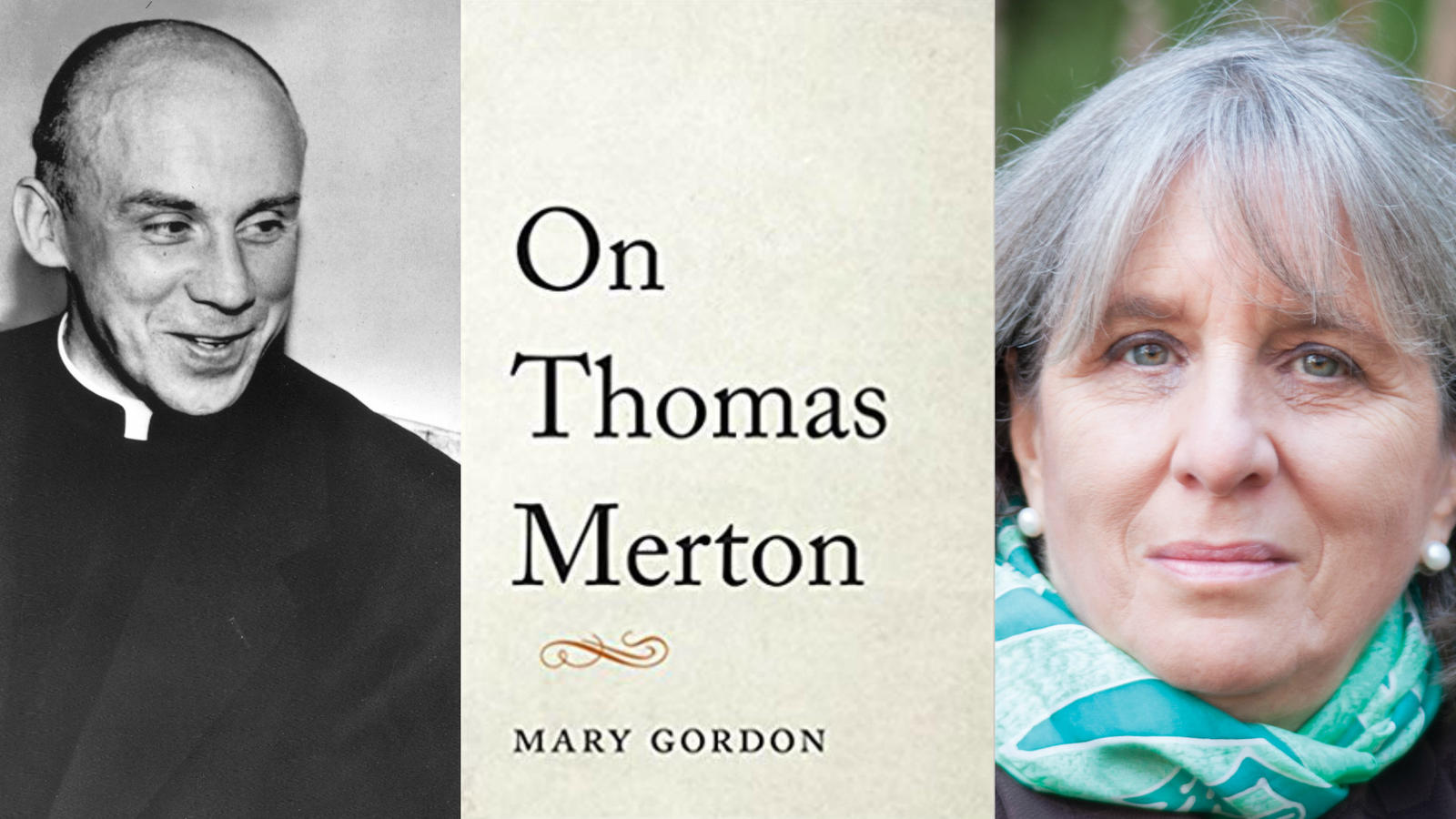
ct-1550008015-2yfsw8e0l5-snap-imagemy roundup of books for the soul for the tribune is now my one soulful book you might want to read. budget cuts keep chipping away at newspapers, and the latest cuts cut away two of my three soulful reads in my monthly (or so) roundup. here’s the first of the one-book-at-a-time reviews, a fascinating read from mary gordon who takes on a literary critique of the writer-monk of gethsemani, thomas merton.

Mary Gordon illuminates the literary works of Thomas Merton

Barbara Mahany

Mary Gordon — novelist, memoirist, professor of English at Barnard College — has long proved herself to be a Catholic voice engaged in deep and nuanced dialogue with the Church. She is fluent in its rhythms, its mysteries, its illuminations — and its darkness. She is a truth-teller, one not afraid to name her church’s sins, nor unwilling to see through its complexities to its radiant core.

Gordon’s capacity to dwell in duality, to circle her subject from all perspectives, to call it as she sees it, positions her squarely as a critic — both literary and cultural — robustly qualified to take on Thomas Merton, the celebrated mid-20th-century monk and writer with a worldwide ecumenical following. In her new slim but soulful volume, “On Thomas Merton,” Gordon plants herself on her firmest footing: “I am a writer. I wanted to write about him, writer to writer.”

She opens her exploration by pinpointing the tension at the heart of Merton: “(I)n becoming a Trappist,” she writes, “he entered an order devoted to silence, and yet his vocation was based on words.”

Merton, author most famously of “The Seven Storey Mountain,” belonged, Gordon writes, to the post-World War I period “when Catholicism was intellectually and aesthetically chic.” He was one of a heady crop of distinguished literary converts, along with G.K. Chesterton, Evelyn Waugh and Graham Greene.

Before he entered the monastery as a Trappist monk at Gethsemani, the abbey outside Louisville, Kentucky, Merton had been engaged in urgent conversation with the modern world. It’s a conversation that never ceased, not until the hour of his death in a Thai cottage, some 20 miles outside Bangkok, in 1968. He’d been granted special permission to leave his hermitage to address a world interfaith conference, in a talk titled “Marxism and Monastic Perspectives.”

While Gordon begins her examination of Merton’s works on a sympathetic note, fully understanding “the conflict between being an artist in solitude and being a human in the world,” further adding that his is “a spiritual test that combines the ascetic and the aesthetic,” she cuts the writer-monk little critical slack. In her scope is a litany that includes Merton’s autobiography, “The Seven Storey Mountain,” his 1941 novel, “My Argument with the Gestapo,” and finally his seven-volume, 2,500-plus-page Journals — “longer than the whole of Proust,” Gordon notes.

It’s her bracing honesty along the way that makes her final coda so penetrating. Wrapping up her assessment of “My Argument with the Gestapo,” she writes, “more than likely he would have been marginalized or disappeared,” had he not gone on to publish “The Seven Storey Mountain.” No wonder the reader startles to attention when, one page later, Gordon declares the journals “Merton’s best writing.” She explains: “I detect a much greater sense of spiritual vitality in his journal passages than I do in his books that are self-consciously ‘spiritual.’…(F)rom the very first pages of the journals, everything he describes using sensory language shimmers and resonates.”

Studded with excerpts, Gordon’s meticulous probing of literary Merton points the curious reader toward the richest veins — in effect mapping the Merton catalogue, pointing out the places to begin, or, for a reader already well-versed, sharpening the prism through which he’s understood.

Because she’s regarded Merton with the necessary distance of critic, Gordon’s closing passages — in which she throws down her guard — rivets our attention. “I close the volumes of the journal, and I weep.”

She places him alongside those other martyrs of 1968, Martin Luther King Jr. and Robert Kennedy. The greatness of Merton, she writes, lies in his “life lived in all its imperfectability, reaching toward it in exaltation, pulling back in fear, in anguish, but insisting on the primacy of his praise as a man of God.”

It’s an intimate literary portrait, stitched through with Merton’s own threads. Ultimately, it’s a prayerful one. And the prayer echoes far beyond its final page.

Barbara Mahany’s latest book,“The Blessings of Motherprayer: Sacred Whispers of Mothering,” was published last spring.

Twitter @BarbaraMahany

mark this day…

IMG_0545

there is something about the crisp edge of things — of a hem, of a book, of a season — that settles the soul of a sometimes frazzled someone. someone like me. it fills me with a sense of something noble — a job well done, completion. prompts me to bend my knee and bow. it’s gratitude and it’s awe.

take summer, for instance. it ends tomorrow, making today the last full dose of it. and before i chase it out the door, before i usher in the amber hours of the season i love best, before i haul in the wheelbarrows of pumpkins, the tins of cinnamon and clove, before i fling myself upon the forest floor, playing peek-a-boo through golden, crimson, and persimmon-shaded boughs, it’s summer’s due to say goodbye to sand and sun unfiltered. to bees that buzzed and blooms that cheered me with their moppy heads, their delicate tendrils, their sweet perfumes that made me sniff around the garden (a pretty picture — me with nose in air, and mud-stained knees — surely not).

the season of about-to-burst tomatoes, and cicada song at night, the months of curtains flapping in the window’s invisible current, the sweater-less months, they draw to a close tomorrow eve at 8:54 p.m. (central time). that’s the equinox hour, when the sun slides into absolute right angle to blessed planet earth, when its beams fall straight onto the equator, that cinch-waist strap around the middle.

and so this last full blast before the season ends, it begs occasion. begs a moment’s pause. a plea to savor just a swatch of time — time filled with the summeriest wonders you can imagine.

my summery moment might be this: a fat tomato (the last one in my wooden bowl) sliced and salted, laid reverentially on whole-grain bread, and ferried to my summer porch, along with a fat book that begs to be begun. bare toes wriggling in the fading shaft of mid-afternoon sun. a moment’s pause to contemplate the butterfly wafting by. a whispered prayer of thanks — for the somnolence of summer. for the deep warmth and gentle breeze. for all that ripened and spilled with juice. for days that slowed, and hours that nearly burst with sumptuous sweet.

thank you, summer, once again…

***

because i’ve once again stumbled in my duties to bring my soulful literary roundups to this page, here’s the “books for the soul” that ran a month ago. oops. three fine picks. i especially loved the first, “learning to speak God from scratch ,” a linguistic exploration, richly written, and sure to make you think….

may your autumn days be filled with good reads…

How to talk about God, and more, addressed in this week’s spiritual book roundup

By Barbara Mahany

“Learning to Speak God from Scratch” by Jonathan Merritt, Convergent, 256 pages, $15.99

Here’s a subject not often found on the religion bookshelf: linguistics. As in “sacred language” or “Godspeak,” the ways we put words to what’s holy and so often ineffable. It’s a language that’s frankly been hijacked by politicians, blasphemed by holier-than-thou hypocritical preachers, and muted by the masses who dare not utter a word construed to be “church-y.”

And it’s into this battle-scarred landscape that “Learning to Speak God from Scratch” bravely proceeds. A few years back, Jonathan Merritt, a religion and culture contributor to The Atlantic, left behind the Bible Belt for New York City and found himself thunderstruck by the stark disconnect (and discomfort) in God talk there in Gotham.

Something of a spelunker in the realm of sacred linguistics, he robustly constructs his argument — one rife with hard data from the sociocultural realm and rich in personal narrative. It’s one that solidly convinces that sacred words are in crisis, and that any lost language leaves a gaping hole in human understanding. He makes the point that when the language at stake is the one that ties us to all that’s divine, it’s our souls that stand to wither.

He opens his case with this assessment: “The way certain groups of people use sacred words gives the rest of us the holy heebie-jeebies.” From there, Merritt takes off, swashbuckling his way through ironclad analysis, poking into curious linguistic and Biblical corners, making us see in a whole new light why it matters to reimagine and reclaim sacred language.

In the book’s second half, Merritt takes on, one by one, a lexicon of 19 words worth learning all over again, from confession to sin to grace. Because Merritt is an elegant and deeply literate writer, he makes his subject one of which we can’t get enough.

“The Way of Kindness,” edited by Michael Leach, James T. Keane, Doris Goodnough, Orbis, 224 pages, $18

It’s the end of summer, and the reading is supposed to be easy. Never hurts when it’s rich too. “The Way of Kindness” is everything you might want when you stretch out in your recliner, long tall refreshment within quick reach. It’s as if your favorite librarian is sitting beside you, whispering, “Read this. And this. And this, too, while you’re at it.”

The roster here is a greatest hits of American writers, not all of whom are regular travelers in the religious or spiritual domain. And that, perhaps, is what makes this a notch above the usual such gathering. To read Jack Kerouac: “Practice kindness all day to everybody/ and you will realize you’re already/ in heaven now.” Or George Saunders implore, “err in the direction of kindness. Do those things that incline you toward the big questions, and avoid the things that would reduce you and make you trivial.”

Dorothy Day quotes the Carmelite nun who told her, “It is the crushed heart which is the soft heart, the tender heart.” Even Aldous Huxley chimes in, telling us, “(I)t’s a bit embarrassing to have been concerned with human problems all one’s life and find at the end that one has no more to offer by way of advice than ‘try to be a little kinder.’ ”

While this is a book for quick dips or longer dallies, the curators of this collection — three fine souls in the world of spiritual publishing — have put their collective heft into what unfolds here. Your summer’s day will be all the gentler for having spent time among these literary and spiritual masters.

“Love Without Limits” by Jacqueline A. Bussie, Fortress, 195 pages, $24.99

File this one under “Standing By Your Story.”

Jacqueline A. Bussie, theologian, beloved professor of religion at Minnesota’s Concordia College and award-winning author of “Outlaw Christian,” her 2016 exhortation to find authentic faith by breaking a roster of too-rigid rules, sat down to pen “Love Without Limits,” a deeply personal how-to-guide for no-holds-barred loving. Because her stories arose from the depths of her heart, and the truth of how she lives her life — she calls this latest book “my life’s love letter” — she included chapters on both her Muslim and her LGBT friendships. Then, she turned in her manuscript to the Christian publishing house with whom she’d signed a contract, a book whose subject all along had been exploring God’s radical love.

The publishing house balked, deemed the two chapters “offensive” and “theologically out of bounds,” and ordered Bussie to cut them or they’d cancel her contract (and make her pay back every penny of her advance). Bussie refused, dead-set against being censored. Certainly not in a book about how people of faith — all faiths — “are called to love with no exceptions, asterisks, or limits.”

Mighty fine thing that Fortress Press, a Minneapolis-based Christian publisher with a more progressive bent, saw fit to snatch up Bussie’s much-needed message. In a world as balkanized as the one in which we find ourselves, Bussie’s words light the way toward practicing “a love so deep it subverts the social order, so radical it scandalizes the powerful, so vast that it excludes no one.” A love, it turns out, that couldn’t be censored.

Barbara Mahany’s latest book, “The Blessings of Motherprayer: Sacred Whispers of Mothering,” was published in April.

Twitter @BarbaraMahany

how will you mark the last full blast of summer? 

ordinary time

noddling bells of spring

deep in the recesses of my DNA, these knowings lurk. those little bits of knowledge slipped in once upon a time, those bits that order time, that frame the paradigm, the window frame, through which i watch the passing picture show called life.

somehow this week there was a whisper barely heard that told me ordinary time had come. technically, liturgically, it had come because the church i grew up in, the catholic church, ordains the monday after pentecost sunday as the opening of the long chapter of the year called “ordinary time.” and so, this week, as i slipped into this time, i couldn’t keep myself from considering the folds and undulations of just what ordinary means.

all around me, as lily of the valley sent up its flagpoles of perfume, as apple blossoms drifted down like vernal snowfall, as songbirds in feathers shocking pink and golden yellow darted in and from my feeders, i hardly thought things “ordinary.” the world’s in exultation.

and in my daily everyday, there was no relenting from the news that never stops and never slows to a trickle, nor was there quelling from the firehose of bumps and bangs that comes with loving widely, deeply. one night had me up till 2 a.m., making sure a young typist came to the end of his bibliography and junior theme (aka massive term paper) before we clicked out the lights. that same night had me dispensing nursing cures to a long-distance patient whose neck was in some spasm. all while keeping track of a train chugging to st. louis, where my sweet mate and familial co-conspirator drew more distant by the minute and the mile. by day, i somehow managed to turn in — on deadline — my own newspaper assignment, the first such one (a cookbook tale, complete with half a dozen lively interviews) in quite a while. none of this seemed “ordinary,” if by ordinary we mean “having no distinctive features,” as the oxford american dictionary tries to persuade us.

oh, around here, it’s distinctive all right.

i even plopped my bum on the old cedar slab i call my prayer bench, amid the ferns and bleeding hearts of my secret garden, intent on keeping watch on this so-called ordinary time.IMG_0172

lured by curiosity to the pages of old books, i dug around to learn a thing or three about this ordinariness. here’s a bit of what i learned: the church, in all her wisdom, divides the year into chunks of time (perhaps to fine-grain our focus, knowing full well we’d succumb to blur if not for demarcation). the church knows, according to one wise writer, “that human psychology desires the marking of moments.”

there are, apparently, two liturgical mountain peaks in the year, easter and christmas, each with preamble (lent and advent, respectively) and in between (here comes “ordinary time”) “the pasture between the mountains,” otherwise referred to as “vast verdant meadows,” of ordinary time, of tempus per annum (my church loves its latin, and, according to my resident latin translator, this literally means “time throughout the year”).

it must be the quiet season, the chunks of year when — inside the church and beyond — there is not the cacophony that comes with birth (christmas) or death and dying and its glorious resurrection (easter).

in one lovely meditation, i read that God, in infinite wisdom, invented the notion of seasons (not unlike the kaleidoscope that turns a notch and explodes in all new shapes and colored bits) as “invitation to reflection,” to jostle us awake as the all-around ever shifts. yet another meditation opined that God uses seasons to “translate wisdoms into a language of purpose for our lives.”

what that means, i think, is that it’s no accident that some of us walk around fully willing to be klonked on the head by the 2-by-4s of revelation that have us extracting lessons from earth and sky and trickling waters in between. it’s why a vine that blooms long after deadline (the week before thanksgiving, one year) might speak to me of undying courage, and the quiet of the dawn reminds me to settle my soul and breathe deep before the launch of day. it’s why the springtime stirs me full of hope, and all but insists i power up my rocket blasters.

ordinary, i read, comes from “ordinal,” or numbered, the weeks of the year simply counted off, one by one. amid the canvas of quiet, without profound distraction, our task in this stretch of time is to think hard and deep about the mysteries in the weft and warp of being alive. as this is the longest time of year, a full 33 to 34 weeks of ordinary time, depending when the feast days fall, i suppose the point is to settle in, sink deep, into the extraordinary work of living, with our attention meters cranked as high as we can muster.

all of that is literal, is what the books i sought spelled out. i tend to veer off the page. and that’s when i began to really contemplate the power of unencumbered ordinary. as if we’re given unfettered canvas on which to quietly and without bother absorb the sacred simple. the gift of being alive without all the inner chatter. the charge to scan the hours of the day for those moments that break us out in goosebumps. the blessing of deep, slow breathing. the chance, scant chance, to catch God in the act….
IMG_0173

of late, i’ve become intrigued by what i call the theology of the sacred ordinary. not the loud bangs and pyrotechnics, not the stuff that comes at the end of miles-long, desert-crossing pilgrimage, but rather the stark and quiet notion that we are living the Holy right now.

it’s the hush of a whisper, the percussion of the rain, those are the sounds that call us in, call us to behold the simple pure sacred. it’s the humility of the moment that belies its grandeur, its magnificent majesty……

and perhaps that’s the invitation of ordinary time, to dwell amid the plain-jane, stripped-down quotidian of the everyday. to awaken our deeper senses, our fuller attentions, to behold the Beautiful, the Wise, the Profound amid our daily stumbles and bumbles. to live as if the Book of Wonder has been placed upon our open palms, its pages spread akimbo. to extract, inhale, deep breathe its mighty and eternal lessons. the ones that whisper, the ones we hear only when we truly, truly listen.

what does ordinary time mean to you?

this morning’s writing came in fits and starts, as it sometimes does, as somehow this morning this old house clattered like it was grand central station, locomotives and the people who aim to board them rushing in and out the station, barely and noisily keeping to the clockwork schedule.