pull up a chair

where wisdom gathers, poetry unfolds and divine light is sparked…

Category: religion

no darker day

all night i tossed and turned, wondered if i would write how lonely it is. how achingly hard. to be the sole believer in a house i call home.

oh, there are others who believe other things. just no one else who believes what i do.

no one else who spills tears at the thought of the story, deep thought. deeper story, the one of today, the one of good friday, no darker a day.

no one else who came with me to church last night, who stripped off their shoes, stood in line, knelt down to wash the feet of another. no one else who knows what it felt like, how it wrung me right out, the man i don’t know, his deeply brown hands, tenderly, thoroughly, washing my feet.

it is, was, a wholly powerful moment. metaphor, yes. but literal, too. sensual, really. warm water was poured, my bare bumpy feet there in a bowl, a white porcelain bowl. no ceremonial sprinkle and wipe. not this. no.

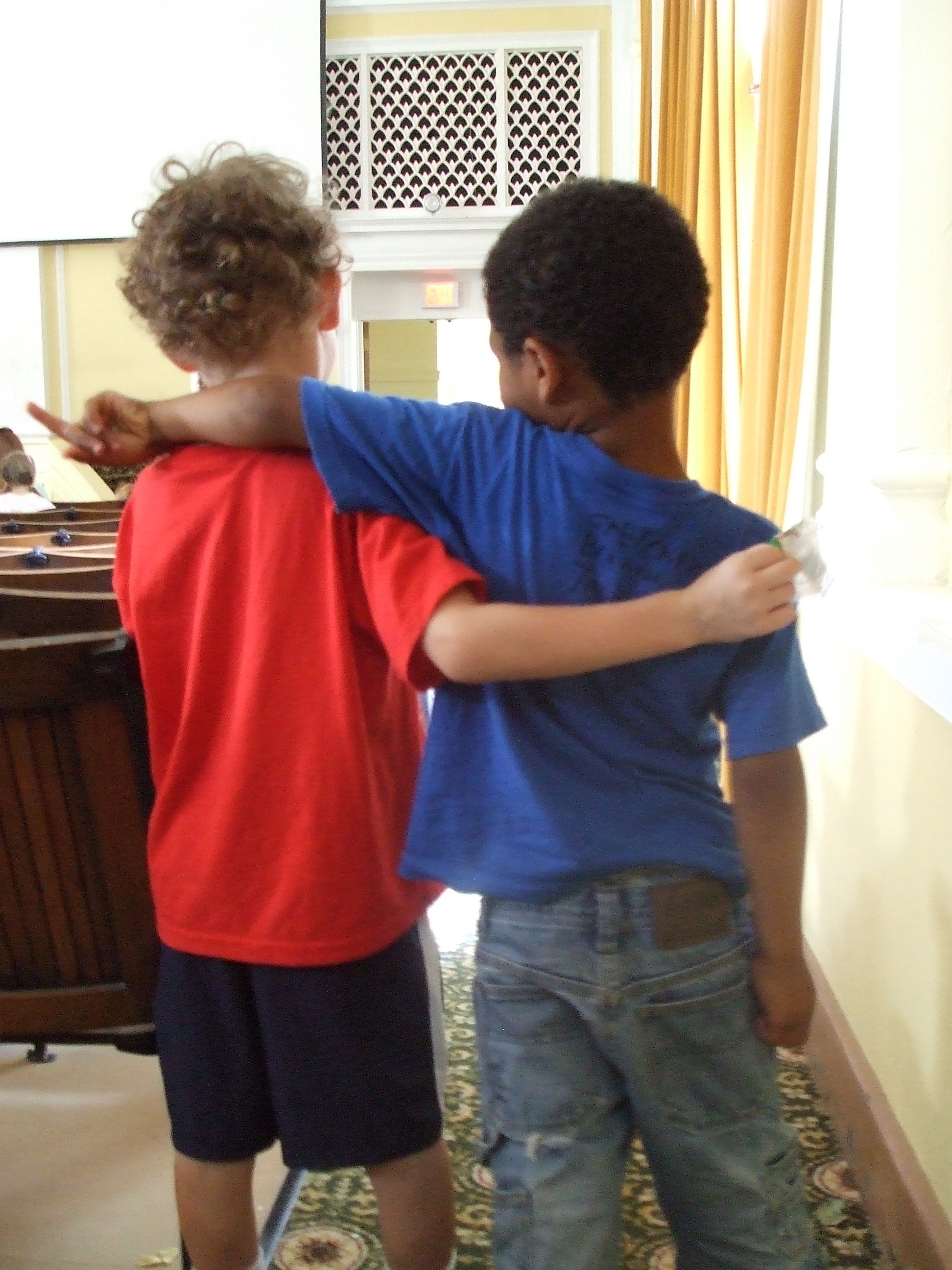
i could barely look up. couldn’t breathe. all around me, humility loomed. filled the church, right up to the rafters. this church where i went–unlike the one of palm sunday–is a church that i love. it is filled with people of colors, filled with bodies so broken, but spirits that look to be whole.

beaming and grinning and shaking a shaker, the young handsome man strapped to a wheelchair. the boy with the face that is pretty much mangled. the one who was blind. the old lady who only could shuffle, and barely at that. all of them, there. so very there.

for three hours, i think, i was bathed in all of the ritual. the latin, the spanish. the incense, the candles. the bread and the wine. oh, and the song. cello and tambourine. children with bells. and the pouring of water on bare naked skin.

even i, a soul who’s felt not very holy of late, i was pulled right back to the flame deep inside. long long ago, a story was put there. a story i simply believed. over the years, it got jostled around. couldn’t be. yes it could. hmm, i wonder. oh, geez, i don’t know. i don’t even know anymore.

it’s the sad sorry fallout from hours and hours of listening, and hearing the people you love, people whose thinking you trust on all sorts of matters, come down, on this one, on the far side of the fence.

it’s the part of the jewish-catholic equation that isn’t much aired. and sometimes i think that it should be. it might untangle a knot.

there’s the words of the rabbi: you can’t believe it both ways. and the words of the priest: you love the same God. and then there’s me, sometimes lost in the middle.

it’s not likely to happen, perhaps, if you didn’t start out deeply believing. or caring too much. but on both of those scores, i raised my hand.

and that’s where the rub comes: after 20 long years, two-fifths of my life, of listening to scholars who find it all rather unlikely, but even moreso, watching the pain on the face of the man who i love on that long ago sunday of palms, or hearing the words of my firstborn when he says he finds it mostly improbable, my whole core has been shaken and rattled and, sometimes i fear, broken to bits.

i hold onto shards. pray for the blue glowing flame not to go out.

but then, on a night like last night, i go in a church, i take off my shoes and it all floods right back. the whole power and glory of a church that holds up this day, and the ones just before and right after. says, look at this. look how human and horrid and broken we all can be. look how this one single soul was betrayed, was mocked, was beaten, was made to carry a cross. and he died without raising his voice. except to cry out: “Father forgive them. they know not what they do.”

it’s a moment, i swear, to carry me far. it’s a moment i thank holy God for. each year, i come back. and many hours between.

but the hollow deep hole in my chest, when i feel all alone, and not very certain, it makes for some hours of unbearable darkness.

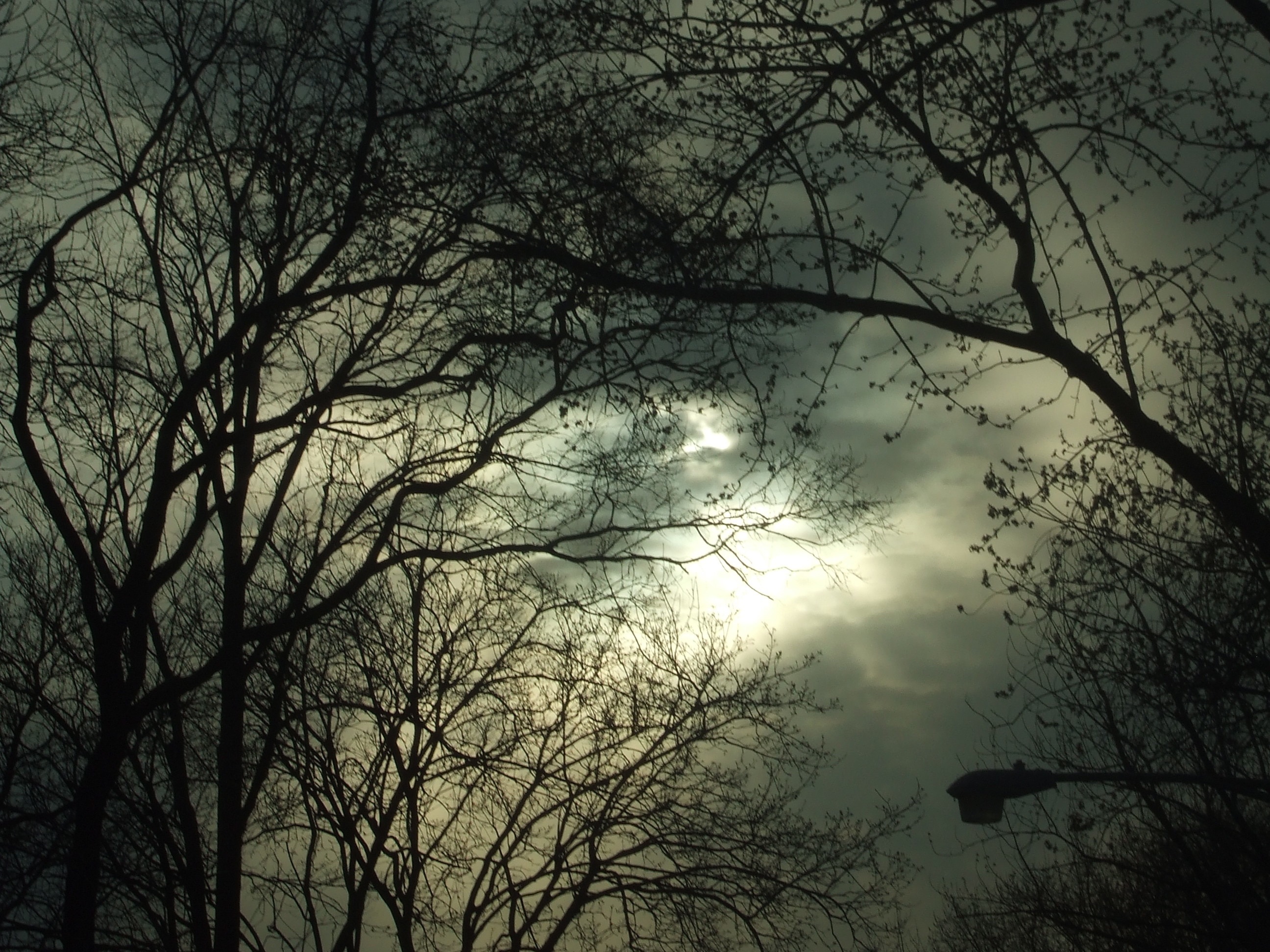
and how uncanny it is that this day, no darker a day on the calendar, somehow is lit from behind. like that sun through the clouds. or a star breaking through in the murk of the night.

it might be, just might be, a soul, after all, that refuses to succumb to the doubt.

perhaps, in the end, that’s what my easter miracle is. the maybe that turns to a yes. the yes that won’t fall to eclipse. do you struggle, when it comes to believing? what brings you home, time and again? is it the power of story, or the break in the clouds? i send you blessings, as we all wait out the darkness, counting on light to come in the dawn.

transforming time

this week is holy, my calendar tells me, my church tells me. some wee small voice deep inside me tells me too. i don’t feel so holy of late, though. feel ragged and worn. tangled, too. like the branches that jut from my pine, the one whose trunk i stared up and into, trying to find, maybe, some sign of nesting begun.

the challenge this week, then, is to take time that feels ragged, feels spent, and see if maybe, just maybe, i can start to build holy.

perhaps, like mama bird, out collecting old string, and tatters of cloth, i can take little bits of each day. maybe even each hour, and start to weave something that feels like a soft place for my soul. my soul needs a nest, needs a roosting place. my soul needs somewhere to perch. somewhere to swell, feel full.

i walked myself into church yesterday. felt wholly alone. it wasn’t a church that whispers my name. it’s stone, piled on stone. but it’s not far from home. and it is holy week, so i thought i should be there.

i remembered the words of my mother, perhaps the lastingest words she’s ever uttered: don’t let the church get in the way of God. i gave that a try. i tried, really i did, to pay no attention to the girl next to me, a teen with tight pants and big furry boots, who kept checking her iphone for something. the time maybe. a text from a friend. i didn’t notice till later how her brother must have spent his palm sunday, shredding the palm into bits. leaving it there, in a heap on the floor, where someone not looking might step, might crush it into the slate.

instead, i listened to the story. i wept right along. i thought a lot about suffering. how the dominant metaphor here in my church is a God who suffered in ways no human should know. but i suppose there has always been solace that at least, no thanks to the dark inhuman hours of the passion of Jesus, we are not alone.

still, every year, when i listen, when i hear about thrashing and stripping and mocking, i wince, then i swallow back tears. more often than not, the tears spill anyway. i can’t hold them back. don’t want to. they sting. and shake me down deep.

i think, as i swipe at my wet messy cheeks, about unbearable sins, ones then, and ones now. i cannot stand, either, all the stories i read in the papers, the ones about women and children and men, all put to insufferable deaths, or just barely escaping. and living instead with the frames, endlessly looping, of the horrors that always can come.

it is a sobering start to a week in which we live it again, the betrayal, the trial, the slow march to death on a cross among sinners.

achingly, slowly, we live it again. in vigils that last for hours and hours, late nights in a church where the pews get harder and the air, always, gets thinner and staler, tougher to breathe, till you think you might wobble right down, or give up the ghost.

since i, like emily dickinson, of late, find my church more in the woods than the pews, i will do an odd dance this most holy week. i will step into the place of the candles and incense. i will hear all the stories again. i will kneel and wash the soles and the toes and the calluses, even, of a stranger. i will genuflect, and make the sign of the cross.

but i will try to make holy the hours that shroud all the church time. i will, for this one week especially, try to push back the things of the world that distract me, that pull me away from the point. and the whole heart of the matter.

i will, if i can, stop the worry about runs on the bank, and layoffs at work. i will try to forgive all the slights and cold shoulders. will, if i can, excuse the snapping of tongues, and the mists of unholiness that seep through the cracks in the door and the windows i’ve opened for air.

i will try, for starters this week, to listen for whispers of God all around me. i will look for the pure shafts of light, the ones breaking through branches.

i will collect, as much as i can, the ribbons of cloth and bits of stuffing from pillows. i will build, if i can, a fine nest. a place where my soul, once again, can roost, can give birth once again and again, to the thin-shelled belief that this time all around us–these hours, these minutes, these breaths–all are anointed, are holy.

are ours to inhale, if we just settle down and start breathing. again.

how and where does this holy week find you? i find solace in the partitioning of time, in the marking of days and weeks and seasons as holier, perhaps, than others. the challenge is to find holiness in the everyday. it is always the challenge. particularly, i find it now. how and where do you go to find a breath, a heartbeat, that you know is one that is sacred?

seed scatterer

somehow, the other night, i swallowed wholly one of the truest truths of growing a thinking child from scratch.

mighta been one of the hardest ones to swallow, too.

but in the end, i am convinced, i’m one inch closer to a place that’s wiser. even if the getting there was bumpy going down.

you see, somewhere deep inside my head i think i thought that passing on the flames you hold most deeply, dearly, was a matter simply of holding up the wick, turning to the ones we nurse, we diaper change, we spoon feed, we wipe off, bandage, and shuffle on their way. the ones whose ears we whisper into, the ones whose shoes we tie, the ones whose pencil grip we help to rearrange. the ones whose papers we are no longer asked to read, for they are thinking now wholly on their own.

to pass the flame, i thought, was merely this: we turn and touch our kindled wick to theirs. and, poof, the burning light continues.

only, the other night, deep in thought and conversation at the kitchen table, deep in one of those tete-a-tetes that starts out slow, builds, spirals and suddenly is way up high on some perch where air is thin, and grip is slipping, i realized that not all flames are so easily lit from soul to soul.

not when you have, all your life, raised your child to think, to ask, to sift through what he’s told, to make his own only what sinks deep down to a place where what fits is weighed, is looked at from all sides, is held up to the shadow-casting light.

the subject, more or less, was religion. and in this house that’s a subject that comes with many threads. we weave here. we are braiders. we sift for golden strands, we entwine. we understand that some are shared, and some are wholly different, depending on whose birth threads we are holding.

more than religious, though, i am of the spirit. i find God in the scarlet flash of papa cardinal in the snowy boughs. i feel the shiver of the holy spirit when i watch the moon shadow play upon the window panes, and spill onto the bedclothes that bundle up and over my baby boy.

i whisper the hail mary, but i brush away a tear when lost in prayer on yom kippur. i feel the breath divine in hebrew, latin, or plain-old sidewalk talk. i needn’t be in church to know that holiness is near.

and so, it was the burning flame of spirit that i assumed–no, i counted on–i’d pass to my firstborn.

as clearly as he got my curly hair, the dimple of his father’s cheek, i thought the one most precious breath i have, i’d turn and breathe easily, wholly, into my soulful child.

oh, he had it when he was little. looked up at me one night, when he was all of two, and asked, “who puts God to bed at night?”

he had it, just a year ago, when he stood on the bimah, proclaiming the words of the Torah at his bar mitzvah, brought down the house, i tell you, with his grown-up understanding that nearly made the rabbi’s pale.

but now, now he’s taken history for thinking children, he’s heard word of wars fought in the name of God. and philosophies that stretch his mind into interesting new shapes. he is, right now, in this interlude, not so certain anymore.

and as we talked, i ached as the words he spoke fell upon my ears, sifted down to where my soul does all its breathing.

i tell you, it hurt to swallow, and, yes, to breathe.

but he is mine, and that’s unshakable, and, besides, i believe i’ve glimpsed the outlines of that soul. even if, right now, he calls it something else.

late that night, tossing, turning, in the way a mother sometimes does, it came to me, the image of the seeds.

i realized that what we do, in the long, long years of planting, is we are merely sowers of the seed. we scatter all life long, the bits of truth, of hope, the few scant things we know.

we scatter as we turn the words, in conversation after conversation. we poke a fertile nugget deep into the soil as we take our children by the hand, show them places and faces unlike the ones they would otherwise know.

we sprinkle seed through the books we read them when we pull them on our lap, turn pages. and then, years later, leave tucked beneath their pillow, just in case they find a minute for inhaling thought before they fall to sleep.

and after all the sowing, i realized, we can only stand back. pray for rain and sunlight. keep watch on what’s out where we have laid our lifetime’s crops.

hmm, is that a little bit of green, poking through the loamy soil? is that a tendril, reaching for the sky?

we’ll not know the harvest for some time. but we will trust that all the planting, tending, praying, was not in vain.

some seasons, what comes up is rich, is plenty, fills the bins. some seasons, what you put into the ground, isn’t what comes up at all.

but there will be a reaping. and, God willing, it will be more than you had ever counted on.

that’s the way it is when it comes to growing a thinking child. we’ve no flame to simply light their way, only seeds to scatter on their path, and wait–and hope–for blossoming to come.

what hard lessons has parenting brought your way? what, in life, did you set out thinking would be a cinch, only to find it was not the way you’d naively imagined? how have you made peace when the lessons you hoped to teach didn’t sprout in quite the way you’d planted? for those of you who’ve forged this trail already what were moments when you knew, oh you knew, that raising a thinking child held glories all its own. even when their wisdom caught you by surprise?

and by the by, today’s the blessed day of our resident mountain bird, the one who sings as if a warble-throated mama bird. here’s to sweetness, pure light and heart-melting goodness. in song, in deed. happy blessed day, pjv-az.

i have a dream, too

a year ago, i couldn’t imagine being so bold as to put any words here other than the words of the man to whom this day belongs, martin luther king jr. and so, i excerpted from the speech that moves me to shivers down the spine, and tears down my cheeks. i put a spool of words from the “i have a dream speech” right out on the table, and i let that speak for the day.

well, this year, thinking about this day, i am thinking that we must all be bold–especially when it comes to dreams.
if we don’t reach deep down inside, scout around for that same bold seed, put voice to it, get up and say it out loud, put breath to it, after all, well then, what’s the point in only listening to someone else’s dream.

that dream will not just leap up off the couch, start dancing, doing its thing without some muscle, without us adding to the voices rising, up over the mountaintop, down into the valley on the other side, down to where the shadows fall today. and tomorrow and the morrow after that. if we don’t too dare to be so bold as to raise our hand, say, hmm, i too am dreaming.

a long long time ago now i had a real live, wide-awake dream. a dream i’ve mentioned here, maybe once. but maybe it got lost along the way. today seems a fine day for shaking off the cobwebs of the story of that dream, re-telling it, in case maybe you or you have had a dream, all your own as well.

my dream was in the upstairs chapel of a nunnery, far far away. out where hills rolled and corn reached toward the sky. i was only there for the weekend, for what’s called a silent retreat. which means i ate, i drank, i walked, i prayed in utter, total wordlessness. at least no words that you could hear. there were plenty inside, believe me.

it was a friday night, and i had eaten in silence, tucked my things beneath the hard slab that was serving as my bed. i tiptoed up to the chapel and there i knelt. maybe it was all the silence, or maybe it was something else. but as i knelt and prayed, staring at the crucifix, staring at the long muscled legs of jesus on the cross, fixing on the nail holes in his palms, taking in the beautiful sorrow, and the peacefulness on his handsome jewish face, i saw the start of what turned out to be an endless kodak slide show of faces changing. i saw old faces, white faces, black faces, brown faces, sallow faces, children. i saw a native american, i saw an asian man, an old one. i saw wrinkles, i saw softness. i saw eyes and eyes and eyes. i was, of course, wiping tears from my own eyes, and cheeks, and chin. i can’t imagine seeing such a sight and not being wholly deeply moved. the tears, the transcendence deep inside, is all what comes when you feel, sometimes, as if a hand from heaven has just reached down and tapped you, unwieldingly, on the heart.

i knelt. i squeezed my eyes, then slowly peeked them open, to see if maybe this was all a trick that would just pouf away as fast as it had come. i turned, looked back, and still the faces changed.

i got the message pure and wholly: look for, find, the face of God in every one you meet.

the clincher to this dreamy story is the next afternoon, when i returned, took a seat–near the back, i tell you–in the bigger downstairs chapel. i bravely–through spread fingers–shyly–just a little bit afraid, i tell you–raised my eyes again to the face of jesus on the cross. at first, nothing. phew. safe. that was rather much to ride again. but then, as i softly sank into prayer, i swear to God i saw a smile wash across the face of that there jesus.

now you can hang me up now, press the button and click away. or you can read along, think, like i do, hmm, heaven even comes to ordinary folk. i’m no saint (ask my mother), but i am now among the ones who’ve had a dream. who carry it with us wherever we go from that day forth.

i carried it with me when i criss-crossed this country, once, looking for the faces of those who were poor, were hungry. i carried it, day in and day out, as i poked around the big city where i live and work, where i collected stories of the neediest of needy folk. walked into apartments way up high in dingy highrises and barely made it out alive of one not-so-friendly two-flat where there hadn’t been a speck of heat in weeks, and where someone who huddled there made it abruptly very clear that i was not welcome there.

i carry it, oh boy do i, now, where i live in a place where ironically it’s harder because no one on the surface looks so needy. everyone is cleaned, is polished. children carry ipods. play games on cell phones while they wait for lessons that cost, for half an hour, what some families pay all week for groceries.

the only thing to do if we’ve lived a dream is to wake up every morning and tuck it in our pocket, take it where we go. try every day, to not give up. to not let the phone call go unmade, or the unkind word go uncorrected.

it is the pulse beat really of our every day. it is the undying belief that it is here, at our kitchen tables, that the dream puts on its clothes. leaves behind the wisps of mental images, takes on matter in our every blessed hour.

it is in where we choose to send our children out to play. it is what we cook, and who we choose to feed. it is in the people we invite into our homes, the stories we ask them to tell, so our children can listen, can soak up sparks of wisdom that come from far beyond the walls of our small houses. it is how we look into the eye of the guy behind the gas pump. and where we get our hands dirty. it is in the getting up on sunday morning, and going out to someplace where the lessons come from wiser teachers, instead of staying huddled ‘round the table, sipping cocoa, keeping watch of birds.

it is, day in and day out, saying to yourself: i have a dream. i see a world other than the one before me. i believe it can be changed. it starts, right now, with my next whole breath.

someone else once had a dream. his name was martin. and there is work, still, to be done. he’s no longer here. he needs us to boldly dream in the places where he dreamed.

do you have a dream? how do you make it come to life? some of you, i know, are the very ones who inspire the dreams i set before my children. please, share the outlines of your visions. and bless you all for being filled with dream.

lysol’s got nothin’ on st. babs in a can

i know, i know, now you think i’ve been holding out on you, keeping all my secrets shrouded in the back hall closet. back behind the moldy tennis rackets, and the shoes that lost their strings.

you’ve been wondering–for months and months, i’ll bet–why everything–oh, excuse me, i seem to be coughing–runs so smoothly–no, i’m surely choking–here in the world i call my house. how come the broccoli never burns. and the children never pout.

well, i figured today’s as good as any to pull out all the stops. and while i’m at it, i might as well let you in on my supernatural* domestic secret.

you see, upstairs right now, there is a 6-foot-something creature who is trying hard to sleep. but he’s got finals any hour now, and he is moaning in his dreams. i am not thinking these would be the moans of growing child rolling in whipped cream. these seem to be the utterances of a pupil in distress.

then, over in the next room, the only one with heat, the one that feels a bit like sleeping in an anteroom of hades, is a little one who went to bed last night in tears. he nearly water-logged his pillow telling me that of all the children in his class, he’s the “unsmartest one.” in every single thing.

oh, lord, God almighty. where did i tuck the all-purpose house-protecting spray? it seems i’ve not been keeping up with all the troubles seeping in the cracks.

and, no, people, the spritz for which i grope is not some hyperallergenic thing that will keep away the microbes. phht, on little germs. i’ve no cares for them.

it’s the woopsy-daisy vibes that i intend to spray away.

you thought, perhaps, that all it took was hours on your knees. and perhaps a hundred dollars to the nearest voodoo doc. mais, non, i have an angel friend who came riding to my rescue.

who knew that you could buy a saint and tuck her in a can? complete with aerosol spitzer, no less.

this one, the one in pink who’s pirouetting up above, well, she came to me, as if in a fevered dream. she came to me just as i was blowing out the candles on my latest birthday cake. (51 candles, thank you, is as close to fevered dream as i’m inclined to get.)

so really i’ve not been holding out on you for all that long at all. in fact, i’ve only really just begun to understand her powers*.

what, you ask, is with all the little asterisks, the floating stars every time i mention all her super*celestial magic tricks?

well, i am only being fair, only being forthcoming, for the little tiny print running up the seam of that pink paper label spells out, in no uncertain terms, the limits of her contents: “does not have supernatural powers,” it says, in teensy-weensy caution. just in case you thought maybe you could turn the family frog into something altogether else.

oh, darn. it’s right there, in black-on-pink. my jewish husband saw it, the disclaiming, right away. (hmm, do we think it odd that the back-pedaling had escaped me, little catholic me, completely?)

ah well, the label then informs me–and i, in turn, am informing you, lest we get some lawsuit; what, the saints on high will come down and haul me off to court?–that there is nothing truly sacred about the piney mist that comes splurting from the nozzle.

ha. that’s what they think. unbeknownst to fellow inhabitants of this house (they just thought the christmas tree had gotten old and redolent), i have been unleashing little clouds of holy mist for the past few days, in hopes of keeping bad, bad karma out of doors where it belongs, where it stands a chance of going up in most unholy smoke.

but, given the elevated state of dread around here this morning, i intend to up the ante of my holy showers.

heck, i will spray until we’re in a rainy forest here, if that’s what it takes to rid these walls of all the angst of children up against the rigors of the blackboard.

i have no idea why such a godsend is so hard to find. i’ve no clue why it’s not there on the highest shelf of every single grocery. you would think the world would clamor for sanctified and pressurized protection.

praise God, then, that i’ve got allies with divine connections.

my blessed angel friend, the one whose wings, i swear, are tucked beneath her sweater, she rode miles and miles to drum up my new-year supply of saint babs’ artillery. the spray promises “peace in the home,” the candle is all-purpose, and the parfum i’m guessing is for the girl on the go, just a dab behind the ears and you are covered till you take a shower.

i’m told it all comes in a few saintly flavors: besides ol’ babs (who, by the way, was debunked of her saintliness nearly 40 years ago, but don’t tell the fine souls who make these aromatic vapors), there’s chris (yet another debunked saint–hmm, maybe after all this is the dumping ground for saints no longer). and i’m pretty sure there’s dearest saint theresa, who is forever the little flower.

so, dang, if you don’t find your holy patron among those three, just ask, and i will let you borrow mine.

but first i need to go see if i can shush the nasty smells coming from the boot tray.

bet you didn’t realize you could find such housekeeping secrets here. come back again, and i’ll let you in on how i keep my oven bright and shining. anyone else have a trick divine up their blessed sleeve?

into the woods

leave it to the italians. they have a name for today. they call it “pasquetta,” or little easter.

why, they wonder, after all the deprivation and darkness of lent, the shadow that burst, finally, into light, into the unbridled exuberance of easter, why, they wonder, why pack it up like so many leftover baskets, and tuck it on the shelf ’til next year?

mais non, they would say if they were french. but, of course, they say it in italian. dag nab it, is what they mean, though, again, they don’t say it quite that way.

those smart italians, they do a very smart thing: they grab one of those baskets, they pack it with leftover yummy things from easter, and they take to the woods. specifically, they set out in search of a watery place.

water, on pasquetta, is key. there is, depending on your level of gusto for this little easter, some splashing involved.

in fact, all over europe today, there are folks splashing. they are not being mean to each other. as a matter of fact, they are partaking of the little easter blessing.

in hungary, apparently, boys knock on doors. girls answer. boys splash girls. girls invite them inside. they feast. they send boys home with wildly painted easter eggs.

on easter tuesday, the girls return the favor. they knock and splash.

it must be riotous, all this knocking and splashing and heading to the woods with your leftover pink and green eggs.

but, besides the fact that it’s quaint, there is, it seems, something rich about the european approach to little easter. to all of life, perhaps, but certainly to little easter.

it is about taking linear measure of time, peeling back the ordinary, extracting mystery and sacred, raising simple hours into the realm of the extraordinary. it is about pushing away the rock of workday expectation, exploring the cavern of the deep unknown, the unexpected. reveling on a monday.

because a friend i love has been telling me for months i need to, have to, must not sleep until i read, “to dance with God,” (paulist press, $14.95) a poetic, eye-opening 245 pages on family ritual and community celebration written by gertrud mueller nelson, i finally cracked the cover over the weekend.

she is very wise, this deeply jungian, deeply spiritual woman, who in 1986 wrote this book while living in california. she says this of what she calls “holy time out”:

“holes are created in time through the creation of holidays–or, indeed, holy days–where the ordinary and everyday stops and time is set apart and not used. every seventh day (sabbatical) since the story of creation is a day of being, a ‘day of rest.’ that is what a feast is. the feast has its origin and its justification in its dedication to celebrating and worship. it belongs to the gods.”

she goes on to tell us that plato, of all thinkers, put it this way: “the gods, taking pity on mankind, born to work, laid down a succession of recurring feasts to restore them from fatigue and gave them the muses and apollo, their leader, and dionysis, as companions in their feasts–so that, nourishing themselves in festive companionship with the gods, they should stand again upright and erect.”

the feast–or holy day–then, is, “the very act which makes the transition from crawling beasts to the upright and conscious human,” nelson writes, “a transformation which makes what is human equal to and a companion (comrade) of the gods.”

i don’t know about you but we don’t spend a whole lot of time around here even noticing feast days, let alone packing our baskets and heading to the woods.

apparently, gertrud does. she says that on easter monday she always let her children stay home from school. they went off to church early in the morning, but then they took off to the woods, often to a marshy place. through binoculars, they watched the water birds, the mating birds, doing their springlike thing. they inhaled the woods, the little tips of tender green budding on all the branches, turning the gray of winter woods into the lacy green of early spring.

getting wet, she says, was always part of the picnic. back to the baptismal waters, and the holy sprinklings, that are so very much a part of easter.

immediately, i found all of this a notion i could warm to: an excuse for picnic. tromping through the woods. stopping time for one more day. stealing children from the classroom, for the sake of exuberating spring (i know, i know, it’s not a word, but i just made it one, so now it is).

so last night, well past sleeping time, i tiptoed in the dark to the bedside of my almost-man-child, the one who loves the woods and who also had just flicked out the light when he heard me coming up the stairs. i told him my little easter idea. at first, he broke out in a grin (he turned the light back on, that’s how i know that), but then he thought about the school day, and thought, not even for a lunch hour picnic could he leave the load at hand.

oh, well, i sighed. fact is, we might have done our little easter backwards. we had taken to the woods already, on big easter. taken kosher-for-passover-for-easter picnic to the woods, in our glorious mixing of religions. it seemed the place to be, the woods that is. for all the reasons up above.

but still, i think, i might take the little one on a pasquetta picnic. or maybe in the twilight, i’ll take my boys by the hand, and take them off to where the gods urge us to recline. just one more day, a holy day.

a holy day for splashing in the woods. i think i like this little easter.

all right, all you wise people, do some of you already know and do this little easter? have you been splashing away for years without me? and what of the notion of not confining the holiday to one day, but extending exuberance? might we do well to weave more holiness and more exuberance into our ordinary time? are the italians, and all the europeans, not onto something? something much larger than little easter?

photo credit: my sweet will. taken on big easter. we both spotted the moss island amid the marsh; my camera said it was busy reclining and couldn’t be bothered, so will came to my rescue, once again.

p.s. it’s monday, the lazy susan spins afresh…

silence on a day that darkens

today is the day it gets dark. it does, i swear it does. it almost always does. i watched, when i was little, for the darkness to roll in.

God was broken, broken-hearted, on Good Friday. and i, grade-school believer with all my heart, i kept an eye, all afternoon, on the sky. sometimes i’d take to a rock. a thinking rock. i’d sit and watch the sky. i would know, come three o’clock, when the story says that Jesus closed his eyes, sighed his final sigh, and we all drop to our knees, that black clouds would roll in, eclipse the light.

early on, i told my jewish not-yet husband that story. i’ve told my children. i will watch the sky today.

and while i watch, i will be silent. three hours, noon to three. the hours that, by his hands and feet, Jesus hung on that heavy wooden cross. it is, my mother taught me, the least that we can do.

last night i went to church. my very favorite day of the whole church year is holy thursday. the last supper. the washing of the feet. for two hours, the stream of people, humbled, on their knees, feet naked, washed. i was washed, and i washed. a beautiful mother from kenya, her baby on her hip, washed me. i held her baby on my lap so she could wash, yes, between my toes. i washed her toes too.

it is not hard, when you see an old priest walking barefoot, ferrying pitchers and basins of water and clean white towels, to the blind, the wheelchair-bound, the teenage boy with down’s syndrome, the black, the brown, the pink, to picture Jesus doing the same.

while all the washing was going on, while the long lines of people filled with prayer, stood waiting, waiting to be seated in the chair, to lift their naked feet above the bowl, to have the stream of water poured, then lathered, then poured again, then dried and blessed–no half-baked, symbolic washing here, this was real and hygienic as well as full of spirit–while all the washers waited, i thought about the sins of this sorry world.

there is much to be silent for this good, dark, friday. as i sat ticking through a litany of sins, once again, i found myself informed and borrowing from jewish prayer, from yom kippur, the day of atonement, the holiest of holy days when you’re a jew. and if you listen, if you pray along, it is a deeply holy day even if you’re not.

i find myself, every year, filled with awe at the breath-taking jewish admission of the brokenness of the human condition. they do not tick through mamby-pamby sins. no. they get astonishingly real, and very close to the bone, to home. where my mother, again, always taught me charity begins. i think forgiveness might do well to start there, too.

so, in the spirit of atoning on this day in which it feels so right to be considering our sins, especially the sins of the homefront, that place we spend so much time considering here, i borrow from that same frank baring of the soul, i tap into the confessional vein i have found, and been held by, in the jewish prayers of the mahzor, the prayer book for the days of awe.

on this most christian day of awe, i beat fist to breast, i wrap myself in cloak of silence. i look deep within.

there is much, yes, to be silent for…

the sin of being afraid to speak up–even when it is among neighbors, and you hear or see exclusion.

the sin of shouting, singeing tender hearts of children.

the sin of not opening the door–or closing it in too much of a hurry.

the sin of breaking down the beauty of this world, and not repairing that that you’ve left broken behind you.

the sin of not noticing the hurt right in front of your face.

the sin of asking too much of your children.

the sin of wanting too much.

the sin of believing but not taking action.

the sin of standing back, watching injustice eclipse the truth, and doing not enough.

the sin of saying you’re too busy, but you’re not.

the sin of holding back, not fulfilling all that you can be, for being afraid to manifest the seed of genius that, surely, has long been buried deep inside you.

the sin of leaving someone else to reach out a hand to lift up the poor, clothe the naked, give the extra toys in the basement corner to children without any.

the sin of going along with the crowd.

the sin of thinking you needn’t be the one to feed the forgotten on your block.

the sin of going to sleep another night taking for granted there will be a tomorrow morning.

the sin of sending children off to bed without saying, “i love you.”

the sin of not saying i’m sorry–or not being so.

the sin of not feeding yourself–body or soul.

this might be just the beginning. but for each of these, i am so heartily sorry. Father, forgive me, for i know not what i am doing.

i leave you now in prayerful silence. i leave you to this day that just might darken. i’ll be watching. trust me.

feel free, should it mean something, to cast a sin….

every year, a cast of characters


every year. count on it. there will be characters. they will be many. they will be deeply, richly, crazily creviced, shadowed, colored.

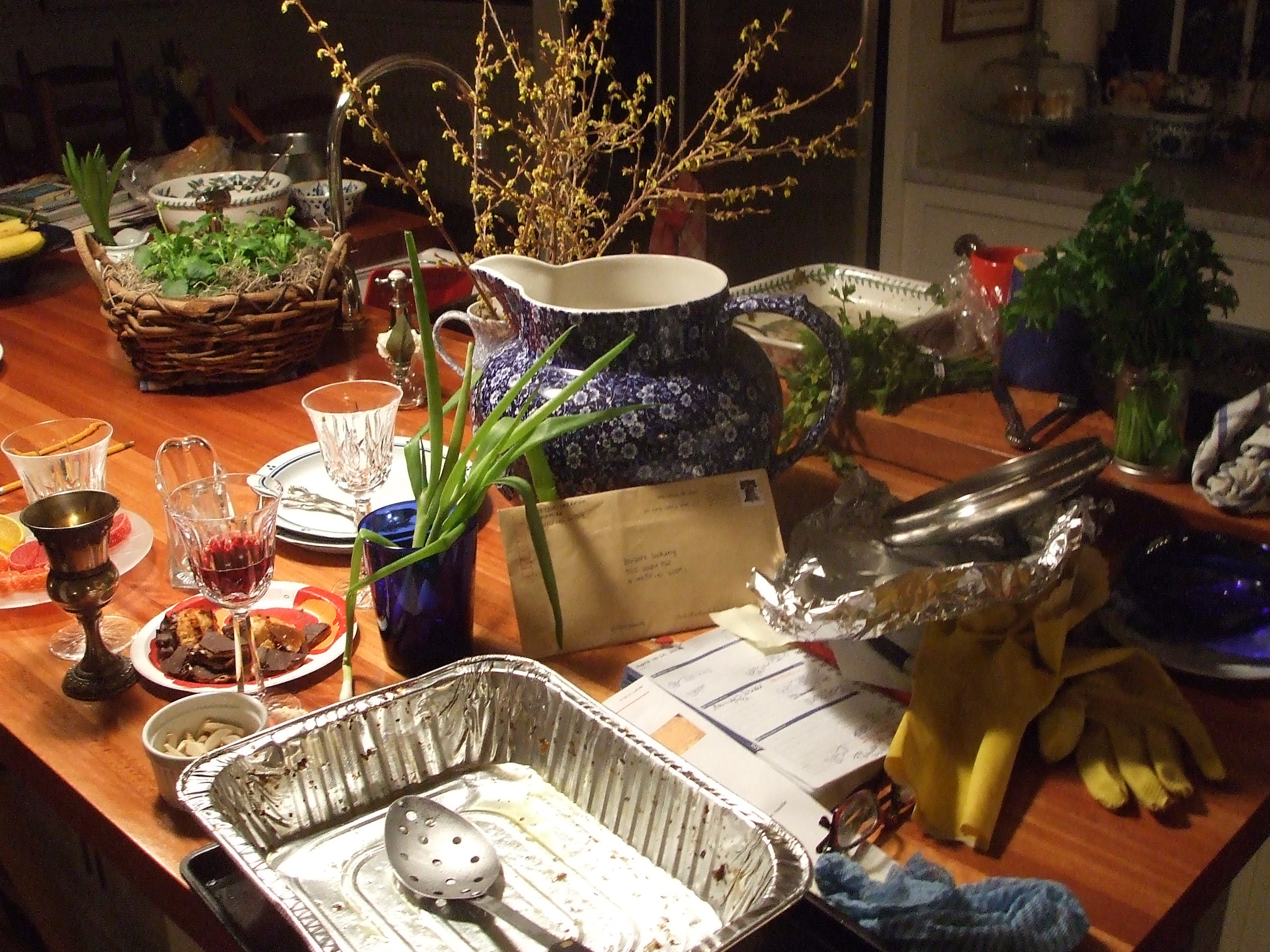
it is as much the order of the seder as the haggadah itself. the table will spill with character. ooze with it. rumble, tumble, jumble, full of characters.

wafting just above, that’s character no. 1. the tall one, that is.

that’s ted. rebbe ted. the one wrapped in japanese prayer robe, tied with obi. the one raising the first of four glasses of vintage manishewitz. the one we drive miles to be with every pesach.

ted, a rabbi and cantor without a congregation these days, is a therapist; spends his working hours trying to screw on people’s heads, or at least screw them on a little less wobbly than when they first wandered in.

but mostly, always, ted is a character. ted’s eyes, i think, must gleam even when he’s sleeping.

at ted’s seder, things are, um, unorthodox. ted reaches in a bag and pulls out yarmulkes from around the world. sometimes he wears his tibetan temple headdress. he always wears his japanese robe.

at ted’s, you do some chanting. you close your eyes and chant the vowels. you do not close your lips when chanting vowels, he tells you, and thus you assume a posture of openness that ted thinks the world truly deeply needs. you chant deeply, ahhhhhhhhh.

at ted’s, you eat sumptuous french hors d‘oeuvres. (and then you find out, oops, they are not kosher for passover; maybe that’s why they tasted so good.)

i tell you the story of ted because in bringing my children to ted each year i bring them to one of the most essential gifts a parent can give a child: the gift of the one who’d never paint by numbers, the iconoclast, the eccentric, the character. the deep and rich and soul-expanding knowledge that life is splashed with vibrant colors.

one of those colors is the color ted.

it brings unending joy to me to bring my children to tables where i know they will hear voices they do not hear at home. home is where the grounding happens. home is where you learn that the parachute has a safety cord, and you can pull it any time.

other people’s launch pads are where you learn to lift your foot off the ledge, set it in mid-air, and feel the fall, but then the updraft, carrying you, lifting you to places you’d never see from the safety of that concrete ledge.

last night we soared with ted. heard his salty brand of politics. took in his dash of new-age mysticism. felt the gestalt of letting go of that by which we’d been enslaved. watched him raise a yale sweatshirt, oy, to teach a lesson on hebrew light and perfection. (right there, spelled out on yale’s emblem, in hebrew letters, who knew? found out that centuries ago, at the founding of yale, patrician of patrician schools, hebrew was required study. ted, by the way, went to yale.)

tonight we congregate again. at another table of eccentrics. they will be the ones with whom we’ve worked for decades. the ones with whom i’ve “sedered” for 25 years, before husband, before children, and every variation since. a cast of newspaper kooks. my boys, all eyes and ears, will learn much that i won’t teach them.

besides the wine glasses filled with jelly beans (the kinder version of fruit of the vine), the flogging each other with scallions, yes, scallions, the pulling out of little plastic plagues, there is the annual putting of passover lyrics to broadway tunes.

we drive home each year, from nights one and two, with bellies aching. not from all the passover matzo kugel. no, no. from laughing ’til our sides feel split in two.

we are blessed. so very blessed.

all my life, far back as i can remember, i have loved the odd ball. the duck who waddled to his or her own drum beat. at my mid-century mark, i survey the landscape of my life and see i’ve assembled quite some cast of characters.

my almost-man-child told me recently that one of the most lasting lessons he learned from his uncle david was when david spoke of a brilliant friend of his, a friend with phD in sanskrit, a friend who studies global drumming and, for a long while, drove a cab in new york city. david, it seems, told my almost-man-child: “he really is a kook.” and my almost-man-child told me that the way he said it, he knew that uncle david meant that to be a kook is a very noble thing. “that’s how i learned i should never march to other people’s drummers,” said my boy who decidedly does not.

my prayer this pesach, my prayer that already has been heard on high, is that all the children, not just my boys, hear a world of many drummers. and come, as often as they can, to a table that spills with kooks and characters and bold eccentrics, a table, every first-night seder, led by rabbi ted.

who, by the way, i love with all my heart. even if he makes me close my eyes and chant the vowels.

do you collect characters? do you see the beauty in those who color outside the lines? do you, if you have children, or love children, or are a child at heart, seek out tables where you know they–and you–will hear voices unlike the ones they–and you–hear at home?

holy, holy week

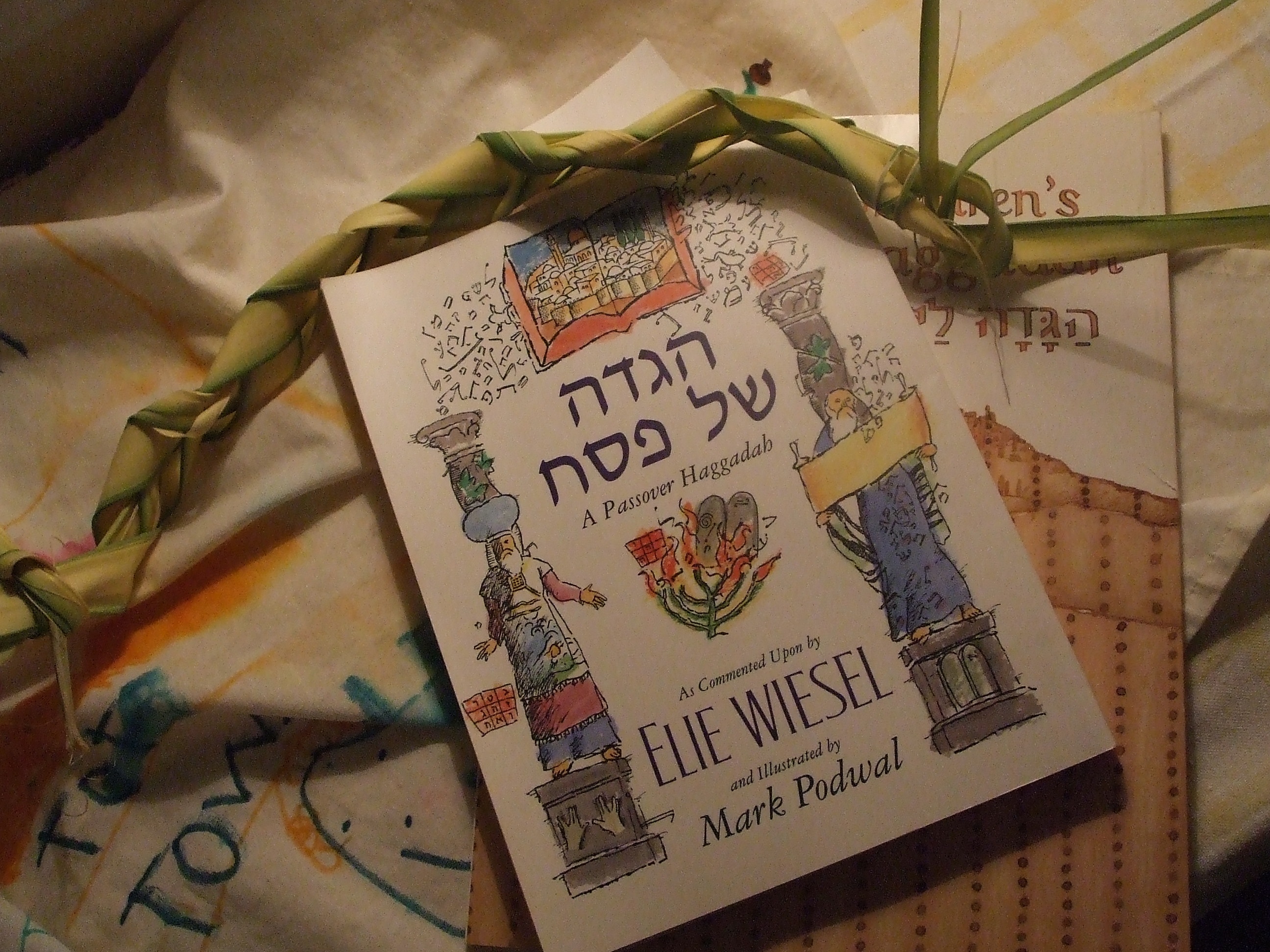
in our house, it is the gospel according to matthew, and the seder infused by elie. and this, by the blessing of the calendar, is one of those wham-bam weeks.

we’ve got it all, and weave and flow from exodus to last supper, from parting of red sea to rending of blackened sunless sky. we dash the house of bread, but then bring on the easter baskets.

long long ago, we set our own pesach dispensation for easter sunday. even when it’s in the midst of the eight days of no leavened grains, we part the matzo for a sprinkling of chocolate, for jelly beans, in the easter basket.

i was musing that wednesday is the only day of this whole week not rich in something jewish or catholic, and thus i would need to consult the koran to divine my depth for the day.

it is, very much, a fact that the interlacing of the passion of jesus, a passion set in history at the cusp of passover, and the jewish remembrance of the exile from egypt, is, for me, a rich one.

after 25 years of living them on top of and through each other, i have come to see shadows, understand subtleties that would have escaped me were it not for my being drawn, in love and faith, to a man who is, himself, a son of the tribe of israel.

and so it was that we all, the four of us, two jews, one catholic and one just learning both, walked into a church courtyard yesterday where palms were swaying in the air, the priest’s red robe was billowing–nay, blowing–up and nearly over his head from behind, the winds were whipping so unrelentingly, a red bird’s plumage in flight. the red cloth punctuating the otherwise gray day.

the priest, one i’d known long ago, one who’d grown older and even wiser, and though he’d grown bent, never bent from his focus on that core of what i call dorothy day catholicism that sees peace and justice as the central burning flame of a religion he won’t let go down in flames.

he was in the midst of reading the passion of jesus when he looked up, looked out at the sea of waving palms, and implored the multi-colored crowd: “consider and tend the wounds of the world as if they were your own—-for they are.”

that then, i gulped, is the mission of this week.

i came home, sat down to consider elie wiesel, the nobel-prize winning poet and seer who survived the holocaust and will not, bless him, let us forget.

“i love passover,” he wrote, “because for me it is a cry against indifference, a cry for compassion.”

wiesel wrote those words in perhaps the only autographed book (certainly the only autograph that fills me with awe) on my shelves, “a passover haggadah,” (simon & schuster) his 1993 commentary and guide through the seder, or meal of remembrance, the retelling of the exodus story, that is the centerpiece of passover.

“sometimes the sheer speed of events makes us reel,” wiesel also wrote in the haggadah. “history advances at a dizzying pace. man has conquered space, but not his own heart. have we learned nothing? it seems so. witness the wars that rage all over the globe, the acts of terror that strike down the innocent, the children who are dying of hunger and disease in africa and asia every day. why is there so much hatred in the world? why is there so much indifference to hatred, to suffering, to the anguish of others?”

wiesel asks. the old priest implores.

because i am catholic, because i spent many years on my knees studying the 10-foot-high crucifix that hung before me in the church where i grew up, i don’t even have to close my eyes to see the wounds that i’ve been asked to dab with cool and healing waters.

and so i walk, i stumble, through this most holy week.

what questions do you carry into this blessed string of holy days? what thoughts do you put to those questions? those callings?


p.s. some really fine thoughts–really fine–have been tacked onto meanders in recent days, thanks to the brilliant souls who keep pulling up chairs. bless them! don’t forget to take a look back and keep the conversation flowing. just because we move on to a new meander does not ever mean the case is closed on a meander past. in fact, we might have drummed up a real-live beekeeper to tell us a thing or three about the
heartbreak in the hives….
p.s.s. welcome back from break, all of you who flew away…we held down the fort just fine….

vernal whisperings

if you listen, you can hear the first stirrings of winter loosening its grip. yes, the snow moon, that great white orb that cast its full light on the cold cruel landscape of last night, made it hard to see anything that was not white, or bluish white, a color even colder.

but in fact, and despite the wind chill, this is the day when myth and legend begin their vernal whisperings. there’s the old folktale about the ground hog and his shadow. but that doesn’t much catch my fancy.

what does catch it, locks it in its grip, is something i knew little about. until now. it is the jewish festival of tu b’shevat, the new year of the trees.

it is, it seems, all about vernal whisperings, the first hint of promise that all this, the harsh and the cold and the barren, will soon melt away.

as a woman married to a jew, as a woman who embraces spirit and rite and story and all things of the earth, this little holiday seems made for souls like me.

i had had an inkling that the holiday i had a hard time pronouncing (tu-bish-vat, more or less) had something to do with trees or planting trees. in fact, it is said that this is the day when God decides how bountiful the fruit of each tree will be in the coming year.

in israel, this is when the almond tree awakes from its winter sleep, erupting in clouds of tissue-white flowers, the first blossom of spring.

in ancient times, tu b’shevat marked the day of tithing. it clanged the final bell on the fiscal year. all fruits borne before this day, belonged to the harvest of the last year, and must be divided accordingly, a portion to the poor, a portion to the temple in jerusalem.

all of that was lovely enough.

but then i heard something about a special seder of seven fruits.

and that’s when i knew i needed to dig a little deeper. that’s when i discovered the thinking of the 16th-century jewish mystics.

known as the kabbalists, these deeply spiritual thinkers believed that we elevate ourselves by the eating of certain fruits on tu b’shevat. if done with holy intention, they taught, sparks of light hidden in the fruit could be broken open from their shells, freed to float up to heaven, to the great divine, completing the circle of the renewal of life.

oh my.

they go on, these marvelous mystics. they talk not about seven fruits, but ten. they break them into categories corresponding to four levels of creation. there are the fruits that need no protection, and can be wholly eaten; grapes and figs, among them. there are fruits that require protection but only at the heart; olives, dates and persimmons would be among these. then there are the fruits that need full protection, the pomegranate and avocado, both of which hide inside a leathery shell. the fourth realm, purely spiritual, by definition has no fruits: it’s just pure spirit.

the holiness of each fruit or nut is, according to the kabbalists, the soft edible part, the part you can bite into. the pits or inedible parts were thought to be impure. and the shells were the protection of the holiness. (makes you feel kindly toward that ol’ banana peel, eh?)

reciting blessings–there is a particular line from the torah for each fruit or nut, believe it or not–helps to release the holy spark of life flow trapped within them, the kabbalists believed.

ah, but the act of chewing, they tell us, kicks it all into some sort of spiritual overdrive.

get this: chewing is more powerful than reciting blessings, they believed, because humans have 32 teeth, and that is the precise number of times the word “elohim,” or God, appears in the story of creation.

goodness. it is morsels like that that make it so delicious to dig deep into something of which you once knew so little, but deep in your soul feel so drawn to. it’s the marvelous adventure, open to all of us, of cracking deep into the book of religions other than the one we knew first. it’s the weaving and steeping, the absorbing and unfolding, that i swear enriches the broth.

but back to the fruits, and the part that i think is the absolute swooningest.

along with the fruits of the seder, the kabbalists said there must be four glasses of wine at the meal. you begin, they taught, with a white wine. each glass after that adds more and more red wine, so that each glass deepens in color. the first glass represents the cold whiteness of winter, the next, the pale buds of spring, onto the deep rose of the height of summer, and finally the crimson of the autumn leaves before they fall from the trees.

you needn’t be jewish to want to drop to your knees on that one, the breathtaking progression, the resonance of the fruit of the vine with the rhythms of earth, the unfolding. a whole sensory reminding that the changing of season is a blessing beyond blessing.

and this is a day when we pause, when we listen, for the first stirrings of the deep underground.

abraham joshua heschel, the great 20th-century jewish scholar, writes magnificently of the sanctification of time in judaism. here is one thought to ponder:

“judaism teaches us to be attached to the holiness of time, to be attached to sacred events, to learn how to consecrate sanctuaries that emerge from the magnificent stream of the year.”

and so tonight, as i light the shabbat candles, usher in tu b’shevat, a sanctuary i never really knew until now, i will sit down to a feast of the earth’s promise, to fruits and nuts and wine. i will behold the shifting of the seasons, the absolute truth of the returning of life.

yes, now winter is making itself abundantly present. but from the heart of the fruits, will break open great sparks of holiness, wafting toward heaven. from each sip of my ever-blushing wine, the taste of the turning of time.

i will know as i eat and drink that beneath the cold hard snow, the fruits of spring are stirring. are whispering sacred incantations. vernal incantations.