pull up a chair

where wisdom gathers, poetry unfolds and divine light is sparked…

Category: nature

the sound of snow falling

sound of snow falling

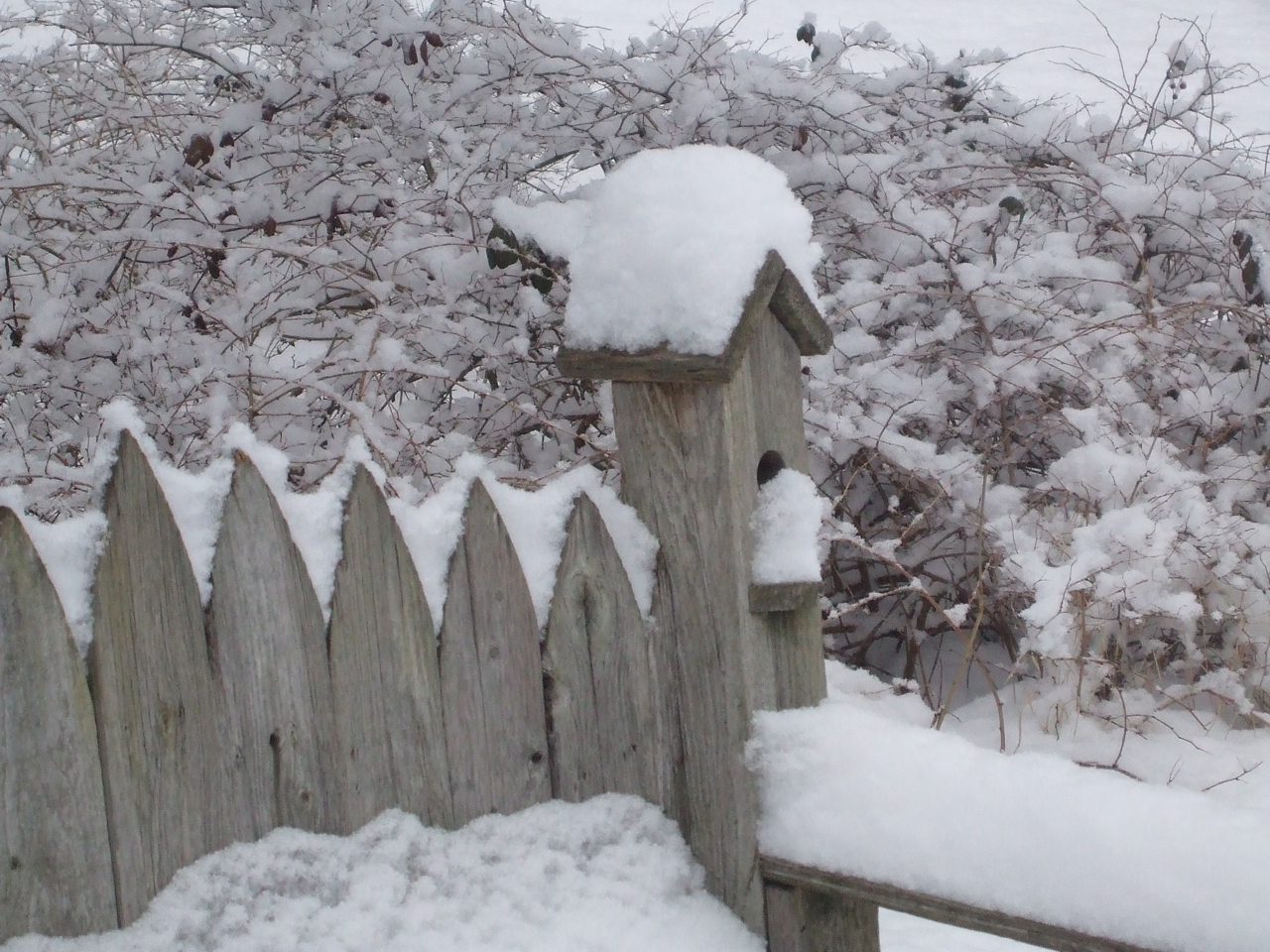
it is december’s gift. a world now hushed, now left to whispers. a world caked with white meringue. as if all the eggs, sans yolks, and all the cream of tartar were whisked into the froth that kept on coming.

whole clouds of it fell last night. started with a flake or two, barely noticed, in the gray of afternoon. by dinner time, the limbs, the walks, the feeders for the birds, had lost their definition, were taking on a girth that might have made them groan.

except the world was wordless.

the world, when i slipped on my snow-exploring shoes, zipped up my puffy coat, was so silenced by the spilling from the sky, i could, without straining, make out the sound of snow falling.

it’s a sound, quite truly, that makes your ears perk up. and your soul, too.

unlike the pit-a-pat of rain, it is wholly unexpected. wind we know is noisy. humidity, except for moaning of the ones who find it hard to bear, is not. but that comes as no surprise.

the sound of snow falling, then, is singularly soothing and startling. it is a titillation for the ears, a tickling of the nerves that makes them, well, stand at full attention.

a sound not heard so often, certainly not in months and months, it came like water to a thirsty traveler. and i could not get enough.

i cocked my head. stood still as still can be. i took it in in gulps.

while drinking in the pit-pit-pit of falling bits of icy snow, i opened wide my eyes. without moving a whole muscle–save for the ones that shift my eyeballs–i was a machine in complete and total operation.

except the machine–the hearing, seeing parts–served one function only: the talking to my soul.

there is a stillness in the first of every winter’s snow that feels to me like coming home. it is in that unrippled place, that place where quiet is complete and whole, that i, and maybe you, feel as if the hand of God is reaching down, is showing me the way through snowy woods.

sometimes, too, i think i hear the sound of God, putting gentle finger to soft lips, shushing.

shhhhhhh, i hear God say. be still. be filled with only what is sacred.

what else, i wonder, could slow a world that can’t move fast enough? who else can keep the cars off of the road? the cell phones from incessant baying?

there was not a soul outside last night, not when i was there at least, and i was there for quite a while.

this morning, then, is quiet squared.

not even snow is making sound. it is simply, i suppose, taking in its new perspective on the world. used to be way up high, now it’s down where mortals play. and it looks intent on staying put.

not a bird is anywhere in sight. i think they know what the weather seers know, only without all the supersonic radar. i think all my feathered friends are safely tucked in cozy places. at least i hope so. i would like to think the birds are in their checkered armchairs, nestled by the fire, sipping cocoa, like i intend to do, any minute here.

it is december’s gift, this early snow. it is just in time to serve its highest purpose. to shush a world in full staccato. to make us perk our ears, to see if, this blessed day, we might hear the song of snow falling.

my snow-flaked friends, your thoughts this morn…
as i type now, one boy up and fed and off to school, the world has rustled from its sheets, thrown off the blanket, the world is hardly quiet. dang. that didn’t last nearly long enough. i hear the sound–the dragon mouth–of snow blower somewhere down the street, and the scraping of the shovels against the walks. but i also hear the solitary cheep-cheep-cheep of the scarlet papa cardinal come to scout around.
did anyone else hear the snow falling last night? did you take to your boots, and like papa cardinal himself, do some scouting in your ‘hood?

oh, a word about the magic pictured up above…that’s a gingerbread house just around the corner from me. when we moved here i realized i could see it from my bedroom window. i thought, well, lucky me. if i can’t live there, i can at least spend my life gazing at its cheery face. and if i lived there, i couldn’t keep an eye on it all night or day. the streetlamp, the snowy branches, the ginger cottage strung with little lights….hope you too found it delightful. and caught, perhaps, the sound of which i write….the magic sound of flakes aflight…

november sky

november sky

the sky wraps me, it signals me, it tells me many things. in ways that never end, it is God’s billboard.

it holds up wonder. hints at danger ’round the bend. whispers: season’s changing, sun is moving on, world turns. shadow’s on its way.

it talks not just to me, it talks to many, many others.

all around, i see the others paying attention. i pay attention, too.

i find myself looking out of windows. looking up. i’m hiking here and there and everywhere, like a lady starved, trying to fill her belly. only what i’m hungry for is sky.

there is something particular about november sky that calls me much more often, much more insistently, than the summer months, or even spring.

november sky is haunting, is gray, is roiling when the winds whip, making froth of clouds. oh, dear Lord, there’s frappuccino up above. we cannot escape.

november sky is vast, is tinted with a wash of winter blue. there is more to see, because less is in the way. just the bare-boned architecture of the trees, stark, sharp against the canvas of the sky. sticks poking into clouds, or so it looks from far away, daring sky to burst.

the disrobing’s over now. it’s limb and bough and twisted trunk. a tree stands alone, telling its solitary story. no encumbrances, no leaves, no frills. just the bending, arching, reaching limbs, and whatever’s fallen too.

we see it all now. we teeter here on the precipice between the autumn and the winter. not yet snow sky, but i get the sense it’s coming any day.

i could watch all day. watch the birds watch the sky. watch the squirrels too. how they know which days to scurry to the feeder, gorge on seed, before the weather does what sky is saying.

the gray sky for me is one big knitted afghan. i draw it ‘round my shoulders. hunker down beneath november sky.

it is signal, mostly, that it’s time for one and all to go deep, pull in, be ready for the cold winds that will come. bulbs are buried. painted turtles sleep along the bank of the lagoon. even little sparrows, long past nesting, have been collecting bits of cloth, flitting off to somewhere where i think they’ve knitted their own afghan for the winter.

i too go deeper in these days. pull in. take my cues from sky. i, too, ready for the winter. put the gardens all to bed. tuck in plants in blankets made of leaves i didn’t rake. i haul out the soup pot. simmer beans and bones, whatever takes the long slow flame, offers up its essence over time, over hours that aren’t hurried. not at all.

but i go deep in other ways.

this is the season, starting now, for introversion. funny, then–odd, even–that it’s the season that the world claims for merriment. hmm. so maybe that’s why, sometimes, for some of us, it’s like climbing through molasses to go out and join the crowds.

maybe if we listened to the sky, we’d be more in keeping with the rhythms deep within.

i believe in seasons. and not because i’m the daughter of ecclesiastises. or the long-lost fourth of peter, paul and mary.

no, not that at all. i believe in seasons because i believe that Wisdom understood the ebb, the flow, the time to plant, the time to harvest under heaven.

and november sky, maybe more than any other sky, tells me things in notes i cannot, do not want, to miss.

wrap up. take shelter. kindle lights in every window. brace for storms to come. feed yourself deeply.

this time, these days, are ripe for inner harvest. while the orchards all are sleeping, while the fields have gone to fallow, sift through the soils of your soul, i hear the sky say.

root around inside. see what’s ripe for picking now. take in wisdom. curl up and take it from the printed page. or lace up your boots, and listen to the forest. or the waves that won’t be stopped for cold. or the grasses of the meadow that can’t help but rustle to the song of winter’s-coming wind.

the grayer that the sky gets, the more i feel my heart beat. it is november, most of all, november almost gone, that stirs me, like a spoon inside the pot, for the broth i’ll sip for months to come.

the reverie of november, november now slipping in its final hours. do you find your soul stirred too, like the jostling building clouds that crowd the sky? do you find this the start of your deepest months? what of the party schedule that demands a mood that might not be in keeping with the call of sky to hunker down? or is it that the dark of deepest winter demands we kindle flame? what of the flame we carry deep within? what if it’s the one we tend in the weeks to come?

requiem for the spring that will not be


i cannot let this heartbreak pass without taking time to sing a song of sorrow.

the petaled promise of spring, everywhere, it seems, is bent, is broken, downed by something silent that came under cloak of night, but also in the klieg light glare of high morning, when the sun, at full slant, could not make its way through molecules of cold.

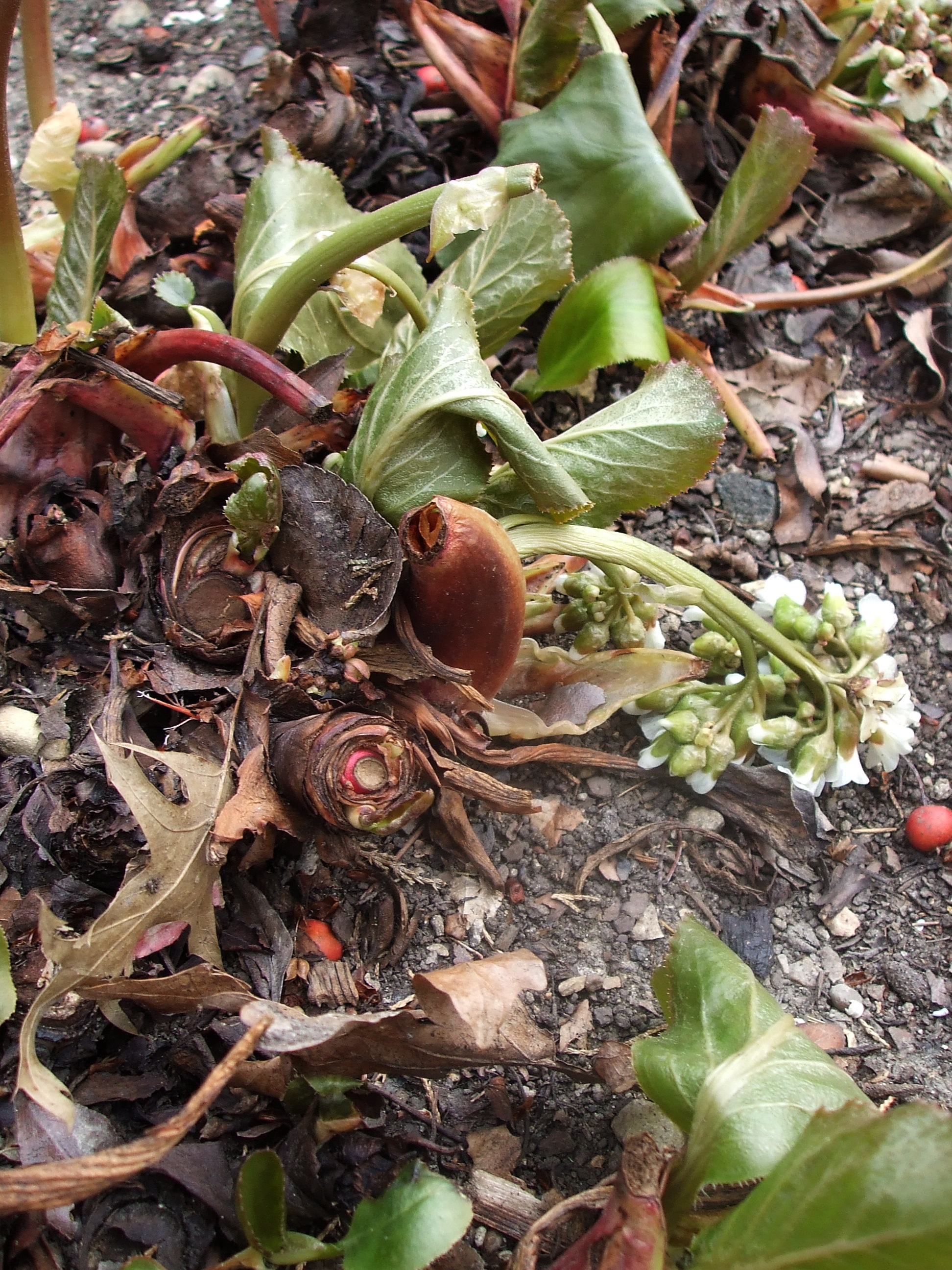
i have walked for miles, i have taken toll. i know now the litany of the dead, the blooms that will not be. star magnolia, petals browned like egg whites under too much butter, too much flame. only this is brown from freezing. daffodils, whole hosts, bowed in cold defeat, heads down, limp in dirt that might as well be burial mounds. bergenia, a woodland beauty sometimes known as pigsqueak, has lost its squeal. exhibit a, up above; the barnyard must be weeping.

i know i am.

barely a week ago, when winds were filling lungs, getting ready to let loose, when the air was balmy 70, we heard the rather mild-mannered news, the short-burst alarm: temperatures might dip. take precaution.

precaution, we presumed, was tossing blankets helter skelter overnight. and lifting in the morning. the danger past, the sun back up, all caution scattered with the noonday wind.

but then, the cold, it stayed. the daffodils, days later, still haven’t raised their heads from deepest dying bow. the magnolia never had a chance. one day, its velvet fingers, gloved in alabaster. but then, the next, all froze, and kept on freezing. there will be no bloom this year. there will only be brown buds falling to the ground, botanic bullets shot through with frozen death.

promise lost before it even had a chance.

which sounds, to the children’s cancer nurse in me, too much like life sometimes. this narrative we know, not only from the garden.

all around, i walk through springtime frozen on the stem; i ask myself just what it means. what lesson is this teaching?

i called a man who knows many things about the garden. he said it’s death on case-by-case basis. depends, he said, on micro-climate. vigor of the plant before the cold winds came. says he’s never seen anything like it, not this much cold, this long, preceded by solar-heated days that coaxed the blooms, coaxed spring, right from the earth, from winter.

way he sees it, he says, it’s just a blip for planet earth. a mere blink of the eye for the globe that’s spun for zillions of millions of revolutions.

buck up, he pretty much says. these growing things grow here because, through the millennia, they’ve done the darwin thing. they’ve got little tricks up their long green sleeves. but there will be no blooms. toast, he boomed, time after time, no matter what i mentioned, full of hope, some growing thing, perhaps, merely suspended in freeze-frame animation.

toast, he cried. toast, toast. i could hear him shake his head; pity the poor lady with skull so thick she’s dense.

at best, the wise man offered, the growing things dig deep inside their little souls, extract a blast of carbohydrate, give it everything they’ve got to unfurl their leaves, take a chance at air and light and a good stiff drink of rain.

it’ll be an iffy proposition from here on out, this season. too little rain, too many pests–oh no, here comes his favorite word–“toast!” he crowed again.

scooching out to the edge of this most precarious limb, i asked the hard-baked gardener if he saw any metaphysics in all this burned botanic bread. “this is nature,” he said, shooing me away to take another call.

well, half the reason i come to class is i’m convinced there is much to learn in the not-so-tidy rows of my struggling garden.

as i tiptoed through the swath where my daffodils once tossed their pretty heads, scissors at the ready, at last surrendered to the notion that there would be no resurrection, i mused long and hard on all this would-not-be.

walking miles, shuffling past the dead and fallen, i rumbled thoughts through head. why death? why so much frozen death?

the singular thing that struck me was how this scourge rolled in without a sound, without a whimper even. this was not destruction with a drum roll, no whipping winds and thunder claps, nor streaks of light that tore the sky in jagged halves.

this was, like so much of life’s unwanted news, completely unannounced.

one minute you’re talking to your papa on the phone; the next you’ve got an operator on the line, interrupting some other silly call, telling you to clear the line, someone must get through, someone needs to tell you it’s very, very bad, you need to get there fast.

one minute you think your firstborn son is out riding his bike on a golden autumn day filled with light and promise; the next, the doctor is leaning against the hard cold wall, telling you it’s a fractured vertebrae in his neck and the spinal cord itself looks to be in trouble.

you think of all the friends you’ve loved, whose news came in fractured syllables: a dark spot on a lung, a blob they couldn’t see through, ’bout the size of a cotton ball, on an unsuspecting breast.

they never knew it was coming. you never knew it was coming. it was suddenly just here. it was the sub-freezing dawn in the middle of your spring.

you too, drooped your head into the dirt. you too forgot to breathe. case-by-case basis, the plant man said. some will make it. others won’t.

you, not willing to go with door no. 2, you dig down deep inside your carbohydrate stores. you give it everything you’ve got.

some will make it.

you swallow deep your sorrow, and plow on into spring. you pray to God warm winds are on their way.

just there, beyond the window, in the hoary morning’s frost, you set your gaze on daffodils, a humbled host, stilled, not breathing at half mast.

you, though, you take a breath. you brace against the chill. you carry on, intrepid, into spring. no one says it doesn’t sting. no one…

anyone care to offer up a line, or stanza, in this song of frozen springtime sorrow? or some sign of resurrection in the field?

into the woods

leave it to the italians. they have a name for today. they call it “pasquetta,” or little easter.

why, they wonder, after all the deprivation and darkness of lent, the shadow that burst, finally, into light, into the unbridled exuberance of easter, why, they wonder, why pack it up like so many leftover baskets, and tuck it on the shelf ’til next year?

mais non, they would say if they were french. but, of course, they say it in italian. dag nab it, is what they mean, though, again, they don’t say it quite that way.

those smart italians, they do a very smart thing: they grab one of those baskets, they pack it with leftover yummy things from easter, and they take to the woods. specifically, they set out in search of a watery place.

water, on pasquetta, is key. there is, depending on your level of gusto for this little easter, some splashing involved.

in fact, all over europe today, there are folks splashing. they are not being mean to each other. as a matter of fact, they are partaking of the little easter blessing.

in hungary, apparently, boys knock on doors. girls answer. boys splash girls. girls invite them inside. they feast. they send boys home with wildly painted easter eggs.

on easter tuesday, the girls return the favor. they knock and splash.

it must be riotous, all this knocking and splashing and heading to the woods with your leftover pink and green eggs.

but, besides the fact that it’s quaint, there is, it seems, something rich about the european approach to little easter. to all of life, perhaps, but certainly to little easter.

it is about taking linear measure of time, peeling back the ordinary, extracting mystery and sacred, raising simple hours into the realm of the extraordinary. it is about pushing away the rock of workday expectation, exploring the cavern of the deep unknown, the unexpected. reveling on a monday.

because a friend i love has been telling me for months i need to, have to, must not sleep until i read, “to dance with God,” (paulist press, $14.95) a poetic, eye-opening 245 pages on family ritual and community celebration written by gertrud mueller nelson, i finally cracked the cover over the weekend.

she is very wise, this deeply jungian, deeply spiritual woman, who in 1986 wrote this book while living in california. she says this of what she calls “holy time out”:

“holes are created in time through the creation of holidays–or, indeed, holy days–where the ordinary and everyday stops and time is set apart and not used. every seventh day (sabbatical) since the story of creation is a day of being, a ‘day of rest.’ that is what a feast is. the feast has its origin and its justification in its dedication to celebrating and worship. it belongs to the gods.”

she goes on to tell us that plato, of all thinkers, put it this way: “the gods, taking pity on mankind, born to work, laid down a succession of recurring feasts to restore them from fatigue and gave them the muses and apollo, their leader, and dionysis, as companions in their feasts–so that, nourishing themselves in festive companionship with the gods, they should stand again upright and erect.”

the feast–or holy day–then, is, “the very act which makes the transition from crawling beasts to the upright and conscious human,” nelson writes, “a transformation which makes what is human equal to and a companion (comrade) of the gods.”

i don’t know about you but we don’t spend a whole lot of time around here even noticing feast days, let alone packing our baskets and heading to the woods.

apparently, gertrud does. she says that on easter monday she always let her children stay home from school. they went off to church early in the morning, but then they took off to the woods, often to a marshy place. through binoculars, they watched the water birds, the mating birds, doing their springlike thing. they inhaled the woods, the little tips of tender green budding on all the branches, turning the gray of winter woods into the lacy green of early spring.

getting wet, she says, was always part of the picnic. back to the baptismal waters, and the holy sprinklings, that are so very much a part of easter.

immediately, i found all of this a notion i could warm to: an excuse for picnic. tromping through the woods. stopping time for one more day. stealing children from the classroom, for the sake of exuberating spring (i know, i know, it’s not a word, but i just made it one, so now it is).

so last night, well past sleeping time, i tiptoed in the dark to the bedside of my almost-man-child, the one who loves the woods and who also had just flicked out the light when he heard me coming up the stairs. i told him my little easter idea. at first, he broke out in a grin (he turned the light back on, that’s how i know that), but then he thought about the school day, and thought, not even for a lunch hour picnic could he leave the load at hand.

oh, well, i sighed. fact is, we might have done our little easter backwards. we had taken to the woods already, on big easter. taken kosher-for-passover-for-easter picnic to the woods, in our glorious mixing of religions. it seemed the place to be, the woods that is. for all the reasons up above.

but still, i think, i might take the little one on a pasquetta picnic. or maybe in the twilight, i’ll take my boys by the hand, and take them off to where the gods urge us to recline. just one more day, a holy day.

a holy day for splashing in the woods. i think i like this little easter.

all right, all you wise people, do some of you already know and do this little easter? have you been splashing away for years without me? and what of the notion of not confining the holiday to one day, but extending exuberance? might we do well to weave more holiness and more exuberance into our ordinary time? are the italians, and all the europeans, not onto something? something much larger than little easter?

photo credit: my sweet will. taken on big easter. we both spotted the moss island amid the marsh; my camera said it was busy reclining and couldn’t be bothered, so will came to my rescue, once again.

p.s. it’s monday, the lazy susan spins afresh…

heartbreak in the hives

it’s not every day we interrupt our homefront meditations to bring you the news, but it’s not every day the honeybee lands on the front page of the newspaper that’s dropped on your front stoop.

sadly, today is that day.

the honeybee, Apis mellifera, is, as you know, or might easily imagine, one of God’s creations that we love best. (see “illumination: bees’ no lesser labor,” 01.24.07)
and the honeybee, it seems, is in distress. serious distress.

suddenly, starting last fall, beekeepers all over the country were opening their hives and finding nothing–no bees, no dead bodies, no obvious culprits, either. “apian ghost towns,” the chicago tribune called it.

hundreds of thousands of colonies–millions and millions of honeybees–dying off, across the map.

at first, the keepers of bees were calling this strange occurrence “fall dwindle,” or “disappearing disease.” but then, underlying and amplifying the alarm, just last month a swarm of bee brains put their heads together in a task force and realized this was not some seasonal decline; they renamed the mysterious and vast wiping out of bees from coast to coast, Colony Collapse Disorder. egad, capital letters.

no one has a clue what’s wreaking all the havoc; the beekeepers, it seems, are truly baffled. it might be pest, or the modern ways some have come to manage hives. it might be, worst of all, some environmental scourge.

to date, 24 states across the country count themselves among the seriously afflicted; illinois has yet to raise its tattered flag. but, beekeepers say, it’s never a good idea to open your hive before the daffodils are in bloom, so in many states they just don’t know what they’ll find when they finally lift the lid.

what’s at stake, according to the bee people and the newspaper that landed on my stoop, is, of course, the $150-million-a-year honey industry, but worse, the honeybees’ pollination of crops across the U.S., valued at $14 billion annually. (what they do, when all is well, is truck in billions of bees in boxes, and let them do their thing among the would-be fruited plains; problem is, all is not now well, and there’s no buzzing in the fields.)

that would mean, my friends, your produce bin, severely done in. and grab your almonds while you can, because almond growers in california haven’t a clue what they’ll do without their bees.

about three decades ago, an apiculturist, that’s someone who studies bees, estimated that one third of what humans eat is a direct result of honeybees’ pollinating labors, the way they nuzzle their nose in the fuzz of every blossom that must be passed from pistil to stamen if bearing fruit is to occur.

the national research council figures three-fourths of all flowering plants require pollination to bear fruit.

far as i’m concerned, though, all this number pinning only begins to lay out the breadth of the disaster.

here’s a dabble into the depth: no economist will put numbers to the loss of wildflowers, but already in the u.k. and the netherlands, scientists have correlated the decline in honeybees and flowers. it’s a vicious cycle: bees rely on certain plants, plants rely on certain bees. what’s lost is the ephemeral wild flower, beacon of fragile beauty, bursting through the earth with reckless and random abandon.

but what else of the noble bee might we stand to lose? the wax, illumination in its early stage; a wonder healer called propolis, believed to cure or stave off everything from the common cold to asthma to festering wound; the colony itself, model of cooperation and getting the job done, even if an autocratic civilization, what with madame queen bee ruling over all her winged minions.

when i am distressed about the bee, or just plain curious about the buzzing creatures, i turn to sue hubbell, who has been described as “a latter-day henry thoreau with a sense of the absurd.” once a beekeeper in the ozarks, she wrote, “a book of bees,” (houghton mifflin, $12) back in 1988, bits of which originally ran in the new yorker. she puts together words that drip like honey from the hive.

i wish i could have called her to get her read on this disaster, but, alas, i could only turn her pages, remind myself of why it is i am so gaga for the bees.

on page 53 she tells us, “beekeeping is farming for intellectuals.” already, i am more than hooked. not that i consider myself any sort of intellectual. but i know that all sentences that follow will send me to the moon. and they did.

she goes on to tell that “the greeks spun tales about the god of beekeeping, aristaeus. pliny wrote about bees. aristotle observed them, puzzled over them and reported his findings. virgil made bees the subject of his fourth georgic, a part of the series of poems with agricultural themes.” classicists, she tells us, insist that virgil’s purposes were political, that he used bees as a vehicle for his clearly political leanings, to prove his civic points, pointing all the while to the workings of the hive.

but isn’t that the very thing that makes us drool at the thought of bees (and not simply their golden honey), the very fact that bees might be a model for whole civilizations?

and then we come back to the wildflowers. there is nothing left but sadness, when considering that the tender and the robust, both and all, would be helpless in the wind if it weren’t for the busy flapping bee, ferrying most essential pollen from one sweet throat to another.

and what would be a world without strawberry? or berry of any sort? or the apple or the peach? would it be a world in which i would want to dwell?

the honeybee it seems is hardly afterthought, although most of the world, save for all those beekeepers and honey lovers, think little of the bee in the course of any day.

it’s curious to note that back in ancient times, there grew a great myth, the myth of aristaeus, that had as its crisis point the wiping out of all the hives.

it makes me wonder if there’s a lesson to be learned, if only we will listen to what’s unfolded in the millennia of long ago.

here’s the story: aristaeus, it’s told, was the son of cyrene, who despised spinning, weaving, “and similar housewifely tasks.” she preferred to hunt wild beasts. apollo, you might remember, once watched her wrestle a lion to the ground and fell so in love with her, he carried her off to africa and built a palace there for her.

after their love child, let’s call him ari for short, was born, apollo ditched cyrene, and cyrene, longing for the wild, in turn ditched poor ari, leaving him to be raised by nymphs who, among other tasks, taught him to raise bees in terra cotta pots.

when grown, aristaeus wandered out of libya, and amid his wanderings stumbled upon eurydice, a wood nymph, who happened to already be taken, the beloved, it seems, of orpheus. (and you thought modern soap operas were twisted? well, hold on, it gets better here…)

not-smart ari, according to the story, tried to rape eurydice, but she ran, through the woods. in her hurry, she did not see a big fat snake right there on the path. don’t you know, this being a greek legend, she tripped right then and there over a tree root. the snake, of course, bit her and she died from the poison. orpheus, heartbroken, grabbed his lyre and started to pluck. hades, god of the underworld, was so moved by the beautiful music, he was going to let eurydice out, but only if orpheus promised not to look at her until she was safely in the sunlight. alas, ol’ orph couldn’t help himself, looked back, and lost her forever.

the other gods, so furious at ari, punished him by killing all his bees. he had no clue–sound familiar?–why all the bees had died, so he went off in search of his mother, mistress of wild things. he found her living under a stream, a fine place for a wild mama. she knew nothing about the bees, but sent him off to proteus, the god of many shapes, who might have a clue. ari ends up having to wrestle proteus to the ground, insisting he hold one shape until he tells what happened to the bees.

to make a too-long-already story a mere tad shorter, suffice it to say that much sacrifice was involved, but at last, the gods relented and a swarm of bees appeared to ari, who promptly stuffed them back in terra cotta pots.

grateful for the forgiveness of the gods, ari and his pots of bees settle down and live a relatively uneventful life, except for when his son gets turned into a stag, then torn to bits by a pack of 50 hounds.

all this is to say that, perhaps, just maybe, the gods are buzzing mad at something that we’ve done. and we, like ari, must do something rather drastic, something sacrificial, should we ever have a hope of once again seeing swarms of honeybees in our terracotta pots.

it’s either that, or a life that might be hades-ruled, a life spelled h-e-double l. i can’t imagine. no strawberries. no beeswax candles. no wildflower tossing in the wind. it makes me shudder.

whither the honeybees?

record your heartbreak here…..
gulping sky

it is best practiced on your back. a blanket comes in handy. you can do it in a chair, or standing like a soldier. only then your neck gets sore.

it is eyes locked on heaven. it is watching celestial shadow games, the sun and clouds the players.

it is what happens, unless you live in a house of skylight after skylight, when cold and snow is ended and you finally step outside. into God’s cathedral.

louis kahn, the architect i love because i love his thoughts though not his buildings, talks about the treasury of the shadows. he writes: “light, the giver of presence, casts its shadow which belongs to light. what is made belongs to light and to desire…”

he writes later: “the structure is a design in light. the vault, the dome, the arch, the column, are structures related to the character of light. natural light gives mood to space by nuances of light in the time of the day and the seasons of the year as it enters and modifies the space.”

and so it is with clouds. clouds, i think, are heaven’s vault and dome and arch and column.

i watched the sunbeams play with clouds the other afternoon. i watched the light play peek-a-boo. first, absence of shadow, all light the same, as sun was captive to the clouds. then, as cloud skittered north and east, the rim shone piercing white, a ruffled edge illuminated from blinding light behind the vapored curtain. then, pop, sunbeam re-emerged and shadows danced again.

on and on it went. i was lost in clouds for the better part of an hour. my boys romped. one with camera, the one who caught the clouds above for me. the other one with sand and hands. each one of us lost in time. each one of us transfixed by light and shadow, sand and lake.

it’s what happens when you surrender to the calling of the blanket. the blanket that made you turn the car, and park, and haul it to the sands.

i am, as always, and as so many, many before me, very much a ready student in the great school of God’s world as it surrounds me. i am, me and my home-bound suburban life, hellbent on breaking out, breaking open the fragile and the monumental offered up by nature. be it clouds and light and shadow, or tender shoots refusing to be barred by crust of earth, i am seeping up the lessons, taking in the truths. there is metaphor all over. it’s deep and it’s profound.

and sometimes, when the clouds and sunbeams do their dance, it’s simply pure delight. it made me draw my breath, gulp the sky. it made me call the boys. “come watch this,” i shouted. “here, lie down.”

so the three of us, three logs in a row, we lay there on the blanket, we played a guessing game. when was sunbeam breaking through? when was shadow coming back?

the little one played his own game. he was playing circus in the sky. he saw a fire-breathing dragon. and then an elephant with trunk that poked the dragon in the bottom.

i particularly loved watching the parade of clouds through the filigree of branches bearing buds. it made the sky seem even more immense, made the clouds more beyond my touch. it made me feel so little.

i think, sometimes, that feeling small, in the face of God’s creation, is an extraordinary blessing.

i only wish i took the time to put my spine to earth, my eyes to sunbeam dance, every single day.

anyone else catch the clouds the other afternoon? anyone make a daily practice of gulping sky as celestial exercise?

photo credit: sweet will, once again. lesson learned: don’t leave home without your lens.

equal parts: light and dark

seven minutes past seven tonight, chicago time, the sun will slide into absolute right angle, beam its rays straight on the equator. not angled north or south. dead on. bingo. that’ll mean, at long last, no matter how you cut it, it’s spring.

vernal equinox, defined: the planet halved by sun. equal light for all. until tomorrow, when the slant slides north. when south moves into shadow.

spring, the season of exodus and resurrection, of life unfurling, but, too, life falling from the nest. or, sadder yet, getting pushed. it’s death and life all over. to be reborn, the preachers shout, you first must die.

the whole top half of the world is shaking off its winter death. but death, i tell you, comes too in spring. hand in hand with life. this is the season of light and shadow.

it’s seesaw season, yin and yang. it’s stripping off old skin, it’s starting over. it’s tender and it’s green, beginning green. green before the chlorophyll goes gaga.

it’s chirping and it’s warbling. it’s worms being dropped in squawking mouths—life to bird but death to worm. it’s watching mama tend her brood. it’s watching, if you’re lucky, baby owl flap first wings, a sight you won’t forget.

it’s the season of awe. the season of heartbreak. everything feels tender all over. even me, some days.

it’s asparagus thin as pencils. it’s fungi grown in forest shadows. it’s raindrops swelled and pouncing. it’s puddles ripe for rubber boots.

it’s strawberries, so many, you break out in a rash. and then you bite another, dripping red right down your chin. rash, be damned; you drip.

it’s waiting an entire year for star magnolia to explode in cloud of white, perfumed. and then spring wind rips through, stripping branches naked. magnolia tatters piled on the ground. you ache as you pick up pieces. begin the year-long wait again.

it’s holding your breath as heirloom hyacinth bats its smoky lavender lashes, and then you wake up next morning to find the possums had a hoe-down and broke the stalk in two.

it’s going mad with the endless fields of iridescent blue, the siberian squill, that for a few short weeks makes us drylanders think we’re living in the midst of cobalt pools. each nodding head, a mere three inches off the ground. they grow in dappled light and shadow, but only where the earth is long undisturbed. blue ribbon, then, for keeping bulldozer at bay.

the japanese, enlightened, teach that the beauty of the cherry blossom is its evanescence. the very fact that any minute a breeze might blow and blossoms will be scattered. they understand the essence of the season. they might, more than most, be keen to what it’s teaching: behold the blossom. it won’t last for long. inhale the perfume. rub up against the velvet petal.

the italians have a word, tristesse. “beautiful sorrow,” i was told it meant. knowing what you love won’t last. and so you love more deeply. is this the truth of spring?

if you listen to the change in season, if you hold it to your heart, it unlocks all sorts of lessons ripe for plucking.
here are my promises for spring, the season full of promise…..

i will wake up, not with blaring alarm, but gently, with the beads of first light tapping me on my lids.

i will stretch before the sun, bow down, be humbled.

i will make my first stop each morning beyond the kitchen door, in the garden. i will listen to the morning song of whoever’s beat me to the punch.

i will crouch down, inspect the growing things. take note of miracles that unfold in dark of night and light of day when i’m not looking, hunched inside, tapping at a keyboard.

i will make the bent willow basket on my old lady bike the vehicle of choice for ferrying loaves of bread and jugs of milk. don’t forget the berries, plump and sweet.

i will rescue broken flowers and ferry them to my window sill infirmary, where i’ll apply remedies and potions, or simply watch them fade away in peace.

i will swipe the fuzz from my dryer filter, pile it, and lay it at the foot of my big spruce. i might post a little sign: “fuzz, free for all nest-building birds. help yourself.”

i will cry if blustery afternoons wreak havoc on my blossoms. i’ll do the same in case of ice or pelting sleet. i will nurse the hurt, deep breathing, until the stinging goes away. like my knees when i was little and went skidding from my bike.

i will, some night, dine on nothing but the tender shoots of spring. i’ll wash it down with vernal wine, dry and white and new.

i will, as many mornings as i can, stuff myself with strawberries.

i will slosh through puddles.

i will take my little one by the hand and we will jump. see how high we can make the puddles splash.

i will, if i find a baby bird fallen from the nest, whisper a proper benediction as i perform a proper burial. lay a sprig of springtime flowers. teach my boys to do the same.

i will try to read the night sky.

i will watch the sun come up, thermos of coffee planted in the sand beside me.

i will, if i’m in the mood, wrap eggs in onion skins, and marvel at the marbled shades of creme de caramel.

i will master the shortest shortcake ever. then bury it under avalanche of berries.

i will plot my plantings yet again. tuck them into warming soils. hope. pray. sprinkle incantations. and water, too.

i will marvel at these days of yin and yang. and i will drink deeply from the season’s spring-fed well.

that’ll get me started. how ’bout you?

lunar pull

there she is, hanging, shining, beaming, i tell you. illuminating, casting shadow. not a reticent bone in her body. she is out there. boldly. no peek-a-boo moon this one.

she’s there now, just sliding down from the nightsky, our nightsky at least. she’s moving on to someone else’s night now. i’m left standing here, jaw-dropped, marveling. moon struck.

the moon, when you watch her, puts on one heckuva show. problem is, we don’t watch her so much anymore. we’re busy. we’re tucked in our houses, under our 100-watt moons. we might be out driving, but it’s the fluorescent beam that keeps us on our side of the yellow line. who, since the owl and the pussycat, thought to steer by the light of the moon?

when’s the last time anyone turned out the lights and watched how the moon shines?

a coupla kooks for the moon show, my man-child and i, we headed out to the horizon’s-edge theatre the other evening. took our seats right there on the beach. waited. the opening act, clouds billowing, streaked with azalea and rich dabs of peach blossom, they warmed us up, got us ready for what was billed as the 5:39 showing of the full worm moon rising, only eclipsed. a once-every-few-years total eclipse, which means that, by the celestial geometry that dictates these things, ol’ mama earth had wedged herself wholly between moon and the sun, and all that we’d see of the moon was the shadow of earth cast on moon’s face.

well, don’t you know, those opening clouds did not get off the stage. they stayed there and blocked the big act. so we sat, and we waited, kept thinking she’d get up, take a bow. but nope, clocks all over the beach (for we weren’t the only ones who’d been drawn to the moon show) ticked toward 5:45 and then, finally, 6. there would be no moon show, not yet anyway.

by the time we drove home, by the time we were nestled back snug in our house, that ol’ wily moon, she appeared. broke through those show-stealing clouds. shone bright as a beacon all through the night, and me and the man-child we kept gawking.

there is, for my money, nothing quite like the nightly moon show. especially the once-every-29.5-days moon show, the full moon show. the one where her whole face is aglow, all lit up, like, well, the moon.

got me to thinking how for so many eons, and in so many civilizations, the moon was the beginning and end–save, maybe, for the sun (which, to my taste, is a tad boring, same old, same old, day after day). but for us, most nights, the moon, it’s barely a blip.

if you check the old farmer’s almanac, a compendium of charm and delight if ever there was one, you would find that each full moon has a name. the one shining right now is, by some accounts, the worm moon, because for the native americans who named her this was when the rains came, and with the rains, came, you guessed it, the worms. thus, the full worm moon.

but that’s not the only name that’s been pinned to the full moon of march. listen to this:

in colonial america, she was the fish moon. the chinese call her the sleepy moon. to the cherokee, she’s the windy moon. the choctaw, sadly, called her the big famine moon. the dakotah sioux, poetic, pragmatic, call her “moon when eyes are sore from bright snow.” the celts, snaring their own bit of poetry, call her moon of winds. and the english medievals, primly, call her chaste moon. hmmm.

once upon a moon, wise people looked into the nightsky for, well, wisdom. for when to plant, and when to set sail for new lands. for when to wage war, and when to harvest their fields. the moon, you remember, has the power to pull oceans in and out like a yo-yo. and somehow it has something to do with the number of kooks who come barreling into emergency rooms and jails and other dark corners of the moon-lit city. remember the term, lunatics. hmmm.

as for the moon shining light on the farmers, how’s this: whole fields were laid out according to the phase of the moon. from new moon to full moon, when each night a new sliver of moon is lit up, you planted your crops that bore fruit above ground, foods that delight in the light. but from full moon to the next new moon, when every night one less crescent is lit, you planted your under-ground foods, the ones that produce in the dark. your radishes, carrots, potatoes, and such.

by the way, you would never plant on a full or a new moon. and no seeds should be scattered on earth during the 48 hours before the full moon, the book says so. perhaps that has something to do with the universe stingily gathering all life-force for the full glow of the moon.

as for those sea captains, they charted the pull of the moon on the tides, decided when to pull in and out of the ports, depending how high or how low the waters, which of course might have meant the difference between scraping the bottom–or not.

it’s spine-chilling to think that as long as there have been bipeds walking this earth, there has been an undeniable pull between mere earthlings and moon. once it was the night’s only bright light. but then, as torch passed to torch, and lightbulb turned on, and now as you fly up above, whole beltways of light light this globe, we seem to care less and less about dear mama moon.

ancient peoples once thought her a big bowl of fire; then, a mirror reflecting the light of the earth. the greeks, smart, figured out she was a sphere orbiting. plutarch, though, thought little people lived on the moon. ptolemy thought moon and sun revolved around earth. copernicus, though, straightened him out. galileo mapped the moon in 1609. neil armstrong slapped his 13-by-6-inch left foot on her moondust, july 20, 1969.

all the while, she’s hung in there, the unflappable light of our night. the bright beam of all of our dreams. undaunted.
sad fact is, she’s slipping away from us, one-and-a-half inches a year.

i don’t know about you, but i’m thinking we turn out more lights, we look to the moon. we bow down and honor the moonbeams. she’s been keeping us out of the dark for as long as there’s been creation.

and that, friends, is worth more than some awe as we stand under the nightsky and whisper our moon incantations.

p.s. for a peek at the mighty fine cloud show, the one that got in the way of the worm moon rising, check out the lazy susan, which, as always, was restocked over the weekend.

p.s.s. dear marlee we’re thinking of you…..

snow, when it’s still white

i know. i know. it’s a little raucous out there. a bit like walking into a bowl of vichyssoise, whirring.

and once the world rustles from its dumbfounded look out the window, slams on the snow boots, trudges to the car, or the train, or the bus, it’ll all be so much blkkh. that gray-black mess of crusted-over car dirt, tire rub, city street, all tossed together, tumbled. left to leave us thinking this snow thing is a terrible nuisance, a blight upon the trek to wherever we have to be. end of story.

only this is not about that. this is about snow before the blkkh.

this is about snow when it’s still white. when it’s still.

this is about slipping into your mukluks, and giving snow the due it deserves: step out and just stand there. go nowhere, really. meander aimlessly. pretend its moon dust and tromp through it. crane your neck, watch it swirl toward you.

then do this: drink it in. listen to the snow sound. then listen more closely still, listen with your soul.

the snow, i am convinced, is God’s way of putting finger to lips, pursing, whispering, “shhhhhh.”

snow, if you listen, speaks loudly. but only in a way that the soul is equipped to hear. the snow is telling us to slow. to behold. behold wonder. behold mystery.

behold the miracle of mere air and water and the cold of a cloud, coming together, falling down. tumbling. a 15-minute ride from the sky to the tip of our tongue, if we, like a child, try to catch it. scientists clocked that. i’m not making it up. some day soon we will consider the universe of each little snowflake. apparently, it’s a sport. watching snowflakes. i’ve got a book, right here on my desk, a field guide to snowflakes, and it says so, likens it to bird watching, only colder.

but today is about the blanket of white, the blanket of quiet. the blanket shaken before us, every intricacy of every limb and twig and pine needle shrouded in, swaddled in, white.

to go out in it, to crouch under the bough of a tree, to watch it come down, down onto your eyelash, is to be filled, once again, with the mystery of the heavens coming down to our midst. intermingling, the divine and the utterly earthly.

maybe that’s why young children thrust themselves into it, onto it, prostrate, making snow angels. maybe they understand in a way we forget when we’ve had too many snows under our boots. maybe they sense the godliness in each six-sided flake. if you could dive into the celestial, wouldn’t you want to rub your arms and your legs, your whole being, through the thick of it? once again, look to the children.

albert einstein, a guy smart like the children, wrote this in 1930, in a paper titled, “what i believe:”

“the most beautiful thing we can experience is the mysterious. it is the source of all true art and science. he to whom this emotion is a stranger, who can no longer pause to wonder and stand rapt in awe, is as good as dead: his eyes are closed.”

open your eyes, my friends. open your eyes. the snow, falling all around us, is begging us to drink in, to taste, to behold the mysterious. to realize, in one single snowflake, we hold onto the infinite. in a whole world of snowflakes, the infinite holds onto us.

if we open our eyes…

tell a snow story. tell a tale of beholding the wonder of the world of snow when it’s still white. or, if you must, spit it out. tell us how the blkkh got in your way, made you mad. made you sputter. then, once you spew here at the table, you might feel all better. might then be able to slip on your muks, step out the door, sink into the wonder…..

moon walk

“hey mom, something’s wrong. the sky is green. no, it’s orange. i have a idea. the sun is probably getting ready to come up.”

this, at half past eight on a night when, as always, the orange glow from the city lights oozes across our evening sky, blurring the edges of day and night, urban and beyond.

and so we set out, me and the boy with the tethoscope. or so he called it. actually he had emerged from the basement with the purple plastic spy binoculars, the better to lead the way. so we trudged, he and i, through the great arctic alleys, past the abominable snow shoveler, down the ice floe of a sidewalk.

“be careful,” he warned, my 5-year-old admiral byrd. “there’s ice underneath the snow. hold my hand,” he insisted, the boy with one hand still on the binoculars, peering ahead into the molasses-thick murk of the night.

“mom, why are you walking so fast,” he asked when my toes got so cold i was scrunching them under, shuffling a little more swiftly than when we’d set out, me and my arctic explorer.

we looked up, the orange glow and the snow clouds stretching a sky screen far as we could see on all sides, blocking the moon, most of the stars. we managed to pick out the north star. groped through the heavens, intent on finding the february trifecta: saturn, the ringed one; venus, the evening star; and mars, the angry planet, i tried to explain.

“why is it mad,” he asked, and i didn’t have much of an answer. maybe because it can’t find the moon either. “mars has a mad face,” he told me, making one. “earth has a gloomy face,” he added. why, i wondered out loud. “because we’re using up all the energy. and the sun is getting too close to it, so the moon is trying to get close to the sun so we don’t all fall asleep and never wake up again.”

hmm. not bad for a sky novice.

we are beginners at this, me and the boy with the purple binoculars. i know a kindergarten where the children keep a chart of the moon. the moon journal, they call it. i swooned when i heard the idea. love the notion of a child connecting the dots up above, of a child figuring how to add and subtract with crescents and quarters of the man in the moon.

of a child learning to marvel.

of a child learning how little he is.

learning to read the heavens seems like a very smart thing for a boy who is struggling to learn u, v and j. those scribblings on paper, they don’t seem to stir his sweet little soul, not yet anyway. so maybe the sparkling on high is the way to go, to entice, to engage, to draw him into the learning.

with our fingertips frozen, the tethoscope threatening to stick to his nose, we bid good night to the sky, dashed back in the house.

thawing, i grabbed for the newspaper, spread out the page that might be one of the best in the bunch: the one with the maps, and the charts and the moon. the only place in the news that reliably reports on the heavens.

look here, i showed him. here’s today and here is the moon. and then i learned something. ohhh, i began, making my mouth like a moon. the moon doesn’t rise ‘til minutes to midnight, i found out, i informed. the news, not good news at all, landed with a thud for the boy who’d set out to lock his lens on the moon.

i promised, as i tucked him in bed, i’d get the moon just for him. and so, like a card-carrying lunatic, i crawled from my bed at 2:43, crept down the stairs, walked into the arctic cold night, me and my red-plaid pajammies. i aimed and i grabbed, i got the moon, all right. but what i got was all black and blur.

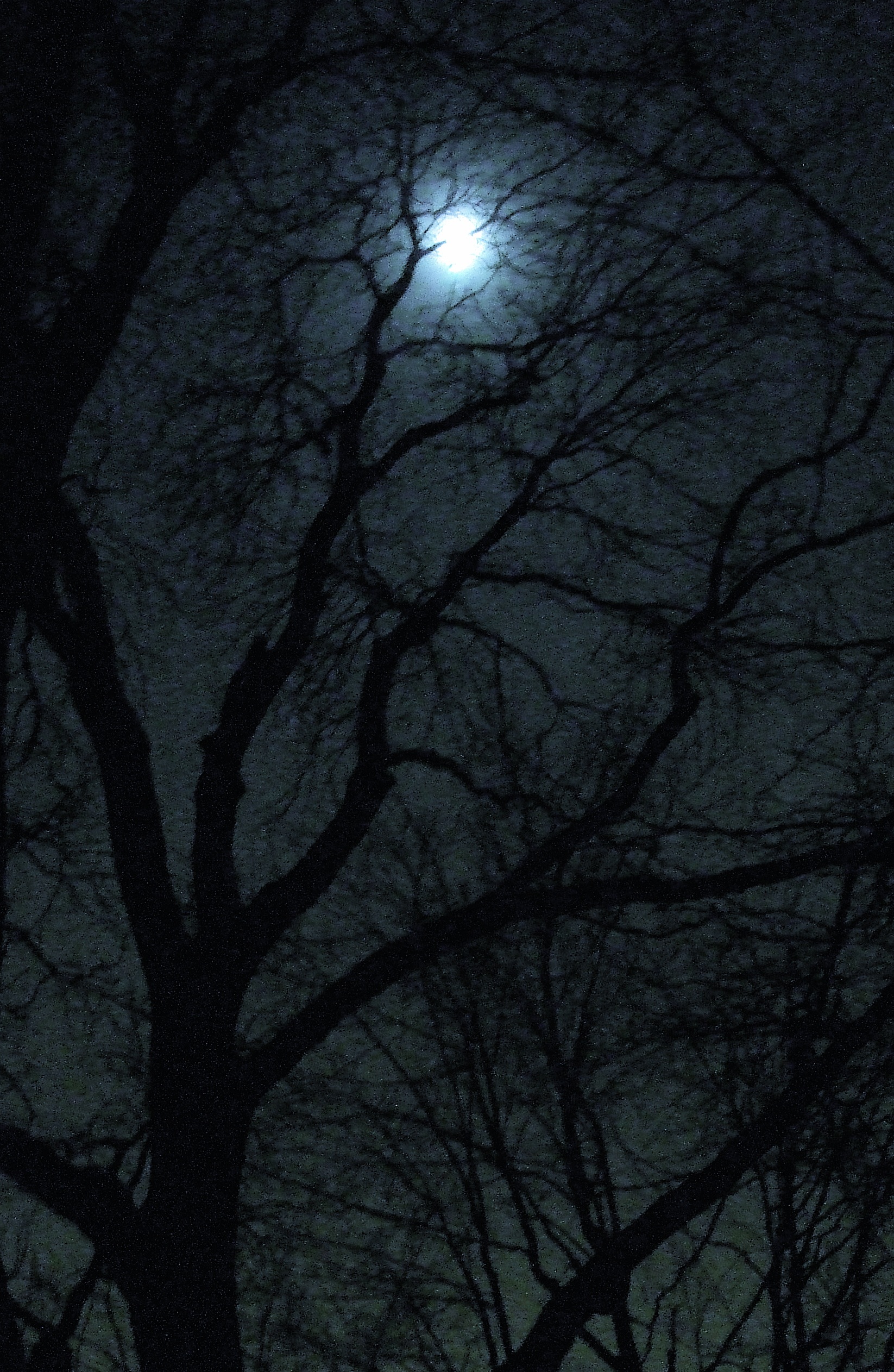
undaunted, moonstruck maybe, i went back just before dawn, when the blue of the heavens is first being stirred into the black of before. there was no missing this moon, hanging up there in the limbs of the linden. there is his moon. there is your moon, too. the one shining way up above. one half of the snow moon, on its way toward the worm moon of march.

next moon walk, i teach the moon boy how the moons got their names. i’m pretty sure he’ll howl at all that.

for a heavenly guide to learning the sky, check out http://skytonight.com/observing/ataglance