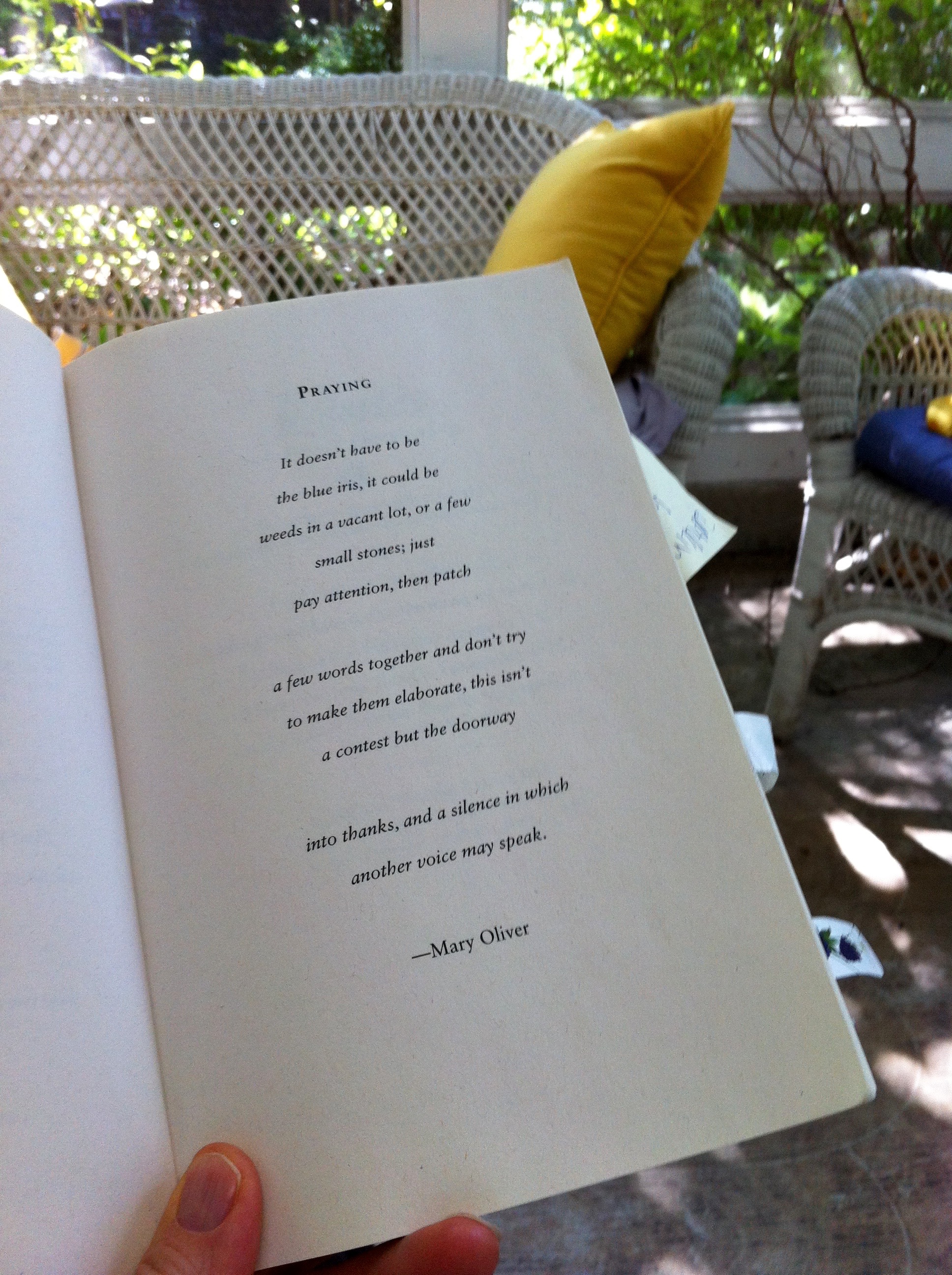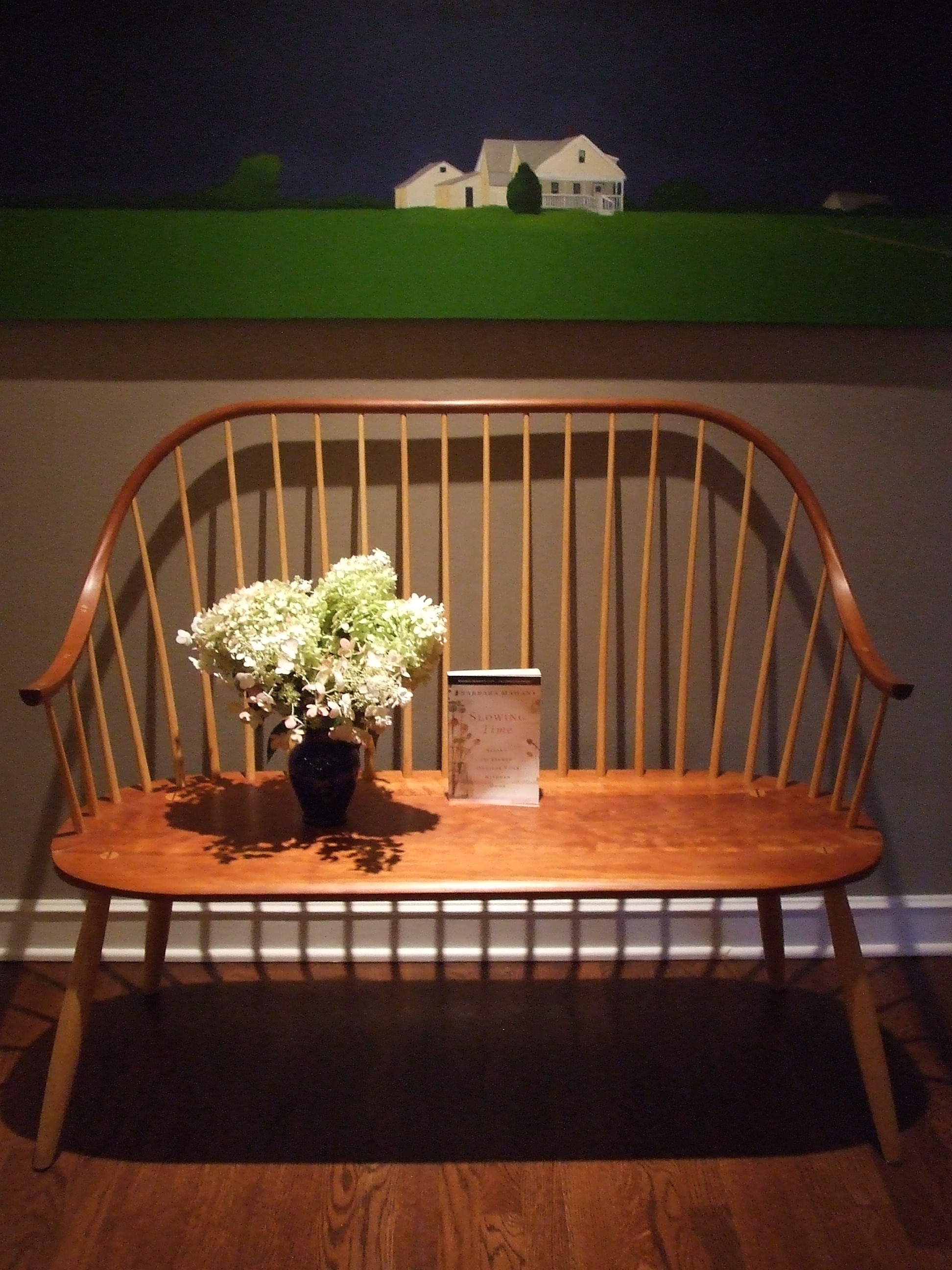
pull up a chair

where wisdom gathers, poetry unfolds and divine light is sparked…

Category: poetry

from the middle ages to me: my voracious appetite for the not-so-edible “salad of many herbs”

799px-Flickr_-_Beinecke_Flickr_Laboratory_-_(Commonplace_Book),_(late_17th_Century)-thumb-615x190-75565

florilegium, or “gathering of flowers,” they’re called. or were called in medieval times.

quaint.

one wealthy 15th-century italian wool merchant declared his zibaldone, or book of hodgepodgery, “the salad of many herbs.” a snip here, a pungent bit there.

it was his self-inscribed anthology of esoterica and knowledge, the pages into which he stuffed everything from recipes to tables of weights and measures to the latest smart something he’d heard rumbling on the florentine sidewalks. decidedly, it was not a journal, no catch-all for memoir, nothing like a diary. nary a rambling of the soul found here, this was strictly the province of accumulated knowledge — and things not to forget.

more commonly known as commonplace books, i’ve just discovered i’ve been keeping one — or four or five, more like it — for years and years. (“commonplace,” you should know, is a translation of the latin term locus communis (from greek tópos koinós), or “common place,” and, according to our friends at harvard university’s library, suggests a storehouse, or clearinghouse — in ink, on paper — of ideas and arguments, easily located for ready application. say, when engaged in verbal jousting at the medieval village pub.)

and i just thought i was a hoarder of the literary kind, demonstrating my rodent-like tendencies for squirreling away little bits and snips of enchantment. of the poetic species.

they live in assuming places, my commonplace books, my cache for what tickles my imagination, delights my word-ly fancy, catches my breath. for years, one lived on my laptop’s desktop, but it grew to be so long, so unwieldy, so likely to bring down my hard drive, i only recently birthed its second generation, both titled, “words and lines worth saving,” iterations I and II.

two more, the kind made of cardboard and paper pressed between covers, they live atop my desk, my actual old pine desk, one to my right and one to my left. as i flip through them now, i see i’ve stuffed inside a post-it note with a german address (in case i visit, i suppose), an advent calendar from 2012, a rosary (still in plastic) from the basilica of holy hill. and as i flip through the left-hand book, one i’ve titled, “notes of wonder,” i see that it’s bulging with snipped-out pages from the new york times book review, notes i scribbled on the back of someone’s eighth-grade essay, and assorted ponderings, including this: “God’s first language, which is silence.”

the one i count among my life’s truest treasures, though, is the unwieldy one on my desktop. there, if you scroll along, you’ll find among its 9,938 words unfurled across 35 pages, the turkish word for “moonlight on water” (gumusservi), the definition of epistemology (after stumbling across the line, “the epistemology of loss,” in a john berryman poem), or this from galway kinnell: “to me,” he said, “poetry is somebody standing up, so to speak, and saying, with as little concealment as possible, what it is for him or her to be on earth at this moment.”

it’s my digital memory box, the place where i commit the things that take my breath away, stir my soul, make my heart beat double-time. it’s my independent study in the literary arts, and poetry in particular.

little did i know that no less than jonathan swift prescribes one thusly:

“A commonplace book is what a provident poet cannot subsist without, for this proverbial reason, that ‘great wits have short memories:’ and whereas, on the other hand, poets, being liars by profession, ought to have good memories; to reconcile these, a book of this sort, is in the nature of a supplemental memory, or a record of what occurs remarkable in every day’s reading or conversation. There you enter not only your own original thoughts, (which, a hundred to one, are few and insignificant) but such of other men as you think fit to make your own, by entering them there.”
—from “A Letter of Advice to a Young Poet”

apparently, the practice, with its roots in antiquity, has been unbroken since the middle ages, with a particular up-bump in renaissance times. the idea — brought on with a bang not long after the invention of the gothenburg press, “largely because literate people were discombobulated by the flood of information the printing press had unleashed upon them,” according to alan jacobs, writing in the atlantic — was that particularly pithy or otherwise catchy little thoughts were to be hand-copied and tucked into one’s commonplace book. in arranging topically, it was thought, the literate raconteur would have, at fingertips’ reach, a ready arsenal of neatly tucked-away poetry and argument. need a zippy rejoinder? oh, just wait, it’s right here, on page 23 of my florilegium (the latin name pinned onto the practice by the medievals, who found them particularly handy for stockpiling thought of theological and religious theme. for what little it’s worth, i much prefer to think of mine as that “salad of many herbs”).

why, thomas jefferson was a prodigious keeper of the commonplace (writing in english, latin and greek, of course). as were henry david thoreau and ralph waldo emerson. the british library’s renaissance project boasts a collection of some 50, many penned inside the iron bars of prison cells and locked towers (sir walter raleigh, so imprisoned from 1606 to 1608, filled his penitent hours with library lists, poetry and an illustrated guide to the middle east). in fact, clear through the early 20th century, students and scholars were long required to keep them. and so, if you tiptoe into the bowels of any of the western world’s great libraries, just ask to see the commonplace collections, and you’ll soon stumble on the jottings of john milton, victor hugo, sarah orne jewett, samuel clemens, and john quincy adams, to name but a smattering.

i found out i was such a keeper of the commonplace only by accident. because i happened to ask a dear friend of mine, one who unfurls great lines of poetry at the drop of a hat, how it was that she had such a stockpile at the ready. here’s how my poetic friend, dear amy, replied:

“Yes, I have books and journals filled with favorite quotes, as well a hefty computer file with snippets of words I want to remember. I’ve been a nut about quotes and have collected them all my life, but it wasn’t until recently that I discovered that the squirreling away of meaningful quotes is called keeping a commonplace book, a practice that hearkens back to the likes of Marcus Aurelius and Montaigne and Thomas Jefferson. I just LOVE words of beauty and wisdom, and like a magpie, I love to feather my nest with them, as it were!”

it is the dearest thing to encounter a fellow magpie, both of us flitting through the air with words dangling from our beaks. i’ve long said that if my house began to burn, one of the few things i’d tuck to my bosom would be my long-kept compendium of beauty and breath-taking.

for that, in the end, is what animates so much of my imagination. and puts flight to the task of typing so many hours of my lifetime. there is something deeply holy about tripping upon depths of meaning in thoughts thought before you, in words committed to paper long ago, or just the other afternoon.

i can’t imagine my world without knowing that, at the click of a computer key, i could unlock these lines, copied and pasted long ago, breath-catching beauties from dear virginia woolf:

from “Mrs. Dalloway”: “…she was like a bird sheltering under the thin hollow of a leaf, who blinks at the sun when the leaf moves; starts at the crack of a dry twig.”

on sewing: “…her needle, drawing the silk smoothly to its gentle pause, collected the green folds together and attached them, very lightly, to the belt.”

describing grand houses of London: “….halls laid in black and white lozenges…”

“turning one’s nerves to fiddle strings….”

“long streamers of sunlight…”

on “the compensation of growing old”: “the passions remain as strong as ever, but one has gained — at last! — the power which adds the supreme flavour to existence, — the power of taking hold of experience, turning it round, slowly, in the light.”

“thunderclaps of fear”

i copy to remember. i paste to never forget. as mr. swift so finely put it: it’s my “supplemental memory,” my “record of what occurs remarkable in every day’s reading or conversation.”

excuse me while i amble off to imbibe on my salad of many, many herbs.

do you keep a salad of many herbs, a gathering of flowers, a book of hodgepodgery, otherwise known simply as a commonplace book? and do you not think the practice a wholly invigorating one? a holy one, too?

and, most deliciously, what would be among the herbs you’ve snipped from your literary garden?

finally, happy blessed launch of spring on this day of equal light and darkness, the vernal equinox, when, as my beautiful brother david says, “you can hear the earth breathing.” but only if you listen, of course…..

an invitation

an invitation

the invitation is broader and deeper than simply offering you a date and a time and a place. yes, there is that (details below). but the invitation i’m gently laying here at the table, it’s a doorway, an entering in….

the invitation is to slow time, to savor, to pay attention, to carve out quietude in the rush and the whirl of your every day.

we’ve been circling around those notions for years now, here at the chair. and somehow, in a mystical, magical, marvelous way, those quiet ideas have tucked themselves into the pages of a book, a book that might plop onto my front stoop any hour now. while i’ve not yet lifted it out from a box, haven’t felt its weight hard against my palms nor flipped through its pages, haven’t marveled forward and back that words typed here in the murky first light of so many mornings have found their way off the screen and onto the page. spelled out in ink — a newsgirl’s primary intoxicant.

but i’ve seen proof that those pages are finally off the printing press. they’re bound, slipped between covers.

any hour now, i’ll christen those pages with my freshly spilled tears.

so it’s time for the invitation.

for starters, consider the book, Slowing Time: Seeing the Sacred Outside Your Kitchen Door (Abingdon Press, Oct. 7, 2014), a portable iteration of this old chair. why, you can take it wherever you go. you can bring it to bed, tuck it under your pillow. you can spill it with crumbs (and not have to worry that your keyboard gets jammed with a bit of a cracker). you can climb into a tree, and turn its pages. you can even slink in the bathtub (and not have to worry about glug-glugging your screen under the bubbly suds). it’s the chair unleashed. the chair on the loose. we’ve snipped the cords and numbered the pages.

ah, but there’s something even more enticing than the fact that Slowing Time, the book, can follow you anywhere, can go where’er you go.

and that’s where the invitation begins: my prayer all along has been that what’s tucked in the pages of Slowing Time is simply a field guide into the depths of your holiest hours. my hope is that it might become your whispered companion. a place to begin to contemplate how your life might look and feel and radiate if we dial down the noise, hit pause, and sift through the mess for the shards of the Sacred.

it’s a sketch pad, really, in which the flickers of half-baked ideas clothe themselves in words. and those words become the stepping path into the woods, into the depths. or at least point you in intriguing direction.

professor elisa new, beloved poetry scholar at harvard, talks about how a poem is a “communal resource, a convening space — written in a language we all understand.” it’s a place, she says, “where one human being has tried to make meaning, using a tool — the language we all share — that belongs to all of us. and so, by entering into inquiry, discussion, and interpretation of that poem, we can fully engage in that activity so central to the humanities, that activity of human conversation about what it is really to be human.”

and so, too, with the words you find spilled on the pages of Slowing Time, it’s an invitation to “shared inquiry.” and its words are, at heart, prayer unfurled in plainspoken prose. one someone’s prayer searching, searching for companion — be that gentle journeyer God, or the soulmate you find along your stumbling way, or sitting just inches across from you.

after all, the geometry of the old maple table, and the chairs that are tucked up against it, is the circle. heart linked to heart, hands within squeezing range, eyes close enough together that we can catch the sparkle on a joy-filled day, or the empty hollows in the hours when sadness or grief has eclipsed the light.

it is in those circles of our life — the circles we create out of love, or even when carved by accident of geography — that we find communion. and our own plumbing of the depths becomes shared inquiry, scaffolded exploration. a safe zone, where even our rawest tender spots can be laid before us, with no fear of harm or scorn or raised eyebrow.

still, though, it is in solitude, and in the sanctuaries of time we’ve hollowed out of the day, that the deepest paying attention begins.

as with so many spirit-filled vespers, slowing time — here at the table over the years, most lately every friday morning — has become a practice. practice, as in trying over and over and over to hew closer to the anointed edge at our most blessed core. practice, as in a ritual that surrenders to a rhythm. and, as with all holy acts, the holiness is found burrowing into the nooks and the crannies of a place — an interior, our interior — at once familiar and still to be explored.

it is the nautilus of prayer.

and it is the invitation that pulses at the heart of Slowing Time: use these words, little more than one pilgrim’s prayer, to lead you deeper into your own heart’s vault. settle in. deep breathe. catch the light. embrace the shadow.

and, once you’ve breathed Holiness in and in and in again, lift your eyes, and discover the light of the circle around you, within you. there is Holiness abounding, and it’s ours, radiant with grace.

and here’s the date-time-and-place invitation:

Slowing Time begins here: Reading, Conversation and Book Signing 

Wednesday, September 17 (feast of St. Hildegard of Bingen, the great medieval mystic, composer, writer, visionary)

7 p.m. to 9 p.m.

Francis Xavier Warde School at Old St. Patrick’s Church

120 South DesPlaines Avenue, Chicago

(leave it to Old St. Pat’s to prompt the heavens to rain down books before the publication date…)


yet another reading, after the actual publication date of Oct. 7, is now inked onto the calendar of a marvelous magical bookshop in Evanston:

Slowing Time Reading and Conversation

Bookends & Beginnings bookstore, a magical bookshop tucked in an alley that feels as if it’s popped off the pages of Harry Potter. Co-hosted by Evanston Public Library. To reserve a seat, please contact Bookends and Beginnings at 224-999-7722.

Thursday, Oct. 9

6 to 7:30 p.m.

1712 Sherman Avenue, Alley #1, Evanston

bookendsandbeginnings.com

and yet another marvel:

Slowing Time Reading and Conversation and Autumnal Joys

Women & Children First, a Chicago literary landmark in magnificent Andersonville, is hosting a reading, conversation and celebration of autumn, Season of Awe.

Wednesday, Oct. 29

7:30 p.m.

North Clark Street, Chicago, IL

womenandchildrenfirst.com

more readings to come…..stay tuned.

and now a question: how do you slow time? (oh, and what will be your crumb of choice to spill onto the pages and clutter the book binding gulley?)

slowing time cover

pausing, because that’s what you do when a great light floats into the starry night

maya angelou

if you could rub your palms across the planks of this old kitchen table, if we could all hear the scccrrch of the legs of the chairs scuffing across the floor boards of this old kitchen, if i could pour you all whatever it is you sip, there in the heavy chipped mugs that fit flush against your palms, well surely this morning we’d all be pausing, paying attention to the great light of the poet, the one with the gravelly cadence that made us wish she was our grandmama, or the wise lady who lived down the lane, or the prophet who knew our name.

maya angelou died this week, on wednesday at 86, which you certainly know by now. so we are left to sift through her pages, her words, her rhythms, her heart as she’s sprinkled it across sentences, across years.

a poet’s ashes, holy ashes, are the words she or he leaves behind, words pressed to the page. and we hold the poet to the light by sifting, poring over those everlasting traces of who the poet was, and how she saw the world, how the world filtered through her irreplaceable lens and settled on her soul.

and what you do when someone passes into the heavens is you stop what you were doing, you draw in the deepest breath you possibly can, and, sometimes, you don’t want to let that breath go, afraid to let go of the air that once co-mingled with the air of the someone who’s gone. i remember that breath when my papa died, and for a flash of an instant i wondered if i could hold it forever, not wanting the breath of a world in which he’d dwelled to escape — ever — from the depths of my chest.

but this is about maya, maya angelou, a poet and heart song who made me feel safe, safe in this bone-rattling, rockabye world.

now i can’t say i’m any sort of scholar of maya. only that she’s among the ones — women, many of them — whose words i often read in triplicate, because the words are so breathtaking on the first whirl, my eyes and my heart simply go back to the start of the sentence to read it again. to breathe it again. to catch the updraft and make me go soaring. to delve into the construction, the word choice, to figure it out, to see how she does it. like watching, i suppose, a brilliant hand surgeon reweave the tendons of a woodworker’s thumb. or sitting off to the side of a painter as she daubs her brush in the palette of oily whites and yellows and blues and greens, and puts them just so on the canvas, and suddenly sunlight is dappled where before there was only a montage of paint dabs.

so this dappled morning at the table, we sift through what maya has left us….

here, a few sentences worth reading in triplicate (these from angelou’s 1969 memoir, “i know why the caged bird sings,” which many know as the poem. this, though, is from the less familiar prose):

“Late one day, as we were attending to the pigs, I heard a horse in the front yard (it really should have been called a driveway, except that there was nothing to drive into it), and ran to find out who had come riding up on a Thursday evening…

The used-to-be sheriff sat rakishly astraddle his horse. His nonchalance was meant to convey his authority and power over even dumb animals. How much more capable he would be with Negroes. It went without saying.

His twang jogged in the brittle air. From the side of the store, Bailey and I heard him say to Momma, ‘Annie, tell Willie he better lay low tonight. A crazy nigger messed with a white lady today. Some of the boys’ll be coming over here later.’ Even after the slow drag of years, I remember the sense of fear which filled my mouth with hot, dry air and made my body light.” 

and here, because my mama ran to the library to get it, is the start of maya’s 2008 “letter to my daughter”:

Dear Daughter,

This letter has taken an extraordinary time getting itself together. I have all along known that I wanted to tell you directly of some lessons I have learned and under what conditions I have learned them.

My life has been long, and believing that life loves the liver of it, I have dared to try many things, sometimes trembling, but daring, still.

There have been people in my life who meant me well, taught me valuable lessons, and others who have meant me ill, and have given me ample notification that my world is not meant to be all peaches and cream.

I have made many mistakes and no doubt will make more before I die. When I have seen pain, when I have found that my ineptness has caused displeasure, I have learned to accept my re- sponsibility and to forgive myself first, then to apologize to anyone injured by my misreckoning. Since I cannot un-live history, and repentance is all I can offer God, I have hopes that my sincere apologies were accepted.

You may not control all the events that happen to you, but you can decide not to be reduced by them. Try to be a rainbow in someone’s cloud. Do not complain. Make every effort to change things you do not like. If you cannot make a change, change the way you have been thinking. You might find a new solution.

Never whine. Whining lets a brute know that a victim is in the neighborhood.

Be certain that you do not die without having done something wonderful for humanity.

I gave birth to one child, a son, but I have thousands of daughters. You are Black and White, Jewish and Muslim, Asian, Spanish-speaking, Native American and Aleut. You are fat and thin and pretty and plain, gay and straight, educated and unlettered, and I am speaking to you all.

and finally, we close with this, from 1995’s “a brave and startling truth,” the poem maya wrote for the 50th anniversary of the united nations (it’s more than worth reading every last word of the entire poem, but here’s the last stanza):

When we come to it
We must confess that we are the possible
We are the miraculous, the true wonder of this world
That is when, and only when
We come to it.

should you choose to read a bit more about maya, the poetry foundation puts it poetically here.

and, now for the best part of our pause, what lines from maya do you bring to the table?

p.s. i hope she wouldn’t mind my calling her maya instead of the more stately ms. angelou. either one would do, and i beg her pardon — or yours — if the familiarity of using her first name suggests anything other than the deepest of dignified respect.

dear mama, for all of this…

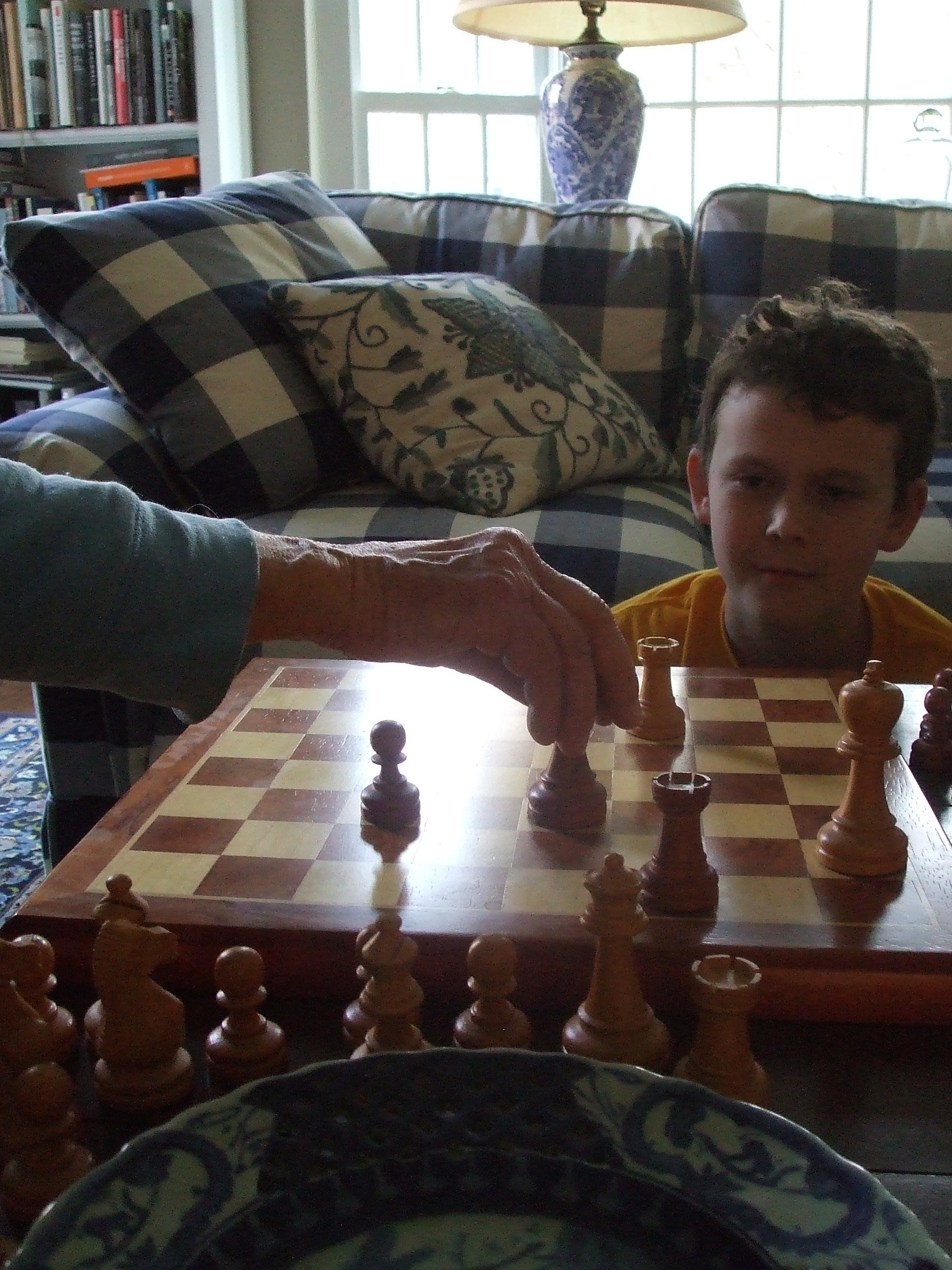
grammy tedd chess

day after tomorrow, it’s the day when the globe pauses in its spinning so toast can be sprung from the toaster, violets can be clutched by little hands, and college kids can shoot a quick text: “luv u mom.”

otherwise known as children-remember-your-mom day, a wholly artificial slow-down in the whirl so cinnamon-raisin crumbs can be hansel-and-greteled between the bedsheets, violets can suffer strangulation, and mothers can get bleary-eyed at being remembered. or not.

sometimes, though, the day affords much more. it allows us to dig down to where our memories lie, and pull a few good ones out by the roots. that’s the notion at the heart of a breathtaking essay written by a friend i met a few weeks back. my friend is laura lynn brown, and before i met her at a crowded noisy dinner table, i’d read her essay, the one the iowa review printed in its esteemed pages, and the one slated to run on slate, the uber cool website, today.

her essay, “fifty things about my mother,” started out as an experiment in crafting pure-gold sentences, one at a time, in no particular order.

laura, then and now a daily newspaper editor in little rock, arkansas, was getting close to 50, the age at which her mama had died, and she found herself aswirl in rememberings. around that very time, twitter, that 140-character writer’s challenge, was gliding onto the horizon. rather than scoff at such syllabary confines, laura was intrigued by the notion of power-packing a sentence.

you’ll read, as you scroll through her sentences, how magnificently she mastered that challenge. and why no less than susan orlean picked the whole lot of them to win the 2013 iowa review nonfiction award.

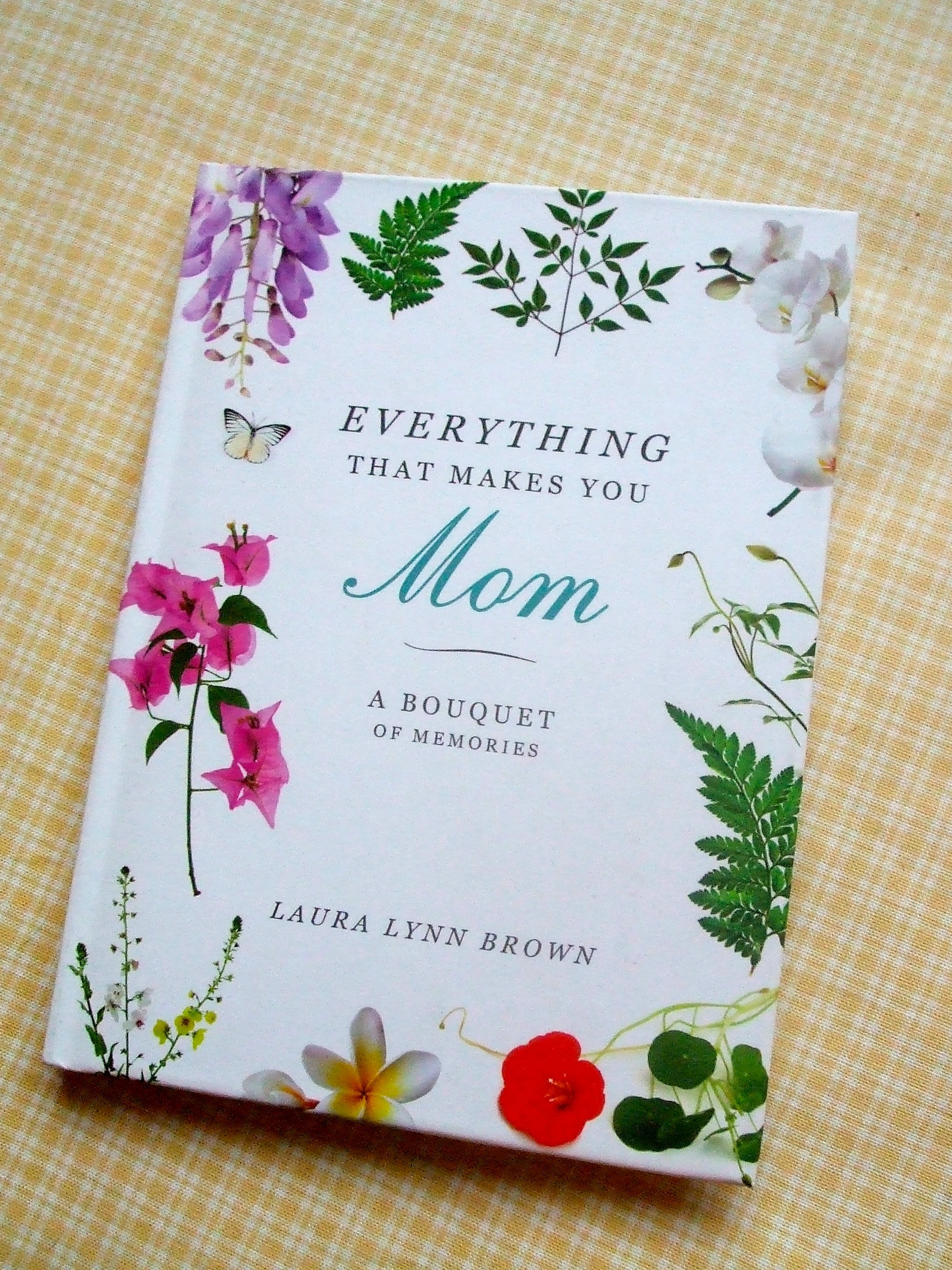
what happened next was that laura’s essay caught an editor’s eye, and, lo and behold, a book was born, everything that makes you mom: a bouquet of memories. only five of the original 50 sentences are tucked in the book, and rather than making it a book in which you’d read only laura’s memories of laura’s heavenly-sounding mom, she’s made it a book that tickles the reader’s heart and uproots some of your own most delicious mama memories.

laura brown book

laura wondered if maybe a gaggle of her writerly friends might open the pages of the book and see what happened. i got to page 108, and found my assignment, under the heading “essay question”: “remember when Mom taught you how to write a thank-you note (promptly, saying thank you, naming the gift given, and telling how you will use it or why you appreciate it or why it was a just-right choice)? write your mother a thank-you note now.”

here at the chair, i’ve written over the years what amount to thank-you notes to my mama. the original mother nature is one, and so is grammy tuesday.

but borrowing from my writerly friend laura, i’ll take a crack at crafting a few thank-you sentences to my very own mama, who, at 83.5 and ticking strong, still parks her sleek silver SUV at the curb of our old house every tuesday, ambles up the walk with her blue-plastic cooler of whatever groceries she needs to cook and lay on the table one of her ever-revolving repertoire of the dinners i grew up with: chicken rice grammy, 3-4-5 stew, meatloaf crusted with catsup, and bags and bags of frozen carrots and peas.

dear mama,

for tucking me by your side on the hardwood stairs the summer’s afternoon the hive of yellow jackets shimmied up my skinny little legs, trapped inside my jeans, and stung me mercilessly straight up to my bum. for making like julie andrews and singing into my ear, “when the dog bites, when the bee stings, when i’m feeling sad, i simply remember my favorite things, and then i don’t feel so bad,” the tune from “the sound of music” that still clicks on auto-play when i find myself inside-out, upside-down or just plain afraid.

for flipping open my bedroom window shades on especially sunlit mornings with robert browning’s song from pippa passes, “the lark’s on the wing/the snail’s on the thorn/God’s in His heaven/all’s right with the world!”

for the image of you in the rainy cemetery i’ll never forget: you with your sturdy sole to the cusp of the garden shovel, slicing into the oozy earth, at the mound of your beloved’s — my papa’s — grave — right above his heart, you whispered to me — digging the hole for the mahogany jewelry box that held our stringbean-sized baby girl, the one stillborn in the hollow of night, the one you helped us lay to rest, tucked snug against her grandpa’s stilled heart “where they’ll both always be safe,” you promised me.

for the 1,048 grammy tuesdays since boy 1 was born, and the 572 grammy thursdays you tacked on once boy 2 arrived. for forging connections to those two boys that are at the bedrock of who they are and always will be. for knowing the instant you met my “old shoe” of a newsroom friend, the one with the holes in his penny loafers and the hanging-down hem on his seersucker shorts, that despite the fact that i was a lifelong catholic and he was a devoted jew, i’d met my soul’s desire. 

an abbreviated list of what you taught me: love like there’s no tomorrow; don’t ever stop; poetry is prayer; 101 things to do with frozen peas; and if you want julie andrews, plop her on the record player.

for all of this, and so very much more, dear mama, thank you and thank you and happy blessed mama’s day. please come for 3-4-5 stew, washed down with slippery buttery baby frozen peas.

what would you write in your thank you note to your mama?

photo above is my mama playing chess just this past tuesday with boy 2, aka teddy. and here is one more thing she taught me to love…

viburnum

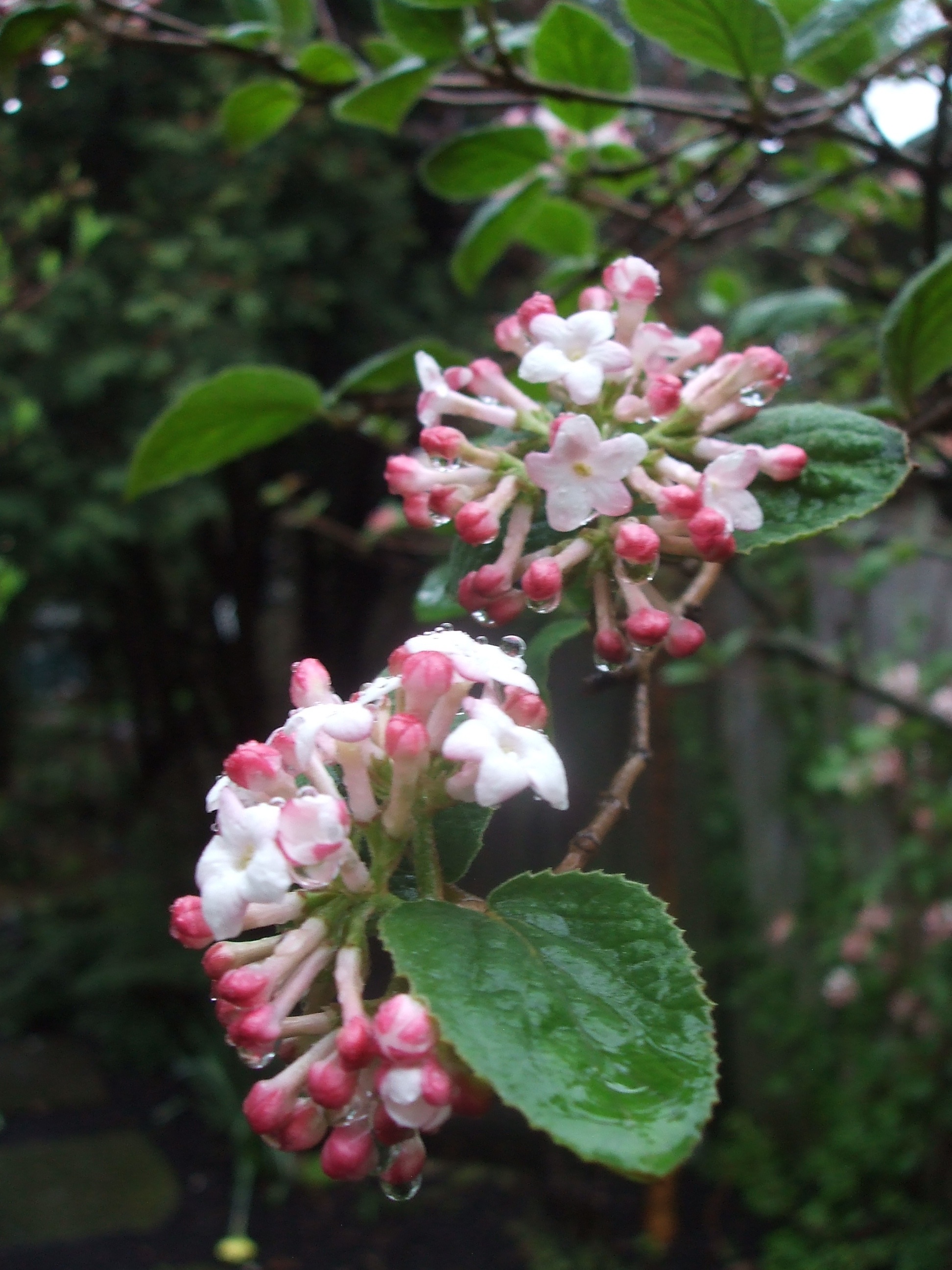
korean spice viburnum, blooming just this morning outside my kitchen door, a bouquet for my mama..

and for all my beautiful friends whose mamas are no longer here, a bundle of extra deep hugs. it’s a bottomless loss, stirred all the more painfully on this day when it seems everyone else is bathing in the very thing that brings you heartache. 

reporter’s notebook: on poetry and peepers and what’s hierophany?

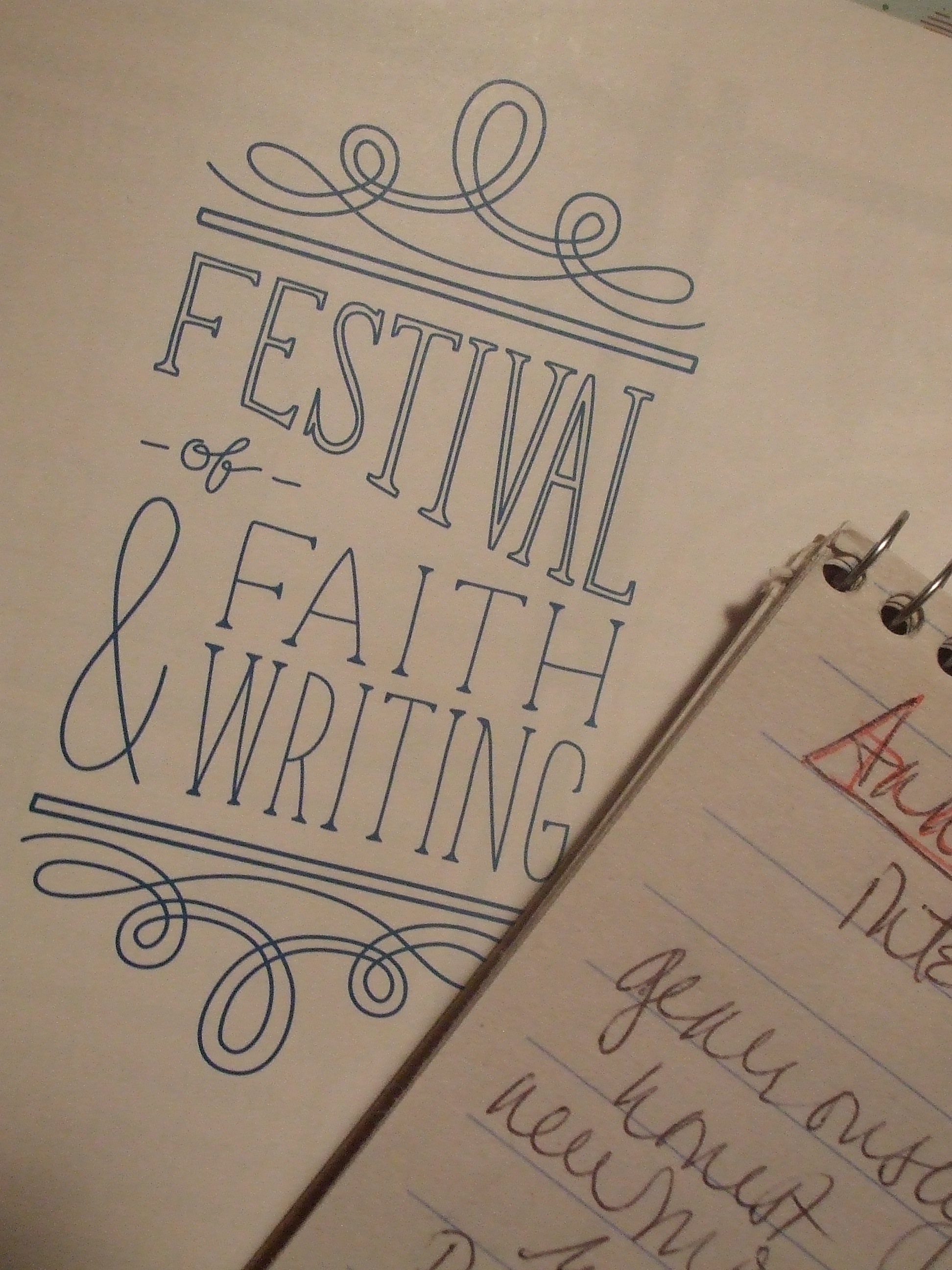
reporter notebook faith and writing

because it’s sunday night, and late at that, and because i promised to ferry home a satchel filled with poetry and wisdoms to mull for a week or a day or a lifetime, i’ll cut straight to the cuttings from my notebooks, the two i filled front and back, draining three fine pens of all their ink.

i will say — because it’s impossible not to — that besides the breathless whirl of words and words and kindness and words that sometimes lifted me from the hard pew on which i was sitting, or the hilarity of anne lamott that made me marvel — and love her rare brand of kooky brilliance — all over again, the most mystical moment came late two evenings, as i walked alone toward the far end of the vast asphalt acre that was the calvin college parking lot.

the moon was half both nights, or nearly so. the sky, a western michigan sodden blue. the daylight not yet rinsed out. the night shadow inking in. and then, from the lacy backdrop of leafless woods, the rising vernal chorus of the spring peepers, that amphibian night song that breaks you out in goosebumps — or it does me, anyway. it’s a froggy croak — a high-pitched rendition, indeed — i’d not heard since trying to fall asleep in the upstairs dormer of my husband’s boyhood home, where the backyard pond and its full-throated citizens lull me to dreamland with their percolating melodies. i wanted to record a few bars for you, so you too could share the goosebumps. instead, i offer this, borrowed from the land of internet.

and now, from my notebooks:

notes from the festival of faith & writing:

reading list*:

william spencer, the poet’s poet according to keats.
brian young, one of the more powerful poets writing today, according to poet geoffrey nutter. died last week. “recollection.”
theodore roethke opened up nature and poetry for poet and scholar kimberly johnson.
before the door of god, religious poetry through history, by jay hopler and kimberly johnson.
“man killed by pheasant,” john t. price. short story.
loren eiseley, “the star thrower.” 16-page essay.
chenjerai hove, zimbabwean author, poet, playwright and human rights activist (outspoken critic of robert mugabe) who lived in exile in norway, wrote the novel bones, and inspired okey ndibe.
jessica mitford, great memoirist, the american way of death.
patricia hampl: “if i could tell you stories.”
“the whaling chapters” of moby dick.
“the inheritance of tools,” essay by scott russell sanders.
lia purpura, “rough likeness.” a book of essays.
john fowles, “the tree.” essay.

* these are the titles i scribbled every time one of the truly enlightened speakers tossed out an exhortation, “you must read…” a reading list in progress (in perpetuity, actually)….

words to fall in love with:

pullulating: means “sprouting.” or breeding or spreading.
hierophany: places where sacred and secular meet. The term “hierophany” (from the Greek roots “ἱερός” (hieros), meaning “sacred” or “holy,” and “φαίνειν” (phainein) meaning “to reveal” or “to bring to light”) signifies a manifestation of the sacred.
petrichor: word for the smell of rain on dry rock. petra, rock; ichor, blood that flows through vein (in greek mythology, the ethereal golden fluid that is the blood of the gods and/or immortals). in modern usage, it’s a glorious word for a pleasant smell that frequently accompanies the first rain after a long period of warm, dry weather. (who knew there was a word for that most delicious spring perfume?)
adiaphora: “meaningless things.”

a few fine lines, and the lively minds who put breath to them:
notes scribbled from my notebook (in order of appearance over the three-day festival)…

uwem akpan, nigerian catholic priest (formerly a jesuit), author of say you’re one of them, collection of five short stories telling of african horrors, each told through the voice of a child:

“if you’re afraid to fail, then don’t try. sit in your room. don’t marry. don’t give birth.”

“for those who want to be writers, be brave, act justly, love tenderly, walk humbly before your god.”

most poignant moment, after his talk when a young blogger walked up to him and said she’d been writing from darkness all month, in the eclipsed days since feb. 13 when her 29-year-old husband died, after a years-long battle with cancer, leaving her alone with a not-yet one-year-old. akpan, a priest since 2003, magnificently ministered to her with his gift of words. i cried, and through tears, i scribbled some of what he said after folding her into his embrace: “get into rhythm. don’t shy away from anger. the prayers may not come. go to the psalms, let them fall off your tongue. when God sends you on a trip, he arrives there before you.

“right now you’re alone in that body of water, rowing toward the shore.”

geoffrey nutter, poet, author of four poetry collections, most recently, the rose of january. teaches poetry at princeton:

it’s been said that his writing gestures toward what t.s. eliot called, “frontiers of consciousness beyond which words fail, though meanings still exist.”

“comprehension is unnecessary in reading a poem. apprehending is instantaneous response: what poetry does best. to poets, the image creates the powerful image more so than ideas. images are more intelligent in the poet, do more work. unfold into resonance. it’s where the soul work is done. poems resonate with mystery.”

“the moment when empathy was born: when jesus, scribbling in the sand, said, ‘don’t judge lest you wish to be judged.’”

calls 17th-century poet henry vaughan “one of my best friends.” adds: “words written in the 17th century in a moment of passion, like a note slipped under the door to us.”

“certainty leaves no room for imagination. if uncertainty can wake up our imagination, our imagination is the beginning of empathy.”

eliza griswold, guggenheim fellow, journalist and poet, author of the tenth parallel: dispatches from the fault line between christianity and islam, and a new collection of poetry, i am the beggar of the world: landays of contemporary afghanistan

“heirophany, places where sacred and secular meet. one of the most fundamental places in my life, this space where the horizontal, secular, meets the ultimate; literally, the shape of the cross. that’s poetry, everyday time is punctured by the sacred….my calling is there, the place where sacred and secular meet.”

mary szybist, poet, 2013 national book award winner for poetry for incarnadine:

szybist, a reviewer wrote, has “an appetite for the luminous; reaches for the heavens without bypassing earth.”

“hard for me to believe faith is possible without doubt. or reverence without irreverence.”

kimberly johnson, poet, translator, literary critic, professor of renaissance literature and creative writing:

“writing a poem is like walking around all day with someone pecking on your forehead. something just beneath the surface is waiting to be let out.”

“i want to live my life in epiphany. i want all my pores open. it’s easier for me when language and culture and stripped away. it’s unmediated experience. my antennae is tuned to stuff that exists beyond the social sphere.” (it’s why she loves nature).

from john t. price, essayist, nature writer, professor of english:

quoting mary oliver: “attentiveness is the root of all prayer.”

okey ndibe, nigerian writer, poet, journalist, author of arrows of rain and foreign gods, inc.:

referring to some not-so-cheery bloke: “no milk of human kindness in him….” (an expression that found me muffling my out-loud sigh of verbal wonder)

“a story that must be told never forgives silence.”

thomas troeger, professor at yale divinity school, hymnist, ordained episcopal and presbyterian minister, who has been quoted as saying (not in this festival, but i couldn’t resist):

“I am trying to map the landscape of the heart that still rejoices in God yet lives in a world that is often oblivious to the spirit.  I believe to live gracefully with this tension is the mark of wisdom.  Such an understanding may baffle the dogmatic mind, but it does not lie beyond the capacity of the poetic imagination.  The imagination often holds together realities that are logically inconsistent yet dynamically coherent.”

reading from his essay, “season of lament”:
“we are living in a season of sorrow for the human community, and part of our role as musicians is to help the human heart relieve its tears so that we might sense anew the resilience of hope that we will never know if we have never wept.”

might i mention that he was a textbook portrait of old-school yankee sartorial splendor, with taut bow tie, tweed jacket, and crisply-creased khakis. all topped off with a mop of professorial white curls.

anne lamott (who was brilliant through and through, and hilarious to boot. oh, and who had just turned 60 the day before her friday night keynote).

“it doesn’t help that when you sit down to write, all your unresolved psychiatric issues choose to come visit you that day.”

(and as she sat down let sunday morning to type a facebook post about turning 60) “all the psychiatric issues sat on the bed with me — and they’d had a lot of coffee. they wanted me to know how they thought it was going — not very good.”

“laughter is carbonated holiness.”

“because we’re religious people we’re not going to spackle our hearts closed to block out the hurt.”

panel with peter marty (pastor/writer), christine byl (seasonal laborer, clearing trails in alaska, where she lives in a yurt with her husband and a band of retired sled dogs, author dirt work: an education in the woods), john t. price (nature writer)

quoting henry james: “a writer is someone to whom nothing is lost.”

quoting patricia hampl: “we don’t write what we know; we write to discover. to go off on an adventure.”

christine byl: “i write about what i don’t know about what i know. that’s where i enter. i enter the familiar with an eye toward the undiscovered.”

fred bahnson, writer, farmer, former peacemaker among mayan coffee farmers, author of soil and sacrament: a spiritual memoir of food and faith

“our job is not so much to make a point but to evoke something. invocation is one of the oldest forms of communication. it’s a priestly urge. the act of focusing your attention on something. creating a shared empathy. they’re not beating them over the head, you’re simply saying, ‘look, attend.’”

mycelium (vegetative part of fungus): “perfect metaphor for prayer.”

amen and amen. and good night.

it’ll be two more years till this festival convenes again. i’ve plenty to read till then, and more than enough to think about….(and in the meantime, big giant thanks to my dear old friend and latter-day pathfinder, bruce buursma, the tribune’s longtime religion writer — later baseball writer — who pointed me to the festival in the first place…what a mensch. and great wise soul.)

anything above strike your poetic fancy? who would you add to an essential reading list of poets and thinkers and brilliant essayists (oh, by the way, some fine soul reminded me this weekend that the word essay, with french roots, means “to try, to attempt.” is that not all we can ever do, weaving words into thoughts into rocket blasts from our heart)? what words would be among the most delicious on your plate? 

poetry school

poetry school

when the school bell rings, i shuffle over to class in my holey-est slippers. and, dating my pedagogical style, i haul out my spiral notebook, my pen, and settle in. click a couple buttons, and poof! poetry school’s in session.

so it goes when you go to college from the comfy confines of your kitchen table. when you’re hauled out on field trips to the lower east side, and south street seaport, without so much as buttoning a sweater.

over the wintry weeks, i’ve grown fond of my professor — she tells us to call her lisa, even though she’s listed as elisa in the course book. (she lets on, in a cozy email, that only strangers call her by her full name, first syllable vowel-prefix attached; she seems to be inferring that we are now admitted to her inner circle — how kind of her, how generous. see why i like her already?)

she tells that to the thousands and thousands of us who click into class from wherever we sit on the globe, and learn a thing or two about poetry in america, and walt whitman, specifically.

thousands and thousands, you ask? yup, if they packed us all in a lecture hall it’d need to be about as big as beijing’s bird’s nest, that iconic steel-strung stadium built for the 2008 summer olympics.

back on the days when we were settling into class, when virtual papers were being passed out, and we were going around the room to introduce ourselves, i tried to scribble down all the countries we come from. i started with ukraine, scribbled india, UK, bangladesh, serbia, south korea, nigeria, netherlands, lebanon, swaziland, kosovo, even togo. i practically ran out of room after packing in itty-bitty letters clear to the bottom of the notebook page, and sideways up the margins. i just counted 49, and i’m sure i missed a few.

we are all huddled round our laptops, our iPads, our clunky desktops for a class called “poetry in america: whitman.”

think not that this is mamby-pamby read-along at home. this is sit-back-while-the-brilliant-professor — from the comfy confines of her book-lined office in the red-brick barker center just off harvard square — waxes-eloquently (and without notes) about the quintessentially american 19th-century poet. and when she wants to show us an original manuscript, she just hauls her video crew over to the rare books vault in harvard’s houghton library and pans the lens up and down the page. and when she wants us to know the streets whitman walked in new york city, she pops up yet another video and walks us up and down the sidewalks, pointing out the print shop where he set type, showing us his newspaper’s proximity to new york’s city hall, and even the back alley where whitman got to know the prostitutes and actresses of mid-19th-century manhattan.

this is hardly a hands-off matter. why, this fine professor insists on “two well-crafted paragraphs,” in open response to questions about the poems. she and her technical wizards have provided a nifty annotation tool, so we — the thousands of students, all of whom speak a thousand different mother tongues — can identify anaphora (repeating the same word at the start of successive lines) and parallelism (repetition of certain structures throughout the poem) and the latest poet-trick of the week, apostrophe (an address or salutation, as in O sun!). and we have to post these things in public manner. so anyone who’s in the class can scroll along and peek over our shoulder and figure out whether we are complete dunces or might be onto something.

in fact, this global classroom comes complete with office hours and TAs. and those brilliant almost-PhD’s actually scroll through the online postings, those “two well-crafted paragraphs,” and comment on our postings.

now, for a timid soul like me, one whose hand might be quaking in an early round of hand-raising in a lecture hall the size of kingdom come, it is scary enough to hit the submit button, and watch your thoughts on walt whitman’s “crossing brooklyn ferry,” or “song of myself” get all but nailed to the village crier’s blackboard. but even i can suffer the possible indignities and disgraces from the loneliness of my kitchen, so imagine how the soul doth swell, when hours later you circle back and find the nice TA has scribbled “you’re really onto something,” there beneath your humble words.

this whole exercise, in fact, might be far more than what i signed up for. i thought it was a vigorous way to dig deeper into the world of poetry that so captivates my imagination. but, slowly and certainly, i am discovering it might just be a brilliant bathtowel-rub of confidence and faith.

we all have a million reasons why we never think we’re good enough. the joke at harvard, we learned last year, is that nearly every freshman shuffling across the yard is peeking over his or her shoulder, wondering who in the admissions office made the mistake and let her or him in. “they must have mixed me up with the brainiac whose name was after mine in the applicant pile,” you can’t help but think — unless, that is, your mother gave you cans of ego-builder for breakfast with your eggs. (mine did not.)

so, i bumbled into this class in the ways i often do. first i wasn’t sure if i was allowed to sign up. (i was; it’s free and open to the public.) then i thought i wouldn’t take it for the nifty certificate that says i passed (i figured i didn’t need any more papers in my rat’s hole of an office, and besides, what if i couldn’t cut it?). and i sure didn’t think i’d ever muster the courage to say a single thing out loud (you could film a video introduction of yourself, or cobble a few penned sentences; i opted for the pen — aka keyboard).

but then, somewhere along the way, i started reading and thinking, and melting under the warmth of this professor with her deep love of poetry and her proclivity for messed-up hair and quirky field trips. and then i wrote what i thought, dug down not too deep — because what i thought had already bubbled up and wanted to be typed — and found myself deeply engaged in conversation with mr. TA and a few other students of poetry, who, for all i know, might be typing from a drafty hovel in azerbaijian or a dim-lit flat in kosovo.

it’s what happens when you go fling yourself into any one of life’s classrooms, the ones that don’t come with comfort guaranteed. you find a two-track curriculum — the one where you absorb the lesson plan, as penned by the professor, and the one that’s more of an independent study, and you find yourself quietly, wholly, learning who you are and who you might become.

walt whitman, i’ve learned, was the son of a carpenter who came of age during america’s building boom. he schooled himself in new york city, first as a newspaperman and, always, a flaneur, a fellow who strolled the city inhaling its street theater and its lessons.

but i’ve learned too that the wobbly-legged just-born thoughts that spill from deep inside, might “really be onto something.” and that’s a gold star i’ll carry closest to my heart.

word of the week, thanks to poetry school: amative — sexually potent. (i learned that whitman might be described as such. you decide for yourself how you choose to apply to your very own self or someone you admire.)

any hour now, i am sliding into my snow boots and riding the clackety el downtown to meet my dear professor in the flesh. yes, indeed, she is coming to the poetry foundation on chicago’s north side — that transparent cube of glass on aptly named west superior street. she is coming for conversation about whitman and gwendolyn brooks, chicago’s own poet wonder. i can’t wait to look into her sparkly eyes — the professor’s, i mean.

learn more about MOOCs (massive open online course) and EdX, in particular, by clicking on those hyperlinks. 

do you have a favorite whitman poem, or better yet, have you flung yourself into any discomfort zone this week, and did you find that you somehow stayed afloat? 

hummingbird birthday

hummingbird cake

with this day of birth tucked amid snow drifts, and clearly beyond the holiday statute of limitations, i long ago taught myself to upholster the day with wee delights, delights all my own, partaken of in modest degrees of solitude.

this birthday, the one my little one tells me is stellar because i am turning the number of the year i was born — that’s ’57 for those keeping track — has been bursting out of its seams and it’s only just a wee bit after dawn as i sit here at the table tapping on keys. keys to my heart, indeed.

there was a hummingbird cake last night, served up with a B of blueberries, all festive and lit, poised upon a one-footed pedestal. there was a fireplace crackling just over my shoulder, and i was nestled on a velvety couch with people i love.

hummingbird wish

and this morning, once i’d trudged through the snow with my old banged-up coffee can of seed for the birds, once i’d read the love notes left on the old maple table by my moppy-topped night-owls (boy 1 and boy 2), once i’d clicked on the christmas tree lights and poured my best blue willow mug with cinnamon-spiked coffee, i discovered this poem of perfection, written by my beloved mary oliver. it’s as if she peeked in my hearts and put words to my fumbles. and it is all we need here for all of us to launch into this holy new year. (but, since birthdays, especially ones that are stellar birthdays, are best done without that level-headed note of restraint, i am going to dig up the receipt (tasha tudor word for recipe) for that hummingbird cake i’ll never forget.)

so, first, mary oliver. followed by a fat slice of hummingbird cake. could there be a more perfect beginning to a year that had me on my knees last night, praying mightily for all good and heavenly blessings?

one last thing: thank you, always, for keeping me company here at the table. you are loved simply for listening. isn’t that all anyone of us wish for, deep down inside? to be heard….

and now…

Mindful
by Mary Oliver

Everyday
I see or hear
something
that more or less

kills me
with delight,
that leaves me
like a needle

in the haystack
of light.
It was what I was born for —
to look, to listen,

to lose myself
inside this soft world —
to instruct myself
over and over

in joy,
and acclamation.
Nor am I talking
about the exceptional,

the fearful, the dreadful,
the very extravagant —
but of the ordinary,
the common, the very drab,

the daily presentations.
Oh, good scholar,
I say to myself,
how can you help

but grow wise
with such teachings
as these —
the untrimmable light

of the world,
the ocean’s shine,
the prayers that are made
out of grass?

“Mindful” by Mary Oliver from Why I Wake Early. © Beacon Press, 2005.

and now, for that hummingbird cake…

it’s a southern cake, one whose name might come from the whimsy that it makes you hum, it’s so heavenly. it’s known to be something of a symbol of sweetness, and it’s so rich it’s best sliced in thin and elegant fractions of the whole. my hummingbird cake baker said she used orange in place of some of the pineapple. and the toasted pecans gave it a hint of southern groves on a cold chicago’s night. here is art smith’s rendition of that south-of-dixie cake….

hummingbird cake, ala one unforgettable and stellar birthday

the recipe notes this: This cake is one of the most requested desserts at Art Smith’s Chicago restaurant, Table Fifty-Two.

Serves 12
Ingredients
3 cups all-purpose flour
2 cups granulated sugar
1 teaspoon baking soda
1 teaspoon ground cinnamon
1/2 teaspoon salt
2 cups chopped ripe bananas
1 cup drained crushed pineapple
1 cup vegetable oil
2 large eggs , beaten
1 1/2 teaspoons vanilla extract
1 cup (4 ounces) finely chopped pecans
8 ounces cream cheese , at room temperature
1/2 cup (1 stick) butter , at room temperature
1 pound confectioners’ sugar (about 4 1/2 cups sifted)
1 teaspoon vanilla extract

Directions
To make the cake, position racks in the center and bottom third of the oven and preheat to 350°. Lightly butter two 9″ round cake pans, sprinkle evenly with flour and tap out the excess. (If you wish, butter the pans, line the bottoms with rounds of parchment paper, then flour the pans and tap out the excess.)

Sift the flour, sugar, baking soda, cinnamon and salt into a bowl. In another bowl, stir or whisk the bananas, pineapple, oil, eggs and vanilla until combined. Do not use an electric mixer. Pour into the dry mixture and fold together with a large spatula just until smooth. Do not beat. Fold in the pecans. Spread evenly into the pans.

Bake until the cake springs back when pressed in the center, 30 to 35 minutes. Transfer the cakes to wire racks and cool for 10 minutes. Invert the cakes onto the racks (remove the parchment paper now if using). Turn right side up and cool completely.

To make the icing: Using an electric mixer on high speed, beat the cream cheese and butter in a large bowl until combined. On low speed, gradually beat in the sugar, then the vanilla, to make a smooth icing.

Place 1 cake layer, upside down on a serving platter. Spread with about 2/3 cup of the icing. Top with the second layer, right side up. Spread the reaming icing over the top and sides of the cake. The cake can be prepared up to 1 day ahead and stored, uncovered in the refrigerator. Let stand at room temperature 1 hour before serving.

that’s it for today. what’s your birthday cake of choice? or your poem for the new year, or your stellar birthday?

well that was going to be it, but then i popped up from the couch to pour more coffee into my mug, and there before my wondering eyes appeared a kitchen table decked out for the broccoli girl’s birthday, with a load of brussels sprouts to boot. do my boys know me, or what? i nearly melted. the biggest boy of all, the one to whom i wed my life, he was puttering about while i sat here typing, not realizing what in the world he was up to, just beyond the cookbook shelves and the old ticking clock. hilarious. and more than worthy of this morning’s frame of glory…..brussels

hummingbird birthday

99 psalms: prayer-poems that “refuse to leave us unattended”

99 psalms

it was nearly 17 months ago, on a hot saturday’s afternoon, with little sleep the night before, that i climbed the stairs of a gray triple-decker (boston vernacular for what chicagoans call the “three-flat”), just down the lane and around the corner from harvard square. there i met a bearded gentle man, a man who presided over an aerie where birds came to the windows, where sunrise poured into the living room, and sunset washed the kitchen in a rose-tinted rinse. cabinets were stacked with pottery, cobalt rough-hewn plates, heavy to the hand; mugs whose handles met the flesh of your palm with solid tenderness. and books, books lined the walls, floor to ceiling, in half the rooms.

the bearded bespectacled man was mark burrows. he was, for 11 months, our landlord. and he will be, for life, my lighthouse keeper and my teacher.

mark (for in this moment i address him as a friend) is a professor of poetry and divinity, a scholar of mysticism, and a historian of medieval christianity. in that first walk-through of the two-bedroom-two-office apartment for rent, as i spied the titles on his desk, i knew i needed to live there. i needed to inhale the essential texts, and the poetry and prayer that breathed there.

almost a year ago, mark, who is now teaching theology and literature at the university of applied sciences in bochum, germany, published the luminous “prayers of a young poet” (paraclete press, 2013), a collection of 67 poems of rainer maria rilke, the great german poet. that book, the first english translation of rilke’s prayers in their original form, evoked for poet jane hirshfield, “leonardo da vinci’s notebooks — it shows the same mix of surety, roughness, genius, and the sense of a precipitous creative speed.”

rilke explores “the poetry of search,” or as burrows writes, “poetry that ponders darkness.”

just weeks ago, my teacher, professor burrows, published another translation of a poet whose work dares to explore the often unexplored landscape — the soul in exile. this time, burrows put his considerable intellect to the work of a poet i’d not ever known, one who goes by the pen name of SAID.

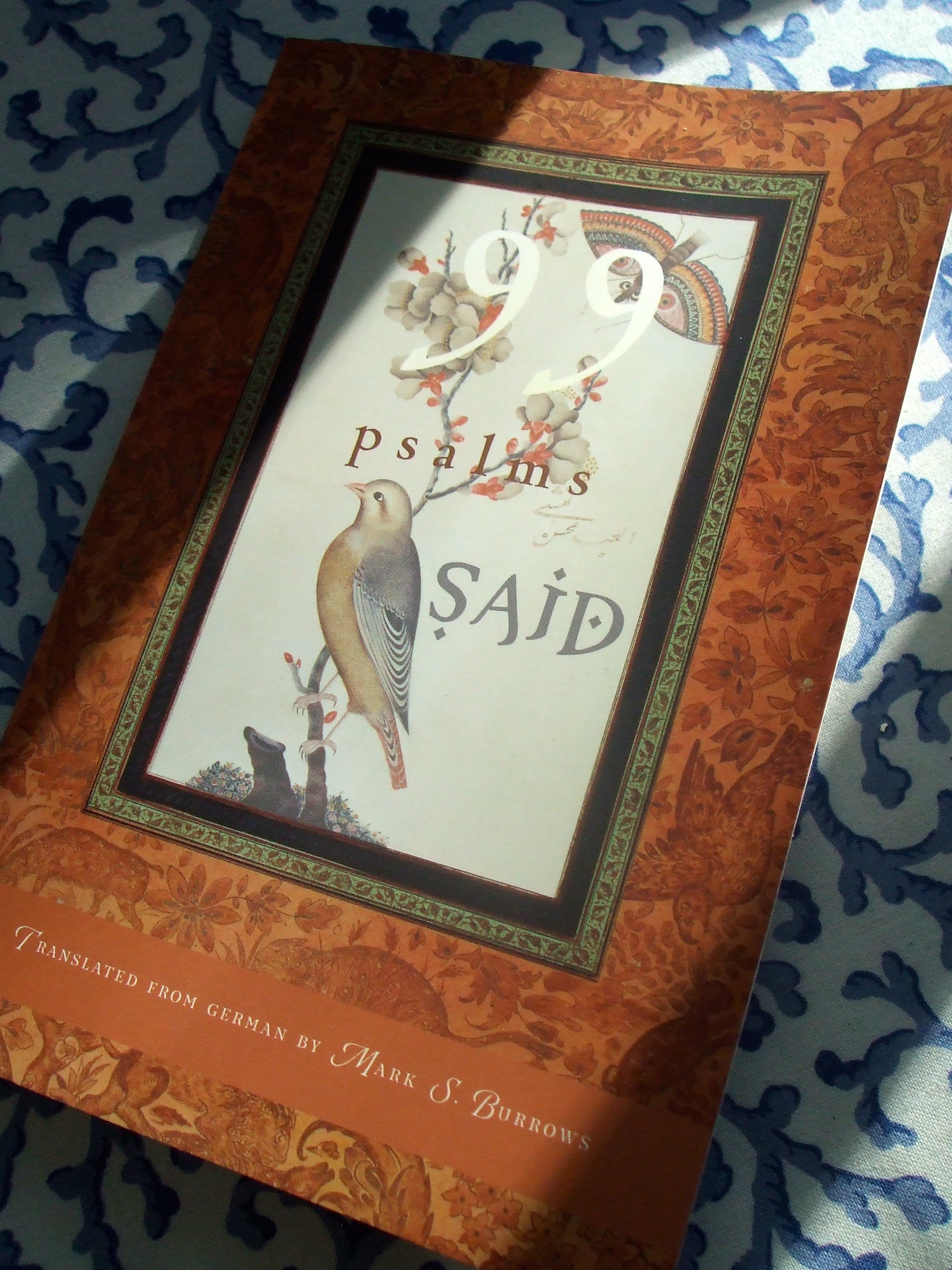
the book is titled, “99 psalms: SAID,” translated from german by mark s. burrows (paraclete press, 2013).

born in tehran, SAID emigrated to germany as an engineering student in 1965, but he abandoned those studies to pursue a writing career, and through the power of his poetry, has become a prominent figure in the german literary scene.

burrows first encountered SAID, he recalls, on a “dreary, rain-soaked night” in munich’s old city hall in may of 2010, at a poetry reading held in conjunction with the second ecumenical Kirchentag, a massive gathering sponsored by the roman catholic church and the protestant church of germany.

as SAID took to the microphone, burrows writes that he noticed the audience leaning forward, the better to absorb what flowed next.

“the psalms he chose…were blunt, vivid, and often startling in their language and imagery. none betrayed any trace of sentimentality…the fierce directness of their language conveyed a marked impatience with intolerance, probing the ambiguities of life with an unflinching honesty in order to remind us — if we had forgotten — that ‘purity isn’t the sister of truth.'”

burrows goes on to write that “these are psalms that cry out against the confidence of zealots, with their claims of righteous authority over others — crusaders, campaigners, and jihadists alike.”

in other words, the exile SAID writes poems of exile, “psalms arising from a ‘no-man’s-land.'” he employs a metaphor of wind as “a hope that reaches beyond religious differences and across the growing disparities between the affluent and poor,” as burrows writes.

in the tradition of the hebrew psalmist, SAID’s works are poems of praise and lament. burrows writes that “the poems we need are often the ones that refuse to leave us unattended.” they remind us “to look beyond what we know, or think we know.”

these poems, writes burrows, “bear witness to the heart’s descent into loneliness and despair, and gesture to the ascents we also know in moments of compassion and generosity.”

as always, poetry does the work of capturing the unspoken, unformed fragments of our heart, of our deepest imagination. the poet, as the butterfly catcher, employs the vessels of language to net, to gather, to collect the flitting-about, untethered, winged idea, the moment.

the poet does the work so we — the reader, the listener, the lonely pilgrim — can stake some claim of understanding in a landscape that until the moment of the poet’s poetry has escaped us.

the poet places us, solidly, in territory at once familiar and foreign. we trip upon the syllables of the imagination, and we find ourselves breathless at the poet’s deep knowing, at the exhilarating moment of loneliness collapsed. we recognize, we understand anew the depths of the human spirit, in wordform before un-uttered.

SAID addresses his psalms to “lord,” though not one bound by any religious tradition. he is certainly a late-modern psalmist, and his prayer poems speak to the complexities of the tangled fractious world in which we live. he explores the human condition with more urgency, perhaps, than he explores the divine. and therein is tension, poetry that refuses to leave us unattended.

one last thing, before i leave you with a psalm or two: about the 99 psalms, the number ninety-nine in the muslim tradition is the precise number of names by which Allah — God — is known. there remains one name — “the last/ the hidden” — that is unknowable, beyond us. so too with the 99 psalms; we are left wondering about the one beyond, the one which, perhaps, is written but not known, or not yet written. what might the unknowable tell us? why are we left not knowing?

here, a pair of SAID psalms that “refuse to leave you unattended”:

[Psalm 35]

lord

pray

that we recognize you

when you come

destroy the go-between gods

with their grand airs and their daily needs

set your seal upon your houses

and don’t be afraid of our nakedness

let the cypresses be your messengers

for they stand upright and whisper

and don’t try to convert the wind

[pause for silence.]

and now, one other, though choosing only one was tough, indeed…

[Psalm 10]

lord

spread wide your arms

and protect us

from the multitudes of your guardians

stand by those who wander

who’ve not lost the gift of hearing

and listen within their solitude

stand by those too

who stay and wait for you

[silence, once again…]

chair friends, i come to you on a wednesday, because in the publishing world these days, blogging about a book is one way to cast wider the net. and today was the day they asked me to write. 

i ask: is there a poem in your life — or especially in your now — that refuses to leave you unattended? and what about the 100th psalm, do you wonder what it asks or says? 

all in a penultimate week’s delight: pulitzer poet, mama’s milk and t-t-tina brown!

sharonoldsat graylag

dispatch from 02139 (in which we offer up a sampling from a string of days in may, as the year of thinking sumptuously hits its crescendo of pinch-me moment upon pinch-me joy, and conversations begin to be doused with impending dates of departure…)

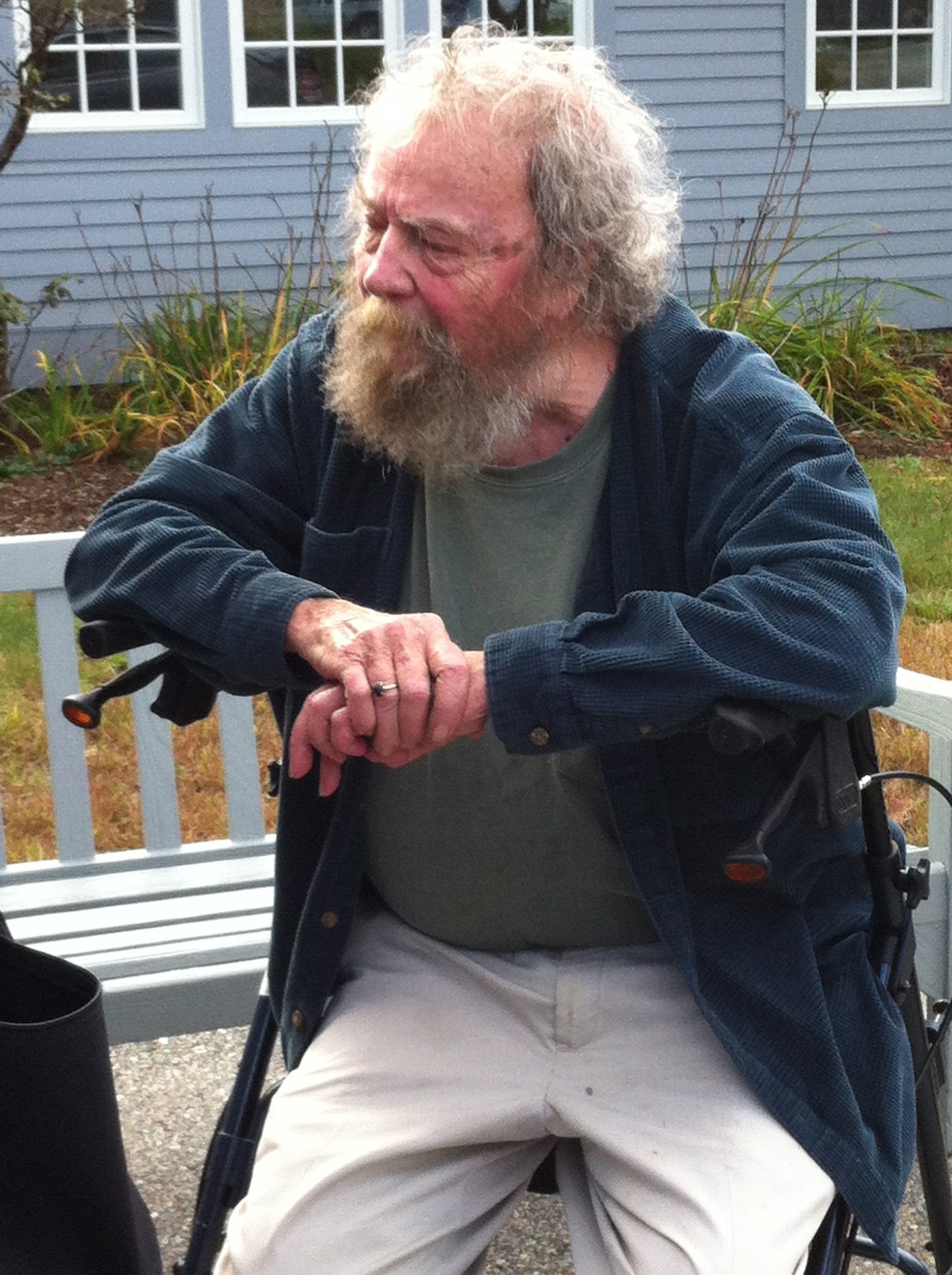
monday (field trip): if you’ve been merrily playing along here at “the chair” all year, you might recall that long ago and faraway in nieman time, a big old bus pulled up to the curb outside the white clapboard clubhouse where niemans romp. and a field trip’s flock of fellows, each clutching a paper sack of road food, climbed aboard and rode into the wilds of new hampshire, to visit poet laureate donald hall.

donald hall

it was a poetic launch to our nieman year of thinking sumptuously. and it unfolded amid the crisp autumn days of october, when the calendar ahead was ripe with promise.

at the start of this, the penultimate week chock full of nieman adventures, we circled back to that same curb and yet another big old bus that ferried a smaller flock of us again to new hampshire, this time to the stoop of yet another poet, the recently crowned pulitzer prize winner, sharon olds.

while i held my breath and prayed the lumbering bus would not teeter over the edge of the skinny dirt road that cut a path through boulders and woods, sharon olds was putting out platters of donuts and pitchers of lemonade, and pulling back her long gray locks into a rubber band.

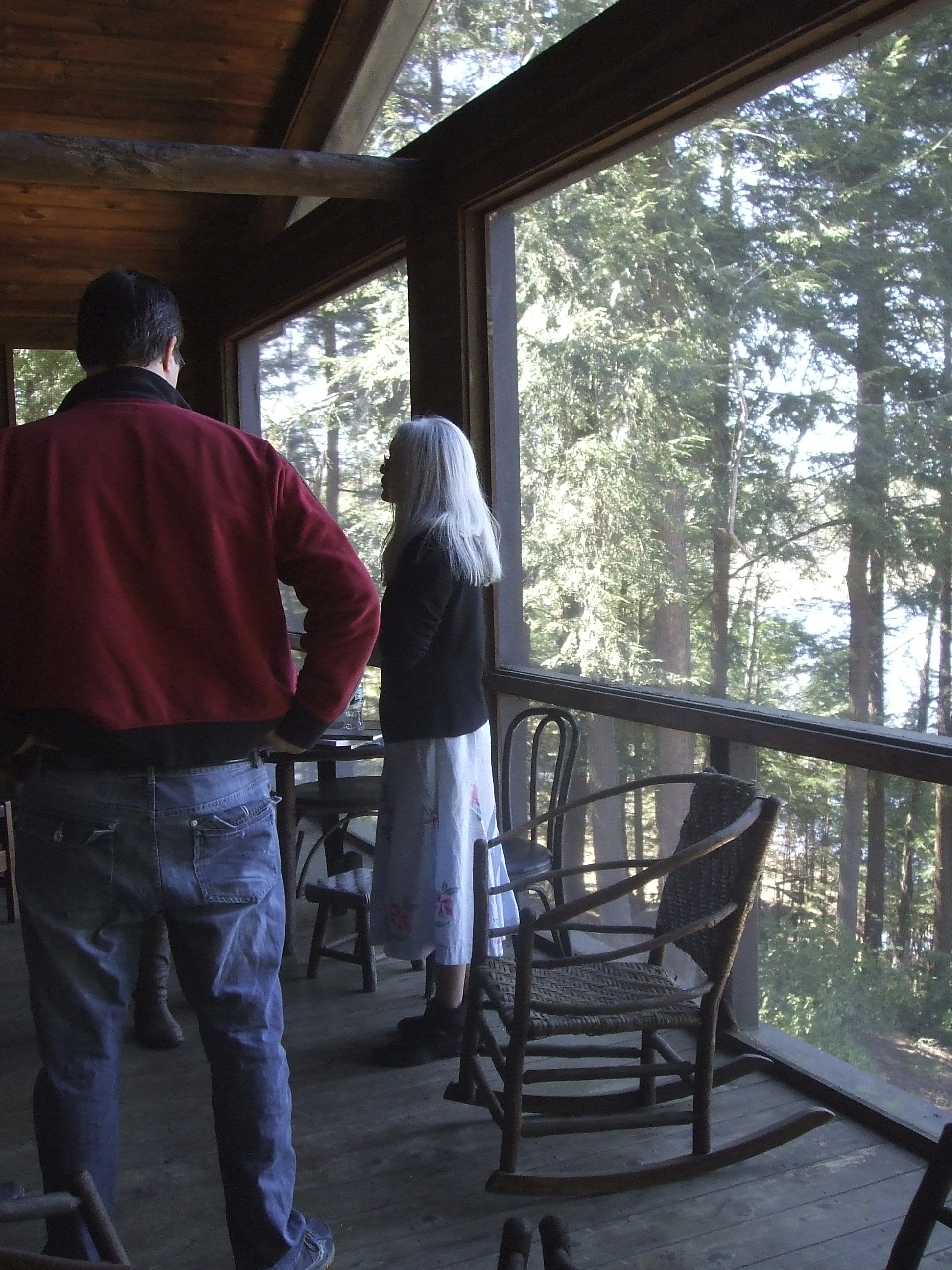
she’d opened wide the door of the cabin just up the hill from wild goose pond, tucked into the granite crevices of pittsfield, new hampshire. she’d set a pile of poems on a cedar table in the broad screened porch, set out a ring of creaky wooden rocking chairs, and ushered us in, one wide-eyed nieman at a time.

she loosed her mane from the tight-bound harness, and began to talk about how for so many years she was dismissed by “the academy,” those highbrows who deemed her poems too quotidian. all those years, more than 40, she paid no mind. and kept writing anyway.

“i did have the sense of ordinary stories of parents of young children having the capacity to be art,” said she.

“i felt a little pissed off that people felt it wasn’t worthy of art,” she opined, letting rip a smidge of the saltiness that propelled her all those years (and stirring a silent “whoop!” from me).

she talked about how she’d never had “excessive conscious confidence,” but let on that there must have been a germ of it deep in her bedrock, “because i was writing.”

writing bracingly, and achingly, with an intimacy that might make you blush. or one that might make you sit up and see the artfulness in the everyday — its tragedy or, rarer still, its triumph.

here’s a taste: the poem, “the last hour,” from this year’s pulitzer-prize-winning tome, “stag’s leap,” about the shattering of her 32-year marriage. in 20 lines, she mines the heartbreak of a single frame in space and time.

Suddenly, the last hour/before he took me to the airport, he stood up/bumping the table, and took a step/toward me, and like a figure in an early/science fiction movie he leaned/forward and down, and opened an arm,/knocking my breast, and he tried to take some/hold of me, I stood and we stumbled,/and then we stood, around our core, his/hoarse cry of awe, at the center,/at the end, of our life. Quickly, then,/the worst was over, I could comfort him,/holding his heart in place from the back/and smoothing it from the front, his own/life continuing, and what had/bound him, around his heart — and bound him/to me — now lying on and around us,/ sea-water, rust, light, shards,/the little curls of eros/beaten out straight.

***

katie hinde at nieman

wednesday (seminar): that’s not all this blessed week held. come wednesday twilight, we all pooled at the foot of evolutionary biologist katie hinde, who set off fireworks for some of us, especially those of us who’ve spent good long years of our lives contemplating the liquid gold that is mama’s milk.

yup, katie hinde is one of the world’s foremost scientists on the unique mammalian capacity to “express a fluid for their young that enables them to survive and thrive.”

she is, in fact, harvard’s high priestess and professor of breast milk, proclaiming it, “the most complex biological fluid.”

“mother’s milk is food; mother’s milk is medicine; and mother’s milk is signal,” says hinde, who goes on to explain that there are “thousands of constituents in milk that have an impact on the infant.”

yet we haven’t begun to unlock the secrets — or the power — of all that flows therein, she says, before counting stem cells, immune triggers and fatty-acid brain-builders in the table of contents of what she terms “the magic potion.”

beloved by her students, hinde is a scientist whose passion for her work is downright contagious. her blog, “mammals suck…milk!” is a treasure trove for anyone intent on knowing even just a drop of all there is to know about mama’s milk. her knowledge astounds. her research blows my mind.

take a listen here to see why she sent at least one of us to the moon:

katie hinde: “why mammals suck” @ harvard thinks big 

***

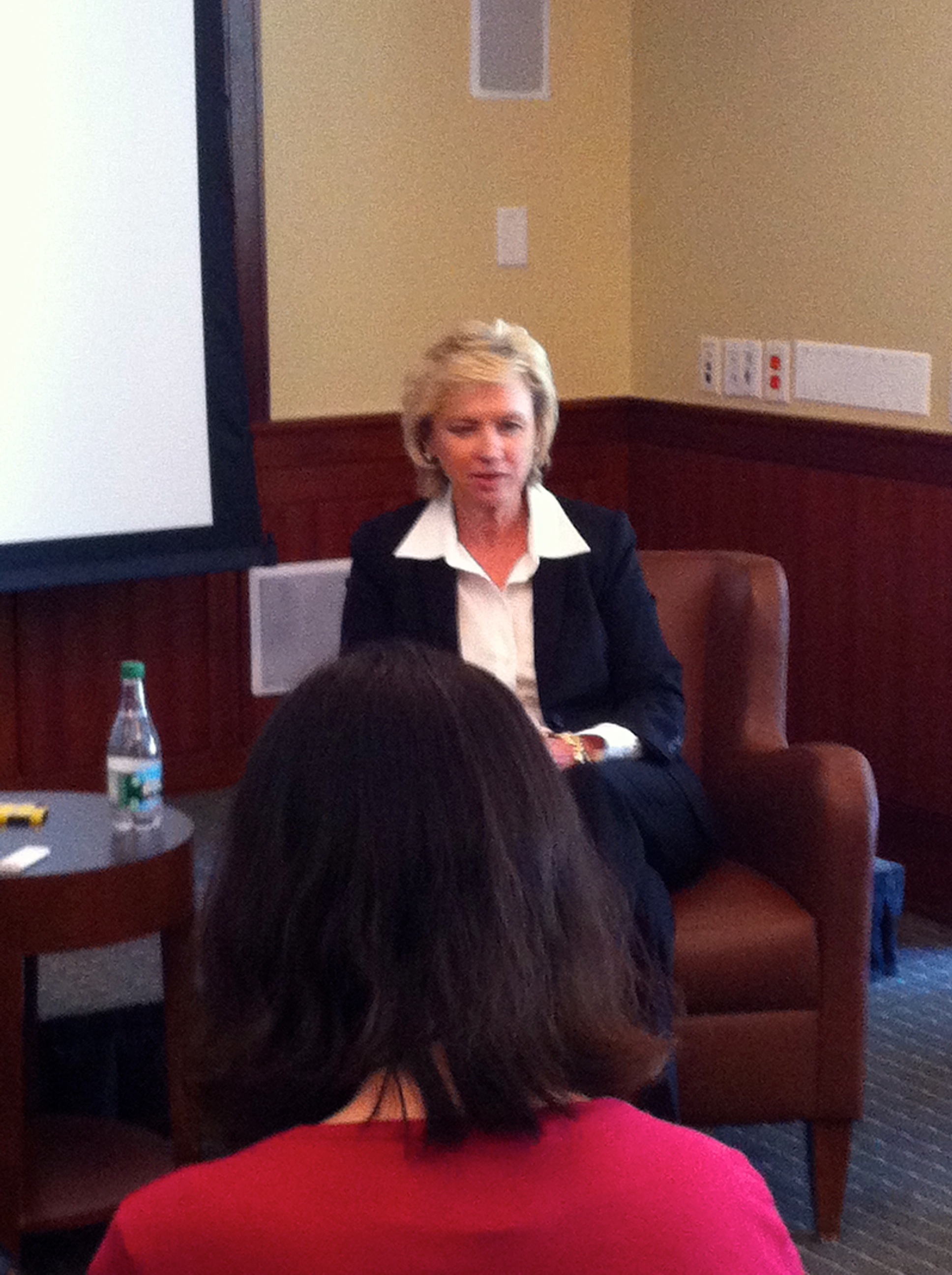
tina brown

friday (shoptalk): still, the week wasn’t tapped to capacity. come friday afternoon, all fellows and co-vivants were huddled in our last shoptalk of the year. and perhaps the great minds and calendar-fillers at nieman saved the most sumptuous for last.

on tap: none other than tina brown — the inimitable, brilliant former editor of vanity fair, the new yorker and newsweek, and currently founder and editor-in-chief of the daily beast.

turns out the whole conversation was off-the-record, that journalistic cone of silence that allows for no-holds-barred opining, thinking aloud and occasional bloviating.

alas, i can’t spill verbatim quotes from the oh-so-smart-and-sassy brit. but i can tell you she wasn’t nearly so daunting as i would have guessed, after all these years of seeing her name and her razor-sharp wit in big bright lights.

i believe it’s safe to mention — without giving broad swaths away — that she endorsed my deeply held conviction that the whole culture of the internet is far too sneering and snarky, a “blood bath,” she termed much of it.

too too many, she said, “mistake snark for wit.”

and it all “creates drive-by shootings” of verbal bullets. “i love wit and wisdom,” she said, making the distinction that both of those are “generous of heart.” whereas snark — a wholly ungenerous stance — seems to have staked a claim as the universal cyber default mode.

all in all, twas a grand second-to-last action-packed week of nieman-ness.

next up, a class trip to the berkshires, and then the day we’ve all been loathing: graduation day, or rather commencement.

when we begin anew, forever changed.

and how, pray tell, was your week?

photo way above: sharon olds at graylag, her 140-acre compound of woods and cabins on wild goose pond in pittsfield, new hampshire.

thumbprint a few inches below sharon: the poet laureate donald hall. next down: katie hinde, she of “mammals suck” blogging fame, and finally, in the wee bottom frame, ms. tina brown in brown leather armchair at lippmann house. 

independent study: the poetry of search

dispatch from 02139 (in which the bleary-eyed one demonstrates that she can rise to fumble with a college paper from 3 till 5 in the morning, return to faux slumber, then get back up and start all over again) …

so here we are, just an hour ago, back before i went to bed the second time, the sky out the front window that looks out over franklin street, and beyond to where the atlantic tickles the shore, it was pitch-black velvet stitched with one french-knot of a star and, dangling just above that, as if buttoned there, one silver crescent of moon.

now, it’s all poufy pink ruffles, backlit in gold, an underskirt of grey inching its way up the legs of the day. the sun rises over boston, over cambridge, over the whole eastern seaboard. the wind in the willows just two yards away, it’s already starting to rustle. the forecast is gloom for today. but when you’re up early, you get the first — sometimes the only — snippets of heaven on earth.

and that’s what i’m looking for here, that’s why i’ve pressed my nose against glass here of late.

oh, i suppose i always knew that behind the story of this trooping off to college, me and my old-fashioned pens and my notebooks (why, i might as well dip quill into inkwell, scritch-scratch my notes onto papyrus, so out-of-date, obsolete, i do seem to be in the land of laptops and iPads), i’d had a hunch that there just might be one other plot line. one other reason for being plucked up and re-planted, half a land mass from home.

i picked up on it early on. back before the start of summer, perhaps, when i first tiptoed through this apartment, spotted the books on the desk of the man who would become my landlord, yes, but more so my lighthouse keeper and guide. he had tall stacks, tomes of poetry, titles that spoke of the sacred. poetry and the divine, it was there in nearly every corner. and i kept poking along.

as i trace my fingers along his bookshelves, in the weeks and months since, i’ve often felt the pull to not leave the apartment, to slide a thin volume off the shelf — any shelf — (there’s wendell berry, thomas merton, a whole thicket of mary oliver, squeezed in between wislawa szymborska, the nobel laureate; there’s e.e. cummings, emily dickinson, and t.s eliot, to run through the c, d and e’s. wallace stevens abounds, as does octavio paz, and a good dash of old robert frost).

i imagine nothing so fine as a seminar for two, if you count bound pages as one half of that pair. i imagine curling up under one of the afghans i’ve pulled from high-above cabinets this week, as autumn’s chill has crept in through the windows. i’ve imagined beginning and launching my poetry school right here where i scramble up eggs, and scrub the sink of its leftover toothpaste.

the school didn’t wait, didn’t dawdle. didn’t put off what october demands (for we pull up stakes, turn back into pumpkins in a mere seven school months).

i knew, back in the summer, that my friend and soon-to-be landlord was writing a book, a book he told me might be the one thing in this world he was meant to make.

the book arrived with a thud on my doorstep this week. it’s titled, “prayers of a young poet: rainer maria rilke,” translated by mark s. burrows.

it’s a beautiful book, a book covered in gold, with a grainy turn-of-the-last-century sepia photo of the great german poet, best known, perhaps, for two works: “letters to a young poet,” published in 1929, and “the book of hours,” in 1905.

“prayers of a young poet” contains, for the first time, rilke’s raw drafts of a cycle of 67 prayers and one long letter written in verse, all penned over the course of three-and-a-half weeks, back in the fall of 1899, in berlin.

they belong, burrows writes, in the genre known as “the poetry of search.”

burrows goes on to tell his afghan-draped pupil that the allure of these prayers is that they give voice to what rilke calls “the stillness between two notes / that don’t easily harmonize.” and there, writes rilke, writes burrows, is where God dwells, within “the dark interval.”

rilke is a poet drawn to the woods, and to the monastery. in these newborn poems, he imagines a monk is the writer, the discoverer of the divine “behind trembling trees,” in the “mushrooms [that] stood up in the forest,” and in the “wet leaves of the blood-red, withering vine.”

but what is pulling me even deeper into the syllabus that spreads across 132 pages is that rilke’s “God,” according to burrows, “is one who is always becoming, ‘the dawning one from whom the morning rose.'”

rilke’s God is not known in intricate trace. rilke’s God is the God of primal darkness, “not sheer absence, but…rather a gesture toward a presence we can ‘sense’ but cannot know.” darkness, burrows writes, is the place of God’s becoming — for rilke, for apostles of rilke.

the poet writes: “I love the dark hours of my being / for they deepen my senses… / From them I’ve come to know that I have room / for a second life, timeless and wide.”

and so, for a student who has dwelled in the murky fog of not knowing for far too long, achingly long, these words come as a trumpet blast of hope.

here, on the pages of a book that landed thwop on my doorstep, i’ve discovered a matchstick to strike in my darkness.

i’m only just 61 pages in, but already i’ve felt its pull, a stirring deep where the pulse begins. i understand that i need to carve out quiet, embroider my days with stillness. it is the poetry of search.

i find it here in the nooks and crannies, the holy sacred rooms this city offers.

in the light-dappled pews of memorial church, on harvard yard, where i slid in yesterday morning, me and my red-strapped backpack, just as the reading began of an amy hempel story that served as scripture.

and, again, just past noon yesterday, when i shoved open the great wood-planked door of the monastery at the bend in the charles river.

i tiptoed in, and found the monks deep in noon song. i fell to my knees on a blue needlepoint cushion. i struck a match, and licked its flame against the wick inside a cobalt blue glass jar.

the blue glowed, a white light of halo within it, behind it. i bowed my head, and did not mind, for once, the not knowing. i am peeling back the poetry of search, and learning that in the darkness of my hours, i just might find what i’ve been waiting for, for so so long.

you can find mark’s rilke book here. who is the author of your most sacred prayer?

must dash (posting this as roughest of  draft); long day of classes, and grammy comes in on the train from portland, maine. big weekend here in 02139.