pull up a chair

where wisdom gathers, poetry unfolds and divine light is sparked…

Category: gift of darkness

the chair is old enough to vote. . .

i’ve raised a blog, it seems, from birth to the verge of being grown-up. eighteen years: 12.12.06 it all began. 1,200 posts before today, so this––wondrously (to me, anyway)––is 1,201. at first i tended it, this conversation, this wondering aloud, this occasional epiphany, every weekday for a year, then chiseled it down to thrice a week. and then, yet again, i distilled it: once weekly––religiously every friday morn. here and there i’ve taken rare short breaks. a bit of summer breather once or twice.

and yet, kept on. and on and on. (sometimes wondering if maybe i should just be quiet.)

cycled through waves who’ve pulled up chairs in ebb and flow as of the tides. friends who’ve come to stay awhile, then shuffled off for one reason or another. at least a few i’ve deeply loved have died; angels still among us. some who’ve pulled up a chair have never ever strayed. here from the beginning, faithful as the day is long. bless them. bless and bless and bless them. 

i too have ebbed and flowed. waded into deep and deeper waters. shed old fears, grew courage. been puzzled. pondered. hatched new fears. wobbled. stumbled. inhaled courage again, again, and again. i’ve wondered and worried aloud. weathered aching heart, and phone calls and headlines that left me breathless. i’ve loved and loved some more. i intend to never stop. 

my school at first was all that unfolded under this old roof, where creaky twisting stairs and a nearly antique Garland stove––six burners, flattop, quasi-oven, a behemoth you’d find at any all-night diner––came to animate so many stories. it was my boys from whom i mostly learned and learned the most. and learned and learned again. and of course the holy earth and heavens high above: the gardens, the birds, the trees, the stars and moon, the dawn and dusk and nighttime’s inky darkness that never fail to draw me in. the book of nature, i’ve come to read, where lessons rise and fall season after season after season. i found a holy peace in this old house and the ramshackle plots where i kneel with trowel and soul wide open. i’d been chasing that peace for years. 

i seem to have stumbled into a new teacher these days, one i’d never thought could bring such knowing: it comes with darkness, yes, though i’m reminded that darkness is the embryonic space where stirrings first begin. and it’s nighttime’s darkest hour when stars most brightly shine. stripped of distraction, of the nettlesome sorts of things that blur our everyday, it denudes us to our barest essence. it’s cancer (even when i do not name it here it’s ever present in my rumblings, and has catapulted me to highest most-reverent attention). mine is an especially wily iteration, one that doesn’t follow rules. and brings me squarely into the land of uncertainty. where i, a girl who likes to know things, am finding out how not knowing whittles the knowing to one or two immutables: love is the force that triumphs over all; its alpha and omega, the God who dwells within. within me, and you. and even all the ones who make us want to scream and run for cover. 

here’s what i know 18 years in: there is nothing that love––true, deep love in all its iterations––cannot infuse. and in the infusing, molecules are stirred, shifted, and forms reshaped, dissolved, emboldened, made new. i’ve felt mountains move. i’ve felt fear melt away, like butter on hot biscuits. i’ve felt surrender––holy, holy “thy will be done.”

and a life well lived is one in which we love as unstintingly, as capaciously, as we might never have known possible. to live a life of loving is to scatter the few seeds that might blossom in our wake, that might rise in the seasons beyond us. it is the deepest mark i hope and pray to leave: to know my heart, my soul, has found a way in, forever in, to those whose lives i might have touched. 

it all becomes so spare, so simple, in the end. when you realize your days––for as long as they stretch––are your one rare turn to hone the art of loving, as it is meant to be. as it is meant to make the holy difference. to trace the path from here to heaven. 

that’s some of what i’m thinking eighteen sweet years in.

and now, because the older i get the more i glean from the wisdom of those who’ve left their trace, here’s my birthday bouquet to ponder for the day, the week, the hour…an indelible quote, a poem to make you laugh, and one to maybe melt you….

first, a quote from the french philosopher and playwright gabriel marcel, from the mystery of being:

“You know you have loved someone when you have glimpsed in them that which is too beautiful to die.”


a poem that might make you laugh, and certainly leave you with a smile:

Emily Dickinson at the Poetry Slam
BY DAN VERA

I will tell you why she rarely ventured from her house. 
It happened like this:

One day she took the train to Boston,
made her way to the darkened room,
put her name down in cursive script
and waited her turn. 

When they read her name aloud
she made her way to the stage
straightened the papers in her hands —
pages and envelopes, the backs of grocery bills,
she closed her eyes for a minute,
took a breath, 
and began. 

From her mouth perfect words exploded,
intact formulas of light and darkness.
She dared to rhyme with words like cochineal
and described the skies like diadem. 
Obscurely worded incantations filled the room
with an alchemy that made the very molecules quake.

The solitary words she handled
in her upstairs room with keen precision
came rumbling out to make the electric lights flicker.

40 members of the audience 
were treated for hypertension.
20 year old dark haired beauties found their heads
had turned a Moses White.

Her second poem erased the memory of every cellphone
in the nightclub,
and by the fourth line of the sixth verse
the grandmother in the upstairs apartment 
had been cured of her rheumatism. 

The papers reported the power outages. 
The area hospitals taxed their emergency generators
and sirens were heard to wail through the night.

Quietly she made her way to the exit,
walked to the terminal and rode back to Amherst. 

She never left her room again
and never read such syllables aloud. 


and finally, a christmas poem that just might melt you, as it melted me. . . 

Kenosis
by Luci Shaw

In sleep his infant mouth works in and out.
He is so new, his silk skin has not yet
been roughed by plane and wooden beam
nor, so far, has he had to deal with human doubt.
He is in a dream of nipple found,
of blue-white milk, of curving skin
and, pulsing in his ear, the inner throb
of a warm heart’s repeated sound.
His only memories float from fluid space.
So new he has not pounded nails, hung a door
broken bread, felt rebuff, bent to the lash,
wept for the sad heart of the human race.

thank you, with all my heart, for pulling up a chair, be it only for awhile, or for some or all these years. i am holding especially close against my heart this morning ginny, my once closest reader (my beloved mother in law who was quick to call if she liked what she’d read, and deafeningly silent if she did not!), mary ellen, and ceci, who waft over my shoulder, angels to my every day….and especially to my boys, who animate each and every pulse of my heart and every breath i breathe….(and certainly to will, who got this whole thing started, when he insisted i could do it, and built the website to make it happen….)  xoxo love, bam

how did you find the chair?

of darkness and sunlight in shifting proportion

night was on my mind this week, as the sunlight upon us stretched to its longest shift of the year, the apex of the solstice on thursday, and now the night grows longer minute by minute till winter’s solstice takes its turn, a doh-si-doh of celestial bodies. the interplay of light and shadow is eternal, has been, according to genesis, since the beginning, day one. and it was good. 

it might seem counterintuitive to contemplate night when the day is at its longest, but it’s often through the paradoxical that insights are gleaned. a wise and soulful priest pointed me toward considering the illuminations that come in darkness, at a saturday morning retreat in the great gothic-revival church that so often stirs me these days. 

and then through the week, i kept stumbling on poems that made me marvel, made me think deep and deeper of the hours of darkness. here are two: 

The night never wants to end, to give itself over
to light. So it traps itself in things: obsidian, crows.
Even on summer solstice, the day of light’s great
triumph, where fields of sunflowers guzzle in the sun—
we break open the watermelon and spit out
black seeds, bits of night glistening on the grass.

––Night in Day by Joseph Stroud

Night Ferry
by John Burnside

Had I been less prepared, I would have left
in springtime, when the plum tree in the yard
was still in bloom,
the windows open after months of snow,
one magpie in the road
and then another.

I could have slipped away, late afternoon,
while everyone was busy somewhere else,
the fish van at the corner, children
dawdling home from school
in twos and threes, a porch light
lit against the dusk on Tollbooth Wynd.

Give me these years again and I will
spend them wisely.
Done with the compass; done, now, with the chart.
The ferry at the dock, lit
stern to prow,
the next life like a footfall in my heart.

it’s the last stanza of burnside’s that spoke to me most profoundly. “give me these years again and I will / spend them wisely.”

and then, with celestial bodies on my mind, i stumbled onto john burroughs, the naturalist whose wisdoms and poetries never fail to stir me. 

“If I had my life to live over again, and had my choice of celestial bodies, I am sure I should take this planet, and iI should choose these men and women for my friends and companions. This great rolling sphere with its sky, its stars, its sunrises and sunsets, and with its outlook into infinity — what could be more desirable? What more satisfying? Garlanded by the seasons, embosomed in sidereal influences, thrilling with continents — one might ransack the heavens in vain for a better or more picturesque abode.” — John Burroughs 


but mostly this week i indulged in the sunlight of one of the oldest, dearest friends i have on this planet: my roommate in college, my roommate after college, my maid of honor, godmother to my firstborn, and my heartmate and soulmate through life’s most scouring hours. she’s a california girl, blond still (naturally so), and more beautiful than ever, and she married a man who might be the twin separated at birth from the one i married. not only do they both wear the exact same spectacles, they both dress in old-line khakis and oxford-cloth shirts, and think deeply about the subjects they love (film for the one from LA; bricks, mortar, and marble for the one i married) as well as the ideas that animate the life of the mind. we played, the four of us, at being playful: took long walks through woodsy ravines, gobbled ice cream from cones, motored downtown to see georgia o’keeffe at the art institute, and before we got there stumbled into one of the world’s great symphony orchestras rehearsing schumann’s piano concerto in frank gehry’s bandshell with someone billed as one of the world’s greatest pianist. all for free. and all in the sunlight.

and tomorrow, my firstborn marks another spin around the sun at the center of it all. there are not enough blessings under that sun for me to wish and hope and pray for my boy, but i wish every last one for him and his heart and his soul and his dreams. happy blessed life, you who made me a mama.

how did you mark the solstice, the day when the sunlight shines longest?

looking into the darkness

maybe it’s the darkness we’re meant to look into. deep into. maybe halves of the world go darkest once a year, so we become practiced. so not only our eyes but our souls learn to widen the aperture, to let in whatever droplets of light there might be. or maybe it’s the inky darkness itself we’re meant to wrap ourselves in. to not be afraid.

maybe we’re left to our own devices when the darkness comes — and it will come — so we learn to find our way. steady our wobbling, put meat to the muscle that holds us upright. in a lifetime’s ebb and flow of darkness and light, it’s the shadowed chapters that have made me the deeper parts of who i am. maybe we should all look to the roots wriggling down below the frozen crust of earth to see how it’s done, how the growing comes unnoticed, in the tabernacle of earthly darkness.

maybe we’d be wise to consider the hidden work of wintertide, the profound intelligence unfolding where eyes cannot see, where sense cannot reach.

in this year’s darkest hour, i can’t say i was up keeping night vigil, awaiting the nadir of night. i was not out in my yard, kindling sticks and dried-up old leaves, setting a bonfire to keep the darkness at bay. fact is, i was felled by a bug that did have me up moseying about the house in the wee hours, but not to contemplate the darkness.

what i did do, as is my wont (and i did it by daylight), was gather up words, snippets of poetry, that made me think about light and darkness, and the shimmering shards we need to find to keep from tumbling headlong into the abyss.

the world this christmas is dark indeed. more than ever, we need to light our way. and pray that our penumbra illumines the path of those who travel nearby.

a solstice offering…

Let the ordinary be in your hand;
hold it open and imagine a bird landing,
offering all it possesses in trust
to come to you.

Learn to look for the little things
that weigh nothing at all,
but fill the heart with such light
they can never be measured.

-Kenneth Steven*, Seeing the Light 


To go in the dark with a light is to know the light.
To know the dark, go dark. Go without sight,
and find that the dark, too, blooms and sings,
and is traveled by dark feet and dark wings.
 
-Wendell Berry


Holding the Light
 by Stuart Kestenbaum

Gather up whatever is 
glittering in the gutter,
whatever has tumbled 
in the waves or fallen 
in flames out of the sky,

for it’s not only our
hearts that are broken, 
but the heart
of the world as well.
Stitch it back together. 

Make a place where
the day speaks to the night
and the earth speaks to the sky.
Whether we created God
or God created us

it all comes down to this:
In our imperfect world
we are meant to repair
and stitch together 
what beauty there is, stitch it 

with compassion and wire. 
See how everything 
we have made gathers 
the light inside itself
and overflows? A blessing.


i keep watch on a few monastics who dwell in the heart of france. brother laurence, a modern-day mystic, sent along this the other day, a wonder of imagery from the winter’s solstice at Newgrange, a stone-age relic and world heritage site that rises from the earth not too, too far from the irish sea along ireland’s eastern shore. he sent a short video along with this short meditation:

“New Grange is a monumental 5,000 year-old burial mound in Count Meath, Ireland. At sunrise on December 21st, the first ray of direct sunlight from the new-born sun precisely, silently, enters the narrow aperture over the entrance, penetrates into the mound of solid rock and fills the inner chamber with golden light for seventeen minutes. Light overcomes darkness. It is irresistible and yet gentle. As it grows stronger with occasional surges, its intensity increases and the power of its beauty. It communicates purely by itself – the meaning of truth.

“I hope you can take time to watch this short silent video of the phenomenon. It captures a sacred moment, the revelation of God in nature. And it may give you a sense of how the light of Christ, the light of truth, actually enters and changes our world.” (Laurence Freeman, OSB)


and finally, for those among us who find the poetic to be a vessel of the ineffable sacred, this from a Paris Review interview with the late great Louise Gluck. i particularly swooned over the line that a poem “is like a message in a shell held to an ear”…:

From the beginning, Glück cited the influence of Blake, Keats, Yeats, and Eliot—poets whose work “craves a listener.” For her, a poem is like a message in a shell held to an ear, confidentially communicating some universal experience: adolescent struggles, marital love, widowhood, separation, the stasis of middle age, aging, and death. There is a porous barrier between the states of life and death and between body and soul. Her signature style, which includes demotic language and a hypnotic pace of utterance, has captured the attention of generations of poets, as it did mine as a nascent poet of twenty-two. In her oeuvre, the poem of language never eclipses the poem of emotion. Like the great poets she admired, she is absorbed by “time which breeds loss, desire, the world’s beauty.” –Henri Cole


*as this is the second Kenneth Steven poem in as many weeks, you can bet i am following his thread and will be finding out more about this scottish poet and children’s book writer. and gathering up his new book of poems, Seeing the Light, from my favorite friendly librarians….

where are you gathering up shards of light these days?

bittersweet

bittersweet: the autumnal flame in the woods

in which we commence a summer’s reading…(there’s a stack of books on my desk, with titles from a british children’s classic, the little grey men, by someone named “b.b”., to the poems of jane kenyon, to a pair of books that mine the intersection of psyche and soul. i begin, curiously, there…)

what caught my eye was this:

bittersweet”: a tendency to states of longing, poignancy and sorrow; an acute awareness of passing time; and a curiously piercing joy at the beauty of the world. the bittersweet is also about the recognition that light and dark, birth and death––bitter and sweet––are forever paired. “days of honey, days of onion,” as an arabic proverb puts it. . . .to fully inhabit these dualities––the dark as well as the light––is, paradoxically, the only way to transcend them. and transcending them is the ultimate point. the bittersweet is about the desire for communion, the wish to go home.

it’s a passage from a book titled, bittersweet: how sorrow and longing make us whole, and it’s by a writer i’ve never before read. her name is susan cain, a lawyer-turned-author, who, in 2012, wrote a best-seller titled quiet: the power of introverts in a world that can’t stop talking. susan cain seems to be sliding my deepest truest traits under her magnifying lens. i likely never would have bumped into her, except that her work caught the eye of maria popova, the cultural critic and genius behind the marginalian, a weekly e-compendium of esoterica and wonder, whose work always catches my eye. 

bittersweet.

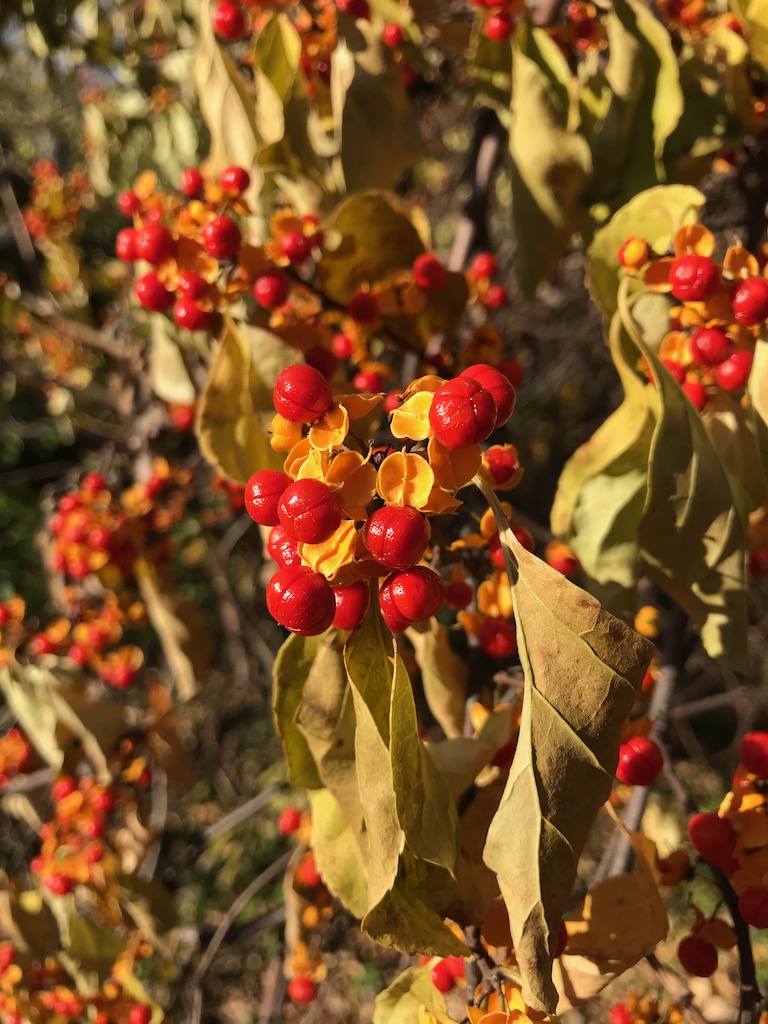
i’ve never put that name to how i am in the world. bittersweet: it’s a beautiful name, the name of an autumnal berry, persimmon in color, that has appeared to me on a trail up ahead as if the woods were aflame. but i’ve not pinned it to a way of being, of seeing, of sensing. and yet it fits as if it’s the long-missing piece to the jigsaw that is me. 

i might define or describe it as living with a profound antenna to the pains––and the beauties––in the world, and longing to heal or to salve or to simply be present. fully present. because you realize the beautiful is out there, is possible, and you think that if you reach far enough, work hard enough, imagine the whole of it, you just might bring it to life, the beautiful you believe in. 

and when, for one reason or another, you can’t, it can be crushing. 

the first time i got a sense that i might be wired in what i might now recognize as a bittersweet way was all the way back in first grade when mrs. leslie, my unforgettable teacher with the “eyes in the back of her head” (so she told us), called me to her desk just before lunchtime one day, and asked me to stay in from recess, along with david pugliese, a classmate who, it turned out, had a brain tumor, back when brain tumors in children had no possible cure. so david and i stayed in the classroom while everyone else ran out to play. for 59 years now, i’ve thought of david pugliese and how very unfair it was that he had to have a tumor in his beautiful, soft-spoken brain. i remember quietly playing games in that quiet classroom while the shrieks and the shouts from the playground seeped in from the underside of the door, day after day for as long as david was there. every time i think of david, my heart hurts. all these decades later.

bittersweet: perceiving pains and longing to fix them. because you believe in the beautiful, the sacred, the whole. 

it’s not the same as being shadow-souled, which is another name for depressed. though the bittersweet among us can feel the weight of too many worries. and we can be accused of being depressed. our hours of silence might easily be mistaken for something other than turning deep into our worries about the world, or someones we love, or someones we just barely know. sometimes we slip so deeply into the heartache of someone else’s agonies we can’t escape the weight of it. 

i’ve long known that deep sorrows pulse through me. a short list of bittersweet clues might be these (cain’s book has a checklist for gauging your level of bittersweetness): i know i love a foggy day, and the mournful cry of the geese veeing across the sky. i know the interplay of shadow against sunlight is where my eye always falls; it’s textural, it’s nuanced, it draws my deepest attention.

maybe yours too.

(cain diagnosed me [and you, if you sense a shared sensibility here]: “a true connoisseur of the places where light and dark meet.”)

i am equally awake to what’s beautiful, what’s tender, sometimes piercingly so. it’s a perpetual tug down there in my heart and my soul, where sometimes the rope starts to fray.

i’ve been told since i was little that i should remember to see the glass as half-full, celebrate sunshine, sing to the rain clouds to make them go away. i remember the quiz i once found in the pages of a newspaper, and how i filled in the answers and found out, according to the quizlet, i ranked among those with “low-grade depression.” i remember once writing (here on the chair) about how, in the discordant minor-key wail of a lone goose’s night cry, i heard the echo of my own unbound sorrow in the days and weeks after my firstborn went off to college, and i remember how someone i loved called to scold me after reading my words, to tell me that i should feel blessed, not on the precipice of perpetual tears. and, by the way, he added, i might want to check in with a therapist. 

and, yes, keeping close watch on the news of the world, and where the world shatters, i feel my heart shattering too. i’ve long known that empathy is a double-edged gift, and one that i’d never surrender. i know that it hurts––sometimes unbearably so––to slip into the shoes or the soul of someone who’s aching, who’s broken, or limping, or shattered. i know i sometimes wear it too heavily, and that it pushes me into long hours of quiet.

but i’ve never fully considered how that pierced sense of the heart might also be the very pulse beat that propels the push toward the good, toward that which heals, toward that which reaches for communion of the empathetic kind. i’ve never before seen it against a truth found in this line from middlemarch, george eliot’s epic 19th-century novel:

“…by desiring what is perfectly good, even when we don’t quite know what it is and cannot do what we would, we are part of the divine power against evil—widening the skirts of light and making the struggle with darkness narrower.”

“widening the skirts of light and making the struggle with darkness narrower.” now there’s an assignment.

nor have i ever framed it in the way of Gregory the Great, the bishop of rome in the late-sixth and early-seventh century, who spoke about “compunctio, the holy pain, the grief somebody feels when faced with that which is most beautiful,” as described by Owe Wikström, a swedish professor of the psychology of religion. “the bittersweet experience stems from human homelessness in an imperfect world, human consciousness of, and at the same time, a desire for, perfection. this inner spiritual void becomes painfully real when faced with beauty. there, between the lost and the desired, the holy tears are formed.”

“between the lost and the desired, the holy tears are formed…”

this world we’re yearning for, cain writes, is present in all world religions: in the judeo-christian realm, it’s the Garden of Eden or the Kingdom of Heaven; sufis call it the Beloved of the Soul. c. s. lewis called it “the place where all the beauty came from.”

buddhists teach that we might aim “to participate joyfully in the sorrows of the world.” 

just the other day, at a celebration of 20 years of OnBeing, krista tippett closed the proceedings with a call for joy-seeking even in this broken world. imperative joy, i immediately coined it. not mamby-pamby cheery whistling-in-the-dark, but honestly, authentically (to borrow the word from contemporary psychobabble), set out to plot a map of barely noticeable, utterly quixotic joys each and every day. (that’s a thought hole to burrow in some other day, though it wouldn’t hurt––especially now––to begin to seek joy in this epoch of considerable shadow.)

an old hasidic tale, one cain tells in her book, has it that a rabbi noticed an old man in his congregation seemed indifferent to any talk of the divine. so the rabbi hummed a poignant melody, a song of yearning. “now i understand what you wish to teach,” said the old man. “i feel an intense longing to be united with the Lord.” it’s in the minor-key chords, the song of the heart crying, that some of us hear most perceptibly.

naomi shihab nye once wrote: “before you know kindness as the deepest thing inside, you must know sorrow as the other deepest thing.” 

maybe that’s the beautiful secret of the bittersweet, a condition, a way of being i am only just beginning to deeply consider, after a lifetime of intensely feeling the sorrows that swirl ever and always. and just as intensely believing the beautiful is shimmering somewhere within our holiest reach.

it’s the start of my summer’s reading, and it seems a choice place to begin….

what’s on your summer reading list? or your bittersweet thoughts?

victorian engraving of bittersweet and wild chicory

the darkness is coming…don’t be afraid.

it’s dark now, the cloak of night not yet lifted on the world out my windows. each pane of glass, at this early dark hour, is a mirror. as i shuffle about the kitchen, cranking up heat, scooping out coffee beans, the night sky grows faintly milkier. the ink of the sky drains away, tucked in the bottle till it’s needed again.

this weekend, the night comes sooner. the darkness tiptoes in. the lights will burn sooner. i say, be not afraid.

the darkness for me — and maybe for you — is wonder. is blessed. is there where the burrowing, and the deepening begin. i’m not afraid of the dark. i strike a match, haul out the candles, maybe even the logs for the fire. i say, bring it on. bring me the folds of introspective depth to sink into. give me unbroken prairies of quietude. let me finish a thought, and follow that one with another, a game of thoughtful pied piper, wending and winding through the tall grass of soulful contemplation.

because i used to haunt the sorts of bookstores that ought to post “no trespassing” signs for those who sneeze at the first whiff of dust, i have tucked in my bookshelves all sorts of tomes — some skinny, some fat — with provenance unknown. one of those, perhaps the skinniest i own, is cooper edens’ if you’re afraid of the dark, remember the night rainbow. cooper edens, i picture with daisies strewn in his hair, a true berkeley hippie of the hallucination age. among the gentlest spirits that ever there was.

i’ve read that his parents, bless them, encouraged day dreaming. imagine that. when he was in first grade, the teacher told cooper’s parents that cooper shouldn’t come back to class because he was “too creative.” cooper’s mother, someone who should be pinned with a very gold star, replied, curtly: “good!” and kept her daydreamer home. she fueled him with crayons and cardboard, and perhaps the sorts of iconoclastic coloring books where you’re told to draw outside the lines. soon, dear cooper, was channeling monet and van gogh.

but now i’ve daydreamed my way into the cooper edens story, and i meant to be thinking about darkness.

befriend the darkness is the point where i’m headed. when the clocks take their back-leap deep in the night on sunday, when three becomes two, and the clocks demand the arduous catching up of the hands big and little, consider the ways you might savor the dark side of the year.

learn a thing or two about stars; pick one by name and discover its story. trace it along the night sky.

lug a pile of logs into your house. tuck them in the hollow that’s made just for them. alternately, gather the wax of the honeybees, the wax rolled into columns called candles. strike a match, watch the flame play flame games against the darkness. turn off all lightbulbs. sit for an hour in candlelight. pay attention to the sacramental effect, how the simple shadow cast by the flickering flame makes you see what you’d otherwise miss, makes you relish the beauty of time and space, allows you to wrap yourself in the blessing of being alive.

bundle up and step outside for a moon walk, as i’ve written before, it’s the ancient and elemental lesson in addition and subtraction, the waxing and waning of the runner-up night light. catch the night shadows as they play upon the lawn, the inside-out of the shadows of daylight.

once you step back inside and shake off the chill of the night, burrow into a nook or a fat stuffed armchair, a place where you like to read and think and look out a window. maybe it’s right by that fire, still crackling, still ablaze in the dance of the flame.

consider this passage from one of the books i’ve been reading this week, a book by the great henry beston, one of the finest poets and chroniclers of nature that ever there was. he wrote from the woods of maine, at the turn of the last century, as the 1800s rolled into the twentieth century, back when candles and logs and one-room schoolhouses were ordinary everyday notions.

wrote henry, henry who has consoled me like a deep and wise and most trusted friend this week at the cusp of the darkness:

“As I watch the fire burning in the great fireplace on a first chilly night, I do not wonder that fire and the mystery of fire have played so important a part in the great religions of [hu]mankind. The power to kindle that ever-hungry flame must have been the first great achievement of man on his way to fuller being; with fire he both metaphorically and in all reality could see ahead in the dark….To me, [fire] is the element which is always a part of the mystery and beauty of the world. The earth may be shabbily and wickedly broken, the river and the air befouled, but the living flame, rising from whatever source, is beauty from its first appearance and as beauty lives. There is no compromise with flame, and not without reason has it served us as a symbol of that unknown to whose ultimate mystery we can but lift our uncertain hands.”

Henry Beston, Northern Farm

the darkness is coming. don’t be afraid.

how will you embrace the dark hours?

and, happy blessed all saints day and all souls, and that hallowed eve of jack-o-lanterns and candy scavengers who won’t be scavenging so much this year…..xoxo

making room for the hallowed

DSCF4868

i know, because the calendar says so, that christmas is coming, christmas is truly upon us. christmas in my heart of hearts is that one whispered pause when i feel the whole world — the stars in the heavens, the murmur from the woods, even the hustle in the marketplace — swell up with the pulse of new birth. i imagine the whole world on its knees, holding its breath, bowed down to welcome the babe birthed in a tangle of straw in the dinge of a barn where sheep and cows and a goat, maybe even a brood of clucking hens, keep up their animal chorus. that’s the christmas i reach for, the one i make room for. the one where the quiet is soaked through with holy, the one where one flickering wick shatters the darkness of night.

only, up till this minute it’s been anything but calm and bright around here.

one kid is home with the freshman-year “crud,” a concoction of germs that has him wheezing and coughing and looking up symptoms of mono on the internet. he’s been writing papers all week, so we’ve mostly been making like we’re one big study hall, with lights on till the wee, wee hours, and fridges raided at two or three in the morning. the other kid is barreling toward his last law school exam of the semester, but he took a detour in an emergency room, and scared the living daylights out of me. (he’s fine; i’m the one still shaking off the “rattles.”) and then, because why not, i decided to have a double-dose (that’s back-to-back, as in two wretched days in a row) doctorly peek at the insides (aka not one but two colonoscopies) last week, and after night no. 2, when they made me drink four liters of drain-o, i thought i might die on the cold bathroom floor. meanwhile the so-called man of the house is trying to save a great american newspaper.

all of which is to say: we need a little christmas. and hanukkah too.

so, today it begins, today i begin to make room for the hallowed to come. i’m off to the butcher in a wee little bit to rustle up my six pounds of hanukkah beast. i’ll crank the oven and fill this old house with the incense that cannot be beat: clove and bayleaf and peppercorn, a splash of red wine, a jar or three of chili sauce, then hours and hours in a 325 oven. next up (soon as the soon-to-be lawyer steps off the plane midday tomorrow), it’s off to the tree yard, where we’ll stroll and peruse and put our critical architectural eye to good use; chances are we’ll snag the same old fraser fir we always seem to snag (one too fat and too tall, and more or less to everyone’s liking).

and then, soon, will come one of the holiest moments of the whole long year: i will be alone in my kitchen on christmas morn, and except for the hiss of the simmering spices on the stove and the old schoolhouse clock incessantly counting the minutes and hours, it will be so quiet i’ll hear the rustle of wings and the squawk of the jay out the window. it’ll be inky dark outside, the first crack of light infusing the eastern sky. a star or three might still be twinkling. and here comes the best part: i’ll know that one flight up the stairs and around the bed, two beds will be filled with the boys who will forever be my heart’s reasons for being.

i’ll remember that it all boils down to the simplest of blessings: as we rub the sleep from our eyes, see first thing the bed-wrinkled faces of the ones we so love, as we block out the noise of the world, inhale the long years of loving that brought us to this holy moment, all else will melt away. we will be wrapped in the true miracle of christmas, the love that’s guided us all along the way. the love learned well by paying attention. the love that began, once upon the ages ago, when a wee blessed babe let out a cry for all the earth, and the whole world listened.

i’ll remember: for christmas to come, i need to make room. need to clear out the noise, wrap my sweet soul in those few fine things that are everything: a love that won’t die, a light that can’t be extinguished, and a belief in the undying hope that peace might be just around the next bend, somehow always in reach.

***

and here’s a christmas-y gift for all of you, a poem from mary karr’s descending theology, that draws me deeply into that holiest first night: 

Descending Theology: The Nativity
Mary Karr

She bore no more than other women bore,
but in her belly’s globe that desert night the earth’s
full burden swayed.
Maybe she held it in her clasped hands as expecting women often do
or monks in prayer. Maybe at the womb’s first clutch
she briefly felt that star shine

as a blade point, but uttered no curses.
Then in the stable she writhed and heard
beasts stomp in their stalls,
their tails sweeping side to side
and between contractions, her skin flinched
with the thousand animal itches that plague
a standing beast’s sleep.

But in the muted womb-world with its glutinous liquid,
the child knew nothing
of its own fire. (No one ever does, though our names
are said to be writ down before
we come to be.) He came out a sticky grub, flailing
the load of his own limbs

and was bound in cloth, his cheek brushed
with fingertip touch
so his lolling head lurched, and the sloppy mouth
found that first fullness — her milk
spilled along his throat, while his pure being
flooded her. (Each

feeds the other.) Then he was
left in the grain bin. Some animal muzzle
against his swaddling perhaps breathed him warm
till sleep came pouring that first draught
of death, the one he’d wake from
(as we all do) screaming.

DSCF7932

merry blessed Christmas, and happy hanukkah too. may your brisket be mouth-watering and your Christmas dawn be filled with overwhelming peace. xoxox

day of deep stillness

notredame fire

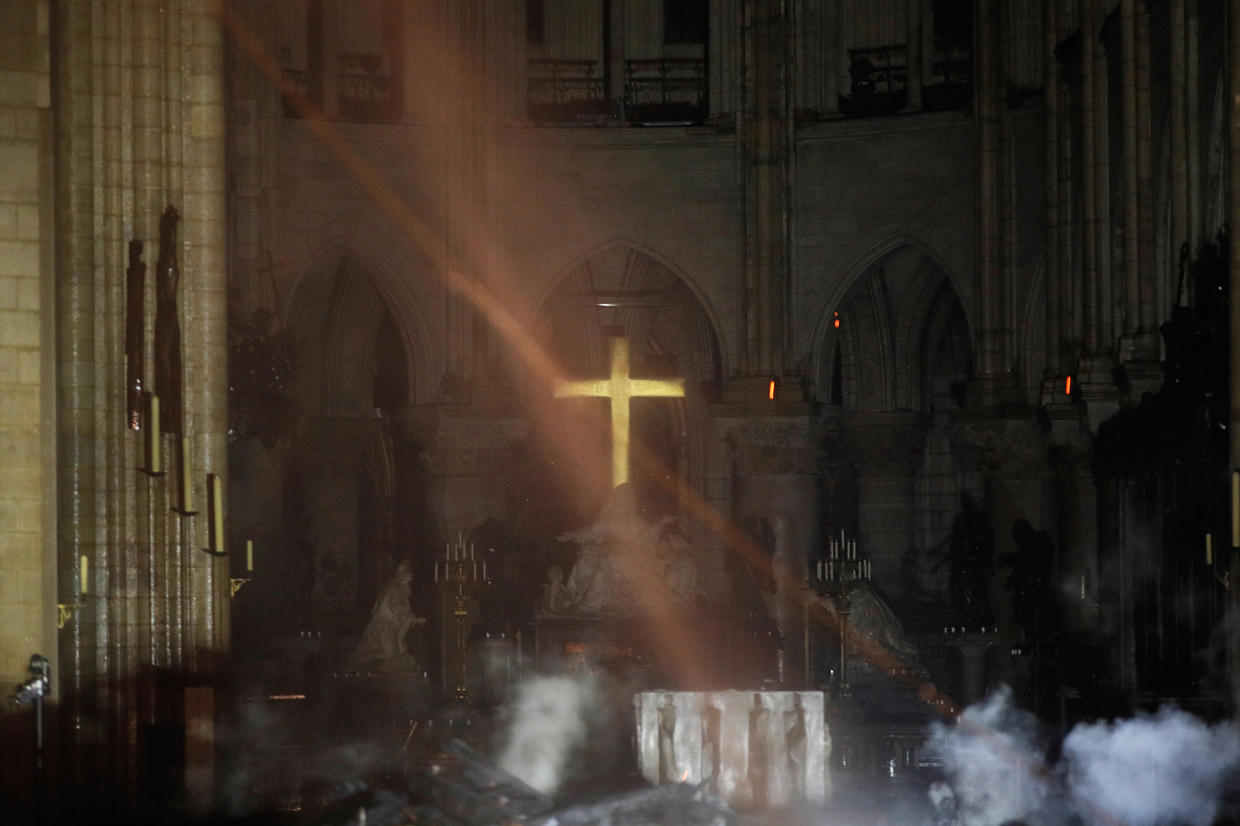
radiant crucifix: notre-dame in the wake of inferno (photo credit: Philippe Wojazer of Reuters)

the soundlessness must have been haunting. a timber still cracking. a stone falling. ash settling down. the faint few echoes of footfall as one or two tiptoed in, in the first light of dawn, to begin to measure the devastation. the loss.

and there, radiant, rising from out of the billows of smoke, caught in the slant of the beams of light: gold cross glowing.

it refuses to die.

and this is the image i carry forward. this is the image i heave to my shoulder, bring to my landscape of silence, today the day of deep stillness.

the world this week stared in horror. the spire of notre-dame snapped like a pencil, teetered, crashed into the molten sky. tongues of flame, rising inferno. millennia lost, masterpiece burning. but the lasting image, the one i can see with my eyes closed, is the radiant cross — not tinged, not charred, still hanging.

seems to me the world might begin to focus on those rare few things that survive the conflagration, the fire. the dross left in the crucible. those things that can’t be burned. the ones meant to last. radiant cross rising.

seems to me this humble little planet might be wise to consider the sacred acts of starting over. rebuilding. sifting through the ashes and rubble, finding those rare few gems on which to begin again. rising out of destruction.

such is the backdrop to these holy days: the ones that draw us back to the narrative of agony, prayer, betrayal, crucifixion. the ones of exodus, too. escaping the plagues, crossing the red sea, running from slavery.

resurrection. rising. breaking into freedom.

before i get there, though, i have hours to cross in deep silence. it’s always my way on this day of remembering the dying and death on the cross. the hours of darkness, noon till three, till the heavens roil and split wide open, the hour of final surrender, when the one on the cross cried out, “father, forgive them, for they know not what they are doing.” and then, “father, into thy hands i commend my spirit.”

words i could ponder for hours and days and weeks and years on end. words i will ponder in silence, the posture of monks and poets.

because i’ve been burrowing in the bookshelf of silence, i’ve learned of an ancient practice, one with deep eastern orthodox roots, called hesychia, “a graced depth of inner stillness.”

one of the great monastic wise men, a fellow known as saint joseph the hesychast, wrote, “the aim was hesychia, quiet, the calm through the whole man that is like a still pool of water, capable of reflecting the sun. to be in true relationship with God, standing before him in every situation—that was the angelic life, the spiritual life, the monastic life, the aim and the way of the monk.”

one of joseph’s fellow monks, abba alonius echoed, “unless a man can say ‘i alone and God are here,’ he will not find the prayer of quiet.”

as we enter into the silence, i will wrap myself in text and verse, the literary nooks and folds that hold me, blanket me. for the last six weeks, all of lent, a priest friend and i led a small circle in readings that drew us deep into the still center of the season — t.s. eliot, wendell berry, mary oliver and mary karr, pauli murray, the great civil rights lawyer and episcopal priest, were all in our lenten lectionary. we ended our weeks together with mark strand’s breathtaking, “poem after the seven last words,” a work originally commissioned to be read between movements of haydn’s opus 51, which happens to be titled “the seven last words of christ.” the performance of strand’s poem and the brentano string quartet’s haydn premiered here in chicago in 2002.

although strand, the u.s. poet laureate and pulitzer-prize winner, didn’t pretend to be religious, he turned to the gospel of thomas to find the seven last lines of jesus on the cross, and masterfully wrote lines that all but pull me onto that cross, into the darkness and depth of the hours of crucifixion. every line is a burrowing deep into the whole-body living of that crucifixion. we taste and see and hear moment after moment. strand positions us on the cross, and carries us through the agonies, through the love (glances from mother to son) and the faith (crying out to the Father), delivering us, spent and exhausted and crushed, to the final commitment, when strand writes: “to that place, to the keeper of that place, i commit myself.”

here, for your own hours of silence, perhaps, is mark strand’s meditative masterwork:

Poem After The Seven Last Words
Mark Strand

1
The story of the end, of the last word
of the end, when told, is a story that never ends.
We tell it and retell it — one word, then another
until it seems that no last word is possible,
that none would be bearable. Thus, when the hero
of the story says to himself, as to someone far away,
‘Forgive them, for they know not what they do,’
we may feel that he is pleading for us, that we are
the secret life of the story and, as long as his plea
is not answered, we shall be spared. So the story
continues. So we continue. And the end, once more,
becomes the next, and the next after that.
2
There is an island in the dark, a dreamt-of place
where the muttering wind shifts over the white lawns
and riffles the leaves of trees, the high trees
that are streaked with gold and line the walkways there;
and those already arrived are happy to be the silken
remains of something they were but cannot recall;
they move to the sound of stars, which is also imagined,
but who cares about that; the polished columns they see
may be no more than shafts of sunlight, but for those
who live on and on in the radiance of their remains
this is of little importance. There is an island
in the dark and you will be there, I promise you, you
shall be with me in paradise, in the single season of being,
in the place of forever, you shall find yourself. And there
the leaves will turn and never fall, there the wind
will sing and be your voice as if for the first time.
3
Someday some one will write a story set
in a place called The Skull, and it will tell,
among other things, of a parting between mother
and son, of how she wandered off, of how he vanished
in air. But before that happens, it will describe
how their faces shone with a feeble light and how
the son was moved to say, ‘Woman, look at your son,’
then to a friend nearby, ‘Son, look at your mother.’
At which point the writer will put down his pen
and imagine that while those words were spoken
something else happened, something unusual like
a purpose revealed, a secret exchanged, a truth
to which they, the mother and son, would be bound,
but what it was no one would know. Not even the writer.
4
These are the days when the sky is filled with
the odor of lilac, when darkness becomes desire,
when there is nothing that does not wish to be born.
These are the days of spring when the fate
of the present is a breezy fullness, when the world’s
great gift for fiction gilds even the dirt we walk on.
On such days we feel we could live forever, yet all
the while we know we cannot. This is the doubleness
in which we dwell. The great master of weather
and everything else, if he wishes, can bring forth
a dark of a different kind, one hidden by darkness
so deep it cannot be seen. No one escapes.
Not even the man who saved others, and believed
he was the chosen son. When the dark came down
even he cried out, ‘Father, father, why have you
forsaken me?’ But to his words no answer came.
5
To be thirsty. To say, ‘I thirst.’ To be given,
instead of water, vinegar, and that to be pressed
from a sponge. To close one’s eyes and see the giant
world that is born each time the eyes are closed.
To see one’s death. To see the darkening clouds
as the tragic cloth of a day of mourning. To be the one
mourned. To open the dictionary of the Beyond and discover
what one suspected, that the only word in it
is nothing. To try to open one’s eyes, but not to be
able to. To feel the mouth burn. To feel the sudden
presence of what, again and again, was not said.
To translate it and have it remain unsaid. To know
at last that nothing is more real than nothing.
6
‘It is finished,’ he said. You could hear him say it,
the words almost a whisper, then not even that,
but an echo so faint it seemed no longer to come
from him, but from elsewhere. This was his moment,
his final moment. “It is finished,” he said into a vastness
that led to an even greater vastness, and yet all of it
within him. He contained it all. That was the miracle,
to be both large and small in the same instant, to be
like us, but more so, then finally to give up the ghost,
which is what happened. And from the storm that swirled
a formal nakedness took shape, the truth of disguise
and the mask of belief were joined forever.
7
Back down these stairs to the same scene,
to the moon, the stars, the night wind. Hours pass
and only the harp off in the distance and the wind
moving through it. And soon the sun’s gray disk,
darkened by clouds, sailing above. And beyond,
as always, the sea of endless transparence, of utmost
calm, a place of constant beginning that has within it
what no eye has seen, what no ear has heard, what no hand
has touched, what has not arisen in the human heart.
To that place, to the keeper of that place, I commit myself.

(from Man and Camel: Poems, 2008)

how will you enter into the silence, today or any day soon? how close have you come to that deep, deep stillness, the one the monks describe as “like a still pool of water, capable of reflecting the sun”?

may your Easter weekend and your Passover be blessed…..

out of darkness, the first radiant light

prayer for new year

imagine, long before telescopes and science tomes, what must have rumbled through the minds of those keeping watch on the heavens. how a time came when each day was darker and darker. when the hours of midnight-blue-toward-black blanketed farther and wider across the landscape. imagine the terror it might have stirred. are we edging toward endless seamless darkness?

and then, one day, at the darkest hour, a stirring happened, a stillness barely noticed. the waxing darkness ceased, the light broke through, and day by day, minute by minute, there was more of it. ebb and flow. wax and wane. addition and subtraction. the arithmetic of heaven, earth, and all creation.

and into that cosmos of push and pull, the ones who felt the spirit, the ones who believed the heavens were stirred by the hand of the Creator, they infused the darkness with the Christmas story. they made this the time of year when the Great Scripture opened in Nativity. a babe was born. in quietest, cast-aside manger. it’s a narrative whose shining light begins on the margins, celebrates the marginal. it is in every way the antithesis of splendor. it’s a straw bed where the moans and cries of labor are punctuated with the mews and bellows of the barnyard flock. where sheep and ox kept time.

it is a story that turns everything — darkness, splendor — on its head. the holiest one is born in a barn. there’s no room at the inn, not even for the one who brings the light. it’s a tale whose tropes never ever fade. year after year, they permeate hope. year after year, the dark hours before the solstice serve to quiet us. draw us in. invite us to explore the unlocked chambers of our hearts, the ones we sometimes never notice.

i’ve come to wrap myself in the little-noticed threads of Christmas, the quiet threads. the ones lost in the folderol and rump-a-pum-pum. the Christmas i love is all but invisible. you can’t unwrap it. it unfolds all on its own, deep in the stillest places in my heart. i do everything i can to amplify the quiet. i tiptoe down the stairs earlier and earlier. i make a point of opening the back door and stepping into the dawn. i shlep my tin can of birdseed across the frozen grass, under star-stitched dome, and thrill to the spilling song of all that sunflower and safflower funneling into the feeder. i simmer orange peel and cinnamon stick, clove and bay leaf, star anise too; my kitchen’s incense, calling me to quiet prayer.

on mornings like this one, i listen for the muffled thud of three distinct footfalls. it’s a sound that now comes but once a year. it’s a sound that means three beds — not two — are filled in this old house. i want nothing more than the sound of those footsteps, and the long day’s cacophony that follows. i want the whispered conversations at the kitchen table. and the hilarious ones that might punctuate hours round the Christmas tree. i want the sleepy-eyed listening in on the words weaving back and forth between two boys who call themselves brothers, and live and breathe that alliance as if it’s forged in titanium. i want to feed them, and make them laugh. i want to reach across wherever it is we are sitting and squeeze the flesh of their now-grown hands. i want to catch the glimmer in their eye when we pull to a stoplight in the night, and the street lamps catch the animation i can’t see across the long-distance-telephone miles.

if Christmas is the time when radiant light breaks through winter’s darkest night, i want to wrap myself in all its threads. if Christmas is love born anew, if it’s quiet — as quiet as the first one truly was — then all i want for Christmas is what burns bright and still inside me. and my prayer then would be to hold that light, to carry it long beyond the Christmastide. to animate my every day, to hold the stillness, the quiet, the kindled inextinguishable flame, and let its lumens fall across my winding path, illuminating my every hour.

for that, i beg the heavens. amen.

may your Christmas be blessed, and as quiet or as rambunctious as you wish. may your solstice hour carry you across the threshold from dark to first inkling of light. 

how do you make Christmas in the quiet of your blessed heart?

IMG_1081

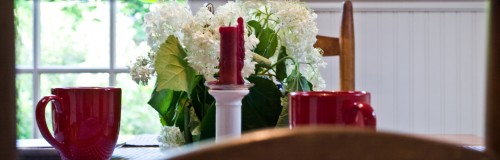
my christmas captured: two mugs, not one, awaiting morning’s coffee. my sweet boy’s home…and these mugs are invitation to a long morning’s reverie….

season of stillness

IMG_1033

not so many years ago, my writing room at this time of year took on north-pole proportions: spools of ribbon, bags of this and that to slip inside other bags or boxes, layers and layers of tissue papers, itty-bitty cards. lists abounded. i was a walking-talking maker and checker of lists.

not so much these days. and not because i’m scrooge.

simply because the sanctity of stillness is what i’m after in this season of deepening darkness. i punctate the night — the shroud of black that grows with every passing whirl around the sun — with my litany of sacramental simplicities.

the dawn is longer, blessedly, giving me more time to stitch those hours with the fine few invitations to bring in what’s hushed, what’s holy. i scoop my old tin coffee can with fat black seed, slide my toes into clunky boots, my arms in puffy sleeves. as the shock of morning cold splashes up against me, i fill my lungs with one quick gulp. then i march across the frozen stiff blades of grass, the mud that’s now succumbed into icy form, and perk my ears to hear the flutter of a wing, the rustling of a bough. i pause to scan the heavens, count the stars, spy the fraction of the moon. i’ve written a thousand times of how i make like i’m a farmer filling my trough, as i pour the seed in the feeder high above my head, stretching my arm far as it will stretch, raising up on tippy-toes, too. i’ve come to realize that the rush of pouring seed must be a call to all the birds, akin to “coffee’s on, come and get it!”

on the stillest mornings, the holiest ones, a cardinal or a junco might flutter in before i’ve stepped away. as if the gentle creature knows we’re in communion here.

perhaps i’ve learned, in my years — now three decades — of braiding jewish threads with catholic ones, to sanctify time, even more than place. abraham joshua heschel, whom i count among my constellation of north stars, writes: “judaism teaches us to be attached to holiness in time, to be attached to sacred events, to learn how to consecrate sanctuaries that emerge from the magnificent stream of a year.” he goes on to draw out that point: “the Sabbaths are our great cathedrals; and our Holy of Holies is a shrine that neither the romans nor the germans were able to burn; a shrine that even apostasy cannot easily obliterate…”

point, well taken. point, deeply taken.

i consecrate the holy hours — the ones of dawn and dusk and deepest night.

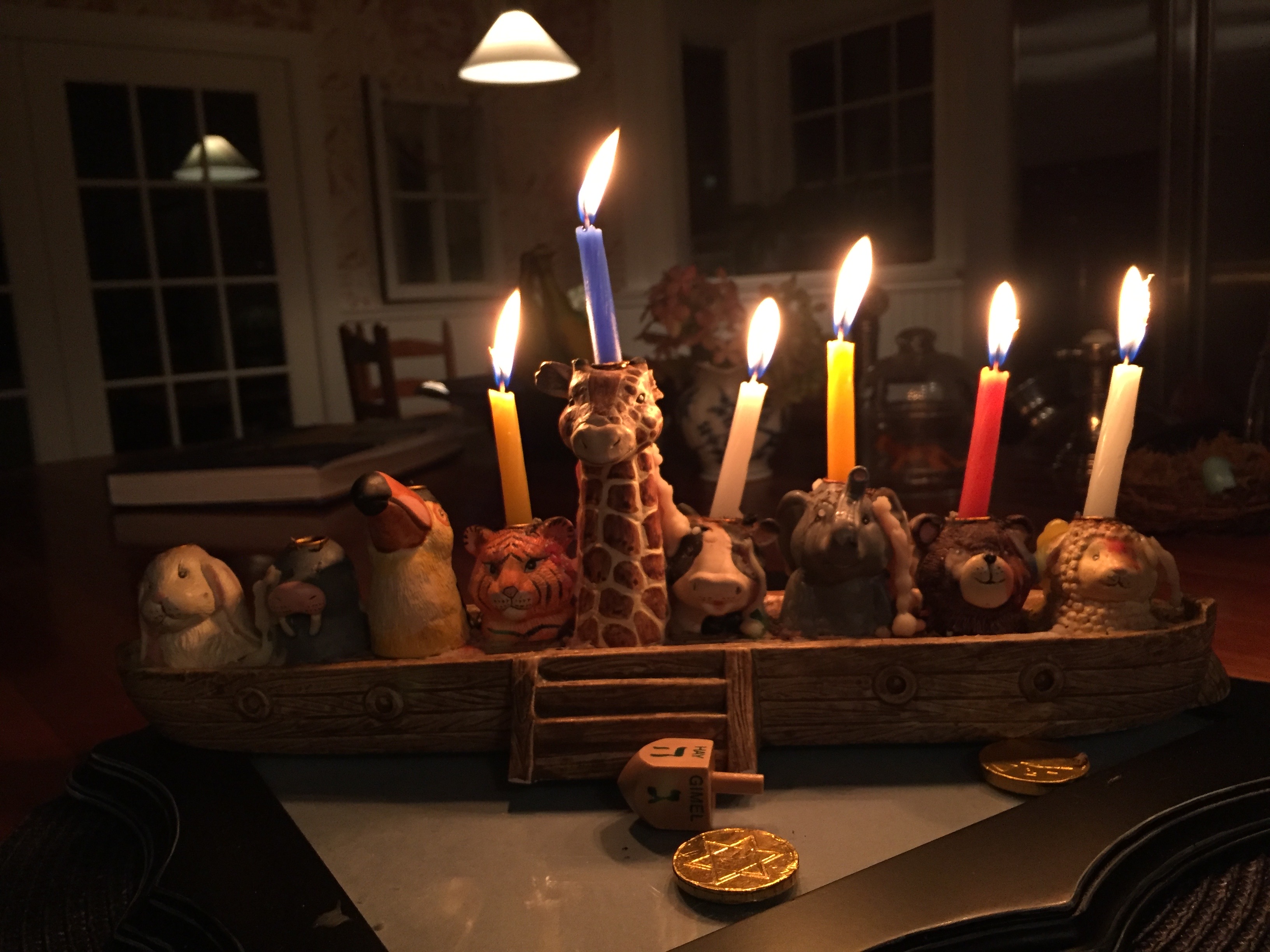
and so, this season is no longer a mad dash, but a countercultural adventure in stitching in stillness. in simply kindling light, one by one, an arithmetic of brightening, night after night, as both menorah and advent wreath burn against the darkness. our house is not filled with shiny boxes. santa’s list is not an annual exercise in accumulation. hanukkah at our house is brisket + latkes + jelly-filled donuts on the first night, candles and dreidels each night after that.

year by year, i dial down the noise, and amplify the hush that ushers in the stillness.

how do you consecrate your holy hours?

aubade: love song to dawn. or, perhaps, salvation.

dawns first light

aubade (o-bad), n. [Fr., from aube, dawn.] love song or poem to dawn, or about lovers separating at dawn; distinguished from serenade, or nocturne, love song to, at, or pertaining to night.

so says the dictionary, that plainspoken repository of meaning and use. but turn to a literary teller of meaning, and you’ll find definition with deeper-grained truths: “welcoming or lamenting the arrival of dawn.” a word given to us by the medieval french (who else would assign a whole category of poetic lament for lovers not wanting to part?), a word adapted from the spanish, alba, for “sunrise,” which borrowed from the latin, alba, the feminine form of albus, meaning “white.” aubade is a word first used in 1678, a word pinned on these particular proliferous poems, of which you will find 44,478 aubades tucked in the files of the poetry foundation. which, of course, is a lot of folks paying attention to the dark edge of daybreak.

i’ve long been drawn to this hour — that interlude when one minute it’s inky and silent, not even a ripple of breeze, as if the world hasn’t yet roused from its sleep, and the very next instant the stars have faded, the light’s seeped in, and the first warbles of bird can be heard.

this week, for reasons having to do with an imagination that would not stop imagining the scene in a synagogue just as the bullets rang out, the heads bowed in prayer in the sacred suspension of time that is shabbat, and for reasons having to do with worries about children applying to college, i woke each morning at 4. and i could not find sleep again.

so i rose. one morning i reached out my arm and instinctively clicked on the radio. right away, before my eyelids had clicked fully to “open,” i heard the radio squawking about opioid addictions and police activity at that ungodly hour. i clicked off the radio; the assault was too early, and i was too raw. the first sounds seeping in needn’t be awful.

so i tiptoed downstairs in the dark. i didn’t flick a single light switch along the way. i headed straight for the back kitchen door. stepped into the chill of that soundless hour, and i looked up and into the heavens. i stood there, soaking in the night’s last offering: the star-stitched canvas above. the moon, all crescent and brilliantly white. i basked in the stillness. the sense that i alone was awake and paying attention. the sense that this time belonged only to me and my soul, and the great breath of God flowing into and out of my whole.

then i partook of my sacrament with seeds: i turned back to the house, reached into my birdseed bin, filled the banged-up coffee can with sunflower seed, and returned to my stash of feeders. there is something holy about making the first act of the day one of tending to others, especially when the others are weightless and feathered and seem to exist only to fill you with song. and the delights of their darting hither and yon.

by then, the goosebumps were cropping up. and my bare feet (for i’ve not yet decided it’s the season for shoes) protested. so into the house i hurried, into the early-morning percolations of a house beginning to wake: furnace starting to hiss, coffee pot gurgling its soon-to-come promise.

in times like these we all need tucked-away coves that shield us and shroud us and keep away the goblins. in times like these — and for centuries it seems, all the way back to the middle ages when the first aubades were inscribed — we humans seem drawn especially to the hours when “the curtain-edges will grow light,” as the poet philip larkin famously wrote, or “the encroaching skyline pecked so clean by raptor night,” as christian wiman even more brilliantly put it.

it’s the margin, the demarcation, the abyss followed by the eternal promise, the rising of the sun. it’s our emptiness quietly, certainly, being filled up again. it’s the hour when we’re quiet enough to hear ourselves breathe, and perhaps, if we’re blessed, to catch one or two whispers from the still small voice that never, ever is quelled.

what’s your sacred hour? and how do you carve out the stillness so necessary for what amounts to salvation?