pull up a chair

where wisdom gathers, poetry unfolds and divine light is sparked…

Category: caretaking the world

of promise, once again

they beg no attention.

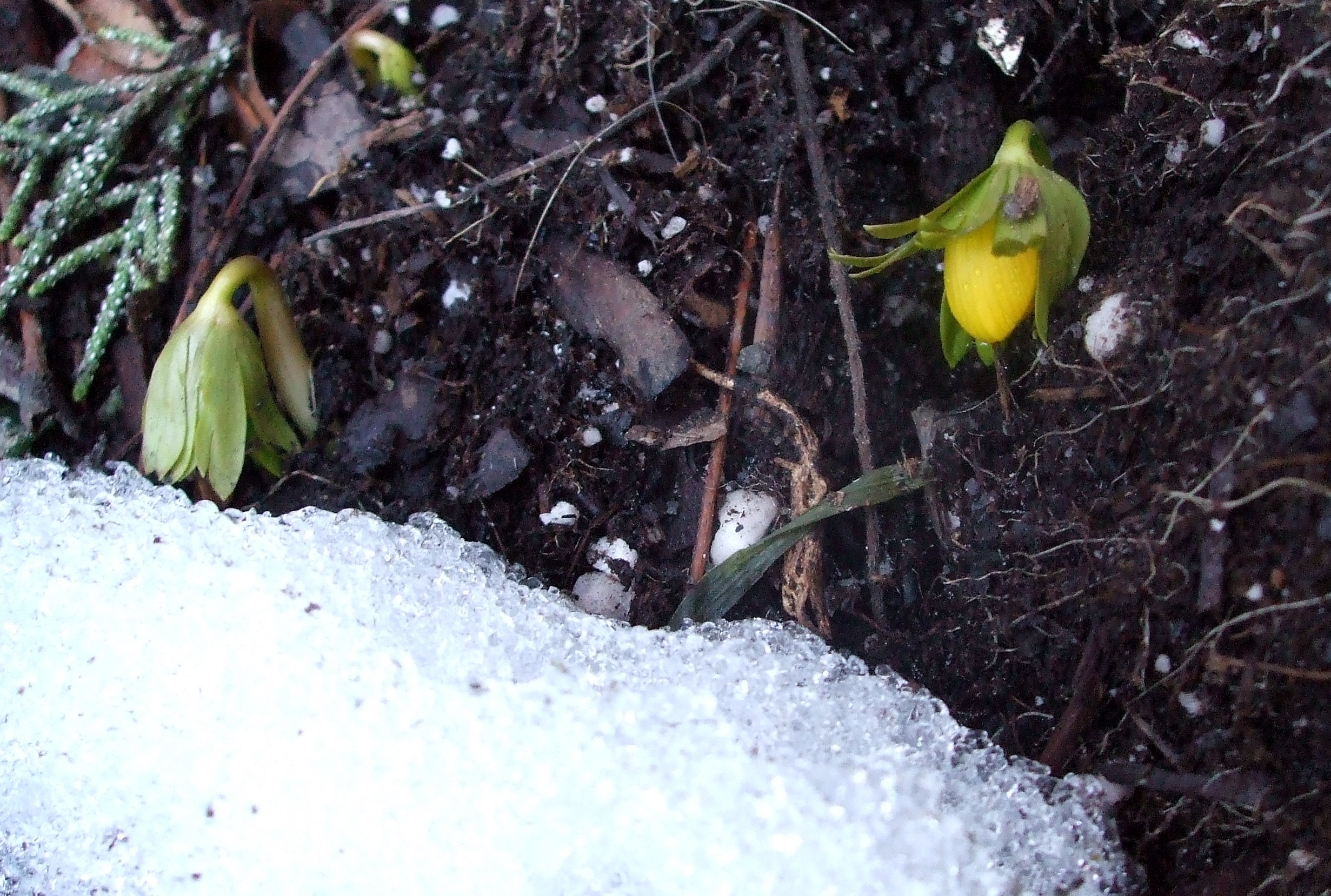
they are, simply, bent. bowed in humble salutation, yellow heads drooped, petals clasped in chilly huddle. there beside the soot-stained crust of snow.

they neither stamp their feet, nor clap their wee appendages, calling scant attention to the fact that they defy the icy crystals, heave big load upon their tender shoulders: they are the harbingers of heartbeat, of promise, once again.

“there will be stirrings just around the dreary bend, what is bleak will end,” they whisper, should you put your ear to where the words emerge.

oh, i never can remember what their name is, at least according to the botanists. instead, i call them “miracle,” balm for winter blahs.

as these last gasps come from all of us, come from earth, come from sagging spirit, as the wonder of the winter white turns to mucky brown of spring-that-will-not-come, i seem to forget every year to watch for them.

they leap out while i’ve not noticed, have done their work beneath the snows, labored in silence, unfurled without witness.

they are, like so many gracenotes along the way, that hushed brush of the divine–so often cloaked as mother earth–that present themselves at the very moment when otherwise we might succumb, throw up our arms and flop defeated to the couch.

there is, if you keep watch, a holy vein of resurrection all through life.

just when we think we’re broken, along comes someone, something, to haul us back from the empty brink.

so it is with the fellow on the el car who spies our weary face, our nearly-buckled knees, and leaps up to give his seat. he and his tattooed neck showing gallant empathy.

or the boychild who spies you wincing at the kitchen sink, and rushes over to rub your achy back, tells you in 8-year-old bravado, “go sit down, i can do the dishes.”

or, for those of us who count on bird and tree and sprig to offer counsel, dish out therapeutic session without the hefty fee-per-hour, there comes this time of year a subtle tapping on the shoulder, urging us on, giving reason to believe.

there is, for starters, the sun coming up each morn, the dawn arriving earlier and earlier as if the burning ball of gases realizes fully there is work to be done, a whole half planet needs its thaw; the list of chores, endless.

trees must bud, erupt in blossom. birds, any week now, will catch the wind, fly northerly, land in our branches, weave nests, lay eggs, pluck worms.

bulbs, already wakened, will push their way through dirt, make us swoon with all their cobalt blues and oyster pinks, golden trumpets, in a thousand shades of butter.

the light itself is purer now, lands on the countertop in ways that call us to attention, make us glance out the window, notice, return to task, emboldened.

and then, there in muddy crevices, knots of green poke through. unfurl. offer moment’s tingle, make you stop as you fumble for the keys.

once again, the promise comes. the earth has turned, the seasons haven’t frozen in their tracks. something’s stirring, gently, defiantly, persistently.

once again, winter thaws to spring, and so too we glean the vernal message: after months and weeks of slogging through the knee-high drifts, the mounds, the muck, when shoulders sag and heartbeats flag, alert your eyes, your ears, and soon your nose……

you’ll be wrapped, presently, in the envelope of resurrection. what has slept, will wake. what was still, will stir again.

the way hasn’t been lost, merely hushed before crescendo.

march gives way to promise, once again.

have you spied a sign here or there of reason to hope? is the long winter wearing you down? have you given in to the clump of $2 daffodils at the grocery store, hauled ‘em home as if essential vernal tonic?

little left but prayer

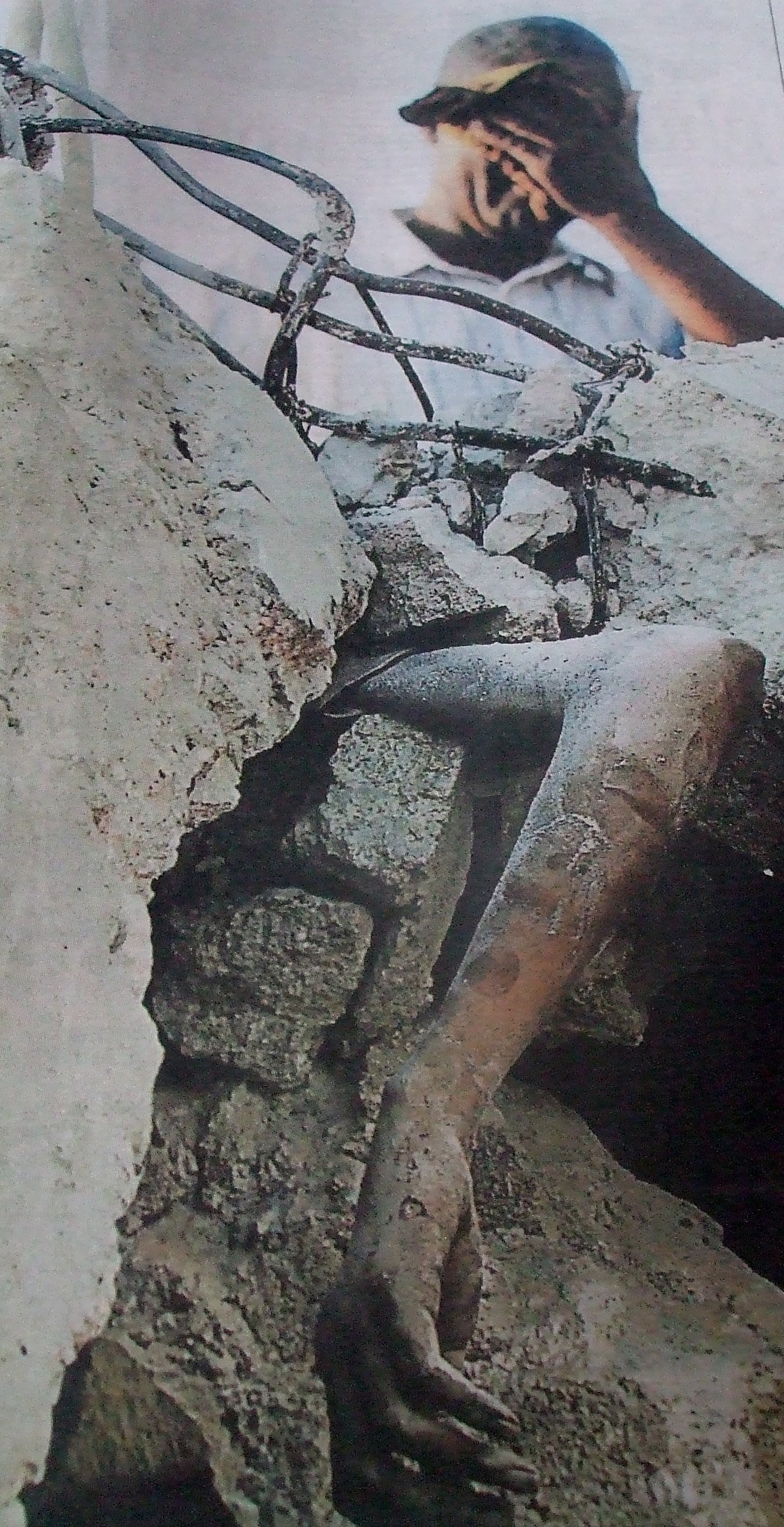
ever since the news swept out, ever since we heard the word that the earth convulsed and heaved and paid no mind to bodies in the way, i’ve found it hard to be inside my house, safe and warm, unshattered.

found it hard to sit beside my little one, he in warm pajamas, nibbling on banana, sipping milk, sitting on a stool that had no splinters, that was smooth and whole, warm air swirling all around us, the night’s cold breath blocked by glass and wall and roof.

couldn’t fathom, though we tried, he and i together, how not so far away really there were children crying, couldn’t find their mamas or their papas, maybe. couldn’t find a brother or a sister, or the family dog, the one who always curled beside them when the night came on the island.

haiti, suddenly, isn’t so far away, although the breadth and depth of the destruction in the wake of the once-in-200-years quaking of the earth is so incomprehensible.

i find myself, once again, riveted by tragedy on this small whirling globe.

this one feels so close to home. this one makes me shudder in my warmth, my comfort, my going to sleep knowing my boys are safe.

how can one people be so pummeled? not only now, but always.

how can some of us escape again and again? how can some of us think the car nearly out of gas on a frigid morning is a big fat deal? how can some of us be blessed to worry only that our children might not find the answers on exams?

we’ve been praying, my boys and i, the little we can do. we’ve been imagining who each prayer was prayed for. we imagine a child, or a grownup, we imagine a whole scenario, and then we pray a prayer just for that one someone we’ve imagined.

we paint pictures with our words, try to make the prayer concrete, explicit, particular, for the prayer to come alive….

“for a little boy, who is covered in dust, whose arm is broken, who cannot find his mama.”

“for all the children who are crying, and whose cries aren’t heard.”

“for the little one who is hungry, who hasn’t found her way to a slice of bread, to fruit.”

“for the ones who sit beside the rubble, waiting, not giving up hope, listening for whimpers, now fading, three days later when chances slip to nearly less than none.”

it’s all we can do, imagine prayer. construct biography and hold it in our arms, in the arms of our prayer, in our hearts that know no bounds.

we can’t, most of us, board a plane, bandage wounds, salve the brokenness. but we can stay with the mission. we can hold it day after day, hour after hour, night after night, in prayer.

and so we pray. and so we teach our children. we tell them stories. we show them how we pray. we know they listen. they’re not too young, not at all, to start to figure out how very blessed they are. how once again, they’ve escaped. but not far away there is no escaping, and thus we are all left to pray and pray some more.

this day i pray. for the ones who wail in pain alone. for the ones who are lost. who can’t find their way. who can’t find the ones they love. not one of them, i hear again and again on the news reports that crackle in from the broken island.
this day i pray and i don’t stop. there is little left but prayer for those of us who cannot rest when the world’s in pain, deep pain, inexplicable pain. pain they had no idea was just around the bend. about to swallow them whole.

carry on, the litany unspools……

amen, amen…

and so we begin.

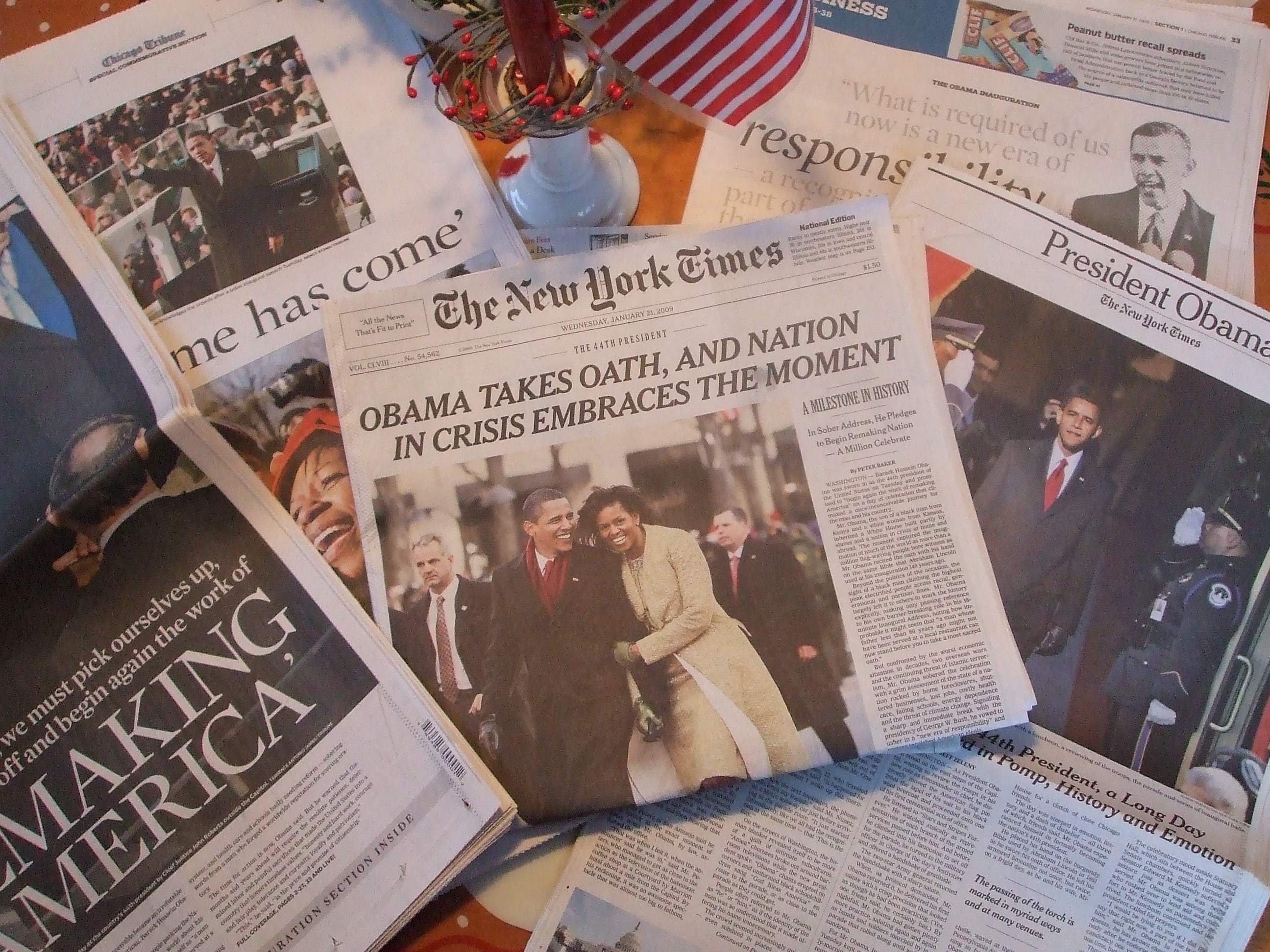
yesterday was the day for wiping away tears, for feeling the swell in the deep of our hearts. yesterday was the day for sitting mesmerized before the screen, taking it in, all of it, aretha franklin’s gray felt bow, outrageous bow, flamboyant bow, just-how-we-all-felt, crystal-studded bow. for taking in the tears, welled-up and streaming down the cheeks of an immigrant from gambia, among the many tear-streaked faces i won’t forget. for taking in the poetry of hands that laid the tracks, raised the bridges, picked the cotton and the lettuce, built brick-by-brick the towers “they would then keep clean,” and brought us–two million, flesh and blood; a globe of others through the miracle of satellites and wires, screens and speakers–to the mall, to the reflecting pool, and to the spaces in between the chiseled monuments of those now-hushed american heroes.

but most of all it was a day for taking in the words, the cadence, the power of a president who’s had his eye on re-stitching this torn tapestry for a long, long time.

i sighed out loud when he spoke of whispers from the fallen heroes who lie in arlington, when he reminded us of those who toiled in sweatshops and settled the west, endured the lash of the whip and plowed the hard earth. when he spoke of hands worn raw.

i held my breath. held it so hard i was dizzy by the speech’s end, the end of the inaugural address, the end of the words that marked the start of what just might be something very, very big.

and i prayed, prayed mightily, prayed without end. prayed, amen, amen.

will keep on praying, so help me, God.

i am teaching myself, reminding myself, to breathe again, breathe a new oxygen.

and for just one day, one sweet fine chill january day, i shut out all the cynics and the critics. in my mind and heart, his speech was a great one, no modifiers need apply. in my eyes, her gown was perfect, and so too the lemongrass one she wore all day. i gasped when i first saw both of them. don’t give a hoot what the sharp-eyed ones have to say. the sharp-tongued ones, i wish they’d just keep quiet. just for one sweet january’s day.

yesterday was not a day for judging. only for reveling. and savoring. and sucking the sweet marrow from the makings of a new america.

today, then, is the beginning. is when we all pick up the mantle laid before us, draped across the bone-cold mall, and across the frozen farmfields and the cities and the backroads and the riverbeds of this once great and once-again, i sense, great united states.

today, if we listened to his words, is the day we all begin anew. begin to be and act and dwell as if we are made of holy fibers and corpuscles and muscle with the strength to do the work, the necessary work.

today, then, is the day we don’t do what we’ve always done.

we start small, i’d propose, and we let it grow from humble shoots and sprouts. we start out wobbly, maybe, a little bashful, perhaps, but then we catch the wind, and, oh lord, who knows where we go.

we begin, just maybe, in the little universe that is our everyday.

we pick up the trash blowing through the alley, not because it’s ours but because it’s there and it oughtn’t be and we shouldn’t let its provenance dictate the hands that do the picking.

maybe, just maybe, we practice a whole new way behind the wheel. we don’t honk for no reason. we let the car coming from the other way take the parking space, and then we wave and nod and make it clear we’re making room for a whole new kindness and generosity.

we look, i hope, into the eyes of the man stuffing cartons of milk and cottage cheese into our grocery bag. we say, have a lovely afternoon. and we mean it.

we go into our children’s classrooms. we tell stories. turn pages. help the one who struggles with a pencil try to find his curly loop, or the ledge on the paper where the letters sit.

and then, more boldly, we go beyond the school where our own children sit, we go to ones where mamas and papas don’t have the chance, maybe, to sit and practice number drills. where there’s no globe at home, so the children in the desks have never really seen just where their city sits at the edge of the lake in the middle of the land mass that seems to run from top to bottom of that globe.

and then, after we read with them, and turn pages, maybe we go make lunch for them. bring cupcakes, for crying out loud. because have you ever met a kid who does not deserve a cupcake for no reason at all? maybe we bring our own children along. watch them make friends. watch them start to understand that the world does not begin and end at the borders of the village or the block they call their own.

maybe when we’re walking down the street, or through the office, maybe when we hear the gossip start to roll off tongues, we say, hey, don’t. please don’t.

maybe all the hundred little choices we make in a day, maybe they all add up.

maybe we start to do what the man at the foot of the capitol meant when he stood up against the chill wind and said, starting today, we’ve got to pick ourselves up, dust ourselves off, and begin again the work of remaking america.

maybe that’s why this morning i am sleepy-eyed from staying up late to watch the ballgown swirl, the white one with the single shoulder sash and all the poofy little posies, the one she kept lifting from beneath the tips of her shoes where it was getting caught while she was dancing cheek-to-cheek, maybe that’s why i’m sleepy, yes, but mostly why, this brand-new morning, there’s a pumping in my heart that tells me there is work to be done.

work for all of us, not just the one who is the forty-fourth and the first, all at once.

let the work begin.

amen. amen.

what will be the ways you begin again the work of remaking your corner of the universe? what frames from yesterday will you not forget, not ever?

when chill, er, arctic winds blow…

with all its might that mercury is push-push-pushing, trying with every ounce of january muscle to get up to where the one meets the zero, calls itself a brisk ten above.

even the rhododendron leaves, just outside my window, are curled tight into a rod, curled as if their life depends upon it, which in fact it does.

the feathered traffic at the feeder is slow to none, and, mostly, sparrow shiver in the pines. i think they’d like to call for carry-in, or better yet delivery. but the lines, i fear, are iced.

the morning when the world is frozen is a morning when you’d prefer, perhaps, to catch the nearest plane to tahiti. but, dang, that would entail walking to the curb–at least–to catch the taxicab.

so instead, why not do what i love best, and make yourself a list. a list is a beautiful thing. a romantic thing. you sketch your hopes and dreams. tick them off in little snippets. barely even have to finish your thought. you know what you mean. it’s you, for cryin’ out loud, making that there list.

so, then, with no ado–it’s too cold for adoing–here is the way i’d like to spend a ch-ch-chilly day at the end of a long, long, long, long week:

*crank the brand-new tunes my manchild made for me, the soundtrack, perhaps, from “once,” the movie a dear old friend told me months ago would inspire me. he was right. and now i can’t stop mumbling with all the words, my own odd version of pretending i too can sing along. which i can’t. just ask my boys. even the cat took to under the bed.

*fill the troughs, pour hot water into bowls for all the critters. there is nothing so satisfying–for this faux farmer girl–as making sure that all God’s creatures are duly fed and watered. i’d distribute little blankets if i could, but instead i put out extra christmas trees so they could harbor in the branches. more real estate, the better for those birds, way i figure it.

*grab the mcdonald’s coupon books, and drive to where it’s dark and even colder. pass out books to every hungry hand that reaches your direction. give the folks on lower wacker drive a place, and means, for getting in and out from this coldest cold. God bless my mama who gave me those books for just this purpose. God bless the soul who inspired her, whose story we found out only when he died, how he spent his winters doling out hundreds of dollars in vouchers for a hamburger and fries, and a hot, hot coffee that bought a seat where heat was all but guaranteed.

*once back home, grind the beans and get your own hot coffee going. stoke the steel-cut oats, while you’re at it, too. i’ve got the grandest formula these days: scottish steel-cut oats, 1/4 cup; water, 1 cup; sprinkle of salt (don’t ask me why, all i know is it works); flaxseed, 2 tsps.; sprinkling organic raisins, cranberries, apricot, chopped; 1 walnut, 1 almond, chopped; dry milk, 1/3 cup; cinnamon, a good stiff shake or three. now, get the water and the salt a bubblin’, stir and dump the oats, then all the rest. let it simmer half an hour. dump it in your favorite bowl (mine is red with fat white stripe), grab a porridge spoon (mine is wooden, and it sailed in from old vermont). take a seat at the kitchen table, staring out at birds, who might be staring back at you. invite them in, for heaven’s sake. they might love the porridge.

*whisper benediction for the oats, the birds, and all the souls far colder than you have ever been. pray to God that warmth blows in, deep and boldly to their souls. don’t let them die, God, frozen to the city’s underbelly.

*and, besides all that, the best idea for how i’d like to spend an arctic day is invite a house full of folks i love. cook all day the day before, and fill the vases with blooms galore. stack the logs to make a fire. putter here and there, making it a house that shines, and shouts: warmth dwells here. come in, come in. leave your cares outside, where chill winds won’t stop blowing.

peace i wish you at the end of this long week. and warm toes besides.

do you like lists as much as i do? what would you do on a chilly arctic day when the poor old mercury makes it up to 10, then dwindles back to less than zero?

red alert

i didn’t notice the first day. and not really the second day. but, by the third day, the third bitter cold day in a row, the third day when the unfurling of scarlet as it darted from pine bough to naked magnolia was decidedly absent, i started to worry.

now, worrying, in case you don’t know, is something i do exceedingly well. comes naturally. like breathing, only in staccato. only in spending the morning with an eye out the window, watching, combing the sky and the branches. on fullest alert.

as i watched without reason to hope, as i thought of the bitterest cold, i remembered the words of my mama telling me how so many birds from her flock had been lost, in the deep snap of cold.

“couldn’t survive,” she declared in that way that she does, unspooling for all of her nestlings all the mysteries of nature, of life and of death. she seems to know things that come from a long life of breathing in sync with the birds and the woods and the clouds.

and so, as the image of a little red bird, fallen somewhere, on the unforgiving crust of the snow, made the hairs on my neck rise, i thought of climbing in boots, commencing a search. imagined the crunch through the snow, pulling back branches, poking through all of the grasses, now frozen and matted and frankly quite knotted, that i’d left in the yard for the winter, for the birds who might savor their seed, or their harbor, on a day not too cold to put wind to their wings.

then i thought of the hawk. the great cooper’s hawk, the one with the tail so big and so thick i once mistook it for an owl–and that was merely the tail. add the head and the wings and the muscle-bound chest under all of those feathers and you’ve got a bird you should fear.

and fear it they do, all my fine feathered friends. one mere swoop of the hawk through the sky, clears all of the branches of birds. they scatter, i swear, when that hawk is a mile away. they know, before i see a thing, that death in the clutches of indiscriminate beak, or in talons the size of a three-penny nail, is a death to avoid.

and then, always, there is the cat. the cat that i feed twice a day. the cat who curls up on my lap, and purrs like a chevy with ’58 fins. that cat, i pretend, knows better than to touch a red bird. if that cat crosses that line, comes home with a dried bit of feathery red there where he does all his licking, that cat will be dispatched to the dungeon. and i like to think–though i’m sure i’m kidding myself–that he’s too tender-hearted to torment me so cruelly, to partake of papa the cardinal.

while all these horrible endings swirled in my head, i ached for the red bird–papa, i call him–who, whenever he darts through my day, brings me a deep knowing that i’ve been touched by a something divine.

i can be pouring a tall dose of coffee, there by my little side window, and, poof, there’s papa, his bright scarlet frock nestled right there in the bushes just inches away.

or, as i haul out the trash, or dash to an errand that should have been started nearly an hour before, there’s papa. cheer-cheering from top of the oak. or playing peek-a-boo in the pines.

wherever he comes, whenever he flashes his colors, my soul breathes a sigh that makes me feel wholly at home. he brings the divine down to the earthliest minute.

now, i know that a bird is not mine. these birds all around me belong to the heavens. and the trees they inhabit, just happen to be near to me and my four-walled nest.

but, over time, a particular possessiveness creeps in the equation. they are mine, i am theirs. together we do a fine dance. a dance i’m not willing to end.

and so, in the hours when i’d noticed his absence, when i raked all the limbs, when i scoured the ground, i felt the depth of that dance in my heart, realized the intricate wiring between me and my red-banner bird.

it is, perhaps, the shock of the color itself, heart-stopping, really, against the bleak gray of the winter undressed, or the white of the winter, fully attired.

it is that sign from above that amid the humdrum, the everyday, there comes, without warning, without siren, the scarlet cloak that whispers, “your day was just touched.”

it is hope when i need it, a charge when i’ll take it. it is, some lonely hours, as if the Holiest One is tapping there at my window, the answer to an unwhispered prayer.

and so it was, when, after three days that felt like three weeks, that flash once again caught me unawares. i was minding my business–i’d forgotten if only for a bit of a while that i needed to worry–when, suddenly, there at the feeder perched papa.

i moved close to the window, as close as i could without startling my too-long-gone friend. close enough to see his little heart pounding, there under the reddest of breasts. my heart pounded as well.

for a minute there, the other day, me and a bird from somewhere on high, we beat the same song with the whole of our hearts. papa was home, was safe, wasn’t buried, stiff in the snow.

his absence now over, i’ve not yet let go of the sense that i–and he–was saved from a terrible sorrow.

sometimes it takes a bit of a scare to remember how blessed we are.

sometimes we don’t feel the depth of a plug in our heart, until it is pulled. until there’s a hole and it’s gaping.

only then, sadly, do we realize that without that something we love, that something we count on, our breathing is not wholly ours. it depends on grace all around us. it depends on the touch under the sheets in the night, on the peck on the cheek in the doorway, or the flash of a wing in the branches.

the red bird out my window taught me that lesson this week. gentle bird, messenger bird. bird in heavenly red. bird that beckons attention.

have you seen a sign lately? a celestial sign? some sign from above that reminds you the earthliest truth? have you come to know, only too late, how deeply you miss some grace note you’d taken for granted? any one else feel a particular kinship to the reddest bird in these parts (save for the tanager who seems too scarce for everyday musings)?

fire-hydrant funeral

fire-hydrant funeral

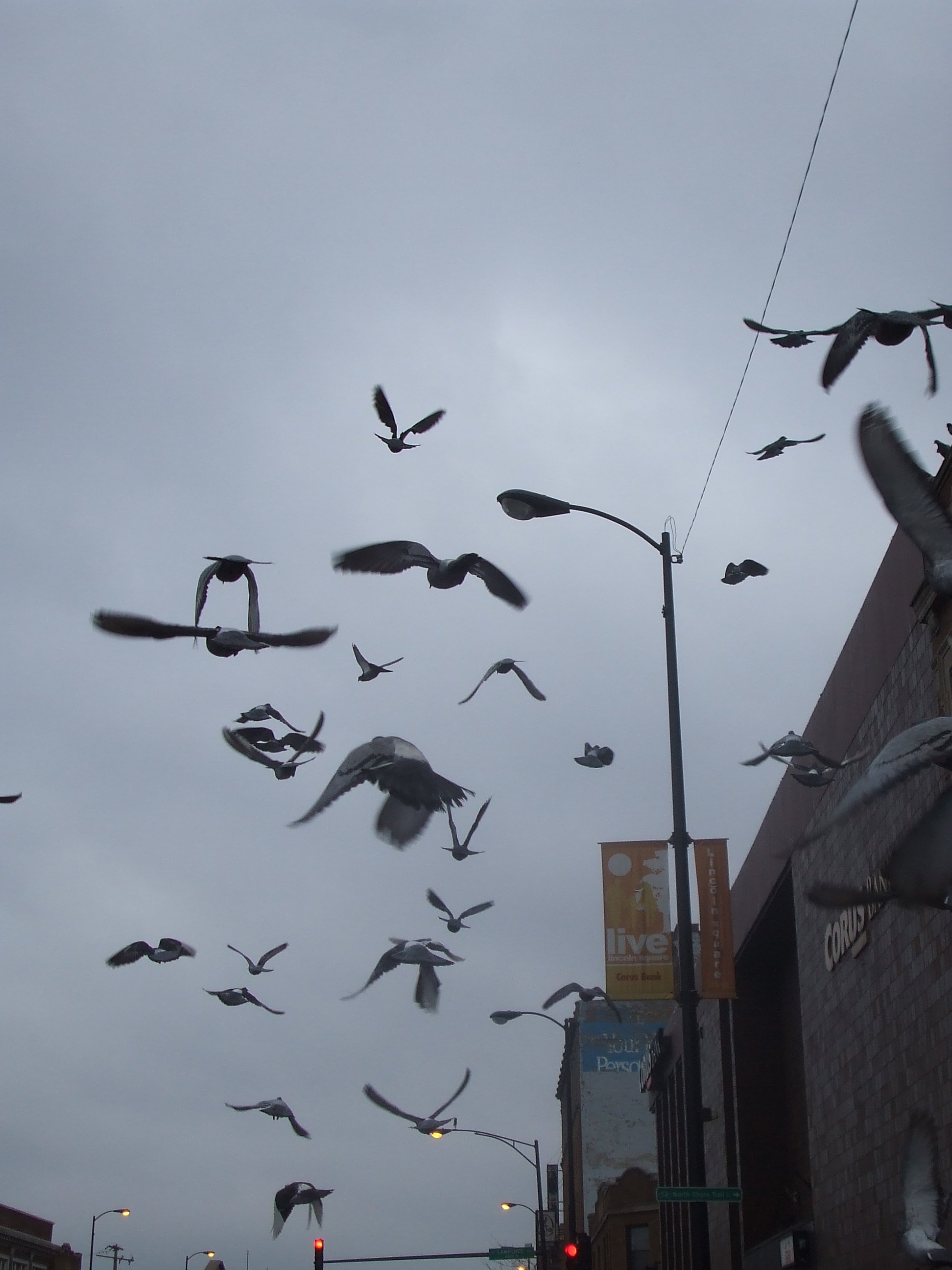
they came on foot and on wings. one hobbled on a three-pronged cane. one pedaled her pink-and-white old-timer bicycle. a whole flock finally came down from the soupy gray sky.

they all were drawn to the fire hydrant, now empty, now nothing but a bulging spout where firetrucks would hook up their hoses should a fire ever come to the dingy gray block of western avenue, across the way from lincoln’s statue, on chicago’s north side.

but for nearly 10 years that hydrant more or less belonged to joe zeman, the stooped old man best-known as the pigeon man of lincoln square.

nearly three weeks ago, joe died. was killed when a van pulled out of a bank parking lot, and the elderly driver didn’t see the man who so often–when not covered in pigeons–faded into the shadows.

the hydrant belonged, too, to the pigeons, joe’s pigeons, the dozens and dozens who fluttered down, found peace on the sturdy limbs of the man who made like st. francis of a city.

the pigeons roost–then and now–up on the terra-cotta brow of an old boarded-up bank, or down by the corner where the street lights blink all night and day. but they don’t circle down to the hydrant anymore.

some say the pigeons are crying. some say that in the days right after joe died, the pigeons circled, cooed in a way that sounded like wailing, then dropped their heads, flew away. kept watch, but wouldn’t come down to the hydrant.

the sadness that swelled their hearts–people and pigeons, alike–could no longer be contained. nor the yearning for a proper goodbye.

so, on a balmy january sunday, just yesterday, friends and strangers–even the pigeons–came back to the hydrant.

there was no clergy at this fire-hydrant funeral of sorts. and no coffin; joe had been cremated at his family’s request, and they promise to hold a memorial in a few months. communion came in the form of squishy white bread, on sale at the aldi, passed out in single slices to the dozens who wandered by for the better part of an hour.

a city bus pulled to the curb, so the driver–who told me he whispers a prayer every time he rolls by the now-empty hydrant–could pay his respects. another one honked, from across three lanes of traffic.

even a city cop, in her squad car, pulled up to add her blessing. she was the beat cop who’s worked the precinct for the last seven years, and she used to stop by each day to visit with joe. not once, she said, did she respond to one of the callers, the complainers, who wanted joe hassled for feeding the pigeons.

before she drove off, she told me joe died with a copy of a newspaper story clutched in his hand, not tucked in his jewel bag as i’d first imagined when told by the cops he’d died with my story right there.

this whole sidewalk benediction for joe, for joe and all that he stood for, was the idea of tara theobald, a woman who sports a faux-hawk–that is a semi-mohawk, close-cropped on the sides, curly and longer in a stripe on the top–a woman who never once met or even saw zeman, but read of him, and mourned for the hole now in the weave of the city.

“he was an icon,” she told me. “he was someone taking care of the community, the animals, the corner. he showed the neighborhood what it means to care.”

hers was a simple idea. on facebook, no less, she put up a post, asking hundreds of folk to come pay their respects.

“bring bread and/or grain, and any kind words,” she wrote, “to commemorate zeman’s philosophy of charity and consideration he long evoked in the lincoln square neighborhood.”

and so, under a gray sky that seemed to be dripping fine mist, a small knot gathered. the pigeons, nearly a hundred, and the people, no more than seven or eight.

in all, there were nine loaves of bread, a bag of cracked corn, and 200 black-and-white cards that theobald had designed, printed and photocopied. each one showed a photo of joe, covered in pigeons, with the word compassion, defined: “deep awareness of others’ suffering, accompanied by the desire to alleviate it.”

beneath those words, she wrote simply: “joe zeman. 1930-2007. be the change.”

she had no solid plans for the simple sidewalk remembrance. just a loose notion to pass out a single slice of the bread, and a compassion card, to each passerby. hoping to stir up the spirit of joe, there at his hydrant.

for nearly an hour, a stream of folks flowed by. out on a warm gray sunday for a stroll, running an errand, chasing a bus, some stopped, some paused, others kept right on walking.

the sidewalk was slick from the mist. the curb was clogged with charcoal gray slush, the last bits of snow, melting.

crumbs of bread and the scattering of corn soon soaked up the spill from the mist and the snow. the pigeons returned, gobbled up bits, then roosted again.

stories were told. a refugee worker remembered how she passed by joe every morning, how his soft gentle ways infused her, reminded her how she ought to be. a young mother out walking her four-year-old stopped to say how many conversations joe and his birds had inspired. how she used him to teach her little ones how to be in the world they were just learning.

one old lady cried. a grad student, one whose teacher had penned a beautiful poem, a poem entitled, “endangered species,” a poem about joe, cleared her throat, turned toward the pigeons and began to read.

the last line of the poem is the one i can’t forget: “who is to say you cannot collect love?”

it was the city at its slushiest, grittiest, there where the pigeons do and mind all their business.

and it was there that a woman who teaches synagogue sunday school dreamed up this holy sidewalk communion, for the birds and the un-winged friends, all so very much missing an old hunched-over man who tried to teach only this:

“i’m really advertising to the public how easy it is to be good without an attitude,” he once told me. “it’s just as easy to show decency as it is to hate today.”

don’t forget joe. be the change.

blessed monday, blessed back-to-the-real-world monday. i needed to take you all to the sidewalk to see what i saw, to hear what i heard. i have a similar story in the tribune today, but i couldn’t say there all that i can say here at the table. so this one’s for you.

long as we’re here, i just wanted to say happy blessed day to mbw, another urban saint among us. she’s my kind of hero, used to leave her car unlocked every night so some homeless folk could find shelter and a soft place to sleep. she was my first best boss at children’s. i picked her to be my firstborn’s godmother, cuz hers is a soul and a wisdom any child would be so blessed to absorb.

at our house it was a rocky beginning to the week. hope yours was smoother. and here’s a prayer that all of us find what it takes to return to the real world, but still hold onto the magic of unwrapping mornings, and twinkling nights. the test is now, to find peace in the long list of to-do’s. hope the story of joe, and the hydrant, brings you a bit of what you might need this january monday.

the pigeon man of lincoln square

the police called me last night. a few times.

they were calling because an old man, an old bent-over man, one with a black canvas satchel slung over his shoulders, too-big janitor’s pants held up by suspenders, was shuffling along on a sidewalk, beside a busy city street, on a cold december tuesday, yesterday, at 2:15 in the afternoon.

probably, he was headed off to the fire hydrant, the red one, just by the bank at lawrence and western, where the pigeons, for years now, have counted him one of their flock.

the old man was walking, past a bank parking lot, when another old man, one driving a chevy van, pulled out of the lot. must not have seen him. the man in the van hit the one with the satchel.

the old man died.

the old man was joe zeman. but most everyone called him the pigeon man of lincoln square. cops couldn’t tell who it was. except for a newspaper story, one laminated, tucked in the satchel, one with a little rectangular label up in the corner, scribbled with the words, “for who ever.”

except for that story, one that showed him, in color, feathered with pigeons, one that told his story, the cops and the doctors who pronounced him dead at the hospital had no clue who he was.

the pigeon man’s life was like that. barely a soul had a clue who he was. mostly, only the pigeons.

that’s why the cops called me. they knew i knew a bit of his story. i wrote the one they found in his satchel. two years and three months later, almost to the day, and he still carried it–maybe half a dozen laminated copies of it–wherever he went.

the cops needed someone to call. needed to know if there was a soul in the world who might care to know what happened to joe.

there was no one, save for the pigeons. and me.

here’s just a bit of the pigeon man’s story, the one he carried till he fell down and died:

“except for the lips, you would think he was made out of stone, the man who sits, hours on end, on the red fire hydrant on western avenue, just north of lawrence, pigeons by the dozens perched on him.

“pigeons on his head. pigeons on his shoulders and right down his arms. pigeons poised on each palm. pigeons clinging to his chest. pigeons on his lap. pigeons on his thighs. pigeons, of course, perched on each foot.

“the pigeons peck and coo, occasionally flutter their wings. sometimes even scatter. but not the man, the man is motionless. you might mistake him for a statue.

“joseph zeman,” 77 when he died, “can sit for hours, barely flinching a muscle,” i wrote. “except for those lips.”

i wrote how he cooed right back to the birds. how he kissed them, right on their iridescent necks, flat on the point of their sharp little beaks. how he nuzzled them, rubbed his nose in their wings, the herringbone of feathers all black and charcoal and pewter and white. how he called them by name, his favorites. how he worried when one was missing in action.

i wrote how up in the attic where he lived a few blocks from the hydrant he kept track, in a neat little ledger, of whatever dollar bills might have been slipped in his hand, dropped by the side of his hydrant.

how he used the money for his pigeon supplies, the unpopped popcorn kernels, the bags of white rice, the loaves of deerfield farms enriched white bread, the maurice lenell oatmeal cookies, the plain old birdseed that comes in 50-pound sacks, which he broke down, each night, into zip-top plastic bags.

i wrote too, because he took me up to his attic, because he was proud to show off his deeply-thought method, of the old baby food jars he filled, each morning and night, with rice or popcorn, seven jars in all, and tucked in his satchel, each time he shuffled off to the hydrant.

twice a day, at least, once in the morning, once in the late afternoon, the pigeon man returned to his roost.

but the part of the story that’s stayed with me all these years was the part where he explained why he was drawn to the pigeons.

“all my life i had so much backstabbing at home, real problems there. i got to love the animals more, so trustworthy. fifty years, all i heard was ‘shut up, shut up.’ i needed help at home ‘cause i was handicapped. they took advantage of me. epileptic fits since the day i was born.

“because i had so much trouble at home, i learned not to say nothing, keep to myself. so they came up to me [the pigeons]; i appreciated the friendship out of a bird more than a person. they’re wordless. they come up with pure appreciation.”

zeman, who for 47 years ran a newsstand downtown, said that he considered sitting on the hydrant the most important work he had ever done.

“i’m really advertising to the public how easy it is to be good without an attitude; it’s just as easy to show decency as it is to hate today.”

zeman, a man without much schooling, understood how when he took to the hydrant, raised both his arms, palms upward–the veneration pose, really–as thousands of cars and trucks and smoke-spewing city buses rumbled by, drivers craning their necks to take in the sight of the stooped little man covered in pigeons, he really did resemble a modern-day st. francis of a city.

matter of fact, up in his little attic, he had boxes and boxes of st. francis postcards, each one printed with the peacemaker’s prayer: “lord, make me an instrument of your peace. where there is hatred, let me sow love…”

matter of fact, zeman once grabbed a stack of the postcards, maybe a hundred or so, and gave them to me. i tucked them all in the drawer of my desk, here where i do all my typing. i keep them, right there, to remind me of the wisdom of the lost soul who found his peace with the pigeons.

just yesterday afternoon, before the phone rang, before any cops called to ask what i knew, i had reached in my drawer for a calculator, and my hand ran into the stack, spilled and scattered, making a mess in the old pine rectangular drawer.

i started to shove the cards back into a stack, but then, for some reason, i picked up the top one, and i read it through to the very last line, which just happens to be, “and it is in dying that we are born to eternal life.”

thinking back on the day, i know that the clock ticking beside me had to have been just after two in the afternoon.

that was the hour when the pigeon man of lincoln square breathed his last breath.

that was the hour the great gray raincloud of pigeons, the ones who for nearly 10 years had kept watch on the hydrant, had fluttered down as soon as a little stooped man slid off his satchel, settled onto his cold metal roost, raised both his arms, palms upward–the pose of st. francis–that was the hour the birds must have let out a most mournful coo.

this morning, for almost the first time in a decade, the hydrant is empty. the pigeons are perched. but the little man with the gentlest heart is not coming.

not ever again, amen.

oh, goodness. i’m back from my respite. and thank heaven there’s a place where i could tell joe zeman’s story. carry it close to your heart, maybe. scatter some seed for the birds today. think of the man who found solace only in the birds of the city, birds often shooed and thought to be pests. the picture above is my desk drawer. i too had a laminated copy of the newspaper story, one the pigeon man gave me. i keep it off in another drawer. but last night, i nestled it next to the prayers of st. francis. seemed the right thing to do, as i remembered the man who taught me so much.

i’m thinking i’ll pull up a chair, meander, at least every wednesday, smack dab in the thick of the workweek. but as happened today, what i thought i would write got nudged to the side so i could tell the pigeon man’s story. that means i’ll be back friday to tell the one i intended to tell today. we’ll find a flow here, as we settle into a rhythm that’s new. till then, just wander back when you can, you might find something waiting.

oh, and one other thing, thank you so much for the beautiful thoughts you spilled as the chair wrapped up its whole long first year. i am touched. deeply.

teaching to see

he rolled out of bed the way he usually does: somersault off the pillow to sprawled on his back at the end of the mattress, head dangling, flopping like some sort of upside-down rag doll, not too far from the ground. a perfect inverted perch, he decided, for keeping watch out the window.

that’s when he called me. “papa is out on the roof. he’s hopping around. i think maybe he’s looking for breakfast.”

papa, for those who’ve not hung in this house maybe so long, is not the little one’s name for the tall guy with tortoise-rimmed glasses. it was not he who was hopping around on the roof, although i too would have come running for that. rather, it was the red bird, papa cardinal, a character here who goes by only one name.

after broadcasting every breath papa was taking, out there on the roof that juts just below the window through which he was watching, the little one reached for the ledge. or maybe i reached there first. the point was, one of us reached for and grabbed the binoculars.

suddenly, the boy hanging there with his curls topsy-turvy, wanted to learn how to look through the little glass circles that, through the wizardry of optics alone, bring the world as close as the end of your nose.

as i tried–it’s clumsier than you would imagine, believe me–to line up the circles, tried to narrow then widen the space in between so it fit the very same space on the face that is his, as he attempted to make it all clear, and not blurry, not too close, not too far, not staring down at the gutter, but trying to get that ol’ bird in his lens, i realized really i was teaching the boy how to see.

how to regard. how to watch. how to take in the world without any words.

how to notice the pinhole there on the side of papa’s small beak. how to study the feathers he fluffs when it’s cold. how to see the ballet of the leaves in the trees as they shudder there in the november wind.

he was, for a while, finding it hard. the bird was nowhere in sight. all he saw were the nail heads there on the shingles.

not quite the subject of choice for intro to looking, a beginner’s class in the fine art of things to do with your eyes.

ah, but once he got papa there in the cross hairs, he didn’t move. didn’t flinch. just froze like a boy with a bird in the palm of his hand. which, almost, it was.

he might still be there now, only the clock nudged us on, the clock and the notion that school had a bell that soon would be ringing.

but, like clockwork, each morning since, he somersaults off the end of the bed, grabs the looking lens from there on the ledge, and begins again to scan the sky, and the trees, and whoever decides to land on the roof.

he’s even tried it at night. though it’s a little bit hard to make out a star with a mere binocular lens. i explained that’s where the telescope comes to the rescue, but that would be the next class in the series, and we’re only just fumbling with this.

last night, drying off from the bath, he explained that really he’d like to see clear to africa. he was hoping perhaps he could raise the lens to his eyes and see faraway.

far, faraway, he explained. he’d like to see maybe a lion or cheetah. and surely a tiger.

“and some day, when i’m 7 or 8,” he informed, “i’m gonna get real binoculars and try to find any sorta kinda nest. so i can look at a fox’s nest, or a bird’s nest, or a squirrel’s nest.

“i would really like it,” he went on, sliding a leg into his red flannel pajamas, “if papa cardinal would just stand there, and didn’t move completely.”

it needn’t be exotic, i’m thinking he knows, for what you see through your lens to be utterly gripping.

i couldn’t be more tickled that he’s taking so deep a fancy to a sense that can take him so far, a sense that will bring more wisdom and glory than he or i or any of us, really, can ever imagine.

to see is to know, is to understand, is to absorb.

to see is to take in, from the thinnest strand of a spider’s web laden with dew to the last dying ember of a star as it streaks through the cosmos, the whole of God’s breath.

and i mean that without the d. although the breadth and the breath aren’t far from the same. but if we consider the whole of creation one deep exhale from the in and the out of something like lungs wholly divine, then really it’s all, well, supremely breathtaking.

and it is not every day that any one of us gets a chance to instruct in using the eyes for all that they’re meant to take in: the way someone fidgets a spoon while making a point at the table. the color of sky as the last beams of the day paint it a pink you’ll never forget. the glint of the moonlight on a pine branch heavy with snow. the gleam in the eye of someone you love.

and, oh, what of the things we can’t teach, the ones we only can pray they learn on their own: how not to miss the twinge of the hurt deep in the heart; the sparkle of love blooming; the look of intent, of paying attention; how to notice a soul draining toward empty.

really so much of it is only just seeing by feeling. it’s braille, after all. so much of the seeing that matters. it comes through the gift of the eyes, but also the touch of the skin and the skip of the heart.

but, alas, in these mornings of teaching to see, i realize i am bound, i am tethered to only the lens bobbing there on the end of the cord that slips over his head.

the rest of the teaching to see i will teach without lenses. i will teach, day after day, for as long as i’m here. i will teach my children to look and look closely.

i will teach them the glory of God is there through the lens. but they must open their hearts, as well as their eyes, to soak in the sights.

it is the often unnoticed to which i must teach them to pay the closest attention.

the five senses, most of the time, come already installed. but not always, and in the absence thereof we notice how much of the world we get or we miss through the eyes and the ears, the palate, the skin and the nose. and even in cases where all senses are up and running, still there is refining and learning sure to be done. if we pay close attention. far as i know, it’s a lifelong dedication. did someone or something teach you, unforgettably, the fine art of seeing, of watching, of looking quite closely? what are some of the fine points of life you’d so miss if not for the grace of your eyes in the first place?

today is the day of the birthday of my sweet cousin julie. and tomorrow, my mother, the one who i realize, so many mornings as i sit to start typing, has informed so much of the way i see through my lenses onto the world. to both, i send the deepest of blessings and prayers for a year just ahead that is filled with great sights. and the knowing, deep in both of their hearts, that you are so loved. happy day of your birth. be full of joy.

a prayer for the grownups of children who struggle

prayer for grownups children struggle

this is communal. there is, far as i can tell, not a soul who doesn’t at one time or another come into the ranks. there is no corner, sadly, on this market. no me-me-me thinking you are the only one who knows what it is to lie deeply awake–and not that you’re counting the holes in the ceiling.

hardly.

you’re racking your heart and your soul and your brain, even your belly, trying to figure out, devise some plot, to push back the struggles that threaten to swallow your little one. or maybe your big one.

you are no less than moses at the red sea, i tell you. you and your rod, standing there, palms raised, as if.

as if you, who does not possess any magical powers, can reach into the brain of a very young person, reach in and straighten some wires. get synapses connected. make them see. make them hear. make them not be afraid. make the letters that spill on the page line up in some sort of sense. instead of backwards and jumbled and utterly, thoroughly awful. so misbehaved, that alphabet.

as if–oh, God, please–you could stand in the halls or the lunchroom, or off to the edge of the playground. make the mean kids go away. stop the big ones from picking on little ones. or the other way around. splinter the words being hurled, the ones that are ugly and poison and might sting forever.

it is hell and it’s lonely besides.

barely a soul is willing to advertise the truth of the matter: not a one of us is merrily sitting back, watching little people skitter through life. as if it’s a pond and they were on skates and they’re gliding. making true loopdy-loops.

nope, i am no researcher, or taker of census. i have not knocked on doors asked, excuse me, is there suffering here?

but chances are good to better than good, the answer is yes. very much so. why, thank you for asking.

in my own little world, in just the last week, for instance, i’ve heard all of this: a child who tried to jump out a window. twice. one who died. one who can’t hear very well and it’s making her mad. you would be too. if all day you struggled to make out the words on everyone’s lips. and the lips didn’t move very slowly. not at all.

i’m not done: a boy afraid to turn out the light. another who won’t. a child who cannot see the big picture and hold onto a small fragile thread. it’s one or the other. and sometimes you really need both.

there’s a girl who keeps having seizures; no one knows why. but do you think, for a minute, her mother rests easy, whenever she’s not in her sight, whenever the phone rings? there are two boys who are watching their lives rip in half, as their parents divorce and it’s not always pretty. and two girls i know who won’t eat. no more than an apple cut in very thin slices. and she’s the one making progress.

my point here is not to make you feel drowning. my point here is just to take a deep breath. whisper a prayer. maybe think twice when you next feel alone. when you happen to think you can’t bear it. when the waves of your worry, and your lack of solutions, pull you down under.

i got to this notion the way i usually do. i thought and i thought. i listened and looked and tucked away stories. i jimmied my heart to the wide-open valve.

and all week i rode the waves of a sea that’s not far from despair. there is a boy who i love who is utterly stumped by parts of the school day. the parts where the words and the pencils are. in first grade, as you might imagine, that is a fairly good chunk of the day.

it is, at this point, still a mystery. as if there’s a fog that isn’t yet lifted. we can’t quite make out the landscape. i asked him last night, when word after word was coming out backwards, what it felt like inside. he took his hands and scrambled them all through the air. i heard my heart crack then.

and i know that that crack is not only mine. i know it rises up from the houses, all over the towns, all over the hillsides and valleys below. all over the world.

it would be headlines, i suppose, if there were a house where never a worry there was. or maybe the grownups in charge are made of something other than my flimsy cloth.

i am not, however, one to cave in to worry. no, i find it a friend. an ally, in fact. it stirs me, propels me, gives me whatever it takes, to take on the very steep climb up the waters that will not be stilled.

the prayer that i pray then is this: that even in the depths of our darkest night shadows, when all that we fear comes out of the closets, leaps ‘round the bed, bangs on the pillows, we might picture each other. know the communion of trembling hands. hearts that will not surrender.

that whatever it is that haunts and plagues all of our children be kneaded away. by heads that are wise. and hearts that are deep and filled with infinite chambers.

that we don’t wrestle alone. that the great and tender hand of our God settles quite firmly at the small of our backs. fills our lungs, too, with the breath that it takes to blow back the winds that are chilling. settles the waters. gives us a chance, and a hope, of making the climb, to the crest of the wave.

where, if we’re so blessed, we can look out at a sea of children who have managed to swim. and are stroking and breathing. and making a magnificent splash.

that’s what i pray.

how about you?

the grilled cheese that launched a kitchen

phone rang yesterday mornin’. it was jim, the man who built our kitchen, builds our dreams, i always say. he needed to stop by, pick up some hinges, make sure they fit the corner cabinet he’s building for my dishes, the ones stacked in moving boxes in the dark corner of the basement for four years now.

i am nearly certain plates and cups are broken. it would defy all of newton’s laws for that fine old china not to be broken, what with all that’s been dumped on its head.

but, like an ostrich, i’m not looking. and then, when i unearth a chunk of plate, a half a saucer, i will put on my best zen, and say i’m lucky for what’s left, for they all came to me the easy way, from folks cleaning closets pretty much, knowing i’d be trusted guardian to their treasures. gulp. (did you hear me swallowing my chagrin?)

ahem. back to jim, and his stopping by. last thing i said before we hung up was, “i’ll crank the griddle.” he laughed. he knows that the griddle is synonymous with grilled cheese, and grilled cheese around here is synonymous with jim, fueling jim, fueling him for years, in fact.

in the latest installment of jim’s-grilled-bread-with-cheese, during the 12 months that was supposed to have been three that it took to build our farmhouse kitchen, i musta slapped, slathered, sizzled some 1,000 grilled cheese. gone through 500 loaves of hearty wheat, nearly as many bright orange blocks of cheddar, enough butter to charm a cow.

every day, round lunchtime, even on the days when we were inhaling dust or ducking under dripping wires, i cranked the firehouse stove i call my own, and i sizzled up at least three if not more grilled cheese. then, on paper plates some days, jim & crew shoved aside just enough saw dust not to get more crunch with their cheese, and sat down to lunch. many a day, i sat down too.

and the grilled cheese always sealed the deal. always said the thing unspoken, though i’ve told it to his face plenty of times, and in print in the newspaper, too. the grilled cheese told jim & crew that they were not some hired workers, they were integral, essential, pretty much part of the family.

if they could build me my dream, hammer through headaches and near frostbite, for cryin out loud, jigsaw through knicked thumbs and delayed orders, powerdrill through the hassles of a stolen van and a lifetime’s lost tools, i could slap cheese on bread; butter; grill.

to be honest, not every day was a happy day on the long road to the farmhouse kitchen. at least one or two days jim wanted to kill me (like the day we discovered that the cabinet doors i’d described and the ones he ordered–and was starting to hang–were decidedly not the same).

but through it all the cheese was grilled, the apples were sliced, and in the end, the jim who walked in yesterday, pulled out a stool, sat down and bit off a corner of my grilled cheese, he’s one of the dearest hearts in my life. we endured, fueled, in good measure, on that oozy cheese.

it just seems right to me, and food for more thought for another day, perhaps, that the souls you invite into your home, to build your home, to wire your home, to get the toilet flushing, they are part and parcel of the woodwork, the wiring, the very innards of what makes your house not just a house but a very live theater with all sorts of characters who fill the stage with their charms, their quirks, their persistence and their considerable capabilities.

it is a bond not paid in dollars. it is far beyond obligation. it is, far as i can tell, a kind of love best served crunchy on the outside, oozing in the middle.

i’m curious, have you too forged bonds with folks who make your house keep ticking? or, if you’re a soul who does keep houses ticking, how’s it feel when you’re made to know, in no uncertain terms, that you are, simply, indispensable and far beyond just another worker hired for the job?

p.s. those are, obviously, jim’s hands up above, holding that grilled cheese. i love those hands, working hands. as i kept clicking, while he chewed, i was raving about the hands–knicks, calluses, rough spots, the whole shebang. he chuckled. said that was a first. said i oughta go watch seinfeld, some episode where someone–i should know who–becomes a hand model. oh well, in the comedy i call my life, jim’s hands will do. just fine.