pull up a chair

where wisdom gathers, poetry unfolds and divine light is sparked…

Category: blessings

even in darkness, we gather light

i know the darkness is inching toward us, minute by minute. and i welcome it, being a winter baby, and being drawn to shadows and inkiest night. but i find myself thinking glistening sorts of thoughts these past few days, make-believing we’re pulling up chairs on this snow-swaddled morn for a festive wintry all-chair tea. 

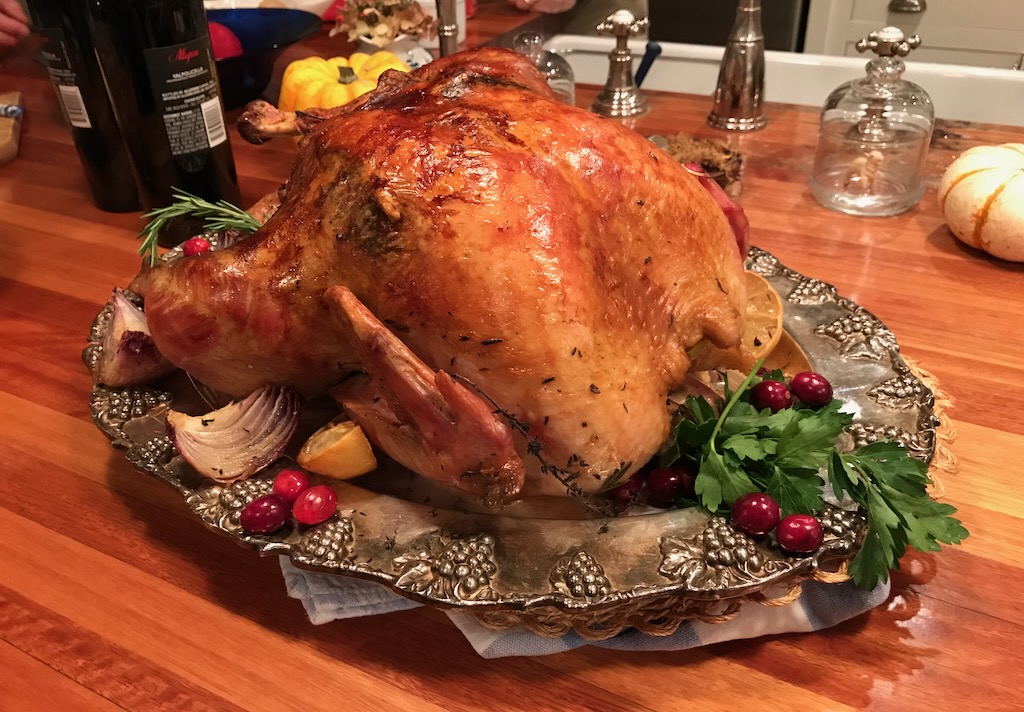
my house is aglow and will be glowier once the candles are plunked in the menorah, and kindled one by one, eight nights in a row. this year, for the first time in two decades and only the second time since 1959, both Christmas and the first night of Hanukkah fall on the twenty-fifth of december. i’ll be pulling out all the festival stops with my anglophile mother’s favorite yorkshire pudding and roast of beef, and my beloved’s brisket and latkes. (crank the ovens! and, please, bring on the sous chefs!)

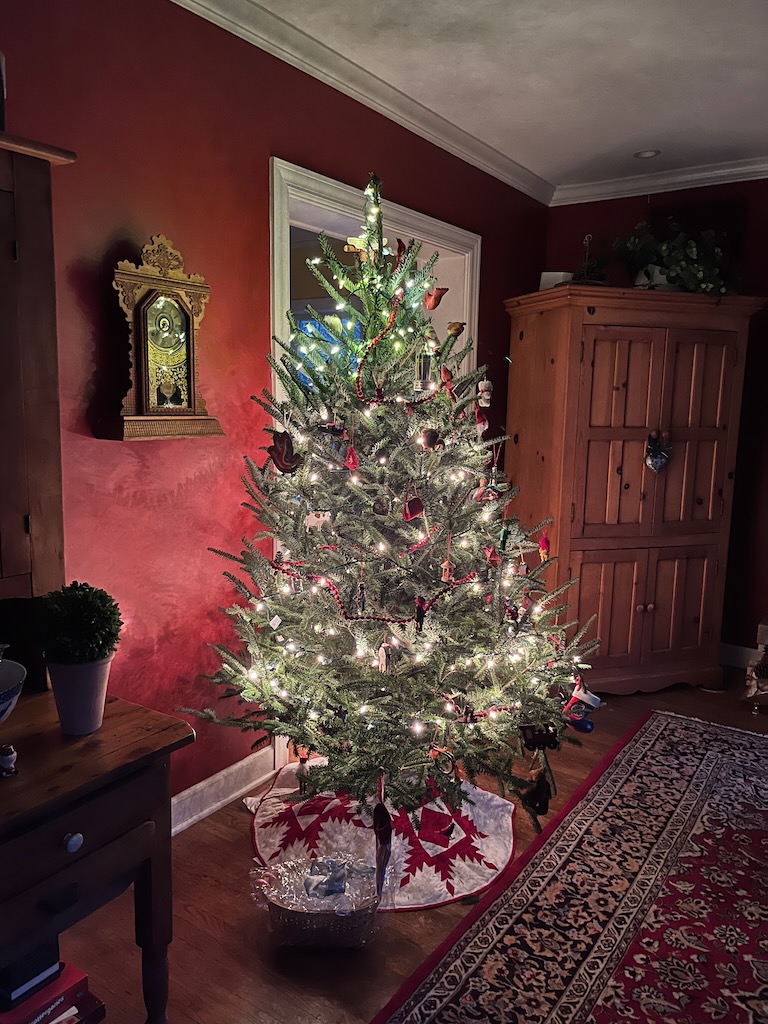
but here, at my make-believe solstice tea, i imagine the tintinnabulation of porcelain teacups being stirred with antique silver spoons, and the pungent perfume of star anise and clove and the peel of one fat orange simmering in my old red “christmasy smell” pot. without make-believing, i inhale the foresty perfume of the fraser fir that, for days now, has stood proud in the corner, obnoxiously blinking because someone pulled the wrong box off the hardware store shelf.

if we were all here, gathered round this old worn table, we’d be shy maybe at first. surely, one or two wouldn’t be because there’s always a livelier wire in every good bunch. but i’m of the shyer persuasion these days, so i’d be purring most loudly simply being a listener. i’m apt to station myself on the circle’s outer edge, and to be the one keeping close and quiet watch. 

i’d delight myself in crowding the table with sugar-dusted spice cookies, crisp and bronze round the edges. and i’d put out a mound of satsuma oranges, the ones plucked with leaves still attached, drawing me that much closer to pretending i’m sitting on the orchard floor, spine leaned against the trunk, peeling a just-plucked orb, watching the clouds waft by. 

and here at the old maple slab, there would be teas by the pots full. and a crackling hearth just across the room, where logs would hiss and pop and flames would leap up the chimney. and warm woolen blankets would be amply piled in a basket nearby. and a drummer boy or two surely would pa-rum-pum-pum-pum from the crackly radio. and maybe i’d set out earthenware bowls, one filled with clementines, another with sprigs of clove, and spools of ribbons, for the making of pomanders while we while away the morn telling stories.

i’d send you home with candy canes. and a fat satsuma too. and to tuck in your pocket, these beautiful, beautiful poems for safe-keeping. the first, from rainer maria rilke, and the next two from wendell berry, the farmer poet from the bluegrass state where i was born. his first is solstice-focused, and the other, a magical reframing of the very first Christmas.

all this my way of saying merry blessed Christmas, and Hanukkah, and Kwanzaa, too. may the glistenings and tinklings and all the spicy perfumes of the season set aglow your deep and tender and most blessed heart…

Advent
The wind in winter woods is like
a shepherd to his flock of flakes
and soon the firs anticipate
how blessed will be the light

and eavesdrop. The garden doves
ready themselves in branches white
and fend off the wind, growing towards
the glory of this night.
—Rainer Maria Rilke

To Know the Dark
To go in the dark with a light is to know the light.
To know the dark, go dark. Go without sight,
and find that the dark, too, blooms and sings,
and is traveled by dark feet and dark wings.
––Wendell Berry

Remembering that it happened once
Remembering that it happened once,
We cannot turn away the thought,
As we go out, cold, to our barns
Toward the long night’s end, that we
Ourselves are living in the world
It happened in when it first happened,
That we ourselves, opening a stall
(A latch thrown open countless times
Before), might find them breathing there,
Foreknown: the Child bedded in straw,
The mother kneeling over Him,
The husband standing in belief
He scarcely can believe, in light
That lights them from no source we see,
An April morning’s light, the air
Around them joyful as a choir.
We stand with one hand on the door,
Looking into another world
That is this world, the pale daylight
Coming just as before, our chores
To do, the cattle all awake,
Our own white frozen breath hanging
In front of us; and we are here
As we have never been before,
Sighted as not before, our place
Holy, although we knew it not.
––Wendell Berry

my hope this day of longest night, when darkness is the victor, is that no matter when or how the darknesses come we always find those and that which brings us light in all its intensities, from flickering to full-on blazing. bless you, bless you, ever bless you…

where do you find your essential light?

that fat little fir up above is the one that fills the room with its insistent eau de forêt

*branch of birds above from beautiful amy years ago….

sated with room for more…

it’s the morning after. the floor by the stove is splattered with something we know was delicious (it’s what happens when a kid who works in a michelin-star kitchen takes to the skillet and starts flipping the beans from pan to air to pan again, with aerial cartwheels in between). the silver and plates still need to be tucked away for their long winter’s rest. the refrigerator shelves are groaning. but the counter is clean, the coffee is on, and there are four more hours till the TSA beckons Boy No. 1, and his plane takes to the sky.

i am as sated as a girl could possibly be. but insatiable always when it comes to time with people i love. our table was full, the fire was roaring, and the house was all but decibly quaking (the requisite fire alarm sounded, football whistles were blowing, aretha was crooning straight through it all, and 11 of us were firing words in every direction). it was perfect. and perfectly loud.

some years back, i counted my way through the blessings of a day. and this year, as with the currier & ives thanksgiving plates, i’m hauling it out of safe-keeping, for one more round of service.

i’ve even more thanks to add to this year, beginning and ending with being right here. holding tight to the hands of the peoples i love. and falling against the very broad chest of the boys who i birthed some years ago. their heartbeats pressed to my ear will be the song that carries me forward through the adventures ahead.

here’s my centenary of blessing…

enchanted by celtic and jewish and ignatian understanding that we are called to anoint the holy hours of our every day with blessing — 100 blessings precisely, in the case of the jews — i decided to unspool my own centenary of thanks across the arc of a day. 

 in this season of bountiful thanks, as we gather roots from the ground, and fowl from the field, i march through time, sewing blessing into the whole cloth of my day. (it’s a might bit long, so you might want to take this in doses, a swallow here, another there. forgive me for counting clear to 100…)

a centenary of blessing, of deep and undying Thank You…

In the liminal landscape between asleep and awake, thank you, Holy One, for heart still beating, for breath, for first thought, the one that tickles us into consciousness. Thank you for darkness before dawn, morning after morning a reawakening to the metaphor, the truth, that in our darkest hour we might hold on just one more minute, for surely the stars will dim, and horizon’s edge will be doused in tourmaline and tangerine, and finally radiant gold. (4)

Thank you, by the way, for celestial paint set.

Thank you for bed, and blanket. Thank you for the one I love who lies beside me, whose breathing I know by heart. Thank you for the lump that’s warm, that’s there when I reach across sheets in the night, in the morning. Thank you for deepening love and the long winding road that brought him to me, to my heart.

Thank you for the dawn itself, that sacred cloak of in-between, when crescent moon dangles just above, but night gives way to morning’s light, and heaven’s dome, at the seam of earth and sky, soaks up scant threads of all-absorbent amber rose. Thank you for the stillest hour when all that moves is barest breeze that rustles leaves, and far off, the stirrings of the lake that never cease. (13)

Thank you for this old house, with arthritic floor boards, ones that creak at just the same juncture, with just the same footfall. Thank you for kitchen, and heat that is cranked. Thank you for whiny old cat there at the door. Thank you for coffee beans and hissing pot, and the old chipped mug that fits snug in my palms. (20)

Dear Maker of All That’s Blessed, thank you for the sound of those footsteps clomping onto the floorboards above, and the certitude that — so far this day — all is well. Thank you for shower, hot and pulsing and shaking off sleepy-eyed resistance to standing upright.

Thank you for porridge I stir at the cookstove. Thank you for the sustenance I dollop in spoonfuls, the alchemy of cooking for those we fuel for the day. Thank you for faith in the vespers unfurled, in between handfuls of raisins and walnuts and jewel-toned dried fruits, the ones we toss with abandon into the bubbling pot.

Thank you for clementines, and sugary cinnamon. Thank you for butter, slathered and melted. Thank you for school bus drivers who wait. Thank you for the click of the door when at last the morning rush is over, is ended, and no one is reaching for car keys, muttering under her breath.

Thank you, Blanketer of Wonder, for the quiet stitched into the morning’s hours, the quiet so thick I can drink in the tick and the tock of a grandfather’s clock. And the squawk of the bluejay, and the chatter of sparrows. (35)

Thank you for work to be done. Thank you for dishes piled in the sink, whose scrubbing and rinsing gives me a moment to think, to ponder the day. Thank you for typewriter keys who call me, and fingers that play on the alphabet rows. Thank you for sentences that write themselves, and words that are birthed from deep down inside.

Thank you for wisdom, the sort that comes in unexpected flashes, when you only know you’ve found it as you feel your heart go thumpety-thump, and you sit bolt upright, or feel the goosebumps sprout up and down unsuspecting flesh. That wisdom might come reading along the pages of news, or in a poem slipped under your transom, or from a stranger passing by. Plenty often, it comes through the holy gospel of a wonder child, as you catch one last phrase tossed over a shoulder at the schoolhouse door.

Thank you for all that’s poetry — wisdom-steeped or just plain beautiful, breath-taking. And thank you for Gospel of any brand — be it birthed from holy child, everyday saint, or even the so-called kook who stands on the street corner, proclaiming through a megaphone.

Thank you, yes, for telephones, for that rare sound of a voice that nestles against the tenderest heart. That, within the first breath of the very first syllable, brings comfort, collapses miles and aloneness, amplifies the hours absorbed in coming to this holy bond of deep knowing each other, inside and through.

Thank you even for the bits of news — of whatever ilk, good or bad or nasty — that percolate the hours of each day, make one slice of time so vastly different from the next, stitch drama to the script of life, offer us the chance to absorb each and every frame from an angle never before perceived. (45)

Thank you, most of all, for the deep down knowing that you, Holy Depth and Gentleness, never leave me adrift. Never let my quakings take me down. Ever bring me light, and tender touches. Ever hold me up, against the chilling winds. And bring me to communion with all that’s glorious and bountiful in this rugged, rugged landscape.

I might be among the few who salute the cloudy skies of November on my long list of thanks. Ah, but those angora gray skies, they comfort me, harbor me. I’ll take the somnolence, the introspection of a gray day any day. So thank you for cloudy and gray.

And I’d be remiss if I didn’t mention how thankful I am for hearts that continue to tick, day in and day out, despite the trials we toss their way, as we worry and fret, then, without notice, shriek in deep joy and excitement. Poor ol’ heart, the one that landed in me anyway, it might not have realized it was signed on for a roller-coaster ride of such seismic proportion.

Speaking of ticking, thank you for the schoolhouse clock that does just that, minute by minute, hour upon hour, heartbeat against the wall.

Thank you, too, for windows. And for the flutterings and flashes just beyond the glass, as clouds of gentle creatures take off and land, from sky to limb and back again — each time, lifting just a little bit of my soul.

Thank you for doors, the ones that let in unexpected someones, someones we love. And keep out the wind and the cold.

Thank you for fires that roar and logs that crackle. Thank you for the one that’s turning the so-called sleeping room, across from the kitchen, into a chamber of flickering gold. Thank you for the two lumps under blankets, snoozing by the fire as I sit here, now typing. (59)

Thank you, Lighter of Night, for the cloak of darkness that comes early now, velvety backdrop for twinkling of stars, and moon that holds me, most every eve, in its trance.

Thank you for dusk, dear Lighter of Light, the far edge of the day, beginning of nightfall, when the last seeds of illumination are scattered, are rosy.

Thank you for dinner hour, and the blessing of slow simmering stew. Thank you for the bounty of greens from your earth, and spices from pods and seeds and stamens.

Thank you, God, for the trees and the gnarly limbs, and the hummingbird now buried deep in my garden.

Thank you for candlelight. And the lights of Your making: moonlight and sunlight and dappled radiance scattered like seed across the landscape. Thank you for twinkling stars and streaking ones, too — chalk marks etched across the slate of the night sky. (76)

Thank you for drifting off to sleep, and dreams that color our imagination. Thank you even for revelations that come to us in the awful interludes of tossing and turning. Thank you for wanting to wake up again, to climb from the bed. Thank you for the blankets we tuck under the chin of our sleeping child.

Thank you, dear God, for the child. For the breathtaking chance to infuse all that’s good in this world. Thank you for lessons taught while holding a hand, or wiping a tear. Thank you for band-aids that quell the hurt, and words that do the same. Thank you for everyone who lifts up our child, the teachers who inspire, the coaches who are kind. And the lady down the block who never fails to plant a fat wet kiss on that child’s pink cheek. (90)

Thank you for the year drawing to a close, and this pause to nod our heads and whisper gratitude. Thank you for the kaleidoscope of turning season, the ever-shifting call to attention. Thank you for crunching leaves, and tumbling snow flake.

Thank you for love in all its iterations. For birth, and death, and all that animates the interstitial hours. Thank you for those who walk beside us, who put a hand to the small of our back, or reach out to carry us across the bottomless abyss. (100)

Thank you, God, for all of this. And more. So, so much more.

what do you count in your litany of deep and undying thanks?

countdown. . .

i clambered up from the basement yesterday morn, and found myself face-to-face with a whiteout. snow falling in thickets. snow whirling wildly. snow, snow, and more snow for hours and hours and hours. 

it was all the currier & ives i needed to supercharge my countdown clock. the one that’s percolating at quicker and quicker clip as the days turn closer to wednesday a week, the eve of thanksgiving itself, when not just one but both of the boys i so love will––for the first time in almost a year––unfurl their dreams on the pillows of their long-ago boyhood beds, all nestled cozily under this mostly dependable, nearly centenarian roof. 

and i will savor the joy of kissing both on the forehead as i trundle off to bed hours before my wide-eyed night owls, or should we all stay up till the same insensible hour i will give it my best waltons’ bedtime holler, and call out from under my bedsheets and across the hall and down a few stairs, “good night, will. good night, Bear. good night, old house. sweet dreams, my beautiful boys.”

it’s been a long hard autumn, held in the vise of worries and fear the likes of which i’d not recommend. and so this coming thanksgiving is the emotional equivalent of frank lloyd wright’s trademark compress-and-release, in which the great architect intentionally magnified the vast spaciousness of a room by first pressing in the walls and the ceiling of the space leading into the room, so that upon stepping through the tight corridor and into the vaulted chamber the sense of openness would be perceived as vaster than ever. 

and so it is with the human dynamic of fear, grace, and gratitude: to walk through unbearable days, days that stretch into weeks, and weeks that stretch into more than a month, and then to find yourself falling into the arms of the human beings you most long to hold onto; it’s the pinnacle of paradise on earth, to be released from the vise and enwrapped in a love without end. 

cancer sharpens that point. cancer sometimes brings on seasons of uncertainty that are quickly populated with ghosts and demons that defy containment. i’m learning the undulations of cancer that are colored in shades of gray. interminable shades of gray. questions that come without answers. doctors who call with unwelcome news. and barely stay on the line long enough to answer a single question. and then you hang up and feel the floor drop out from under you. sometimes––if you’re me––you take the short road to doom. because that’s what worriers do. we worry. we pray for holy release.

in time, we get a grip. regain our bearings. hold our chin high, dry our tears, practice at being brave. whistle into the in-blowing winds. hold tight to the hands of the one or two who know how dark it’s become, and we fall to our knees, or fold to the ground and enter the depths of divine meditation. i’ve spent more hours with eyes closed, palms open, sitting in silence, beckoning the perpetual God-flame within, than ever before. i’ve been tempted to beg, “more time, please.” but i don’t any longer believe i can––or hold any special claim to––change God’s equation, so what i pray for is grace. is heightened attention. what i pray for is an emphatic aliveness that infuses each turn of the day with unbarred acceptance. i don’t want to blink and miss something holy.

those prayers––for grace, for keen attention, for seeing deeper than ever day in and day out, for pausing to savor––are answered, blessedly. and my own season of unending thanks coincides with that of this nation founded on pillars of moral perpetude, and the hope of equal justice for all.

the essence of my life’s gratitude has always been the improbable miracle that i became a mother. that i birthed not one but two glorious humans, and devoted the best of my heart, my soul, my breath, my being, to carving out for them a space in which they’d be cocooned in the purest love i could imagine, could muster. along the way, i’ve tossed every life line i could whenever they needed, and now, lo and behold, they’re the lifelines and i’m the one needing.

and so all these past 45 days, i have longed for only one thing: hours more to sit side-by-side the ones i so fervently sumptuously love. to giggle at their antics. to marvel at their wild-eyed wonder tales. to feel their hands squeeze mine, to be wrapped in their arms, my ear pressed to their chest, absorbing the heartbeat i’ve loved since the very first ultrasound when that echoing lub-dub-dub poured over and through me like the holiest chrism. 

this is a countdown like never before. and my heart is more than open for business. the business of loving my boys. in real time. under one shared and sheltering roof.

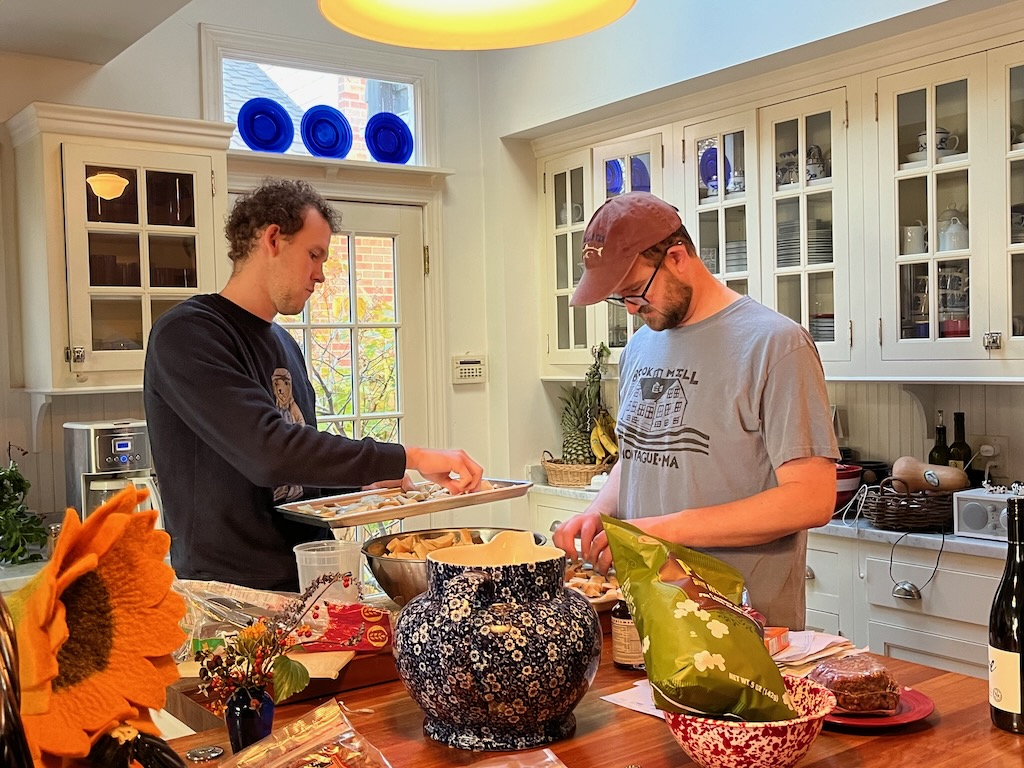
thanksgiving morn, a few years ago.

here’s a poem, fittingly, a prayer poem by the great madeleine l’engle, who lived by words but found herself wordless in prayer. which, indeed, is sometimes the way to our deepest depths…

Word

I, who live by words, am wordless when
I try my words in prayer. All language turns
To silence. Prayer will take my words and then
Reveal their emptiness. The stilled voice learns
To hold its peace, to listen with the heart
To silence that is joy, is adoration.
The self is shattered, all words torn apart
In this strange patterned time of contemplation
That, in time, breaks time, breaks word, breaks me,
And then, in silence, leaves me healed and mended.
I leave, returned to language, for I see
Through words, even when all words are ended.
I, who live by words, am wordless when
I turn me to the Word to pray. Amen.

––Madeleine L’Engle


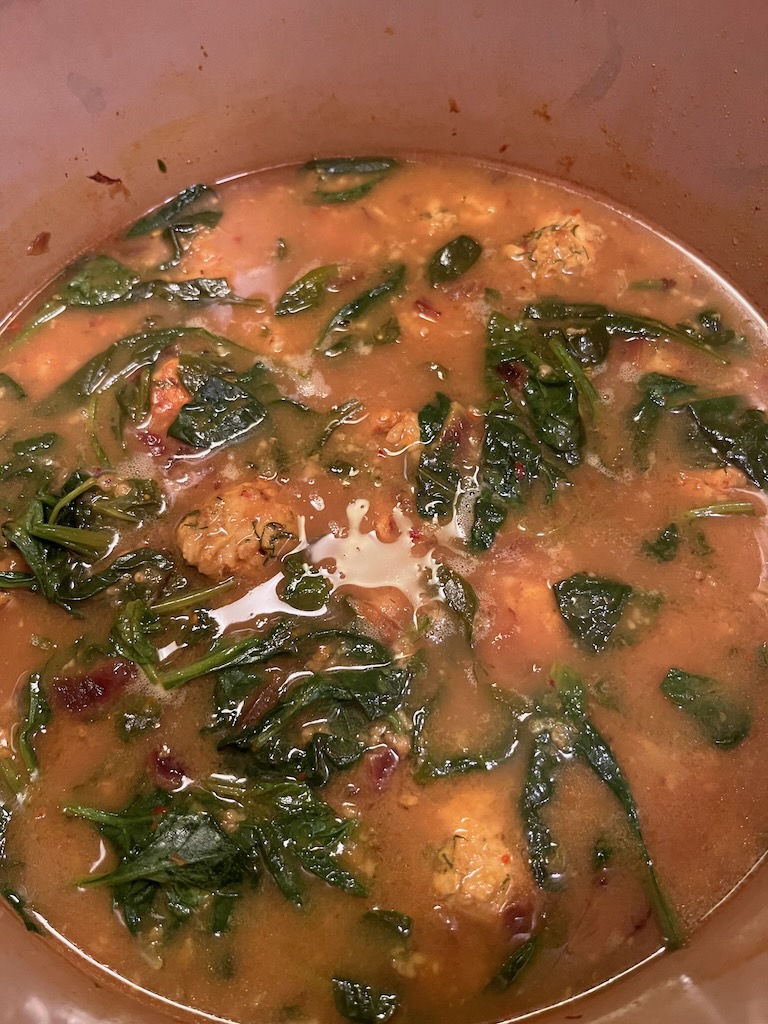
and here, because i love to imagine ladling steaming bowls of soup to people i love, is my new favorite stoup recipe, lemony chicken-feta meatball with spinach from my friends at NYT Cooking (you will be licking the bowl; it’s that good):

Lemony Chicken-Feta Meatball Soup With Spinach
By Yasmin Fahr
Yield: 4 servings
Total Time: 30 minutes

Note from NYT: Some might be suspicious of the rolled oats called for in this recipe, but used in place of breadcrumbs, they help create a light and tender chicken meatball. A half-cup more is simmered in the broth, which thickens it and provides a pleasant texture. The meatballs, made with ground chicken, feta and fresh dill, swim in a lemony, spinach-filled broth that’s comforting and light, perfect for lunch or dinner. Serve any leftovers with a fresh squeeze of lemon juice to brighten the soup.

INGREDIENTS
1 pound ground chicken or turkey, preferably dark meat (i use white meat)
½ cup crumbled feta
¾ cup old-fashioned rolled oats
1 small red onion, halved (½ diced, and ½ grated, then squeezed with a paper towel to remove excess liquid)
⅓ packed cup fresh dill leaves and fine stems, finely chopped
1 tablespoon ground cumin
½ teaspoon plus 1 tablespoon ground turmeric
Kosher salt and black pepper
3 tablespoons olive oil
½ teaspoon red-pepper flakes, plus more for serving
4 cups low-sodium chicken broth
4 packed cups baby spinach (about 5 ounces)
2 lemons (1 juiced and 1 cut into wedges for serving)

PREPARATION
Step 1
In a medium bowl, add the chicken, feta, ¼ cup oats, the grated onion, most of the dill (reserve about 2 tablespoons for garnish), the cumin, ½ teaspoon turmeric and 1 teaspoon salt. Gently combine without squeezing too hard or overworking the meat. Lightly wet your palms and shape the meat into small balls, a little smaller than the size of a golf ball, about 1½ inches. (You will have approximately 25 balls.)

Step 2
Heat the oil in a large Dutch oven or wide pot over medium until shimmering. Add the diced onion, season with salt, and cook until it begins to soften, about 2 minutes, stirring occasionally. Add the remaining 1 tablespoon turmeric and the red-pepper flakes, and stir until fragrant, about 30 seconds. Push the onions to the sides as best you can, then add the meatballs. (They will be close together, and that’s OK.) Cook until browned on two sides, 5 to 7 minutes total.

Step 3
Pour in the broth and remaining ½ cup oats, then gently tilt the pot to the right and left to distribute the oats and broth without disturbing the meatballs. Bring to a gentle boil, then immediately reduce the heat to maintain an active simmer. Season with salt. Cook, gently stirring occasionally to make sure nothing is sticking to the bottom, until the oats have softened and the meatballs are cooked through, about 4 minutes more.

Step 4
Stir in the spinach and lemon juice until the spinach is wilted, about 2 minutes more. Adjust the seasoning to taste. Spoon into bowls, top with pepper and the remaining dill. Serve with lemon wedges.

what is your heart longing for this season of through-and-through thanks?

undaunted

only when it is dark enough can you see the stars…

Undaunted is the word that came to me. Once the shock began to dull. Once I quelled the queasing in my belly. Once I decided I won’t surrender this blessed world, won’t shift the course of the project I call my most urgent life’s work. 

I am undaunted.

My life’s work is accelerated these days. Its urgency is upon me, upon us all. 

My life’s work aligns with that of every sage and mystic that ever has been: I am devoted to molding myself closer and closer to the holiness I was made to be, we were all made to be. Because this world is a sacred work in progress, and we are its players. We are the ones with the hearts and minds and hands to bend the arc of justice, to kindle more and more brightly the flame of the sacred. To reach toward the holiness infused through our every breath, every utterance, every inkling. The whole of it. At every turn. To be gentle, and kind. To tenderize the fibers of our heart. Especially the ones that have been torn and shorn over the years. 

This is a path beyond the politics and power seekers of the world. I answer to a call from deep within, the eternal flame of the Divine breathed into us all in the beginning. In our beginnings. And the very beginning.

We’re called to play out our work in the milieu of the everyday, on a plane peopled with those who might test us, or just as certainly––often, more certainly––those who reach out a hand, and carry us along. Shimmy us onto their shoulders, if need be. And we in turn will do the same when we’re the ones whose knees aren’t buckling.

It’s contagious more often than not, this reaching toward kindness, toward peeling open the heart, digging deep, living for joy.

I’ve come to know that it’s a work best played out in incremental barely-noticed exchanges: the heart-melting smile shared in a crowded hallway; the hospital scheduler who takes the time to squeeze your hand, knowing you’re afraid; the grocery-store clerk who wipes away the tear that has crept down your cheek.

I once dreamed of solving world problems, curing life-crippling ills. Now, all I ask of each day is that I find moments to be bigger than I’ve been before, to reach deeper into the well of ordinary kindness, to bow my head and heart in deep thanks for every drop of beauty, wonder, decency. 

That work is unaffected by whatever plays out on the world stage. The powers that be hold no power over our souls, and we needn’t succumb. Needn’t employ the crude or the cruel we witness too, too often these days; in fact, we need amplify the opposing forces. Be radical in our generosity. Our empathies. Our magnanimity. Our humility. And our righteous indignation when called for. 

It so happens that this week found me being schooled in some of these very practices, and through the doorways of two great world religions. On Monday, a magnificent soul who happens to be a Hindu yogi, sat me down, lit a candle, and taught me the ways of deep meditation, turning my focus inward to the eternal flame of the Divine within; I am practicing every day. On Wednesday, I walked into the first of a series of classes at our synagogue on an ancient Jewish spiritual practice called the Mussar, centered on the verse in the Torah that tells us, “You shall be holy.” By drawing on seventeen soul attributes, and spending an arc of time––a season, a month, a week––keenly attuned to each, we exercise the muscles of our deepest being to become holy, to work toward our “primary mission in this world…to purify and elevate the soul.” The practice begins with humility. 

In simplest terms, as the great Chasidic teacher known as the Kotzker, once put it: “Fine, be holy. But remember first one has to be a mensch.”

No one can stop us. Mensches will be we.


I’ve spent the week gathering around me a wagon train of wisdoms, a line from the Talmud, a prayer from Judy Chicago, a profoundly wise passage from EM Forster, another from Hannah Arendt, a post from Rebecca Solnit, and finally a paragraph or two from Kamala Harris’ gracious concession speech…..


from the wisdom of the Talmud, found in what’s known as the Pirkei Avot, which translates to Chapters of the [Fore]Fathers, a compilation of ethical teachings and maxims from Rabbinic Jewish tradition. It is a part of the Mishnah, a code of Jewish law compiled in the early third century of the Common Era.

“Do not be daunted by the enormity of the world’s grief. Do justly now, love mercy now, walk humbly now. You are not obligated to complete the work, but neither are you free to abandon it.”


A Prayer for Our Nation
by Judy Chicago

And then all that has divided us will merge
And then compassion will be wedded to power
And then softness will come to a world that is harsh and unkind
And then both men and women will be gentle
And then both women and men will be strong
And then no person will be subject to another’s will
And then all will be rich and free and varied
And then the greed of some will give way to the needs of many
And then all will share equally in the Earth’s abundance
And then all will care for the sick and the weak and the old
And then all will nourish the young
And then all will cherish life’s creatures
And then all will live in harmony with each other and the Earth
And then everywhere will be called Eden once again.


The English novelist, essayist, and broadcaster E.M. Forster (January 1, 1879–June 7, 1970) took up questions of societal empathies in an essay titled “What I Believe,” originally written just before the outbreak of WWII and later included in the out-of-print Two Cheers for Democracy, his 1951 collection of essays based on his wartime anti-Nazi broadcasts. Here’s Forster:

I distrust Great Men. They produce a desert of uniformity around them and often a pool of blood too… I believe in aristocracy, though… Not an aristocracy of power, based upon rank and influence, but an aristocracy of the sensitive, the considerate and the plucky. Its members are to be found in all nations and classes, and all through the ages, and there is a secret understanding between them when they meet. They represent the true human tradition, the one permanent victory of our queer race over cruelty and chaos. Thousands of them perish in obscurity, a few are great names. They are sensitive for others as well as for themselves, they are considerate without being fussy, their pluck is not swankiness but the power to endure, and they can take a joke… Their temple… is the holiness of the Heart’s affections, and their kingdom, though they never possess it, is the wide-open world.

With this type of person knocking about, and constantly crossing one’s path if one has eyes to see or hands to feel, the experiment of earthly life cannot be dismissed as a failure.


Politcial theorist and philosopher Hannah Arendt reminds us our reach for change needn’t be in the boldest strokes in The Human Condition, her 1958 study of the state of modern humanity, thought to be more striking now than at the time of its first publishing. Here’s but one sentence underscoring that claim: 

“The smallest act in the most limited circumstances, bears the seed of… boundlessness, because one deed, and sometimes one word, suffices to change every constellation.”


Rebecca Solnit’s message the morning after the election:

You are not giving up, and neither am I. The fact that we cannot save everything does not mean we cannot save anything and everything we can save is worth saving.  You may need to grieve or scream or take time off, but you have a role no matter what, and right now good friends and good principles are worth gathering in. Remember what you love. Remember what loves you. Remember …what love is. The pain you feel is because of what you love. 


and finally, these two passages from Kamala’s gracious concession speech:

Fight in the voting booth, in the courts and in the public square. And … in quieter ways: in how we live our lives by treating one another with kindness and respect, by looking in the face of a stranger and seeing a neighbor, by always using our strength to lift people up, to fight for the dignity that all people deserve. The fight for our freedom will take hard work. … The important thing is don’t ever give up. Don’t ever give up. Don’t ever stop trying to make the world a better place. … This is not a time to throw up our hands. This is a time to roll up our sleeves. This is a time to organize, to mobilize, and to stay engaged for the sake of freedom and justice and the future that we all know we can build together.

and she closed with this…

You have the capacity to do extraordinary good in the world. And so to everyone who is watching, do not despair. This is not a time to throw up our hands. This is a time to roll up our sleeves. This is a time to organize, to mobilize, and to stay engaged for the sake of freedom and justice and the future that we all know we can build together. Look, many of you know I started out as a prosecutor and throughout my career I saw people at some of the worst times in their lives. People who had suffered great harm and great pain, and yet found within themselves the strength and the courage and the resolve to take the stand, to take a stand, to fight for justice, to fight for themselves, to fight for others. So let their courage be our inspiration. Let their determination be our charge. And I’ll close with this. There’s an adage a historian once called a law of history, true of every society across the ages. The adage is, only when it is dark enough can you see the stars. I know many people feel like we are entering a dark time, but for the benefit of us all, I hope that is not the case. But here’s the thing, America, if it is, let us fill the sky with the light of a brilliant, brilliant billion of stars.

what bright stars did you see this week? and how do you intend to carry on?

to those who note the rare use of caps this week, indeed sometimes you need to stand tall and say it loud and with proper capitalization, and so it is this fine morning. i mean what i say, and i say it undaunted.

a sky so big it holds me

when i need to talk to God, and i do plenty often these days, there is one certain place i know God will be waiting. i know it because i feel it. and feeling God is much more than knowing. at least to me it is. 

the place where God all but reaches down and swoops me into God’s arms is at the shoreline, where the vault of blue heaven is vast, is infinite, where the water’s edge might take on any one of uncountable modes: it might be uncannily calm, so calm the ripple is but a purling, a burbling so barely perceptible it’s as if the lake is tickling the sand; or it might be roiling and cacophonous, so deafening you can barely hear the words rising from your own throat. 

i could stand there all day, my toes planted in sand, my head tilted back, eyes wide. heart thrust forward and up, up. 

i’ve been walking there each day with my beloved. our footfalls in the sand the only sign we’ve been by. sometimes, if i go alone, i curl small as a hedgehog and settle into the grasses that rise from the hillocks of sand. i stay till the last of my prayers are unfolded, laid at the lap of the One Who Is Listening.

it’s as holy a place as i know. 

to feel God reach down and hold you, to know that the vastness above is deep and wide and forever enough to absorb each and every whisper and plea, to know that the deepest cries of your heart might be heard, to feel the soothing that comes as if your trembling shoulders are now wrapped in angora skeins, that is to me the very essence of a God who’s bigger and deeper, more infintely tender and close, than anything or anyone i could ever, ever imagine. or behold.

some days i need a God of extra-big volume and size. a God big enough to hold me, to press against me so firmly that all of my worries, like wrinkles, are melted away. those are the days i look to the heavenly dome. where mine is a God who knows me inside and out. sometimes my insides are so very scrambled and messy. 

it’s the closest i’ve come to that magnificent image of saint john of the cross, the one who rested his head against jesus’ chest at the very last supper, who let it be known that he was listening for the heartbeat of God. an indelible image that’s become a life-giving instructive (a particularly celtic one) for us all: to listen wherever we go for the unending pulsebeat and presence of God.

sometimes, inside the rooms of a house your worries can clang around noisily, too noisily. they can crowd out all of the air, and make you want to climb out of your skin. that’s where the heavens come in, where the shortest reach between me and my God is the indigo dome of the night at the beach, or the undulations of blues and grays in mid-afternoon. dawn at the water’s edge is a whole other slide show, one played out in the fieriest streaks of the rosy-red color wheel. 

and those are the days i all but run to the shoreline, to the water’s edge, where the alchemy of sand, sea, and sky are stirred into a medicinal balm, a sacred balm, like no other. and the God to whom i run always, always is there for me.


here’s a little extra beauty from the late poet anne sexton, whose story is drenched in struggle and sorrow, but who reached for the light coming in through the cracks. i tell a little bit of her story down below, but first, the poem:

Welcome Morning

There is joy
in all:
in the hair I brush each morning,
in the Cannon towel, newly washed,
that I rub my body with each morning,
in the chapel of eggs I cook
each morning,
in the outcry from the kettle
that heats my coffee
each morning, 
in the spoon and the chair
that cry “hello there, Anne”
each morning,
in the godhead of the table
that I set my silver, plate, cup upon
each morning.

All this is God,
right here in my pea-green house
each morning
and I mean,
though often forget,
to give thanks,
to faint down by the kitchen table
in a prayer of rejoicing
as the holy birds at the kitchen window
peck into their marriage of seeds. 

So while I think of it,
let me paint a thank-you on my palm
for this God, this laughter of the morning,
lest it go unspoken. 

The Joy that isn’t shared, I’ve heard,
dies young.

  • Anne Sexton
anne sexton

sexton, a 20th-century american poet, was considered one of the Confessional poets, along with maxine kumin, sylvia plath, and robert lowell. after the birth of her first daughter, she suffered from post-partum depression, had her first so-called nervous breakdown, and was admitted to a psych hospital. she suffered depression the rest of her life, a life that ended in suicide when she was 45.

although her poetry was criticized by some as “soap opera-ish,” others praised it for the ways it expressed “the paradoxes deeply rooted in human behavior and motivation. her poetry presents multiplicity and simplicity, duality and unity, the sacred and the profane.”

one of sexton’s earliest champions, erica jong, reviewing her 1974 The Death Notebooks, argued for sexton’s poetic significance, claiming her artistry was seriously overlooked: “she is an important poet not only because of her courage in dealing with previously forbidden subjects, but because she can make the language sing. of what does [her] artistry consist? not just of her skill in writing traditional poems … but by artistry, i mean something more subtle than the ability to write formal poems. i mean the artist’s sense of where her inspiration lies …there are many poets of great talent who never take that talent anywhere … they write poems which any number of people might have written. when anne sexton is at the top of her form, she writes a poem which no one else could have written.”

where are the places in your world where your prayers feel especially heard? where a holy comfort might enwrap you? and you just might feel held? and, thinking of sexton’s poem, if you were to write a litany of morning joys, what would be among your joys?

prayers for this country as we cross over the threshold of this next election. prayers for peace, prayers for truth, prayers for grace….

pay attention to this one most blessed day. . .

i am sitting here in a shaft of golden light spilling across the worn planks of this old maple table. i am looking out at a world ablaze in iterations of gold. as if the world out my window is a benjamin-moore paint strip, all in the key of saffron. 

i sighed a deep sigh when i tiptoed down the stairs this morning, and filled my lungs with the glorious knowing that this day held no appointments. no doctors. no dentists. no needs to stand or sit in front of a crowd and talk about the words i’d poured onto a page. 

this day is a big blank slate. a slate to fill with the simple wonders of being alive. and i intend not to waste it, not a drop of it. and urgently so.

it’s the unintended gift of holding on for dear life to the life that you love with every cell of your being. 

it’s a day i might otherwise not have noticed quite so keenly. but i see more vividly now. the blessing of holding on dearly to life is that you see each new dawn for the miracle that it is. 

it might have been just another weekday. but suddenly, perceptibly, it is the answer to my deepest prayer, a day to simply be alive and breathing it in. every pore of it. the earthy rummesence of autumn leaves crisping and crinkling and falling in heaps to the ground. the last gasp of the garden, exploding in singular vibrancies that beg to be remembered all through the winter. the air, a mix of chill with undertones of heat as if the earth’s autumnal respirations draw forth the last breaths from summer’s stockpiled embers. 

to knowingly not waste a day is to live at fullest attention. while we can. while we’re upright and ambulant. 

sometimes we realize we shan’t take it for granted. 

sometimes we need a reminder. 

i am reminded. 

i am living inside a body that reminds me to savor it, to inhale it. to all but rub it over my skin, to  let it soak in through each wide-open pore. 

we all have days when our hours are clogged with the usual distractions. we forget the marvel of a friday reliably following a thursday. we look to the calendar as if it’s the sovereign of how we spend our time. we are chained and unchained. we’re obliged to to-do’s, and we forget that all the in-betweens might just be the hours we’re most deeply alive. we might, at any moment, put down the chores, surrender the assignments. we might seize the day in whatever outline or equation rises from the blur. 

we might call a friend whose voice we’ve not heard in too long. we might find a log in the woods, plop ourselves down, and keep watch––close watch. we might fill a bowl with the indulgences of autumn, the leaves and the seeds and the roots, all meant for seasonal sustenance. 

we might light a candle. sit in a shaft of sunlight, watching the dust motes ride the air. we might roll up our sleeves, or get down on our knees, and plant a few bulbs for the joy of it––for the allure and the promise and perpetual hope of the springtime to come.

more and more, one of the first prophets i turn to for wisdom is the incomparable maria popova, she of marginalian wonders. in a cataloging of eighteen wisdoms she’s extracted from her eighteen years of gathering wisdoms (she must have started her brain pickings––now re-named the marginalian––a mere two months before the first chair was pulled up, for we too are about to mark 18 years of chairing), she included this bit of wonder and wisdom that says it as beautifully as it might be said:

Choose joy. Choose it like a child chooses the shoe to put on the right foot, the crayon to paint a sky. Choose it at first consciously, effortfully, pressing against the weight of a world heavy with reasons for sorrow, restless with need for action. Feel the sorrow, take the action, but keep pressing the weight of joy against it all, until it becomes mindless, automated, like gravity pulling the stream down its course; until it becomes an inner law of nature. If Viktor Frankl can exclaim “yes to life, in spite of everything!” — and what an everything he lived through — then so can any one of us amid the rubble of our plans, so trifling by comparison. Joy is not a function of a life free of friction and frustration, but a function of focus — an inner elevation by the fulcrum of choice. So often, it is a matter of attending to what Hermann Hesse called, as the world was about to come unworlded by its first global war, “the little joys”; so often, those are the slender threads of which we weave the lifeline that saves us.

and she includes these lines from poet and former zen monk jane hirshfield’s “the weighing”:

So few grains of happiness
measured against all the dark
and still the scales balance.

and if all that isn’t enough joy stoking for the day, here’s one other wonder and wonder-soul i learned of this week at a book talk where to my delight and pure joy i was pointed toward good souls i fully intend to get to know more deeply and intimately. (i never cease to be amazed at the goodness lurking in utterly unexpected nooks and crannies of this world.)

here is a woman—one with a PhD in human anatomy and cell biology, no less—who happens to live in a house with a four-acre flower garden who coaxes beauty from the earth for the sole purpose of giving it all away, filling the flower fridges at hospices and homeless shelters, and the larders at food pantries near and far. she calls it the backyard flower lab. and it sounds like a holy slice of sustenance to me. i intend to point my old wagon in the direction of her flower farm before the sun sets on this day, and i will see where the adventure takes me. her name is april potterfield (which sounds to be a perfect plucked-from-the-storybook name for someone who grows beauty for joy), and you can find her on instagram at @thebackyardflowerlab.

what prompts you to find joy and seize the slender threads of which we weave our lifelines? and what are some of your favorite ways of doing so?

 the cobalt beauty perched on the windowsill above is an autumn vibrancy from my garden, the closing note of a summer’s-long love song. i call it monkshood, but it has other names: aconite, wolfsbane, leopard’s bane, devil’s helmet, or blue rocket. the name aconitum comes from the greek word ἀκόνιτον, which may derive from the greek akon for dart or javelin, the tips of which were poisoned with the substance, or from akonae, because of the rocky ground on which the plant was thought to grow.

deep thanks to maria popova who week after week for years now has filled me with wonder, with curiosities, and most of all with the breathtaking beauty of her intellect and imagination…

the names we are called, and the names that call us

my little irish grandma mae, as my grandpa, “choo-choo papa,” received his 50-year gold watch from the L&N Railroad, for which he was a locomotive engineer on the cincinnati-to-corbin (ky.) line

the email from synagogue came back in the spring. the rabbis and cantor had been thinking for awhile about some of us. an odd lot of us. we were the ones who’d found our way, through one inlet or another, into the river of jewish life — at synagogue and at home — yet “don’t identify as jewish.” (that wording, so very of the cultural times, cracks me up. in the old days wouldn’t we simply have been “not jewish”?) 

they, this lovely trio of clergy, all young, brilliant, and devoted to their callings, recognized that we were in many ways bringing our lives to the poetries and prayers of judaism, and that judaism’s poetry and prayers had found its way fairly deep into our lives. they wanted to honor that. 

they weren’t asking that we convert, weren’t asking us to sign on any dotted line. 

but they had a radical idea, deeply radical when set against the context of a tradition that long saw intermarriage as the great scourge, one of the most grievous threats to the ancient and blessed religion. the radical idea of our rabbis and cantor was to give us each a hebrew name. but not without deeply engaging in weeks of contemplation and discussion, coming to synagogue on wednesday nights as summer turned to autumn, as the air grew cooler, and the trees more golden and crimson. 

we talked the first night about the journey into judaism, they asked us to talk about moments of pain, times we felt excluded, rejected, pushed to the margins. or when we’d felt welcomed. we talked about being an outsider versus insider. did we feel we had a voice in the conversation, in the congregation, at our own kitchen tables, and even more broadly in the jewish world?

they asked us to tell the stories of each of the names we’d been given at birth, and the names we’d chosen to carry through life. they asked us to unspool the narrative of nicknames that ebbed and flowed through our stories. 

and they asked us to think deeply about what a name means. and to pull from our lives and from Torah particular names of particular souls who somehow stirred us. with whom we felt some deep, almost palpable pull.

i knew fairly quickly whose pull i was feeling. but before settling on my little irish grandma, the only grandparent i never knew, one with whom i’ve long felt an uncanny cord, i briefly considered sarah, she who — like me — thought she was “barren,” and found out at the ripe old age of 90 (i was nearly 45) that she was “with child.” and who greeted the news by laughing out loud. sarah, like me, is the archetypal old mother.

we had homework: a sheet of essay questions pondering names, all of which were meant to evoke for the rabbis a few hebrew names that might be fitting for each of us. after poring over our essays, they sent us our custom-curated list of possibilities. i didn’t choose from high up on the list; i found my name deep down in the unlikelier choices. but, turned out, it was a tight fit. a name with the same roots, the same meaning, whether celtic or hebrew. (you’ll see below.)

once we had our names, and had written the stories of how we came to those names, and why, we were invited to synagogue for a special friday night Shabbat service, where we’d be called to stand in a half circle on the bimah (the raised platform from which the Torah is read). one by one, we’d speak our names, and tell our short stories. 

before we told our stories, the rabbi, who i love, and whose name is ally or allison, (i don’t know her hebrew name, i just realized), set the stage with the eloquence and grace i’ve come to think of as her trademark, her inimitable magnificent, heart-melting way.

“Jewish tradition believes that names have great power,” she began. and then she read this poem from the israeli poet zelda, who is known widely by only her first name: 

israeli poet, zelda

“Each of us has a name given by God and given by our parents.
“Each of us has a name given by our stature and our smile and given by what we wear.
“Each of us has a name given by the mountains and given by our walls.
“Each of us has a name given by the stars and given by our neighbors.
“Each of us has a name given by our enemies and given by our love.” 

in a sentence that took my breath away before she called us from our pews to stand in our half-circle, to step to the podium, she said that we’d “earned these names through sacrifice and grit, through tenderness and care. they earned these names through their openness, their tolerance, their expansive and soft hearts.”

that sentence made me riffle through the rolodex of my life, through the hard conversations at the kitchen table, the tears on long telephone calls when a Jew and a Catholic were hashing it out in the three years before we married, trying to decide whether we could work it out, whether we could braid two faiths, two traditions, two deep ancestral ties into something that might even be greater than the sum of its parts. made me think of the blessing ceremonies in our tiny little garden on Wellington Avenue, when a rabbi and a priest poured their words, their wisdoms, and their blessings on two baby boys we were both blessing and naming (with eight years between each). made me think of the pair of Shabbat candlesticks, layered with wax from candles dripping and dripping over the years. made me think of the lamb stew we’ve stirred at the cookstove, my beloved and i side-by-side. 

i thought how, indeed, both of our hearts have softened, have opened, have grown.

and then it was my turn to step to the podium, clear the tears from my eyes, and read these words to those gathered:

I’ve spent much of my life peeking beyond the borders of what was before me. Yearnings have always stirred me––reaching for what I don’t yet know, reaching for the holiness I deeply believe in, reaching for loves long after they’re gone. 

And there is a particular grandmother, the only grandparent I never met, who has always, always animated my imagination. I yearned to know this daughter of Irish immigrants, a Kentucky schoolteacher, who, according to family lore, was the first woman to graduate from college in the commonwealth, who snagged the highest score on her county’s teachers’ exams, and just as importantly, could wring a chicken’s neck!––a praiseworthy prelude to many a Sunday supper in the Bluegrass State. 

Her name was Mae, Mae Shannon, and her only child, her beloved child, was my beloved long-gone papa, Eugene Shannon Mahany. 

Until now, my connection to Mae has been purely by heart, and through a few fading photographs that show we share an uncanny resemblance. 

Her name, Mae, is a Celtic derivitive of Mary or Margaret, and one of its meanings is “pearl.” So, too, the Hebrew name Margalit—yet another “pearl.” 

Considered the gemstone of inner wisdom, the pearl is one of creation’s wonders, formed through the mysterious interplay of oceanic depths and the celestial pull of the tides. 

The pearl is formed when the mollusk, or bivalve, senses an irritant—a grain of sand, perhaps—which it enwraps by secreting layer upon layer of minerals, all extracted from seawater. Sand to seawater to pearl.

Ergo, pearl equals protection, luminous protection. Its very creation, an equation of awe. And the pearl, a moonlike orb, is thus said to be a vessel for water’s energy, to carry the lucid movement of the tide’s ebb and flow. It’s believed to hold deeply healing powers. 

Its beauty, formed in unseen depths. 

Radiance, evolved over time. 

The pearl, Margalit––the Hebrew name of my choosing––my tie at long last to the little Irish grandma I so long to sit down beside. And whose inner luminous wisdom I so yearn to absorb. 

And mightn’t she be wonderstruck to discover she’s inspired her only granddaughter’s new Hebrew name.

love you, dear chairs. by your names that i know, and your names that i don’t.

what’s the story of your names?

p.s. our rabbis are pretty sure that ours is the first congregation in the U.S. to undertake such a process, the giving of hebrew names to those who don’t identify as jewish.

and tonight we begin the highest and most solemn of high holy days, yom kippur, the day of deep atonement.

the equinox of scan time: equal parts shadow and light

you start to wonder. which is another name for worry. for most of the last five months, i’ve worked at pushing it off to the edge of the frame. to keep it out of my focus. but october is coming. and with it, the next scan. the next clear-eyed peek into my insides, into my lungs, to see if anything’s lurking that oughtn’t be. 

i’ve mused about the saintly side of scan time. how it’s akin to memento mori, the ancient and holy practice of remembering our death so that we maximally live our one swift shot at this astonishing life. 

but the other side of scan time is the deeply human side. the wake-me-up-in-the-night, the try-not-to-worry-that-the-pain-in-my-ribs-is-anything-scary side. 

i feel it rumbling around the edges. the what-ifs i bat down as if a pesky mosquito that won’t leave me alone. i try not to tumble down the shadowy mole hole of imagining a call to my boys, letting them know i need another round of surgery. i try to quash the dialogue that runs through my head, my doctor’s voice telling me there’s something in the scan that looks worrisome, that needs more poking around. i try not to let cancer be the ice to my spine. 

i try not to cry.

but sometimes i get scared.

i am, always, bumpily, raggedly, very much human.

i’m still new to the tidal ebb and flow of scan time. and the scan now rising on the horizon’s edge is only my third since surgery, since they took out a chunk of my lung, since they found an uncommon cancer that sometimes decides to shuffle around in the lungs, settle in where it wasn’t before. what i’m finding here in the precinct of scan time is that when i near the one-month-to-go mark, the palpable fear comes. 

maybe each round i’ll get a little bit less wobbly (though, having lived with myself and my keen imagination for all of these years now, i tend to doubt that). maybe i won’t be tempted to imagine the worst. 

but the flip side, the smarter side, even now, even at the less-than-three-weeks-to-go mark, is that the hovering worry makes me sink deeper and deeper into the now. “today is a day when i don’t know anything’s wrong yet,” i sometimes hear myself saying. i suppose there are healthier ways to frame the day (for instance, omitting the “yet”), but once the doctor stamps the C word onto your chart, once it follows you pretty much wherever you go, it gets decidedly hard to unshackle yourself from being afraid.

remember, i’m bumpily, raggedly, very much human.

which is why a necessary ingredient on this bumpy, pock-riddled road is to enlist a battalion of comrades. some are fellow travelers i know up close and personal. a few are glorious souls i only know through their words, words they beam to me as if telepathic lifelines to put oomph where i’m lacking. 

whether they’re friends whose numbers i could find in my phone, or soulmates by circumstance, they’re all someones who know by heart how it is to live in the penumbra of cancer. what i find utterly indispensible about each and every one of them is that they put words to the rumblings i’d otherwise keep under lock and key. 

and when you hear the worst of your worries, the very words you’ve not yet dared to utter aloud, come out of a mouth that’s not yours, there comes an incomparable sigh, a sheer and certain relief to find you are hardly alone. and deep in communion, even if it’s a union to which you wish you didn’t belong.

one of my incomparable comrades is suleika jaouad, the best-selling author of between two kingdoms: a memoir of a life interrupted, the new york times writer of the “life interrupted” column, and every week in my inbox, the author of “the isolation journals,” her unfolding and intimate chronicle of her rare leukemia and relapse and bone marrow transplant. she’s one of the ones whose wisdom and courage i lean on. she infuses me. and, often, she steadies me. 

just the other day, after a weeks-long silence that signaled something amiss, suleika, who indeed has suffered yet another relapse and is back to chemotherapy, mused about radical acceptance.

she wrote:

That’s not to say I don’t feel fear—of course, I do. But strangely, the anticipation of pain can be far scarier than just being in it, actually confronting it. After my first transplant, in the years when I was cancer-free, I felt hijacked by the prospect of a recurrence and afraid that I wouldn’t be able to handle it. When it actually happened, I faced it. Knowing that, I have been trying to practice a kind of radical acceptance of whatever comes up, responding with whatever the situation calls for.

Take last weekend, for example. On Saturday, I had to go in for my last infusion of my second round of chemo. The side effects compound day-to-day, and afterward I felt awful, and I knew I’d be spending the day in bed. It had been a rainy morning, but on my way home, the sky began to clear, and I beheld a spectacular rainbow. For a moment, I glimpsed a sense of wonder. When I got to my room, I said to myself, “If I have to be in bed all day, so be it. What can I do to make this a little less miserable?” I took some anti-nausea meds and got a big glass of water. I put on my favorite face oil, wrapped myself a heating pad, gathered my pups around me, and queued up some favorite old movies to watch. Did I still feel awful? Yes. But instead of fighting it, or lamenting all of the things I wouldn’t be able to accomplish that day, I accepted it. And it turned out that staying in bed all day felt almost luxurious.

she speaks such truth. and then she somehow wraps it in what feels like a velvet blanket, somehow makes even a day in the sickbed sound a bit like a day at the spa. no wonder suleika is someone whose hand i would reach for on the darkest and scariest of days.

even though she wouldn’t know me if i bumped into her in the revolving door of sloan-kettering (a hospital entrance both of us have spun through) i wrote her right away to thank her for planting seeds of courage that some day might be my ballast. and i seized on her phrase, “radical acceptance,” to try to put it to practice. to not let my fears escape from the barnyard. to not be hijacked by fear, but to stare it square on, and to remind myself that time and again in my fair little life, i’ve steadied my knees and my spine in the fulcrum of whatever would have been my worst fear. i’ve always been braver than i’d ever imagined. i think we all are.

another one of my unparalleled big-hearted compatriot warriors who speaks to my deepest-down soul is the spoken-word poet and queer activist andrea gibson, diagnosed with ovarian cancer in 2021 and a recurrence last spring. i can’t count the times she’s sprung me to tears. tears of recognition. of stripped-naked truths. of beauty so rare and so fine i sometimes imagine she dwells with celestial beings. 

here’s a line from one of her poems that stiffened my spine and reminded me to steady my ways:

My worst fear come true. But stay with me y’all-
because my story is one about happiness
being easier to find once we finally realize
we do not have forever to find it. 

we do not have forever to find it…

i play their words over and over, as if a broken record, hoping and hoping that with each spin of needle to groove, i might finally inscribe their wisdom, their wonder, their truth, onto my heart. or at least find a strong steady hand to hold while i aim there….

what steadies you when you’re afraid?

the imperative prompts: realizing life while we live it

“Do any human beings ever realize life while they live it?––every, every minute?”

“No.”

Pause.

“The saints and poets, maybe––they do some.”

it’s these three lines plus the pause from thornton wilder’s “our town” that stopped me cold this week. released to the world in 1938, the three-act classic set in grover’s corners, a celebration of “ordinary people who make the human race seem worth preserving,” was once described by edward albee as “the greatest american play ever written.” i’m sure that claim is dusted over now, but its timelessness is proven. and these lines between emily and the stage manager, rising off the page after the commonplace litany of ticking clocks, and sunflowers, food and coffee, new-ironed dresses and hot baths, are the ones that called out to me across the arc of time.

it is the question that preoccupies me. it is the spiritual quest at my core: can i stay awake to the marvel around me? can i sift through the detritus and chaff that inevitably litter the days, and seize the glittering wonders? can i palpably know that these are the days i’ve been given to give what i have, to tap into the holiness within and leave at least some in my wake?

and thornton wilder was putting those questions on the stage nearly a century ago. and before wilder, and since wilder, countless sages have put forth the very same prod. are we awake yet? are we taking this all for granted? are we forgiving those who’ve trespassed against us, and asking forgiveness for the sins of our very own making?

we are meant to pay attention. we are meant to be kind. we are meant to love and love gently yet fiercely. we are meant to notice the ticking of clocks, the falling of rain, the sunglorious glow of one fat red tomato.

it’s the saints and the poets who sometimes remember. who point us, perhaps, in the certain direction. it was that reminder, the ranking of poets right up there with saints, that captured me too. that underscored and amplified a truth i know to be true: the imperative prompts so often come in the unlikeliest, quietest voices among us. in the script of a play nearly a century old.

where did you find your wisdoms this week?

gathering a congregation of sages…

if you asked me today what church i belong to, i might stumble into an answer that wasn’t much of an answer. it might go round about. explain that sometimes i feel like an orphan. yes, there is a place where i go on the sundays when i’m on duty. i’m an altar girl at a church that welcomes my presence, where the sermons are great, but where i’m not much of a signer-upper which makes me feel a bit like a slacker. i have a synagogue, where sometimes i wander in to talk with the rabbi. where i can find myself in the deepest of prayer.

but the truth i’ve been wrestling with all summer long is that, mostly, i feel lost, adrift.

i didn’t grow up with a deep congregational sense. i talked to God most of the time from behind the closed door of my childhood bedroom. i found God in the notes i wrote, night after night during high school, to a motley band of the broken-hearted, the lost, and the otherwise looking for warmth. for a friend.

good thing i grew up with a mama who quoted emily dickinson more than anyone else. who taught me the lines of this poem that’s been ground into my soul in the finest of fine-grain elixirs:

Some keep the Sabbath going to Church – (236)

Some keep the Sabbath going to Church –
I keep it, staying at Home –
With a Bobolink for a Chorister –
And an Orchard, for a Dome –

Some keep the Sabbath in Surplice –
I, just wear my Wings –
And instead of tolling the Bell, for Church,
Our little Sexton – sings.

God preaches, a noted Clergyman –
And the sermon is never long,
So instead of getting to Heaven, at last –
I’m going, all along.

the other thing my mama taught me––the one line she etched onto my soul was this: don’t let the Church get in the way of God.

my mama, a girl who grew up in a convent where the nuns taught her to curtsy each time she dashed past the statue of the Pink Madonna (a story is told that one of the nuns–these are Sacred Heart nuns–once tried to paint a portrait of the Blessed Virgin Mary, and what she painted was so godawful, they tossed a rug over the thing, to hide it, and some time later when the rug was pulled off, lo and behold, there was a breathtakingly beautiful Mother of God decked out not in the usual blue but in pink. thus, the Pink Madonna that Sacred Heart girls (and their dutiful daughters) seek out whenever and wherever in the world they sense themselves in breathing distance of one of the few extant copies), my mama, as devout as the day is long, is far more radical than you might imagine for a girl who grew up in a convent in the most parochial burg of cincinnati, ohio. and that might be one of the things i treasure most about my mama.

and maybe that has something to do with my unwavering quest to find my way in this world along a path populated by sages, and not always of the churchly persuasion. i find holiness in unorthodox moments and places and, often, smack dab in the thick of a sentence.

i might not belong to a particular church these days. but i gather a goodly––and godly––congregation of pathfinders along my way. my church, quite often, rises up from the page.

i read, hour by hour, and day after day, with an eye out for wisdoms and truths, and guideposts to stir me. something akin to wandering an orchard, plucking from trees the lushest of fruits. i find my convictions deepened. my heart, often on fire. my intent: to make this blip that is my life as blessed as i can make it. i live by a gospel of love, one with an emphasis on that which is tender, and gentle not harsh. i believe, more and more, in humility. in understanding how little i know. and how much there is still for me to learn. to understand.

we live in a world that some days feels like it’s spewing all that i detest: there is cruelty, and hubris, and parading around as if no one else matters.

but then i open a book. or click on a text from a most blessed friend. and i read words that resonate. that underscore what seems to be Truth with a capital T. and i feel less alone, and less lost.

these are the lines that spoke to me this week in this holy space of my own making; one is from hafiz, the 14th-century sufi poet, another from thich nhat hanh, the blessed buddhist monk who died just two years ago, and the third is from greg boyle, the jesuit priest who founded Homeboy Industries, the world’s largest gang intervention and rehab program, based in east LA, and whose book, barking to the choir, is now on my most-wanted list.

first up, a prayer poem sent by a beloved friend, one from hafiz, the sufi poet, from a translation by daniel ladinsky, and which my blessed friend found in the pages of greg boyle’s barking to the choir:

Every child has known God,
Not the God of names,
Not the God of don’ts,
Not the God who ever does anything weird,
But the God who knows only four words.
And keeps repeating them, saying:
“Come Dance with Me, come dance.”

i love a God who whirls with me, who invites me into the dance.


next up, thich nhat hanh:

Understanding someone’s suffering is the best gift you can give another person. Understanding is love’s other name. If you don’t understand, you can’t love.

oh, that we should enter deep into the wounds of another. and therein find the walls of our own hearts widening and deepening, and our compulsion to hold a trembling hand the surest thing we can do.


and, finally, once down the greg boyle rabbit hole, i just got deeper and deeper, and then i found this:

“For unless love becomes tenderness—the connective tissue of love—it never becomes transformational. The tender doesn’t happen tomorrow . . . only now.” 

― Gregory Boyle, Barking to the Choir: The Power of Radical Kinship

tenderness, the connective tissue of love . . .

to which i whisper, amen

who do you gather in your congregation of sages?

photo above, of Mater Admirabilis, the Pink Madonna, is from our trip to rome back in may, during which, dutiful daughter that i am, i trekked to the top of the Spanish Steps, rang a bell at the convent of the sacred heart (my mother’s breed of nuns), turned over my passport for entry to the upper chapel where Our Lady resides, and beheld her.