pull up a chair

where wisdom gathers, poetry unfolds and divine light is sparked…

Category: asking questions

solitary vigil

hospital breakfast tray: one year ago

there are days we mark in silence, days best kept in solitude, in the quiet deep down places where only we can trace the contours of the shadow, the weight of how they’ve changed us, cleared the lens through which we see.

they’re the days that have left their mark on us, indelibly. the days in our lifetime that will forever inscribe the demarcation, time divided starkly––before and ever after. 

one by one, or one alone, they’re the days, the dates, the hours that constitute our subterrain, the strata by which our soul is shaped and stretched and textured. it’s the timeline that draws us into depths, to keener understanding of what it means to be alive. or our life, anyway.

it might be a death or disfigurement. it might be birth, or betrothal. a beginning or an end. most often, both at once. to close one chapter is, by definition, to open the next. and while some of those days are duly announced, and bracketed with anything from helium balloons to holding our breath, it might be the weightier ones––the ones whose mark is most unexpungable––best kept in solitary vigil.

it is in the profound spaciousness of unspoken thoughts that we find the room to grope for consequence, that we fumble toward those few faint stirrings that draw us closer and closer to what becomes our truth. we can’t really find our way without the grace of our aloneness, the room where knowing comes. in the beginning and the end, we tread the thin-bare thread of life with but our God to take us by the hand. or so i believe.

and here’s a truth: by the time we’ve hobbled through a few decades (or less or more, depending on our lot), we all accumulate those days. the days whose dates we don’t forget. the day we met our one true love. the long night of our first miscarriage. the house fire that chased us out. the last look into someone’s eyes. the first time the doctor put breath to the word cancer, and quickly added how surprised he was they’d found it deep inside us. 

we keep those days in cloak of silence because we are sifting still through all the ways they’ve reconfigured who we know ourselves to be, and how we move through time. 

yesterday was one such day for me. one year since i awoke on a gurney, my surgeon by my side. i shudder  now to remember it, though at the time i didn’t shudder at all. i was brave that day. it hadn’t sunk in so deeply yet. ever since, and all year long, i’ve had glimpses both of bravery and brokenness. i’ve cried buckets and, then, i’ve set my shoulders firm; i’ve faced the worst of my fears with unflinching questions, endless hours reading, and airplane rides to doctors i wish i’d never needed to know. i’ve slowly, slowly, tried to imagine adding numbers to my years. 

april 18 is a date i’ve uttered umpteen times in the last year. date of surgery: date of diagnosis. date of new beginning. date of counting time with deeper intention and attention. 

maybe the date will dim, as i move on from it. as 2024 fades to 2025 and . . . (and hallelujah for the 4 that now sits firmly where the 3 began.) a year ago today was the first time i saw my life measured in the span best known as five-year-survival rate, the chance you’ll be around five years hence. believe you me, it’s a bracing thing to count forward and hope and pray you cross the line to––bing! bing! bing! your magic number is….––04.18.28. the date now yours with odds attached. 

i’m going for broke here, and placing bets. but that’s only because at this very moment what swells in me is hope. quick as the clouds scuttle across an april sky, i might flinch, get scared, and pull my money from the table. 

my point is simply to say that there are days that define who we are, and we keep those days in silent vigil, wrap those days in certain grace. and we pray to God we come out the other side, with lessons learned and underscored, as we reach and reach toward that one repeating prayer: dear Holy Gracious God, let me make of this one most sacred day every iota of blessing that is mine––and yours––to give. 

some mornings are so much clumsier than others; this is a clumsy one, but my vow to try–even when i mostly miss–is one i take to heart. to write raw is its own peculiar dare. but here’s the why: because every fleeting while you just might catch a dust mote of life as you know it. and thus i will keep swatting at the passing motes, in hopes of putting words to those ineffable pieces of the puzzle. because we are all bumbling along together here, and in good company we find light and air.

as you look back across the plane of your life, are there days you’ve not forgotten, days you note alone and without mention, because you know how lastingly they’ve marked you? and that’s a questions whose answer you needn’t give voice to here. but just a prompt.

the quarryings of time

my hair is gray. my left shoulder is frozen. my right middle finger locks most mornings. and half of one of my lungs is no longer. 

there’s more (darn that paralyzed vocal cord), but the dirge needn’t drone on. the point is i’ve been quarried by time. which is close to the way annie dillard, my polestar and patron saint of seeing, put it in a passage i read –– and couldn’t forget –– this week. 

on page 238 of pilgrim at tinker creek, my bible of the woods, annie D. turns her otherworldly attentions to living creatures in various states of disarray: spiders with only six or seven of eight species-imperative legs; grasshoppers missing antennae; butterflies whose wings are torn; a swallowtailed sparrow minus its tail. and, yet, and yet, they creep and leap and flutter and glide on anyway. nature is not daunted by its disassembling. 

nor should we be. 

when it comes to us humans –– the species with the power to wonder, to question, to connect the occasional dots –– each quarrying carries its own volume, its own mysteries and humilities and sometimes epiphanies. each nick or chink in the armament of flesh and sinew and bone both takes us down a notch, and, if we’re paying soulful attention, points us closer to our soul, to that essence that bellows our being.

dillard writes thusly:

I am a frayed and nibbled survivor in a fallen world, and I am getting along. I am aging and eaten and have done my share of eating too. I am not washed and beautiful, in control of a shining world in which everything fits, but instead am wandering awed about on a splintered wreck I’ve come to care for, whose gnawed trees breathe a delicate air, whose bloodied and scarred creatures are my dearest companions, and whose beauty beats and shines not in its imperfections but overwhelmingly in spite of them, under the wind-rent clouds, upstream and down.

she got me to thinking about the beauty in brokenness. in disrepair. in all the parts of me that no longer follow instructions. 

and then four pages in, annie lands on the phrase that’s entranced me all week. she wonders aloud if, rather than somehow thinking it our birthright to come into existence “with the spangling marks of a grace like beauty rained down from eternity,” we might be wiser to realize we’re most whole “with the botched assaults and quarryings of time?”

“we are all of us clocks,” she goes on, quoting british astrophysicist arthur stanley eddington, who described us as clocks “whose faces tell the passing years.”

there, in those time-etched crowsfeet and the lines that furrow our brow, lie some of our deepest wisdoms. and most hard-earned beauties. that is, if you, like me, consider it a dazzling thing to have tucked into your brain files those rare few ideas whose staying power drives your every step thereafter. 

i’ve been in hospitals more times than i can count, have sat with eyes squeezed shut as someone drew needle and thread through my torn flesh, have felt the warm ooze of plaster cast being swaddled round my broken wrist. and each and every time, the wounds have left me more awake to life’s unscripted, oft-unspoken ponderings. (except maybe not the time when i made like peter pan, and flew off a garage roof when a rope swing escaped my grasp.) each and every time, we emerge keener to the pains –– and wonders –– of the world.

the most lasting empathies are forged in ERs and aftermaths.

and think about this: might you tally the innumerable times you’ve broken into smile, or squinched your eyes in irrepressible delight, to earn yourselves those hieroglyphs that now stand testament to your life’s-long accumulation of joy, or the hours you bent in deep concentration. or worried for the someones you love.

such are the quarryings of time. they inch us toward our holiest core.

it’s an excavation i’d not surrender.

now in my seventh decade (egad, that sounds sooooo old), i’ve been reminded time and again that none of this is a given. and we are breakable vessels nearly every time. and yet, without the botched assaults and the quarryings, from whence would come our vast acquired wisdoms? 

how would i know how precious each birthday candle is if i’d not wondered “will there ever be another?” how would i know the utterly-taken-for-granted gift of seamlessly sliding an arm down a sleeve if i’d not done so yelping the whole while?

doesn’t our brokenness bring us the pricelessness of knowing how deeply perishable we are? and how we’d best get on with what we know to be those few defining pursuits: whatever is the thumbprint we aim to leave behind on the life and lives we’ve loved? 

aren’t our depths — even the impossible-to-ask-aloud parts –– the prize that comes via our frayed and nibbled selves? 

none of us asked for nor expected the choreography of our lives. but with each and every quarrying there’s come an unintended plus. even if it took awhile to make itself apparent. 

all of which brings me roundabout to this prayer for beauty in the mundane. beauty in the brokenness is another prayer for which i pray. but first, this from writer and poet Cole Arthur Riley*’s breathtaking book Black Liturgies, in which she prays for our capacity to hold together the extraordinary and the ordinary:

God of every beautiful thing,

Make us people of wonder. Show us how to hold on to nuance and vision when our souls become addicted to pain, to the unlovely. It is far easier to see the gloom and decay; so often it sings a louder song. Attune our hearts to the good still stirring in our midst, not that we would give ourselves to toxic positivity or neglect the pain of the world, but that we would be people capable of existing in the tension. Grant us habits of sacred pause. Let us marvel not just at the grand or majestic, but beauty’s name etched into every ordinary moment. Let the mundane swell with a mystery that makes us breathe deeper still. And by this, may we be sustained and kept from despair. Amen.

cole arthur riley

*i am reading cole, stockpiling her wisdoms, as i begin to stock my larder for the lean months to come, when i sense the discord of the world beyond my quarter acre might otherwise knock me asunder. i intend to find a path toward the light. and i will, of course, bring it here.

how has time quarried you? what treasures did you find down deep beneath the dug-out parts?

any time i can bring a nurse to these pages it’s a good day. here, a fine acolyte of healing in action….can you imagine the shenanigans that landed this crew in her sublimely fine care? and, yes, i once wore a cap as pert as hers. and shoes not too dissimilar….

love letter to the chairs on the occasion of seventeen years

dear chairs, 

a calendar turned the other day, a yearly one. and it turned for the seventeenth time. thus begins the eighteenth year of this little old chair. 

that first day of that first year –– december 12, 2006 –– i faced a blank white screen and a motherlode of trepidation. that screen plus the trembling inside equaled a scarier form of publishing than i’d ever really done before –– and that was 25 years into my stint at the late great Chicago Tribune

to write what at the time was a newfangled thing — a blog, an ugly gutteral word if ever there was — was, to my mind, to take away the filter that might have allowed me to occasionally put my heart to my sleeve in the stories i told and how i told them, but it shielded me from going deeper than that, from willingly baring my soul, where my truest self stirs. 

i was compelled to write the chair because i was convinced that the deepest truths of our lives are played out in the quotidian. on the humdrum stage of our day-after-day domesticities, and the confines of hardly exotic daily rounds. i’d come to believe that the common, plain-wrapped stories of our lives are in fact imbued with the sacred, the lasting, the shared. and more than worth holding up to the light.

i still think so. 

chances are, you and i are not going to find our names chiseled in the roll call of global heroes. we are going to live on in the scant traces we leave behind, the simple kindnesses, the one or two times we mustered just the right words, the softening we brought to someone’s unbearable hour.

and so, i thought then and think now, if this one bracket of time is ours, then perhaps we’d do well to plumb the depths of it. or at least plumb a little more pointedly. root around a bit. not shy from asking the tough question, the true question. search for the sacramental. name the holiness where we find it. shine the light on it. make known the magnificence that runs through the river of each of our lives.

because i firmly believe that, in the end, we are all animated by a few certain yearnings: to love and be loved; to be seen or be heard; to reach out in the darkness and be met with a soft and warm hand to hold onto. some of us live to be stirred, to feel our hearts beating hard against the wall of our chest. to delight in the whimsies of each and any hour. and to know more when we fall asleep than we knew upon waking that day.

so i offered up the stories of my own life’s spool. i scanned the day to day, and plucked the shards that shimmered the most, the ones that seemed to hold the most questions. maybe even a quiet holiness. the ones i’ve described as exuding the most wattage. the ones i thought might resonate a bit more than all the rest. ones worth examining.

and so for 17 years i’ve turned here, plopped my bum on this rickety chair that’s missing a spindle, tapped at the alphabet letters as if i was at once alone and in the company of the dearest of soulmates. i’ve pushed toward the truth, even when i worried you might wriggle a bit. even if i pictured you rolling your eyes. to write the truth is to blot out the worries of just how your words might land. especially if your mother-in-law or your mother is one of the ones reading your words. (i learned not to hyperventilate on the days when only a weighted silence followed a post, when my usually exuberant mother-in-law chose silence as the way of letting me know she was, um, not such a fan of whatever i’d mused that morning.) 

over the years, dear chairs, you’ve chimed in, and made me laugh aloud, and more times than you might imagine you’ve moved me to tears with the words and the wisdoms you’ve brought here. 

and this year, this darn nasty year, you all but kept me from keeling right over. 

the fourth wall, the one they talk about in the theater, the invisible screen that separates actors and audience, it’s non-existent in the realm of writing, or at least in the writing i write here. 

ever since that long ago first morning, i’ve meant for this to be a back and forth, a call and response. yet i never imagined the friendships that would leap off the page, break through the cybersphere and become so very real, some of the dearest in my life. 

whether we’ve sat in the same room never or once, or dozens of times, your very big hearts, your high-soaring souls, your whimsies, your tender ways, have worked their numinous magic in a world that’s sometimes so, so dark: you’ve become true, true friends. the sort you tell truths to, the sort whose hands you reach for when your own are trembling like leaves in an autumn wind. 

so all of this is a long-winded way of simply saying thank you. from the bottom of my very big heart, the one i’ve long worn on my sleeve. where it now shares a space with my soul. 

and thank you to willie, who long long ago, got me started. and to teddy, who long let me tell his collection of growing-up stories. and, of course, to each and every one of you, whether you ever leave a trace, or tiptoe in and out quiet as a mullipuff bobbing on the breeze….

where do you sense the holy in your lives?

photos by Will Kamin, long long ago. xoxo

the prayer after the fall. . .

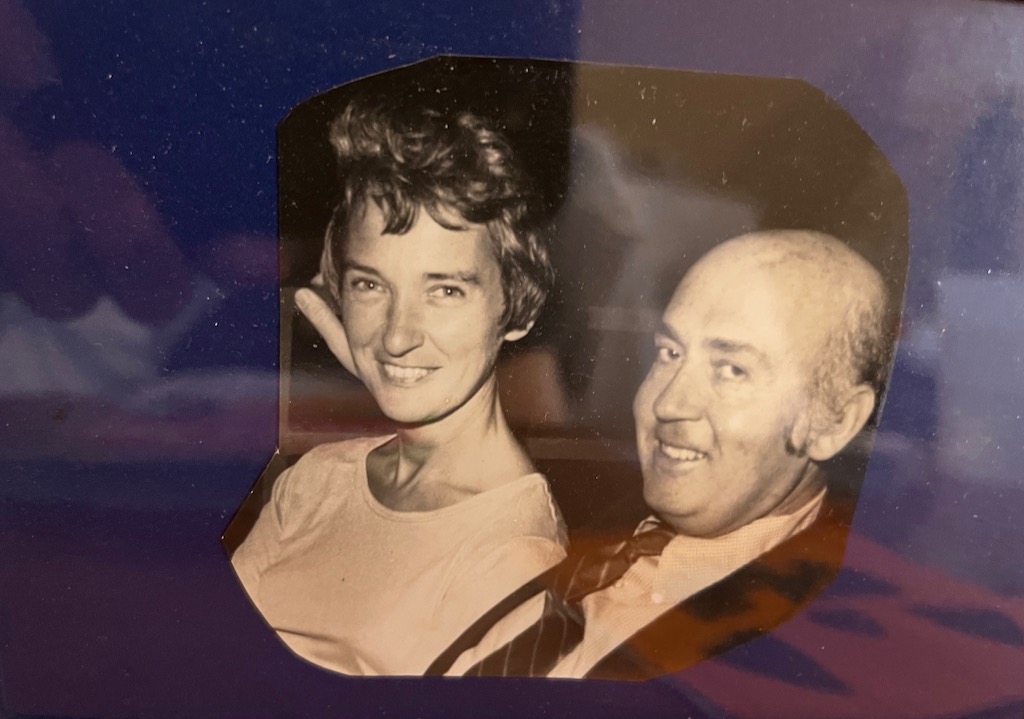
my mama and papa, a long long time ago…

it was the call you pray you never, ever get: early morning. “police and paramedics are already there.” little else known.

except that it was my mom. and she’d taken a terrible fall, a nightmare of a fall. police had broken in the front door when they saw her lying, crumpled, unresponsive, at the bottom of the stairs. a spotted trail of blood had followed her down the last eight of 14 stairs, around the landing, and onto the slate floor of the front hall, where it had pooled. 

as the pieces started to fall into place, one theory was replaced by another, and what we knew was that it was a fall from the top of the steep hardwood stairs to the hall down below. she’d been lying there almost 12 hours. 

and i was some 200 miles away, driving 70 miles per hour, suddenly fielding phone calls to and from brothers scattered across the country, detroit, california, maine, and the brother whose car was following the ambulance to the emergency room where so much of our family’s life has unfolded: death, birth, broken arms and legs and umpteen stitches, hours-long surgeries and outpatient, too, along with a few godawful diagnoses.

my mother’s most fervent prayer since a car accident two aprils ago has been “to go home.” and home to my mother is heaven. she desperately doesn’t want to be alive anymore. finds little joy in the everyday. except for the birds. and irish whiskey on the rocks, with plenty of water, at 5 p.m. sharp (or 4 if nobody’s looking). and as she said to me in a whisper from her ICU bedside the other day, “to be honest, i wish i’d gone” (meaning not waken up after the fall). “but not that way, i guess” (meaning not alone, in the dark, at the bottom of the stairs, when she thought she’d been headed into the shower, to climb into bed, for another restless night of not much sleeping). 

my mother, who is as pragmatic and plainspoken as the day is long, wasted little time in realizing “i might never be allowed to live alone again.” a dawning followed quickly by “can you take me right now to westmoreland,” which is not quite the name of the place where she’s been on a waiting list for independent living since two aprils ago, and at least four times has told them “i’m not ready” when they’ve called her with an available apartment.

she’s still not ready. not really. 

but my mother’s face and scalp and arms and legs are the color of eggplant right now. the bruising so intense it’s long past purple and deep into inky indigo. somewhere between aubergine and midnight. and that’s only what’s broken on the outside. ribs, and vertebrae, and a bone on her face, they’re broken too. 

i was lying in bed the other night, the night before we moved my mother to rehab, tallying the things my mother will miss after 60 years in the house where we all grew up, the house she would not leave because of its tall oaks, and its sunsets out the kitchen window, and the birds and the deer and the pair of ducks who waddled under the fence each and every spring. 

after all these years of knowing ours was the house at the first bend on the winding dead-end street, across from the green pond and the woods where i grew up, across from the country club where my mother for years would strap on skis after any snowfall and glide for miles across snowy greens and tees and sand traps, i am bumping into brain hiccups any time i try to wrap my head around the brand-new notion that 707 will no longer be. or no longer be ours anyway, no longer the polestar to our family chronicles. 

for now, my mother is miles away from that old house. and she’s never going back. says she doesn’t think she could bear to say one last goodbye. so we will shutter it, the five of us who know that house inside and out, who know which upstairs window was the one a brother climbed in one night too late past curfew, the sliding door where another brother was showing off his brand new BB gun and PING! the glass was shattered, the arbor of oaks under which i and my beloved were married. 

this is not the way my mama––or any of us––wanted her story to end. 

but we’ve soldiered on before. she has always taught us how. she’s not one to buckle under. 

she’s been widowed 42 years; buried a husband, and a tiny baby granddaughter atop her husband’s grave; mothered five children, each of whom has had twists and turns and upside downs. she’s had cancers of her own. 

and till now, she has not crumpled. 

even now, her faith has barely flagged. but she looks up at me, through her swollen ink-black eyes, and asks, “barbie, why won’t God take me?” 

and how can i answer that, other than to say, “mama, we don’t know. we just don’t know.”

and so i rub her back where the terrible aching is, and we find her favorite cowboy channel, and i pray and i pray. don’t think me wrong to echo my mama’s prayer. i pray too, dear God, please take her home. she wants so very, very deeply to be there…

i’m transfixed by that photo above. i stare into my mama’s long-ago glimmer. i miss them both, so deeply.

today my only questions are ones without answers…

let us speak of the awesomeness

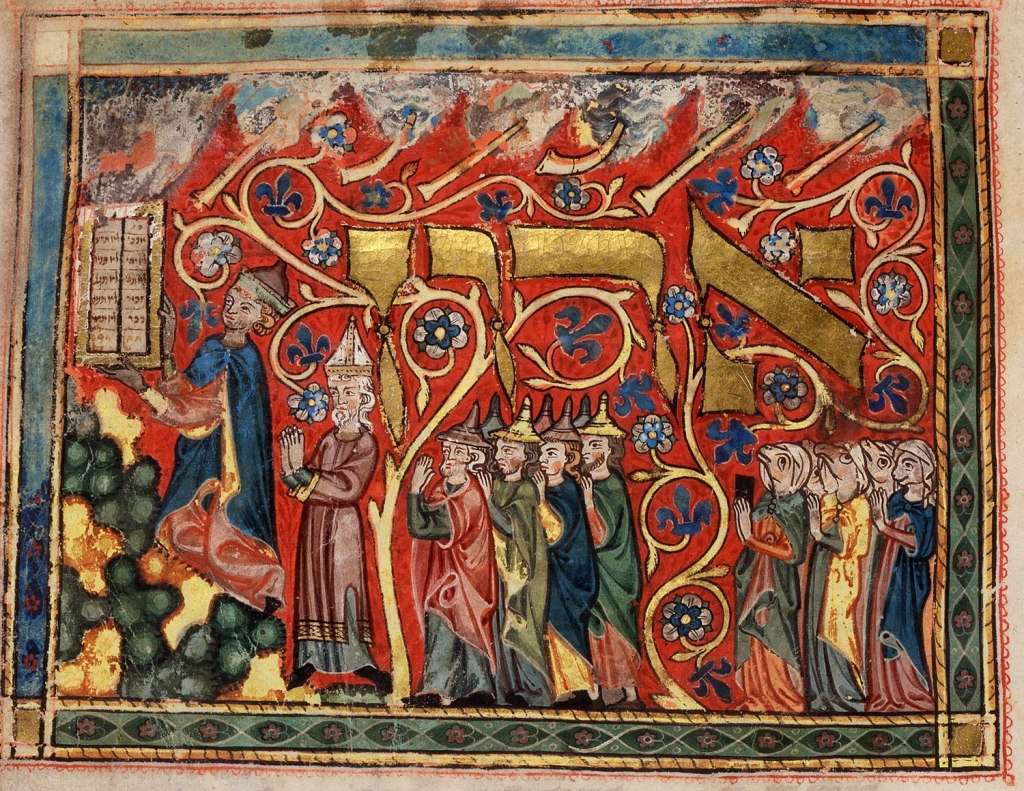
This image has an empty alt attribute; its file name is sinai.jpg

of all the majestic moments in the days to come, the days of awe to come, for this is the cusp of the jewish new year –– the hours when we drop to our knees (figuratively, for there’s not a lot of kneeling in the synagogue) in thanks for all creation, for the newbornness of the world, this world we are entrusted to keep, meaning not to possess but to preserve, to tend, to watch over as a shepherd over his lambs –– one of the moments that will stop time for me is when the chanting of the unetanneh tokef (“let us speak of the awesomeness”) begins. 

its words are as stirring as they come, deep down to the marrow. and they will stir me so deeply this year.

Unetanneh Tokef (ונתנה תקף) (“Let us speak of the awesomeness”) is a piyyut, or Jewish liturgical poem, woven into the hours of prayer of Rosh Hashanah, the new year, and Yom Kippur, the day of atonement to follow. it is chanted just before the Kedushah, the prayer in which the angels sing of the holiness of God, and when the ark that holds the Torah, or sacred scroll, is opened. 

leonard cohen sung from it. in his glorious, goosebumping “who by fire?”** 

it’s a prayer poem in which we stare into the face of our ending, our death, and examine closely the sharp edges of that terrain we so often run from. while it hurls us into attention, a mortal attention that is the base of plenty of theologies (those teachings believe we heighten our game when we’re aware it will end), it doesn’t look only at the last steps, but, too, at the ones we might take as we march there. it’s in the unflinchingness of judaism –– the bracing, no-beating-around-the-bush, straight-on-ness of it –– that so often grabs me by the scruff of the neck and keeps me transfixed. 

and certainly here, and in the hours and days ahead, when we will take public inventory of our sins, when we will stand before a body of water and along with those who stand beside us cast our sins (in the form of bread chunks) into the currents or tide. and when, in the silence of our own pews, we will once again ask these mortal questions. it is the second section of the four-part prayer-poem, the litany of not only death but life, that stirs me most profoundly. 

here are its words (with emphasis on the lines that emphasize living, not dying):

“On Rosh Hashanah will be inscribed and on Yom Kippur will be sealed – how many will pass from the earth and how many will be created; who will live and who will die; who will die after a long life and who before his time; who by water and who by fire, who by sword and who by beast, who by famine and who by thirst, who by upheaval and who by plague, who by strangling and who by stoning. Who will rest and who will wander, who will live in harmony and who will be harried, who will enjoy tranquility and who will suffer, who will be impoverished and who will be enriched, who will be degraded and who will be exalted. But Repentance, Prayer, and Charity mitigate the severity of the Decree.”

one of the prevailing pounding questions of this long hard summer has been my considerable wondering about what lies ahead for me, how many years to love on this world that i love so lavishly. it’s left me breathless, a true foggy night of the soul. and yet, as fall emerges, and the new year begins, so it’s time for me to turn (another command of the days of awe, teshuva, to turn in forgiveness, to repair what we’ve broken) to face the light of the days i won’t –– and can’t –– count. 

it’s a soul-scouring exercise, one that was flung upon me the moment i heard “it’s cancer,” and i’ve taken it to heart. spent more hours than anyone knows contemplating how i will live what remains of my portion. if i emerge living more alive than ever before, if i emerge wildly embracing each and every dawn and the day that follows, if i love as i would be loved, if i take to heart every last prompt to be gentle, to be kind, to forgive as i would be forgiven, then my prayers this year, my Unetennah Tokef, will be answered.

this is a question to be answered in your own silence: how will you live the next holy days of your one blessed life? 

the whole text, for anyone keen to read, broken into four thematic sections:

fear and trembling:

“Let us now relate the power of this day’s holiness, for it is mighty and frightening. On it Your Kingship will be exalted; Your throne will be firmed with kindness and You will sit upon it in truth. It is true that You alone are the One Who judges, proves, knows, and bears witness; Who writes and seals, Who counts and Who calculates. You will remember all that was forgotten. You will open the Book of Remembrances — it will read itself – and each person’s signature is there. And the great shofar will be sounded and a still, thin voice will be heard. Angels will be frenzied, a trembling and terror will seize them — and they will say, ‘Behold, it is the Day of Judgment, to muster the heavenly host for judgment!’ — for even they are not guiltless in Your eyes in judgment.”

God judges us:

“All mankind will pass before You like a flock of sheep. Like a shepherd pasturing his flock, making sheep pass under his staff, so shall You cause to pass, count, calculate, and consider the soul of all the living; and You shall apportion the destinies of all Your creatures and inscribe their verdict.

“On Rosh Hashanah will be inscribed and on Yom Kippur will be sealed – how many will pass from the earth and how many will be created; who will live and who will die; who will die after a long life and who before his time; who by water and who by fire, who by sword and who by beast, who by famine and who by thirst, who by upheaval and who by plague, who by strangling and who by stoning. Who will rest and who will wander, who will live in harmony and who will be harried, who will enjoy tranquility and who will suffer, who will be impoverished and who will be enriched, who will be degraded and who will be exalted. But Repentance, Prayer, and Charity mitigate the severity of the Decree.”

we are helpless:

“For Your Name signifies Your praise: hard to anger and easy to appease, for You do not wish the death of one deserving death, but that he repent from his way and live. Until the day of his death You await him; if he repents You will accept him immediately. It is true that You are their Creator and You know their inclination, for they are flesh and blood. A man’s origin is from dust and his destiny is back to dust, at risk of his life he earns his bread; he is likened to a broken shard, withering grass, a fading flower, a passing shade, a dissipating cloud, a blowing wind, flying dust, and a fleeting dream.”

God is enduring: 

“But You are the King, the Living and Enduring God.

There is no set span to Your years and there is no end to the length of Your days. It is impossible to estimate the angelic chariots of Your glory and it is forbidden to pronounce Your Name. Your Name is worthy of You and You are worthy of Your Name, and You have included Your Name in our name.”

bless you all, profoundly.

This image has an empty alt attribute; its file name is ancient-hebrew-scroll.jpg

**i tried to post a video, a glorious recording of leonard cohen singing “why by fire?” but the video seemed to be getting in the way of publishing this post, so if you’d love a musical blessing, try googling “who by fire?” by leonard cohen. it’s worth a listen. xoxox


year upon year, truth upon truth…

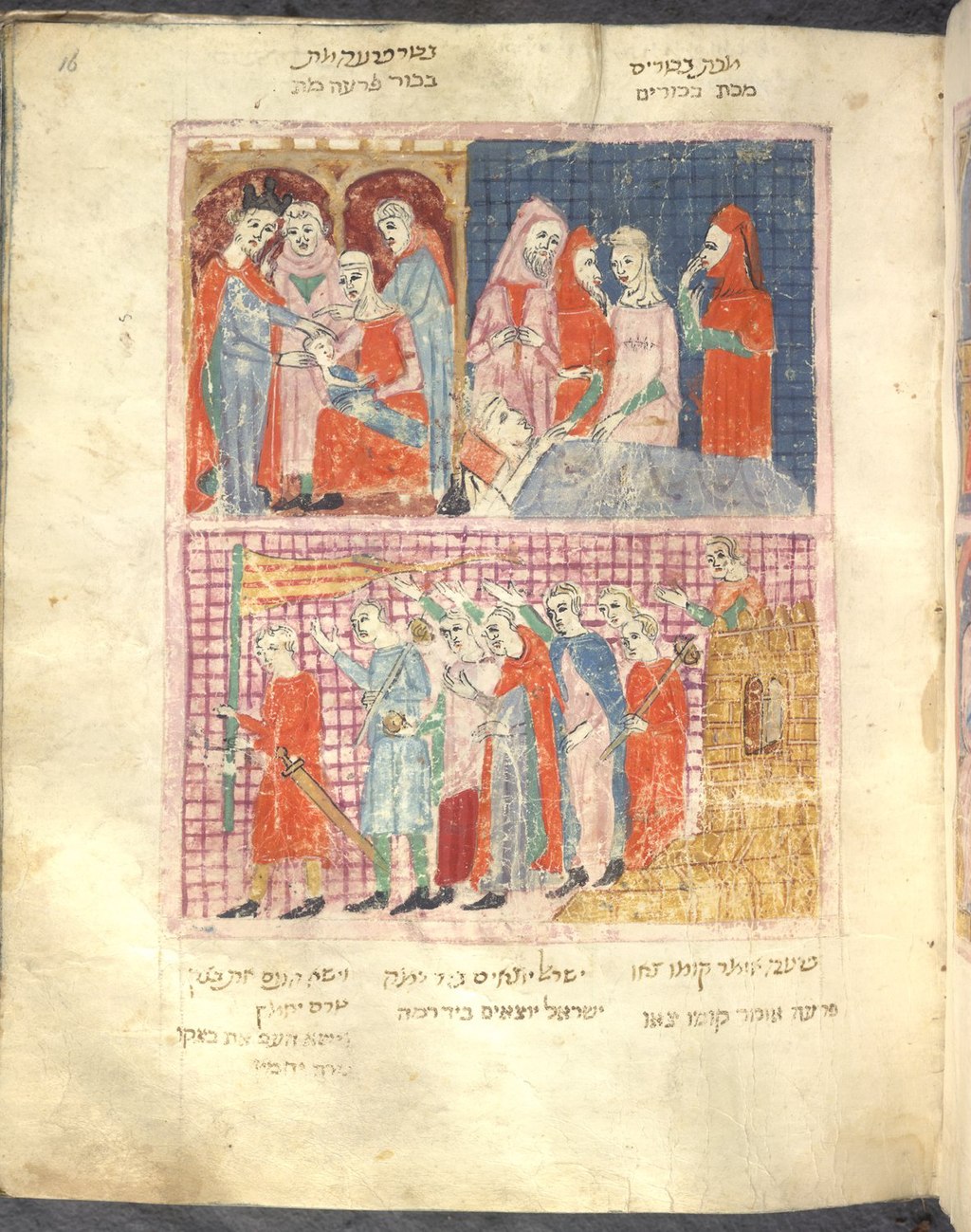
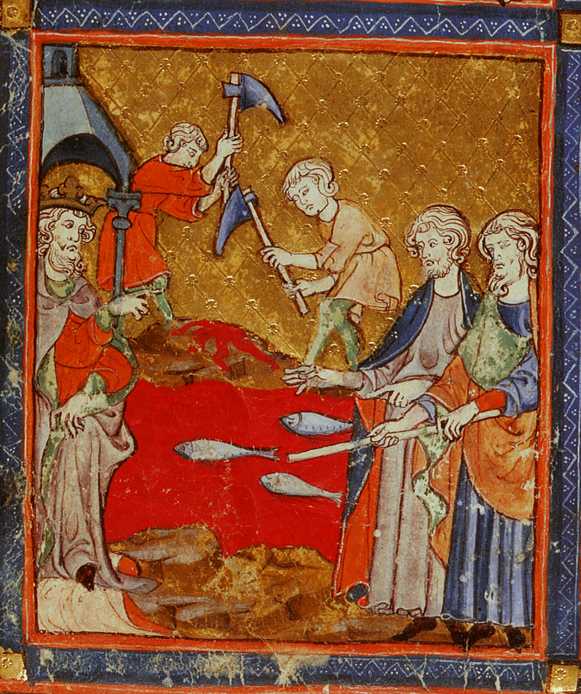
14th-century rendering of the plagues of egypt

we are tellers and re-tellers of story, a people long bound by the unspooling of truths told in text or in verse, around table or hearth, under moon and star or plaster and beam.

in the geometry of time, there lies both wisdom and instruction in the unfurling of the year, an unfurling that might feel like a circle but that i see as a spiral. year after year, we return to texts––familiar texts––that draw us in more and more deeply, the more closely we pay attention. 

so it is––as i fill my house with matzo and shred it of breadcrumbs, as i shop for both lamb and shank bone, as i steam mounds and mounds of asparagus––that once again we come to this holy stretch of time endowed with foundational story, ancient stories both christian and jewish. the story of a savior who wept in a garden, and soon was betrayed, then flogged and stripped and pierced with a crown of thorns. a humiliation as severe as any i’ve ever read. certainly more than any i’ve ever known. and at the same time in this house, we read and retell the story of the enslaved jews finding their way out of bondage, crossing an isthmus, a sand bar in a sea of reeds, but not before witnessing the scourge of ten plagues. 

the beauty of these texts, and any text meant for endless curiosity––these texts, as if prisms we hold to the light, turning and turning for the making of new rainbows––is that each year some new fragment may catch our attention. new rainbows might scatter against the walls of our soul. 

so it is that this year i am thinking anew of the plagues: water turning to blood, frogs, lice, flies, livestock pestilence, boils, hail, locusts, darkness, and the killing of firstborn children.

i remember how at the long seder table where my boys grew up, the table would be scattered with wee plastic frogs and broad-winged bugs; ping pong balls would serve as hail. and red food dye would be splattered on plates. the detail was never lost. 

and only this year––a year when both those boys who once squirmed at the bugs and squealed at the blood will be hundred of miles away––only this year have i come to pay closer attention to what the plagues might have meant to the story we’re commanded to tell. 

according to a wise, wise rabbi whose wisdom i found myself reading the other day, the plagues are “commonly read as punishments levied against the egyptian people for the terrible suffering they forced upon the israelites,” writes sharon brous, the senior rabbi and founder of IKAR, a jewish congregation in los angeles, a rabbi who calls it her life’s work to re-animate religion. oh, that we animate it, this vein in our lives that seems to either be bent to fit particular agendas, or shoved to the side altogether. 

but, writes rabbi brous, there is another way to interpret the plagues, and God’s intent therein (and here’s where i buckle my seatbelt, and begin my own homegrown rocket ride): what if the plagues, the sufferings, are meant not to punish but rather to tender the heart. to grow compassion. to breathe and breed empathies. 

we need turn to the 16th and 17th centuries, to the wisdom of a venetian scholar and rabbi named obadiah ben jacob sforno, to find the seeds of this thinking: sforno argued in his commentary on the text of exodus that the plagues were actually brought to awaken the conscience of the oppressor, “to increase the chances that pharaoh would finally see the light and become a genuine penitent.” 

“in other words,” writes brous, “what God desired was a true change of heart. God wanted pharaoh and his people to take responsibility for the injustices they committed. tell the truth. make amends. offer reparations. chart a new course, together with the israelites.”

in a world as plagued as ours currently is––war and pillage, pandemic and pestilence, fire and flood and drought––in a world where it’s too too easy to turn our backs on the sacred, to point to the suffering and insist there’s no God so hard-hearted to look the other way so therefore there must be no God, in a world as replete with reasons not to believe, what if the radical notion, the one that’s hardest to come by, is the dawning idea that with each and every suffering we grow more and more tender. 

there’s the crux, the hard part: to allow the suffering to tender us, not to harden. not to let horrors metastasize, not to let hurt spread like a cancer, nor turn us into walking, talking cess pools of resentment, to leave us every morning, noon, and night with the afterburn of bitterness there on our tongues. 

imagine ten of your own plagues: the time you were double-crossed; the time you discovered a terrible truth, a truth that was crushing; the dying and death of someone you loved. the remembering and never forgetting of a time you caused the suffering. the lie you let grow. the cruel innuendo that crossed your own lips. count your own ten.

now, consider the pain that you felt. how it awoke you in the night. how it haunted you by the day. how it felt like a nest of hornets let loose in your soul. 

now imagine that the pain didn’t harden. imagine it worked to loosen the loam of your soul. allowed room for new seeds to be planted there. tender sproutlings of purer compassion. how, ever after, you knew what it meant to grieve in a bottomless way. how, ever after, you knew how tempting it was to turn away and never turn back. how, ever after, you knew the muscularity demanded to rise up and out from the darkness. 

consider how those plagues pushed you––not without ache, not without wishing you could wish it away––toward a deeper, broader understanding of and connection with the suffering all around.

imagine if the resonance of your own hours of suffering allowed you to look upon the sins and the suffering all around and find common ground, feel your heart open not close.

imagine if the world’s suffering was meant to do the same. imagine if all this is an exercise in tendering our holiest vessel: the one heart made as a chamber for the sacred to dwell. 

what if, instead of growing bitter and hard over time, we grow softer and sweeter? what if we return to the text––the suffering and crucifixion of the one born to teach and live love, the freeing of an oppressed people made to witness hardship upon hardship, ten plagues in all––what if we return to the text and find, for the very first time, a wisdom to carry us on? into a world that never seems to pause in its inflicting of pain.

what if, in feeling the pain, we are moved to be the agent of balm, of healing, of lifting the other out of a pain we know all too well? tikkun olam. “repair the world.” mend the tatters. reimagine the whole.

there must be wisdom, must be reason we circle again and again to the same lines of text, as if we’re meant to meet it again with whomever we are one year to the next. this year the lines that most drew me in were the ones that ask why in the world would ours be a God who not only allows but inflicts plague upon plague, hurt upon hurt.

my knowing next year might differ. but this year i’ve come to dwell on the thought that no one escapes a life stitched with sufferings. and if the sufferings come, how might they make of us souls that pulse with compassion. communion, after all, is the holiness we seek. oneness. with God, with ourselves, and the whole of humanity circling this earth in this long, dark hour.

what plagues move you to compassion? (a question to answer deep in your soul in these entwined holy hours ahead….)

i cannot let this day pass without remembering my beautiful mother-in-law whom i last saw on this day, her birthday, a year ago. we keep her flame alive, very much alive, in the telling and re-telling of her stories. may they never end…..

*the question of the israelites and the plagues––whether they witnessed them or endured them––was a question that prompted much discussion at dinner last night. one of those rabbit holes into which we fall at our house because one of us––either the jew or the catholic––is always fairly new (or newer) to a story, and wonders about it in ways that have never quite struck the one to whom it is more familiar. i’d assumed––wrongly, it turns out––that to be in egypt at the time of the plagues meant to endure them but a closer read of the story made clear that, according to Exodus, for at least some of the plagues, the israelites were protected. certainly, i knew that the whole point of the “passover” was that Jews were to mark the doorways to their home with the blood of a sacrificed lamb, and the angel of death would know to pass over, sparing the firstborn son. i hadn’t realized––nor had my tablemate––that plagues one through three seem to have been endured by all, and four through ten were endured only by the egyptians, except for those who were penitent and thus spared the wrath.

the way of sorrows

Palestine Thorn (Zizyphus spina-christi). Illustration (1881) by Edwin W. Rice.

i feel intense need for silence, as is so often my posture on this day of sorrows. no desire to add my voice to the cacophony. i turn instead to the voice of caryll houselander, a mystic and twentieth-century british catholic writer, who referred to herself as a “rocking horse catholic.” the title of her biography, written in 1962 by maisie ward (of the famous publishing house Sheed and Ward), is “that divine eccentric.”

i’ve always found the eccentric to be especially poignant. in the nooks and shadows of their beyond-the-boundaries ways of seeing, it seems the sacred makes itself especially at home. 

houselander might have been eccentric, but she stirs the soul for me. i pull her The Way of the Cross off the shelf every Holy Week. i remember well the first time i stumbled onto her stations of the cross; “the way of sorrows” is how she refers to the long dusty ascent of jesus to the hill upon which he would die. would be nailed to a cross, stripped, speared, shamed. 

her words gripped me so completely that first time, alone in a church on a dark gray Good Friday, and they’ve never ever let go. they bring good friday, the way of sorrows, to life for me, year after year. and it’s a place i choose to go, a dusty trail i am compelled to enter into, to follow footfall by footfall, year after year. 

in the depth of sorrow — so many sorrows — i find an open wound of the heart for the one who stumbled up the hill, the one who fell not once but thrice, the one who called out, “Father, forgive them, for they know not what they are doing,” as the last bitter taste of the vinegar, put to him on the end of a stick, swirled over his tongue. 

in reading even more of houselander this year, she makes the point that for most of his life jesus was hidden. little is known of his childhood, little is known of his life before he was 30 and stepped into the public square, where he preached in parable, healed the broken, toppled the hypocrites. she writes how he often dispatched alone into the desert to pray. how even on the eve of his crucifixion, he left behind his closest soulmates, went deep — and alone — into the garden of gethsemane to beg for this cup to be passed from him. 

houselander, a deeply empathetic eccentric, writes how part of the trial — little mentioned but certainly deeply real in that awful moment of time —was how this paradoxically private soul was stripped of his deeply private self.

he was exposed, made public property. stripped naked before the whole world, not only in body but in mind and in soul. to reveal not only his love, but its intimacy, its sensitivity, its humanity. “all his secrets were out,” houselander writes. i think long and hard about that exposure. i am thinking of that as i turn the page and read deeper into the way of sorrows.

she writes: “he is a man of sorrows. he is covered in bruises and stripes. he is made a laughing stock.”

i ask: how many of us have been made laughing stocks?

how many of us have felt the red tide of shame rise up and over our faces?

how many of us have ever been hit? on purpose? with a hand, or a stick, or a belt? 

“his face is covered with spittings.”

how many of us have ever been spit upon? 

“he is bound like a dangerous criminal.”

how many of us have watched the innocent be bound like a criminal?

“his friends have forsaken Him.”

how many of us have felt a friend do the same?

“the kiss of treason burns on His cheek.”

how many of us have been betrayed? and how often by someone to whom we believed we were especially close?

i leave you, quietly, with two of caryll houselander’s prayers from The Way of the Cross:

first:

“Lord, that I may see!”

“…Let me recognize You not only in saints and martyrs, in the innocence of children, in the patience of old people waiting quietly for death, in the splendor of those who die for their fellow men; …

“Let me know You in the outcast, in the humiliated, the ridiculed, the shamed; in the sinner who weeps for his sins. …”

and, this, from the moment along the way of sorrows when a woman named veronica, a compassionate woman, burst through the rabble to come face to face with the tormented jesus, and wiped his face, a soulful act of compassion if ever there was. this is houselander, with her own pleadings inspired by veronica:

give me Your eyes

to discern the beauty of your face,

hidden under the world’s sorrow.

give me the grace

to be a Veronica;

to wipe away

the ugliness of sin

from the human face,

and to see

Your smile on the mouth of pain,

Your majesty on the face of dereliction,

and in the bound and helpless,

the power of Your infinite love.

Lord take my heart

And give me Yours.

Jesus is mocked” is one of the downloadable Stations of the Cross, by Scott Erickson. featured in Image Journal, for his “Stations in the City” project, posted around the streets of Portland, OR. He writes: “I think the stations are for everyone, no matter your religious affiliation, because they are a meditation on being human, so I wanted people to see them without the hurdle of having to enter a religious space.” 

illustration above: Botanical illustration of the Zizyphus Spina Christi, the thorny bush thought to have been used for the crown of thorns placed on Jesus on that first long-ago day of crucifixion, from A pictorial commentary on the Gospel according to Mark, with the Text of the Authorized and Revised Version, (1881) by Edwin W. Rice.

my questions are in the litany above, the echoes to houselander’s cries….

how many of us have been made laughing stocks? how many of us have felt the red tide of shame rise up and over our faces? how many of us have ever been hit? on purpose? with a hand, or a stick, or a belt? how many of us have ever been spit upon? how many of us have watched the innocent be bound like a criminal? how many of us have felt forsaken? how many of us have been betrayed? and how often by someone to whom we believed we were especially close?

i believe, like Erickson, the artist above, that regardless of religious affiliation, the Stations of the Cross in so many ways are a meditation on being human, and into that holy and intimate space, i enter….

make it stop. please, make it stop.

my voice is only one whisper. my fingers, just one at a time, tap along the rows of these keys without sound. but the lump in my throat is ready to burst. and my heart is too.

stop the ugliness, world. stop the hate. stop the made-up lies and the mudslinging. tear yourself away from the impulse to tromp on the neck of the one you perceive as your enemy.

doesn’t need to be this way. doesn’t need to be a national throw-em-to-the-lions.

the world doesn’t need to wake up every morning searching for the ugliest route to the trail head.

there are moments, plenty of ’em, when i picture myself marching to the steps of the u.s. capitol, unfurling a parchment, invoking a code of radical decency, insisting the ugliness cease and cease now. oh, what i’d give to back some of these fools into a corner, to poke em on the chest, look em in the eye, and ask if really, really, they want to expend their God-given breath on slicing and dicing each other to bits, trampling truth, teaching children the ways of the playground bully.

i got sick of bullies back in first grade. never outgrew my distaste.

all these months i’ve retreated deeper and deeper into a realm where the rules of the world are not the ones with discernible weight. i dwell much of the time in a monastery of my own making. it’s quieter there. and gentler. i take time for the monarch butterfly, leave out saucers of sugar water, scatter seeds for the milkweed that makes for a butterfly landing pad.

in the quietude i wrap all around me, the rules i live by are the ones of an otherworldly iconoclast. the code is the one inscribed by a God who asks only one thing: love without end. love as you would be loved, love every last inch and ounce of creation. behold the wonder. of each other. of the monarch. and the dawn. and every last shimmering light in the night sky.

and, sometimes, to love means to put breath to the words that are stuck in your throat. to march to the capitol steps, to reach for the microphone, to try with every ounce of your might to shake sense into the senseless. the ones dizzy with power, or the pursuit thereof. it’s a sickness and it needs to stop. it’s as contagious, it seems — and as deadly — as this invisible virus, the plague that’s upon us. maybe more so. maybe it’s worse.

because once upon a time i was a nurse, because i’ve stood at the side of a hospital bed in the hours just before a last breath was drawn, i know something of deathbed confessions. i know how, at last, the veils of the everyday are pulled away, and what’s left is the essence. holy essence. how the sins and the glories float to the surface. how one last sweep of the soul, of a lifetime, is what carries us off to whatever comes next.

our time here is fleeting. do the ones breathing fire and lies, do they really want to fritter away the hours allotted? is that churn in their belly the only way they know to crawl from their beds? is bitter the singular taste of the day?

the choice is quite simple: make of your life an instrument of peace, of goodness, of attainable holiness. or let it extinguish in smoke and in flames, in pride and deceit, in ugliness out-of-control.

we make our choice minute by minute, day after day.

what will you choose, world, what will you choose?

if you were writing a code of goodness, decency, and gentle kindness for the world, what would you inscribe? what would constitute breaking the law?

juneteenth

in which, once again and imperatively, we listen. this time to the words of abraham lincoln, Black activist jadon-maurice forbes, and poets maya angelou and marilyn nelson…

“a proclamation,” it begins, simply, declaratively. a beginning ground deep in the soil of justice. long overdue justice. 

“Whereas, on the twenty-second day of September, in the year of our Lord one thousand eight hundred and sixty-two, a proclamation was issued by the President of the United States, containing, among other things, the following, to wit:

“That on the first day of January, in the year of our Lord one thousand eight hundred and sixty-three, all persons held as slaves within any State or designated part of a State, the people whereof shall then be in rebellion against the United States, shall be then, thenceforward, and forever free; and the Executive Government of the United States, including the military and naval authority thereof, will recognize and maintain the freedom of such persons, and will do no act or acts to repress such persons, or any of them, in any efforts they may make for their actual freedom.”

so begins president lincoln’s emancipation proclamation, issued at the dawn of the new year, 1863.

so why did it take till the 19th of june in 1865 for the slaves of galveston, texas, to find out they were free?

juneteenth, at heart, is the commemoration of that announcement of overdue emancipation— marking the official end of slavery in these united states — a full two and a half years after lincoln’s proclamation. 

quoting from juneteenth.com:

“Later attempts to explain this two and a half year delay in the receipt of this important news have yielded several versions that have been handed down through the years. Often told is the story of a messenger who was murdered on his way to Texas with the news of freedom. Another is that the news was deliberately withheld by the enslavers to maintain the labor force on the plantations. And still another is that federal troops actually waited for the slave owners to reap the benefits of one last cotton harvest before going to Texas to enforce the Emancipation Proclamation. All of which, or none of these versions could be true. Certainly, for some, President Lincoln’s authority over the rebellious states was in question.  Whatever the reasons, conditions in Texas remained status quo well beyond what was statutory.”

why did it take till the 19th of june in 2020 for most of a nation to awake to the lingering injustices, to finally empower one Black activist, jadon-maurice forbes, to write: “Juneteenth, perhaps for the first time, is for all of us.”

for all of us to inventory our souls, to ask the hard, hard questions: what are the isms in my life that put up walls? where are my blinders? what are the ways i acquiesce to otherism? and, most emphatically, how can i break down whatever stands between me and true and unbiased justice for all?

forbes goes on to write:

This is a day that my grandmother taught me to honor as the beginnings of a new life for the African diaspora. She was very close to her African-American heritage and wanted to impart that quality to me. So much so that she would replace my Hooked-on-Phonics books with ones she felt were more suitable — like Imani and the Flying Africans — a fantastic tale of a band of Africans taking to the sky to escape to freedom.

When I think of Juneteenth, I often imagine those winged, black faces breaking their chains and finding freedom. But the true American tale of how slaves were freed is more grounded in a nuanced, complicated, and painful struggle for freedom that has continued for 155 years (read: that means ‘til today). Juneteenth commemorates June 19, 1865, the day the last of the enslaved Africans in America were freed from their chains, having continued to work in bondage for a full two years after Lincoln signed the Emancipation Proclamation.

In many ways, Juneteenth is a bittersweet reminder of what was promised but never delivered to Black folks post-emancipation. It’s a reminder of delayed justice. Every year, even after my nana passed away, we celebrated this holiday. And every year, we do so in honor of progress as much as for a continually delayed sense of justice and equality.

But this Juneteenth is different. Can you feel it? We’re in a rare moment in that the world is coming together to really grapple with that delay. In the last three weeks, millions have taken to the street in honor of George Floyd, Breonna Taylor, Tony McDade, and now, Rayshard Brooks, in addition to the many other Black people who have been killed at the hands of vigilantes or law enforcement. The explosion of protest is in response to a pattern of killings, piled onto the deadly impacts of COVID-19 and four years of Donald Trump.

linger over these unanswered questions. let them settle deep down to where your conscience unsettles you. ask where you might begin. and in the meantime, let maya angelou further stir your soul.

here she is reading “the slave auction,” a poem by frances ellen watkins harper, written in 1854, after harper, a Black poet, witnessed one such auction…

and read the words of poet and author marilyn nelson’s “juneteenth.” nelson, the daughter of one of the last of the tuskegee airmen, was a three-time finalist for the national book award, poet laureate of connecticut, winner of the robert frost medal, and more and more and more. but before you read her poems, read this short bit she wrote on “how i discovered poetry”:

It was like soul-kissing, the way the words
filled my mouth as Mrs. Purdy read from her desk.
All the other kids zoned an hour ahead to 3:15,
but Mrs. Purdy and I wandered lonely as clouds borne
by a breeze off Mount Parnassus. She must have seen
the darkest eyes in the room brim: The next day
she gave me a poem she’d chosen especially for me
to read to the all except for me white class.
She smiled when she told me to read it, smiled harder,
said oh yes I could. She smiled harder and harder
until I stood and opened my mouth to banjo playing
darkies, pickaninnies, disses and dats. When I finished
my classmates stared at the floor. We walked silent
to the buses, awed by the power of words.

and, now as promised, nelson’s poems. first up, “juneteenth,” and then, the riveting “worth.”

juneteenth

With her shiny black-patent sandals
and her Japanese parasol,
and wearing a brand-new Juneteenth dress,
Johnnie’s a living doll.

Juneteenth: when the Negro telegraph
reached the last sad slave…
It’s Boley’s second Easter;
the whole town a picnic.

Children run from one church booth
to the next, buying sandwiches,
sweet-potato pie, peach cobbler
with warm, sweaty pennies.

The flame of celebration
ripples like glad news
from one mouth to the next.

These people slipped away
in the middle of the night;
arrived in Boley with nothing
but the rags on their backs.
These carpenters, contractors, cobblers.
These bankers and telephone operators.
These teachers, preachers, and clerks.
These merchants and restaurateurs.
These peanut-growing farmers,
these wives halting the advance of cotton
with flowers in front of their homes.

Johnnie’s father tugs one of her plaits,
head-shaking over politics
with the newspaper editor,
who lost his other ear
getting away from a lynch-mob.

Worth

For Ruben Ahoueya

Today in America people were bought and sold:
five hundred for a “likely Negro wench.”
If someone at auction is worth her weight in gold,
how much would she be worth by pound? By ounce?
If I owned an unimaginable quantity of wealth,
could I buy an iota of myself?
How would I know which part belonged to me?
If I owned part, could I set my part free?
It must be worth something—maybe a lot—
that my great-grandfather, they say, killed a lion.
They say he was black, with muscles as hard as iron,
that he wore a necklace of the claws of the lion he’d fought.
How much do I hear, for his majesty in my blood?
I auction myself. And I make the highest bid.

how will you mark juneteenth? how will you join in the movement for justice for all?

holy week, promised land, and the spiritual practice of making do…

“why is this night different from all other nights?”

year after year for all the years we’ve been circling ’round tables when the paschal moon is at its plumpest and pinkest, telling and retelling the story of exodus — of plagues and passover and a promised land just out of reach — that question, the first of the four questions traditionally asked by the youngest, sharpens the focus on the holy act of separating time. setting aside particular hours, according to particular rising and setting of the moon in the heavens, lifting those hours out of the ordinary, sanctifying. making holy. erecting cathedrals of time, in the words of abraham joshua heschel, the late great rabbi and thinker, who wrote:

Judaism is a religion of time aiming at the sanctification of time. Unlike the space-minded man to whom time is unvaried, iterative, homogeneous, to whom all hours are alike, quality-less, empty shells, the Bible senses the diversified character of time. There are no two hours alike. Every hour is unique and the only one given at the moment, exclusive and endlessly precious.

Judaism teaches us to be attached to holiness in time, to be attached to sacred events, to learn how to consecrate sanctuaries that emerge from the magnificent stream of a year. The Sabbaths are our great cathedrals; and our Holy of Holies is a shrine that neither the Romans nor the Germans were able to burn; a shrine that even apostasy cannot easily obliterate.

this year, the question — why this night? — carried particular resonance. and its sister question, why is this week different from all other weeks, begins to burrow into the holiest questions quivering just beneath the surface of all this 20-second hand washing, and bleach-and-water spritzing and tying of masks round our smiles.

in a week woven with tradition — with particular prayers in particular places, particular recipes, particular gatherings year after year after year — it’s all broken open. it’s all in shards and pieces we assemble and reassemble as best we can.

i think here of the japanese art of kintsugi, beholding the beauty in the brokenness, not occluding or hiding the cracks, but filling them in with rivers of shimmering radiant metals, gold or silver or platinum. deeply understanding the infinite wisdom of rumi, the sufi mystic: “the wound is the place where the Light enters you.” or the resounding redemptive truth of hemingway’s glorious line from a farewell to arms“the world breaks everyone and afterward many are strong in the broken places.”

and in this old house where we weave passover and holy week, where the retelling of the parting of the sea, the fleeing from evil pharaoh, the pestilence and boils and locust and darkness, the slaying of the firstborn (the litany of plagues that visited upon egypt) interlaces with the stories of the last supper, the betrayal of judas, the flogging and crowning with thorns, the crucifixion, i found salvation in the spiritual practice of making do.

and there, in the straining of imagination, in the redefining and refocusing on the essence at the root of each strand of tradition, in scouring the pantry, in testing the powers of my own ingenuity, i began to see in sharp focus the extraordinary blessing in reinvention, in improvisation, in the promised land just beyond my reach. in the imperative of bypassing any and all shortcuts. working just a little bit harder. discovering joy at each tiny triumph.

take the chicken marbella.

IMG_1425over the decades since the silver palate cookbook was first published in 1979, and over the decades at the passover seder where i’ve marked the first night of prayer for 36 years, that glorious rendition of chicken and olives and prunes has become synonymous with the jewish rite of spring. add to that the fact that my home-bound freshman in college happens to love it, practically licks the plate of it. (and these days — passover or not — i’ll climb any mountain to bring him one iota of everyday ordinary un-quarantined joy.)

IMG_1432i’d decided a week ago that, come heck or high water (an apt expression in the season of red sea crossing), i was going to muster up a pan full of that vernal succulence. eyeing the few parts of chicken in this old house, i tucked away a package of breasts at the back of the freezer, knowing i might not fetch another till this pandemic is ended. i happened to find just enough dried prunes in the pantry to realize i was halfway there. olive oil, oregano and garlic, i scrounged up with little worry. brown sugar, ditto. white wine i found in the dark and dingy corner of the basement. it was the spanish olives that presented the hurdle. so i made do: i found a few lonely olives, black ones not green, at the back of the fridge. and i stirred it all up like nobody’s business, rejoicing all along the way that i’d found a way — through scrounging + improv — toward chicken marbella.

next up was the seder plate: where in the world does one look for a roasted shank bone in the depths of pandemic? and was i really going to sacrifice one of the six lowly eggs in the fridge for a ceremonial platter of symbols? i was not. so off to the cupboard i trotted, reached for my half-dehydrated markers and scissors. grabbed a sheet of printer paper, and voila, shank bone, egg, and — the hardest procurement of the week — one square of matzo, all kosher for passover. haroset — the apple, walnut, cinnamon and wine meant to remind of the mortar used by the slaves who built pharaoh’s pyramids — that came courtesy of the many-years-old bottle of manischewitz concord grape wine stored in that same dingy corner of the basement, and a stash of walnuts left over from christmas.

but, when we sat down to our laptop, dialed into our zeder (seder by ZOOM, the cyber salvation of the red-ringed siege), we had ourselves a proper seder table, from marbella to matzo, the ingenuity way.

all that making do, all that finding my way — deciding what’s worth the effort, what doesn’t matter — it’s becoming a meditation in mindful distilling. take nothing for granted. turn in to your own toolbox of tricks. never mind the easy way. do away with the unnecessary.

have you noticed that barely-enough makes for extraordinary? have you sensed the keener attention you pay when so little is taken for granted? when i sliced into a ripening pineapple the other morning, and discovered it was perfectly golden and sweet, not hard and pale yellow as it sometimes can be, i felt a sigh of pure joy riveting through me. you would have thought i was an arctic explorer staking my flag in the pole, so triumphant did i feel at suddenly beholding my cache of pineapple perfection. when’s the last time you remembered for days how sweet your pineapple was?

and so it is in the time of corona. when a trip to the grocery store — or a ride on the el, or rubbing elbows with the stranger wedged in beside you at the movies or museum or ballpark — without fear of catching a potentially fatal infection might never again be taken for granted.

we are all, collectively, living and breathing improvisation. expanding the boundaries of what we thought we could do (heck, i’m now very best friends with the sourdough starter bubbling away at the back of my fridge, and i’m zooming into book groups all over the globe, chanting with monks hundreds of miles away). we are looking out for each other in ways we might not have before (sending meals to ER departments, sharing seeds with the neighbor next door).

the brakes have been halted on this mad-paced world. and yes, it’s filled with heartbreak upon heartbreak. jobs are being cut (i lost one of mine). paychecks are being slashed (happened here, too). magnificent glorious souls are breathing their very last breath afraid and alone (dear God, praise the nurses and doctors who step into those holiest of shoes). the obituaries (some of them being written in the room just above) will make you weep (and they do, day after day).

but inside of all the uncharted fear, and the bureaucratic ineptitude that might make you furious, this holiest week is upon us, and it’s teaching us lessons we might never have otherwise learned.

in the nooks and the folds of making-do, i’m paying closest attention to those deepest essentials. and therein lies the holy way home.

what making-do moments have you encountered this week? and what lessons spilled forth?

a housekeeping note: you might have noticed that all week long, in the comments of each week’s post, i’ve been tucking away especially succulent morsels i happen to come across in my cyber adventures. as we’ve long considered this our shared kitchen table, it seems more than apt to leave little bits of deliciousness all week long. so be sure to click back, and scroll through the comments, where i’ve left a bevy of links and snippets of poetry. 

before i go, here’s one i clipped from a letter the great george saunders wrote to all the fledgling writers at kenyon college whose spring quarter was snatched away. he wrote a beautiful long letter, but this one paragraph i saved just for you:

from George Saunders to Kenyon writers:

There’s a beautiful story about the Russian poet Anna Akhmatova. Her husband was shot and her son arrested during the Stalinist purges. One day she was standing outside the prison with hundreds of other women in similar situations. It’s Russian-cold and they have to go there every day, wait for hours in this big open yard, then get the answer that, today and every day, there will be no news. But every day they keep coming back. A woman, recognizing her as the famous poet, says, “Poet, can you write this?” And Akhmatova thinks about it a second and goes: “Yes.”

may we all find poetry, even amid the pandemic….

IMG_1429

and now i enter deep into my holiest hours….the triduum of holy week….

(p.s. that’s our zoom seder screen shot above, same characters year after year after year. beloved mary schmich, the brilliant pulitzer-prize-winning chicago tribune columnist, wrote about it….here.)