pull up a chair

where wisdom gathers, poetry unfolds and divine light is sparked…

Month: September, 2024

when writerly rabbit holes swallow you whole….

in which a writing assignment, one that’s wholly captured my imagination, has taken over my gray matter (the stuff inside my head, not the pewter hairs that spring from it), and precluded most any other human activity—save for the occasional re-fueling at the cookstove to keep from puddling to the floor, famished. and for which i’ve shared my simmering salvation down below…

excuse me while i type over here. i seem to have fallen down-down-down into an engrossing writerly rabbit hole, and as the week’s worn on, i’ve only found myself burrowing deeper and deeper. it’s been a while since i’ve chased a thread of idea down to where the earthworms wriggle and the bunnies make hutches. and while i admit that my inner mad-scientist might be vividly on display here, in the way that i can’t put down my wild-eyed pursuit, there is a preponderance of joy stirring the madness. 

i love chasing ideas. love untangling cognitive threads. discovering new ways of thinking i’d not known of before. love when one read leads to another and another. and then it’s my task to slice it, and dice it, and make it all make sense. extra points if it comes out poetic.

i’ve been a rabbit-hole writer as long as i’ve been slapping verbs and nouns into sentences. back in high school, i decided to write a mega theme paper on the misuse of wealth in america, and pretty much took hostage the dining room table for weeks on end. if anyone wanted easter dinner that year, they were going to have to shove aside my teetering stacks of tomes chronicling the gatsby brigade of modernday over-conspicuous consumption. years later, when the tribune set me off on a cross-country steinbeckian journey, zigzagging the continent from the deep woods of maine to the pacific northwest and plenty of points between, chronicling stories of hunger in america for a 10-part series, i distinctly remember my editor, a rumpled import from the new york times, sauntering over to my cubicle and insisting i unchain myself from my keyboard to at least stand under a shower, or swim a lap in a pool, long enough for one or two big ideas to snap into place. i was never much for taking breaks. 

granted, writing that way might have been bad for the eyes and tough on the spine and the wrist, but i kept at it (one night, in the thick of telling a murderous tale, my writing partner and i took turns falling asleep on a very fat phone book). until i birthed a wee child. and said child insisted on eating. and i was the source, the one and only. swiftly realizing that typing while nursing had its drawbacks, i reluctantly succumbed to the art of the pause. 

lo and behold, i discovered epiphany. 

amazing things happen in the chambers of the mind when you stop hard-charging the thoughts. when you allow a synapse to slow to a pokier pace. 

more often than i wish to admit, some elusive sentence has snapped into place while rinsing a plate under the faucet. and a sugarplum of a word has skydived in from seeminly nowhere. so i’ll concede that there’s virtue in lifting my head from the writerly hole.

but now that this old house is mostly empty again, there’s no stopping me. except that there is still one other mouth to feed. (fear not, he feeds himself well and is happy to do so on the nights i relinquish my post at the cookstove.) and besides, chopping and stirring, i’ve found, provides fine syncopation for the drumming of thoughts while assembling an essay.

soup by the kettleful is my solution. all it takes is one afternoon of onion slicing, garlic mincing, and the tossing in of a few other things. and by nightfall, and the night after too, you’ve got plenty to slurp from your bowl. 

my ode to autumn, lemony white bean soup with turkey and tuscan kale, is what i bring you this week with the promise that it is utterly, perfectly, shlurpably delicious. it comes, as so much of my best cooking does, from my very fine friends at NYT Cooking, one of the perqs of seven-day-a-week home delivery, the last house this side of the block to still believe in turning actual newsprint pages.
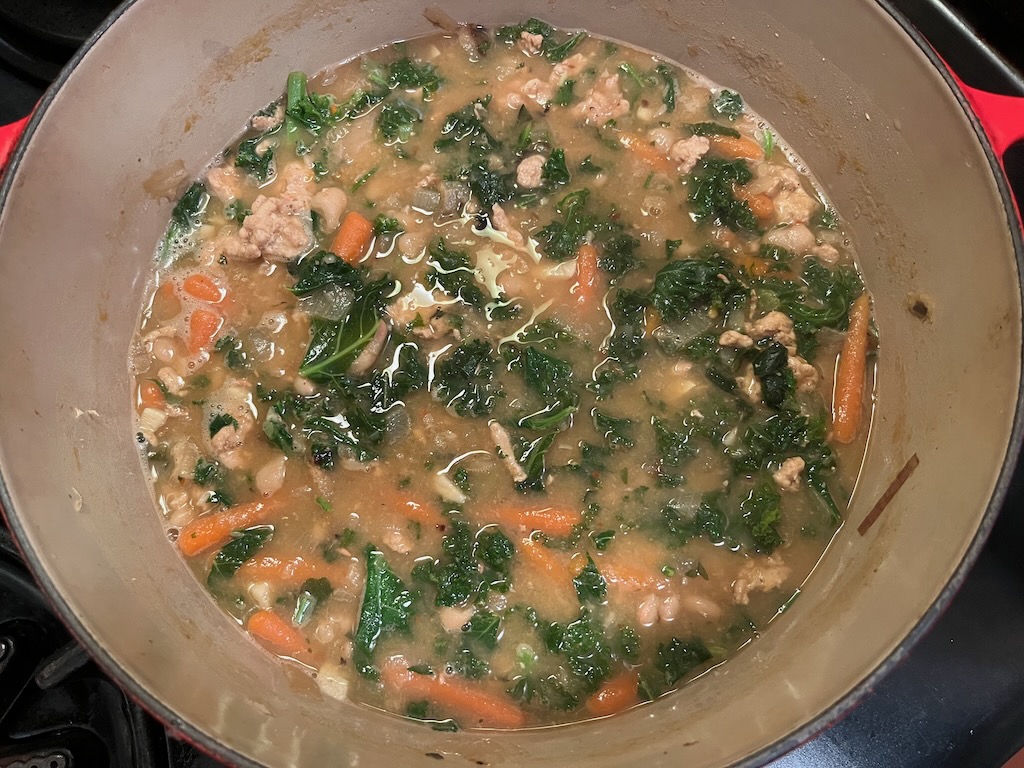
Lemony White Bean Soup With Turkey and Greens
By Melissa Clark
Total Time 45 minutes

INGREDIENTS
Yield: 4 servings

3 tablespoons olive oil
1 large onion, diced
1 large carrot, diced
1 bunch sturdy greens, such as kale, broccoli rabe, mustard greens or collard greens
1 tablespoon tomato paste
3⁄4 teaspoon ground cumin, plus more to taste
1⁄8 teaspoon red-pepper flakes, plus more to taste
1⁄2 pound ground turkey
3 garlic cloves, minced
1 tablespoon finely grated fresh ginger
1 teaspoon kosher salt, plus more to taste
1 quart chicken stock
2 (15-ounce) cans white beans, drained and rinsed
1 cup chopped fresh, soft herbs, such as parsley, mint, dill, basil, tarragon, chives or a combination
Fresh lemon juice, to taste

PREPARATION

Step 1: Heat a large pot over medium-high for a minute or so to warm it up. Add the oil and heat until it thins out, about 30 seconds. Add onion and carrot, and sauté until very soft and brown at the edges, 7 to 10 minutes.

Step 2: Meanwhile, rinse the greens and pull the leaves off the stems. Tear or chop into bite-size pieces and set aside.

Step 3: When the onion is golden, add tomato paste, 3⁄4 teaspoon cumin and 1⁄8 teaspoon red-pepper flakes to the pot, and sauté until paste darkens, about 1 minute. Add turkey, garlic, ginger and 1 teaspoon salt, and sauté, breaking up the meat with your spoon, until turkey is browned in spots, 4 to 7 minutes.

Step 4: Add stock and beans, and bring to a simmer. Let simmer until the soup is thick and flavorful, adding more salt if needed, 15 to 25 minutes. If you like a thicker broth, you can smash some of the beans with the back of the spoon to release their starch. Or leave the beans whole for a brothier soup.

Step 5: Add the greens to the pot and simmer until they are very soft. This will take 5 to 10 minutes for most greens, but tough collard greens might take 15 minutes. (Add a little water if the broth gets too reduced.)

Step 6: Stir herbs and lemon juice into the pot, taste and add more salt, cumin and lemon until the broth is lively and bright-tasting. Serve topped with a drizzle of olive oil and more red-pepper flakes, if desired.


and because even amid my mad musing this week, i still found myself melted by poetry, i bring you this beauty…

End of Summer

An agitation of the air,
A perturbation of the light
Admonished me the unloved year
Would turn on its hinge that night.

I stood in the disenchanted field
Amid the stubble and the stones,
Amazed, while a small worm lisped to me
The song of my marrow-bones.

Blue poured into summer blue,
A hawk broke from his cloudless tower,
The roof of the silo blazed, and I knew
That part of my life was over.

Already the iron door of the north
Clangs open: birds, leaves, snows
Order their populations forth,
And a cruel wind blows.
—Stanley Kunitz 

named the tenth poet laureate of the united states in the autumn of 2000, kunitz was 95 at the time. his poetry was said to get richer with age. and one of his lifetime’s most pervasive themes probed the simultaneity of life and death. “it’s the way things are: death and life inextricably bound to each other,” he once explained. “one of my feelings about working the land [as a gardener] is that i am celebrating a ritual of death and resurrection. every spring i feel that. i am never closer to the miraculous than when i am grubbing in the soil.” he once told the new york times: “the deepest thing i know is that i am living and dying at once, and my conviction is to report that dialogue. it is a rather terrifying thought that is at the root of much of my poetry.” kunitz won the pulitzer prize in poetry in 1959. he died in 2006. (boldface emphasis mine…)

“my conviction is to report that dialogue. . .” and thus is the reason writers fall into rabbit holes…


i was looking high and low for a roz chast cartoon of a madwoman pulling her hair out, for illustrative purposes above. but, alas, i could not find. though ed koren’s wild-haired woman did come in a close second, and in the end i opted for the wanna-be writer above, courtesy of mr. koren…

see you next week when if all goes well i hope to tell you the story of how i got myself a new name last week, and a hebrew one at that…

in the meantime, are you, like me, one who prefers to tie on the blinders and not come up for air till the task is completed, or are you of the sort who finds that leisurely attending to a task makes for all-round saner existence? 

the equinox of scan time: equal parts shadow and light

you start to wonder. which is another name for worry. for most of the last five months, i’ve worked at pushing it off to the edge of the frame. to keep it out of my focus. but october is coming. and with it, the next scan. the next clear-eyed peek into my insides, into my lungs, to see if anything’s lurking that oughtn’t be. 

i’ve mused about the saintly side of scan time. how it’s akin to memento mori, the ancient and holy practice of remembering our death so that we maximally live our one swift shot at this astonishing life. 

but the other side of scan time is the deeply human side. the wake-me-up-in-the-night, the try-not-to-worry-that-the-pain-in-my-ribs-is-anything-scary side. 

i feel it rumbling around the edges. the what-ifs i bat down as if a pesky mosquito that won’t leave me alone. i try not to tumble down the shadowy mole hole of imagining a call to my boys, letting them know i need another round of surgery. i try to quash the dialogue that runs through my head, my doctor’s voice telling me there’s something in the scan that looks worrisome, that needs more poking around. i try not to let cancer be the ice to my spine. 

i try not to cry.

but sometimes i get scared.

i am, always, bumpily, raggedly, very much human.

i’m still new to the tidal ebb and flow of scan time. and the scan now rising on the horizon’s edge is only my third since surgery, since they took out a chunk of my lung, since they found an uncommon cancer that sometimes decides to shuffle around in the lungs, settle in where it wasn’t before. what i’m finding here in the precinct of scan time is that when i near the one-month-to-go mark, the palpable fear comes. 

maybe each round i’ll get a little bit less wobbly (though, having lived with myself and my keen imagination for all of these years now, i tend to doubt that). maybe i won’t be tempted to imagine the worst. 

but the flip side, the smarter side, even now, even at the less-than-three-weeks-to-go mark, is that the hovering worry makes me sink deeper and deeper into the now. “today is a day when i don’t know anything’s wrong yet,” i sometimes hear myself saying. i suppose there are healthier ways to frame the day (for instance, omitting the “yet”), but once the doctor stamps the C word onto your chart, once it follows you pretty much wherever you go, it gets decidedly hard to unshackle yourself from being afraid.

remember, i’m bumpily, raggedly, very much human.

which is why a necessary ingredient on this bumpy, pock-riddled road is to enlist a battalion of comrades. some are fellow travelers i know up close and personal. a few are glorious souls i only know through their words, words they beam to me as if telepathic lifelines to put oomph where i’m lacking. 

whether they’re friends whose numbers i could find in my phone, or soulmates by circumstance, they’re all someones who know by heart how it is to live in the penumbra of cancer. what i find utterly indispensible about each and every one of them is that they put words to the rumblings i’d otherwise keep under lock and key. 

and when you hear the worst of your worries, the very words you’ve not yet dared to utter aloud, come out of a mouth that’s not yours, there comes an incomparable sigh, a sheer and certain relief to find you are hardly alone. and deep in communion, even if it’s a union to which you wish you didn’t belong.

one of my incomparable comrades is suleika jaouad, the best-selling author of between two kingdoms: a memoir of a life interrupted, the new york times writer of the “life interrupted” column, and every week in my inbox, the author of “the isolation journals,” her unfolding and intimate chronicle of her rare leukemia and relapse and bone marrow transplant. she’s one of the ones whose wisdom and courage i lean on. she infuses me. and, often, she steadies me. 

just the other day, after a weeks-long silence that signaled something amiss, suleika, who indeed has suffered yet another relapse and is back to chemotherapy, mused about radical acceptance.

she wrote:

That’s not to say I don’t feel fear—of course, I do. But strangely, the anticipation of pain can be far scarier than just being in it, actually confronting it. After my first transplant, in the years when I was cancer-free, I felt hijacked by the prospect of a recurrence and afraid that I wouldn’t be able to handle it. When it actually happened, I faced it. Knowing that, I have been trying to practice a kind of radical acceptance of whatever comes up, responding with whatever the situation calls for.

Take last weekend, for example. On Saturday, I had to go in for my last infusion of my second round of chemo. The side effects compound day-to-day, and afterward I felt awful, and I knew I’d be spending the day in bed. It had been a rainy morning, but on my way home, the sky began to clear, and I beheld a spectacular rainbow. For a moment, I glimpsed a sense of wonder. When I got to my room, I said to myself, “If I have to be in bed all day, so be it. What can I do to make this a little less miserable?” I took some anti-nausea meds and got a big glass of water. I put on my favorite face oil, wrapped myself a heating pad, gathered my pups around me, and queued up some favorite old movies to watch. Did I still feel awful? Yes. But instead of fighting it, or lamenting all of the things I wouldn’t be able to accomplish that day, I accepted it. And it turned out that staying in bed all day felt almost luxurious.

she speaks such truth. and then she somehow wraps it in what feels like a velvet blanket, somehow makes even a day in the sickbed sound a bit like a day at the spa. no wonder suleika is someone whose hand i would reach for on the darkest and scariest of days.

even though she wouldn’t know me if i bumped into her in the revolving door of sloan-kettering (a hospital entrance both of us have spun through) i wrote her right away to thank her for planting seeds of courage that some day might be my ballast. and i seized on her phrase, “radical acceptance,” to try to put it to practice. to not let my fears escape from the barnyard. to not be hijacked by fear, but to stare it square on, and to remind myself that time and again in my fair little life, i’ve steadied my knees and my spine in the fulcrum of whatever would have been my worst fear. i’ve always been braver than i’d ever imagined. i think we all are.

another one of my unparalleled big-hearted compatriot warriors who speaks to my deepest-down soul is the spoken-word poet and queer activist andrea gibson, diagnosed with ovarian cancer in 2021 and a recurrence last spring. i can’t count the times she’s sprung me to tears. tears of recognition. of stripped-naked truths. of beauty so rare and so fine i sometimes imagine she dwells with celestial beings. 

here’s a line from one of her poems that stiffened my spine and reminded me to steady my ways:

My worst fear come true. But stay with me y’all-
because my story is one about happiness
being easier to find once we finally realize
we do not have forever to find it. 

we do not have forever to find it…

i play their words over and over, as if a broken record, hoping and hoping that with each spin of needle to groove, i might finally inscribe their wisdom, their wonder, their truth, onto my heart. or at least find a strong steady hand to hold while i aim there….

what steadies you when you’re afraid?

a literary form for the slipperiest of minds

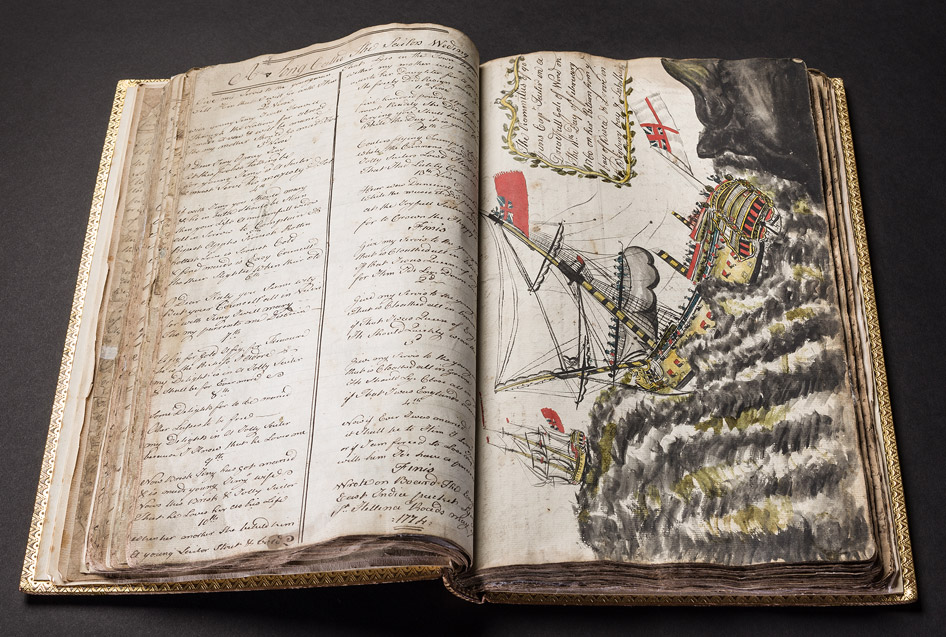
a page from british sailor henry tiffin’s commonplace book, 1760

more and more, the literary form into which i ease is one that traces roots to the ancients. to pliny, the great naturalist, whose mind must have been a beehive of sorts back in first-century rome. it’s an enthusiasm for accumulation that courses its path on through the renaissance when humanists, especially, were anxious to lock down their thoughts, keenly aware of the tragic loss of ancient learning, as libraries were so often, too often, the sites of military revenge. it’s a form that wends its way on and on through the centuries, straight through the twentieth, when mark twain, thomas hardy, ralph waldo emerson, and henry david thoreau, to name but a few, all partook of the habit. and here we are now, with plenty of us keen practitioners of the urge to gather up bits of literary esoterica and assorted ephemera before they skitter away. i think of myself, more often than you might imagine, as a rag picker of ideas in any which size, from the itty-bitty and poetic to the mindbogglingly big.

humans, it seems, like to scribble things down.

may our scribbling never cease.

the fancy name for this scribbling is commonplacing, the literary form the italians once named zibaldone, “a salad of many herbs,” in culinary terms, or a “hodgepodge” more broadly. we’re contemplating here the hodgepodge.

it’s the mosquito netting of the mind, of wonders and thoughts before they escape. or, as the 13th-century dominican monk, vincent of beauvais, once explained, it was “the multitude of books, the shortness of time, and the slipperiness of memory” that compels one to scribble.

count me in on the slippery mind.

vincent’s not-so-slippery solution: a ginormous tome, totaling 4.5 million words (someone counted!), an exhaustive compendium of all medieval knowledge, which he titled speculum maius (literally “great mirror”), speculum a word he chose because it contained “whatever is worthy of contemplation (speculatio), that is, admiration or imitation.” and thus he set out, over the course of his monastic lifetime to gather all the “flowers” (his word), or best bits of all the books he was able to read, in a selfless quest to save others the strains (time, money, trips to the library) of doing so themselves.

over the last many months, as the population of this old house has dwindled to two, and the stories to tell are fewer and fewer, my efforts here seem to have morphed into a looser, yet more concentrated consideration of the bountiful ideas and thunderbolts i bump into across the arc of a week.

there is something so natural about the human instinct to share what we’re thinking. of course there are those who might protest, who might consider me rude for shoving a book or a page or a picture in your face. but, when you think of it, isn’t that the instinct that drives so much of social media? (i often think we’ve gone overboard there, but that might be because too often it’s the magnification of any or every passing brain burp and not necessarily ones that might leave us enlightened. and too often amount to plain old overgazing at navels, or hair-raising nastiness and gut-wrenching vulgarity. but i digress…)

i’ve been keeping what amounts to my salad of many herbs for years and years now, and that urge seems to have spilled over to here, where week after week sometimes i seem to be assaulting you with the few morsels i’ve found most delicious in recent days. it’s a way, i suppose, of collectively swelling our brains. and our souls, most certainly.

in the spirit in which i bring my rag picking here, i like to think of us sitting side-by-side, cozy against the pillowy confines of an armchair broad enough for two. and in the gentlest, yet conspiratorial whisper, i offer you a page or a passage, my eyes widened and sparkling with glee, as if to say, wait’ll you see this one. what wonderments or deep thoughts spring to your mind?

any one of these next morsels is worthy of long and deep consideration. here are the ones that struck me this week:

these first two come from maria popova, whom i’ve referred to in the past as the high priestess of cultural commentary, and one of the most voracious gatherers of ideas i’ve encountered in recent years. her online literary journal, now known as The Marginalian, has been described as a compendium of hundreds of thousands of entries “that search for meaning, cross-linking ideas and connecting metaphysical dots.” here’s where she thunderbolted me this week:

“joy is a stubborn courage we must not surrender.”

“. . . love — whether we call it friendship or family or romance — is the work of mirroring and magnifying each other’s light. Gentle work. Steadfast work. Life-saving work in those moments when life and shame and sorrow occlude our own light from our view, but there is still a clear-eyed loving person to beam it back. In our best moments, we are that person for another.”


another place i often turn for soulful sustenance is Emergence magazine, a wellspring that explores the timeless connections between ecology, culture and spirituality. in a recent talk, titled “memory, praise, and spirit,” the filmmaker, composer, sufi teacher, and driving force behind Emergence, emmanuel vaughan-lee, opened with these words:

“The mystics say that we are like a seed; that we hold the blueprint for our highest potential within us, and that much of spiritual practice, regardless of what tradition, is unlocking that potential.”


and i close with this one from the great james baldwin, a passage from his 1964 collection of intimate but somewhat little-known essays, titled nothing personal. this passage is from the fourth of the four essays collected there:

“One discovers the light in darkness, that is what darkness is for; but everything in our lives depends on how we bear the light. It is necessary, while in darkness, to know that there is a light somewhere, to know that in oneself, waiting to be found, there is a light.”

i could write an essay on any one of the above, but instead i invite you to chew on each or any one. each one, a morsel worthy of your time, your mind, your soul.

which one spurs you and stirs you the most, and what deep thoughts spring to your mind?

i’ve written before of commonplacing. here at the chair, and in my latest book, The Book of Nature, on pages 87 and 88. it’s a habit i can’t get enough of, an urge i can’t quench.

pages from the commonplace book of charles dodgson, aka lewis carroll

the quickening of september

if i were truly of the prairie, rooted into its undulating loam, rather than a citizen merely plopped here by geography, because it’s the place i call home, i’d know the turning of the celestial wheel and its interplay with earth as robustly as the marrow that courses my bones. alas, my knowing is fainter than that. and yet, still, each september i feel it. the angle of light shifts, and the lens does too. it’s amber now, or so i seem to imagine. the days are drenched, more and more, in molasses hue. and the air holds a chill one minute, a warming the next.

the season itself is playing meteorological tug-of-war: do we want to let go? do we want to surrender? or shall we hang on with the last of our oomph?

ah, but the signs, they abound. and they quicken my spirit, each and every one. the school bus sightings, for one. they lumber the streets now, that slow serpentine crawl, disgorging couplets of children at most any corner. i’m detached from the school calendar now. it’s merely there at the edge of the frame. but, nonetheless, i notice.

my cooking’s changed too. i simmered this week. slow stirring a vegetable stew. i spent a good chunk of hours stationed by the stove, overseeing allium play sidekick to eggplant, to pepper. offering up its essence to add just a pique to the whole.

but mostly i feel the turning of earth in the garden, the plot that keeps me most rooted in the wonder, the majesty, the undying wisdom that is the sacred whole of creation. i felt it in the proliferation of spider webs, those silken geometries of arachnid architectures. the uncanny way the eight-legged thing knows to construct its trapping, and in the process makes beauty of pace-pausing proportion. i felt it in the crisping of blooms, and the heads of hydrangea and black-eyed susan starting to droop, the weight of their long season now taking its toll. a last gasp before death.

i hear it just now in the distant cloudcall of the goose, threading the sky, signaling autumn. it’s a cry that can shroud me in goosebumps. a call to prayer if ever there was.

september is when i feel myself beginning to curl like the nautilus, inward spiral, expanding the chambers within. making room for the quiet, the sacred, to come.

thirty some years into a spiritually-braided marriage, i know september to be the season of awe. quite literally. liturgically speaking. we are in the hebrew calendar’s month of elul, counting the days till the high holiness of the jewish new year. according to jewish tradition, it is the month for contemplating the question, “how should i live the existence that i am.”

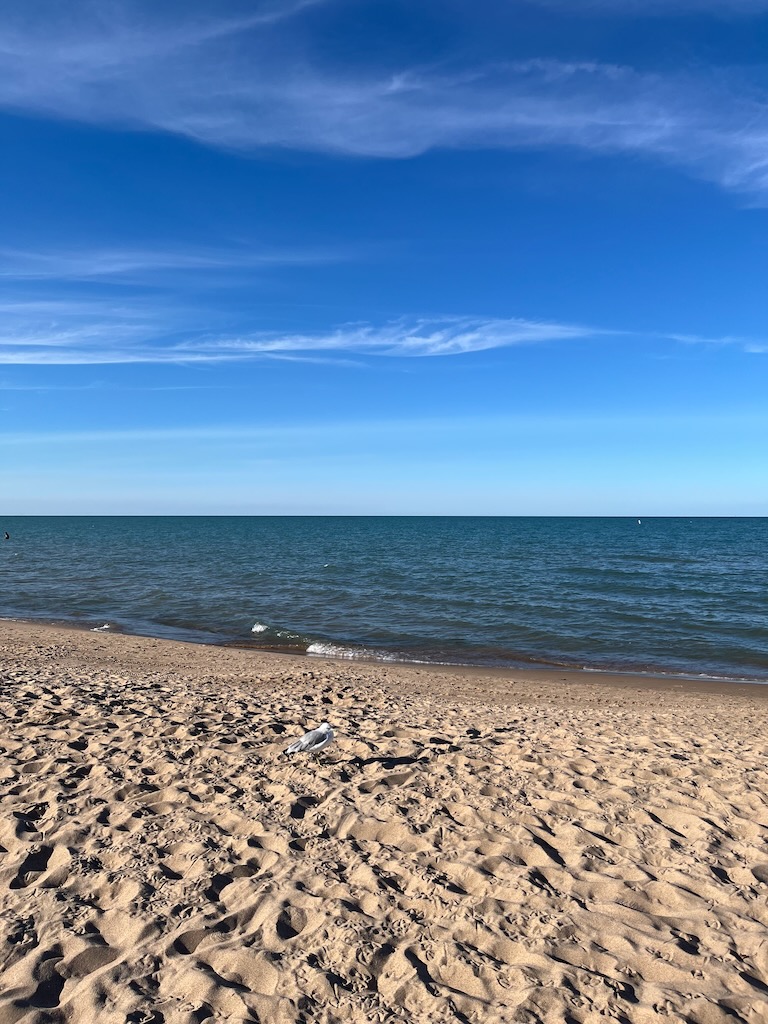
just the other day, i –– along with a rabbi i love and a gathering of women –– walked to the water’s edge, recited three blessings, and dropped into the water, into the great lake michigan. it was a cleansing, a beginning anew, a rite of purification. it was a mikveh, an ancient ancient tradition that is symbolically a turning of the page.

the question at the core of elul, “how should i live the existence that i am,” is one that especially quickened for me in a paragraph i read this week that had little to do with religion, and everything to do with the holiness of how we live our lives. it was the beginning of a review of a children’s picture book, and it was written by one of the high priestesses of everyday cultural commentary, maria popova.

she was writing about kamau & zuzu find a way, an “uncommonly soulful” story of a little boy and his grandmother who, somehow, find themselves living on the moon.

popova begins her essay this way:

The astonishing thing is that not one human being who ever lived has chosen the body, brain, place, or time to be born into, and yet in the narrow band of freedom between these chance parameters, we must find a way to live lives of substance and sweetness. Chance deals the hand and we must play it, and in how we choose to play it lies the measure of who we are.

“we must find a way to live lives of substance and sweetness.

“chance deals the hand and we must play it, and in how we choose to play it lies the measure of who we are.”

those are the questions i shall carry into my fading garden, and under the dome of a sky now rife with the cries and the calls of the flocks flying as one, in the migrational river that carries them faraway home.

in the quiet of your own soul, that’s the question for today: how do you choose to play the hand that chance has dealt you? what will be your sweetness and your substance?