
hungry for color
by bam
it hits this time of year, at this point in the turning of globe when we’re deep in shadow, and the world out our window is endlessly, endlessly, drainingly gray. even i, a self-proclaimed fangirl of the cloudiest day, a girl who thrills at billows of fog, those days when the sunlight can’t find its way in — even i get a bit itchy for hues beyond pigeon and charcoal and smoke, all close kin in the family of gray.
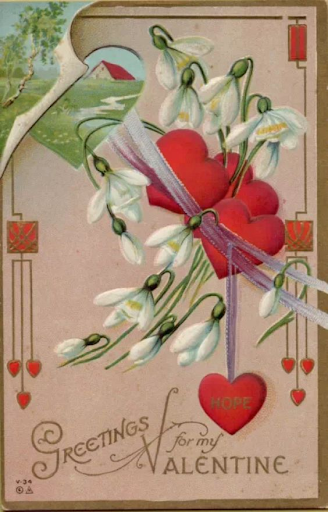
which is precisely why that shock of scarlet and pink boldly inserts itself in the february calendar. we need a little color. and the heart-shaped holiday brings it on. coils and coils of red, beribboned with oyster pink or flamingo. maybe even dashes of fuchsia.
i detected this color deficiency (more of a self-diagnosis) when i realized that all through the week i was clicking and clicking on dizzying droplets of anything resembling “other-than-gray.” and when i caught myself daydreaming, once again, of a riotous, bouquet-gathering, summery cutting garden — zinnias and cosmos and blue bachelor’s buttons all rising up like a botanical box of jazzy crayolas (preferably the 64-pack in which those waxy rainbow-hued sticks stand shoulder-to-shoulder as if choir-robed darlings marched into their multi-row loft).
and so, in hopes of sating your own chromatic hungers, i bring you a compendium of colors from a painter, a cook, a maven of tulips, and a poet.
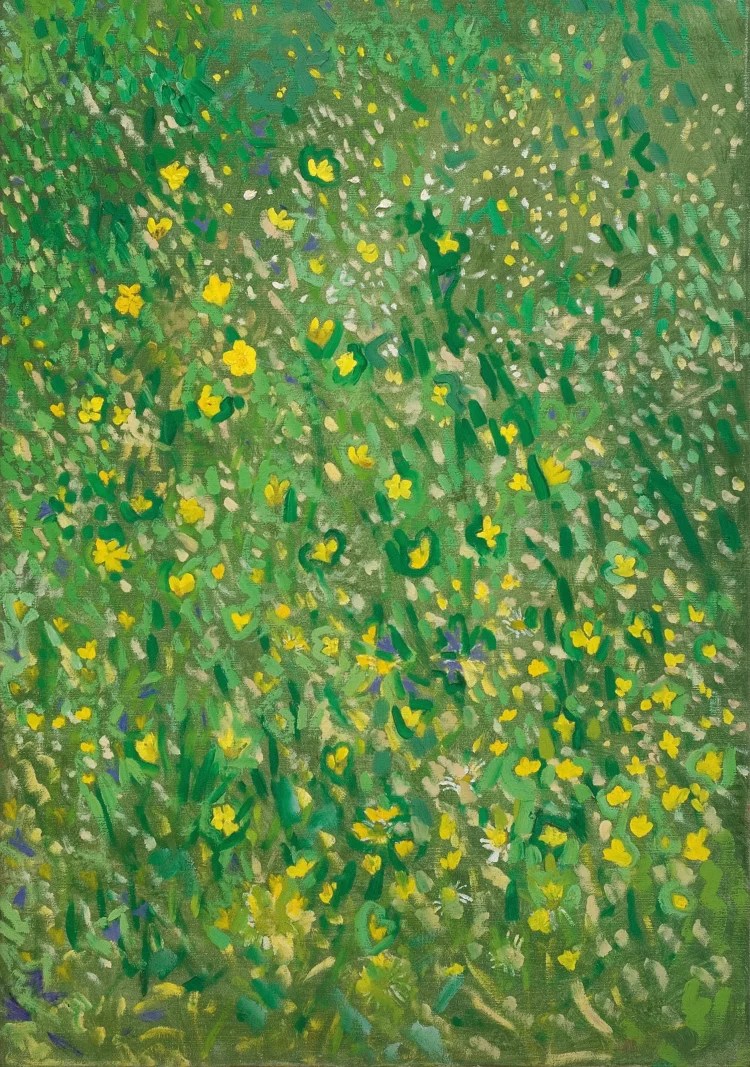
first up: the painter, whose style of garden i aim to emulate, mostly because it’s been said that her “rambling garden was unkempt to imperfection.” jean cooke is her name, and she was considered one of britain’s greatest woman painters of the twentieth century. described, too, as a remarkable, bird-like woman, the london gallery that shows her work, goes on to describe her “ungardening” thusly:
Cooke’s neglect of her garden—she sometimes called it ‘ungardening’—was partly a reflection of her priorities: her painting and the care of her children. Beyond these demands there was little energy to give less pressing concerns. Grass went unmown, fences unmended and trees unpruned. But the messy garden was not entirely accidental. The disarray was cultivated over an extended period of time and helped Cooke to create a new subgenre in works such as The Wild Plum Tree, which drew upon aspects of both landscape and garden painting traditions. Whereas Claude Monet’s waterlily pond was scrupulously tended, Jean Cooke’s rambling garden was unkempt to imperfection just as her painting required. Whereas earlier paintings such as Grassland had used the Sussex coastline to create landscape-scale wilderness, by the mid-eighties when she began painting spring blossom in earnest her own garden had achieved a similarly expansive quality.
piano-nobile gallery

and in a nod to cupid’s holiday cusping on the near horizon, here’s a tad of insight, should tulips be the thing you choose to send your true love:

“As far as I’m concerned, …[tulips] are the best, indeed the only flowers to send or receive on Valentine’s Day. Wild, irrepressible, wayward, unpredictable, strange, subtle, generous, elegant, tulips are everything you would wish for in a lover. Best of all are the crazy parrot tulips such as ‘Rococo’ with red and pink petals feathered and flamed in crinkly lime-green. ‘When a young man presents a tulip to his mistress,’ wrote Sir John Chardin (Travels in Persia, 1686), ‘he gives her to understand by the general red color of the flower that he is on fire with her beauty, and by the black base that his heart is burned to coal.’ That’s the way to do it.”
– Anna Pavord, wonderful British garden writer and bulb lover, in The Curious Gardener: A Year in the Garden, 2010
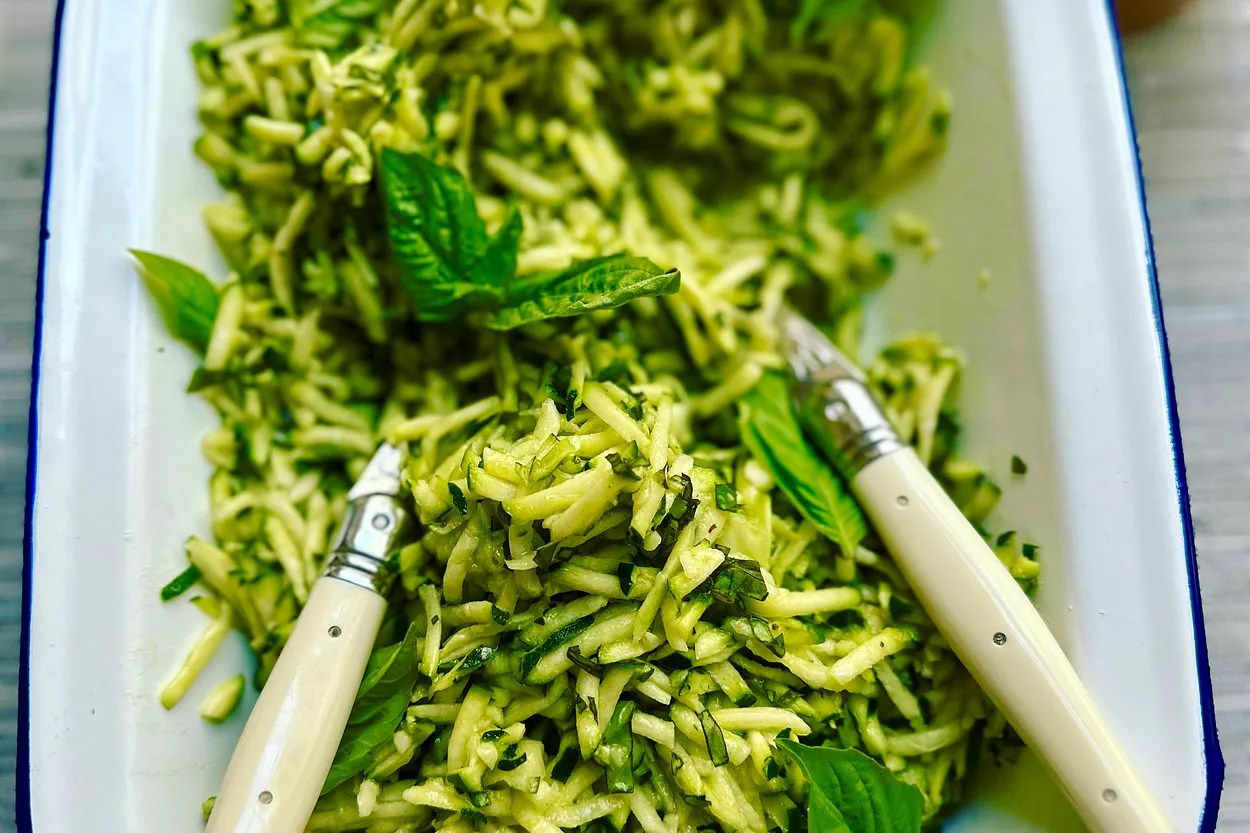
on the subject of wild women who tend toward the vivid end of the paint pot, there is the utterly marvelous and delicious emily nunn, formerly of the new yorker and the chicago tribune. she is a food writer like no other, and in recent years she has devoted her not-inconsiderable genius to the subject of salads. her newsletter often has me giggling straight off my chair. and her salads are beyond delicious more often than not. it delights me to introduce you to the one and only emily nunn’s department of salads, along with a peek at but one of emily’s many-hued produce concoctions….
and finally, let’s wrap this up with a wonder from mary O that i had never seen before, from a slim little volume i’d not known of till just last week when a wonder of a woman hosted a candlemas gathering and asked us all to bring a.) a candle, and b.) a poem about light. and thus i discovered house of light, mary oliver’s 1990 collection of poems. since the subject of this one is van gogh, it seems perfectly suited as a prescriptive for those who find themselves suffering a little color deprivation.
EVERYTHING by Mary Oliver
No doubt in Holland,
when van Gogh was a boy,
there were swans drifting
over the green sea
of the meadows, and no doubt
on some warm afternoon
he lay down and watched them,
and almost thought: this is everything.
What drove him
to get up and look further
is what saves this world,
even as it breaks
the hearts of men.
In the mines where he preached,
where he studied tenderness,
there were only men, all of them
streaked with dust.
For years he would reach
toward the darkness.
But no doubt, like all of us,
he finally remembered
everything, including the white birds
weightless and unaccountable,
floating around the towns
of grit and hopelessness––
and this is what would finish him:
not the gloom, which was only terrible,
but those last yellow fields, where clearly
nothing in the world mattered, or ever would,
but the insensible light.
and with that i shall wonder, where did you find color this week?

 pull up a chair
I agree with Miss Pavord on the subject of tulips as they’ve always been my favorite. From pastel pink to flaming red and hues in between, the tulip trumpets the arrival of spring. At this very moment, tulip bulbs are taking a nap in a cool, dark spot in the guest room closet, waiting for me to wake them up to bloom. Happy happy, joy joy. 🌷
Speaking of happy, Happy Valentine’s Day to you, dear bam, and my sweet Chair Sisters. xoxo
Love that tulips slumber under your roof. Knowing you, you’ve tucked them in with lullaby and much tender love.❤️
Oh my goodness! Before I read this, I was feeling the same hunger for hues and finally ordered Lorene Edwards Forkner’s Color In and Out of the Garden, a visual feast and guide for watercolorists and gardeners alike. (Google the title and find discounted new and used copies from online sellers other than Amazon.) My gray-and-sodden-brown garden has tiny spikes of chartreuse–irrepressible narcissi.
well that looks pretty luscious! i love the idea of watercolors. maybe i should get myself a brush, a cup of water, and some dollops of color. when i just looked up LEF’s book, i saw “werner’s nomenclature of colours,” an encyclopedic color chart with the most endless vault of esoterica and wonder…..i have the botanic one. oh my. maybe if we dizzy ourselves with enough color, next thing we know it’ll be april and the earth will be knotted with first buds of yellow, white, purple, blue….
Love the Dept. of Salads site. Thank you! I found so much color in the sunrise this week, the blooming helebores and brilliant fabrics in my sewing room.
I love that you have a sewing room. And hellebores (swoon….). And sunsets……