pull up a chair

where wisdom gathers, poetry unfolds and divine light is sparked…

Tag: Wendell Berry

iterations of love

the God of every religion tells us to do it. commands us: love thy neighbor as thyself. 

i’ve felt it in my own life, know it to be a force that transcends time, space, and matter. i’ve felt it all but align planets whose orbits were out of whack. i’ve felt it pierce through to the core of me, prompt me to reach down and seize a source, a muscle, i didn’t know that i had. it’s made me more than i ever imagined i could be. lured me out of mighty dark years. 

love, thank heaven, is patient. love is keenly perceptive. love, often, won’t take No for an answer.

i’ve felt it shrink distance, make the sound coming through the telephone as close as if we were sidled, thigh to thigh touching, on the seat of a couch in the very same room. 

i’ve heard it in barely audible whispers, and in shouts across the corridors of an airport, a hospital, a college campus––a sound so ebullient my heart leaps to quicken its pace. 

i’ve spent my life learning how to do it. keeping close watch on the ones i encounter who do it the best. the most emphatically. 

i’ve learned it from the little bent man who perched on a hydrant, befriending the pigeons. flocks and flocks of pigeons, he lovingly tended. even in the face of taunts and jeers from the cars passing by.

i’ve learned it from my first best friend who knew without asking how deeply it hurt, how tender it felt to be seen in shadow and light. 

i’ve learned it from my long-ago landlady, the one who would knock at my door, come dinnertime, and hand me a hot steaming bowl of avgolemeno, the egg-and-lemon-rich chicken-rice soup that serves as Greek penicillin, and cured what ailed me no matter how awful the day.

i’ve learned it from a 12-year-old girl who lay in a hospital bed, her legs unable to move, paralyzed from the waist down by a tumor lodged in her spine. i’ll never forget the glimmer in her eye, as she looked up and laughed, as she handed me her hand-made papier-mâché green pumpkin head, the one she’d made flat on her back, and with which she crowned me her Irish Pumpkin Queen of a hospital nurse.

i’ve learned it, and felt it: in the canyon of grief, in the vice hold of fear, and in long seasons of haunting despair. it’s the ineffable force with the power to pull us up off the ground, inch us just a little bit forward, and shake off the worries that freeze us in our tracks. 

my hunch is that someone at hallmark international invented today, the day in which pink paper hearts are soared hither and yon. or maybe it was the three catholic saints, all named valentine or valentinus, and, as was so often the story, all of whom were martyred for breaking some reason or rule. in the case of third century rome, a priest named valentine defied the emporer who’d ruled that single men made better soldiers than those with a wife, and thus outlawed marriage. valiant valentine, seeing the injustice in the loveless decree, kept about the business of marrying young sweethearts in secret. for this, he lost his head. 

earlier still, pagans seized the midpoint, or ides, of the month––february 15––as Lupercalia, a fertility festival dedicated to Faunus, the roman god of agriculture, and to Romulus and Remus, the founders of rome. a priestly order of roman pagans, the Luperci, gathered at the secret cave where Rom and Rem were thought to have been raised by she-wolves, to sacrifice a goat, which they then stripped of its hide, and sliced into strips. then, according to historians, “they would dip [the strips] into the sacrificial blood and take to the streets, gently slapping both women and crop fields with the goat hide.”* 

maybe pink paper hearts are, after all, a step in the right romantic direction. 
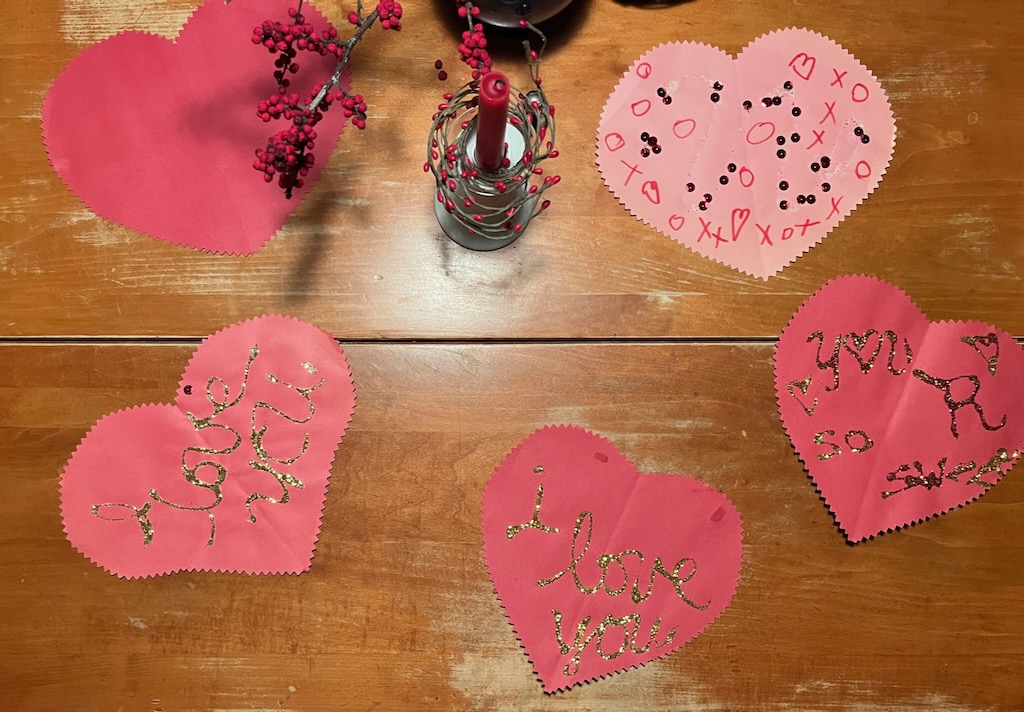
truth be told, 34 years in, it’s recycled hearts adorning someone’s place at the breakfast table…

*postscript on those slap-happy romans: far from being fearful of the bloody slaps, young roman women were said to welcome the mark of the bloody hides, for it was thought to make them more fertile in the year to come. 


lifting the day out of its purely-romantic framing, here are three takes on iterations of love, reminding us of the evolution of love across the decades of marriage, and the love of this one sacred Earth we’ve been given to tend:


first up, the sage from kentucky, farmer-poet-secular priest wendell berry, from a much longer poem, but i was drawn to these three parts, meditations on a long and deepening love…

excerpts from The Country of Marriage
by Wendell Berry

III.
Sometimes our life reminds me
of a forest in which there is a graceful clearing
and in that opening a house,
an orchard and garden,
comfortable shades, and flowers
red and yellow in the sun, a pattern
made in the light for the light to return to.
The forest is mostly dark, its ways
to be made anew day after day, the dark
richer than the light and more blessed,
provided we stay brave
enough to keep on going in.

IV.
How many times have I come to you out of my head
with joy, if ever a man was,
for to approach you I have given up the light
and all directions. I come to you
lost, wholly trusting as a man who goes 
into the forest unarmed. It is as though I descend
slowly earthward out of the air. I rest in peace
in you, when I arrive at last.

V.
Our bond is no little economy based on the exchange
of my love and work for yours, so much for so much
of an expendable fund. We don’t know what its limits are–
that puts us in the dark. We are more together
than we know, how else could we keep on discovering
we are more together than we thought?
You are the known way leading always to the unknown,
and you are the known place to which the unknown is always
leading me back. More blessed in you than I know,
I possess nothing worthy to give you, nothing
not belittled by my saying that I possess it.
Even an hour of love is a moral predicament, a blessing
a man may be hard up to be worthy of. He can only
accept it, as a plant accepts from all the bounty of the light
enough to live, and then accepts the dark,
passing unencumbered back to the earth, as I
have fallen tine and again from the great strength
of my desire, helpless, into your arms.


and the belle of amherst turns our attention to this world that keeps loving us, despite the ways we batter it, and ignore it…

This world is just a little place, just the red in the sky,
before the sun rises, so let us keep fast hold of hands,
that when the birds begin, none of us be missing.
— Emily Dickinson, in a letter, 1860


and finally, the late great naturalist and essayist Barry Lopez, on how to be awake to this still blessed world, from the foreword to Earthly Love, a 2020 anthology from Orion magazine. He is describing walking a vast landscape––a spinifex plain, or grassy coastal dunes, in North-Central Australia––for the first time, but the wisdom is how to attend to a deepening love:

My goal that day was intimacy — the tactile, olfactory, visual, and sonic details of what, to most people in my culture, would appear to be a wasteland. This simple technique of awareness had long been my way to open a conversation with any unfamiliar landscape. Who are you? I would ask. How do I say your name? May I sit down? Should I go now? Over the years I’d found this way of approaching whatever was new to me consistently useful: establish mutual trust, become vulnerable to the place, then hope for some reciprocity and perhaps even intimacy. You might choose to handle an encounter with a stranger you wanted to get to know better in the same way. Each person, I think, finds their own way into an unknown world like this spinifex plain; we’re all by definition naive about the new, but unless you intend to end up alone in your life, it seems to me you must find some way in a new place — or with a new person — to break free of the notion that you can be certain of what or whom you’ve actually encountered. You must, at the very least, establish a truce with realities not your own, whether you’re speaking about the innate truth and aura of a landscape or a person.

. . . I wanted to open myself up as fully as I could to the possibility of loving this place, in some way; but to approach that goal, I had first to come to know it. As is sometimes the case with other types of aquaintanceships, to suddenly love without really knowing is to opt for romance, not commitment and obligation.

and, later in the same essay, his call to attention for a world suffering from what he quite plainly calls, “a failure to love,” a message of urgency on a day in which love, in its many many iterations, is held up to the light.

EVIDENCE OF THE failure to love is everywhere around us. To contemplate what it is to love today brings us up against reefs of darkness and walls of despair. If we are to manage the havoc — ocean acidification, corporate malfeasance and government corruption, endless war — we have to reimagine what it means to live lives that matter, or we will only continue to push on with the unwarranted hope that things will work out. We need to step into a deeper conversation about enchantment and agape, and to actively explore a greater capacity to love other humans. The old ideas — the crushing immorality of maintaining the nation-state, the life-destroying beliefs that to care for others is to be weak and that to be generous is to be foolish — can have no future with us.

It is more important now to be in love than to be in power.

who were some of your great teachers of love?
a short course in courage

i’ve been mulling these past few months how to move forward in a world where values that shatter me seem to be in ascendency: revenge, retribution, greed, humiliation, belittlement, and so much of it based on a metastasis of mistruth. 

i’d been thinking that keeping my head down and plowing along in a spirit of turn-the-other-cheek, love-thy-neighbor-as-thyself might be a place to begin. might go a long distance. 

but i don’t think that anymore.

i don’t think it’s nearly enough.

i think something much harder is called for. i think we’re called upon to reach deep in our souls, and pull up something called courage. 

courage, when you’ve been taught to demur, to not make too many waves, courage when your father forbid you to use your real name in a basically-tame high school underground paper, courage when you don’t want to hurt those whom you love, can be an awkward suit to slip on.

i stumble sometimes trying to get my arms through its sleeves. 

but i’m thinking it might be a fire built from these sticks: first, root yourself in verifiable truths (check, check, and triple check your sources); second, inhale grace; be clear; be compassionate; be compassionate. keep the most vulnerable keenly in your crosshairs.

and here’s the hard part: put voice to what you believe. correct mistruths when you hear them. amplify the voice of the voiceless. whether it’s in kitchen table conversations, or what serves as the modernday public square (my preference is those sites where fact-checking and vetting are part of the constitution). whether it’s spoken or scribbled or typed.

because conflict aversion lies deep in my DNA, and all but breaks me into hives, i find i’m less afraid when i remind myself that to hold a differing opinion is not to discount or disdain the one who holds it. without discourse, we all stay stuck. without courage, we’re cowards, wasting our time and our breath on our one short ride on this planet. 

i’ve been keeping close watch all week on various lists of how to meet these times, how to keep on keeping on, and not a one of the lists suggests keeping mum. speak up. speak truth. 

my own code of ethics is one that insists on gentleness, on a voice imbued with humility.

i heard such a voice this week, one that broke through the cacophonies that otherwise abounded, all wrapped in shimmering glitz. you won’t be surprised, perhaps, to know that it was an ordained woman of God, a bishop in washington DC, who took a deep breath, who acknowledged being afraid, but spoke up anyway, asking for mercy, one of the essential beatitudes outlined at the sermon on the mount. and she did so looking straight into the eyes of the newly-inaugurated president, who scowled and looked away, and later deemed her a “so-called Bishop” (reminds me of how, on national TV, he called my husband a “third-rate architecture critic,” adding that “most people thought he got fired,” back in the summer of 2014 on the Today Show, when they––along with Chicago’s mayor at the time––got into an architectural scuffle over the 20-foot-tall letters of the Trump sign on the real estate mogul’s eponymous Chicago skyscraper). And then in this week’s prayer service the President went on to add that the bishop was a “Radical Left hard line Trump hater.” 

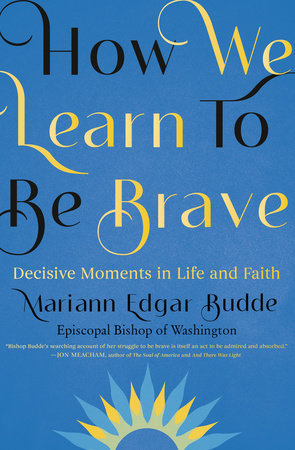
her name is mariann edgar budde, and she is the episcopal bishop of washington, DC. and the full 14:56 minutes of her sermon are worth a listen (or two.) my prayer is that in my one short swift and very small life, i might find such a voice in my own, and put breath to it when and where it most matters. 

bishop budde, it turns out, wrote a book on how we learn to be brave. and i’ve peeked inside while awaiting my copy. worth reading is this:

and this:

and before signing off, inspiration on courage from kentucky bard and old-fashioned farmer wendell berry:

It may be that when we no longer know what to do,
we have come to our real work
and when we no longer know which way to go,
we have begun our real journey.

The mind that is not baffled is not employed.
The impeded stream is the one that sings.

Wendell Berry

and the incomparable maya angelou: 

INSPIRATION

We, unaccustomed to courage
exiles from delight
live coiled in shells of loneliness
until love leaves its high holy temple
and comes into our sight
to liberate us into life.

Love arrives
and in its train come ecstasies
old memories of pleasure
ancient histories of pain.
Yet if we are bold,
love strikes away the chains of fear
from our souls.

We are weaned from our timidity
In the flush of love’s light
we dare be brave
And suddenly we see
that love costs all we are
and will ever be.
Yet it is only love
which sets us free.

— Maya Angelou

where have you found courage of late? did it feel awkward? did it make a discernible difference?

even in darkness, we gather light

i know the darkness is inching toward us, minute by minute. and i welcome it, being a winter baby, and being drawn to shadows and inkiest night. but i find myself thinking glistening sorts of thoughts these past few days, make-believing we’re pulling up chairs on this snow-swaddled morn for a festive wintry all-chair tea. 

my house is aglow and will be glowier once the candles are plunked in the menorah, and kindled one by one, eight nights in a row. this year, for the first time in two decades and only the second time since 1959, both Christmas and the first night of Hanukkah fall on the twenty-fifth of december. i’ll be pulling out all the festival stops with my anglophile mother’s favorite yorkshire pudding and roast of beef, and my beloved’s brisket and latkes. (crank the ovens! and, please, bring on the sous chefs!)

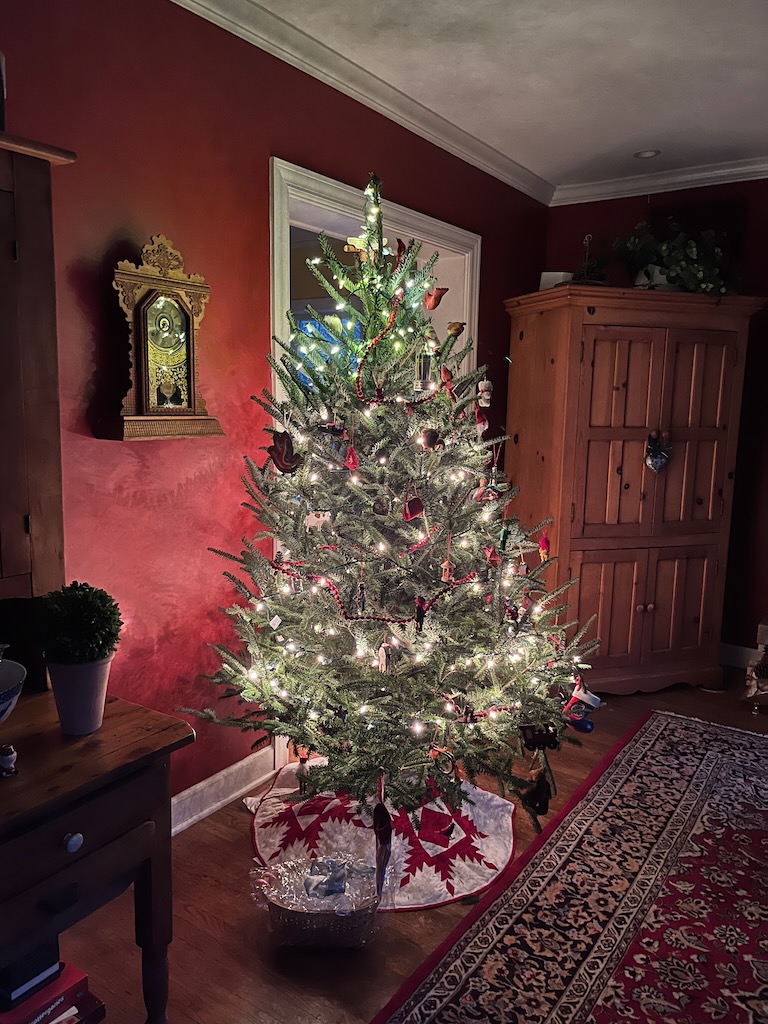
but here, at my make-believe solstice tea, i imagine the tintinnabulation of porcelain teacups being stirred with antique silver spoons, and the pungent perfume of star anise and clove and the peel of one fat orange simmering in my old red “christmasy smell” pot. without make-believing, i inhale the foresty perfume of the fraser fir that, for days now, has stood proud in the corner, obnoxiously blinking because someone pulled the wrong box off the hardware store shelf.

if we were all here, gathered round this old worn table, we’d be shy maybe at first. surely, one or two wouldn’t be because there’s always a livelier wire in every good bunch. but i’m of the shyer persuasion these days, so i’d be purring most loudly simply being a listener. i’m apt to station myself on the circle’s outer edge, and to be the one keeping close and quiet watch. 

i’d delight myself in crowding the table with sugar-dusted spice cookies, crisp and bronze round the edges. and i’d put out a mound of satsuma oranges, the ones plucked with leaves still attached, drawing me that much closer to pretending i’m sitting on the orchard floor, spine leaned against the trunk, peeling a just-plucked orb, watching the clouds waft by. 

and here at the old maple slab, there would be teas by the pots full. and a crackling hearth just across the room, where logs would hiss and pop and flames would leap up the chimney. and warm woolen blankets would be amply piled in a basket nearby. and a drummer boy or two surely would pa-rum-pum-pum-pum from the crackly radio. and maybe i’d set out earthenware bowls, one filled with clementines, another with sprigs of clove, and spools of ribbons, for the making of pomanders while we while away the morn telling stories.

i’d send you home with candy canes. and a fat satsuma too. and to tuck in your pocket, these beautiful, beautiful poems for safe-keeping. the first, from rainer maria rilke, and the next two from wendell berry, the farmer poet from the bluegrass state where i was born. his first is solstice-focused, and the other, a magical reframing of the very first Christmas.

all this my way of saying merry blessed Christmas, and Hanukkah, and Kwanzaa, too. may the glistenings and tinklings and all the spicy perfumes of the season set aglow your deep and tender and most blessed heart…

Advent
The wind in winter woods is like
a shepherd to his flock of flakes
and soon the firs anticipate
how blessed will be the light

and eavesdrop. The garden doves
ready themselves in branches white
and fend off the wind, growing towards
the glory of this night.
—Rainer Maria Rilke

To Know the Dark
To go in the dark with a light is to know the light.
To know the dark, go dark. Go without sight,
and find that the dark, too, blooms and sings,
and is traveled by dark feet and dark wings.
––Wendell Berry

Remembering that it happened once
Remembering that it happened once,
We cannot turn away the thought,
As we go out, cold, to our barns
Toward the long night’s end, that we
Ourselves are living in the world
It happened in when it first happened,
That we ourselves, opening a stall
(A latch thrown open countless times
Before), might find them breathing there,
Foreknown: the Child bedded in straw,
The mother kneeling over Him,
The husband standing in belief
He scarcely can believe, in light
That lights them from no source we see,
An April morning’s light, the air
Around them joyful as a choir.
We stand with one hand on the door,
Looking into another world
That is this world, the pale daylight
Coming just as before, our chores
To do, the cattle all awake,
Our own white frozen breath hanging
In front of us; and we are here
As we have never been before,
Sighted as not before, our place
Holy, although we knew it not.
––Wendell Berry

my hope this day of longest night, when darkness is the victor, is that no matter when or how the darknesses come we always find those and that which brings us light in all its intensities, from flickering to full-on blazing. bless you, bless you, ever bless you…

where do you find your essential light?

that fat little fir up above is the one that fills the room with its insistent eau de forêt

*branch of birds above from beautiful amy years ago….

of pickled onions and a particular fondness for kentucky’s homegrown farmer bard

wendell berry

in which the somnolence of summer has settled into its seasonal adagio so much so that pickling a red onion or two, and slow-reading the poetries and musings of one wendell berry is as fever-pitched as it gets around here. welcome to my slo-mo world of the week.

it started when i stumbled on the poem below, a poem that captures the quietude of a couplet of humans who’ve breathed in unison for so long they can fill the silence richly. so it is here in this old house of late, where only two of us now reside. where we know the choreography of most days by heart. and come and go as in a wordless waltz. there’s an ease now, one i never imagined, as i balked mightily long ago about the idea of two lives squeezed under one roof and in a labyrinth of too-tight rooms. but over time, across all these years (near 33), the respirations of our souls have aligned, at least enough to feel our echo in the lines below. those lines, by wendell berry, the poet, novelist, and conservation farmer whom i count as one of my heroes, were just enough to take me down the rabbit hole that is the life and work of kentucky’s homegrown literary treasure. and, besides, mr. berry’s birthday was this week, the fifth of august, wedged, it so happens, between the birthdays of two of the three humans whom i count as pillars holding up my world and whose arrivals to the planet are marked across the week in that steady beat of 4-6-8.

here’s the poem that got me started:

They Sit Together on the Porch
By Wendell Berry

They sit together on the porch, the dark
Almost fallen, the house behind them dark.
Their supper done with, they have washed and dried
The dishes–only two plates now, two glasses,
Two knives, two forks, two spoons–small work for two.
She sits with her hands folded in her lap,
At rest. He smokes his pipe. They do not speak,
And when they speak at last it is to say
What each one knows the other knows. They have
One mind between them, now, that finally
For all its knowing will not exactly know
Which one goes first through the dark doorway, bidding
Goodnight, and which sits on a while alone.

i shared the verse with the one with whom i share these walls, and he wrote back that he found it “haunting,” which made me see the lines anew. and was just enough to prompt a bit more poking around, again reminded how much i love the poetries that come with accumulated lifelong wisdoms. and that’s where i then re-bumped into this 2019 dispatch from the new yorker, a days-long interview between bard and scribe, one distilled and put to paper. it’s worth a read in whole (link below will take you straight to it), but i’ll pluck a few parts should your summer’s day demand a snappier pace than mine (or should a paywall keep you out):

the dispatch, titled Going Home with Wendell Berry, is by amanda petrusich, a new yorker staff writer and writer-in-residence at the gallatin school of individualized study at NYU. a 2016 guggenheim fellow, she writes often about music, and blessedly for us she takes the occasional road trip down kentucky way. in this case, she wound her way to where berry’s farmed for more than four decades, a little town that goes by the name port royal. sixty-three miles from the dot in the blue-grass map my papa called home (paris, KY), and one mile from the meandering kentucky river, it’s a town you might think ol’ garrison keillor pulled from his imagination. (in 2010, its population, according to the U.S. Census, was all of 64 humans.) it’s a town one writer (sandra mcCracken, a singer-songwriter) described thusly (and not too surprisingly given the threadworn quilt that is rural america these days): “Port Royal is a patchwork strip of storefronts, a blink-and-you’ll-miss-it sort of spot made up of a local bank, a post office, a general store with a built-in diner (with little printed signs about their town’s famous author, Wendell Berry), and an old Baptist church. I am sad to report that, like most small towns in our country, Port Royal looks as though it is dying.” 

here’s how the new yorker‘s chronicling of that luscious conversation between journalist (petrusich) and poet (berry) begins:

Two and a half years ago, feeling existentially adrift about the future of the planet, I sent a letter to Wendell Berry, hoping he might have answers. Berry has published more than eighty books of poetry, fiction, essays, and criticism, but he’s perhaps best known for “The Unsettling of America,” a book-length polemic, from 1977, which argues that responsible, small-scale agriculture is essential to the preservation of the land and the culture. The book felt radical in its day; to a contemporary reader, it is almost absurdly prescient. Berry, who is now eighty-four, does not own a computer or a cell phone, and his landline is not connected to an answering machine. We corresponded by mail for a year, and in November, 2018, he invited me to visit him at his farmhouse, in Port Royal, a small community in Henry County, Kentucky, with a population of less than a hundred.

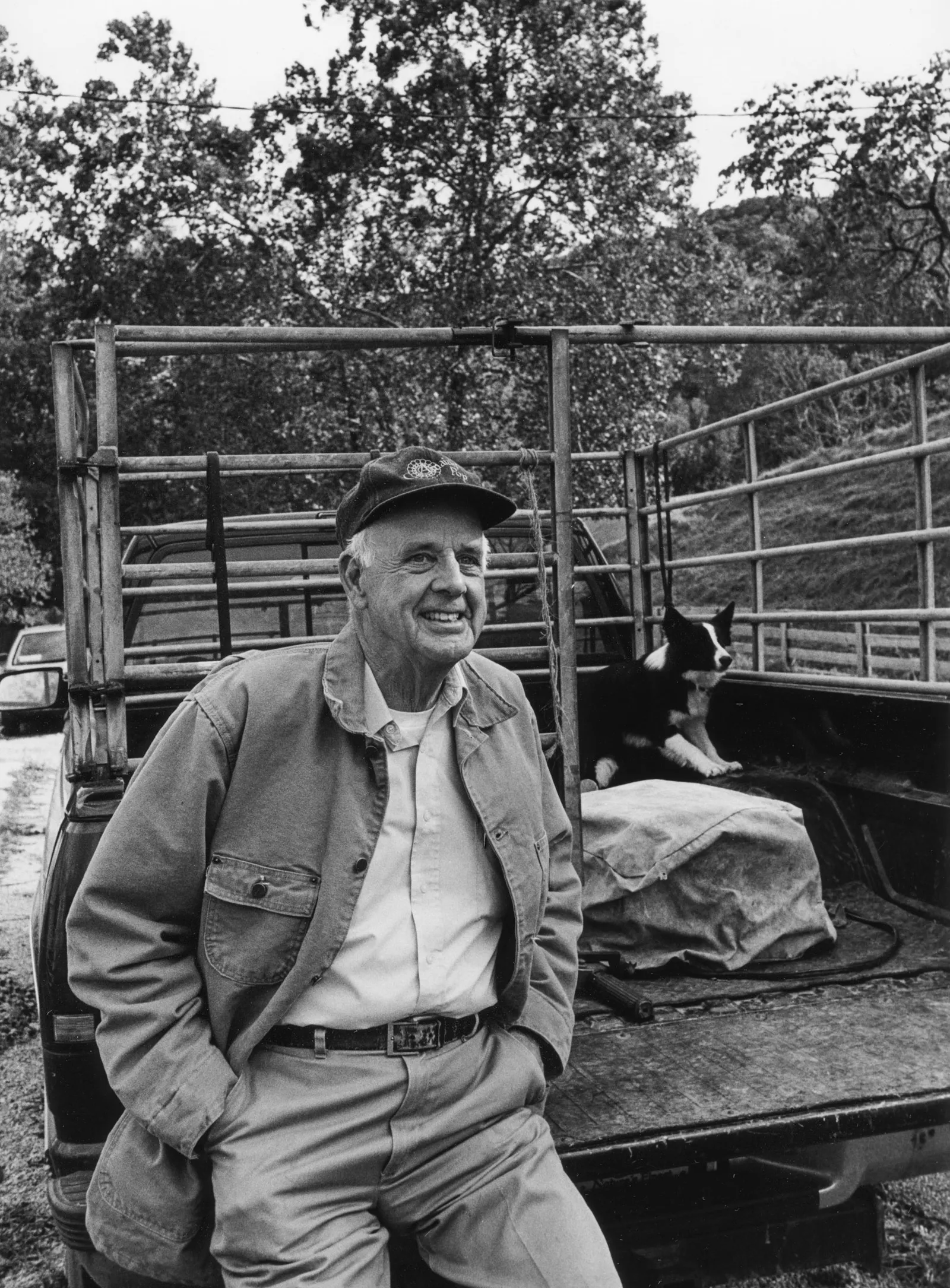
Berry and his wife, Tanya, received me with exceptional kindness, and fed me well. Berry takes conversation seriously, and our talks in his book-lined parlor were extensive and occasionally vulnerable. One afternoon, he offered to drive me around Port Royal in his pickup truck to show me a few sights: the encroachment of cash crops like soybeans and corn on nearby farms, the small cemetery where his parents are buried, his writing studio, on the Kentucky River. Berry’s connection to his home is profound—several of his novels and short stories are set in “Port William,” a semi-fictionalized version of Port Royal—and his children now run the Berry Center, a nonprofit dedicated to educating local communities about sustainable agriculture. Our correspondence would continue, but, before I left, Berry gave me a broadside letterpress of his poem “A Vision.” I think often of some of its final lines, which clarify, for me, what it means to truly know a place:

Memory,
native to this valley, will spread over it
like a grove, and memory will grow
into legend, legend into song, song
into sacrament.

here’s but one of the questions captured from their conversation (with a few lines in bold for emphasis):

Q: Have you always farmed here?

A: Right away, we had a large garden, and we kept two milk cows. We fattened two hogs to slaughter, for our own meat. We had a flock of chickens. And we had some fruit that we produced ourselves, and some that was wild. We were sitting down during that time to a lot of meals that came entirely from under our own feet by our own effort. And our children came up in that way of living. The integration of the various animals and crops into a relatively small acreage becomes a formal problem that is just as interesting and just as demanding as the arrangement of the parts of a novel. You’ve got to decide what comes first, and then you work your way to the revelation of what comes last. But the parts also have to be ordered. And if they’re ordered properly on a farm, something even more miraculous than most art happens: you have sustainability. Each thing supports the whole thing.

and here’s another exchange:

Q: It’s funny, clarity is often undervalued in art. One of the things I admire about your writing, especially the essays, which feel like polemics, is that you’re very clear in your arguments. They’re beautifully supported. In the new book, you talk about how you often read seeking instruction. I’m curious how you balance that idea with reading for beauty, savoring the visceral pleasure of words.

A: You’re being fed in an essential way by the beauty of things you read and hear and look at. A well-made sentence, I think, is a thing of beauty. But then, a well-farmed farm also can feed a need for beauty. In my short story “The Art of Loading Brush,” when Andy Catlett and his brother go to a neighbor’s farm, there’s a wagonload of junk, and it’s beautifully loaded. Andy’s brother says, “He couldn’t make an ugly job of work to save his life.” In the epigraph I use from Aldo Leopold he questions if there’s any real distinction between esthetics and economics.


and here, in case you’re even a little bit hooked, is a poem worth reading in whole. it’s from a 1965 volume of Poetry magazine, and it’s excerpts from an early Berry wonder, titled, “The Handing Down,” a poem about a grandfather and grandson sitting on a porch and the quiet conversation that unspools between them. read those excerpts here.


oh, and about those onions. . . my kid, the one who turned 23 yesterday, finds himself a line cook these days at a chicago eatery of some notoriety; girl and the goat, it’s called, and stephanie izard, who dreamed up the joint seems to have a particular fondness for things pickled. she pickles everything from kumquats to mushrooms to beets. i decided pickled red onions might be a summery thing to do, and besides i like a little crunch amid the strata of my sandwich. and, as with many a task in my kitchen, i pickle the easy way. no cauldrons steaming for me. no sterilizing jars and lids. i dumped a little of this, stirred in some of that, and by next morning, i had a jar of garnet rings shimmering in my fridge. i’m not fond of sugar these days (i never was, and then a dear friend told me cancer is fond of sugar, making it something of a foe of mine, thus i’ve perma-sealed my lips to sugar’s sweetness), so i searched for pickling roadmap that steered clear of the sugar bin. here’s what i found: (and ps i have no real clue what whole30 compliant means, so feel free to disregard.)

what captured your fancy this week, quick-clipped or slow?

peachy

this crate of delectable, a fireworks of flavor that bursts on our tongues, plopped onto the front stoop not long ago (courtesy of a long-distance angel/saint/and holy mensch), and after parceling into brown paper sacks for a few of our favorite neighbors, the whole block has unanimously declared them the most delicious peaches that ever there were. in honor of their magical appearance out of the summer fog, a few morsels from the “peach” file.

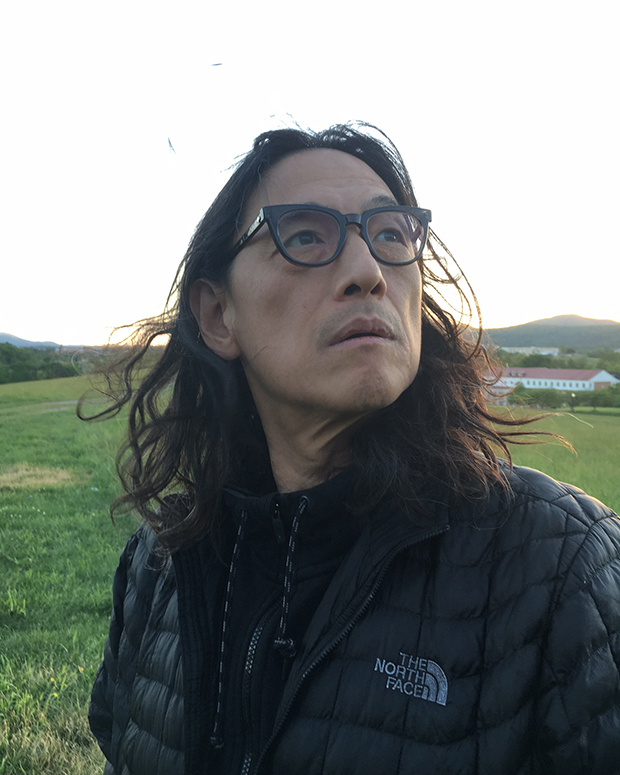
first up, this perfection of a poem from a poet i only recently discovered, a chicago poet in fact, a longtime warehouse worker who penned beauties once he clocked off the job, and who before that made jewelry from soda bottle tops and wound up in the pages of vogue. his name is li-young lee, born in indonesia to chinese parents, and settled in chicago in 1964. he’s now described as a world-renowned poet, one who’s won the lannan literary award, a paterson poetry prize, and an american book award, among many. after reading “from blossoms,” i ran to the library and scarfed up all his books from the shelf. and then i read a few interviews. and now i sit and inhale his poetries as if to fill my lungs with the numinous.

his is an abiding belief that all the cosmos is imbued with a spark of the sacred, an idea i’ve spent a long time believing.

From Blossoms

BY LI-YOUNG LEE

From blossoms comes
this brown paper bag of peaches
we bought from the boy
at the bend in the road where we turned toward
signs painted Peaches.

From laden boughs, from hands,
from sweet fellowship in the bins,
comes nectar at the roadside, succulent
peaches we devour, dusty skin and all,
comes the familiar dust of summer, dust we eat.

O, to take what we love inside,
to carry within us an orchard, to eat
not only the skin, but the shade,
not only the sugar, but the days, to hold
the fruit in our hands, adore it, then bite into
the round jubilance of peach.

There are days we live
as if death were nowhere
in the background; from joy
to joy to joy, from wing to wing,
from blossom to blossom to
impossible blossom, to sweet impossible blossom.

Li-Young Lee, “From Blossoms” from Rose. Copyright © 1986 by Li-Young Lee.

in a conversation at a literary fest a few years ago, one i found in the los angeles review of books, lee says this, and you’ll see why i’m swooning:

If the person is a vessel then what would poetry be?

The mind of God. I think poetry is the mind of God. All the great poems that I love seem to me to all have that little ingredient. You feel like you’re in the presence of the mind of God. You can’t even account for the level of wisdom in certain poems. Take Rilke, I mean, you can’t just live and come to the conclusions he came to. I think his mission was to learn to get out of the way so that something bigger could speak through him.

Emily Dickinson, my God, she’s full of the mind of God. You can just feel God shining through those poems, darkly. So it was her, but it wasn’t. It’s unaccountable. In other words, if you wanted to be Emily Dickinson you couldn’t just have been born on the East coast, done the things she did. That wouldn’t guarantee that you could write anything. There’s something unaccountable that happened to her. And it’s that unaccountable thing that I love.

elsewhere lee has said that he considers every poem to be “a descendent of God.” and when asked about flawed poems by poets and writers, he explained: “There are great poems that have flaws. There are failures of perception, failures of understanding, but those flaws become a part of the poem’s integrity, so I still feel that those poems are descendants of God. But if a poem isn’t even good enough to be a poem, I don’t think it’s descended from God: [If] there is no “I” [as in Martin Buber’s I and Thou], there is no God. The ‘Me’ talking about ‘Me’—that’s not enough.”


and in a lineup of descendants of God, surely here’s a preacher: wendell berry, kentucky farmer, field plower, poet. it doesn’t take long for some to pack an almighty wallop; here’s wendell in a single stanza:

A Spiritual Journey

And the world cannot be discovered by a journey of miles,
no matter how long,
but only by a spiritual journey,
a journey of one inch,
very arduous and humbling and joyful,
by which we arrive at the ground at our feet,
and learn to be at home.

~ Wendell Berry ~
(Collected Poems)


and here’s one that especially melted me, because it came to me from the budding philosopher in this house. a recent college grad who has an eye for these things, and whose curiosities in this department are as delicious to me as the juiciest peach that ever there was….

Confucius, the renowned Chinese philosopher, once said, “A seed grows with no sound, but a tree falls with a tremendous noise. Destruction has noise, but creation is quiet. This is the power of silence. Grow silently.”


and finally, in honor of said budding philosopher and the juiciest peaches that ever there were, here is a long-ago-concocted rendition of peach-blueberry bread pudding, though truly the only way to eat these (or any plucked-straight-from-the-tree) peaches is bent over the sink, ready to swipe the dribble as it runs down your chin and wherever else it tries to escape.

teddy’s bread pudding, the peachy summer edition*

  • 3 cups milk (or cream)
  • 4 tablespoons (1/2 stick) butter, more for greasing pan
  • 1-1/2 teaspoons ground cinnamon
  • 1/2 cup sugar, plus 1 tablespoon
  • Pinch salt
  • ½ loaf sweet egg bread like challah or brioche, torn into 2-inch cubes (about 5 to 6 cups)
  • 3 eggs, beaten
  • 3 peaches, sliced
  • 3 to 4 tablespoons brown sugar
  • 1 cup blueberries
  1. Heat oven to 350 degrees. Over low heat in a small saucepan, warm milk, butter, 1/2-cup sugar, 1 teaspoon cinnamon, and salt. Continue cooking just until butter melts. Meanwhile, butter a 4-to-6-cup baking dish and tear the bread into bite-sized bits. Place the bread in baking dish.
  2. Slice peaches into separate medium-sized mixing bowl; stir in brown sugar. Set aside (wherein magic ensues, and syrup emerges). Rinse blueberries, and allow to drain.
  3. Once peaches are bathing in their brown-sugary juices (anywhere from five to 10 to even 15 minutes should do it), dump fruits atop bread chunks. Stir gently.
  4. Pour hot milk over bread, peaches, and blueberries. Let it sit for a few minutes, poking down the occasional chunk of bread that rises to the top. Beat the eggs briefly, and stir them into bread and fruit mixture. Mix together remaining cinnamon and sugar, and sprinkle over the top. Set the baking dish in a larger baking pan, and pour hot water into the pan, to within about an inch of the top of the baking dish, effectively making a bath for your bake.
  5. Bake for 45 minutes to 1 hour, or until custard is set but still a little wobbly and edges of bread have browned. Serve warm or at room temperature.

inhale the endless comfort vapors….

*thank you, mark bittman, for your endless guidance and your recipe on much-splattered page 662.

what was peachy ’bout your week?

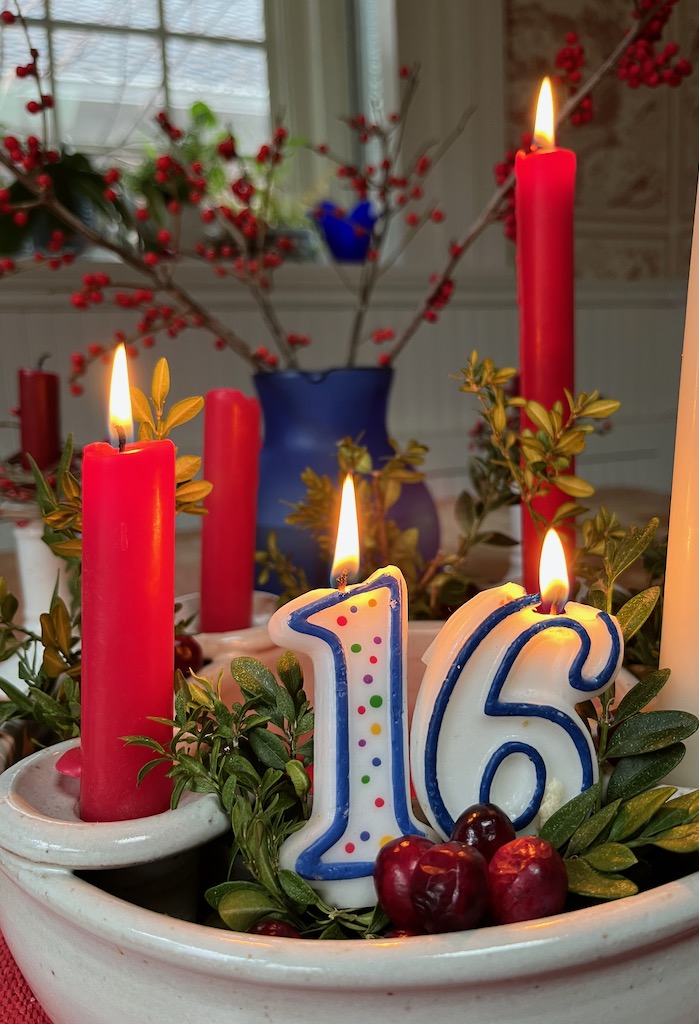
sixteen.

sixteen years old. old enough to drive a car, the chair now is. not quite old enough to vote, but we’ve stayed away from politics all these years; allowing only goodness, grace, to be our guide––even in those rare few times we’ve wandered in the public square, celebrated the election of a president, felt crushed by the words and ways of another.

we’ve stood watch here as the world crushed us (i can still see the image of that precious little two-year-old, the syrian toddler––alan kurdi was his name, the little boy in the bright-red T shirt, the little black sneakers, and scrunched-up navy pants––washed up on the sands of the aegean sea, trying to escape a war’s unimaginable horrors and terrors). we’ve felt the crushings, too, of close-to-home heartaches, the ones not felt much beyond our own intimate borders, but more piercing than all the rest sometimes. 

why do we invite in crushings here? because it’s how i’m wired, i suppose. i’ve always felt hurts so, so deeply (some say too deeply; to them i say not sorry). and i have always wished for a place where tender comforts, heart healings, might occur. where the one who’s hurt could find a featherdown place to curl into. to be tucked under fuzzy afghans. handed warm mugs of tea. and a bowl of clementines, for when the tears paused long enough to give way to nibbling. maybe it’s the nurse in me, the heart of me. i can’t bear to see, to hear, to feel, to imagine hurting. but i will witness every time. for every hurt needs witness. needs bearing. needs extra body parts––shoulders to lean on, hands to squeeze, eyes to gently smile––to bear and share the load.

sometimes, i’ve brought silly here. not because i’ve any proclivity for clowns or clownishness. but because life not seen through comic lens is sometimes too unbearable. to laugh is to lighten the load. to be lifted by the effervescence of a good giggle. or even a guffaw. there’s alchemy and medicine in the sound of joy rising from the lungs.

in sixteen years, we’ve held up to the candlelight life’s beginnings and endings and all in-betweens: goodbyes and homecomings, births and death, and the littlest flickerings of the everyday. 

i’ve uncorked a bit of my soul here, let you see my heart’s wanderings as i moved deeper and deeper, bolder and bolder into saying aloud what i was sometimes plenty timid to whisper. somehow, over the years, the sacred i call God––God, a name that resonates a tenderness to me, a name whose very uttering fills me with a knowing, a hope––has pulsed so palpably through my every day, i now put breath to it without too much trembling. and in words––i hope––that do not close doors. i’m more intent than ever to draw forth the wisdom, the wonder, the light from any path that winds toward God, Allah, Adonai, Divine and Holy Wisdom. i reach for the doorways, have no use for locks on doors.

i’ve brought tinkerings at the cookstove here, too. in part because i will always be trying to find my way back from a dark, dark place when i was just 18, and, for reasons that escaped me at the time, i’d somehow decided i’d see how little food i could swallow in a day. it’s a place that filled me with cringing shames for years, and years. and tangled me in terrible knots. not knowing how to eat, being daunted by and quaking in the face of simple food, is a scourge i’d wish on no one. the question i’d long asked, and which was long asked of me: how does the homecoming queen find herself riding an elevator to a full-blown psych ward? (1975 was back in the day before anyone really knew what anorexia was; and there were no such eating disorder programs as there are today. and the movie “one flew over the cuckoo’s nest” had just come out on the very big screen, so it set the stage for a most awful fright.) i can type those sentences now because the years have gentled my shame, and slowly, faithfully, i’ve found my way to a shore of my own. a shore where olive oil doesn’t scare me anymore. and where just last week i drizzled honey (on dorie greenspan’s sweet & smoky roasted carrots*). and it seems that when you’ve struggled so to feed yourself, you find a quiet certain joy in feeding those you love. (and maybe by osmosis you’re hoping to absorb some ease…)

i didn’t intend for this birthday note to grow so confessional. but over all these years, you’re the ones who’ve made this place into the sacred, gentle, quiet space i once dreamed of. and always believed in. you’ve shown me, though your unending kindness, that what i write here is safe here––and i will protect to the end your safety to say here what you will. and, hard as it might be to imagine (given the crude world in which we live), never once in all these years have i found a harsh or mean-spirited comment left here at the so-called “old maple table.” (it would crush me if i found one.) your gentle graces, your heartfelt, heartfelt notes and comments, as well as your incredibly heavenly occasional snail mails, have emboldened me to tell only truth here. life is short, too short, we know. and why waste a day fudging around the edges when what draws us whole––and into each other’s embrace––is saying who we are, and what hurts us, and what makes us giggle? and aren’t we all, in truth, wobbly creatures at the core, only slowly ascending from all the snags and quirks that make us so delightfully who we are? 

so here’s to truth. and sixteen, a number imbued with introspection, and spiritual purity, and a sign of good things to come, according to those who study numbers, find meaning therein. 

may this next whirl around the sun bring blessings to us each and all…

i have an especially lovely birthday present for all of you, one i will leave here on the table (down below). my friends at the SALT project dug it up from wendell berry’s bookshelf, and it’s a beauty like no other. it’s called “the birth (near port william)” and as you’ll see, it’s a nativity poem for all. happy blessed birthing day, for whatever it is you’ll birth today….(the poem is long, so i will leave it at the very bottom here….) (p.s. because the formatting itself is lovely and i can’t get it replicated here, and because you might love the SALT project, i’m leaving the link to their page here.)

one other gift, before i leave you the poem. little alan kurdi’s father, the only one of the family of four who survived the escape in a rubber boat back in the early autumn of 2015, a few years later started a foundation to help children whose lives have been torn apart by war. it’s yet another miracle of the human spirit’s capacity to rise from the deepest, darkest ashes. you can find out more about the kurdi foundation here.

and another treat: the other evening i time-traveled to amherst, mass., for a birthday celebration in the glorious home of emily dickinson, the great butter-yellow house on the hill, known as the homestead, and during that hour and a half of marvelousness, one of curators mentioned that emily’s beloved sister-in-law susan had written emily’s obituary, which was published in the springfield republican on may 18, 1886. immediately curious, i asked for the link, and here tis, with some of the most lovely writing, and most charmed intimacies of emily’s life, written in the immediate wake of emily’s death by the one who perhaps knew her most dearly…. https://www.emilydickinson.it/edobituary.html

here is but one passage i found delectable…

As she passed on in
life, her sensitive nature shrank from
much personal contact with the world,
and more and more turned to her
own large wealth of individual resources
for companionship, sitting thenceforth, as
some one said of her, “In the light of
‘her own fire.” Not disappointed with the
world, not an invalid until within the past two
years, not from any lack of sympathy, not be-
cause she was insufficient of any mental work
or social career – her endowments being so ex-
ceptional – but the “mesh of her soul,” as
Browning calls the body, was too rare, and the
sacred quiet of her own home proved the fit
atmosphere for her worth and work.

and the obit ends thusly:

To
her life was rich, and all aglow with God and
immortality. With no creed, no formulated
faith, hardly knowing the names of dogmas,
she walked this life with the gentleness and
reverence of old saints, with the firm step of
martyrs who sing while they suffer. How
better note the flight of this “soul of fire in a
shell of pearl” than by her own words? –

Morns like these, we parted;

Noons like these, she rose;

Fluttering first, then firmer,

To her fair repose.

*oh, and those carrots drizzled with honey? dorie greenspan’s sweet + smoky roasted carrots you’ll thank my sister-in-law, brooke, who sent them my way…

and that, dear friends, is the stack of gifts i have for you this blessed early morn…..(one question, and then wendell berry’s poem…)

so here’s the question: how did you find the chair?

“THE BIRTH (NEAR PORT WILLIAM),” BY WENDELL BERRY

They were into the lambing, up late.
Talking and smoking around their lantern,
they squatted in the barn door, left open
so the quiet of the winter night
diminished what they said. The chill
had begun to sink into their clothes.
Now and then they raised their hands
to breathe on them. The youngest one
yawned and shivered.

                         “Damn,” he said,
“I’d like to be asleep. I’d like to be
curled up in a warm nest like an old
groundhog, and sleep till spring.”

“When I was your age, Billy, it wasn’t
sleep I thought about,” Uncle Stanley said.
“Last few years here I’ve took to sleeping.”

And Raymond said: “To sleep till spring
you’d have to have a trust in things
the way animals do. Been a long time,
I reckon, since people felt safe enough
to sleep more than a night. You might
wake up someplace you didn’t go to sleep at.”

They hushed awhile, as if to let the dark
brood on what they had said. Behind them
a sheep stirred in the bedding and coughed.
It was getting close to midnight.
Later they would move back along the row
of penned ewes, making sure the newborn
lambs were well dried, and had sucked,
and then they would go home cold to bed.
The barn stood between the ridgetop
and the woods along the bluff. Below
was the valley floor and the river
they could not see. They could hear
the wind dragging its underside
through the bare branches of the woods.
And suddenly the wind began to carry
a low singing. They looked across
the lantern at each other’s eyes
and saw they all had heard. They stood,
their huge shadows rising up around them.
The night had changed. They were already
on their way — dry leaves underfoot
and mud under the leaves — to another barn
on down along the woods’ edge,
an old stripping room, where by the light
of the open stove door they saw the man,
and then the woman and the child
lying on a bed of straw on the dirt floor.

“Well, look a there,” the old man said.
“First time this ever happened here.”

And Billy, looking, and looking away,
said: “Howdy. Howdy. Bad night.”

And Raymond said: “There’s a first
time, they say, for everything.”

                                   And that,
he thought, was as reassuring as anything
was likely to be, and as he needed it to be.
They did what they could. Not much.
They brought a piece of rug and some sacks
to ease the hard bed a little, and one
wedged three dollar bills into a crack
in the wall in a noticeable place.
And they stayed on, looking, looking away,
until finally the man said they were well
enough off, and should be left alone.
They went back to their sheep. For a while
longer they squatted by their lantern
and talked, tired, wanting sleep, yet stirred
by wonder — old Stanley too, though he would not
say so.

          “Don’t make no difference,” he said
“They’ll have ’em anywhere. Looks like a man
would have a right to be born in bed, if not
die there, but he don’t.”

                         “But you heard
that singing in the wind,” Billy said.
“What about that?”

                         “Ghosts. They do that way.”

“Not that way.”

                         “Scared him, it did.”
The old man laughed. “We’ll have to hold
his damn hand for him, and lead him home.”

“It don’t even bother you,” Billy said.
“You go right on just the same. But you heard.”

“Now that I’m old I sleep in the dark.
That ain’t what I used to do in it. I heard
something.”

               “You heard a good deal more
than you’ll understand,” Raymond said,
“or him or me either.”

                        They looked at him.
He had, they knew, a talent for unreasonable
belief. He could believe in tomorrow
before it became today — a human enough
failing, and they were tolerant.

                                 He said:
“It’s the old ground trying it again.
Solstice, seeding and birth — it never
gets enough. It wants the birth of a man
to bring together sky and earth, like a stalk
of corn. It’s not death that makes the dead
rise out of the ground, but something alive
straining up, rooted in darkness, like a vine.
That’s what you heard. If you’re in the right mind
when it happens, it can come on you strong;
you might hear music passing on the wind,
or see a light where there wasn’t one before.”

“Well, how do you know if it amounts to anything?”

“You don’t. It usually don’t. It would take
a long long time to ever know.”

                                 But that night
and other nights afterwards, up late,
there was a feeling in them — familiar
to them, but always startling in its strength —
like the thought, on a winter night,
of the lambing ewes dry-bedded and fed,
and the thought of the wild creatures warm
asleep in their nests, deep underground.

Wendell Berry

**sixteen, in case you wondered, is how many years the chair has been this quiet little place where these days we gather every friday morn. or at least that’s when i pull up a chair. you’re welcome to stop by any time, stay as long as you’d like. or, for years and years….’twas launched, the chair was, on 12.12.06, with this little post…

resurrection gardening

resurrection gardening

i am practicing resurrection. with a trowel and a bag of supercharger root booster. i am digging holes. big holes. unearthing what to you might look like dried brown sticks. but if you look close, really really close, there are bits and shoots — and occasionally tendrils — of green.

i call it resurrection gardening.

i’m hellbent, it seems, on bringing things back to life.

it’s a fine pursuit on a hot summer’s day when the world all around is going to hell in a hand basket. or so it sounds — especially if you listen to the chatter and the vitriol that percolates on air waves all day long, all summer long, all these-last-three-years-long.

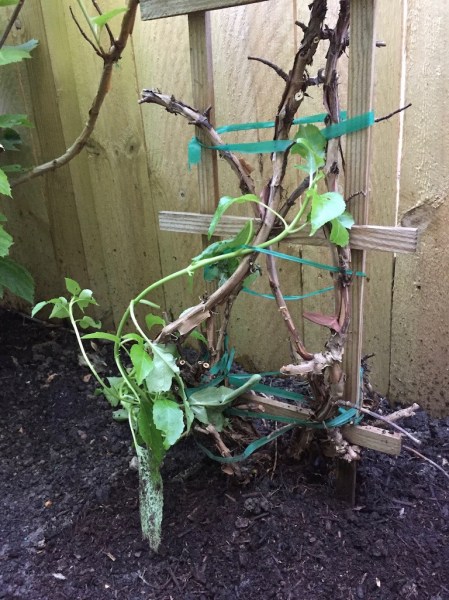
as is so often the case in the realm of the garden, it’s become something of an obsession. i dream of half-dead (okay, five-sixths dead) vines i won’t give up on. i dream of digging them out of their sun-forsaken plots and moving them, with surgical-nurse precision and intensive-care-nursery tenderness, around a corner and down the fence line to where their ganglionic roots might take a liking to the new surroundings and do the little wiggle dance that is a root tunneling through earth, sucking up sustenance, rewarding the resurrection gardener with a little whoop-de-doop! (the triumphant yelp that comes, even in a whisper, when knot of green appears where before there was only stick. and dead-looking stick at that.)

i like to think of my little bumper crop of almost-dead things as my lazarus contingent. this week alone, i’ve counted two trees, a bush, and two vines among the not-yet-fallen. after the long hard winter, my garden had taken on a hardstruck look. bushes that once had burst with leaves were now not much besides a collection of barren stick or branch, all jutting this way and that as if to shout, “we’re dying here, and we’d like an assist before we take our last and final exhale.”

i’d ignored their cries long enough. i’d let the summer wind into july before i mustered the chutzpah, the courage, the lopper-power it takes to ply a miracle or two. or to try anyway.

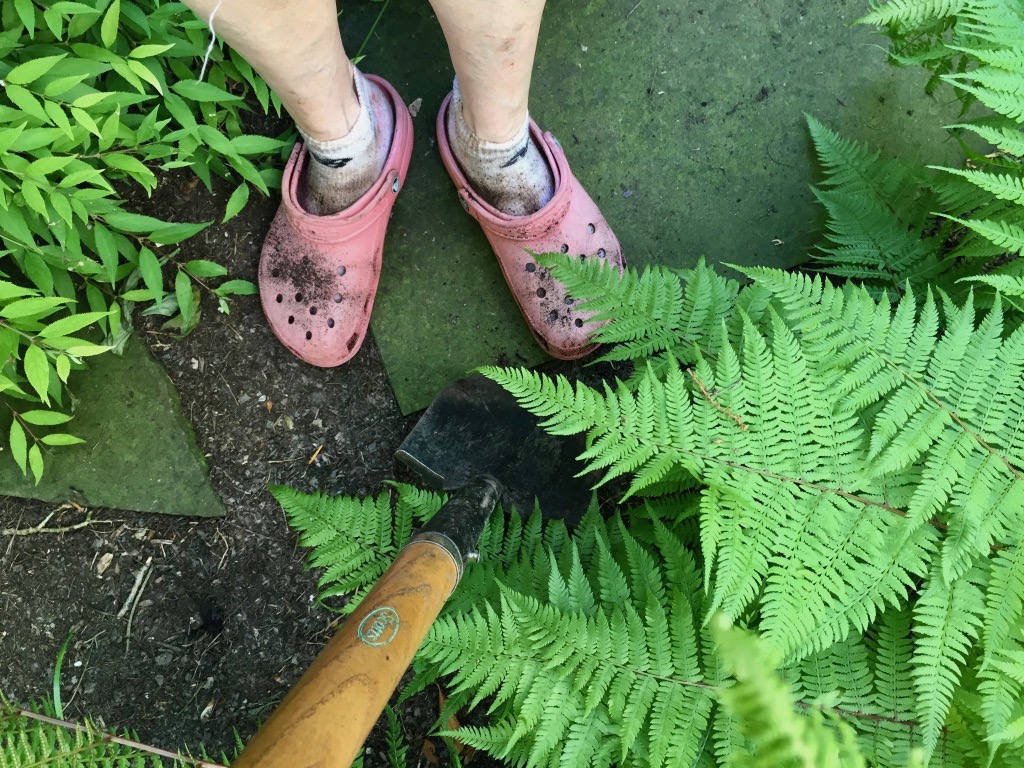
this week, something hit me. overcame me, really. if you tried to find me for long hours on end, you wouldn’t have had much luck. unless you poked around the corners of my semi-acre. then you might have spied a mud-streaked, pewter-haired, shovel-wielding missus, wrenching this muscle or that, grunting on occasion, eventually trotting triumphantly, holding a vine or bush by the hairs (as if a pussycat plucked from too deep a mud puddle). i’d survey the so-called acreage, find a spot of promise, and begin again to dig. i’d sprinkle prestidigitation powders, do a little voodoo dance, and plop that salvaged  vine/bush/quasi-tree into its new digs.

by nightfall, i ached all over. and needed nothing short of a scrub bush to un-cake the muck from in between my toes, up my shins, and the same on the upper limbs, the ones that had me muddy clear past my elbows.

but deep down inside i was humming. humming a happy, i-saved-something-today tune. it’s not a song i get to sing very often. almost never. which might have been what made it so so sweet. and such an unstoppable obsession. in a world of things i cannot fix, presidents i can’t make go away, attorneys general who make me want to scream, kids i love hauling off to college sooner than i’d like to think, i am quite tickled by the notion that a sharp-edged shovel, a bag of super-booster, and a little bit of i’ll-show-you is enough to shift the narrative, to re-write the death knell of the climbing hydrangea, the summer snowflake viburnum, and the plain old humdrum hydrangea.

i’ll be keeping watch through the days and weeks (and occasional nights) ahead. i’ll be on the lookout for even the itty-bittiest proof that all is not lost, and one lowly little specimen is on the rise, not the death watch.

if i can leave this planet even one iota greener, lusher, more apt to spread its roots and rise, well then my days caked in mud, my nights caked in ben-gay, will not have been in vain.

what did you resurrect this week? 

IMG_2187

my most promising — and challenging — resurrectee…

a few weeks back, when i was off at poetry school, the poem i memorized, wendell berry’s “manifesto: the mad farmer liberation front,” ends with the magnificent instruction, “practice resurrection.” which is precisely what i’ve been doing all week. i like to think farmer berry would wink in approval at the notion that i’ve taken up the practice, with shovel. 

here, once again, are the lines i memorized, from “manifesto”…(on second thought, i’m letting the whole thing rip here. it’s too glorious to only quote a stanza or two.) celebrate mr. berry’s instruction: get out there and practice resurrection this week. xoxoxox

Manifesto: The Mad Farmer Liberation Front

by Wendell Berry

Love the quick profit, the annual raise,
vacation with pay. Want more
of everything ready-made. Be afraid
to know your neighbors and to die.
And you will have a window in your head.
Not even your future will be a mystery
any more. Your mind will be punched in a card
and shut away in a little drawer.
When they want you to buy something
they will call you. When they want you
to die for profit they will let you know.

So, friends, every day do something
that won’t compute. Love the Lord.
Love the world. Work for nothing.
Take all that you have and be poor.
Love someone who does not deserve it.
Denounce the government and embrace
the flag. Hope to live in that free
republic for which it stands.
Give your approval to all you cannot
understand. Praise ignorance, for what man
has not encountered he has not destroyed.

Ask the questions that have no answers.
Invest in the millennium. Plant sequoias.
Say that your main crop is the forest
that you did not plant,
that you will not live to harvest.
Say that the leaves are harvested
when they have rotted into the mold.
Call that profit. Prophesy such returns.

Put your faith in the two inches of humus
that will build under the trees
every thousand years.
Listen to carrion – put your ear
close, and hear the faint chattering
of the songs that are to come.
Expect the end of the world. Laugh.
Laughter is immeasurable. Be joyful
though you have considered all the facts.
So long as women do not go cheap
for power, please women more than men.
Ask yourself: Will this satisfy
a woman satisfied to bear a child?
Will this disturb the sleep
of a woman near to giving birth?

Go with your love to the fields.
Lie down in the shade. Rest your head
in her lap. Swear allegiance
to what is nighest your thoughts.
As soon as the generals and the politicos
can predict the motions of your mind,
lose it. Leave it as a sign
to mark the false trail, the way
you didn’t go. Be like the fox
who makes more tracks than necessary,
some in the wrong direction.
Practice resurrection.


soulful pages: latest edition

roundup jan

i sometimes forget to post my roundups of soulful books here at the table, so this morning i am delivering the latest edition, which will run in this sunday’s printers row journal, the chicago tribune’s literary supplement. you’ll find it online now, right here, but i’m saving you the click, and posting below. and as the spirit moves me, i just might post a second post this morning…..i’ve a hankering to write about proper porridge. stay tuned. (turns out i decided to also post here — way down below — the tribune’s holiday gift guide roundup of what you might say were the six soulful books that most vociferously leapt off my bookshelf last year…) so lots of soulfulness to muse this wintry morning. put the kettle on, grab the fuzzy afghan, and commence the art of curling up with a great good tome….

Spiritual roundup: ‘Sabbaths 2013’ by Wendell Berry, more
Barbara Mahany

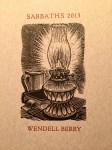
Sabbaths 2013 by Wendell Berry, Larkspur, 36 pages, $28wendellberry sabbaths

There are rare few times in the unfolding of our quotidian lives when we hold something in our hands and know, right away, that it’s sacred. To hold “Sabbaths 2013,” a hand-bound volume of Kentucky poet Wendell Berry’s poems in handset type with wood engravings by Wesley Bates, is to behold the sacred.

It’s as all the finest books on our shelves should be — a work of art, of exquisite attention, at every step of the bookmaking process. Larkspur Press in Monterey, Ky., is that rarest of small-press publishing houses. Gray Zeitz, the founder, is described as “bewhiskered, aproned, and ink-smudged.” He sets type by hand on clamshell printing presses, and his place of creation is said to be equal parts library, museum and workshop. Larkspur’s tagline: “Creating fine books one letter at a time.”

Certainly, these poems of Berry deserve to be unspooled with such care. Each of the 20 poems is a meditation, the closest we might come to modern-day Scripture. To encounter these lines is to brush up against the beautiful, the breathtaking, rooted in the everyday — the birthing barn, the generations-worn kitchen table, the old dog with her gray muzzle.

Consider, for instance, just this one line: “The years / have brought him love and grief. / They have taught him that grief / is love clarified, appraised / beyond confusion, affirmed, lifted / out of time.”

Stripped: At the Intersection of Cancer, Culture and Christ by Heather King, Loyola, 224 pages, $14.95

Cancer is hardly the landscape where one might expect soliloquies on prayer. But prayer, the down-on-your-knees, heart-wide-open petitions that spring from the raw fear of dying and death, is what makes “Stripped” (the author originally titled it, “Stripped: Culture, Cancer, and the Cloud of Unknowing”) very much a book for the soul — and not only for those who’ve been excoriated by the words, “You have cancer.”

More than anything, it’s the quality of King’s writing that catapults this book off the shelf. Her words are sharp-edged as any surgeon’s knife, and, as with all the most powerful writing, hers has the capacity to slip in wisdoms and enlightenments without notice. You’re busy laughing, or wiping away a tear, and suddenly you realize you’ve pulled out a pen to underline words to keep for the ages.

This is not a cancer saga you’ve read before, and where King’s faith takes her is a place few might choose. (She submits to surgery, but decides against radiation or chemotherapy — decisions she made 15 years ago now, and she’s still alive to write about it.) It’s the journey, the straight-shooting, no-punches-pulled, intimate cry of her heart, that makes this a most soulful expedition. One you’ll not soon forget.

Inside Time: A Chassidic Perspective on the Jewish Calendar, based on the works of the Lubavitcher Rebbe, adapted by Yanki Tauber, Meaningful Life Center, 3 volumes, 944 pages, $54.99

It would be shortchanging this three-volume set to call it simply a meditation on time. More apt would be to call it meditations within meditations, a Russian doll of deep thinking on the sacred nature of time and the particulars of the Jewish calendar. What’s found here is a collection of deeply thoughtful essays, exploring the soul of time as defined by the Torah and seen through the lens of Hasidic teaching. You needn’t subscribe to a Lubavitch world view to be enlightened by the epiphanies found in these pages.

At heart, in Volume One, “Time and Its Cycles,” is the notion that Creation wasn’t a divine one-time act, but rather that God creates the world anew in every moment. (Volume Two considers the Jewish calendar from Rosh Hashana to Purim; Volume Three, Passover to Elul.) This notion of perpetual creation, Rabbi Tauber argues, is a powerful antidote to the hopelessness that plagues so much of the modern-day landscape. Most powerful of all, he writes, is the corollary that time is wholly concentrated in the here and the now, inviting a fine-tuned focus on mindfulness.

Consider this instruction, drawn from one of the many charming stories Tauber tells to illustrate his teachings: “We cannot make our days longer, nor can we add additional hours to our nights. But we can maximize our usage of time by regarding each segment of time as a world of its own.”

For the student eager to burrow deep into the great vault of Jewish sacred text, this is a book to hold our attention for a very long time.

Barbara Mahany is the author of “Slowing Time: Seeing the Sacred Outside Your Kitchen Door.” Twitter: @BarbaraMahany

Copyright © 2016, Chicago Tribune

p.s. as i’ve spent the last hour riffling through my files to see how very many times i’ve not posted those soulful roundups here, i realize i must have some reticence about taking up space at the table when the roundups are not too hard to find on the tribune website. looks like i’ve only posted five of 10 roundups, or even included a link. oh my! one you might want to look up would be the gift guide, in which i picked the six books that most leapt off the shelf last year, in the soulfulness department. you can find that roundup here. or, on second thought, maybe i should post it here……

Gift guide: Books for the soul
From a book by Pope Francis to an anthology of world religions, these 6 books are ideal for the spiritual-minded.
By Barbara Mahany

It’s a glorious expedition to survey the spiritual landscape of this year’s books for the soul, to pluck the ones with richest deepest resonance. Poets and scholars, a pundit and pope, all rise to the top.

Consolations: The Solace, Nourishment and Underlying Meaning of Everyday Words by David Whyte, Many Rivers, 247 pages, $22

Poet and philosopher David Whyte constructs an alternative dictionary of 52 words — an abecedarian that stretches from “alone” to “vulnerable” — and, in so doing, invites the reader to explore the depths of each entry, beyond the semantic surface, burrowing into the poetic and the profound. It’s a form of prayerfulness, the meditative powers of contemplating a single word. Whyte takes us there in plainspeak, though his is a language that pulses with counterpoints of shadow and illumination. Surely, a certain road to soulfulness is paved with unexpected poetries and luminescence at every bend. Whyte takes you there by heart.

The Norton Anthology of World Religions: Volume 1 and 2, W.W. Norton, 4,448 pages, $100

Weighing in at 8.4 pounds, a whopping 4,448 pages, and tucked in a tidy two-volume book pack, this massive and monumental Norton Anthology, edited by Pulitzer Prize-winner Jack Miles, holds inspiration for more than one lifetime. At heart, writes Miles, it’s an invitation “to see others with a measure of openness, empathy, and good will. … In that capacity lies the foundation of human sympathy and cultural wisdom.” With more than 1,000 primary texts — Volume 1 covers Hinduism, Buddhism, Daoism; Volume 2, Judaism, Christianity and Islam — this is an instant classic.

The Road to Character by David Brooks, Random House, 320 pages, $28

Before diving into modern-day parables in the form of biographies — ranging from Augustine to George Eliot to Dwight Eisenhower to Dorothy Day — David Brooks, columnist for The New York Times and opinionator for this oft-imploding globe, pens as fine an exegesis on sin as has been written in recent times. Our sin: “self-satisfied moral mediocrity.” It’s in those character studies of some of history’s greatest thinkers and leaders, 10 in all, that Brooks lays bare what it takes to cultivate deep moral character. And isn’t a moral core, tested in everyday trials, our one best hope at an everlasting soul?

Map by Wislawa Szymborska, translated by Clare Cavanagh and Stanislaw Baranczak, HMH, 464 pages, $32

Here, for the first time, is the English translation of all of the poems of Nobel Laureate Wislawa Szymborska’s last Polish collection, including previously unpublished works. In all, “Map” gathers some 250 poems written between 1944 and 2011. While Szymborska, who died in 2012, focuses her attention on quotidian subjects — an onion, a cat — she plumbs them to probe life’s big questions — love, death, and passing time. And while she might not be as widely read in America as poets Mary Oliver and Mark Strand, her words bore deep. She is poet serving as spiritual guide.

Encyclical on Climate Change and Inequality: On Care for Our Common Home by Pope Francis, Melville House, 192 pages, $14.95

This breathtaking amalgam of urgency and poetry mines the spirit and appeals to the moral core. It’s as essential a soul-stirring read as any recent manuscript. Billed as the pope’s pontifications on the environment, it is in fact a sweeping letter addressing a spectrum of global sins. The Guardian termed it “the most astonishing and perhaps the most ambitious papal document of the past 100 years,” bespeaking its relevance beyond the walls of the Roman Catholic Church.

In the Shelter: Finding a Home in the World by Padraig O Tuama, Hodder & Stoughton, 192 pages, $23.95

This quiet book of contemplations by Belfast-based poet, theologian and peace worker Padraig O Tuama barely stirred a ripple in the marketplace of books, but where it counts — in the hearts of those blessed to turn its pages — it swiftly became a treasure. More deserve to be stirred by its deep currents. Putting to work poetry and gospel, side by side with story and Celtic spirituality, O Tuama explores ideas of shelter along life’s journey, opening up gentle ways of living well in a troubled world. The reader can’t help but be drawn in, slip-sliding into the harbor of the author’s soulful words.
Copyright © 2015, Chicago Tribune

A version of this article appeared in print on November 29, 2015, in the Printers Row section of the Chicago Tribune with the headline “Food for the soul – Poetry and profundity in these true gifts”