pull up a chair

where wisdom gathers, poetry unfolds and divine light is sparked…

Tag: t.s. eliot

hellfire

i’m at a loss and not inclined this week to take up too much oxygen on this earth that is thirsting for rain. or snow. or even a dense fog to begin to smolder the flames that have made for apocalyptic infernos in the land of the backyard grapefruit and avocado, the storybook land where palm trees might be outnumbered only by show runners and gaffers and star-studded trailers. 

the west coast is burning like hell and, among too many tragedies to count, one beloved friend has lost his whole classroom filled with 20 years of teaching, and others whom i don’t know have lost everything that constitutes the villages they call home: from the immigrant dry cleaners where they’re known by their shirts and their preference for starch, to the grocery stores where checkers are friends who ask about the kids and how quickly they’ve grown, to the churches and temples and mosques where knees are bent and prayers are sent up, to street after street of somebody’s home, once brimming with ballast and trinkets and treasures saved a whole life long––now embers at best. 

it’s the unspoken threads, the immaterial, the irreplaceable human-to-human bonds that feel forever lost. and therein is the crushingest blow.

i often am inclined to keep the big, bad world at bay here. to set the table and let us live our pensive lives in sacred quietude, paying attention to the little noticed. but over the years, the outside has rushed in when the horrors and heartache are too much to ignore. when the grieving belongs to us all.

so it is with the incineration of the city of angels. 

i can’t fathom it. can’t imagine the roar of a wall of flame barreling toward the windows, walls, and roofs where Christmas trees might have still been twinkling, where menorahs were just tucked back into cupboards. can’t imagine trying to not breathe in the toxins that are sure to leave scars in too many lungs (lungs are of prime consideration in my anatomy book these days). 

my best friend, a long-time california girl, texts whenever she has even a percentage of power in her phone. and begs to talk so she can be soothed by the voice of someone not looking into the distance for the billowing smoke, or the closer-coming wall of red, orange, and blue flame. 

she counts herself among the lucky unlucky, she says, for her husband indeed lost his meticulously cataloged classroom bookshelves, and his reams and reams of term papers saved (from before the digital age), and index card notes, and god knows what else a superstar english lit teacher saves. tragic irony is that he spent the summer finally clearing their garage of his files, and methodically transferring all to his bungalow classroom at Palisades Charter High, where beloved colleagues have lost classrooms and every bit of their homes. so suddenly the loss of only a classroom and a lifetime of teaching accoutrements stirs my best and longest friend to place herself in the lucky-unlucky column.

one of my brothers, one i adore for a million and ten reasons, not least of which is because he takes his care for the earth so deeply seriously, walking miles instead of driving, living with the sparest of necessities, always opting for a tent and starry night over any five-star hotel, hit the nail on the head when he captured the debacle thusly:

“Long past time for blame. It’s not politicians, it’s humankind. Most avoid living as if nature matters, yet many are surprised when nature reminds us that she matters. While sad, these fires and losses are not unimaginable.”

we need to do better. we need to remember: this earth is the heart of a sacred equation. it’s ours to romp in, to delight in, to “awe” in. it bountifully feeds us and clothes us and warms us and shelters us. and brings us infinite timeless wisdoms. but it’s begging we till it and keep it. as in the beginning, and ever after. amen. 
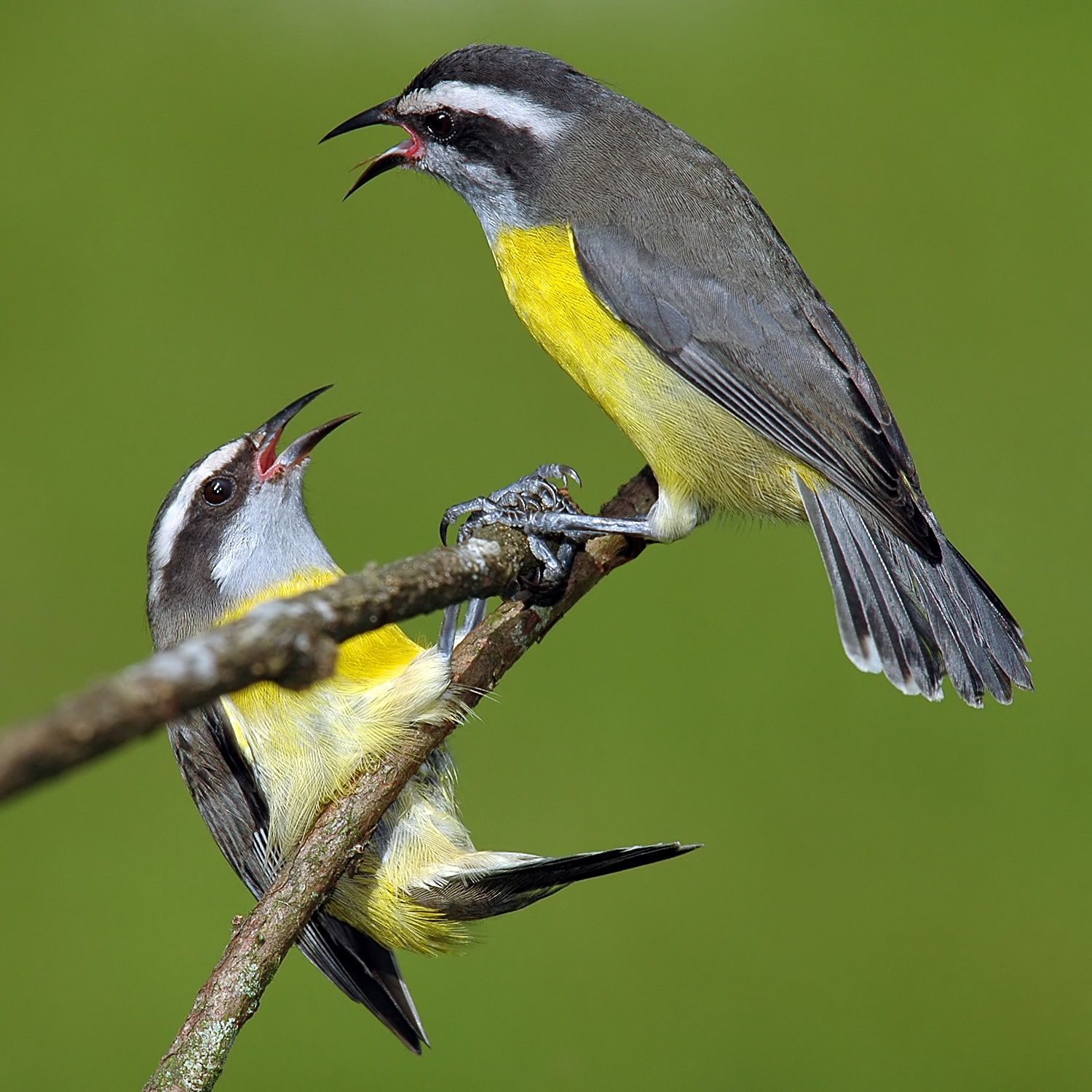

a pair of bananaquit

i’m turning for wisdom again to my friend and fellow pilgrim suleika jaouad, in which she further outlines her antidotes for worry and fear, two conditions that quite prominently rear their heads in CancerLand….(here, prompted by the first bird she saw this year, a little caribbean bird called bananaquit, with a common name “the sugar bird,” suleika went for sweetness as her quest for 2025…funny how intent the searching for essence becomes when life-altering diagnosis is the propellant….

Looking for the sweetness seems like a perfect antidote to the worry and fear. By looking for the sweetness, I mean seeking beauty, presence, and peace in every circumstance, letting go of my fears of suffering and death and what binds us to the material world, being nourished by what’s already inside of us—the nectar of bliss, as its called in Bhagavad Gita. It’s an ongoing practice—to stay nimble, to accept the constant flux, to find contentment wherever I am. 


a simple question answered by a modernday mystic:

What do I mean by contemplation? And why does meditation lead us into this state of contemplation? Well, Thomas Aquinas defined contemplation very simply as ‘the simple enjoyment of the truth.’ The simple enjoyment of the truth. You couldn’t get anything more simple than that. It is simply finding joy in what is.
—Brother Lawrence Freeman OSB, World Community for Christian Meditation

seek joy, dear friends. and thank heaven for the peace and calm and freedom from fear that allows you to sit pensively at your kitchen table, or to look out a window, mug of hot something in hand, and dream of a kinder, gentler, more just world of our making….


arguing that loving is not some passive happenstance that wafts in like fairy dust, but rather a human art that insists we practice as a painter would daub day after day at her paints, or a sculptor with her forms and clay, the great german social psychologist, psychoanalyst, and philosopher erich fromm in his 1956 masterwork The Art of Loving makes the case: love is a skill to be honed the way artists apprentice themselves to the work on the way to mastery, demanding of its practitioner both knowledge and effort.

The first step to take is to become aware that love is an art, just as living is an art; if we want to learn how to love we must proceed in the same way we have to proceed if we want to learn any other art, say music, painting, carpentry, or the art of medicine or engineering. What are the necessary steps in learning any art? The process of learning an art can be divided conveniently into two parts: one, the mastery of the theory; the other, the mastery of the practice. If I want to learn the art of medicine, I must first know the facts about the human body, and about various diseases. When I have all this theoretical knowledge, I am by no means competent in the art of medicine. I shall become a master in this art only after a great deal of practice, until eventually the results of my theoretical knowledge and the results of my practice are blended into one — my intuition, the essence of the mastery of any art. But, aside from learning the theory and practice, there is a third factor necessary to becoming a master in any art — the mastery of the art must be a matter of ultimate concern; there must be nothing else in the world more important than the art. This holds true for music, for medicine, for carpentry — and for love. And, maybe, here lies the answer to the question of why people in our culture try so rarely to learn this art, in spite of their obvious failures: in spite of the deep-seated craving for love, almost everything else is considered to be more important than love: success, prestige, money, power — almost all our energy is used for the learning of how to achieve these aims, and almost none to learn the art of loving. —Erich Fromm 


and finally, simply because i love the language and the imagery, a bit of eliot to usher us into the week to come…

Chorus X from “The Rock” by T.S. Eliot

O Light Invisible, we praise Thee!
Too bright for mortal vision.
О Greater Light, we praise Thee for the less;
The eastern light our spires touch at morning,
The light that slants upon our western doors at evening.
The twilight over stagnant pools at batflight,
Moon light and star light, owl and moth light,
Glow-worm glowlight on a grassblade.
О Light Invisible, we worship Thee!

We thank Thee for the lights that we have kindled,
The light of altar and of sanctuary;
Small lights of those who meditate at midnight
And lights directed through the coloured panes of windows
And light reflected from the polished stone,
The gilded carven wood, the coloured fresco.
Our gaze is submarine, our eyes look upward
And see the light that fractures through unquiet water.
We see the light but see not whence it comes.
О Light Invisible, we glorify Thee!

In our rhythm of earthly life we tire of light.
We are glad when the day ends, when the play ends; and ecstasy is too
much pain.
We are children quickly tired: children who are up in the night
and fall asleep as the rocket is fired; and the day is long for work or play.
We tire of distraction or concentration, we sleep and are glad to sleep,
Controlled by the rhythm of blood and the day and the night and the seasons.
And we must extinguish the candle, put out the light and relight it;
Forever must quench, forever relight the flame.
Therefore we thank Thee for our little light, that is dappled with shadow.
We thank Thee who hast moved us to building, to finding, to forming at the ends of our fingers and beams of our eyes.
And when we have built an altar to the Invisible Light, we may set thereon the little lights for which our bodily vision is made.
And we thank Thee that darkness reminds us of light.
O Light Invisible, we give Thee thanks for Thine great glory!

“The Rock” was Eliot’s play written and performed in 1934, to raise money for the building of new churches. it speaks to humankind’s relation to God, and the implications of a world lived without religion. makes me wonder what Eliot might write today, in a world where religions have wandered so far from their holy essence. the “choruses” in this 21-page play are spoken by the workers, the bands of laborers who build the churches, and is thought to be strongly pro-religion with anti-communist overtones in reaction to the “looming shadow of totalitarian regimes building in Europe and the rumblings of the coming Second World War.” apt.


as i write this, snow in fat flakes is tumbling down, birds are traffic jammed at the feeder, and all is silent save for the ticking of an old, old arthritic clock and the whoosh of a furnace. i am so deeply conscious of how blessed we are that we take our physical safety for granted here in the middle lands this morning. instead of a question, this is a morning for simple reflection, counting the blessings we so often forget to notice….

top photo above by JOSH EDELSON/AFP via Getty Images
when the day calls for a good collapse

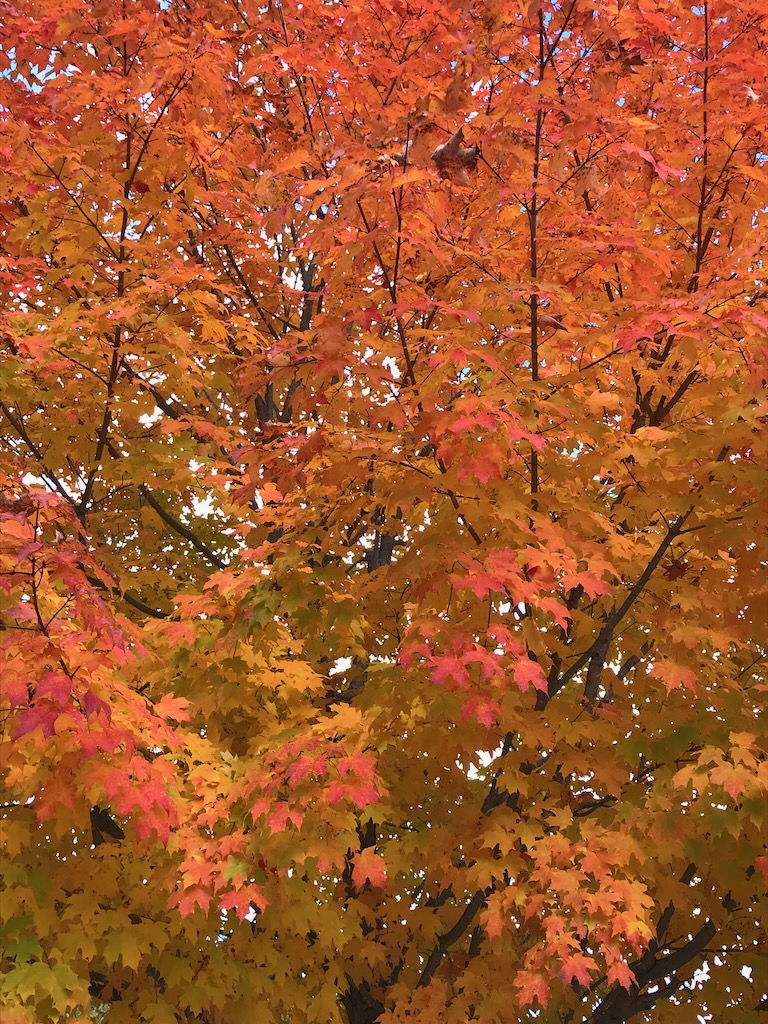
i likened the way i was feeling to all the leaves quaking in the wind all around me, the day a tumbling down of golden-glowing five-point sails, a summer’s worth of sunshine stored and radiant and dropping now to autumn’s calling. 

i felt all aflutter inside. in an exhausted, tank-tapped-out sort of way. in the sort of way that so rarely hits, but when it does, i know to listen. it has been a long, long summer, followed by an uphill fall, preambled by a bumpy spring. and my whole self––all sinew and bone, every ligament and synapse––was calling for a holy pause. 

i listened.

out of fear and trembling as much as anything. afraid i just might topple if i didn’t give myself a sabbath day. sabbath on a thursday. the God who calls to me is not a Day-Minder god. mine is a God who must have looked down upon my weary, worn-thin soul and whispered just enough caution that i couldn’t help but listen.

so this is how my day of good collapse unfolded:

i walked amid the golden-tumbling leaves. i walked and walked. and listened to the rushing wind. i raked my garden, and dug up errant brambles, brambles that had shoved aside the finer, tamer citizens of my so-called farm. i excised the thorny rascals from their elevated plot and moved them down and north to where they might stretch and reach without elbowing out the neighbors. while there on my knees at the raised-bed edge, i raked my hand through spent black earth, the summer’s labor ended. it’s time now for all the loam to bask in winter’s sun, drink up that for which it thirsts. and so i cleared the way, shooshed away the detritus the way a farmer tills her tired, worn-thin field. make-believe is but one of my balms; i’ve escaped into once-upon-a-time as far back as my brain cells have ever stirred.

before calling it a day, i knocked on a neighbor’s door, just to say hello. and down we plopped, a necessary catch-me-up; long overdue. a chat with the good people with whom we intersect by accident of geography, is one of life’s unchoreographed and relished blessings.

and then, at last, i curled into my favorite chair and read and read: t.s. eliot is on this week’s docket. “east coker,” the quartet i read and read, trying to imagine a mind so lush it pours such words onto the page: 

In my beginning is my end. In succession
Houses rise and fall, crumble, are extended,
Are removed, destroyed, restored, or in their place
Is an open field, or a factory, or a by-pass.
Old stone to new building, old timber to new fires,
Old fires to ashes, and ashes to the earth
Which is already flesh, fur and faeces,
Bone of man and beast, cornstalk and leaf.
Houses live and die: there is a time for building
And a time for living and for generation
And a time for the wind to break the loosened pane
And to shake the wainscot where the field-mouse trots
And to shake the tattered arras woven with a silent motto.

it’s a poem that fits the day, the week, the season’s turning. and not only for its mention of the late november (a couple stanzas on). i find the sacred text of poets long-ago to be, at once, elixir and ablation. i find healing there, deep amid the stanzas. curled up, limbs tangled like an autumn vine, as the arc of sunlight rises, falls, and rises once again…


the world is testing us, all of us who can’t abide the horrors. and so i found solace in the words of  the late, glorious, raspy-throated leonard cohen who proclaimed this:

“I wanted to stand with those who clearly see G-d’s holy broken world for what it is, and still find the courage or the heart to praise it.”

Leonard Cohen

and finally this one short paragraph might hold more than enough to think about through the week of gratitudes ahead…

I have been thinking lately about how the search for God and the search for our deepest selves ends up being the same search. This insight is not unique to me, but it has become truer for me as I’ve grown older. Teresa of Ávila often expressed the wonderful idea that one finds God in oneself, and one finds oneself in God. Both are true! And when one experiences this and discovers one’s chosenness and inherent belovedness, one can rest deeply in it. Indeed, that is a great spiritual gift of contemplative seeing.

—Richard Rohr


neither last nor least, happy 93 to my mama, who has fought hard these past many weeks to shuffle on again. and so she is—daunted, yes, but not surrendered. i could have written a meditation on my mama, but she much prefers to be out of the spotlight, at the edge of the crowd. i will say that as i roamed my mama’s house these past few alone times, browsed her bookshelves, plucked a tome or two, i’ve been struck––deeply––by the many titles she has saved that are ones i cannot wait to take to heart. eliot’s four quartets among them. the complete works of robert frost. botanical shakespeare: an illustrated compendium. i am so so grateful for this gentle chapter of my mother’s life. when she is harbored well in a lovely place and we just might have time to learn another thing or two about each other’s souls. i love you mama, in case you’re reading this. xoxoxo

how might you choreograph a day of good collapse?

notes from poetry school

IMG_2059

“…the great poet should not only perceive and distinguish more clearly than other men [sic], the colours or sounds within the range of ordinary vision or hearing; he should perceive vibrations beyond the range of ordinary men, and be able to make men see and hear more at each end than they could ever see without his help. … it is therefore a constant reminder to the poet, of the obligation to explore, to find words for the inarticulate, to capture those feelings which people can hardly even feel, because they have no words for them; and at the same time, a reminder that the explorer beyond the frontiers of ordinary consciousness will only be able to return and report to his fellow-citizens, if he has all the time a firm grasp upon the realities with which they are already acquainted…

“the task of the poet, in making people comprehend the incomprehensible, demands immense resources of language; and in developing the language, enriching the meaning of words and showing how much words can do, he is making possible a range of emotion and perception for other men, because he gives them the speech in which more can be expressed.”

t.s. eliot, “what dante means to me”

“perceive vibrations beyond the range of ordinary [inhabitants of this moment in time on this place called earth], and be able to make [those souls] see and hear more at each end than they could ever [otherwise] see…”

that’s the essence of it to me. the whole draw toward language, toward poetry in particular, the knowledge that at the far reaches of this thing called our capacities we might — if we work at it, if we think about it — possess the possibility of capturing the ephemeral, the ineffable, the slipping-through-our-fingertips. those quivers of human heart and spirit that shimmer just beneath the surface, but once illuminated prompt us — each and every one of us — to sigh in recognition. “i am not alone.” i too know that pain, that joy, that loneliness. that hallelujah of the heart. the long dark night of the soul.

it’s why from the beginning, in writing — be it the stories i scribbled as a child, sprawled across my bedroom’s braided oval rug, or later in chasing and telling the stories of heartbreak and crime and injustice for the chicago tribune — i reached toward poetics, i reached toward those combinations of words that shattered through the barriers of the every day.

i never set out to write poems, i still don’t (i’ve written one to my name and it’s locked in a drawer, just as my mother tells me she too has reams locked in drawers, some burned along the way), but i have always always sought to understand the work, the magic, that poetics does, so that i too could weave it into the plainspoken sentences as i try to write my way through life.

the more deeply i read, the more deeply i study the powers of poetry, the more amazed i am by its otherworldly capacities. the more i ache to reach its borders.

why write? because we are plopped onto this planet as if a babe in the woods. there are mixed-up trails all around, and we are finding our way, every one of us. some are born with illuminators nearby. some are not. we all stumble onto lessons, onto truths, endure trials and temptations. come out wiser, if we’re paying attention. if we’re listening and keeping close watch. if along the way, we can trace the trails, write what we see and hear and come to understand, well then don’t we begin to serve as cartographers for those in the woods with us? might we cover more of the woods if we all share what we etch in our notebooks?

writers write, painters paint, dancers dance. we all illuminate the coursings of the heart in the movements that most stir us. poetry — the art of distilling the unseen, unheard, but often felt gyrations and quiverings of the heart and soul — poetry enters it all.

we reach beyond the range of the ordinary, we illuminate what’s often lost. we aim to hold it high, to whisper, “behold this holy moment, study its undulations, its depths and inclines. extract a droplet of wisdom.” and go on with your humdrum day.

that’s what i thought about at poetry school last week. that’s what i wrapped myself in. and carried home in my backpack.

***

culled from my notebook:

books you might choose to read, all highly recommended:

scott cairns, Recovered Body (especially, “The Recovered Midrashim of Rabbi Sab”)

denise levertov, The Stream and the Sapphire (poems that wrestle with faith and doubt)

mary karr, Sinners Welcome (her poem, “Descending Theology: Nativity,” reimagining the birth in the barn, leaves me limp, the poem i should read every Christmas morning…)

lucille clifton, Blessing the Boats: New and Selected Poems 1988 – 2000, winner of the National Book Award


how do you try to capture the ineffable? and why does it matter to see and hear what’s beyond ordinary range? your thoughts on eliot’s thoughts up above? 

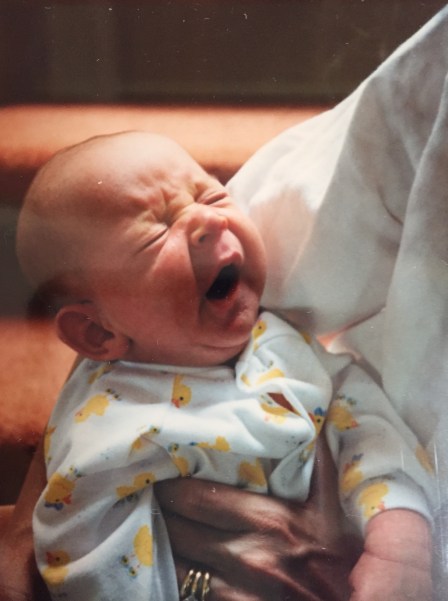
i can’t leave the chair this morning without a cannon’s blast of birthday blessings for my beautiful firstborn, who is off in DC, without an actual mailing address (he’s living in a condo not yet on the market and for some reason the developer can’t give him a reliable street address nor the promise that any mail would actually be delivered…), and who is turning 26 tomorrow. the only thing worse (for the mama, anyway) than a kid having a birthday far far from home, is not being able to send a single care package! so, not that he’d wander by to read this, but i am sending all the love in my heart and then some. i send prayers as well, mountains of them. may this year ahead illuminate all that is good and joyful in you and around you and because of you. i love you to the moon. have since long before you were born. xoxoxoxo

willie yawn

oh, dear God, i love this child, love him far beyond the borders of my humble little heart….