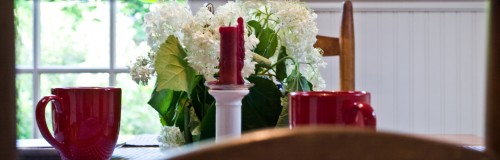
brokenness abounds.
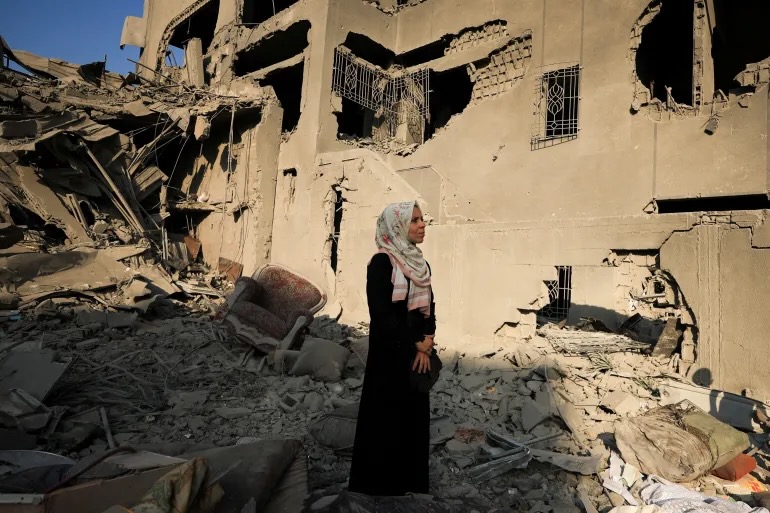
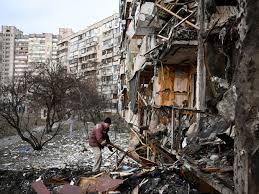
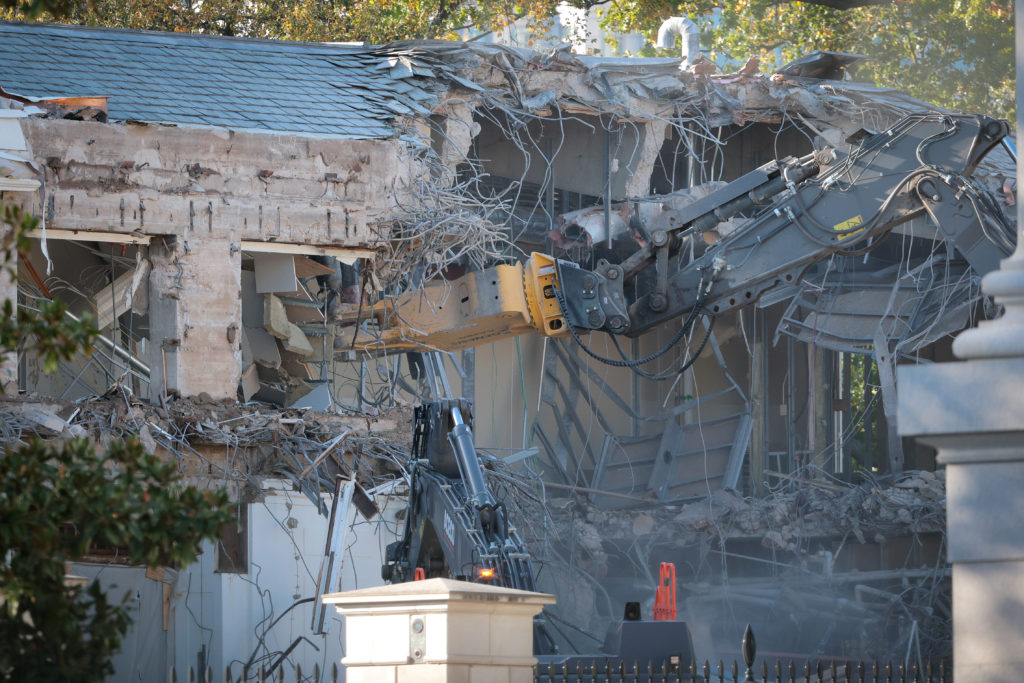
the siege of rebar and rubble seems endless. there are shards on our streets, and in our hearts.
the images stun me every time. images find their way in where words sometimes take roundabouts. of all the thousands and thousands of words that have passed before my eyes this summer past, that have sometimes settled into the nooks and crannies of my brain where i can’t shake them out, the images are otherwise: immediate, gut punch. they demand no absorbing. they are all but instant. as fast at it takes for the pupil, retina, and occipital lobe to zap into action. 13 milliseconds; a measure i can’t even measure. another name for instant.
no wonder we feel assaulted. the assault is everywhere.
this week i felt gutted. i am almost ashamed to hold up images of war against images of destruction that i cannot shake. the destruction that gutted me most this week was wrought by the sin of hubris, of addiction to power and greed. what’s rebuilt will not be a hospital for the deathly ill, the dying, the shattered. it will be for the clinking of crystal, and the lifting of forks that are gilded.
in a world of brokenness, we go dizzy sometimes thinking that all there is is evil. we don’t know how to stop it. which is why i spend my hours poring over the pages of sages and everyday saints, not the ones beatified and sanctified, the ones ushered into the hallowed halls of a hierarchy that’s laid out miles and miles of rules and red tape. the saints i search for are the ones whose names you would never ever know, the ones who populate the checkout lines at the grocery, who drive the buses and never fail to wait for the kid loping to the bus late and frantic, or the lady with the pail of cleaning supplies and the limp that won’t let her hurry.

henri nouwen was a dutch-born priest, psychologist, and theologian who left the vaunted podiums of yale and harvard divinity schools to devote his life to those who might be seen as broken, broken of mind by worldly measure but not of spirit. he became pastor of l’arche daybreak, an interfaith, non-denominational, shared community where both the intellectually challenged and the not intellectually challenged live as one. it consists of eight homes, an old barn, and 13 acres in the rolling hills of ontario, about an hour north of toronto. its core belief is that beneath every brokenness there is light. radiant light.
henri nouwen is no longer; he died of a heart attack at 64 in 1996. but his books, some 39 translated into 35 languages, live on. his radiance, his wisdom, is without end.
nearly every morning, i read henri. he glides into my inbox deep in the night, awaits my morning. he sets me straight for the day. this week, one morning, he reminded this:
Everyone is a different refraction of the same love of God, the same light of the world, coming to us. We need a contemplative discipline for seeing this light. We can’t see God in the world, only God can see God in the world. That is why contemplative life is so essential for the active ministry. If I have discovered God as the center of my being, then the God in me recognizes God in the world…. The spiritual life requires a constant and vigilant deepening and enlivening of the presence of God in our hearts.
if we can look into the brokenness, beyond the brokenness, if our guiding principle is a belief that the Sacred is inextinguishable, cannot be broken, then we might, just maybe, find fortitude in setting our sights on seeing the God in our midst.
i know the nature of God is twisted and sometimes torn, depending on our stories, our pasts, those who taught us or not. i know that some refuse to utter God’s name, and some to deny God’s presence. but i use the name, the knowing, as that for which there are no words. the inexpressible, the depths that defy expression. i know God as the tender force that draws even strangers together. i know God as the hay bale into which i fall when i am afraid. i know God when i look into the eyes of pain without end, and a glimmer is caught, and love is made real, and by only the grace of God we pull each other out of the darkness, the impossible darkness. i know God as the depth and the light of me.
so when henri nouwen reminds me that if i keep God in my center, if i sense the palpable presence as often as i turn my attention that way, then i am equipped for what so often feels impossible: i can search for and find the sparks of the Divine in most any tableau i encounter. in the joyous laughter of the jamaican nurses who love my mama, who make her giggle like a schoolgirl. in the friend down the lane who is crushed and crushed again and again by the cruelties of someone she birthed, someone she will love fiercely forever—no matter the cost. in my absolute favorite grocery store checker, the one with the pink or purple hair, the multiple piercings, and more ink on her skin than it took to write Webster’s first dictionary, the one who holds my hand tight as the tears pour down her cheeks as she tells me the tale of her beloved who’s died, as she tells me how hard it is to still be alive.
these days i’ve shifted my orientation, my seeing. i’ve slipped out of the worldly paradigm, a paradigm that crushes me daily. i’ve moved into the realm of the sacred, the holy. the only way forward, as the rubble and rebar compounds, is to do as nouwen teaches: seek the sacred, be it the faintest of sparks or a bonfire. seize it, hold onto it as long as you can. even amid the rubble there will be the faintest stirring from under the dust, under the twisted steel rods. when the broad view, the overview, dares to pummel us, for all we can see is the evil, the hubris, the cruelest of cruelties, maybe the wisdom is in shifting our sights to whatever is holy and unfurls right before us: the faintest of kindness, of improbable light, of love that refuses to whimper or die.
the world beyond our reach is going to break us every time, but the world we can touch, the world we can sense with all our own God-given senses, that just might be what saves us. and the way we too can take part in the saving.
may it be so.
what broke you this week? and more urgently: what stirred you to see the Sacred?
the images above are of gaza, kyiv, washington, d.c. can you tell which is which?
 pull up a chair