pull up a chair

where wisdom gathers, poetry unfolds and divine light is sparked…

Tag: road trip

smoky mountain runaway…
smoky mountain stroll

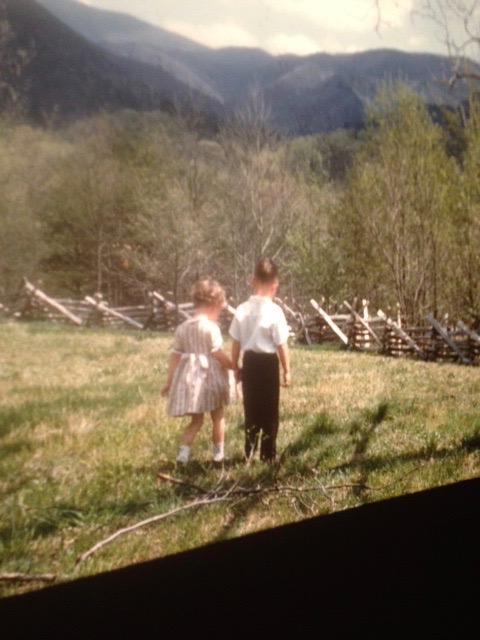
long ago, and far away. strolling in the smoky mountains. my big brother and me, when i was three and he was four, and we called knoxville home….

dispatch from 37383, specifically a roomy porch in the nooks of the smoky mountains, looking out over the undulations of sewanee, tennessee…. 

i’ve run away to the smoky mountains. for a few days. to absorb the rhythms of poetry and southern-steeped prose at the sewanee writers’ conference, where the likes of alice mcDermott, marilyn nelson, and bobbie ann mason bring their writing wares. and where plain folk like me wave our paper fans to stave off the summer’s steamy heat, and drink in undiluted verse.

my dear friend katie (thelma to my louise) picked me up while the stars and moon still blinked, at four bells the other morning, peeling through the city, and down the interstate before too many truckers even roused from their big-rig bunks.

i climbed aboard with visions of a wide front porch, and mountain sounds lulling the night away. i climbed aboard because when nestled alongside an old dear friend, endless conversation melts away the miles. before we’d ticked even halfway through the list of things that must be explored, dissected, analyzed, and plain old pondered, we’d hit the nashville city limits, and not long after, the sign for sewanee, 93 miles, and up, up, up, along the winding mountain road….

the first sound i uttered — upon racing to the promised porch and drinking in the strata-upon-strata of leafy-knotted mountainsides and tops fading in the far-off faraway — was wordless: nothing but the sound of breath rushing in, the sound of drinking what you’ve thirsted for — for so so long you can barely remember a time when you weren’t so parched.

since then, it’s all been as gentle an unspooling as any day — or string of days — can offer.

that porch, equipped with wicker rocking chairs and ceiling fans whose paddles stir air as thick as meringue in the making (at midday, anyway), is Runaway Headquarters, the post from which all stirrings stir.

long stanzas of pure silence — save for birdsong in the morning, and crickets in the thick of night — punctuate the hours. the orb of moon over the mountains, the only speck of light for miles and miles and miles, grows fuller by the night.

dawn begins with softening of inky night. haze settles in the cleaves of mountainside. it’s all soft, slow, seamless, from start to finish, from first fluttering of eyelid to that uncharted moment when at last the sleep surrounds. and there’s no finer first breakfast course than just-brewed coffee and a prayer cast wide across the precipice.

mid-morning, we motor down the winding half-mile gravel drive to the many winding miles of road that deliver us to “the domain,” 13,000 acres of leafy campus, the pride of Sewanee, The University of the South, a literary mountaintop mecca. one that just happens to be the sole beneficiary of Tennessee Williams’ literary estate, and, since his only sister’s death in 1996 (long institutionalized, she was the one on whom williams modeled his character laura in “the glass menagerie”), Sewanee is the holder of the copyright to every play, screenplay, poem, letter, and story the twice-Pulitzer Prize-winning playwright ever penned. curiously, his papers went to harvard and columbia universities, but Sewanee got all the dough and this: his patio furniture, his breakfast plates, a working toaster, and a small bronze nude, tucked away in the archives.

it’s a place dotted with an architecture my favorite critic dubbed “Appalachia Ox-bridge,” modeled after the oh-so-erudite Oxford University (as in the one in England), only here it’s Tennessee limestone in shades of khaki and caramel. oxonian bell towers, complete with parapets, ring out on the quarter hour. rose windows shimmer in the late afternoon light. and nearly every walk leads through or to some medieval surprise — a cloister, a fountained courtyard, a spiral stair to who knows where.

four times a day, all the good folk of the writerly conference plus townies like us gather in a quaint old hall, where oddly dying hydrangea bushes (whole bushes, potted, not stems blithely plunked in a vase) flank the podium. writers, poets, teachers rise and read, recite, preach the holy word of literary craft. i’m not alone in madly scribbling notes, and looking starry-eyed toward the rafters. trying my darnedest to seize a certain turn of phrase, or some truth just lobbed our way, one that begs for at least a moment’s pause.

our collective breath was taken away just yesterday when a southern gentleman in straw hat, seersucker jacket, and French sailor’s striped T, a fellow by the name of allan gurganus (author of “oldest living confederate widow tells all”), rose to read his latest genius in the making, a chapter from a novel he says is titled, “the erotic history of a country baptist church.” while we all rose to a rare (i’m told) standing ovation, i leaned in and whispered to katie, “that alone was worth the 800-mile drive.”

canned-ham camper cafe

you needn’t much else amid such sustenance, but we couldn’t resist the roadside stand, and lunched on perhaps the finest sandwich summer offers: sliced heirloom tomato, piled thick atop oatmeal bread, bare except for shake of salt and a grind or three of pepper. and last night’s porch supper was perhaps the finest tennessee gazpacho ever poured from a roadside canned-ham-camper-turned-cafe.

i’ve never been a natural wanderer; my nesting inclinations, hard to bend. i left a boy back home who filled me up with far more hugs than usual the day before i left; he told me plenty times that day that he’d miss me — words not often spoken by a kid a year away from packing up for college.

but sometimes a mama needs sustenance, needs silence, and poetry and birdsong to fill in all the cracks. i found it here in the mountains, here on the broad front porch from which i count the shining stitches in the night sky.

it’s been a long long time since i was home in the smokies. but, oh, sweet reunion it surely is.

thank you, beloved katie, for plucking me from the summer’s long dry stretch, and quenching me with mountain air and sewanee magic. and for this rare and wondrous chance to pull up a wicker rocking chair this week…xox and, emphatically, to katie’s sister beth, who so generously shares her slice of smoky mountain heaven….

where’s your summer runaway or retreat? and what unfolds once you’re there?

a gift from the mountains….(from maurice manning, Pulitzer-finalist poet, born and bred in Kentucky, and who had me on the edge of my seat at Thursday night’s reading.)

An Orchard at the Bottom of a Hill

by Maurice Manning

Why don’t you try just being quiet?

If you can find some silence, maybe

you can listen to it. How it works

is interesting. I really can’t

explain it, but you know it when

it’s happening. You realize

you’re marveling at apple blossoms

and how they’re clustered on the tree

and you see the bees meticulously

attending every blossom there,

and you think the tree is kind of sighing.

Such careful beauty in the making.

And then you think, it’s really quiet,

but I am not alone in this world.

That’s how you know it’s happening,

there’s something solemn and wonderful

in the quiet, a slow and steady ease.

Whether the tree is actually sighing

is beside the point. It’s better to wonder,

you needn’t be precise with quiet,

it just becomes another thing.

It isn’t a science, it’s an art,

like love, or a dog who’s pretty good,

asleep in the grass beneath the tree.

xox

p.s. i’ll add postcard-worthy pics to this post once home. for the life of me, i can’t add from afar….

sewanee kindness

road trip reads

IMG_7946

any minute now, we’re piling in the red wagon and pointing it south, straight to louisville, kentucky, the state of grace in which i was born. we’re headed down for a memorial for a beloved uncle who died at 91 earlier this summer. he was known as “secretary of the interior” in blue-grass country, and they didn’t mean affairs of domestic geography so much as affairs of chintz and raw silk and impeccable antiques culled from trips around the world. more than 40 such trips circumnavigating the globe. a lifetime procuring the beautiful, as head of interior design for decades at louisville’s grand old department store.

despite the fact that it’s my beloved architecture critic’s birthday tomorrow, he insisted he was driving my mama and moi and devoting much of his day to interstates and trucks barreling past him, passing as they often do on the left. by sundown tonight, though, we’ll be checking into a sublime historic hotel, the brown hotel, and that alone will make this a trip to remember.

while we’re motoring i thought i’d leave a few books here on the table. i’ve not kept up with posts from my tribune roundups of soulful books. so here, a culled list of favorites from the last two distillations, a potpourri of books i particularly loved.

Buechner 101 by Carl Frederick Buechner, Frederick Buechner Center, 170 pages, $15.99

Maybe once a generation, or once every few generations, someone is born with gifts literary and sacred in equal measure. A translator, perhaps, of the highest calling. One who can at once lift our souls and our sights by virtue of the rare alchemy of the poetic plus the profound. Therein lies the prophet. Therein lies Frederick Buechner, at 90, one of the greatest living American theologians and writers.

In these collected works, “Buechner 101: Essays and Sermons by Frederick Buechner” — including excerpts from his Harvard Divinity School lectures, “The Alphabet of Grace”; a searing essay on his daughter’s anorexia; a seminary commencement address on the hard truths of pastoring a flock of believers, doubters and everyday sinners — we are immersed in the depth and breadth of this rare thinker’s gifts.

Anne Lamott, in her introduction, admits to being blown away by Buechner’s capacity “to be both plain and majestic” at once. She ranks him side-by-side with C.S. Lewis, then declares, “No one has brought me closer to God than these two men.” That alone might make you rush to pore over these pages.

This world sorely needs a prophet who reminds us to not give up our search for holiness amid the noise and hate and madness all around. Buechner, though, says it in words that shimmy through the cracks, burrowing deep within us, reverberating long after the page is turned. He writes: “We must learn to listen to the cock-crows and hammering and tick-tock of our lives for the holy and elusive word that is spoken to us out of their depths. It is the function of all great preaching, I think, and all great art, to sharpen our hearing precisely to that end.”

And it is that very sharpening that we find, paragraph upon paragraph, page after page, in Buechner 101.

Our Father by Rainer Oberthür, illustrated by Barbara Nascimbeni, Eerdmans Books for Young Readers, 58 pages, $16

The questions are pure. The questions, profound. From the child’s script, the surest path to heaven. And from the start, “Our Father,” a breathtaking peeling back of a foundational prayer of so many Christian religions, shimmers with a simplicity that can’t help but catapult our sacred questions to the highest heights.

Before beginning a line-by-line, word-by-word, meditation on the Lord’s Prayer, as it’s often called, this extraordinary picture book frames the prayer in the context of how it responds to the most essential — and possibly unsettling — questions: Where did the world come from? Why does it exist? Why am I here? Why do people die? What happens afterward?

In a voice that exudes comfort and heart-to-heart closeness the reader is told that these really are questions about God: Where is God? Why can’t I see God? How can I talk to God?

Are these not the very questions pondered by legions of theologians? And yet, the answers found here — in a children’s book from a Grand Rapids, Mich., publishing house with a long tradition of searching the globe for particularly illuminating children’s text and illustration — are perhaps among the clearest ever penned.

Which is what makes this a book for the soul young or old or anywhere in between. Each line — alongside charming illustrations that beg to be studied closely — becomes a prayerful exegesis, unfurled in words that speak to the pure heart of the child. It’s a book that will lull you into the sure and safe cove that is a building block of faith. And, chances are, you’ll never again murmur mindlessly the words of “Our Father.” Instead, you’ll be awakened to the depths of its timelessness and its capacity to enfold the answers to all our deepest questions.

Circle of Grace by Jan Richardson, Wanton Gospeller Press, 182 pages, $16

Blessings, an ancient literary form, “illuminate the link between the sacred and the ordinary,” Jan Richardson writes in her breathtaking “Circle of Grace: A Book of Blessings for the Seasons.” Often poetic and pulsing with the rhythms of invocation and incantation, blessings “use ordinary language in ways that can become extraordinary, offering words that arrest our attention and awaken us to how the holy is at work in our very midst.”

Before carrying us through the liturgical year, blessing by blessing, Richardson writes in her introduction that a good blessing “shimmers with the mystery that lies at the heart of God.” And then, she unspools “good blessing” upon “good blessing,” one after another shimmering, in ways that might make you weep, so tenderly, so astonishingly, do they slip into the hollows of the soul.

Richardson, a writer, artist and ordained Methodist minister, belongs among the most treasured spiritual lights on the bookshelf. Her words trace that thin line that courses the topography of the soul. She knows the way into the deepest interiority, into the mysteries of life, of grief, of wonder. Your breath will be taken, again and again. And you will return, again and again, to these pages, pulled by the magnetism of her words, her capacity for imbuing the everyday with the sacred.

A blessing, she writes, “is something wild. It leads us where we did not imagine to go, and never in a straight line.” It does so, in Richardson’s hands, by lifting the quotidian hours of our lives — the waiting for night to end, the unimagined grace of coming home — and making abundantly clear a profound holiness.

Becoming Wise by Krista Tippett, Penguin Press, 288 pages, $28

If you, like me, read with a pen at the ready, you’ll likely run out of ink on this one. If you measure the worth of a book by the volume of scribbles you pen in the margins, the stars emphatically drawn, and the sentences underlined, Krista Tippett’s “Becoming Wise: An Inquiry into the Mystery and Art of Living” — a compendium of wisdom, at once intimate and expansive — stands a serious shot of emerging both splattered and cherished.

Tippett, the Peabody Award-winning radio host and National Humanities Medalist, is a master of what she terms “generous listening,” an act “powered by curiosity,” and a “willingness to be surprised, to let go of assumptions and take in ambiguity.” Sadly lacking in the modern-day public square, it’s an art Tippett has practiced and honed in her years hosting National Public Radio’s “On Being,” a program and podcast launched in 2003 as “Speaking of Faith,” in which she’s generously listened to — and deeply questioned — some of the most luminous minds on the planet.

From this lifetime of rich conversation, Tippett elicits a poetic inquiry, interwoven with memoir. What does it mean to be human? What matters in a life? What matters in death? And, in the end, wisdom is what Tippett seeks. “Wisdom leavens intelligence, and ennobles consciousness, and advances evolution itself,” she writes.

The book, called “a master class in the art of living,” draws from conversations with poet Elizabeth Alexander, physicist Brian Greene, civil rights veteran John Lewis, physician Rachel Naomi Remen, chef Dan Barber, playwright Eve Ensler, and humanitarian Jean Vanier — to name only a partial roster of her fellow seekers of wisdom.

what titles top your summer reading list? 

coming home

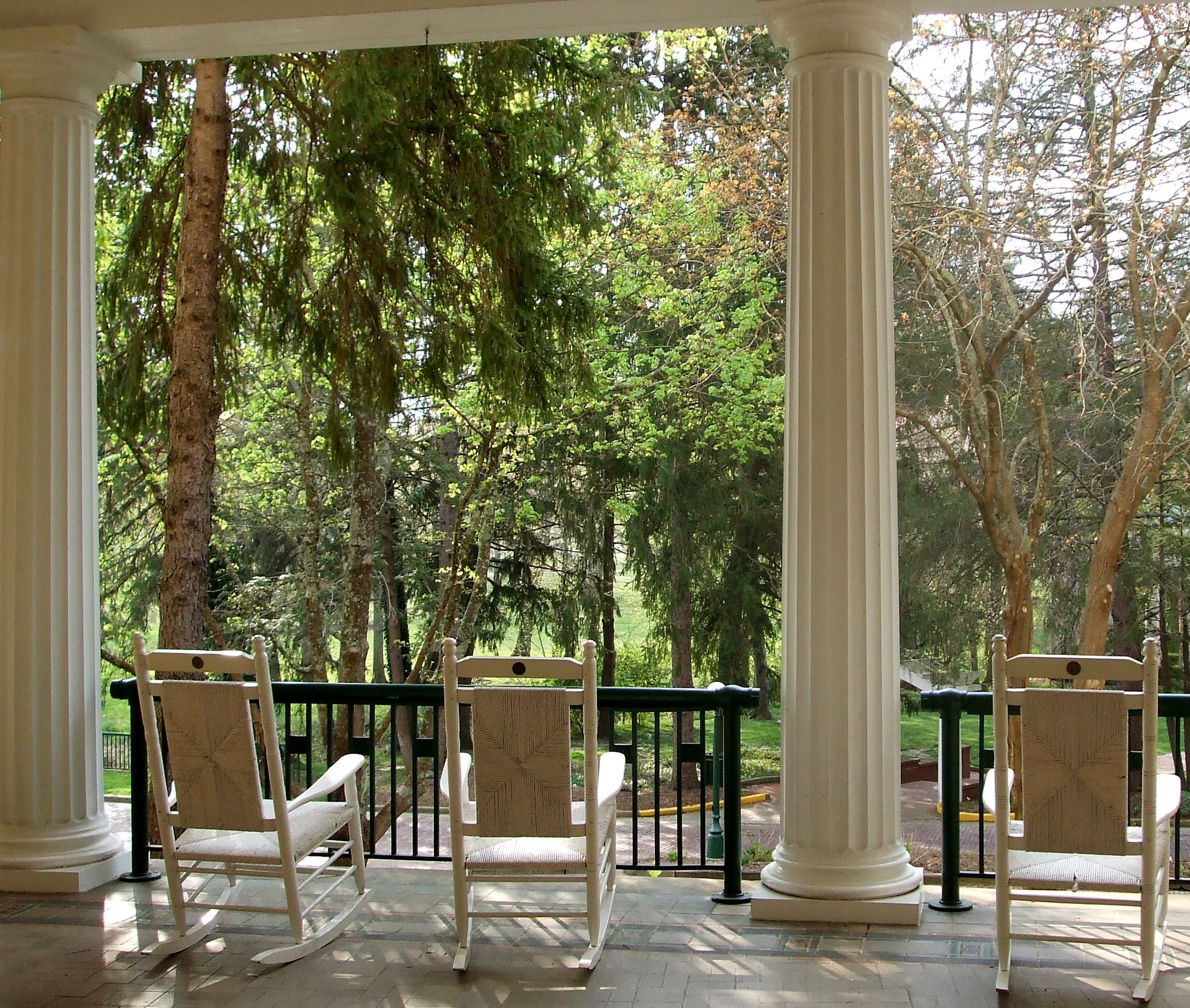
as much as i loved tiptoeing down to the porch that wrapped around the grand old hotel, as much as i loved creaking in those old wicker rocking chairs, my palms wrapped round the mugs of first-of-the-morning coffee, the just-blooming, just-exploding viburnum and magnolia doing a perfumed waltz up my nose, i am home now, and already i’m thinking there is no place that soothes me quite like coming back in the door of the place that knows me, the place that i know, that i love, that keeps time right with my heart.

we took ourselves a little road trip this week. not too far. not too long. down to nooks and crannies of the southern midwest, to hilly southern indiana, near where it brushes up against kentucky, and on over to kentucky, too. to where my roots begin.

on a bit of a whim, we rode out to the itty-bitty country town of paris. yes, as in kentucky, 14 miles north and east of lexington. out to where my papa was a boy, out to the horse farms he knew like family, even though he lived in town, before they up and moved to the big city, to get my papa to schools his mama must have decided were a better fit for a boy with a school mind like his.

the closer we got to paris, the more i missed my papa, missed him like i’d just left him yesterday but couldn’t ever get him back. i missed him so much my heart started to hurt as we rode along the road they call the paris pike, where century-old stone fences line the farms that roll, acre upon acre, blue-grass mile after blue-grass mile.

i wasn’t quite sure how to get to the farm that we claim as our own, the one whose name you might find on the can of baking powder there at the back of your pantry. calumet is the one. calumet farm. and my papa grew up there; his big brother, the one he loved who died in the war, he ran the place, and all these years later, when i sit down to watch the derby, the kentucky derby of course, i hear someone whisper “calumet,” or i see the crimson-and-white silks the calumet jockey always wears, and my heart skips a beat.

“our farm,” i think, as if a connection from back in the 1930s and ’40s, holds one drop of weight anymore. and sure enough, when we got there, the crimson iron gate was closed, all but locked. and the fellow who came to the phone let me know i wasn’t someone for whom they’d swing it open. place was closed for the day, he said loud and clear, made sure i heard it all the way at the end of the very long drive, even though we were talking over the dial-up intercom planted there by the gatehouse, and i heard every word all right. so i stood there on the outside of the locked, lacy ironwork, feeling quite wholly my place in its history: shut out. an insignificant afterthought. nothing more than a nuisance, there where they won’t let you in.

but before that, when i’d stopped in the offices of the town newspaper, and told the nice ladies that my papa grew up there, and i was looking for calumet farm, well, they couldn’t have been kinder. they all but pulled out the kentucky pie, and a plate and a fork. all but poured me a cup of afternoon coffee. instead, they asked me my papa’s name. then they started to tell me all about his family, where they lived, where they went to church. i tell you, no one with his last name has lived there for a long long time. but in little towns like paris, kentucky, they remember. make you feel just like family, there in the newspaper office on main.

but not at the gates of the farm now owned by someone altogether new. someone from far, far away, i’ve been told.

for four days and four nights, i slept in beds that don’t know my particular lumps. drank coffee that wasn’t brewed in my pot. i walked and looked and listened, and found myself quite content, out discovering a part of the middle of america i hadn’t seen in a long long time, and other parts i’d never seen before.

i do love mucking about, discovering, finding the familiar far far away.

but, once again, as always, i discovered just a short while ago that the familiar that i love best, the familiar that soothes me through and through, is the familiar that i know by heart: the particular tick and tock of all our old clocks, the pit-a-pat of the old cat’s paws as he ambled down the steps once he heard us there in the kitchen.

why, i love tossing old car-bumped apples back in the bin, finding everything there in the fridge where i left it, only a bit more wrinkled and the milk gone sour. i even found myself humming as i threw the first load of road-trip clothes into the wash, the machine whose groans and burps i know inside and out.

coming home will always be the closest i come to purring, pure and simple. give me the floorboards that creak just where i know they will. give me the garden whose every bulb i tucked in that holy sacred earth.

i’ll miss those front-porch rocking chairs, come morning. but the coffee will be just the way i like it, with two or three shakes of cinnamon, there on top of the mound before i close the lid and wait.

back home in my kitchen, humming.

what do you love best about coming home? or are you a travelin’ soul? 

and just in case you are interested, that lovely porch and those rocking chairs can be found at the west baden springs hotel, in west baden, indiana, just this side of the hoosier national forest, not far from brown county, a place worth a road trip, indeed.

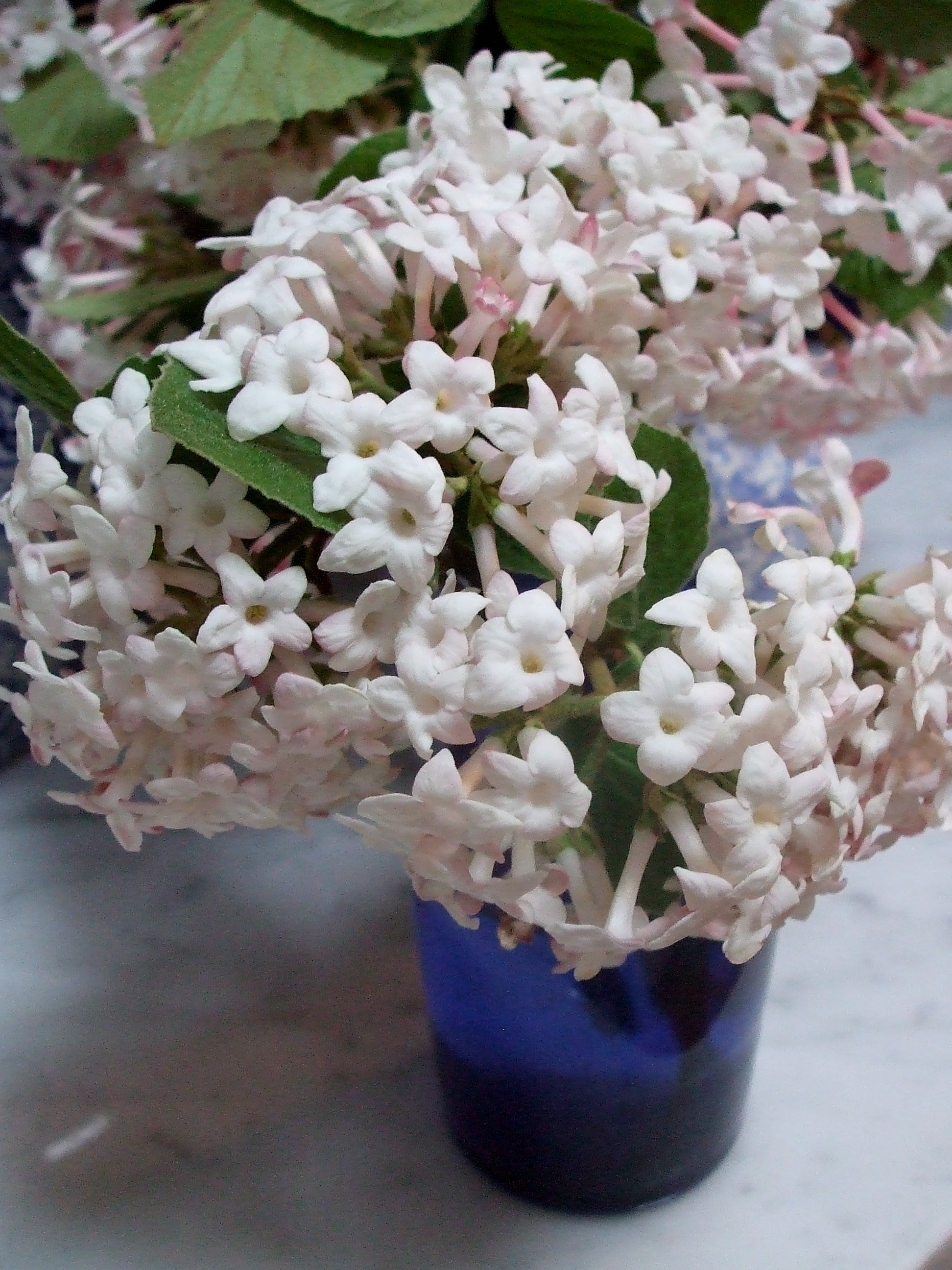
one last bit of homecoming joy: my mama, closest thing i know to a saint plenty of days, she came by to stock the fridge and leave two fat bouquets of viburnums on the countertop, right beside the kitchen sink, so when we walked in from the road trip, first thing i inhaled was the viburnum waltz, same as the one that made me swoon back on the west baden’s wrap-around porch. oh, i wish there was a smell button here, so i could waft it right by your nose. you’ll just have to close your eyes now, and pretend. try this: imagine what heaven would smell like, if it bloomed on a bush.