pull up a chair

where wisdom gathers, poetry unfolds and divine light is sparked…

Tag: Maria Popova

spill-over gratitude
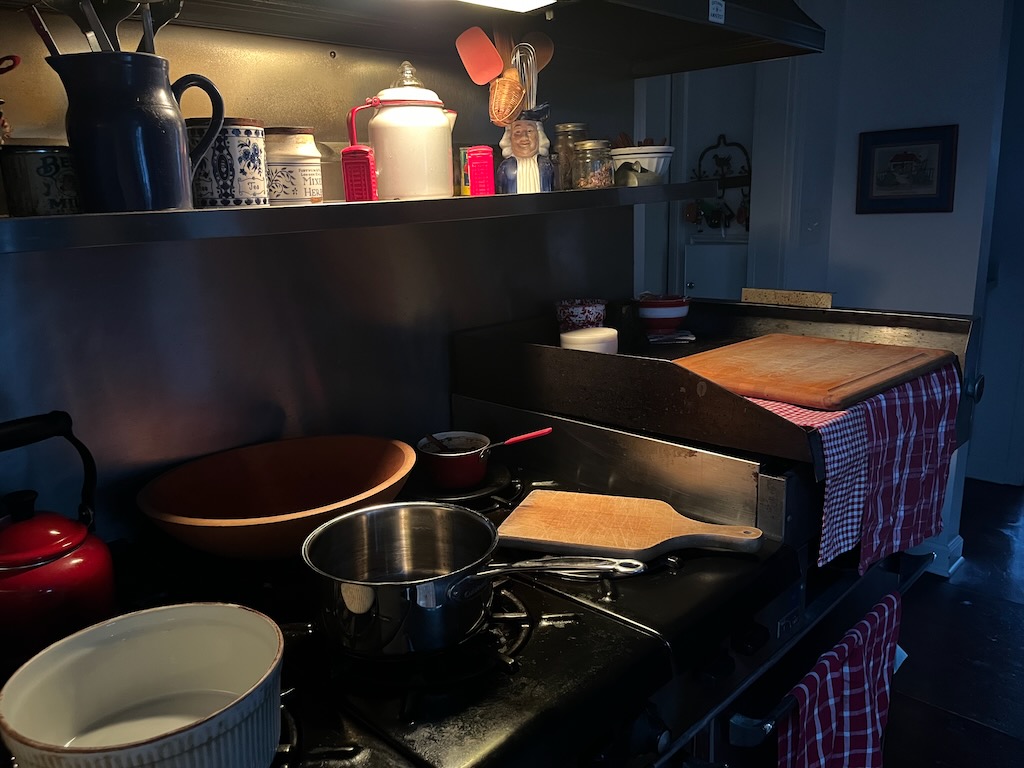
morning-after kitchen: when the cookstove becomes the drying rack

in this old house, the day after the feasting is the day for leftovers and long walks in the woods. we steer clear of the malls, the black-friday deals, and the great american drive to consume. among the leftovers spilling this morn are the ones of my heart which never ever has enough room for all there is for which to whisper “thank you”….

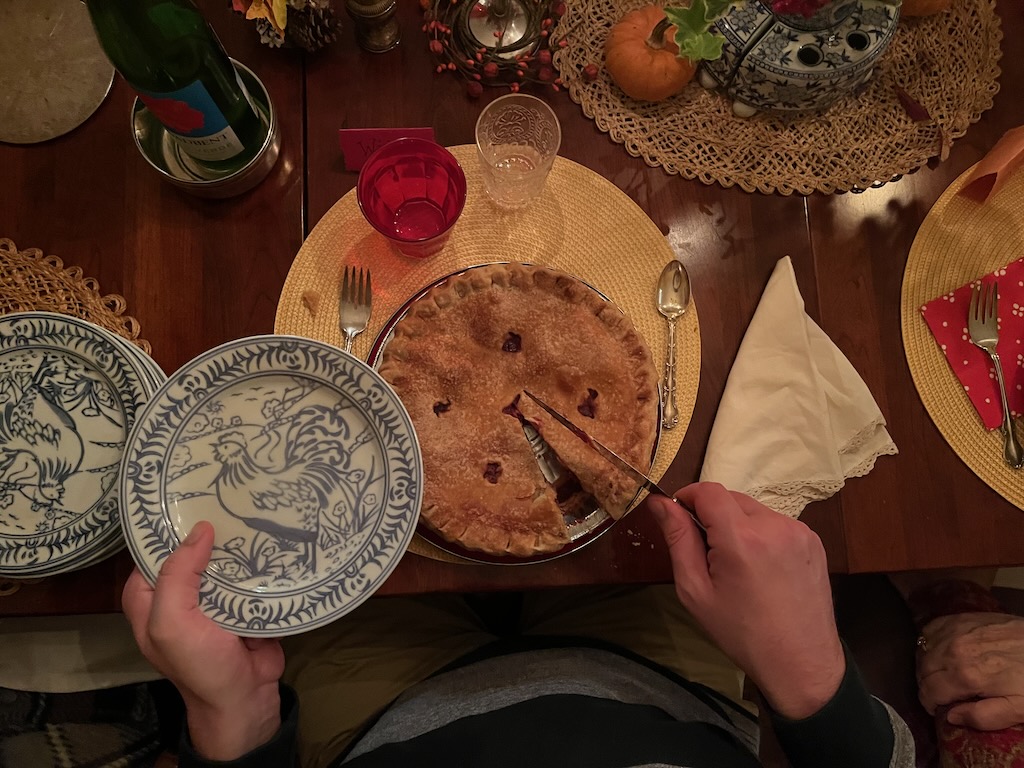
And so I begin with that glorious morning-after inhale and exhale of a put-back-to-order kitchen, a very full fridge, and the echoes of the night before still pinging off the walls, making me giggle as I count out my coffee scoops: the 95-year-old mama who still sits by my side, still notices the one or two things I might have forgotten, and nibbles “quality control” of every dish at every stage on its way to the groaning board; the brother and his beloved who drove in from Detroit, and the one who flew from LA; the new friend who drove down from the Twin Cities and brought along his Rhode Island clam fritters; the beloved friend who mashed every last potato and dolloped in butter, heavy cream, cream cheese, half and half (and sent us all to the cardiologist morning after)…and of course, of course, the miracle of both our boys, the line cook and the law professor, here for the holy hour when we bow heads, hold hands, and pour forth our litanies of thanks; and at the far end of the table, my most beloved, whose presence across from me is always, always the sweet spot of any day… 

Moving along, and thinking back across the last stretch of days, the kid mechanic at our neighborhood garage who got rid of the “check-engine” light with a know-how that had me back on the road less than ten minutes later. Phew.

The oncologist who talks to me with her knees pressing against mine, intent that we look into each others’ eyes. And sometimes deeper, I swear.

The orthodontist who put down her pen amid banal history taking and announced: “Let’s just go for coffee!”

The law professor colleague of my very own kid who saw how cold I was in the first quarter of my first football game in 51 years, who slithered from her seat for what I presumed was a dash to the powder rooms, only to have her return with a brand-new-from-the-merch-store, very-warm, blue-and-gold scarf to wrap round my neck and up to my ears.

My sweet line cook of a kid who called to insist he was making two of the sides, plus an appetizer,  for Thanksgiving “because you already have a million other things to do, and you shouldn’t have to do everything, and everyone should have skin in the game.” Where did he come from this kid who is always thinking of how it is to be the other someone?

The nice people at the grocery store who made my stuffing so I didn’t have to.

Ditto the nice people who made the gravy.

Ditto the very nice people who smoked the turkey!

The sister-in-law who always always rolls up her sleeves and scrubs every last plate, knife, and serving platter.

The editor who finally said I could send along the latest drafts of a book in the works, a book exploring the undulations and awakenings of Scan Time, that netherworld for those whose days are measured scan to scan to scan.

The countless, countless tenderhearted souls who have paved this bumpy road of a year with more kindness than any girl would dare fall to her knees and ask for…..from hand-stitched quilts, to crocheted afghans, to tea loaves, to the electric blanket that does not fail.

The blessed, blessed souls who dared to share their immense and sometimes unbearable grief; especially the two whose course was so deeply fraught and who dared to unfurl the whole of their fears as they marched face-forward to inevitable ends, and in those unmaskings gave me a glimpse of the ineffable courage and mortal core that will carry us all across our last distance and beyond the sacred veil.

The curious thing that what could have been any old Thursday is now, in this moment, a draw that pulls people we love from across the hills and vales, and rivers and lakes, to sit round one single table, to partake of platters of bird and bread and roots pulled from the ground, for the simple sacrament of saying thank you, And I love you enough to put up with airports and very-packed roads. 

For the wisdom guides in this life, the likes of whom include the incomparable Maria Popova, who is adamantly not a religionist but is deeply sacred, and who astounds me time after time with her epiphanies—often all the more forceful because we come from different angles but land at the same sublime spot. She strikes one of my polestar beliefs when she writes this passage, concluding with the line: “It may be that we are only here to learn how to love.”

Because the capacity for love may be the crowning achievement of consciousness and consciousness the crowning achievement of the universe, because the mystery of the universe will always exceed the reach of the consciousness forged by that mystery, love in the largest sense is a matter of active surrender (to borrow Jeanette Winterson’s perfect term for the paradox of art) to the mystery.

It may be that we are only here to learn how to love.

With all my heart, I believe that. And devote my days to the doing of it, an urgency all the more sacred now that my life is set by the metronome of Scan Time….


a forever favorite poem…..

Small Kindnesses

I’ve been thinking about the way, when you walk
down a crowded aisle, people pull in their legs
to let you by. Or how strangers still say “bless you”
when someone sneezes, a leftover
from the Bubonic plague. “Don’t die,” we are saying.
And sometimes, when you spill lemons
from your grocery bag, someone else will help you
pick them up. Mostly, we don’t want to harm each other.
We want to be handed our cup of coffee hot,
and to say thank you to the person handing it. To smile
at them and for them to smile back. For the waitress
to call us honey when she sets down the bowl of clam chowder,
and for the driver in the red pick-up truck to let us pass.
We have so little of each other, now. So far
from tribe and fire. Only these brief moments of exchange.
What if they are the true dwelling of the holy, these
fleeting temples we make together when we say, “Here,
have my seat,” “Go ahead—you first,” “I like your hat.”
+ Danusha Laméris


a bit of theology, in advent of Advent, the season of anticipation, awaiting the soon to come Silent Night…..

this is from my friends at the SALT Project who always stir thoughts because they poke around and enter through uncommon angles. i found myself stirred by the idea of Three Advents, one of which comes without folderol or clanging of cymbals, which is in keeping with the quietist that is my soul’s natural setting….

Advent means “arrival,” and Bernard of Clairvaux, the twelfth-century abbot and theologian, wrote eloquently of “three Advents”: first of all, the Incarnation, the Advent at Christmas; and last of all, the Parousia, the Advent at the end of the age (Matthew’s subject in this week’s passage). And the second or “middle” Advent, the one in between these other two, is the everyday arrival of Jesus: the host at the table, the still small voice, the hungry mother, the weary migrant. In other words, Jesus comes to us again and again, calling us, inviting us to help repair the world, little by little, a thousand swords remade into a thousand ploughshares. The new era of God’s shalom is dawning even now — though its glimmers aren’t always obvious at first. On the contrary, they often shine in unexpected places and at unexpected hours, like a thief in the night.


and in the spirit of Thanksgiving’s groaning board, one last dollop, a line that echoes Maria Popova’s wisdom on love; this, from the poet Philip Larkin who ends his famous poem, An Arundel Tomb, with this indelible truth and unforgettable line: “what will survive of us is love.”

the obvious question: what lines will you add to the litany of deep thanks?
as one year sighs its last, and another stirs anew, wish upon a star and then some…

this blessed string of days we’ve called “a year,” is drawing now its last deep breaths. it’s almost time to begin again, or so we imagine in the geometry of the mind, a flatter-planed sphere that sees the year going round and round like vinyl spinning on a phonograph. ascension is not in the equation.

in the geometry of the soul, though, each new turn––we hope, we pray––is not mere spin, but spiral, ascension its sure distinction. it’s the ever-incremental accumulation of loft we’re after. loft attained, most often, the hard way. we stumble, skin our knees, hold our nose and hold our breath while the doctor jabs the needle. from year to year, there is, we hope, at least the humblest modicum of lessons learned. year by year, we aim for wiser.

and so in this year now waning to its close, its hardest lessons came in scans and calls not returned, in snubs and deaths that came too, too soon. but it brought too the sorts of hallelujahs that remind us that good patience, in time, brings resolution, brings peace, brings love come home. the long lost friend we found again. the one hard heart that finally softened, seemed to learn a whole new lexicon, the language of delight at last unfiltered.

i am letting all the lessons settle in, knowing they’re the elements of accumulating wisdom. one year to the next, wiser, gentler, quieter, deeper.

or so we pray.

and in this quiet space––this most delicious time of yuletide, the time beyond the noise, the shopping, the dishes scrubbed and put away––i am inviting the past year to wash over me, to sift through the sediment, to save the gems, rinse away the detritus.

i’m adopting my deep-breathing posture, the one that has me curled under blankets in my red-checked armchair, the fire crackling, the tree twinkling, my boys all ringed around me.

and i’m leaving here at the table two shimmering gems: one, something of a wish upon a star and the discovery that the star is us; and the other a truth of which i cannot be reminded too many times….

here’s the first…

azita ardakani, an iranian-born social activist and communications guru, wrote this “once upon a time” for maria popova’s the marginalian. it’s part poem, part lullaby, and part creation myth with a dash of astronomical science. it reads a bit like a children’s book, and, like all the best and deepest pages penned to a child, it ends in revelation: the true wonder that the star upon which we wish is, in fact, a little bit of us. we are our own wish come true. or, we can be, especially if we aim for spiral and not spin…

Once upon a time,
In a place far far away,
The darkness drifted.
The darkness knew no time.
Reaching for infinity, only knowing beyond.
One day in the web of inky forever, it asked itself, can I see you?
It waited, and waited, and then, answered, a star.
And then another, and another, and, another.
Another was where it began,
and as the star beings asked to be born to meet the darkness from which they came, one particular planet created water so it too could reflect the stars back to themselves.
The stars seeing their reflection were filled with joy and delight.
Curiosity was born in their light millions of years away.
One by one they made their way down, to touch the ocean, to see themselves.
The soil darkness watched with awe as the stars arrived,
A heart’s desire asked: Can I see you closer?
The water stars stretched onto the soil, and mixed into the clay, and became,
everything.
Yes you too, coyote who hears this, wise owl, mouse and rabbit, you too sleeping fawn, you too tree and root and seed, you too nested flight, and you too, sitting two legged.
Mixed from clay and star, flesh and life, a hollow canal opened so breath too could reach back to the darkness.
Missing the beginning, it exhaled a bridge, home.
The star water became everything we know, and you? The story of us?
Well, to experience the closest thing to the very beginning of star meeting water, we learned to create a small ocean inside of us, where it could all be felt, all over again.
Once upon a time, in a place far far away, the darkness drifted, and you drifted inside it.
You were the wish you once wished for.


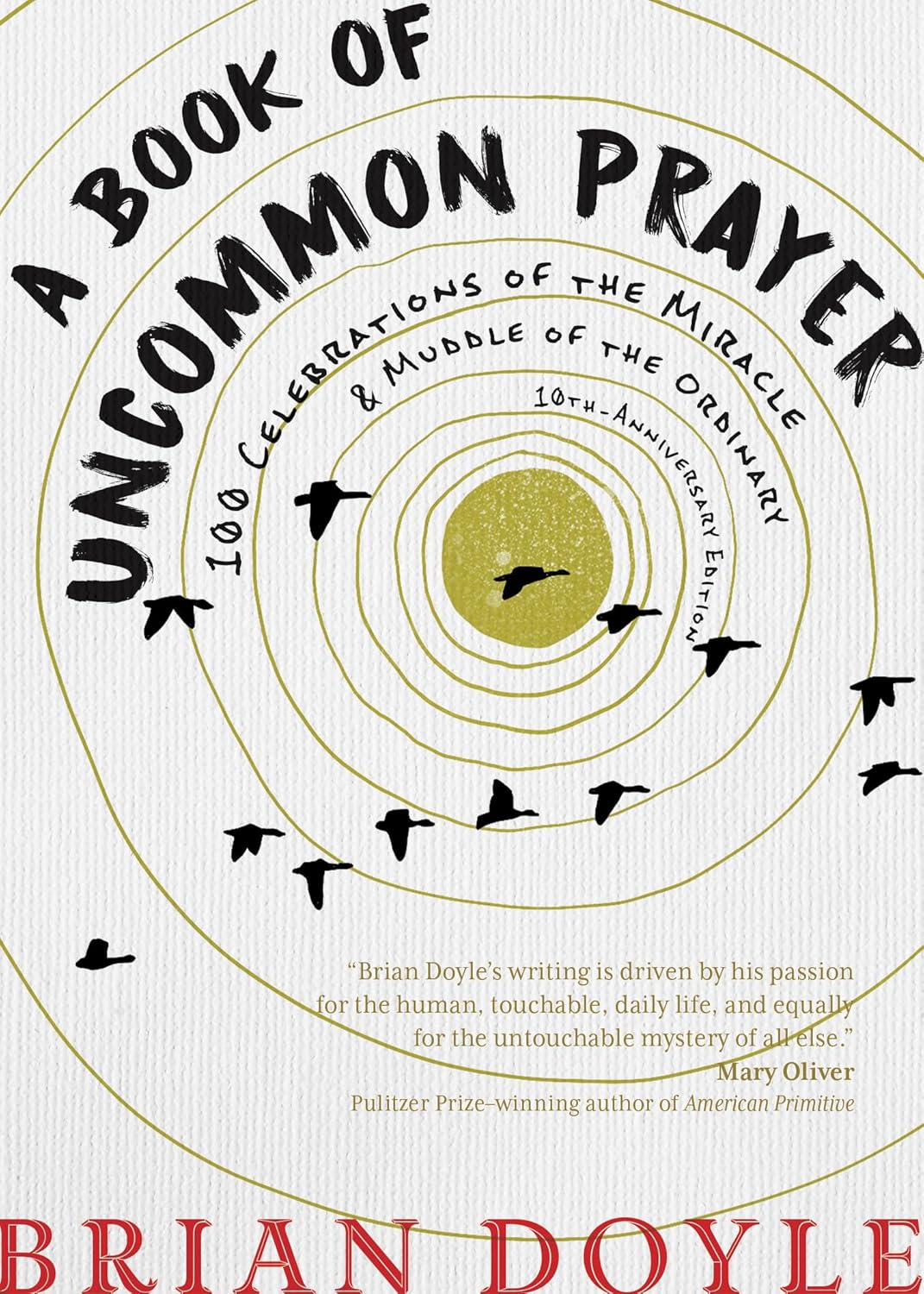
i count the late, great (astonishing) brian doyle among the favorite soul seers i have ever read. he finds words that burrow deep into the places in my soul that might never before have been struck or stirred. in his too-short time on earth, he saw wonder, plumbed wisdom in the unlikeliest of places. from prayers for cashiers and checkout counter folks, to prayers for robert louis stevenson on his birthday, and prayers for the greatest invention ever, the wicked hot shower, all found in his marvelous, marvelous, A Book of Uncommon Prayer: 100 Celebrations of the Miracle & Muddle of the Ordinary. these are the first lines of one with the magnificently brilliant title, “Furious Prayer for the Church I Love and Have Always Loved but Which Drives Me Insane with Its Fussy Fidgety Prim Tin-Eared Thirst for Control and Rules and Power and Money Rather Than the One Simple Thing the Founder Insisted On.” and it’s a fine fine note on which to both end and begin a year….

Granted, it’s a tough assignment, the original assignment. I get that. Love — Lord help us, could we not have been assigned something easier, like astrophysics or quantum mechanics? But no — love those you cannot love. Love those who are poor and broken and fouled and dirty and sick with sores. Love those who wish to strike you on both cheeks. Love the blowhard, the pompous ass, the arrogant liar. Find the Christ in each heart, even those. Preach the Gospel and only if necessary talk about it. Be the Word. It is easy to advise and pronounce and counsel and suggest and lecture; it is not so easy to do what must be done without sometimes shrieking. Bring love like a bright weapon against the dark… And so: amen.

bless us all. and may your new year bring you loft and leaven.

any wisdoms you acquired this year, with a story to share?

pay attention to this one most blessed day. . .

i am sitting here in a shaft of golden light spilling across the worn planks of this old maple table. i am looking out at a world ablaze in iterations of gold. as if the world out my window is a benjamin-moore paint strip, all in the key of saffron. 

i sighed a deep sigh when i tiptoed down the stairs this morning, and filled my lungs with the glorious knowing that this day held no appointments. no doctors. no dentists. no needs to stand or sit in front of a crowd and talk about the words i’d poured onto a page. 

this day is a big blank slate. a slate to fill with the simple wonders of being alive. and i intend not to waste it, not a drop of it. and urgently so.

it’s the unintended gift of holding on for dear life to the life that you love with every cell of your being. 

it’s a day i might otherwise not have noticed quite so keenly. but i see more vividly now. the blessing of holding on dearly to life is that you see each new dawn for the miracle that it is. 

it might have been just another weekday. but suddenly, perceptibly, it is the answer to my deepest prayer, a day to simply be alive and breathing it in. every pore of it. the earthy rummesence of autumn leaves crisping and crinkling and falling in heaps to the ground. the last gasp of the garden, exploding in singular vibrancies that beg to be remembered all through the winter. the air, a mix of chill with undertones of heat as if the earth’s autumnal respirations draw forth the last breaths from summer’s stockpiled embers. 

to knowingly not waste a day is to live at fullest attention. while we can. while we’re upright and ambulant. 

sometimes we realize we shan’t take it for granted. 

sometimes we need a reminder. 

i am reminded. 

i am living inside a body that reminds me to savor it, to inhale it. to all but rub it over my skin, to  let it soak in through each wide-open pore. 

we all have days when our hours are clogged with the usual distractions. we forget the marvel of a friday reliably following a thursday. we look to the calendar as if it’s the sovereign of how we spend our time. we are chained and unchained. we’re obliged to to-do’s, and we forget that all the in-betweens might just be the hours we’re most deeply alive. we might, at any moment, put down the chores, surrender the assignments. we might seize the day in whatever outline or equation rises from the blur. 

we might call a friend whose voice we’ve not heard in too long. we might find a log in the woods, plop ourselves down, and keep watch––close watch. we might fill a bowl with the indulgences of autumn, the leaves and the seeds and the roots, all meant for seasonal sustenance. 

we might light a candle. sit in a shaft of sunlight, watching the dust motes ride the air. we might roll up our sleeves, or get down on our knees, and plant a few bulbs for the joy of it––for the allure and the promise and perpetual hope of the springtime to come.

more and more, one of the first prophets i turn to for wisdom is the incomparable maria popova, she of marginalian wonders. in a cataloging of eighteen wisdoms she’s extracted from her eighteen years of gathering wisdoms (she must have started her brain pickings––now re-named the marginalian––a mere two months before the first chair was pulled up, for we too are about to mark 18 years of chairing), she included this bit of wonder and wisdom that says it as beautifully as it might be said:

Choose joy. Choose it like a child chooses the shoe to put on the right foot, the crayon to paint a sky. Choose it at first consciously, effortfully, pressing against the weight of a world heavy with reasons for sorrow, restless with need for action. Feel the sorrow, take the action, but keep pressing the weight of joy against it all, until it becomes mindless, automated, like gravity pulling the stream down its course; until it becomes an inner law of nature. If Viktor Frankl can exclaim “yes to life, in spite of everything!” — and what an everything he lived through — then so can any one of us amid the rubble of our plans, so trifling by comparison. Joy is not a function of a life free of friction and frustration, but a function of focus — an inner elevation by the fulcrum of choice. So often, it is a matter of attending to what Hermann Hesse called, as the world was about to come unworlded by its first global war, “the little joys”; so often, those are the slender threads of which we weave the lifeline that saves us.

and she includes these lines from poet and former zen monk jane hirshfield’s “the weighing”:

So few grains of happiness
measured against all the dark
and still the scales balance.

and if all that isn’t enough joy stoking for the day, here’s one other wonder and wonder-soul i learned of this week at a book talk where to my delight and pure joy i was pointed toward good souls i fully intend to get to know more deeply and intimately. (i never cease to be amazed at the goodness lurking in utterly unexpected nooks and crannies of this world.)

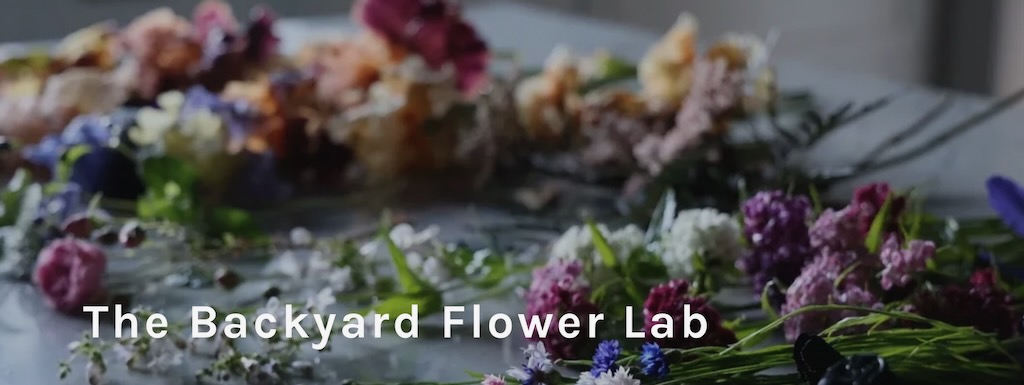
here is a woman—one with a PhD in human anatomy and cell biology, no less—who happens to live in a house with a four-acre flower garden who coaxes beauty from the earth for the sole purpose of giving it all away, filling the flower fridges at hospices and homeless shelters, and the larders at food pantries near and far. she calls it the backyard flower lab. and it sounds like a holy slice of sustenance to me. i intend to point my old wagon in the direction of her flower farm before the sun sets on this day, and i will see where the adventure takes me. her name is april potterfield (which sounds to be a perfect plucked-from-the-storybook name for someone who grows beauty for joy), and you can find her on instagram at @thebackyardflowerlab.

what prompts you to find joy and seize the slender threads of which we weave our lifelines? and what are some of your favorite ways of doing so?

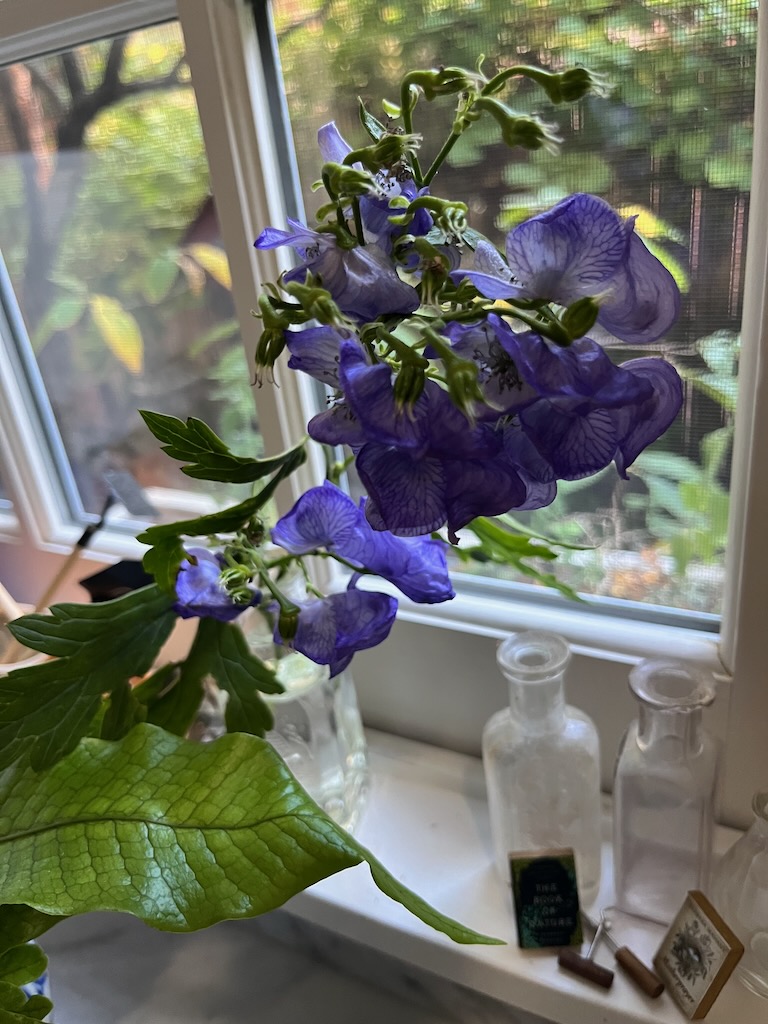
 the cobalt beauty perched on the windowsill above is an autumn vibrancy from my garden, the closing note of a summer’s-long love song. i call it monkshood, but it has other names: aconite, wolfsbane, leopard’s bane, devil’s helmet, or blue rocket. the name aconitum comes from the greek word ἀκόνιτον, which may derive from the greek akon for dart or javelin, the tips of which were poisoned with the substance, or from akonae, because of the rocky ground on which the plant was thought to grow.

deep thanks to maria popova who week after week for years now has filled me with wonder, with curiosities, and most of all with the breathtaking beauty of her intellect and imagination…

a literary form for the slipperiest of minds

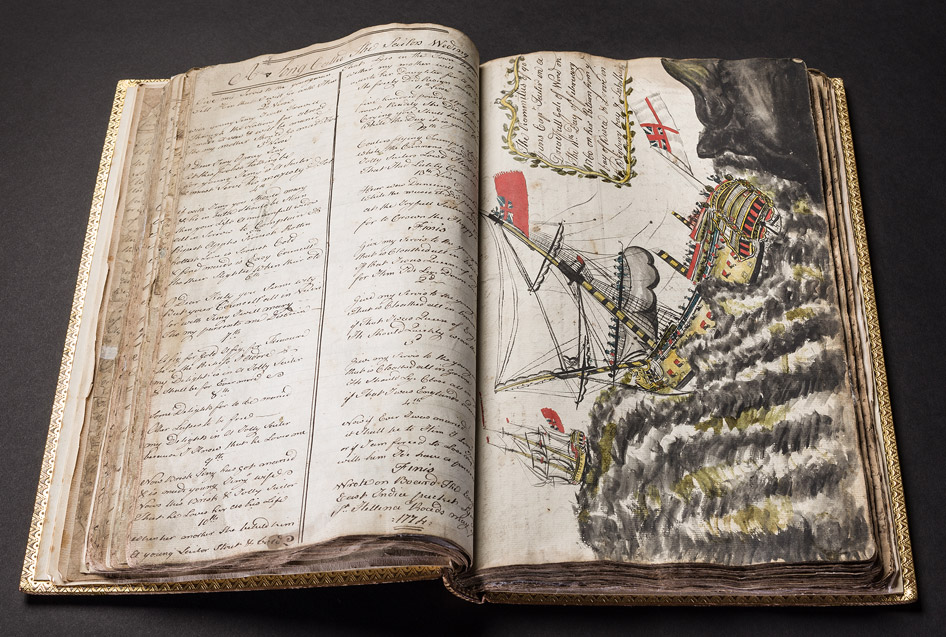
a page from british sailor henry tiffin’s commonplace book, 1760

more and more, the literary form into which i ease is one that traces roots to the ancients. to pliny, the great naturalist, whose mind must have been a beehive of sorts back in first-century rome. it’s an enthusiasm for accumulation that courses its path on through the renaissance when humanists, especially, were anxious to lock down their thoughts, keenly aware of the tragic loss of ancient learning, as libraries were so often, too often, the sites of military revenge. it’s a form that wends its way on and on through the centuries, straight through the twentieth, when mark twain, thomas hardy, ralph waldo emerson, and henry david thoreau, to name but a few, all partook of the habit. and here we are now, with plenty of us keen practitioners of the urge to gather up bits of literary esoterica and assorted ephemera before they skitter away. i think of myself, more often than you might imagine, as a rag picker of ideas in any which size, from the itty-bitty and poetic to the mindbogglingly big.

humans, it seems, like to scribble things down.

may our scribbling never cease.

the fancy name for this scribbling is commonplacing, the literary form the italians once named zibaldone, “a salad of many herbs,” in culinary terms, or a “hodgepodge” more broadly. we’re contemplating here the hodgepodge.

it’s the mosquito netting of the mind, of wonders and thoughts before they escape. or, as the 13th-century dominican monk, vincent of beauvais, once explained, it was “the multitude of books, the shortness of time, and the slipperiness of memory” that compels one to scribble.

count me in on the slippery mind.

vincent’s not-so-slippery solution: a ginormous tome, totaling 4.5 million words (someone counted!), an exhaustive compendium of all medieval knowledge, which he titled speculum maius (literally “great mirror”), speculum a word he chose because it contained “whatever is worthy of contemplation (speculatio), that is, admiration or imitation.” and thus he set out, over the course of his monastic lifetime to gather all the “flowers” (his word), or best bits of all the books he was able to read, in a selfless quest to save others the strains (time, money, trips to the library) of doing so themselves.

over the last many months, as the population of this old house has dwindled to two, and the stories to tell are fewer and fewer, my efforts here seem to have morphed into a looser, yet more concentrated consideration of the bountiful ideas and thunderbolts i bump into across the arc of a week.

there is something so natural about the human instinct to share what we’re thinking. of course there are those who might protest, who might consider me rude for shoving a book or a page or a picture in your face. but, when you think of it, isn’t that the instinct that drives so much of social media? (i often think we’ve gone overboard there, but that might be because too often it’s the magnification of any or every passing brain burp and not necessarily ones that might leave us enlightened. and too often amount to plain old overgazing at navels, or hair-raising nastiness and gut-wrenching vulgarity. but i digress…)

i’ve been keeping what amounts to my salad of many herbs for years and years now, and that urge seems to have spilled over to here, where week after week sometimes i seem to be assaulting you with the few morsels i’ve found most delicious in recent days. it’s a way, i suppose, of collectively swelling our brains. and our souls, most certainly.

in the spirit in which i bring my rag picking here, i like to think of us sitting side-by-side, cozy against the pillowy confines of an armchair broad enough for two. and in the gentlest, yet conspiratorial whisper, i offer you a page or a passage, my eyes widened and sparkling with glee, as if to say, wait’ll you see this one. what wonderments or deep thoughts spring to your mind?

any one of these next morsels is worthy of long and deep consideration. here are the ones that struck me this week:

these first two come from maria popova, whom i’ve referred to in the past as the high priestess of cultural commentary, and one of the most voracious gatherers of ideas i’ve encountered in recent years. her online literary journal, now known as The Marginalian, has been described as a compendium of hundreds of thousands of entries “that search for meaning, cross-linking ideas and connecting metaphysical dots.” here’s where she thunderbolted me this week:

“joy is a stubborn courage we must not surrender.”

“. . . love — whether we call it friendship or family or romance — is the work of mirroring and magnifying each other’s light. Gentle work. Steadfast work. Life-saving work in those moments when life and shame and sorrow occlude our own light from our view, but there is still a clear-eyed loving person to beam it back. In our best moments, we are that person for another.”


another place i often turn for soulful sustenance is Emergence magazine, a wellspring that explores the timeless connections between ecology, culture and spirituality. in a recent talk, titled “memory, praise, and spirit,” the filmmaker, composer, sufi teacher, and driving force behind Emergence, emmanuel vaughan-lee, opened with these words:

“The mystics say that we are like a seed; that we hold the blueprint for our highest potential within us, and that much of spiritual practice, regardless of what tradition, is unlocking that potential.”


and i close with this one from the great james baldwin, a passage from his 1964 collection of intimate but somewhat little-known essays, titled nothing personal. this passage is from the fourth of the four essays collected there:

“One discovers the light in darkness, that is what darkness is for; but everything in our lives depends on how we bear the light. It is necessary, while in darkness, to know that there is a light somewhere, to know that in oneself, waiting to be found, there is a light.”

i could write an essay on any one of the above, but instead i invite you to chew on each or any one. each one, a morsel worthy of your time, your mind, your soul.

which one spurs you and stirs you the most, and what deep thoughts spring to your mind?

i’ve written before of commonplacing. here at the chair, and in my latest book, The Book of Nature, on pages 87 and 88. it’s a habit i can’t get enough of, an urge i can’t quench.

pages from the commonplace book of charles dodgson, aka lewis carroll

the quickening of september

if i were truly of the prairie, rooted into its undulating loam, rather than a citizen merely plopped here by geography, because it’s the place i call home, i’d know the turning of the celestial wheel and its interplay with earth as robustly as the marrow that courses my bones. alas, my knowing is fainter than that. and yet, still, each september i feel it. the angle of light shifts, and the lens does too. it’s amber now, or so i seem to imagine. the days are drenched, more and more, in molasses hue. and the air holds a chill one minute, a warming the next.

the season itself is playing meteorological tug-of-war: do we want to let go? do we want to surrender? or shall we hang on with the last of our oomph?

ah, but the signs, they abound. and they quicken my spirit, each and every one. the school bus sightings, for one. they lumber the streets now, that slow serpentine crawl, disgorging couplets of children at most any corner. i’m detached from the school calendar now. it’s merely there at the edge of the frame. but, nonetheless, i notice.

my cooking’s changed too. i simmered this week. slow stirring a vegetable stew. i spent a good chunk of hours stationed by the stove, overseeing allium play sidekick to eggplant, to pepper. offering up its essence to add just a pique to the whole.

but mostly i feel the turning of earth in the garden, the plot that keeps me most rooted in the wonder, the majesty, the undying wisdom that is the sacred whole of creation. i felt it in the proliferation of spider webs, those silken geometries of arachnid architectures. the uncanny way the eight-legged thing knows to construct its trapping, and in the process makes beauty of pace-pausing proportion. i felt it in the crisping of blooms, and the heads of hydrangea and black-eyed susan starting to droop, the weight of their long season now taking its toll. a last gasp before death.

i hear it just now in the distant cloudcall of the goose, threading the sky, signaling autumn. it’s a cry that can shroud me in goosebumps. a call to prayer if ever there was.

september is when i feel myself beginning to curl like the nautilus, inward spiral, expanding the chambers within. making room for the quiet, the sacred, to come.

thirty some years into a spiritually-braided marriage, i know september to be the season of awe. quite literally. liturgically speaking. we are in the hebrew calendar’s month of elul, counting the days till the high holiness of the jewish new year. according to jewish tradition, it is the month for contemplating the question, “how should i live the existence that i am.”

just the other day, i –– along with a rabbi i love and a gathering of women –– walked to the water’s edge, recited three blessings, and dropped into the water, into the great lake michigan. it was a cleansing, a beginning anew, a rite of purification. it was a mikveh, an ancient ancient tradition that is symbolically a turning of the page.

the question at the core of elul, “how should i live the existence that i am,” is one that especially quickened for me in a paragraph i read this week that had little to do with religion, and everything to do with the holiness of how we live our lives. it was the beginning of a review of a children’s picture book, and it was written by one of the high priestesses of everyday cultural commentary, maria popova.

she was writing about kamau & zuzu find a way, an “uncommonly soulful” story of a little boy and his grandmother who, somehow, find themselves living on the moon.

popova begins her essay this way:

The astonishing thing is that not one human being who ever lived has chosen the body, brain, place, or time to be born into, and yet in the narrow band of freedom between these chance parameters, we must find a way to live lives of substance and sweetness. Chance deals the hand and we must play it, and in how we choose to play it lies the measure of who we are.

“we must find a way to live lives of substance and sweetness.

“chance deals the hand and we must play it, and in how we choose to play it lies the measure of who we are.”

those are the questions i shall carry into my fading garden, and under the dome of a sky now rife with the cries and the calls of the flocks flying as one, in the migrational river that carries them faraway home.

in the quiet of your own soul, that’s the question for today: how do you choose to play the hand that chance has dealt you? what will be your sweetness and your substance?

on kindness, kerouac, and tolstoy

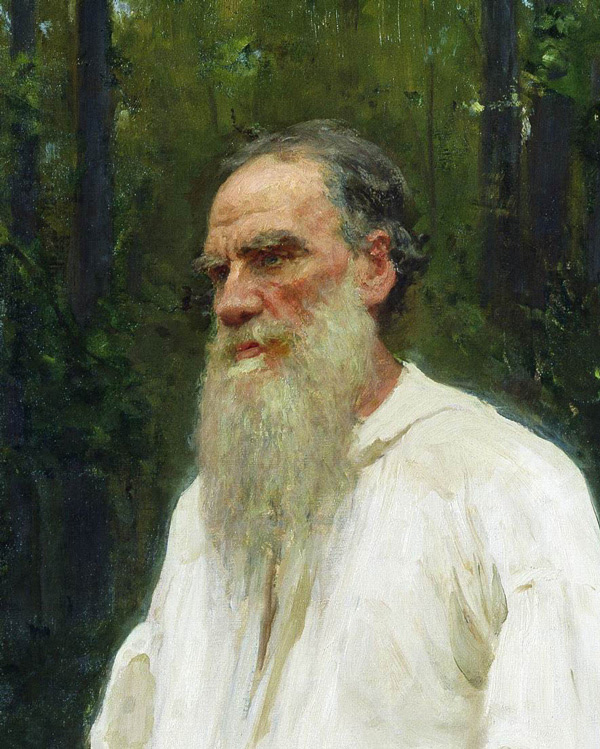
leo tolstoy

i will be backing into this if i begin by quoting a russian intellectual and novelist. but so i begin.

Nothing can make our life, or the lives of other people, more beautiful than perpetual kindness.

Leo Tolstoy

the subject, once again and always, is kindness.

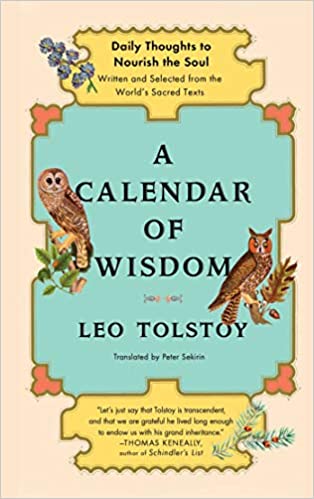
it was unknown to me, and perhaps little known more broadly, that at the turn of the 19th century leo tolstoy neared completion of what he considered an imperative life’s work. not anna karenina, not war and peace, not the death of ivan ilych. but rather something he considered more timeless, more lasting: “a wise thought for every day of the year, from the greatest philosophers of all times and all people,” as he described it.

or as cultural critic maria popova once put it, “to be human is to leap toward our highest moral potentialities, only to trip over the foibled actualities of our reflexive patterns. to be a good human is to keep leaping anyway.” tolstoy’s book, she wrote, was to be “a reliable springboard for these moral leaps.”

in the middle of his 55th year, in march of 1884, tolstoy had set out to read and reap from a circle of the greatest thinkers and spiritual leaders who had shed light on what was most crucial in living a good and righteous life. he dug deep across millennia and miles, reading epictetus, marcus aurelius, lao-tzu, buddha, pascal, the new testament — a reading list he deemed “necessary.”

it was to be his florilegium (a compilation of excerpts from other writings, “mashing up selected passages and connecting dots from existing texts to better illustrate a specific topic, doctrine, or idea,” writes popova. the word comes from the latin for “flower” and “gather;” a bouquet of curated wisdoms). tolstoy saw it as something of a roadmap, daily sign posts pointing the way toward “the Good Way of Life.” in a letter to his assistant, he explained his project thusly:

I know that it gives one great inner force, calmness, and happiness to communicate with such great thinkers as Socrates, Epictetus, Arnold, Parker. … They tell us about what is most important for humanity, about the meaning of life and about virtue. … I would like to create a book … in which I could tell a person about his life, and about the Good Way of Life.

he spent 17 years at it, and shortly after the birth of the 20th century, in 1902, he completed his manuscript, under the working title A Wise Thought for Every Day. two years later, it was published in russian, and nearly a century later, in 1997, it appeared in english translation, all 384 pages of it, under the title A Calendar of Wisdom: Daily Thoughts to Nourish the Soul, Written and Selected from the World’s Sacred Texts. for each day of the year, tolstoy plucked, or gathered, quotes by great thinkers, then added his own musings and connective tissue on the subject, with kindness as the sinew and spine of the book’s moral sensibility.

i bought the book yesterday, in the long hours after i had once again dropped my beloved husband at the curb of terminal 3 at o’hare airport, as he set off once again to race to his mother’s bedside, to honor her, to fill the hospice room with his prayer and his unending grace. in the serendipities of a long afternoon that turned into a longer night, maria popova, she of BrainPickings, the cultural compendium and literary candy counter, dropped in (to my email) with her musings on kindness, a heaven-sent subject in the hours of deep vigil i was keeping for my mother-in-law whose signature and lasting memory is exponential kindness.

i read this entry from tolstoy:

The kinder and the more thoughtful a person is, the more kindness he can find in other people.

Kindness enriches our life; with kindness mysterious things become clear, difficult things become easy, and dull things become cheerful.

i read this from jack kerouac:

Practice kindness all day to everybody and you will realize you’re already in heaven now.

and that’s when i decided i would not merely buy the book but practice it. every day. in honor of my beautiful, blessed mother-in-law who died in the wee hours of this morning, friday, july 2.

her memory will be a perpetual blessing, to me and to all who fall in the radiance of her kindness practiced each and every day.

ginny kamin made lives more beautiful by her practice of perpetual kindness.

“Nothing can make our life, or the lives of other people, more beautiful than perpetual kindness.” a life’s instruction, brought to you by leo tolstoy and one ginny kamin….imagine how you might live it today, one kindness at a time….