pull up a chair

where wisdom gathers, poetry unfolds and divine light is sparked…

Tag: love

remedy against despair

sometimes, it’s just not so complicated. 

how to survive in the modernday melee, i mean. 

how not to get sucked into the cesspool, or the tarpit of utter despair. 

there are flocks of us, bumbling around, looking down at our weathered, timeworn selves, our selves that are wrinkled or missing some parts, wondering what in tarnation little old me can do about this. all of this chaos, all of this cruelty, all of this jaw-dropping gilding and seizing of power, all of this thuggery, what in the heck can i do?

it’s pretty much the question that runs on auto-pilot through the spheres of my brain. 

what oh what oh what?

i turn to the poets, i turn to the pacifists. this week i found myself in the pages of history. more and more i am drawn to the plain old truths of our not-yet-extinguished civilization. 

as a species we’ve been cruel from the start, that’s a streak that runs in us. we’ve had so much darkness it makes me want to run for the hills. no wonder the desert elders of the third and fourth centuries did just that, ducked out in far-flung caves and barely ever came out. they just prayed and prayed, imagined God as their next-door neighbor and turned their humble selves into living, breathing prayer altars. 

but, just as emphatically, there’ve always been those who turned the other cheek, who refused to partake in whatever the scourge of the age. who did not give up on the vision of radiance, of equal justice for all. there have always been those who heeded the words of the jew from bethlehem: blessed are the poor in spirit, the meek, the merciful, those who hunger for righteousness, blessed are the peacemakers. jesus didn’t even make it to ten. he cut off the list at eight. later on, he threw in “love as you would be loved,” which is actually a teaching he would have learned in the temple, leviticus 19:18, “love your neighbor as yourself.” (i hate to break it to christians, but we’ve no corner on that commandment, it’s as old as time, and core of nearly all world religions.)

it’s the revolutionaries, the radicals, the refuseniks who would not succumb, they’re the ones who might hold the clues: how to be a force against daily injustice when all you’ve got is your will and your hope and your deadset compass pointed at kindness, at mercy, at justice for all. 

their point, the refuseniks, ever has been thus: we cannot decide that we’re not equipped. we cannot throw in the towel. the heroes of history usually don’t come with superman capes. it’s people like us, with a limp or a lisp, figuratively or literally, who might look in the mirror and decide, “i’m all i’ve got, so i’d best get to work.” 

which brings us back to the cruelty and chaos du jour.

this week, beating back the latest bout of teeming futility and powerlessness, against the backdrop of scenes i’d not imagined emerging from the american landscape—federalized gangs knocking heads against pavement, crushing ribcages under the weight of full-body clutch holds, beaning clergy in the head with pepper balls, and most recently dragging a preschool teacher from her classroom in front of her gaggle of toddlers—i found myself once again on the prowl for what in the world little old me might do to push back against any of this, to counter the cloak of rampant despair. 

and i found it—curiously, plainspokenly—in the introduction to a book of letters from prison, specifically the gdansk prison during poland’s communist takeover by the totalitarian regime that clamped down cruelly on every facet of daily life in the last decades of the 20th century. 

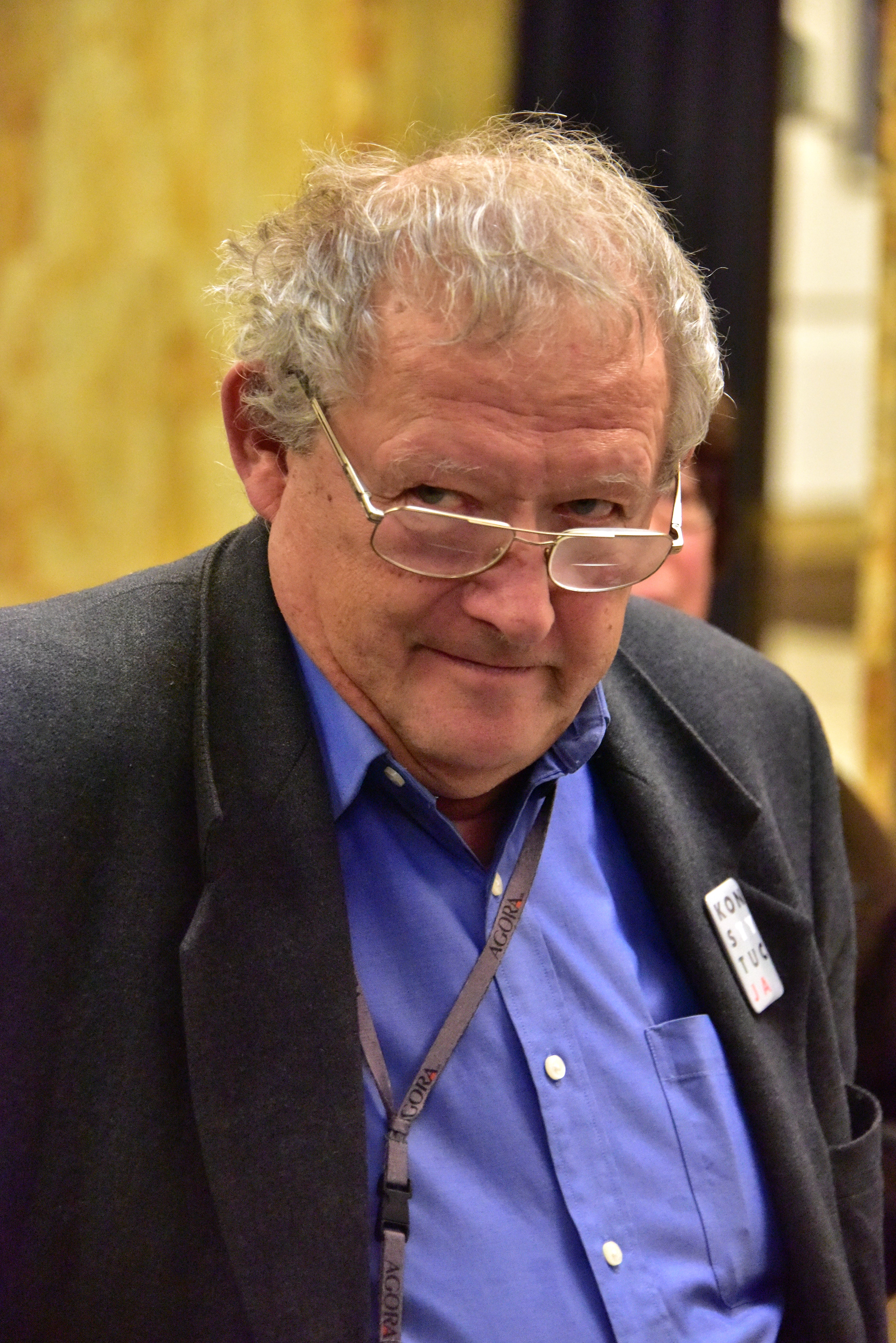
adam michnik

adam michnik, an irrepressible political activist, is the writer of the letters, a lifelong dissident first arrested at 18 for partaking in the writing and dissemination of “an open letter to the party,” critical of the communist regime. he would become one of the leaders of the solidarity movement that in 1989 ended communist rule in poland, and went on to become editor-in-chief of Gazeta Wyborcza, credited with elevating the newspaper to become “a sort of conscience of the New Poland.” he rightfully lays claim to a life spent provoking debate on democracy and human rights. 

during that lifetime, punctuated by intervals of activism followed by imprisonment, again and again, michnik often found himself in jail cells where he forged his activism with pen and paper, his letters and essays smuggled out of prison, and widely distributed on the far side of the prison walls. 

what i find especially notable about his essays, as i rail against blatant mis- and dis-information in our clickbait age, is that his essays were then and still now are considered models of balance and fairness. what drove him was a singular concern for “deepening his own and others’ understanding, and therefore he [could] not afford the luxury of distortion for partisan reasons.” (emphasis mine). oh, that we should emulate his restraint, seize his clear-eyed purpose. 

while ours certainly isn’t a national moment that rises to the level of “organized evil” of poland’s totalitarian regime, it seems fair to say we’re witnessing “authoritarian adjacent” dictates and dramas, particularly in the demonization of the helpless, and the thuggery thrust viciously upon them. 

and so, turning to even darker moments in history, we find our cues.  

in the introduction of michnik’s letters from prison and other essays, the new yorker’s longtime foreign policy analyst, jonathan schell, captured michnik’s revolutionary counter-revolutionary approach. 

he leads into it by first laying out the norm in mapping revolution, and illustrating how the poles turned it on its head, ultimately triumphantly: “the classic formula for revolution is first to seize power and then to use that power to do the good things you believe in. in the polish revolution, the order was reversed. it began to do the good things immediately, and only then turned its attention to the state. in a sort of political and moral version of the hedonist’s credo, ‘carpe diem,’ the opposition proceeded directly, and without postponement toward its goals. its simple but radical guiding principle . . .”

what comes next seems to me the wisest, most doable action we might take:

“Start doing the things you think should be done, and . . . start being what you think society should become. Do you believe in freedom of speech? Then speak freely. Do you love the truth? Then tell it. Do you believe in an open society? Then act in the open. Do you believe in a decent and humane society? Then behave decently and humanely.”

do not succumb to the ways of the demonizers, the clickbaiters, the shills for distortion, deceit, and demagoguery.

put simply: love as you would be loved.

or, in the words of james baldwin: “the place in which i’ll fit will not exist until i make it.”

so, go make it.

how would you describe the world in which you pray to live?

iterations of love

the God of every religion tells us to do it. commands us: love thy neighbor as thyself. 

i’ve felt it in my own life, know it to be a force that transcends time, space, and matter. i’ve felt it all but align planets whose orbits were out of whack. i’ve felt it pierce through to the core of me, prompt me to reach down and seize a source, a muscle, i didn’t know that i had. it’s made me more than i ever imagined i could be. lured me out of mighty dark years. 

love, thank heaven, is patient. love is keenly perceptive. love, often, won’t take No for an answer.

i’ve felt it shrink distance, make the sound coming through the telephone as close as if we were sidled, thigh to thigh touching, on the seat of a couch in the very same room. 

i’ve heard it in barely audible whispers, and in shouts across the corridors of an airport, a hospital, a college campus––a sound so ebullient my heart leaps to quicken its pace. 

i’ve spent my life learning how to do it. keeping close watch on the ones i encounter who do it the best. the most emphatically. 

i’ve learned it from the little bent man who perched on a hydrant, befriending the pigeons. flocks and flocks of pigeons, he lovingly tended. even in the face of taunts and jeers from the cars passing by.

i’ve learned it from my first best friend who knew without asking how deeply it hurt, how tender it felt to be seen in shadow and light. 

i’ve learned it from my long-ago landlady, the one who would knock at my door, come dinnertime, and hand me a hot steaming bowl of avgolemeno, the egg-and-lemon-rich chicken-rice soup that serves as Greek penicillin, and cured what ailed me no matter how awful the day.

i’ve learned it from a 12-year-old girl who lay in a hospital bed, her legs unable to move, paralyzed from the waist down by a tumor lodged in her spine. i’ll never forget the glimmer in her eye, as she looked up and laughed, as she handed me her hand-made papier-mâché green pumpkin head, the one she’d made flat on her back, and with which she crowned me her Irish Pumpkin Queen of a hospital nurse.

i’ve learned it, and felt it: in the canyon of grief, in the vice hold of fear, and in long seasons of haunting despair. it’s the ineffable force with the power to pull us up off the ground, inch us just a little bit forward, and shake off the worries that freeze us in our tracks. 

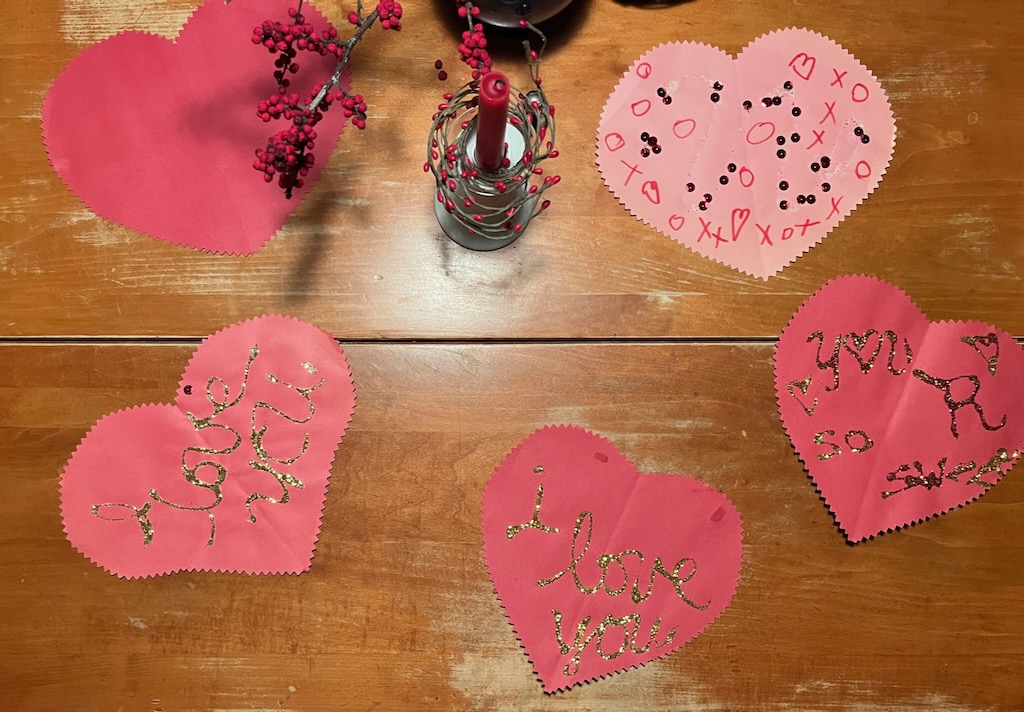
my hunch is that someone at hallmark international invented today, the day in which pink paper hearts are soared hither and yon. or maybe it was the three catholic saints, all named valentine or valentinus, and, as was so often the story, all of whom were martyred for breaking some reason or rule. in the case of third century rome, a priest named valentine defied the emporer who’d ruled that single men made better soldiers than those with a wife, and thus outlawed marriage. valiant valentine, seeing the injustice in the loveless decree, kept about the business of marrying young sweethearts in secret. for this, he lost his head. 

earlier still, pagans seized the midpoint, or ides, of the month––february 15––as Lupercalia, a fertility festival dedicated to Faunus, the roman god of agriculture, and to Romulus and Remus, the founders of rome. a priestly order of roman pagans, the Luperci, gathered at the secret cave where Rom and Rem were thought to have been raised by she-wolves, to sacrifice a goat, which they then stripped of its hide, and sliced into strips. then, according to historians, “they would dip [the strips] into the sacrificial blood and take to the streets, gently slapping both women and crop fields with the goat hide.”* 

maybe pink paper hearts are, after all, a step in the right romantic direction. 

truth be told, 34 years in, it’s recycled hearts adorning someone’s place at the breakfast table…

*postscript on those slap-happy romans: far from being fearful of the bloody slaps, young roman women were said to welcome the mark of the bloody hides, for it was thought to make them more fertile in the year to come. 


lifting the day out of its purely-romantic framing, here are three takes on iterations of love, reminding us of the evolution of love across the decades of marriage, and the love of this one sacred Earth we’ve been given to tend:


first up, the sage from kentucky, farmer-poet-secular priest wendell berry, from a much longer poem, but i was drawn to these three parts, meditations on a long and deepening love…

excerpts from The Country of Marriage
by Wendell Berry

III.
Sometimes our life reminds me
of a forest in which there is a graceful clearing
and in that opening a house,
an orchard and garden,
comfortable shades, and flowers
red and yellow in the sun, a pattern
made in the light for the light to return to.
The forest is mostly dark, its ways
to be made anew day after day, the dark
richer than the light and more blessed,
provided we stay brave
enough to keep on going in.

IV.
How many times have I come to you out of my head
with joy, if ever a man was,
for to approach you I have given up the light
and all directions. I come to you
lost, wholly trusting as a man who goes 
into the forest unarmed. It is as though I descend
slowly earthward out of the air. I rest in peace
in you, when I arrive at last.

V.
Our bond is no little economy based on the exchange
of my love and work for yours, so much for so much
of an expendable fund. We don’t know what its limits are–
that puts us in the dark. We are more together
than we know, how else could we keep on discovering
we are more together than we thought?
You are the known way leading always to the unknown,
and you are the known place to which the unknown is always
leading me back. More blessed in you than I know,
I possess nothing worthy to give you, nothing
not belittled by my saying that I possess it.
Even an hour of love is a moral predicament, a blessing
a man may be hard up to be worthy of. He can only
accept it, as a plant accepts from all the bounty of the light
enough to live, and then accepts the dark,
passing unencumbered back to the earth, as I
have fallen tine and again from the great strength
of my desire, helpless, into your arms.


and the belle of amherst turns our attention to this world that keeps loving us, despite the ways we batter it, and ignore it…

This world is just a little place, just the red in the sky,
before the sun rises, so let us keep fast hold of hands,
that when the birds begin, none of us be missing.
— Emily Dickinson, in a letter, 1860


and finally, the late great naturalist and essayist Barry Lopez, on how to be awake to this still blessed world, from the foreword to Earthly Love, a 2020 anthology from Orion magazine. He is describing walking a vast landscape––a spinifex plain, or grassy coastal dunes, in North-Central Australia––for the first time, but the wisdom is how to attend to a deepening love:

My goal that day was intimacy — the tactile, olfactory, visual, and sonic details of what, to most people in my culture, would appear to be a wasteland. This simple technique of awareness had long been my way to open a conversation with any unfamiliar landscape. Who are you? I would ask. How do I say your name? May I sit down? Should I go now? Over the years I’d found this way of approaching whatever was new to me consistently useful: establish mutual trust, become vulnerable to the place, then hope for some reciprocity and perhaps even intimacy. You might choose to handle an encounter with a stranger you wanted to get to know better in the same way. Each person, I think, finds their own way into an unknown world like this spinifex plain; we’re all by definition naive about the new, but unless you intend to end up alone in your life, it seems to me you must find some way in a new place — or with a new person — to break free of the notion that you can be certain of what or whom you’ve actually encountered. You must, at the very least, establish a truce with realities not your own, whether you’re speaking about the innate truth and aura of a landscape or a person.

. . . I wanted to open myself up as fully as I could to the possibility of loving this place, in some way; but to approach that goal, I had first to come to know it. As is sometimes the case with other types of aquaintanceships, to suddenly love without really knowing is to opt for romance, not commitment and obligation.

and, later in the same essay, his call to attention for a world suffering from what he quite plainly calls, “a failure to love,” a message of urgency on a day in which love, in its many many iterations, is held up to the light.

EVIDENCE OF THE failure to love is everywhere around us. To contemplate what it is to love today brings us up against reefs of darkness and walls of despair. If we are to manage the havoc — ocean acidification, corporate malfeasance and government corruption, endless war — we have to reimagine what it means to live lives that matter, or we will only continue to push on with the unwarranted hope that things will work out. We need to step into a deeper conversation about enchantment and agape, and to actively explore a greater capacity to love other humans. The old ideas — the crushing immorality of maintaining the nation-state, the life-destroying beliefs that to care for others is to be weak and that to be generous is to be foolish — can have no future with us.

It is more important now to be in love than to be in power.

who were some of your great teachers of love?

turn, turn, turn . . .

“Ecclesiastes was onto something,” i wrote, as i dove into a meditation on the notch-by-notch turning of the dial, the dance between heaven and earth that is the shifting of season, as one fugue surrenders to another and another, over and over and over again.

and here we are again, at another cusp. the autumnal equinox. tonight (or, rather, tomorrow morning in the wee wee hours) at 10 minutes to 2 here in the heartland, central time zone.  

in my musing on seasons, in the pages of that latest little book of mine, the book of nature, i prattled on a bit longer. . .

“Each season, in four quarter turns, brings forth its own headlines. There’s the yin and yang of spring, the season of exodus and resurrection, of equal parts heartbreak and magic. ‘The fizz and the roar of the land coming back to life again,’ is how Robert Macfarlane brilliantly captured the vernal animations. There’s summer with its invitation for indolence, for taking it slow, savoring, all but licking your plate of its succulence. And autumn, the season that changes its tense, is letting-go time, the beginning of burrowing in, when the shadow grows longer and sunlight goes amber, when half the globe is stripping to its essence, revealing its unadorned spines. Then there’s winter, the stillest of all, when deep-down stirrings are all but invisible, and we learn to keep faith. Sometimes I think God couldn’t decide which channel was best, so the heavens kept jabbing the clicker. 

“It’s a wonder reel that never ends, yet never truly repeats—a koan for the ages. 

“I often contemplate the geometries of time, how the year is not an inescapable circle, a shape that would get us nowhere, but rather it’s a spiral, and from one winter to the next we’re never the same, always ascending, closer to the holiness we were meant to be—or so that’s the hope and the plan, anyway. Maybe that’s why God keeps this seasonal show on autoplay: maybe God knows how dense we are in the figuring-it-out department, how some of the lessons we need to review. Over and over and over again. Most especially at the fraying hems of the seasons when the doubt begins to creep in, the fear that we’ll never be loosed from whatever it is that tangles and knots us, and God needs to show us those few immutable threads: Resurrection comes. Quiet must follow exuberance. So too dormancy. Surrender to earth’s holy rhythms, the very ones that pull the tides and the flocks, paint the woods, star- stitch the night sky. Expect heartbreak. Await healing. Start all over again. 

“’The seasons are our scripture text,’ writes Celtic spiritualist Christine Valters Paintner. ‘This earth we are riding keeps trying to tell us something with its continuous scripture of leaves,’ echoes William Stafford, a poet and pacifist who referred to himself as ‘one of the quiet of the land.’ To the ancient Celts, the unfolding of the seasons read as ‘gospel without haste.’ And Walt Whitman, America’s latter-day Homer, put something of a military spin to it when he wrote that ‘nature marches in procession, in sections, like the corps of an army.'”

i prattle on a few pages more. but i’m already thinking anew about seasons. life, when we’re paying attention, comes in all sorts of seasons. some, clocked by the sun. some, by the tumults and percolations from deep down in our hearts and our souls.

the season of my soul that i’ve been dwelling in all these past months is one that opened in mystery, back when every day was bringing another scan, another long wait, another doctor’s uncertainty. then, when the surgeon finally extracted the answer, “it’s cancer,” i landed in shock and bewilderment. and ever since i’ve been encountering an underworld, a sometimes murky, sometimes brilliantly glistening world potholed with reams of unanswered questions and populated by fellow travelers who nearly always, uncannily, know just what to say and just what i’m thinking. it’s those fellow travelers who have thrown me life rope after life rope. just when i begin to feel the walls closing in, one of them pings me with hope. or pure simple kindness. or laugh-out-loud irreverence (eileen N i am looking at you!).

one thing i know, which i am going to be thinking about for a long time to come (and trying desperately to put into words), is how love truly is a magnetic force field all its own. i can be teetering at the edge of some quicksand-y bog, and all of a sudden, out of the blue, kindness will come. and kindness, love’s gentle sister, can shatter the darkness to shards. kindness makes you not all alone. kindness holds your hand and squeezes it so tightly it won’t let you dangle. or drop. or run out of air.

just this week, a brilliant brilliant poet friend of mine sent me a note. and it might have been one of the wisest, kindest, gentlest things i’ve read in a long time. he wrote:

“You have spent a lifetime thinking and feeling deeply.  In my experience of living like that, I’ve found that pains are more painful and joys more joyful.  I think it also means that you are better able to face the sort of scary stuff you’re now facing.  I hope that your lifetime of thinking and feeling deeply gives you the strength to deal with this face-to-face…whatever ‘this’ ends up being.”

and so, my prayer as i look to my first post-surgical scan in the weeks just ahead, is that i begin to move now into a season where the edges aren’t so raw, and the fears aren’t quite so suffocating. there is love all around, and i know it will save me. no matter what comes.

tell a story of a kindness that saved you.

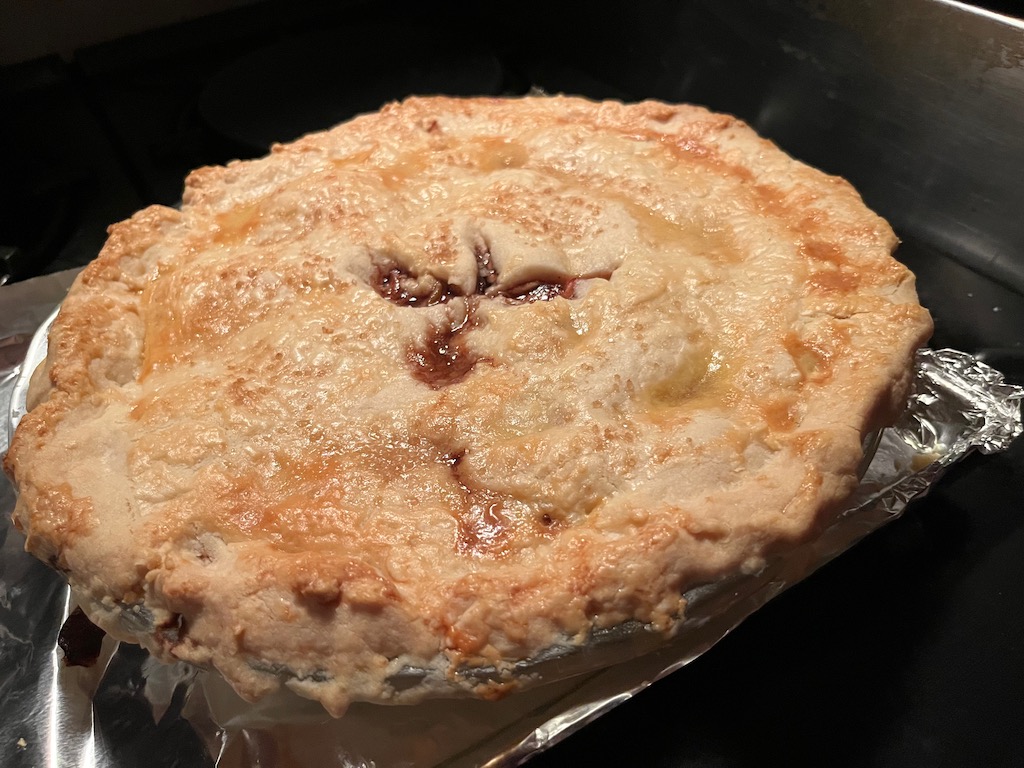
the apple slices above, already doused in caramel-y bath, are my sweet line cook’s first attempt at pie baking. his slicing alone impressed the heck out of me. just a month into the job at one of chicago’s finest eateries and the kid is picking up tricks. and pie recipes too. pretty sweet living at our house.

may this autumn, season of awe, of turning in and deepening, enrobe you in the brilliance you reach toward….

and a big giant thank you to each and all of you who have lavished me with kindnesses and love in this long season now turning…

p.s. i’m writing this from a hotel in ohio where tonight, squeaky squawky voice and all, i am getting up to a podium and giving a keynote address on the blessed book of nature…

voila!

the sharp edge of vulnerability: a hard look at love

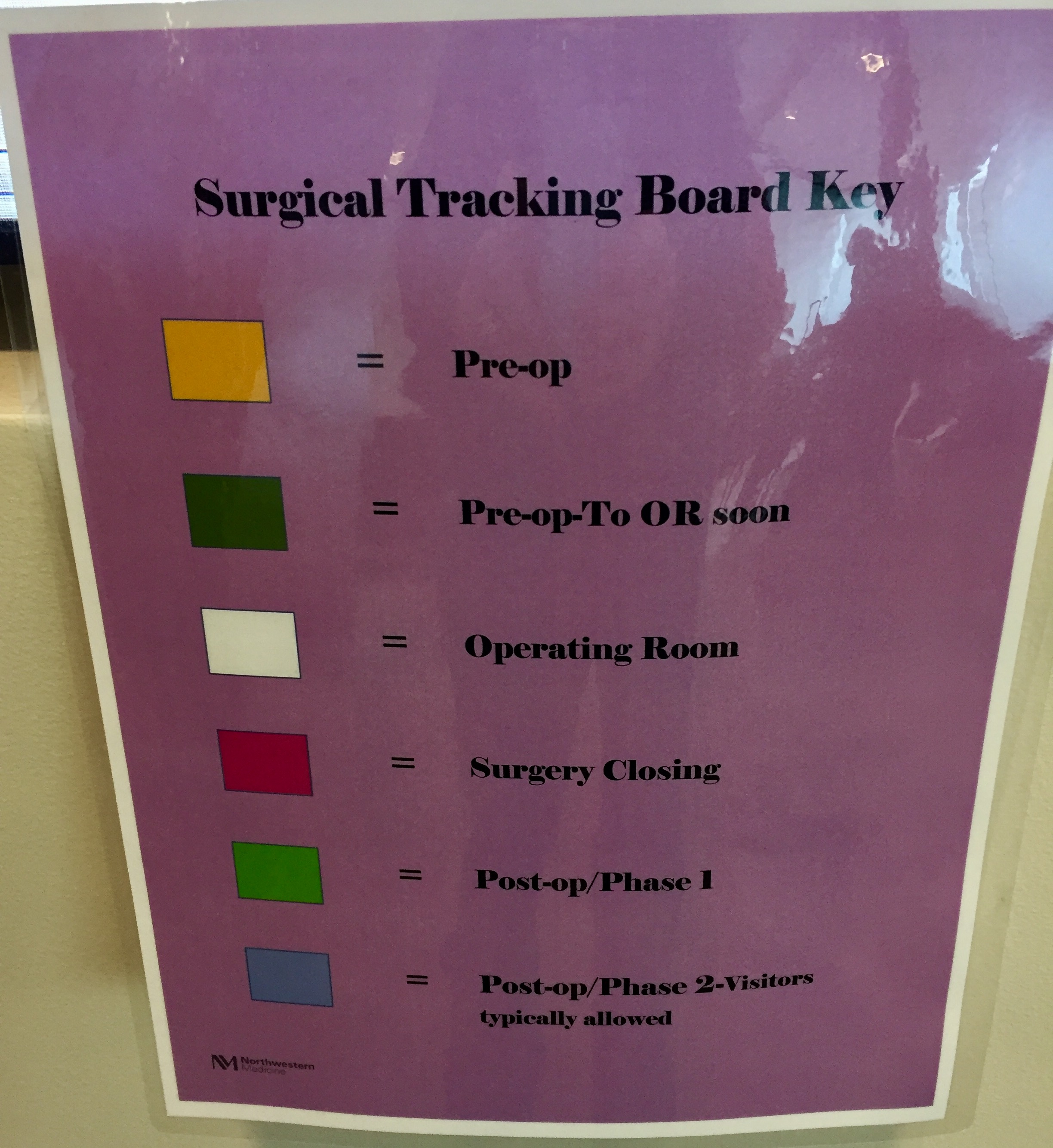
OR waiting room

once those double doors swing open, and the last thing you see is the back of the head of the someone you love, flat on a surgical cart, a bag of clear fluids flowing into a tube into a vein in the arm you’ve held a thousand thousand times, it’s impossible not to feel your knees go a little bit weak. as if the wind has just been whooshed out of them.

so it happened this week. when someone i love, someone i will always love and have loved for more than half of my life, was wheeled off to a surgery that would take less than an hour — though time barely enters the equation when love and goodbye and surgical blades are stirred in the mix.

you surrender. submit to the forces of medicine. pray the surgeon had a good night’s sleep, and a sturdy bowl of oatmeal besides. but mostly, i was washed over in a sense of how precious is every last filament and fiber that is the substance of that someone whose voice, whose story, whose dreams and heartaches i know by heart. i was washed over in knowing i would stand in the way of anything — any thing — that stood to hurt that sweet blessed soul. i found myself picturing him as a young child, how tenderly i would have cared for him, long before knowing he’d become the man to whom i’d wed my life. i leapt forward through time, pictured the thousand frames of moments as he and i have carved this long path that is ours now. pictured the hard choices we’ve made. the moments we’ve wept in pure joy. the hours when silence marked the hard negotiation of the heart and the soul, when humility and a willingness to soften might have been the only thing that saved us, allowed us to move forward again, the pas de deux of a promise made, and promise kept, over and over.

surgery does that. the sharp edge of the scalpel soon to be put to this person you love. waiting rooms too. you sit, fueled on old coffee and cable TV, absorbing snippets of anguish and blessed relief all around you. “fatty growth, totally benign,” you hear from two seats away. the surgeon pulling off his blue paper surgical cap, the son — or the husband, or merely a very close friend; biographies are absent here and don’t much matter, not really — collapsing into the not-so-plush back of his chair. “we’re worried,” someone else whispers, loudly enough that you all but nod in unison, a whole chorus of we’re-worried communion. and when at last you get your own good news, the news that it’s over and all is well, a woman with a wrinkled face and tight-curled hair, hollers across the room, “hallelujah!” she beams, rejoicing right with you. then, as you stand up to unlock your knees, grab your coat and your cold coffee, she closes the moment with this benediction, “have a blessed rest of your day.” and so you stop to kneel down beside her. to echo her prayer in your very own whisper.

love is the thing that saturates every cell of who you are, especially when long cold corridors and locked double doors stand between you and the someone you love. you think hard about the fragile hold you have on this thing called your life. you begin to scan the hours, consider how deeply you take it for granted that morning will come, sheets will be thrown back and the rhythms of day after day will begin all over again.

the sharp edge of love is worth pausing to consider. just yesterday, as i was turning pages in a book, i came across this one declarative sentence: “what she did best was love people.” it prompted me to ask, without pause, in our one simple life is it enough to love and love well?

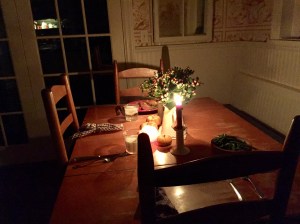
candlelight dinneri thought of that question the whole rest of the day — as i put drops in the eye of the someone i love. as we turned out the lights, and kindled the wicks when dinnertime came, because lights were too bright, lights made it hurt. i thought of that question as i tucked him under the covers, slow-cooked a fine dinner, and snipped and gathered red-berried stems into the old cracked pitcher on the kitchen table. because yesterday i was reminded sharply and in no uncertain terms what a treasure it is to love someone your whole life long, and to love that someone as well as you possibly can.

what does it mean to you to love well? and how did you learn?

fatherprayer

in which we turn our attention to mothering’s essential compatriot…

it’s become something of a ribbing in this old house. the one who sits across the table from me most nights at dinner, he delights in jiving that he too will pen a deeply intimate account of his side of the domestic story, and he will title it fatherprayer: (subtitle not yet revealed).

it’s a play, of course, on the title of the deeply intimate account of navigating the undulations of mothering that i wrote. the one called motherprayer: lessons in loving. for months now, especially when one lovely reviewer wrote that he barely hovered at the margins (because we have an unspoken pact that i won’t spill ink on his private realm), he’s been itching to tell his version of the tales, my architectural maven whose natural landscape — in the writerly realm — is to size up towers tall or squat, to write with unswerving authority about the public square, whereas my realm is the quieter, tucked-away terrain, the one that unfolds on bed pillows and beside the old cookstove.

while i will leave unpenned his rendition of the homefront (should he ever decide to traipse into the personal), i will encroach only far enough here this morning to offer my own version of a tribute to his indispensable fathering of our two beloved boys — and to consider the role of these men in the care and feeding of our children.

i’m blessed — beyond words — that the father of my children has stuck around all these years. i don’t take that for granted, not when i know and love women for whom that hasn’t happened, through no commission of their own. i watch friends i love shoulder every blessed dilemma and decision, from the kid at college with debilitating strep, to how to scrounge to pay the monthly rent.

the truth is, around here, we both came from houses where forever meant forever. so the occasional rough patch was met not with searching for nearest exit, but knowing we’d stay at it till we found our common ground. i’d be a fool — or big fat liar — if i pretended we’d not hit such skids along the way. it’s been nearly 26 years, after all, and we’re human, and somewhere along the way — in a world where work and home are tenuously balanced at best — there’s bound to be the chapter where one feels pushed aside, while the other shakes his head. or one parent’s idea about the wisest way to steer a kid is pretty much foreign to the other.

but this is not an ode to long-lived marriage (though that’s fertile ground that some day i could be convinced to take on…), so i’ll leave that there, and move on to fathering, and the miracles i’ve witnessed from front row.

the first clue i ever had that the man i married would be quite fine in the fathering department was, i suppose, when i met his own father — the dearest man, a gentle man, a man who could — and did — sit for hours at the Shabbat table (always positioned near the challah, or braided bread, which he’d tear off in little nibbles to punctuate his stories) telling tales, absorbing long answers to well-placed questions. he was a journalist, after all, an editor, and he was fluent in the art of asking and answering questions. the famous tale about my husband’s father is that in the raw first days after he sent his first-born and only son off to college, he was so distraught he whiled away the hours hosing out the garbage cans for days on end, in hopes of keeping his mind off how much he missed the kid. and he sat down and penned a letter — ink on paper — every single day, straight through to thanksgiving of his son’s freshman year, when the kid pulled his father aside, and whispered that maybe he could stop now, the kids in the dorm had caught on to the daily paternal letter-writing. and it was getting a little, um, embarrassing.

the second clue came not too many weeks before our firstborn was born, when, one night before sleep, the father of said child said, out of nowhere, “you’re not gonna recognize me; i’m going to turn to mush.”

and so he did. he cradled that baby as if the whole of the universe rested in his arms, as if one wrong move might crack off a limb or send the little bundle spilling to the floor. every night, when we’d stroll to the el station to greet him after the long day he’d been away, you’d have thought he was welcoming the president of france (or frank lloyd wright, more fittingly) to his company. the poor kid would be smothered in kisses, and questions — even at two-months-old.

if you asked our boys to tick off the top three words that come to mind, they might reel off these: cautious. devoted. old-fashioned in the dearest way.

i might say the same — after all, we’ve all been keeping watch on the very same subject, all three of us from particular vantage points.

i know there are papas aplenty devoted to their children, but in this house, before my very eyes, i’ve watched that word take on layers and layers of truth the likes of which i’d never before witnessed. yes, he’s unswerving when it comes to a few fine truths — no driving on the highway till you’ve proven mastery of side streets and stop signs; no taking cabs home from the airport (at any hour of the day or night) when your papa can just as certainly be waiting for you at the baggage claim — but the core of all of that is how deeply seriously he takes his job as being No. 1 protector of his boys, and all of those he loves.

if my boys have a moral core — oh, they do! — it comes in large measure from their papa, who lives by a code indelibly inscribed, one weighed in the pages of ancient text, one from which there is no dilution. we’ve all witnessed him going to the mat for a principle he believes in (note: see trump v. kamin, a battle spelled out in too-tall, too-showy alphabet letters). but, here in the confines of home sweet home, i’ve watched him insist it’s no big deal to drive 15 hours to watch three minutes of a crew race because no kid should be without cheering squad, even in the B boat of a novice squad for a race they didn’t win. i’ve seen him take a train to a cab to a far-flung soccer field — in a snowstorm, mind you — abiding by the very same 90-percent-of-life-is-showing-up principle.

because he’s a fellow with a predilection for holey T-shirts and shorts a size too big, we rib him fairly endlessly (in part because we take seriously our job to keeper our prize-winner duly humble; but too because he is such a darn good sport, and the basso-profundo of his belly laugh could warm the coldest bone in this old house).

but here’s the undying truth: we know deeply and certainly that he’s a prize beyond all measure. and we’ve two boys who’ve grown up — and grow still — knowing their papa would be there for them upside, downside, no matter what life throws at them. he’s their first and last defense. and no one, nor anything, could get between those boys and the ever-faithful heart of the papa who loves them endlessly and without measure.

happy blessed father’s day, to all who’ve been so blessed.

xoxoxo

what lessons in loving did you learn from your papa? 

special edition: love that colors outside the lines

boy with my heart

because this day of love just tiptoed in, and caught me breathless, i decided i need to post a love note today. to say thank you to all of you who have so lavished my heart — all our hearts — with so much tender hearted care. because you’ve illuminated otherwise shadowed nooks and crannies. because you’ve allowed this to be a carefully-curated corner of the world (cyber turned real) where what we practice is a love that colors outside the lines. that allows for the unorthodox. that sees no divisions, no divisions of hard-heartedness anyway. that invites the unfurling of our most tucked-away places, the places that are only just beginning to find a voice, a stammered whisper, as we put breath to words for the very first time. that ever ever holds up our hearts — our wobbly, not-so-certain, sometimes scared hearts — and declares, “you got this.”

because through the mysteries and miracles of time and wonder we’ve found our way to this place, this place we’ve carved out, like rivulets of stream to a river rock, it’s one place i’ve come to count on for sustenance of heart and soul. i put words out on the table. and, in holy communion, you lift them up, sift through, search for some nugget that speaks to you, and you in turn, in kind, lay down your wisdoms, your poetry, your bits and your snippets of radiance and grace. and by and by, we’ve got wisdom stew bubbling away. we’ve got love that colors outside the lines. we’ve got that little squeeze of the hand, of the shoulders, that chases away the cold. that propels us on. even on days when we’d otherwise crumble.

happy blessed day of uncanniest love. of all of us finding our way, here where love comes fierce and comes gentle, but always always washes over us, and bathes us in deepest-down holy.

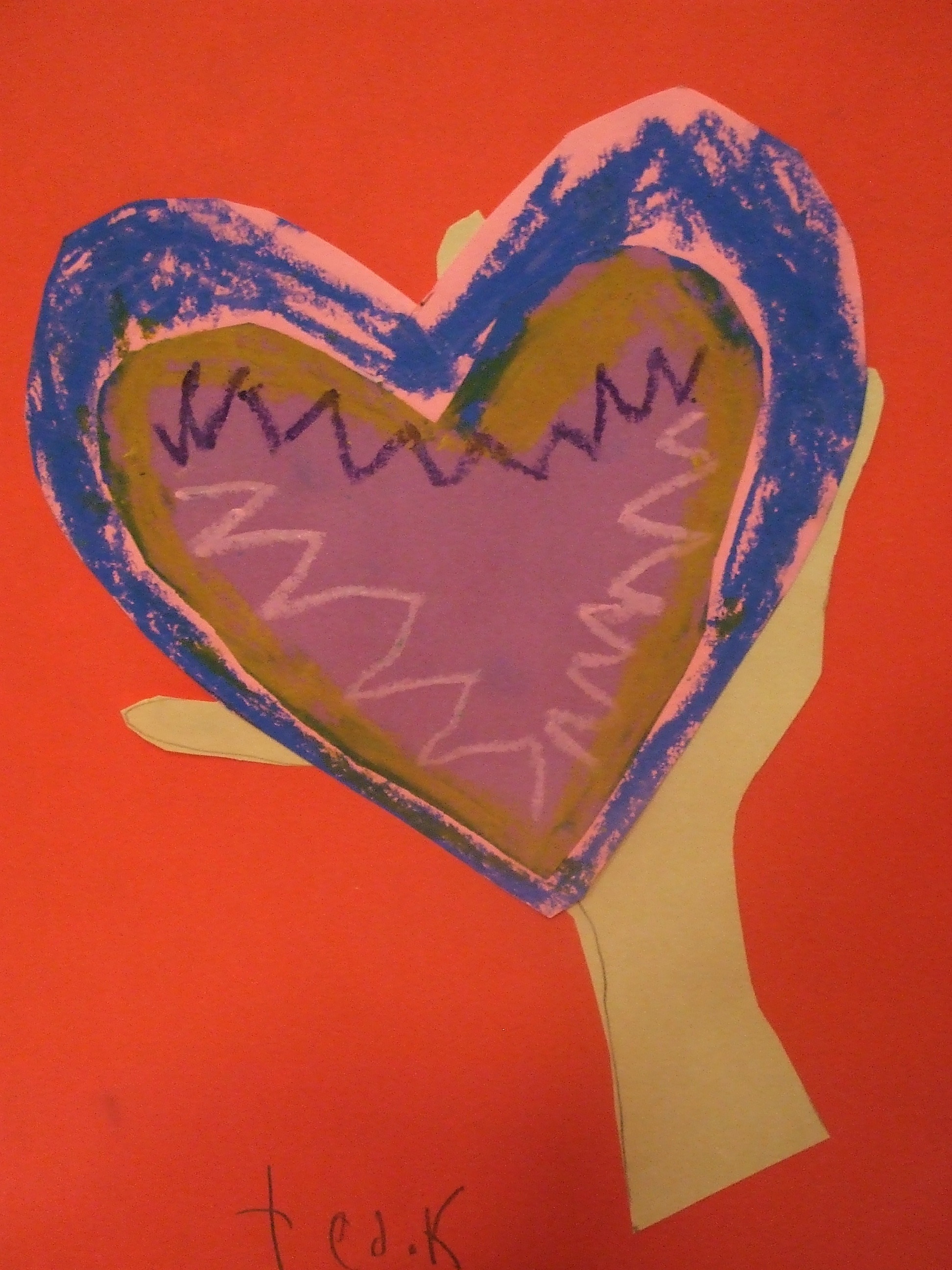
ilove you heart