
pull up a chair

where wisdom gathers, poetry unfolds and divine light is sparked…

Tag: conversation that matters

in search of the common

in which we take a hard look at the crumbling discourse in this country, and consider a solution or two….

i’ll be honest. these are hard times. i pick up the news and feel pummeled by each new blow. i see pillars of democracy crumbling one after another. jeff bezos and the washington post, only the latest. i read of law firms—white shoe ones, meaning old-guard firms who take on some of the highest-profile clients, the most complex cases, aka “the elite”—being stripped of security clearance, being considered for criminal investigation only because they represented a client the current administration has inked onto the enemies list. 

i see revenge as the rule of the day. 

i’m sickened.

i’ve never prayed to a God of revenge. 

but i read, too, that there are stirrings of hope. faint, yet beginning to stir. 

you might call it an occupational hazard, but i happen to pay attention to the ways we get news and i worry desperately that we all cower in distant silos. (getting more distant by the day.) i get my news and you get yours and, often, ne’er the twain shall meet. 

so how do we have a shared conversation? how do we sit down to the same old table and begin to listen? how do we reach across the table, and in a quiet, unquivering voice, utter the words, “i hear your point”? or the certain conversational lubricant, “say more”? or the nervier, and necessary, “that’s not actually true”?

i hold onto my hunch that most of us want what we think is fair, is just. and i’m not giving up on my fervent belief that if you saw me bleeding on a sidewalk, you would not ask first how i voted and then decide whether or not to lift me off the ground. 

i’m fairly certain that in the nearly two decades we’ve been pulling up chairs here, some of us do get our news from different silos. i try to tread lightly. i respect divergence of thought. but the problem, as i see it, is that we are all being fed news in the flavors most to our liking. and that’s not the way the news is supposed to work. it’s not the way it worked for the time i was one of the ones writing what counted as news. and not in the newsroom i knew.

so here’s the jam: if the news you’re being fed is slanted, if some of it’s filtered out, and some of it’s twisted, if both sides aren’t fairly presented, it’s not any sort of surprise that conclusions are drawn, and wedges are wedged. 
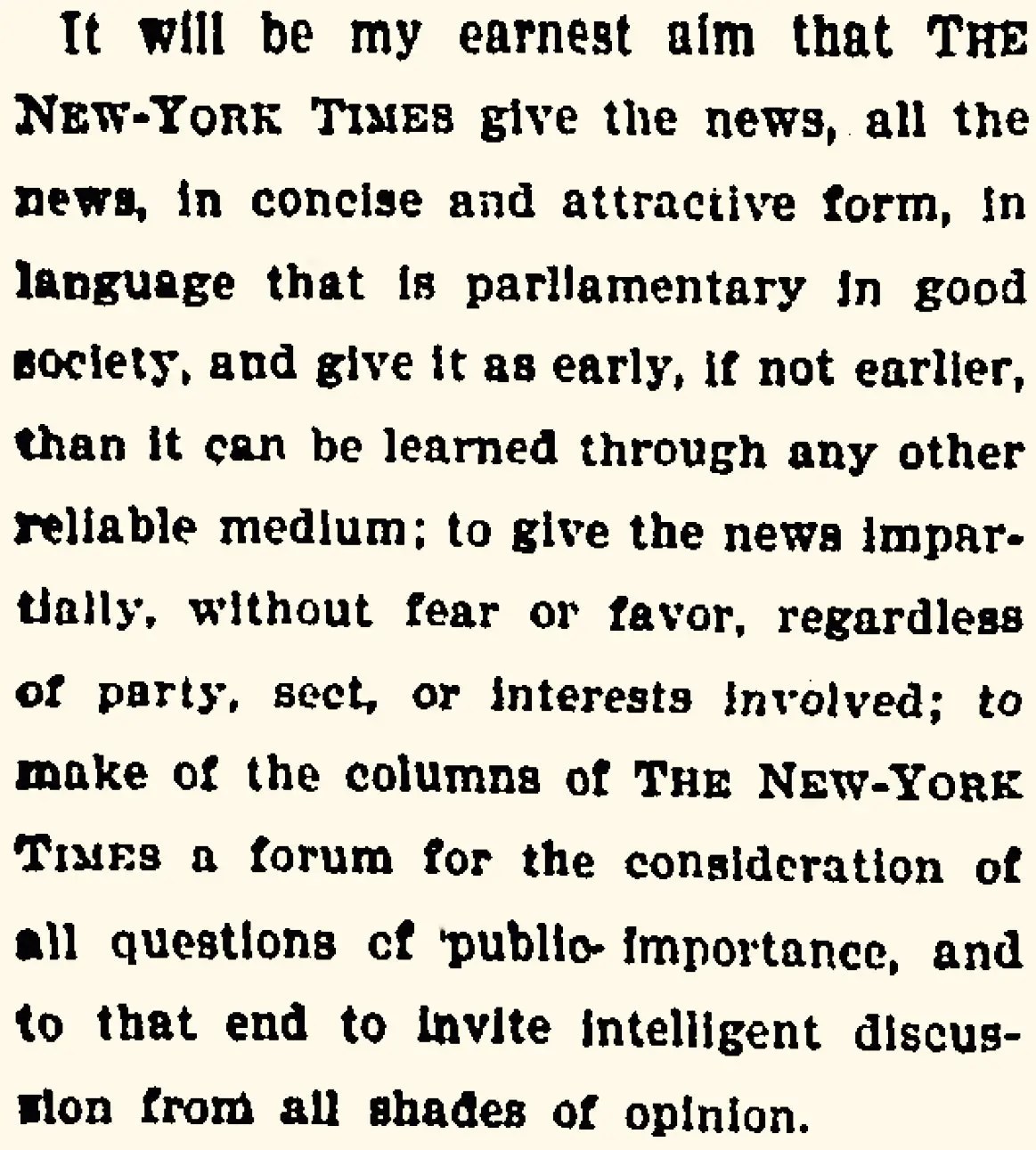
“…without fear or favor…”

these days, the ones helming the news––the owners, the billionaires who thought it a romp to claim a slot on the masthead––they seem to be in it for hard, cold cash. the one with the most wins. cozying up to power seems a game to which we’re not invited. to get there, you need to fly in your private jet, hopefully not one of the ones making a mess on the runways. 

so much for democracy dying in darkness. or that now quaint-seeming declaration of adolph s. ochs in april of 1896, that his newspaper, the venerable new york times, would “give the news impartially, without fear or favor.” 

good journalists hold firm to those words. good journalists have died defending those words.

you don’t get into the news biz––chasing after crooks and pols, climbing rickety stairs in darkened hallways, knocking on doors knowing full well you might find a muzzle pointed at the bridge of your nose––because it’s a sure way to raise your heart rate. or just cuz you’re nosey.

you get into the news biz cuz you’re a mad dog for the truth. and the fair telling of stories. you dig and you dig till you find that shimmering shard that, to your best knowledge, and according to more than one reliable source, is unassailably true. i sat beside folks in the newsroom who thought nothing of holing themselves in the dungeons of city hall or the bowels of bureaucrat mazes, riffling through file after file to track down the name and the dollar amount on contracts that might or might not have been legal. that might have unearthed wrongful convictions. or identified bodies dumped on the roadside. and those subterranean scribes had the pallor to prove it, after months and months under the glow of flimsy fluorescent lights. and cups of stale coffee. (we’ll leave the bottles of whiskey for another day.)

these days, the ones coursing the landscape with their reporter pads and pens, their itty-bitty microphones and their smartphone recorders, are plenty besmirched. discounted as little more than rousers of rabble. there’s a strong scent of disdain souring the air. 

that’s an unfair and erroneous swipe at all those who abide by the time-tested codes. you might have heard that, um, democracy dies in darkness. and the reporters i know refuse to turn off their flashlights.

my little screed here won’t make a dent. but i cannot give up. none of us can. my faintest hope is that even one someone who reads this might take up the dare: fight fallacy and fiction with verifiable fact. there was an old maxim in the newsroom, one that we more or less lived by: if your mother tells you she loves you, check it out. 

check your sources for news. read beyond your usual silo. sit down at a table and listen. exercise your ears more than your tongue. 

at least for now, it’s a place to begin….

p.s. i know there is a good handful of journalistic heroes who pull up a chair, so if any of you wander by today or tomorrow or anytime soon, feel free to pen your prolific and profound views on the state of news consumption in america, and how it might be at least part of the root of what’s tearing us apart….


only one poem this week, and it’s a wonder from a poet who is a chicago legend, a hero in Black arts…..it’s an ode to books, which is a great place to begin a grounding in knowledge, and finding common language…..be sure to get to the last line, where i’m guessing you’ll let out a sigh. as i did. so much in common….

So Many Books, So Little Time
by Haki R. Madhubuti

My sanctuaries are liberated lighthouses of shelved books,
featuring forgotten poets, unread anthropologists of tenure-
seeking assistant professors, self-published geniuses, remaindered
first novelists, highlighting speed-written bestsellers,
wise historians & theologians, nobel, pulitzer prize, and american book
award winners, poets & fiction writers, overcertain political commentators,
small press wunderkinds & learned academics.
All are vitamins for my slow brain & sidetracked spirit in this
winter of creating.

I do not believe in smiling politicians, AMA doctors,
zebra-faced bankers, red-jacketed real estate or automobile
salespeople, or singing preachers.

I believe in books.
It can be conveniently argued that knowledge,
not that which is condensed or computer packaged, but
pages of hard-fought words, dancing language
meticulously & contemplatively written by the likes of me & others,
shelved imperfectly at the level of open hearts & minds,
is preventive medicine strengthening me for the return to my
clear pages of incomplete ideas to be reworked, revised &
written as new worlds and words in all of their subjective
configurations to eventually be processed into books that
will hopefully be placed on the shelves of libraries, bookstores, homes,
& other sanctuaries of learning to be found & browsed over by receptive
booklovers, readers & writers looking for a retreat,
looking for departure & yes spaces,
looking for open heart surgery without the knife.

—Haki R. Madhubuti, who turned 83 this week, is a poet, writer, and educator, who in 1967 founded Chicago’s Third World Press, the largest independent Black-owned press. He’s regarded as an architect of the Black Arts Movement. Born Donald Luther Lee, he changed his name in 1973 after traveling to Africa: “Haki” means “justice” or “rights,” while “Madhubuti” means “precise, accurate, and dependable.” Both names are derived from Swahili. Of his renaming, Madhubuti explained at the time that he wanted to arrive at a new definition of self.

have you had any hard conversations of late? were you afraid to go there? what peaceable tools did you use to navigate? how did it go? will you try again?


loopy days

loopy days bedsheet

for three short weeks — one down, only two to go — there’s a new rhythm in this old house. it goes like this: ’round late morning, i hear a swoosh from up above the kitchen ceiling (that’s the bedsheets being whipped aside); then i hear a thud, followed by a parade of thuds, thud-thud-thud down the stairs. as the thuds round the bend, lope into the kitchen, i look up and see a bed-head. my beloved boy.

he begins his morning forage through the fridge. as he piles tubs and cartons on the countertop, he lets out with a “whadda we got for breakfast, mommo?”

that’s my cue to begin the litany, all within the confines of high-protein, low carbs, healthy, delicious, and filling.

hmm. let me know if you’ve got ideas.

it’s at about this point that the eggs are being cracked, he’s begging for mushrooms, and wants to know if i remembered to get the mozzarella at the market. as i watch egg whites whirl toward the kitchen walls, i leap up from my typing to play at being his sous-chef (though really all i am is the wiper-upper of kitchen splats).

he whips up something grand, something delicious, and always spilling over the sides of his plate.

we mosey back to the table. or, well, he moseys, and i finish up the de-splatting. then we sit, and the loopy days begin. we dive deep. quickly.

waste little time on folderol and fluff. we’ve got a year’s worth of college life to pour over (we’ve been known to take in two years at a gulp, retreading over year before last, if pertinent) , and there’s the year ahead to consider, too.

we loop round and round, drop threads, follow new ones, circle back — hours later — to the thread we’d left behind. it goes like this for half the day.

now, not all college kids go off the way mine has. i’ve heard tales of kids who text many times  a day. i’ve even heard stories about college kids who dial phones. call home. to be fair, that happens here too, but not so very often. and, when it happens, it is sometimes very very late at night.

we seem to have birthed a college kid who takes his college full-throttle. unless it’s dire — and on occasion, it’s been vaguely that — we’re pretty much the side show. oh, there are insistent “love you, mommo”s. and there are (astonishingly), “do you remember where you put my sewing kit?”

mostly, i, um, never ever doubt, not for any longer than five or 10 minutes, that he appreciates my unbroken love and care.

but, really, it’s these sacred hours when he’s home, when the two of us are circling in and out of each other’s footspace and quarter-hour time slots, that we make up for lost time, and seal the deal for the long whitespace ahead.

these hours, the ones where he might sink down low inside a bean bag, while i trod for miles on the treadmill, the ones where i sous to his chef, these are the ones that knit us deep and thick and forever at the heart.

love in every house spills out in idiosyncratic ways. and it changes over time.

at my house now, i am licking up these hours of deep and winding conversation as if the ice cream melted on my cake plate.

i am whispering thanks to the heavens above that, right now, for this short interlude, i can do my typing here, not far from where the thuds patter down the stairs. so that i can weave my sentences in between his stories. so i can be here to catch the loop-de-loops of conversation as they unfurl. in slow time. unhurried time. whip-up-omelettes-while-you’re-talking time.

because i’m long practiced in the art of asking questions, allowing long spells for replies, i find this a part of motherhood to which i take a particular shine. play time on the floor, i flunked. so, too, chutes and ladders and monopoly. i wasn’t bad at crayons and paper. but really.

the deepest glue i know is the one that comes from unfurling the whole of the human heart. the nooks and crannies. crests and high plains.

so it’s what we do here. for three short weeks. in the mid-day hours when no one else is home. and my brain’s at full attention. and my work can wait till dark. for these hours are slipping through my fingers. and i am plumbing the depths of each and every one.

loopy days, i find, are the summer’s sweetest offering.

do you practice the art of the slow-unwinding conversation? the one with someone you love that stops and starts and plumbs the depths for days and days on end? and carries you across long dry deserts of barely enough time to really, really talk?

and because i promised a bit of cerebral uplift, i’ll begin what i’m calling the marginalia department, where i scribble in the margins of whatever page i’m turning, where i recount for you the lines i’ve scored and underscored. 

this week from rebecca solnit’s “the faraway nearby,” a line to chew on for a time:

“Difficulty is always a school, though learning is optional.”

or this….

“Disenchantment is the blessing of becoming yourself.”

i am especially keen on the first, about difficulty school, and the option of learning from it. it’s a thought that carried me to sleep last night…..and it’s a book that came highly recommended by one of my very favorite reader friends…..

“can i come talk?”

the house was blanketed in little else but moonlight. the clock ticked from down the stairs and around a bend or two. the red digits that burn beside my bed–there only simply because they get the job done, there in the middle of the night when you roll and see them flashing the wee, wee hours–they broadcast, 11:01.

i was dozing when the footsteps padded up the walk. so all i heard was the click of the door. and the breathing that followed, the footsteps up the stairs.

i knew right away whose steps those were. you memorize those things.

and then i heard, through the gauzy mostly-darkness: “mom? can i come talk?”

and so, a summer’s night turned sweeter than a cantaloupe cut open, spilling, melon juices running off the cutting board, melon in july the sweet you wait for, perfect sugar stewed in sun and farmer’s field.

“mind if i lie down?’ the long-bodied boy asked, politely, though he didn’t wait for any grunt of answer, throwing his lanky self upon the sheets in darkness.

how long had it been since we’d lay side-by-side, this boy who as a babe slept every night curled beside me so i never missed his gruntings or his midnight peeps when once again he needed mama’s milk?

once he’d thrown his skinny jeans upon the sheets, his curls upon the pillow, i heard the deep, deep sigh.

i assure you i’d roused myself from sleep. i was wholly at attention. it’s what happens when your end-of-high-school child throws himself upon your bed: you listen hard. you savor every word.

what flowed beyond the sigh were sentences and paragraphs, whole stories of moonlit walks and beaches, of how he saw the world, and more importantly, the human heart.

as he talked, considered contours of the human race, the soul, what’s right, what’s not, i lay there soaking in the whole of it. every blessed drop of the notion that i’d a 17-year-old almost-man who understood through and through that wherever i am in the world, there’s a heart that wholly listens.

oh, there are many things that i am not. i grind myself daily that i’m not at the park, throwing, catching balls with the little one who would swell at such attentions. i do not make weekly trips to the library, as i wish i did, trudging home with loads of books and the little boy in tow, the one i cannot get, without squalls of protest, to lift a book. i wander past a treehouse, just built down the block, and think, now why didn’t i surrender a corner of the yard to old-fashioned summer construction, the sort engineered and executed by a child equipped with load of wood and pure imagination?

oh, i scold myself plenty. sadly heard too often as a child, shame on you. and shame i did absorb.

but there is one small arena of the heart, of motherhood, that i can proudly claim, learned the hard way, learned through all the bumps and bruises of the heart to which i’ve paid keen attention: i seem to know how to listen, how to take my children by the hand, traverse the landscape of the heart, the bumps, the planes, the high places.

it all came rushing in to me the other night, there in the murky moonlight darkness. i heard the boy i love tell stories, and in the ones he told, i heard that he too has learned to forge head on through the shadows of the heart, to seek the clearings, to know they’re just around the bend. to breathe blind faith into thickets all around.

at long last we heard footsteps on the bluestone walk. heard the click of the door, and more steps up the stairs. it was the father of the man-boy, home at last from work.

and there he found us, mother and son, lit only by the shafts of moonlight, telling stories, listening, as one day became another.

“can i come talk?” the child asks.

and the answer, always, always, says the mother: i am so deeply blessed that you lay your heart on mine.

holy God, bless the children and their stories and the mothers born to listen…..

whose heart did you turn to when you were growing up? whose heart do you turn to now? who turns to yours?