pull up a chair

where wisdom gathers, poetry unfolds and divine light is sparked…

Tag: commonplace book

a literary form for the slipperiest of minds
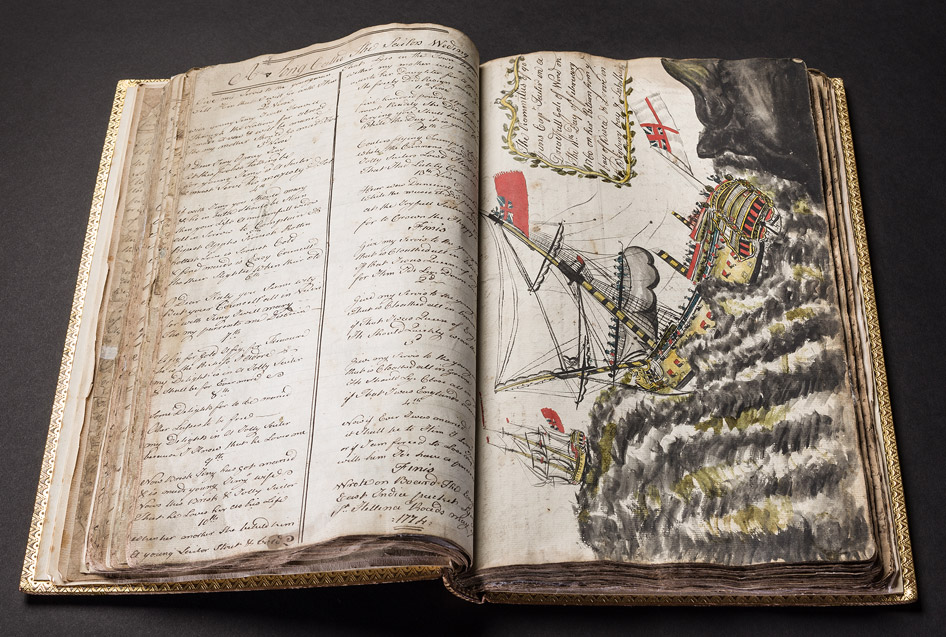
a page from british sailor henry tiffin’s commonplace book, 1760

more and more, the literary form into which i ease is one that traces roots to the ancients. to pliny, the great naturalist, whose mind must have been a beehive of sorts back in first-century rome. it’s an enthusiasm for accumulation that courses its path on through the renaissance when humanists, especially, were anxious to lock down their thoughts, keenly aware of the tragic loss of ancient learning, as libraries were so often, too often, the sites of military revenge. it’s a form that wends its way on and on through the centuries, straight through the twentieth, when mark twain, thomas hardy, ralph waldo emerson, and henry david thoreau, to name but a few, all partook of the habit. and here we are now, with plenty of us keen practitioners of the urge to gather up bits of literary esoterica and assorted ephemera before they skitter away. i think of myself, more often than you might imagine, as a rag picker of ideas in any which size, from the itty-bitty and poetic to the mindbogglingly big.

humans, it seems, like to scribble things down.

may our scribbling never cease.

the fancy name for this scribbling is commonplacing, the literary form the italians once named zibaldone, “a salad of many herbs,” in culinary terms, or a “hodgepodge” more broadly. we’re contemplating here the hodgepodge.

it’s the mosquito netting of the mind, of wonders and thoughts before they escape. or, as the 13th-century dominican monk, vincent of beauvais, once explained, it was “the multitude of books, the shortness of time, and the slipperiness of memory” that compels one to scribble.

count me in on the slippery mind.

vincent’s not-so-slippery solution: a ginormous tome, totaling 4.5 million words (someone counted!), an exhaustive compendium of all medieval knowledge, which he titled speculum maius (literally “great mirror”), speculum a word he chose because it contained “whatever is worthy of contemplation (speculatio), that is, admiration or imitation.” and thus he set out, over the course of his monastic lifetime to gather all the “flowers” (his word), or best bits of all the books he was able to read, in a selfless quest to save others the strains (time, money, trips to the library) of doing so themselves.

over the last many months, as the population of this old house has dwindled to two, and the stories to tell are fewer and fewer, my efforts here seem to have morphed into a looser, yet more concentrated consideration of the bountiful ideas and thunderbolts i bump into across the arc of a week.

there is something so natural about the human instinct to share what we’re thinking. of course there are those who might protest, who might consider me rude for shoving a book or a page or a picture in your face. but, when you think of it, isn’t that the instinct that drives so much of social media? (i often think we’ve gone overboard there, but that might be because too often it’s the magnification of any or every passing brain burp and not necessarily ones that might leave us enlightened. and too often amount to plain old overgazing at navels, or hair-raising nastiness and gut-wrenching vulgarity. but i digress…)

i’ve been keeping what amounts to my salad of many herbs for years and years now, and that urge seems to have spilled over to here, where week after week sometimes i seem to be assaulting you with the few morsels i’ve found most delicious in recent days. it’s a way, i suppose, of collectively swelling our brains. and our souls, most certainly.

in the spirit in which i bring my rag picking here, i like to think of us sitting side-by-side, cozy against the pillowy confines of an armchair broad enough for two. and in the gentlest, yet conspiratorial whisper, i offer you a page or a passage, my eyes widened and sparkling with glee, as if to say, wait’ll you see this one. what wonderments or deep thoughts spring to your mind?

any one of these next morsels is worthy of long and deep consideration. here are the ones that struck me this week:

these first two come from maria popova, whom i’ve referred to in the past as the high priestess of cultural commentary, and one of the most voracious gatherers of ideas i’ve encountered in recent years. her online literary journal, now known as The Marginalian, has been described as a compendium of hundreds of thousands of entries “that search for meaning, cross-linking ideas and connecting metaphysical dots.” here’s where she thunderbolted me this week:

“joy is a stubborn courage we must not surrender.”

“. . . love — whether we call it friendship or family or romance — is the work of mirroring and magnifying each other’s light. Gentle work. Steadfast work. Life-saving work in those moments when life and shame and sorrow occlude our own light from our view, but there is still a clear-eyed loving person to beam it back. In our best moments, we are that person for another.”


another place i often turn for soulful sustenance is Emergence magazine, a wellspring that explores the timeless connections between ecology, culture and spirituality. in a recent talk, titled “memory, praise, and spirit,” the filmmaker, composer, sufi teacher, and driving force behind Emergence, emmanuel vaughan-lee, opened with these words:

“The mystics say that we are like a seed; that we hold the blueprint for our highest potential within us, and that much of spiritual practice, regardless of what tradition, is unlocking that potential.”


and i close with this one from the great james baldwin, a passage from his 1964 collection of intimate but somewhat little-known essays, titled nothing personal. this passage is from the fourth of the four essays collected there:

“One discovers the light in darkness, that is what darkness is for; but everything in our lives depends on how we bear the light. It is necessary, while in darkness, to know that there is a light somewhere, to know that in oneself, waiting to be found, there is a light.”

i could write an essay on any one of the above, but instead i invite you to chew on each or any one. each one, a morsel worthy of your time, your mind, your soul.

which one spurs you and stirs you the most, and what deep thoughts spring to your mind?

i’ve written before of commonplacing. here at the chair, and in my latest book, The Book of Nature, on pages 87 and 88. it’s a habit i can’t get enough of, an urge i can’t quench.

pages from the commonplace book of charles dodgson, aka lewis carroll

whilst i wander commonplacely . . .

page from 19th-century commonplace book in which emily and charlotte bronte’s brother, patrick branwell, contributed four pages of poetry and sketches*

“commonplacely . . .”

that is to make an adverb of the adjective “commonplace,” as in “commonplace book,” a descriptive i’ve already tweaked into a transitive verb, “to commonplace,” to partake of the act of commonplacing. the commonplace book, you might recall, is a centuries-old literary tradition of squirreling away snippets and bits of esoterica and wonder, and tucking them into a common place, a journal or diary in days of old, or here on this rickety old laptop in the digital age. 

it’s a habit i’ve taken to voraciously. i am a packrat of linguistic persuasion. or, as my beloved friend amy more poetically put it, as she described her incessant gathering of singular words or wisdoms as that of a magpie, that feathered species known for its “borrowing” proclivities, as it feathers its nest with an assemblage of freshly plucked (and pilfered) shiny objects and upholsteries. 

in flicking my wand over the quaint coinage, commonplace, i’ve taken linguistic liberties to make it an adverb describing the ways i exercise my curiosities and enchantments. i commonplacely gather up bitlets––a wisdom here, a sigh-triggering superword there. and, with pure joy percolating in my heart, i scurry here to bring them to you. 

in the house where i grew up, the only girl amid a huddle of brothers, with a mother who recited poetries as a way of waking us from our long night’s slumbers, and a father who punctuated all conversation with endless puns and wordplay, i come by my affinities maternally, paternally, and i imagine generationally (my grandma mae, a kentucky school teacher whose testing scores earned her a blue-ribbon blurb in the bourbon county news, certainly must have loved a succulent word––and, oh, that i would have known her to have basked in her starlight . . .). 

and so, standing on the shoulders of all of them, i commonplacely bring you this wordly bouquet for your literary delight and soulful ponderings . . .


let us begin with a romp through a sandbox of little-used words, all of which deserve prompt and hearty resuscitation…

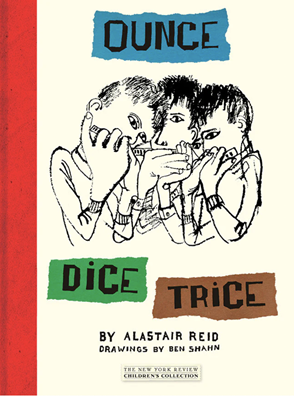
from Ounce Dice Trice

a few fine words for times of day: day-peep (dawn), dimity (time of day when daylight dims), dayligone (twilight)

a smattering of “terms of venery” or “nouns of assembly,” collective nouns specific to certain kinds of animals, a tradition that traces its roots back to english hunting in the late middle ages:

a booing of buffaloes

a pioling of pelicans

a skulk of foxes

a smother of spiders

a trembling of goldfish

a scribbitch of papers

a tumbletell of church bells

a snigglement of string


and from a dear friend who might have been spuddling along: 

spuddle: (17th century) to work feebly or ineffectively; to be very busy whilst achieving absolutely nothing.


and now let us turn from singular words to singular wisdoms….

visiting a cemetery atop a sacred mountain three hours from his home in japan, pico iyer, the british-born essayist known for his voluptuous and epiphanic travel writing, brings us this summons to attention, elicited by a ghostly walk amid the gravestones:

“The thought that we must die, I might have heard the two hundred thousand graves saying, is the reason we must live well.” — Pico Iyer


George Herbert, the English poet and priest, described prayer as “heart in pilgrimage.” (The Secret Gospel of Mark) (page 255)


this next one particularly struck me, as someone whose writing often references God, and who understands viscerally that the very name can stir a host of untapped responses. more and more i claim my ground as an ecumenicist, one who seeks out and sees the glory, wonder, and wisdom in myriad paths to the Sacred Source, and who stakes no single road as the sole salvation. God for me is a name of great comfort, but not all react quite that way. and so i understand why a writer might wrestle therein. and, as so often happens in my Russian doll school of reading, where one idea opens into another, one reference leads me on to another, stumbling upon the quote below introduced me to a writer i certainly should have known, and whose works i am now gathering from my ever-acquisitive neighborhood library.

so this, from Lyanda Lynn Haupt, naturalist, ecophilosopher, and author* of Mozart’s Starling, The Urban Bestiary, Crow Planet, Pilgrim on the Great Bird Continent, and Rare Encounters with Ordinary Birds: (*i’ve already put on library hold as many of her titles as i could find on the shelves)

“When the fraught name God comes up in conversation or reading, I always remind myself that whatever the source or language used, we are at root on common ground — invoking the graced, unnamable source of life, the sacredness that cradles and infuses all of creation, on earth and beyond. I know that prayer is the lifting of our hearts, our thoughts, and even our bodies in conversation, or contemplation, or remembrance, or supplication, or gratitude within this whole, requiring no dogma, only openness. Hildegard counseled, ‘To be alive is to give praise.'”


and from the late great david foster wallace, whose birthday was marked this week, on february 21:

“The really important kind of freedom 
involves attention, and awareness, 
and discipline, and effort, and being able 
truly to care about other people and 
to sacrifice for them, over and over, 
in myriad petty little unsexy ways, 
every day.”

– David Foster Wallace from This is Water


the season of lent began this week, with ash wednesday when we’re reminded through the smearing of burned bits of palm on our foreheads that our short swift lives are indeed bracketed, and that we’d best step up the pace toward whatever is our life’s holiest work. i scanned all week for a lenten offering to bring here, but didn’t find just the right one yet. if you’ve one you’d be inclined to leave here on the table, by all means, do.

and in the housekeeping department: remember that little gathering we’ve planned (march 21, 7 p.m. central time) for the “official launch” of The Book of Nature, my forthcoming adventure in publishing, well, i upgraded my zoom-i-ness this week, and we are no longer confined to 40 short minutes. we can gather for as long as 30 hours at a stretch. though i don’t think we’ll need quite that much time. if you’ve registered, you’ll be getting an email from EventBrite with the link to the event two days, two hours, and 10 minutes prior to the gathering. they work hard to make sure no one forgets.

*page from commonplace book with sketches and poetries of Patrick Branwell, among the many commonplaces found at the Harry Ransom Center at the University of Texas.

next week the chair will post from the capital city, land of about-to-bloom cherry blossom, where i shall be deeply and joyfully ensconced in the project of helping my firstborn settle into his new book-lined apartment in the adams-morgan neighborhood, where he shall launch his professorial life in the weeks and months and years ahead….it never grows old, being there in the trenches, as my boys find their ways. it’s my holiest work, and i am so blessed to have it…..

what wonderments did you stumble upon whilst wandering this week?