pull up a chair

where wisdom gathers, poetry unfolds and divine light is sparked…

Tag: books

the not-so-simple tasks of being alive

life, sometimes, makes like it’s an arcade of carnival challenges, and to make it to the other side is, in fact, something of a triumph we barely take time to note.

we shouldn’t, though, take it for granted. we are mightier than we think. and there will come times when we truly need to believe how mighty we can be. we’re not here on this earth to dawdle around.

as this week draws to a close, i can testify that these things happened: a new used car was found, bought, driven home, and will soon be ferried to another state; a kid wrestled through the decision of which of three job offers he’d choose, and started the one; husband down for the count with a cough that sounds like it’s hollowing his lungs; cavity filled in the way back of my mouth; latest peek at my lungs behind me (now awaiting results, a fraught interval that always leads to some trembles); and the latest round of edits on Book No. 6 at last sent off to editor (i had to wait till her calendar cleared).

not included in the list, but very much there, are the facts that i spent the week dodging the heck out of whatever virus was mucking up the works, for fear my scan or my cavity filling would get bumped; also, never mind the “check tire pressure” light that went on halfway home from the car lot, and the hurdles to get that untangled. in addition, i arose each dawn, never crashed my own car, swam a few miles, cooked a few mediocre dinners and one or two fair ones, and grocery shopped what seems like ninety-five times.

such is the business of living. each week throws at us a spaghetti bowl of hurdles, some humdrum, some of dimension that leads us to gulping.

it’s the quotidian stuff that comprises our day to day. and to make it through and to the other side is a feat that draws on cords and gears we barely acknowledge. to miss the chance to take note, to not ponder just how resilient we are, just how swiftly we can untangle ourselves from houdini’s chains is to short shrift our capacities.

we live our lives amid stories of what seem insurmountable feats: folks rolling into surgeries that untangle their insides, or shave off a lump on their spine; house fires that leave lives in ashes and soggy remains; kids finding out their cancer is double-D badd. (and those are stories plucked only from the last 48 hours, each one devastating and true.)

the news of the bad guys around us might distract and infuriate and leave us in tears. but the hard work of being human is never far from home. it’s the pit in our belly we awake with, and the headache that drums us to sleep. it’s what we might face before breakfast, and what comes with an unsuspecting wallop midway through the day. it comes in the phone call we never expected, and the one that makes us fall to our knees.

i’m not trying out for a part as the voice of doom here. i’m simply saying what we too often forget: no matter the circumstances, nor the twists in the story, we are all made of strong stuff—stronger than we remember to note.

to get to the other side of the traumas and troubles that hurtle our way is worthy of note, if not ovation. it might do us well to take count of the muscle it takes, and the grit, and the intense imagination, to merely get to the other side.

and here we are, on the far side of all those things that a week ago seemed insoluble.

that alone might stand as proof that even the frailest among us are tough as tough can be. and we can take on just about anything. we are breathed into life with every capacity our lives will demand. and we are living proof of how much we can survive.

you needn’t share this with anyone other than yourself, but perhaps you might find strength in looking back across the arc of your life and seeing what a marvel you are, and all the impossible hills you have climbed. what marvels you the most?


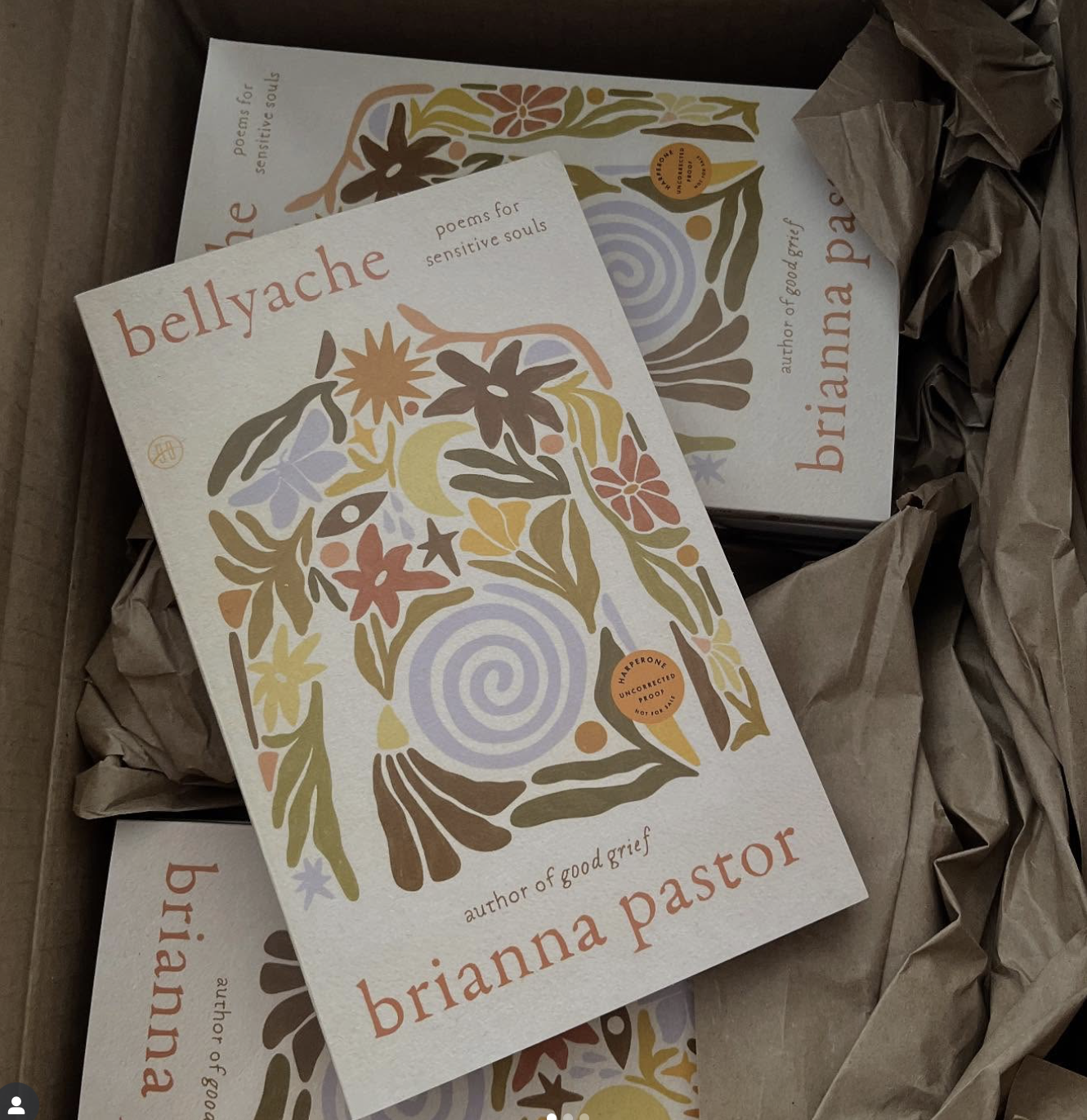
as antidote to all that, i bring you a bit of wonder in the form of the latest book that crossed my transom. it’s titled bellyache: poems for sensitive souls (harper one, 2026), and they had me at the subtitle. it’s by brianna pastor, a poet described in her bio as “a queer writer, empath, advocate, and author of the poetry collection good grief.” the book isn’t due out till february, but i got a review copy, and i’ll share a few marvels here. pastor’s poetry is rooted in childhood trauma and what it means to heal, with sensitivity and love as the non-negotiable parts of the deal. she writes, according to the author note, “about the raw, the uncomfortable, the overlooked, and makes clear that at the root of all things, is love.” it’s not every day that you open a book and find yourself in the midst of a poet whose heart feels so immensely attuned to the pain and the preciousness of tender, tender feeling.

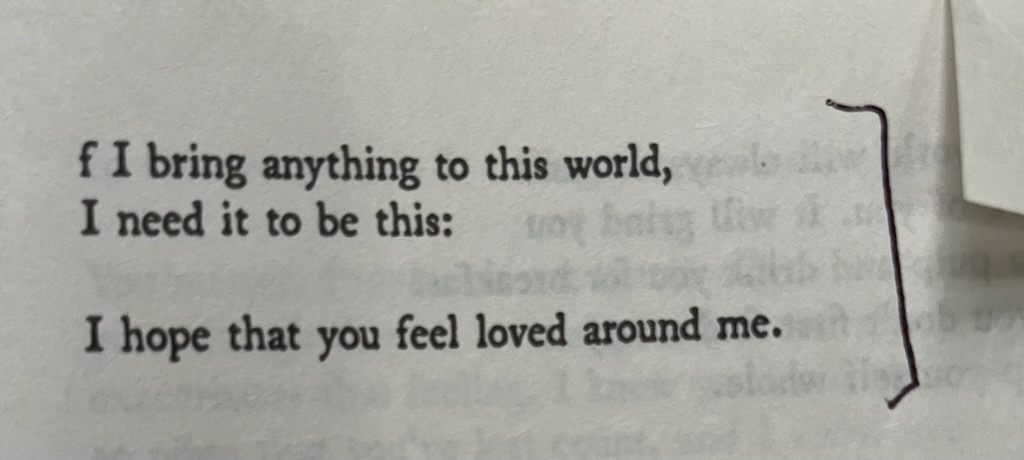
here’s one of my favorites….

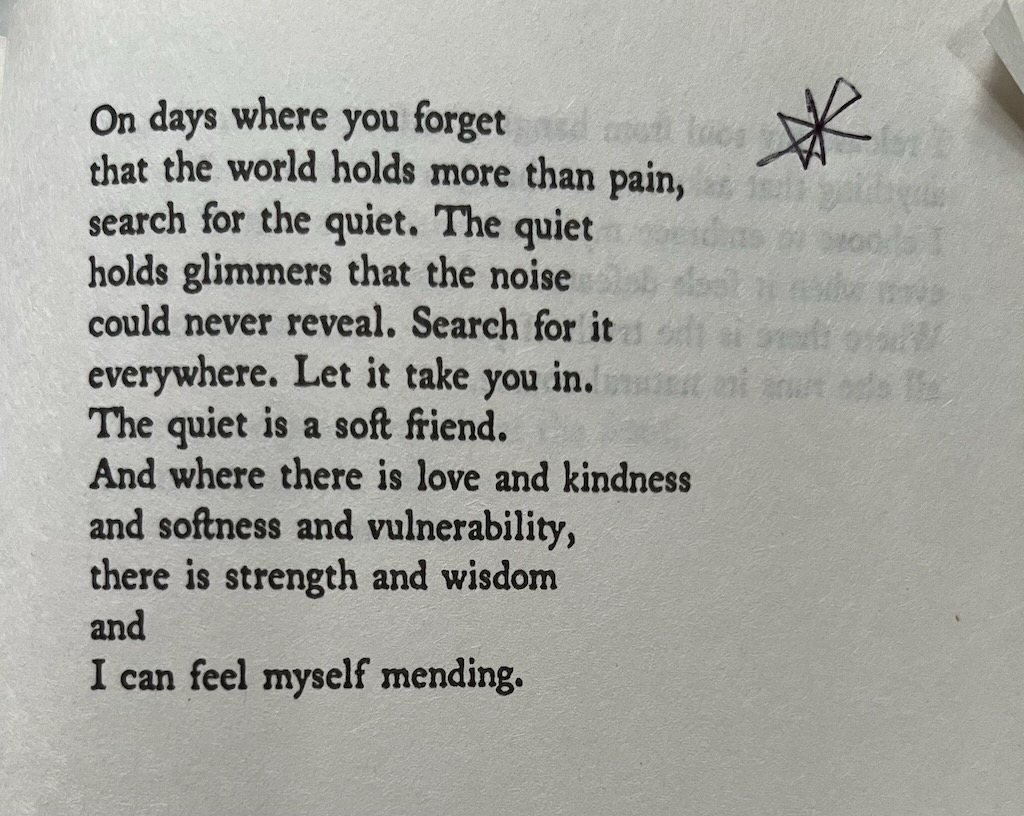
and here are two others (the spare simplicity is everything in these love-drenched poems):

and this:

Excerpted from pages10-12 Bellyache by Brianna Pastor, reprinted with permission from HarperOne, an imprint of HarperCollins Publishers. Copyright 2026.

add this to your constellation of poetries

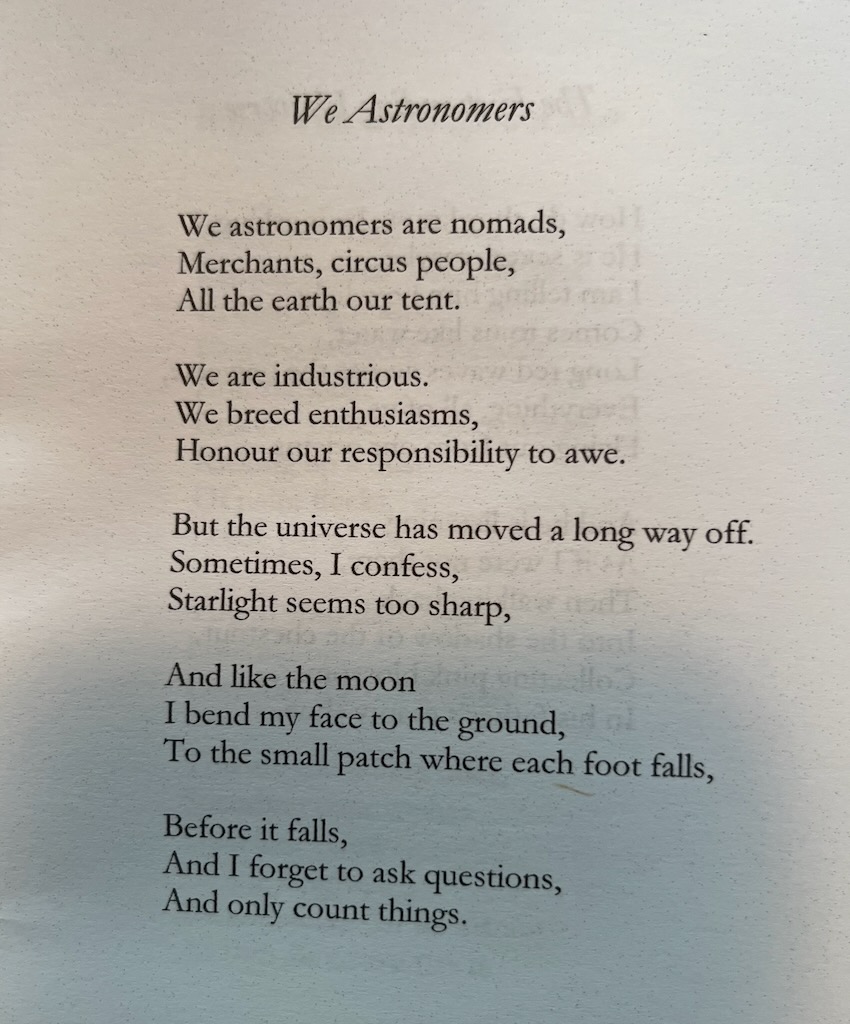
rebecca elson: astronomer + poetess

i’ve been on rooster time for weeks now, though there’s no rooster pecking about the nearby yards. the rooster resides in my little noggin where it cock-a-doodle-doos round about four, and i patiently wait till five. as if the nuns have granted permission and at last i can dash out from under the bedsheets and into the playground that is my kitchen table at that early early hour.

ostensibly i’m up to write, to think, to edit. and i do get to that. i always do. but first i soften into morning turning pages. in other words: i read.

it sometimes seems my mission here is morphing into something more along the lines of slipping poets under your noses; writers, too. any weavers of wonder i happen to happen upon. this week i happened upon an astronomer poet, a brilliant soul who died too soon at 39. she spent her life mesmerized by the heavens, and hers was the gift of reaching into the stars, scooping up a glug of moon, and giving us a taste.

her name was rebecca elson (1960-1999), a canadian-american who at 16 began her studies at smith college, and would go on to earn her PhD from the university of cambridge, somehow fitting in years at radcliffe college and harvard teaching creative writing as well as an expository writing course on science and ethics. at cambridge’s institute of astronomy she was awarded an isaac newton studentship, meaning they paid for her to be there. it’s where she died, amid a field of star embers, i do hope.

her posthumously-published slim volume of poetries and extracts from her notebooks is titled a responsibility to awe (carcanet press, 2001). that title alone is poetry, and tells you all you need to know. in four short words, some might argue, it lays out our holy purpose. our one assignment while we’re here on planet earth, that little orb floating amid a universe of burning flecks of star dust and helter-skelter sky litter (though there’s nothing remotely litter-ish in even one celestial orb, from jupiter to milky way, to the not-yet-named planet L 98-59 f (identified just last month!, the fifth such planet in a splotch of far-off space unpoetically named L 98-59, a system of “remarkably diverse worlds.” little f is orbiting so close to its star, it’s possible liquid water might exist there, the scientists tell us.)

back to rebecca, known to those who loved her as becky. soon as i read the words astronomer and poet coupled in a pair, i was drawn magnet-like to snatch up a copy of her awe-struck works. it’s considered a contemporary classic, in the world of poetries. and not a line of it disappoints. among the pages that left me awe-struck: an ode to discovering zero; another asking what if there were no moon? (her reply: “there would be no months / a still sea / no spring tides / no bright nights / occulations of the stars / no face / no moon songs / terror of eclipse / no place to stand / and watch the Earth rise.”)

a mind as facile and deep as one that imagines darkest night, scans heavens for answers to questions others never even think to ask, is a mind i want to enter. to add my footprints to the paths that have traversed it. as if, in poring over her way of seeing, i too might see more vividly.

that rebecca/becky died too young of a cruel cancer (isn’t every one a cruel one?) added but another element to my quest to know her by her words. her masterwork is considered her six-stanza poem, “antidotes to fear of death.” she begins (as only a star-studier might): “sometimes as an antidote / to fear of death / i eat the stars.”

from there, extracts from her notebooks follow, and we almost watch a mind at work. as she cobbles poetries, we see the words struck out, the finer ones she chose instead. we see, in a swatch titled “origins,” her change of mind, in the line “shaken in the dark soil soul of space.” soil, a richer word (more unexpected) than soul here. we see adjectives get ditched, as she pares and pares her lines. titles of poems are revised. it’s a nimble mind, exercising in the gym, and we are peering through the windows.

two years after elson’s death, the economist, in 2001, named responsibility to awe (her one published poetry volume, though she published 56 scientific papers in her short life) a “book of the year,” writing “with great poignancy, she shows us the world through the eyes of a human being faced by her finite time.”

the bulletin of the american astronomical society, in their roster of supernovae gone dark, described the breadth of elson’s scientific research, her work ranging from “a search for stars in the halo of our own galaxy to regions of rapid star formation halfway across the Universe. She set strong limits on the contribution normal stars could make to the Milky Way’s dark matter halo, using counts from the Hubble Deep Field to rule out a significant stellar component.”

maria popova, who first pointed me to the poet-astronomer, calls her poem “antidotes to fear of death,” a “stunning cosmic salve for our creaturely tremblings of the heart.” she recorded a recitation of it, set against the mournful strains of cello, for her 2020 “universe in verse” extravaganza, popova’s “annual charitable celebration of the science and splendor of nature through poetry.”

elson, whose book now rests beside me, belongs in that rare constellation, a favorite of mine, of those who study the cosmos and, side-by-side the formulae and theorems, see the poetry, and draw it forth: loren eiseley, lewis thomas, robin wall kimmerer. they and their ilk (there are more and more) hold a sacred space on my bookshelves. without them, there are volumes i’d not see, musics i’d not hear.

the back jacket of responsibility to awe says it best, describing elson’s work as “a book of poems and reflections by a scientist for whom poetry was a necessary aspect of her research, crucial to understanding the world and her place in it, even as, having contracted terminal cancer (non-hodgkins lymphoma, diagnosed at 29), she confronted early death.” the text goes on to say that elson was an astronomer whose work took her “to the boundary of the visible and measurable.” isn’t that the space we’re all drawn to, meant to explore? isn’t that where theologians and mystics ply their minds? isn’t that where simple us might wonder too?

in the end, elson, like all who dare to ponder deep beyond the lunar surface, was “undeterred by knowing how little we can know.”

and thus we all now have our one assignment: to search undeterred for what we can. knowing there is majesty in the mystery, and beauty far beyond what we’ve yet glimpsed. our responsibility, of course, is always, always to awe.

where did you stumble into awe this week?

i’ll leave you with a page. . .

have a blessed, awe-filled week….


oh, i promised my dear friend wini i’d share this wonderment she is bringing to town (town being chicago, or the northern environs to be specific). wini is a poet, and she’s worked closely with, and had one of her poems judged “best in class” by the marvelous poet rosemerry wahtola trommer. wini, who makes things happen, invited her and now is inviting all of us for a day of poetries. part workshop, all wonder, it promises to be a day to remember. here are the details, courtesy of wini:

Come experience the gorgeousness of poet, teacher, and storyteller Rosemerry Wahtola Trommer. This event is about more than just poetry; it’s a chance to listen to what is true in your heart and open to “The all of it — the Beauty and Sorrow.

It is beyond lovely to be in-person with Rosemerry, and truly what a treat to sit in community again with like-minded people, and to uplift and celebrate each other’s beauty and light.

I hope you’ll join us. It would be so lovely to see you again.

  • When: Saturday, September 27, 9:00 a.m. – 3:00 p.m. (lunch included)
  • Where: Valley Lo Club, Glenview, IL
  • Details: Three different ticket prices are available.

Buy your ticket here

thank you, wini, for bringing this priceless gift…..

acquiring acquaintances: another name for pen pals

it started because months, or maybe years, ago, i stumbled onto a poem that took my breath away. it was written by a poet i’d not known of, didn’t think i’d ever read. but the poem, titled “Nativity,” stayed with me, a poem that paints the first Christmas scene in strokes and shades that settled deep into my marrow, and forever more are the Christmas i imagine.

it’s a poem that lays the baby Jesus in a rough-sawn barn, the air pungent with animal. “the wind tugging at the shutters.” there is nothing gilded about it. and it was written, i knew right away, by someone at ease with being small, tucked off in a corner keeping watch. it was written, i could tell, by someone whose very veins course with humility, and understood a God who preached the same, a God who asks us to get about the business, the holy business, of loving as we would be loved without noise or bombast or folderol.

the poet’s name is kenneth steven.

it turns out he lives on an isle on the scottish west coast, a place where the wind might tug at shutters. and it turns out he is something of a polymath: a poet, a painter, a children’s book writer, a translator of great works. and, above all, something of a pilgrim, a pilgrim seeking the quiet beauties that punctuate the everyday. he calls them “atoms of delight.”

and he writes of pilgrimage: “the word is often used to describe the journey to a shrine or sanctuary in search of spiritual transformation, which is a meaning i acknowledge. but now pilgrimage has become a much bigger thing for me; it has gone far beyond that rather heavy and medieval sense of going on a journey to visit a holy site. why shouldn’t it be about a walk to a hill loch to listen to the impossibly beautiful singing of red-throated divers? why shouldn’t it be about a child running into the forest in the early morning to find the treasure they dreamed of? these are journeys of the heart, seeking the profoundly precious places where little miracles happen. and why shouldn’t it be about panentheism—the finding of God in all things?”

it’s not hard sometimes to recognize a kindred soul.

what is hard is to imagine finding yourself in conversation with such a kindred someone. but that’s what’s happened. kindness is the thing that opened the door, his kindness. in a world ruled by transaction, where fees are paid and contracts signed for any exchange of goods—be it words or bricks or lumber—kenneth steven lives otherwise.

i found that out not long ago, when, during the editing phase of my next book, i dove into the task called “permissions,” in which for any chunk of text—poetry or prose or lyrics to a song—beyond a certain measure, you must secure permissions from its author. this can be a costly exercise. and it is always one that makes me quiver, wondering what walls i’ll encounter, and what cold-shouldered hubris i might have to tiptoe through.

it’s that poem, “Nativity,” that’s stayed with me all these years. and i’d included the whole of it, eight lines, at the start of an essay that i hope to include in the book.

wondering if i was whistling into the wind, i sent off a proper letter, the digital kind, and shipped it cross the sea. i’d no idea if mr. kenneth steven would ever reply. but, lo and behold, come monday morning, there he was, tucked kindly in my mailbox. and more than generously writing: “of course you are more than welcome to use the poem. i’m sure you’ll mention where you found it.”

and thus, with the stroke of his generous heart, a friendship has unfolded. and a treasure trove of poetries have now brushed through me. and i am richer for this scottish friend who, as a boy, awoke one night at midnight, and hearing a great and ferocious wind, hurriedly dressed and left the house, where he climbed a hill in howling winds, before crossing through a field to reach his favorite tree, where he knew the horse chestnuts would be falling, and he was out to save them, to gather them up. “i felt given a whole world,” he writes in an essay about the midnight escapade. “it was about the autumn and the big winds, and the thrill of running up that long hill and entering the field at last at what felt like the middle of the night.” and the indescribable delight of knowing “that all this treasure was mine.” the treasure: a cloth bag of chestnuts shaken from the limbs, their deep and woody smell, orbs that looked as though they were made of shoe leather.

befriending him, he who writes me every day now, sometimes more than once a day, is magical. is akin to befriending any of the authors from my childhood who’ve long entranced me, drew me into storybook tableaus: tasha tudor; e.b. white; frances hodgson burnett, who wrote the 1911 children’s classic, the secret garden, a book that featured my holy trinity—an orphaned girl, a padlocked garden, and a robin redbreast that finds the key—and once prompted me to fake a fever so i could skip church one sunday to stay at home and turn its pages.

long ago, when i’d be asked if i’d ever want to write a book, i demurred, brushed away the thought. didn’t think i could hold a thought long enough to pen more than a few pages. i didn’t know, though, that the magic of a book comes in all the threads unspooled along the way. threads that carry me to places far and wide, and to souls i’d never otherwise know. but words, like little birds, or prairie seeds, catch on the wind and settle into fertile loam. and we are richer for them.

in much the way, my beloved chairs, through all the words and all the years, have become my dearest treasures.

bless you.

love, bam

have you a penpal in this digital, globe-crossing, email world? someone you’ve not met but who seems a certain friend?

i promised kenneth i would share word of his beautiful meditative podcast, Imagining Things, on the patreon platform. recorded in a studio that seems to be just behind his island home, you can sometimes hear the scottish winds blowing off the atlantic, and a bird or two not far away. (or maybe i’m imagining.) and of course he speaks in a scottish-soaked timbre, and in between reflections he shares poems that will make you hit rewind so you can listen once again, so breathtaking are the lines.

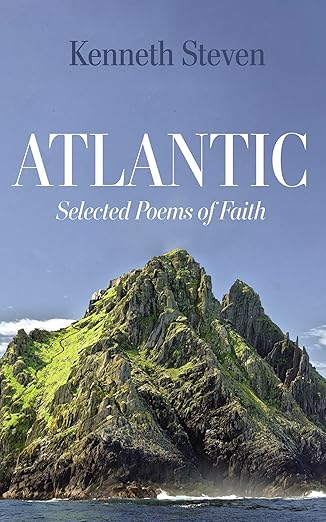
his latest book, one that should be landing on my front stoop within days, is Atlantic: Selected Poems of Faith. but i’m already deep into Atoms of Delight: Ten Pilgrimages in Nature, and Iona: New and Selected Poems.

incurably circuitous

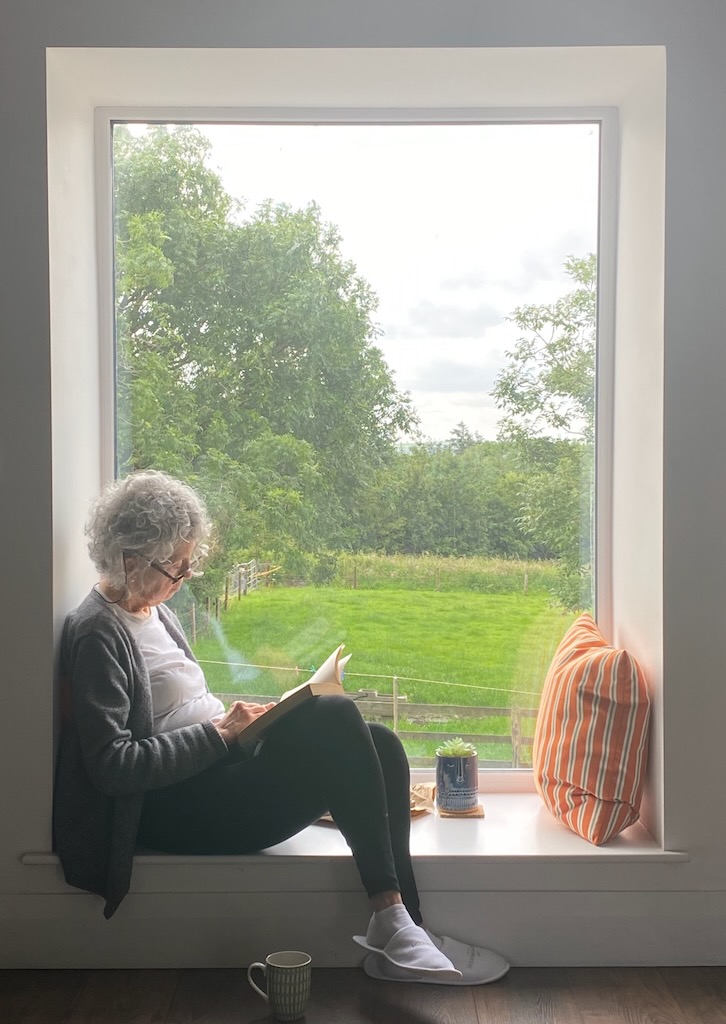
my favorite reading nook in all the world. o’connell’s dairy farm in drumellihy, county clare

i tried. i truly did. it seems i’ve, well, failed. if failed is the verdict we choose to put to the determined effort to concentrate, to focus, to linearly follow page after page.

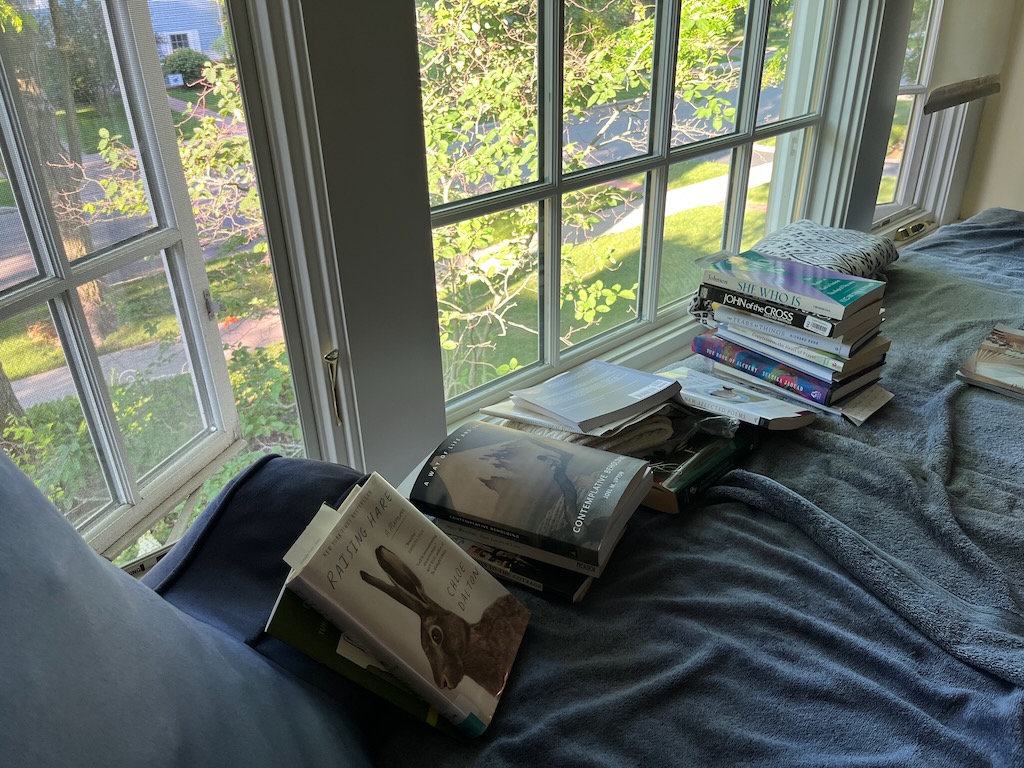
instead i am a jackrabbit of a reader. i cannot, for the life of me, trace a straight line. one minute i’m attempting ulysses, starting with an easy reader after traipsing the trail of leonard bloom through dublin. another minute i’ve decided pope francis’s slim collected works, against war: building a culture of peace, is the page i need to put to heart. then it’s onto raising hare, a love story so gentle i found it the perfectly prescribed balm in a week when bombs fell and mistruths fired right, left, and sideways.

i know full well that i set out to stick to one and only one tome till i—or summer—came to its end. etty hillesum was going to hold my attention. but my attention didn’t listen. it was distracted. as it so often is.

my irish poet penpal tadhg described rabbit holes, the literary divots i fall into, in charming irish terms not so long back. he makes every word he writes and utters sound poetic or profound, and he fails not here (his description of how it was that my last name leapt out and caught his attention during a morning’s meditation):

“Like the early Irish monks who doodled mystical nature poems on the margins of sacred manuscripts, I was distracted by the spelling of your name and wandered off, as those monks were wont to do (excuse the arrogant comparison), down a boreen (from Irish bóthairín, diminuitive of bóthar, meaning ‘road’, from the Irish ‘bó’, ‘cow’. A meandering pathway made by a cow).”

i am now—especially after strolling country lanes pocked with aftermath of bovine traipsing—inclined to consider my rabbit holes in more bucolic irish terms, and think of them as my boreens, meandering pathways made by my cow mind.  

my boreen, in physical form, looks not bucolic at all. in fact, it’s rather a beehive of possible distraction, all piled and teetering hither and yon:

i cannot for the life of me go straight.

besides gulping down my friend tadhg’s glorious meditations on the stations of the cross, i found my nose deep in raising hare (see last week’s mention), and am tucking in my overnight bag practice of the presence, a glorious little tome of translations from one of my favorite saintly souls ever, brother lawrence, whom i think of as the patron saint of pots and pans, though in fact he’s more oft referred to as the friar of pots and pans, and ultimately the friar of amour (love). he’s the humble little monk who toiled fifty years in a monastery, forty of those in the steamy kitchen, and thirty as a sandal repairer (monks wear through their soles on the road to polishing their souls). he described himself, famously, as “a clumsy oaf who broke everything” in his early attempt at being a hermit, and then a footman. when at last he found the monastery at 74 rue de vaugirard, he found his peace and his place.

and in him, i find mine: the gentle, humble soul who finds grace and God in the most quotidian of daily tasks, and spends his hours in the company and comfort of the Author of It All. even in the steamy monastery kitchen.

what’s notable is that dear brother lawrence hated kitchen work, but in his biographer’s writings it’s told that he did it “with the greatest love possible.” and that his practice of the presence of God in the most ordinary of moments, stirring a kettle, pulling trays of bread from the oven, “grew like dew, or mist on mountains.”

the translation i’ve just found, by carmen acevedo butcher, is extraordinary in the fullest measure, and might be the soothingest read yet of this hot summer.

the little monk’s spiritual maxims, work gently, be humble and authentic, includes this boreen (meandering cow path, remember?) on the highest reach of the soul, writing that in true spiritual union:

“the soul is not asleep as in the other unions, but finds herself powerfully stirred. its activity is more intense than fire, and brighter than the sun when not obscured by cloud. we can, however, misunderstand this feeling, for it is not a simple expression of the heart, like saying, ‘my God, i love you with all my heart,’ or other similar words. no, it is an i don’t know what, a je ne sais quoi of the soul, a something indescribable, loving, and very simple, that carries the soul and nudges her to love, respect, and embrace God with a tenderness that cannot be expressed, and that only experience can conceive.”

to this indescribableness, i dive deep. turning page after page. in no particular order. but trusting i’ll find the grace i seek.

may your distractions, too, carry you to lofty heights and voluminous depths. what distracted you this week?

before i go, and scurry off to a writerly retreat at my dear friend katie’s on the lake, i am sending love without end to my beloved friend andrea whose birth we celebrate tomorrow, and who is closing the book on one fine chapter of her life on the same day. i love her dearly. her wit, her hilarity, her unconditional and undemanding love. she is like no other.

there are a few brother lawrence books out there, but the one i’ve just procured and cannot recommend more heartily is carmen acevedo butcher’s, from broadleaf books. you can find it here.

finishing school

i suffer from a common ailment. especially among a certain breed of bibliophile. i don’t finish. i start, enthusiasms drawing me in like ink to a blotter. pages are turned. pens pulled forth and margins scribbled with scrawl. and then another seductress comes along. another delectable enticement: author. idea. or merely a title.

and it happens all over again. 

i’m talking books, of course. and my long-held habit of starting and stopping. 

start. stop. rinse. repeat. 

crack open the binding, turn pages, ink it all up. add to the pile. the towering, toppling, could-knock-me-out-if-it-fell pile of books. 

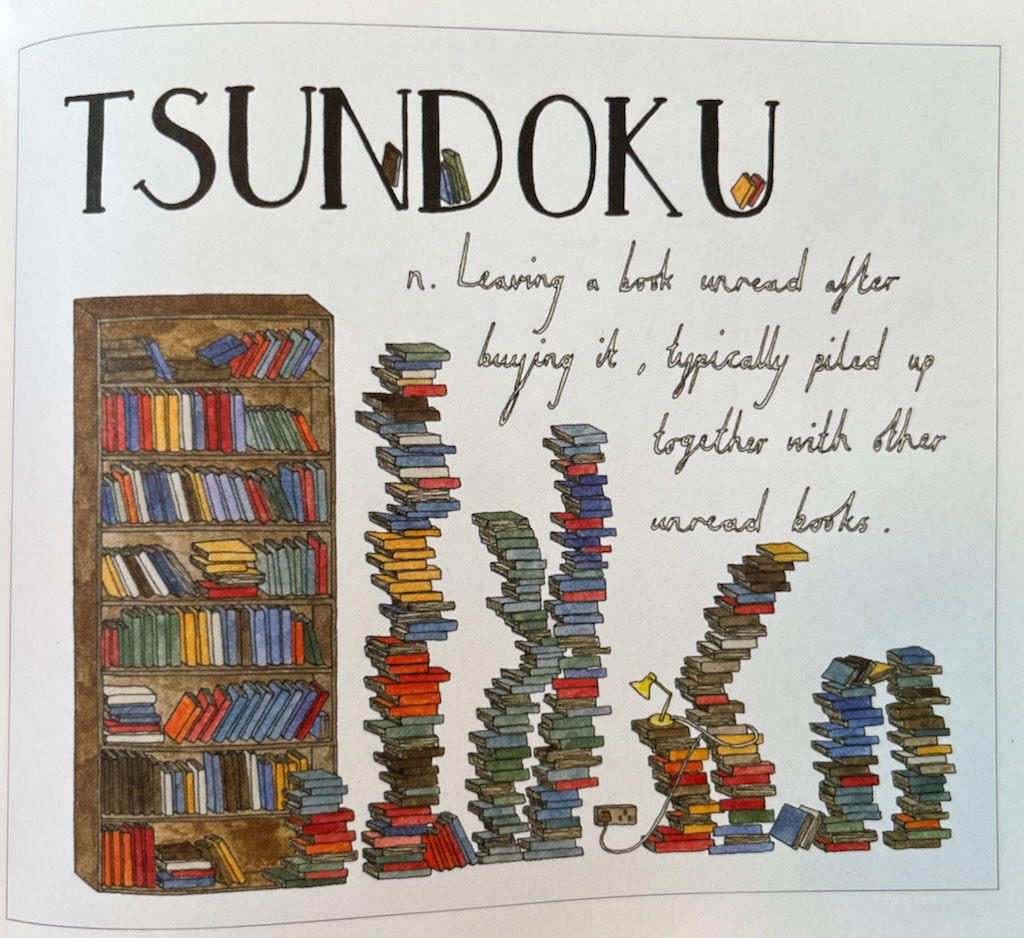
there’s a name for the ailment: tsundoku. (積ん読)

it’s the japanese word meaning, quite literally, “reading pile.” nowhere in the definition—“the phenomenon of accumulating books but not reading them”—would you find evidence of the lethal nature of said phenomenon (ten books falling on your nose will leave a dent). nor the drip-drip-drip of guilt that accumulates every time one sashays past said pile and fails to move forward in a page-turning way. 

so i’ve hatched a plan, an antidote to what ails me. i call it finishing school. i shall, in the summer months ahead, the months when the sun is strong and summer sounds abound, commit to a single purpose: one by one tracking my way toward the last sentence of at least some of the many books piled on my nightstand, my reading nook, my writing room floor, and most any other horizontal plane sturdy enough to hold a vertical biblio-ascension. 

by virtue of this determination to see literary arcs through to the end, i shall be relieving all of you of the task of checking in on the chair to see what’s astir. i am intending to post mostly what leaps off the pages, as i plod along through plots, poetries, and otherwise paradisiacal paragraphs. 

i envision something of a commonplace summer reading adventure, in which we all can chime in with any ol’ ‘graph or line that makes your heart thump, or your eyes fill with tears. 

my summer’s focus will be more reading than writing, at least here. 

the writing portion of my summer will apparently have me bent over the keyboard tapping out pages for a new project i’m not yet free to chat about. there’s an end-of-summer deadline, i do believe, so i’ll be burning up the keys to make that happen. and my refueling time will be spent deeply in reading. in finishing, specifically. 

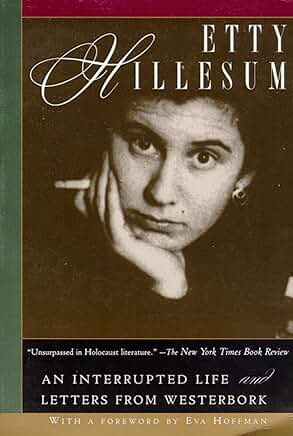
i plan to officially begin my finishing school with a book that’s tugged at me for years, one i started and loved, and truly need to wade deeper into. it’s etty hillesum: an interrupted life and letters from westerbork. begun in 1941, nine months after the netherlands fell to hitler, it’s the epistolary journal of a young dutch jewish woman who traces the darkening shadow of the nazi presence in her homeland as well as her own moral awakening before her death at auschwitz in november of 1943. it seems as essential a book in my stack as any there is. and i’m committing to etty.

back in 1986, in a review of the book in the new york times, michiko kakutani wrote this: 

“All Holocaust writings, of course, must deal with the inadequacy of words in the face of events that defy the imagination, but while Miss Hillesum frequently speaks of her inability to convey the awful magnitude of events around her, she proves herself a most eloquent witness to history—a witness whose grave yet shining testimony attests to the resilience of the human spirit in the face of incalculable odds.”

it seems a book for this moment.

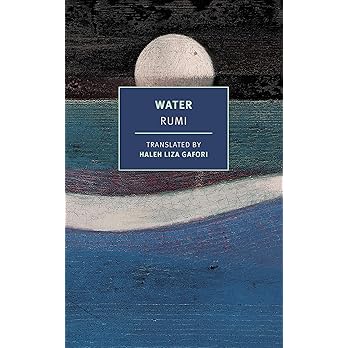
and even though the official starting bell hasn’t chimed, i tiptoed into my project this week by reading start-to-end not one but two magnificent poetry collections: water, by rumi, translated from the farsi by haleh liza gafori (new york review book classics), the second volume of gafori’s translations of the thirteenth-century persian poet (the first one, unfinished but in my pile, of course, was gold, acclaimed for its fluid rendering of rumi’s lyric ecstasies). water’s essence is Love, capital L, gafori writes in her introduction, in which she claims: “Love is a 360-degree embrace of creation, a compassionate acceptance of what it…Love is our unobscured essence, at the root of the root of all creation…Above all, Love is a practice.” 

and but one line that took my breath away in the poems themselves, was this: “Come or go, Love told me, / I am here, closer to you than the vein in your neck.” 

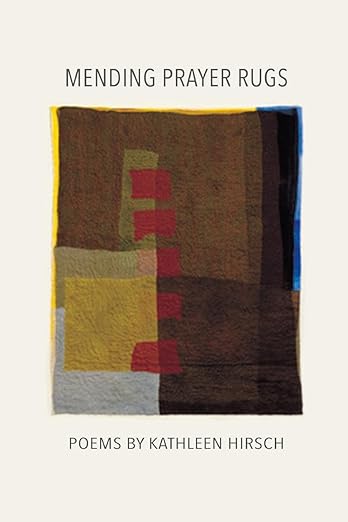
and the second collection of poems i gulped down, start to finish not once but twice, was a book i bumped into quite by accident and whose author immediately swooped into the inner circle of kindred spirits. it’s titled mending prayer rugs, poems by kathleen hirsch (finishing line press), and this collection mines the sacred amid the quotidian, with a particular focus on women of prayer, women whose wisdom is hard-won, be they women from the Bible, craftswomen, workers, wanderers or women we recognize from among our own generations.

in her opening poem, “prayer rug,” hirsch (a longtime journalist and spiritual director) writes in the voice of a woman i imagine with gnarled knuckles and fading eyesight, the cost of a lifetime spent pulling needle and thread through the tatters of prayer rugs for those who prostrate in prayer: “I bend in blessing toward all that breathes: / May each hour enlarge the pattern— / rose dawn, wind song, tender shoot of faith— / that I may see the weft of the hidden weaver.

the weft of the hidden weaver. another name for the Unnameable One. it is the metaphors of poetry that catch the breath in our throats, and frame our seeing anew.

lines such as this, a line that had me choking back tears in a poem titled, “in the end”: “Kiss the light / before it dies / leave those you love / the heirlooms of your passion, your gratitude, your tears.” 

i envision a magical summer. 

straight through to the end. 

will you read along?


a subtly transgressive little poem from the bard of the bluegrass state:

The Hidden Singer

The gods are less for their love of praise.
Above and below them all is a spirit that needs nothing
but its own wholeness, its health and ours.
It has made all things by dividing itself.
It will be whole again.
To its joy we come together –
the seer and the seen, the eater and the eaten,
the lover and the loved.
In our joining it knows itself. It is with us then,
not as the gods whose names crest in unearthly fire,
but as a little bird hidden in the leaves
who sings quietly and waits, and sings.

+ Wendell Berry

p.s. a bit more on tsundoku: The term combines “tsunde-oku” (積んでおく), meaning “to pile up ready for later and leave,” with “dokusho” (読書), meaning “reading books”. 

a note: i’m sensing we all need to shake off some of the routines of our lives that begin to feel too confining, and i don’t ever want the chair to feel that way. so my intention is to be a little bit looser about it, but still to leave faint tracings here on the table, should you happen by. summer for me has long been synonymous with reading, and thus a reading project. feel free to bring your favorites.

summer’s fever pitch

i feel it, as if a whoosh about to come, when suddenly i’ll be sitting wrapped in a sweater looking out at the glistening autumnal goldenness, asking myself “where did the summer go?”

maybe we all feel it. maybe that’s why there’s a fever pitch in the air. squeezing in those few things you would not let pass by in these summery months: the sitting outdoors with a breeze in your hair, as you order your food and let someone else do the cooking; the staying up late, under the stars, talking the night away with the college kid who, once he’s gone, might go weeks without finding time for a phone call; throwing a towel on the sand, baring your arms and your legs, sensing the splash and the roar of the waves just inches away, and hours later, perhaps when sliding into your jammies, unplucking the last stubborn grains of sand from in between your toes. because summer is all of those things. 

summer is for savoring because summer, like any season when we’re keeping close watch, is fleeting. evanescent, a fancy name for flashing by. 

we all have our own definitions for the season of indolence, the season when sloth is not only allowed but welcomed. what makes it special in my book are the moments i dare to break rules, do what otherwise might count as overindulgence (oh, my catholic childhood––just post-baltimore catechism––does continue to hold me in its clutches). 

i remember as vividly as anything the summer’s night when my mom and i sat in the dark of the kitchen, our backs pressed against the fridge, with an aluminum pan of chilled fudge (the kind you made from a box) and two spoons and we giggled like schoolgirls trying out truancy. 

sometimes what makes summer summer is simply its sense of abandon, the que-sera season, i’ve called it.

i remember chasing through the yard with a glass jar and a lid poked by a nail, in quixotic pursuit of the flickering lights of the firefly. (speaking of fireflies, how’s this glorious expression thereof: “To behold the skywriters tracing poesy in summer’s vapors, to decipher their sticky sweet nothings, their blinking reminders that we are meant to shine in our short time.”) i remember running barefoot, something i’ve not done in a long, long swath of years.

nowadays––now that trays of fudge are no longer, and chasing through grass in the dark would count as orthopedic risk––summer is finally getting to sink into a book once the work of the week is turned in. summer is piling high whatever i find in the fridge, and calling it “salad for dinner.” summer is waking as soon as the birds start to sing, so i can sneak into the day ahead of the blistering heat. 

mostly nowadays, summer is holding on tight to the hours i’ve got before the boy i so love packs up and goes. back to college, one last time…

how do you define summer? and what are the summery moments you’ll never forget?


summer reading:

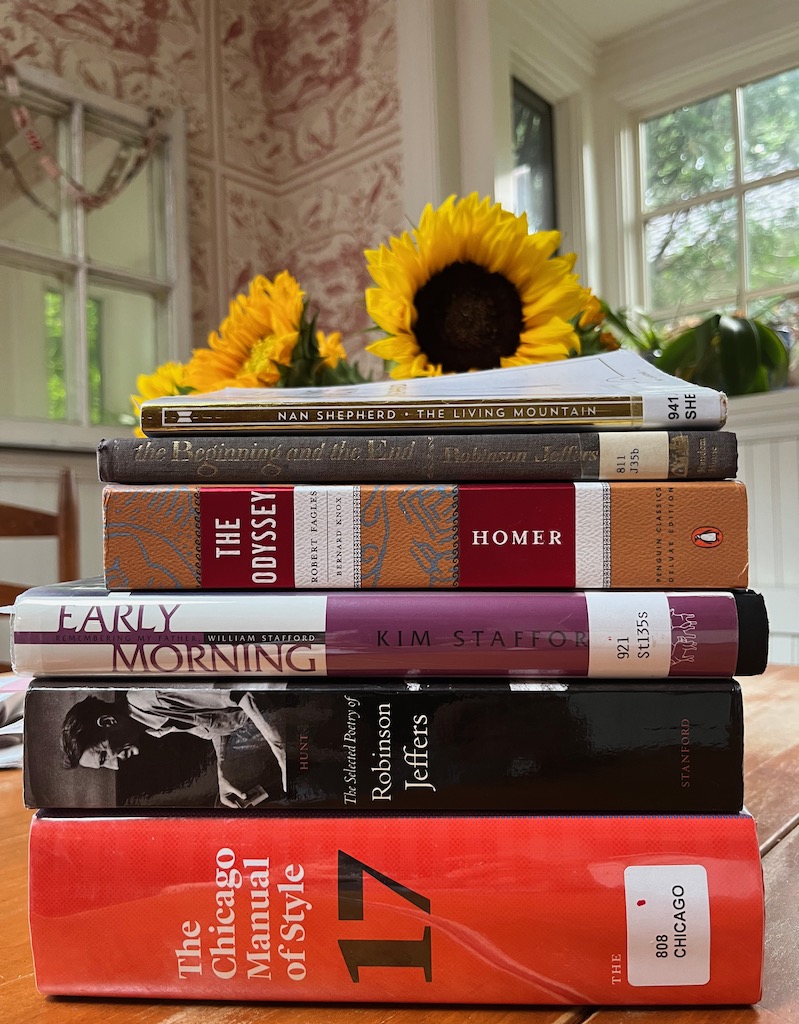
these are the books i’m diving into once i turn in my latest round of pages scoured and scrubbed of all typos and bloops. my stack inspires me….

The Living Mountain, by Nan Shepherd, introduced by Robert Macfarlane, afterword by Jeanette Winterson: a masterpiece of nature writing, first published in 1977, describing Shepherd’s journeys into the Cairngorm mountains of her native Scotland.

The Beginning and the End, and Other Poems, by Robinson Jeffers
The Selected Poetries of Robinson Jeffers, edited by Tim Hunt: The bard of the California coastline, a giant of modern letters who somehow has gotten a bit overshadowed, but whose capturings of words crash against me like the Pacific surf.

Early Mornings, by Kim Stafford: A biography of the great poet William Stafford,  a pacifist who called himself “one of the quiet of the land,” written by his son, a poetic force all his own.

The Odyssey, by Homer: Because it’s about time.

The Chicago Manual of Style, 17th Edition: Because it’s every page-proofer’s best friend. Or it should be.

i also just started karen armstrong’s The Case for God, and oh dear gracious, it’s blowing my mind. i’ve borrowed it from the digital library, but i already think i might need to grab a page-turning copy cuz just a few chapters in, this is already a book screaming for marginalia…

a snippet of summer poetry:

‘Can we learn wisdom watching insects now,
or just the art of quiet observation?’
from ‘Summer of the Ladybirds’ by Vivian Smith


summer cooking, er, non-cooking: 

i’m trying this for tonight, perfect in a week when there’s not much cooking time in between hours and hours of page proofing

Corn Salad With Tomatoes, Basil and Cilantro
By Genevieve Ko

INGREDIENTS
5 ears of corn
1 pint cherry or grape tomatoes, halved
1 lime
3 tablespoons extra-virgin olive oil Salt
1⁄4 teaspoon minced seeded fresh habanero or other very hot chile (optional)
(*i’m adding a pinch of ground ancho chile peppers; maybe more than a pinch)
1⁄2 cup fresh basil leaves
1⁄4 cup fresh cilantro leaves 

PREPARATION
Step 1
Microwave the corn in their husks on high for 3 minutes. Shuck the corn — the silks will come off easily. (If you want to boil or steam the corn on the stovetop, you can shuck the corn first then cook just until brighter in color, 2 to 3 minutes.) Cut the kernels off the cobs, transfer them to a large bowl and add the tomatoes. 

Step 2
Finely grate the zest of the lime directly over the corn mixture, then squeeze the juice from the lime all over. Add the oil, a generous pinch of salt and the chile, if using. Mix well, then tear the herbs over the salad and gently fold them in. Season to taste with salt and serve, or refrigerate in an airtight container for up to 1 day. 


until i wrap up this little old book in the works (final deadline, end of august), i’m continuing on in the spirit of the gazette, that old-fashioned compendium of things worth tucking under your belt for the day (not that any of my scribblings above so qualify).

and while we’re at it, and in case you’ve ever wondered where in the world the word comes from: gazette is “a loanword from the French language, which is, in turn, a 16th-century permutation of the Italian gazzetta, which is the name of a particular Venetian coin. Gazzetta became an epithet for newspaper during the early and middle 16th century, when the first Venetian newspapers cost one gazzetta.”

and, with that, may yours be a summery week. however you define it.

and so we wait…

IMG_1376

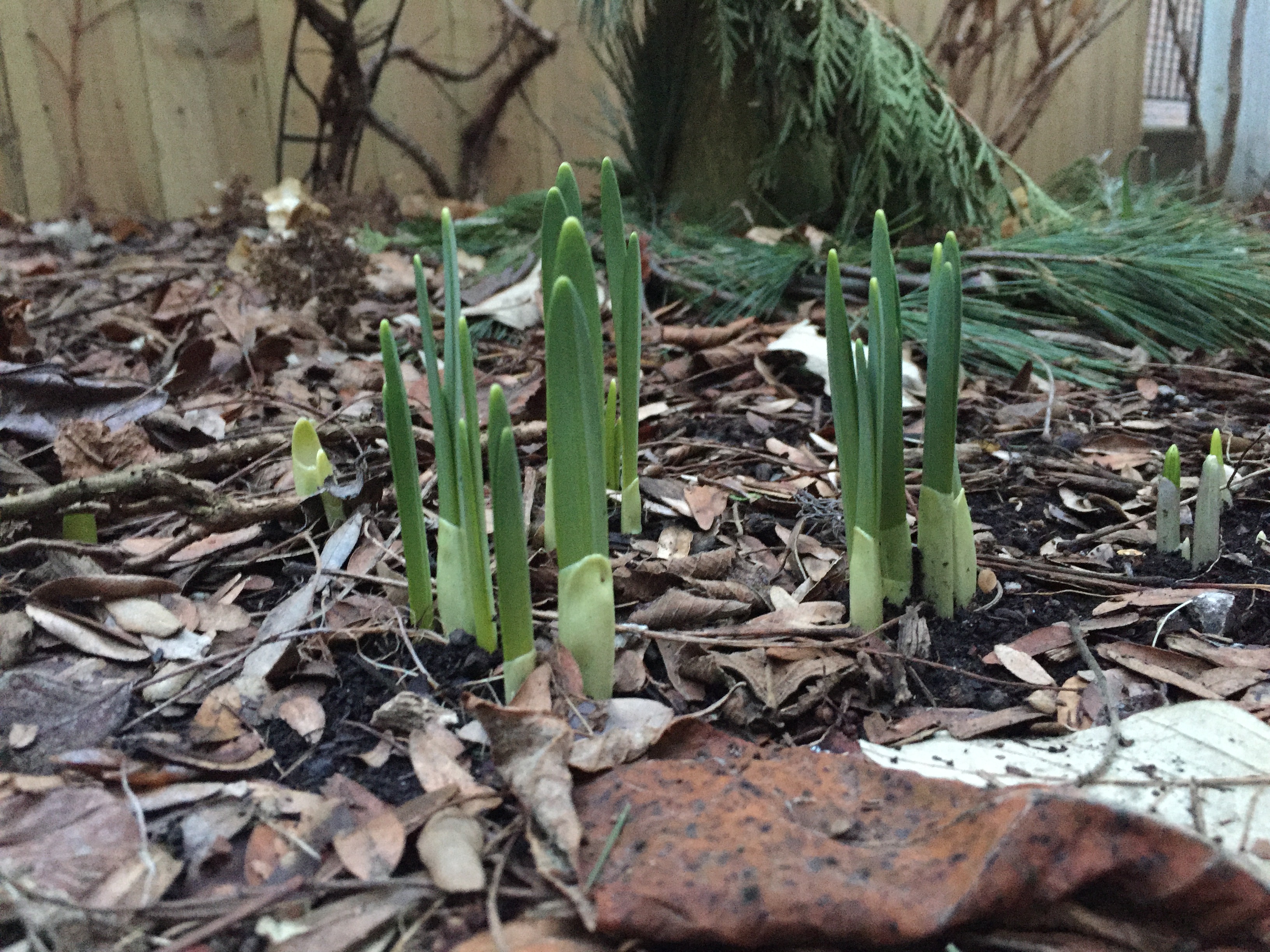
down where the earthworms stir, there must be stirring. all the science books say so. but from here, at my kitchen window, it takes some convincing to buy into the notion that this here is springtime.

i know the calendar says so. i know sun and planet earth did their vernal doh-si-doh, as big ol’ sun inched its way north across the equator at 4:58 p.m. (chicago time) day before last, and suddenly spring had sprung. but round here, there’s not much springing to be spied. we’re in the crouch-down-low days of earliest spring, when your knees have to get in on the act if you really want to catch mama earth in her opening numbers.

the surest sign that earth is a rumbling is what’s happening up in the trees. and i don’t mean the leaves. i mean the cardinals, flitting and chasing and carrying on like red-feathered banshees. males chasing males. aerial cartwheels. rabid games of catch-me-if-you-can. male and female flirting like nobody’s business. pheromones must be filling the air. the occasional female butting in on somebody else’s romance. (oh, the vociferous protest!) it would be safe to assume baby cardinals — flocks and flocks of them — will soon offer proof of unseen ornithological joinery.

me, i’m just stationed here at my old maple table, filling my hours with words — birdsong as backdrop. my lifework seems to have settled into the sedentary task of reading and writing. my eyes and six of my fingers seem to be the only moving parts of me many a day. my brain, though, and my soul and my heart, they’re all deeply engaged. it’s just that, from the outside, you can’t see them expanding. sort of like the hard work of mama earth in springtime. sort of like what’s happening down where the earthworms wriggle. (or start to think about wriggling, anyway.)

the stacks by my side seem to grow taller and taller. occasionally teeter. if i’m not careful i’m going to turn into a hoarder. a hoarder of big ideas and snippets of poetry. not a bad affliction. this week alone i welcomed these fine friends to my flock: the late essayist and editor brian doyle (a book of uncommon prayer: 100 celebrations of the miracle & muddle of the ordinary and god is love: essays from portland magazine); historian and storyteller extraordinaire jill lepore (these truths: a history of the united states; brilliant!); diarist etty hillesum (considered the adult counterpart to anne frank, her diary and letters, written during the darkest years of nazi occupation, testify to the possibility of compassion in the face of devastation, and the combined work —  diary and letters bound in a single volume — is titled an interrupted life: the diaries, 1941-1943 and letters from westerbork); two jewish books of blessings called “benchers,” prayers and songs in hebrew and english (for a class i’m teaching). and finally, and emphatically, mary oliver’s long life: essays and other writings. in the wake of her death, i have found myself reaching back into her bookshelf, finding titles i’d not known before. long life is a beauty, one from which i scribble and scribble, taking notes like a chimney — a poetry chimney — puffing up bellows of something like holy incense.

here are just a few bits i couldn’t help but add to my Mary O. litany:

30. “What can we do about God, who makes then breaks every god-forsaken, beautiful day?” — Long Life, p. 17 

31. “I walk in the world to love it.” — Long Life, p. 40

32. “All the eighth notes Mozart didn’t have time to use before he entered the cloudburst, he gave to the wren.” — Long Life, p. 88 

and then there are these two longer passages, which i tucked into my ever-growing file, titled “book of nature notes”:

“This I knew, as I grew from simple delight toward thought and into conviction: such beauty as the earth offers must hold great meaning. So I began to consider the world as emblematic as well as real, and saw that it was—that shining word—virtuous. That it offers us, as surely as the wheat and the lilies grow, the dream of virtue.

“I think of this every day. I think of it when I meet the turtle with his patient green face, or hear the hawk’s tin-tongued skittering cry, or watch the otters at play in the pond….” (Long Life, p. 87) 

“A certain lucent correspondence has served me, all my life, in the ongoing search for my deepest thoughts and feelings. It is the relationship of my own mind to landscape, to the physical world — especially to that part of it with which, over the years, I have (and not casually) become intimate….  

“Opulent and ornate world, because at its root, and its axis, and its ocean bed, it swings through the universe quietly and certainly. … And it is the theater of the spiritual; it is the multiform utterly obedient to a mystery.

“And here I build a platform, and live upon it, and think my thoughts, and aim high. To rise, I must have a  field to rise from. To deepen, I must have a bedrock from which to descend.…  

“It is the intimate, never the general, that is teacherly. The idea of love is not love. The idea of ocean is neither salt nor sand; the face of the seal cannot rise from the idea to stare at you, to astound your heart. Time must grow thick and merry with incident, before thought can begin.

“It is one of the perils of our so-called civilized age that we do not yet acknowledge enough, or cherish enough, this connection between soul and landscape — between our own best possibilities, and the view from our own windows. We need the world as much as it needs us, and we need it in privacy, intimacy, and surety. We need the field from which the lark rises — bird that is more than itself, that is the voice of the universe: vigorous, godly joy.”  (Long Life, pp. 89-91)

and thus, my dispatch from the muck days of spring….

what’s expanding your soul this week?

when the morning news brings harper lee

DSCF1273

this old house will be a newspaper house as long as fish wrap is dotted with ink. every morning, seven mornings a week, the first sound that reverberates around here — save for the pre-dawn robins who rev up their vocal cords — is the THWOP! of rolled-up papers plopped onto the front stoop (three separate wads each weekday and saturday, two on sundays). twice a year, when the bill comes due, a bill that topples into the hundreds for all that fish wrap, there’s no discussion. we don’t debate the wisdom of rolling out hard-earned cash for an inflow of ink and paper. because you never know what the news will bring. and we couldn’t live without the possibility of getting lost in sentences that swoop our hearts away. or the joy of flipping through a section and discovering a story we otherwise never would have tumbled upon. or the raw eruption of hot tears spilling on the page, as some account of awfulness carries us miles and miles from where we’re reading, and into dingy corners we’d not know were it not for the newspaper’s insistence on wiping out our ignorance and insouciance.

heck, this old house and half the people in it were practically built on the backs of newsprint. were it not for one chicago tribune’s newsroom, i never would have spied — and uncannily fallen hard for — the lanky fellow who became my lifelong paladin, and the father to our children (the two we call our only “double-bylines”).

still, not every morning brings what this one did; these words from the one spooning oat-y Os into his hungry gullet: “you’re gonna go nuts over this one.” and then he shoved before my eyes the front page of the wall street journal’s friday arts-and-culture section.

“the first chapter of harper lee’s new book,” he mumbled between Os, lest i miss the red-hot scoop, the unparalleled capital-e Exclusive, the biggest leak in publishing in plenty a while, the newspaper’s literary splash four days in advance of tuesday’s worldwide release of what’s being called the reclusive ms. lee’s “new novel.”

DSCF1270

actually, it’s harper lee’s old novel, “go set a watchman,” her first go-around with a manuscript, submitted back in 1957, when she was all of 31, to her new york publisher, j.b. lippincott.

as the book-peddling legend goes, ms. lee’s editor back then found the story “lacking,” and advised that the would-be author instead zero in on the flashback scenes, in what would become the searing tale of scout and dill and jem and atticus finch and boo radley, and racial inequity and empathy played out in small-town maycomb, alabama: “to kill a mockingbird,” the pulitzer-prize winner that went on to be named “the 20th-century’s best novel,” according to a vote taken by the nation’s librarians.

and so, before my first sip of coffee this morning, i was riding the rails with jean louise finch, aka the “scout” of mockingbird fame, as she “watched the last of georgia’s hills recede and the red earth appear, and with it tin-roofed houses set in the middle of swept yards, and in the yards the inevitable verbena grew, surrounded by whitewashed tires.”

i admit to having been among the skeptical when news of this “long-lost discovery” first made headlines. i admit to suspicion when word leaked out that the 89-year-old ms. lee’s not-long-out-of-law-school attorney just happened to find the manuscript tucked away in a safe deposit box, shortly after ms. lee’s 103-year-old sister, lawyer and lifelong protector, alice lee, had died. i worried that the not-altogether-with-it nelle harper lee might have been duped. coerced into publishing something she’d not wanted paraded through the glaring light of day, to say nothing of the folderol and zaniness sure to come after a half-century’s literary silence.

well, i’ve now read every word, every word the wall street journal rolled into print, and i’m here to tell you i’ll be among the ones in line to gobble up the next however many chapters ms. lee has lobbed our way. whoever was that long-ago lippincott editor who found the first-go lacking, i beg to differ. i’d not want to miss the chance to drink in a line like this one: “love whom you will but marry your own kind was a dictum amounting to instinct within her.”

or: “she was a person who, when confronted with an easy way out, always took the hard way. the easy way out of this would be to marry hank and let him labor for her. after a few years, when the children were waist-high, the man would come along whom she should have married in the first place. there would be searchings of hearts, fevers and frets, long looks at each other on the post office steps, and misery for everybody. the hollering and the high-mindedness over, all that would be left would be another shabby little affair a la birmingham country club set, and a self-constructed private gehenna with the latest westinghouse appliances. hank didn’t deserve that.

“no. for the present she would pursue the stony path of spinsterhood.”

dare you not to race out to add your name to the long list at the library, or order up your own copy from your nearest most beloved bookseller.

i for one will be inhaling every line, on the lookout for a passage equal to the one i just might call the greatest american paragraph ever penned, the one that makes my heart roar every time.

for the sheer joy of retyping its every word, here is one walloping passage from atticus finch’s closing argument in his defense of a black man wrongly accused of raping a white girl in the deep south of the 1930s. page 233 in my first perennial classics edition, printed in 2002:

“But there is one way in this country in which all men are created equal — there is one human institution that makes a pauper the equal of a Rockefeller, the stupid man the equal of an Einstein, and the ignorant man the equal of any college president. That institution, gentlemen, is a court. It can be the Supreme Court of the United States or the humblest J.P. court in the land, or this honorable court which you serve. Our courts have their faults, as does any human institution, but in this country our courts are the great levelers, and in our courts all men are created equal.”

heck, the whole closing argument — from the bottom of page 230, clear through to the fourth to last sentence on 234 — the whole magnificent thing was enough to make me a lifelong believer in the pen of harper lee. and the wall street journal’s gift this morning — slick as it was for the newspaper owned by the same outfit as lee’s new publisher, HarperCollins, to steal first crack at the watchman — twas a mighty fine one.

and an indelible reminder of why i’ll forever be a girl with ink pumping through her veins.

what’s your favorite line, or scene, or passage, from mockingbird? 

DSCF1272

and, for your summer reading’s consideration, here’s how the journal lays out the launch of ms. lee’s latest, under the news headline, “scout comes home”:

“The first chapter of ‘Go Set a Watchman’ introduces Ms. Lee’s beloved character, Scout, as a sexually liberated woman in her twenties, traveling from New York to Alabama to visit her ailing father and weigh a marriage proposal from a childhood friend. It also includes a bombshell about Scout’s brother.”

i’ll let you read for yourself and discover that bombshell…..oh, the joy of a byline we thought we’d never see again, one that bears the name harper lee.

crack the books

crack the books

any minute now, i’m hoping, the red truck might pull up to the curb — or what was the curb back before the mountains of charcoal-gray polar crust accumulated there, and eclipsed the sharp edge where front yard meets street.

if all goes as planned, there will be a larger-than-life rectangle poking out from under the blankets that billow, blankets intended to keep the rectangle’s smooth white planks from getting splattered with road salt as the red truck sped down the tollway from the pig barn just this side of the state line. the pig barn is where the planks and the nails and the smooth white baseboard and trim turned into a bookcase, all at the hands of my old friend jim. jim who wields hammer and jigsaw and who for the past 15 years has been building our dreams, one nook and one cranny at a time.

that is all to say that i’m at long last due to get that bookcase today. one i ordered up months and months ago ( i might not splurge on haircuts or pairs of jeans without holes in the knees, but i will fork up the cash to buy me a wall of pressed-tight spines). it’s a bookcase that’s soon to be home to the five unpacked book boxes hauled home from veritas U., and the dozen or so tumbling towers of tomes i plonked on my office floor in those long-ago weeks (two years and counting) when i left my downtown newspaper office and made this old garage my forever writing room.

there’s hope that i’ll be home alone for a good chunk of this weekend, and my fingers are itching to get at those books, to pull each one from the depths and the dark of its shipping box. to flip through the pages and sink back in time, back to the couch in cambridge where i looked over rooftops and scrawled in the margins. made notes. thought with my pen, in ink. where, for one sumptuous year, i tumbled and soared over the landscape of learning — learning of poetry and slave-trading, jim-crow atrocities, abolitionists and everyday saints, as well as the art and craft of narrative writing.

all those books — all those old friends: the poet donald hall; frederick douglas; virginia woolf; zora neale hurston; the list goes on and on — are tucked inside, and pulling them, one-by-one, from the shadow, hoisting them up to a shelf, will be an exercise in remembering, in discovering all over again just why as a civilization we believe in the sealing of words to the page.

it’s testament, all of it, to the power of being shaken to tears, the delight of traipsing upon a brand-new accumulation of letters whirred into a word we’d never imagined, the riveting thought that stirred me to pulling the tip of my pen clear beneath the words, as if to memorize, to absorb, to never forget the electrical force of that particular idea.

i boxed the books by semester, so with each tearing back of the seam, i’ll enter a particular epoch in the year that unlocked channels in my mind and deepened my heart and my soul. you can’t open a book, can’t draw your eyes across line after line and not emerge with new layers of knowing, of wondering, of hungering. not if the book’s worth the ink soaked into the page.

and that’s why it matters that those books emerge from their boxes and their vertical teetering stacks. a book belongs at arm’s reach. a book begs to be pulled from the shelf, to be shared, to be slipped in the hand of someone who might want to know, to discover. or to be sprawled once again across your very own lap, so you can read and repeat and recite. memorize a particular collection of words, and the wisdom for which it’s the key.

they’re overdue, all those tomes, to rise from the floor and climb up the walls. soon as the red truck rolls along, they’ll get on with their reason for being: to offer, over and over, the very words that lead us into the heart of truth, beauty and wisdom.

best done when perched on a shelf, ready for dispatch with determined tug of the spine.

some days writing is sheer exercise. you rumble your fingers in hopes of keeping them limber, and the brain cells to which they’re connected. this was one of those days — with 85 distractions, here, there and everywhere. 

because i can’t bear to leave you with such thin offerings, i am turning to one of the books from another shelf in this old house: abraham joshua heschel’s “i asked for wonder: a spiritual anthology.” the editor, samuel h. dresner, culled heschel’s writings for those passages — “so compelling are his sentences that a paragraph literally chokes from wealth,” dresner writes — that are the heart of the matter.

here’s one titled, “degrees”:

…Awareness of God does not come by degrees from timidity to intellectual temerity; it is not a decision reached at the crossroads of doubt. It comes when, drifting in the wilderness, having gone astray, we suddenly behold the immutable polar star. Out of endless anxiety, out of denial and despair, the soul bursts out in speechless crying.

and so i leave you with heschel, and keep my own eye trained out the window. searching and hoping for a sighting of the shiny red truck and the rectangle certain to put my life back in order. or at least some fraction of it, perhaps.

what books do you pull most often from your best-loved shelf?

this is what it looks like when a dream comes true….

book deadline

for as long as i’ve been holding pencils, folding clean white paper crisply in half, etching so-called “illustrations,” i’ve dreamed of this day.

the hours ticking down toward the deadline when the book — with signed contract — was due to the editor and publisher.

so this is what it looks like on that day. i type and type and type till my fingerpads are sore. i dream of words and sentences, and ideas plop into my head and shake me from my not-so slumber.

i was hurling toward the end, when suddenly, in that way that these things happen, a bit more was ordered up. so i am typing again. and frantically. and full of hope.

i am getting a bit teary, as i hear the rocky theme playing through my head, in that stadium between my eardrums. as i muster all the power of my thighs and calves to climb the stairs to heaven, and make good on long-held dream: to write a book, my book, a book stitched with all the heart and soul that i can muster.

i thought by now i’d be able to tell you it’s official name. the folks who decide these things spent all day yesterday pondering. but i’m still in the dark. it’s a bit like waiting to see your newborn babe. after all those months of imagining a button nose, there he slides, into your arms, and you drink in a face far more beautiful than you ever could have dreamed.

so i don’t know the title, and i don’t know what will grace the cover.

but i do know that my little typing desk is cluttered. with stacks. and dictionaries. and endless cups of coffee.

and some day soon, i’ll click the little button that says “send,” but it might as well say, “launch.” as in let your dreams go sailing toward the moon and stars.

folks around this little house are getting by on whatever scraps i can scrounge and spoon on plates. i’m trying to keep a foot in both worlds, but as the tempo builds, and deadline looms, it’s getting harder and harder to drown out the pounding in my heart, and the typing that keeps time. that propels me toward the finish line, the one i thought i’d never ever cross.

dreams come true. in storybooks and life. most especially, if someone you love keeps whispering in your ear: “i believe, i believe.”

to all of those who do, the deepest thank you.

this is short and sweet — and on deadline. apologies for breathlessness. soon as i find out the name of this endeavor, i’ll be sure to let you know. the chairs, after all, birthed all of this….

which of your dreams is the one that’s come true? and what propelled you up the final flight of stairs?