pull up a chair

where wisdom gathers, poetry unfolds and divine light is sparked…

settling in and summer serendipities

clippers, shovel, trowel. those are the implements of my tranquility. of returning to my roost and sinking in my roots.

i’m back from travels far and farther. old home seeps into all the crags and crevices. knows me as intimately as any living soul. the familiarity of this old house’s creaks and cracks, the way the one floorboard at the top of the stairs whines its arthritic whine (you too might whine if, for a good 85 years, you’d been underfoot to the clumsiness and weighty soles of so many), the way the light falls in at the same afternoon hour day after day and casts a halo on the old clock that never chimes the proper hour, it all is home to me. and it all comes rushing in, as if a tide pool filling once again, oozing into hollow parts now on their way toward sated.

i loved the adventure of my travels. loved being nursemaid to my boy. but coming home is, in deep down ways, where i belong. it’s in this old house that i finally found my peace. and, every time, it soothes me, quietly awaits me.

tasha tudor’s thumbelina

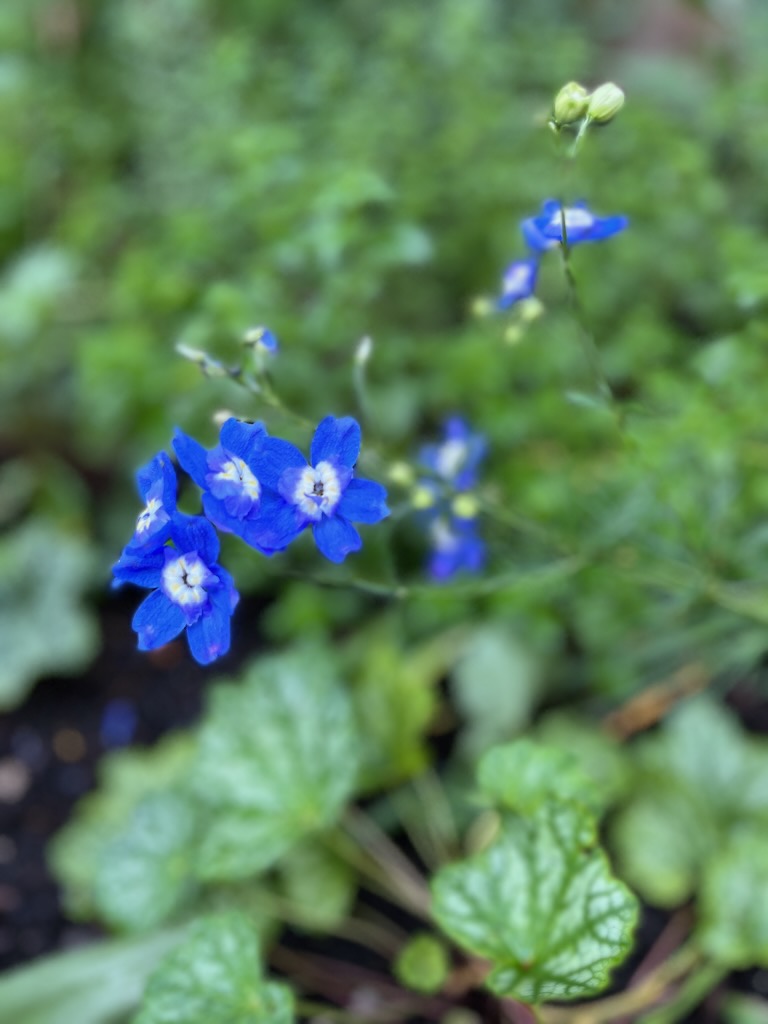
the garden, most of all, is living breathing companion. more than just a place to dig and poke, it almost speaks to me in whispers. delights me. returns the favour of my attention with its unfurled petals, its landing spot for bumblebee and butterfly and red-breasted robin. as one schooled in the storybook pages of tasha tudor, kate greenaway, and the norton anthology of children’s poetry, i honed early on my imagination’s muscles (thank you, mama). i spy a delphinium in bloom, a bloom as cobalt blue as neptune is thought to be, and i am certain an elfin soul will soon be stretching out a hammock from stem to stem down there where ladybugs and caterpillars roam. and so the garden to me is endless canvas of delight, whimsy, and unfolding tale, as if i’m something of the puppeteer to my plantings.

i relish sinking back into the rhythms of my chores: the way i stack the mugs, the wee bouquets i tuck around the house, the shopping list i know by heart.

all of it serves to cradle me. tells me i’m home where i belong.

the world and its adventures will be mine again, should i choose to wander. but for now, the summer––and the cicada––are upon us, and the tempo’s slowed, and my tank feels very much in need of filling.

i intend to surrender to summer, and let the whimsies steer me. i might not write each friday. i might write wednesdays instead. i might go a spell in silence. i might write in the middle of some night.

the point is, summer plays best in serendipitous tones. and i intend to listen. and to play along.

what will you do new this summer?

delphinium: the very definition of blue

that inextinguishable instinct

post-tonsillectomy children’s memorial, january 2000

dispatch from 20037. . .

two dozen years ago, a little guy I loved, a little guy of six, was wheeled down a long hallway to have his tonsils plucked. i walked the whole long way beside his gurney, straight into the OR, where they let me hold his hand till they were ready to send him off to dreamless land. and then, back I walked to wait, eyes awash with tears.

just now, that same kid was wheeled away again. and I, the nurse who flew in from chicago because I couldn’t imagine being even a mile away, was by his side. This time, though, I skipped the long walk, and no tears.

I seem to have been born hardwired to not stay far away, not when someone I love is being wheeled down long hallways, and the day begins at 4:45 a.m.

It’s an urge as irrepressible as anything I know. So much of mothering comes to me instinctively, without the synaptic pause that populates most thought. I leap before I think—leap into the fire, into the deep end, into wherever is the urgency. I don’t know how not to. And, yes, maybe sometimes I’m too much. And maybe I’m unnecessary. Or redundant. But where is there room for redundancy or un-necessity in the chambers of the heart?

Among the breaths of my life that I relish most, being by the side of the ones I birthed will always, always, be my most precious, most savored.

And so, in living my days with all I’ve got, this blessed day, being plopped in this hard chair, in this cacophonous waiting room in downtown DC, is one I will always hold so close to my heart. Truth is, I pray for as many of these sorts of days as time will give me. And as long as I can be there to plant one last kiss on the forehead I have loved since the hour of his birth, I am going to board all the planes, trains, and automobiles to get me here.

And now I’m signing off to keep my holy vigil.

xox

No need for any worries; all will be well here in the nation’s capital. Trust me on that.

PSS my uppers and lowers are a jumble today because I’m typing in my wee phone and can’t stop the gremlins from insisting on at least some proper capitalization.

a narrative twist and the wisdoms that come in its wake

when last we pulled up a chair, we were a gladsome foursome giddily gadding about the eternal city. unbeknownst to us, a fifth was among us. a red-ringed hanger-on who might have climbed aboard on the plane that flew through the night. or perhaps in the crowds in one art-ringed room or another.

but by nightfall one friday ago, a mere four days into our roman romp, one among us was lying flat on his back when he plaintively asked, “could you feel my head?” and suddenly the tiniest of sniffles i’d been hearing for the past two days, and the uncharacteristic naps that were beckoned mid-morning and again mid-afternoon snapped into sense, and a not-so-subtle hypothesis bolted into my brain: “this couldn’t be covid, could it?!?”

and with that, lickety split, i leapt out the door and wiggled my way through ancient streets and crowds thick with myriad tongues. i found myself a farmacia and in the clearest italian i knew, asked, “covid test?” the farmacista knew too. it seems the red-ringed word is universally understood. she handed me the prova covid, i handed her euros, and off i flew.

didn’t take more than a minute for that dreaded double line to flash into sight. bright purple it was, as my pictures of rome in quartet whirled down the drain. we had among us a covid-plagued fellow, the very one who had spent weeks and weeks planning and plotting. signing us up for this tour and that. and now, the poor chap was confined to a room at the back of the Airbnb, and i was moved to the couch.

i felt my heart crack.

i pictured a big pink eraser descend from above, dashing our roman holiday and turning our fine little appartamento into a quarantined clinica covid. i feared, right away, that the dastardly viral intruder would tear us asunder. that i, too, would be felled. and then boy 1 and boy 2.

i reached for my phone and dashed off a text to my beloved american doctor. as the sun set in rome, it was just reaching its midday peak in the states, so, lo and behold, she swiftly wrote back. told us they’re basically treating covid as a head cold these days, and that 24 hours after the fever broke or symptoms abated, our chief travel guide would enter the five-day mask-and-distance phase. and the rest of us should hope for the best.

without delay, the ailing one and i both reached for our phones to alert the dear friends with whom we’d shared the previous evening of rooftop aperitifs and a long and lovely roman dinner. and, belly flip-flopping all the while, i texted the sorry update to our boys, who’d gone out with a professorly friend for pastas and spritzes and whatever else might unfold on a friday night in glorious rome when you’re young and with nary a care.

i couldn’t sleep. so i lay there on my couch till the wee hours, listening for the boys’ signature voices and the clomp of their feet on the stone-cobbled street down below. when in they wandered, i confirmed that they’d seen the bum news spelled out on their phones. and we figured the weekend engagements — a guided tour of the colosseum and forum, as well as a lazy sunday lunch on our friends’ rooftop terrace (which had been the imagined highlight of the trip to little old me) — had gone up in vatican smoke.

but here’s where the story once again takes a turn, rises into the allegorical, and makes of one player a hero: assuming the boys would never in a million years awake for an early-morning architectural tour of ancient roman ruins, i’d already scratched the colosseum and forum off the list. so wasn’t i proven to be the fool when, with an hour to spare before the already-paid-for tour, the bedroom door cracked open and out strolled a towel-clad gent on his way to the shower. as he sauntered sleepily past me, he uttered only three words that soon set the tone for the day and all those that followed: “when in rome. . .”

and so we were off. if he, a boy who’d slept a mere few hours, could pull himself off the pillow to make good on his papa’s pre-ordained plot for the day, certainly boy No. 1 could follow, and i — who had originally declined a tour of what i referred to as “the ancient blood bath” and imagined instead a leisurely morning alone — could step into gear. turned out we missed the guided part of the tour, but we managed to get into the old ruin and carried on the self-guided way. all that walking and gawking made us hungry, so kid No. 2 called time-out and guided us through the meandering streets to an osteria that he’d been told had the very best food in all of roma (and it certainly did)*. and then, bellies full and sunscreen slathered, we climbed to the tippy top of the palatine gardens, and all of rome lay majestically, magnificently sprawled out before us.

the boy’s simple instructive “when in rome. . .” is the essence of carpe diem, the code by which he not only lives but inspires. he’s a mere 22, a kid born just before 9/11, a kid whose years have been punctuated by the horrors of parkland and sandy hook, a kid who cowered inside our cambridge apartment the terrible week of the boston marathon bombing when we could watch the police helicopters whirring in the sky just out our windows, a kid who went to college during covid and got sent home for half a semester to watch pre-recorded lectures on the laptop perched on the covers of his boyhood bed.

he’s emerged with an unshakeable knowing that life comes around but once, and you’d better seize it while you can. because there’s no cinch on tomorrow. which pretty much is the truth it’s taken me decades — and a medical scare of whopping proportion — to figure out.

we talked plenty (be it discoursing eternal verities or swapping silly serendipities) as we wound through the ancient streets of rome (his hand always reaching for mine, to make sure i didn’t wobble or fall), as he insisted we mosey down the block to the corner watering hole for spritzes at dusk, as he and his brother led us hither and yon to the best eats in the city. and his ironclad creed is that life is to be lived to the fullest.

my number one teacher in rome was the kid who grew in my womb long after the doctors insisted there’d never be another; an odds-breaker ever since, a kid who dwells in the joy of exclamation. and his lesson is one i’ll not tuck away on a shelf now that we’re home. nor ever.

it’s a beautiful and glorious thing when the teacher appears in the form of a kid who serves up his lessons with spritzes and leads you through rome on a quest for flavors you’ll never forget.

bless you, and thank you, dear T.


post script: our covid-afflicted fellow made it through mostly unscathed, and is now back among the unmasked. once his fever broke, and 24 hours had passed, he made the most of his unfettered hours to stand and absorb the architectural wonders of rome for as long as his big ol’ heart desired. none of the rest of us ever tested positive. though we missed the rooftop lazy sunday lunch of our dreams, we now have reason and incentive to return. i brought a good chunk of rome home in my heart.

me and my boys, ala sunset spritz

what wisdoms have come your way in the wake of a narrative twist?

*in case you find yourself in the eternal city any time soon, the best food we inhaled in rome was at the little osteria il bocconcino, just up the hill and around a few bends from the colosseum. if you ask the boys, there are multiple other contenders as well. every bite, in a word, was sublime.

sometimes, joy makes you wait. . .

A year ago, I was crushed. Four of us were supposed to be in Paris, but one of us never made it on a plane. Passport tangles tangled him. We tried every option known to humankind, but after days of holding our breath, we faced the cold hard inevitability: there would be no four of us in Paris. No four of us encircling the cafe table, as I’d pictured it, prayed for it, since the day the doctor told me the thing in my lung was cancer. And all I wanted in the world was to be held tight, held together, by my boys. My beautiful beautiful beautiful boys.

We were determined to try again. This year: Roma. We made the law professor with the failed passport get in line early, and expeditedly, for a new-spangled one. He complied.

I held my breath anyway. The closer we got to takeoff, the harder I held all the breath in my chest.

But Monday night, two planes, carrying four people, were crossing the globe, flying through the night, pointed toward Rome.

Ever since, I’ve been inhaling in double time, breathing as deep as a girl with 1.5 lungs can possibly breathe. Because this is the stuff that makes my life hum like a mezzosoprano, like a nightingale, like the merriest mama that ever there was. We are, the four of us, entangled as one, under the blue blue of Italy’s sky.

Sometimes the unthinkable happens. And you stumble and bumble, and shed tear upon tear. But then you pick up the pieces. You make the most of what’s there in your midst, and try to not ache for what’s missing.

And life, every once in a while, gives you a rare second chance. And you realize the heartache of the past has only hollowed more space in your heart, so that when the rushing in comes in, you’ve all the more capacity for unparalleled joy.

I am giddy and dizzy and pulsing with joy. It’s the sweetest sonata that I’ve ever sung.

It’s the song of my deepest prayer answered: dear God, give me sumptuous sumptuous time with my most blessed and beautiful beautiful boys.

Amen.


A perfect poem for this moment:

Mary Oliver’s “Mindful”

Everyday
I see or hear
something
that more or less

kills me
with delight,
that leaves me
like a needle

in the haystack
of light.
It was what I was born for —
to look, to listen,

to lose myself
inside this soft world —
to instruct myself
over and over

in joy,
and acclamation.
Nor am I talking
about the exceptional,

the fearful, the dreadful,
the very extravagant —
but of the ordinary,
the common, the very drab,

the daily presentations.
Oh, good scholar,
I say to myself,
how can you help

but grow wise
with such teachings
as these —
the untrimmable light

of the world,
the ocean’s shine,
the prayers that are made
out of grass?

What are the somethings for which you’ve had to wait for what felt an unbearable wait?

scan time

so, some months ago now, in the days not long after my first follow-up lung scan (they come at six-month intervals) when i was marinating, once again, in the new measure of time that comes when they’ve peered under your ribs and found something not welcome there, i started to think of how this close watch-keeping snaps me into an attention that echoes an ancient spiritual practice. i started to think of how taking my life in abbreviated brackets of time, six months per dose, compels me to pay attention to the nth power, to relish each and every bead of time, from the quotidian to the ones that break you out in goosebumps.

so i did what i do: i sat down to start typing. i peeled back my shy parts, and let the raw truth come tumbling onto the page (aka screen). i try to put things in words because maybe just maybe there’s someone out there looking for someone who knows how it feels, how scary it is, and how maybe just maybe there’s a way to turn that fear into fuel: to be more alive than before the word cancer came barging into our lives. that i found it, and find it, a spiritual tether, to live my life in what i think of as scan time, well, maybe it was worth saying aloud.

so america magazine, the journalistic home base of the american jesuits, an order of priestly folk known for their piercing intellects and forward-thinking ways (although when my sweet husband once asked a priest friend of ours if he was a jesuit, the friend — a diocesan priest, who grew up in his father’s south side chicago tavern — shot right back with “no, i’m a real priest,” which tells you how jesuits are regarded in some corners), decided to print my little essay in their june issue, and unbeknownst to me it showed up online last night.

i’m a bit shy about social media these days, but the chair is a place i think of as safe, the closest virtual approximation to the old maple table scattered with mugs and spoons and the crumbs from someone’s lemon-blueberry bread. so, i’m leaving it here. with big thanks to america magazine, and an even bigger prayer that that one someone (someone living in her or his own scan time) just might find it, and welcome the company…

Living on Scan Time: My life after a cancer diagnosis
Barbara Mahany
May 16, 2024

Ever since the murky hour when, through an ethereal fog, I made out the silhouette of my surgeon beside the bed where I lay tethered to tubes, ever since I heard him utter the words, “Turns out it was cancer; I was really surprised,” and I pressed my hand to where half my lung used to be, I have been living in Scan Time.
 
Scan Time is time reordered, narrowed, heightened. Scan Time is time abbreviated, shrunken to digestible, perceptible segments. It comes in the immediate wake of finding out you have cancer—in my case, lung cancer. Now that my tumor and a good chunk of lung have been removed, watchkeeping—scans every three to six months, for at least five years—is my first line of defense against its return.
 
Appointments are made a half year out; the date on the calendar becomes your benchmark, the point as far in the distance as you will let yourself see. The screens in the waiting rooms at Memorial Sloan Kettering Cancer Center flash with a digital message: Scanxiety? We understand that waiting for scans can be hard. Call our social work team now. Everyone grasps that whatever the future is, it hinges on what they find when the all-seeing machine—a Goliathan O-ring that swallows you whole—peers deep inside your body.
 
You are told not to move once you climb onto the hard plastic bed that makes me think sarcophagus, especially as it glides eerily into the shadowed encasement. And then comes this contender for the world’s most redundant instruction: “Hold your breath,” the disembodied words piped in from what seems an otherworldly station.
 
In lieu of breathing, you pray mightily that no new ghostly suspicions emerge. And then you wait. And wait.
 
Should the all-clear be granted, you are etch-a-sketched back to a clean slate.
 
Scan Time: the lease on your life, meted out in six-month installments.
 
Turns out, it’s something of a blessing, one that sharpens the focus on the miracle of each moment, peels away the anesthetization to time that, for most of us, is default mode. We live, most of us, thinking ours is a timeline that extends into the far-off far off. And that dulls the noticing of each never-again day.
 
But when you’re told you’ve got cancer, when you feel the iron weight of that sentence fall with a thunk on your every breath, the bracketed finiteness of time—of life itself—now doled out in measures of half a year per dose, it amplifies everything. Each pulsebeat of living is magnified, glorified. It’s time distilled to its most sacred concentration.
 
And it draws out a knowing that’s deep and profound, one that’s not too dissimilar to an ancient spiritual practice that understands the holiness in contemplating our death. Or, in my case, contemplating the reduction of time, the days I count on my half-year watch. At first glance, that might sound morbid. But it’s emphatically the opposite.
 
Memento mori is the age-old practice of remembering that you will die. It’s an ancient philosophical thread, a spiritual practice woven across time and traditions (be they moral or religious traditions) from early Stoicism to medieval Christianity, from ancient Judaism to the central teachings of Buddhism.

St. Benedict of Nursia, in his sixth-century book of precepts known simply as the Rule, exhorted his monks to “keep death daily” before their eyes. It’s an awareness that winds its way through most world religions, although barely so in the West, where we do all we can to push away any whiff of dying or death.
 
To understand that our days are not infinite, not a bottomless pour, spilling one after another so dizzyingly that we are numb to each dawn’s awakening, is to tight-squeeze our focus on how precious this time of ours is. Pope Francis, in his apostolic exhortation “Laudate Deum,” posed three critical questions: “What is the meaning of my life? What is the meaning of my time on this earth? And what is the ultimate meaning of all my work and effort?”
 
Those questions take on an inescapable edge when held up in six-month increments. We’re a simpler people than we sometimes pretend. We’re keener at grasping hard truths when they’re pressed up against us. Cancer presses hard truths. Scan Time sharpens focus, propels us deep into seizing the day. Seizing each blessed day.
 
Once upon a time, I was a nurse who took care of kids with all sorts of cancers. Back in the days before scanners were part of every oncologist’s medical tool kit, I remember more than anything how those kids somehow eclipsed the cancer in their lives. They shoved it out of the viewfinder, didn’t let it intrude on however many days were counted in their too-short lives. Theirs was an innate genius—not a day dithered away—that echoes across the decades.
 
I remember how kids with an amputated leg and a hospital-issued pair of crutches clocked how swiftly they could race down the hall, without crashing into medicine carts­­—or their nurses. Or how, as soon as the retching from chemo ended, they’d order up midnight pizzas and hunker down in the supply closet for a tête-à-tête with their IV poles and their bald co-conspirators. Or how, one Halloween, one of my favorites, a 12-year-old with a tumor lodged in her spine that left her paralyzed from the waist down, didn’t let that stop her from slopping papier-mâché all over her bedsheets, as she crafted me a green, tempera-painted pumpkin head and crowned me her Irish Pumpkin Queen.
 
Those children made time count. And they didn’t need scans to prompt it. All these years later, I draw on their wisdom, though I lean on the scanner—a machine that might see what is inside me but not what lies down the road.
 
Scan Time, I’ve realized, propels me to live sacramentally, to hold time to the light, to behold its shimmering brilliance, the facets of my life I consider most indispensably sacred. And to enfold myself in each anointed hour..
 
I might be mesmerized by a butterfly. Might sit down to pen that long-overdue confession. Might devote my perishable days to those few souls I cannot bear to leave behind, revel in the litany of whimsies we’ve long promised we’d get to, indulge with abandon. Or maybe I’ll travel to pockets of the world where my heart and my hands—and my long-expired nursing license—might be put to good use.
 
Scan Time is palliative, too; it offers something of a balm. Where the arithmetic of five-year-survival rates sets me to trembling as I weigh cold, hard probabilities, I’m washed in some iteration of calm when I set my sights on half a year at a time. Like a mountain climber trekking past mile marker after mile marker, I keep my eyes on the immediate path and don’t try to peek around circuitous, unseeable bends.
 
Yet underpinning each round is the knowing this might be the last, the one with expiration. One of these rounds, you suppose, the call won’t be so freeing. And time then will shift again. Day after day the distilling comes, until each last minute holds all that you love, all that desperately matters.

(reprinted exactly as it appears on the pages of the june 2024 issue of america: the jesuit review of faith and culture)

for the record, my latest scan looked clean. and, in the spirit of seizing the days, we’re off to rome in just a few days. the four of us, G-d willing. we have four valid passports among us, and after having to leave one of us behind last year when a passport was found wanting, (not in accord with the french rule that your passport must be valid for 90 days after leaving the country, and our firstborn’s was a mere few days short) this adventure in world travel is one big giant hallelujah.

what are the forces in your life that propel you to seize each and every day? and or any other thoughts that might be burbling about in your beautiful minds….

the loads beyond measure

sometimes a batch of words comes tumbling into our world, fluttering onto the path we cross as if the petals from an apple blossom whose bloom has expired. the words come unannounced, and lay there waiting for us to notice. once we read them we can’t think of anything else. all day long, all our thoughts come round to them again and again. 

so it was when a friend whose grief is without measure sent along these words the other morning:

I have been telling myself that I don’t know how to do this, that nothing has prepared me.

i’ve been thinking long and hard about those loads we’re tasked to carry. how every one of us, at some time or another, is bound to have one. a load so beyond measure, a load we never saw coming, it simply stumbles us, knocks us flat and gasping. and in the depth of our hollows — if we’re telling truth — we mouth those very words: “i don’t know how to do this. . . . nothing has prepared me.”

all we see is steep climbing ahead. a load we don’t know how to hold. and all we’ve got to bear it are our stubby shuffling feet, and a ribcage that holds the parts of us that breathe and pump the oxygen. our shoulders and our spine we fear will crumple under the weight of it. 

and then there’s the beehive of a brain, where all the wiring and the worrying, where all the remembering and the grieving and the what-iffing and the if-onlying whirs in and out at every turn in every hour of the day. 

the poet and collagist jan richardson put it like this in her “blessing for the dailiness of grief”:

It will take your breath away,
how the grieving waits for you
in the most ordinary moments.

It will wake
with your waking.

It will
sit itself down
with you at the table,
inhabiting the precise shape
of the emptiness
across from you.

It will walk down the street
with you
in the form of
no hand reaching out
to take yours. . . .

but here, maybe, is what we need to remember, to bear the load we’re sure will finally be the one we cannot budge or bear: our whole life long, we’ve been preparing. every hurt and insult hurled our way. the time in third grade when we cried because the kid one desk over made fun of our clunky shoes. but, next morning, we tied their laces into bows and we walked back in the classroom, and sat there all day long, learning how it is to become more than the stubby shoes that were not penny loafers. the time in high school, when someone in the hall pointed at us and said our face looked like someone smashed us flat against a wall. and it stung for weeks after, every time we stood before a mirror and turned this way and that to measure just how flat our irish face really was. 

and then the big ones come: the time the doctor walked up to the knot of us coagulated in the hospital corridor, and simply said, “i’m sorry.” and we were left without air in our lungs, and with the sudden senseless knowing that the brightest light in our existence had just gone dark. forever.

or the night the clots kept coming. and at last the tiny, tiny arms and legs, the intricately blessed face i’ll never forget, as the baby i thought i was having was cupped in the palms of my bloody hands, the miscarriage that hurt the most. 

the litany is plenty long. and we sometimes never notice just how much each ache is strengthening the fibers of the muscle group without a name, the one that holds us up — yes, wobbling at first; yes, stained with umpteen tears; yes, with sleepless sleepless night — but the one that, in the end, does not fail us. 

we are stronger than we know. and, all along, we’ve been piling on the sinew, deepening the courage, deep breathing the determination, to look that unbearable load square in the eyes, to say, “climb on. i’ll carry you.”

just watch. 

and then, at last, there comes this (jan richardson again, this time “blessing of breathing”):

That the first breath
will come without fear.


That the second breath
will come without pain.

The third breath:
that it will come without despair.

until at last . . .

When the tenth breath comes,
may it be for us
to breathe together,
and the next,
and the next,

until our breathing
is as one,
until our breathing
is no more.

my dear and blessed friend, and all who bear loads they deem unbearable, you do know how to do this. deep in your marrow, you know. your whole life long you’ve been growing strong and stronger. you’ve got this, and you’ve got this. and if and when you stumble, we are here with our simple grace and our love that will not falter. 

where did you find the strength you did not know was yours?

PS (note the all caps!): it’s the birthday sunday of one of the wise women of the chair, our very own lamcal, and i can’t gather up enough love in my bouquet to sufficiently surround her. she is beyond measure! happy blessed day, beautiful one. xoxox and happy mothering day who all who love in that way that knows no end….
sunshine girl

i tend toward the grays. and i don’t mean the pewter locks atop my head. i refer here to my meteorological preferences.

i’m of celtic persuasion, which means a pigeon-colored sky, preferably with mists rolling in, a landscape without shadow, for clouds are in the way, that’s the sort of day that wraps me like an afghan dropped from heaven’s hutch, makes me feel cozied by the hearth, deeply much at home. 

give me a gray day and i all but purr. 

this week, though, has been anomaly. the sunbeams of this latest swatch of springtime have been pouring in full proof, and voluptuously so. sunbeams so pure, so concentrated, i’ve bridled the urge to stick out my tongue and lick them––as if a gelato on a cone. or gulp, as if a nectar in the most delicate cut-glass flute that ever was.

it wasn’t lost on me how novel it was for me to be fixated––and bedazzled––by the motes of sunlight shafting in. it shook me from some rafters i’d not even realized had boxed me in. i was paying attention to my paying attention. an attunement to the nth power. and the simple substance that transfixed me was but one of that elemental trilogy: sunlight, water, air. 

to live in a state of fine-grained attentiveness is the instructive of every sage or prophet who’s walked this sunlit earth. for us to notice celestial shifts, as winter turns to spring, as the great star is jimmied higher into sky, must be God’s rapturous delight.

and i must have been more sun-starved than i realized after a long and washed-out winter, for i couldn’t keep myself inside the house this whole week long. i was all but stripping bare my crepe-papery arms and legs, so my famished flesh could guzzle sun. and, every chance i got (and even those i didn’t have), i found myself down on my knees, at the garden’s edge, wherever tender growing things gave me excuse to coax and coddle and slapdash in the dirt. 

from nearly sun-up to sundown, i was out and about, clocking miles on my soles, slip-sliding along a river trail, dodging red-winged blackbirds who tried to perforate my noggin. and, when my legs and knees were tuckered out, i sat splotched in sprees of golden light as i perched, robin-like, atop a rock or stoop, keeping watch on flutterings in trees. 

i’m not typically a sunshine girl. despite a nomenclature suggesting otherwise.

my papa and me (aka his “sunshine girl”)

long long ago, there was a fine irishman––my witty papa––who pinned a moniker on me back in the days when i’d take him by the hand and maybe reach just beyond his knees. he called me his sunshine girl, his one and only, and it’s a name that makes my knees go limp even to this day. 

i’ve not heard his voice in 43 years, but i can see the glint in his eyes, the way the pilot light burned bright and brighter, as he warmed up to pronounce the words, deeming me his sunlit girl. 

i rather fail my reputation.

in the long years of his absence, i’ve grown more inclined to sunshine’s shadowless counterpart, the days some define as “the color of bad weather.” i protest, tend to be of a mind with leo da vinci, the polymath and painter, who insisted “a gray day provides the best light.”

though not this golden-glowing week. and not without exception.  

like the poets emily D and annie dillard, i like my light in slants, or as dillard put it once: “i’m a collector” of such angled penetrations. the oblique is how i see things best.

most days, pure drenched feels too exposed. the white light of summer’s height makes me wither. 

springtime, though, is tender season. and the sunlight comes in slant, in perfect concentration. and every once in a rare while, in days as delicious as the sun-drenched string that was this week, i’ll gulp my yearly dose of solar plenty. and i’ll gulp it without pause. 


speaking of sunshine and the irish, here’s a line that made me laugh aloud this week:

“the sad truth is that, like fish, the looks of the irish are not improved by sunshine . . .”

—Niall Williams, This is Happiness, page 193


and as is my wont, i’ll bring mary oliver into the conversation, as she came to mind more than once when i was down on my garden knees this week: in “the summer’s day,” she writes:

“I don’t know exactly what a prayer is. /  I do know how to pay attention, how to fall down / into the grass, how to kneel down in the grass, / how to be idle and blessed.”

and, lastly, i zoomed into a poetry conversation with the poet (and yale institute of sacred music professor) christian wiman the other day, and he was asked to read a poem that shocks right through him, and here’s the one he read: 

Prayer
by Carol Ann Duffy

Some days, although we cannot pray, a prayer
utters itself. So, a woman will lift
her head from the sieve of her hands and stare
at the minims sung by a tree, a sudden gift.

Some nights, although we are faithless, the truth
enters our hearts, that small familiar pain;
then a man will stand stock-still, hearing his youth
in the distant Latin chanting of a train.

Pray for us now. Grade 1 piano scales
console the lodger looking out across
a Midlands town. Then dusk, and someone calls
a child's name as though they named their loss.

Darkness outside. Inside, the radio's prayer —
Rockall. Malin. Dogger. Finisterre.

(the four names in the last line are towns called out on BBC radio’s nightly “shipping forecast” for the various seas around the british isles, waters divided into 31 sea areas, including rockall, malin, dogger, and finisterre. the broadcast litanies, especially the late-at-night ones, are for many britons––including carol ann duffy––a familiar touchstone: the announcer’s voice reciting the sea areas all around the islands, one by one, forecasting the weather. and, higher up, minims are the half-notes in a page of musical notation)

of all the meteorological options, which one most floats your boat? and how and why?

bibliotherapy: of fictional nature

i tend to ground myself in the world in all its nitty-gritty. that mattered (critically) when i was a nurse (don’t you dare inverse a systolic for a diastolic, when it comes to blood pressure reading), and in all my decades of chasing after news, the truth—and every grimy detail—was what we sought. thus, when i peruse the bookshelves of my local free library (the world’s most generous invention, to be sure), i am nearly always in the down-low where no windows are, where the endless rows of fact not fiction reside. 

i’m decidedly non-fictionally inclined.

but this week i was lulled into the rooms upstairs, the rooms where sunshine streams through sky-high windows, and where make-believe is the order of the room. in other words, i crept up to where the fiction is. and in the writings of one irish novelist, a fellow i’d give anything to sit with in any irish pub, or better yet to stroll the rocky coastline of the continent from which half my peoples come, i found the surest cure for running from the blues. 

niall williams is his name, an irishman, who is but a year younger than me, and who has gathered wisdom as an old stone takes on a mossy coat. i can almost see the glint in his eye, as from some quiet post in the corner of a dimly-lit, crossbeamed room, he’s kept closest watch on the quirks and comedies of human nature. and on the heartbreak too. as the tenderness he kneads into his prose and paragraphs has left me gasping more than once (and i am only eight chapters in). 

the book is this is happiness, as prescriptive a title as a girl in search of antidote might want. 

the irishman had me at chapter 1: “It had stopped raining.” (that’s the chapter in its entirety.)

chapter 2 picked up where 1 left off: “Nobody in Faha” (the fictional irish town that just happens to be a spot on the map not far from where my non-fictional peoples hailed) “could remember when it started.” by the third sentence of that second chapter, i was ready to shove up my shirtsleeves and not move an inch till i’d turned the last page. it went like this: “[Rain] came straight down and sideways, frontwards, backwards, and any other wards God could think of. It came in sweeps, in waves, sometimes in veils. It came dressed as drizzle, as mizzle, as mist, as showers, frequent and widespread, as a wet fog, as a damp day, a dreeping, an out-and-out downpour.” 

and on it goes, plip-plopping along, this incantatory passage that soon enough tells us that the unrelenting rain came “like a blessing God had forgotten he had left on.”

this is nothing less than bliss in garamond font (a literary typographic detail nearly always spelled out at the back end of any book); and most certainly for a girl who penned a paragraph of her own, in her most recent book, that unfurled in uncannily kindred ways. c’est moi:

“Rain, like most of us, has its moods. In its more laconic hours, it comes on unsuspectingly, without folderol, timpani, or cymbal crashing, the barest slip of a presence and suddenly you’re bespattered. On the days when rain is tempestuous, furious, raging, it rattles the heavens, cleaves the night, pummels the trees, and sends all the world—even the puddle-­paddling robins—running for cover. Betwixt and between, it’s the master of a thousand voices, from the salubrious plopp—the drop with a splatter—to the militaristic rat-a-tat-tat, when the rain tries to pretend it’s a handful of pebbles thrashing your windows, and on to the audible gulp when a downpour is frothing your gulleys. The Brits, reliably saturated in the subject, offer a lengthy lexicon for precipitation’s multiple personalities: there’s a basking (drenching in heavy shower); a drisk (misty drizzle); a fox’s wedding (sudden drops out of clear blue sky); a hurly-burly (thunder and lightning); a stotting (rain so hard it bounces up off the ground); and, for closers, thunner-­pash (heavy shower with thunder). Because it’s so elemental, the life stuff of our very existence, the celestial surge that fills our rivers and waters our crops, rinses away the detritus, bathes all the woods, and the sidewalks as well, it’s been the subject of intense preoccupation and prognostication for a long, long time. time. Since ever ago.”
(p. 85, The Book of Nature)

is there not a hint here of shared joy in precipitatory romps? can you not feel the two of us––niall et moi––luxuriating in the many, many wondrous ways to say “the rain is unrelenting”?

i am hardly alone in my enamorment of mr. williams. my best best friend, a longtime children’s librarian in the los angeles public schools, couldn’t stop texting me pictures of its pages this week, and, soon after, when i mentioned to a beloved literary friend (a sister chair, who might reveal herself below) that i’d fallen into novel love, she reminded me that she’d told me so a few years back. as always, i am late to my own party. 

in any case, here’s what the new yorker had to say back at the dawn of 2020, in the year of our covid, when happiness whirled onto the world stage.

This Is Happiness, by Niall Williams (Bloomsbury). This elegiac novel is as unhurried as its setting: Faha, a village in western Ireland, “unchanged since creation” until, in the late fifties, electricity arrives. The narrator, now elderly, reminisces about that time; having come from Dublin as a teen-ager, to live with his grandparents after the death of his mother, he conceived a hopeless passion for three sisters. “We spend most of our lives guarding against washes of feeling, I’m guarding no more,” he promises. The novel’s description of a lost rural life style, and the gaps between a young man’s romantic expectations and the inescapable letdown of reality, is comic and poignant in equal measure.

all of which is to say that bibliotherapy is one of the world’s great cures for whate’er ails you. and even more so when it ferries you off to a wee irish village “where story was a kind of human binding,” where church pews were filled as if by unwritten order, where front doors were never closed in daytime nor backdoors locked at night, and where, we’re told, “religion lasted longer … because we were an imaginative people, and so could most vividly picture the fires of Hell.” 

and wherein the self-described antiquarian narrator notes in passing, “i know it seems unlikely that Faha then might have been the place to learn how to live, but in my experience the likely is not in God’s lexicon.”

the world these days is wearying. and worrying, too. my week began with a funeral, a breathtakingly beautiful one that wove buddhist and roman catholic threads but was tragic nonetheless, and was followed by a seder where the weight of gaza and jerusalem bore down on every heart. by week’s end, i’d heard tell that my kid was nearly carjacked, and a dear friend who lives alone (and has borne already more than too much suffering) is on the cusp of twelve rounds of godawful, pray-to-God-it-works chemo for the newly-diagnosed cancer in her lungs.

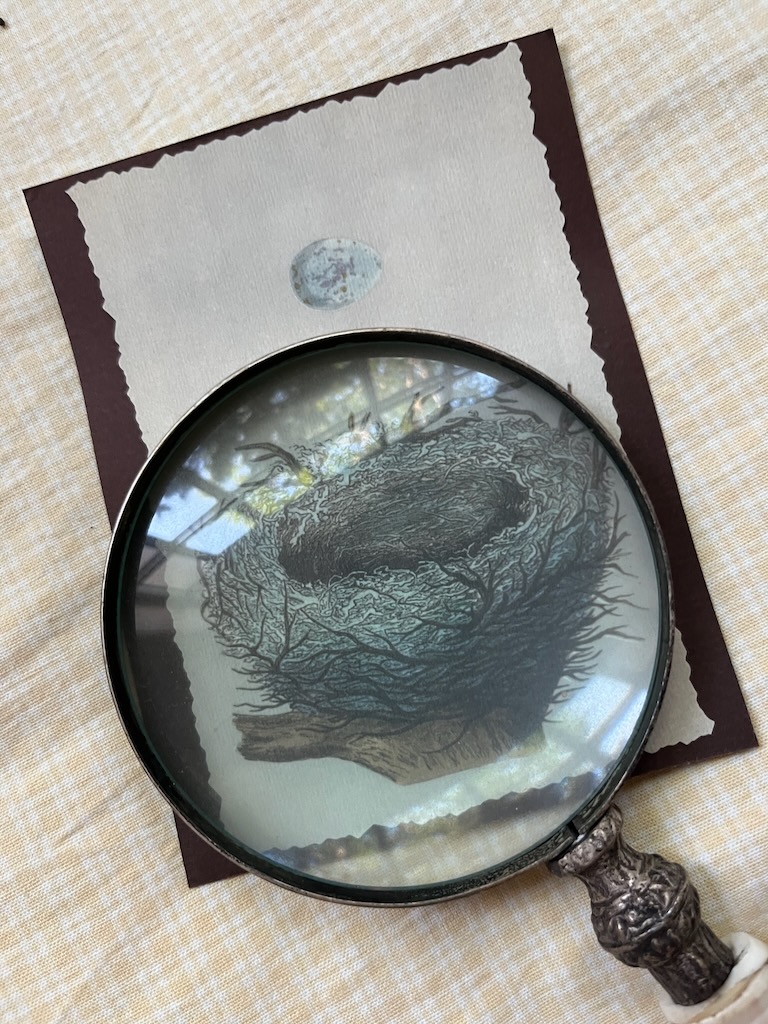
the blooms outside my kitchen door were doing all they could to boost the perfumed quota in the vernal air, and the robins busied themselves constructing scrappy nests in my window box along the alley. (do not ask me to tell you the tragic tale of the mama robin who was tangled in a dessicated grapevine, nor of the nest no longer in the works.) all the earth’s wonderment––glorious as it is as winter erupts into spring––is ephemeral, is here, then, poof, it’s gone. 

but what i find on the page is lasting. can be read and read again. can be indelibly inked into the files of our mind.

and so, this week, a newfound balm and friend was found. and i’ll be tucked away in faha, on the fictional irish coast, for as long as the pages will carry me. bibliotherapy rarely fails me. 

what carried you away this week?


here’s a jolt of joy that took my breath away this week: the great christian mystic richard rohr, a franciscan friar and ecumenical teacher, and his new mexico-based Center for Action and Contemplation saw fit to surprise me by clipping an excerpt from The Book of Nature in his daily meditations on wednedsay. that he chose a favorite passage, the story of brother lawrence, the barefoot monk who saw God in the pots and pans of his parisian monastery kitchen, and was struck by the innate holiness of a nuck-naked little tree, only charmed me all the more. here’s a peek at the preaching of the trees.


and from this week’s commonplacing. this morsel from DH Lawrence:

The vast marvel is to be alive… The supreme triumph is to be most vividly, most perfectly alive. Whatever the unborn and the dead may know, they cannot know the beauty, the marvel of being alive in the flesh. The dead may look after the afterwards. But the magnificent here and now of life in the flesh is ours, and ours alone, and ours only for a time. We ought to dance with rapture that we should be alive and in the flesh, and part of the living, incarnate cosmos. I am part of the sun as my eye is part of me. That I am part of the earth my feet know perfectly, and my blood is part of the sea. My soul knows that I am part of the human race, my soul is an organic part of the great human soul… There is nothing of me that is alone and absolute except my mind, and we shall find that the mind has no existence by itself, it is only the glitter of the sun on the surface of the waters.

this, from mary oliver

Morning Light

by MARY OLIVER

Every morning
 the good news
  pours
   through the field

touching
 every blossom
  every stem
   and each of them,

on the instant
 offers to be part of it—
  offers to lift and hold, willingly
   the vast burden of light

all day.
 In my life
  I have never seen it to fail—
   flower after flower

leaf after pearly leaf,
 to the acre,
  to the massy many,
   is silvered, is flooded;

and such voices
 spangle among it—
  larks and sparrows—
   all those small souls—

are everywhere
 tossing the quick wheels of pleasure
  from their red throats
   as they hang on—

as though on little masts
 of golden ships,
  to the tops of the weeds—
   and that’s when I come—

that’s when I come, crying out to the world:
 oh give me a corner of it
  to lift also, to sing about, to touch
   with my wild hands—and they do.

and this from annie dillard‘s the writing life, prose laid out as a poem by my friends at SALT Project:

One of the few things I know
about writing is this:
spend it all, shoot it, play it, lose it,
all, right away, every time. 

Do not hoard what seems good
for a later place in the book,
or for another book;
give it, give it all, give it now. 

The impulse to save
something good
for a better place later
is the signal to spend it now. 

Something more will arise
for later, something better.
These things fill from behind,
from beneath, like well water. 

Similarly, the impulse to keep
to yourself what you have learned
is not only shameful, it is destructive.

Anything you do not give
freely and abundantly
becomes lost to you. 

You open your safe
and find ashes.

and finally, this goodbye to “poetry’s colossus,” helen vendler, whom i was blessed to call my teacher in our year of sumptuous thinking

and blessings to you, and thanks for whirling by….

p.s. the other two books in my bibliotherapy stack (above) are william’s history of the rain, which had me at the title, and letters from max: a book of friendship, an epistolary collection between a poet and a playwright: sarah ruhl, the twice pulitzer-finalist playwright who was once teacher to poet max ritvo and quickly became dear friends, and as max’s cancer grew worse, their connection deepened. suleika jauoad ran an excerpt the other day in her isolation journals, and i ran to the library to grab a copy.

solitary vigil

hospital breakfast tray: one year ago

there are days we mark in silence, days best kept in solitude, in the quiet deep down places where only we can trace the contours of the shadow, the weight of how they’ve changed us, cleared the lens through which we see.

they’re the days that have left their mark on us, indelibly. the days in our lifetime that will forever inscribe the demarcation, time divided starkly––before and ever after. 

one by one, or one alone, they’re the days, the dates, the hours that constitute our subterrain, the strata by which our soul is shaped and stretched and textured. it’s the timeline that draws us into depths, to keener understanding of what it means to be alive. or our life, anyway.

it might be a death or disfigurement. it might be birth, or betrothal. a beginning or an end. most often, both at once. to close one chapter is, by definition, to open the next. and while some of those days are duly announced, and bracketed with anything from helium balloons to holding our breath, it might be the weightier ones––the ones whose mark is most unexpungable––best kept in solitary vigil.

it is in the profound spaciousness of unspoken thoughts that we find the room to grope for consequence, that we fumble toward those few faint stirrings that draw us closer and closer to what becomes our truth. we can’t really find our way without the grace of our aloneness, the room where knowing comes. in the beginning and the end, we tread the thin-bare thread of life with but our God to take us by the hand. or so i believe.

and here’s a truth: by the time we’ve hobbled through a few decades (or less or more, depending on our lot), we all accumulate those days. the days whose dates we don’t forget. the day we met our one true love. the long night of our first miscarriage. the house fire that chased us out. the last look into someone’s eyes. the first time the doctor put breath to the word cancer, and quickly added how surprised he was they’d found it deep inside us. 

we keep those days in cloak of silence because we are sifting still through all the ways they’ve reconfigured who we know ourselves to be, and how we move through time. 

yesterday was one such day for me. one year since i awoke on a gurney, my surgeon by my side. i shudder  now to remember it, though at the time i didn’t shudder at all. i was brave that day. it hadn’t sunk in so deeply yet. ever since, and all year long, i’ve had glimpses both of bravery and brokenness. i’ve cried buckets and, then, i’ve set my shoulders firm; i’ve faced the worst of my fears with unflinching questions, endless hours reading, and airplane rides to doctors i wish i’d never needed to know. i’ve slowly, slowly, tried to imagine adding numbers to my years. 

april 18 is a date i’ve uttered umpteen times in the last year. date of surgery: date of diagnosis. date of new beginning. date of counting time with deeper intention and attention. 

maybe the date will dim, as i move on from it. as 2024 fades to 2025 and . . . (and hallelujah for the 4 that now sits firmly where the 3 began.) a year ago today was the first time i saw my life measured in the span best known as five-year-survival rate, the chance you’ll be around five years hence. believe you me, it’s a bracing thing to count forward and hope and pray you cross the line to––bing! bing! bing! your magic number is….––04.18.28. the date now yours with odds attached. 

i’m going for broke here, and placing bets. but that’s only because at this very moment what swells in me is hope. quick as the clouds scuttle across an april sky, i might flinch, get scared, and pull my money from the table. 

my point is simply to say that there are days that define who we are, and we keep those days in silent vigil, wrap those days in certain grace. and we pray to God we come out the other side, with lessons learned and underscored, as we reach and reach toward that one repeating prayer: dear Holy Gracious God, let me make of this one most sacred day every iota of blessing that is mine––and yours––to give. 

some mornings are so much clumsier than others; this is a clumsy one, but my vow to try–even when i mostly miss–is one i take to heart. to write raw is its own peculiar dare. but here’s the why: because every fleeting while you just might catch a dust mote of life as you know it. and thus i will keep swatting at the passing motes, in hopes of putting words to those ineffable pieces of the puzzle. because we are all bumbling along together here, and in good company we find light and air.

as you look back across the plane of your life, are there days you’ve not forgotten, days you note alone and without mention, because you know how lastingly they’ve marked you? and that’s a questions whose answer you needn’t give voice to here. but just a prompt.

amid the dizzyings of springtime…

i imagine it’s been well-established that i am of the homebody persuasion. the sort of girl who thrums inside the cozy confines of space and time i know by heart. to plop behind the wheel and point myself in a direction i’ve not been is, well, to stretch me. to accelerate the tempo of my little heart, to bring on the rumblies in my tummy. and so it was as i set out for The Driftless (a topography that deserves every drop of its capital consonants) a week ago today.

for starters, i got lost. yes, yes, after dutifully trying to follow my index-card directions through country roads and farmer fields, i decided maybe it was safer to let the little voice tell me where to go rather than glancing down and trying to find the numbers i had scribbled. well, news flash: there are TWO mineral points in ol’ wisconsin, and the one i was steered toward was the one in otherwise unmarked farrow field. that little voice announced, “you’ve arrived. your destination is on the right,” whilst i looked up and saw literally nothing but an undulating plot of shaved-off stalks. hmm. this must not be, i intuitively surmised.

i was miles from nowhere, and 67 miles from where i needed to be. where the world’s loveliest host had a turkey meatloaf in the oven, and asparagus steaming in a skillet. ah, but in due time, rollercoastering along country roads, past baby calves (yes, i know it’s redundant, but i like to say it that way) all gathered under little calf-ling igloos, which must be the latest in dairy husbandry for each baby calf had its own domed shelter, and a place to escape the drifting snows, past rock formations that felt prehistoric or laid there by ancient peoples, through towns that time forgot and that i prayed still stuck to old ways, and not the toxic juice that’s infected so very much of old america, i pulled in the gravel lane that was my destination.

and, from the first footfall inside the charming farmhouse, i was home. daffodils and aldo leopold awaited on the bedside table, and the bed itself was a cloud of comforters. each morning that sunrise above greeted me from the kitchen windows. and each morning, it took my breath away, and filled me with holy airs.

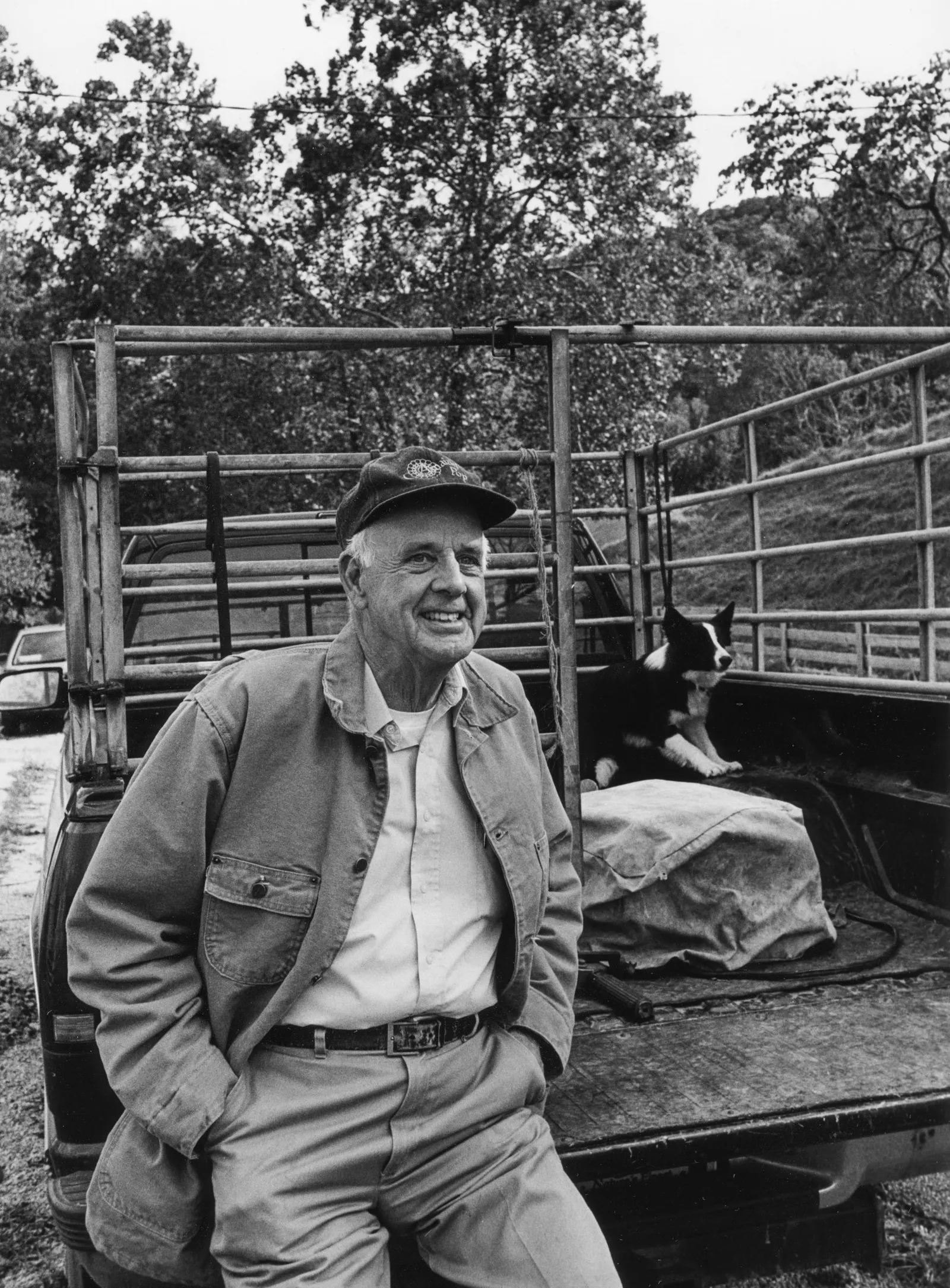
the folks i met were as fine and fluent in the poetries of earth as any souls i’ve met along my way. i met a farmer who plows his field with draft horses, and writes letters back and forth with wendell berry (be still my heart!). and another farmer who used to cook at chez panisse. (yes, that chez panisse, the one in berkeley CA, where alice waters revolutionized the kitchen.) i scrubbed pots and pans beside a woman whose heart must pump in gold. and i heard tales of keeping watch on eagles’ nests.

and then, come sunday morning, after hiking through the woods, and talking books in a charming indie book store (where croissants were rising in the ovens behind me), i took to the pulpit in a little country church to deliver what you might call the sermon, but which the priest referred to as a “reflection” since i’ve not passed the sermon-licensing exams. and as i wove threads from the doubting thomas gospel and the book of nature’s sometimes tangible God, i looked out on a congregation of fine souls who were listening in a way i’ve never known: heads cocked, a posture of deep attentiveness, eyes on the pulpit, you could hear a pin drop in that blessed church. and i saw how good souls are hungry for a word of wisdom with their sunday-morning coffee. if this is church, and i do believe it is, may we become a people who know to carve out time to put down phones, dial down the pings, and find our way to wherever it is the holy wisdoms come.

not an hour later, the whole adventure in soul-stretching reached its crescendo when every last soul at the basement coffee hour stood and raised an arm toward me, or laid a hand on my shoulders, and at the behest of the priest, father christian was his name, blessed me with a prayer that had me all but gulping back a walloping sob. when i felt the tiny hand of father christian’s little boy, a kid with special needs, squeezing my left arm, i really truly nearly lost it, as they say. instead, i held his hand and together we squeezed and prayed all the way to the last amen.

and then i motored home, not quite the way i got there. and forever deepened and shifted by the glorious goodness of my new friends who dwell in the driftless.


i came home, of course, to sunlight-blocking moon, and a garden erupting in springtime’s accelerandos. and i spent a good bit of week deep-breathing all of that, and getting mighty muddy too. but i also came home to friends who are grieving inconceivable losses. and when i found this prayer-poem from jan richardson, i knew i needed to pass it along. so, here, too, for all of you is a poem to keep for when grief comes to you or someone you love, or even someone you might not know too well at all. jan is a poet, artist, ordained minister in the united methodist church. i was introduced to her years ago now, by my very own night chaplain (slj to all of you, a regular visitor here at the chair). and as jan’s life was torn open by the sudden death of her husband, she has only deepened. and her work all the more mesmerizing. this is from not long after the death of her husband, when she was coming up on her first valentine’s day without him. her words are among the truest i’ve ever read. she is pure blessing.

Image: Valentine © Jan Richardson

Blessing for the Brokenhearted

There is no remedy for love but to love more.
—Henry David Thoreau

Let us agree
for now
that we will not say
the breaking
makes us stronger
or that it is better
to have this pain
than to have done
without this love.

Let us promise
we will not
tell ourselves
time will heal
the wound,
when every day
our waking
opens it anew.

Perhaps for now
it can be enough
to simply marvel
at the mystery
of how a heart
so broken
can go on beating,
as if it were made
for precisely this—

as if it knows
the only cure for love
is more of it,

as if it sees
the heart’s sole remedy
for breaking
is to love still,

as if it trusts
that its own
persistent pulse
is the rhythm
of a blessing
we cannot
begin to fathom
but will save us
nonetheless.

—Jan Richardson

This blessing appears in Jan’s book, The Cure for Sorrow.

gremlins seem to be lurking here this morning, so let us see if we can fling this to the cyberwires that carry this from my kitchen table to yours. question for the day, besides “will this work?” is where did you find holiness this week? 

and here is a special wink and nod for the great good souls i didn’t get to mention above: the glass sculptor who sailed the world before planting herself on high street, in downtown mineral point. the ones who’d taught for years and years in alaska before sinking deep roots in driftless loam. the bibliophile who opened an indie bookstore, and thought to attach a cooking school besides. and most of all to jane, my storytelling hostess whose graces left me nothing short of gobsmacked.