i’ve been mulling these past few months how to move forward in a world where values that shatter me seem to be in ascendency: revenge, retribution, greed, humiliation, belittlement, and so much of it based on a metastasis of mistruth.
i’d been thinking that keeping my head down and plowing along in a spirit of turn-the-other-cheek, love-thy-neighbor-as-thyself might be a place to begin. might go a long distance.
but i don’t think that anymore.
i don’t think it’s nearly enough.
i think something much harder is called for. i think we’re called upon to reach deep in our souls, and pull up something called courage.
courage, when you’ve been taught to demur, to not make too many waves, courage when your father forbid you to use your real name in a basically-tame high school underground paper, courage when you don’t want to hurt those whom you love, can be an awkward suit to slip on.
i stumble sometimes trying to get my arms through its sleeves.
but i’m thinking it might be a fire built from these sticks: first, root yourself in verifiable truths (check, check, and triple check your sources); second, inhale grace; be clear; be compassionate; be compassionate. keep the most vulnerable keenly in your crosshairs.
and here’s the hard part: put voice to what you believe. correct mistruths when you hear them. amplify the voice of the voiceless. whether it’s in kitchen table conversations, or what serves as the modernday public square (my preference is those sites where fact-checking and vetting are part of the constitution). whether it’s spoken or scribbled or typed.
because conflict aversion lies deep in my DNA, and all but breaks me into hives, i find i’m less afraid when i remind myself that to hold a differing opinion is not to discount or disdain the one who holds it. without discourse, we all stay stuck. without courage, we’re cowards, wasting our time and our breath on our one short ride on this planet.
i’ve been keeping close watch all week on various lists of how to meet these times, how to keep on keeping on, and not a one of the lists suggests keeping mum. speak up. speak truth.
my own code of ethics is one that insists on gentleness, on a voice imbued with humility.
i heard such a voice this week, one that broke through the cacophonies that otherwise abounded, all wrapped in shimmering glitz. you won’t be surprised, perhaps, to know that it was an ordained woman of God, a bishop in washington DC, who took a deep breath, who acknowledged being afraid, but spoke up anyway, asking for mercy, one of the essential beatitudes outlined at the sermon on the mount. and she did so looking straight into the eyes of the newly-inaugurated president, who scowled and looked away, and later deemed her a “so-called Bishop” (reminds me of how, on national TV, he called my husband a “third-rate architecture critic,” adding that “most people thought he got fired,” back in the summer of 2014 on the Today Show, when they––along with Chicago’s mayor at the time––got into an architectural scuffle over the 20-foot-tall letters of the Trump sign on the real estate mogul’s eponymous Chicago skyscraper). And then in this week’s prayer service the President went on to add that the bishop was a “Radical Left hard line Trump hater.”
her name is mariann edgar budde, and she is the episcopal bishop of washington, DC. and the full 14:56 minutes of her sermon are worth a listen (or two.) my prayer is that in my one short swift and very small life, i might find such a voice in my own, and put breath to it when and where it most matters.
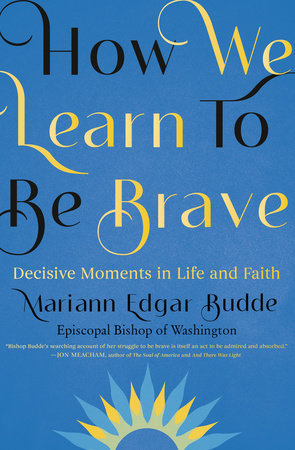
bishop budde, it turns out, wrote a book on how we learn to be brave. and i’ve peeked inside while awaiting my copy. worth reading is this:
and this:
and before signing off, inspiration on courage from kentucky bard and old-fashioned farmer wendell berry:
It may be that when we no longer know what to do, we have come to our real work and when we no longer know which way to go, we have begun our real journey.
The mind that is not baffled is not employed. The impeded stream is the one that sings.
― Wendell Berry
and the incomparable maya angelou:
INSPIRATION
We, unaccustomed to courage exiles from delight live coiled in shells of loneliness until love leaves its high holy temple and comes into our sight to liberate us into life.
Love arrives and in its train come ecstasies old memories of pleasure ancient histories of pain. Yet if we are bold, love strikes away the chains of fear from our souls.
We are weaned from our timidity In the flush of love’s light we dare be brave And suddenly we see that love costs all we are and will ever be. Yet it is only love which sets us free.
— Maya Angelou
where have you found courage of late? did it feel awkward? did it make a discernible difference?
i’m not too keen on wearing my medical woes on my sleeve, and in fact i wish i could keep them locked tight in a jar at the back of the cellar. but because sometimes i can’t hide how afraid i get, and because profound wisdoms are here to be unearthed in riding the hills and vales of cancerland, i’ve thought hard about when to say what. or whether to ever say anything at all. and today, i have a story to tell that might make you smile, and might bring you hope — for whatever your own scary tale is. (and it wouldn’t seem fair to leave you thinking that happy twists are never somewhere off in the distance.)
it’s a chapter that began back in early october when my every-six-months scan came back not the way anyone wanted, and the surgeon who called to give the bad news spent less than three minutes on the phone spelling it out, including the seconds it took for him to tell me that if in fact it was a recurrence (an especially bad thing, a mere 18 months from first diagnosis) they’d consider taking out the rest of my lung. that’s a lot for a girl to swallow in less than the time it takes to peel the skin off an apple.
he wound up telling me he wanted to push up my next scan to just after the new year, a date that seemed a grand canyon away, the far side of thanksgiving, christmas, new years, and my birthday.
so i did what any scared person with a bolt of bad news might do: i stopped breathing, started to cry, and because i was home alone i dialed a brother i love, a brother i’ve leaned on more than once when life’s at its thickest. (it was too scary to tell my own boys or practically anyone else for that matter, not when there were so many questions and no answers in sight. my number one instinct, no matter the script, seems to always be to protect my boys from unneeded worries. so i waited till i could give them more than a basket of runaway fears.)
tears dried that ominous october morn, i got on the horn, or in this case the keyboard whose little black keys allow me to reach far and wide to my wee brigade of self-assembled experts who understand the ins and outs of my wily little cancer, a cancer that doesn’t like to play by anyone’s rules. my No. 1 expert, a fellow with nose to the microscope who studies this rare iteration as well as lovingly caring for people who have it, wanted me to board a plane and fly to salt lake city to go under anesthesia and have a little chunk of lung snipped out for biopsy: the surest way to get to the bottom of things. but he also decided in the end that it might be just as reasonable, and a whole lot less stress, to wait for the next scan in chicago, a mere four weeks difference between the two options.
it would not be understatement to say that i was pretty much as scared as i’ve ever been for a good bunch of that time. went so far as to type up housekeeping instructions, made sure my passwords were all up to date, and even thought hard about a few other things too dark to type here. it’s what happens when you know there’s a cancer lurking inside and you’ve no idea what it’s up to, but the indications aren’t good.
i admit to a panic attack or two before things settled down. but then i started breathing again, and the day before my birthday (the one i’d once worried would never come) i swam a mile in my little warm bath of a swimming pool (i swim with the seniors these days, and by seniors i mean the ladies who glide out of wheelchairs and into the pool where they take laps walking edge to edge of the pool.) and the day before the scan i did it again. a mile, that is. my dear mama, looked at me in that way that she can, and asked, “what are you trying to prove?” to which the answer would be, that cancer can’t catch me. as if.
well, it took a good week for the radiologists at my big fancy medical center to get a close look at the scan and when they did they finally sent word: looks good, they agreed. and even tossed in a cherry on top when they wrote “mild improvement” in one particularly concerning spot.
it took a minute or two for the truth to sink in, but the image that came soonest to mind was a big shimmering diamond. a blob of diamond the likes of which i’d not before pictured in such shimmering shards of luminous light.
i felt like someone had just handed me the hope diamond, the gift of six whole months before they need to go in there and peek around again. i felt the full sweep of six months in which every sentence my boys speak isn’t backwashed by my own private fear that i won’t be around for the end of the story.
to be told that your worries, the ones that all but froze you in fear, are lifted, are zapped, are momentarily wiped off the map, is to be catapulted into a landscape you’d thought was a no-trespassing zone.
it’s pretty much like getting your life handed back to you on a plate. a gold-rimmed one.
you get to imagine the very few ways you wish to cherish this breathtaking time. you consider buying a pair of plane tickets and telling each of your boys to pack a bag and fly away with you for a weekend. to take long walks, and sit over candlelit dinners. to hold hands on the sands of a beach. or a bustling city sidewalk. to tell the deepest truths. and to say as many times as you possibly possibly can that you will love them till beyond the end of all time.
you think of the moments you might be around to absorb now that you’re not being shoved toward the exit. and the peals of pure joy sure to rise up when wee dreams come true. and maybe a big one or two.
you think of how blessed you’ll feel, day in and day out, when not an hour nor minute is taken for granted. when staring up into a starry night, or tiptoeing into the dawn will each be a moment you’d feared would not come. will be a moment of beauty you all but bathe in, every drop of it sacred and whole.
simply because you’re alive, you’re awake, and you’re drinking it in.
you take a deep breath once again, and you all but fall on your knees: life is giving you one more run at making it count. and you’ll not waste it. you utterly, totally, certainly promise.
here, some of the holiest words i read this week, while working my way through a good old-fashioned case of influenza, the kind with fever and cough that send you under the blankets….
May you grow still enough to hear the small noises earth makes in preparing for the long sleep of winter, so that you yourself may grow calm and grounded deep within.
May you grow still enough to hear the trickling of water seeping into the ground, so that your soul may be softened and healed, and guided in its flow.
May you grow still enough to hear the splintering of starlight in the winter sky and the roar at earth’s fiery core.
May you grow still enough to hear the stir of a single snowflake in the air, so that your inner silence may turn into hushed expectation.
–David Steindl Rast, May You Grow Still Enough To Hear
and lastly, when you’re lying around under blankets, poking around the internet is the most fun you might find, so here’s what i found when i got curious about the hope diamond this week:
the Hope Diamond, which happens to be blue as the sky in july, weighs in at a walloping 45.52 carats, and thus has been heralded round the world since the 18th century, though its story traces back to when it was dug from an indian mine a century earlier.
according to the mind hive that is wikipedia, its recorded history begins in 1666, when the French gem merchant Jean-Baptiste Tavernier purchased it in India in uncut form. After cutting it and renaming it “the French Blue” (Le bleu de France), Tavernier sold it to King Louis XIV of France in 1668. It was stolen in 1792 and re-cut, with the largest section of the diamond appearing under the Hope name in an 1839 gem catalogue from the Hope banking family, from whom the diamond’s name derives.
did any happy twists in a tale come upon you this week?
i’m at a loss and not inclined this week to take up too much oxygen on this earth that is thirsting for rain. or snow. or even a dense fog to begin to smolder the flames that have made for apocalyptic infernos in the land of the backyard grapefruit and avocado, the storybook land where palm trees might be outnumbered only by show runners and gaffers and star-studded trailers.
the west coast is burning like hell and, among too many tragedies to count, one beloved friend has lost his whole classroom filled with 20 years of teaching, and others whom i don’t know have lost everything that constitutes the villages they call home: from the immigrant dry cleaners where they’re known by their shirts and their preference for starch, to the grocery stores where checkers are friends who ask about the kids and how quickly they’ve grown, to the churches and temples and mosques where knees are bent and prayers are sent up, to street after street of somebody’s home, once brimming with ballast and trinkets and treasures saved a whole life long––now embers at best.
it’s the unspoken threads, the immaterial, the irreplaceable human-to-human bonds that feel forever lost. and therein is the crushingest blow.
i often am inclined to keep the big, bad world at bay here. to set the table and let us live our pensive lives in sacred quietude, paying attention to the little noticed. but over the years, the outside has rushed in when the horrors and heartache are too much to ignore. when the grieving belongs to us all.
so it is with the incineration of the city of angels.
i can’t fathom it. can’t imagine the roar of a wall of flame barreling toward the windows, walls, and roofs where Christmas trees might have still been twinkling, where menorahs were just tucked back into cupboards. can’t imagine trying to not breathe in the toxins that are sure to leave scars in too many lungs (lungs are of prime consideration in my anatomy book these days).
my best friend, a long-time california girl, texts whenever she has even a percentage of power in her phone. and begs to talk so she can be soothed by the voice of someone not looking into the distance for the billowing smoke, or the closer-coming wall of red, orange, and blue flame.
she counts herself among the lucky unlucky, she says, for her husband indeed lost his meticulously cataloged classroom bookshelves, and his reams and reams of term papers saved (from before the digital age), and index card notes, and god knows what else a superstar english lit teacher saves. tragic irony is that he spent the summer finally clearing their garage of his files, and methodically transferring all to his bungalow classroom at Palisades Charter High, where beloved colleagues have lost classrooms and every bit of their homes. so suddenly the loss of only a classroom and a lifetime of teaching accoutrements stirs my best and longest friend to place herself in the lucky-unlucky column.
one of my brothers, one i adore for a million and ten reasons, not least of which is because he takes his care for the earth so deeply seriously, walking miles instead of driving, living with the sparest of necessities, always opting for a tent and starry night over any five-star hotel, hit the nail on the head when he captured the debacle thusly:
“Long past time for blame. It’s not politicians, it’s humankind. Most avoid living as if nature matters, yet many are surprised when nature reminds us that she matters. While sad, these fires and losses are not unimaginable.”
we need to do better. we need to remember: this earth is the heart of a sacred equation. it’s ours to romp in, to delight in, to “awe” in. it bountifully feeds us and clothes us and warms us and shelters us. and brings us infinite timeless wisdoms. but it’s begging we till it and keep it. as in the beginning, and ever after. amen.
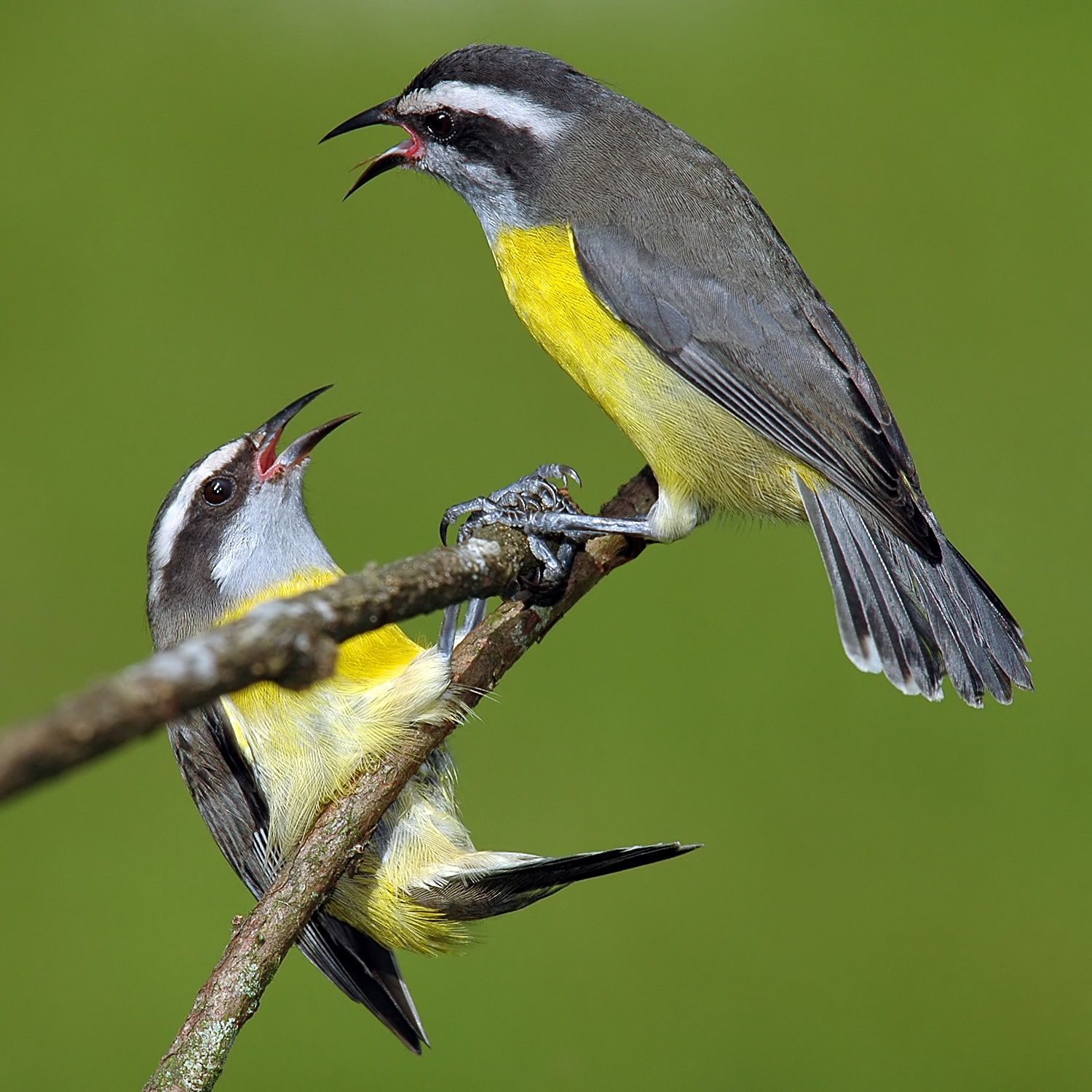
a pair of bananaquit
i’m turning for wisdom again to my friend and fellow pilgrim suleika jaouad, in which she further outlines her antidotes for worry and fear, two conditions that quite prominently rear their heads in CancerLand….(here, prompted by the first bird she saw this year, a little caribbean bird called bananaquit, with a common name “the sugar bird,” suleika went for sweetness as her quest for 2025…funny how intent the searching for essence becomes when life-altering diagnosis is the propellant….
Looking for the sweetness seems like a perfect antidote to the worry and fear. By looking for the sweetness, I mean seeking beauty, presence, and peace in every circumstance, letting go of my fears of suffering and death and what binds us to the material world, being nourished by what’s already inside of us—the nectar of bliss, as its called in Bhagavad Gita. It’s an ongoing practice—to stay nimble, to accept the constant flux, to find contentment wherever I am.
a simple question answered by a modernday mystic:
What do I mean by contemplation? And why does meditation lead us into this state of contemplation? Well, Thomas Aquinas defined contemplation very simply as ‘the simple enjoyment of the truth.’ The simple enjoyment of the truth. You couldn’t get anything more simple than that. It is simply finding joy in what is. —Brother Lawrence Freeman OSB, World Community for Christian Meditation
seek joy, dear friends. and thank heaven for the peace and calm and freedom from fear that allows you to sit pensively at your kitchen table, or to look out a window, mug of hot something in hand, and dream of a kinder, gentler, more just world of our making….
arguing that loving is not some passive happenstance that wafts in like fairy dust, but rather a human art that insists we practice as a painter would daub day after day at her paints, or a sculptor with her forms and clay, the great german social psychologist, psychoanalyst, and philosopher erich fromm in his 1956 masterwork The Art of Loving makes the case: love is a skill to be honed the way artists apprentice themselves to the work on the way to mastery, demanding of its practitioner both knowledge and effort.
The first step to take is to become aware that love is an art, just as living is an art; if we want to learn how to love we must proceed in the same way we have to proceed if we want to learn any other art, say music, painting, carpentry, or the art of medicine or engineering. What are the necessary steps in learning any art? The process of learning an art can be divided conveniently into two parts: one, the mastery of the theory; the other, the mastery of the practice. If I want to learn the art of medicine, I must first know the facts about the human body, and about various diseases. When I have all this theoretical knowledge, I am by no means competent in the art of medicine. I shall become a master in this art only after a great deal of practice, until eventually the results of my theoretical knowledge and the results of my practice are blended into one — my intuition, the essence of the mastery of any art. But, aside from learning the theory and practice, there is a third factor necessary to becoming a master in any art — the mastery of the art must be a matter of ultimate concern; there must be nothing else in the world more important than the art. This holds true for music, for medicine, for carpentry — and for love. And, maybe, here lies the answer to the question of why people in our culture try so rarely to learn this art, in spite of their obvious failures: in spite of the deep-seated craving for love, almost everything else is considered to be more important than love: success, prestige, money, power — almost all our energy is used for the learning of how to achieve these aims, and almost none to learn the art of loving. —Erich Fromm
and finally, simply because i love the language and the imagery, a bit of eliot to usher us into the week to come…
Chorus X from “The Rock” by T.S. Eliot
O Light Invisible, we praise Thee! Too bright for mortal vision. О Greater Light, we praise Thee for the less; The eastern light our spires touch at morning, The light that slants upon our western doors at evening. The twilight over stagnant pools at batflight, Moon light and star light, owl and moth light, Glow-worm glowlight on a grassblade. О Light Invisible, we worship Thee!
We thank Thee for the lights that we have kindled, The light of altar and of sanctuary; Small lights of those who meditate at midnight And lights directed through the coloured panes of windows And light reflected from the polished stone, The gilded carven wood, the coloured fresco. Our gaze is submarine, our eyes look upward And see the light that fractures through unquiet water. We see the light but see not whence it comes. О Light Invisible, we glorify Thee!
In our rhythm of earthly life we tire of light. We are glad when the day ends, when the play ends; and ecstasy is too much pain. We are children quickly tired: children who are up in the night and fall asleep as the rocket is fired; and the day is long for work or play. We tire of distraction or concentration, we sleep and are glad to sleep, Controlled by the rhythm of blood and the day and the night and the seasons. And we must extinguish the candle, put out the light and relight it; Forever must quench, forever relight the flame. Therefore we thank Thee for our little light, that is dappled with shadow. We thank Thee who hast moved us to building, to finding, to forming at the ends of our fingers and beams of our eyes. And when we have built an altar to the Invisible Light, we may set thereon the little lights for which our bodily vision is made. And we thank Thee that darkness reminds us of light. O Light Invisible, we give Thee thanks for Thine great glory!
“The Rock” was Eliot’s play written and performed in 1934, to raise money for the building of new churches. it speaks to humankind’s relation to God, and the implications of a world lived without religion. makes me wonder what Eliot might write today, in a world where religions have wandered so far from their holy essence. the “choruses” in this 21-page play are spoken by the workers, the bands of laborers who build the churches, and is thought to be strongly pro-religion with anti-communist overtones in reaction to the “looming shadow of totalitarian regimes building in Europe and the rumblings of the coming Second World War.” apt.
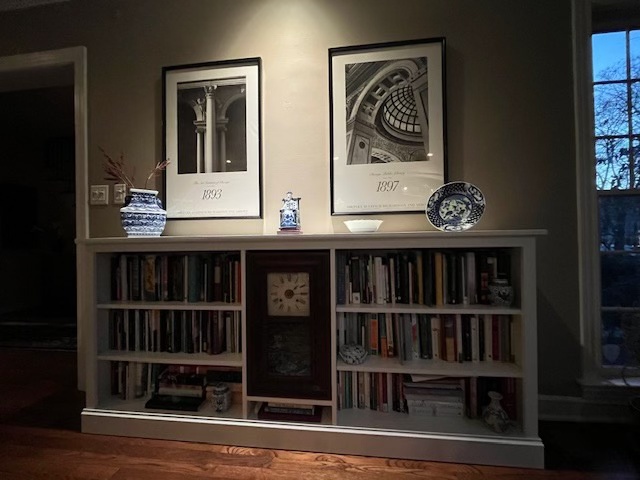
as i write this, snow in fat flakes is tumbling down, birds are traffic jammed at the feeder, and all is silent save for the ticking of an old, old arthritic clock and the whoosh of a furnace. i am so deeply conscious of how blessed we are that we take our physical safety for granted here in the middle lands this morning. instead of a question, this is a morning for simple reflection, counting the blessings we so often forget to notice….
top photo above by JOSH EDELSON/AFP via Getty Images
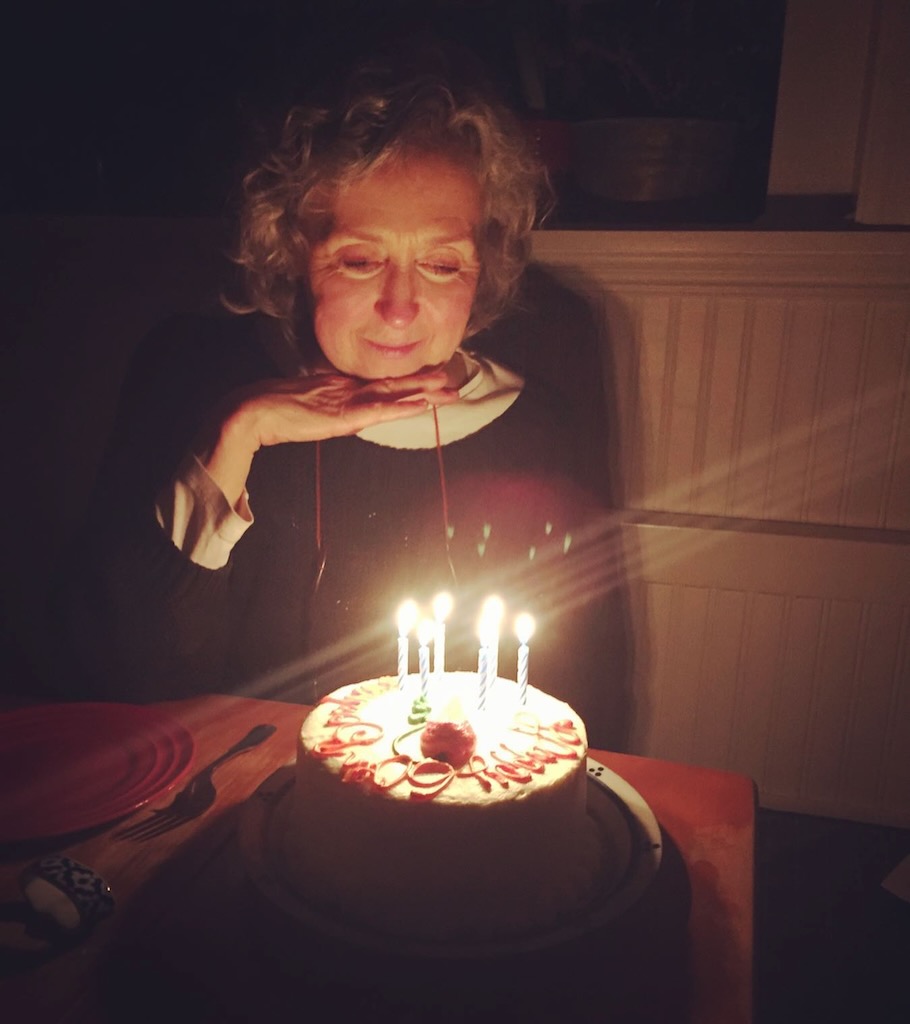
when i take a deep breath in tonight, and close my eyes to make a wish, there is only one wish i’m wishing this year: i wish for a birthday next year.
that’s everything, really.
i’ll be wishing so hard.
it’s a wish that feels so far away. and so very big. like i’m asking for the moon.
it’s a wish that carries a secret. one the sages and prophets and poets have known for a very long time.
it’s a paradox wish. it’s a koan. it’s a wish that makes you think. perk up and pay attention. root around for the wisdom, the immutable truth.
truth is, it’s even bigger than it seems. it’s a russian doll of a wish. one of those ones with umpteen tiny-grained wishes within. grain by grain by grain we make it across a year, and year by year a lifetime.
a birthday next year.
doesn’t sound like too much. but, oh, it’s infinite really.
the blessing of cancer––and yes there are blessings, ones the sages and prophets all seem to have known without needing the verdict, without the scalawag cells lurking in shadows, cells that can’t wait to divide and multiply and muck up the works––is that it rejiggers your seeing. it’s the psychophysics of vision: when range is narrowed, acuity’s heightened. you learn to look not too far into the offing; you learn to look more closely than ever at whatever it is that’s right there before you. and, thus, you see all the more clearly the finest of grains all along the way.
the fine grains are where the wonder, the magic, the awe, are kerneled inside, awaiting their turn to burst forth, to be seen, savored, not left by the wayside.
life in the up-close, life when we’re listening for whispers not waiting for timpani, is how we come to know the most sacred grain therein.
in wishing for one more birthday––please God, just one is all i’m wishing this year (if wishes come true, i’ll wish it again and again and again as long as i can)––what i’m really wishing for are those tiny, tiny moments that strung onto a cord make for one holy rosary.
within my one moon-size, more-than-anything wish, here are some of the grains nestled inside:
i wish for the holy, holy sound of one or both of my boys calling me at some unlikely hour to tell me one of their dreams has come tumbling true. or at least the latest chapter therein. and before they’ve uttered a word, i’ll know from the sound of their breathing that the news that’s coming is good. and, dear God, i don’t wanna be stingy but i’d sure love one or two more of those sweet, sweet jubilant sounds.
and while i’m wishing, i sure wish i get to hear the rough draft versions of those dreams, as they’re in the making, as my boys try them on for size and dare to let me in on the beta versions.
i wish for their soft, big hands to wrap around my now-more-wrinkled littler one––to hold me steady, be it a cobblestone walk or life’s herky-jerky jolts tipping me over.
i wish for one of those early mornings where no one is stirring but me, and the dawn hasn’t yet rosied the sky, and the biggest decision i’m called to make is which mug should i pull from the shelf.
i wish to sink my teeth into the sweetest strawberry of the season. ditto the crispest apple of fall. and the juiciest of august’s tomato.
i wish to run down the airport corridor one more time and into the arms of my faraway boy, all while loudly belting out, “it’s been five years!” (even when it hasn’t been), only because all the good souls slumped in their hard plastic seats deserve a little airport sentimentality. even if it’s improv, and utterly fiction. and because there’s nothing i love so much as the arms of my boys wrapped round my shoulders.
i wish to come to the last page of a book with tears rolling down my cheeks, not yet wanting to say goodbye to characters i’ve come to love.
i wish to sit down to dinner with only the one i love, or to a table filled with nearly a dozen i adore.
i wish to exhale that one cleansing breath when the last of the dishes are done, and all that’s left is a long evening of laughter and stories and loving.
i wish for the sound of the crackling logs on the fire.
i wish to wake up one morning and remember there is not a single worry weighing me down.
i wish i could gather all the people i love—or just a good handful––and plonk down at a table where no one tries to corner the conversation and everyone takes a generous turn. and by the time i’m getting up from the table, i am marveling once again at the goodness, the depth, the hilarity of the vast human character.
i wish i could stand under the stars and behold the star-salted sky.
i wish i could pray so deeply that i felt the shoulder of God brushing against me. or catch myself walking alone in the woods and feeling a shaft of light break through the boughs, and sense that i wasn’t one bit alone, but that the God who i love was leading me forward.
i wish for those beautiful blessed souls who populate hospitals in the unlikeliest spots, the ones who radiate the gift of making you feel so deeply seen. and safe. and cocooned.
i wish for a sermon so stirring it breaks me into tears.
i wish to hear the soul-stirring sound of the deepest laughter there is from the people i love who laugh the heartiest laugh, the sort of laughter that runs tears down your cheeks. and makes you gasp for a breath.
i wish i could answer the knock at the door and be just the person that someone needs, the shoulder to cry on, the arms to hold them steady, the one to dry the tears.
i wish i could wake up one morning and read a headline that makes me believe the good guys will finally, finally win. and that plain old gentle kindness and the raw courage to speak up for what’s fair and right and just will bend the arc toward justice once again….
that’s enough wishes for one russian doll of a wish, though the truth is i’m only beginning…
i found a few nuggets to launch this holy new year, all worthy of contemplation. the first is from the writer suleika jaouad, a comrade on the cancer road (and wife of the brilliant musician jon batiste). she’s suffering godawful setbacks these days and i’m holding her in my every day’s prayers…:
This year, we’re contemplating and reveling in the idea of magic. It’s based on a theme I’ve found myself returning to: the need to let go of the fear of the unknown and instead to open ourselves up to the mysteries and the magic of the unknown. That’s my constant work—and in this time when our world feels more uncertain than ever before, I’d venture to say that it’s all of our work.
from the inimitable mystic and theologian henri nouwen who guides my every day:
Born to Reconcile
If you dare to believe that you are beloved before you are born, you may suddenly realize that your life is very, very special. You become conscious that you were sent here just for a short time, for twenty, forty, or eighty years, to discover and believe that you are a beloved child of God. The length of time doesn’t matter. You are sent into this world to believe in yourself as God’s chosen one and then to help your brothers and sisters know that they are also Beloved Sons and Daughters of God who belong together. You’re sent into this world to be a people of reconciliation. You are sent to heal, to break down the walls between you and your neighbors, locally, nationally, and globally. Before all distinctions, the separations, and the walls built on foundations of fear, there was a unity in the mind and heart of God. Out of that unity, you are sent into this world for a little while to claim that you and every other human being belongs to the same God of Love who lives from eternity to eternity.
and, not least, my favorite, favorite after-Christmas prayer-poem from howard thurman, a prophet of his time. . .
The Work of Christmas
When the song of the angels is stilled, When the star in the sky is gone, When the kings and princes are home, When the shepherds are back with their flock, The work of Christmas begins:
To find the lost, To heal the broken, To feed the hungry, To release the prisoner, To rebuild the nations, To bring peace among others, To make music in the heart.
— Howard Thurman
what one wish will you make this year?(you needn’t reveal here, of course!)
bless you, each and every one for making this year more blessed than you might ever imagine. you have been there for me at every turn. even when you did not know it. and i am forever blessed by you.
p.s. photo above is from a few years back, but it captures the depth of a wish being cast to the stars and the heavens above….
this blessed string of days we’ve called “a year,” is drawing now its last deep breaths. it’s almost time to begin again, or so we imagine in the geometry of the mind, a flatter-planed sphere that sees the year going round and round like vinyl spinning on a phonograph. ascension is not in the equation.
in the geometry of the soul, though, each new turn––we hope, we pray––is not mere spin, but spiral, ascension its sure distinction. it’s the ever-incremental accumulation of loft we’re after. loft attained, most often, the hard way. we stumble, skin our knees, hold our nose and hold our breath while the doctor jabs the needle. from year to year, there is, we hope, at least the humblest modicum of lessons learned. year by year, we aim for wiser.
and so in this year now waning to its close, its hardest lessons came in scans and calls not returned, in snubs and deaths that came too, too soon. but it brought too the sorts of hallelujahs that remind us that good patience, in time, brings resolution, brings peace, brings love come home. the long lost friend we found again. the one hard heart that finally softened, seemed to learn a whole new lexicon, the language of delight at last unfiltered.
i am letting all the lessons settle in, knowing they’re the elements of accumulating wisdom. one year to the next, wiser, gentler, quieter, deeper.
or so we pray.
and in this quiet space––this most delicious time of yuletide, the time beyond the noise, the shopping, the dishes scrubbed and put away––i am inviting the past year to wash over me, to sift through the sediment, to save the gems, rinse away the detritus.
i’m adopting my deep-breathing posture, the one that has me curled under blankets in my red-checked armchair, the fire crackling, the tree twinkling, my boys all ringed around me.
and i’m leaving here at the table two shimmering gems: one, something of a wish upon a star and the discovery that the star is us; and the other a truth of which i cannot be reminded too many times….
here’s the first…
azita ardakani, an iranian-born social activist and communications guru, wrote this “once upon a time” for maria popova’s the marginalian. it’s part poem, part lullaby, and part creation myth with a dash of astronomical science. it reads a bit like a children’s book, and, like all the best and deepest pages penned to a child, it ends in revelation: the true wonder that the star upon which we wish is, in fact, a little bit of us. we are our own wish come true. or, we can be, especially if we aim for spiral and not spin…
Once upon a time, In a place far far away, The darkness drifted. The darkness knew no time. Reaching for infinity, only knowing beyond. One day in the web of inky forever, it asked itself, can I see you? It waited, and waited, and then, answered, a star. And then another, and another, and, another. Another was where it began, and as the star beings asked to be born to meet the darkness from which they came, one particular planet created water so it too could reflect the stars back to themselves. The stars seeing their reflection were filled with joy and delight. Curiosity was born in their light millions of years away. One by one they made their way down, to touch the ocean, to see themselves. The soil darkness watched with awe as the stars arrived, A heart’s desire asked: Can I see you closer? The water stars stretched onto the soil, and mixed into the clay, and became, everything. Yes you too, coyote who hears this, wise owl, mouse and rabbit, you too sleeping fawn, you too tree and root and seed, you too nested flight, and you too, sitting two legged. Mixed from clay and star, flesh and life, a hollow canal opened so breath too could reach back to the darkness. Missing the beginning, it exhaled a bridge, home. The star water became everything we know, and you? The story of us? Well, to experience the closest thing to the very beginning of star meeting water, we learned to create a small ocean inside of us, where it could all be felt, all over again. Once upon a time, in a place far far away, the darkness drifted, and you drifted inside it. You were the wish you once wished for.
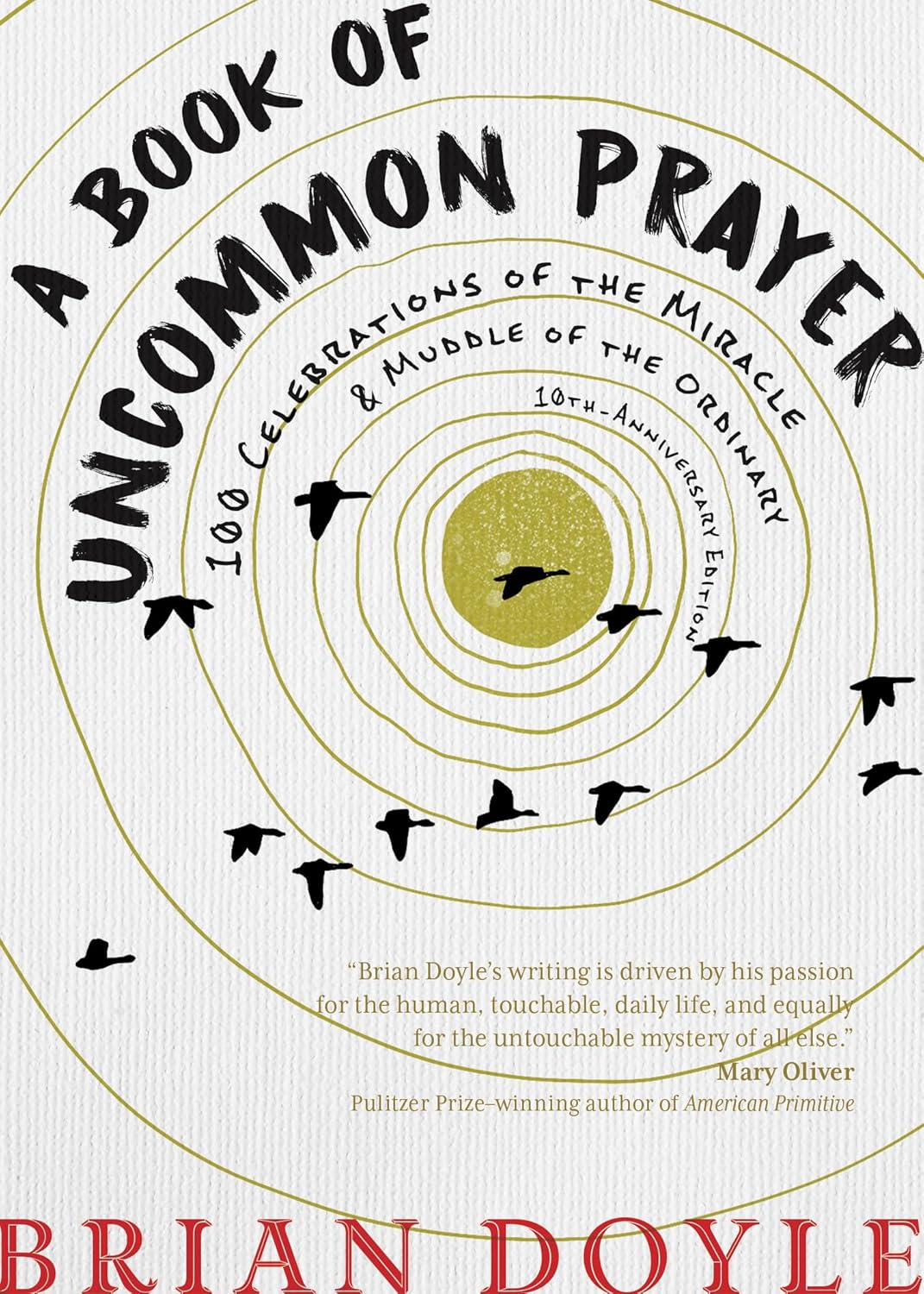
i count the late, great (astonishing) brian doyle among the favorite soul seers i have ever read. he finds words that burrow deep into the places in my soul that might never before have been struck or stirred. in his too-short time on earth, he saw wonder, plumbed wisdom in the unlikeliest of places. from prayers for cashiers and checkout counter folks, to prayers for robert louis stevenson on his birthday, and prayers for the greatest invention ever, the wicked hot shower, all found in his marvelous, marvelous, A Book of Uncommon Prayer: 100 Celebrations of the Miracle & Muddle of the Ordinary. these are the first lines of one with the magnificently brilliant title, “Furious Prayer for the Church I Love and Have Always Loved but Which Drives Me Insane with Its Fussy Fidgety Prim Tin-Eared Thirst for Control and Rules and Power and Money Rather Than the One Simple Thing the Founder Insisted On.” and it’s a fine fine note on which to both end and begin a year….
Granted, it’s a tough assignment, the original assignment. I get that. Love — Lord help us, could we not have been assigned something easier, like astrophysics or quantum mechanics? But no — love those you cannot love. Love those who are poor and broken and fouled and dirty and sick with sores. Love those who wish to strike you on both cheeks. Love the blowhard, the pompous ass, the arrogant liar. Find the Christ in each heart, even those. Preach the Gospel and only if necessary talk about it. Be the Word. It is easy to advise and pronounce and counsel and suggest and lecture; it is not so easy to do what must be done without sometimes shrieking. Bring love like a bright weapon against the dark… And so: amen.
bless us all. and may your new year bring you loft and leaven.
any wisdoms you acquired this year, with a story to share?
i know the darkness is inching toward us, minute by minute. and i welcome it, being a winter baby, and being drawn to shadows and inkiest night. but i find myself thinking glistening sorts of thoughts these past few days, make-believing we’re pulling up chairs on this snow-swaddled morn for a festive wintry all-chair tea.
my house is aglow and will be glowier once the candles are plunked in the menorah, and kindled one by one, eight nights in a row. this year, for the first time in two decades and only the second time since 1959, both Christmas and the first night of Hanukkah fall on the twenty-fifth of december. i’ll be pulling out all the festival stops with my anglophile mother’s favorite yorkshire pudding and roast of beef, and my beloved’s brisket and latkes. (crank the ovens! and, please, bring on the sous chefs!)
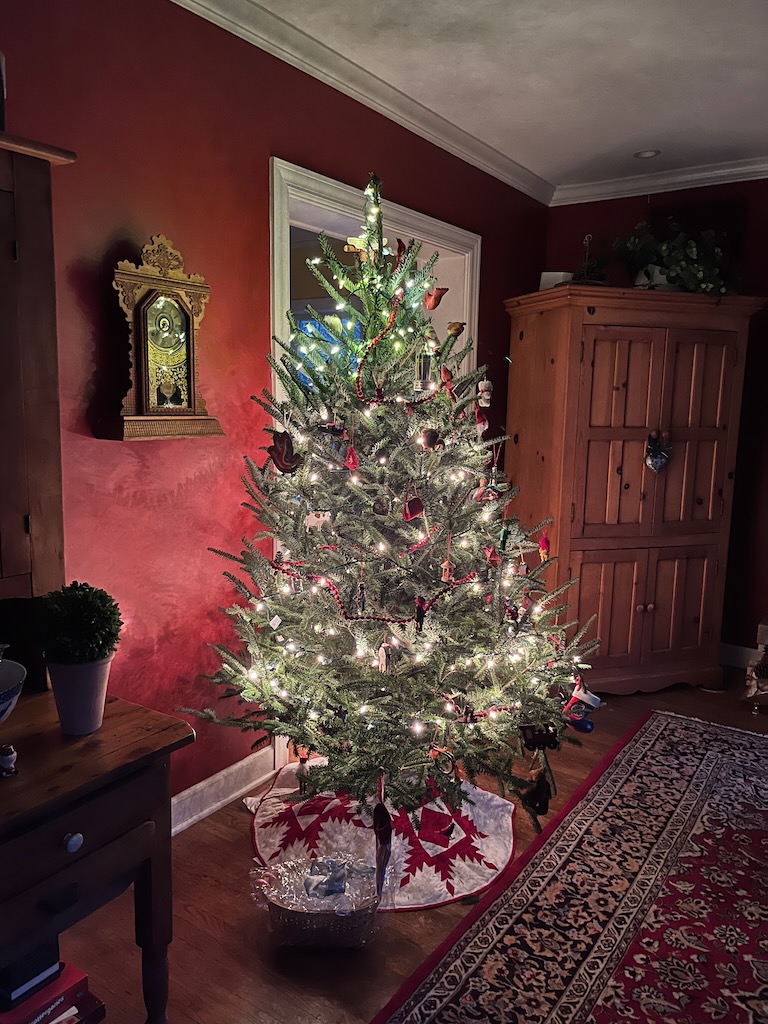
but here, at my make-believe solstice tea, i imagine the tintinnabulation of porcelain teacups being stirred with antique silver spoons, and the pungent perfume of star anise and clove and the peel of one fat orange simmering in my old red “christmasy smell” pot. without make-believing, i inhale the foresty perfume of the fraser fir that, for days now, has stood proud in the corner, obnoxiously blinking because someone pulled the wrong box off the hardware store shelf.
if we were all here, gathered round this old worn table, we’d be shy maybe at first. surely, one or two wouldn’t be because there’s always a livelier wire in every good bunch. but i’m of the shyer persuasion these days, so i’d be purring most loudly simply being a listener. i’m apt to station myself on the circle’s outer edge, and to be the one keeping close and quiet watch.
i’d delight myself in crowding the table with sugar-dusted spice cookies, crisp and bronze round the edges. and i’d put out a mound of satsuma oranges, the ones plucked with leaves still attached, drawing me that much closer to pretending i’m sitting on the orchard floor, spine leaned against the trunk, peeling a just-plucked orb, watching the clouds waft by.
and here at the old maple slab, there would be teas by the pots full. and a crackling hearth just across the room, where logs would hiss and pop and flames would leap up the chimney. and warm woolen blankets would be amply piled in a basket nearby. and a drummer boy or two surely would pa-rum-pum-pum-pum from the crackly radio. and maybe i’d set out earthenware bowls, one filled with clementines, another with sprigs of clove, and spools of ribbons, for the making of pomanders while we while away the morn telling stories.
i’d send you home with candy canes. and a fat satsuma too. and to tuck in your pocket, these beautiful, beautiful poems for safe-keeping. the first, from rainer maria rilke, and the next two from wendell berry, the farmer poet from the bluegrass state where i was born. his first is solstice-focused, and the other, a magical reframing of the very first Christmas.
all this my way of saying merry blessed Christmas, and Hanukkah, and Kwanzaa, too. may the glistenings and tinklings and all the spicy perfumes of the season set aglow your deep and tender and most blessed heart…
Advent The wind in winter woods is like a shepherd to his flock of flakes and soon the firs anticipate how blessed will be the light
and eavesdrop. The garden doves ready themselves in branches white and fend off the wind, growing towards the glory of this night. —Rainer Maria Rilke
To Know the Dark To go in the dark with a light is to know the light. To know the dark, go dark. Go without sight, and find that the dark, too, blooms and sings, and is traveled by dark feet and dark wings. ––Wendell Berry
Remembering that it happened once Remembering that it happened once, We cannot turn away the thought, As we go out, cold, to our barns Toward the long night’s end, that we Ourselves are living in the world It happened in when it first happened, That we ourselves, opening a stall (A latch thrown open countless times Before), might find them breathing there, Foreknown: the Child bedded in straw, The mother kneeling over Him, The husband standing in belief He scarcely can believe, in light That lights them from no source we see, An April morning’s light, the air Around them joyful as a choir. We stand with one hand on the door, Looking into another world That is this world, the pale daylight Coming just as before, our chores To do, the cattle all awake, Our own white frozen breath hanging In front of us; and we are here As we have never been before, Sighted as not before, our place Holy, although we knew it not. ––Wendell Berry
my hope this day of longest night, when darkness is the victor, is that no matter when or how the darknesses come we always find those and that which brings us light in all its intensities, from flickering to full-on blazing. bless you, bless you, ever bless you…
where do you find your essential light?
that fat little fir up above is the one that fills the room with its insistent eau de forêt.
*branch of birds above from beautiful amy years ago….
i’ve raised a blog, it seems, from birth to the verge of being grown-up. eighteen years: 12.12.06 it all began. 1,200 posts before today, so this––wondrously (to me, anyway)––is 1,201. at first i tended it, this conversation, this wondering aloud, this occasional epiphany, every weekday for a year, then chiseled it down to thrice a week. and then, yet again, i distilled it: once weekly––religiously every friday morn. here and there i’ve taken rare short breaks. a bit of summer breather once or twice.
and yet, kept on. and on and on. (sometimes wondering if maybe i should just be quiet.)
cycled through waves who’ve pulled up chairs in ebb and flow as of the tides. friends who’ve come to stay awhile, then shuffled off for one reason or another. at least a few i’ve deeply loved have died; angels still among us. some who’ve pulled up a chair have never ever strayed. here from the beginning, faithful as the day is long. bless them. bless and bless and bless them.
i too have ebbed and flowed. waded into deep and deeper waters. shed old fears, grew courage. been puzzled. pondered. hatched new fears. wobbled. stumbled. inhaled courage again, again, and again. i’ve wondered and worried aloud. weathered aching heart, and phone calls and headlines that left me breathless. i’ve loved and loved some more. i intend to never stop.
my school at first was all that unfolded under this old roof, where creaky twisting stairs and a nearly antique Garland stove––six burners, flattop, quasi-oven, a behemoth you’d find at any all-night diner––came to animate so many stories. it was my boys from whom i mostly learned and learned the most. and learned and learned again. and of course the holy earth and heavens high above: the gardens, the birds, the trees, the stars and moon, the dawn and dusk and nighttime’s inky darkness that never fail to draw me in. the book of nature, i’ve come to read, where lessons rise and fall season after season after season. i found a holy peace in this old house and the ramshackle plots where i kneel with trowel and soul wide open. i’d been chasing that peace for years.
i seem to have stumbled into a new teacher these days, one i’d never thought could bring such knowing: it comes with darkness, yes, though i’m reminded that darkness is the embryonic space where stirrings first begin. and it’s nighttime’s darkest hour when stars most brightly shine. stripped of distraction, of the nettlesome sorts of things that blur our everyday, it denudes us to our barest essence. it’s cancer (even when i do not name it here it’s ever present in my rumblings, and has catapulted me to highest most-reverent attention). mine is an especially wily iteration, one that doesn’t follow rules. and brings me squarely into the land of uncertainty. where i, a girl who likes to know things, am finding out how not knowing whittles the knowing to one or two immutables: love is the force that triumphs over all; its alpha and omega, the God who dwells within. within me, and you. and even all the ones who make us want to scream and run for cover.
here’s what i know 18 years in: there is nothing that love––true, deep love in all its iterations––cannot infuse. and in the infusing, molecules are stirred, shifted, and forms reshaped, dissolved, emboldened, made new. i’ve felt mountains move. i’ve felt fear melt away, like butter on hot biscuits. i’ve felt surrender––holy, holy “thy will be done.”
and a life well lived is one in which we love as unstintingly, as capaciously, as we might never have known possible. to live a life of loving is to scatter the few seeds that might blossom in our wake, that might rise in the seasons beyond us. it is the deepest mark i hope and pray to leave: to know my heart, my soul, has found a way in, forever in, to those whose lives i might have touched.
it all becomes so spare, so simple, in the end. when you realize your days––for as long as they stretch––are your one rare turn to hone the art of loving, as it is meant to be. as it is meant to make the holy difference. to trace the path from here to heaven.
that’s some of what i’m thinking eighteen sweet years in.
and now, because the older i get the more i glean from the wisdom of those who’ve left their trace, here’s my birthday bouquet to ponder for the day, the week, the hour…an indelible quote, a poem to make you laugh, and one to maybe melt you….
first, a quote from the french philosopher and playwright gabriel marcel, from the mystery of being:
“You know you have loved someone when you have glimpsed in them that which is too beautiful to die.”
a poem that might make you laugh, and certainly leave you with a smile:
Emily Dickinson at the Poetry Slam BY DAN VERA
I will tell you why she rarely ventured from her house. It happened like this:
One day she took the train to Boston, made her way to the darkened room, put her name down in cursive script and waited her turn.
When they read her name aloud she made her way to the stage straightened the papers in her hands — pages and envelopes, the backs of grocery bills, she closed her eyes for a minute, took a breath, and began.
From her mouth perfect words exploded, intact formulas of light and darkness. She dared to rhyme with words like cochineal and described the skies like diadem. Obscurely worded incantations filled the room with an alchemy that made the very molecules quake.
The solitary words she handled in her upstairs room with keen precision came rumbling out to make the electric lights flicker.
40 members of the audience were treated for hypertension. 20 year old dark haired beauties found their heads had turned a Moses White.
Her second poem erased the memory of every cellphone in the nightclub, and by the fourth line of the sixth verse the grandmother in the upstairs apartment had been cured of her rheumatism.
The papers reported the power outages. The area hospitals taxed their emergency generators and sirens were heard to wail through the night.
Quietly she made her way to the exit, walked to the terminal and rode back to Amherst.
She never left her room again and never read such syllables aloud.
and finally, a christmas poem that just might melt you, as it melted me. . .
Kenosis by Luci Shaw
In sleep his infant mouth works in and out. He is so new, his silk skin has not yet been roughed by plane and wooden beam nor, so far, has he had to deal with human doubt. He is in a dream of nipple found, of blue-white milk, of curving skin and, pulsing in his ear, the inner throb of a warm heart’s repeated sound. His only memories float from fluid space. So new he has not pounded nails, hung a door broken bread, felt rebuff, bent to the lash, wept for the sad heart of the human race.
thank you, with all my heart, for pulling up a chair, be it only for awhile, or for some or all these years. i am holding especially close against my heart this morning ginny, my once closest reader (my beloved mother in law who was quick to call if she liked what she’d read, and deafeningly silent if she did not!), mary ellen, and ceci, who waft over my shoulder, angels to my every day….and especially to my boys, who animate each and every pulse of my heart and every breath i breathe….(and certainly to will, who got this whole thing started, when he insisted i could do it, and built the website to make it happen….) xoxo love, bam
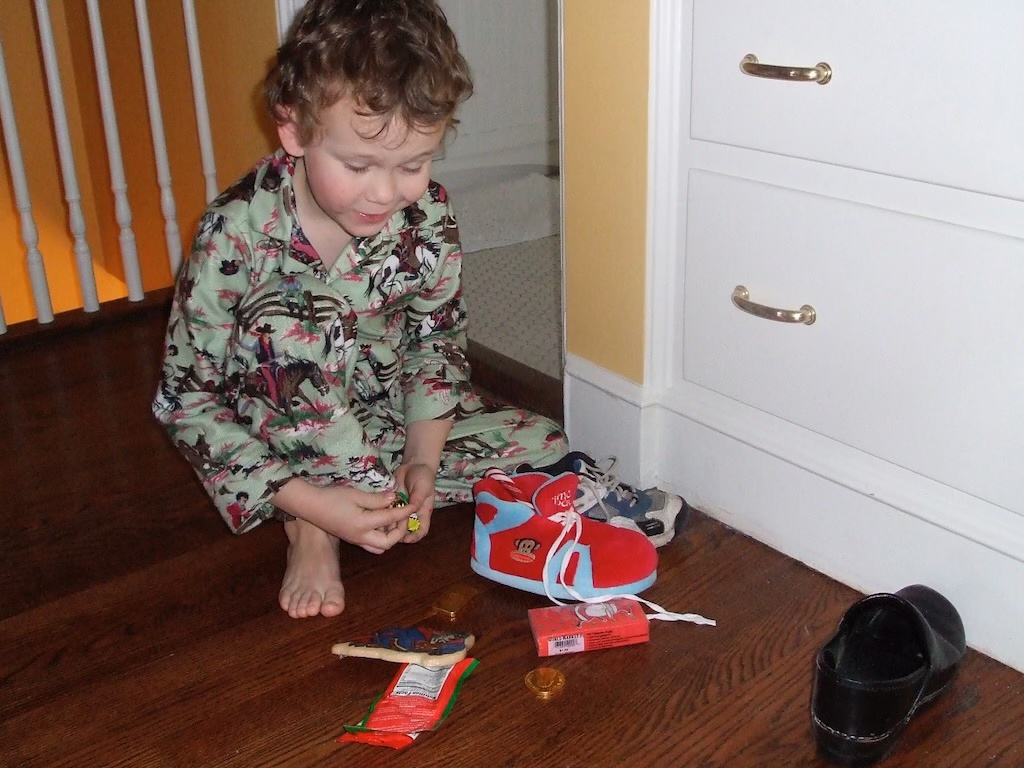
not so very long ago, within the reach of my old brain folders, this was the morn i had my boys set out shoes (sometimes admittedly smelly sneakers), which i filled with clementines and tinfoil-wrapped chocolates. the feast of st. nick, the jolly soul who in long-ago times filled the shoes of girls and boys with trinkets from his pouch. the original arbiter of good v. not-so-good; a lump of coal you did not want to find tucked in the toe of your wooden clog.
december, it seems, is a month punctuated with tradition. we embroider advent’s waiting, the dim day-by-day darkening with the kindled flickering of myth and lore and wonder gathered round the globe. every land, it seems, is looking for a bit of light amid the darkness.
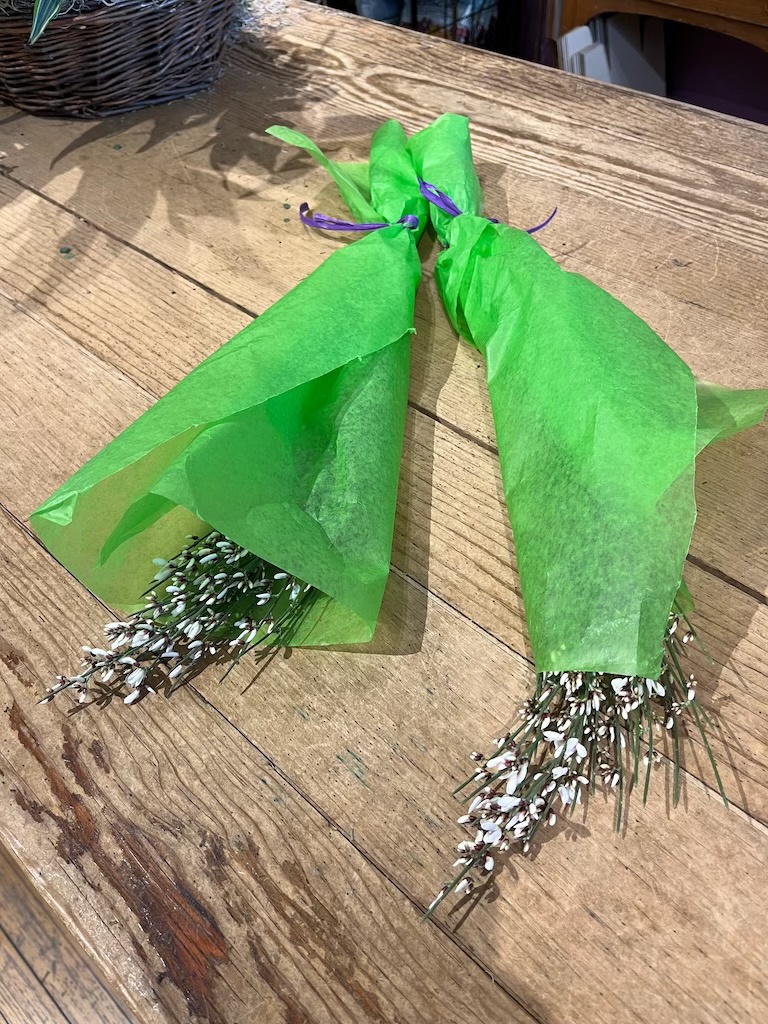
i learned only this week of december fourth’s “barbara branch,” when the german tradition is to give the branch of a flowering tree to a barbara and await its blossoming by christmas. the story goes that barbara, who would become a saint and then later (at my tender and impressionable age of 9 or 10) be stripped of her sainthood (for reasons i never quite grasped but the good ol’ Church did it anyway), dear barbara back in medieval times was such a beauty that her wretched father locked her in a tower whenever he went away. and when she refused to marry some princely fellow, because she preferred to marry Jesus Christ (plenty of saints chose that path) he sent her off to prison, awaiting beheading. on the way to prison, so the story goes, a cherry branch snagged against her skirt, so wise and wily barbara clutched the branch and carried it along to her cell, whereupon every few days she watered it with drops from her scantly-filled drinking glass. and don’t you know that on the day she was burned at the stake and then beheaded, the branch blossomed. and so we barbaras carry on the blossoming, with branches awaiting bloom. my mother is a barbara, and she now has a dear friend where she lives who also happens to be a barbara. so this barbara brought those barbaras branches awaiting bloom.
and so december goes.
but really what i find myself thinking here this morning is how the sages i have come to know and love find themselves in conversation across space and time. how their wisdoms interlace and amplify, and to my mind underscore the eternal in their simple truths.
the sages shelf: poets, left; mystics and sages to the right
the two i’ve drawn from my shelf this week are brian doyle, the beyond-brilliant late great essayist and longtime editor of portland magazine, who died of a brain tumor not too many years ago. his wisdoms cannily or not line up with those of dorothy day, the radical pacifist and co-founder of the Catholic Worker movement, devoted to the poor, the hungry, the broken, and now on the road to sainthood, though she famously protested that labelling when she once snapped: “don’t call me a saint. i don’t want to be dismissed so easily.” (a sassy saint she’ll be, patron saint of sassiness among her zillion virtues.)
i found myself pulling dear brian off my sages shelf this week, and zeroed in on this passage in particular from his magnificent one long river of song: notes on wonder (a book whose praises i once sang in the pages of the chicago tribune, back when i wrote a column called “books for the soul”):
This is what I know: that the small is huge, that the tiny is vast, that pain is part and parcel of the gift of joy, and that this is love, and then there is everything else. You either walk toward love or away from it with every breath you draw. Humility is the road to love. Humility, maybe, is love.
he echoes the essence of dorothy’s wisdom, an epiphany of hers long etched on my heart. this simple, simple code: “by little and by little.”
her biographer, robert ellsberg in dorothy day: selected writings, elucidates: “simply, it consisted of performing, in the presence and love of God, all the little things that make up our everyday life and contact with others. from therese [of lisieux, yet another saint, the one who inspired dorothy], dorothy learned that any act of love might contribute to the balance of love in the world, any suffering endured in love might ease the burden of others. . . we could only make use of the little things we possessed—the little faith, the little strength, the little courage. these were the loaves and fishes. we could only offer what we had, and pray that God would make the increase. it was all a matter of faith.”
what i’ve come to know, through the alchemies of age and maybe cancer, is that my one holy task here is to live by love, little by little, day by day, for as many days as i have. if i can be a little flame, if i can choose love, choose joy, choose kindness at each and every turn and each and every choice, then my swift life here will have left some mark and measure. if each one of us might tip the balance, bend the arc toward justice, then our existence holds holy purpose. the choice becomes so clear, so finely-grained focused: i aim to walk closer and closer to the holiness i was––we were all––meant to be. and to find unending bliss within.
so help me God.
one more brian doyle: in a brilliant, brilliant essay (found in One Long River, p. 12) about two strangers holding hands as they leapt from the south tower on sept. 11, doyle wrote: “their hands reaching and joining are the most powerful prayer i can imagine, the most eloquent, the most graceful. it is everything we are capable of against horror and loss and death. it is what makes me believe we are not craven fools and charlatans to believe in God, to believe that human beings have greatness and holiness within them like seeds that open only under great fires, to believe that some unimaginable essence of who we are persists past the dissolution of what we were, to believe against such evil hourly evidence that love is why we are here.”
i don’t know why i even try to say what has been so magnificently, unforgettably uttered already. brian doyle’s truth i feel unfolding in me every blessed day. i feel those seeds breaking open in the roaring furnace that is a cancer in your lungs.
because, why not, two Advent poems from emily d. or at least two poems worth contemplating in this season of anticipation, of heightened awaiting, of soul on the lookout for wonder coming….(Advent reflection on the poems, from my friends at the Salt Project, down below, but first, emily, the belle of amherst:)
“The Infinite a sudden Guest” (1309)
The Infinite a sudden Guest Has been assumed to be — But how can that stupendous come Which never went away?
“Tell all the truth but tell it slant — “ (1263)
Tell all the truth but tell it slant — Success in Circuit lies Too bright for our infirm Delight The Truth’s superb surprise As Lightning to the Children eased With explanation kind The Truth must dazzle gradually Or every man be blind —
+ Emily Dickinson
and here’s what my friends at Salt Project say about both…
These two Dickinson poems are perfect meditations for Advent:
The first as a provocative play on one of the season’s mysteries (How can we “wait” for someone who is also present to us, and in us, even as we wait?); and the second as a window into the many ways the Advent and Christmas stories testify to a God who comes in ways that are somewhat softened, accessible, “slant,” camouflaged, even hidden.
An ordinary baby in an ordinary backwater town, signaled by a star so faint that only Magi can spot it (Herod’s assassins can’t!), and announced not to the powerful in Jerusalem but to nameless shepherds on a forgotten hillside, watching their flocks by night.
It’s as the old carol has it: “Veiled in flesh the Godhead see, Hail th’ incarnate Deity!” (that’s from “Hark the Herald Angels Sing”). Veiled, hidden, not so God disappears but precisely so God may appear — or rather, so we may see. The Truth must dazzle gradually…
what simple sages’ truths have you found echoing of late?
blessings to teresa p for teaching me all about BBs, barbara branches!
it’s the morning after. the floor by the stove is splattered with something we know was delicious (it’s what happens when a kid who works in a michelin-star kitchen takes to the skillet and starts flipping the beans from pan to air to pan again, with aerial cartwheels in between). the silver and plates still need to be tucked away for their long winter’s rest. the refrigerator shelves are groaning. but the counter is clean, the coffee is on, and there are four more hours till the TSA beckons Boy No. 1, and his plane takes to the sky.
i am as sated as a girl could possibly be. but insatiable always when it comes to time with people i love. our table was full, the fire was roaring, and the house was all but decibly quaking (the requisite fire alarm sounded, football whistles were blowing, aretha was crooning straight through it all, and 11 of us were firing words in every direction). it was perfect. and perfectly loud.
some years back, i counted my way through the blessings of a day. and this year, as with the currier & ives thanksgiving plates, i’m hauling it out of safe-keeping, for one more round of service.
i’ve even more thanks to add to this year, beginning and ending with being right here. holding tight to the hands of the peoples i love. and falling against the very broad chest of the boys who i birthed some years ago. their heartbeats pressed to my ear will be the song that carries me forward through the adventures ahead.
here’s my centenary of blessing…
enchanted by celtic and jewish and ignatian understanding that we are called to anoint the holy hours of our every day with blessing — 100 blessings precisely, in the case of the jews — i decided to unspool my own centenary of thanks across the arc of a day.
in this season of bountiful thanks, as we gather roots from the ground, and fowl from the field, i march through time, sewing blessing into the whole cloth of my day. (it’s a might bit long, so you might want to take this in doses, a swallow here, another there. forgive me for counting clear to 100…)
a centenary of blessing, of deep and undying Thank You…
In the liminal landscape between asleep and awake, thank you, Holy One, for heart still beating, for breath, for first thought, the one that tickles us into consciousness. Thank you for darkness before dawn, morning after morning a reawakening to the metaphor, the truth, that in our darkest hour we might hold on just one more minute, for surely the stars will dim, and horizon’s edge will be doused in tourmaline and tangerine, and finally radiant gold. (4)
Thank you, by the way, for celestial paint set.
Thank you for bed, and blanket. Thank you for the one I love who lies beside me, whose breathing I know by heart. Thank you for the lump that’s warm, that’s there when I reach across sheets in the night, in the morning. Thank you for deepening love and the long winding road that brought him to me, to my heart.
Thank you for the dawn itself, that sacred cloak of in-between, when crescent moon dangles just above, but night gives way to morning’s light, and heaven’s dome, at the seam of earth and sky, soaks up scant threads of all-absorbent amber rose. Thank you for the stillest hour when all that moves is barest breeze that rustles leaves, and far off, the stirrings of the lake that never cease. (13)
Thank you for this old house, with arthritic floor boards, ones that creak at just the same juncture, with just the same footfall. Thank you for kitchen, and heat that is cranked. Thank you for whiny old cat there at the door. Thank you for coffee beans and hissing pot, and the old chipped mug that fits snug in my palms. (20)
Dear Maker of All That’s Blessed, thank you for the sound of those footsteps clomping onto the floorboards above, and the certitude that — so far this day — all is well. Thank you for shower, hot and pulsing and shaking off sleepy-eyed resistance to standing upright.
Thank you for porridge I stir at the cookstove. Thank you for the sustenance I dollop in spoonfuls, the alchemy of cooking for those we fuel for the day. Thank you for faith in the vespers unfurled, in between handfuls of raisins and walnuts and jewel-toned dried fruits, the ones we toss with abandon into the bubbling pot.
Thank you for clementines, and sugary cinnamon. Thank you for butter, slathered and melted. Thank you for school bus drivers who wait. Thank you for the click of the door when at last the morning rush is over, is ended, and no one is reaching for car keys, muttering under her breath.
Thank you, Blanketer of Wonder, for the quiet stitched into the morning’s hours, the quiet so thick I can drink in the tick and the tock of a grandfather’s clock. And the squawk of the bluejay, and the chatter of sparrows. (35)
Thank you for work to be done. Thank you for dishes piled in the sink, whose scrubbing and rinsing gives me a moment to think, to ponder the day. Thank you for typewriter keys who call me, and fingers that play on the alphabet rows. Thank you for sentences that write themselves, and words that are birthed from deep down inside.
Thank you for wisdom, the sort that comes in unexpected flashes, when you only know you’ve found it as you feel your heart go thumpety-thump, and you sit bolt upright, or feel the goosebumps sprout up and down unsuspecting flesh. That wisdom might come reading along the pages of news, or in a poem slipped under your transom, or from a stranger passing by. Plenty often, it comes through the holy gospel of a wonder child, as you catch one last phrase tossed over a shoulder at the schoolhouse door.
Thank you for all that’s poetry — wisdom-steeped or just plain beautiful, breath-taking. And thank you for Gospel of any brand — be it birthed from holy child, everyday saint, or even the so-called kook who stands on the street corner, proclaiming through a megaphone.
Thank you, yes, for telephones, for that rare sound of a voice that nestles against the tenderest heart. That, within the first breath of the very first syllable, brings comfort, collapses miles and aloneness, amplifies the hours absorbed in coming to this holy bond of deep knowing each other, inside and through.
Thank you even for the bits of news — of whatever ilk, good or bad or nasty — that percolate the hours of each day, make one slice of time so vastly different from the next, stitch drama to the script of life, offer us the chance to absorb each and every frame from an angle never before perceived. (45)
Thank you, most of all, for the deep down knowing that you, Holy Depth and Gentleness, never leave me adrift. Never let my quakings take me down. Ever bring me light, and tender touches. Ever hold me up, against the chilling winds. And bring me to communion with all that’s glorious and bountiful in this rugged, rugged landscape.
I might be among the few who salute the cloudy skies of November on my long list of thanks. Ah, but those angora gray skies, they comfort me, harbor me. I’ll take the somnolence, the introspection of a gray day any day. So thank you for cloudy and gray.
And I’d be remiss if I didn’t mention how thankful I am for hearts that continue to tick, day in and day out, despite the trials we toss their way, as we worry and fret, then, without notice, shriek in deep joy and excitement. Poor ol’ heart, the one that landed in me anyway, it might not have realized it was signed on for a roller-coaster ride of such seismic proportion.
Speaking of ticking, thank you for the schoolhouse clock that does just that, minute by minute, hour upon hour, heartbeat against the wall.
Thank you, too, for windows. And for the flutterings and flashes just beyond the glass, as clouds of gentle creatures take off and land, from sky to limb and back again — each time, lifting just a little bit of my soul.
Thank you for doors, the ones that let in unexpected someones, someones we love. And keep out the wind and the cold.
Thank you for fires that roar and logs that crackle. Thank you for the one that’s turning the so-called sleeping room, across from the kitchen, into a chamber of flickering gold. Thank you for the two lumps under blankets, snoozing by the fire as I sit here, now typing. (59)
Thank you, Lighter of Night, for the cloak of darkness that comes early now, velvety backdrop for twinkling of stars, and moon that holds me, most every eve, in its trance.
Thank you for dusk, dear Lighter of Light, the far edge of the day, beginning of nightfall, when the last seeds of illumination are scattered, are rosy.
Thank you for dinner hour, and the blessing of slow simmering stew. Thank you for the bounty of greens from your earth, and spices from pods and seeds and stamens.
Thank you, God, for the trees and the gnarly limbs, and the hummingbird now buried deep in my garden.
Thank you for candlelight. And the lights of Your making: moonlight and sunlight and dappled radiance scattered like seed across the landscape. Thank you for twinkling stars and streaking ones, too — chalk marks etched across the slate of the night sky. (76)
Thank you for drifting off to sleep, and dreams that color our imagination. Thank you even for revelations that come to us in the awful interludes of tossing and turning. Thank you for wanting to wake up again, to climb from the bed. Thank you for the blankets we tuck under the chin of our sleeping child.
Thank you, dear God, for the child. For the breathtaking chance to infuse all that’s good in this world. Thank you for lessons taught while holding a hand, or wiping a tear. Thank you for band-aids that quell the hurt, and words that do the same. Thank you for everyone who lifts up our child, the teachers who inspire, the coaches who are kind. And the lady down the block who never fails to plant a fat wet kiss on that child’s pink cheek. (90)
Thank you for the year drawing to a close, and this pause to nod our heads and whisper gratitude. Thank you for the kaleidoscope of turning season, the ever-shifting call to attention. Thank you for crunching leaves, and tumbling snow flake.
Thank you for love in all its iterations. For birth, and death, and all that animates the interstitial hours. Thank you for those who walk beside us, who put a hand to the small of our back, or reach out to carry us across the bottomless abyss. (100)
Thank you, God, for all of this. And more. So, so much more.
what do you count in your litany of deep and undying thanks?
i clambered up from the basement yesterday morn, and found myself face-to-face with a whiteout. snow falling in thickets. snow whirling wildly. snow, snow, and more snow for hours and hours and hours.
it was all the currier & ives i needed to supercharge my countdown clock. the one that’s percolating at quicker and quicker clip as the days turn closer to wednesday a week, the eve of thanksgiving itself, when not just one but both of the boys i so love will––for the first time in almost a year––unfurl their dreams on the pillows of their long-ago boyhood beds, all nestled cozily under this mostly dependable, nearly centenarian roof.
and i will savor the joy of kissing both on the forehead as i trundle off to bed hours before my wide-eyed night owls, or should we all stay up till the same insensible hour i will give it my best waltons’ bedtime holler, and call out from under my bedsheets and across the hall and down a few stairs, “good night, will. good night, Bear. good night, old house. sweet dreams, my beautiful boys.”
it’s been a long hard autumn, held in the vise of worries and fear the likes of which i’d not recommend. and so this coming thanksgiving is the emotional equivalent of frank lloyd wright’s trademark compress-and-release, in which the great architect intentionally magnified the vast spaciousness of a room by first pressing in the walls and the ceiling of the space leading into the room, so that upon stepping through the tight corridor and into the vaulted chamber the sense of openness would be perceived as vaster than ever.
and so it is with the human dynamic of fear, grace, and gratitude: to walk through unbearable days, days that stretch into weeks, and weeks that stretch into more than a month, and then to find yourself falling into the arms of the human beings you most long to hold onto; it’s the pinnacle of paradise on earth, to be released from the vise and enwrapped in a love without end.
cancer sharpens that point. cancer sometimes brings on seasons of uncertainty that are quickly populated with ghosts and demons that defy containment. i’m learning the undulations of cancer that are colored in shades of gray. interminable shades of gray. questions that come without answers. doctors who call with unwelcome news. and barely stay on the line long enough to answer a single question. and then you hang up and feel the floor drop out from under you. sometimes––if you’re me––you take the short road to doom. because that’s what worriers do. we worry. we pray for holy release.
in time, we get a grip. regain our bearings. hold our chin high, dry our tears, practice at being brave. whistle into the in-blowing winds. hold tight to the hands of the one or two who know how dark it’s become, and we fall to our knees, or fold to the ground and enter the depths of divine meditation. i’ve spent more hours with eyes closed, palms open, sitting in silence, beckoning the perpetual God-flame within, than ever before. i’ve been tempted to beg, “more time, please.” but i don’t any longer believe i can––or hold any special claim to––change God’s equation, so what i pray for is grace. is heightened attention. what i pray for is an emphatic aliveness that infuses each turn of the day with unbarred acceptance. i don’t want to blink and miss something holy.
those prayers––for grace, for keen attention, for seeing deeper than ever day in and day out, for pausing to savor––are answered, blessedly. and my own season of unending thanks coincides with that of this nation founded on pillars of moral perpetude, and the hope of equal justice for all.
the essence of my life’s gratitude has always been the improbable miracle that i became a mother. that i birthed not one but two glorious humans, and devoted the best of my heart, my soul, my breath, my being, to carving out for them a space in which they’d be cocooned in the purest love i could imagine, could muster. along the way, i’ve tossed every life line i could whenever they needed, and now, lo and behold, they’re the lifelines and i’m the one needing.
and so all these past 45 days, i have longed for only one thing: hours more to sit side-by-side the ones i so fervently sumptuously love. to giggle at their antics. to marvel at their wild-eyed wonder tales. to feel their hands squeeze mine, to be wrapped in their arms, my ear pressed to their chest, absorbing the heartbeat i’ve loved since the very first ultrasound when that echoing lub-dub-dub poured over and through me like the holiest chrism.
this is a countdown like never before. and my heart is more than open for business. the business of loving my boys. in real time. under one shared and sheltering roof.
thanksgiving morn, a few years ago.
here’s a poem, fittingly, a prayer poem by the great madeleine l’engle, who lived by words but found herself wordless in prayer. which, indeed, is sometimes the way to our deepest depths…
Word
I, who live by words, am wordless when I try my words in prayer. All language turns To silence. Prayer will take my words and then Reveal their emptiness. The stilled voice learns To hold its peace, to listen with the heart To silence that is joy, is adoration. The self is shattered, all words torn apart In this strange patterned time of contemplation That, in time, breaks time, breaks word, breaks me, And then, in silence, leaves me healed and mended. I leave, returned to language, for I see Through words, even when all words are ended. I, who live by words, am wordless when I turn me to the Word to pray. Amen.
––Madeleine L’Engle
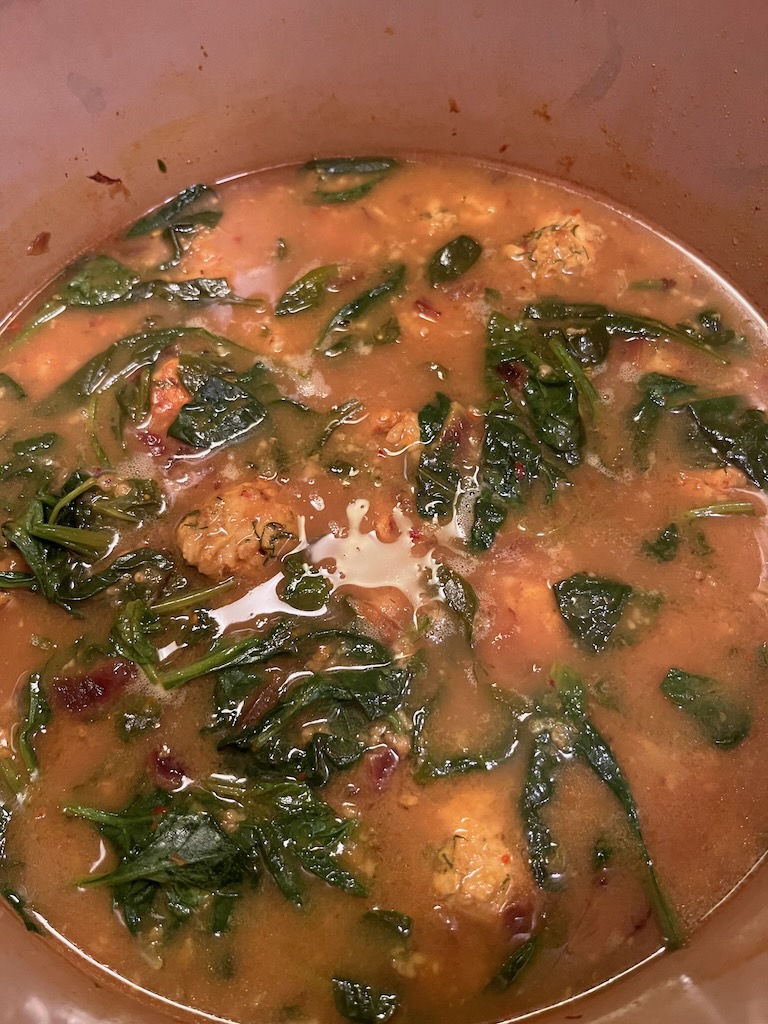
and here, because i love to imagine ladling steaming bowls of soup to people i love, is my new favorite stoup recipe, lemony chicken-feta meatball with spinach from my friends at NYT Cooking (you will be licking the bowl; it’s that good):
Lemony Chicken-Feta Meatball Soup With Spinach By Yasmin Fahr Yield: 4 servings Total Time: 30 minutes Note from NYT: Some might be suspicious of the rolled oats called for in this recipe, but used in place of breadcrumbs, they help create a light and tender chicken meatball. A half-cup more is simmered in the broth, which thickens it and provides a pleasant texture. The meatballs, made with ground chicken, feta and fresh dill, swim in a lemony, spinach-filled broth that’s comforting and light, perfect for lunch or dinner. Serve any leftovers with a fresh squeeze of lemon juice to brighten the soup.
INGREDIENTS 1 pound ground chicken or turkey, preferably dark meat (i use white meat) ½ cup crumbled feta ¾ cup old-fashioned rolled oats 1 small red onion, halved (½ diced, and ½ grated, then squeezed with a paper towel to remove excess liquid) ⅓ packed cup fresh dill leaves and fine stems, finely chopped 1 tablespoon ground cumin ½ teaspoon plus 1 tablespoon ground turmeric Kosher salt and black pepper 3 tablespoons olive oil ½ teaspoon red-pepper flakes, plus more for serving 4 cups low-sodium chicken broth 4 packed cups baby spinach (about 5 ounces) 2 lemons (1 juiced and 1 cut into wedges for serving)
PREPARATION Step 1 In a medium bowl, add the chicken, feta, ¼ cup oats, the grated onion, most of the dill (reserve about 2 tablespoons for garnish), the cumin, ½ teaspoon turmeric and 1 teaspoon salt. Gently combine without squeezing too hard or overworking the meat. Lightly wet your palms and shape the meat into small balls, a little smaller than the size of a golf ball, about 1½ inches. (You will have approximately 25 balls.)
Step 2 Heat the oil in a large Dutch oven or wide pot over medium until shimmering. Add the diced onion, season with salt, and cook until it begins to soften, about 2 minutes, stirring occasionally. Add the remaining 1 tablespoon turmeric and the red-pepper flakes, and stir until fragrant, about 30 seconds. Push the onions to the sides as best you can, then add the meatballs. (They will be close together, and that’s OK.) Cook until browned on two sides, 5 to 7 minutes total.
Step 3 Pour in the broth and remaining ½ cup oats, then gently tilt the pot to the right and left to distribute the oats and broth without disturbing the meatballs. Bring to a gentle boil, then immediately reduce the heat to maintain an active simmer. Season with salt. Cook, gently stirring occasionally to make sure nothing is sticking to the bottom, until the oats have softened and the meatballs are cooked through, about 4 minutes more.
Step 4 Stir in the spinach and lemon juice until the spinach is wilted, about 2 minutes more. Adjust the seasoning to taste. Spoon into bowls, top with pepper and the remaining dill. Serve with lemon wedges.
what is your heart longing for this season of through-and-through thanks?













 pull up a chair