there seems so little worth my saying these days. the stock markets plunge. the pink slips abound. research labs, the ones that might save lives, are all but padlocked. it’s been argued that measles might be cured with megadose of good ol’ vitamin A, and why not wipe out bird flu by letting it run rampant? (i could not find either fix in my old nursing texts, circa 1976.)
the urge for me to go mum and wait it out has never felt stronger. i use my political voice in other realms, but feel reticent to bring it here, which has brought me a wee bit of backlash from one or two who think i ought to use this platform as a public square for political discourse.
i’ve always considered this a space away from the melee, a place where we play by otherworldly rules of kindness, gentleness, mercy. (over my dead body, those will never be abandoned—here or elsewhere.) the mission here, from the very start, has been to train our focus on the timeless truths that course through the quotidian. politics, as worldly as it gets, is messy. by definition, a battle of wills and ways. there’s little room for sacred, and sacred is my aim.
maybe 1,217 posts in 220 months is far exceeding my welcome. maybe the age of trump is my flashing exit sign. but maybe that’s false surrender.
maybe i’m just too chicken to face the backlash sure to come even if i try to frame my arguments in civil discourse. the flummox here is that the ones i love who see things another way, they are not hearing the same news i am. that’s the breakdown. or a breakdown. the definition of trusted news source seems to have brittled over the years. when i say trusted, i mean objectively combing through the facts, listening to a swath of voices, each expert in her field. (being a talk show host, or a peddler of ivermectin does not make you an expert, in any way, shape, or forum.) and, forgive my peculiarities, but i like my facts delivered without sass, or ridicule, or put-down. vengeance makes me rhymes-with-comet.
“trusted” in the age of trump seems to mean “you see things the way i do, so i will choose to listen to you.” and, by the way, “i’ll trust you’ve done our homework.” all else is evil. is out to get us. is symptom of demented mind.
we cannot converse if our words and thoughts and big ideas whiz by on orbits all their own. and without a grain of truth to stand on, we’re not standing and we have no standing. if i’m in my silo, and you’re in yours, and ne’er the twain shall meet, then we might as well build a wall and cut the continent in half. you take mountains, we’ll take prairie. no one gets the five great lakes.
even my propensity for gathering bits of poetry and prose is feeling rather flimsy. is it hyperbole to say we’re on the verge of the collapse of democracy? what to call the dismantling of a century of intricate, mold-breaking science and biotechnology? what happened to the beatitudes—blessed are the meek, the poor in spirit, the meek, the merciful? whither the golden rule: love as you shall be loved? be it in africa, or gaza, or ukraine; in blue cities, red swaths, or canada or mexico or greenland?
though i’m tempted to hold back on poetries this week, to leave this simply as a placeholder, i shall forge quietly ahead with one or two worth tucking in your noggin.
Once upon a time, When women were birds, There was the simple understanding That to sing at dawn And to sing at dusk Was to heal the world through joy. The birds still remember what we have forgotten, That the world is meant to be celebrated.
–When Women Were Birds by Terry Tempest Williams
from my friends at SALT Project, a bit of anne lamott (whose birthday is april 10) laid out in verse form. this is from an interview in 2011 with NPR’s michele norris, a once-upon-a-time chicago tribune writer, who asked annie how the meaning of easter had changed for her over the years:
When I was 38, my best friend, Pammy, died, and we went shopping about two weeks before she died, and she was in a wig and a wheelchair.
I was buying a dress for this boyfriend I was trying to impress, and I bought a tighter, shorter dress than I was used to. And I said to her, “Do you think this makes my hips look big?” and she said to me, so calmly, “Anne, you don’t have that kind of time.”
And I think Easter has been about the resonance of that simple statement; and that when I stop, when I go into contemplation and meditation, when I breathe again and do the sacred action of plopping and hanging my head and being done with my own agenda,
I hear that, ‘You don’t have that kind of time,’ you have time only to cultivate presence and authenticity and service, praying against all odds to get your sense of humor back.
That’s how it has changed for me. That was the day my life changed, when she said that to me. + Anne Lamott
and here’s a little nudge from former u.s. secretary of labor robert reich on speaking up in these tough times:
Every one of us has a town square. It may include our social media accounts, our local book club, or our dinner table. Use your town square to speak out in favor of democracy and against what [that which you see as anathema to decency]. Do not shy away from difficult conversations; seek them out. Engage the curious. Educate those who seek information. We all have a role to play, so don’t assume your voice is too faint or your platform too small.
point taken, mr. reich. point taken. i’ll talk decency anywhere and everywhere.
and finally, as i’ve spent these past few weeks tapping out a manuscript for what might be a book, i found these closing lines from WS Merwin’s poem remembering his mentor, John Berryman, to be well worth taking to heart:
I asked how can you ever be sure that what you write is really any good at all and he said you can’t
you can’t you can never be sure you die without knowing whether anything you wrote was any good if you have to be sure don’t write
do you remember the most beautiful thing you read this week, or saw this week, the thing that gave your heart a lift????
if this white diet lunch (white bread, white turkey, clear chicken broth) looks blurry, that’s because 10 days of bland’ll blur you…
with every key i type, my little self gets woozier. i am a poster child today for the prehistoric side of medicine, in which (as one dear friend has said) we can zap folks into outer space and land them on the moon, but we do not know how to clear out one’s insides short of filling them with Drain-O, and starving them besides.
yes, yes, i’ve had this date on my calendar for months now. after my last attempt at this adventure in inner exploration got canceled at the last minute when my doctor got around to reading my medical history and realized i have uncharted and “torturous” insides. so they signed me up for the Drastic Plan, not the ordinary one for ordinary insides, but the special class for those who present gastroenterologists with high hurdles and sinuous turns in which to get tangled.
they are knocking me flat out, with full-strength, full-bore anesthesia, because who in the world wants to be even half-awake when dead ends and cul-de-sacs are bumped into.
i’ve had a guide or two, holding my hand through this gut-wrenching adventure. i was pointed to the aptly named White Diet, for all you are allowed to eat are things the color of freshly-fallen snow, a few of which have not touched my lips in half a century: white bread, white potato, white cottage cheese, white turkey slices, white insides of cucumber (oddly, though they must be peeled and seeded). if it’s white, it’s allowed. but only for a week. then one moves onto the part where things get serious, and clear. for three days now i’ve sustained myself on black coffee (color’s back!), clear apple juice, clear chicken broth, clear electrolyte gatorade. i tried coconut water and i gagged. and that’s as far as i will go in the TMI department (that’s too-much-information, mom!)
i am thus waving my white flag here, and surrendering to the woozies. before i pass out here at the keyboard (fear not, my trusty driver and lifelong handholder will get me safely to the hospital and back), i am going to fling you one or two juicy morsels (both from Mary Os) i found for you this week, and then i shall quietly slink away to await the end of this torturous two weeks.
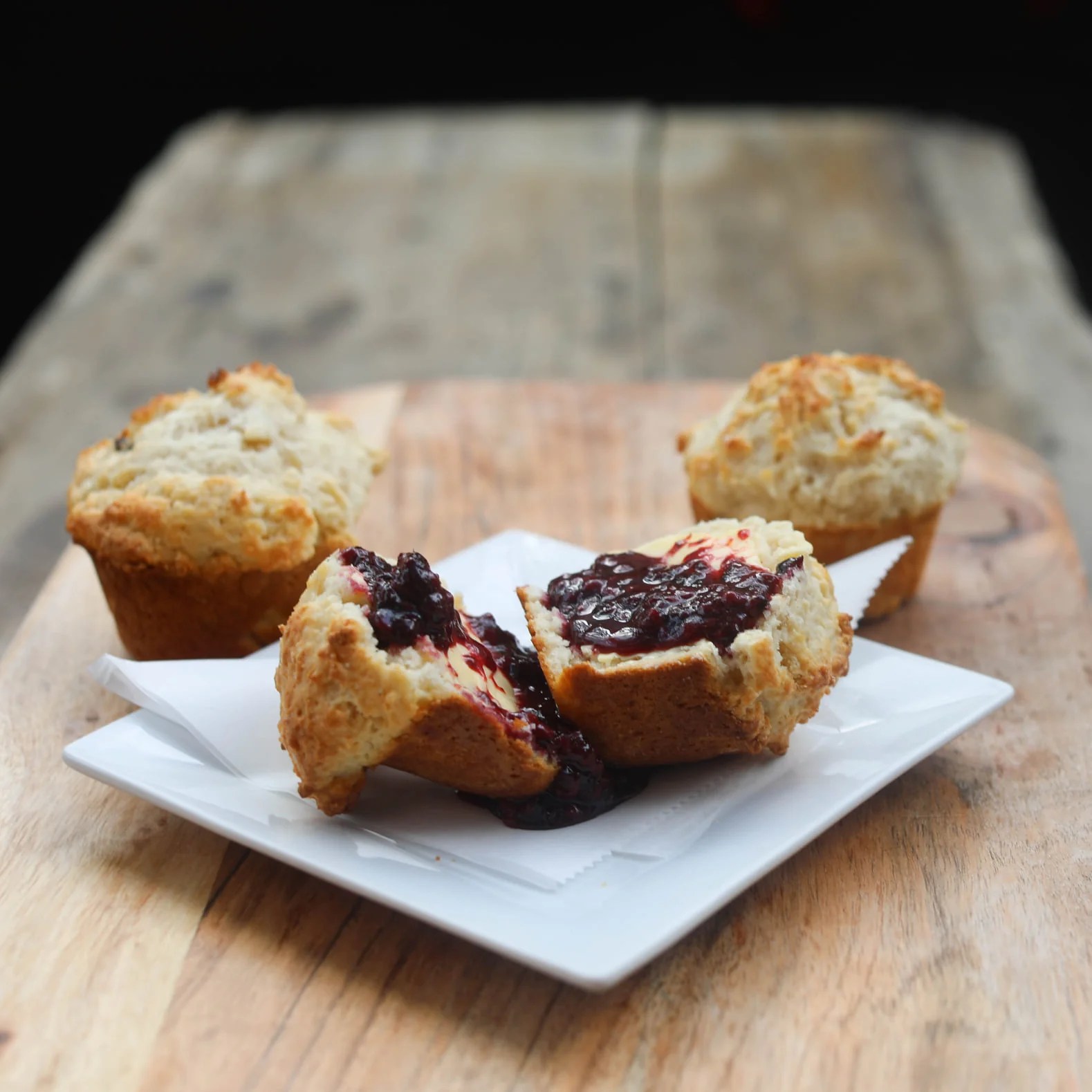
here’s an irony: i stumbled on a top-secret recipe for true irish scones, and because i occasionally indulge in self-torture (kidding, mom!) i am passing it along. because it looks delicious (cream and irish butter have a way of working their charms) and because a girl can dream even when she’s starving. this comes from my friends at Food 52, who might have snuck it out of someone’s east village kitchen:
Copycat Mary O’s Irish Soda Bread Scones By Nea Arentzen these irish soda bread scones were inspired by Mary O’s, an irish soda bread shop in new york’s east village not named for one of the chair’s patron saints of poetry, the other Mary O (only in new york would you find a specialty soda-bread shop). apparently, they serve theirs with homemade blackberry jam and Kerrygold butter, but Nea, the baker here, opts for store-bought strawberry jam instead. either way, she writes, you can’t go wrong. she adds this baking note: “the dough comes together quickly and all in one bowl, then i scoop it into mounds in a cupcake tin for extra height and stability.” Serves 12 large scones Prep time: 10 min Cook time: 40 min
4 cups (480 grams) all-purpose flour 1/2 cup (100 grams) granulated sugar 4 teaspoons baking powder 1/2 teaspoon baking soda 1 1/2 teaspoon kosher salt 3/4 cups (170 grams) unsalted butter, cold and cut into cubes 1 cup raisins 2/3 cups buttermilk (or milk plus 1/2 teaspoon lemon juice) 2/3 cups heavy cream, plus more for egg wash 1 egg yolk strawberry jam, to serve softened butter, to serve flakey sea salt, to serve
1. Heat the oven to 425 degrees F with a rack placed in the center position. Generously grease a 12 cup cupcake tin.
2. In a large bowl, stir together the flour, sugar, baking powder, baking soda, and salt. Add the cold, cubed butter and press into the flour with your fingers until it resembles coarse sand and no large butter clumps remain. Do this quickly as you don’t want the butter to have time to soften too much.
3. Stir in the raisins, then drizzle in the buttermilk and cream. Use your hands to scoop and fold the dough together until the flour is absorbed, trying to mix and press as little as possible. Gently scoop the dough into the cupcake tin, evenly dividing between the 12 cups.
4. In a small bowl, mix the egg yolk with 2 tablespoons heavy cream. Brush over each scone. Bake until golden brown and a toothpick inserted into the center comes out mostly clean, 22 to 25 minutes. (If using a kitchen thermometer, it should read at least 190 degrees F.)
5. Serve warm with jam, butter, and flakey sea salt.
and now for this bit of inspiration from another most beloved Mary O:
i cannot leave this post without sending the biggest birthday trumpet blast to two of my beloveds who happen to have back-to-back birthdays, auntie M today, and sweet P yesterday. the world, my world, is a taste of heaven here because their hearts beat alongside mine. i love them both with every ounce i’ve got.
taking a cue from Mary O, what noble things are you thinking of this week? and what’s the most improbable thing you’ve tried lately?
they say it’s spring out there. celestial lines were crossed in the wee, wee hours of yesterday, and, for a flash there, light and shadow fell in equal measure.
i don’t feel the light though. not in sync with springtime’s beckoning. i’m inclined still to hunker down in winter’s shadow.
for reasons i can’t quite fathom, i’m not ready this time ’round for the seasonal advance. i still feel wintry in my bones. the light change is too abrupt for me, too ice-white for me. my inner metronome is far too slow for the prestissimo that’s rising. i don’t mind the cardinal’s vernal song, though, rung out from treetops high, and piercing through still-frigid air. but i’m not seasonally adjusted. i’m lagging at least two lopes behind.
i can’t tell if it’s that my winter felt circumvented. or that i’m wishing for all of time to freeze in place. since the world is rather dire these days, that cannot be a wise solution. in that regard, i’ll take time in double measure. may we all wake up on the morning of eight november, 2028, with a whole new glimmer in our eyes. and the present firmly in the past.
i’m feeling somewhat stuck. hardly welcoming of burgeoning to come. and that’s a most peculiar state for me.
might the whole universe be toppled on its head, upside down and inside out?
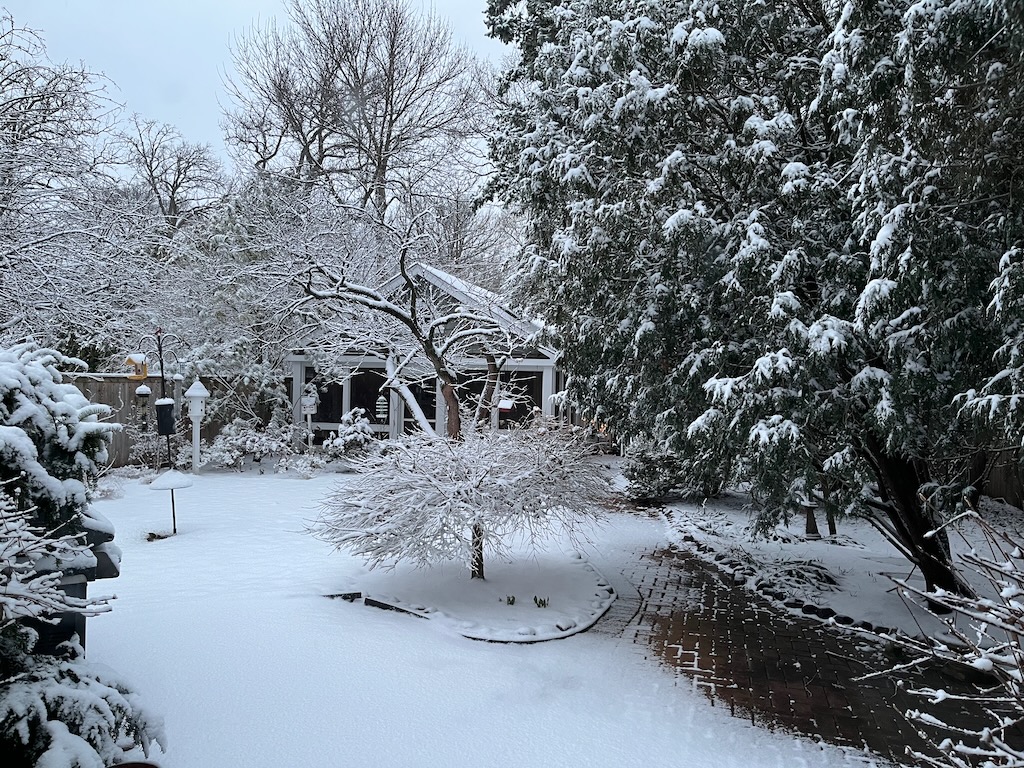
the one sure sign that spring is here is that when i awoke, just hours after equinox, the world i saw was dumped with snow. which in these parts is something of a rite of spring. tulips rise, and snowflakes fall. my mother swears she knows it’s spring when she slides on her winter boots and brushes all the glops of snow off her daffydills.
no wonder we of the four-quarter year take spring in slow, uncertain sips. there is no fine delineation, as if the calendar and earth set their clocks in synchronous coordination.
on a day when snows fell in glops, and then proceeded to melt in same-sized gloppings, and on the day when headlines kept insisting the springtime was upon us, i heard a thump at my door, and therein found prescriptive for my seasonal laggings.
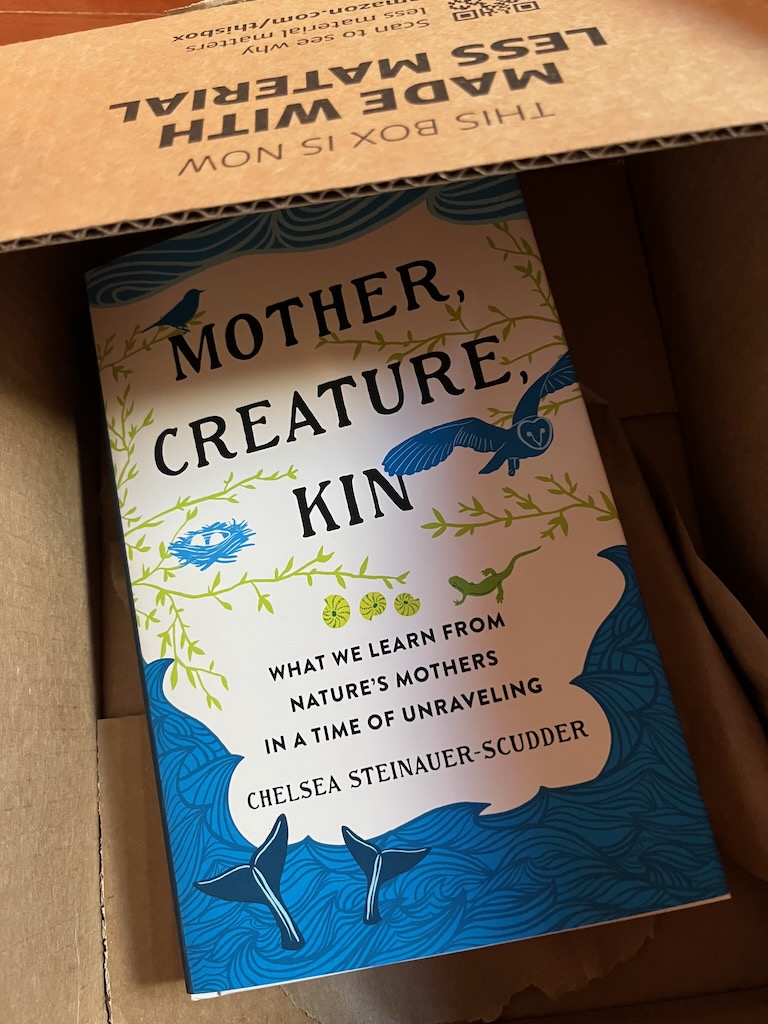
there, in a plain brown box, lay a book i’d been awaiting. my friend chelsea steinauer-scudder, as intelligent and beautiful a writer as could be, became a mother back when she and i were reading books and writing in the zoom rooms that covid carved. i’d first read chelsea in the pages of emergencemagazine, a wunder site (online and print magazine, as well as creative production studio) that probes the depths of ecology, culture, and spirituality, and where she was a writer and editor for five years. when i saw she’d be leading reading circles (braiding sweetgrass, among them) and ones for the craft of nature writing, i signed up, and cemented myself to what would otherwise have been a front-row seat.
chelsea grew up on the great plains of oklahoma and the sandhills prairie of nebraska, where for a time her papa researched bison, fire, and native plant communities, so she comes to her native landscape––language enfolding the sanctity of earth––with what seems an effortless fluency, as if she grew up breathing it. which, of course, she did. and then she went on to harvard divinity school, where she earned a masters in theological studies, and ever since she’s been writing sumptuously, focusing her work, in her words, “on the confluence of relationship to place with experiences of the sacred.”
a.) it gives me excuse to curl under a blanket for a day or two, and b.) here’s what i’m about to bathe in, passages such as this:
“I wish to invite you into a kind of mothering that is wild and porous. The kind that draws blood, that loves and fears, rejoices and doubts, that exposes where we are most deeply vulnerable and from there stretches us into what is beyond us. I mean the kind of mothering that works within uncertainty and mystery. The kind that leaves soil beneath our fingernails and seeds in our hair.”
she writes about mothering and being mothered by places. ecological mothering. she defines ecological motherhood as: a shared, place-based responsibility to nurture and support human and more-than-human life. she writes of the karmic cycle of rebirth, a subject aptly plucked from the vernal syllabus. she writes of the silent flight of barn owls, of nursing and endangered right whales, of real and imagined forests, eroding salt marshes, and newly planted gardens.
she writes that the protagonists of these stories have been teaching her facets of mothering (a verb that she, like me, insists is not tied to gender nor obstetrics). those facets belong to us all, no matter our life’s work: “language, belonging, entanglement, community, edge work, homemaking, and how to think about the future.”
my friend chelsea just might nudge me over my springtime bump, and land me softly on the vernal side….
as i await the vernal skip in my own heart, i scan the literary landscape for those others who, along with chelsea, might nudge me there. and no surprise, i turn to two favorites, the great naturalist and writer, aldo leopold, and the poet mary oliver, who drew the sacred from her every path and passage.
“One swallow does not make a summer, but one skein of geese, cleaving the murk of a March thaw, is the spring.”
aldo leopold
North Country
In the north country now it is spring and there is a certain celebration. The thrush has come home. He is shy and likes the evening best, also the hour just before morning; in that blue and gritty light he climbs to his branch, or smoothly sails there. It is okay to know only one song if it is this one. Hear it rise and fall; the very elements of your soul shiver nicely. What would spring be without it? Mostly frogs. But don’t worry, he
arrives, year after year, humble and obedient and gorgeous. You listen and you know you could live a better life than you do, be softer, kinder. And maybe this year you will be able to do it. Hear how his voice rises and falls. There is no way to be sufficiently grateful for the gifts we are given, no way to speak the Lord’s name often enough, though we do try, and
especially now, as that dappled breast breathes in the pines and heaven’s windows in the north country, now spring has come, are opened wide.
––Mary Oliver
a little peek at what a few other authors have to say of Mother, Creature, Kin. may i call your attention to the one who writes that this beautiful book belongs in the company of works by Ursula LeGuin, Rachel Carson, Terry Tempest Williams, and Robin Kimmerer, to name a constellation of the highest-reaching lights…
are you finding yourself in springlike mode, and what sights and sounds and scents are stirring you there?
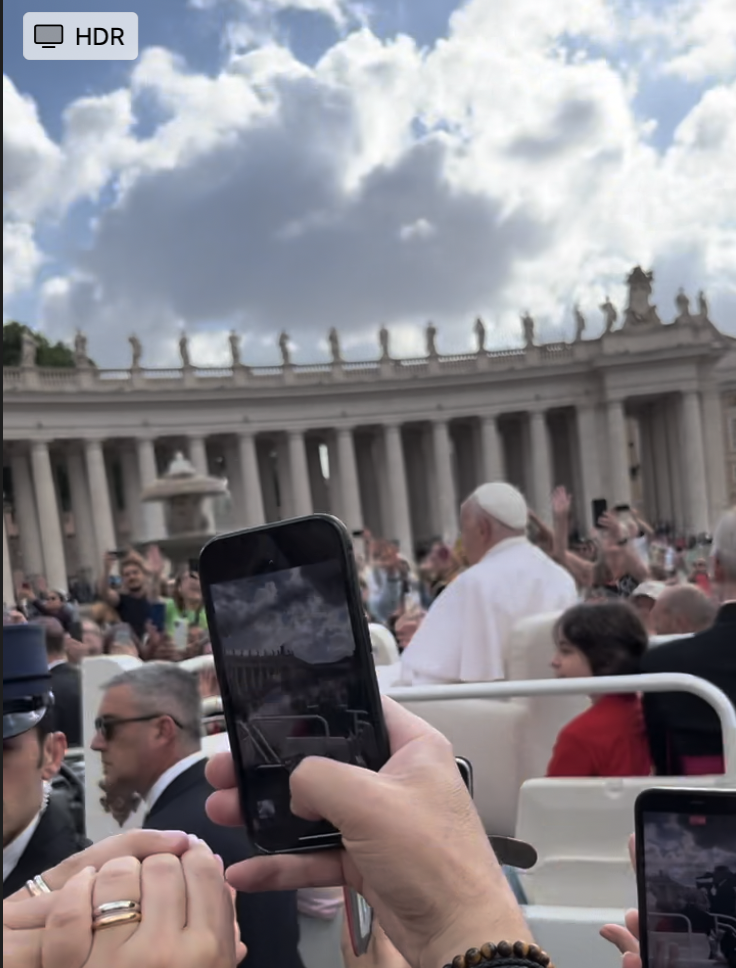
closest i got to Il Papa, when i found myself accidentally at the barricades that clear the way for the Pope-mobile
sages are in short supply, it seems. certainly now, and certainly on the global scale. i scan where i can, ever on the lookout. and wasn’t my eye caught when i read the words “artisanal path” to “handmade peace.”
tell me more, my little heart shouted.
though it sounded a bit like a recipe for earthy bread or hand-thrown plates, the sort that rise from the potter’s wheel, i sensed the subject here was far more urgent, and in dire need of replenishing. not what you’d find on any pantry shelf.
hand-crafted peace, peace constructed with care and attention. peace that we at home can build, without scissors or glue or a potter’s spinning wheel.
i clicked on a duly-provided link, and wasn’t one iota surprised to find that Il Papa, our most beloved Francis, was the one who not only dared to raise his voice above the blather, but considered it a requisite of his job’s description.
he is, after all, shepherd to a farflung flock. but more than that, he’s a prophet, which, according to the definition i found in richard rohr’s brand-new the tears of things: prophetic wisdom for an age of outrage, means a radical change agent, teacher of a moral alternative, and deconstructor of every prevailing order. rohr reminds us of the prophets of ancient times, the ones described by isaiah and ezekiel, whose job it was to hold the powers that be “maddeningly honest.”
bring on the prophets, please.
in these times, francis, our dear pope who from his hospital bed in rome reached out to the suffering of gaza, is the rare voice to which all the world will sometimes listen. thank holy God, he speaks the language of love without condition, clause, or pause. there are those among us, in this age of outrage, who might do well to listen. especially when they claim to take instruction from the very same God who whispers to Il Papa.
the new york times calls him “an increasingly lonely moral voice on the world stage.”
all the more reason to listen. and listen hard.
“peace is crafted; it is the work of our hands,” francis began at a prayer vigil in the central african republic back in 2015, “it is built up by the way we live our lives.” he was speaking to an audience of children, teens, and young adults in bangui, the capital of the central african republic, when that country was in the midst of a sectarian war between Christians and Muslims, and thousands had been killed, and more than a million displaced from homes, their properties looted or destroyed.
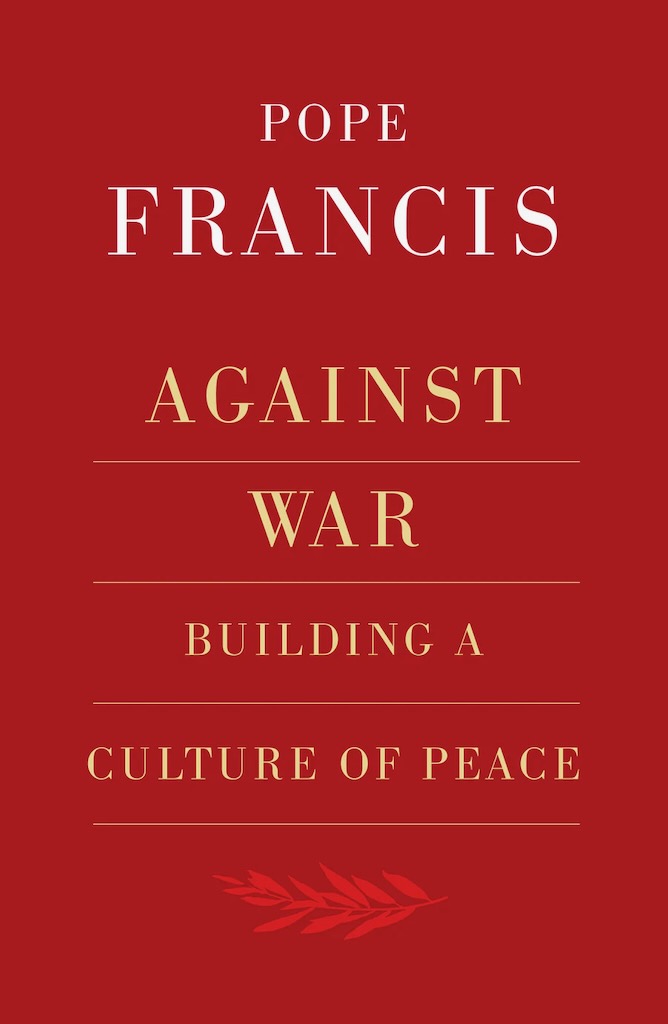
this artisanal path, “built up by the way we live our lives,” is spelled out, it turns out, in francis’s Against War: Building a Culture of Peace, a book i’ve ordered from my local bookstore, as it’s one with permanent claim to a slot on my bookshelf.
it’s not that i think i can build a culture of worldwide peace, though once upon a time i dreamed of such things. the point here, from the wee bit i’ve read, is that peace is a sphere we build bit by bit, as we travel through space and time, and it’s built by even the most unassuming of gestures, attitudes, and actions.
what the pope is saying, and what the world ought listen to, is that the tiniest empathies and kindnesses matter: giving cuts in the grocery line, waving someone into your expressway lane; taking time to take the call, dropping the tupperware of soup on your neighbor’s stoop. biting your tongue when you’re tempted to snap, and, yes oh yes, turning the other cheek, a trait i’m told no longer belongs in a world of dog eat dog.
what a game changer: here’s the head of a church that counts 1.39 billion baptized among its ranks, and he too concurs that we needn’t be rocket scientists in the art of magnanimous charitable persuasion to make a dent in the realm of ever-spreading goodness.
for one thing, it’s fairly contagious. if you’re out-of-the-blue kind to me, if you take my breath away with some wonder act of yours, chances are i’m inclined to be a copy cat and try the same. if for no other reason than the pure joy of watching someone be surprised you’ve not just slammed the door in their sorry, sorry face.
here’s where Il Papa begins his artisanal path to handmade peace, with this fulsome criticism of the futility of war:
“war is not the solution, war is madness, war is a monster, war is a cancer that feeds off itself, engulfing everything!”
that’s all i needed to keep on reading. and what i found, and what you’ll find should you decide to play along, is a compendium of his most outstanding commentaries on war and peace during the first nine years of his pontificate.
here are a few of the nuggets you just might choose to tuck in your peace-gathering pockets.
because one can’t best the pope when it comes to eloquence and voice, i am quoting from the book, here on in, and plucking five that leap out the most….
1.) seeing the world as one human family living in one common home.
The stars in the sky shine down on every single person — from the beginning of time to today — and learning “to look at the stars” will be “the most effective vaccine for a future of peace,” he said in Ur, Iraq, in 2021.
“Anyone with the courage to look at the stars, anyone who believes in God, has no enemies to fight. He or she has only one enemy to face, an enemy that stands at the door of the heart and knocks to enter. That enemy is hatred,” the pope said.
“There will be no peace as long as we see others as them and not us,” he said. Humanity lives under one heaven, under the gaze of one God who desires his children to be “hospitable and welcoming” to each other on earth.
2.) reconciling with one’s enemies and embracing unity in diversity.
The pope told young people in the Central African Republic that the first step toward being a peacemaker was “never hate anyone. If someone wrongs you, seek to forgive.”
“We only win if we take the road of love,” he said, and, with love, “you will win the hardest battle in life” and find peace.
But “we need to pray in order to be resilient, to love and not to hate, to be peacemakers,” and “you must be courageous,” he added. “Courageous in love, in forgiveness, in building peace.”
3.) the difficult art of dialogue and listening, which can sometimes be as hard as building a bridge over an abyss.
Pride and arrogance must be eradicated from one’s own heart, he told young people at a congress of the educational project, “Scholas Occurrentes,” in 2016. “Our world needs to lower the level of aggression. It needs tenderness. It needs gentleness, it needs to listen, it needs to walk together.”
Dialogue is “the capacity to listen, not to argue immediately, to ask,” he said. “Everyone wins in dialogue; no one loses” because “it is about agreeing to proposals so as to move forward together.”
Dialogue is to put oneself in the other’s place, “to form a bridge” and “persuade with gentleness.”
4.) peace is a constant journey of “getting one’s hands dirty,” concretely working for the common good.
“Our path leads us to immersing ourselves in situations and giving first place to those who suffer,” he said in Assisi for the World Day of Prayer for Peace in 2016.
Feeling responsible for helping others and refusing to be indifferent cleanses the heart and requires the “purification” and conversion that can only come from God, he said in Irbil, Iraq, in 2021.
This new order must meet humanity’s desire for justice, equality and participation, he said in his World Day of Peace message in 2020. A democratic society recognizes everyone’s rights and one’s duties toward others, which can temper a harmful, unbridled understanding of freedom.
5.) living the beatitudes is to bring heaven––and peace––to earth.
In his homily in Baghdad in 2021, the pope said, “We do not need to become occasional heroes, but to become witnesses, day after day,” embodying the wisdom and love of Jesus.
Jesus changed history “with the humble power of love, with his patient witness. This is what we are called to do,” he said, and “that is how the world is changed: not by power and might, but by the beatitudes.”
People who live the beatitudes “are helping God to fulfill his promises of peace,” he said. “This is the way; there is no other.”
in these tumultuous times, i am turning hungrily to prophets and sages in the news and on my dusty bookshelves. i’m inclined to not fill this space with my own blather, but rather to bring any lights that might dapple our paths. it’s always a tug-of-war to quiet the chair or keep it going with whatever bits i find. this doesn’t seem like the time to turn to silence. so my aim is upped to break through blather and bring voices that will wedge open our hearts, and like a doorstop, keep it wedged till we get through to the other side….
remember that thou art dust and unto dust thou shalt return.
sobering words, as the grainy smudge is pressed upon my brow. it’s the season of shadow in the liturgical calendar, the season for recognizing our mortality, our fleeting time here to attend to the task of our being.
dust to dust, ashes to ashes.
the point of religion, at its wisest, is to strip us to our unfettered incidentality. to put us squarely in our place. we are star dust by chance. but a speck in the great river of time. a mere dot ordained with a task that we trust, we believe, might tip the scales toward goodness, toward light. i believe we’re here to be blessed, to become holiness in flesh form.
six weeks of lent makes it the longest season of the church year outside of ordinary time. i’m no theologian so i’ve not read deeply on that equation, but i have to think it’s telling us something of import if more days are devoted to repenting, to remembering how mortal we are than to filling our heads with the usual noise.
i’ve found myself in recent weeks deep in the writing of a book plumbing the spiritual epiphanies of cancer, which at its heart is a meditation on paying attention, remembering that we will die, and seizing the imperative to live profoundly in the now.
i’ve called it scan time, an abbreviation of time into three- or six-month allotments that serve to focus my seeing. in knowing my time is on the clock, i dive into the work. holy work.
it’s basically living in some iteration of lent from here on in: ashes to ashes. knowing full well that i am dust and to dust i shall return.
it’s a practice of every religion; humility among the highest virtues. recognizing how tiny a dot we are. and admitting how often we falter. putting voice to confession.
judaism distills it on a single day: the day of atonement, as somber a day as there is. a day in which we fast from all things, and scour our soul, confessing our sins from A to Z acrostically. abused, betrayed, been cruel, destroyed, embittered other’s lives. . .
before the naming of each and every one of those sins, both communal and individual, these words from the Yom Kippur prayer book are recited, directed to the almighty and merciful God:
You know the secrets of the universe and the secrets of the human heart. You know and understand us, for You examine our inner lives. Nothing is concealed from You, nothing hidden from Your sight. Eternal One, our God and God of our ancestors, we pray that this be Your will: forgive all our wrongs, pardon us for every act of injustice, help us atone for all our moral failures.
the act of contrition i learned in second grade says it like this:
O my God, I am heartily sorry for having offended Thee, and I detest all my sins because of thy just punishments, but most of all because they offend Thee, my God, who art all good and deserving of all my love.
I firmly resolve with the help of Thy grace to sin no more and to avoid the near occasion of sin. Amen.
and the confession in the anglican book of common prayer is not dissimilar:
Most merciful God, we confess that we have sinned against you in thought, word, and deed, by what we have done, and by what we have left undone. We have not loved you with our whole heart; we have not loved our neighbors as ourselves. We are truly sorry and we humbly repent. . .
sins and ashes aren’t things we like to think about. but, oh, they serve their purpose. and in a world where madness is reigning, where blame is cast but rarely admitted, and hubris has inverted the divine equation, i find myself seeking an alternative paradigm, one that answers not to power and vengeance but to mercy and justice and light.
and for a consideration of not our failings but our goodness, meister eckhart weighs in with this wisdom:
The inner person is the soil in which God has sown the divine likeness and image and in which God sows the good seed, the roots of all wisdom, all skills, all virtues, all goodness—the seed of the divine nature. —Meister Eckhart
a few years back, i dove a bit deeper into musings on the day of atonement, a post found here:
you needn’t have been daubed with ashes, nor live with a scary diagnosis, nor recite an alphabet of sins, to recognize the wisdom of silently examining the state of your soul. and stepping forward to make right where you’ve wronged. it’s becoming countercultural in a world taking shape as it is. the ancient ways, though, have lasted. here we are millennia later, and confession still stirs in the human spirit. it takes nerve and true might to live it. needn’t answer here, but what are the profound memories you hold of learning to say, i am sorry? or any other thoughts on ashes and dust, and the sobering truth of our mortality. . .
p.s. i suppose my publisher would reallllly want me to mention (she sent me a little nudge in the social media department, a department where i’m quite often lacking) that The Book of Nature came out in paperback this week, so you can slip a copy more easily into a backpack or pocket. and it’s cheaper!! looks just like its big sister, only a flimsier–er, more pliable––cover.
in which we take a hard look at the crumbling discourse in this country, and consider a solution or two….
i’ll be honest. these are hard times. i pick up the news and feel pummeled by each new blow. i see pillars of democracy crumbling one after another. jeff bezos and the washington post, only the latest. i read of law firms—white shoe ones, meaning old-guard firms who take on some of the highest-profile clients, the most complex cases, aka “the elite”—being stripped of security clearance, being considered for criminal investigation only because they represented a client the current administration has inked onto the enemies list.
i see revenge as the rule of the day.
i’m sickened.
i’ve never prayed to a God of revenge.
but i read, too, that there are stirrings of hope. faint, yet beginning to stir.
you might call it an occupational hazard, but i happen to pay attention to the ways we get news and i worry desperately that we all cower in distant silos. (getting more distant by the day.) i get my news and you get yours and, often, ne’er the twain shall meet.
so how do we have a shared conversation? how do we sit down to the same old table and begin to listen? how do we reach across the table, and in a quiet, unquivering voice, utter the words, “i hear your point”? or the certain conversational lubricant, “say more”? or the nervier, and necessary, “that’s not actually true”?
i hold onto my hunch that most of us want what we think is fair, is just. and i’m not giving up on my fervent belief that if you saw me bleeding on a sidewalk, you would not ask first how i voted and then decide whether or not to lift me off the ground.
i’m fairly certain that in the nearly two decades we’ve been pulling up chairs here, some of us do get our news from different silos. i try to tread lightly. i respect divergence of thought. but the problem, as i see it, is that we are all being fed news in the flavors most to our liking. and that’s not the way the news is supposed to work. it’s not the way it worked for the time i was one of the ones writing what counted as news. and not in the newsroom i knew.
so here’s the jam: if the news you’re being fed is slanted, if some of it’s filtered out, and some of it’s twisted, if both sides aren’t fairly presented, it’s not any sort of surprise that conclusions are drawn, and wedges are wedged.
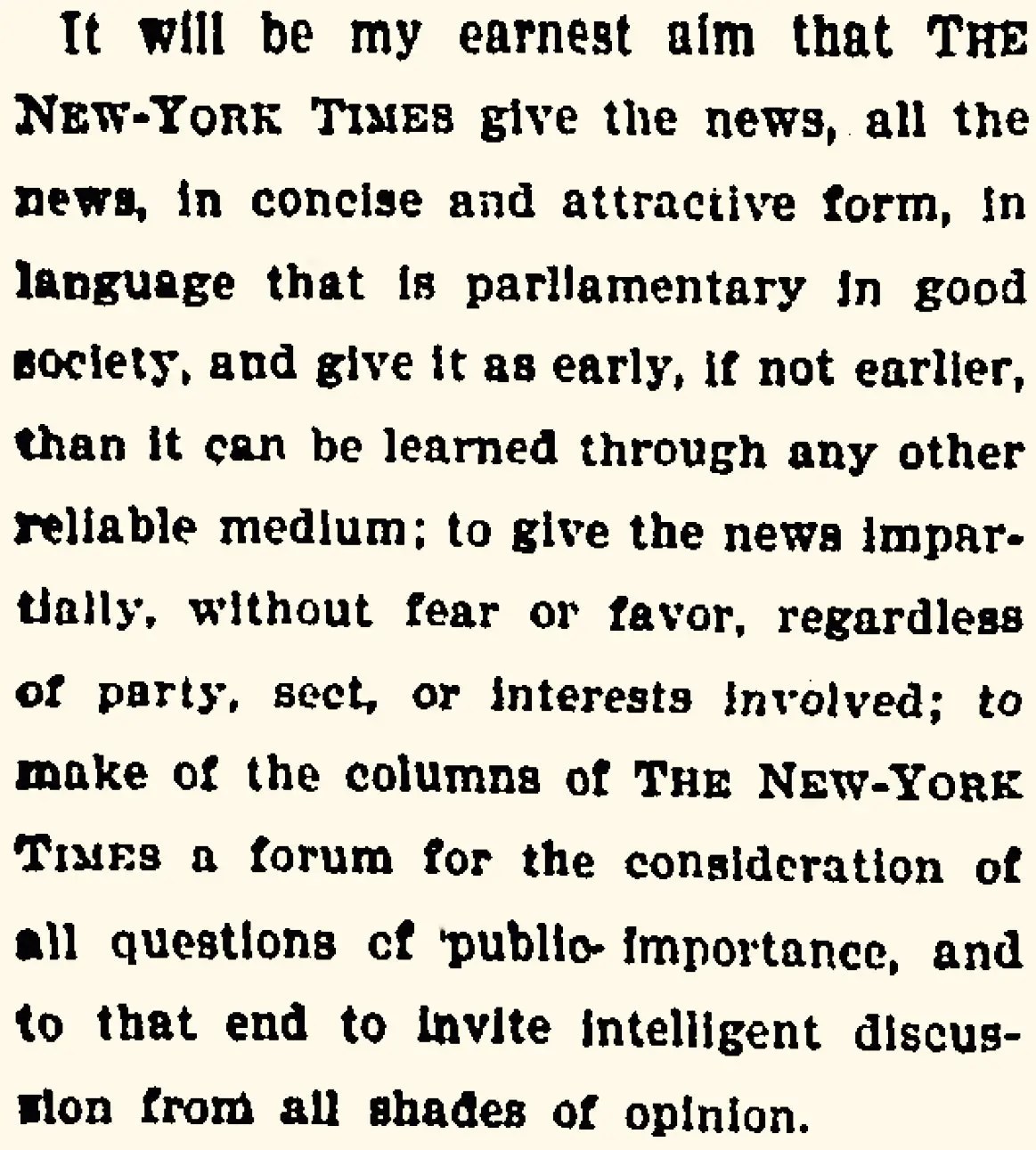
“…without fear or favor…”
these days, the ones helming the news––the owners, the billionaires who thought it a romp to claim a slot on the masthead––they seem to be in it for hard, cold cash. the one with the most wins. cozying up to power seems a game to which we’re not invited. to get there, you need to fly in your private jet, hopefully not one of the ones making a mess on the runways.
so much for democracy dying in darkness. or that now quaint-seeming declaration of adolph s. ochs in april of 1896, that his newspaper, the venerable new york times, would “give the news impartially, without fear or favor.”
good journalists hold firm to those words. good journalists have died defending those words.
you don’t get into the news biz––chasing after crooks and pols, climbing rickety stairs in darkened hallways, knocking on doors knowing full well you might find a muzzle pointed at the bridge of your nose––because it’s a sure way to raise your heart rate. or just cuz you’re nosey.
you get into the news biz cuz you’re a mad dog for the truth. and the fair telling of stories. you dig and you dig till you find that shimmering shard that, to your best knowledge, and according to more than one reliable source, is unassailably true. i sat beside folks in the newsroom who thought nothing of holing themselves in the dungeons of city hall or the bowels of bureaucrat mazes, riffling through file after file to track down the name and the dollar amount on contracts that might or might not have been legal. that might have unearthed wrongful convictions. or identified bodies dumped on the roadside. and those subterranean scribes had the pallor to prove it, after months and months under the glow of flimsy fluorescent lights. and cups of stale coffee. (we’ll leave the bottles of whiskey for another day.)
these days, the ones coursing the landscape with their reporter pads and pens, their itty-bitty microphones and their smartphone recorders, are plenty besmirched. discounted as little more than rousers of rabble. there’s a strong scent of disdain souring the air.
that’s an unfair and erroneous swipe at all those who abide by the time-tested codes. you might have heard that, um, democracy dies in darkness. and the reporters i know refuse to turn off their flashlights.
my little screed here won’t make a dent. but i cannot give up. none of us can. my faintest hope is that even one someone who reads this might take up the dare: fight fallacy and fiction with verifiable fact. there was an old maxim in the newsroom, one that we more or less lived by: if your mother tells you she loves you, check it out.
check your sources for news. read beyond your usual silo. sit down at a table and listen. exercise your ears more than your tongue.
at least for now, it’s a place to begin….
p.s. i know there is a good handful of journalistic heroes who pull up a chair, so if any of you wander by today or tomorrow or anytime soon, feel free to pen your prolific and profound views on the state of news consumption in america, and how it might be at least part of the root of what’s tearing us apart….
only one poem this week, and it’s a wonder from a poet who is a chicago legend, a hero in Black arts…..it’s an ode to books, which is a great place to begin a grounding in knowledge, and finding common language…..be sure to get to the last line, where i’m guessing you’ll let out a sigh. as i did. so much in common….
So Many Books, So Little Time by Haki R. Madhubuti
My sanctuaries are liberated lighthouses of shelved books, featuring forgotten poets, unread anthropologists of tenure- seeking assistant professors, self-published geniuses, remaindered first novelists, highlighting speed-written bestsellers, wise historians & theologians, nobel, pulitzer prize, and american book award winners, poets & fiction writers, overcertain political commentators, small press wunderkinds & learned academics. All are vitamins for my slow brain & sidetracked spirit in this winter of creating.
I do not believe in smiling politicians, AMA doctors, zebra-faced bankers, red-jacketed real estate or automobile salespeople, or singing preachers.
I believe in books. It can be conveniently argued that knowledge, not that which is condensed or computer packaged, but pages of hard-fought words, dancing language meticulously & contemplatively written by the likes of me & others, shelved imperfectly at the level of open hearts & minds, is preventive medicine strengthening me for the return to my clear pages of incomplete ideas to be reworked, revised & written as new worlds and words in all of their subjective configurations to eventually be processed into books that will hopefully be placed on the shelves of libraries, bookstores, homes, & other sanctuaries of learning to be found & browsed over by receptive booklovers, readers & writers looking for a retreat, looking for departure & yes spaces, looking for open heart surgery without the knife.
—Haki R. Madhubuti, who turned 83 this week, is a poet, writer, and educator, who in 1967 founded Chicago’s Third World Press, the largest independent Black-owned press. He’s regarded as an architect of the Black Arts Movement. Born Donald Luther Lee, he changed his name in 1973 after traveling to Africa: “Haki” means “justice” or “rights,” while “Madhubuti” means “precise, accurate, and dependable.” Both names are derived from Swahili. Of his renaming, Madhubuti explained at the time that he wanted to arrive at a new definition of self.
have you had any hard conversations of late? were you afraid to go there? what peaceable tools did you use to navigate? how did it go? will you try again?
A screenshot of a video released by the Ukrainian Police Department Press Service of military helicopters, apparently Russian, flying over the outskirts of Kyiv, February 24, 2022
dear blessed, blessed, good people of ukraine,
we are without words for the depth of our sorrow and our shame. we have betrayed you. cruelly. mercilessly. and we are sorry. we are so, so deeply sorry.
you have no idea of my existence. i am just a silver-haired lady in the middle of america, thousands and thousands of anonymities away, and yet i woke up trembling for the betrayal, and the insanity rained upon you in the form of words. words spoken by an elected leader of a country that until a month ago was doing all it could to ensure your safety, to uphold your humanity.
it is a sordid twist in history i’d prayed i’d never live to see. i thought we vowed never to forget.
the horror is that i don’t think anything is forgotten. from where i sit in an old shingled house on a quiet street near a big cold lake, it sounds as if the betrayal is the worst kind, the knowing kind, the horror not forgotten but ignored. it’s a supreme act of evil hubris the likes of which don’t belong in any century, let alone the one where we’ve allegedly evolved so much as to make machines that almost think like humans. perhaps we should have been investing in our souls. instead of masterminding brains.
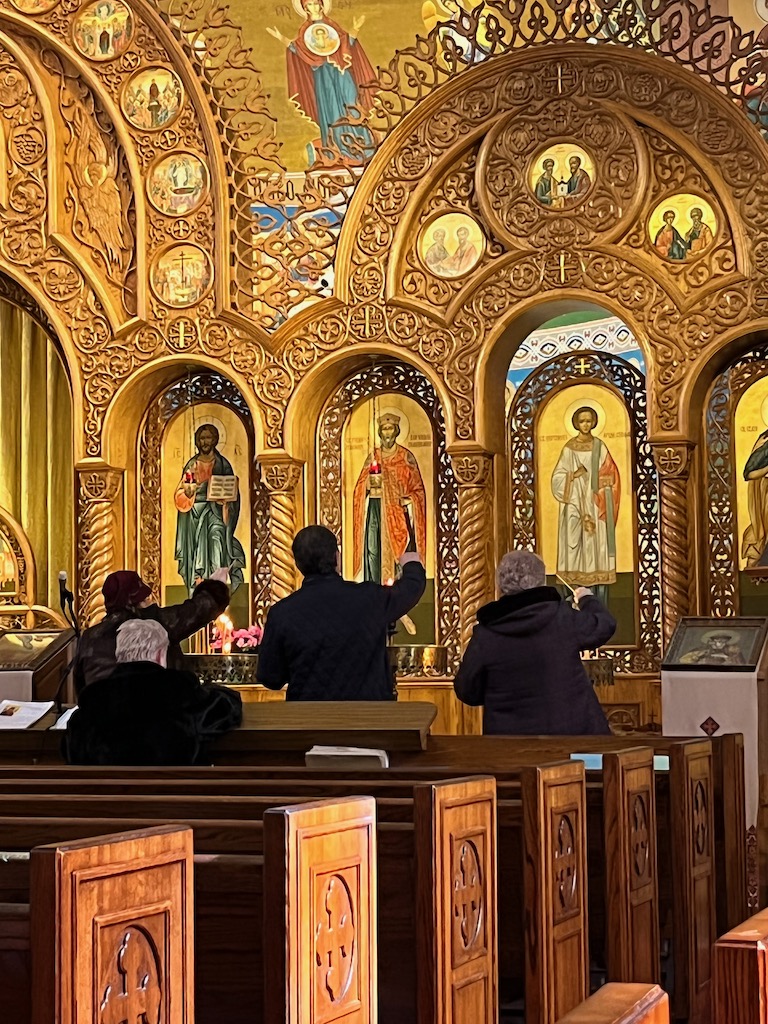
three years ago, we sat in front of screens frozen by the sights of maternity wards in rubble, of old ladies huddled in subway tunnels. some of us crowded into the nearest ukrainian churches, to pray with you. to bend our knees, bow our heads, and make the orthodox sign of the cross at the end of prayers whose words we did not know but whose intent we felt with every fiber of our being.
i can’t count the tears i’ve shed, reading stories of newborns blown to bits, of mothers laboring in bomb shelters, imagining the terror of a sky raining bomb after bomb after bomb. as, for three unbearable years, i read the stories of russian soldiers traipsing house to house, raping woman after woman, regardless of her decade. stories of herding children onto buses, tearing them away from families, all but delivering them to lives of sordid inner torture, tortures whose scars might never heal. stories of villagers lined up, plastic bags pulled over heads, shot execution style. the last sound each one heard, the sound of a rifle shot, and a body thudding to the ground, knowing that sound would next be them.
and yet, words from the white house occupant this week turned truth to lies, blamed the war on you, name-called your president, a man whose courage in the face of abysmal fear and threat not long ago brought burning hope to a darkened world. count me among the ones who cried as he walked the aisle of the house chamber of the u.s. capitol to ascend to the podium where his words shook a silent nation to the core. and where the roaring ovation from those in the chamber, and those in living rooms and rec rooms all around this country seemed a wave without end crashing to a shore. we saw hope in you. we prayed we could muster a modicum of the courage you showed, should we ever, ever find ourselves in a plight with even a fraction of the horror in which you lived.
and now, we are the people of this nation that might well become a living symbol of cruel betrayal.
and so, this humble letter, which you shall likely never read, is but one voice, speaking for many, as i fall to my knees, bow my head, and beg forgiveness for the sins thrust upon you.
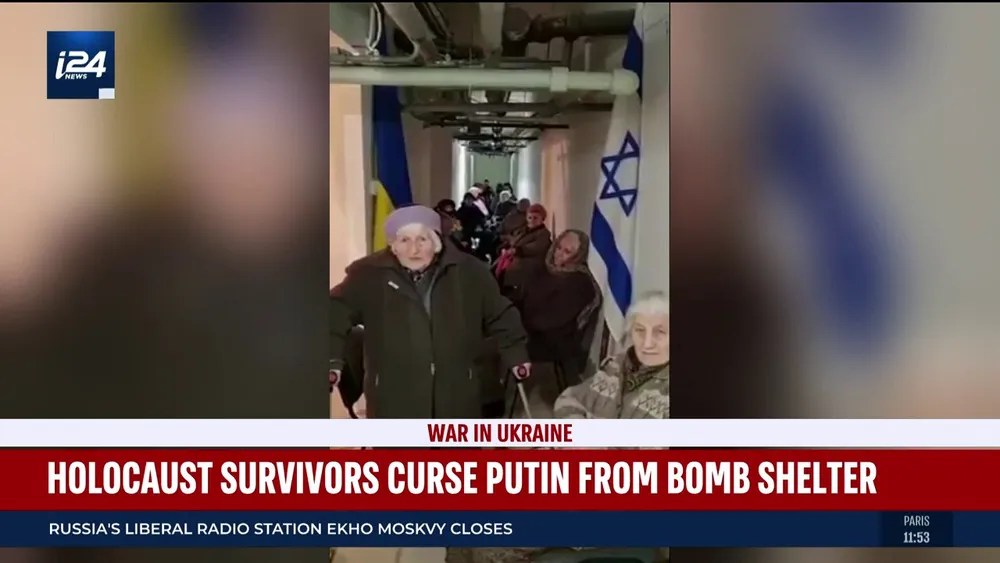
this ukrainian grandma one of the lasting symbols of a feisty nation that would not, would not surrender.
three years ago, i wrote “exercise in empathy, another name for prayer,” and left it here on the chair. i am leaving it again, complete with the end note and question i left at the time. to remind us of the time when our whole nation felt united in praying for mercy, and willing to do all we could to make it happen…
can you imagine? can you imagine waking up with your bedroom windows shaking, a distant thump unmistakably drenching you in dread, even in the liminal fog of your pre-dawn dreams?
can you imagine lifting your newborn from the crib, cradling him against your breast, and running in the cold to the nearest subway shelter, where you will then spend hours upon endless hours, hearing the faint cacophony of what you know to be bombs exploding on a land you call your own?
can you imagine?
can you imagine rushing to your kitchen, clearing shelves of whatever might fuel you in the long hours ahead, grabbing your dog, your kids, your passport, and climbing behind the wheel of a car with only a half tank of gas, a tank you meant to fill the day before but one of the kids got cranky so you thought you’d put it off?
can you imagine if you were due to show up for an MRI to see how far the cancer had spread, how fractured was the tibia, the hip, the wrist, but now the air-raid sirens blare through the dawn and you have to weigh a trip to the hospital or the nearest border?
can you imagine watching your father fill his duffle bag, turning toward the door, pausing to kiss you on the forehead, watching the tears well up in your mother’s eyes, seeing how her hand now is shaking, how she clutches the sleeve of your father’s coat, and how he pulls himself away, unlocks the door and steps out into darkness? and your mother fills the sudden emptiness with a wail you’ve never heard before?
can you imagine holding a ticket to a flight out in the morning only to awake to find the airports all are closed, bombed in the night, and no air space is safe for flying?
imagining is imperative. imagining is how we weave the invisible threads that make us one united people, that make us begin to know what it is to walk in another’s hell.
imagining is the birthing ground of empathy.
and empathy fuels our most selfless urgent prayer.
empathy––a necessary precondition for loving as you would be loved, the necessity of imagining another someone’s pain or fear or desperation, for sometimes imagining nothing more complicated than cold or hunger or exhaustion so overwhelming you’re sure your heart is on its last full measure––empathy is the exercise that puts form and fuel to prayer, that enfolds its stripped-down architecture in the flesh of humanity. be it agony, or terror. be it frenzy, or dizzying confusion.
empathy is what lifts our prayer out of the trench of numbness, muttering words we memorize but do not mean. empathy fine chisels each and every prayer. catapults us beyond our own self-obsessed borders, across time zone or geography. conjoins our circumstance with that of someone we have never met, someone whose predicament is dire, and is––in fact––beyond our most ignited imagination.
truth is, our empathy cannot take us the whole distance. cannot––despite our deepest straining––plant us in the fiery pit of what it is to be awaking to the bombs, watching the ones we love walk into the inky darkness, not knowing for weeks if they’re dead or alive, maimed or shackled, or someone else’s prisoners of war.
but it’s the place to begin.
and isn’t the whole point of praying to reach across the emptiness, the void, to unfurl the one first filament that might begin to bring us side-by-side, in soul and spirit if not in flesh?
don’t we sometimes pray as if to hoist another’s leaden burden onto the yoke of our own shoulders?
isn’t the heart of it to lift us as one? we’re not here as parties of one, churning up our own little worries, butting our place to the front of the God line. we’re here to pay attention. to scan for hurt and humiliation, to go beyond, far beyond, lip service and throw-away lines.
imagination––the exercise of empathy––is a God-given gift, it’s the thing that equips us to love as you would be loved. without it, our every petition is flat. is a waste of our breath, really.
we invoke the hand, the heart of God, yes. but isn’t it our business, our holy business, to get about the work of trying to weave us into true holy communion?
it is our empathies that just might save us as a people, that just might move us toward the place where all our prayers rise in echo, from all corners, nooks, and crannies.
it’s not often we wake up to war. but we did this week. and so we will in the weeks and weeks to come.
i awake now in unending prayer. another name for exercising empathies, to stay awake to the suffering now inflicted on ones we’re meant to love. even if we’ll never know their names.
***
i searched for a prayer for peace, and came circling back to this, from ellen bass; it is a prayer for all, no matter to whom or what or how you pray:
Pray for Peace
Pray to whomever you kneel down to: Jesus nailed to his wooden or plastic cross, his suffering face bent to kiss you, Buddha still under the bo tree in scorching heat, Adonai, Allah. Raise your arms to Mary that she may lay her palm on our brows, to Shekhina, Queen of Heaven and Earth, to Inanna in her stripped descent.
Then pray to the bus driver who takes you to work. On the bus, pray for everyone riding that bus, for everyone riding buses all over the world. Drop some silver and pray.
Waiting in line for the movies, for the ATM, for your latte and croissant, offer your plea. Make your eating and drinking a supplication. Make your slicing of carrots a holy act, each translucent layer of the onion, a deeper prayer.
To Hawk or Wolf, or the Great Whale, pray. Bow down to terriers and shepherds and Siamese cats. Fields of artichokes and elegant strawberries.
Make the brushing of your hair a prayer, every strand its own voice, singing in the choir on your head. As you wash your face, the water slipping through your fingers, a prayer: Water, softest thing on earth, gentleness that wears away rock.
Making love, of course, is already prayer. Skin, and open mouths worshipping that skin, the fragile cases we are poured into.
If you’re hungry, pray. If you’re tired. Pray to Gandhi and Dorothy Day. Shakespeare. Sappho. Sojourner Truth.
When you walk to your car, to the mailbox, to the video store, let each step be a prayer that we all keep our legs, that we do not blow off anyone else’s legs. Or crush their skulls. And if you are riding on a bicycle or a skateboard, in a wheelchair, each revolution of the wheels a prayer as the earth revolves: less harm, less harm, less harm.
And as you work, typing with a new manicure, a tiny palm tree painted on one pearlescent nail, or delivering soda or drawing good blood into rubber-capped vials, twirling pizzas–
With each breath in, take in the faith of those who have believed when belief seemed foolish, who persevered. With each breath out, cherish.
Pull weeds for peace, turn over in your sleep for peace, feed the birds, each shiny seed that spills onto the earth, another second of peace. Wash your dishes, call your mother, drink wine.
Shovel leaves or snow or trash from your sidewalk. Make a path. Fold a photo of a dead child around your Visa card. Scoop your holy water from the gutter. Gnaw your crust. Mumble along like a crazy person, stumbling your prayer through the streets.
–Ellen Bass
how did you learn to pray?
a note in an age of war: when the first reports started seeping in, when the news broke the other night that shelling had started along the northern, eastern, and southern borders of ukraine, it wasn’t long till i found myself thinking of all of you here at the chair. i knew we would all be huddled on the edge of our armchairs, keeping watch, keeping terrible watch. made me wish that every once in a while we could be together in real time, with our real faces and voices. our hearts and souls come to life. maybe after two years without company, without mornings when i set out mugs and bowls spilling with clementines, i am getting hungrier for human contact. made me wonder if maybe one day soon we should gather in a zoom room. i’ll leave this as a thought. i know we’re a gaggle of rather shy souls, but even us shy ones sometimes hunger for company. true company.
my question on this cold february morning of 2025, is what oh what shall we do?
the God of every religion tells us to do it. commands us: love thy neighbor as thyself.
i’ve felt it in my own life, know it to be a force that transcends time, space, and matter. i’ve felt it all but align planets whose orbits were out of whack. i’ve felt it pierce through to the core of me, prompt me to reach down and seize a source, a muscle, i didn’t know that i had. it’s made me more than i ever imagined i could be. lured me out of mighty dark years.
love, thank heaven, is patient. love is keenly perceptive. love, often, won’t take No for an answer.
i’ve felt it shrink distance, make the sound coming through the telephone as close as if we were sidled, thigh to thigh touching, on the seat of a couch in the very same room.
i’ve heard it in barely audible whispers, and in shouts across the corridors of an airport, a hospital, a college campus––a sound so ebullient my heart leaps to quicken its pace.
i’ve spent my life learning how to do it. keeping close watch on the ones i encounter who do it the best. the most emphatically.
i’ve learned it from the little bent man who perched on a hydrant, befriending the pigeons. flocks and flocks of pigeons, he lovingly tended. even in the face of taunts and jeers from the cars passing by.
i’ve learned it from my first best friend who knew without asking how deeply it hurt, how tender it felt to be seen in shadow and light.
i’ve learned it from my long-ago landlady, the one who would knock at my door, come dinnertime, and hand me a hot steaming bowl of avgolemeno, the egg-and-lemon-rich chicken-rice soup that serves as Greek penicillin, and cured what ailed me no matter how awful the day.
i’ve learned it from a 12-year-old girl who lay in a hospital bed, her legs unable to move, paralyzed from the waist down by a tumor lodged in her spine. i’ll never forget the glimmer in her eye, as she looked up and laughed, as she handed me her hand-made papier-mâché green pumpkin head, the one she’d made flat on her back, and with which she crowned me her Irish Pumpkin Queen of a hospital nurse.
i’ve learned it, and felt it: in the canyon of grief, in the vice hold of fear, and in long seasons of haunting despair. it’s the ineffable force with the power to pull us up off the ground, inch us just a little bit forward, and shake off the worries that freeze us in our tracks.
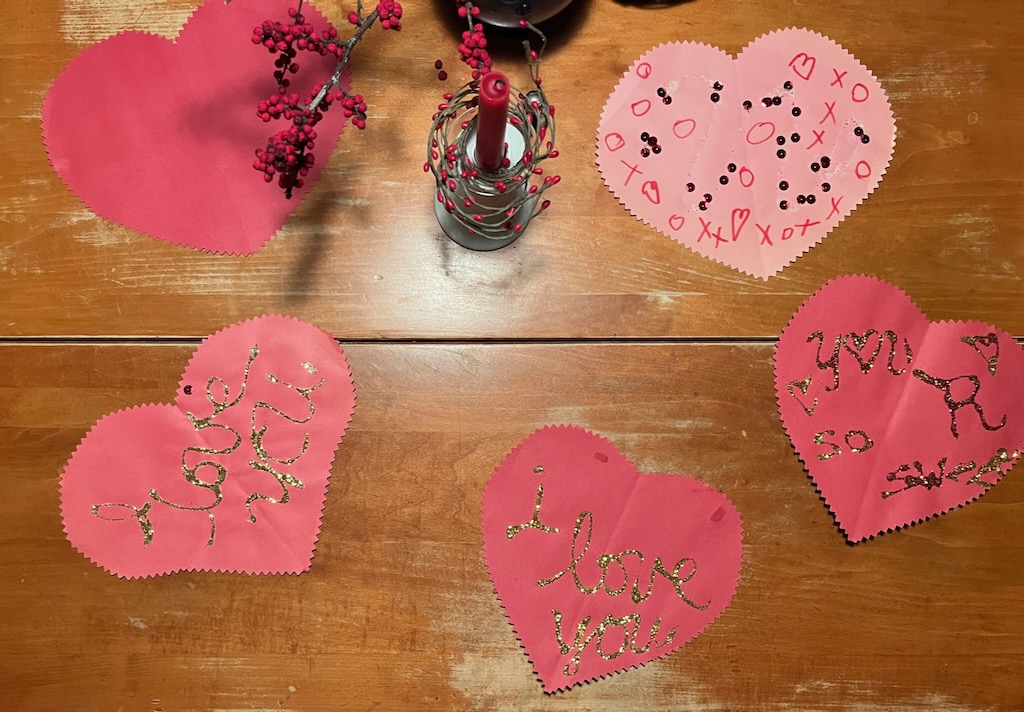
my hunch is that someone at hallmark international invented today, the day in which pink paper hearts are soared hither and yon. or maybe it was the three catholic saints, all named valentine or valentinus, and, as was so often the story, all of whom were martyred for breaking some reason or rule. in the case of third century rome, a priest named valentine defied the emporer who’d ruled that single men made better soldiers than those with a wife, and thus outlawed marriage. valiant valentine, seeing the injustice in the loveless decree, kept about the business of marrying young sweethearts in secret. for this, he lost his head.
earlier still, pagans seized the midpoint, or ides, of the month––february 15––as Lupercalia, a fertility festival dedicated to Faunus, the roman god of agriculture, and to Romulus and Remus, the founders of rome. a priestly order of roman pagans, the Luperci, gathered at the secret cave where Rom and Rem were thought to have been raised by she-wolves, to sacrifice a goat, which they then stripped of its hide, and sliced into strips. then, according to historians, “they would dip [the strips] into the sacrificial blood and take to the streets, gently slapping both women and crop fields with the goat hide.”*
maybe pink paper hearts are, after all, a step in the right romantic direction.
truth be told, 34 years in, it’s recycled hearts adorning someone’s place at the breakfast table…
*postscript on those slap-happy romans: far from being fearful of the bloody slaps, young roman women were said to welcome the mark of the bloody hides, for it was thought to make them more fertile in the year to come.
lifting the day out of its purely-romantic framing, here are three takes on iterations of love, reminding us of the evolution of love across the decades of marriage, and the love of this one sacred Earth we’ve been given to tend:
first up, the sage from kentucky, farmer-poet-secular priest wendell berry, from a much longer poem, but i was drawn to these three parts, meditations on a long and deepening love…
excerpts fromThe Country of Marriage by Wendell Berry
III. Sometimes our life reminds me of a forest in which there is a graceful clearing and in that opening a house, an orchard and garden, comfortable shades, and flowers red and yellow in the sun, a pattern made in the light for the light to return to. The forest is mostly dark, its ways to be made anew day after day, the dark richer than the light and more blessed, provided we stay brave enough to keep on going in.
IV. How many times have I come to you out of my head with joy, if ever a man was, for to approach you I have given up the light and all directions. I come to you lost, wholly trusting as a man who goes into the forest unarmed. It is as though I descend slowly earthward out of the air. I rest in peace in you, when I arrive at last.
V. Our bond is no little economy based on the exchange of my love and work for yours, so much for so much of an expendable fund. We don’t know what its limits are– that puts us in the dark. We are more together than we know, how else could we keep on discovering we are more together than we thought? You are the known way leading always to the unknown, and you are the known place to which the unknown is always leading me back. More blessed in you than I know, I possess nothing worthy to give you, nothing not belittled by my saying that I possess it. Even an hour of love is a moral predicament, a blessing a man may be hard up to be worthy of. He can only accept it, as a plant accepts from all the bounty of the light enough to live, and then accepts the dark, passing unencumbered back to the earth, as I have fallen tine and again from the great strength of my desire, helpless, into your arms.
and the belle of amherst turns our attention to this world that keeps loving us, despite the ways we batter it, and ignore it…
This world is just a little place, just the red in the sky, before the sun rises, so let us keep fast hold of hands, that when the birds begin, none of us be missing. — Emily Dickinson, in a letter, 1860
and finally, the late great naturalist and essayist Barry Lopez, on how to be awake to this still blessed world, from the foreword to Earthly Love, a 2020 anthology from Orion magazine. He is describing walking a vast landscape––a spinifex plain, or grassy coastal dunes, in North-Central Australia––for the first time, but the wisdom is how to attend to a deepening love:
My goal that day was intimacy — the tactile, olfactory, visual, and sonic details of what, to most people in my culture, would appear to be a wasteland. This simple technique of awareness had long been my way to open a conversation with any unfamiliar landscape. Who are you? I would ask. How do I say your name? May I sit down? Should I go now? Over the years I’d found this way of approaching whatever was new to me consistently useful: establish mutual trust, become vulnerable to the place, then hope for some reciprocity and perhaps even intimacy. You might choose to handle an encounter with a stranger you wanted to get to know better in the same way. Each person, I think, finds their own way into an unknown world like this spinifex plain; we’re all by definition naive about the new, but unless you intend to end up alone in your life, it seems to me you must find some way in a new place — or with a new person — to break free of the notion that you can be certain of what or whom you’ve actually encountered. You must, at the very least, establish a truce with realities not your own, whether you’re speaking about the innate truth and aura of a landscape or a person.
. . . I wanted to open myself up as fully as I could to the possibility of loving this place, in some way; but to approach that goal, I had first to come to know it. As is sometimes the case with other types of aquaintanceships, to suddenly love without really knowing is to opt for romance, not commitment and obligation.
and, later in the same essay, his call to attention for a world suffering from what he quite plainly calls, “a failure to love,” a message of urgency on a day in which love, in its many many iterations, is held up to the light.
EVIDENCE OF THE failure to love is everywhere around us. To contemplate what it is to love today brings us up against reefs of darkness and walls of despair. If we are to manage the havoc — ocean acidification, corporate malfeasance and government corruption, endless war — we have to reimagine what it means to live lives that matter, or we will only continue to push on with the unwarranted hope that things will work out. We need to step into a deeper conversation about enchantment and agape, and to actively explore a greater capacity to love other humans. The old ideas — the crushing immorality of maintaining the nation-state, the life-destroying beliefs that to care for others is to be weak and that to be generous is to be foolish — can have no future with us.
It is more important now to be in love than to be in power.
these are dark times. chaotic times. times so upside down and alarming, i’m groping for what i can do. sometimes i think the solutions are way, way above my paygrade.
what i know i can’t do is whistle in the dark. blather on about incidental ponderings, pretend that all this will soon go away. it feels as if we’re witnessing wide-eyed the wielding of sledge hammers to bedrock pillars of democracy. who are these 19-year-olds re-writing code in the department of treasury? why in the world would anyone waste a minute of breath renaming a mountain, a gulf, except for extreme case of hubris? and what of claiming gaza, the land of a people who have sustained unthinkable horrors to simply exist on the land of their ancestors, a land now so deeply bloodied i fear it seeps to the core of the planet? to say nothing of erasing the existence of aid to the poor, the hungry, the marginalized around the globe. to strike language and data from federal websites, all but telling vast swaths of humanity they’ve been expunged. to imagine the labs where cures for disease are suddenly stalled, where lives––like mine––depend on those cures.
i have aimed from the beginning not to bleed into politics here. and i still hold firm to that core. what i address here, what i disdain here, is something far more foundational, a vengeance fueled by a mindset that it’s always always us v. them. a philosophy of division, of payback in the cruelest of iterations. a credo of greed. let the weak be weakened, and the few take the pot. and let it all be built on a mound of mistruths, fictions of wild proportion.
we’ve an unspoken bond here at this table that once a week i will leave some platter of words that might open a window. even a crack. let light in to our collective souls. so maybe in these dark times my place is shifting. maybe i’m meant to listen in silence, to keep close watch, to defend the tenets of the God of justice and love. a God whose wisdom is not twisted, turned on its head, shoved to the side for malevolent purpose.
maybe the chair, in these dark and cruel times, is simply a place to swing by, to listen for voices wiser and keener than mine. maybe the chair is a place to come catch your breath. to embolden your spirit. to find brief reprieve.
until the darkness lifts––and wise and faithful souls believe that it will, that We the People in our undeniable goodness and courage shall overcome––i’ll do what i quietly can. my platter today comes with two poems and a slather of chocolate. yes, chocolate. though in this case, it’s the priceless morsel of the story behind katie hepburn’s very own chocolatey brownies that might best the brownies themselves. you decide.
a beauty of a new poem found on diana butler bass’s straight-talking, life-sustaining, deeply soulful the cottage….
Love relentlessly, she said, and I want to slip these two words into every cell in my body, not the sound of the words, but the truth of them, the vital, essential need for them, until relentless love becomes a cytoplasmic imperative, the basic building block for every action. Because anger makes a body clench. Because fear invokes cowering, shrinking, shock. I know the impulse to run, to turn fist, to hurt back. I know, too, the warmth of cell-deep love— how it spreads through the body like ocean wave, how it doesn’t erase anger and fear, rather seeds itself somehow inside it, so even as I contract love bids me to open wide as a leaf that unfurls in spring until fear is not all I feel. Love relentlessly. Even saying the words aloud invites both softness and ferocity into the chest, makes the heart throb with simultaneous urgency and willingness. A radical pulsing of love, pounding love, thumping love, a rebellion of generous love, tenacious love, a love so foundational every step of what’s next begins and continues as an uprising, upwelling, ongoing, infusion of love, tide of love, honest love.
an ode to kindness….aptly titled…
Small Kindnesses
I’ve been thinking about the way, when you walk down a crowded aisle, people pull in their legs to let you by. Or how strangers still say “bless you” when someone sneezes, a leftover from the Bubonic plague. “Don’t die,” we are saying. And sometimes, when you spill lemons from your grocery bag, someone else will help you pick them up. Mostly, we don’t want to harm each other. We want to be handed our cup of coffee hot, and to say thank you to the person handing it. To smile at them and for them to smile back. For the waitress to call us honey when she sets down the bowl of clam chowder, and for the driver in the red pick-up truck to let us pass. We have so little of each other, now. So far from tribe and fire. Only these brief moments of exchange. What if they are the true dwelling of the holy, these fleeting temples we make together when we say, “Here, have my seat,” “Go ahead—you first,” “I like your hat.” —Danusha Laméris
and now, for katie’s brownies, the story of which first appeared in the letters to the editor of the new york times….
July 6, 2003
To the Editor:
Re the death of Katharine Hepburn last Sunday: For many decades, my father used to walk across town to do his food shopping on Second Avenue. He often shopped at a Gristede’s around the corner from Miss Hepburn’s town house on East 49th Street.
One day he suddenly came face to face with Miss Hepburn, who was also picking up groceries. He acknowledged her with a nod, and she responded in kind. He began thinking of her as a neighbor.
In 1983, my senior year at Bryn Mawr, Miss Hepburn’s alma mater, I was frustrated and was doing poorly, and at Christmas break, I decided to quit. I had the romantic notion of running away to Scotland to write screenplays. My father was frantic. My mother had died two years before, leaving him with all the responsibility for his headstrong daughter.
He knew that Miss Hepburn had gone through her own struggles at Bryn Mawr, so he wrote her a letter asking her to intervene. ”She’s a great admirer of yours, and perhaps she’ll listen to you,” he wrote. On the way to the grocery store, he dropped the letter in her mail slot.
At 7:30 the next morning, the phone woke me up. I answered it and heard that famous voice, crackling with command. ”Is this the young woman who wants to quit Bryn Mawr?” I said it was. ”What a damn stupid thing to do!” she snapped. She went on to give me a lively lecture, the gist of which was that I had to finish my studies and get my degree, and after that I could do what I wanted to do. There was no arguing with her imperiousness. Then she said she wanted to meet us for tea.
The day of our appointment was gray and wintry. Walking the long blocks to Turtle Bay, my father and I didn’t speak much. It felt as if we were about to meet the Queen.
Miss Hepburn greeted us warmly. With casual hauteur, she provided us with tea and some of her famous brownies. Though she was in her 70’s, she had a youthful look, enhanced by her girlish clothes: a turtleneck, a black cardigan and shabby khaki-green pants.
We talked about many things, including Bryn Mawr. She said that she was miserable there and still had nightmares about it, but she was glad she went. At the end of the afternoon she told me, in a rather grim tone, ”You’re smart.” It was a compliment, but also an admonition not to be foolish in the future.
My father was invited to visit her a few times after that. Once, he had heard that she was recovering from a serious car accident, and he stopped by to drop off a package of homemade brownies and a get-well note. To his surprise, he was ushered in and invited into her boudoir, where she greeted him in her nightgown. She sampled his brownies.
”Too much flour!” she declared. She then rattled off her own recipe, which he hastily wrote down. ”And don’t overbake them! They should be moist, not cakey!”
I’ll always be grateful to Miss Hepburn for making me stick it out at Bryn Mawr and for giving me these rules to live by: 1. Never quit. 2. Be yourself. 3. Don’t put too much flour in your brownies.
KATHARINE HEPBURN’S BROWNIES
1/2 cup cocoa 1 stick butter 2 eggs 1 cup sugar 1/4 cup flour 1 cup broken-up walnuts or pecans 1 teaspoon vanilla pinch of salt
Preheat oven to 325 degrees. Melt butter in saucepan with cocoa and stir until smooth. Remove from heat and allow to cool for a few minutes. Mix in eggs, one at a time. Add sugar, flour, nuts, vanilla and salt. Pour into a greased 8×8 square pan. Bake 40 minutes. ”Don’t overbake!” They should be gooey. Let cool (an essential step) and cut into bars.
Heather Henderson St. Paul, Minn.
how, pray tell, are you finding your way? chocolatey or otherwise…
with planes crashing into helicopters, and bodies falling into the potomac, and DEI blame being cast with no evidence in sight, i am in no mood to add more noise to the prattle. why tragedy needed to take a sharp turn into retribution, why our skies feel suddenly shaky, is only adding to the despondency i struggle to keep at bay.
i heard stories this week of kids i love, one in far off thailand teaching english in remote villages for the peace corps, terrified that the freezing of federal funds would shatter their dreams in the making. i’ve heard stories of dish washers and cooks in chicago’s little village, a mostly mexican corner of the city, afraid to show their face on the streets, forgoing paychecks in lieu of being handcuffed and torn from the families they love.
we live in a rippling circle of fear and confusion, a darkness is shrouding day after day.
in my teeny-tiny circle of life closer to home, some of that darkness is countered by flickering light. i find good reason for joy. feel wishes come blessedly true. i’ve lived to see a day i had prayed and prayed for, for one of my boys. and i am witness to the fire burning in the dreams of another.
just days ago, i was holed up in a rambling old house on the shore of one great lake with four glorious women whose lives have been marred and scarred by tragedy, and yet, they’ve risen. they’ve written their way through darkness toward light. and they are magnificent. and so so brave. (one wrote the searing memoir while you were out; two others are soon coming with masterpieces all their own. a fourth, i hope, will someday publish her stories that cut to the bone.)
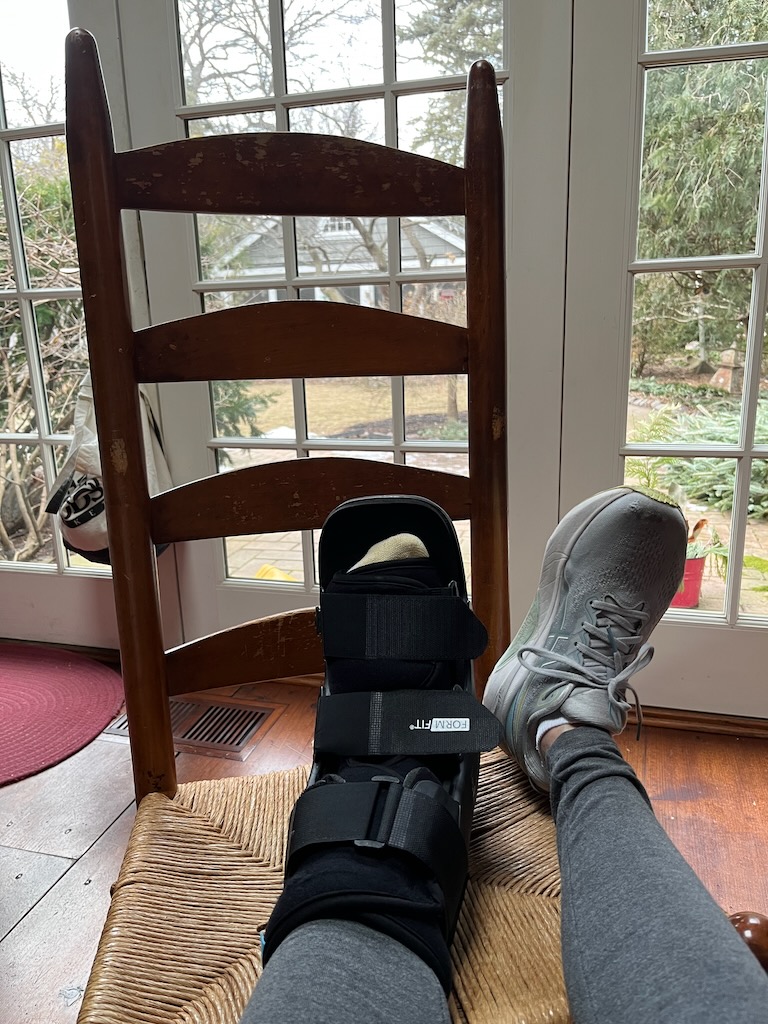
i hobbled home, after an otherwise uneventful walk on a stone-sprinkled beach, with an unhappy ankle.and a quick trip to the foot doc had me strapped into what feels like a leaden boot, and has curtailed my daily constitutionals for the next few weeks. but that’s not all: before week’s end, the resident triathlete in this old hovel had his knees poked and prodded and subjected to space-age medicine, and thus we’ve declared this the hobbledy house. indeed, we are a hobbling, most humbled pair, trading ice packs and heating pads, advil and tylenol, as prescribed by our duet of doctors.
and so my offerings this week rest on the shoulders of others far wiser, less wobbly, than me. cumulatively, they compound the point that we are the solution to the miasma that abounds.
this is our time, of all the times in our lives, to dig down deep as we can, and pull out the fiercest, finest truths we believe in. we must make true the life that ought to be. take it from this collection of seers and sages: clifton, mandelstam, rilke, and trommer, poets all.
In the bigger scheme of things the universe is not asking us to do something, the universe is asking us to be something. And that’s a whole different thing.
— Lucille Clifton
“What tense would you choose to live in?” the poet Osip Mandelstam once asked his journal, before answering his own question. “I want to live in the imperative of the future passive participle—in the ‘what ought to be.’”
Let this darkness be a bell tower and you the bell. As you ring, what batters you becomes your strength.
So I can’t save the world— can’t save even myself, can’t wrap my arms around every frightened child, can’t foster peace among nations, can’t bring love to all who feel unlovable. So I practice opening my heart right here in this room and being gentle with my insufficiency. I practice walking down the street heart first. And if it is insufficient to share love, I will practice loving anyway. I want to converse about truth, about trust. I want to invite compassion into every interaction. One willing heart can’t stop a war. One willing heart can’t feed all the hungry. And sometimes, daunted by a task too big, I tell myself what’s the use of trying? But today, the invitation is clear: to be ridiculously courageous in love. To open the heart like a lilac in May, knowing freeze is possible and opening anyway. To take love seriously. To give love wildly. To race up to the world as if I were a puppy, adoring and unjaded, stumbling on my own exuberance. To feel the shock of indifference, of anger, of cruelty, of fear, and stay open. To love as if it matters, as if the world depends on it.
how might you begin to try — not to save the world, nor even your own sweet self — to practice opening your heart, to be gentle with your insufficiencies, to take love seriously, give wildly, and live in the imperative of the future passive participle, in what “ought to be”?















 pull up a chair