pull up a chair

where wisdom gathers, poetry unfolds and divine light is sparked…

covidian land of counterpane: geography for the new year

counterpane noun

coun·​ter·​pane | \ ˈkau̇n-tər-ˌpān

Definition of counterpane: BEDSPREAD

Origin (from Oxford Languages): early 17th century: alteration of counterpoint, from Old French contrepointe, based on medieval Latin culcitra puncta ‘quilted mattress’ (puncta, literally meaning ‘pricked’, from the verb pungere). The change in the ending was due to association with pane in an obsolete sense ‘cloth’.

***

when i was little, i was oft confined to bed when i got sick. and, as i recall, my childhood was pocked with the sorts of sicknesses for which bedroom doors were closed and meals delivered by metal tray. a dinner bell rested on my mirror-topped vanity, and i jingled it if in need of gingerale on ice, or saltine crackers in wee stacks. clearly, my mother of five was practicing astute infection control lest she find herself in charge of quintuple cases of whatever was my ailment of the hour.

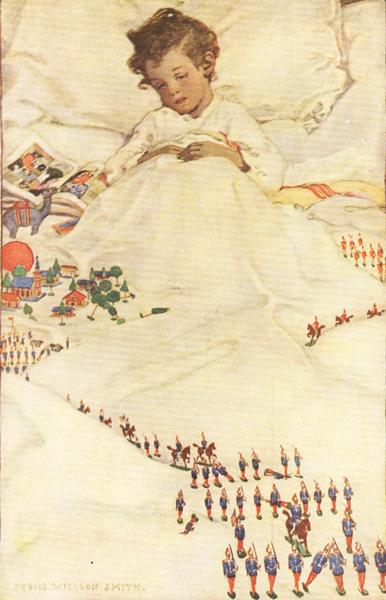
it was all quotidian enough—scarlet fever, chicken pox, mumps, measles, really nasty flu. i twice was sent to hospitals for IVs and a week of restitution, and so, given the spells in bed, i came to think the land of counterpane a most familiar terrain. (maybe, in part, it’s why i was drawn to being a pediatric nurse.) and, of course, i populated the contours of my bedclothes with a well-steeped storybook imagination––hills and vales and undulations, the nooks and crannies of my make-believe lilliputian chambermates: trolls and elves and sprites and sometimes an imaginary baby sister.

among the first poems i memorized was robert louis stevenson’s “the land of counterpane,” a verse i know by heart: 

When I was sick and lay a-bed,
I had two pillows at my head,
And all my toys beside me lay
To keep me happy all the day.

and so, this past stretch of days (now ten), once again behind closed bedroom door with trays duly delivered by the nurse in charge (now, the sweet, sweet man i married long ago), i find myself a-bed, beneath my counterpane, all my toys beside me laying. and (except for the few days when it was a bit of a challenge to catch a breath) it’s not been quite as dreadful as it might sound. 

apocalyptic broccoli, 30-year shelf life

i’ve windows on three sides with golden sunlight streaming in by day; at night, i watch the twinkling lights and street lamps that punctuate the darkness as far as i can see. and the wonders of laptops and itty-bitty phones mean you can stay in touch with even the longest lost compatriots (two friends from nursing school in fact), neighbors who’ve checked in every day, my faraway best friend who has been as close as close could be, and my distant cousin whom i adore who thought to overnight me a barrel of freeze-dried apocalyptic broccoli. and, best of all, i’ve got my covid buddy––my firstborn, the one who fell first––directly across the hall. he escaped solitary confinement at midnight last night, as we’re abiding by the 10-day rule unless a negative antigen test allows early egress (which, in his case, he never got). so he and i have had long hours of crossword puzzles and conversation that might not have unfolded had we both been skittering hither and yon. it’s the younger one i miss the most, as he’s taken to steering as clear as possible of me and my omicron. (the kid’s no dummy.) 

strange to think, a week ago i didn’t yet know what it was that had buckled me at the knees, and it would not be till christmas afternoon that the test result came back in red ink with exclamation mark, dare i miss the point. 

the lesson of this covid tale would be as one wise doctor told me just the other day: assume you’ve got it––and stay in isolation––till proven otherwise. testing is just a mess, and misses far too many positivities till all the contagions are scattered in your wake. i fear for what’s coming in a country shut down by this latest red-ringed mutation. but i enter it now armed with mighty antibodies (or so i hope and pray). and a determined willingness to do all i can to help the next one fallen to make it through with TLC, and all the isolation tips i’ve learned along the way.**

sticking to the rules, i’ll not be sprung from my confinement till the midnight bell tolls tonight, and the year turns as well, allowing me to begin afresh the year of our Lord MMXXII. 

my new year prayer is even more distilled than my christmas prayer a week ago:

dear God, let all of us have someone dear to check in on us, to bring us cups of tea, to care for us in tender ways (and even on the days when we’re not anchored in our lands of counterpane). keep us safe, dear God, and mindful of all that matters most: let us put down the weapons of words, of grudges, of cold hard shoulders. let us snap into focus to see that the path is short, is sometimes rough, and that the best way home is side by side, entwining elbows, and leaning toward the light. let us lock out the rampant toxicities (and i don’t mean the biologically viral ones), bar the doors to discourse that divides us, and strain to find our common common threads. we’re woven of the sacred, after all. it’s buried there, beneath the noise, the bombast, the sure evidence otherwise. the unfettered truth––most clearly realized on long nights when breath comes hard and fevers swirl––is this: life is swift. we’ve no escape from certain end, so let us make each day a living prayer in which we seek and find certain trace of all that’s heaven-sent, and all that hails from You, the One who fuels the light, who preaches love beyond measure and without end, and who gives us our each and every breath—even when it’s labored. blessed be that holy, holy breath, amen.

most of all, i hope and pray you’re well. and staying safe from this nasty bug that’s toppling us like tin soldiers.

what’s your prayer to usher in the new year?

** see isolation tips in comment down below!!!

quiet christmas, red-ringed edition

tasha tudor illustration from The Night Before Christmas

more than anything, i yearn for the quiet of christmas, the early morning silence when it’s just me puttering about the kitchen, cranking the oven, simmering spices on the stove. i take my morning prayer by flickering candle flame. or beneath the morning stars. or beside the woodsy fir, now strung with lights and berries, standing proud beside the ticking clock that chimes the hours.

i love listening for the first of the footsteps thumping onto the floorboards overhead, and the creaking of the old oak that follows. but long before that longed-for stirring breaks the silence, it’s into the depths of quiet that i surrender, that i’ve been waiting for all these weeks. the old house before its stirring. when it’s just barely breathing. and christmas is finally at the door.

it’s in that silence that i most absorbingly slip into the dusky hours of that ancient, ancient night, when amid the vastly-vaulted holy land, beneath the rough-hewn rafters of a barn, down low where the straw was matted, where the creatures intoned their moans and mews and cooing, a newborn babe let out a human cry. i like to imagine i’m peeking out from behind a post. i sometimes imagine the laboring mother reaching out her hand, reaching out for strength in the form of someone else’s flesh and delicate bone, reaching for another hand—my hand—to hold onto hers, to wipe her brow, her tears, to kneel down beside her and whisper certainties. “you got this,” i imagine saying, as these three words have so often scaffolded me in my own hours of trembling fears. 

but this christmas is not going to be like any other christmas. it’s not even like last year’s most unfamiliar christmas, when we all but hunkered down, when we awaited the vaccine just peeking over the horizon, when hope felt not too far off. 

no, this christmas, we’re all upside down again. it’s all changed and changing fast. as fast as that red-ringed variant omicron is mutating, is doubling in numbers inside some of us, our hopes and plans for christmas are changing too. 

there is abundant heartbreak this christmas. and here, on the very eve of christmas day, i don’t yet know what tomorrow will bring. but i’m willing to bed i won’t be leaving my bed.

given the headlines––the wildfire that is omicron––there’s a mighty fair chance your christmas is as tumbled up as ours. 

we’ve an uninvited visitor here, one who snuck in through the back door and turned everything inside out and slanted. yes, covid came, and in very short order canceled someone’s surgery, and canceled someone else’s flight from california. covid came and sent one of us all but seeing stars, she was so gulpingly alarmed. after all, i’ve lived the last nearly two years doing everything i could to lope at least two steps ahead: for months i was among the ones who washed every single grocery bag or box or pint hauled into this old house; i steered clear of crowds, wore not one but two masks unless alone in the woods, or tracing the lakeshore’s edge. met ones i love harbored on the front stoop a good twelve feet away. washed my hands to happy birthday thrice. (if twice was recommended, i opted always for the extra round of public health insurance.)

but covid caught up to us. my firstborn—home for the first christmas in two years—is quarantined in the room at the top of the stairs. i was quarantined in my little writing room until my PCR came back negative early yesterday morn. for two long days, i was calling the book-stacked chamber my covid cottage, my covid christmas cottage.

and now, after a long night with thermometer under tongue, i’m all but sure the red-ringed virus dodged the swab but has me in its clutches, since i feel more awful by the hour. i’m thinking omicron is wily, and mighty good at playing hide-and-seek. i’ll test again this morning. (bless the neighbors who drove home from ohio, where supply is far more abundant, with a wee stash of impossible-to-find DIY covid tests.)

most of all, i’ve worried about my mama, who does not want to be alone on christmas day, but whom we don’t want felled by this nasty, nasty scourge. dear God, don’t let her get it.

all the last minute upside-down-ness has clearly pointed to one simple single certain truth: if we can be gathered with the ones we love, under the same roof, by zoom or phone or mental telepathy, well then we’re blessed as blessed could be. 

this is not the way i imagined it, whispering christmas wishes through a crack beneath the door, leaving packages on the tray that ferries food and dishes in and out of the sickroom. too contagious to wander down the stairs and daydream by the light-strung tree. but here’s what matters: we are emphatically and undeniably all under one single roof. 

which, after all, is the answer to a hundred prayers. it’s what we lacked last year. and some iteration of what i wished for this year. 

while we untangle uncertainties here on the homefront, i still stand ready to unfurl a christmas morning’s benediction. 

a prayer for quiet christmas

dear God of starlit dawn, dear God of Light now coming, as we gather up this year, gather up the sorrows and the sweetness, hear our deepest cries. let us love even when our hearts get bumped and bruised. let us be gentle in the harshest hours. let us keep upright even when we’re wobbling. let us hold onto hope. let us seize the blessings as they unfold within our reach. lift up our tender memories, the ones we’ve loved and lost this year. let us carry forward their inextinguishable flame, and keep their incandescence blazing. dear God, as we bow down and bend our knees, let us behold the newborn wonder, and do all we can to absorb the holy light of this most silent silent night.

merry blessed christmas to each and every someone who wanders by the chair. may you be well, and hold tight to all your blessings.

nativity is birth, after all

fragment of The Adoration of the Shepherds, by Guido Reni, circa 1640

nativity, by dictionary definition, the occasion of a person’s birth. most often told in airbrushed terms. but i find myself drawn in more deeply by the grainiest of tellings. 

for me, the miraculous emerges in contemplating the earthiest of details: not simply imagining the lowings of the cow, or the stench of a barn, or the cold night air, but the raw biology of birthing. how it stretches almost to the breaking point the mother’s flesh and frame; the messiness of all the leaking. from afterbirth to latching on, gestation’s final act is no theater of the sanitized. 

that we begin our resurrection story in a barn, that the virgin mother did not escape the grunts and tears and unveiled exposures of labor pains, of crowning and pushing, of colostrum and breastmilk coming in, engorging. that divinity begins in common birth, as every one of us began: through birth canal and searing pain, through a mother’s intense focus and channeled superhuman forces, through flesh to flesh for days and weeks on end. 

as one poet so powerfully put it: “For any birth makes an inconvenient demand; / Like all holy things / It is frequently a nuisance, and its needs never end /…” and as another poet begins her own musings, “sometimes I wonder / if Mary breastfed Jesus. / if she cried out when he bit her / or if she sobbed when he would not latch. / …”

two poems, both nativity poems, struck me hard this week. they trickled in separately, but when i looked at them together, side by side, i found them magnifying and illuminating in echo of each other. 

here are the poems, and a bit about each poet. all in the spirit of drawing our deepening attention to the birthing story coming….

first the poems, beginning with the older one, written some time between 1939 and 1943 (i discovered it last year, and promptly ordered from england anne ridler’s collected poems); and the newer poem, written just two years ago and published on facebook, no less, on december 16, 2019.

Eleanor Fortescue-Brickdale’s watercolour of The Nativity

Christmas and the Common Birth
by Anne Ridler

Christmas declares the glory of the flesh:
And therefore a European might wish
To celebrate it not at mid winter but in spring,
When physical life is strong,
When the consent to live is forced even on the young,
Juice is in the soil, the leaf, the vein,
Sugar flows to movement in limbs and brain.
Also, before a birth, nourishing the child,
We turn again to the earth
With unusual longing – to what is rich, wild,
Substantial: scents that have been stored and strengthened
In apple lofts, the underwash of woods, and in barns;
Drawn through the lengthened root; pungent in cones 
(While the fir wood stands waiting; the beechwood aspiring,
Each in a different silence), and breaking out in spring 
With scent sight sound indivisible in song.

Yet if you think again 
It is good that Christmas comes at the dark dream of the year 
That might wish to sleep ever.
For birth is awaking, birth is effort and pain;
And now at midwinter are the hints, inklings 
(Sodden primrose, honeysuckle greening)
That sleep must be broken.
To bear new life or learn to live is an exacting joy;
The whole self must waken; you cannot predict the way 
It will happen, or master the responses beforehand.
For any birth makes an inconvenient demand;
Like all holy things 
It is frequently a nuisance, and its needs never end;
Freedom it brings: we should welcome release
From its long merciless rehearsal of peace.

   So Christ comes 
At the iron senseless time, comes 
To force the glory into frozen veins:
   His warmth wakes 

Green life glazed in the pool, wakes 
All calm and crystal trance with the living pains.

   And each year 
In seasonal growth is good – year 
That lacking love is a stale story at best; 
   By God’s birth 
Our common birth is holy; birth
Is all at Christmas time and wholly blest.

***

William Blake’s The Nativity

sometimes i wonder
 by Kaitlin Hardy Shetler

sometimes I wonder
if Mary breastfed Jesus.
if she cried out when he bit her
or if she sobbed when he would not latch.

and sometimes I wonder
if this is all too vulgar
to ask in a church
full of men
without milk stains on their shirts
or coconut oil on their breasts
preaching from pulpits off limits to the Mother of God.

but then i think of feeding Jesus,
birthing Jesus,
the expulsion of blood
and smell of sweat,
the salt of a mother’s tears
onto the soft head of the Salt of the Earth,
feeling lonely
and tired
hungry
annoyed
overwhelmed
loving

and i think,
if the vulgarity of birth is not
honestly preached
by men who carry power but not burden,
who carry privilege but not labor,
who carry authority but not submission,
then it should not be preached at all.

because the real scandal of the Birth of God
lies in the cracked nipples of a
14 year old
and not in the sermons of ministers
who say women
are too delicate
to lead.

***

Anne Bradby Ridler (1912-2001)

A British poet and librettist, remembered as “essentially a sacramental poet,” Anne Bradby Ridler was originally hired as a secretary at the London-based publisher Faber & Faber, and later worked as an assistant to T.S. Eliot, selecting the poems for A Little Volume of Modern Verse. She was a friend, too, of C.S. Lewis and W.H. Auden, Dylan Thomas and Lawrence Durrell, and was considered “on the edge” of the Inklings group (the closest proximity for a woman of those times). Born to a literary family, her mother was a writer of children’s books, including The Enchanted Forest; her father, a first-class cricketer, schoolmaster, and poet.

According to a charming passage in the Oxford Dictionary of National Biography

“In childhood Anne Bradby was surrounded by influences that fed her imagination and intellectual inquisitiveness. At home there was white wallpaper and William Morris chintzes, a picture (attributed to Canaletto) of the Campanile at Venice and a Broadwood piano—and in playing it she experienced the joy which she later remembered Yehudi Menuhin describing as the essential ingredient for the education of any player. In Rugby School (where her father was schoolmaster) there was architecture by William Butterfield and in his style. In the community there were dramatized scenes from Shakespeare that her mother produced for the children of various families. A favourite place at home was the midway ledge of the double bookcase in the hall, in which was stored a mass of books. ‘Reading to myself’, she wrote, ‘began to be my greatest resource … and the basis of my imaginative life’.” 

She’s been called a modern metaphysical poet, whose work is rife with complex metaphors. Overtly Christian, she explored religious themes, and human experience, especially motherhood and marriage. “Many of her poems mark arrivals and departures: her husband leaving in wartime, the birth of a child, the death of her father. The need to understand things passing and to give them some currency in memory and then in poetry lies at the heart of her work,” wrote Peter Forbes, editor of the Poetry Review, shortly after her death.

She earned a degree in journalism from King’s College London; her first volume of poetry was destroyed in a bombing raid in 1940. A member for three decades of the Oxford Bach Choir, her poetries are best heard aloud, “full of subtle coloration and rhetorical balance.” You can hear her reading one of my favorites, “Snakeshead Fritillaries” here.

Shortly after her death in October of 2001, The Guardian wrote in her obituary: “Ridler’s poetry displayed an attention to cadence and musicality in both her formal and her free verse, and managed to combine a Christian spirituality and Latinate, Elizabethan elegance with a more modern, even sceptical, tone. While some poems are overtly religious – Carol To Be Set To Music and Prayer In A Pestilent Time – she would more often situate her everyday subjects in contexts of both faith and doubt.” Later in the obit, the literary critic Grave Lindop was quoted as saying: “She had the clearest and best-balanced poetic intelligence I have ever met.”

Shortly before her death, Ridley was made an OBE (Order of the British Empire) for services to literature. She sought not fame, preferring, she once claimed, “to think of herself as invisible.” According to the Poetry Archive, a British-based not-for-profit that preserves recordings of poets reading their own works aloud, “Her quiet excellence, however, is far from inaudible.”

***

Kaitlin Hardy Shetler

Kaitlin Shetler’s poem, “sometimes i wonder,” has been called a “short sermon in the form of an Advent poem.” Shetler describes herself as an “advocate for women and justice, and occasional preacher in Churches of Christ circles.” This one poem—something of an internet sensation—was thought to have reached—through the powers of social media—more than 10 million, a number exceeding the worldwide membership of the evangelical Churches of Christ. And that was almost two years ago. The arithmetic knows no bounds. What’s most critical to understanding the subtext of her poem is that hers is a church known to be one of the most restrictive to women and girls in its fold (women and girls are completely excluded from speaking, or leading, or otherwise actively serving in its worship services).

Now a senior program associate at the Vera Institute of Justice, a not-for-profit whose mission is to end the overcriminalization and mass incarceration of people of color, immigrants, and people experiencing poverty, Shetler is a Licensed Master Social Worker, and described on the Vera Institute’s website thusly: “Kaitlin has over 10 years’ experience working with vulnerable populations. During her senior year in undergrad, she managed the domestic violence shelter in her college’s small town. After college, she spent a year working as a case manager and mental health intern at the Vanderbilt Psychiatric Hospital. After graduating from the University of Tennessee Knoxville with her master’s in social work, Kaitlin worked as a behavioral rehabilitation instructor for the state of Tennessee. There she developed a passion for the disability community and best practices for advocating for young adults with disabilities.”

She started writing poetry in 2018, and her Advent poem, a year later; since then, she’s penned a growing library of Poems for the Resistance. She mentioned in one interview that she “felt a little guilty about taking credit for this poem, because I truly feel it was God speaking and I was just writing it down.”

Her mission, she says, is “to find the kicked out, the bruised, and burdened and to learn at their feet.” 

***

and through her poetry, we all do.

through both their poetries–through anne’s, the poet who preferred invisibility, and through kaitlin’s, who has found a pulpit in her poems–i find myself on my knees, contemplating the complexities and interweavings of birth and God, of the radical equation that is the Christmas wonder.

amen, amen to all.

your thoughts on the poems? or your own favorite nativity poem?

huge and unending thanks to my beloved friend andrea who sent me kaitlin’s poem, and to the inimitable poet priest malcolm guite, who a year ago sent me (and many others) the beginnings of my anne ridler steepings.

p.s. one tiny housekeeping thing: for clarity’s sake, when writing the biographies above, i step into my big-girl writing shoes and bring out the caps key, lest my fondness for lower-case prove too vexing when trying to seize the facts. (and maybe just to prove i can find the caps key when pressed!)

almost old enough to drive a car…

fifteen years ago, on a cold and dark december dawn, i picked a name, a font, a picture, and i began to type. following the faint outlines of a dream, a vision, a sacred place where the ordinary—the quotidian—was lifted up and plumbed for universal truths and wisdoms and epiphanies. sometimes made sacramental, a transfiguration of domesticity, of the everyday, the plane where most of us live, far from fanfare, from headline, from public debate.

this old chair, pull up a chair—an invitation and a welcome—is now old enough that i nostalgically think back to the beginning, when a kindergartener was asleep upstairs. when the patterings of his pajama-bottomed feets syncopated the rhythms of this house, and when i could—and would—sweep him up in my arms, perch him on a hipbone, and bring him along, my sidekick to whatever was afoot. he’s 20 now. and he shaves.

one whole school year, this old chair (sometimes thought of as the old maple table where elbows and mugs are planted every friday morning) traveled to cambridge, our year of thinking sumptuously in the deep bookshelves and densely-packed lecture halls of harvard college, poking around in the wilds of walden pond, calling it all home sweet home from our third-floor aerie high above franklin avenue and the bells of harvard square.

two boys grew up under my close watch here; their inimitable lines and antics inscribed here. a moon walk, a lesson in the art of seeing (binoculars optional), the adventures of the long and crooked way home. and more and more…

over the years, i’ve marked deaths, and lifted up ones we dearly loved: a grandfather, grandmother, dear dear friends (mary ellen and ceci, to name two). a house, and, yes, even a beloved family cat who went by the name of turkey baby meow meow choo choo. but, too, i’ve captured birth: a niece, and a nephew who’s turning nine today.

we’ve weathered dark days—in our souls and in our one republic under God. we’ve gathered shards of light. so many, so so many.

we’ve ticked off the seasons, savoring each one for its parables, its wisdoms, and its beauties.

four books* have been birthed from here, beyond my wildest, wildest dreams. what matters is not their royalties (enough to buy a donut at the donut shop, perhaps with side of coffee) but their simple quiet existence and their placement on two particular shelves, where some day they might be pulled down, opened, read. and rememberings will come. if i’m blessed, my heart and soul will jump off the pages, and they’ll be wrapped again in my most essential murmurings. they will know, once again, how i loved them. and exactly how i made my mac ’n’ cheese.

i’ve recorded here chapter endings: my leavetaking after almost 30 years at the chicago tribune, the newspages that brought me love, joy, and lasting lessons; the leavetaking just this past year of my very own prize-winning architecture critic. high schools have been graduated from, and college, too (with another one of those now moving squarely onto the horizon). and a law school, to boot.

i’ve watch suns rise and moons illuminate the night. heard cardinals sing. and awaited the viburnum’s deliverance as it punctuates the springtime with its magnificence and its spicy perfume. 

i’ve discovered saints and poets. unfurled poetries. penned ten thousand prayers. made lasting friends. 

you’ve allowed me to be my truest self: quiet, shy in a way that can also be effervescent and effusive. profoundly prayerful, outside the bounds of any walled cathedral. you’ve allowed me to bring my heart’s many aches. and no one once has ever shamed me, a condition i was hard-wired to fear in my growing-up years.

most of all we’ve made this the sacred quiet gentle place we all believed in, and all built together. stories have been told, tears shed, laughter arisen. you’ve made me wiser, made me gasp, and taken my breath away with your wonders, your wisdoms, your ways with words.

for 15 years. almost old enough to drive a car…

bless you and thank you, thank you, thank you, from my old chair here at this most blessed table.

you have made these chairs a holy table. without you, this would be a hollow echo in a long-lost nook or cranny.

xoxox

*a fifth book is coming, and it’ll be the first whose roots are not directly traced to here. it’s my first from-scratch book, and it’s titled: The Book of Nature: The Astonishing Beauty of God’s First Sacred Text, so clearly its spirit is rooted here…..

where were you in december of 2006? and how did you find the chair?

in the category keepin’-it-humble, i had a spectacular fail last friday when i was giving a zoom talk to some 300 souls, gathered for a virtual First Friday Club of Chicago lunchtime talk, and my laptop first stuttered then died, right in the middle of 50 carefully curated slides and words. some of you might know that i get spectacularly nervous before any talk (which is why i would never ever mention an upcoming talk here), and even though wings seem to carry me most times, this was a doozy. pretty much a zoom nightmare in real time. the good folks in the control room were able to re-record the part where the fail happened, and splice it to the rest. so, thanks to the wizardry of tech geniuses, you can’t quite tell anything was amiss. but i know, and i might have a hard time forgetting. it was a talk titled, In the Stillness of Winter, Stirring Assuredly Comes. it’s about half an hour, and if you want a bit of chair come to life, minus the blooper, here tis.

fragility

one of those phone calls came the other afternoon, the sort that snap you into realizing with every synapse that this fragile interwebbing we call our lives is so precariously held together, barely a breath keeps the filaments from snapping right in two. it was one of those calls when one minute you think the biggest worry on your list is the ache in your hand that won’t be quelled, and then the phone rings. you hear the voice you know so well. you hear the depths of its deepest canyons, and the words can’t spill quite fast enough. you listen, and you hear words that send you tumbling, catapulting down an unimaginable chute for which there feels no bottom.

you hear words that someone you love dearly has just gotten word from a doctor, and there’s a death sentence attached.

and you spend the next 18 hours barely breathing. swiping tears from your cheeks, your chin, your nose, the hard back of your hand.

blessedly, miraculously, that call was followed by a clarifying one the morning after, and it turns out the message first conveyed was not nearly as drastic as originally told. the one i love has every reason to believe he’ll be around years and years from now.

but in the intervening space, in the hours of scanning the whole of my life and the deepest places in my heart, i stared once again at the fragile filaments that hold us, that position us, that sometimes fool us into thinking they’re indestructible. we forget the fragility. we forget how each day when we first stir under our covers, plant a wobbly foot on the floorboards, peek out the window at the rising sun’s pink wash across the sky, it’s a miracle. it’s a flat-out gift that no one dare take for granted.

because in a sweep, in a single phone call, in a tumbling out of words–in a heartbeat–it could all be gone. poof! no longer….

i didn’t mean to scare you here, the way i wrote this, the way i waited a whole paragraph to let you know the coast is clear. but i did mean to remind us all that this is fragile, oh so, so fragile.

most of us have gotten those phone calls, those knocks at the door. i got one when i was 18, and another when i was 24. i admit to living too much on the edge of fear.

but it’s hard to scrub away the clear memory of the operator breaking in the phone call, telling me there was an emergency, and someone needed to interrupt the call. hard to wipe away the long drive through the blizzard, the walking the hospital halls, kneeling with my youngest brother in the stripped-bare hospital chapel as cold as everything else that night. hard to undo the doctor’s somber words, when he walked down the hall, ashen, and simply said, “i’m sorry.”

it’s hard to forget six years earlier the unfamiliar sight of my father walking into the drug store where i worked, telling me in the middle of a weekday afternoon that i had to come home, i was being taken to a hospital. hard to forget all the nightmare that unfolded after that.

with those indelible etchings on my heart, i count myself among the blessed ones, the ones less likely to forget most days just how precious this all is. just what a miracle it is that i became a mother to two boys who are as precious to me as all the magnificence in this wide world. that i met a man i dearly fiercely love, a man whose depths have steadied me, have buoyed me, have fueled my updraft in ways i never ever dreamed. that i’ve lived well past the 52 years my blessed father was allotted. and that i never take for granted a moon’s rise, or the sun’s setting. i live to hear the cardinal singing, to stir something bubbling on the stove. life’s littlest miracles are the sum and substance of my days. and then you add the big ones — the loves that animate my heart and soul, the laughter that punctuates the hours, the wisdoms that take my breath away — and i am living, breathing, holy gratitude.

and i aim to live my life at fullest attention.

what moments in your life have made you see the fragility that underpins it all?

to name them is a prayer…

the thought struck me, as thoughts often do, as i got to the last line of a poem that read (to me anyway) as a prayer.

the last lines were these:

I take refuge in You
from the inextricable mischief
of every thing You made,
eggs, milk, cinnamon, kisses, sleep.

it was in the quiet of the quotidian, the kisses tucked in between the cinnamon and sleep. the noticing the eggs and milk. that’s what took my breath away. nine hundred times out of 10, eggs and milk might be mere scribbles on a grocery list, but really, when you pause long enough, when you think about it, when you find them there on the shelf of the icebox, and don’t find yourself dashing to the store to grab the eggs to make the french toast your kid home from college is hungry for, their being there at all is a blessing, a grace, a reason to whisper hallelujah, which is just a jubilant form of thank you.

it’s in the fine grain, again and again, that some of the most sumptuous gratitudes—graces—are found. the hundred and one barely perceptible goodnesses that cross our paths each day. but if we don’t name them, do we notice them?

to name them is a prayer.

more often, too often, when we sit down to count our blessings, we sweep across the broad terrain of our lives, grab the big stuff, swoop right over the infinitesimal, and, well, we lose ’em, lose their power to inject a jolt of realizing just how darn blessed we really truly are.

talk to someone who’s never heard a cardinal sing the world to sleep. or the pit-a-pat of rain on the roof. talk to someone who can’t push up from a chair. or saunter down to the mailbox. or taste the tart-sweet pop of a pomegranate seed. ask them how hard they might have prayed for that sound, that step, that sweetness.

what we don’t notice, all the things that we forget to count, just might be the out-of-reach to someone else. just might be the thing for which they pray so mightily. day after holy, holy day…

seems right to up our game, our paying-attention game. it’s a praying pose, after all.

and so, in this season of counting up and gathering a motherlode of blessings, i decided to give it a whirl, to put my eye to the fine-grain ones, the ones that come without bullhorn or billboard, the ones that simply quietly punctuate the day. i kept watch across the week. and knowing that to name them is a prayer, i named them, each and every one. here’s an abbreviated census:

  • my answer man of a brother, the one i know i can call midway through turkey prep to get an educated opinion on whether to leave the naked bird to air dry in fridge, or leave him (the bird, not the brother) shrink-wrapped for another cold dark night.
  • the husband who sees the joy in a vintage turntable on which to play rescued vinyl from his youth, and thinks nothing of driving 38 miles on thanksgiving eve to fetch it from the one store that happens to have a single one in stock.
  • the rare, rare gift of standing shoulder-to-shoulder at the cookstove with my firstborn, (well, really, my shoulder hits him at about mid-rib) instead of being connected by the long, long-distance phone line. 
  • knowing two boys are in beds up above my head as i sit here tap-tapping on the keys, and the sheer joy of knowing they’re stirring when i hear the floorboards creak.
  • the heating and cooling guy who two years ago promised he’d get us a new vent for over the stove, and at 4 o’clock on the eve of thanksgiving called to say he was on his way over. and then promised no schmutz would flutter down into the pots already simmering away on the stove….
  • the lull on thanksgiving eve, when the potatoes have been mashed, the naked bird is air-drying, and the choreographed list awaits the dawn….
  • and on the day of feasting itself, nothing beats the sheer hallelujah of finally, finally having every last morsel out of the oven, off the stove, and on the table. and as you plop your bum in the chair, pour your knob of prosecco, you look across the maple planks, set with hand-me-down plates and rescued candlesticks, and drink in the faces of those you so deeply, dearly love.
  • the pink wash of dawn that veiled the garden this morning as i hauled out the bulging bags of recyclables from a long day’s imbibing and inhaling…
  • and one last one, just found tucked in the mailbox, from the darling darling little angels who live across the street, and who make my heart do cartwheels every time our days entwine:
  • and no proper list would end without this: the incredible warmth and the wisdom that never ever fails to burst through the glass screen of any laptop or phone, from all the wonderful “chairs” who ring this globe. you–yes, YOU!–are among the dearest in my life, and you never ever cease to melt my heart. thank you for always being kind, always bringing wisdom, and making this the sacred place we all believe in….

what fine grains are on your list?

praise song for november

ever since the jersey sojourner landed safely back home here along the shores of our great lake, this old house has been awash in crumpled-up wads of packing paper, and boxes, and bubblewrap. i’ve been up to my hipbones wading through it all, trying to find tucked-away places for treasures now in our keep, relics salvaged from a faraway house now awaiting its death blows. 

and that’s when, while sipping a time-out tea, i scrolled through the mail and stumbled upon a praise poem, a praise poem so lovely it made time expand, a few short minutes turned into what felt like a goodly chunk of time, and i carried the praise poem with me while i worked. 

here’s the poem worthy of praising:

Praise Song

Praise the light of late November,
the thin sunlight that goes deep in the bones.
Praise the crows chattering in the oak trees;
though they are clothed in night, they do not
despair. Praise what little there’s left:
the small boats of milkweed pods, husks, hulls,
shells, the architecture of trees. Praise the meadow
of dried weeds: yarrow, goldenrod, chicory,
the remains of summer. Praise the blue sky
that hasn’t cracked yet. Praise the sun slipping down
behind the beechnuts, praise the quilt of leaves
that covers the grass: Scarlet Oak, Sweet Gum,
Sugar Maple. Though darkness gathers, praise our crazy
fallen world; it’s all we have, and it’s never enough.

~ Barbara Crooker ~
 (Abalone Moon, Summer 2004)

next time i took a break from all the stripping away of papers and the swiping away of cobwebs in the places i’d found for storing, i decided to dig into a bit of knowledge about this literary genre that pulses with pure and unfiltered heart, one praise practically tripping over another. 

here are but a few bare bones, mostly dug up from my friends at britannica (the encyclopedia, that is): praise poetry first stirred in medieval literature, especially during the renaissance, when it poured forth worship of or admiration for heroes, kings, or deities.

it seems the praise poem––also called mlenmlen, oriki, or praise name––is one of the most widely used poetic forms in africa, a series of laudatory epithets––descriptive word-pictures or word-paintings––applied to gods, men, animals, plants, towns, you name it. the point is to capture the essence of whoever or whatever is being praised, and to lavish praise.

think not that just anyone is inclined to get up and start praising, at least not in the african homeland. professional bards––akin to a court poet––are the ones ordained to chant praise songs, with the reciter taking position in an open space, visible to all assembled. the reciting begins in high voice, rhythmic backbeat sometimes provided by spear stomped against ground, a punctuational note that would get my attention. metaphor is a key device, so too poetic license for coining new words. (i’m in with anyone who’s making up words.)

it’s an oral form that, not surprisingly, found its way to worship in the american black tradition, and, now rooted there, fills the sanctuary of many a black church. you might remember elizabeth alexander’s glorious “praise song for the day” written for and recited at president obama’s first inauguration, on that cold yet hopeful january day in 2009. (so far in the distance now, it almost seems like another america.)

inspired by this notion of rolling praise, especially in this season of gathering gratitudes, i decided to try my own, mindful that praise is another name for anointing through blessing. the beannacht is the celtic version thereof, the bracha is how jews unfurl their blessings. all the earth and its inhabitants, certainly the ones humble enough to know we’re not here of our own making, seem hardwired to nod, bend knee, and bow. i beg permission to attempt the tradition, and hereby begin:

Praise the homecomings of late November, the footsteps you know by heart, the ones that tell you someone you love is just one floor above, and any minute now his bear-like hungers will awake, will startle, and he’ll come foraging into the woods of your well-fruited refrigerator. 

Praise the mottled gray November skies, the herringbone of heaven and cloud, infinite afghan we draw round our shoulders, as November signals its call to begin the turning in, the deepening quiet of winter coming. 

Praise the molasses light of waning November, pooling across floorboards, magnifying the smudge and the splatters of each and every unwashed windowpane. 

Praise the gathering table you’ll set for the first time in a too-long time. Praise the remembering that comes as you haul out the once-a-year dishes, as your riffle through the recipe tin, bring to the feast heirlooms––and long-gone stirrers of pots––of kitchens past. 

Praise the voices soon to rise from the room where the forks and the knives will scrape against plates, where stories will unspool, and laughter—praise be—will punctuate the convening, weave the disparate souls of the room into one. 

Praise the stripped-bare essence of autumn’s end, the disrobing almost over now. Limb and bough and trunk, exposed against the palette of sky. Praise the way we see more now, as less is there to get in the way. Let that be our guiding vision.

Praise the wisdom that comes with November’s close, these days ripe for inner harvest. When the orchard’s gone sleeping, the fields have gone fallow, sift through the loam that’s rich in your soul. Root around, take in wisdom, turn the page, listen to the forest, or the grasses that rustle to the song of winter’s-coming. Let it sink in, sink deep, all through the slumbering months.

here’s a variation on praise, a heavenly one, albeit written in deepening shades of darkness, from one of my very favorite poets, w.s. merwin. it’s titled simply, “thanks.”

Thanks

W. S. Merwin – 1927-2019

Listen
with the night falling we are saying thank you
we are stopping on the bridges to bow from the railings
we are running out of the glass rooms
with our mouths full of food to look at the sky
and say thank you
we are standing by the water thanking it
standing by the windows looking out
in our directions

back from a series of hospitals back from a mugging
after funerals we are saying thank you
after the news of the dead
whether or not we knew them we are saying thank you

over telephones we are saying thank you
in doorways and in the backs of cars and in elevators
remembering wars and the police at the door
and the beatings on stairs we are saying thank you
in the banks we are saying thank you
in the faces of the officials and the rich
and of all who will never change
we go on saying thank you thank you

with the animals dying around us
our lost feelings we are saying thank you
with the forests falling faster than the minutes
of our lives we are saying thank you
with the words going out like cells of a brain
with the cities growing over us
we are saying thank you faster and faster
with nobody listening we are saying thank you
we are saying thank you and waving
dark though it is

From Migration: New & Selected Poems (Copper Canyon Press, 2005). Copyright © 1988 by W. S. Merwin.

both the crooker praise poem and possibly the merwin (should you care to make a point, to stir a somber note into your table’s conversation) might be welcome at your gratitude table. or you might be inclined to pen your own. either way, from my old maple table to your table in whatever its form, blessings, blessings, and praise be to the chairs. 

do you have a praise poem you love? what praise would you pen should you be so inspired? 

equinox of the heart

My heart is in equinox. Equal parts light and shadow. That’s not necessarily an out-of-the-ordinary state of affairs for the human vessel that holds all we feel in a day, in a lifetime. But it’s not usually so amplified, not usually so stark.

On the one hand, I am counting down the hours and minutes till a boy I love, the first one I birthed, comes home for the first real time in years and years. The first time in as long as I can remember when he won’t be squelched by the pressures of (in reverse chronological order) bar exam, law school, admission to law school, wrangling a classroom of hellions for the year he was teaching on the mean streets of Chicago, and before that pushing against the deadline for an honors thesis that somehow stretched to 300-plus pages. He is—in three days and two hours—packing a Portland apartment into a moving van, and one day  and six hours after that he’s boarding a plane, crossing the Rockies, the Great Plains, and the checkerboard of farmland that is preamble to landing at Chicago’s O’Hare International. 

He’ll be here—for the first time in six years—for the Thanksgiving feast. And Christmas, and the turn of the new year. Then he’ll move on, to New York City, where once again he will take up his pen and his law books and clerk for a federal judge. And all that time, all the weeks when he’s here, the first order of business will be simply to breathe. To sleep in the old room at the top of the stairs, to trundle down to this old maple table, to cook by my side, and walk along the lakeshore where we all go to think when our thoughts—and our souls—need every square inch of the infinite sky.

And, on the other hand, the man I married three decades ago, the man whose life has unspooled next to mine for the best of my years, he’s off on the Jersey Shore, in an old quirky-but-endlessly-charming house at the edge of a pond. He is there all alone, except for the movers who are coming in shifts, day after day, to empty the house of every last trace of the long lives lived there. The house will be bulldozed before spring turns to summer. And it’s his job, as the only son, to attend to its final hours. He is packing up the last of the dishes found tucked in a cabinet no one had known, finding nearly lost treasures slipped between books on the shelves (his parents’ ketubah, or marriage “contract,” signed in ink in January of 1955, and almost sent off with a load of donations), taking one last long look out the living room window, watching the sunlight and the swans on the pond. 

It’s a house that has played an anchoring role as a central character in the narrative of the long lives lived there. No one ever imagined it wouldn’t be there, high on the ridge at the top of the slope, peering down on the pond. The footfall of at least a century and a half are pressed into the stairs that twist up to the bedrooms. Sixty-five of those years belonged to my husband’s father and mother—he in his white bucks or his Keds, a gentleman of old-school sartorial splendor; she in her size-10 flats (never heels, for she never wanted to tower too tremendously over the little children she taught, as a woman of considerable height). 

My husband, who has long taken to heart the tenet that architecture shapes lives as lives shape the architecture, is not one to bid farewell to timber and bricks (both of Revolutionary War vintage) without a significant lump in his throat, and a piercing in his chest. I saw how his eyes went dark, the sadness not hidden, when he said to a friend the other day, “It’s like another death.” It’s the last one of its chapter. Six years ago, the sartorial one breathed his last, and just this July, so did the schoolteacher. Each time, my husband and his sister scattered the ashes along the holy ground that is the edge of the pond.

I can barely imagine how hard it will be to turn the key in the door that one last time. To walk down the steps, turn, take one last look. To drive away, down the lane, the white clapboard gardener’s cottage disappearing into the distance. To know, after 64 years, he’ll never come again. 

And so the shadow is thick on the walls of my heart, and the light, too, is dappling, is falling in splotches. The equinox of the heart is not uncharted terrain, but oh it makes for gingerly treading. 

Thank you for listening. It is hard, so hard, to say good-bye.

funny that i wrote this in caps, up till now. i’ve been writing and writing all week, and i guess i’ve fallen back into work mode here on the keyboard. for me caps are like wearing my big-girl shoes, lower case is kicking ’em off, shuffling around in my slippers. i’m letting it stand, as a salute to the ones i love…

photos above by blair kamin, on Shippee’s Pond, fair haven, new jersey.

the boys i love, the one coming home tuesday on the left. standing in the front yard of their grandparents’ house on the day of their grandmother’s funeral.

how often do you live in equinox of the heart, and might it be–in many ways–the natural state of the vessel that contains so very much of our love, and our joy and our hurt? so much of our lives are equal parts light and shadow. how do you find a stillpoint?

the rare company of an especially fine book

long, long ago, the one certain place where i escaped in the house where i grew up, where i all but opened the window and soared out through the oaks, was beneath the covers of a patchwork quilt in my upstairs room where i’d hide for hours on end in the pages of an opened book.

the very architecture of a book is built for drawing you in: there’re the pages opening like spread-wide angels’ wings, there’s the tucked-in gulley where those pages are hinged to the spine, the gulley that demands ocular acrobatics, as your eyeballs make the leap from one page’s bottom to another one’s top. it’s an enclosing space, the sprawl of a book, a paper-and-glue construction akin to being wrapped in the long arms of a hug.

garth williams’ pig barn and charlotte’s web

back in the days when the books i read were washed in watercolor from the brushes of tasha tudor, or in the black ink of garth williams, i could get lost in a book from sun-up till starlight.

tasha tudor’s thumbelina

i’d wager a bet that those were the pages that imprinted on me the storybook poetries that have shaped every room of my grown-up house — the ticking and chiming of old schoolhouse clocks, windowpanes that peer into trees, birdhouses on poles, amply padded armchairs upholstered in checks, teapots that whistle, and logs that crackle in hearths.

that itch to escape — really, more of a pang or an unstoppable pull — still lures me, especially as the affairs of the world seem to crumble, as the ends of my nerves feel rubbed raw with brillo and steel wool. it might be why the walls of this old house are stacked, floor to ceiling in plenty of rooms, in tight-soldier rows of spine after spine. books are the balm, the antidote to so much of the madness beyond our front doors.

especially so is a book i tumbled into only this week. it’s a book for the soul, if ever there was. it’s a book for the tenderhearted, to which i most assuredly and emphatically admit. it’s diary of a young naturalist, by dara McAnulty, who not only is a teenager (a northern irish one) but one with extraordinary voice and vision. he’s autistic, he lets you know before you’ve come to the end of the prologue. but before he tells you that, he describes himself thusly: “i have the heart of a naturalist, the head of a would-be scientist, and the bones of someone who is already wearied by the apathy and destruction wielded against the natural world.”

count me as a kindred spirit.

even more so, he lets on again and again how trampled his heart often feels, how porous it is, and how solace for him comes in the tendernesses of the unfiltered natural world.

the book has bedazzled the literary world. young dara, all of fourteen when he penned these glorious pages, won the wainwright prize, britain’s blue ribbon for nature writing, for this, his debut work. that his words found their way into a book, let alone a prize-winning book, is a feat in and of itself; “quite amazing,” he writes, “as a teacher once told my parents ‘your son will never be able to complete a comprehension (a mandatory exam in the british educational system), never mind string a paragraph together.'”

well, string paragraphs he has done. has done, indeed. has done to the tune of 222 pages.

he’s been compared to the incomparable greta thunberg, perhaps the planet’s fiercest defender and an unfiltered critic of our devastations thereof. the guardian of london sang the diary’s praises, calling it “miraculous,” writing that it’s “a combination of nature book and memoir, a warm portrait of a close-knit family and a coming-of-age story,” in which McAnulty’s “simple, gorgeous sentences unfurl, one after another.” the poet aimee nezhukumatathil called it “at once a lush and moving meditation and electric clarion call to action.” reviewers, in the UK and here in the states, have heaped it with praise. “it really is a strange and magical experience,” wrote a reviewer in the daily mail, before comparing McAnulty’s writing to that of the poet ted hughes. another reviewer, one in the guardian, said McAnulty’s writing reminded him again and again of the great WH Hudson, a brilliant and eccentric nature writer “who lived with the same deep and authentic sense of emotional engagement with nature as McAnulty.”

weaving across the arc of a year, paying exquisite attention to season upon season, McAnulty drops us all to our knees, as we behold, along with him, the wonders of barn owls, cowslips, corncakes, and the summer’s first blackberries.

of the poetry of a blackbird’s morning sonata: “When the blackbird came, I could breathe a sigh of relief. It meant the day had started like every other. There was a symmetry. Clockwork.”

of dandelions: “Dandelions remind me of the way I close myself off from so much of the world,” he writes, “either because it’s too painful to see or feel, or because when I am open to people, the ridicule comes.”

a hidden pond: “…reflecting the sky and squiggling with shadows galore, darting in and out of the light. A convulsing mass of tadpoles, and with them the epic cycle of life, anticipation and fascination.”

springtime: “The ebb and flow of time punctuated by the familiar brings a cycle of wonder and discovery every year, just as if it’s the first time. That rippling excitement never fades. The newness is always tender.”

for a girl whose jangled nerves and galloping heart are soothed and slowed by the poetries of startling never-before-so-captured language, McAnulty is bliss by the spoonful. he describes his family as “close as otters,” and in describing a soaring white seabird he writes of “the art deco lines” of the gannet. caterpillars move “like slow-motion accordions,” and a goshawk chick looks “like an autumn forest rolled in the first snows of winter.”

as if that’s not more than more than plenty, here are but two excerpts:

Prologue
This diary chronicles the turning of my world, from spring to winter, at home, in the wild, in my head. It travels from the west of Northern Ireland in County Fermanagh to the east in County Down. It records the uprooting of a home, a change in county and landscape, and at times the de-rooting of my senses and my mind. I’m Dara, a boy, an acorn. Mum used to call me lon dubh (which is Irish for blackbird) when I was a baby, and sometimes she still does. I have the heart of a naturalist, the head of a would-be scientist, and the bones of someone who is already wearied by the apathy and destruction wielded against the natural world. The outpourings on these pages express my connection to wildlife, try to explain the way I see the world, and describe how we weather the storms as a family……

I started to write in a very plain bungalow surrounded by families who kept their children behind closed doors, and empty-nesters who manicured their gardens and lawns with scissors – yes, I actually witnessed this. This is where sentences first began to form, where wonder grappled with frustration on the page, and where our garden (unlike any other in the cul-de-sac) became a meadow during the spring and summer months, with wildflowers and insects and a sign that read ‘Bee and Bee’ staked in the long grasses, and where our family spent hours and hours observing the abundance that other gardens lacked, all of us gloriously indifferent to the raised eyebrows of neighbours that appeared from behind curtains from time to time.

Wednesday, August 1
We watch in wonder as countless silver Y moths feast on the purple blooms. Some rest, drunk with nectar, before refilling, whirling and dancing in constant motion. The feather-like scales, brown flecked with silver, are shimmering with starry dust, protecting them from being eaten by our other nocturnal neighbours. I find it fascinating that silver Y fur can confuse the sonar readings of bats, and even when they are predated they can escape, leaving the bat with a mouthful of scales. And here we all are, the McAnultys congregated in worship of these tiny migrants. Soon they will make the journey to their birthplace, silver stars crossing land and sea to North Africa.

The night crackles as the storm of flitting moves off. We jump up and down and hug each other, tension leaking out. We chat and look at the sky, sparkling with Orion, Seven Sisters and the Plough. This is us, standing here. All the best part of us, and another moment etched in our memories, to be invited back and relived in conversations for years to come. Remember that night, when fluttering stars calmed a storm in all of us.

Dara McAnulty, Diary of a Young Naturalist

part of the miracle of McAnulty’s writing is that he writes as evocatively about his neurocognitive otherness as he does about the dandelions, the otters, and the caterpillars. he is something of a spelunker into the unexplored wilds of the world seen through an asperger’s lens.

again, from the prologue, where he writes matter-of-factly:

“Not only is our family bound together by blood, we are all autistic, all except Dad [a conservationist] — he’s the odd one out, and he’s also the one we rely on to deconstruct the mysteries of not just the natural world but the human one too. Together, we make for an eccentric and chaotic bunch. We’re pretty formidable, really. We’re as close as otters, and huddled together, we make our way out in the world.”

he writes, bracingly, about being bullied. about how, under the fluorescent lights of a classroom, he feels “boxed in, a wild thing caged.” he writes of the foul-mouthed insults hurled his way. simply because he’s not like the others.

i’d say he’s beyond them.

reading his stripped-bare sentences, my eyes stung with tears. and in his aloneness, i felt the walls of my own heart reaching toward his. i found not merely comfort, but the rarest of company.

how blessed is the world that from his distant landscape of otherness, he makes art from life’s murkiest shadows to its patches of purest white light.

McAnulty’s latest book, wild child: a journey through nature, a multi-sensory jaunt through the wilds especially for children, was published last summer, and described as a “dreamy dive” into the natural world. he’s planning another book about his wanderings around ireland, connecting nature with myth. i’ve taken a number and am already standing in line for that one.

for i’ve found, in the pages gloriously inscribed by a boy who writes in tender tones, who sees the world in ways that make me truly see, a kindred spirit, a diarist who makes me feel safe and warmed in the clutches of this holy, holy earth.

what are the titles that bring you comfort in these trying times? and how precisely do they do so?

wilbur the terrific

when magical powers are no longer…

used to be i could fix things. when the lunch box was left at home, i could drive it to the schoolhouse door. the ladies in the office always obliged, and, knowingly nodding, got it delivered. when the mercury on the thermometer soared, or someone’s rosy red cheeks broke out in bumps, i slid open the medicine drawer, pulled out just the right fix-it concoction. when a red crayon snuck into a pocket that went into the dryer, i spent a whole afternoon plucking streaks of red wax from the tumbler. by sundown, you’d never have known. 

there was nary a thing i couldn’t patch back together, couldn’t replace, couldn’t make right by the end of the day.

but then the kids on whom i fixated my fix-it powers, they grew up. and while my doctor just the other morning announced that i’d shrunk by nearly an inch, i think she might have overlooked the fact that my magical powers are no longer. they’ve expired. passed the date on the side of the label. must have let out a gasp like air escaping from tires.

now, when a kid with a heavy heart calls late in the night, all i can do is listen. and mutter a swear word or two. (lest you tsk-tsk, the truth of the matter is that i’ve somehow managed to teach my nonagenarian mother the sheer satisfaction, the gleeful release, of a short swift four-letter word. we swear in unison now, my mother and i. one of our few shared pursuits.)

most of the time — thank the holy heavens — the things that bang up the heart of someone you love aren’t necessarily life or death. sometimes it’s a stupid clerical error that mucks up the works. and triggers hard-to-swallow outcomes. leaves a kid on the sidelines. figuratively or otherwise.

more often than not — knock on wood — the things that shove us into the ditch are things from which we recover. another chance comes along. time passes. someone reminds us to laugh. the sky, one night as the sun sets, paints itself a shade of papaya. 

it’s the immediate wake that’s tripping me up. it’s what comes after you hang up the phone. when you remember the old days, the days when it was your job to be the cleaner-upper, the fixer, the homegrown sorceress who kept all the goblins at bay. 

you realize your heydays are over. you can’t really fly in on your broom anymore, can’t kiss the hurt, and make the sting go away. 

you know — because you’ve read it in books, heard it whispered on benches at playgrounds — that it’s your job now to let your kid figure it out. employ their own fix-it powers. exercise resiliency. suffer the blow.

so you do as instructed. you stand back. feeling the lump in your throat grow bigger and bigger. wondering why your chest hurts so much.

you wish you could pick up the phone. call the college. or the boss. explain the injustice. beg for mercy, like any self-respecting grownup would do. 

but then, once again, you remember there’s another self-respecting grownup these days; it’s the kid you raised to not topple, not go weak in the knees every time life throws a hook. you tried your darnedest not to over-coddle (though coddling, i’d argue, is just another name for fiercely protecting, and i’d made a vow, a heavenly vow — silly as it might seem — to protect to the death the children i bore. i once actually — naively — believed that if i loved them fiercely enough i could keep them from every last hurt. turns out, the joke was on me).

i miss the days when i could all but fling on my cape, swoop in for the rescue. slice an apple in crescents, grab a fistful of pretzels, stir chocolate in milk. snuggle close on the couch. tuck someone in bed, plant a fat wet kiss to the cheeks. make it all better again.

i wish i’d realized back then that those were the days, the sweet days, when what ailed, and what brewed was within my magical powers. and i could turn out the lights knowing that all was, indeed and in fact, better again. the monsters were chased from the room.

it’s what happens when mothers grow up. though not quite as fast nor as sturdily as their beautiful, beautiful now grown and resilient long-ago children.

our magical powers give out, quite before we’re honestly ready. 

*of course i am simplifying here to make a general point, to muse on the achy part of feeling ourselves shoved from one stage to another. certainly there are times when the heavy hearts of my boys demand all i’ve got: not only my listening, but my leaping on planes, tracking down every last possible lead, and whatever else the worry or quandary or setback requires. it’s just that more often than it used to be, i’m merely the backdrop, the listening board, the human sponge for the sadness, dread, disappointment, you name it.

once upon a time, did you too expect that magical powers must be a clause in the motherly job description? did those powers fizzle over time, and what do you do with the ache when you realize your magic wand has given up the ghost?