pull up a chair

where wisdom gathers, poetry unfolds and divine light is sparked…

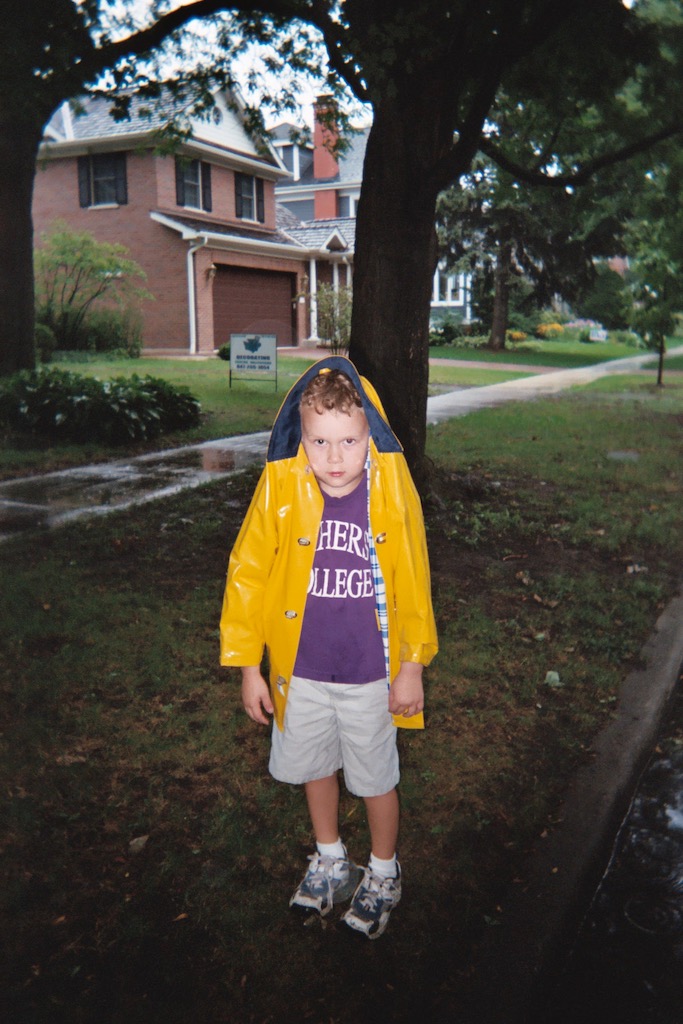
the sodden state of summer’s back-to-school days . . .

it’s been getting heavier and heavier all week. my heart, that is. the boy i love—or one of ‘em anyway—is heading off again. one last time. to school, that is. we’ll be playing follow-the-leader, interstate-style, this weekend, when he pushes off with a trunk filled to the gills, and i follow not far behind with a wagon equally jammed. i’m enlisted only for my skill at hospital corners (a nurse’s way of tucking in bedsheets), and my knack for stuffing things in the teeny spaces that qualify as dorm-room closets. 

all week, amid a blur of other complications, i’ve felt my heart grow heavy with tears not yet spilled. the country roads the whole way home––just me and some fine book on tape––will make for a bucolic sponge for salt-water spillage. 

that boy is the best of company, that boy of the very big heart and the disposition best described as super chill, and ever animated. the boy fills this old house, and every heart in it.

so, once he’s left behind, back here at the homestead it’ll feel hollow once again till we get used to the long pauses of silence, till we get used to a room where the door isn’t sealed shut to hide the disarray inside. 

a wise someone once told me that if i thought high school blurred by in a blink, i’d find college blurred in half a blink. and so it is. eight years after dropping off his big brother one last time, it’s time for the caboose to part as well. this is it: the end of tuition checks and dorm vernacular, the end of considering time in back-to-school and semester allotments.

there’s perhaps a better chance that this one will find his way back home, to call sweet chicago the place where he belongs. but till then, nine months will trickle by. 

it’s the leave-taking that always bumps me up. the saying goodbye is not my strong suit. my trouble in that department dates back to when i was five and my papa got a big new job in a city far away, and every sunday night for the rest of a school year, he slid behind the wheel of his turquoise ford falcon and headed down the drive while i sat slumped on the concrete stoop there in the garage. i remember crying till my cheeks hurt. and going to bed with tummy aches. till he came home on friday nights.

nowadays i cry while spritzing the bathroom mirror, and when luring dust bunnies out from under the college kid’s bed, once he’s emptied it, once he’s faded into the faraway. then i try to find my way again, to find the joy in silence, in the slower pace with which the fridge and pantry empty, in the fewer loads of laundry. in that bathroom mirror that never splatters.

it’s come and go, all life long. and we’re wise to make the most of those blessed hyphens in between.

in the weeks ahead, i’ll be busy plotting my new cloister garden as a six-foot wall is being erected (straight through a chunk of what had been my garden, and hard up against our once-breezy screened-in summer porch) even as i type. i’m thinking of it as my monastery wall––the cedar barricade shutting out all the troubles of the world. but the thing i’ll miss most is the slant of sunlight at the twilight hour, as the great orb sinks low and the shafts of light get long and longer. it’s a golden glow that makes my summer porch seem gilded with celestial stardust. 

and because the last round of page proofs got delayed till next week, i’ll fill my quiet hours with the intense concentration those pages demand. and then it’s off to the printer as i await the day the box of books lands plop on my doorstoop. 


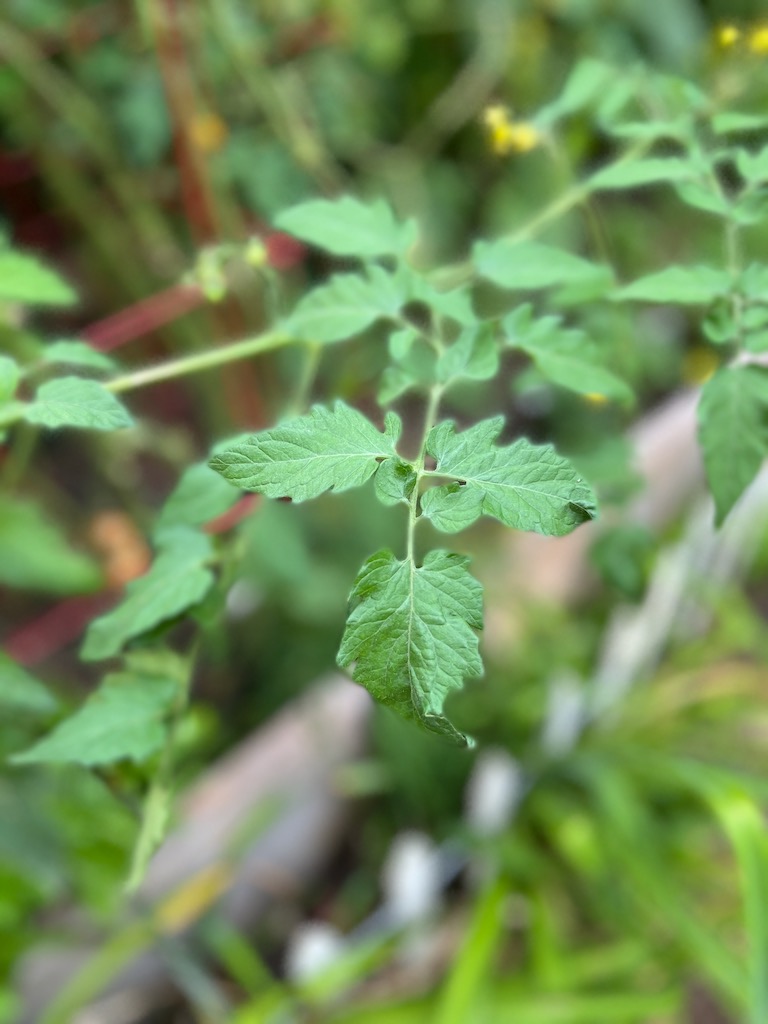
cook’s corner: here’s a truly nifty thing i bumped into this week (if meat lovers thrill to find a way to use every bit of the beast, from tongue to tail, then we who love the produce patch thrill just as mightily to find there’s more to the vine than just the fruits!). as one with a plethora of tangled vines, and one who sniffs deeply of my finger tips after plucking my daily tomato harvest, this enlightenment brings double the delight from those vines. and it’s all about the leaves…

How to Cook with Tomato Leaves

Tomato leaves contain 2-isobutlythiazole, a compound responsible for the plant’s distinctive aroma. Commercial tomato products, like ketchup, often include an isolated form of that compound to boost fresh tomato flavor.

If you have a garden full of tomatoes, though, you’ve got a great source of 2-isobutlythiazole right in your backyard. Here’s how to use tomato leaves to boost your sauce’s flavor.

1. When you harvest your tomatoes, pluck a handful of leaves from the plant.

2. Toss the leaves into the sauce and steep them for 10 minutes.

3. Remove and discard the leaves. 

Taste your sauce, and you’ll find that the tomato flavor has been both heightened and made more complex and earthy.


commonplacing:

from poet and pacifist William Stafford, found in his son Kim Stafford’s intimate portrait, Early Morning: Remembering My Father:
every day Stafford would write a page in his journal, his response to what he called “the emergency of being alive.” 

we are all of us deep in the emergency of our being alive…


a little bit of Buechner, in memory of the blessed man who died at 96 on monday. 

Frederick Buechner

a few years back, in 2016 to be precise, i counted a new collection of writings from theologian frederick buechner, with introduction by anne lamott, as one of the best books for the soul that year. his death this week made me pull that review from the shelf, and perhaps it’ll prompt you to pull a bit of buechner from your own bookshelf or that of your nearest library. 

Buechner 101: Essays and Sermons by Frederick Buechner

By Carl Frederick Buechner, Introduction by Anne Lamott, Frederick Buechner Center, 170 pages, $15.99

Maybe once a generation, once every few generations, someone is born with gifts literary and sacred, in equal brilliant measure. A translator, perhaps, of the highest calling. One who can at once lift our souls and our sights, by virtue of the rare alchemy of the poetic plus the profound. Therein lies the prophet. Therein lies Frederick Buechner, at 90, one of the greatest living American theologians and writers.

In these collected works, Buechner 101: Essays and Sermons by Frederick Buechner — a table of contents that includes excerpts from his Harvard Divinity School lectures, The Alphabet of Grace; a searing essay on his daughter’s anorexia; a seminary commencement address on the hard truths of pastoring a flock of believers, doubters and everyday sinners — we are introduced to, or immersed in, the depth and breadth of this rare thinker’s literary and soulful gifts. 

Anne Lamott, in her introduction, admits to being blown away by Buechner’s capacity “to be both plain and majestic” at once. She ranks him side-by-side C.S. Lewis, then declares, “No one has brought me closer to God than these two men.”

That alone might make you rush to pore over these pages. What I know is that this world sorely needs a prophet who reminds us to not give up our search for holiness amid the noise and hate and madness all around. Buechner, though, says it in words that work as poetry, shimmying through the cracks, burrowing deep within us, reverberating long after the page is turned. He writes: “We must learn to listen to the cock-crows and hammering and tick-tock of our lives for the holy and elusive word that is spoken to us out of their depths. It is the function of all great preaching, I think, and all great art, to sharpen our hearing precisely to that end.”

And it is that very sharpening that we find, paragraph upon paragraph, page after page, in Buechner 101


poet’s corner:

two poems worth pressing against your heart…

Field Guide

Once, in the cool blue middle of a lake,
up to my neck in that most precious element of all,

I found a pale-gray, curled-upwards pigeon feather
floating on the tension of the water

at the very instant when a dragonfly,
like a blue-green iridescent bobby pin,

hovered over it, then lit, and rested.
That’s all.

I mention this in the same way
that I fold the corner of a page

in certain library books,
so that the next reader will know

where to look for the good parts.

––Tony Hoagland

Moon

The moon is full tonight
an illustration for sheet music,
an image in Matthew Arnold
glimmering on the English Channel,
or a ghost over a smoldering battlefield
in one of the history plays.

 It’s as full as it was
in that poem by Coleridge
where he carries his year-old son
into the orchard behind the cottage
and turns the baby’s face to the sky
to see for the first time
the earth’s bright companion,
something amazing to make his crying seem small.

 And if you wanted to follow this example,
tonight would be the night
to carry some tiny creature outside
and introduce him to the moon.

And if your house has no child,
you can always gather into your arms
the sleeping infant of yourself,
as I have done tonight,
and carry him outdoors,
all limp in his tattered blanket,
making sure to steady his lolling head
with the palm of your hand.

And while the wind ruffles the pear trees
in the corner of the orchard
and dark roses wave against a stone wall,
you can turn him on your shoulder
and walk in circles on the lawn
drunk with the light.
You can lift him up into the sky,
your eyes nearly as wide as his,
as the moon climbs high into the night.

––Billy Collins


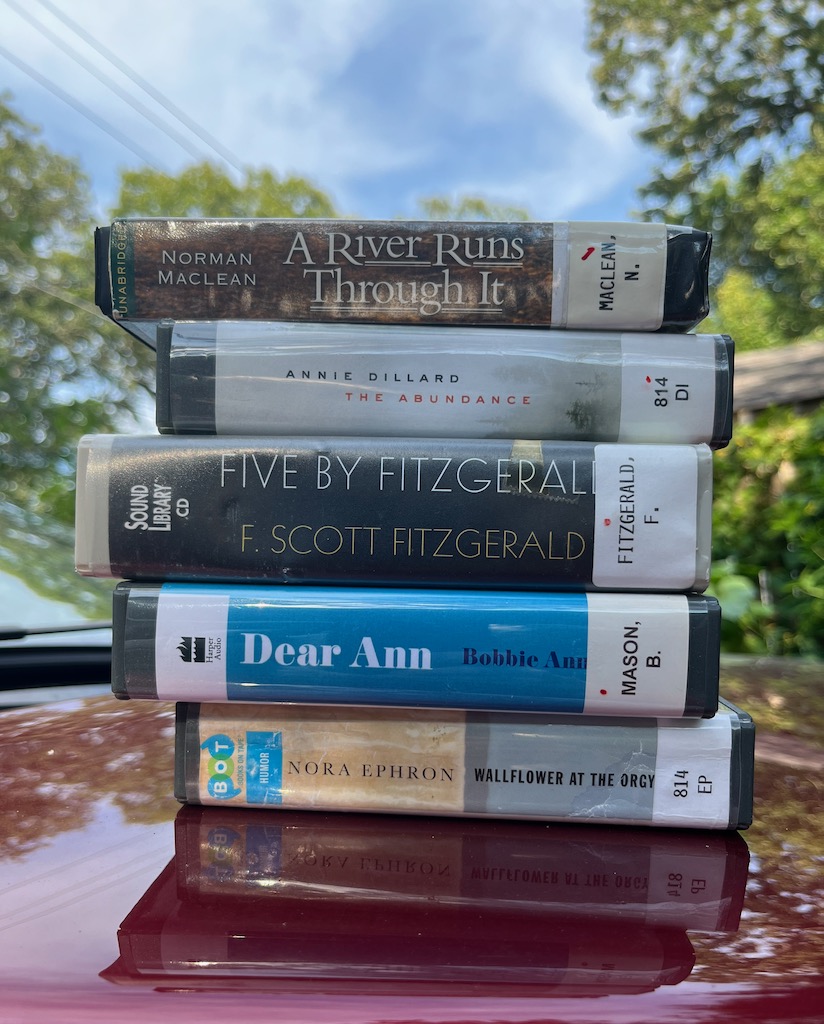
listening nook: because i’ll be coursing through the countryside in my red wagon this weekend, i’m bringing my reading nook on little discs. here’s the stack assembled from the library shelves:

A River Runs Through It, Norman Maclean: i once was graced to work alongside Norman’s son John, a fine fine bespectacled gent with a much quieter, more studious demeanor than many of the newsroom characters. his father’s masterwork  stands as one of the great “evocations of nature’s miracles…and a probing of human mysteries.”

The Abundance, Annie Dillard: a landmark collection from the writer i consider my north star.

Five by Fitzgerald, F. Scott Fitzgerald: i’m ever trying to expand and deepen my knowledge of the American canon and F. Scott deserves more of my attention. 

Dear Ann, Bobbie Ann Mason: mason, like me, is a kentucky native, so i feel it my native obligation to inhale her prose and her poetic ways of unspooling a story. i read my first bobbie ann mason so long ago, and it’s been ages since, so where better to reacquaint ourselves than the rolling countryside of the heartland we both call home?

Wallflower at the Orgy, Nora Ephron: ephron makes me laugh so hard i’d best keep an eye out for rest stops along the way. en route to one parents’ weekend, we listened to Heart Burn, her tale of woe from her years married to and divorcing from none other than journalistic legend Carl Bernstein. we loved listening so much we were sort of bummed we had to stop the car in ohio, where our kid was a freshman in college, and couldn’t roll along till, say, the atlantic seaboard, where we could have gotten a few more hours of ephron under our belts….


a bit more buechner, because there’s never enough:

“What we hunger for perhaps more than anything else 
is to be known in our full humanness, and yet that 
is often just what we also fear more than anything else. 
It is important to tell at least from time to time the secret of who we truly and fully are . . . because otherwise we run the risk of losing track of who we truly and fully are and little by little come to accept instead the highly edited version which we put forth in hope that the world will find it more acceptable than the real thing. It is important to tell our secrets too because it makes it easier . . . for other people to tell us a secret or two of their own . ”

Frederick Buechner

and with that, this week’s edition of the chair gazette is a wrap. question of the week: how will suck the succulence out of summer’s august sweetness?

college kid this week, on the brink of one last back-to-school.

summer’s dalliances and a hodgepodge of other curiosities

some thoughts on summer attention: 

carrying a tray of napkins, forks, and knives out to the summer porch the other night, i noticed a silence. a new silence. the cicada, my favorite understory of sound signaling summer starting to close, had gone quiet. instead there were crickets, only crickets, relatively placid compared to the frenetic energies of the cicada, who are mortally pressed for time with only 24 hours to wake, procreate, and succumb. 

summer’s waning, i thought. and, darn, i missed the last chirr. 

(turns out the day it was quiet was a day less than 80 degrees, and the next day when it warmed up, they were back again. makes the pair of amateur entomologists who dwell in this old house think that maybe the ‘cadas had snuggled under their blankets, put their fiddles and strings in a case, awaiting a day with a little more burn in the air.)

straight off, it made me think of a glorious essay i’d read some months ago about paying exquisite attention, paying such exquisite and fine-grained attention that one is attuned to even the moment the cicadas cease their clattering, silence their love song. i’ve searched and searched all week for that misplaced essay, and can’t find it anywhere (maybe i too should call in the FBI for a search of my basement storage room). 

but even without the essay in hand, it still made me pause to think hard about those barely perceptible miracles that constitute the whole of each day. and made me construct my own litany of things worthy of my attentions: 

the moment in spring when the grass sheds its winter brown and slips on its verdant green.

the moment the nestling takes flight.

the moment the monarch emerges from his cocoon.

the moment the wedge of moon fades away in the dawn.

what if we were to notice? what if instead of numbly whirring through time we slowed to adagio and drank in even a half (or a teaspoon) of the everyday dose of miracles and wonders? what if even once a day we counted one thing we’d otherwise not see, not hear, not sense? what if we awoke to the mystery that’s animating every minute of every hour, day after day, year upon year? 

isn’t to see, isn’t attention, the first step to devotion? wouldn’t our life be infinite unfurling prayer if, as often as we breathe, we were awake to blessing?

have you noticed the day when the tomato turns just the right red for plucking?

have you heard the first or last note of the cardinal at the dawn or at nightfall? the moment when silence gives way to sound, or sound to silence?

have you noticed the firefly turn off its blink for the night? 

have you noticed the someone who’s hoping you’ll sit down and listen to one of his or her stories? 

the summer is fleeting, it’s begging we notice….


wee bouquet

summer dalliance: i’ve a thing for little bouquets; always have (ever since my mama taught me to pick lily of the valley or daffodils for the teacher, wrap them in wet paper towel and then a sheaf of aluminum foil wrapped tight into a baton). i love to pluck blooms from wherever i traipse in the garden or alley, and tuck them loosely into jars or pitchers or wee tiny vases. i find the gatherings of color and form, petal and leaf, tickle my fancy. so i pluck and i tuck with abandon. and then i scatter my abandonments all over the house. 


book news: hardest task of the summer for me, far harder than scanning pages for blips and bloops, was sending off queries to authors whose work makes me tremble it’s so dang good. i was instructed to ask these legends to read my book, and send back a few words of kindness, a thing in the book world called “blurbs.” it was an instruction that trembled me. but the task, now completed and turned in to my editor, might have taught me a thing or two about being brave. and the kindness of pure strangers. i can’t pull back the covers on what they wrote (not yet anyway), but i can tell you to whom i will forever be grateful; most especially to: Pádraig Ó Tuama (the poet, peacemaker, and host of Poetry Unbound from OnBeing Studios), Scott Weidensaul (ornithologist and best-selling author of Living on the Wind and, more recently, A World on the Wing), Bill McKibben (environmental activist and legendary author), Rabbi Rami Shapiro (poet and podcast host who wrote skeins of prayer in our synagogue’s prayer book), and Mallory McDuff (another environmental activist and author of Love Your Mother: 50 States, 50 Stories, and 50 Women United for Climate Justice). equally kind, though they wrote back to say their plates were too jammed, include terry tempest williams (brilliant essayist and conservationist), susannah heschel (scholar and daughter of the late great rabbi Abraham Joshua Heschel) and margaret renkl (a New York Times columnist who often writes about things i’ve been thinking), belden lane (theology professor emeritus and esteemed author), and fred bahnson (brilliant essayist). a few, who shall remain unnamed, never wrote back. oh well. the kindness of those who did is what will glow into the evermore…..


reading nook:

technically, i’m between rounds of page proofs which gives me time to indulge in my rabbit-hole school of reading, which this week has lured me into the writings and poetries of molly mcCully brown, a brilliant essayist and poet born with cerebral palsy who writes unforgettably about her intractable and ever-changing body, and who makes us think hard of the miracle of mobility, something we might take for granted unless we too were faced with a flight of stairs or an ancient cobblestone lane that kept us from the places we so longed to enter. somehow i’d never before known of sigurd olson, called “one of the great environmentalists of the twentieth century,” who wrote of the boundary waters, the northwoods, and the surrounds of lake superior. he won the john burroughs medal (the most esteemed prize in the world of nature writing) and made me think i just need to read my way through the lifetime list of winners. i’m beginning with The Singing Wilderness, described as the most poetic of his nine published books. on its back cover, it’s described as “an essential antidote to the trials of modern life.”


what’s cooking:

i find myself dizzy with summery sides from the vegetable patch this summer: corn, tomatoes, cukes, purple onions, frondy fennel (the crunch with a tassle), basil, basil, more basil. doused with vinegars, olivey oil, lemons, limes, oranges, and now a curious new douser: chili crisp, a sauce that’s sweeping the country, straight from the kitchen of Tao Hubi, owner of a popular Guizhou province noodle shop in China, who began selling her famed homemade chili sauce under the name Lao Gan Ma (found at whole foods, and, yes, on amazon). apparently the summer’s salady hit is nothing more complicated than tomatoes tossed with a splash of rice vinegar, a glug of olive oil, a pinch of flaky salt, and a generous spoonful of the magic sauce. it’s the gist of height-of-august deliciousness. and it’s called chili crisp tomato salad.

here’s an amazing twist on plain old green beans…

Side of Beans (Green):

from The Cordony Kitchen (Amanda Cordony is an Australian food stylist and recipe inventor, and she’s amazing!)Cook time: 4 mins | Prep time: 5 mins | Serves: 3 (as a side)

Ingredients
2/3 cup green beans – top and tailed
3 Tbsp + 1 tsp. olive oil
2 garlic cloves – minced
1 orange – zest and juice
1/4 cup of raw almonds – roughly chopped
 pinch of chili flakes

Garnish:
Mint leaves, olive oil

Method.
1.
Get a frying pan on medium to high heat with olive oil. Place your beans, garlic, orange zest, orange juice and sea salt. Stir for 2 minutes.
2. Take off the heat and sprinkle in the almonds and chili flakes.
3. Serve and add mint leaves, olive oil, salt, and pepper.


so those are the curiosities of the week, as i get back to proofing later this morning. thanks for indulging my gazetteian tendencies these past few friday mornings. i believe only one more week and then i send off the proofs to the printing presses, where they will whir off the presses and onto real pages….

what are the curiosities and wonders that strike you at august’s peak? and what will you notice that you’d otherwise miss?

p.s. happy height-of-august birthday to our very own hardshell aficionado and keeper of wisdoms, karen the wonder woman, whose birthday is any day now, though i don’t know which….

when summer starts to run away…

the tangle that is my plot of runaway vines

in which we continue in gazette-ian style, with bitlets and chunks from the week that’s just whirled by…..(as i roll toward end-of-summer editing deadline, the gazette affords the chance to gather up bits in between long hours of proofing pages and rethinking the occasional passage. the other big job of the summer is sending off queries to authors whose works are the high bars i reach for, including unproofed copies of the manuscript, humbly asking if they’d be willing to, ahem, read the whole darn thing and send along a few words, aka “blurb” the book. it’s a task that makes me tremble, but a dear friend reminded me to channel eleanor roosevelt, she who implored that we do something each day that scares us. and so i’ve been eleanoring. results: forthwith. but for now, a few bits from the week…)


trying to be tomatoes

if one’s farmer plot is in any way a mirror of one’s soul, i’m in trouble. my tomatoes are tangled with my cukes, all of which have invaded the raspberries. the thyme has up and died. and the dill is dangling on what’s left of a skeletal spine. you know it’s bad when a friendly neighbor who regularly ambles down the alley inquires if she might apply her know-how to your tangled mess. that’s how it is here in suburbia: even your back plot is subject to scrutiny. you can’t hide your agrarian mishaps under a cloak of anonymity, and you sure can’t pretend the plot is not yours. all of which has prompted me to clean things up out there, save what i can, and assuage my ignominy. i suppose i could chalk it up to occupational hazard, one that comes from stuffing your nose in a book––especially a book of your very own making––rather than digging into nightly rounds with clipper and twine. 

it might just be that we’ve slammed smackdab into the dervish days of summer, when the heat is on high and the humidity’s higher. maybe the thrill of new growth has expired, and i let too much slide. or maybe the vines had a mind of their own, stayed up late in the night scheming how to outrun me. 

the worst problem is that for all their tangled overabundance they’ve overlooked their original job: they’re flunking the fattening drills, wherein those delicious tomatoey energies plump up the wee little orbs that, according to instructions, are supposed to turn from green to amber to red. and plumpen all the while. instead, i have clusters of nouvelle orbs, orbs the size of a miniature overpriced grape, when what’s intended is a candyland red (a proliferous cherry tomato) to pizazz your whole mouth. or a cherokee carbon (an heirloom slicing tomato) a good knife might sink into. 

i suppose the lesson my old plot is teaching this month is one that comes with double dose of humility. daren’t think that any old soul can muscle a trowel into earth, and make fruitful abundance appear. seems i should have gotten to work earlier on, nipping and pruning my runaway vines. perhaps it was a latent stinginess that kept me from cutting; not realizing the ancient truth that less almost always leads to more….

no matter the original sin; looks like i’ll mostly be bulking up on tomatoes the time-tested way: standing in line at the real-farmer’s market. where those who tend this blessed earth know bible and verse how to get vines to behave. 

in the meantime, my scant bits of herbs are being put to work morning, noon, and night in a panoply of summery sides. see below for the latest iteration of cooking with mint. 


when commonplacing is a way of being…

it’s a habit i can’t seem to curtail: an insatiable appetite for spotting and plucking fine little bits––poetries, wisdoms, epiphanies. as if a schoolgirl equipped with bottle of glue––might you remember those glorious clear glass bottles of amber-hued glue, with the pig snout of a pink-rubber slit-top through which the amber glue oozed?––i snip and i paste into my virtual scrap book, endlessly turning and filling the pages.

here are just a few of the snippets i’ve gathered this week: 

from Karen Armstrong’s, The Case for God:
Socrates: “The unexamined life is not worth living.” (as he explained to the court that condemned him to death) Plato’s Apology (i like knowing that no less than the old philosopher ordered us to pay close attention.)

“Socrates once said that, like his mother, he was a midwife whose task was to help the interlocutor engender a new self.” Plato, Theaetetus

Buddha to curious Brahmin priest (at end of Karen Armstrong’s The Case for God): “Remember me as the one who is awake.”
––
Thoreau’s journal, August 6, 1853
“Do not the flowers of August and September generally resemble suns and stars?—sunflowers and asters and the single flowers of the golden­ rod.”


this week’s reading:

finished karen armstrong’s The Case for God; started The History of God, but switched to Joseph Campbell when my brother told me he was reading Goddesses: Mysteries of the Feminine Divine (on order from my friendly librarians). whilst i wait, i’m diving into campbell’s Thou Art That: Transforming the Religious Metaphor. i find it an especially lovely thing to read in tandem with someone you love. and reading alongside my brother david is an act of pure love. he has one of the deepest classical bookshelves i’ve ever known, a harvest from his years working with a rare book collector. a beloved cousin sent a magnificent copy of james farrell’s Studs Lonigan, and it’s about time i commit a few of those lines to memory. recounting the tales of a south side irish punk, it’s a book whose every sentence i can hear oozing through the faint brogue of this beloved and quixotic cousin. and for dessert, i’m indulging in all the john burroughs i can get my hands on; Signs & Seasons, and The Gospel of Nature, is where this latest trail of burroughs begins….


Smoky Eggplant Salad With Yogurt and Mint
By David Tanis, NYT
YIELD 6 to 8 servings

sumptuous is the word that comes to mind for this. i was intrigued by the smokiness, and the joy of spinning an orb of eggplant atop the flame. i made it for Shabbat a few weeks ago, on a night when i was grilling salmon (we have fish for almost every Shabbat, a testament to our Jewish Catholicism, or would it be our Catholic Judaism?) and i swore i almost levitated off my chair. i happened to have a years old bottle of pomegranate molasses in the fridge, and thank heaven the label specifically assured “will keep almost indefinitely in the fridge.” i took my molasses at its word. could not be easier. nor more delicious. 

INGREDIENTS
2 pounds medium-size eggplants
1 teaspoon kosher salt
3 garlic cloves, minced
2 tablespoons lemon juice
3 tablespoons extra-virgin olive oil, plus more for garnish
1⁄2 cup plain yogurt (i used nonfat, cuz that’s how i am and that’s what i had)
1 teaspoon crumbled dried mint (i used fresh)
1 tablespoon pomegranate molasses, optional
1 tablespoon roughly chopped mint, for garnish
1 tablespoon roughly chopped parsley, for garnish
Red pepper flakes, for garnish 

PREPARATION
Step 1
Put the whole eggplants on a barbecue grate over hot coals. Turning frequently, cook until the skin is completely blackened and charred and eggplants begin to soften and collapse, about 10 minutes. Alternatively cook them directly on a stovetop burner or under the broiler. Set aside to cool. 

Step 2
Cut eggplants in quarters top to bottom and carefully separate the flesh from the skin with a spoon or paring knife. Discard the charred skin. Chop flesh roughly with a large knife or in a food processor and put it in a fine-meshed sieve to drain excess liquid. 

Step 3
Transfer eggplants to a mixing bowl. Add salt, garlic, lemon juice, olive oil, yogurt and dried mint. Mix well, then set aside to rest for a few minutes. Check seasoning and adjust. 

Step 4
Put mixture in a low serving bowl. Drizzle with pomegranate molasses, if using, and 1 tablespoon olive oil. Sprinkle with chopped mint and parsley and a pinch of red pepper flakes. 

and that, dear friends, is the jumble of the week. is summer running away from you? how are you trying to catch it??

at our house, summer’s runaway is punctuated by the rat-a-tat-tat of early-august birthdays all strung in a row: my long-gone dad; my beloved brother; sweet blair; and teddy who turns 21 on monday. how in heaven’s name did that happen, the joy of my heart, the answer to my wildest prayers, for all of these heavenly years??? happy birthday, all you beautiful souls. xoxoxox

summer’s fever pitch

i feel it, as if a whoosh about to come, when suddenly i’ll be sitting wrapped in a sweater looking out at the glistening autumnal goldenness, asking myself “where did the summer go?”

maybe we all feel it. maybe that’s why there’s a fever pitch in the air. squeezing in those few things you would not let pass by in these summery months: the sitting outdoors with a breeze in your hair, as you order your food and let someone else do the cooking; the staying up late, under the stars, talking the night away with the college kid who, once he’s gone, might go weeks without finding time for a phone call; throwing a towel on the sand, baring your arms and your legs, sensing the splash and the roar of the waves just inches away, and hours later, perhaps when sliding into your jammies, unplucking the last stubborn grains of sand from in between your toes. because summer is all of those things. 

summer is for savoring because summer, like any season when we’re keeping close watch, is fleeting. evanescent, a fancy name for flashing by. 

we all have our own definitions for the season of indolence, the season when sloth is not only allowed but welcomed. what makes it special in my book are the moments i dare to break rules, do what otherwise might count as overindulgence (oh, my catholic childhood––just post-baltimore catechism––does continue to hold me in its clutches). 

i remember as vividly as anything the summer’s night when my mom and i sat in the dark of the kitchen, our backs pressed against the fridge, with an aluminum pan of chilled fudge (the kind you made from a box) and two spoons and we giggled like schoolgirls trying out truancy. 

sometimes what makes summer summer is simply its sense of abandon, the que-sera season, i’ve called it.

i remember chasing through the yard with a glass jar and a lid poked by a nail, in quixotic pursuit of the flickering lights of the firefly. (speaking of fireflies, how’s this glorious expression thereof: “To behold the skywriters tracing poesy in summer’s vapors, to decipher their sticky sweet nothings, their blinking reminders that we are meant to shine in our short time.”) i remember running barefoot, something i’ve not done in a long, long swath of years.

nowadays––now that trays of fudge are no longer, and chasing through grass in the dark would count as orthopedic risk––summer is finally getting to sink into a book once the work of the week is turned in. summer is piling high whatever i find in the fridge, and calling it “salad for dinner.” summer is waking as soon as the birds start to sing, so i can sneak into the day ahead of the blistering heat. 

mostly nowadays, summer is holding on tight to the hours i’ve got before the boy i so love packs up and goes. back to college, one last time…

how do you define summer? and what are the summery moments you’ll never forget?


summer reading:

these are the books i’m diving into once i turn in my latest round of pages scoured and scrubbed of all typos and bloops. my stack inspires me….

The Living Mountain, by Nan Shepherd, introduced by Robert Macfarlane, afterword by Jeanette Winterson: a masterpiece of nature writing, first published in 1977, describing Shepherd’s journeys into the Cairngorm mountains of her native Scotland.

The Beginning and the End, and Other Poems, by Robinson Jeffers
The Selected Poetries of Robinson Jeffers, edited by Tim Hunt: The bard of the California coastline, a giant of modern letters who somehow has gotten a bit overshadowed, but whose capturings of words crash against me like the Pacific surf.

Early Mornings, by Kim Stafford: A biography of the great poet William Stafford,  a pacifist who called himself “one of the quiet of the land,” written by his son, a poetic force all his own.

The Odyssey, by Homer: Because it’s about time.

The Chicago Manual of Style, 17th Edition: Because it’s every page-proofer’s best friend. Or it should be.

i also just started karen armstrong’s The Case for God, and oh dear gracious, it’s blowing my mind. i’ve borrowed it from the digital library, but i already think i might need to grab a page-turning copy cuz just a few chapters in, this is already a book screaming for marginalia…

a snippet of summer poetry:

‘Can we learn wisdom watching insects now,
or just the art of quiet observation?’
from ‘Summer of the Ladybirds’ by Vivian Smith


summer cooking, er, non-cooking: 

i’m trying this for tonight, perfect in a week when there’s not much cooking time in between hours and hours of page proofing

Corn Salad With Tomatoes, Basil and Cilantro
By Genevieve Ko

INGREDIENTS
5 ears of corn
1 pint cherry or grape tomatoes, halved
1 lime
3 tablespoons extra-virgin olive oil Salt
1⁄4 teaspoon minced seeded fresh habanero or other very hot chile (optional)
(*i’m adding a pinch of ground ancho chile peppers; maybe more than a pinch)
1⁄2 cup fresh basil leaves
1⁄4 cup fresh cilantro leaves 

PREPARATION
Step 1
Microwave the corn in their husks on high for 3 minutes. Shuck the corn — the silks will come off easily. (If you want to boil or steam the corn on the stovetop, you can shuck the corn first then cook just until brighter in color, 2 to 3 minutes.) Cut the kernels off the cobs, transfer them to a large bowl and add the tomatoes. 

Step 2
Finely grate the zest of the lime directly over the corn mixture, then squeeze the juice from the lime all over. Add the oil, a generous pinch of salt and the chile, if using. Mix well, then tear the herbs over the salad and gently fold them in. Season to taste with salt and serve, or refrigerate in an airtight container for up to 1 day. 


until i wrap up this little old book in the works (final deadline, end of august), i’m continuing on in the spirit of the gazette, that old-fashioned compendium of things worth tucking under your belt for the day (not that any of my scribblings above so qualify).

and while we’re at it, and in case you’ve ever wondered where in the world the word comes from: gazette is “a loanword from the French language, which is, in turn, a 16th-century permutation of the Italian gazzetta, which is the name of a particular Venetian coin. Gazzetta became an epithet for newspaper during the early and middle 16th century, when the first Venetian newspapers cost one gazzetta.”

and, with that, may yours be a summery week. however you define it.

summer gazette

summer sunset in central illinois

my newspaper career was spotty. it was launched in a basement on a dead-end street that wound through leafy lots in old suburbia. i was editor, layout wizard, and scribe. i was 9. it was the brierhill news (named for our winding lane), in which i collected esoterica and bits of timeliness from up and down the half-mile from our house at the first bend to the stockade fence at the end of the lane. i rested my career till high school, junior year, when i signed up for the underground newspaper. (yes, it was the ’70s and all things underground were cool. even for “north shore creampuffs,” as our favorite english teacher called the mob of us.) i wrote under a pen name for that paper, cuz my dad didn’t like seeing his family name attached to revolutionary ideas and high school cynicism. (i wasn’t the cynic but i assure you cynics were abundant on the masthead.) i never gave journalism another thought, not through all of nursing school and not beyond, not till two weeks after my papa’s funeral when someone wise asked if i’d ever thought of journalism, so i went home and signed up for a master’s degree in writing pithy ledes (first paragraphs) and digging for the truth. i stuck around a newsroom for just shy of 30 years.

and i’m resurrecting my newspaper-making ways today, so i can bring a summery hodgepodge––a gazette––to the ol’ maple table, while i dive into another round of page proofs, that book-making task where every drip and drop of ink on the page is scrutinized, scoured for mistakes, typos, anything that doesn’t belong on the page. it’s all-absorbing work, so i stockpiled a few bits for you to savor while i toil away. i bring you here what amounts to a shrunken features section of old-fashioned news: a bit of commentary, a recipe, and a feature i’d call the poet’s corner if i was naming things (which it turns out, i am).

on summer’s quiet

i don’t usually think of summer as a quiet season, but i suppose that just means i’ve not thought deeply enough, because in fact summer is the season of a slowness that ushers in pockets of the quietest quiet…

… of hammocks strung between trees….

…of watching a popsicle puddle…

…of sweltering heat pushing us into repose…

boy i love in wicker chair, long ago

…of sheltering in the nearest roomiest chair woven of wicker,** that grass that eases to the curves of the bum, a shelter best appointed with feets propped, and a pitcher of minty water always in each…

…of staying out late under the stars, catching the breeze that finally comes…

summer is falling asleep with the windows wide open, feeling the rustle of breeze cross your pillow, sinking deep into the night sounds that creep in and over the sills…

summer is turning pages, slowly, slowly. until your eyelids heavy and droopy give way to the summer’s nap that enfolds as words blur and then vanish — poof! — lost beyond slumber and dreams…

quiet is idling over the grill. counting clouds. watching the cardinal fling through the trees, daring that red-winged wonder to please, please, please, come close enough to look in each others’ eyes…

quiet is early, early morning, the newborn breaths of the day. before the heat chimneys in through the windows. before sweat is the layer between you and your clothes. 

quiet is the soft whir of the fan. old-fashioned cool-making sound. a sound i prefer any old day to the sound of air-conditioner clunking. 

the quiet of summer is unlike the quiet of any other season. summer’s quiet is bare skin to the breeze, unencumbered by blankets. summer is porous, is screens; summer does not hide behind storm-window panes. 

summer’s quiet comes when we’re too hot to move. summer’s quiet is something akin to salvation: we slow to a pause to keep from wilting or wobbling there on the sun-baked sidewalk. summer’s quiet is retreat. is survival. 


**more on wicker (from our friends at wikipedia): Wicker is the oldest furniture making method known to history, dating as far back as 5,000 years ago. It was first documented in ancient Egypt using pliable plant material, but in modern times it is made from any pliable, easily woven material. The word wicker or “wisker” is believed to be of Scandinavian origin: vika, which means to bend in Swedish, and vikker meaning willow. Wicker is traditionally made of material of plant origin, such as willow, rattan, reed, and bamboo, but synthetic fibers are now also used. (ick on synthetics. [that’s the long-retired cynic raising her knack for snark.])


poet’s corner

summer quiet is this poem, this praise poem that perfectly captures the quiet rhythm in my heart in this deep heat of summer….

Eagle Poem
By Joy Harjo

To pray you open your whole self
To sky, to earth, to sun, to moon

To one whole voice that is you.
And know there is more
That you can’t see, can’t hear;
Can’t know except in moments
Steadily growing, and in languages
That aren’t always sound but other
Circles of motion.
Like eagle that Sunday morning
Over Salt River. Circled in blue sky
In wind, swept our hearts clean
With sacred wings.
We see you, see ourselves and know
That we must take the utmost care
And kindness in all things.
Breathe in, knowing we are made of
All this, and breathe, knowing
We are truly blessed because we
Were born, and die soon within a
True circle of motion,
Like eagle rounding out the morning
Inside us.
We pray that it will be done
In beauty.
In beauty.


“So, I’m a poetry person. And I’m a bit obsessive about it—I want to be learning everything I can about poetry and poets all the time, and I want to be thinking about poems all the time. Lately, the podcast series that has really been satisfying my need to overdo it with poetry has been the London Review of Books series Close Readings. Each episode features Seamus Perry and Mark Ford, himself a poet worth reading, talking intelligently and interestingly about the work of a significant twentieth-century English-language poet (the only exception being Hopkins, but his work wasn’t published until the twentieth century, so he fits). And each episode is very heaven. The most recent, “On Frank O’Hara and John Ashbery,” is full of information you want to know about those most significant members of the New York School. Because you’re a poetry person, too, I just know it.”
—Shane McCrae, Poetry Editor, Image Journal


cook’s corner

a polychromatic taste-bursting salad: how ‘bout no-cook (okay, grill the corn if so inspired) summer confetti corn salad, a perfect summery bounty if you’re in the mood for playing with colors….

David’s J&L Confetti Corn Salad:

*my brother David worked at a high-end catering company for a few years, J&L Catering, and when they made something he thought was extra special, he’d copy down ingredients but not measures. So measures are always to your taste. 

2-4 ears grilled corn
1 red pepper
1 orange or yellow pepper
1/2 to 1 whole purple onion
 2-4 loose whole carrots, peeled
garlic, to taste
Cilantro

Dressing, to taste:
Asian sweet chili paste
Olive oil
Juice of 2 to 3 limes (I also add zest of at least 1)
salt and pepper to taste

Dice peppers, onion, carrot, to small dice. 
Chop garlic and cilantro.
Cut kernels off grilled corn.
Add to mixing bowl.
Add dressing, stir, let sit at least 2-3 hours, or longer if possible.

confetti in a bowl

how are you filling your summer’s daze?

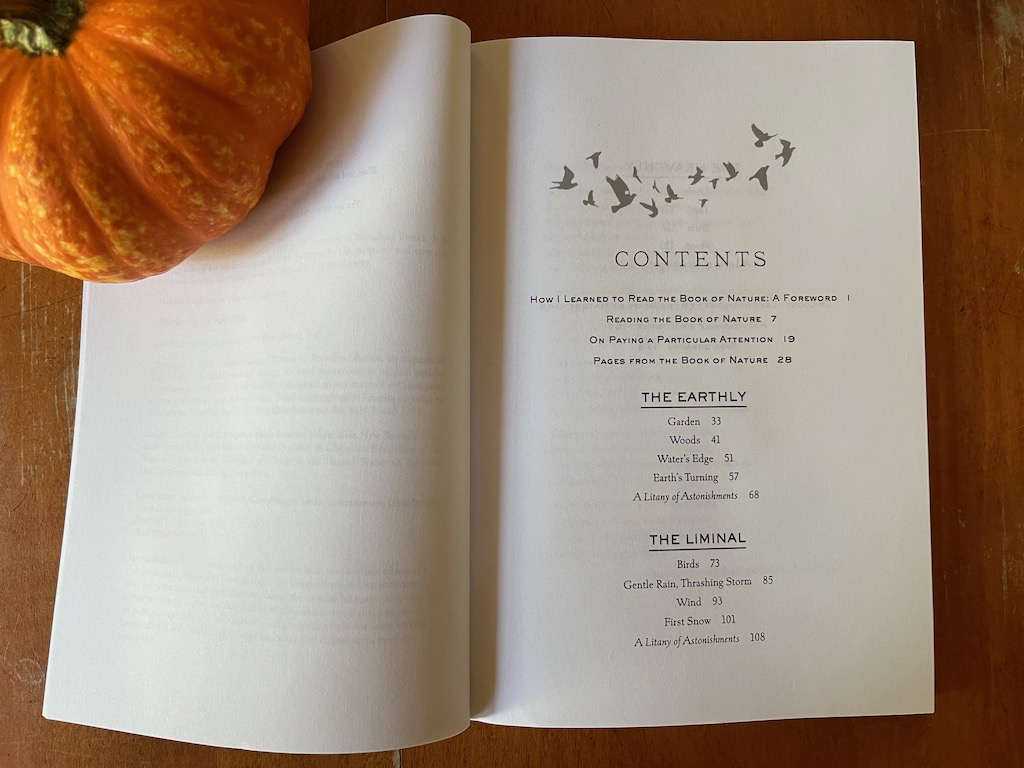
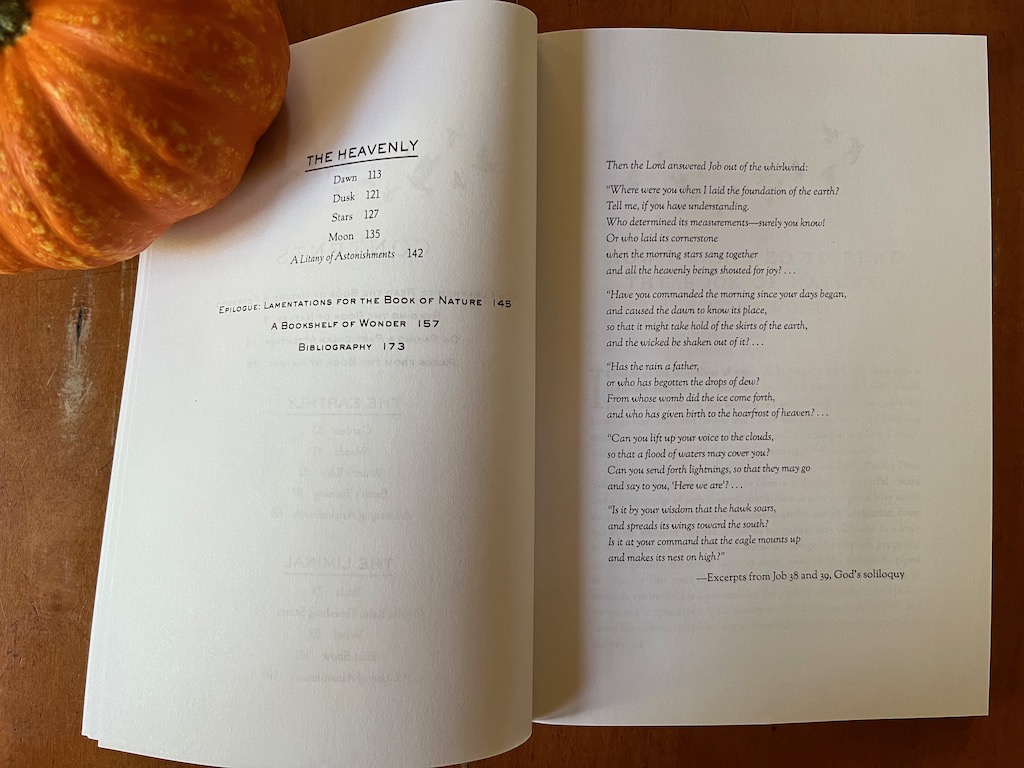
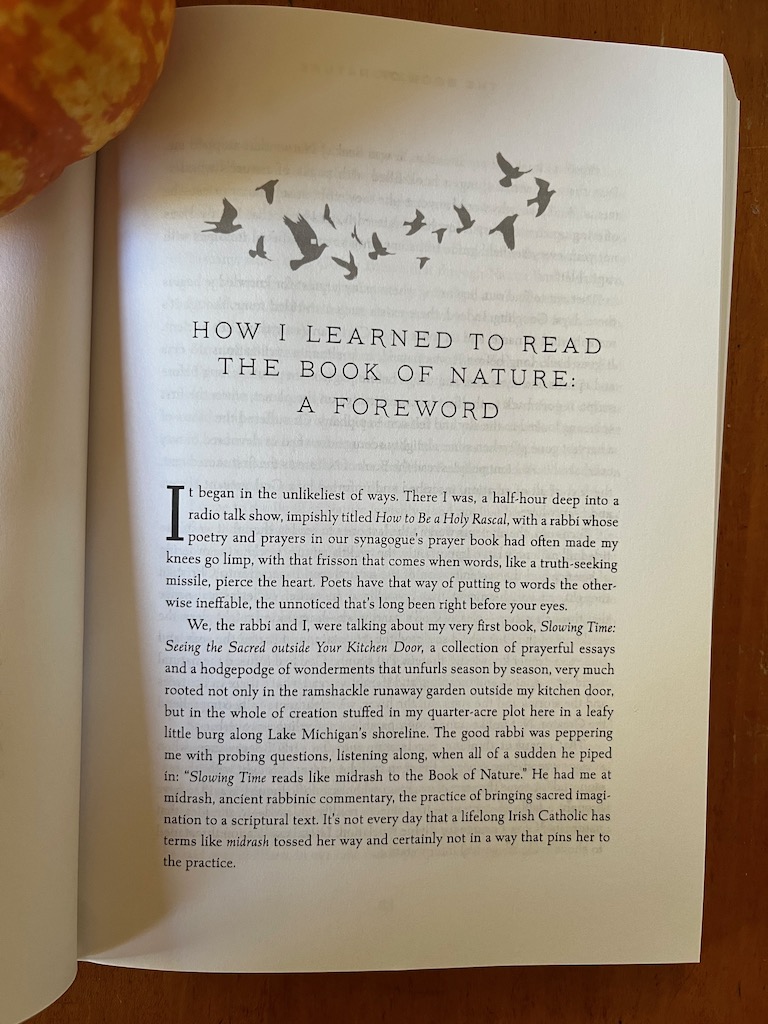
a peek at this little book i’ve been making for the last couple years…

there is a choreography to birthing a book, an unseen one, one that’s becoming familiar to me, a familiarity so far beyond the dreams i cast out my long-ago childhood window, into the leaves of the oaks that arbored and harbored me, onto the heavens far, far beyond. 

first, you feel an idea wriggling around deep in your soul, then it rises up to your brain, and the only way to scratch the itch is to begin to breathe possibility into it. what if? you percolate that inkling for a while, front burner to back to front again. and then you begin to read, to see if sinew comes to the bones. and, if you find that the deeper you read, the more curious you become, then you know you’re onto something worth chasing. 

i chased the idea that all of creation––the cadenza of birdsong, the golden slant of the setting sun, the comfort of even the chirring cicadas in the waning weeks of summer––held the pulse of the sacred. all of it was of the God i’ve long held close to my heart, the God daring to brush up against us, to draw us into the dance, to unfurl timeless truths in an alphabet of moonbeam and monarch, the veeing of geese or the hard crack of lightning scything the sky. 

i’d long known that when i step into the dawn or the woods, plant my bum on a log by the lakeshore or the rickety rock in my own back plot, i’m keen to a sense that an ineffable presence is there, right there, with something to teach, to offer, to whisper. but until i knew of this so-named Book of Nature, an ancient theology rooted in the notion that long before there were words, God spoke through the murmurings, the convulsions, and the unfurlings of the natural world, i hadn’t sensed it so perceptibly. hadn’t realized there were millennia of thinkers who’d been reading that book.

it’s imperative, and more urgent than ever, that as this great holy earth is pummeled and poisoned and burned, we realize that maybe what’s most at stake is a tie to the sacred. 

for the better part of eight or nine months, i read everything under the sun––poets and prophets, mystics and saints, believers and non-believers, all of whom had something to say on the subject of all creation, its wonders, its heartbreaks, and lately its cavernous losses. i combed my readings for notes upon notes. then, equipped with voluminous cross-referenced pages, i started to write. within a couple months, i’d written some 200 pages. and then i waited a very long time. 

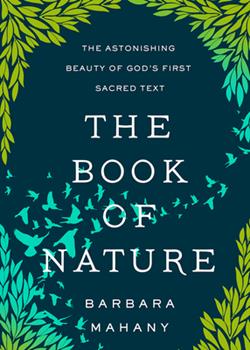
but now, those pages edited and copy edited, typeset and proofed, the cover designed and posted online in most of those places where booksellers peddle these days (it had been on amazon, and now–except for U.K. amazon––it seems gone! but now it’s back––like magic!), i’m at the part of the book-birthing dance where you pull back the cover on the book’s actual cover so the ones to whom you most emphatically write can be the first to officially peek. 

so, here’s the cover. (you are, i hope you know, all the ones to whom i most emphatically write, the ones who faithfully wander by and pull up a chair whene’er the spirit so moves you….)

the pages inside, 204 of them, will have to wait to be read till the next vernal equinox, the day the book is “official,” marked with its very own pub date––March 21, 2023––and whirling into the world. 

of all the books i’ve written, this is the one that counts as the most intensive. it started from scratch (unlike the others, all collections of essays), and came in layers and layers. 

i had a brilliant editor, lauren winner, an american historian, scholar of religion, professor at duke divinity school, episcopal priest, formerly an orthodox jew, an endlessly curious mind, a voracious reader, and a best-selling author on multiple spiritual subjects––Mudhouse Sabbath, her journey from orthodox judaism to anglican priest, Wearing God, the many metaphors for God found in the bible (these are but two of her many published words)––who now teaches the craft and art of spiritual writing at workshops, universities, and seminars from coast to coast. i can and will attest to her brilliance, to the way she evoked from me layers i hadn’t known were there, the way she lifted the prose off the page, insisted i weave in an airiness that might make a critical difference. 

there’s a whole team behind the making of the book, though only one of us gets our name on the cover. there’s a meticulous and exceedingly kind copy editor, there’s a cover designer and another designer for the interior pages (this book is a beauty inside). there’s a production editor, and a typesetter and a page proofer. and there’s the editor who believed in the idea in the first place, and nurtured it along. i am forever indebted to each one of them. and there will soon be a team whose job is to do what’s hardest for me: peddle the darn thing, get it onto and off of bookshelves. in bookshops and libraries. and into the hands and the nooks of readers. 

there is an essential and indispensable triangle in the world of letters: the writer, the idea, and the reader. it’s a conversation unspoken. a conversation in pages. and without the reader, the writer is whispering into an abyss. and the only sound is the author’s own echo. 

so this is the book. and if you ever choose to pluck it off a shelf, you will find my whispered whole truths deep inside. 

if writers write to say this is what i believe, this is where i find the beautiful and the sacred, and maybe i can show you just where i’m seeing and sensing, maybe just maybe one little writer can filter onto the world just one little mote of starlight or sunlight or moonlight where before there had only been the murkiest shadow. 

The Book of Nature is my one mote of filtering light. 

you can find it on Broadleaf Books here.

you can find it on amazon here.

and, very excitingly, you can find it on the indie booksellers’s bookshop.org

here’s how my publisher, Broadleaf Books, is describing the book:

We live inside a nautilus of prayer—if only we open our senses and perceive what is infused all around. 

Throughout millennia and across the monotheistic religions, the natural was often revered as a sacred text. By the Middle Ages, this text was given a name, “The Book of Nature,” the first, best entry point for encounter with the divine. The very act of “reading” the world, of focusing our attention on each twinkling star and unfurling blossom, humbles us and draws us into sacred encounter.

As we grapple to make sense of today’s tumultuous world, one where nature is at once a damaged and damaging source of disaster, as well as a place of refuge and retreat, we are called again to examine how generously it awaits our attention and devotion, standing ready to be read by all.

Weaving together the astonishments of science; the profound wisdom and literary gems of thinkers, poets, and observers who have come before us; and her own spiritual practice and gentle observation, Barbara Mahany reintroduces us to The Book of Nature, an experiential framework of the divine. God’s first revelation came to us through an ongoing creation, one that—through stillness and attentiveness to the rumblings of the heavens, the seasonal eruptions of earth, the invisible pull of migration, of tide, and of celestial shiftings—draws us into sacred encounter. We needn’t look farther for the divine.

and that, dear friends, is the news of the week. be careful out there, this latest covid bugger (BA5) seems more determined than ever to muscle its way in. i’m going back into semi-hiding given that i am still dizzy from my first covid round….

what’s stirring you this week?

Little Babs, long before she dreamed of a book cover

hometown horror

highland park, illinois, a town at half-mast: photo by Charles Rex Arbogast/AP

because i am very much still under the avalanche of proofing pages, and still absorbing the granular stories of the mass horror in highland park, the little town where i grew up (it was the next town over, but it was always way more hip and happening than my sleepy little deerfield where the candy counter in the corner drug store was about the biggest action in town), i am keeping it short here today. i’d wanted to share the cover of my new little book, but that will wait, as i feel no impulse toward turning that page.

i don’t know if i can find words yet for sitting in front of a tv, watching a landscape you’d know with your eyes closed, be rattled with war-grade acoustics, the sound of an assault weapon ringing in the canyon of shops where i bought my first communion dress, where we always went for the buttercream roses on birthday cakes, where Fell Shoes was the place to go for capezio’s, the ballet-like flats i once got in the color of a soft summer sky. 

highland park was where my dad died, and where my littlest brother was born. highland park was where we raced when any one of us fell from a roof (two of us did), our bones broken in bits. highland park was where i went every saturday morning, all through high school, in my red-striped jumper that made me “a candystriper” (a volunteer helper of nurses). and highland park hospital’s emergency room was where the trauma teams raced on the fourth to tend to the grievously wounded, seven of whom have died. i’ve walked those halls, sat in those hard plastic chairs, for nearly every trauma in my growing-up family. 

photo by Brian Cassella/Chicago Tribune

i now know that you only hear the finest-grain stories, the ones that might never be washed from the wounds, in the hours and days after the news trucks turn out their lights and lumber away. i know that you hear from your across-the-street neighbor about the someone who died right before her friend’s eyes. i know you hear about the sixth-grade teacher of the shooter, who worked all year to get him some help, as she could see then how troubled he was. i know you hear about the four little kids now sleeping in bed with their mama and papa, too afraid to be alone when the lights go out. and how one of those four is literally shaking, a tremor of fear so deep it hasn’t yet gone away.

i now know that the headlines barely brush up against the whole of the horrors, and the horrors play out in terms so deeply human, so shatteringly broken, you know the pieces will never get put together again. 

so how must it feel to live in a place where gunshots ring out all the time, and news trucks never come, and no one even thinks to gather up the stories of the echoes of fear, of brokenness? 

and why aren’t we stopping this madness? why are AK-47s, those very numbers tattooed on the face of the shooter, seen as the farthest thing from the mind of the revolutionary farmers and statesmen who set about to author a nation of freedom, a place where life, liberty, and the pursuit of happiness seemed to be a central proposition? 

there is no happiness in the little town where i grew up. and the freedom to walk without fear––it’s the latest extinction in a land swiftly losing its grip.

if you’ve thoughts or something you need to exhale, exhale here. otherwise, know we’re encircled in the silence of shared communion. see you next week.

make room for joy. always make room.

from what i know, from what i hear, and from what i gather, there’s a miasma of gloom hovering over the landscape, not unlike an early morning fog that forgets to scuttle away once the sun burns down. 

it’s a despair in general and in particular. it’s a despair that has long been casting its shadow, as we seem to be dwelling in an epoch of upheavals. from a rage that’s spilled even into the lanes of the little village where i live (did i really deserve a middle finger for driving exactly the speed limit on a curvy hill?) to venom poured onto airwaves and social media feeds (excuse me for backing away from all but a quick scroll for news), it’s gotten harsh out there. and institutions we counted on seem to be pulling out the rug.  

but i read something this week that reinforced what’s become my saving grace, though reading it helped me to see more clearly that i needn’t feel guilty for reaching toward my apothecarial shelf of simplest balms. i’ve been making a practice of stitching the tiniest joys into my day, and pausing long enough and deeply enough to let them sink deep down into the crevices, the nooks and crannies and channels of the soul where the life spark burns. 

i might pause in my dashing down the walk to listen to the gurgle of my bubbling fountain. i might plop in a wicker chair to watch the slanting sunlight turn golden a flapping hydrangea leaf. i might catch mama wren ferrying a worm to her chirpy little ones. they’re the littlest wisps of joy, the things that percolate my heart and soul and each and every summer’s day.

what i read this week were wisdoms from mary pipher, an american clinical psychologist, long rooted in lincoln, nebraska (which in my book certifies her down-to-earth wisdoms as deep as the roots of the prairie dropseed that rolls across the miles). pipher, whose wisdoms are too boundless to be bottled, is best known for reviving ophelia: saving the selves of adolescent girls, her 1994 rescue guide for an america she calls a “girl-destroying place,” and more recently she’s written women rowing north, a book on aging gracefully. (note to self: please read.)

this week, though, she wrote an op-ed for the new york times, in which, after outlining the simple joys with which she unfurls her day––a morning cup of coffee, watching the sun rise over a lake, listening to the sounds of sparrows, the commonest of common birds––she writes that she is “leading a double life.”

Underneath my ordinary good life, I am in despair for the world. Some days, the news is such that I need all my inner strength to avoid exhaustion, anxiety and depression. I rarely discuss this despair. My friends don’t either. We all feel the same. We don’t know what to say that is positive. So, we keep our conversations to our gardens, our families, books and movies and our work on local projects. We don’t want to make one another feel hopeless and helpless.

Many of us feel we are walking through sludge. This strange inertia comes from the continuing pandemic, a world at war and the mass shootings of shoppers, worshipers and schoolchildren. In addition, our country and our planet are rapidly changing in ways that are profoundly disturbing. We live in a time of groundlessness when we can reasonably predict no further than dinnertime. The pandemic was a crash course in that lesson.

As we are pummeled with daily traumatic information, more and more of us shut down emotionally. I can hear the flatness in the newscasters’ voices, see the stress in my friends’ faces and sense it in the tension of the workers at my sister’s nursing home. We are not apathetic; we are overwhelmed. Our symptoms resemble those of combat fatigue.

Mary Pipher

she goes on to write that in an age where ukraine and afghanistan and yemen are everyday news, and the horrors therein threaten to numb us, where the american political landscape some days resembles an extreme-wrestling match, nothing short of world-class coping skills are called for. and thus she lists three of her wellsprings: her grandmother who raised five children on a ranch during the dust bowl and the great depression; thich nhat hahn, the buddhist monk and zen master; and her years-long study of psychology. 

her wisdoms are these: her grandmother urged her to “be the person you want to live with every day of your life,” and on the last day of her life she told mary that her life goal had been “to leave the world a better place;” from thich nhat hahn, who’d witnessed great suffering in vietnam, she not only absorbed his practices of mindfulness, anchoring herself in the present moment, but also his deepest teaching about our interconnectedness with all of life, a worldview that finds healing through reaching out to the frightened, the hungry, the ravaged in all its forms; and, from psychology, pipher learned that the best way to cope with suffering is to face it, feel it in our bones, explore it, extract its meaning, and then muster the resources to move forward. here she prescribes: “find ways to balance our despair with joy.”

maybe take a minute to let each one of those soak in. . . 

“be the person you want to live with. . .”

“present moment. beautiful moment. . .”

“action is an antidote to despair. . .”

Most of us cannot be great heroes. However, we all have the capacity to be ordinary heroes.

to be an ordinary hero is to find someone close to home who’s hurting, and be the healing balm. resist the urge to flip back someone else’s insolence. even on a day when you might prefer pure silence, invite in someone whose days are defined by loneliness. make your front stoop or your back porch a place where the welcome sign is often posted. 

go about the business of gathering up simple joys; know that they’re the fuel to carry you across the long and lonely miles. revel in the red bird who alights just beyond your window sill, and serenades the coming darkness. follow a butterfly across your garden. watch the night stars turn on. keep an eye out for the fireflies’ first flickering. 

make room for joy. joy is a necessary oxygen for both soul and psyche. without it, we shrivel, furl inward, gasp for breath amid the not-unlimited allotment of days we have here. 

those joys needn’t be grand, needn’t strike up any band. we’re on the hunt here for simple joys, barely detectable threads of joy; weave them through your day.

they just might embolden you for the long haul, the long and seemingly unbearable haul. 

where will you find joy today? how will you make room?

i just yesterday got page proofs for my next book, The Book of Nature: The Astonishing Beauty of God’s First Sacred Text (pub date: march 21, 2023), and that means i will be underwater for the next two weeks making sure there are no runaway commas, or words wrongly landed amid a sentence. it’s nerve-wracking and eye-straining, but it moves me closer to the finish line. i might not get a chance to circle back to reply to comments for awhile, but sooner or later, i promise i will. and soon as i can i’ll show you how pretty someone made the pages of my little book. till then, take care, and take joy, as tasha tudor always insisted…

photo above by will kamin.

p.s. here’s a little joy that slipped under the transom yesterday, when my beloved brother brian found my little book available for pre-order in — get this!!! — park slope and switzerland. excuse me while i gulp. (the actual cover, which i’ve not yet been told i can share, is peeking out from under the pre-order banner on the community bookstore, now a shop added to my must-visit list. xoxoxo thank you little bookstores, online and real-world.)

lite summer fare

instructions for a summery day: kick off your shoes, wiggle your toes; tiptoe through dewy grass in the quiet hours when all the birds are deep in morning song; find an old wicker chair; plant your bum.

more instructions: have fat mug nearby filled with whatever fuels you; look out upon this blessed sun-drenched day. whisper thank you, thank you, thank you. keep whispering.

before you wander off into this holy day, a sermon in verse from that high priestess of poetry, mary oliver.

Little Summer Poem Touching the Subject of Faith

Every summer
I listen and look
under the sun’s brass and even
into the moonlight, but I can’t hear

anything, I can’t see anything —
not the pale roots digging down, nor the green stalks muscling up,
nor the leaves
deepening their damp pleats,

nor the tassels making,
nor the shucks, nor the cobs.
And still,
every day,

the leafy fields
grow taller and thicker —
green gowns lofting up in the night,
showered with silk.

And so, every summer,
I fail as a witness, seeing nothing —
I am deaf too
to the tick of the leaves,

the tapping of downwardness from the banyan feet —
all of it
happening
beyond any seeable proof, or hearable hum.

And, therefore, let the immeasurable come.
Let the unknowable touch the buckle of my spine.
Let the wind turn in the trees,
and the mystery hidden in the dirt

swing through the air.
How could I look at anything in this world
and tremble, and grip my hands over my heart?
What should I fear?

One morning
in the leafy green ocean
the honeycomb of the corn’s beautiful body
is sure to be there.

~ Mary Oliver ~

(West Wind)

amen. now, go in peace….*

*there is a breathtakingly beautiful dismissal i’ve heard at the end of mass, but i cannot for the life of me find it here this morning, so when i do i will tiptoe back and leave it here…..my dear friend connie, who was sitting beside me the morning i heard it, and immediately unzipped my backpack to reach for a pen to scribble it down so i’d never forget it, she’ll help me find it. i know she will. because she finds answers for everything.

and here it is (thank you beloved connie and Kat!!!):

Life is short. We don’t have much time to gladden the hearts of those who walk this way with us. So, be swift to love and make haste to be kind.

Henri-Frédéric Amiel

what will you do to make this fine summer’s day the magnificent gift that it is?

p.s. there are a thousand summer birthdays to celebrate in june, and one someone i love — a blessed friend of this old chair — is birthdaying on the 28th. happy blessed day my beautiful hilarious and ever wise friend. xoxoxox

p.s.s. here’s a little before and after picture show: my book-bestrewn office got a little makeover yesterday, when our beloved james the dream-builder showed up with a bespoke bookcase that houses not only the antique clock we inherited from fair haven, new jersey, but also all my poetry books and all my religion books, thus freeing the floor of its book-holding duties. here’s a little before, after, and a pic of james’ glorious solution.

thank you, james!!!!!!!!!!!!!!!!! we love you to pieces. xoxox

bittersweet

bittersweet: the autumnal flame in the woods

in which we commence a summer’s reading…(there’s a stack of books on my desk, with titles from a british children’s classic, the little grey men, by someone named “b.b”., to the poems of jane kenyon, to a pair of books that mine the intersection of psyche and soul. i begin, curiously, there…)

what caught my eye was this:

bittersweet”: a tendency to states of longing, poignancy and sorrow; an acute awareness of passing time; and a curiously piercing joy at the beauty of the world. the bittersweet is also about the recognition that light and dark, birth and death––bitter and sweet––are forever paired. “days of honey, days of onion,” as an arabic proverb puts it. . . .to fully inhabit these dualities––the dark as well as the light––is, paradoxically, the only way to transcend them. and transcending them is the ultimate point. the bittersweet is about the desire for communion, the wish to go home.

it’s a passage from a book titled, bittersweet: how sorrow and longing make us whole, and it’s by a writer i’ve never before read. her name is susan cain, a lawyer-turned-author, who, in 2012, wrote a best-seller titled quiet: the power of introverts in a world that can’t stop talking. susan cain seems to be sliding my deepest truest traits under her magnifying lens. i likely never would have bumped into her, except that her work caught the eye of maria popova, the cultural critic and genius behind the marginalian, a weekly e-compendium of esoterica and wonder, whose work always catches my eye. 

bittersweet.

i’ve never put that name to how i am in the world. bittersweet: it’s a beautiful name, the name of an autumnal berry, persimmon in color, that has appeared to me on a trail up ahead as if the woods were aflame. but i’ve not pinned it to a way of being, of seeing, of sensing. and yet it fits as if it’s the long-missing piece to the jigsaw that is me. 

i might define or describe it as living with a profound antenna to the pains––and the beauties––in the world, and longing to heal or to salve or to simply be present. fully present. because you realize the beautiful is out there, is possible, and you think that if you reach far enough, work hard enough, imagine the whole of it, you just might bring it to life, the beautiful you believe in. 

and when, for one reason or another, you can’t, it can be crushing. 

the first time i got a sense that i might be wired in what i might now recognize as a bittersweet way was all the way back in first grade when mrs. leslie, my unforgettable teacher with the “eyes in the back of her head” (so she told us), called me to her desk just before lunchtime one day, and asked me to stay in from recess, along with david pugliese, a classmate who, it turned out, had a brain tumor, back when brain tumors in children had no possible cure. so david and i stayed in the classroom while everyone else ran out to play. for 59 years now, i’ve thought of david pugliese and how very unfair it was that he had to have a tumor in his beautiful, soft-spoken brain. i remember quietly playing games in that quiet classroom while the shrieks and the shouts from the playground seeped in from the underside of the door, day after day for as long as david was there. every time i think of david, my heart hurts. all these decades later.

bittersweet: perceiving pains and longing to fix them. because you believe in the beautiful, the sacred, the whole. 

it’s not the same as being shadow-souled, which is another name for depressed. though the bittersweet among us can feel the weight of too many worries. and we can be accused of being depressed. our hours of silence might easily be mistaken for something other than turning deep into our worries about the world, or someones we love, or someones we just barely know. sometimes we slip so deeply into the heartache of someone else’s agonies we can’t escape the weight of it. 

i’ve long known that deep sorrows pulse through me. a short list of bittersweet clues might be these (cain’s book has a checklist for gauging your level of bittersweetness): i know i love a foggy day, and the mournful cry of the geese veeing across the sky. i know the interplay of shadow against sunlight is where my eye always falls; it’s textural, it’s nuanced, it draws my deepest attention.

maybe yours too.

(cain diagnosed me [and you, if you sense a shared sensibility here]: “a true connoisseur of the places where light and dark meet.”)

i am equally awake to what’s beautiful, what’s tender, sometimes piercingly so. it’s a perpetual tug down there in my heart and my soul, where sometimes the rope starts to fray.

i’ve been told since i was little that i should remember to see the glass as half-full, celebrate sunshine, sing to the rain clouds to make them go away. i remember the quiz i once found in the pages of a newspaper, and how i filled in the answers and found out, according to the quizlet, i ranked among those with “low-grade depression.” i remember once writing (here on the chair) about how, in the discordant minor-key wail of a lone goose’s night cry, i heard the echo of my own unbound sorrow in the days and weeks after my firstborn went off to college, and i remember how someone i loved called to scold me after reading my words, to tell me that i should feel blessed, not on the precipice of perpetual tears. and, by the way, he added, i might want to check in with a therapist. 

and, yes, keeping close watch on the news of the world, and where the world shatters, i feel my heart shattering too. i’ve long known that empathy is a double-edged gift, and one that i’d never surrender. i know that it hurts––sometimes unbearably so––to slip into the shoes or the soul of someone who’s aching, who’s broken, or limping, or shattered. i know i sometimes wear it too heavily, and that it pushes me into long hours of quiet.

but i’ve never fully considered how that pierced sense of the heart might also be the very pulse beat that propels the push toward the good, toward that which heals, toward that which reaches for communion of the empathetic kind. i’ve never before seen it against a truth found in this line from middlemarch, george eliot’s epic 19th-century novel:

“…by desiring what is perfectly good, even when we don’t quite know what it is and cannot do what we would, we are part of the divine power against evil—widening the skirts of light and making the struggle with darkness narrower.”

“widening the skirts of light and making the struggle with darkness narrower.” now there’s an assignment.

nor have i ever framed it in the way of Gregory the Great, the bishop of rome in the late-sixth and early-seventh century, who spoke about “compunctio, the holy pain, the grief somebody feels when faced with that which is most beautiful,” as described by Owe Wikström, a swedish professor of the psychology of religion. “the bittersweet experience stems from human homelessness in an imperfect world, human consciousness of, and at the same time, a desire for, perfection. this inner spiritual void becomes painfully real when faced with beauty. there, between the lost and the desired, the holy tears are formed.”

“between the lost and the desired, the holy tears are formed…”

this world we’re yearning for, cain writes, is present in all world religions: in the judeo-christian realm, it’s the Garden of Eden or the Kingdom of Heaven; sufis call it the Beloved of the Soul. c. s. lewis called it “the place where all the beauty came from.”

buddhists teach that we might aim “to participate joyfully in the sorrows of the world.” 

just the other day, at a celebration of 20 years of OnBeing, krista tippett closed the proceedings with a call for joy-seeking even in this broken world. imperative joy, i immediately coined it. not mamby-pamby cheery whistling-in-the-dark, but honestly, authentically (to borrow the word from contemporary psychobabble), set out to plot a map of barely noticeable, utterly quixotic joys each and every day. (that’s a thought hole to burrow in some other day, though it wouldn’t hurt––especially now––to begin to seek joy in this epoch of considerable shadow.)

an old hasidic tale, one cain tells in her book, has it that a rabbi noticed an old man in his congregation seemed indifferent to any talk of the divine. so the rabbi hummed a poignant melody, a song of yearning. “now i understand what you wish to teach,” said the old man. “i feel an intense longing to be united with the Lord.” it’s in the minor-key chords, the song of the heart crying, that some of us hear most perceptibly.

naomi shihab nye once wrote: “before you know kindness as the deepest thing inside, you must know sorrow as the other deepest thing.” 

maybe that’s the beautiful secret of the bittersweet, a condition, a way of being i am only just beginning to deeply consider, after a lifetime of intensely feeling the sorrows that swirl ever and always. and just as intensely believing the beautiful is shimmering somewhere within our holiest reach.

it’s the start of my summer’s reading, and it seems a choice place to begin….

what’s on your summer reading list? or your bittersweet thoughts?

victorian engraving of bittersweet and wild chicory