fal·low /ˈfalō/ adjective (of farmland) plowed and harrowed but left unsown for a period in order to restore its fertility as part of a crop rotation or to avoid surplus production. verb leave (land) fallow. ”fallow the ground for a week or so after digging”
i am fallowing. i am also making up a word (a particular quirk of mine), but a word most apt for i use it here to describe the wide-open plain of time when i see no deadlines peeking from behind trees, nor wide gulleys and ditches to swallow me whole.
after season upon season that taxed me from every which angle, i am all but stringing a wintry hammock between cedar posts in my fir lot and settling in for a long winter’s nap.
i am fallowing. i am, per merriam webster’s instruction and strict definition, leaving my days “unsown for a period in order to restore fertility” of both soul and imagination.
i have been so thirsty for days that unfurl with little to do, for days that meander from daybreak to starshine. i am, per the law of the fallowing land, partaking of those soulful things that stoke my deepest flickering flame: i am reading deep and thick theological treatises; i am making burgundy stews, and sorting through boxes of long-ago treasures; i am reading old letters, and wiping back tears; i am simmering bones into broth and ferrying batches of soups to friends i’ve long wanted to visit. i am even reciting the occasional poem with my mother. at the moment, i am listening to rain, the fallowest thing i might know how to do.
i am not actively worrying.
to fallow is to partake of an otherworldliness, at least when you find yourself born into an age that grows increasingly attention-deficient. when the background noise is incessant. and so little of it sustenant.
sometimes you don’t realize how deeply you need something till it’s suddenly there in your grasp. and then you can’t let it go. or you hope you don’t have to anytime soon.
advent for me is quieting time. advent ushers in the stillness of winter. advent, i’ve written, is the season of anticipation, of awaiting, of holding our breath for spectacular coming.
as the darkening comes minute by minute, day after day, the liturgical calendar, prescriptive in its wisdoms, unfurls the sacred instruction: make the light be from you. deep within you. seize the month. reclaim the days. do not succumb to the noisy distraction.
make your december a blessed one, a quiet one. a stretch of kindled light against the whole cloth of darkness.
this world is aching, is crying, is calling for even one matchstick of light. imagine if we all struck a match, put flame to wick, and allowed it to burn long through the night. my light + your light + your light would = a light that would make ours one glowing orb.
the instructive is this, even in fallowing times: one mere droplet. one bare kilowatt of luminsence to shatter the darkness. it’s ours to kindle, to light, to enflame. day by day, droplet by droplet. might we gather our goodness and bring back a flicker of light to this world?
this one’s a bit more heavily weighted in the medical department, but only because this year brought a tsunami of things i wasn’t expecting….and each of those things has amplified my fierce attention and devotion to the miracle—yes, miracle—of being alive and immersed in the intense wonder of all those things i count as the miracles of my one wild and precious life…
dear holy God, and Breath of Breath,
i am oozing thanks this season. oozing it out of my every breath and every pore.
thank you, God, for surgeons first and most, the ones who cut out the things that otherwise might do us in. thank you especially for ones who deliver tough news with all the compassion in the world, and follow it up with a big fat dollop of great good humor. and make us laugh out loud while swiping back a tear.
thank you for the ones who hold us up — who squeeze our hand, who stand by our bedside, who bend down to kiss us on the forehead and do not leave us alone with our awful terrible worries.
thank you for every kindness offered up from here at this old, much-loved table. and for the kindness of each and every blessed soul who ever pulls up a chair and shares her wisdom, aloud or in a holy whisper.
thank you for long phone calls with the ones i love, the ones whose world i never ever want to leave.
thank you for the fellow travelers who forge their own tangled paths through the rough terrain that comes with any daunting diagnosis, and who never give up, never lose their brilliant sense of humor, never ever leave me feeling anything other than wholly, wholly heard, and blessed, and understood.
thank you for the dawn, and the way the sky ignites in flamingo-feathered plush. thank you for the cloak of inky night and the way the starlit pinpricks remind us there is depth beyond our reach, always depth.
thank you for the two boys born from me, and most of all for the invisible cord that ties our hearts and that will never ever be scythed. thank you for the times they reach across the car seat and take me by the hand, saying more in silence than a thousand pages might ever say.
thank you for the grace that led me back from the precipice of fear to the steadying ground of hope, for that faint sliver of light that lets me look not around the next bend, but clearly and brilliantly at each sure step along the way.
thank you for brothers who take my hand at the end of long, hard days, and in silence steady me. thank you for the mother who laughs aloud these days. a giggling that never fails to melt my heart. and who, amid last night’s thanksgiving kitchen melee, quotes me lines from shakespeare during a tete-a-tete about where i might have tucked her lipstick when i unpacked a bathroom moving box: “fair in that she never studied to be fairer than Nature made her,” quoteth she, with sparkle in her eye, as she recited the line she remembered they inscribed beside her name in her high school yearbook.
thank you for the rare doctor who took the time — and heart — to sit down across a screen from me, and filled me with kindness and the answers to questions others had swatted away.
thank you for those nights when the dining room is filled with noise, and stories zinging here and there. thank you for all the noise that’s always risen from the tables where we gather.
dear God, thank you for the flocks. every last one of the antics out my window. the squawking jays, and cheery wren. the radiant papa cardinal, and his lifelong mate, the one in much-diluted garb. and thank you for my lifelong mate, the one who’s made it his morning task to ferry out the can of seed that draws in all the avian animations. and who now presses his nose to the windowpanes to keep close watch.
thank you for express check-out on those days when you realize you forgot the one more block of cream cheese you needed for your mashed potatoes.
thank you for that blessed sister-in-law who stepped up to the sink last night and insisted that washing dishes was one of her favorite things to do (“tangible results,” she claimed!) and thus plowed through a dinner table’s worth of mashed-potato-dressing-cranberry-and-gravy-splattered plates.
and thank you for the never-failing inclination to pause, to pay attention, to offer up deep thanks for this heaven here on earth. even when it’s messy.
in this season of holy praise, this…
Praise Songby Barbara Crooker
Praise the light of late November, the thin sunlight that goes deep in the bones. Praise the crows chattering in the oak trees; though they are clothed in night, they do not despair. Praise what little there’s left: the small boats of milkweed pods, husks, hulls, shells, the architecture of trees. Praise the meadow of dried weeds: yarrow, goldenrod, chicory, the remains of summer. Praise the blue sky that hasn’t cracked yet. Praise the sun slipping down behind the beechnuts, praise the quilt of leaves that covers the grass: Scarlet Oak, Sweet Gum, Sugar Maple. Though darkness gathers, praise our crazy fallen world; it’s all we have, and it’s never enough.
what are the words to your praise song?
and before i go, this beauty slid under the transom yesterday from my friends at Image Journal, and not only because the poet makes up words (as i so love to do) but because it’s breathtaking, i leave you with this to carry you across the day….
Maker of heaven and earth ——–of time and season Thinker-upper of soil —— of autumn decay, and rot and roots drawing nutrients ——-whatever they are that feed and sustain —— the beauty of the lilies, and the violets Imagineer of variety Puller-offer of the impossible breaking our hearts ——-every spring day ——-with greater magnolia blossom ————–finer, more delicate red bud Overwhelmer
——-we’re speechless ——-we need a moment to collect ourselves
Not everyone buys this, of course, O God Not everyone sees or recognizes ——-You They’ve thought their way out of it ——-or give it no thought And we have no proof ——-other than what our eyes see ————–our hearts feel ——-other than the telltale marks and events ————–in our lives ——-the conviction of the starlight Is that the flutter of your Spirit ——-which just brushed its winged breath against our cheek?
It’s okay we’ll believe for them
We have no proof ——-other than our parents ——-and their parents ————–parents by birth, parents by choice, parents by adoption other than the witness ——-of multitudinous generations ——-the choir chorusing through time ——-children in the front row ————–who are not yet quite settled into the song ————–children by birth, by choice, by adoption we have no proof other than the story we have heard ——-and have ourselves entered holding the children’s hands ————–letting their hands go
everyone thinks ——-we know how the story will go when we know very little ——-other than this grace in which we stand ——-and a certain kind of trust
other than these words this morning here ——-in your presence
What a riot to be able to speak, together ——-to you what a blast of pure delight
though it’s hard to let go ——-the sorrow and concern that crowds round help us ——-in the sufferings of a world that brings us such joy ——-in our own sufferings let the blast last the riot of life, the green burst ——-that’s filling in the blanks ————–of a winter landscape ——-as if it has something to say and is saying it singing it ——-to our very souls ——-which sing along
i haven’t dropped in on a wednesday in years, but this gorgeous native american prayer just slipped across my path, and i thought i’d leave it here on the table in case you might want to bring it to yours tomorrow. and then i’ll see you friday, as always…..
an Ute* prayer.
Earth, Teach Me
Earth teach me quiet ~ as the grasses are still with new light. Earth teach me suffering ~ as old stones suffer with memory. Earth teach me humility ~ as blossoms are humble with beginning. Earth teach me caring ~ as mothers nurture their young. Earth teach me courage ~ as the tree that stands alone. Earth teach me limitation ~ as the ant that crawls on the ground. Earth teach me freedom ~ as the eagle that soars in the sky. Earth teach me acceptance ~ as the leaves that die each fall. Earth teach me renewal ~ as the seed that rises in the spring. Earth teach me to forget myself ~ as melted snow forgets its life. Earth teach me to remember kindness ~ as dry fields weep with rain.
*The Ute people are the oldest residents of Colorado, inhabiting the mountains and vast areas of Colorado, Utah, Wyoming, Eastern Nevada, Northern New Mexico and Arizona. According to tribal history handed down from generation to generation, our people lived here since the beginning of time. (found on Southern Ute Indian Tribe website)
may this day of chopping, stirring, standing in grocery lines, making room on refrigerator shelves, and counting and recounting the seats at the table bring you a deep-down percolating of joy….and thank you for each and every blessed one of you….love, bam
i likened the way i was feeling to all the leaves quaking in the wind all around me, the day a tumbling down of golden-glowing five-point sails, a summer’s worth of sunshine stored and radiant and dropping now to autumn’s calling.
i felt all aflutter inside. in an exhausted, tank-tapped-out sort of way. in the sort of way that so rarely hits, but when it does, i know to listen. it has been a long, long summer, followed by an uphill fall, preambled by a bumpy spring. and my whole self––all sinew and bone, every ligament and synapse––was calling for a holy pause.
i listened.
out of fear and trembling as much as anything. afraid i just might topple if i didn’t give myself a sabbath day. sabbath on a thursday. the God who calls to me is not a Day-Minder god. mine is a God who must have looked down upon my weary, worn-thin soul and whispered just enough caution that i couldn’t help but listen.
so this is how my day of good collapse unfolded:
i walked amid the golden-tumbling leaves. i walked and walked. and listened to the rushing wind. i raked my garden, and dug up errant brambles, brambles that had shoved aside the finer, tamer citizens of my so-called farm. i excised the thorny rascals from their elevated plot and moved them down and north to where they might stretch and reach without elbowing out the neighbors. while there on my knees at the raised-bed edge, i raked my hand through spent black earth, the summer’s labor ended. it’s time now for all the loam to bask in winter’s sun, drink up that for which it thirsts. and so i cleared the way, shooshed away the detritus the way a farmer tills her tired, worn-thin field. make-believe is but one of my balms; i’ve escaped into once-upon-a-time as far back as my brain cells have ever stirred.
before calling it a day, i knocked on a neighbor’s door, just to say hello. and down we plopped, a necessary catch-me-up; long overdue. a chat with the good people with whom we intersect by accident of geography, is one of life’s unchoreographed and relished blessings.
and then, at last, i curled into my favorite chair and read and read: t.s. eliot is on this week’s docket. “east coker,” the quartet i read and read, trying to imagine a mind so lush it pours such words onto the page:
In my beginning is my end. In succession Houses rise and fall, crumble, are extended, Are removed, destroyed, restored, or in their place Is an open field, or a factory, or a by-pass. Old stone to new building, old timber to new fires, Old fires to ashes, and ashes to the earth Which is already flesh, fur and faeces, Bone of man and beast, cornstalk and leaf. Houses live and die: there is a time for building And a time for living and for generation And a time for the wind to break the loosened pane And to shake the wainscot where the field-mouse trots And to shake the tattered arras woven with a silent motto.
it’s a poem that fits the day, the week, the season’s turning. and not only for its mention of the late november (a couple stanzas on). i find the sacred text of poets long-ago to be, at once, elixir and ablation. i find healing there, deep amid the stanzas. curled up, limbs tangled like an autumn vine, as the arc of sunlight rises, falls, and rises once again…
the world is testing us, all of us who can’t abide the horrors. and so i found solace in the words of the late, glorious, raspy-throated leonard cohen who proclaimed this:
“I wanted to stand with those who clearly see G-d’s holy broken world for what it is, and still find the courage or the heart to praise it.”
Leonard Cohen
and finally this one short paragraph might hold more than enough to think about through the week of gratitudes ahead…
I have been thinking lately about how the search for God and the search for our deepest selves ends up being the same search. This insight is not unique to me, but it has become truer for me as I’ve grown older. Teresa of Ávila often expressed the wonderful idea that one finds God in oneself, and one finds oneself in God. Both are true! And when one experiences this and discovers one’s chosenness and inherent belovedness, one can rest deeply in it. Indeed, that is a great spiritual gift of contemplative seeing.
—Richard Rohr
neither last nor least, happy 93 to my mama, who has fought hard these past many weeks to shuffle on again. and so she is—daunted, yes, but not surrendered. i could have written a meditation on my mama, but she much prefers to be out of the spotlight, at the edge of the crowd. i will say that as i roamed my mama’s house these past few alone times, browsed her bookshelves, plucked a tome or two, i’ve been struck––deeply––by the many titles she has saved that are ones i cannot wait to take to heart. eliot’s four quartets among them. the complete works of robert frost. botanical shakespeare: an illustrated compendium. i am so so grateful for this gentle chapter of my mother’s life. when she is harbored well in a lovely place and we just might have time to learn another thing or two about each other’s souls. i love you mama, in case you’re reading this. xoxoxo
i’d told myself that ever since the night my papa died, when i walked in that dark house, his tennis sweater flung over the back of a kitchen chair, as if he’d breeze through any minute, the night when i sat in the den afraid and unwilling to take in a breath, for i didn’t want to let go of the last one i breathed when he was alive, i’d told myself that house was mostly hollow to me.
it’s held a chill for me ever since.
i didn’t think i’d much miss it.
but then i drove back the other day. drove back to walk through the rooms where no sound was stirring, not even the whir of the furnace. drove back to see rooms emptied, the rugs a radiograph in reverse where the geometries of now-taken-away furniture shone bright against decades-worn dim. where you could make out the plot where my mama’s four-poster bed had been, and the circular table beside it. where the den, too, was a checkerboard of absence, chairs and a couch lifted and moved.
this week my mama moved out of the house where she lived, the house she called home, for six whole decades. long long ago, when my papa got a job in chicago (an ad man in the age of the Mad Men), and they’d moved us again from a faraway city, she’d picked that house out of many along the north shore of lake michigan because it was the house with the oaks. more than a half dozen big old oaks. maybe a whole dozen once upon a time. my mama loves big trees and big skies. the house gave her both.
my mama moved into that house in 1963, with four of us under third grade; two, still tricycle-bound. one of us, the fifth among us, was born to that house. never knew another till the day he went off to college. we used to joke that he and my mama are the only northerners among us. all the rest were born south of the mason-dixon line. we all grew up, though, on brierhill road, a winding dead end of a street carved into the woods. a golf course just across the way made for sixty years of unobstructed sunsets for my mama, who kept watch dusk after dusk through the kitchen window. the creek and the crawdads, the green pond, and the logs in the woods made for my playthings, the topography of all my imaginings.
i made my way back there this week, after it was mostly emptied, when i knew i could be alone. i wanted to walk room to room to room, and up the stairs to my old bedroom at the top of the stairs. the room where you can still find my sixth-grade scribble on the wall in the closet’s back corner. the room where so many nights i looked up and out through the oaks into the stars and the moon, where i rocketed all of my prayers and my dreams.
as i drove there, to the house at the bend in the road, i thought of all that had happened there. how i got married there, under the trees, breezing through the garden gate flanked by all four brothers. how, ten years before that, we’d sat round the kitchen table the night after my papa died, and tried to make sense. i thought how that was the house from which i was taken to hospitals, especially the time at the end of high school, and how our family pediatrician (yes, he really truly was Dr. Kamin, the most beloved housecall-making pediatrician that ever there was) came in the middle of nights when i was burning with fever. i thought how i’d close the door to my room in those sodden sulky middle-school years when i was sure no one loved me, and how during high school i’d yank the telephone cord from the kitchen round into the dining room, as far as i could uncoil it, to steal a wee bit of sanctuary amid the roar of a family of seven.
and then i walked the rooms, poked into drawers, shooshed away cobwebs, and inhaled it all one last time. when i got to the oaks out back, looked into the grove where my little girl log cabin once had stood, when i counted the feeders that still swayed in the november breeze, i felt the tears begin to pool in my eyes.
maybe the old house wasn’t so hollow to me, after all. maybe the old house where we’d all grown up, the house that had so long harbored my mama, maybe it would be hard to leave behind, to say a proper goodbye––and thanks–– to.
my tears spilled one last time on that bumpy old earth under the oaks on brierhill road.
i stooped to pluck one last acorn, now tucked in my snow coat’s pocket, and then i climbed in my own red wagon, the one that has ferried my very own boys through their growing-up years, back and forth plenty of times to their grammy’s. and i drove ever-so-slowly away.
but not without whispering a very deep blessing for the house that held us all, and mostly my mama, for so very blessedly, blessedly long.
what do you miss most about the house where you grew up?
the light does come. this is a reminder. this is a note to tuck away for the days when the shadows occlude the sun.
we all live among darkness sometimes. sometimes for spells that stretch on for so long we’re sure we’ll run out of oxygen. but we muscle on anyways. because what other choice do we have? even in the darkest times, there are tiny shards that fall on our path. the kindness of someone we didn’t realize was paying attention. the encounter that puffs just enough hope back into our hearts. the wholly unexpected solace of finding ourselves shoulder to shoulder with someone who knows something about the steepness of the incline we’re climbing.
we all find ourselves in chapters so impossibly hard we’ve no choice but to tap into playbooks we’ve not yet scanned. we revert to those fine few things that just might steady us: we remember to breathe; we stand under the sunshine just long enough to plump a few shrunken cells; we giggle aloud at the ridiculous humor that never fails to creep its way in. even in ICUs. and funeral homes.
truth is: ours is a choreography of shadow and peekaboo sunlight. we bank on it. wars end. babies are born. laughter comes. so does the dawn. even the night is speckled with stars.
i’m here to say that after an almost unbearable few weeks, weeks that had me teetering, all but certain this might be the time my heart called it quits, the load is lighter again. my mama is chipper. my mama is finding her way, carving her path, skittering hither and yon, all on her new red convertible. (the name we’ve given her little red rollator, the latest iteration of spiffy walker, with wheels and brakes and a little compartment for stashing your assorted sundries.)
we’ve pulled through. none of us too worse for the wear.
my mama’s return to her lifelong indomitable state of being happens to coincide with the end of my jam-packed calendar of book talks. and after a summer of searching for answers to questions of cancer, i finally found someone who knows my cancer inside and out. and who laid out a scenario i can live with.
feels to me like someone’s rung the school’s-out-for-summer bell, and i might wiggle a jig all the way home.
because this week held one of my favorite feast day — all saints — and because i love looking for saints in places where no one might think to look, i found myself swooned by this blessed sonnet, “a last beatitude,” from malcolm guite, an anglican priest and poet who’s been said to resemble a hobbit, what with his predilection for waistcoats and long-necked pipes (from which he blows smoke rings), and whose tonsorial tastes tend toward the bushiest of beards, and long locks to go with it.
herewith, “a last beatitude” by malcolm guite . . .
And blessèd are the ones we overlook;

The faithful servers on the coffee rota,

The ones who hold no candle, bell or book

But keep the books and tally up the quota,

The gentle souls who come to 'do the flowers',

The quiet ones who organise the fete,

Church sitters who give up their weekday hours,

Doorkeepers who may open heaven’s gate.

God knows the depths that often go unspoken

Amongst the shy, the quiet, and the kind,

Or the slow healing of a heart long broken

Placing each flower so for a year’s mind.

Invisible on earth, without a voice,

In heaven their angels glory and rejoice.
and one last bit of poetry, as autumn, the season of awe is upon us, these lines from rilke’s poem “Onto a Vast Plain”:
Summer was like your house: you know where each thing stood. Now you must go out into your heart as onto a vast plain. Now the immense loneliness begins.
The days go numb, the wind sucks the world from your senses like withered leaves.
Through the empty branches the sky remains. It is what you have. Be earth now, and evensong. Be the ground lying under that sky.
and, lastly, before i skitter off, this line from the thirteenth-century mystic and monastic mechtild of magdeburg:
When simplicity of heart dwells in the wisdom of the mind,
Much holiness results in a person’s soul.
what, pray tell, carries you through your darkest hours?
i called it the year of thinking sumptuously. the year we closed up our house, packed a few necessities (including a gray striped cat who nearly had a heart attack on the plane), and flew to beantown. there, we motored north to the republic of cambridge, wended our way through harvard square, parked at the corner of franklin and putnam streets, promptly climbed three steep flights of stairs, and settled in for a year best described as “trying to catch a drink from a firehose.”
i drank mightily, slurping down my chin. and i never minded one sloppy bit.
i studied poetry with helen vendler, english literature with james wood, and global health with the late great dr. paul farmer, the physican, anthropologist, and humanitarian who sought “to cure the world,” as tracy kidder so put it in the subtitle of his 2003 telling of farmer’s unparalleled devotion to his patients in haiti, mountains beyond mountains.
i went for coffee with harvey cox, my beloved bicycle-pedaling professor for “religion 1004: religious revolutionaries and spiritual pioneers.” i was mesmerized by henry louis gates who lectured brilliantly in his “intro to af-am studies,” a class in which i sometimes wanted to shake my fellow students who were busy browsing facebook while an american treasure, professor gates, held me spellbound with his elocution and encyclopedic knowing.
and i befriended souls i will never let drift from my heart.
we were among 24 journalists — and the occasional mate (we mates called ourselves the “co-vivantes” as opposed to going by the more pedantic “affiliate,” which made me sound like a corporate afterthought). the journalists came from across the u.s and around the globe: war correspondents; a chilean radio legend; a middle east reporter who regularly trekked to far-flung tents and underground bunkers to interview the taliban; videographers who covered conflagrations the world over; combat photographers; and writers who made words flow like golden-glimmering honey.
and, this weekend, in what feels like something of a mirage-like oasis amid a very dry desert, we are headed back to 02139, for a massive jampacked three-day binge of catching up and storytelling and sumptuous thinking. it’s been ten years since i romped the cobbled streets of cambridge, climbed the footworn steps of lecture halls, and opened wide the gullet that is my brain, trying and trying to quench an insatiable thirst for knowledge, wisdom, and the occasional epiphany.
it’s as sweet a reunion as i might sketch on my wildest imagination pad.
reunion (n.)
c. 1600, “act of coming together again,” from re– “back, again” + union; or from French réunion (1540s). Meaning “a meeting of persons of previous connection” is from 1820.
what’s sweetest about this coming together again is that amid a life deep-cut with facets light and dark, our nieman year stands out as among the most brilliantly glistening in my allotment of sunlight. i loved that year. felt alive, and young and hungry. even though i was the only one who was already mother to a college kid, and a sixth grader at the time. i loved that rare chance to go back again to college steps, to squirm into those awkward seats with flip-top desks, to carry heavy loads of notebooks, to run through packs of pens at quick clip, so voraciously did i pour ink onto the spiral-bound college-ruled notebook pages. i loved it so much because i knew with every cell in my being how blessed it was, the chance to be immersed in all those things that my first go at college had missed.
and now, the chance to go back, to re-union.
it’s a rare thing to get to go back to a page in your life story where you felt most stirringly alive. especially after weeks and months when my constant prayer has been for more such hours in my one sweet lifetime.
going back again is, too, a way of marking time. surveying the span between then and now. all the life that’s filtered in, the chapters that have tested me, the long nights i lay worrying, the hours when i drank in sweet and long-prayed-for triumphs. in ten years, my tally is one that stops me in my tracks and makes me savor all the more. so, so much in but a single decade.
turns out the decision to go hasn’t been easy in the end: we’d planned to have one brother from portland, maine, fly in to be with my mom, so i could go away knowing he was nearby. but there’s a shooter on the loose in the pine tree state, the army reservist who killed at least 18 in lewiston, 30 miles from portland, and my brother’s family is on lockdown, and his kids are afraid. i thought hard about not going, but my mom insists i go. and a couple wise women concur. took one look at me and chimed in that i needed it!
so, with a somewhat torn heart, i’ll fly off along with my very own nieman fellow and the kid, now 23, who once insisted we say yes to cambridge, because, he reasoned way back then, “we need to see the world!”
i know i’ll fly home sated, yes, but i know too that i’ll come home hungrier than ever. wonder begets a hunger for more wonder. and that’s as it should ever be. it just might be the magic potion that cures all ails.
“seek out what magnifies your spirit.”
that’s a nugget i stumbled across this week, culling a list of the seventeen most lasting truths that cultural critic maria popova has gleaned in her seventeen years publishing “The Marginalian” (formerly Brain Pickings), the weekly missive she describes as the “record of my reading and reckoning with our search for meaning.”
Seek out what magnifies your spirit. Patti Smith, in discussing William Blake and her creative influences, talks about writers and artists who magnified her spirit — it’s a beautiful phrase and a beautiful notion. Who are the people, ideas, and books that magnify your spirit? Find them, hold on to them, and visit them often. Use them not only as a remedy once spiritual malaise has already infected your vitality but as a vaccine administered while you are healthy to protect your radiance.
Maria Popova
protect your radiance, indeed. above all else: magnify your spirit.
i’ll be honest (as if i’m ever not): this was an unbearably hard week. and i am exhausted to the bone. the horrors of the world––images and stories i could barely take in––shred us, and scare us; make me wonder if we’re teetering on another apocalyptic precipice. and within the world’s horrors, there is a much-closer-to-home struggle that’s absorbed my every ounce of attention and strength: the not-insurmountable, steep incline of moving my mother into the next much-dreaded chapter of her life. a chapter she had adamantly refused to consider until the bones in her body were broken and the home she has loved for six decades can no longer be a place of safety and refuge.
the days have been long, have been wearing. but time and again through the week, my eyes fell on words that all but saved me. i gathered them up each time, hungrily. voraciously. as if the ones who spoke the words, or wrote the words, or somehow laid the words all in a life-saving line had reached out through the darkness to give me their hand. each time i held on tight. here are the words that steadied me this week. maybe they’ll steady you too.
i turn first to the irish, because where better to turn in the face of a broken world, and a battered heart: this comes from pádraig Ó tuama, who wrote: “there’s an irish phrase, ‘Is olc liom do bhris,’ which we say during a time of grief. a literal translation is ‘your brokenness brings me horror.'”
i couldn’t pronounce the irish if you paid me, but i love that the irish soul immediately understands that sometimes we’re not simply saddened but out-and-out broken under the weight of our sorrows.
but then, at the very moment i needed it, anne sexton came along: as i sat there watching my mother, now bent over a walker, sometimes crying out in pain, i watched my somewhat shy mother shuffle into a dining room filled with strangers. i watched her gently lay her hand on the shoulder of someone she was shuffling by, and i heard her say, “hello, i’m barbara, i’m new here.” and i felt my belly gurgling like jelly, as in the days when i pressed my ear against the kindergarten door, praying my firstborn would make it through the morning, my tender brave boy in a sea of new faces and voices. i watched my mother show me courage in the face of everything she’d prayed would never come to her. and then anne sexton’s words slipped under my nose. and i thought for a minute the heavens must have been listening, or maybe instructing.
Courage
It is in the small things we see it. The child’s first step, as awesome as an earthquake. The first time you rode a bike, wallowing up the sidewalk. The first spanking when your heart went on a journey all alone. When they called you crybaby or poor or fatty or crazy and made you into an alien, you drank their acid and concealed it.
Later, if you faced the death of bombs and bullets you did not do it with a banner, you did it with only a hat to cover your heart. You did not fondle the weakness inside you though it was there. Your courage was a small coal that you kept swallowing. If your buddy saved you and died himself in so doing, then his courage was not courage, it was love; love as simple as shaving soap.
Later, if you have endured a great despair, then you did it alone, getting a transfusion from the fire, picking the scabs off your heart, then wringing it out like a sock. Next, my kinsman, you powdered your sorrow, you gave it a back rub and then you covered it with a blanket and after it had slept a while it woke to the wings of the roses and was transformed.
Later, when you face old age and its natural conclusion your courage will still be shown in the little ways, each spring will be a sword you’ll sharpen, those you love will live in a fever of love, and you’ll bargain with the calendar and at the last moment when death opens the back door you’ll put on your carpet slippers and stride out.
~ Anne Sexton ~
(The Awful Rowing Toward God)
and then, the news of the death of louise glück, the nobel prize-winning poet from cambridge, mass. a poet i once sat inches away from in a bookstore in harvard square, so close to me that i could feel the whoosh of her hand as she swept it through the air, punctuating one of her lines, pushing back her lioness locks of silver-streaked hair. louise died of cancer, and her beautiful words held a deep resonance in this week when i found myself talking to the kindest physician i’ve met in a long summer of looking for answers. in between worrying about my mother, i remembered i too am still looking for light in my own shrouded tunnel. a doctor from mass general, just down the road from cambridge, gave me that light. and she was more than kind in doling it out. but here’s louise:
CROSSROADS by Louise Glück
My body, now that we will not be traveling together much longer I begin to feel a new tenderness toward you, very raw and unfamiliar, like what I remember of love when I was young —
love that was so often foolish in its objectives but never in its choices, its intensities Too much demanded in advance, too much that could not be promised —
My soul has been so fearful, so violent; forgive its brutality. As though it were that soul, my hand moves over you cautiously,
not wishing to give offense but eager, finally, to achieve expression as substance:
it is not the earth I will miss, it is you I will miss.
and those are the words i clung to this week, the words that carried me across an awful abyss.
what words carried you?
p.s. there’s one other poem that saved me this week, because it always saves me: naomi shihab nye’s kindness. here tis:
KINDNESS
Before you know what kindness really is you must lose things, feel the future dissolve in a moment like salt in a weakened broth. What you held in your hand, what you counted and carefully saved, all this must go so you know how desolate the landscape can be between the regions of kindness. How you ride and ride thinking the bus will never stop, the passengers eating maize and chicken will stare out the window forever.
Before you learn the tender gravity of kindness, you must travel where the Indian in a white poncho lies dead by the side of the road. You must see how this could be you, how he too was someone who journeyed through the night with plans and the simple breath that kept him alive.
Before you know kindness as the deepest thing inside, you must know sorrow as the other deepest thing. You must wake up with sorrow. You must speak to it till your voice catches the thread of all sorrows and you see the size of the cloth.
Then it is only kindness that makes sense anymore, only kindness that ties your shoes and sends you out into the day to mail letters and purchase bread, only kindness that raises its head from the crowd of the world to say It is I you have been looking for, and then goes with you everywhere like a shadow or a friend.
sometimes when i pull up a chair, and plonk myself down at this table i am really only beginning to trace an idea, almost like beginning a drawing by dragging my finger through a scattering of powdered sugar. (who paints in powdered sugar, i do not know, but then my mind is a mysterious sometimes-tilted place…)
and so, this morning, with a tidal wave of a week behind me, and a busy day ahead, i am sitting here tracing my finger along the tabletop, thinking aloud about a thought that surfaced and re-surfaced all through the week.
it’s the beauty of small things.
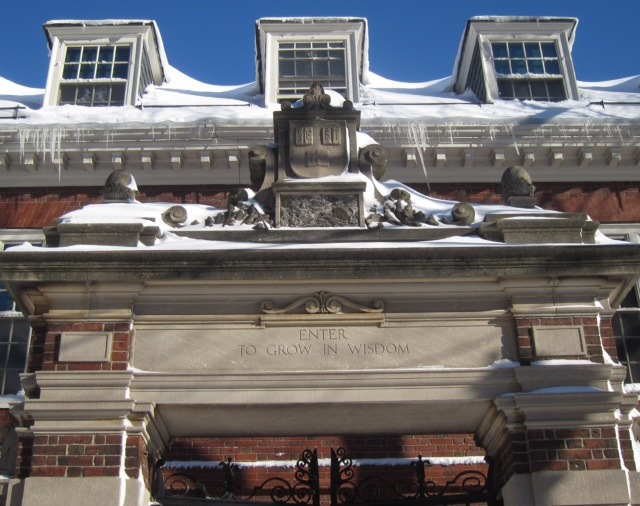
a few nights ago i was sitting below ground in a library where once upon a time i would have been a regular resident. i was back at my college, a college where one of the study carrels on the fourth floor of the old library all but had my name engraved in it; it certainly had my coffee stains seeped into its woodgrain. this night i was in the new iteration of what had once been my temple of memorization and occasional epiphany.
i was talking about my book, and talking about how my holiest posture, the one that stirs me most deeply, is when i feel small against the vastness of the universe. how i break out in goosebumps, the most comforting goosebumps, when i am crouched down low, arms wrapped around shins, an origami of flesh and joints folded, nestled between dune grasses, perhaps, looking up, into the star-salted heavens.
i consider it a holy thing to know how infinitesimal we are in this vast and intricate cosmos. our modernday world could do with a very strong dose of downsizing our egos. humility is wanting in the 21st century.
as serendipities so often happen, that one moment was followed by this:
not long after the talk had wrapped up, a jesuit priest i’d met earlier in the day––a brilliant young priest i hope to befriend, for i do believe we both felt something of a lightning bolt strike in our shared fascinations with theology and literature and their divine intertwining––my new friend father joe came bounding up to the armchair where i was still sitting, slipped a piece of paper into my hand, and began speaking in latin. yes, latin. he then told me (in english, thank heaven) that when i was talking about how i love to go small, he just happened to think of the great line from thomas aquinas, a line often quoted by pope francis:
“not to be confined by the greatest, but able to be contained by the least, is a mark of the divine.”
i am still marveling that i have a new friend who whips off lines from aquinas, in latin no less. and i admit to being schoolgirl-crush blushed when i learned (from a little morning-after googling around) that he earned his DPhil at oxford, and might be the closest thing to an Inkling (that literary cadre of Tolkein and CS Lewis and Oxfordian friends in the mid-20th century) in my current state of being.
but back to small things.
the very morning after being so taken by that line from aquinas, the first thing i happened to read was this paragraph from the japanese writer Miho Nonaka “on the beauty of small things.”
“I am drawn to small things. I wrote the poem [“The Museum of Small Bones”] after seeing an exhibit of the skeletons of small animals like bats, moles, and baby lizards. …There was a sense of dignity to the architecture of each animal’s bones. When you see something like that, you can’t help but reflect on God’s creativity as an artist. And for me, smallness matters, because it makes God’s intentionality and investment in each creation appear that much more acute.”
the reason i read with pen and sometimes scissors in hand is because other people always say what i’m trying to say, only better than i can. and so it is with Miho: “…smallness matters, because it makes God’s intentionality and investment in each creation appear that much more acute.”
the intersection of thirteenth century aquinas, and 21st-century nonaka, is what stirs me to attention. surely there is wisdom to be plumbed, and contemplation to be unspooled in the hours and days before me, as i deep-dive further into the beauty of small things. we are living in a world of atrocity. we can be broken at any moment by the sheer evil and deceit that comes without pause, it so often seems. but there, on the simple footpath we trod, we stumble on tiny shards of shimmering light. shards that just might save us.
and this week, the beauty of small things is the shimmering shard of thought that just might brace me against the unending brokenness.
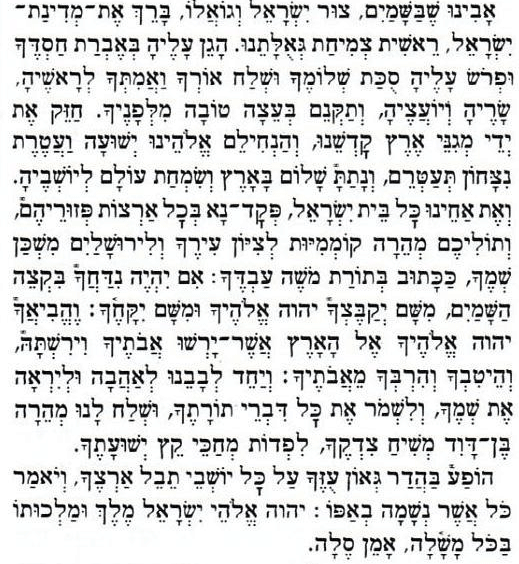
and on the subject of brokenness, i offer this prayer for the state of israel*…..
Our Father in Heaven, Rock and Redeemer of Israel, bless the State of Israel, the first manifestation of the approach of our redemption. Shield it with Your lovingkindness, envelop it in Your peace, and bestow Your light and truth upon its leaders, ministers, and advisors, and grace them with Your good counsel. Strengthen the hands of those who defend our holy land, grant them deliverance, and adorn them in a mantle of victory. Ordain peace in the land and grant its inhabitants eternal happiness.
Lead them, swiftly and upright, to Your city Zion and to Jerusalem, the abode of Your Name, as is written in the Torah of Your servant Moses: “Even if your outcasts are at the ends of the world, from there the Lord your God will gather you, from there He will fetch you. And the Lord your God will bring you to the land that your fathers possessed, and you shall possess it; and He will make you more prosperous and more numerous than your fathers.” Draw our hearts together to revere and venerate Your name and to observe all the precepts of Your Torah, and send us quickly the Messiah son of David, agent of Your vindication, to redeem those who await Your deliverance.
Manifest yourself in the splendor of Your boldness before the eyes of all inhabitants of Your world, and may everyone endowed with a soul affirm that the Lord, God of Israel, is king and his dominion is absolute. Amen forevermore.
i pray too for the innocent of gaza, for those without hope, or water, or food, or electricity. i pray and i pray. and i wonder over and over who in hell’s name beheads a child? pray for this desperate world. pray however you do, however you can…..
what saved you from brokenness this week?
*”prayer for the state of israel” from the jewish virtual library
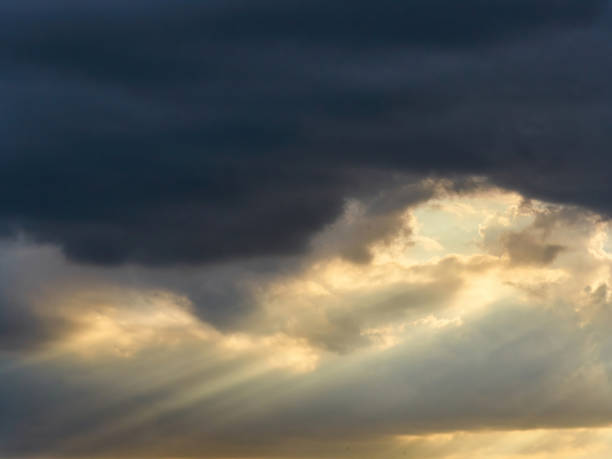
photo above by my favorite law professor, will kamin, back when he was taking AP photography his senior year of high school….
I’ve always noticed the light shines through more perceptibly, more piercingly, when the skies are grizzled gray, and there’s a fissure, a peep hole, in the clouds.
And so, in this shadowed episode in which I find myself –– awaiting word on my first lung scan since before surgery, trying to navigate my mama through the roiling seas of rehab and the stark knowing she won’t go home –– I wend my way through the days on watch for grace notes which tumble onto me like snowy flakes before the melt: each one unlike any before or aft, each one magnificent in its own faceted incandescence.
And, in the spirit of blessed Francis of Assisi, I am stringing them into a canticle, a praise song typically referencing Gospel text. I’m not so literate in those Scriptural ways, so I am stringing mine in the vernacular of the everyday:
Praise be the blessed, blessed nurse named Vishruti whose charcoal eyes are ever sparkling, and whose attendance to my mama’s every woe is pure blessing before my most grateful eyes.
Praise be the harvest moon pinned high in the night sky one especially hollow night, and the acolyte Jupiter who clung to Moon’s southwestern rim, as if to catch any drippings once the melt began again.
Praise be my blessed “baby” brother who seems the answer to my every prayer before I’ve even prayed it: the one who keeps every necessary form on file (to ensure nary a hiccup in our mama’s journey), attends to every detail with fastidious care, and who is so blessedly tender with our mama’s every ache and pain and worry that in watching him tears spring to my eyes nearly every time. Praise be that brother who has always fit me like my other half. I’m 1/3/57 and he just happens to be 2/4/68. Mathematically sequenced, and aptly paired, we are.
Um, addendum to brotherly praise (did Francis addend his canticles? hmmm): As I was typing that very verse above, said saintly brother was ambling through a lumber yard, intent on rebuilding our mama’s four-poster bed to make it six inches closer to the ground, thus subtracting risk by six not-insignificant inches. And he’s not even the carpenter brother! Be still my brothered heart….
Praise be the ones who fill my stoop with dahlias, and chicken ala yummy, and farmer’s market bounty. And whose prayers and hand squeezes hold me up, even when I wobble.
Praise be my sweet Fred who holds my hand in the dark of night, even when I don’t let on that I am thinking hard about the day ahead, or the one just left behind…
Praise be Pope Francis who, in his latest encyclical, Laudate Deum, squarely implored us to face these crucial questions:
“What is the meaning of my life? What is the meaning of my time on this earth? And what is the ultimate meaning of all my work and effort?”
Praise be Alice Walker who gave us these lines in The Color Purple:
Listen, God love everything you love — and a mess of stuff you don’t. But more than anything else, God love admiration.
You saying God vain? I ast.
Naw, she say. Not vain, just wanting to share a good thing. I think it pisses God off if you walk by the color purple in a field somewhere and don’t notice it.
What it do when it pissed off? I ast.
Oh, it make something else. People think pleasing God is all God care about. But any fool living in the world can see it always trying to please us back.
Yeah? I say.
Yeah, she say. It always making little surprises and springing them on us when us least expect.
You mean it want to be loved, just like the bible say.
Yes, Celie, she say. Everything want to be loved. Us sing and dance, make faces and give flower bouquets, trying to be loved. You ever notice that trees do everything to git attention we do, except walk?
Alice Walker, “The Color Purple”
Praise be that God who aims to please us, even with the color purple. Praise be the God who’s “always making little surprises.”
And praise be the simple, simple miracle of a smile spread across any human face. I don’t know why God thought to give us the capacity to upturn our lips in tenderness or joy, but oh, there is little so life-saving as that simple twitch of those few muscles.
In gratitude, in joy, in infinite blessing, and with deepest smile, for all the little surprises that steady us through and through…








 pull up a chair