pull up a chair

where wisdom gathers, poetry unfolds and divine light is sparked…

when springtime lives up to its billing: equal parts shadow and light

according to celestial alignments, the shadow now is equal, light and dark. the sun has crossed the equator, and here on the northern half of the orb, spring is upon us. except that as i type, snow is blanketing my tender spring tendrils, and the walk is slick, and, well, tis the very picture of springtime here in the heartlands, where you’re wise not to count your blooms before the ides of may.

my heart too is heavy, beating in time with that of a mother i know who is off in the mountains of northern california searching for her blessed daughter who went hiking from the tassajara zen mountain center on monday, and five days and cold dark nights later still has not been found. i ask for prayers for caroline.

motherhearts are a communal collective. we cannot pause the pounding against our own chest wall, we cannot sleep soundly, when we know profoundly of another mother in unimaginable distress. be it the mothers of syria, or gaza, or israel’s kibbutzim, or my long-ago newsroom compatriot now strapped into her hiking boots, hearing only the echo of her own cry as she walks the remote yet exquisite topography where, somewhere, her firstborn is lost, is lying, is awaiting her mama’s arms and a wrapping in blankets.

my prayers have been looping nonstop, clouding out most other thoughts, since i first heard word. caroline’s mama is a woman of incredible, unbreakable faith. the notes she is sending back home, here in chicago, bolster my faltering. “my gratitude and hope outweigh my fears,” she wrote in her last short update, teaching me a thing or two about how to be strong in the face of the unbearable.


because the promise of springtime is, indeed, equal parts shadow and light, i turn to the poets for a dappling of light. and we begin with emily, the belle of amherst, and quickly turn to the little-known artist who inspired her:

“to be a flower,” emily dickinson wrote in her 1865 poem, “bloom,” considered a pre-ecological work, “is profound responsibility.”

clarissa munger badger

a passionate lifelong gardener, emily D (“a keen observer of the house of life who made of it a temple of beauty,” as cultural critic maria popova once put it) had fallen under the spell of wildflowers as a teenager while composing her herbarium of 424 blooms native to new england. but, writes popova, it was an “uncommonly beautiful” book her father gave her just before she turned thirty that rocket-blasted her poetic passion for nature’s own garden: wild flowers drawn and colored from nature by the botanical artist and poet clarissa munger badger (may 20, 1806–december 14, 1889).

published in 1859, the same year charles darwin’s on the origin of species shook science, badger’s book “contained twenty-two exquisite scientifically accurate paintings of common new england wildflower species — violets and harebells, the rhododendron and the honeysuckle — each paired with a poem bridging the botanical and the existential: some by titans like percival and longfellow, some by long-forgotten poets of her time and place, some by badger herself,” writes popova.

seven years later, badger brought her brush to the beauty of wildflowers’ domestic counterparts, the blooms of greenhouse and garden: the pansy and the lily, the day-blazing geranium and the night-blooming cactus, the tulip and the rose, and once again pairing her paintings with poems, she celebrated garden flowers as “brilliant hopes, all woven in gorgeous tissues,” as “stars… wherein we read our history.”


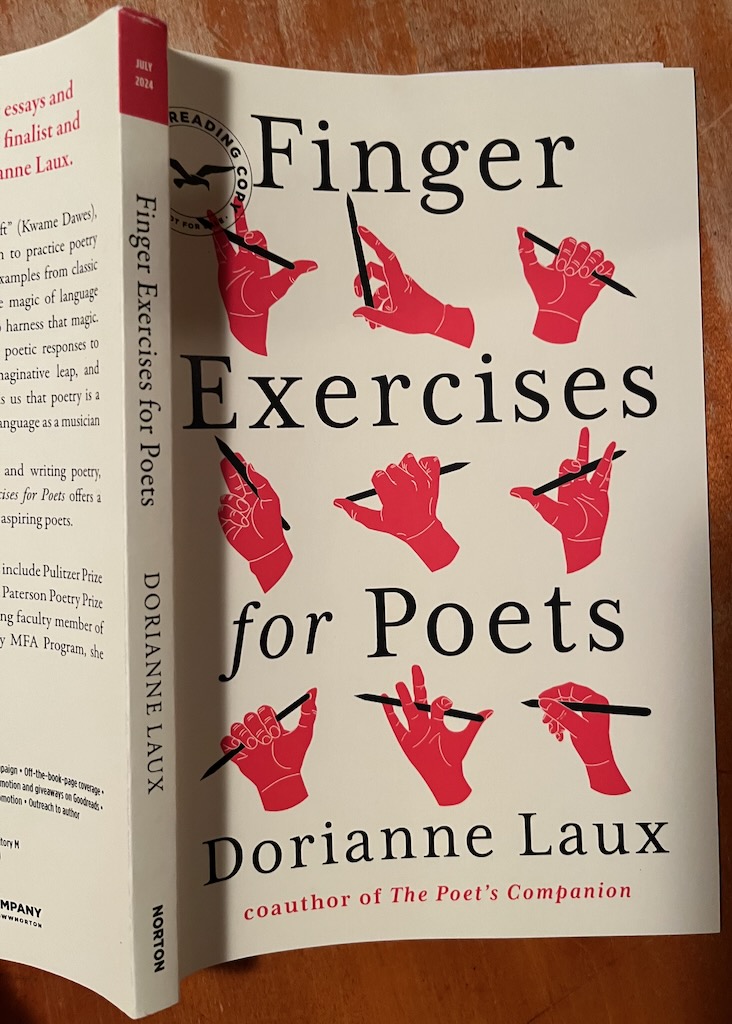
another poet, one i dream of sitting down to dinner with, or more in keeping with her ilk, plopping on a porch swing, she with cigarette burning orange against the black of night, me, merely pumping my merry little legs. dorianne laux is her name, and you’ve seen me write of her here. she has a brand new craft book, companion of sorts to her earlier the poet’s companion, and the new book, finger exercises for poets, is “an engaging invitation to practice poetry alongside a master,” and it’ll be out this july from w.w. norton & company. (they still send me advance reader copies; bless them.)

here’s a passage i knew i needed to share, from glorious, glorious dorianne’s introduction:

“My instrument is the immensity of language, the techniques and effect of crafting images, shaping sound and rhythm, creating new combinations with the single notes of words, each colliding or coming together, meshing or crashing, standing firm or tumbling. There are eighty-eight keys on a piano, six hundred thousand words in the English language. The patterns, the sequences, and permutations of both are endless. For me, language is another kind of music.

“I practice poetry. This book invites you to practice along with me.”


and i close, this snowy spring morning, with yet another master of language, and truth-telling: james baldwin. (this comes to me from a french monk whose writing i follow; laurence freeman is his name, and here’s a bit of what he sent this week from the bonnevaux centre for peace, in the southwest of france): “toward the end of his life, baldwin gave a television interview in which he was asked to reflect on the essential subject of his classic, groundbreaking novel, giovanni’s room. baldwin’s answer is an extraordinary meditation on love, and in particular, how it can serve a kind of educational purpose in our lives.” here’s what baldwin said, laid out as a poem. 

Q: What’s the novel, Giovanni’s Room, about?

Baldwin’s answer:

It’s about what happens to you
if you can’t love anybody.
It doesn’t make any difference
whether you can’t love a woman,
or can’t love a man —
if you can’t love anybody,
you’re dangerous.
Because you’ve no way
of learning humility.
No way of learning
that other people suffer.
No way of learning
how to use your suffering,
and theirs, to get from one place
to another.

In short, you fail the human
responsibility, which is
to love each other.

+ James Baldwin

what are the lessons of love you learned in this week of shadow and light?

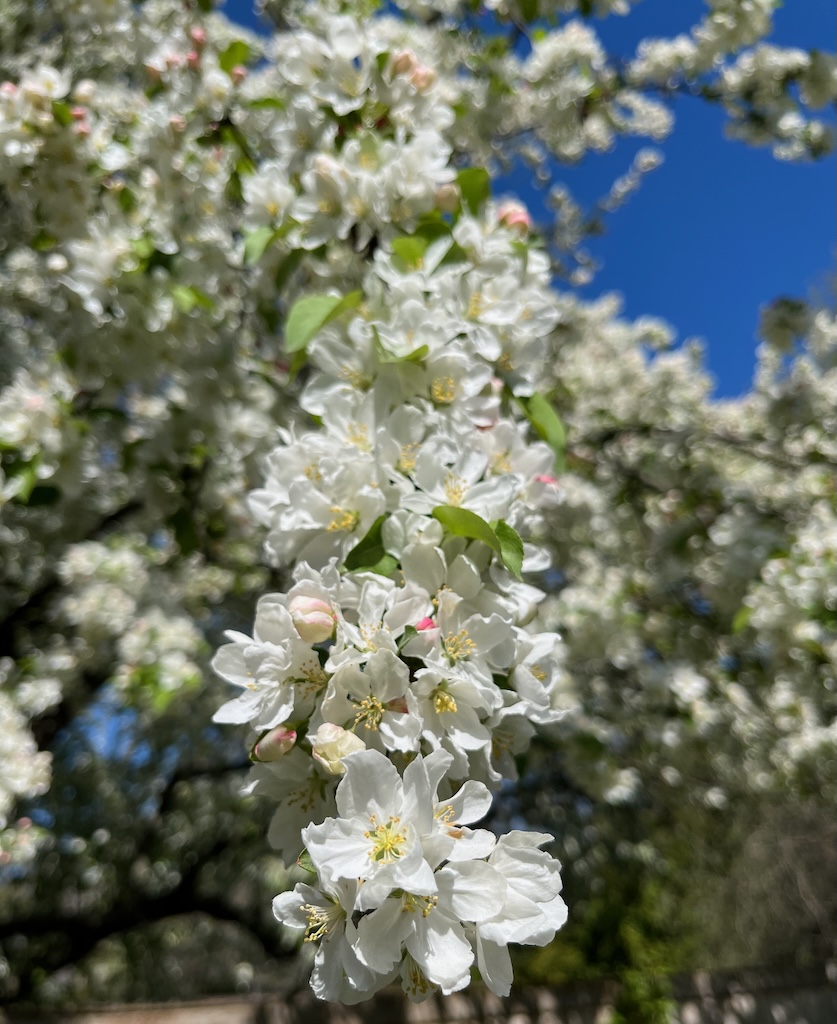
my “springtime” garden, whitened.

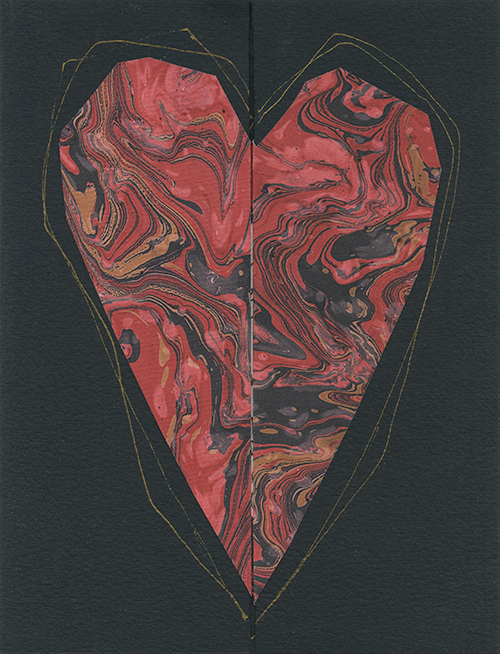
p.s. illustration at the top is indeed one of clarissa munger badger’s beauties. and i will ask once again, please please offer up prayers for rescue for blessed, blessed caroline, her mama, her papa, and all who are holding their most sacred breath…..

saved by the dust bunnies

dear reader, fear not. at last writing, as i bemoaned the absence of progeny in this old house, and awoke to the relative quietude of life as empty nester, i might have seeded worry. what will she do, that poor blithering mama, you might have wondered. will she clock her time staring out the window, awaiting the return of said progeny galloping in from distant plains, in need of laundry, grilled cheese, or any other assorted task for which a mother is distinctly schooled?

worry not: purpose has arrived.

yes, indeedy. in the form of unknown possibly invisible creatures lurking in the chamber where the recently departed (from this house, that is) now attempts to sleep. these invisible and invincible forces seem intent on making the boy rub his nose and eyes and sneeze. all night long. and well into the daylight.

and so, the call has come. i am (somewhat) needed. or, at least my vacuum is. and i, taking no such task lightly, i’ve equipped myself with a whole battery of dust-bunny-battling weaponry. just last night my friends at amazon delivered the air purifier deemed best in class by the folks at wirecutter, that band of trusty testers at the new york times. and i’ve a gallon jug of vinegar, a mop, and microfiber dust cloths, enough to wipe out legions of pesky mites.

dust buster am i.

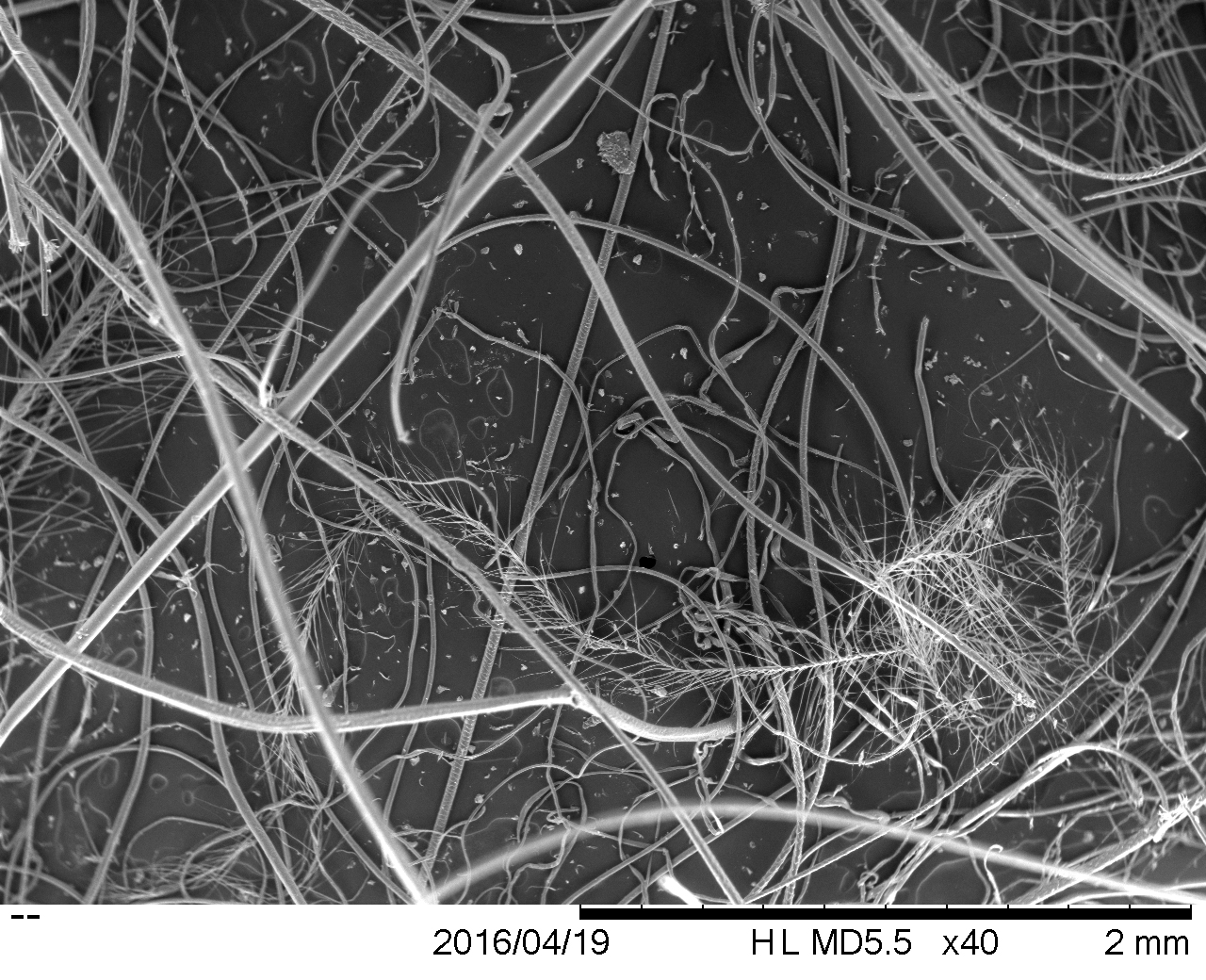
dust bunny under microscope: what we’re up against in the dust bunny challenge

all of which points to the foregone conclusion that ol’ mothers never ever pass their expiration dates. we are not sent off to distant pastures. our aprons and our mops, never really set out to dry. we do not wither on the vine. we are, if not invincible, indelibly anchored in the domestic equation.

why, just this week the kid who mostly dashed in and out of the house whilst he was living here, has seen fit to call me for instructions on: a.) how to work a wet mop; b.) what to take for allergies; c.) what else to take for allergies; and d.) all of the above.

it’s a reassuring thing to know the worry chambers of my mama brain need not turn off. i can still muster up a storm in there, scheming up the options, imagining the worst. and, then, as i’ve done since the first note of first pregnancy, i leap into action. if i can slay one dragon––be it lost mitten in the long ago, or dust mites under the bed today––i sidle one inch nearer to indispensability. or so i pretend.

the truth, as i’ve long known, is that love––in any form––does not subscribe to geographical or chronological bounds. i can love as fiercely and devotedly whether you’re under my roof or far far from here. ours is a world in which distance is a given. we are no longer a people of the shtetl or the lane. i only wish those i love lived nearby enough to rap at the door and sidle in for tea. or late night storytelling.

be it by the powers of imagination or a polished knack for empathy, the human heart is the inexplicable muscle with unbound capacity to stretch from here to eternity. and in so doing, we can fiercely and fine-grainedly love the ones too far away or the ones who are no longer, for their essence burns on and on as long as we are breathing. and, sometimes, in the uncanniest of ways: in reaching for my mother-in-law’s signature-red coffee mug on any morning, i can suddenly hear her singsong way of telling me her faith in me has never dulled. and she’s been gone now for nearly three years.

the resurrective powers of love are without rhyme or reason. and, indeed, they save us.

i’ve thought plenty in recent months about the muscularity of love. how it has propelled me up steep inclines, ones i might not have found the nerve to climb had i not felt some forcefield behind me. i’ve a never-ending fascination with this ineffability we know as love, not as valentine ephemera, but love as true physical force, love as divinely inspired. with the power to heal. the power to quell. and, sometimes, the power to slay a bunny made of dust.

your thoughts on the mystical powers of love welcome here:

coming home to an empty nest

a desk cleaner than it’s been in a long, long while…

the house i walked into the other day, upon return from faraway, was not the house i left. mostly, it looked the same. same pair of stools at the kitchen counter. same loose brick on the backdoor step. but here and there things were missing: coats no longer weighing down the coat hooks; size 12 shoes, all gone; the big ol’ speaker with the disco lights, the one parked beside the birdseed bin ever since last springtime’s college graduation, it had up and vanished. 

and the silence was the loudest i had heard in a long, long while.

whilst i was away, there arrived an absence.

my beloved and i, for the first time in nearly 31 years, now dwell in an empty nest. 

the younger fledgling has flown the coop. and we, the grownups, haven’t much clue what to do with the newborn stillness.

while i was off in the nation’s capital, puttering about Boy No. 1’s apartment, planting myself in the way back of his law school lecture hall, motoring about the countryside in search of sought-after antiques, Boy No. 2 set south for the ‘hood to which he was born. 

he left behind a room that would be described as empty, if not for the torrent of assorted trinkets strewn in his wake. (it’s a collection of castoffs that counts among its contents a box of not-yet-dusty college paraphernalia, a half-burned chicago-scented candle (who knew?!), the oddest assortment of half-empty bottles and squeezed-dry tubes, outgrown clothes, and, yes, a tall stack of various welcome-home placards we’d penned upon his many returns over the years.)

as of one week ago, this old house boasts an official population of two and only two. 

i, though, only stepped into the stillness the day before last––late to the game, as i so often am. my mate, the boy’s papa, has had a six-day jump on the vast emptiness, and he deems it a “sad, sad” state of being. 

we just plain miss the kid, is the gist of it.

and while a piece of me is feeling the pangs, i’m just as keenly approaching this new endeavor as if a room to which i’d never before entered. i’ve always known it was there at the end of the hall but the knob hadn’t yet turned, and so as i now tiptoe about, peeking into its nooks and crannies, i am still getting to know my way.

for starters, the quiet. the pared-down daily rhythms (no more nightly shuttle of the old sedan to park it near the train once the meters dozed off at 9 p.m., and where it awaited the boy’s 1:05 a.m. arrival from downtown, thus sparing him a long-enough walk in the cold and the dark and whatever the weather gods chose to hurl on his route). no more rushing to throw some semblance of breakfast in a rumpled brown bag as he raced off to work and we all held our breath that he’d beat the train to the station. (and, yes, yes, if you’re starting to catch on that we might be among the dotingest parents that ever there were, we plead utterly guilty.) 

did i mention the newfound dearth of laundry? or the fact that the cupboards look to be barer than ever before?

in that way that the mind plays tricks, as it wraps itself around those episodes in life it’s not before encountered (after a birth, a death, a diagnosis), i find it playing a form of peek-a-boo. an almost haunting hide-and-seek. i forget the kid is not asleep behind the bedroom door. wake up and skip a beat or two till i remember not to check that he made it home the night before. remind myself there’s no need to leave the porch light on when i tiptoe off to sleep.

in this day and age, where youngins come and go till their middlings or older, this new empire of emptiness cannot be called an inevitable geography. while the college years gave us a taste of it, this time round it seems a sharper, bolder border, a less permeable line than the empty nest of yore, when the emptiness ebbed and flowed according to academic calendar. 

this time the kid is paying his own utilities, and sending off a monthly check to the landlord. and except for the comfy armchair and the rug he whisked from his upstairs room, he needs us not in his domestic equation. 

and while he whistles the freedom song, his papa and i are fumbling in a fog across the contours of this new state of being. largely, i find myself deeply curious, and admit to something of a relieved sigh that i no longer will wake in the night to be sure i hear him clomping up the stairs. 

time turns and turns in labyrinthine spirals, and with every twist we see ourselves from whole new angles. though i know full well that parenting is a post without pause, and one i intend to hold onto till my very last breath, this empty nestiness allows for––begs for––a whole new deepening. we’re a duet again, his papa and i, and on our own to chart our days. indeed, it’s solitude i’ll oft befriend. 

which makes me think that now must be the hour in a lifetime when our soul begins its quickening, something of a leavening, with more hours to read, more years to remember, heavier questions to ponder. my prayer is that with the quiescence there comes a gathering of deeper grace.

of course, it aches a bit to think we’re past the years where cacophony was a daily occurence. where my hours were filled with comings and goings, and assorted bunches of kids clumped in the basement or were planted in sleeping bags or stuffed in the way back of the old red wagon. where an hour to myself was both rarity and marvel.

but maybe, just maybe, the quiet that’s tiptoed in will point the way toward the wise old lady i’ve always wanted to become. 


and let us indulge in a glistening bit of mary O here this morning. an old favorite, something that indeed kills me with delight….

Mindful
by Mary Oliver

Every day
I see or hear
something
that more or less

kills me
with delight,
that leaves me
like a needle

in the haystack
of light.
It is what I was born for—
to look, to listen,

to lose myself
inside this soft world—
to instruct myself
over and over

in joy,
and acclamation.
Nor am I talking
about the exceptional,

the fearful, the dreadful,
the very extravagant—
but of the ordinary,
the common, the very drab,

the daily presentations.
Oh, good scholar,
I say to myself,
how can you help

but grow wise
with such teachings
as these—
the untrimmable light,

of the world,
the ocean’s shine,
the prayers that are made
out of grass?

how did you navigate through the rocks and shoals of those uncharted landscapes life has surely thrown your way?

time travel

the other morning, when the clouds were especially bumpy, i boarded a plane, paid no mind to the bumps, and flew 612 miles to turn back the clock to “before time,” and seize a few of the most important days of my life. 

what might those days be, you wonder? those days are nothing so fancy as plain old ordinary quotidian days side-by-side with a law professor who happens to be my firstborn. and whose life all those hundreds of miles away from where i usually lay my head on my pillow feels too far for a mama trying to seize every blessing from every old day. 

i count myself among the blessed, having birthed a human who happens to be one of my favorite of the whole species. he is 30 and i am double that-plus. and all these decades in, i still purr like a happy cat when he and i are curled like bookends on either side of the same couch. or side-by-side in the front seat of a car, him at the wheel, motoring hither and yon as together we trace some curiosity. or attend to a plain old errand. 

a year ago at exactly this time i was here slicing open boxes, stacking sheets on shelves, and filling a fridge, moving him in at the start of his professorial life. it was just weeks before i had surgery, and before i had any idea what the surgeon would tell me as i lay there coming out of an ethereal fog. in fact, it was during my week here in DC that i tried to casually mention that i was going to be having a little surgery. and so, this week in time and place holds some sort of magical power for me: it allows me to suspend time, to return to “before,” and to savor the simple insatiable union of mother and manchild. 

only, truth is, there’s a twist this time round. and that twist takes it up a notch. or many a notch. 

i know now, in a way i didn’t know then, how very precious even one day is. and how, if you told me i had only a certain number of days, and then asked me how i would want to seize the most of those days, i would tell you the one thing i wanted most emphatically was to be as close as i could be to the people whose lives have left the deepest mark on me. 

this year, i know a bit more about the arithmetic of life. and how, no matter how many days there are, there are a precious few categories for which there are never enough. and how, simply hearing the sounds––even the humdrum ones, maybe especially so––of someone you love shaking off the bedsheets in the other room, awaking to another day, watching that someone in real time, in the flesh, go about the unspoken routines that make for a day––grabbing the keys from the bowl, looping back for one last chug of coffee, turning down a particular street to get to work, all those incidentals that make a life a life––those are the things i want to take in in real time. to press them to my knowing. to be entwined with.

and so, as the calendar rolls back to that seminal season when everything changed, i wanted to slip in between time and enter a netherworld in which i could plant one foot in “before time,” when i wasn’t someone who’d been told she had cancer, and “after time,” another name for now, when i do know that the blessing of cancer, or any leaden-weighted diagnosis, is that nothing means more than time. unfettered, ordinary, spectacular, magnificent hour-upon-hour doing the things that make a life a life. 

because these are the hours i will never ever regret or forget. and i don’t ever want to wish i’d made more time for time. 


while i marinate in the hours and days before me, before i board the homebound plane, here are a few things worth pondering. all of which make for this most beautiful mosaic we call our sweet fine lives. . .

this sweet gem is an excerpt from the very lovely susan cain’s Bittersweet

Franz Kafka was one of the great European novelists of the twentieth century. But there’s another story, this one written not by Kafka but about him, by the Spanish writer Jordi Sierra i Fabra. This story is based on the memoirs of a woman named Dora Diamant, who lived with Kafka in Berlin, just before his death.

In this story, Kafka takes a walk in the park, where he meets a tearful little girl who just lost her favorite doll. He tries and fails to help find the doll, then tells the girl that the doll must have taken a trip, and he, a doll postman, would send word from her. The next day, he brings the girl a letter, which he’d composed the night before. Don’t be sad, says the doll in the letter. “I have gone on a trip to see the world. I will write you of my adventures.” After that, Kafka gives the girl many such letters. The doll is going to school, meeting exciting new people. Her new life prevents her from returning, but she loves the girl, and always will.

At their final meeting, Kafka gives the girl a doll, with an attached letter. He knows that this doll looks different from the lost one, so the letter says: “My travels have changed me.”

The girl cherishes the gift for the rest of her life. And many decades later, she finds another letter stuffed into an overlooked cranny in the substitute doll. This one says: “Everything that you love, you will eventually lose. But in the end, love will return in a different form.”


and, lastly, this: wisdom from The Dhammapada, a collection of sayings of the Buddha in verse form and one of the most widely read and best known Buddhist scriptures.

With gentleness overcome anger – with generosity overcome meanness – with truth overcome deceit – Beware of the anger of the mind – master your thoughts – Let them serve truth – the wise have mastered body, word and mind – the wise harm no one. 

The Dhammapada*

“the wise harm no one…” let us be wise, be gentle, be generous.


and speaking of generosity one of our beloved beloved chairs who lives not far from where i sit typing here in DC motored over yesterday to spend a good chunk of the day traipsing through a franciscan monastery that took our breath away (and not only because of the paths up and down hills) and who delivered this glorious berry-filled galette to me and my sweet professor, whom she knew when he was a mere wee lad of kindergarten age…generosity abounds at the chair, and i love you all for it.

pjt’s very magnificent very-berry galette

and how might you choose to seize a day, any old day, in the magnificent story of your sweet and blessed life?

poster child for fear

be not afraid is the instructive. it comes in a hymn we belt from our pews, and in one form or another it’s spelled out in sacred text in most every religion. i’ve belted the words to the hymn with voice cracking, and tears running down my cheeks. i’ve belted out those words as if in singing them loudly i could muscle up to the task. 

to be not afraid, we’ve been told, is to be certain of faith. what then of us wafflers? the ones with wobbly knees? 

i sometimes think i’m the poster child for fear. and the fear i’ve felt in this whole last year is a whole new subterranean trembling. it’s one that wakes you in the night. and one that sends you and your worries catapulting off into nevernever land. all it takes is a headache that won’t go away. or a pang in the side that’s not from cold ice cream. 

sometimes i think it’s only fair that i find myself in the company of fear so very often these days. it’s an unerasable fact of my life that not quite a year ago i awoke from a surgery and heard the doctor say, “i was so surprised, it was cancer.” and then, as if needing proof there on my gurney, i reached down to where the holes were, five of them––front, back, and side––the slits from which they pulled out a good chunk of my lung. 

surprises like that are a bit hard to shake. 

so now, for two long weeks, a curious constellation of queasies has been pinned to me like a shadow, and i am pretty much wide-eyed afraid. last night my doctor sent me for blood tests. a whole slew of them. i almost thought they’d grab a jug off the shelf and start to fill it. 

for someone who doesn’t like talking about my medical woes, i am wading in a bit too deep here. but i am someone who takes to heart the knowledge that i’m not the only scaredy cat in the litter. and sometimes i think it’s the right thing to do to put voice to the truth that there are times when we aren’t so brave. there are times when we wish we could hide under the covers, or under the bed, and wait for the bogeyman’s footsteps to turn and go away. 

does it mean i’m faithless because i’m afraid? i don’t think so. i think it means i’ve been keeping watch long enough to know that stories don’t always end with happy endings. and God can love you to pieces, but not write the story quite the way you’d plot it out. i mean, i’ve been to funerals of souls so breathtakingly good, you sit there gasping at the hole now left in their absence. at how the world without those particular angels living, breathing, and wafting among us is a far sorrier place. at how you can’t quite fathom a world without their showing us day after day just how magnificent the human species can be. 

turns out the words to the song, “be not afraid,” were written by a jesuit priest-in-training who was deeply afraid when he wrote it. he was quaking with fear. the fear of not knowing what lay ahead. would he be any good at this priestly existence? where in the world would it lead him? was he hours away from the biggest mistake of his lifetime? well, father dufford was his name, and, on the cusp of his ordination, he was sent off to pray all by his lonesome. and that’s when he opened the nearest book to his elbow, which happened to be a Bible. flipping through chapter and verse, he turned to the story of the Annunciation, when the angel gabriel is said to have come to the Blessed Virgin Mary––an unmarried teen, you recall––to tell her she was “with child,” and gabriel said to her “do not be afraid.” 

father dufford had his first line. 

a few weeks later, as father D tells the tale, a friend of his told him she was being sent to ghana to do missionary work. and that made him really want to finish his hymn before she left. but hymn writing is not always easy. and despite his determination, he could only come up with a second line: “i go before you always.” 

it would be a whole year before he got to the last line: “and i will give you rest.” 

it’s a hymn that since 1975 has poured into the brokenness that defines so much of history, both the intimate personal history we know to be our very own, and the collective history of us as a people who’ve been crushed and shattered and brittled by so, so much. 

it’s a hymn sister helen prejean, the great saint of death rows upon rows, often sings to those inmates she walks to death’s door––the last words they hear before their last breath. it’s the hymn bill clinton chose for his first inauguration at the morning prayer service. father dufford says that he’s gotten notes from people who lull themselves to sleep humming it on those nights when sleep won’t otherwise come.

when father dufford’s own father died some years later, he added one last verse:

And when the earth has turned beneath you and your voice is seldom heard,
When the flood of gifts that blessed your life has long since ebbed away,
When your mind is thick and hope is thin and dark is all around,
I will stand beside you till the dawn.

maybe i should remember all the words. 


and on the subject of fear and holding hands in the face of fear, here is this excerpt from naomi shihab nye’s “EVERY DAY AS A WIDE FIELD, EVERY PAGE,” a poem in which she puts word to the one sure thing i know that takes away my fears: when i picture ones i love huddled right beside me, squeezing my hand; when i remember that all of us together can keep our knees from buckling. isn’t that why we’re here? given that the world these days has plenty to knock us off our rockers, it’s a blessed thing to picture wide-eyed tender-hearted folk all around the globe, looking up into the night, holding hands in a virtual steadying circle. here’s naomi’s take on that, a thought that came to her watching fireflies blink in the dark of night….

We didn’t have to be in the same room —
the great modern magic.
Everywhere together now.
Even scared together now
from all points of the globe
which lessened it somehow.
Hopeful together too, exchanging
winks in the dark, the little lights blinking.
When your hope shrinks
you might feel the hope of
someone far away lifting you up.
Hope is the thing …


when i am afraid, i look to the stories and the strength of ordinary folk whose hurdles are daunting, and yet who lope forward with grace. i seize on the kindness of strangers, the lady at the immediate care check-in desk, the schedulers on the hospital phone, the sweet woman who tied on the tourniquet and borrowed those many tubes of blood. in the past year, i’ve bumbled into a troupe of brave souls whose fearlessness takes my breath away. some of their roads are far bumpier than mine, and yet they press on, shedding their light on all who are blessed enough to take a few steps beside them. maybe the gift of being afraid is that it makes you reach beyond your own trembling walls. it makes you take a deep breath and step into the darkness. and in time, you find your bearings, and you look down and realize you’re stronger and braver than you ever imagined.

where do you turn when you are afraid?

p.s. in poking around just now, looking for a photo that wasn’t hokey, i stumbled on this bit of intrigue: apparently the words, “do not be afraid,” appear in the bible 365 times. (i love the folks who count these things…) so, apparently, that’s a reminder a day. except for in leap year. which is this year. which is six days from now. so we’ll have to remind ourselves: do not be afraid.

the last sick tray

it might have been the last time i’ll ever hear it, those words rising out of the murky middle-of-the-night darkness, curling out from under the door of the bedroom at the bend in the stairs. “mo-o-om, i feel sick,” came the plaintive declaration, my one-syllable moniker being drawn into multiples, emphasizing the dire straits the sick one was in. 

and, with that, the boy about to move out of this old house, about to move into the big city where his freedom will be all his own, we played out one last time the choreography of mother caring for feverish, achy, gland-swollened child. 

this time around, he took his own temperature and called into work in the wee dark hours. but still i was the one who deep in the night tugged on the medicine drawer at the top of the stairs, and filled the cup with fat chunks of ice and glugs of gingerale. and, soon as the light came, i set out for the store to fetch the fixtures of sick days with this particular boy: salty oyster crackers and noodly chicken soup.

it’s a role i know well. it’s a role i have loved, all told, for thirty years now, even though it first came upon me with my own arms trembling, so worried was i by the baby i cradled (this one’s big brother, my firstborn) on a long-ago night when the cry came shrilly and skin felt hot to the touch. 

i can’t count the number of nights i’ve lay on the bathroom floor, a bath towel for both pillow and blanket, as we staked out the nearest position to the toilet bowl or the bath — depending which virus was doing the attacking. i can’t count the number of trips up and down the stairs in the dark, fetching ice, fetching honey, fetching gingery ale. 

on day two of this latest siege, when morning came, and the boy on the verge of moving out let on that he was hungry, i dove in to a task i couldn’t have relished more: i made one last sick tray, and, right down to the spoonful of brown sugar i plopped in a dish, i felt my whole soul being ladled into each unnecessary flourish. 

somehow the ticking down of days in which i can take care of him, in which he’ll let me take care of him, made me all the more emphatic about each and every drop. i ladened that sick tray with every indelible talisman from our homegrown, family-specific, sick-day manual: the buttery toast sprinkled with cinnamon sugar, the ice chips drizzled with honey, the clementine and plump red strawberries for extra vitamin C. and of course the spoon and the glass wrapped with a rubber band, tagging it sick-kid’s-only, just as my mama had done for me, her unscientific attempt at keeping the lid on infectious disease amid her troupelet of five. 

it was as if i was packing him off for a lifetime of taking care, as if an eternity of loving him was what i was ladling onto that sick tray, and into his soul. as if i was shortshrifting the snuffing out of time, making my own tight-end run around some clock that is ticking. i was sealing a deal with forever and ever. and it came, in this moment, in the form of being his nursemaid. 

there is something in me that takes like a bird to the wind when it comes to taking care of the ones i love, especially the ones i birthed and the one to whom i was birthed. maybe that’s why i found myself in nursing school. i’ve always been drawn to the sick-bed bedside. 

it’s a place of certain tenderness, of amplified permeabilities (we are more wide-open when we are ailing, and our needing each other is heightened). it’s a place where exercising empathies is so often met with eager and unspoken reception. it’s one of the best places i know to love as i would be loved. and more than once or twice, i’ve found myself on the receiving end, tended to by the very boy i am tending to now. (a story i’ll never forget.)

maybe because this is the last or almost last go-round in the sick-kid-under-my-care department, and maybe because i am feeling this latest pulling-away (the kid getting ready to move, once and for all) deep in my marrow, the reel started wheeling of sick hours when he and i have stitched our hearts together: the ERs where i was right there, and the one when i was far away, connected only by long-distance telephone line and left only to imagine him strapped inside the ambulance that carried him across farmland and rolling hills to the heartland hospital where they checked him in. i remember a yom kippur he and i spent in the ER, and another when he had a bulge in his neck so golfball-sized they considered slitting it open. i remember the awful time i’d squished his tiny toddler fingers in the car door window. i remember and remember, and truth be told i feel every tug of the letting go. 

when the surest thing you have done in your life, the one thing you’ve most tried to imbue with the holy, is about to shift into another more distant gear, it’s an act you surrender with all the grace you can muster. and a spoonful of dark brown sugar besides.   

what are your most natural ways to dollop your love? and what are the ways of the sick bed you’ve picked up along the way?

hungry for color

it hits this time of year, at this point in the turning of globe when we’re deep in shadow, and the world out our window is endlessly, endlessly, drainingly gray. even i, a self-proclaimed fangirl of the cloudiest day, a girl who thrills at billows of fog, those days when the sunlight can’t find its way in — even i get a bit itchy for hues beyond pigeon and charcoal and smoke, all close kin in the family of gray.

which is precisely why that shock of scarlet and pink boldly inserts itself in the february calendar. we need a little color. and the heart-shaped holiday brings it on. coils and coils of red, beribboned with oyster pink or flamingo. maybe even dashes of fuchsia.

i detected this color deficiency (more of a self-diagnosis) when i realized that all through the week i was clicking and clicking on dizzying droplets of anything resembling “other-than-gray.” and when i caught myself daydreaming, once again, of a riotous, bouquet-gathering, summery cutting garden — zinnias and cosmos and blue bachelor’s buttons all rising up like a botanical box of jazzy crayolas (preferably the 64-pack in which those waxy rainbow-hued sticks stand shoulder-to-shoulder as if choir-robed darlings marched into their multi-row loft).

and so, in hopes of sating your own chromatic hungers, i bring you a compendium of colors from a painter, a cook, a maven of tulips, and a poet.


jean cooke’s “The Blumenthal,” 1995

first up: the painter, whose style of garden i aim to emulate, mostly because it’s been said that her “rambling garden was unkempt to imperfection.” jean cooke is her name, and she was considered one of britain’s greatest woman painters of the twentieth century. described, too, as a remarkable, bird-like woman, the london gallery that shows her work, goes on to describe her “ungardening” thusly:

Cooke’s neglect of her garden—she sometimes called it ‘ungardening’—was partly a reflection of her priorities: her painting and the care of her children. Beyond these demands there was little energy to give less pressing concerns. Grass went unmown, fences unmended and trees unpruned. But the messy garden was not entirely accidental. The disarray was cultivated over an extended period of time and helped Cooke to create a new subgenre in works such as The Wild Plum Tree, which drew upon aspects of both landscape and garden painting traditions. Whereas Claude Monet’s waterlily pond was scrupulously tended, Jean Cooke’s rambling garden was unkempt to imperfection just as her painting required. Whereas earlier paintings such as Grassland had used the Sussex coastline to create landscape-scale wilderness, by the mid-eighties when she began painting spring blossom in earnest her own garden had achieved a similarly expansive quality.

piano-nobile gallery
jean cooke at work in her unkempt imperfection

and in a nod to cupid’s holiday cusping on the near horizon, here’s a tad of insight, should tulips be the thing you choose to send your true love:

“rococo”

“As far as I’m concerned, …[tulips] are the best, indeed the only flowers to send or receive on Valentine’s Day. Wild, irrepressible, wayward, unpredictable, strange, subtle, generous, elegant, tulips are everything you would wish for in a lover. Best of all are the crazy parrot tulips such as ‘Rococo’ with red and pink petals feathered and flamed in crinkly lime-green. ‘When a young man presents a tulip to his mistress,’ wrote Sir John Chardin (Travels in Persia, 1686), ‘he gives her to understand by the general red color of the flower that he is on fire with her beauty, and by the black base that his heart is burned to coal.’ That’s the way to do it.”

– Anna Pavord, wonderful British garden writer and bulb lover, in The Curious Gardener: A Year in the Garden, 2010

on the subject of wild women who tend toward the vivid end of the paint pot, there is the utterly marvelous and delicious emily nunn, formerly of the new yorker and the chicago tribune. she is a food writer like no other, and in recent years she has devoted her not-inconsiderable genius to the subject of salads. her newsletter often has me giggling straight off my chair. and her salads are beyond delicious more often than not. it delights me to introduce you to the one and only emily nunn’s department of salads, along with a peek at but one of emily’s many-hued produce concoctions….


and finally, let’s wrap this up with a wonder from mary O that i had never seen before, from a slim little volume i’d not known of till just last week when a wonder of a woman hosted a candlemas gathering and asked us all to bring a.) a candle, and b.) a poem about light. and thus i discovered house of light, mary oliver’s 1990 collection of poems. since the subject of this one is van gogh, it seems perfectly suited as a prescriptive for those who find themselves suffering a little color deprivation.

EVERYTHING   by Mary Oliver

No doubt in Holland,
when van Gogh was a boy,
there were swans drifting
over the green sea
of the meadows, and no doubt
on some warm afternoon
he lay down and watched them,
and almost thought: this is everything.
What drove him
to get up and look further
is what saves this world,
even as it breaks
the hearts of men.
In the mines where he preached,
where he studied tenderness,
there were only men, all of them
streaked with dust.
For years he would reach
toward the darkness.
But no doubt, like all of us,
he finally remembered
everything, including the white birds
weightless and unaccountable,
floating around the towns
of grit and hopelessness––
and this is what would finish him:
not the gloom, which was only terrible,
but those last yellow fields, where clearly
nothing in the world mattered, or ever would,
but the insensible light.

and with that i shall wonder, where did you find color this week?

jean cooke’s “springtime through the window,” 1980s

the roots are stirring. . .

sometimes, especially when staring into a tableau best described as blkkh, a monochrome of melted soot + oozy mud, we little people need reminding that there is stirring afoot. underground, that is. deep in this holy earth, particles expand. and multiply. and do those “rooty” things. they set down shoots. reach into the hollows to construct the nutrient highways that, come spring, will rise in daffodil and snowdrop. will punctuate the earthscape in royal-purple crocus and knock-your-socks off cobalt blue.

since ancient times, spurred by the collected wisdoms of those who’ve found themselves at this point in the revolution of the year, at the very midpoint between winter’s darkest longest night — the solstice — and springtime’s resuscitating equinox, the moment when the shadow and the sunlight fall in equal measure, this moment has been marked in ways that promised hope. ancient peoples, too, must have known the dregs of winter trodding on too long, or at least the ancients of the north.

those ancient peoples dubbed this a cross-quarter day, the precise mid-score between the changing of the seasons. and those ancient peoples, ones whose livings came not from sitting in front of keyboard pounding keys, but rather who picked up staff or rod, and herded flocks or fished the seas or tilled the earth, they turned to what they knew best to look for hopeful signs: earth and sea and sky. therein was the stirring from which they drew their wisdoms and their post-it notes from God.

in the case of this cross-quarter day, the one that falls as winter wanes, when springtime hasn’t yet picked up its paces, there might well have been some undercurrent of we-are-running-out-of-steam-here. and so perhaps one wintry day, one wise (and desperate) someone dropped to her knees, pawed the crusty earth just down deep enough to catch a glimpse of tangled rootlets reaching down, down, down. she might have whooped in exclamation, let her fellow desperados know that, lo and behold, all was not lost. the earth had not gone thoroughly to sleep. deep down where earth keeps all its secrets, there was promise stirring.

and so, the peoples celebrated. the peoples, being wise long before we were specks of anyone’s imagination, might have extracted their own wisdoms from this botanic wonder. they might have realized that if the wondrous underbellies of the bulbs were hard at work in ways unseen, we too might seek analogous metaphor in the vicinity of our psyche and our souls. we too might figure out that now, as winter’s grip begins to loosen, our own deep-down growing stirs. even when we think it not. (and we’d be wise, methinks, to bolster that stirring with at least a dab of concentrated meditations, sifting through the questions that might propel our year ahead, steering our own soulful energies to those one or two roots we decide most warrant our attention.)

the ancient israelites (and jews today) called it tu b’shevat, the new year of the trees, so marked by the first blossoming of the almond trees. the celts called it imbolc, a word that means “in the belly,” when the earth’s belly begins its thaw and the seeds below begin their stirring. (the word imbolc comes from Old Irish, and was reference to the ewes beginning to lactate as birthing season comes and the field grasses start to grow.)

indeed, the earth is quickening, the obstetric name for that first sacred stirring from within, when that tiny tiny human limb first garners enough muscular oomph to kick the wall of mama’s womb. i remember sensing it, unsure if it was just a tummy rumble, or the first fetal morse code that someone in there was really in there. in due time, the kicks make clear that it’s no hiccup of the fetal variety.

jews gather for the tu b’shevat seder, a feast of seven fruits and four glasses of wine, beginning with one of deepest red (winter at its fullest) and each successive glass a paler pink till springtime’s wine, all white. the celts, being earthly people, turned to fire and water: the women of the home slept beside the hearth on imbolc’s eve (jan. 31), and checked in the morning for any markings in the ash signifying that saint brigid (a fiery spirit) had wafted by in the night, spreading her imbolc blessings. they headed for the hills, too, and lit bonfires atop the crests, then spent the night leaping over the flames. more docile celts might have settled for kindling a few wicks around the house. but every peoples has its wild ones. and if fire wasn’t your thing, you might wander to the nearest sacred well, and take a dip for purification purposes.

i might let the candles burn today, or perhaps i’ll take a sudsy bath, as i think deep and hard of how i intend to bring my little flickering of light into this world that grows dark and darker by the day….

and on that note i bring you this emboldenment that my blessed firstborn sent along the other day, quoting from his favorite of thomas merton’s writings, raids on the unspeakable.

Be human in this most inhuman of ages; guard the image of man for it is the image of God. You agree? Good. Then go with my blessing. But I warn you, do not expect to make many friends…

Thomas Merton

what might you do today to mark the incoming of light, minute by minute, day by day, till the full birthing comes?

the quarryings of time

my hair is gray. my left shoulder is frozen. my right middle finger locks most mornings. and half of one of my lungs is no longer. 

there’s more (darn that paralyzed vocal cord), but the dirge needn’t drone on. the point is i’ve been quarried by time. which is close to the way annie dillard, my polestar and patron saint of seeing, put it in a passage i read –– and couldn’t forget –– this week. 

on page 238 of pilgrim at tinker creek, my bible of the woods, annie D. turns her otherworldly attentions to living creatures in various states of disarray: spiders with only six or seven of eight species-imperative legs; grasshoppers missing antennae; butterflies whose wings are torn; a swallowtailed sparrow minus its tail. and, yet, and yet, they creep and leap and flutter and glide on anyway. nature is not daunted by its disassembling. 

nor should we be. 

when it comes to us humans –– the species with the power to wonder, to question, to connect the occasional dots –– each quarrying carries its own volume, its own mysteries and humilities and sometimes epiphanies. each nick or chink in the armament of flesh and sinew and bone both takes us down a notch, and, if we’re paying soulful attention, points us closer to our soul, to that essence that bellows our being.

dillard writes thusly:

I am a frayed and nibbled survivor in a fallen world, and I am getting along. I am aging and eaten and have done my share of eating too. I am not washed and beautiful, in control of a shining world in which everything fits, but instead am wandering awed about on a splintered wreck I’ve come to care for, whose gnawed trees breathe a delicate air, whose bloodied and scarred creatures are my dearest companions, and whose beauty beats and shines not in its imperfections but overwhelmingly in spite of them, under the wind-rent clouds, upstream and down.

she got me to thinking about the beauty in brokenness. in disrepair. in all the parts of me that no longer follow instructions. 

and then four pages in, annie lands on the phrase that’s entranced me all week. she wonders aloud if, rather than somehow thinking it our birthright to come into existence “with the spangling marks of a grace like beauty rained down from eternity,” we might be wiser to realize we’re most whole “with the botched assaults and quarryings of time?”

“we are all of us clocks,” she goes on, quoting british astrophysicist arthur stanley eddington, who described us as clocks “whose faces tell the passing years.”

there, in those time-etched crowsfeet and the lines that furrow our brow, lie some of our deepest wisdoms. and most hard-earned beauties. that is, if you, like me, consider it a dazzling thing to have tucked into your brain files those rare few ideas whose staying power drives your every step thereafter. 

i’ve been in hospitals more times than i can count, have sat with eyes squeezed shut as someone drew needle and thread through my torn flesh, have felt the warm ooze of plaster cast being swaddled round my broken wrist. and each and every time, the wounds have left me more awake to life’s unscripted, oft-unspoken ponderings. (except maybe not the time when i made like peter pan, and flew off a garage roof when a rope swing escaped my grasp.) each and every time, we emerge keener to the pains –– and wonders –– of the world.

the most lasting empathies are forged in ERs and aftermaths.

and think about this: might you tally the innumerable times you’ve broken into smile, or squinched your eyes in irrepressible delight, to earn yourselves those hieroglyphs that now stand testament to your life’s-long accumulation of joy, or the hours you bent in deep concentration. or worried for the someones you love.

such are the quarryings of time. they inch us toward our holiest core.

it’s an excavation i’d not surrender.

now in my seventh decade (egad, that sounds sooooo old), i’ve been reminded time and again that none of this is a given. and we are breakable vessels nearly every time. and yet, without the botched assaults and the quarryings, from whence would come our vast acquired wisdoms? 

how would i know how precious each birthday candle is if i’d not wondered “will there ever be another?” how would i know the utterly-taken-for-granted gift of seamlessly sliding an arm down a sleeve if i’d not done so yelping the whole while?

doesn’t our brokenness bring us the pricelessness of knowing how deeply perishable we are? and how we’d best get on with what we know to be those few defining pursuits: whatever is the thumbprint we aim to leave behind on the life and lives we’ve loved? 

aren’t our depths — even the impossible-to-ask-aloud parts –– the prize that comes via our frayed and nibbled selves? 

none of us asked for nor expected the choreography of our lives. but with each and every quarrying there’s come an unintended plus. even if it took awhile to make itself apparent. 

all of which brings me roundabout to this prayer for beauty in the mundane. beauty in the brokenness is another prayer for which i pray. but first, this from writer and poet Cole Arthur Riley*’s breathtaking book Black Liturgies, in which she prays for our capacity to hold together the extraordinary and the ordinary:

God of every beautiful thing,

Make us people of wonder. Show us how to hold on to nuance and vision when our souls become addicted to pain, to the unlovely. It is far easier to see the gloom and decay; so often it sings a louder song. Attune our hearts to the good still stirring in our midst, not that we would give ourselves to toxic positivity or neglect the pain of the world, but that we would be people capable of existing in the tension. Grant us habits of sacred pause. Let us marvel not just at the grand or majestic, but beauty’s name etched into every ordinary moment. Let the mundane swell with a mystery that makes us breathe deeper still. And by this, may we be sustained and kept from despair. Amen.

cole arthur riley

*i am reading cole, stockpiling her wisdoms, as i begin to stock my larder for the lean months to come, when i sense the discord of the world beyond my quarter acre might otherwise knock me asunder. i intend to find a path toward the light. and i will, of course, bring it here.

how has time quarried you? what treasures did you find down deep beneath the dug-out parts?

any time i can bring a nurse to these pages it’s a good day. here, a fine acolyte of healing in action….can you imagine the shenanigans that landed this crew in her sublimely fine care? and, yes, i once wore a cap as pert as hers. and shoes not too dissimilar….

i-can’t-get-warm-enough cooking, an arctic imperative

on days when the mercury out the kitchen window is barely visible through stalactites of ice, and, from what i can make out, it appears that the high for the day hovers far below the murky line at zero, there are choices to be made: you can curl in a quivering ball under your strata of blanket; or you can strip off the flammable parts (the wraps with dangling clusters of ignitable threads) and post yourself boldly in front of the six-burner, commercial-grade range that fell into your custody the long-ago day you signed for the old shingled house with the ricketiest of windows.

i opted for six-burner range. 

and all through the arctic siege, i cooked anything i could get my mitts on: simmering stews, bubbling soups, sheetpans of roots, just about any comestible that called for application of flame. i might have been fooling only myself, but i pretended it put some level of purpose to my bone-level desire to rub up against any surface weighing in at greater than zero degrees. the imprecise dial that purports to crank the oven all the way to 450 is my most-cherished doodad of late. 

and so in a week in which i might have been distraught about the state of the world, and in which i might have been pondering how in heaven’s name to navigate the narrow straits that look to be ahead, i dallied in the kitchen. a wise woman i met the other night let on that as she sees it, her job in dark times is to fill herself with as much light as she possibly can, and then get out in the world to start spilling it. 

but first you need to be able to feel the tips of your fingers and toes. and wandering about in the five layers of woollen and fleece and yoga-pant spandex sometimes gets in the way of even apostolic wanderings. so i did what i could: i cooked. 

and despite the corona making the rounds, i invited folks in. i might have asked even the mailman had he not spun on his heels before i could stick my neck out the door to extend my relatively-warm invitation. i seemed as hungry for company as i was for the faintest trace of heat. there is something about gathering, even with goosebumps, when trying to chase the cold spell away. 

here’s a soup i made for one catch-up lunch, and which i intend to ladle when old globe-trotting cronies gather this weekend to welcome a stray back to the fold.

i-can’t-get-warm-enough tomatoey soup

(aka Provençal Tomato, Basil, Parmesan Soup)
 
a collective effort with input from Martha Rose Shulman and Ali Slagle and Babs
Time: 1 hour
Yield: Serves four 

Martha, one of crunchy-granola cookbook writers I followed back in ancient times (the 1970s), learned to make this soup years ago when she lived in France. She tells us that if there are no fresh tomatoes at hand, use canned. And she thickens with rice or tapioca, which we’re forgoing. Ali chimes in: “What if you could have a tomato soup that was as plush as a cream of tomato but tasted like pure tomato? Enter Parmesan. Simmering tomatoes with a Parmesan rind is like seasoning a bowl of soup with a shaving of cheese 100 times over. It gives the soup an undercurrent of savory fat and salt that only bring out tomato’s best sides. Many specialty groceries sell containers of rinds, but if you can’t find any, stir 1⁄2 cup grated Parmesan into the final soup (or cut off the rind of a wedge you’re working through). Rinds will keep in the freezer for forever, so start saving.” Babs echoes and amplifies both, having plucked the very best bits from each of the kitchen geniuses.

INGREDIENTS
1 – 1.5 tablespoons extra virgin olive oil
1 -2 medium onion, chopped
4 to 6 garlic cloves (to taste), minced
1/2 tsp. red-pepper flakes
Salt to taste
2 (28-ounce) cans whole peeled San Marzano tomatoes with juice
2 large sprigs basil, or about 16 leaves, plus 2 tablespoons slivered basil for garnish
1 Parmesan rind
Freshly ground pepper to taste 

For the Garnishes:
Garlic croutons (thin slices of baguette, lightly toasted and rubbed with a cut garlic
Grated or shaved Parmesan 

PREPARATION
––Heat oil over medium heat in a large, heavy soup pot or Dutch oven. Add onion. Cook, stirring often, until tender, about five minutes. Stir in half the garlic and a generous pinch of salt. Cook, stirring, until fragrant, about 30 seconds to a minute. Add the tomatoes, basil sprigs or leaves and remaining garlic. Cook, stirring often, 15 to 20 minutes. 

––Add Parmesan rind and salt to taste. Bring to a simmer, cover and reduce the heat to low. Simmer 30 minutes. Remove basil sprigs and Parmesan rind. Puree in a blender in small batches, taking care to place a towel over the top of the blender and hold it down tightly. Return to the pot, add pepper to taste and adjust salt. Serve garnished with garlic croutons and/or Parmesan, if desired, and slivered basil leaves. If serving cold, which I decidedly am not, refrigerate until chilled. 

Tip:
 Advance preparation: The soup will keep for two or three days in the refrigerator and can be frozen. 


and here’s a peek at that beefy-root stew i made last week as the many snows fell. it fueled me through to the last succulent drop of its leftover bits, which i zapped just the other night when the day had kept me too far from my heat post to start from scratch all over again….

to what do you turn when your insides need warming? is it a cookstove, a voluminous book, or are you more inclined to strap on your snowshoes and slap through the woods?

p.s. i fully realize that opening cans (see soup above) hardly qualifies as cooking, but it’s warm and it’s red, and in my book it qualifies as delicious.