pull up a chair

where wisdom gathers, poetry unfolds and divine light is sparked…

Category: seeking wisdom

undaunted

only when it is dark enough can you see the stars…

Undaunted is the word that came to me. Once the shock began to dull. Once I quelled the queasing in my belly. Once I decided I won’t surrender this blessed world, won’t shift the course of the project I call my most urgent life’s work. 

I am undaunted.

My life’s work is accelerated these days. Its urgency is upon me, upon us all. 

My life’s work aligns with that of every sage and mystic that ever has been: I am devoted to molding myself closer and closer to the holiness I was made to be, we were all made to be. Because this world is a sacred work in progress, and we are its players. We are the ones with the hearts and minds and hands to bend the arc of justice, to kindle more and more brightly the flame of the sacred. To reach toward the holiness infused through our every breath, every utterance, every inkling. The whole of it. At every turn. To be gentle, and kind. To tenderize the fibers of our heart. Especially the ones that have been torn and shorn over the years. 

This is a path beyond the politics and power seekers of the world. I answer to a call from deep within, the eternal flame of the Divine breathed into us all in the beginning. In our beginnings. And the very beginning.

We’re called to play out our work in the milieu of the everyday, on a plane peopled with those who might test us, or just as certainly––often, more certainly––those who reach out a hand, and carry us along. Shimmy us onto their shoulders, if need be. And we in turn will do the same when we’re the ones whose knees aren’t buckling.

It’s contagious more often than not, this reaching toward kindness, toward peeling open the heart, digging deep, living for joy.

I’ve come to know that it’s a work best played out in incremental barely-noticed exchanges: the heart-melting smile shared in a crowded hallway; the hospital scheduler who takes the time to squeeze your hand, knowing you’re afraid; the grocery-store clerk who wipes away the tear that has crept down your cheek.

I once dreamed of solving world problems, curing life-crippling ills. Now, all I ask of each day is that I find moments to be bigger than I’ve been before, to reach deeper into the well of ordinary kindness, to bow my head and heart in deep thanks for every drop of beauty, wonder, decency. 

That work is unaffected by whatever plays out on the world stage. The powers that be hold no power over our souls, and we needn’t succumb. Needn’t employ the crude or the cruel we witness too, too often these days; in fact, we need amplify the opposing forces. Be radical in our generosity. Our empathies. Our magnanimity. Our humility. And our righteous indignation when called for. 

It so happens that this week found me being schooled in some of these very practices, and through the doorways of two great world religions. On Monday, a magnificent soul who happens to be a Hindu yogi, sat me down, lit a candle, and taught me the ways of deep meditation, turning my focus inward to the eternal flame of the Divine within; I am practicing every day. On Wednesday, I walked into the first of a series of classes at our synagogue on an ancient Jewish spiritual practice called the Mussar, centered on the verse in the Torah that tells us, “You shall be holy.” By drawing on seventeen soul attributes, and spending an arc of time––a season, a month, a week––keenly attuned to each, we exercise the muscles of our deepest being to become holy, to work toward our “primary mission in this world…to purify and elevate the soul.” The practice begins with humility. 

In simplest terms, as the great Chasidic teacher known as the Kotzker, once put it: “Fine, be holy. But remember first one has to be a mensch.”

No one can stop us. Mensches will be we.


I’ve spent the week gathering around me a wagon train of wisdoms, a line from the Talmud, a prayer from Judy Chicago, a profoundly wise passage from EM Forster, another from Hannah Arendt, a post from Rebecca Solnit, and finally a paragraph or two from Kamala Harris’ gracious concession speech…..


from the wisdom of the Talmud, found in what’s known as the Pirkei Avot, which translates to Chapters of the [Fore]Fathers, a compilation of ethical teachings and maxims from Rabbinic Jewish tradition. It is a part of the Mishnah, a code of Jewish law compiled in the early third century of the Common Era.

“Do not be daunted by the enormity of the world’s grief. Do justly now, love mercy now, walk humbly now. You are not obligated to complete the work, but neither are you free to abandon it.”


A Prayer for Our Nation
by Judy Chicago

And then all that has divided us will merge
And then compassion will be wedded to power
And then softness will come to a world that is harsh and unkind
And then both men and women will be gentle
And then both women and men will be strong
And then no person will be subject to another’s will
And then all will be rich and free and varied
And then the greed of some will give way to the needs of many
And then all will share equally in the Earth’s abundance
And then all will care for the sick and the weak and the old
And then all will nourish the young
And then all will cherish life’s creatures
And then all will live in harmony with each other and the Earth
And then everywhere will be called Eden once again.


The English novelist, essayist, and broadcaster E.M. Forster (January 1, 1879–June 7, 1970) took up questions of societal empathies in an essay titled “What I Believe,” originally written just before the outbreak of WWII and later included in the out-of-print Two Cheers for Democracy, his 1951 collection of essays based on his wartime anti-Nazi broadcasts. Here’s Forster:

I distrust Great Men. They produce a desert of uniformity around them and often a pool of blood too… I believe in aristocracy, though… Not an aristocracy of power, based upon rank and influence, but an aristocracy of the sensitive, the considerate and the plucky. Its members are to be found in all nations and classes, and all through the ages, and there is a secret understanding between them when they meet. They represent the true human tradition, the one permanent victory of our queer race over cruelty and chaos. Thousands of them perish in obscurity, a few are great names. They are sensitive for others as well as for themselves, they are considerate without being fussy, their pluck is not swankiness but the power to endure, and they can take a joke… Their temple… is the holiness of the Heart’s affections, and their kingdom, though they never possess it, is the wide-open world.

With this type of person knocking about, and constantly crossing one’s path if one has eyes to see or hands to feel, the experiment of earthly life cannot be dismissed as a failure.


Politcial theorist and philosopher Hannah Arendt reminds us our reach for change needn’t be in the boldest strokes in The Human Condition, her 1958 study of the state of modern humanity, thought to be more striking now than at the time of its first publishing. Here’s but one sentence underscoring that claim: 

“The smallest act in the most limited circumstances, bears the seed of… boundlessness, because one deed, and sometimes one word, suffices to change every constellation.”


Rebecca Solnit’s message the morning after the election:

You are not giving up, and neither am I. The fact that we cannot save everything does not mean we cannot save anything and everything we can save is worth saving.  You may need to grieve or scream or take time off, but you have a role no matter what, and right now good friends and good principles are worth gathering in. Remember what you love. Remember what loves you. Remember …what love is. The pain you feel is because of what you love. 


and finally, these two passages from Kamala’s gracious concession speech:

Fight in the voting booth, in the courts and in the public square. And … in quieter ways: in how we live our lives by treating one another with kindness and respect, by looking in the face of a stranger and seeing a neighbor, by always using our strength to lift people up, to fight for the dignity that all people deserve. The fight for our freedom will take hard work. … The important thing is don’t ever give up. Don’t ever give up. Don’t ever stop trying to make the world a better place. … This is not a time to throw up our hands. This is a time to roll up our sleeves. This is a time to organize, to mobilize, and to stay engaged for the sake of freedom and justice and the future that we all know we can build together.

and she closed with this…

You have the capacity to do extraordinary good in the world. And so to everyone who is watching, do not despair. This is not a time to throw up our hands. This is a time to roll up our sleeves. This is a time to organize, to mobilize, and to stay engaged for the sake of freedom and justice and the future that we all know we can build together. Look, many of you know I started out as a prosecutor and throughout my career I saw people at some of the worst times in their lives. People who had suffered great harm and great pain, and yet found within themselves the strength and the courage and the resolve to take the stand, to take a stand, to fight for justice, to fight for themselves, to fight for others. So let their courage be our inspiration. Let their determination be our charge. And I’ll close with this. There’s an adage a historian once called a law of history, true of every society across the ages. The adage is, only when it is dark enough can you see the stars. I know many people feel like we are entering a dark time, but for the benefit of us all, I hope that is not the case. But here’s the thing, America, if it is, let us fill the sky with the light of a brilliant, brilliant billion of stars.

what bright stars did you see this week? and how do you intend to carry on?

to those who note the rare use of caps this week, indeed sometimes you need to stand tall and say it loud and with proper capitalization, and so it is this fine morning. i mean what i say, and i say it undaunted.

the equinox of scan time: equal parts shadow and light

you start to wonder. which is another name for worry. for most of the last five months, i’ve worked at pushing it off to the edge of the frame. to keep it out of my focus. but october is coming. and with it, the next scan. the next clear-eyed peek into my insides, into my lungs, to see if anything’s lurking that oughtn’t be. 

i’ve mused about the saintly side of scan time. how it’s akin to memento mori, the ancient and holy practice of remembering our death so that we maximally live our one swift shot at this astonishing life. 

but the other side of scan time is the deeply human side. the wake-me-up-in-the-night, the try-not-to-worry-that-the-pain-in-my-ribs-is-anything-scary side. 

i feel it rumbling around the edges. the what-ifs i bat down as if a pesky mosquito that won’t leave me alone. i try not to tumble down the shadowy mole hole of imagining a call to my boys, letting them know i need another round of surgery. i try to quash the dialogue that runs through my head, my doctor’s voice telling me there’s something in the scan that looks worrisome, that needs more poking around. i try not to let cancer be the ice to my spine. 

i try not to cry.

but sometimes i get scared.

i am, always, bumpily, raggedly, very much human.

i’m still new to the tidal ebb and flow of scan time. and the scan now rising on the horizon’s edge is only my third since surgery, since they took out a chunk of my lung, since they found an uncommon cancer that sometimes decides to shuffle around in the lungs, settle in where it wasn’t before. what i’m finding here in the precinct of scan time is that when i near the one-month-to-go mark, the palpable fear comes. 

maybe each round i’ll get a little bit less wobbly (though, having lived with myself and my keen imagination for all of these years now, i tend to doubt that). maybe i won’t be tempted to imagine the worst. 

but the flip side, the smarter side, even now, even at the less-than-three-weeks-to-go mark, is that the hovering worry makes me sink deeper and deeper into the now. “today is a day when i don’t know anything’s wrong yet,” i sometimes hear myself saying. i suppose there are healthier ways to frame the day (for instance, omitting the “yet”), but once the doctor stamps the C word onto your chart, once it follows you pretty much wherever you go, it gets decidedly hard to unshackle yourself from being afraid.

remember, i’m bumpily, raggedly, very much human.

which is why a necessary ingredient on this bumpy, pock-riddled road is to enlist a battalion of comrades. some are fellow travelers i know up close and personal. a few are glorious souls i only know through their words, words they beam to me as if telepathic lifelines to put oomph where i’m lacking. 

whether they’re friends whose numbers i could find in my phone, or soulmates by circumstance, they’re all someones who know by heart how it is to live in the penumbra of cancer. what i find utterly indispensible about each and every one of them is that they put words to the rumblings i’d otherwise keep under lock and key. 

and when you hear the worst of your worries, the very words you’ve not yet dared to utter aloud, come out of a mouth that’s not yours, there comes an incomparable sigh, a sheer and certain relief to find you are hardly alone. and deep in communion, even if it’s a union to which you wish you didn’t belong.

one of my incomparable comrades is suleika jaouad, the best-selling author of between two kingdoms: a memoir of a life interrupted, the new york times writer of the “life interrupted” column, and every week in my inbox, the author of “the isolation journals,” her unfolding and intimate chronicle of her rare leukemia and relapse and bone marrow transplant. she’s one of the ones whose wisdom and courage i lean on. she infuses me. and, often, she steadies me. 

just the other day, after a weeks-long silence that signaled something amiss, suleika, who indeed has suffered yet another relapse and is back to chemotherapy, mused about radical acceptance.

she wrote:

That’s not to say I don’t feel fear—of course, I do. But strangely, the anticipation of pain can be far scarier than just being in it, actually confronting it. After my first transplant, in the years when I was cancer-free, I felt hijacked by the prospect of a recurrence and afraid that I wouldn’t be able to handle it. When it actually happened, I faced it. Knowing that, I have been trying to practice a kind of radical acceptance of whatever comes up, responding with whatever the situation calls for.

Take last weekend, for example. On Saturday, I had to go in for my last infusion of my second round of chemo. The side effects compound day-to-day, and afterward I felt awful, and I knew I’d be spending the day in bed. It had been a rainy morning, but on my way home, the sky began to clear, and I beheld a spectacular rainbow. For a moment, I glimpsed a sense of wonder. When I got to my room, I said to myself, “If I have to be in bed all day, so be it. What can I do to make this a little less miserable?” I took some anti-nausea meds and got a big glass of water. I put on my favorite face oil, wrapped myself a heating pad, gathered my pups around me, and queued up some favorite old movies to watch. Did I still feel awful? Yes. But instead of fighting it, or lamenting all of the things I wouldn’t be able to accomplish that day, I accepted it. And it turned out that staying in bed all day felt almost luxurious.

she speaks such truth. and then she somehow wraps it in what feels like a velvet blanket, somehow makes even a day in the sickbed sound a bit like a day at the spa. no wonder suleika is someone whose hand i would reach for on the darkest and scariest of days.

even though she wouldn’t know me if i bumped into her in the revolving door of sloan-kettering (a hospital entrance both of us have spun through) i wrote her right away to thank her for planting seeds of courage that some day might be my ballast. and i seized on her phrase, “radical acceptance,” to try to put it to practice. to not let my fears escape from the barnyard. to not be hijacked by fear, but to stare it square on, and to remind myself that time and again in my fair little life, i’ve steadied my knees and my spine in the fulcrum of whatever would have been my worst fear. i’ve always been braver than i’d ever imagined. i think we all are.

another one of my unparalleled big-hearted compatriot warriors who speaks to my deepest-down soul is the spoken-word poet and queer activist andrea gibson, diagnosed with ovarian cancer in 2021 and a recurrence last spring. i can’t count the times she’s sprung me to tears. tears of recognition. of stripped-naked truths. of beauty so rare and so fine i sometimes imagine she dwells with celestial beings. 

here’s a line from one of her poems that stiffened my spine and reminded me to steady my ways:

My worst fear come true. But stay with me y’all-
because my story is one about happiness
being easier to find once we finally realize
we do not have forever to find it. 

we do not have forever to find it…

i play their words over and over, as if a broken record, hoping and hoping that with each spin of needle to groove, i might finally inscribe their wisdom, their wonder, their truth, onto my heart. or at least find a strong steady hand to hold while i aim there….

what steadies you when you’re afraid?

a literary form for the slipperiest of minds

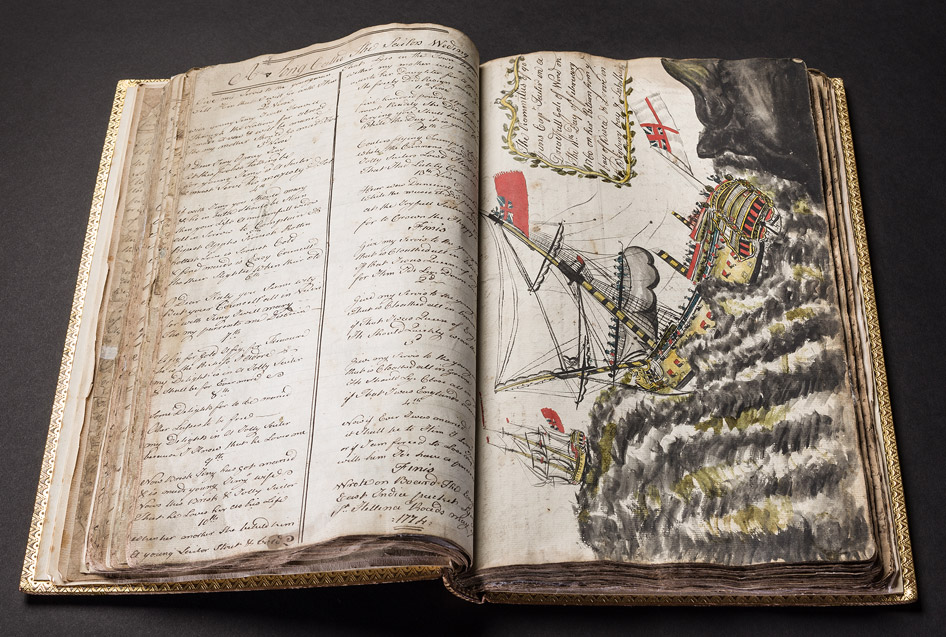
a page from british sailor henry tiffin’s commonplace book, 1760

more and more, the literary form into which i ease is one that traces roots to the ancients. to pliny, the great naturalist, whose mind must have been a beehive of sorts back in first-century rome. it’s an enthusiasm for accumulation that courses its path on through the renaissance when humanists, especially, were anxious to lock down their thoughts, keenly aware of the tragic loss of ancient learning, as libraries were so often, too often, the sites of military revenge. it’s a form that wends its way on and on through the centuries, straight through the twentieth, when mark twain, thomas hardy, ralph waldo emerson, and henry david thoreau, to name but a few, all partook of the habit. and here we are now, with plenty of us keen practitioners of the urge to gather up bits of literary esoterica and assorted ephemera before they skitter away. i think of myself, more often than you might imagine, as a rag picker of ideas in any which size, from the itty-bitty and poetic to the mindbogglingly big.

humans, it seems, like to scribble things down.

may our scribbling never cease.

the fancy name for this scribbling is commonplacing, the literary form the italians once named zibaldone, “a salad of many herbs,” in culinary terms, or a “hodgepodge” more broadly. we’re contemplating here the hodgepodge.

it’s the mosquito netting of the mind, of wonders and thoughts before they escape. or, as the 13th-century dominican monk, vincent of beauvais, once explained, it was “the multitude of books, the shortness of time, and the slipperiness of memory” that compels one to scribble.

count me in on the slippery mind.

vincent’s not-so-slippery solution: a ginormous tome, totaling 4.5 million words (someone counted!), an exhaustive compendium of all medieval knowledge, which he titled speculum maius (literally “great mirror”), speculum a word he chose because it contained “whatever is worthy of contemplation (speculatio), that is, admiration or imitation.” and thus he set out, over the course of his monastic lifetime to gather all the “flowers” (his word), or best bits of all the books he was able to read, in a selfless quest to save others the strains (time, money, trips to the library) of doing so themselves.

over the last many months, as the population of this old house has dwindled to two, and the stories to tell are fewer and fewer, my efforts here seem to have morphed into a looser, yet more concentrated consideration of the bountiful ideas and thunderbolts i bump into across the arc of a week.

there is something so natural about the human instinct to share what we’re thinking. of course there are those who might protest, who might consider me rude for shoving a book or a page or a picture in your face. but, when you think of it, isn’t that the instinct that drives so much of social media? (i often think we’ve gone overboard there, but that might be because too often it’s the magnification of any or every passing brain burp and not necessarily ones that might leave us enlightened. and too often amount to plain old overgazing at navels, or hair-raising nastiness and gut-wrenching vulgarity. but i digress…)

i’ve been keeping what amounts to my salad of many herbs for years and years now, and that urge seems to have spilled over to here, where week after week sometimes i seem to be assaulting you with the few morsels i’ve found most delicious in recent days. it’s a way, i suppose, of collectively swelling our brains. and our souls, most certainly.

in the spirit in which i bring my rag picking here, i like to think of us sitting side-by-side, cozy against the pillowy confines of an armchair broad enough for two. and in the gentlest, yet conspiratorial whisper, i offer you a page or a passage, my eyes widened and sparkling with glee, as if to say, wait’ll you see this one. what wonderments or deep thoughts spring to your mind?

any one of these next morsels is worthy of long and deep consideration. here are the ones that struck me this week:

these first two come from maria popova, whom i’ve referred to in the past as the high priestess of cultural commentary, and one of the most voracious gatherers of ideas i’ve encountered in recent years. her online literary journal, now known as The Marginalian, has been described as a compendium of hundreds of thousands of entries “that search for meaning, cross-linking ideas and connecting metaphysical dots.” here’s where she thunderbolted me this week:

“joy is a stubborn courage we must not surrender.”

“. . . love — whether we call it friendship or family or romance — is the work of mirroring and magnifying each other’s light. Gentle work. Steadfast work. Life-saving work in those moments when life and shame and sorrow occlude our own light from our view, but there is still a clear-eyed loving person to beam it back. In our best moments, we are that person for another.”


another place i often turn for soulful sustenance is Emergence magazine, a wellspring that explores the timeless connections between ecology, culture and spirituality. in a recent talk, titled “memory, praise, and spirit,” the filmmaker, composer, sufi teacher, and driving force behind Emergence, emmanuel vaughan-lee, opened with these words:

“The mystics say that we are like a seed; that we hold the blueprint for our highest potential within us, and that much of spiritual practice, regardless of what tradition, is unlocking that potential.”


and i close with this one from the great james baldwin, a passage from his 1964 collection of intimate but somewhat little-known essays, titled nothing personal. this passage is from the fourth of the four essays collected there:

“One discovers the light in darkness, that is what darkness is for; but everything in our lives depends on how we bear the light. It is necessary, while in darkness, to know that there is a light somewhere, to know that in oneself, waiting to be found, there is a light.”

i could write an essay on any one of the above, but instead i invite you to chew on each or any one. each one, a morsel worthy of your time, your mind, your soul.

which one spurs you and stirs you the most, and what deep thoughts spring to your mind?

i’ve written before of commonplacing. here at the chair, and in my latest book, The Book of Nature, on pages 87 and 88. it’s a habit i can’t get enough of, an urge i can’t quench.

pages from the commonplace book of charles dodgson, aka lewis carroll

the imperative prompts: realizing life while we live it

“Do any human beings ever realize life while they live it?––every, every minute?”

“No.”

Pause.

“The saints and poets, maybe––they do some.”

it’s these three lines plus the pause from thornton wilder’s “our town” that stopped me cold this week. released to the world in 1938, the three-act classic set in grover’s corners, a celebration of “ordinary people who make the human race seem worth preserving,” was once described by edward albee as “the greatest american play ever written.” i’m sure that claim is dusted over now, but its timelessness is proven. and these lines between emily and the stage manager, rising off the page after the commonplace litany of ticking clocks, and sunflowers, food and coffee, new-ironed dresses and hot baths, are the ones that called out to me across the arc of time.

it is the question that preoccupies me. it is the spiritual quest at my core: can i stay awake to the marvel around me? can i sift through the detritus and chaff that inevitably litter the days, and seize the glittering wonders? can i palpably know that these are the days i’ve been given to give what i have, to tap into the holiness within and leave at least some in my wake?

and thornton wilder was putting those questions on the stage nearly a century ago. and before wilder, and since wilder, countless sages have put forth the very same prod. are we awake yet? are we taking this all for granted? are we forgiving those who’ve trespassed against us, and asking forgiveness for the sins of our very own making?

we are meant to pay attention. we are meant to be kind. we are meant to love and love gently yet fiercely. we are meant to notice the ticking of clocks, the falling of rain, the sunglorious glow of one fat red tomato.

it’s the saints and the poets who sometimes remember. who point us, perhaps, in the certain direction. it was that reminder, the ranking of poets right up there with saints, that captured me too. that underscored and amplified a truth i know to be true: the imperative prompts so often come in the unlikeliest, quietest voices among us. in the script of a play nearly a century old.

where did you find your wisdoms this week?

summer idyll: another name for “idle”

summertime is for slow. and slow i am this summer. i watch bunnies make breakfast buffet of my flowerpots. i keep vigil for a redbud tree that might be on its death march. i cut corn off the cob and dump it into confetti-like salads, delicious salads of tomato, armenian cucumber, and fists full of basil. i swim, slowly and gasping for air at the end of the lanes, in a pool where i am the youngest by a few decades.

and of course i read, an exercise that requires little other than the moving of one’s pupils, the occasional blink, and the turning of pages should one resort to that quaint document, the page.

and so it was in reading this week that those pupils of mine––and the braincells behind them––paused for deep consideration when i came across a commencement address by the late great russian poet and essayist joseph brodsky.

joseph brodsky

in the summer of 1989, two years after he won the nobel prize in literature and two decades after he fled the soviet dictatorship with the help of w.h. auden, brodsky stepped to the podium at dartmouth college to give the commencement address, later published in a posthumous collection titled, “on grief and reason: essays” (farrar, straus and giroux, 1997).

the topic he chose, curiously, was boredom. but brodsky being brodsky, he soared with it. and because i found it altogether mesmerizing, and because his closing passage stuck with me in what amounts to the cerebral iteration of gum to the bottom of your sneakers, i’m bringing it here to the old make-believe maple table.

what’s true, in these months of living fully awake to the ephemerality of time, is that i soak in especially the wisdoms of those who understand that fleetingness to be central to the sanctifying of time’s each and every parcel. to understand that time is not endless, but rather bracketed and with certain end, is for me anyway the gravitational force that drives my attention out of malaise and into full-on savor.

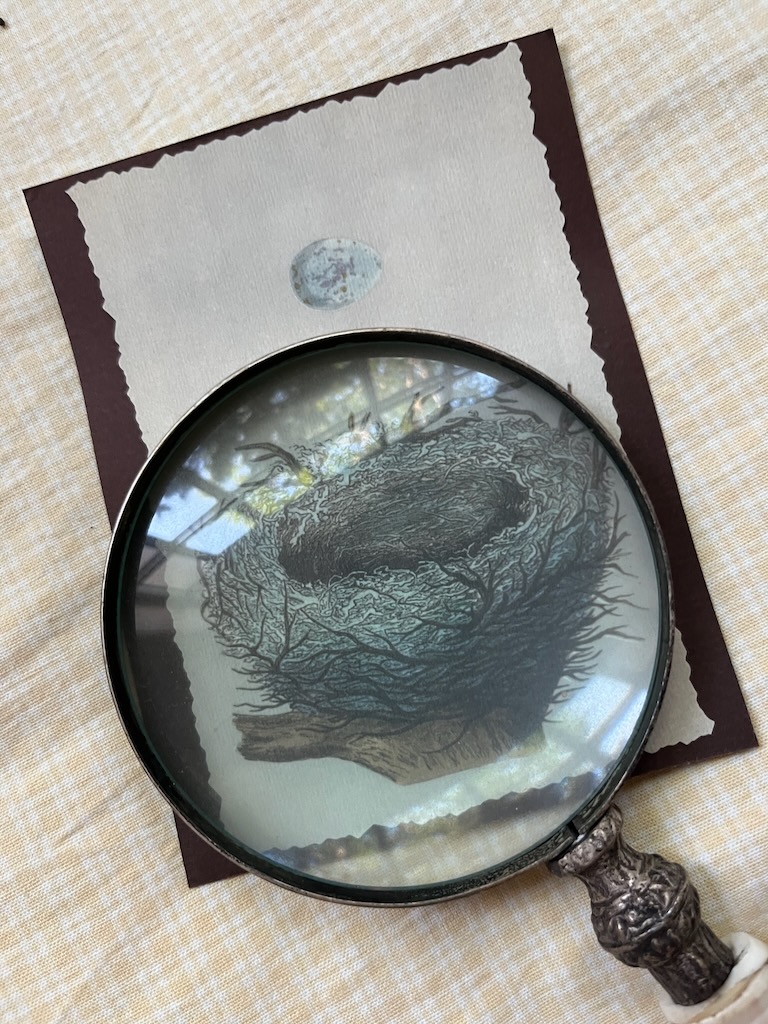
i hold each grain of time, as often as i pause and catch myself, up to the incandescent luminescence that reveals and magnifies its wonder. in other words, i aim to live with one of these in my back pocket, gliding time beneath my ever-ready looking glass:

here then is where brodsky begins his deep-dive into boredom, as he looked out upon a sea of soon-to-be-graduates at that ivy-covered college in new hampshire’s piney countryside (i’d endorse reading clear through these next few grafs, but if you’re pressed for time, leap down to the bottom of read to see if you, too, are struck by brodsky’s likening our time here to a ride on a runaway train, and his admonition to seize each blessed frame as it’s passing by):

Known under several aliases – anguish, ennui, tedium, doldrums, humdrum, the blahs, apathy, listlessness, stolidity, lethargy, languor, acedia, etc. – boredom is a complex phenomenon and by large a product of repetition. It would seem, then, that the best remedy against it would be constant inventiveness and originality. That is what you, young and newfangled, would hope for. Alas, life won’t supply you with that option, for life’s main medium is precisely repetition.

[…]

In a manner of speaking, boredom is your window on time, on those properties of it one tends to ignore to the likely peril of one’s mental equilibrium. In short, it is your window on time’s infinity, which is to say, on your insignificance in it. That’s what accounts, perhaps, for one’s dread of lonely, torpid evenings, for the fascination with which one watches sometimes a fleck of dust swirls in a sunbeam, and somewhere a clock tick-tocks, the day is hot, and your willpower is at zero.

Once this window opens, don’t try to shut it; on the contrary, throw it wide open. For boredom speakes the language of time, and it is to teach you the most valuable lesson in your life – the one you didn’t get here, on these green lawns – the lesson of your utter insignificance. It is valuable to you, as well as to those you are to rub shoulders with. “You are finite,” time tells you in a voice of boredom, “and whatever you do is, from my point of view, futile.” As music to your ears, this, of course, may not count; yet the sense of futility, of limited significance even of your best, most ardent actions is better than the illusion of their consequences and the attendant self-aggrandizement.

For boredom is an invasion of time into your set of values. It puts your existence into its perspective, the net result of which is precision and humility. The former, it must be noted, breeds the latter. The more you learn about your own size, the more humble and the more compassionate you become to your likes, to that dust swirls in a sunbeam or already immobile atop your table. Ah, how much life went into those fleck! Not from your point of view but from theirs. You are to them what time is to you; that’s why they look so small. And do you know what the dust says when it’s being wiped off the table?

“Remember me,”
whispers the dust.

Nothing could be farther away from the mental agenda of any of you, young and newfangled, than the sentiment expressed in this two-liner of the German poet Peter Huchel, now dead.

brodsky closes his address with the words that first caught my eye this week, and that i––once again––will aim to not forget:

[…]

What lies ahead is a remarkable but wearisome journey [on a] runaway train. No one can tell you what lies ahead, least of all those who remain behind. One thing, however, they can assure you of is that it’s not a round trip. Try, therefore, to derive some comfort form the notion that no matter how unpalatable this or that station may turn out to be, the train doesn’t stop there for good. Therefore, you are never stuck — not even when you feel you are; for this place today becomes your past… receding for you, for that train is in constant motion. It will be receding for you even when you feel that you are stuck. So… look at it with all the tenderness you can muster, for you are looking at your past.

i reached for that confetti salad glamour shot above because it was a bit more visual than trying to find an image of boredom. it was perhaps the most delicious thing i made this week (the grilled salmon that arrived with the salad was mighty good, but i did nothing other than introduce it to the heat of the grill), and if you’re now hungry, here’s the recipe, courtesy of david lebovitz, a former pastry chef from chez panisse now a cookbook writer living in paris. lucky david.

fresh corn, tomato, cucumber, avocado, basil summer salad

2-3 ears of fresh corn
2 cups (350g) cherry tomatoes , (or 2 cups fresh tomatoes, diced)
1 ripe avocado
1/2 cucumber, peeled and seeded
1 cup (75g) loosely packed chopped fresh basil, (reserve any small leaves for garnish) Freshly ground black pepper
Vinaigrette
2 tablespoons red wine vinegar
4 teaspoons Dijon mustard
1-2 small shallots, peeled and minced (1-2 tablespoons)
1 teaspoon sea or kosher salt
6 tablespoons (90ml) extra-virgin olive oil

  1. Shuck the corn and remove it from the cob.
  2. Remove any stems and slice the cherry tomatoes in half.
  3. Peel the avocado, remove the pit, and dice the flesh. Cut the cucumber into similar sized cubes.
  4. Put the corn kernels, tomatoes, avocado, cucumber, and basil into a serving bowl and season with freshly ground black pepper.
  5. In a small bowl, whisk together the vinegar, mustard, shallots, salt, and olive oil. Pour the vinaigrette dressing over the salad and gently mix together. Taste, and add more salt and pepper if necessary.

Serving and storage: The dressed salad can be served right away or in a few hours. (It can be stored in the refrigerator or at room temperature, but should be served room temperature.) It’s best the same day it’s made.

your thoughts on the runaway train (above) welcome here, with the related question, what are the ways you remind yourself to live each day mindful of the preciousness and miracle that it holds?

of joy and hope in hard times

evidence of joy lurking somewhere in the house

joy comes in curious form. in simplest form sometimes. it arrived deep in the night last night in the form of tiptoes up the stairs. and then a creak of bedroom door. had i not been lost in the murky land of dreams i might have been startled, might have worried that burglars were afoot. instead, i somehow thought it was the mate asleep beside me, that he’d roused and went out lurking. but then i felt the lump beneath the sheets. and as the murk faded i realized the night visitor must be the very one who’d called that room his own for so many years.

a night visitor, sometimes, brings joy.

and so it is that the simple knowing that, come the waking hour (his waking hour clocks in hours beyond mine), i’ll be at the stove tossing berries in a pond of batter, is enough to wash me in a morning’s joy.

it’s as simple as that sometimes. as narrow-focused.

these days, i contemplate strategies for making joy. and survival.

we live in dark times. not so dark as other moments in history, perhaps, but dark enough to make it hard to dodge the shadow. or the pit in my belly that will not subside.

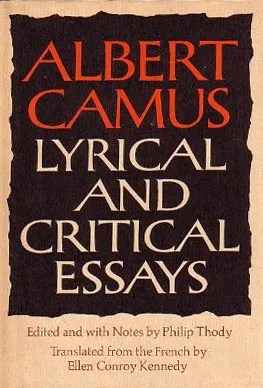
i found myself turning, this week, in three different instances to albert camus. not the first on my list when it comes to literary prozac, but thrice he and his wisdoms came through for me. his words, drawn from a collection of posthumously published essays, speak across the decades, and if a writer born into one world war, who lived through another, could find it in his soul searching to seek and find a trail of hope, well then he’s one to whom i’ll listen.

in the year i was born, camus (1913-1960) became the second-youngest laureate of the nobel prize for literature, awarded for writing that “with clear-sighted earnestness illuminates the problems of the human conscience.” the problems he mined were these: art as resistance, happiness as our moral obligation, and the measure of strength through difficult times.

one of my modern-day muses, as you might have gathered if you read here very often, is the cultural critic maria popova who rarely fails to pluck gems worth tucking in forever chests. in a trail that led me to her this week, i found that some years ago she too took a turn into the deep well of camus. she wrote:

“During WWII, Camus stood passionately on the side of justice; during the Cold War, he sliced through the Iron Curtain with all the humanistic force of simple kindness. But as he watched the world burn its own future in the fiery pit of politics, he understood that time, which has no right side and no wrong side, is only ever won or lost on the smallest and most personal scale: absolute presence with one’s own life, rooted in the belief that ‘real generosity toward the future lies in giving all to the present.’”

she goes on to point out that in camus’ writing she hears the echo of the young dostoyevsky’s exultant reckoning with the meaning of life shortly after his death sentence was repealed (“to be a human being among people and to remain one forever, no matter in what circumstances, not to grow despondent and not to lose heart,” dostoyevsky wrote to his brother, “that’s what life is all about, that’s its task”). these giants of literature belong on our nearest shelves for, in so many ways, they’ve left us instructions––or is it imperatives?––for living.

and here we hear camus:

“What counts is to be human and simple. No, what counts is to be true, and then everything fits in, humanity and simplicity. When am I truer than when I am the world?… What I wish for now is no longer happiness but simply awareness… I hold onto the world with every gesture, to men with all my gratitude and pity. I do not want to choose between the right and wrong sides of the world, and I do not like a choice… The great courage is still to gaze as squarely at the light as at death. Besides, how can I define the link that leads from this all-consuming love of life to this secret despair?… In spite of much searching, this is all I know.”

albert camus

not realizing i was tracing camus through the week, the first time he caught my eye this week was in the single short first sentence below, which hit me as a fist to the belly as i count my days under the penumbra of those first three words:

“Life is short, and it is sinful to waste one’s time. They say I’m active. But being active is still wasting one’s time, if in doing one loses oneself. Today is a resting time, and my heart goes off in search of itself. If an anguish still clutches me, it’s when I feel this impalpable moment slip through my fingers like quicksilver… At the moment, my whole kingdom is of this world. This sun and these shadows, this warmth and this cold rising from the depths of the air: why wonder if something is dying or if men suffer, since everything is written on this window where the sun sheds its plenty as a greeting to my pity?”

and finally, at 27, camus wrote this, speaking for this moment as well as the dark, dark times of 1940 when he wrote them:

“Our task as [humans] is to find the few principles that will calm the infinite anguish of free souls. We must mend what has been torn apart, make justice imaginable again in a world so obviously unjust, give happiness a meaning once more to peoples poisoned by the misery of the century. Naturally, it is a superhuman task. But superhuman is the term for tasks [we] take a long time to accomplish, that’s all.”

as if all that was not enough to carry me across the tide of this july’s miasma, it was with joyful inkling of recognition that my reading unearthed this most unforgettable line of camus:  “In the depths of winter, I finally learned that within me there lay an invincible summer.”

do yourself a favor and check out camus’ lyrical and critical essays. and consider leaving the front door unlocked lest any night visitor might wander in with reservation for blueberry pancake breakfast.

and may we all find that invincible summer.

what carried you across the abyss this week?

my night visitor, of course, is the boy we rarely see these days as he is ever toiling in the kitchen of stephanie izard’s famed girl and the goat eatery. but the holiday upon us drew him out of the city to an old friend’s house, where the hour was late enough that trains must have ceased their chugging along the track, and thus we scored him for the night. good thing the sheets are always clean, and the griddle ever at the ready.

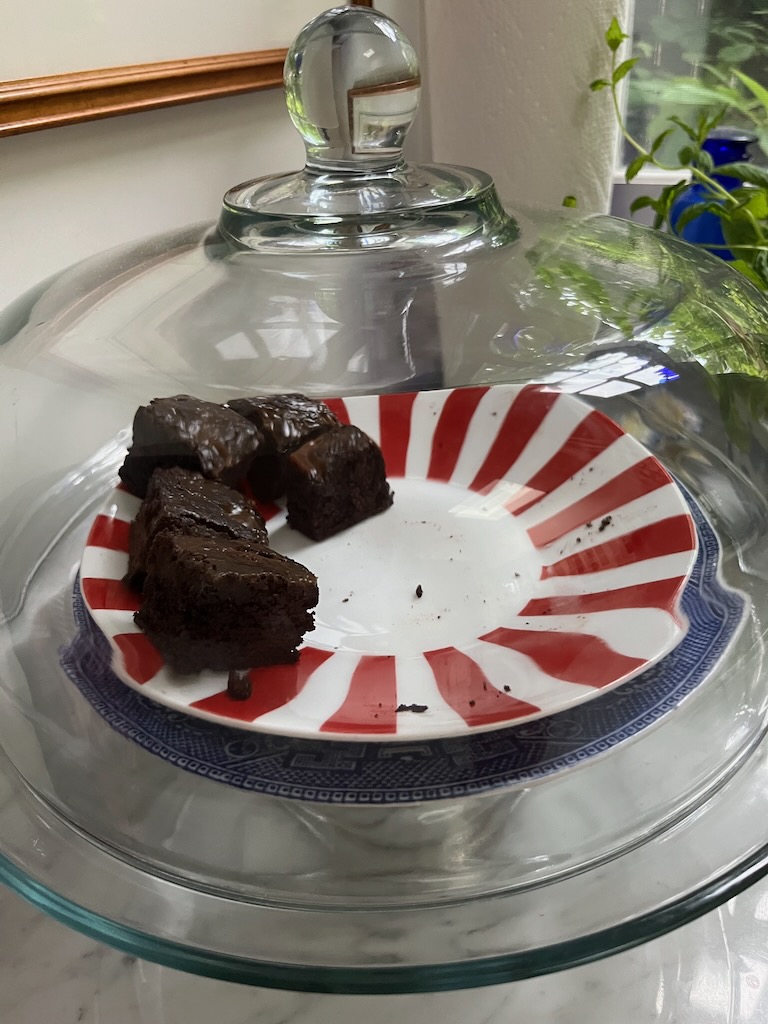
the cookie dome above, scattered with bits of brownie crumb, is one of the few clues left behind by the night visitor. i always delight in remnant evidence when i awake in the morning and find the kitchen not exactly as i’d left it. those crumbs bring volumes of joy to me…

where my rabbit hole led me this week. . .

one in a series of summertime esoterica, in which for no particular reason my attention is drawn to this, that, or the other thing…

deep in my summertime poking-around ways, a pursuit of reading akin to ambling barefoot through dew-sodden grass, i found myself the other day burrowing into a rabbit hole, following the trail of a late-19th-century theologian with radical ideas and gloriously poetic prayers. (i might just as effortlessly follow the trail of what to do with too much zucchini, or why banana-peel-steeped waters are so fine for my fledgling tomatoes…it’s a carousel of wonders here on curiosity row…)

walter rauschenbusch (1861-1918)

the theologian of the week, here in rabbit-hole land, is one walter rauschenbusch, the late 19th-century clergyman and theologian who led the Social Gospel movement in the U.S., and whose work is said to have influenced a litany of great 20th-century social-justice warriors, among them martin luther king jr., desmond tutu, lucy randolph mason, reinhold niebuhr, and george mcgovern. his animating idea was that not just individuals but the whole of society needed to work toward what he termed “the kingdom of God” on earth, a place where justice and peace as well as equal rights and a democratic distribution of economic power were holy and necessary works, ones that demanded constant and unrelenting effort. 

rauschenbusch’s radical theology, it seems, was informed by eleven years working as a baptist pastor in NYC’s aptly-named Hell’s Kitchen, where he presided over the funerals of hundreds of children who died from the ravages of impoverishment—malnutrition, domestic violence spurred by overcrowded tenements, or any of the other ills born of economic destitution. 

rauschenbusch wrote: “I began to realize that God hates injustice and that I would be quenching God’s spirit within me if I kept silent with all of the social sin of the world around me.”

of the hundreds of children’s funerals over which rauschenbusch presided (many of them for children younger than five), he wrote:

“At each funeral I would find myself crying out to God, ‘Why do the children have to suffer in this manner?’ I recall on one occasion one of the church members, a single father who worked at a factory for 12 hours each day. His daughter was dying at home and calling out for her daddy. The employer refused to allow the father to go home to be with his daughter in her last hours.

“It was not uncommon to see grown men near our church just begging for work, just so they and their families could survive.

“It was in this context that I began to understand sin in a new and radical way. Baptists had always been known as railing and condemning the sins of alcoholism, smoking, gambling, and sexual promiscuity, such as were exemplified in the lives of the many prostitutes who lived and worked very close to our church. . . .

“The radical conclusion that I came to was this: all of these personal sins which were so obvious to everyone were somehow connected to the sin of structural injustice. So many people saw no hope, no way to extricate themselves from their living hell, their dead-end street. So many would resort to alcoholism. Women would feel compelled to become a prostitute so they could feed themselves and their families. Charles Dickens in his writings helped us see and somewhat feel the environment that could ensnare anyone who was trapped in a world of deprivation and desperation.

“The less obvious sins to most Baptists and other conservative leaders were those that were represented by the vast gulf between those who were extremely opulent, you might say ‘filthy rich,’ and the vast majority of people who were barely able (and oftentimes not able) to get by.”

finding wisdoms from the past for these arduous times is, perhaps, too futile a pursuit. but i believe in the endosperm of hope. and rauschenbusch’s prayers––and his theology––seem apt for a dusting off. and, besides, his prayers are beautifully wrought.

my eye was caught first by one of those prayers, the evening prayer (below) but as i kept reading it was the line above––“I began to realize that God hates injustice and that I would be quenching God’s spirit within me if I kept silent with all of the social sin of the world around me.”––and the children’s funerals that informed it, that clutched me at the gut and won’t let go.

here, as a place to begin, is but one of his prayers, with particular resonance for one who delights in all of creation, especially the trials and triumphs just beyond my own back door:

FOR OUR WORLD, OUR EARTH

O God, we thank You for this universe, our great home; for the vastness and richness of our cosmic environment; for the manifoldness of life on the planet of which we are a part.

We are thankful for the morning sun and the clouds and the constellations of stars.

We rejoice in the salt sea and the deep waters and green leaves of grass.

We thank You for our sense by which we experience earth’s splendor.

We would have souls open to all this joy, souls saved from being so weighted with care that we pass unseeing when the thornbush by the wayside is aflame with beauty.

Enlarge within us a sense of fellowship with all that lives and moves and has being in space and time, especially with all who share this earth as their common home with us.

Remembering with shame that in the past, we human beings have all too often exercised high dominion with ruthless cruelty, we admit that the voice of the earth, which should have gone up to You in song, has been a groan of travail.

May we so live that our world may not be ravished by our greed nor spoiled by our ignorance.

May we hand on earth’s common heritage of life, undiminished in joy when our bodies return in peace to You, our Great Mother who has nourished them.

and here is the beginning of his evening prayer: 

LORD, we praise thee for our sister, the Night, who folds all the tired folk of the earth in her comfortable robe of darkness and gives them sleep. Release now the strained limbs of toil and smooth the brow of care. Grant us the refreshing draught of forgetfulness that we may rise in the morning with a smile on our face. Comfort and ease those who toss wakeful on a bed of pain, or whose aching nerves crave sleep and find it not. Save them from evil or despondent thoughts in the long darkness, and teach them so to lean on thy all-pervading life and love, that their souls may grow tranquil and their bodies, too, may rest. And now through thee we send Good Night to all our brothers and sisters near and far, and pray for peace upon all the earth.

if you’re interested, here’s a link to a PDF of rauschenbusch’s 1910 collection of prayers, For God and the People: Prayers of the Social Awakening.

in the book’s preface, rauschenbusch explained the collection’s genesis: “The language of prayer always clings to the antique for the sake of dignity, and plain reference to modern facts and contrivances jars the ear. So we are inclined to follow the broad avenues beaten by the feet of many generations when we approach God. We need to blaze new paths to God for the feet of modern [women and] men.”

amen, pastor rauschenbusch, amen.


as long as we’re quoting old white men, i admit to being an admirer of the writings of that old-time radio humorist garrison keillor, who has mellowed beyond measure with age. in an ode to summer’s slow pace the other day, he wrote this about morning light, one of the blessings that comes with waking early, a habit i consider essential to the deep breathing of my soul:

It’s a revelation of delight, of our Creator’s delight in His creation, and though we’re brought up to be skeptical, wary of big hopes, prepared to deal with the injustices of life, still the dawn light argues with stoicism and you see the beauty of the ordinary


what ordinary beauties or big ideas captured your imagination this week?

and here’s a harder question (to ponder in your own soul): what shall we do so as not to stay silent in the face of the social sin of the world?

and happy blessed blessed day to my beloved andrea, who makes me laugh hard and often, and whose goodness seems vaster than the circumference of this big blue globe. (A is one of the chair friends who reads dutifully nearly every week, and more often than not sends along a note that melts me or makes me laugh every time…)

the quarryings of time

my hair is gray. my left shoulder is frozen. my right middle finger locks most mornings. and half of one of my lungs is no longer. 

there’s more (darn that paralyzed vocal cord), but the dirge needn’t drone on. the point is i’ve been quarried by time. which is close to the way annie dillard, my polestar and patron saint of seeing, put it in a passage i read –– and couldn’t forget –– this week. 

on page 238 of pilgrim at tinker creek, my bible of the woods, annie D. turns her otherworldly attentions to living creatures in various states of disarray: spiders with only six or seven of eight species-imperative legs; grasshoppers missing antennae; butterflies whose wings are torn; a swallowtailed sparrow minus its tail. and, yet, and yet, they creep and leap and flutter and glide on anyway. nature is not daunted by its disassembling. 

nor should we be. 

when it comes to us humans –– the species with the power to wonder, to question, to connect the occasional dots –– each quarrying carries its own volume, its own mysteries and humilities and sometimes epiphanies. each nick or chink in the armament of flesh and sinew and bone both takes us down a notch, and, if we’re paying soulful attention, points us closer to our soul, to that essence that bellows our being.

dillard writes thusly:

I am a frayed and nibbled survivor in a fallen world, and I am getting along. I am aging and eaten and have done my share of eating too. I am not washed and beautiful, in control of a shining world in which everything fits, but instead am wandering awed about on a splintered wreck I’ve come to care for, whose gnawed trees breathe a delicate air, whose bloodied and scarred creatures are my dearest companions, and whose beauty beats and shines not in its imperfections but overwhelmingly in spite of them, under the wind-rent clouds, upstream and down.

she got me to thinking about the beauty in brokenness. in disrepair. in all the parts of me that no longer follow instructions. 

and then four pages in, annie lands on the phrase that’s entranced me all week. she wonders aloud if, rather than somehow thinking it our birthright to come into existence “with the spangling marks of a grace like beauty rained down from eternity,” we might be wiser to realize we’re most whole “with the botched assaults and quarryings of time?”

“we are all of us clocks,” she goes on, quoting british astrophysicist arthur stanley eddington, who described us as clocks “whose faces tell the passing years.”

there, in those time-etched crowsfeet and the lines that furrow our brow, lie some of our deepest wisdoms. and most hard-earned beauties. that is, if you, like me, consider it a dazzling thing to have tucked into your brain files those rare few ideas whose staying power drives your every step thereafter. 

i’ve been in hospitals more times than i can count, have sat with eyes squeezed shut as someone drew needle and thread through my torn flesh, have felt the warm ooze of plaster cast being swaddled round my broken wrist. and each and every time, the wounds have left me more awake to life’s unscripted, oft-unspoken ponderings. (except maybe not the time when i made like peter pan, and flew off a garage roof when a rope swing escaped my grasp.) each and every time, we emerge keener to the pains –– and wonders –– of the world.

the most lasting empathies are forged in ERs and aftermaths.

and think about this: might you tally the innumerable times you’ve broken into smile, or squinched your eyes in irrepressible delight, to earn yourselves those hieroglyphs that now stand testament to your life’s-long accumulation of joy, or the hours you bent in deep concentration. or worried for the someones you love.

such are the quarryings of time. they inch us toward our holiest core.

it’s an excavation i’d not surrender.

now in my seventh decade (egad, that sounds sooooo old), i’ve been reminded time and again that none of this is a given. and we are breakable vessels nearly every time. and yet, without the botched assaults and the quarryings, from whence would come our vast acquired wisdoms? 

how would i know how precious each birthday candle is if i’d not wondered “will there ever be another?” how would i know the utterly-taken-for-granted gift of seamlessly sliding an arm down a sleeve if i’d not done so yelping the whole while?

doesn’t our brokenness bring us the pricelessness of knowing how deeply perishable we are? and how we’d best get on with what we know to be those few defining pursuits: whatever is the thumbprint we aim to leave behind on the life and lives we’ve loved? 

aren’t our depths — even the impossible-to-ask-aloud parts –– the prize that comes via our frayed and nibbled selves? 

none of us asked for nor expected the choreography of our lives. but with each and every quarrying there’s come an unintended plus. even if it took awhile to make itself apparent. 

all of which brings me roundabout to this prayer for beauty in the mundane. beauty in the brokenness is another prayer for which i pray. but first, this from writer and poet Cole Arthur Riley*’s breathtaking book Black Liturgies, in which she prays for our capacity to hold together the extraordinary and the ordinary:

God of every beautiful thing,

Make us people of wonder. Show us how to hold on to nuance and vision when our souls become addicted to pain, to the unlovely. It is far easier to see the gloom and decay; so often it sings a louder song. Attune our hearts to the good still stirring in our midst, not that we would give ourselves to toxic positivity or neglect the pain of the world, but that we would be people capable of existing in the tension. Grant us habits of sacred pause. Let us marvel not just at the grand or majestic, but beauty’s name etched into every ordinary moment. Let the mundane swell with a mystery that makes us breathe deeper still. And by this, may we be sustained and kept from despair. Amen.

cole arthur riley

*i am reading cole, stockpiling her wisdoms, as i begin to stock my larder for the lean months to come, when i sense the discord of the world beyond my quarter acre might otherwise knock me asunder. i intend to find a path toward the light. and i will, of course, bring it here.

how has time quarried you? what treasures did you find down deep beneath the dug-out parts?

any time i can bring a nurse to these pages it’s a good day. here, a fine acolyte of healing in action….can you imagine the shenanigans that landed this crew in her sublimely fine care? and, yes, i once wore a cap as pert as hers. and shoes not too dissimilar….