pull up a chair

where wisdom gathers, poetry unfolds and divine light is sparked…

Category: The Book of Nature

ode to my fairy gardenmother: one last love note. . .

Mostly, this is a love letter. One I might have tucked in the pine coffin now buried beneath a foot-and-a-half of Chicago’s clumpiest earth, earth we shoveled onto it, one full spade at a time. The one to whom I write this, though, my fairy gardenmother, is not one ever confined by boxes or borders or hard lines scrawled in the dirt. She, my Marguerite, was as free a spirit as they come. So I cast this to the wind, and know she will catch it. 

Marguerite made beauty for a living. She sowed joy in abundance. Not a single root or shoot was tucked in the earth or tied to a trellis without the ringing sound of her laughter. 

Marguerite’s acanthus

She bequeathed me beauty, her beauty and that of this holy earth. And grace, and a tidepool of peace, the sort that settles deep within, calming what had long been a turbulence. It all came in a litany of botanic derivative, a litany I water and witness: tree peonies, fuchsia and ruffled and broad as a dinner plate; oakleaf hydrangea, its bottle-brush blooms now bursting in time for the Fourth of July. Pieris japonica (sometimes known as lily-of-the-valley shrub, or flame of the forest) whose delicate white star-blooms are the petit point of late springtime, stitched along the bluestone path that bends toward my front door. A dwarf lilac that defies its definition and perfumes profusely my brick walk out back. My garden blooms with acanthus, the ancient Greek thistle of endurance and immortality, and white bleeding hearts that, as instructed, seem to be on the verge of spilling succulence drop by drop by drop. Everywhere, the vanilla scent of Jack-in-the-pulpit rises. There are ferns in abundance, and climbing hydrangea who wouldn’t be daunted by Everest. And about a dozen other beauties whose names I often forget, and when I do I’d text her, and she’d remind me, always with annotation of what she loved most about it. And another something I might want to try. 

If I tried to describe her, I’d begin with her face. Her face was alive, was radiant, was always revved up in joy. Or deep concentration. Her laugh came easy, so easy. Her limbs flowed. She was a ballerina in the everyday. Clogs buried in garden, wielding a shovel or pruners, she swayed with the wind, with the whims, with purpose. 

She planted my secret garden, the one that meanders along the side of my house, from my writing room window, past the kitchen door, and into the garden out back. It’s the place I’d point to if pressed to answer the question: Where did you finally find your long-sought peace? It was there in the garden that Marguerite grew. 

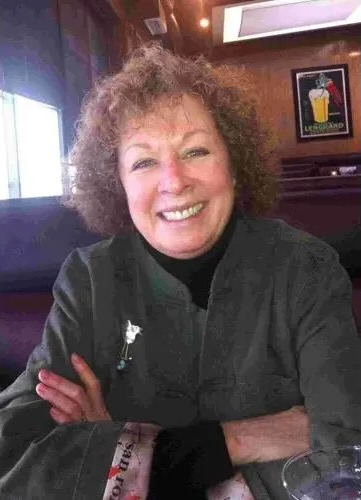
I first met Marguerite a garden ago, back in 1991, months after we married, my beloved and I. The very day we wandered into the old Victorian that became our house for a decade, the house to which both our boys first came home, the house that held so many joys and so many sorrows, Marguerite was there. She was packing up boxes with Jim the sculptor who was dying of AIDS, and who would soon leave us his beautifully sculpted three-story house (and a set of Old Willow dishes besides). They wept and wailed and laughed together. We heard the echo of their affections before we saw them, and when we climbed the stairs there she was: radiant, a mop of blond curls, eyes hazel and sparkling. 

She knelt beside me summer after summer, teaching me much of what I know about what grows in a garden. We wandered nurseries and tree lots. We planted according to her unorthodox teachings. When anything ailed, she knew the fix. Or we yanked it and started again. 

My jewel box of a tiny urban garden, one where the alley rats dared not roam for the fierce farm cat who patrolled it, grew to be a wonder. One whose measure in my mind far exceeded a yardstick. 

When at last we decided we’d finished our work, at least for the time being, Marguerite and Ted, her rabbi of a husband who presided over a congregation of his psychotherapy clients, came by one late summer’s evening to bless the little plot. In a story I love so much I included it on pages 37 and 38 of The Book of Nature**, Ted offered up fertility prayers for my garden, that it would blossom and bloom, and multiply. Four months later, on the brink of my 44th birthday, after eight years of broken hearts and infertility, I discovered that I was the one blossoming and multiplying. I was “with child,” as the Bible would put it. I always giggled that Ted had mixed up his fertility prayers, and pulled out the ones for the barren woman instead of the ones for the garden. 
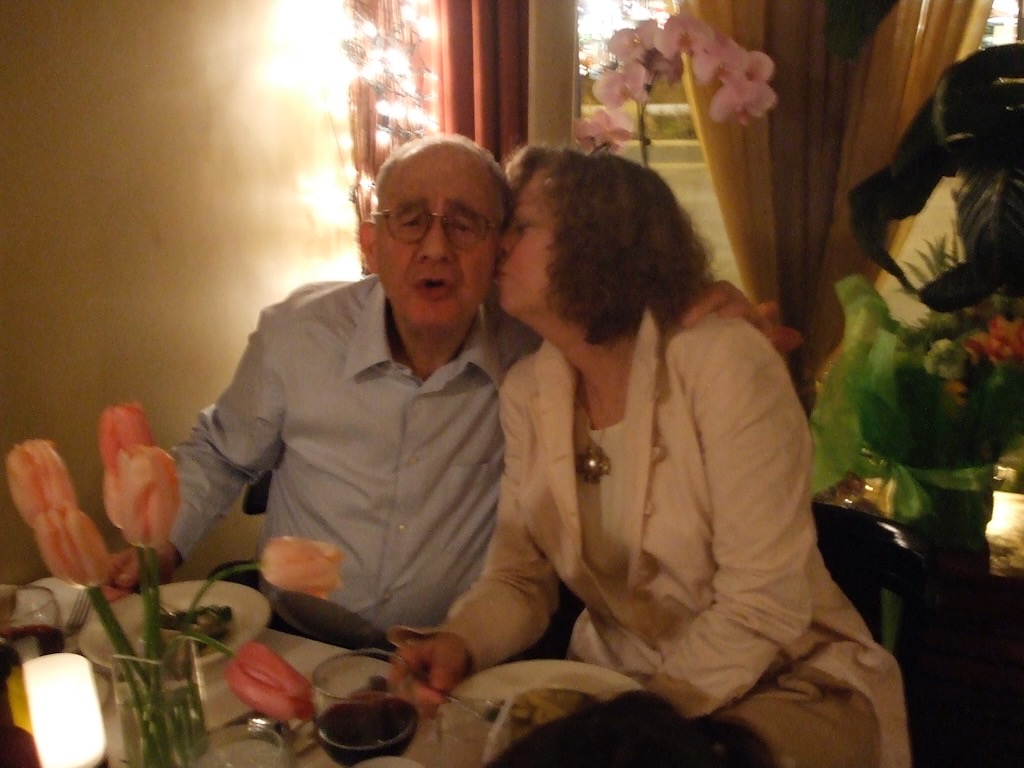
ted and marguerite

And so, of course, and ever since, Marguerite is the one to whom I turned with every garden question, and every delight as it bloomed. When Ted died not quite two years ago, I knew Marguerite’s heart was shattered. And there was no glue in the world to put it back together. But I didn’t know it would kill her. 

I now know that it did. For she died on Monday, and was buried on Tuesday. And ever since I’ve been strolling through my garden, stopping to marvel here, stooping to deadhead there. I’ve been shlepping my hose, and giving big drinks to each and every bloom bequeathed to me by my Marguerite. 

Marguerite will always bloom in my garden. Her longtime sidekick, David the cop, is coming soon to help me dream once again. There is a plot under the ornamental lilac and the row of burning bush, and I have named it Marguerite’s Garden, and I will be planting it before the month of her death turns to August. 

And it will be abundant in beauty. Because that’s what Marguerite taught me to grow. And that will never die.
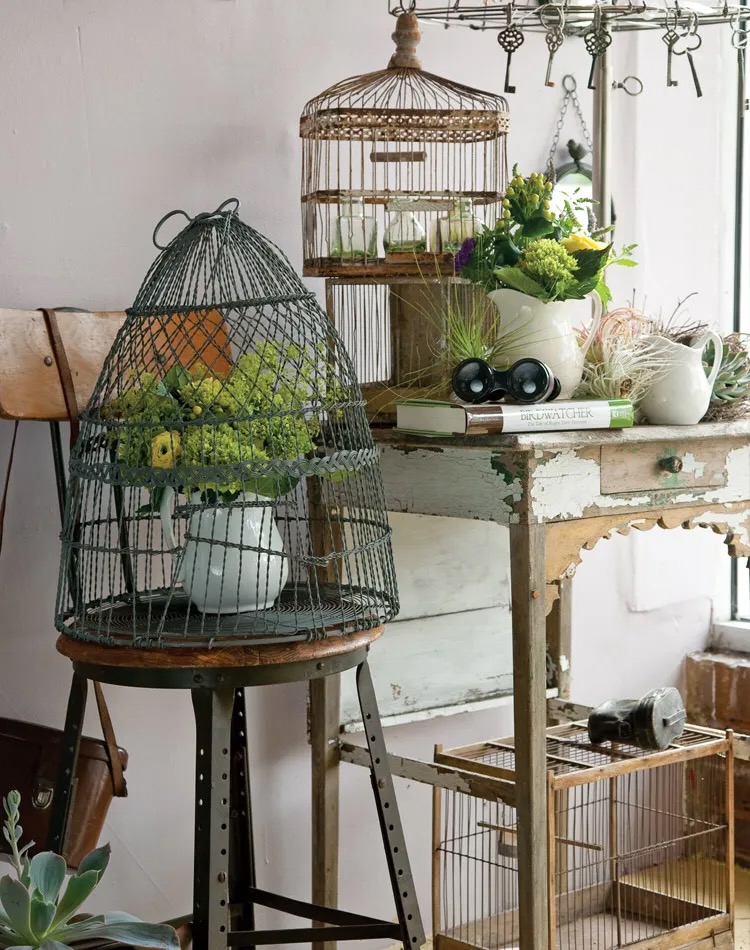
the jewel box of a flower shop: Marguerite Gardens (from Victoria Magazine)

Marguerite’s genius in the garden spread far beyond our little block of Wellington Avenue, 60657. When she couldn’t be contained, she launched a for-hire garden crew (a motley crew counting two cops, a U of C theology grad fluent in Mandarin Chinese, a commodities trader, a banker, and a pet photographer) with a seasons-long waiting list. She planted tulips by the thousands up and down Boul Mich, Chicago’s grand Magnificent Mile. She planted the city’s lushest rooftops and balcony gardens. She was a connoisseur of miniatures, and knew how to cram the most in the least. She opened a dream of a flower shop in Andersonville, aptly named Marguerite Gardens, and twice daily received imports from her beloved Netherlands. The shop, with the bell that tinkled as you walked in, held a European-style flower market, and was stuffed to the rafters with eighteenth-century antiques, from bird cages to terraria. Aptly, she was named for the daisy whose name means “pearl” in French, and is the bloom from which petals are plucked in the prognostication game, “he loves me, he loves me not.” Married for 43 years to the inimitable, unorthodox, Yale-educated rabbi and psychotherapist, Theodore Gluck, Marguerite died 656 days after Ted, three days short of what would have been his 95th birthday. Marguerite was 75.

**excerpt from pages 37 and 38, Marguerite’s star turn in The Book of Nature, in which i describe that first garden we planted and blessed together…

. . .That garden—where a priest, a rabbi, and a tight circle of people we love gathered for blessings shortly after the births of each of our boys; where baby bunnies and nestlings and goldfish were buried after premature deaths; where our stubbornly resistant house cat mastered the art of escape—that plat of earth became as sacred to me as any cloister garth.

Not only was it where I knelt to teach my firstborn the magic of tucking a spit-out watermelon seed into the loam and, each morning after, tracking its implausible surge. During seven long years of miscarriage after miscarriage, ectopic pregnancy and emergency surgery, and doctors finally telling us to give up hope, I dug and I dug in that garden, all but willing the tiniest bulbs and tenderest sprouts to beat impossible odds, refusing to let anything else die on my watch. And then, at the end of one summer, as the crab apples were starting to turn, a rabbi who lived down the block came by with his wife, whom I’d long called my fairy gardenmother for her magical ways and her unbroken guidance. Standing under the stars, the rabbi, his wife, and I, we blessed the garden itself, casting prayers and sprinklings of water. By that Christmas, I was pregnant, with nary a drop of medical intervention. Just shy of forty-five when that blessing of a baby arrived the next August, I’ve always wondered if maybe the rabbi mixed up the garden fertility prayers.

It’s all a holy whirl—that intricate and inseparable interweaving that is the cosmos.


one poem this week, from a bouquet of many i plucked:

Desiderata

Go placidly amid the noise and the haste, and remember what peace there may be in silence. As far as possible, without surrender, be on good terms with all persons.

Speak your truth quietly and clearly; and listen to others, even to the dull and the ignorant; they too have their story.

Avoid loud and aggressive persons; they are vexatious to the spirit. If you compare yourself with others, you may become vain or bitter, for always there will be greater and lesser persons than yourself…

Exercise caution in your business affairs, for the world is full of trickery. But let this not blind you to what virtue there is; many persons strive for high ideals, and everywhere life is full of heroism…

Take kindly the counsel of the years, gracefully surrendering the things of youth…

Beyond a wholesome discipline, be gentle with yourself. You are a child of the universe no less than the trees and the stars; you have a right to be here.

And whether or not it is clear to you, no doubt the universe is unfolding as it should. Therefore be at peace with God, whatever you conceive Him to be. And whatever your labors and aspirations, in the noisy confusion of life, keep peace in your soul. With all its sham, drudgery and broken dreams, it is still a beautiful world. Be cheerful. Strive to be happy.

by Max Ehrmann


and in extra case you’re extra curious, here’s a story i wrote for the chicago tribune back in may of 2000 about my friend marguerite and her garden crew: https://www.chicagotribune.com/2000/05/07/planting-away-again-in-marguerite-aville/

who taught you much of what you know about beauty and joy and free-flowing grace? might you tell us a bit of that story….
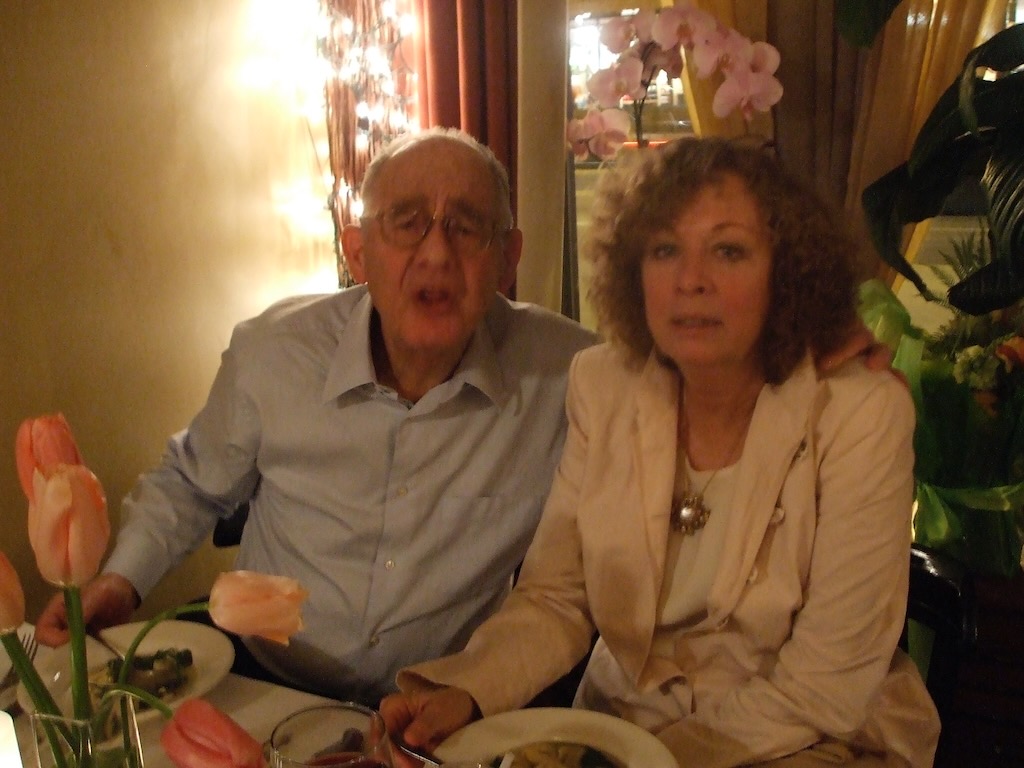
one last time: love story of a lifetime. ted + marguerite = forever and ever. amen.

ashes to ashes under the specter of scan time

remember that thou art dust and unto dust thou shalt return. 

sobering words, as the grainy smudge is pressed upon my brow. it’s the season of shadow in the liturgical calendar, the season for recognizing our mortality, our fleeting time here to attend to the task of our being. 

dust to dust, ashes to ashes. 

the point of religion, at its wisest, is to strip us to our unfettered incidentality. to put us squarely in our place. we are star dust by chance. but a speck in the great river of time. a mere dot ordained with a task that we trust, we believe, might tip the scales toward goodness, toward light. i believe we’re here to be blessed, to become holiness in flesh form. 

six weeks of lent makes it the longest season of the church year outside of ordinary time. i’m no theologian so i’ve not read deeply on that equation, but i have to think it’s telling us something of import if more days are devoted to repenting, to remembering how mortal we are than to filling our heads with the usual noise. 

i’ve found myself in recent weeks deep in the writing of a book plumbing the spiritual epiphanies of cancer, which at its heart is a meditation on paying attention, remembering that we will die, and seizing the imperative to live profoundly in the now. 

i’ve called it scan time, an abbreviation of time into three- or six-month allotments that serve to focus my seeing. in knowing my time is on the clock, i dive into the work. holy work.

it’s basically living in some iteration of lent from here on in: ashes to ashes. knowing full well that i am dust and to dust i shall return. 

it’s a practice of every religion; humility among the highest virtues. recognizing how tiny a dot we are. and admitting how often we falter. putting voice to confession.

judaism distills it on a single day: the day of atonement, as somber a day as there is. a day in which we fast from all things, and scour our soul, confessing our sins from A to Z acrostically. abused, betrayed, been cruel, destroyed, embittered other’s lives. . .

before the naming of each and every one of those sins, both communal and individual, these words from the Yom Kippur prayer book are recited, directed to the almighty and merciful God:

You know the secrets of the universe and the secrets of the human heart. You know and understand us, for You examine our inner lives. Nothing is concealed from You, nothing hidden from Your sight. Eternal One, our God and God of our ancestors, we pray that this be Your will: forgive all our wrongs, pardon us for every act of injustice, help us atone for all our moral failures.

the act of contrition i learned in second grade says it like this: 

O my God, I am heartily sorry for having offended Thee, and I detest all my sins because of thy just punishments, but most of all because they offend Thee, my God, who art all good and deserving of all my love.

I firmly resolve with the help of Thy grace to sin no more and to avoid the near occasion of sin. Amen.

and the confession in the anglican book of common prayer is not dissimilar: 

Most merciful God,
we confess that we have sinned against you
in thought, word, and deed,
by what we have done, and by what we have left undone.
We have not loved you with our whole heart;
we have not loved our neighbors as ourselves.
We are truly sorry and we humbly repent. . .

sins and ashes aren’t things we like to think about. but, oh, they serve their purpose. and in a world where madness is reigning, where blame is cast but rarely admitted, and hubris has inverted the divine equation, i find myself seeking an alternative paradigm, one that answers not to power and vengeance but to mercy and justice and light.


and for a consideration of not our failings but our goodness, meister eckhart weighs in with this wisdom: 

The inner person is the soil in which God has sown the divine likeness and image and in which God sows the good seed, the roots of all wisdom, all skills, all virtues, all goodness—the seed of the divine nature. 
—Meister Eckhart 


a few years back, i dove a bit deeper into musings on the day of atonement, a post found here: 

you needn’t have been daubed with ashes, nor live with a scary diagnosis, nor recite an alphabet of sins, to recognize the wisdom of silently examining the state of your soul. and stepping forward to make right where you’ve wronged. it’s becoming countercultural in a world taking shape as it is. the ancient ways, though, have lasted. here we are millennia later, and confession still stirs in the human spirit. it takes nerve and true might to live it. needn’t answer here, but what are the profound memories you hold of learning to say, i am sorry? or any other thoughts on ashes and dust, and the sobering truth of our mortality. . .

p.s. i suppose my publisher would reallllly want me to mention (she sent me a little nudge in the social media department, a department where i’m quite often lacking) that The Book of Nature came out in paperback this week, so you can slip a copy more easily into a backpack or pocket. and it’s cheaper!! looks just like its big sister, only a flimsier–er, more pliable––cover.

amid the dizzyings of springtime…

i imagine it’s been well-established that i am of the homebody persuasion. the sort of girl who thrums inside the cozy confines of space and time i know by heart. to plop behind the wheel and point myself in a direction i’ve not been is, well, to stretch me. to accelerate the tempo of my little heart, to bring on the rumblies in my tummy. and so it was as i set out for The Driftless (a topography that deserves every drop of its capital consonants) a week ago today.

for starters, i got lost. yes, yes, after dutifully trying to follow my index-card directions through country roads and farmer fields, i decided maybe it was safer to let the little voice tell me where to go rather than glancing down and trying to find the numbers i had scribbled. well, news flash: there are TWO mineral points in ol’ wisconsin, and the one i was steered toward was the one in otherwise unmarked farrow field. that little voice announced, “you’ve arrived. your destination is on the right,” whilst i looked up and saw literally nothing but an undulating plot of shaved-off stalks. hmm. this must not be, i intuitively surmised.

i was miles from nowhere, and 67 miles from where i needed to be. where the world’s loveliest host had a turkey meatloaf in the oven, and asparagus steaming in a skillet. ah, but in due time, rollercoastering along country roads, past baby calves (yes, i know it’s redundant, but i like to say it that way) all gathered under little calf-ling igloos, which must be the latest in dairy husbandry for each baby calf had its own domed shelter, and a place to escape the drifting snows, past rock formations that felt prehistoric or laid there by ancient peoples, through towns that time forgot and that i prayed still stuck to old ways, and not the toxic juice that’s infected so very much of old america, i pulled in the gravel lane that was my destination.

and, from the first footfall inside the charming farmhouse, i was home. daffodils and aldo leopold awaited on the bedside table, and the bed itself was a cloud of comforters. each morning that sunrise above greeted me from the kitchen windows. and each morning, it took my breath away, and filled me with holy airs.

the folks i met were as fine and fluent in the poetries of earth as any souls i’ve met along my way. i met a farmer who plows his field with draft horses, and writes letters back and forth with wendell berry (be still my heart!). and another farmer who used to cook at chez panisse. (yes, that chez panisse, the one in berkeley CA, where alice waters revolutionized the kitchen.) i scrubbed pots and pans beside a woman whose heart must pump in gold. and i heard tales of keeping watch on eagles’ nests.

and then, come sunday morning, after hiking through the woods, and talking books in a charming indie book store (where croissants were rising in the ovens behind me), i took to the pulpit in a little country church to deliver what you might call the sermon, but which the priest referred to as a “reflection” since i’ve not passed the sermon-licensing exams. and as i wove threads from the doubting thomas gospel and the book of nature’s sometimes tangible God, i looked out on a congregation of fine souls who were listening in a way i’ve never known: heads cocked, a posture of deep attentiveness, eyes on the pulpit, you could hear a pin drop in that blessed church. and i saw how good souls are hungry for a word of wisdom with their sunday-morning coffee. if this is church, and i do believe it is, may we become a people who know to carve out time to put down phones, dial down the pings, and find our way to wherever it is the holy wisdoms come.

not an hour later, the whole adventure in soul-stretching reached its crescendo when every last soul at the basement coffee hour stood and raised an arm toward me, or laid a hand on my shoulders, and at the behest of the priest, father christian was his name, blessed me with a prayer that had me all but gulping back a walloping sob. when i felt the tiny hand of father christian’s little boy, a kid with special needs, squeezing my left arm, i really truly nearly lost it, as they say. instead, i held his hand and together we squeezed and prayed all the way to the last amen.

and then i motored home, not quite the way i got there. and forever deepened and shifted by the glorious goodness of my new friends who dwell in the driftless.


i came home, of course, to sunlight-blocking moon, and a garden erupting in springtime’s accelerandos. and i spent a good bit of week deep-breathing all of that, and getting mighty muddy too. but i also came home to friends who are grieving inconceivable losses. and when i found this prayer-poem from jan richardson, i knew i needed to pass it along. so, here, too, for all of you is a poem to keep for when grief comes to you or someone you love, or even someone you might not know too well at all. jan is a poet, artist, ordained minister in the united methodist church. i was introduced to her years ago now, by my very own night chaplain (slj to all of you, a regular visitor here at the chair). and as jan’s life was torn open by the sudden death of her husband, she has only deepened. and her work all the more mesmerizing. this is from not long after the death of her husband, when she was coming up on her first valentine’s day without him. her words are among the truest i’ve ever read. she is pure blessing.

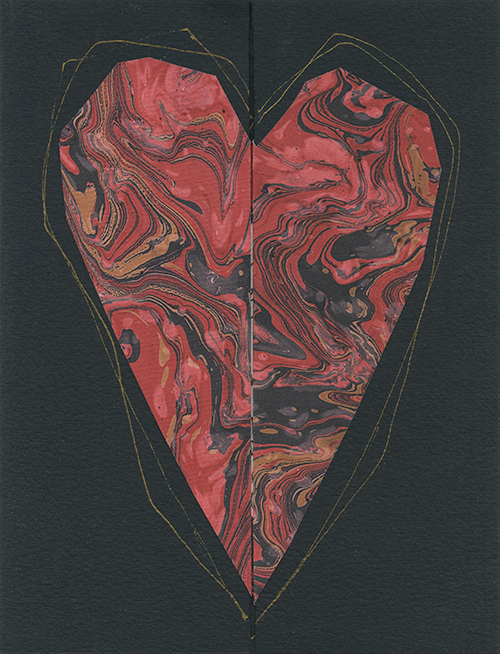
Image: Valentine © Jan Richardson

Blessing for the Brokenhearted

There is no remedy for love but to love more.
—Henry David Thoreau

Let us agree
for now
that we will not say
the breaking
makes us stronger
or that it is better
to have this pain
than to have done
without this love.

Let us promise
we will not
tell ourselves
time will heal
the wound,
when every day
our waking
opens it anew.

Perhaps for now
it can be enough
to simply marvel
at the mystery
of how a heart
so broken
can go on beating,
as if it were made
for precisely this—

as if it knows
the only cure for love
is more of it,

as if it sees
the heart’s sole remedy
for breaking
is to love still,

as if it trusts
that its own
persistent pulse
is the rhythm
of a blessing
we cannot
begin to fathom
but will save us
nonetheless.

—Jan Richardson

This blessing appears in Jan’s book, The Cure for Sorrow.

gremlins seem to be lurking here this morning, so let us see if we can fling this to the cyberwires that carry this from my kitchen table to yours. question for the day, besides “will this work?” is where did you find holiness this week? 

and here is a special wink and nod for the great good souls i didn’t get to mention above: the glass sculptor who sailed the world before planting herself on high street, in downtown mineral point. the ones who’d taught for years and years in alaska before sinking deep roots in driftless loam. the bibliophile who opened an indie bookstore, and thought to attach a cooking school besides. and most of all to jane, my storytelling hostess whose graces left me nothing short of gobsmacked.

out in the wilds (another name for birthing a book to the world)

the very definition of oxymoron: girl recording into phone in the midst of sheer wonder

field notes from out on the front (the book-birthing front). . .

well, it’s friday, friday morning to be precise, and none of the heart attacks i was certain i would have or was having seem to have felled me. despite my genetically-certified DNA from a fellow who loved a microphone, and the chance to trumpet his wonder and wit into the world, i’m fairly certain mine has gone dormant. i seem to have found a sweet spot in the quiet of a typing room where thoughts meander and flow, wriggle onto the page (or the screen), and i do my best talking from there. or even better: across an old maple table, a formica slab, or even the console of any old car, where talk is heart to heart, face to face, where you can see the gleam or the tears in the eyes. where you gauge every flinch of the jaw or the cheeks or the itty bitty muscles that lift up the eyebrows, punctuation in facial expression––the very best kind.

if you were one of the glorious flock who popped onto the zoom the other night, when we all lined up in our on-screen window panes, you were there for the glorious highlight of the week. of the eighty who pulled up a virtual chair (80?!?!), some 22 of you were signed on as “iPad,” which made it a little hard to know who was quite whom. but i knew that for the first time since this ol’ chair started gathering round the make-believe old kitchen table, we were as one, unblindfolded, and we could finally see who we were. and hear our real live voices. at least some of us. we might need more zooms. especially ones where my heart isn’t pounding like the kettle drum in the marching brigade.

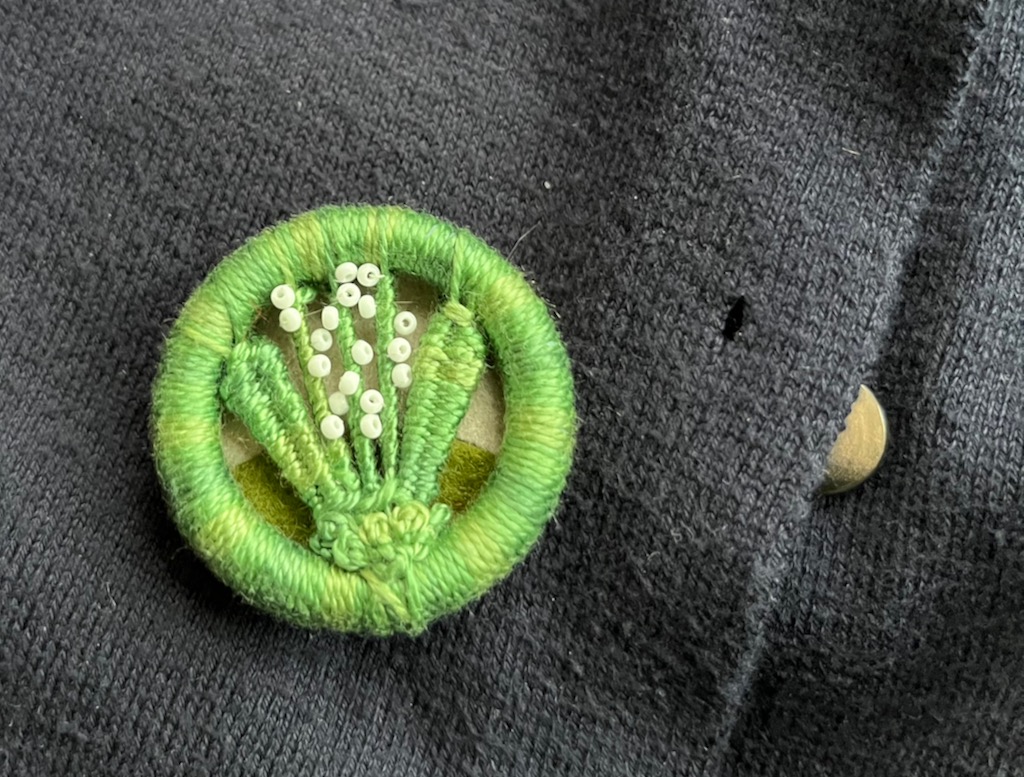
lily-of-the-valley dorset button from amy

twas a week full of flurry. twas a week filled with moments i’ll never forget. (a hand-stitched dorset button i now wear by my heart, marsha from low country blessing us with her front-porch benediction, a river of people i love flowing down the stairs of an ever-enchanted bookstore last night, and the little pings of love notes and reminders to breathe from the blessed old friends who know how trembly i get when dispatched beyond the walls of my hermitage…)

i’ve been thinking hard of late of how the writing of a book is a time-lapse conversation––and conversation, to me, is the holy marrow of life. i spent months and weeks reading and writing, pouring my heart and my soul into each page; quite truly, laying it all on the line. and then, as the book made its way down the book-making assembly line, through the chutes and the gears and the binding machines, it all went silent. but now, as the little book lands with its plops on door stoops hither and yon, the conversation picks up again. and that, my friends, is the very, very best part of writing a book.

it’s when i find out which sentence or thought might catch on your heart or your soul. it’s where the interplay of our minds begins a back and forth, often a dance. where i get to find out what cumulus clouds of wonder or wisdom rise up from your reading, where your thoughts leap off of mine and gather their muscle and take on their own magnificent form. that leaves me jaw-dropped.

last night, at the very first in-person book launch, in the lower room of the enchanted bookstore where four of my five books have been officially birthed (the pandemic got in the way of one of the birthings), a beautiful, beautiful woman (one i’d never before met) came up to me, took me firmly by the shoulders, and told me she’d read the book cover to cover, and had figured out its message: “the Holy Spirit will find you,” is what she said over and over. “that’s the message.”

she had tears in her eyes when she said it. and tears i find are contagious, so i had them in mine too. after all those months of reading and writing, i hadn’t quite landed on precisely those words. but i realized that no matter how you define “Holy Spirit” (and i might define it quite broadly), she’d nailed it. in six words, she summed up what it took me 56,000 words to quite get at.

there are comical moments too, as in many a delivery room. (remind me which parts of labor and delivery made me chuckle…) the photo above, a rare inclusion of any image of me here at the chair, captures me following orders. the marketing gurus at broadleaf books, my lovely twin-cities-based publisher, sent me a note and told me to get out and record video befitting my book. not wanting to be on screen myself, i decided to film at the glorious water’s edge of which i write in the book, the grasses where i nestle like quail in the rush. and i decided i’d insert myself by reading aloud, sight unseen. and my beloved blair, who assigned himself to the role of “editorial assistant” this week, decided he’d do the driving and, when i wasn’t looking, he snapped the somewhat hilarious photo above: crazy lady reading aloud a book on earthly wonder into hidden microphone of little glass slab.

the other half of that marketing assignment instructed me to consider making a “reel,” a concept as foreign to me as reading a novel in russian. i had literally no idea how to do this, so i called one of my brothers, whose mastery of reels is legendary among his circles. he reels with abandon, he reels for any occasion. so i knew i was going to the master. as he talked me through, step-by-arduous-step, i followed along. i sat in a chair, and i read a few lines. and then, i must have hit the wrong button, for the darn thing “posted”––aka somehow landed on instagram where any and all could follow along. egad. it had been my first dry run, but i decided to leave it. because life unfiltered, unedited, un-pre-plotted, is where the spice finds its way in.

here’s what life unfiltered might look like:

and with that overdose of moi, i shall leave you in peace for the day and the week.

but do tell: if you’ve found yourself turning the pages of my conversation in paper and ink, what are some of the thoughts that have wriggled up for you? lines that sprung your own epiphany? stories that made you think of your own? tell me what you’ve read from the Book of Nature (the real one, not my little old book)? and tell me the glories and wonders you’ve found. . .

bless you and thank you for being the circle that holds me. the love here is real, even if all the rest is somewhat virtual.

a most special gathering: let us pull up chairs and launch this book together

it’s monday. i know. and that’s not a day when i usually leap out of the cyber-vapors to plop onto whatever is the glowing screen of your choosing.

but i come with invitation:

please join me in pulling up your very own chair to gather round this virtual old maple table to attend the birthing of my next book, the one titled The Book of Nature: The Astonishing Beauty of God’s First Sacred Text (Broadleaf Books).

we’ll gather on the evening of Tuesday, March 21––its actual pub date––when we shall send The Book of Nature soaring into the everland. it’s free and it’s just for friends of the chair––wherever you are––and it’ll be at 7 p.m. chicago time, when we’ll gather by zoom. and all you need to do is click this link to register. the zoom link will be magically sent to you. and, since i’ve never ever done this before, beyond that we will all find out together what happens next.

but what i do promise you is that i will be right here. perched on my stool, snug against the kitchen counter. and i can’t imagine a cozier way to begin this latest adventure in book-birthing.

it is a downright thrill to imagine seeing many of your faces for the very first time because after 1,102 meanders here at the chair, it’s about time we look into each other’s eyes, feel the smiles wash up from the depths of our very own soul, and revel in the collective goodness of those who have so buoyed me over the years.

truth is, i can think of no finer way to gather the graces and muster the courage i’ll need to tell the world all that i’ve tucked into these 200-some pages. this is a book that stands on the shoulders of wisdom seekers across the millennia, and across cultures and faiths and geographies. it’s a book that pokes around in the nooks and crannies of all creation, seeking the thrum of the sacred––the holy Divine––in our very midst. it stands in awe of the moon and the night sky. it awaits the dawn, and gathers the dusk. it traipses through the woods, and settles into the murmurous grasses that rise from the mounds not far from the water’s edge.

this book has been called “a field guide to the depths of your holiest places,” and i hope and i pray that as you turn its pages you find yourself inching deeper and deeper, closer and closer, into your own holy encounters with the ineffable wonder and wisdom that stirs in the wind and rustles the meadow.

but this gathering––this rare leap off the page and into the virtual––is how my heart yearns to begin the book’s first breathing.

you can find out more about this newest book on its very own page here at the chair, where you can even find links to buy it from your favorite indie bookstore, or direct from its publisher Broadleaf Books, or, yes, our friends at the behemoth that is amazon.

here’s a peek at the first review that’s crossed the transom. and, yes, i will be forever grateful to that lovely, lovely soul at Booklist, the publication of the American Library Association, who wrote this in the January edition of Booklist:

The Book of Nature: The Astonishing Beauty of God’s First Sacred Text

By Barbara Mahany

Mar. 2023. 191p. Broadleaf, $27.99 (9781506473512). 200

Writing with a nurse’s foundation, a scientist’s eye, a theologian’s mind, and a poet’s soul, journalist Mahany (Stillness of Winter, 2020) contemplates God’s presence as revealed in nature, His “first sacred text.” Tracing the Judeo-Christian belief that scripture succeeds and augments nature by directing humanity to knowledge of the divine, Mahany looks to nature itself, marveling at its intricacies and blending scientific facts with literary descriptions that all point unquestionably to a grand designer worthy of worship. She incorporates literary writing by a host of essayists and poets (Annie Dillard, Henry David Thoreau, Mary Oliver, Walt Whitman) and Christian and Jewish religious writers as well as Islamic, Greek, Chinese, Celtic, and Indigenous traditions. She implores readers to continue reading the book and not to allow the noise of modern life to obscure its message. Supplemental material includes an annotated list of recommended reading and an extensive bibliography. Mahany’s lyrical, thoughtful, most recent work beautifully complements her shelf of awe-inspired books about nature and will appeal to fans of Shauna Niequist and Anne Lamott.

–Karen Clements

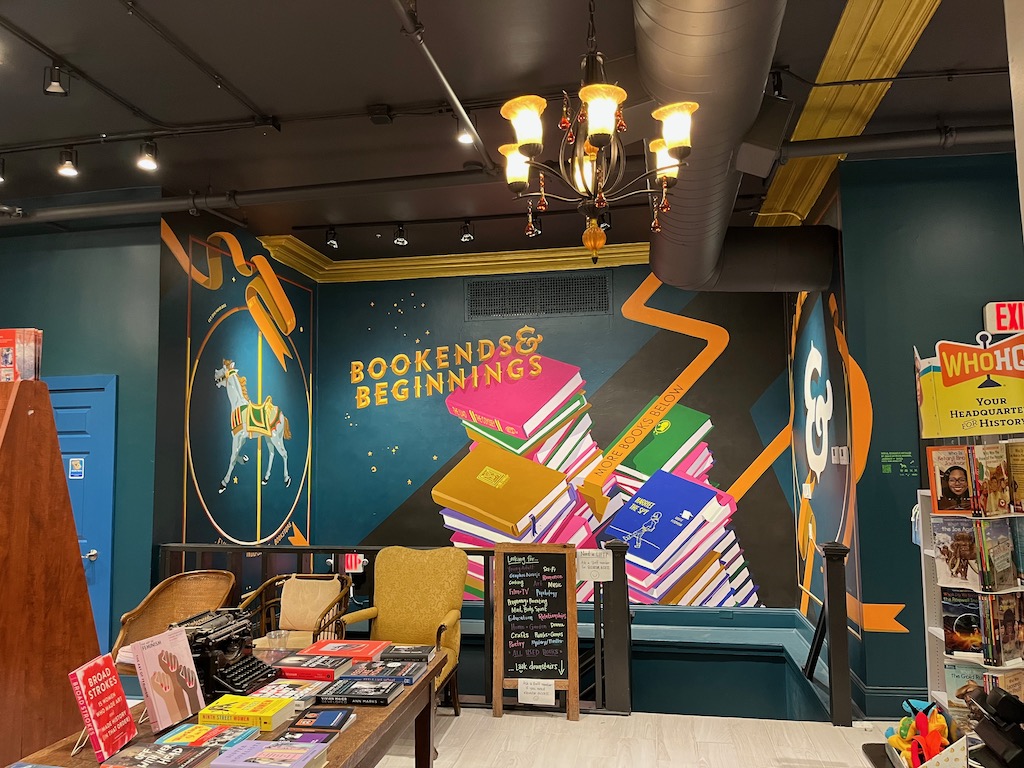
till then, i’ll keep finding you here on fridays. and while i dream up ways to sign books for those not nearby, do know that there will be real-live book events in person at bookstores and sacred places in the days and weeks and even the months after the 21st. in fact, an actual in-store book launch is on the calendar for thursday, march 23, at 6 p.m. at that charmed bookstore, bookends & beginnings, in their brand-new space at 1620 Orrington, Evanston.

i hope, hope, hope, you can pull up your very own chair on march 21. though i won’t be able to pass a tin of cookies, nor pour you a spot of tea or bubbly, the conviviality alone will fill my lungs, and set my heart a soaring….

please let me know if you encounter any glitches, and i’ll don my thinking cap. and turn to the wizards at Broadleaf who seem to know how to guide me at every turn.

with love, babs, the chair lady.

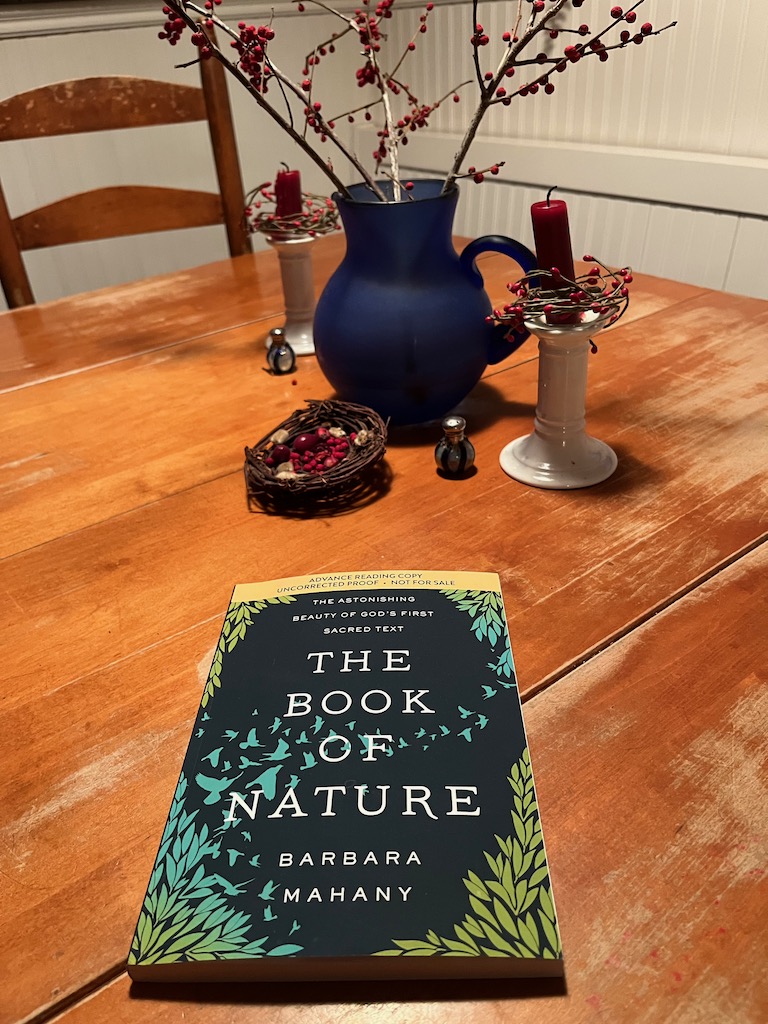
p.s. the book in the photo at the top here is the Advanced Reading Copy, or ARC, and it’s the only edition i’ve got, though i hear the final final is due to plop on my stoop any day!

a peek at this little book i’ve been making for the last couple years…

there is a choreography to birthing a book, an unseen one, one that’s becoming familiar to me, a familiarity so far beyond the dreams i cast out my long-ago childhood window, into the leaves of the oaks that arbored and harbored me, onto the heavens far, far beyond. 

first, you feel an idea wriggling around deep in your soul, then it rises up to your brain, and the only way to scratch the itch is to begin to breathe possibility into it. what if? you percolate that inkling for a while, front burner to back to front again. and then you begin to read, to see if sinew comes to the bones. and, if you find that the deeper you read, the more curious you become, then you know you’re onto something worth chasing. 

i chased the idea that all of creation––the cadenza of birdsong, the golden slant of the setting sun, the comfort of even the chirring cicadas in the waning weeks of summer––held the pulse of the sacred. all of it was of the God i’ve long held close to my heart, the God daring to brush up against us, to draw us into the dance, to unfurl timeless truths in an alphabet of moonbeam and monarch, the veeing of geese or the hard crack of lightning scything the sky. 

i’d long known that when i step into the dawn or the woods, plant my bum on a log by the lakeshore or the rickety rock in my own back plot, i’m keen to a sense that an ineffable presence is there, right there, with something to teach, to offer, to whisper. but until i knew of this so-named Book of Nature, an ancient theology rooted in the notion that long before there were words, God spoke through the murmurings, the convulsions, and the unfurlings of the natural world, i hadn’t sensed it so perceptibly. hadn’t realized there were millennia of thinkers who’d been reading that book.

it’s imperative, and more urgent than ever, that as this great holy earth is pummeled and poisoned and burned, we realize that maybe what’s most at stake is a tie to the sacred. 

for the better part of eight or nine months, i read everything under the sun––poets and prophets, mystics and saints, believers and non-believers, all of whom had something to say on the subject of all creation, its wonders, its heartbreaks, and lately its cavernous losses. i combed my readings for notes upon notes. then, equipped with voluminous cross-referenced pages, i started to write. within a couple months, i’d written some 200 pages. and then i waited a very long time. 

but now, those pages edited and copy edited, typeset and proofed, the cover designed and posted online in most of those places where booksellers peddle these days (it had been on amazon, and now–except for U.K. amazon––it seems gone! but now it’s back––like magic!), i’m at the part of the book-birthing dance where you pull back the cover on the book’s actual cover so the ones to whom you most emphatically write can be the first to officially peek. 

so, here’s the cover. (you are, i hope you know, all the ones to whom i most emphatically write, the ones who faithfully wander by and pull up a chair whene’er the spirit so moves you….)

the pages inside, 204 of them, will have to wait to be read till the next vernal equinox, the day the book is “official,” marked with its very own pub date––March 21, 2023––and whirling into the world. 

of all the books i’ve written, this is the one that counts as the most intensive. it started from scratch (unlike the others, all collections of essays), and came in layers and layers. 

i had a brilliant editor, lauren winner, an american historian, scholar of religion, professor at duke divinity school, episcopal priest, formerly an orthodox jew, an endlessly curious mind, a voracious reader, and a best-selling author on multiple spiritual subjects––Mudhouse Sabbath, her journey from orthodox judaism to anglican priest, Wearing God, the many metaphors for God found in the bible (these are but two of her many published words)––who now teaches the craft and art of spiritual writing at workshops, universities, and seminars from coast to coast. i can and will attest to her brilliance, to the way she evoked from me layers i hadn’t known were there, the way she lifted the prose off the page, insisted i weave in an airiness that might make a critical difference. 

there’s a whole team behind the making of the book, though only one of us gets our name on the cover. there’s a meticulous and exceedingly kind copy editor, there’s a cover designer and another designer for the interior pages (this book is a beauty inside). there’s a production editor, and a typesetter and a page proofer. and there’s the editor who believed in the idea in the first place, and nurtured it along. i am forever indebted to each one of them. and there will soon be a team whose job is to do what’s hardest for me: peddle the darn thing, get it onto and off of bookshelves. in bookshops and libraries. and into the hands and the nooks of readers. 

there is an essential and indispensable triangle in the world of letters: the writer, the idea, and the reader. it’s a conversation unspoken. a conversation in pages. and without the reader, the writer is whispering into an abyss. and the only sound is the author’s own echo. 

so this is the book. and if you ever choose to pluck it off a shelf, you will find my whispered whole truths deep inside. 

if writers write to say this is what i believe, this is where i find the beautiful and the sacred, and maybe i can show you just where i’m seeing and sensing, maybe just maybe one little writer can filter onto the world just one little mote of starlight or sunlight or moonlight where before there had only been the murkiest shadow. 

The Book of Nature is my one mote of filtering light. 

you can find it on Broadleaf Books here.

you can find it on amazon here.

and, very excitingly, you can find it on the indie booksellers’s bookshop.org

here’s how my publisher, Broadleaf Books, is describing the book:

We live inside a nautilus of prayer—if only we open our senses and perceive what is infused all around. 

Throughout millennia and across the monotheistic religions, the natural was often revered as a sacred text. By the Middle Ages, this text was given a name, “The Book of Nature,” the first, best entry point for encounter with the divine. The very act of “reading” the world, of focusing our attention on each twinkling star and unfurling blossom, humbles us and draws us into sacred encounter.

As we grapple to make sense of today’s tumultuous world, one where nature is at once a damaged and damaging source of disaster, as well as a place of refuge and retreat, we are called again to examine how generously it awaits our attention and devotion, standing ready to be read by all.

Weaving together the astonishments of science; the profound wisdom and literary gems of thinkers, poets, and observers who have come before us; and her own spiritual practice and gentle observation, Barbara Mahany reintroduces us to The Book of Nature, an experiential framework of the divine. God’s first revelation came to us through an ongoing creation, one that—through stillness and attentiveness to the rumblings of the heavens, the seasonal eruptions of earth, the invisible pull of migration, of tide, and of celestial shiftings—draws us into sacred encounter. We needn’t look farther for the divine.

and that, dear friends, is the news of the week. be careful out there, this latest covid bugger (BA5) seems more determined than ever to muscle its way in. i’m going back into semi-hiding given that i am still dizzy from my first covid round….

what’s stirring you this week?

Little Babs, long before she dreamed of a book cover