pull up a chair

where wisdom gathers, poetry unfolds and divine light is sparked…

Category: savoring summer

ode to summer’s drippiest fruit: the tomato

in which we begin with news: ol’ babs signed a book contract yesterday; the book, it so happens, is already written (sorta unfurled swiftly, once i started to type), and already back from being edited (the contract was agreed upon back in may, but these things take time to get shuffled around the publisher’s desk.) and now i’m knee-deep in responding to edits, cranking the dial in an attempt to make it worthy of the paper on which it shall be printed, and the bookshelves on which it might take up real estate. more details shall come but what i can tell you now is that the working title is When Evening Comes: An Urgent Call to Love, and the epigraph pretty much points to the heart of the book:

“When the evening of this life comes,” says St. John of the Cross, “you will be judged on love.” The only question asked about the soul . . . “Have you loved well?”
––Evelyn Underhill, The House of the Soul

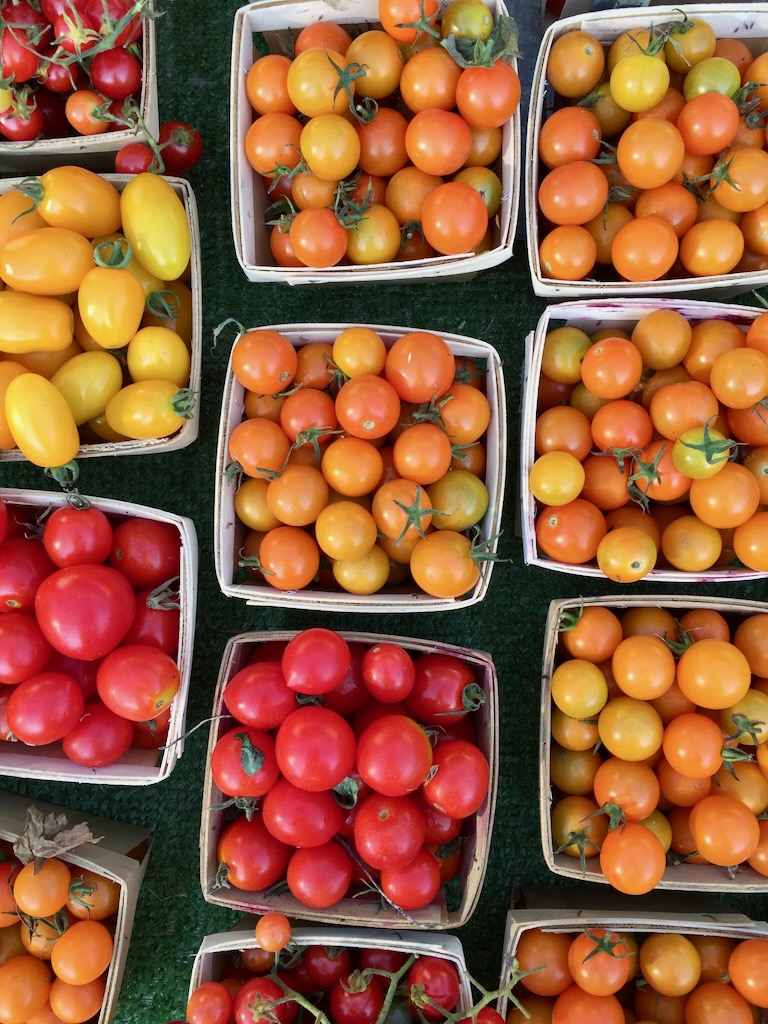
in a nutshell, it’s a collection of essays exploring the spiritual awakening and very real tremblings that come with cancer. a subject with which i’ve been living for the last two years. so, while i’m deep in the fine art of toiling over the words that will or won’t wind up in the book, i leave you today with the simple tomato, summer’s drippiest fruit, and my all-star contender for the juiciest mouthful of summer.

it’s summer and living is easy. and beginning to drip down our chins. at least in the tomato aisle, that is. because i am deep in the task laid out above, i am leaving you today with the simple tomato. and pablo neruda’s sumptuous ode…
my recipe is this:

pluck the reddest orb faintly tender to the touch. 

slice, or halve into hemispheres, if you’re the poet neruda.

sprinkle with a dusting of sea salt.

add a grind or three of tellicherry peppercorns.

lean over sink.

employ your top teeth and your jaw.

clamp down.

dribble.

repeat. 


and now for the ode, one of the many neruda wrote in the later chapters of his life. what’s more than charming—and so very wise—is that neruda, the chilean poet and nobel laureate, wrote odes to the simplest things, training a poet’s eye—and thus ours—on the wonders right before us. it’s a lifework worth emulating.

while poking around, i found a marvelous ode to the odester on the website of a chap named huck gutman, who happens to be not only a professor of english at the university of vermont, but the former chief of staff to bernie sanders. who knew?!?!

of pablo neruda, the great chilean poet, huckman writes that he is particularly fond of his late ‘odes’. he goes on:

the good poet pablo

“I love these poems in praise of his socks, his suit, lemons, and other everyday objects.  They speak to me very powerfully about the wonderful world we inhabit.  His aim, as I say in the long introduction to his poem, was to speak to those he lived with about the shared wonder of our world.  He set out to speak not to intellectuals or ‘lovers of poetry,’ but to his neighbors in the small coastal town in northern Chile where he lived.  The language of his odes is simple, the imagery rich but drawn from the experience all humans share. In a century when too frequently poetry seems divorced from the concerns and language of everyday life, Neruda embraced the commonplace and made it uncommon, though still shared. 

 “Neruda’s love of the richness of the world was hard-earned.  He lived a full life, of sorrow and suffering as well as joy and love.  He was acquainted with alienation and oppression, with persecution and exile; he also knew the glories of tomatoes. 

 “One of his close friends was Salvador Allende, the socialist who was elected President of Chile and then overthrown by Chile’s right-wing military (with, tragically, the collusion of the American CIA).  Neruda, already ill with cancer, died shortly after Allende perished in the coup which ended both his presidency and Chilean democracy.” 

Ode to Tomatoes 
by Pablo Neruda

The street
filled with tomatoes,
midday,
summer,
light is
halved
like
a
tomato,
its juice
runs
through the streets.
In December,
unabated,
the tomato
invades
the kitchen,
it enters at lunchtime,
takes
its ease
on countertops,
among glasses,
butter dishes,
blue saltcellars.
It sheds
its own light,
benign majesty.
Unfortunately, we must
murder it:
the knife
sinks
into living flesh,
red
viscera,
a cool
sun,
profound,
inexhaustible,
populates the salads
of Chile,
happily, it is wed
to the clear onion,
and to celebrate the union
we
pour
oil,
essential
child of the olive,
onto its halved hemispheres,
pepper
adds
its fragrance,
salt, its magnetism;
it is the wedding
of the day,
parsley
hoists
its flag,
potatoes
bubble vigorously,
the aroma
of the roast
knocks
at the door,
it’s time!
come on!
and, on
the table, at the midpoint
of summer,
the tomato,
star of earth,
recurrent
and fertile
star,
displays
its convolutions,
its canals,
its remarkable amplitude
and abundance,
no pit,
no husk,
no leaves or thorns,
the tomato offers
its gift
of fiery color
and cool completeness.

which lines made you marvel? what’s making your mouth water these days?

tomato madness: slow-roasted cherries from the vine out back

finishing school

i suffer from a common ailment. especially among a certain breed of bibliophile. i don’t finish. i start, enthusiasms drawing me in like ink to a blotter. pages are turned. pens pulled forth and margins scribbled with scrawl. and then another seductress comes along. another delectable enticement: author. idea. or merely a title.

and it happens all over again. 

i’m talking books, of course. and my long-held habit of starting and stopping. 

start. stop. rinse. repeat. 

crack open the binding, turn pages, ink it all up. add to the pile. the towering, toppling, could-knock-me-out-if-it-fell pile of books. 

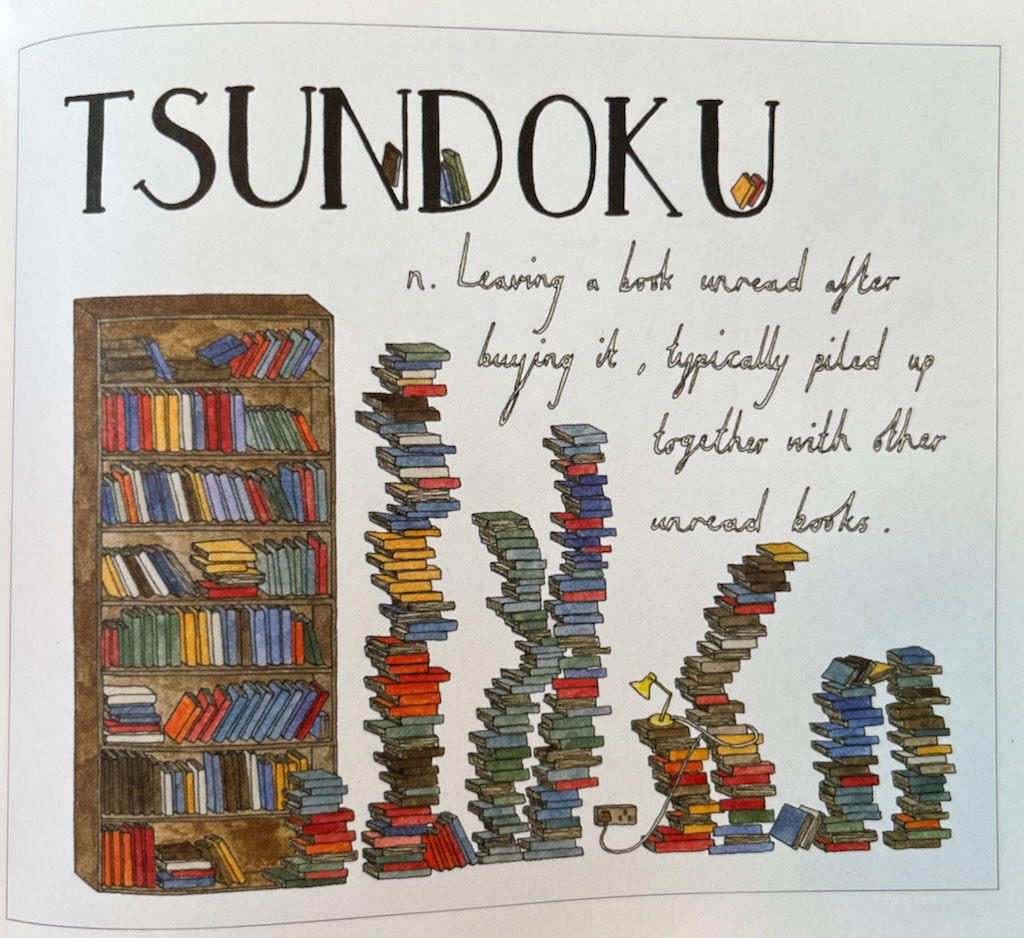
there’s a name for the ailment: tsundoku. (積ん読)

it’s the japanese word meaning, quite literally, “reading pile.” nowhere in the definition—“the phenomenon of accumulating books but not reading them”—would you find evidence of the lethal nature of said phenomenon (ten books falling on your nose will leave a dent). nor the drip-drip-drip of guilt that accumulates every time one sashays past said pile and fails to move forward in a page-turning way. 

so i’ve hatched a plan, an antidote to what ails me. i call it finishing school. i shall, in the summer months ahead, the months when the sun is strong and summer sounds abound, commit to a single purpose: one by one tracking my way toward the last sentence of at least some of the many books piled on my nightstand, my reading nook, my writing room floor, and most any other horizontal plane sturdy enough to hold a vertical biblio-ascension. 

by virtue of this determination to see literary arcs through to the end, i shall be relieving all of you of the task of checking in on the chair to see what’s astir. i am intending to post mostly what leaps off the pages, as i plod along through plots, poetries, and otherwise paradisiacal paragraphs. 

i envision something of a commonplace summer reading adventure, in which we all can chime in with any ol’ ‘graph or line that makes your heart thump, or your eyes fill with tears. 

my summer’s focus will be more reading than writing, at least here. 

the writing portion of my summer will apparently have me bent over the keyboard tapping out pages for a new project i’m not yet free to chat about. there’s an end-of-summer deadline, i do believe, so i’ll be burning up the keys to make that happen. and my refueling time will be spent deeply in reading. in finishing, specifically. 

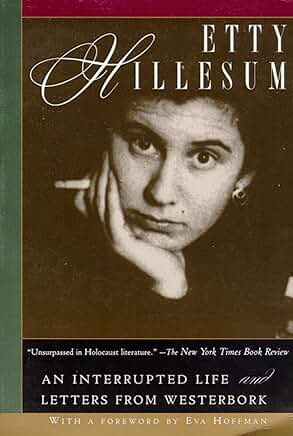
i plan to officially begin my finishing school with a book that’s tugged at me for years, one i started and loved, and truly need to wade deeper into. it’s etty hillesum: an interrupted life and letters from westerbork. begun in 1941, nine months after the netherlands fell to hitler, it’s the epistolary journal of a young dutch jewish woman who traces the darkening shadow of the nazi presence in her homeland as well as her own moral awakening before her death at auschwitz in november of 1943. it seems as essential a book in my stack as any there is. and i’m committing to etty.

back in 1986, in a review of the book in the new york times, michiko kakutani wrote this: 

“All Holocaust writings, of course, must deal with the inadequacy of words in the face of events that defy the imagination, but while Miss Hillesum frequently speaks of her inability to convey the awful magnitude of events around her, she proves herself a most eloquent witness to history—a witness whose grave yet shining testimony attests to the resilience of the human spirit in the face of incalculable odds.”

it seems a book for this moment.

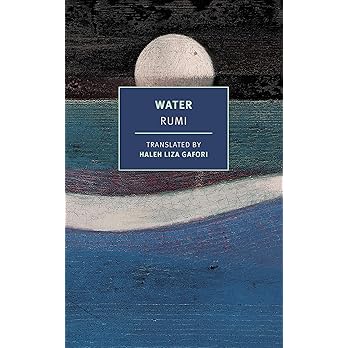
and even though the official starting bell hasn’t chimed, i tiptoed into my project this week by reading start-to-end not one but two magnificent poetry collections: water, by rumi, translated from the farsi by haleh liza gafori (new york review book classics), the second volume of gafori’s translations of the thirteenth-century persian poet (the first one, unfinished but in my pile, of course, was gold, acclaimed for its fluid rendering of rumi’s lyric ecstasies). water’s essence is Love, capital L, gafori writes in her introduction, in which she claims: “Love is a 360-degree embrace of creation, a compassionate acceptance of what it…Love is our unobscured essence, at the root of the root of all creation…Above all, Love is a practice.” 

and but one line that took my breath away in the poems themselves, was this: “Come or go, Love told me, / I am here, closer to you than the vein in your neck.” 

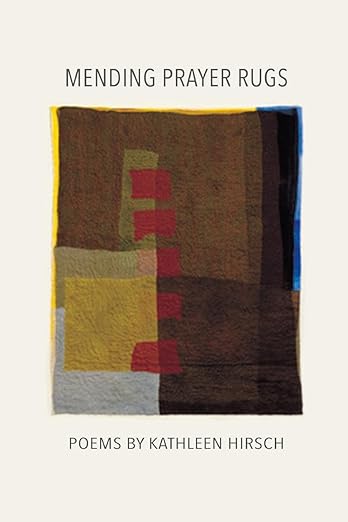
and the second collection of poems i gulped down, start to finish not once but twice, was a book i bumped into quite by accident and whose author immediately swooped into the inner circle of kindred spirits. it’s titled mending prayer rugs, poems by kathleen hirsch (finishing line press), and this collection mines the sacred amid the quotidian, with a particular focus on women of prayer, women whose wisdom is hard-won, be they women from the Bible, craftswomen, workers, wanderers or women we recognize from among our own generations.

in her opening poem, “prayer rug,” hirsch (a longtime journalist and spiritual director) writes in the voice of a woman i imagine with gnarled knuckles and fading eyesight, the cost of a lifetime spent pulling needle and thread through the tatters of prayer rugs for those who prostrate in prayer: “I bend in blessing toward all that breathes: / May each hour enlarge the pattern— / rose dawn, wind song, tender shoot of faith— / that I may see the weft of the hidden weaver.

the weft of the hidden weaver. another name for the Unnameable One. it is the metaphors of poetry that catch the breath in our throats, and frame our seeing anew.

lines such as this, a line that had me choking back tears in a poem titled, “in the end”: “Kiss the light / before it dies / leave those you love / the heirlooms of your passion, your gratitude, your tears.” 

i envision a magical summer. 

straight through to the end. 

will you read along?


a subtly transgressive little poem from the bard of the bluegrass state:

The Hidden Singer

The gods are less for their love of praise.
Above and below them all is a spirit that needs nothing
but its own wholeness, its health and ours.
It has made all things by dividing itself.
It will be whole again.
To its joy we come together –
the seer and the seen, the eater and the eaten,
the lover and the loved.
In our joining it knows itself. It is with us then,
not as the gods whose names crest in unearthly fire,
but as a little bird hidden in the leaves
who sings quietly and waits, and sings.

+ Wendell Berry

p.s. a bit more on tsundoku: The term combines “tsunde-oku” (積んでおく), meaning “to pile up ready for later and leave,” with “dokusho” (読書), meaning “reading books”. 

a note: i’m sensing we all need to shake off some of the routines of our lives that begin to feel too confining, and i don’t ever want the chair to feel that way. so my intention is to be a little bit looser about it, but still to leave faint tracings here on the table, should you happen by. summer for me has long been synonymous with reading, and thus a reading project. feel free to bring your favorites.

summer is for cooking. no, really.

when the day presents itself as sooty afghan, gray and soft and without shadow. when the air is cool, so cool that cranking the oven is not an act of self-destruction. when the bins at farmers’ market are nearly tumbling to the parking lot below, so weighted by their zaftig field-plucked wares. well, on summer days like that the itch to cook begins.

and so it was the other morning i woke up with eggplant visions. eggplant layered lushly with cheesy-herby oozy pillows in between. all bathed in marinara. baked. dubbed summer’s abbondonza eggplant lasagna.

i promised easy reading here in summer time. and thus, below, i keep my promise, with nothing more strenuous to read than a grocery list of things to gather, and step-by-step notes so you can play along.

abbondonza eggplant lasagna, with more than a few idiosyncratic twists

(as always, i read a few recipes, extract a few cues and follow my whims from there. this began from something that zipped by me on instagram, and led me to a website called mediterranean something or other, and wound up so delicious i gobbled two oozy squares the size of my dinner plate. my annotations below in italics, which is basically me talking back to the recipe. . .)

Ingredients

2 to 3 eggplants (about 1 ½ pounds), sliced lengthwise into ½-inch thick slices (about 10 to 12 slices)
1 zucchini, sliced into coins (or honestly any shape you choose)
1 pint cherry tomatoes
Extra virgin olive oil
Kosher salt
1 large egg
1 15-oz tub part-skim ricotta cheese
1 ½ cup part-skim mozzarella cheese, divided
½ cup grated Parmesan cheese, divided
3 garlic cloves minced (i squeezed mine through garlic press)
1 teaspoon dried oregano
10 oz frozen spinach, thawed and fully dried (wring out all the water)
1 cup packed chopped fresh parsley
½ cup packed chopped fresh basil, ⅔ ounce
Black pepper to your liking
2 generous cups marinara sauce of choice (i used trader giotto’s organic tomato basil marinara)

Instructions

  • Season the eggplant slices on both sides with kosher salt and set aside for 20 to 30 minutes (if you don’t have the time, this step can be optional). i skipped this part, because i didn’t have time and because i recently read that these days eggplant has been cured of its bitterness.
  • Meanwhile, preheat the oven to 400 degrees F and position a rack in the middle.
  • Wipe the eggplant slices very well with a paper towel (you want to dry it well and remove any excess salt), then arrange on parchment-lined baking sheet (or two if needed). Brush both sides of the eggplant with extra virgin olive oil. Roast in the heated oven until the eggplant softens and becomes pliable (about 15 to 20 minutes or so on the first side, at least another 10 minutes for the B side, which might be because i have a cranky old oven). to this step i added sliced zucchini, and a tub of cherry tomatoes, similarly brushed with oil, and roasted on their own sheet pan.
  • While the eggplant, zucchini, and tomatoes are roasting, prepare the ricotta filling. In a mixing bowl, beat the egg. Add the ricotta, 1 cup mozzarella, ¼ Parmesan, garlic, oregano, spinach and chopped herbs. Add a small pinch of kosher salt and black pepper to your liking. Mix well to combine. i wandered out to my so-called farm (a raised bed alongside the back alley) and snipped a cup’s worth of basil and another of flat-leaf parsley; the freshness filled the air surrounding my cutting board.
  • Remove the eggplant, zucchini, and cherry tomatoes from the oven. Lower the heat to 375 degrees F.
  • Prepare a 9 x 13-inch baking dish. Pour a bit of the pasta sauce (i used 1 cup of trader joe’s marinara) and spread it out into one layer. Lay a few eggplant slices (anywhere from 4 to 6 and it’s fine if they overlap a bit). Next, add half the zucchini slices and half the roasted cherry tomatoes. Spread 1/2 of the ricotta filling, then spread a thin layer of the sauce. Repeat the process in the same pattern. Spread the final layer of sauce and follow with the remaining ½ cup mozzarella cheese and ¼ cup of Parmesan.
  • Cover the dish tightly with foil. Bake in the heated oven for 15 to 20 minutes, then carefully uncover and return to the oven. Bake for another 10 to 20 minutes or until the cheese has melted and the edges of the lasagna turn a nice golden brown.
  • Let the lasagna rest for 10 minutes before cutting and serving.
  • Slice and savor. And then daydream about it till you get around to making it again.

not all who wander to the chair believe in the stove as kitchen essential, and thus for those good souls and anyone else who never minds a blessing, here’s a treasure sent to me weeks back by dear beloved chair friend nan. it’s a blessing from kate bowler, who is herself something of a wonder. a four-times NYT best-selling author, a professor of american religious history at duke divinity school, the scholar who wrote the book on the prosperity gospel, a wife and mother and 35-year-old when she was diagnosed with stage IV colon cancer, deemed incurable, and now (nine years later) is cancer-free, she’s taken as her mission “giving you permission to be human.” fully human: warts, dents, soft spots, wonders, glories, whole truths and nothing but the truths.

i’ve been in a room where kate was speaking and she is hilarious. and self-deprecating. and doesn’t present herself as the eighth wonder of the world (which isn’t always the case at writing festivals that showcase those who’ve gained fame by building sentences that grow into paragraphs that fly off the shelves and rack up fine profits). so, with no further ado, and deep thanks to our beloved nan, here is a blessing from kate that, to my mind, gets to the heart of so much that matters:

the blessing above is from kate’s book of blessings, co-written with the lovely jessica richie, and titled “The Lives We Actually Have: 100 Blessings for Imperfect Days.”

may all of us work to be the ones who notice the light in their eyes, or when that light dims, and to always not be afraid of scooting up close, close as need be, to their suffering.

and that’s the news from the summer kitchen this week. xox

where did you find blessing this week, at the cookstove or otherwise?

summer idyll: another name for “idle”

summertime is for slow. and slow i am this summer. i watch bunnies make breakfast buffet of my flowerpots. i keep vigil for a redbud tree that might be on its death march. i cut corn off the cob and dump it into confetti-like salads, delicious salads of tomato, armenian cucumber, and fists full of basil. i swim, slowly and gasping for air at the end of the lanes, in a pool where i am the youngest by a few decades.

and of course i read, an exercise that requires little other than the moving of one’s pupils, the occasional blink, and the turning of pages should one resort to that quaint document, the page.

and so it was in reading this week that those pupils of mine––and the braincells behind them––paused for deep consideration when i came across a commencement address by the late great russian poet and essayist joseph brodsky.

joseph brodsky

in the summer of 1989, two years after he won the nobel prize in literature and two decades after he fled the soviet dictatorship with the help of w.h. auden, brodsky stepped to the podium at dartmouth college to give the commencement address, later published in a posthumous collection titled, “on grief and reason: essays” (farrar, straus and giroux, 1997).

the topic he chose, curiously, was boredom. but brodsky being brodsky, he soared with it. and because i found it altogether mesmerizing, and because his closing passage stuck with me in what amounts to the cerebral iteration of gum to the bottom of your sneakers, i’m bringing it here to the old make-believe maple table.

what’s true, in these months of living fully awake to the ephemerality of time, is that i soak in especially the wisdoms of those who understand that fleetingness to be central to the sanctifying of time’s each and every parcel. to understand that time is not endless, but rather bracketed and with certain end, is for me anyway the gravitational force that drives my attention out of malaise and into full-on savor.

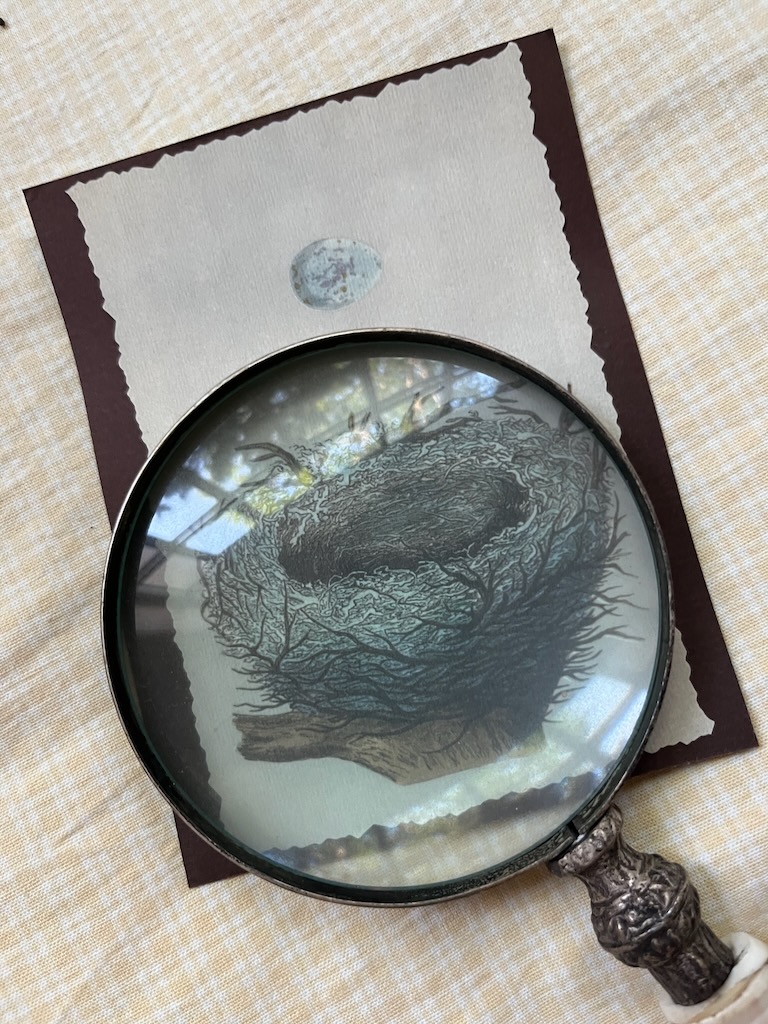
i hold each grain of time, as often as i pause and catch myself, up to the incandescent luminescence that reveals and magnifies its wonder. in other words, i aim to live with one of these in my back pocket, gliding time beneath my ever-ready looking glass:

here then is where brodsky begins his deep-dive into boredom, as he looked out upon a sea of soon-to-be-graduates at that ivy-covered college in new hampshire’s piney countryside (i’d endorse reading clear through these next few grafs, but if you’re pressed for time, leap down to the bottom of read to see if you, too, are struck by brodsky’s likening our time here to a ride on a runaway train, and his admonition to seize each blessed frame as it’s passing by):

Known under several aliases – anguish, ennui, tedium, doldrums, humdrum, the blahs, apathy, listlessness, stolidity, lethargy, languor, acedia, etc. – boredom is a complex phenomenon and by large a product of repetition. It would seem, then, that the best remedy against it would be constant inventiveness and originality. That is what you, young and newfangled, would hope for. Alas, life won’t supply you with that option, for life’s main medium is precisely repetition.

[…]

In a manner of speaking, boredom is your window on time, on those properties of it one tends to ignore to the likely peril of one’s mental equilibrium. In short, it is your window on time’s infinity, which is to say, on your insignificance in it. That’s what accounts, perhaps, for one’s dread of lonely, torpid evenings, for the fascination with which one watches sometimes a fleck of dust swirls in a sunbeam, and somewhere a clock tick-tocks, the day is hot, and your willpower is at zero.

Once this window opens, don’t try to shut it; on the contrary, throw it wide open. For boredom speakes the language of time, and it is to teach you the most valuable lesson in your life – the one you didn’t get here, on these green lawns – the lesson of your utter insignificance. It is valuable to you, as well as to those you are to rub shoulders with. “You are finite,” time tells you in a voice of boredom, “and whatever you do is, from my point of view, futile.” As music to your ears, this, of course, may not count; yet the sense of futility, of limited significance even of your best, most ardent actions is better than the illusion of their consequences and the attendant self-aggrandizement.

For boredom is an invasion of time into your set of values. It puts your existence into its perspective, the net result of which is precision and humility. The former, it must be noted, breeds the latter. The more you learn about your own size, the more humble and the more compassionate you become to your likes, to that dust swirls in a sunbeam or already immobile atop your table. Ah, how much life went into those fleck! Not from your point of view but from theirs. You are to them what time is to you; that’s why they look so small. And do you know what the dust says when it’s being wiped off the table?

“Remember me,”
whispers the dust.

Nothing could be farther away from the mental agenda of any of you, young and newfangled, than the sentiment expressed in this two-liner of the German poet Peter Huchel, now dead.

brodsky closes his address with the words that first caught my eye this week, and that i––once again––will aim to not forget:

[…]

What lies ahead is a remarkable but wearisome journey [on a] runaway train. No one can tell you what lies ahead, least of all those who remain behind. One thing, however, they can assure you of is that it’s not a round trip. Try, therefore, to derive some comfort form the notion that no matter how unpalatable this or that station may turn out to be, the train doesn’t stop there for good. Therefore, you are never stuck — not even when you feel you are; for this place today becomes your past… receding for you, for that train is in constant motion. It will be receding for you even when you feel that you are stuck. So… look at it with all the tenderness you can muster, for you are looking at your past.

i reached for that confetti salad glamour shot above because it was a bit more visual than trying to find an image of boredom. it was perhaps the most delicious thing i made this week (the grilled salmon that arrived with the salad was mighty good, but i did nothing other than introduce it to the heat of the grill), and if you’re now hungry, here’s the recipe, courtesy of david lebovitz, a former pastry chef from chez panisse now a cookbook writer living in paris. lucky david.

fresh corn, tomato, cucumber, avocado, basil summer salad

2-3 ears of fresh corn
2 cups (350g) cherry tomatoes , (or 2 cups fresh tomatoes, diced)
1 ripe avocado
1/2 cucumber, peeled and seeded
1 cup (75g) loosely packed chopped fresh basil, (reserve any small leaves for garnish) Freshly ground black pepper
Vinaigrette
2 tablespoons red wine vinegar
4 teaspoons Dijon mustard
1-2 small shallots, peeled and minced (1-2 tablespoons)
1 teaspoon sea or kosher salt
6 tablespoons (90ml) extra-virgin olive oil

  1. Shuck the corn and remove it from the cob.
  2. Remove any stems and slice the cherry tomatoes in half.
  3. Peel the avocado, remove the pit, and dice the flesh. Cut the cucumber into similar sized cubes.
  4. Put the corn kernels, tomatoes, avocado, cucumber, and basil into a serving bowl and season with freshly ground black pepper.
  5. In a small bowl, whisk together the vinegar, mustard, shallots, salt, and olive oil. Pour the vinaigrette dressing over the salad and gently mix together. Taste, and add more salt and pepper if necessary.

Serving and storage: The dressed salad can be served right away or in a few hours. (It can be stored in the refrigerator or at room temperature, but should be served room temperature.) It’s best the same day it’s made.

your thoughts on the runaway train (above) welcome here, with the related question, what are the ways you remind yourself to live each day mindful of the preciousness and miracle that it holds?

of darkness and sunlight in shifting proportion

night was on my mind this week, as the sunlight upon us stretched to its longest shift of the year, the apex of the solstice on thursday, and now the night grows longer minute by minute till winter’s solstice takes its turn, a doh-si-doh of celestial bodies. the interplay of light and shadow is eternal, has been, according to genesis, since the beginning, day one. and it was good. 

it might seem counterintuitive to contemplate night when the day is at its longest, but it’s often through the paradoxical that insights are gleaned. a wise and soulful priest pointed me toward considering the illuminations that come in darkness, at a saturday morning retreat in the great gothic-revival church that so often stirs me these days. 

and then through the week, i kept stumbling on poems that made me marvel, made me think deep and deeper of the hours of darkness. here are two: 

The night never wants to end, to give itself over
to light. So it traps itself in things: obsidian, crows.
Even on summer solstice, the day of light’s great
triumph, where fields of sunflowers guzzle in the sun—
we break open the watermelon and spit out
black seeds, bits of night glistening on the grass.

––Night in Day by Joseph Stroud

Night Ferry
by John Burnside

Had I been less prepared, I would have left
in springtime, when the plum tree in the yard
was still in bloom,
the windows open after months of snow,
one magpie in the road
and then another.

I could have slipped away, late afternoon,
while everyone was busy somewhere else,
the fish van at the corner, children
dawdling home from school
in twos and threes, a porch light
lit against the dusk on Tollbooth Wynd.

Give me these years again and I will
spend them wisely.
Done with the compass; done, now, with the chart.
The ferry at the dock, lit
stern to prow,
the next life like a footfall in my heart.

it’s the last stanza of burnside’s that spoke to me most profoundly. “give me these years again and I will / spend them wisely.”

and then, with celestial bodies on my mind, i stumbled onto john burroughs, the naturalist whose wisdoms and poetries never fail to stir me. 

“If I had my life to live over again, and had my choice of celestial bodies, I am sure I should take this planet, and iI should choose these men and women for my friends and companions. This great rolling sphere with its sky, its stars, its sunrises and sunsets, and with its outlook into infinity — what could be more desirable? What more satisfying? Garlanded by the seasons, embosomed in sidereal influences, thrilling with continents — one might ransack the heavens in vain for a better or more picturesque abode.” — John Burroughs 


but mostly this week i indulged in the sunlight of one of the oldest, dearest friends i have on this planet: my roommate in college, my roommate after college, my maid of honor, godmother to my firstborn, and my heartmate and soulmate through life’s most scouring hours. she’s a california girl, blond still (naturally so), and more beautiful than ever, and she married a man who might be the twin separated at birth from the one i married. not only do they both wear the exact same spectacles, they both dress in old-line khakis and oxford-cloth shirts, and think deeply about the subjects they love (film for the one from LA; bricks, mortar, and marble for the one i married) as well as the ideas that animate the life of the mind. we played, the four of us, at being playful: took long walks through woodsy ravines, gobbled ice cream from cones, motored downtown to see georgia o’keeffe at the art institute, and before we got there stumbled into one of the world’s great symphony orchestras rehearsing schumann’s piano concerto in frank gehry’s bandshell with someone billed as one of the world’s greatest pianist. all for free. and all in the sunlight.

and tomorrow, my firstborn marks another spin around the sun at the center of it all. there are not enough blessings under that sun for me to wish and hope and pray for my boy, but i wish every last one for him and his heart and his soul and his dreams. happy blessed life, you who made me a mama.

how did you mark the solstice, the day when the sunlight shines longest?

settling in and summer serendipities

clippers, shovel, trowel. those are the implements of my tranquility. of returning to my roost and sinking in my roots.

i’m back from travels far and farther. old home seeps into all the crags and crevices. knows me as intimately as any living soul. the familiarity of this old house’s creaks and cracks, the way the one floorboard at the top of the stairs whines its arthritic whine (you too might whine if, for a good 85 years, you’d been underfoot to the clumsiness and weighty soles of so many), the way the light falls in at the same afternoon hour day after day and casts a halo on the old clock that never chimes the proper hour, it all is home to me. and it all comes rushing in, as if a tide pool filling once again, oozing into hollow parts now on their way toward sated.

i loved the adventure of my travels. loved being nursemaid to my boy. but coming home is, in deep down ways, where i belong. it’s in this old house that i finally found my peace. and, every time, it soothes me, quietly awaits me.

tasha tudor’s thumbelina

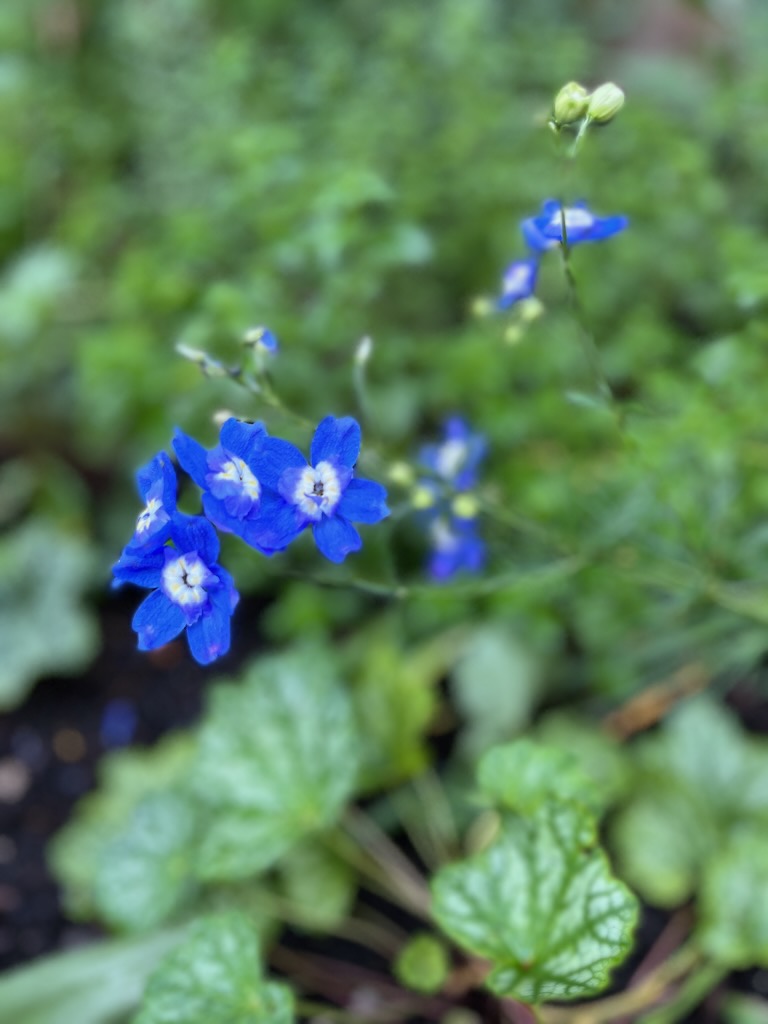
the garden, most of all, is living breathing companion. more than just a place to dig and poke, it almost speaks to me in whispers. delights me. returns the favour of my attention with its unfurled petals, its landing spot for bumblebee and butterfly and red-breasted robin. as one schooled in the storybook pages of tasha tudor, kate greenaway, and the norton anthology of children’s poetry, i honed early on my imagination’s muscles (thank you, mama). i spy a delphinium in bloom, a bloom as cobalt blue as neptune is thought to be, and i am certain an elfin soul will soon be stretching out a hammock from stem to stem down there where ladybugs and caterpillars roam. and so the garden to me is endless canvas of delight, whimsy, and unfolding tale, as if i’m something of the puppeteer to my plantings.

i relish sinking back into the rhythms of my chores: the way i stack the mugs, the wee bouquets i tuck around the house, the shopping list i know by heart.

all of it serves to cradle me. tells me i’m home where i belong.

the world and its adventures will be mine again, should i choose to wander. but for now, the summer––and the cicada––are upon us, and the tempo’s slowed, and my tank feels very much in need of filling.

i intend to surrender to summer, and let the whimsies steer me. i might not write each friday. i might write wednesdays instead. i might go a spell in silence. i might write in the middle of some night.

the point is, summer plays best in serendipitous tones. and i intend to listen. and to play along.

what will you do new this summer?

delphinium: the very definition of blue

praise song for black-eyed susan

should you poke through the lore-and-legend files of the black-eyed susan, that luminescent exclamation of the august meadow, you’d find it’s long been treasured for its curative charms. the keetoowah peoples (formerly known by the name cherokee, which translated to “people who speak a different language,” which begs the question who’s the different one?) squeezed juice from the roots to cure an earache. a tea made from dried leaves served as a mild diuretic; in other words, it made the bloat go away. and the native peoples of my neck of the woods, the neshnabék (formerly known as the potawatomi) chased away a cold with the ooze they squeezed from black-eyed susan roots. the anishinaabe (a name that means “the good humans”) used it as a poultice against snake bites or open wounds. 

i’d like to amend the apothecary: rudbeckia hirta, it turns out, is the perfect balm for rinsing away whatever hurts you deep inside. and i mean the sort of hurt that won’t show up on x-ray, nor splotch a purply bruise on flank or limb or bum. in other words, the black-eyed susan just might be the original pick-me-upper. especially when those nodding heads embroider the banks of a ripple-less pond, especially when their cheery saffron heads stick their necks out as far as the eye can see.

i stumbled onto such a swath this week, after days and days of poring over medical journals that must have been quick-sinking me into summer’s gloom. i’d not known quite how much i needed a spoonful of black-eyed whimsy till it unfurled before me, and far, far beyond me. but once i crouched down low, once i spied the bumbly bees doing their doh-si-doh and la-dee-da, poking their probisci into pollen pouch upon pollen pouch, i found myself entranced. and might have plopped myself permanently amid said swath, except for the fact that chicago’s finest would have given me a chase come the closing hour of the grand old park. 

i can’t quite put my finger on whether it’s the hoop skirt of golden petals or the way the fuzzy black-eyed dome periscopes up the middle, or the way the flock of them insistently interrupt the summer fade to jolt us back to joy, but there is a certain je ne sait-something that stands tall and wafts my way, and ever makes me break into a jolly when i come upon a black-eyed susie. 

maybe the other day it was the unendingness of it all, the exuberance of earth, rising up and rolling out the golden carpet, one french-knotted with those black-eyed buttons. it was as if the earth was daring me to laugh, to set aside my worries and my dread, to roll with what it offered: it offered stubborn testament to holy hope. it all but rubbed joy in my face, plucked the weight right off my soul, shouted in its earthly way: ”be not afraid; this here’s a world where skies turn pink at dawn, and posies rise in paint-box colors.” 

the black-eyed susans got it done. and thus i poked around, to see what else i just might learn while traipsing by their beds.

with one of the more curious common names among the prairie inhabitants, i exercised my curiosities and found out that the name traces back to an old english ballad, one penned near the dawn of the eighteenth century (in 1720, to be precise) by a fellow named john gay. it tells the sad, sad tale of a lovelorn lass (aka susan) who leaps aboard a fleet of moored ships soon to set sail for battle. she’s desperate to find her lover (a sweet fellow by the name of wiliam, the tale so goes) before he shoves off to sea. with tears spilling from her dark, dark eyes (here we find the black-ey’d bit), she cries out his name, he hears her from high above the ship’s yardarms, and, don’t you know, he scrambles down to bid his susan one last farewell. and so it goes in “sweet william’s farewell to black-eyed susan,” the first stanza of which rolls out like this: 

All in the Downs the fleet was moor’d,
The streamers waving in the wind,
When black-ey’d Susan came on board:
Oh! where shall I my true love find?
Tell me, ye jovial Sailors, tell me true,
If my sweet William sails among your crew!

never mind that love language of the seventeen hundreds all but drips with sticky treacle.

and here’s a gardener’s tip to go with it (cuz we never stop pouring it on here at the chair!): it’s said that if you seed wild Sweet William (Dianthus barbatus) with Black-eyed Susan (Rudbeckia hirta), the pair will bloom at precisely the exact the same time. forever twinned, the star-crossed, black-eyed lovers. 

so goes the etiology of the common name, and now for a bit about the latinate, the rudbeckia hirta, so named by the great father of taxonomy, carl linnaeus, who tidily ordered the world of nature, dividing and naming every which thing according to genus and species. 

as these things go, there’s always a backstory. and it’s all in who you know. in this case, before hitting it big in the taxonomy department (binomial nomenclature, his claim to fame), it seems mr. linnaeus needed a little side job. a professor at uppsala university, a school founded in sweden in 1477, a professor by the name of olof rudbeck, was in need of a tutor for his three children, and, in 1730, he hired linnaeus to do the job. linnaeus returned the kindness years later when he conferred immortality on his boss, the good prof, by pinning his name to the black-eyed beauty. as andrea wulf explains in The Brother Gardeners: Botany, Empire and the Birth of an Obsession: “For his old teacher Olof Rudbeck, Linnaeus chose the popular Rudbeckia. The tall flower reflected Rudbeck’s stature, Linnaeus explained, and the ray-like petals bore ‘witness that you shone among savants like the sun among stars.’”

its second name, hirta, is latin for “rough and hairy,” which if you rub your nose up against the black-eyed dome is pretty much what you’ll bump into. 

but from here on in, i’m going to think of the rudbeckia hirta as the bloom that makes the hurt go ‘way…

…and there’s pretty black-eyed Susan,

perfect as the night is blue…

George Elliott Clarke, from “King Bee Blues”

where’d you find your joy this week?

should you need your own dose of rudbeckia hirta, i beg you waste no time and  point yourself in the direction of the brilliantly restored north pond in chicago’s lincoln park. it’s breathtaking in the extreme. and will cure whatever ails you. 

p.s.s. the perseid meteor showers — summertime’s biggest celestial splash — hit the skies this weekend. without a full moon this year, the good folk at NASA promise A+ viewing. just find yourself a cozy spot to plop (i’d vote for black-eyed susan proximities), align your spine with the curve of earth and look straight up. they’ll be hard to miss. 

peachy

this crate of delectable, a fireworks of flavor that bursts on our tongues, plopped onto the front stoop not long ago (courtesy of a long-distance angel/saint/and holy mensch), and after parceling into brown paper sacks for a few of our favorite neighbors, the whole block has unanimously declared them the most delicious peaches that ever there were. in honor of their magical appearance out of the summer fog, a few morsels from the “peach” file.

first up, this perfection of a poem from a poet i only recently discovered, a chicago poet in fact, a longtime warehouse worker who penned beauties once he clocked off the job, and who before that made jewelry from soda bottle tops and wound up in the pages of vogue. his name is li-young lee, born in indonesia to chinese parents, and settled in chicago in 1964. he’s now described as a world-renowned poet, one who’s won the lannan literary award, a paterson poetry prize, and an american book award, among many. after reading “from blossoms,” i ran to the library and scarfed up all his books from the shelf. and then i read a few interviews. and now i sit and inhale his poetries as if to fill my lungs with the numinous.

his is an abiding belief that all the cosmos is imbued with a spark of the sacred, an idea i’ve spent a long time believing.

From Blossoms

BY LI-YOUNG LEE

From blossoms comes
this brown paper bag of peaches
we bought from the boy
at the bend in the road where we turned toward
signs painted Peaches.

From laden boughs, from hands,
from sweet fellowship in the bins,
comes nectar at the roadside, succulent
peaches we devour, dusty skin and all,
comes the familiar dust of summer, dust we eat.

O, to take what we love inside,
to carry within us an orchard, to eat
not only the skin, but the shade,
not only the sugar, but the days, to hold
the fruit in our hands, adore it, then bite into
the round jubilance of peach.

There are days we live
as if death were nowhere
in the background; from joy
to joy to joy, from wing to wing,
from blossom to blossom to
impossible blossom, to sweet impossible blossom.

Li-Young Lee, “From Blossoms” from Rose. Copyright © 1986 by Li-Young Lee.

in a conversation at a literary fest a few years ago, one i found in the los angeles review of books, lee says this, and you’ll see why i’m swooning:

If the person is a vessel then what would poetry be?

The mind of God. I think poetry is the mind of God. All the great poems that I love seem to me to all have that little ingredient. You feel like you’re in the presence of the mind of God. You can’t even account for the level of wisdom in certain poems. Take Rilke, I mean, you can’t just live and come to the conclusions he came to. I think his mission was to learn to get out of the way so that something bigger could speak through him.

Emily Dickinson, my God, she’s full of the mind of God. You can just feel God shining through those poems, darkly. So it was her, but it wasn’t. It’s unaccountable. In other words, if you wanted to be Emily Dickinson you couldn’t just have been born on the East coast, done the things she did. That wouldn’t guarantee that you could write anything. There’s something unaccountable that happened to her. And it’s that unaccountable thing that I love.

elsewhere lee has said that he considers every poem to be “a descendent of God.” and when asked about flawed poems by poets and writers, he explained: “There are great poems that have flaws. There are failures of perception, failures of understanding, but those flaws become a part of the poem’s integrity, so I still feel that those poems are descendants of God. But if a poem isn’t even good enough to be a poem, I don’t think it’s descended from God: [If] there is no “I” [as in Martin Buber’s I and Thou], there is no God. The ‘Me’ talking about ‘Me’—that’s not enough.”


and in a lineup of descendants of God, surely here’s a preacher: wendell berry, kentucky farmer, field plower, poet. it doesn’t take long for some to pack an almighty wallop; here’s wendell in a single stanza:

A Spiritual Journey

And the world cannot be discovered by a journey of miles,
no matter how long,
but only by a spiritual journey,
a journey of one inch,
very arduous and humbling and joyful,
by which we arrive at the ground at our feet,
and learn to be at home.

~ Wendell Berry ~
(Collected Poems)


and here’s one that especially melted me, because it came to me from the budding philosopher in this house. a recent college grad who has an eye for these things, and whose curiosities in this department are as delicious to me as the juiciest peach that ever there was….

Confucius, the renowned Chinese philosopher, once said, “A seed grows with no sound, but a tree falls with a tremendous noise. Destruction has noise, but creation is quiet. This is the power of silence. Grow silently.”


and finally, in honor of said budding philosopher and the juiciest peaches that ever there were, here is a long-ago-concocted rendition of peach-blueberry bread pudding, though truly the only way to eat these (or any plucked-straight-from-the-tree) peaches is bent over the sink, ready to swipe the dribble as it runs down your chin and wherever else it tries to escape.

teddy’s bread pudding, the peachy summer edition*

  • 3 cups milk (or cream)
  • 4 tablespoons (1/2 stick) butter, more for greasing pan
  • 1-1/2 teaspoons ground cinnamon
  • 1/2 cup sugar, plus 1 tablespoon
  • Pinch salt
  • ½ loaf sweet egg bread like challah or brioche, torn into 2-inch cubes (about 5 to 6 cups)
  • 3 eggs, beaten
  • 3 peaches, sliced
  • 3 to 4 tablespoons brown sugar
  • 1 cup blueberries
  1. Heat oven to 350 degrees. Over low heat in a small saucepan, warm milk, butter, 1/2-cup sugar, 1 teaspoon cinnamon, and salt. Continue cooking just until butter melts. Meanwhile, butter a 4-to-6-cup baking dish and tear the bread into bite-sized bits. Place the bread in baking dish.
  2. Slice peaches into separate medium-sized mixing bowl; stir in brown sugar. Set aside (wherein magic ensues, and syrup emerges). Rinse blueberries, and allow to drain.
  3. Once peaches are bathing in their brown-sugary juices (anywhere from five to 10 to even 15 minutes should do it), dump fruits atop bread chunks. Stir gently.
  4. Pour hot milk over bread, peaches, and blueberries. Let it sit for a few minutes, poking down the occasional chunk of bread that rises to the top. Beat the eggs briefly, and stir them into bread and fruit mixture. Mix together remaining cinnamon and sugar, and sprinkle over the top. Set the baking dish in a larger baking pan, and pour hot water into the pan, to within about an inch of the top of the baking dish, effectively making a bath for your bake.
  5. Bake for 45 minutes to 1 hour, or until custard is set but still a little wobbly and edges of bread have browned. Serve warm or at room temperature.

inhale the endless comfort vapors….

*thank you, mark bittman, for your endless guidance and your recipe on much-splattered page 662.

what was peachy ’bout your week?

a little bit of wonder. . .

since this is my time of quiet interlude, and my brain is on inhale, i come tiptoeing with just a couple morsels worth leaving on the table, as if notes scribbled in the night to greet you when the morning comes. these are deliciousnesses i plucked during the week, one from hermann hesse on wonder, and a prayer poem from john o’donohue looking at light from every angle….oh, and because it was beloved e.b. white’s birthday this week, a little bit from the obit he once wrote for the new yorker when his dog daisy met her demise on a new york city sidewalk when a taxi cab jumped the curb…


hermann hesse, the great german-swiss poet, novelist, and painter, whom some consider “the eternal patron saint of wonder,” on that very subject itself…

“Wonder is where it starts, and though wonder is also where it ends, this is no futile path. Whether admiring a patch of moss, a crystal, flower, or golden beetle, a sky full of clouds, a sea with the serene, vast sigh of its swells, or a butterfly wing with its arrangement of crystalline ribs, contours, and the vibrant bezel of its edges, the diverse scripts and ornamentations of its markings, and the infinite, sweet, delightfully inspired transitions and shadings of its colors — whenever I experience part of nature, whether with my eyes or another of the five senses, whenever I feel drawn in, enchanted, opening myself momentarily to its existence and epiphanies, that very moment allows me to forget the avaricious, blind world of human need, and rather than thinking or issuing orders, rather than acquiring or exploiting, fighting or organizing, all I do in that moment is “wonder,” like Goethe, and not only does this wonderment establish my brotherhood with him, other poets, and sages, it also makes me a brother to those wondrous things I behold and experience as the living world: butterflies and moths, beetles, clouds, rivers and mountains, because while wandering down the path of wonder, I briefly escape the world of separation and enter the world of unity.

. . . “Our universities fail to guide us down the easiest paths to wisdom… Rather than teaching a sense of awe, they teach the very opposite: counting and measuring over delight, sobriety over enchantment, a rigid hold on scattered individual parts over an affinity for the unified and whole. These are not schools of wisdom, after all, but schools of knowledge, though they take for granted that which they cannot teach — the capacity for experience, the capacity for being moved, the Goethean sense of wonderment.”

“A leaf of grass is no less than the journey work of the stars.”

Hermann Hesse

and from the late great irish poet john o’donohue…

For Light

Light cannot see inside things.
That is what the dark is for:
Minding the interior,
Nurturing the draw of growth
Through places where death
In its own way turns into life.

In the glare of neon times,
Let our eyes not be worn
By surfaces that shine
With hunger made attractive.

That our thoughts may be true light,
Finding their way into words
Which have the weight of shadow
To hold the layers of truth.

That we never place our trust
In minds claimed by empty light,
Where one-sided certainties
Are driven by false desire.

When we look into the heart,
May our eyes have the kindness
And reverence of candlelight.

That the searching of our minds
Be equal to the oblique
Crevices and corners where
The mystery continues to dwell,
Glimmering in fugitive light.

When we are confined inside
The dark house of suffering
That moonlight might find a window.

When we become false and lost
That the severe noon-light
Would cast our shadow clear.

When we love, that dawn-light
Would lighten our feet
Upon the waters.

As we grow old, that twilight
Would illuminate treasure
In the fields of memory.

And when we come to search for God,
Let us first be robed in night,
Put on the mind of morning
To feel the rush of light
Spread slowly inside
The color and stillness
Of a found word.

~ John O’Donohue ~

(from To Bless the Space Between Us)


and, lastly, in blessing for e.b. white, who gave us charlotte’s web, and stuart little, and whose birthday was july 11, 1899, here’s the beginning of the marvelous obit he wrote in the new yorker when his dog, daisy, died. i can’t leave the whole thing here because it’s locked in the new yorker archives and you can only find it with a subscription, but here’s how it begins….


what deliciousness did you find this week??

happy birthday across-the-way….

the blessing of an open window and other wonderments. . .

the whoosh of summer’s soundtrack is back again. windows were blessedly opened as the stars beckoned last night, as the little numbers on the don’t-breathe-this scale finally slid down to mere double digits. we are breathing again.

canadian forests are burning and we here along the great lake were taking our due. as this noxious cloud wafts back and forth across the continent––making apocalyptic scenes of the brooklyn bridge, choking the air out of cleveland, blocking the view of the john hancock from chicago’s lake shore drive––we were holed up in a seasonal inversion: it’s one thing to be nose pressed to the window when snows are whirling and harsh winds are howling, but the summer sun was shining, the garden was begging attention, and we couldn’t step outside for fear of the poisons that’d swirl in our lungs (and some of us are paying particular attention to what swirls in our leftover lungs).

it’s a curious quirk of humanity, how we long for whatever it is we can’t have. and so i stood nose to the glass watching the summer without me. i longed for my wicker chair, the one that lets me watch mama wren unnoticed. and then i wondered about mama wren’s lungs, and what happens when she warbles or burbles like nobody’s business. her lungs are wee things, and i imagine the toxins that threaten my big ol’ (comparatively) breathers might all but close hers off. so now i am listening extra intently, hoping for that trademark mama-wren burble to come.

the week’s barely-breathable script was apocalyptic preamble. summer is the season of screens in the windows and doors left wide open. the indoors and outdoors, permeably conjoined. except when they’re not. except when the toxins per breath reach uninhabitable levels.

it’s a blessing to watch the curtains stir. to fall asleep to the hummings of nightfall’s lullaby. to hear the distant siren, the train in the offing, the raccoons holding their hootenanny.

when the windows are sealed, and the summer hermetically wrapped at safe distance, there’s little to do but long for the way summer once was. when sunlight glistened. and the creek tickled your toes. and long days in the woods were the very best thing you could do for your soul.

summer is back now. we can breathe again. and we can open our doors and our windows.

and i, for one, intend to breathe deeply.

teddy’s raspberries–three years in the making–finally ripe for the plucking.

summer reading from the e.b. white and kate di camillo files, a celestial pairing if ever there was…

this comes from a glorious letter di camillo, author of because of winn dixie and the tale of despereaux, once wrote to a fellow author who’d written her asking how honest a writer should be with the young children to whom they both wrote (a question that pertains just as vividly to any writing, i’d argue, and a question that has especially animated my writing in recent weeks).

“E. B. White loved the world. And in loving the world, he told the truth about it — its sorrow, its heartbreak, its devastating beauty. He trusted his readers enough to tell them the truth, and with that truth came comfort and a feeling that we were not alone.

“I think our job is to trust our readers.

“I think our job is to see and to let ourselves be seen.

“I think our job is to love the world.”

in yet another conversation di camillo refers to the writing she does as a “shortcut to the heart.”

and when she was awarded her second newbery medal (in 2004 for tale of despereaux and 2014 for flora & ulysses: the illuminated adventures), di camillo brilliantly captured her life’s work as this: “We have been given the sacred task of making hearts large through story. We are working to make hearts that are capable of containing much joy and much sorrow, hearts capacious enough to contain the complexities and mysteries … of ourselves and of each other.”


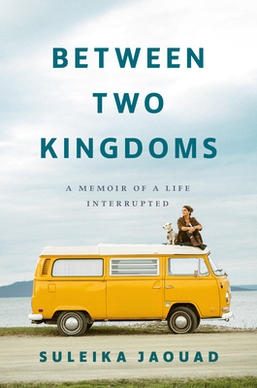
and finally, this capturing of grief by the tender and brilliant and fierce suleika jaouad, the author of the best-selling between two kingdoms: a memoir of a life interrupted, who was diagnosed with a rare form of acute myeloid lymphoma in 2011, a disease which recurred in late 2021, and for which she has had a second bone marrow transplant. she is married to the brilliant musician and magnificent soul jon batiste. and here’s what she wrote of grief:

“Grief is a ghost that visits without warning. It comes in the night and rips you from your sleep. It fills your chest with shards of glass. It interrupts you mid-laugh when you’re at a party, chastising you that, just for a moment, you’ve forgotten.” 

a more finely-grained exposition of grief i’ve not seen captured. and, by the way, suleika is exceedingly, exceedingly kind i’ve found out.


what stirred you most this week? or stifled you? and what’s topping your summer reading stack? i’ve been imagining a kate di camillo summer’s binge. and suleika’s is already on hold at my friendly local library…