pull up a chair

where wisdom gathers, poetry unfolds and divine light is sparked…

Category: paying attention

we are all filled with tears. if only we notice.
i am, as i so often am, late to the game. late to the nick cave game. i’ve known of his profound capacity to pierce the armament of the contemporary human wardrobe: the shield that keeps us at a distance from our own vulnerability. i’d heard rumor that he was a writer’s writer. but i’d never really dived in. 

until now. 

when a beloved, beloved friend sent me a letter he’d written that rang so, so close to truth — to my truth, anyway — i signed right up for more, more, more. 

nick cave, in case he’s floated outside your circle of knowing, is, in a nutshell, a once-upon-a-time choir boy from australia, who went on to a wild ride through the early punk rock scene, and with his shock of black black hair and an emaciated profile, might aptly be described as a goth pioneer (note to mom: that means someone who takes on a wardrobe that’s something of a cross between a corpse and your most ghoulish uncle, and wallows in the literature and the language and the aesthetic of similar darkness, verging on the macabre). in time, he moved into the quieter, more contemplative lane of soulful song. his trademark, a baritone so deep it feels pulled from igneous rock, is fittingly in sync with the haunting, soulful lyrics he’s come to write. 

nick cave

i’d known that tragedy struck dear nick, when his then 15-year-old son, arthur, fell from a cliff near brighton, england, and seven years later another son, jethro, died at 31, a death he doesn’t talk about, abiding by the wishes of jethro’s mother. i’d read bits of his writings about grief.

It seems to me, that if we love, we grieve. That’s the deal. That’s the pact. Grief and love are forever intertwined. Grief is the terrible reminder of the depths of our love and, like love, grief is non-negotiable. There is a vastness to grief that overwhelms our minuscule selves. We are tiny, trembling clusters of atoms subsumed within grief’s awesome presence. It occupies the core of our being and extends through our fingers to the limits of the universe. Within that whirling gyre all manner of madnesses exist; ghosts and spirits and dream visitations, and everything else that we, in our anguish, will into existence. These are precious gifts that are as valid and as real as we need them to be. They are the spirit guides that lead us out of the darkness.

but never have i read any of the longer works i will now go find (faith, hope and carnage, an extended interview with the journalist seán o’hagan.) what’s intrigued me most, in poking around and gathering bits in the ways of magpie (a bird known for scavenging trinkets hither and yon), is his take on religion. it’s always the soulful entrée where i find my curiosities leading me. this paragraph alone shouts, read, read, read more to me….

Cave is an avid reader of the Bible. In his recorded lectures on music and songwriting, Cave said that any true love song is a song for God, and ascribed the mellowing of his music to a shift in focus from the Old Testament to the New. He has spoken too of what attracts him to belief in God: “One of the things that excites me about belief in God is the notion that it is unbelievable, irrational and sometimes absurd.”When asked if he had interest in religions outside of Christianity, Cave quipped that he had a passing, sceptical interest but was a “hammer-and-nails kind of guy.” Despite this, Cave has also said he is critical of organised religion. When interviewed by Jarvis Cocker of Pulp on 12 September 2010, for his BBC Radio 6 show Jarvis Cocker’s Sunday Service, Cave said that “I believe in God in spite of religion, not because of it.” 

*(emphasis, mine; in the case of “hammer-and-nails” it just struck my funny bone.)

the red hand files is the name of his blog, where he writes perhaps his most spontaneous writing (the hidden beauty of blogging [among the uglier words in the lexicon]). started years ago, it was a place for nick cave fans to send him questions, questions he’d sift through and choose to answer—or not. it seems to have morphed into a place of profound nakedness, another name for truth in unprotected, unshielded, undressed form. 

here, the letter that drew me in, or most of that letter anyway: 

As the ground shifts and slides beneath us, and the world hardens around its particular views, I become increasingly uncertain and less self-assured. I am neither on the left nor on the right, finding both sides, as they mainly present themselves, indefensible and unrecognisable. I am essentially a liberal-leaning, spiritual conservative with a small ‘c’, which, to me, isn’t a political stance, rather it is a matter of temperament. I have a devotional nature, and I see the world as broken but beautiful, believing that it is our urgent and moral duty to repair it where we can and not to cause further harm, or worse, wilfully usher in its destruction. I think we consist of more than mere atoms crashing into each other, and that we are, instead, beings of vast potential, placed on this earth for a reason – to magnify, as best we can, that which is beautiful and true.  I believe we have an obligation to assist those who are genuinely marginalised, oppressed, or sorrowful in a way that is helpful and constructive and not to exploit their suffering for our own professional advancement or personal survival. I have an acute and well-earned understanding of the nature of loss and know in my bones how easy it is for something to break, and how difficult it is to put it back together. Therefore, I am cautious with the world and try to treat all its inhabitants with care. 

I am comfortable with doubt and am constitutionally resistant to moral certainty, herd mentality and dogma. I am disturbed on a fundamental level by the self-serving, toddler politics of some of my counterparts – I do not believe that silence is violence, complicity, or a lack of courage, but rather that silence is often the preferred option when one does not know what they are talking about, or is doubtful, or conflicted – which, for me, is most of the time. I am mainly at ease with not knowing and find this a spiritually and creatively dynamic position. I believe that there are times when it is almost a sacred duty to shut the fuck up.

I’m not particularly concerned about where people stand – I’ve met some of the finest individuals from across the political spectrum. In fact, I take pride and immense pleasure in having friends with divergent views. My life is significantly more interesting and colourful with them in it. 

Perhaps this all amounts to very little, but I suppose, in the end, I value deeds over words. I see my own role as a musician, songwriter, and letter writer as actively serving the soul of the world, and I’ve come to understand that this is the position that I must adopt in order to attempt to cultivate genuine change. In fact, I am now beginning to understand where I do stand, Alistair – I stand with the world, in its goodness and beauty. In these hysterical, monochromatic, embattled times, I call to its soul, the way musicians can, to its grieving and broken nature, to its misplaced meaning, to its fragile and flickering spirit. I sing to it, praise it, encourage it, and strive to improve it – in adoration, reconciliation, and leaping faith. 

Love, Nick

but that’s not all….

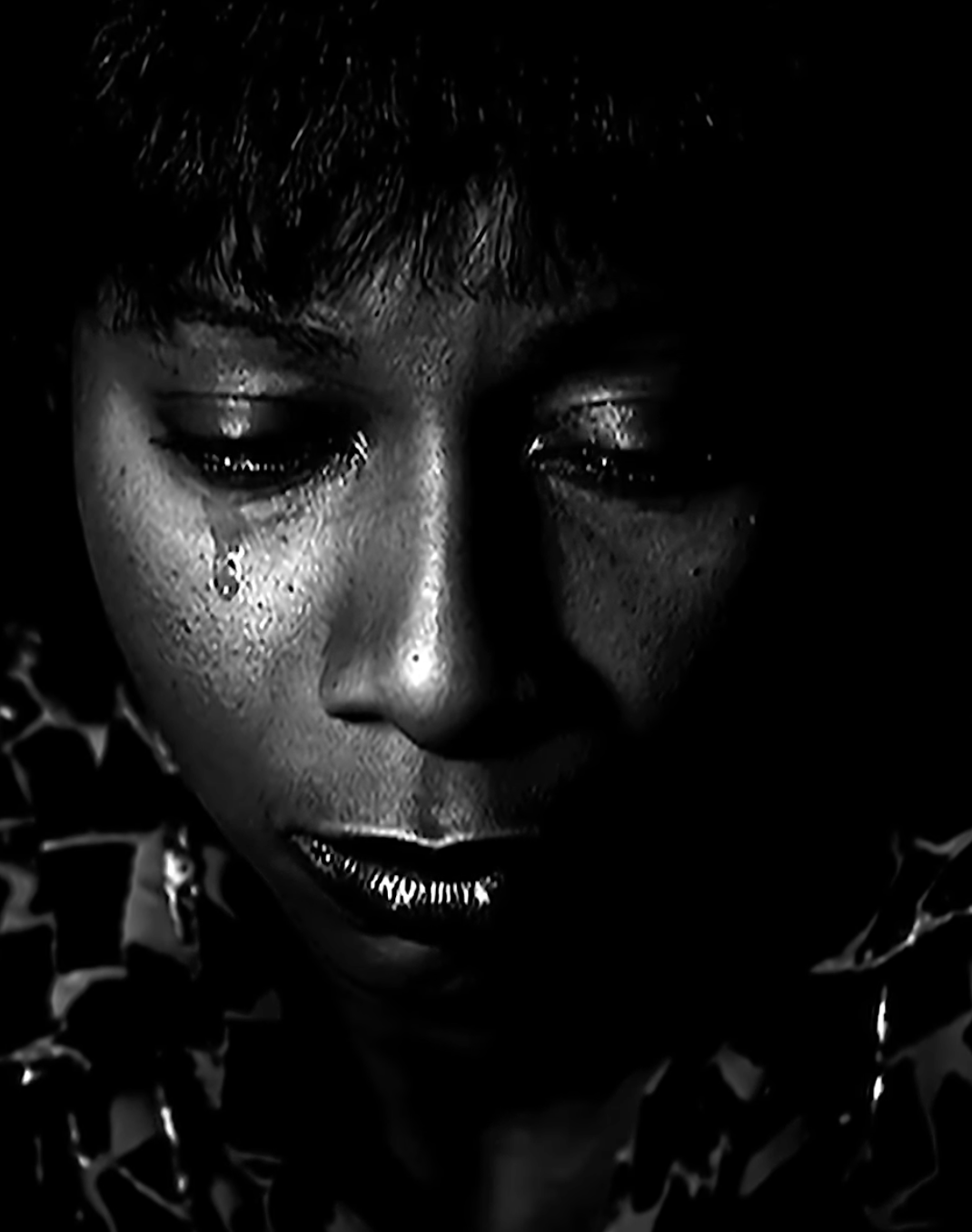
maybe what we need in this age is to move beyond words. to use our eyes more than our ears. to look and look closely at the common bonds of our humanity, and herein is precisely the study we might need, to see the human visage wrought  by sorrow, or grief: on the brink of tears, fighting tears, to watch the flinching of muscle, the biting of lips, the contortion of muscle, pulled by nerves tied to whatever is the emotional core of us. to see how the human face on the brink of tears is sooooo deeply universally understood, felt, responded to. maybe in that place of wordlessness we can remember that we are all one, of one species, and that within us all is the emotion called grief, called sorrow. and we’d do well to remember that we are all always on the verge of brokenness. and, too, we might be the arms that reach out to dry the tear, to hold the quivering shoulders, to brace the wobbling spine against whatever strength we might muster. maybe we need to remember how tender we all are, somewhere, somewhere deep inside…..


only one poem this week, and it wasn’t actually written as a poem, but laid out that way here it works mightily. it’s excerpted from abolitionist Sojourner Truth’s “Ain’t I a Woman” address, in the version published in 1863. The speech was originally delivered in the 1851 Women’s Rights Convention in Akron, Ohio. we might do well to ask, in the face of so much inhumanity, if swapping out the word “human” for “woman” stirs its own seeds of compassion….i am bereft; hollowed, haunted by the stories of immigrants pulled from their churches, their cars, their homes, flung to the ground, stomped on, kicked, living in fear…..

sojourner truth (unknown birth date; died 1883)

but this, as written, is more than mighty as is…..

Ain’t I A Woman?

That man over there
says that women
need to be helped into carriages,
and lifted over ditches,
and to have the best place everywhere. 
Nobody ever helps me into carriages,
or over mud-puddles,
or gives me any best place!
And ain’t I a woman? 

Look at me! Look at my arm!
I have ploughed and planted,
and gathered into barns,
and no man could head me!
And ain’t I a woman?

I could work as much
and eat as much as a man —
when I could get it —
and bear the lash as well!
And ain’t I a woman? 

I have borne thirteen children,
and seen most all sold off to slavery,
and when I cried out
with my mother’s grief,
none but Jesus heard me!
And ain’t I a woman?
. . .
Then that little man in black there,
he says women can’t have
as much rights as men,
’cause Christ wasn’t a woman! 
Where did your Christ come from?
From God and a woman!
Man had nothing to do with Him.

If the first woman God ever made
was strong enough to turn
the world upside down all alone,
these women together
ought to be able to turn it back,
and get it right side up again!
And now they is asking to do it,
the men better let them!

+ Sojourner Truth

because you are all so wise in so many ways, what thoughts might you add to a conversation on love and grief, and the intermingling therein?

i’m off to my 50th high school reunion this weekend, a date that gives me pause, as it was one of the tenderest times in my life 50 years ago, a time that marked me through all these years. it was a steep uphill climb for a long time there. and thank holy God i lived long enough to get here. my prayer is that those who show up find compassion and grace, and that those who choose to stay home look around and see lives that have grown beyond the bounds of whatever have been the obstacles.

and i pray, oh i pray, for this world. no kings rally tomorrow….i heard a story this week about the not-far-away catholic church where ICE agents filled the parking lot during spanish-language mass, targeting the prayerful inside. so the priest becalmed those in the pews, locked the church doors, promised protection to his flock, and a brigade of rapid-response volunteers drove parishioners safely to their homes. cars had to be left behind. prayers were laced with terror. this is not the america my uncle died for, bayoneted in the night in a tent on iwo jima….

as my beloved friend fanny put it, “they come after us because we’re brown.”

**thank you, laura, for sending me nick….

this poem is more than enough

i promised some iteration of a summer reading club, as in the days of yore when a little card at the public library was slipped in an envelope and marked with an empty grid, and for every book i slipped off the shelf, carried home to devour, the lovely librarian rewarded me with an ink-stamped icon of summer. an ice cream, a fish, a globe of the world. a deep-sea diver. each, a trophy for tucking myself away in the summer’s quiet, blocking out even the buzz of the vexatious mosquito, and turning page after page—finding myself in the big woods, the little house on the prairie, mary’s secret garden, or robert louis stevenson’s pages and pages of rhyme. 

to garner an ink-stamp for adventuring away, for riding the winds of farflung imagination, was over-abundance defined. the reading, the being carried away, the learning to trust the deep powers of my mind’s true colors, that was the abundance. the gift. the one i’ll never surrender. 

ever since those bicycling-to-the-library summery days, for me the span between the last and the first school bells of the year has long been synonymous with hours unspooled within the wingspan of a book. 

the world we live in today doesn’t always require wingspans. sometimes what beckons us is flat on a screen and glows space-age eerie against the darkness. sometimes the words that stir me most in a week are words i’m able to copy and paste, words plucked from the cyberletters that waft my way. 

and in those cases, this summer reading club might become more of a book report club, in which i bring to the table the one single snippet that most caught my breath in the week. this week it’s one single poem. a poem from one of my true lifelines—andrea gibson, the queer activist and poet with an ovarian cancer deemed incurable two years ago. she reminds that though the soul is my true work in progress, the thing i pray is alive into the forever, in whatever form that will be, the vessel into which it’s been stuffed is mighty miraculous too. 

i’ve never quite given my physical being enough credit. i’ve not paused to marvel at many parts of it, save for the five digits extending from each palm, gobsmacked at however that ingenious appendage was wholly imagined, evolved. that we can pick up a slip of paper, or a rose petal fallen to the ground, that we can hold the hand of the one we love, or the stranger whom we know is afraid, is trembling, is nothing short of divine genius. 

the priest who along with a rabbi amid our tiny city garden was blessing our newborn firstborn once gave a teaching focusing our attention on the genius of the elbow, a hinge without which we’d ever be at arm’s length, unable to bring a fork to our own mouths, or button our buttons, or zipper our zippers.  

it’s ironic that for as desperately as i want my old resilient heart to keep lub-dubbing, and my little air sacs to keep being my wee vital accordions, expanding and whooshing the air in and out, as much as i think of those majordomos, i forget the rest of the bodily wonders: the way eyes crinkle when they’re in the thick of a heart-melting smile; the way the tears know just how and when to fall; that stubby little toe that in fact keeps us from toppling. . .

andrea gibson

andrea, though, as do all the best poets, makes us pause to pay attention. holy attention. to the quirks and the nooks and the crannies, the history told through flesh, bones, and sinew. and all the overlooked bits: the loose tooth of long ago, the goosebumps over the years, the boing in our hair we once tried to hide. andrea makes us take note of how holy, how blessed, these chipped, wrinkled, creaky old soul vessels truly are. the infinite ways our multiple parts—incidental and otherwise—have carried us through the years.

to do so, she puts the soul into the driver’s seat and allows it to look back, longingly, lovingly. and along the way, directs our attention. . .

here’s andrea:

For the Days I Stop Wanting a Body

Imagine when a human dies the soul misses the body
Actually grieves the loss of its hands
And all they could hold
Misses the throat closing shy
Reading out loud on the first day of school

Imagine the soul misses the stubbed toe
The loose tooth
The funny bone
The soul still asks
“Why does the funny bone do that?
It’s just weird.”

Imagine the soul misses the thirsty garden cheeks
Watered by grief
Misses how the body could sleep through a dream
What else can sleep through a dream
What else can laugh
What else can wrinkle the smile’s autograph
Imagine the soul misses each falling eyelash
Waiting to be wished
Misses the wrist screaming away the blade
The soul misses the lisp
The stutter
The limp
The soul misses the holy bruise
Blue from that army of blood rushing to the wound’s side
When a human dies
The soul searches the universe for something blushing
Something shaking in the cold
Something that scars
Sweeps the universe for patience worn thin
The last nerve fighting for its life
The voice box aching to be heard

The soul misses the way the body would hold another body
And not be two bodies but one pleading God doubled in grace
The soul misses how the mind told the body
“You have fallen from grace.”
And the body said, “Erase every scripture that doesn’t have a pulse
There isn’t a single page in the Bible that can wince
That can clumsy
That can freckle
That can hunger.”

Imagine the soul misses hunger
Emptiness
Rage
The fist that was never taught to curl, curls
The teeth that were never taught to clench, clench
The body that was never taught to make love, makes love
Like a hungry ghost digging its way out of the grave
The soul misses the un-forever of old age
The skin that no longer fits
The soul misses every single day the body was sick
The now it forced
The here it built from the fever
Fever is how the body prays
How it burns and begs for another average day

The soul misses the legs creaking up the stairs
Misses the fear that climbed up the vocal chords
To curse the wheelchair
The soul misses what the body could not let go
What else could hold on that tightly to everything
What else could hear the chain of a swing set and fall to its knees
What else could touch a screen door and taste lemonade
What else could come back from a war and not come back
But still try to live
Still try to lullaby

When a human dies the soul moves through the universe
Trying to describe how a body trembles when it’s lost
Softens when it’s safe
How a wound would heal given nothing but time

Do you understand
Nothing in space can imagine it
No comet
No nebula
No ray of light can fathom the landscape of awe
The heat of shame
The fingertips pulling the first grey hair
And throwing it away
“I can’t imagine it.”
The stars say
“Tell us again about goosebumps.
Tell us again about pain.”
—Andrea Gibson

you can watch andrea read it here.

what might your soul miss about your beautiful body?

and before i shuffle off, happy blessed day to two true loves of this ol’ chair: amy from illinois, as she was first made known to me, and nan P, who’s been the beating heart of the tenderest, bravest moments for years beyond years. one of you passes the birthday baton to the next, and a pairing as sweet it’s hard to imagine. love to you both, and bless these beautiful days in which we dwell on the light you bring to this world. 

in a very few days, my sweet boys and i fly to the island of my dreams, the land from which i feel my ancestors calling so deeply. i’ll be in dublin when i next write. see you from there. i’ve been teaching myself irish for months, and will be meeting up with a professor of irish poetry, who mostly writes in what we’d call “old irish,” so i need to keep practicing, thus: beannachtí. (blessings.)

(these summerly trips with the boys the past few years all fall under the category “live your dreams while you can.” bless the little legs and the lungs that will carry me there…..i hope to fill those wee air sacs with the holiest breath the coast of ireland offers…)

ashes to ashes under the specter of scan time

remember that thou art dust and unto dust thou shalt return. 

sobering words, as the grainy smudge is pressed upon my brow. it’s the season of shadow in the liturgical calendar, the season for recognizing our mortality, our fleeting time here to attend to the task of our being. 

dust to dust, ashes to ashes. 

the point of religion, at its wisest, is to strip us to our unfettered incidentality. to put us squarely in our place. we are star dust by chance. but a speck in the great river of time. a mere dot ordained with a task that we trust, we believe, might tip the scales toward goodness, toward light. i believe we’re here to be blessed, to become holiness in flesh form. 

six weeks of lent makes it the longest season of the church year outside of ordinary time. i’m no theologian so i’ve not read deeply on that equation, but i have to think it’s telling us something of import if more days are devoted to repenting, to remembering how mortal we are than to filling our heads with the usual noise. 

i’ve found myself in recent weeks deep in the writing of a book plumbing the spiritual epiphanies of cancer, which at its heart is a meditation on paying attention, remembering that we will die, and seizing the imperative to live profoundly in the now. 

i’ve called it scan time, an abbreviation of time into three- or six-month allotments that serve to focus my seeing. in knowing my time is on the clock, i dive into the work. holy work.

it’s basically living in some iteration of lent from here on in: ashes to ashes. knowing full well that i am dust and to dust i shall return. 

it’s a practice of every religion; humility among the highest virtues. recognizing how tiny a dot we are. and admitting how often we falter. putting voice to confession.

judaism distills it on a single day: the day of atonement, as somber a day as there is. a day in which we fast from all things, and scour our soul, confessing our sins from A to Z acrostically. abused, betrayed, been cruel, destroyed, embittered other’s lives. . .

before the naming of each and every one of those sins, both communal and individual, these words from the Yom Kippur prayer book are recited, directed to the almighty and merciful God:

You know the secrets of the universe and the secrets of the human heart. You know and understand us, for You examine our inner lives. Nothing is concealed from You, nothing hidden from Your sight. Eternal One, our God and God of our ancestors, we pray that this be Your will: forgive all our wrongs, pardon us for every act of injustice, help us atone for all our moral failures.

the act of contrition i learned in second grade says it like this: 

O my God, I am heartily sorry for having offended Thee, and I detest all my sins because of thy just punishments, but most of all because they offend Thee, my God, who art all good and deserving of all my love.

I firmly resolve with the help of Thy grace to sin no more and to avoid the near occasion of sin. Amen.

and the confession in the anglican book of common prayer is not dissimilar: 

Most merciful God,
we confess that we have sinned against you
in thought, word, and deed,
by what we have done, and by what we have left undone.
We have not loved you with our whole heart;
we have not loved our neighbors as ourselves.
We are truly sorry and we humbly repent. . .

sins and ashes aren’t things we like to think about. but, oh, they serve their purpose. and in a world where madness is reigning, where blame is cast but rarely admitted, and hubris has inverted the divine equation, i find myself seeking an alternative paradigm, one that answers not to power and vengeance but to mercy and justice and light.


and for a consideration of not our failings but our goodness, meister eckhart weighs in with this wisdom: 

The inner person is the soil in which God has sown the divine likeness and image and in which God sows the good seed, the roots of all wisdom, all skills, all virtues, all goodness—the seed of the divine nature. 
—Meister Eckhart 


a few years back, i dove a bit deeper into musings on the day of atonement, a post found here: 

you needn’t have been daubed with ashes, nor live with a scary diagnosis, nor recite an alphabet of sins, to recognize the wisdom of silently examining the state of your soul. and stepping forward to make right where you’ve wronged. it’s becoming countercultural in a world taking shape as it is. the ancient ways, though, have lasted. here we are millennia later, and confession still stirs in the human spirit. it takes nerve and true might to live it. needn’t answer here, but what are the profound memories you hold of learning to say, i am sorry? or any other thoughts on ashes and dust, and the sobering truth of our mortality. . .

p.s. i suppose my publisher would reallllly want me to mention (she sent me a little nudge in the social media department, a department where i’m quite often lacking) that The Book of Nature came out in paperback this week, so you can slip a copy more easily into a backpack or pocket. and it’s cheaper!! looks just like its big sister, only a flimsier–er, more pliable––cover.

iterations of love

the God of every religion tells us to do it. commands us: love thy neighbor as thyself. 

i’ve felt it in my own life, know it to be a force that transcends time, space, and matter. i’ve felt it all but align planets whose orbits were out of whack. i’ve felt it pierce through to the core of me, prompt me to reach down and seize a source, a muscle, i didn’t know that i had. it’s made me more than i ever imagined i could be. lured me out of mighty dark years. 

love, thank heaven, is patient. love is keenly perceptive. love, often, won’t take No for an answer.

i’ve felt it shrink distance, make the sound coming through the telephone as close as if we were sidled, thigh to thigh touching, on the seat of a couch in the very same room. 

i’ve heard it in barely audible whispers, and in shouts across the corridors of an airport, a hospital, a college campus––a sound so ebullient my heart leaps to quicken its pace. 

i’ve spent my life learning how to do it. keeping close watch on the ones i encounter who do it the best. the most emphatically. 

i’ve learned it from the little bent man who perched on a hydrant, befriending the pigeons. flocks and flocks of pigeons, he lovingly tended. even in the face of taunts and jeers from the cars passing by.

i’ve learned it from my first best friend who knew without asking how deeply it hurt, how tender it felt to be seen in shadow and light. 

i’ve learned it from my long-ago landlady, the one who would knock at my door, come dinnertime, and hand me a hot steaming bowl of avgolemeno, the egg-and-lemon-rich chicken-rice soup that serves as Greek penicillin, and cured what ailed me no matter how awful the day.

i’ve learned it from a 12-year-old girl who lay in a hospital bed, her legs unable to move, paralyzed from the waist down by a tumor lodged in her spine. i’ll never forget the glimmer in her eye, as she looked up and laughed, as she handed me her hand-made papier-mâché green pumpkin head, the one she’d made flat on her back, and with which she crowned me her Irish Pumpkin Queen of a hospital nurse.

i’ve learned it, and felt it: in the canyon of grief, in the vice hold of fear, and in long seasons of haunting despair. it’s the ineffable force with the power to pull us up off the ground, inch us just a little bit forward, and shake off the worries that freeze us in our tracks. 

my hunch is that someone at hallmark international invented today, the day in which pink paper hearts are soared hither and yon. or maybe it was the three catholic saints, all named valentine or valentinus, and, as was so often the story, all of whom were martyred for breaking some reason or rule. in the case of third century rome, a priest named valentine defied the emporer who’d ruled that single men made better soldiers than those with a wife, and thus outlawed marriage. valiant valentine, seeing the injustice in the loveless decree, kept about the business of marrying young sweethearts in secret. for this, he lost his head. 

earlier still, pagans seized the midpoint, or ides, of the month––february 15––as Lupercalia, a fertility festival dedicated to Faunus, the roman god of agriculture, and to Romulus and Remus, the founders of rome. a priestly order of roman pagans, the Luperci, gathered at the secret cave where Rom and Rem were thought to have been raised by she-wolves, to sacrifice a goat, which they then stripped of its hide, and sliced into strips. then, according to historians, “they would dip [the strips] into the sacrificial blood and take to the streets, gently slapping both women and crop fields with the goat hide.”* 

maybe pink paper hearts are, after all, a step in the right romantic direction. 

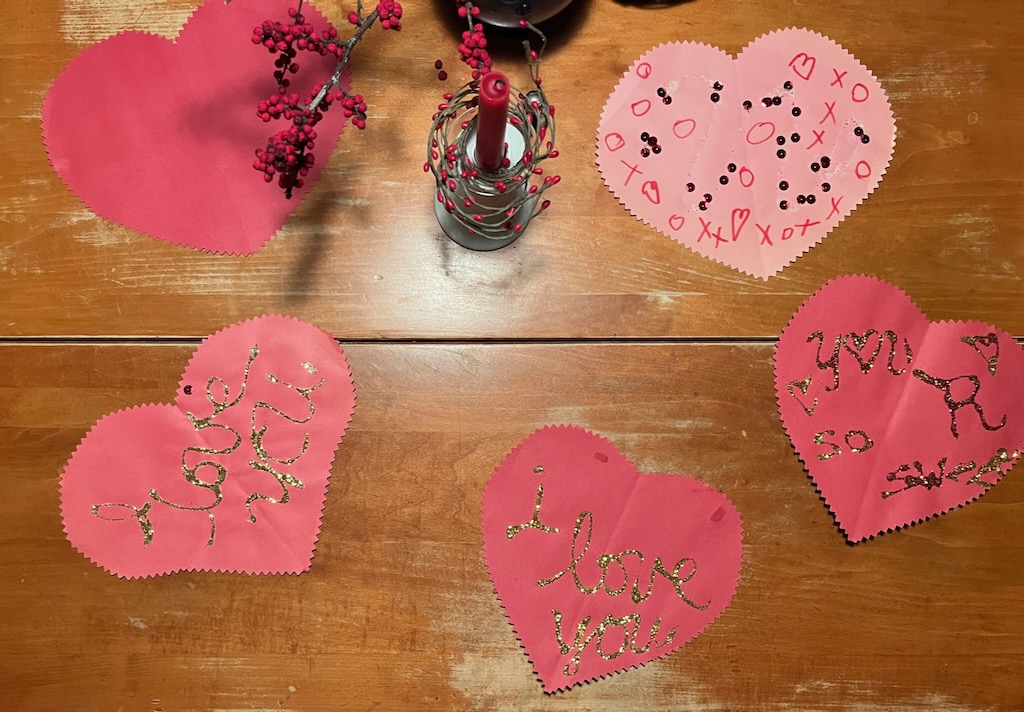
truth be told, 34 years in, it’s recycled hearts adorning someone’s place at the breakfast table…

*postscript on those slap-happy romans: far from being fearful of the bloody slaps, young roman women were said to welcome the mark of the bloody hides, for it was thought to make them more fertile in the year to come. 


lifting the day out of its purely-romantic framing, here are three takes on iterations of love, reminding us of the evolution of love across the decades of marriage, and the love of this one sacred Earth we’ve been given to tend:


first up, the sage from kentucky, farmer-poet-secular priest wendell berry, from a much longer poem, but i was drawn to these three parts, meditations on a long and deepening love…

excerpts from The Country of Marriage
by Wendell Berry

III.
Sometimes our life reminds me
of a forest in which there is a graceful clearing
and in that opening a house,
an orchard and garden,
comfortable shades, and flowers
red and yellow in the sun, a pattern
made in the light for the light to return to.
The forest is mostly dark, its ways
to be made anew day after day, the dark
richer than the light and more blessed,
provided we stay brave
enough to keep on going in.

IV.
How many times have I come to you out of my head
with joy, if ever a man was,
for to approach you I have given up the light
and all directions. I come to you
lost, wholly trusting as a man who goes 
into the forest unarmed. It is as though I descend
slowly earthward out of the air. I rest in peace
in you, when I arrive at last.

V.
Our bond is no little economy based on the exchange
of my love and work for yours, so much for so much
of an expendable fund. We don’t know what its limits are–
that puts us in the dark. We are more together
than we know, how else could we keep on discovering
we are more together than we thought?
You are the known way leading always to the unknown,
and you are the known place to which the unknown is always
leading me back. More blessed in you than I know,
I possess nothing worthy to give you, nothing
not belittled by my saying that I possess it.
Even an hour of love is a moral predicament, a blessing
a man may be hard up to be worthy of. He can only
accept it, as a plant accepts from all the bounty of the light
enough to live, and then accepts the dark,
passing unencumbered back to the earth, as I
have fallen tine and again from the great strength
of my desire, helpless, into your arms.


and the belle of amherst turns our attention to this world that keeps loving us, despite the ways we batter it, and ignore it…

This world is just a little place, just the red in the sky,
before the sun rises, so let us keep fast hold of hands,
that when the birds begin, none of us be missing.
— Emily Dickinson, in a letter, 1860


and finally, the late great naturalist and essayist Barry Lopez, on how to be awake to this still blessed world, from the foreword to Earthly Love, a 2020 anthology from Orion magazine. He is describing walking a vast landscape––a spinifex plain, or grassy coastal dunes, in North-Central Australia––for the first time, but the wisdom is how to attend to a deepening love:

My goal that day was intimacy — the tactile, olfactory, visual, and sonic details of what, to most people in my culture, would appear to be a wasteland. This simple technique of awareness had long been my way to open a conversation with any unfamiliar landscape. Who are you? I would ask. How do I say your name? May I sit down? Should I go now? Over the years I’d found this way of approaching whatever was new to me consistently useful: establish mutual trust, become vulnerable to the place, then hope for some reciprocity and perhaps even intimacy. You might choose to handle an encounter with a stranger you wanted to get to know better in the same way. Each person, I think, finds their own way into an unknown world like this spinifex plain; we’re all by definition naive about the new, but unless you intend to end up alone in your life, it seems to me you must find some way in a new place — or with a new person — to break free of the notion that you can be certain of what or whom you’ve actually encountered. You must, at the very least, establish a truce with realities not your own, whether you’re speaking about the innate truth and aura of a landscape or a person.

. . . I wanted to open myself up as fully as I could to the possibility of loving this place, in some way; but to approach that goal, I had first to come to know it. As is sometimes the case with other types of aquaintanceships, to suddenly love without really knowing is to opt for romance, not commitment and obligation.

and, later in the same essay, his call to attention for a world suffering from what he quite plainly calls, “a failure to love,” a message of urgency on a day in which love, in its many many iterations, is held up to the light.

EVIDENCE OF THE failure to love is everywhere around us. To contemplate what it is to love today brings us up against reefs of darkness and walls of despair. If we are to manage the havoc — ocean acidification, corporate malfeasance and government corruption, endless war — we have to reimagine what it means to live lives that matter, or we will only continue to push on with the unwarranted hope that things will work out. We need to step into a deeper conversation about enchantment and agape, and to actively explore a greater capacity to love other humans. The old ideas — the crushing immorality of maintaining the nation-state, the life-destroying beliefs that to care for others is to be weak and that to be generous is to be foolish — can have no future with us.

It is more important now to be in love than to be in power.

who were some of your great teachers of love?

one wish . . .

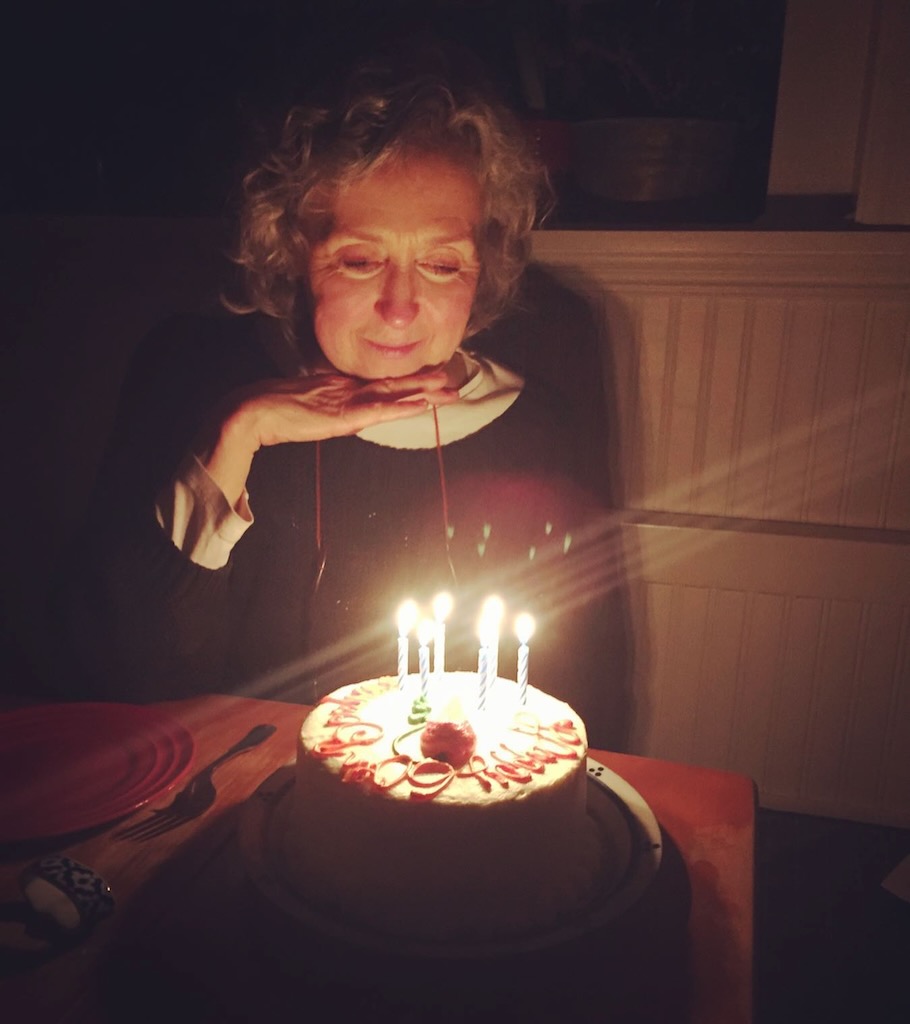
when i take a deep breath in tonight, and close my eyes to make a wish, there is only one wish i’m wishing this year: i wish for a birthday next year.

that’s everything, really. 

i’ll be wishing so hard.

it’s a wish that feels so far away. and so very big. like i’m asking for the moon. 

it’s a wish that carries a secret. one the sages and prophets and poets have known for a very long time.

it’s a paradox wish. it’s a koan. it’s a wish that makes you think. perk up and pay attention. root around for the wisdom, the immutable truth.

truth is, it’s even bigger than it seems. it’s a russian doll of a wish. one of those ones with umpteen tiny-grained wishes within. grain by grain by grain we make it across a year, and year by year a lifetime. 

a birthday next year. 

doesn’t sound like too much. but, oh, it’s infinite really. 

the blessing of cancer––and yes there are blessings, ones the sages and prophets all seem to have known without needing the verdict, without the scalawag cells lurking in shadows, cells that can’t wait to divide and multiply and muck up the works––is that it rejiggers your seeing. it’s the psychophysics of vision: when range is narrowed, acuity’s heightened. you learn to look not too far into the offing; you learn to look more closely than ever at whatever it is that’s right there before you. and, thus, you see all the more clearly the finest of grains all along the way. 

the fine grains are where the wonder, the magic, the awe, are kerneled inside, awaiting their turn to burst forth, to be seen, savored, not left by the wayside.

life in the up-close, life when we’re listening for whispers not waiting for timpani, is how we come to know the most sacred grain therein. 

in wishing for one more birthday––please God, just one is all i’m wishing this year (if wishes come true, i’ll wish it again and again and again as long as i can)––what i’m really wishing for are those tiny, tiny moments that strung onto a cord make for one holy rosary.

within my one moon-size, more-than-anything wish, here are some of the grains nestled inside:

i wish for the holy, holy sound of one or both of my boys calling me at some unlikely hour to tell me one of their dreams has come tumbling true. or at least the latest chapter therein. and before they’ve uttered a word, i’ll know from the sound of their breathing that the news that’s coming is good. and, dear God, i don’t wanna be stingy but i’d sure love one or two more of those sweet, sweet jubilant sounds.

and while i’m wishing, i sure wish i get to hear the rough draft versions of those dreams, as they’re in the making, as my boys try them on for size and dare to let me in on the beta versions.

i wish for their soft, big hands to wrap around my now-more-wrinkled littler one––to hold me steady, be it a cobblestone walk or life’s herky-jerky jolts tipping me over. 

i wish for one of those early mornings where no one is stirring but me, and the dawn hasn’t yet rosied the sky, and the biggest decision i’m called to make is which mug should i pull from the shelf.

i wish to sink my teeth into the sweetest strawberry of the season. ditto the crispest apple of fall. and the juiciest of august’s tomato. 

i wish to run down the airport corridor one more time and into the arms of my faraway boy, all while loudly belting out, “it’s been five years!” (even when it hasn’t been), only because all the good souls slumped in their hard plastic seats deserve a little airport sentimentality. even if it’s improv, and utterly fiction. and because there’s nothing i love so much as the arms of my boys wrapped round my shoulders.

i wish to come to the last page of a book with tears rolling down my cheeks, not yet wanting to say goodbye to characters i’ve come to love. 

i wish to sit down to dinner with only the one i love, or to a table filled with nearly a dozen i adore. 

i wish to exhale that one cleansing breath when the last of the dishes are done, and all that’s left is a long evening of laughter and stories and loving.

i wish for the sound of the crackling logs on the fire.

i wish to wake up one morning and remember there is not a single worry weighing me down.

i wish i could gather all the people i love—or just a good handful––and plonk down at a table where no one tries to corner the conversation and everyone takes a generous turn. and by the time i’m getting up from the table, i am marveling once again at the goodness, the depth, the hilarity of the vast human character.

i wish i could stand under the stars and behold the star-salted sky.

i wish i could pray so deeply that i felt the shoulder of God brushing against me. or catch myself walking alone in the woods and feeling a shaft of light break through the boughs, and sense that i wasn’t one bit alone, but that the God who i love was leading me forward.

i wish for those beautiful blessed souls who populate hospitals in the unlikeliest spots, the ones who radiate the gift of making you feel so deeply seen. and safe. and cocooned.

i wish for a sermon so stirring it breaks me into tears. 

i wish to hear the soul-stirring sound of the deepest laughter there is from the people i love who laugh the heartiest laugh, the sort of laughter that runs tears down your cheeks. and makes you gasp for a breath.

i wish i could answer the knock at the door and be just the person that someone needs, the shoulder to cry on, the arms to hold them steady, the one to dry the tears.

i wish i could wake up one morning and read a headline that makes me believe the good guys will finally, finally win. and that plain old gentle kindness and the raw courage to speak up for what’s fair and right and just will bend the arc toward justice once again….

that’s enough wishes for one russian doll of a wish, though the truth is i’m only beginning…


i found a few nuggets to launch this holy new year, all worthy of contemplation. the first is from the writer suleika jaouad, a comrade on the cancer road (and wife of the brilliant musician jon batiste). she’s suffering godawful setbacks these days and i’m holding her in my every day’s prayers…:

This year, we’re contemplating and reveling in the idea of magic. It’s based on a theme I’ve found myself returning to: the need to let go of the fear of the unknown and instead to open ourselves up to the mysteries and the magic of the unknown. That’s my constant work—and in this time when our world feels more uncertain than ever before, I’d venture to say that it’s all of our work.


from the inimitable mystic and theologian henri nouwen who guides my every day:

Born to Reconcile

If you dare to believe that you are beloved before you are born, you may suddenly realize that your life is very, very special. You become conscious that you were sent here just for a short time, for twenty, forty, or eighty years, to discover and believe that you are a beloved child of God. The length of time doesn’t matter. You are sent into this world to believe in yourself as God’s chosen one and then to help your brothers and sisters know that they are also Beloved Sons and Daughters of God who belong together. You’re sent into this world to be a people of reconciliation. You are sent to heal, to break down the walls between you and your neighbors, locally, nationally, and globally. Before all distinctions, the separations, and the walls built on foundations of fear, there was a unity in the mind and heart of God. Out of that unity, you are sent into this world for a little while to claim that you and every other human being belongs to the same God of Love who lives from eternity to eternity.


and, not least, my favorite, favorite after-Christmas prayer-poem from howard thurman, a prophet of his time. . .

The Work of Christmas

When the song of the angels is stilled,
When the star in the sky is gone,
When the kings and princes are home,
When the shepherds are back with their flock,
The work of Christmas begins:


To find the lost,
To heal the broken,
To feed the hungry,
To release the prisoner,
To rebuild the nations,
To bring peace among others,
To make music in the heart.

— Howard Thurman

what one wish will you make this year? (you needn’t reveal here, of course!)

bless you, each and every one for making this year more blessed than you might ever imagine. you have been there for me at every turn. even when you did not know it. and i am forever blessed by you.

p.s. photo above is from a few years back, but it captures the depth of a wish being cast to the stars and the heavens above….

pay attention to this one most blessed day. . .

i am sitting here in a shaft of golden light spilling across the worn planks of this old maple table. i am looking out at a world ablaze in iterations of gold. as if the world out my window is a benjamin-moore paint strip, all in the key of saffron. 

i sighed a deep sigh when i tiptoed down the stairs this morning, and filled my lungs with the glorious knowing that this day held no appointments. no doctors. no dentists. no needs to stand or sit in front of a crowd and talk about the words i’d poured onto a page. 

this day is a big blank slate. a slate to fill with the simple wonders of being alive. and i intend not to waste it, not a drop of it. and urgently so.

it’s the unintended gift of holding on for dear life to the life that you love with every cell of your being. 

it’s a day i might otherwise not have noticed quite so keenly. but i see more vividly now. the blessing of holding on dearly to life is that you see each new dawn for the miracle that it is. 

it might have been just another weekday. but suddenly, perceptibly, it is the answer to my deepest prayer, a day to simply be alive and breathing it in. every pore of it. the earthy rummesence of autumn leaves crisping and crinkling and falling in heaps to the ground. the last gasp of the garden, exploding in singular vibrancies that beg to be remembered all through the winter. the air, a mix of chill with undertones of heat as if the earth’s autumnal respirations draw forth the last breaths from summer’s stockpiled embers. 

to knowingly not waste a day is to live at fullest attention. while we can. while we’re upright and ambulant. 

sometimes we realize we shan’t take it for granted. 

sometimes we need a reminder. 

i am reminded. 

i am living inside a body that reminds me to savor it, to inhale it. to all but rub it over my skin, to  let it soak in through each wide-open pore. 

we all have days when our hours are clogged with the usual distractions. we forget the marvel of a friday reliably following a thursday. we look to the calendar as if it’s the sovereign of how we spend our time. we are chained and unchained. we’re obliged to to-do’s, and we forget that all the in-betweens might just be the hours we’re most deeply alive. we might, at any moment, put down the chores, surrender the assignments. we might seize the day in whatever outline or equation rises from the blur. 

we might call a friend whose voice we’ve not heard in too long. we might find a log in the woods, plop ourselves down, and keep watch––close watch. we might fill a bowl with the indulgences of autumn, the leaves and the seeds and the roots, all meant for seasonal sustenance. 

we might light a candle. sit in a shaft of sunlight, watching the dust motes ride the air. we might roll up our sleeves, or get down on our knees, and plant a few bulbs for the joy of it––for the allure and the promise and perpetual hope of the springtime to come.

more and more, one of the first prophets i turn to for wisdom is the incomparable maria popova, she of marginalian wonders. in a cataloging of eighteen wisdoms she’s extracted from her eighteen years of gathering wisdoms (she must have started her brain pickings––now re-named the marginalian––a mere two months before the first chair was pulled up, for we too are about to mark 18 years of chairing), she included this bit of wonder and wisdom that says it as beautifully as it might be said:

Choose joy. Choose it like a child chooses the shoe to put on the right foot, the crayon to paint a sky. Choose it at first consciously, effortfully, pressing against the weight of a world heavy with reasons for sorrow, restless with need for action. Feel the sorrow, take the action, but keep pressing the weight of joy against it all, until it becomes mindless, automated, like gravity pulling the stream down its course; until it becomes an inner law of nature. If Viktor Frankl can exclaim “yes to life, in spite of everything!” — and what an everything he lived through — then so can any one of us amid the rubble of our plans, so trifling by comparison. Joy is not a function of a life free of friction and frustration, but a function of focus — an inner elevation by the fulcrum of choice. So often, it is a matter of attending to what Hermann Hesse called, as the world was about to come unworlded by its first global war, “the little joys”; so often, those are the slender threads of which we weave the lifeline that saves us.

and she includes these lines from poet and former zen monk jane hirshfield’s “the weighing”:

So few grains of happiness
measured against all the dark
and still the scales balance.

and if all that isn’t enough joy stoking for the day, here’s one other wonder and wonder-soul i learned of this week at a book talk where to my delight and pure joy i was pointed toward good souls i fully intend to get to know more deeply and intimately. (i never cease to be amazed at the goodness lurking in utterly unexpected nooks and crannies of this world.)

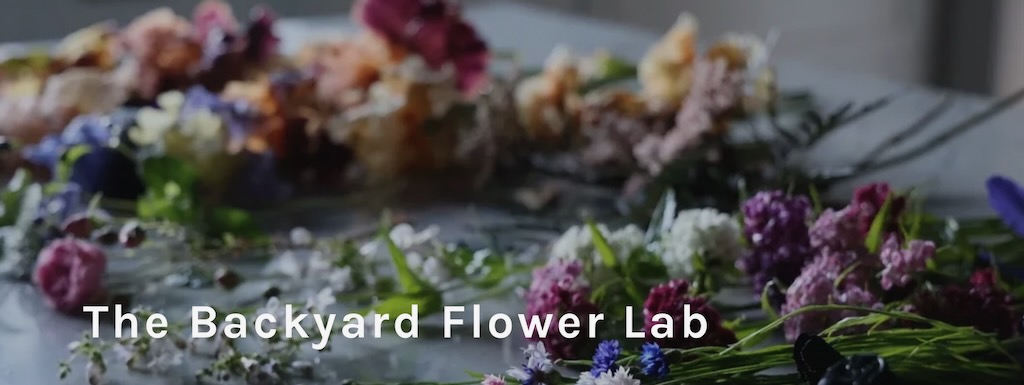
here is a woman—one with a PhD in human anatomy and cell biology, no less—who happens to live in a house with a four-acre flower garden who coaxes beauty from the earth for the sole purpose of giving it all away, filling the flower fridges at hospices and homeless shelters, and the larders at food pantries near and far. she calls it the backyard flower lab. and it sounds like a holy slice of sustenance to me. i intend to point my old wagon in the direction of her flower farm before the sun sets on this day, and i will see where the adventure takes me. her name is april potterfield (which sounds to be a perfect plucked-from-the-storybook name for someone who grows beauty for joy), and you can find her on instagram at @thebackyardflowerlab.

what prompts you to find joy and seize the slender threads of which we weave our lifelines? and what are some of your favorite ways of doing so?

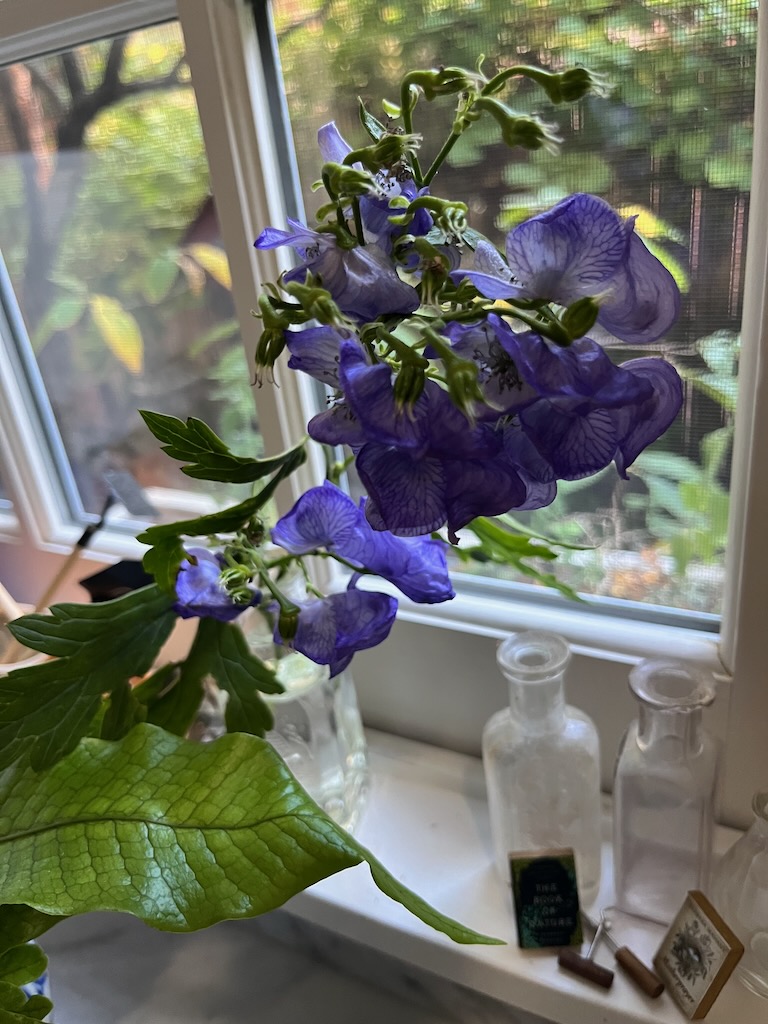
 the cobalt beauty perched on the windowsill above is an autumn vibrancy from my garden, the closing note of a summer’s-long love song. i call it monkshood, but it has other names: aconite, wolfsbane, leopard’s bane, devil’s helmet, or blue rocket. the name aconitum comes from the greek word ἀκόνιτον, which may derive from the greek akon for dart or javelin, the tips of which were poisoned with the substance, or from akonae, because of the rocky ground on which the plant was thought to grow.

deep thanks to maria popova who week after week for years now has filled me with wonder, with curiosities, and most of all with the breathtaking beauty of her intellect and imagination…

summer idyll: another name for “idle”

summertime is for slow. and slow i am this summer. i watch bunnies make breakfast buffet of my flowerpots. i keep vigil for a redbud tree that might be on its death march. i cut corn off the cob and dump it into confetti-like salads, delicious salads of tomato, armenian cucumber, and fists full of basil. i swim, slowly and gasping for air at the end of the lanes, in a pool where i am the youngest by a few decades.

and of course i read, an exercise that requires little other than the moving of one’s pupils, the occasional blink, and the turning of pages should one resort to that quaint document, the page.

and so it was in reading this week that those pupils of mine––and the braincells behind them––paused for deep consideration when i came across a commencement address by the late great russian poet and essayist joseph brodsky.

joseph brodsky

in the summer of 1989, two years after he won the nobel prize in literature and two decades after he fled the soviet dictatorship with the help of w.h. auden, brodsky stepped to the podium at dartmouth college to give the commencement address, later published in a posthumous collection titled, “on grief and reason: essays” (farrar, straus and giroux, 1997).

the topic he chose, curiously, was boredom. but brodsky being brodsky, he soared with it. and because i found it altogether mesmerizing, and because his closing passage stuck with me in what amounts to the cerebral iteration of gum to the bottom of your sneakers, i’m bringing it here to the old make-believe maple table.

what’s true, in these months of living fully awake to the ephemerality of time, is that i soak in especially the wisdoms of those who understand that fleetingness to be central to the sanctifying of time’s each and every parcel. to understand that time is not endless, but rather bracketed and with certain end, is for me anyway the gravitational force that drives my attention out of malaise and into full-on savor.

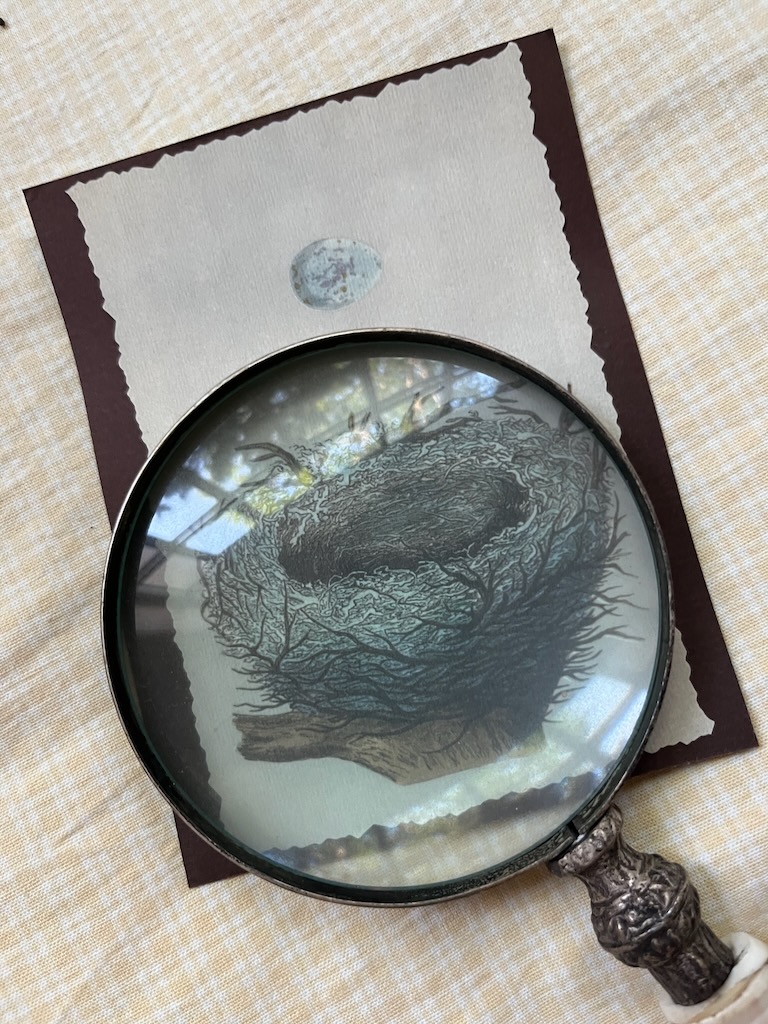
i hold each grain of time, as often as i pause and catch myself, up to the incandescent luminescence that reveals and magnifies its wonder. in other words, i aim to live with one of these in my back pocket, gliding time beneath my ever-ready looking glass:

here then is where brodsky begins his deep-dive into boredom, as he looked out upon a sea of soon-to-be-graduates at that ivy-covered college in new hampshire’s piney countryside (i’d endorse reading clear through these next few grafs, but if you’re pressed for time, leap down to the bottom of read to see if you, too, are struck by brodsky’s likening our time here to a ride on a runaway train, and his admonition to seize each blessed frame as it’s passing by):

Known under several aliases – anguish, ennui, tedium, doldrums, humdrum, the blahs, apathy, listlessness, stolidity, lethargy, languor, acedia, etc. – boredom is a complex phenomenon and by large a product of repetition. It would seem, then, that the best remedy against it would be constant inventiveness and originality. That is what you, young and newfangled, would hope for. Alas, life won’t supply you with that option, for life’s main medium is precisely repetition.

[…]

In a manner of speaking, boredom is your window on time, on those properties of it one tends to ignore to the likely peril of one’s mental equilibrium. In short, it is your window on time’s infinity, which is to say, on your insignificance in it. That’s what accounts, perhaps, for one’s dread of lonely, torpid evenings, for the fascination with which one watches sometimes a fleck of dust swirls in a sunbeam, and somewhere a clock tick-tocks, the day is hot, and your willpower is at zero.

Once this window opens, don’t try to shut it; on the contrary, throw it wide open. For boredom speakes the language of time, and it is to teach you the most valuable lesson in your life – the one you didn’t get here, on these green lawns – the lesson of your utter insignificance. It is valuable to you, as well as to those you are to rub shoulders with. “You are finite,” time tells you in a voice of boredom, “and whatever you do is, from my point of view, futile.” As music to your ears, this, of course, may not count; yet the sense of futility, of limited significance even of your best, most ardent actions is better than the illusion of their consequences and the attendant self-aggrandizement.

For boredom is an invasion of time into your set of values. It puts your existence into its perspective, the net result of which is precision and humility. The former, it must be noted, breeds the latter. The more you learn about your own size, the more humble and the more compassionate you become to your likes, to that dust swirls in a sunbeam or already immobile atop your table. Ah, how much life went into those fleck! Not from your point of view but from theirs. You are to them what time is to you; that’s why they look so small. And do you know what the dust says when it’s being wiped off the table?

“Remember me,”
whispers the dust.

Nothing could be farther away from the mental agenda of any of you, young and newfangled, than the sentiment expressed in this two-liner of the German poet Peter Huchel, now dead.

brodsky closes his address with the words that first caught my eye this week, and that i––once again––will aim to not forget:

[…]

What lies ahead is a remarkable but wearisome journey [on a] runaway train. No one can tell you what lies ahead, least of all those who remain behind. One thing, however, they can assure you of is that it’s not a round trip. Try, therefore, to derive some comfort form the notion that no matter how unpalatable this or that station may turn out to be, the train doesn’t stop there for good. Therefore, you are never stuck — not even when you feel you are; for this place today becomes your past… receding for you, for that train is in constant motion. It will be receding for you even when you feel that you are stuck. So… look at it with all the tenderness you can muster, for you are looking at your past.

i reached for that confetti salad glamour shot above because it was a bit more visual than trying to find an image of boredom. it was perhaps the most delicious thing i made this week (the grilled salmon that arrived with the salad was mighty good, but i did nothing other than introduce it to the heat of the grill), and if you’re now hungry, here’s the recipe, courtesy of david lebovitz, a former pastry chef from chez panisse now a cookbook writer living in paris. lucky david.

fresh corn, tomato, cucumber, avocado, basil summer salad

2-3 ears of fresh corn
2 cups (350g) cherry tomatoes , (or 2 cups fresh tomatoes, diced)
1 ripe avocado
1/2 cucumber, peeled and seeded
1 cup (75g) loosely packed chopped fresh basil, (reserve any small leaves for garnish) Freshly ground black pepper
Vinaigrette
2 tablespoons red wine vinegar
4 teaspoons Dijon mustard
1-2 small shallots, peeled and minced (1-2 tablespoons)
1 teaspoon sea or kosher salt
6 tablespoons (90ml) extra-virgin olive oil

  1. Shuck the corn and remove it from the cob.
  2. Remove any stems and slice the cherry tomatoes in half.
  3. Peel the avocado, remove the pit, and dice the flesh. Cut the cucumber into similar sized cubes.
  4. Put the corn kernels, tomatoes, avocado, cucumber, and basil into a serving bowl and season with freshly ground black pepper.
  5. In a small bowl, whisk together the vinegar, mustard, shallots, salt, and olive oil. Pour the vinaigrette dressing over the salad and gently mix together. Taste, and add more salt and pepper if necessary.

Serving and storage: The dressed salad can be served right away or in a few hours. (It can be stored in the refrigerator or at room temperature, but should be served room temperature.) It’s best the same day it’s made.

your thoughts on the runaway train (above) welcome here, with the related question, what are the ways you remind yourself to live each day mindful of the preciousness and miracle that it holds?

scan time

so, some months ago now, in the days not long after my first follow-up lung scan (they come at six-month intervals) when i was marinating, once again, in the new measure of time that comes when they’ve peered under your ribs and found something not welcome there, i started to think of how this close watch-keeping snaps me into an attention that echoes an ancient spiritual practice. i started to think of how taking my life in abbreviated brackets of time, six months per dose, compels me to pay attention to the nth power, to relish each and every bead of time, from the quotidian to the ones that break you out in goosebumps.

so i did what i do: i sat down to start typing. i peeled back my shy parts, and let the raw truth come tumbling onto the page (aka screen). i try to put things in words because maybe just maybe there’s someone out there looking for someone who knows how it feels, how scary it is, and how maybe just maybe there’s a way to turn that fear into fuel: to be more alive than before the word cancer came barging into our lives. that i found it, and find it, a spiritual tether, to live my life in what i think of as scan time, well, maybe it was worth saying aloud.

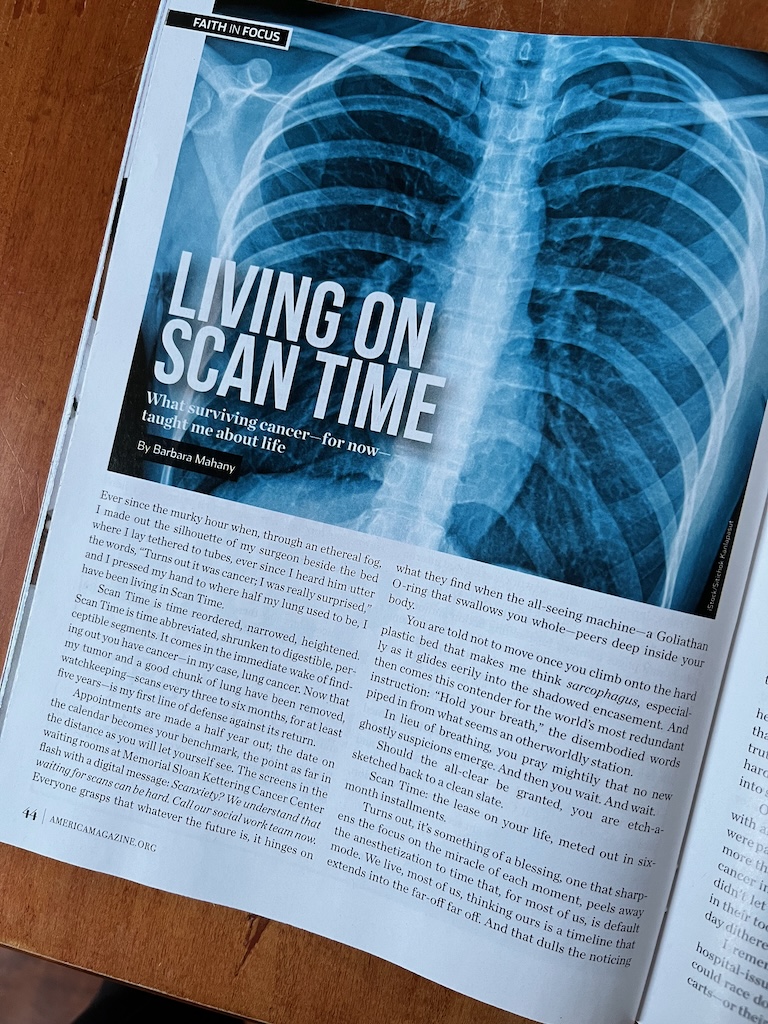
so america magazine, the journalistic home base of the american jesuits, an order of priestly folk known for their piercing intellects and forward-thinking ways (although when my sweet husband once asked a priest friend of ours if he was a jesuit, the friend — a diocesan priest, who grew up in his father’s south side chicago tavern — shot right back with “no, i’m a real priest,” which tells you how jesuits are regarded in some corners), decided to print my little essay in their june issue, and unbeknownst to me it showed up online last night.

i’m a bit shy about social media these days, but the chair is a place i think of as safe, the closest virtual approximation to the old maple table scattered with mugs and spoons and the crumbs from someone’s lemon-blueberry bread. so, i’m leaving it here. with big thanks to america magazine, and an even bigger prayer that that one someone (someone living in her or his own scan time) just might find it, and welcome the company…

Living on Scan Time: My life after a cancer diagnosis
Barbara Mahany
May 16, 2024

Ever since the murky hour when, through an ethereal fog, I made out the silhouette of my surgeon beside the bed where I lay tethered to tubes, ever since I heard him utter the words, “Turns out it was cancer; I was really surprised,” and I pressed my hand to where half my lung used to be, I have been living in Scan Time.
 
Scan Time is time reordered, narrowed, heightened. Scan Time is time abbreviated, shrunken to digestible, perceptible segments. It comes in the immediate wake of finding out you have cancer—in my case, lung cancer. Now that my tumor and a good chunk of lung have been removed, watchkeeping—scans every three to six months, for at least five years—is my first line of defense against its return.
 
Appointments are made a half year out; the date on the calendar becomes your benchmark, the point as far in the distance as you will let yourself see. The screens in the waiting rooms at Memorial Sloan Kettering Cancer Center flash with a digital message: Scanxiety? We understand that waiting for scans can be hard. Call our social work team now. Everyone grasps that whatever the future is, it hinges on what they find when the all-seeing machine—a Goliathan O-ring that swallows you whole—peers deep inside your body.
 
You are told not to move once you climb onto the hard plastic bed that makes me think sarcophagus, especially as it glides eerily into the shadowed encasement. And then comes this contender for the world’s most redundant instruction: “Hold your breath,” the disembodied words piped in from what seems an otherworldly station.
 
In lieu of breathing, you pray mightily that no new ghostly suspicions emerge. And then you wait. And wait.
 
Should the all-clear be granted, you are etch-a-sketched back to a clean slate.
 
Scan Time: the lease on your life, meted out in six-month installments.
 
Turns out, it’s something of a blessing, one that sharpens the focus on the miracle of each moment, peels away the anesthetization to time that, for most of us, is default mode. We live, most of us, thinking ours is a timeline that extends into the far-off far off. And that dulls the noticing of each never-again day.
 
But when you’re told you’ve got cancer, when you feel the iron weight of that sentence fall with a thunk on your every breath, the bracketed finiteness of time—of life itself—now doled out in measures of half a year per dose, it amplifies everything. Each pulsebeat of living is magnified, glorified. It’s time distilled to its most sacred concentration.
 
And it draws out a knowing that’s deep and profound, one that’s not too dissimilar to an ancient spiritual practice that understands the holiness in contemplating our death. Or, in my case, contemplating the reduction of time, the days I count on my half-year watch. At first glance, that might sound morbid. But it’s emphatically the opposite.
 
Memento mori is the age-old practice of remembering that you will die. It’s an ancient philosophical thread, a spiritual practice woven across time and traditions (be they moral or religious traditions) from early Stoicism to medieval Christianity, from ancient Judaism to the central teachings of Buddhism.

St. Benedict of Nursia, in his sixth-century book of precepts known simply as the Rule, exhorted his monks to “keep death daily” before their eyes. It’s an awareness that winds its way through most world religions, although barely so in the West, where we do all we can to push away any whiff of dying or death.
 
To understand that our days are not infinite, not a bottomless pour, spilling one after another so dizzyingly that we are numb to each dawn’s awakening, is to tight-squeeze our focus on how precious this time of ours is. Pope Francis, in his apostolic exhortation “Laudate Deum,” posed three critical questions: “What is the meaning of my life? What is the meaning of my time on this earth? And what is the ultimate meaning of all my work and effort?”
 
Those questions take on an inescapable edge when held up in six-month increments. We’re a simpler people than we sometimes pretend. We’re keener at grasping hard truths when they’re pressed up against us. Cancer presses hard truths. Scan Time sharpens focus, propels us deep into seizing the day. Seizing each blessed day.
 
Once upon a time, I was a nurse who took care of kids with all sorts of cancers. Back in the days before scanners were part of every oncologist’s medical tool kit, I remember more than anything how those kids somehow eclipsed the cancer in their lives. They shoved it out of the viewfinder, didn’t let it intrude on however many days were counted in their too-short lives. Theirs was an innate genius—not a day dithered away—that echoes across the decades.
 
I remember how kids with an amputated leg and a hospital-issued pair of crutches clocked how swiftly they could race down the hall, without crashing into medicine carts­­—or their nurses. Or how, as soon as the retching from chemo ended, they’d order up midnight pizzas and hunker down in the supply closet for a tête-à-tête with their IV poles and their bald co-conspirators. Or how, one Halloween, one of my favorites, a 12-year-old with a tumor lodged in her spine that left her paralyzed from the waist down, didn’t let that stop her from slopping papier-mâché all over her bedsheets, as she crafted me a green, tempera-painted pumpkin head and crowned me her Irish Pumpkin Queen.
 
Those children made time count. And they didn’t need scans to prompt it. All these years later, I draw on their wisdom, though I lean on the scanner—a machine that might see what is inside me but not what lies down the road.
 
Scan Time, I’ve realized, propels me to live sacramentally, to hold time to the light, to behold its shimmering brilliance, the facets of my life I consider most indispensably sacred. And to enfold myself in each anointed hour..
 
I might be mesmerized by a butterfly. Might sit down to pen that long-overdue confession. Might devote my perishable days to those few souls I cannot bear to leave behind, revel in the litany of whimsies we’ve long promised we’d get to, indulge with abandon. Or maybe I’ll travel to pockets of the world where my heart and my hands—and my long-expired nursing license—might be put to good use.
 
Scan Time is palliative, too; it offers something of a balm. Where the arithmetic of five-year-survival rates sets me to trembling as I weigh cold, hard probabilities, I’m washed in some iteration of calm when I set my sights on half a year at a time. Like a mountain climber trekking past mile marker after mile marker, I keep my eyes on the immediate path and don’t try to peek around circuitous, unseeable bends.
 
Yet underpinning each round is the knowing this might be the last, the one with expiration. One of these rounds, you suppose, the call won’t be so freeing. And time then will shift again. Day after day the distilling comes, until each last minute holds all that you love, all that desperately matters.

(reprinted exactly as it appears on the pages of the june 2024 issue of america: the jesuit review of faith and culture)

for the record, my latest scan looked clean. and, in the spirit of seizing the days, we’re off to rome in just a few days. the four of us, G-d willing. we have four valid passports among us, and after having to leave one of us behind last year when a passport was found wanting, (not in accord with the french rule that your passport must be valid for 90 days after leaving the country, and our firstborn’s was a mere few days short) this adventure in world travel is one big giant hallelujah.

what are the forces in your life that propel you to seize each and every day? and or any other thoughts that might be burbling about in your beautiful minds….

sunshine girl

i tend toward the grays. and i don’t mean the pewter locks atop my head. i refer here to my meteorological preferences.

i’m of celtic persuasion, which means a pigeon-colored sky, preferably with mists rolling in, a landscape without shadow, for clouds are in the way, that’s the sort of day that wraps me like an afghan dropped from heaven’s hutch, makes me feel cozied by the hearth, deeply much at home. 

give me a gray day and i all but purr. 

this week, though, has been anomaly. the sunbeams of this latest swatch of springtime have been pouring in full proof, and voluptuously so. sunbeams so pure, so concentrated, i’ve bridled the urge to stick out my tongue and lick them––as if a gelato on a cone. or gulp, as if a nectar in the most delicate cut-glass flute that ever was.

it wasn’t lost on me how novel it was for me to be fixated––and bedazzled––by the motes of sunlight shafting in. it shook me from some rafters i’d not even realized had boxed me in. i was paying attention to my paying attention. an attunement to the nth power. and the simple substance that transfixed me was but one of that elemental trilogy: sunlight, water, air. 

to live in a state of fine-grained attentiveness is the instructive of every sage or prophet who’s walked this sunlit earth. for us to notice celestial shifts, as winter turns to spring, as the great star is jimmied higher into sky, must be God’s rapturous delight.

and i must have been more sun-starved than i realized after a long and washed-out winter, for i couldn’t keep myself inside the house this whole week long. i was all but stripping bare my crepe-papery arms and legs, so my famished flesh could guzzle sun. and, every chance i got (and even those i didn’t have), i found myself down on my knees, at the garden’s edge, wherever tender growing things gave me excuse to coax and coddle and slapdash in the dirt. 

from nearly sun-up to sundown, i was out and about, clocking miles on my soles, slip-sliding along a river trail, dodging red-winged blackbirds who tried to perforate my noggin. and, when my legs and knees were tuckered out, i sat splotched in sprees of golden light as i perched, robin-like, atop a rock or stoop, keeping watch on flutterings in trees. 

i’m not typically a sunshine girl. despite a nomenclature suggesting otherwise.

my papa and me (aka his “sunshine girl”)

long long ago, there was a fine irishman––my witty papa––who pinned a moniker on me back in the days when i’d take him by the hand and maybe reach just beyond his knees. he called me his sunshine girl, his one and only, and it’s a name that makes my knees go limp even to this day. 

i’ve not heard his voice in 43 years, but i can see the glint in his eyes, the way the pilot light burned bright and brighter, as he warmed up to pronounce the words, deeming me his sunlit girl. 

i rather fail my reputation.

in the long years of his absence, i’ve grown more inclined to sunshine’s shadowless counterpart, the days some define as “the color of bad weather.” i protest, tend to be of a mind with leo da vinci, the polymath and painter, who insisted “a gray day provides the best light.”

though not this golden-glowing week. and not without exception.  

like the poets emily D and annie dillard, i like my light in slants, or as dillard put it once: “i’m a collector” of such angled penetrations. the oblique is how i see things best.

most days, pure drenched feels too exposed. the white light of summer’s height makes me wither. 

springtime, though, is tender season. and the sunlight comes in slant, in perfect concentration. and every once in a rare while, in days as delicious as the sun-drenched string that was this week, i’ll gulp my yearly dose of solar plenty. and i’ll gulp it without pause. 


speaking of sunshine and the irish, here’s a line that made me laugh aloud this week:

“the sad truth is that, like fish, the looks of the irish are not improved by sunshine . . .”

—Niall Williams, This is Happiness, page 193


and as is my wont, i’ll bring mary oliver into the conversation, as she came to mind more than once when i was down on my garden knees this week: in “the summer’s day,” she writes:

“I don’t know exactly what a prayer is. /  I do know how to pay attention, how to fall down / into the grass, how to kneel down in the grass, / how to be idle and blessed.”

and, lastly, i zoomed into a poetry conversation with the poet (and yale institute of sacred music professor) christian wiman the other day, and he was asked to read a poem that shocks right through him, and here’s the one he read: 

Prayer
by Carol Ann Duffy

Some days, although we cannot pray, a prayer
utters itself. So, a woman will lift
her head from the sieve of her hands and stare
at the minims sung by a tree, a sudden gift.

Some nights, although we are faithless, the truth
enters our hearts, that small familiar pain;
then a man will stand stock-still, hearing his youth
in the distant Latin chanting of a train.

Pray for us now. Grade 1 piano scales
console the lodger looking out across
a Midlands town. Then dusk, and someone calls
a child's name as though they named their loss.

Darkness outside. Inside, the radio's prayer —
Rockall. Malin. Dogger. Finisterre.

(the four names in the last line are towns called out on BBC radio’s nightly “shipping forecast” for the various seas around the british isles, waters divided into 31 sea areas, including rockall, malin, dogger, and finisterre. the broadcast litanies, especially the late-at-night ones, are for many britons––including carol ann duffy––a familiar touchstone: the announcer’s voice reciting the sea areas all around the islands, one by one, forecasting the weather. and, higher up, minims are the half-notes in a page of musical notation)

of all the meteorological options, which one most floats your boat? and how and why?

incandescence

There must be always remaining in every one’s life some place for the singing of angels, some place for that which in itself is breathlessly beautiful and, by an inherent prerogative, throws all the rest of life into a new and creative relatedness, something that gathers up in itself all the freshest of experience from drab to commonplace areas of living and glows in on bright white light of penetrating beauty and meaning — then passes.

— Howard Thurman

my relationship with time shifted this year. living does that. somewhere along the line, a rock is thrown. it shatters what it hits. and as you stumble to pick up the pieces, you start to see that you won’t get it back to what it was. the picture window is no longer. instead, the shards are what you hold. 

i’m beginning to practice gathering the shards, holding each to the light. being careful not to get cut on the sharp edges, the piercing edges. knowing the shards are what’s left, i find it easier to lift each one, position it in front of the flame, turn it this way and that, and watch for the incandescence. 

it’s called seizing the day. 

it’s why we watch babies, stare at them mesmerized. they are our sages, the ones whose every dandelion, every dust mote floating by, is a new encounter. can you imagine emerging from the dark wet womb and suddenly feeling fleshy arms cradling you, soft lips kissing you? can you imagine finally putting form to the face from which that one murmuring voice has been coming? 

babies seize everything because it’s all new. the rest of us learn to seize things when we start to realize they won’t last forever. 

if only we all realized how fragile a life this all is. we would be kinder to it. we would be kinder to ourselves maybe. we’d let go of the hurts that poison us. we’d shake off the fears that strangle us. we’d dig down deeper maybe, and let all the beauties out. and, critically, we’d let more in. 

and so, with my understanding of time now deepened, my frame of time shifted, i am more determined than ever, and finding it far less arduous, to step out of my old, afraid ways and into the incandescence of each and every shard. each and every blessing called “this day.” this holy day.

i am, as thurman writes above, keeping an ear out for the singing of angels, and allowing the bright white light of this most blessed life to enfold me, to behold the breathlessly beautiful. before it passes. 

where are you seeing the incandescent? are you letting it in?

and happy blessed blessed new year. while my seat belt is buckled for the year ahead, let us hold hands, and bump our way along, scaffolded by those few fine things we know to be immutable and imperative.

note to true wonder: the bottom photo i took driving home from your farm all those blessed years ago. yes, i drove and clicked. and how it happened, i still wonder. but that heartland panorama i do love. and the heartland farmer.