pull up a chair

where wisdom gathers, poetry unfolds and divine light is sparked…

Category: living love

ode to my fairy gardenmother: one last love note. . .

Mostly, this is a love letter. One I might have tucked in the pine coffin now buried beneath a foot-and-a-half of Chicago’s clumpiest earth, earth we shoveled onto it, one full spade at a time. The one to whom I write this, though, my fairy gardenmother, is not one ever confined by boxes or borders or hard lines scrawled in the dirt. She, my Marguerite, was as free a spirit as they come. So I cast this to the wind, and know she will catch it. 

Marguerite made beauty for a living. She sowed joy in abundance. Not a single root or shoot was tucked in the earth or tied to a trellis without the ringing sound of her laughter. 

Marguerite’s acanthus

She bequeathed me beauty, her beauty and that of this holy earth. And grace, and a tidepool of peace, the sort that settles deep within, calming what had long been a turbulence. It all came in a litany of botanic derivative, a litany I water and witness: tree peonies, fuchsia and ruffled and broad as a dinner plate; oakleaf hydrangea, its bottle-brush blooms now bursting in time for the Fourth of July. Pieris japonica (sometimes known as lily-of-the-valley shrub, or flame of the forest) whose delicate white star-blooms are the petit point of late springtime, stitched along the bluestone path that bends toward my front door. A dwarf lilac that defies its definition and perfumes profusely my brick walk out back. My garden blooms with acanthus, the ancient Greek thistle of endurance and immortality, and white bleeding hearts that, as instructed, seem to be on the verge of spilling succulence drop by drop by drop. Everywhere, the vanilla scent of Jack-in-the-pulpit rises. There are ferns in abundance, and climbing hydrangea who wouldn’t be daunted by Everest. And about a dozen other beauties whose names I often forget, and when I do I’d text her, and she’d remind me, always with annotation of what she loved most about it. And another something I might want to try. 

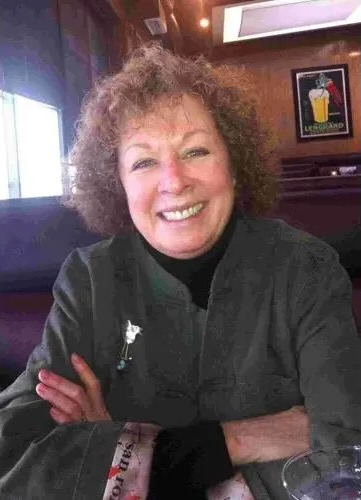
If I tried to describe her, I’d begin with her face. Her face was alive, was radiant, was always revved up in joy. Or deep concentration. Her laugh came easy, so easy. Her limbs flowed. She was a ballerina in the everyday. Clogs buried in garden, wielding a shovel or pruners, she swayed with the wind, with the whims, with purpose. 

She planted my secret garden, the one that meanders along the side of my house, from my writing room window, past the kitchen door, and into the garden out back. It’s the place I’d point to if pressed to answer the question: Where did you finally find your long-sought peace? It was there in the garden that Marguerite grew. 

I first met Marguerite a garden ago, back in 1991, months after we married, my beloved and I. The very day we wandered into the old Victorian that became our house for a decade, the house to which both our boys first came home, the house that held so many joys and so many sorrows, Marguerite was there. She was packing up boxes with Jim the sculptor who was dying of AIDS, and who would soon leave us his beautifully sculpted three-story house (and a set of Old Willow dishes besides). They wept and wailed and laughed together. We heard the echo of their affections before we saw them, and when we climbed the stairs there she was: radiant, a mop of blond curls, eyes hazel and sparkling. 

She knelt beside me summer after summer, teaching me much of what I know about what grows in a garden. We wandered nurseries and tree lots. We planted according to her unorthodox teachings. When anything ailed, she knew the fix. Or we yanked it and started again. 

My jewel box of a tiny urban garden, one where the alley rats dared not roam for the fierce farm cat who patrolled it, grew to be a wonder. One whose measure in my mind far exceeded a yardstick. 

When at last we decided we’d finished our work, at least for the time being, Marguerite and Ted, her rabbi of a husband who presided over a congregation of his psychotherapy clients, came by one late summer’s evening to bless the little plot. In a story I love so much I included it on pages 37 and 38 of The Book of Nature**, Ted offered up fertility prayers for my garden, that it would blossom and bloom, and multiply. Four months later, on the brink of my 44th birthday, after eight years of broken hearts and infertility, I discovered that I was the one blossoming and multiplying. I was “with child,” as the Bible would put it. I always giggled that Ted had mixed up his fertility prayers, and pulled out the ones for the barren woman instead of the ones for the garden. 

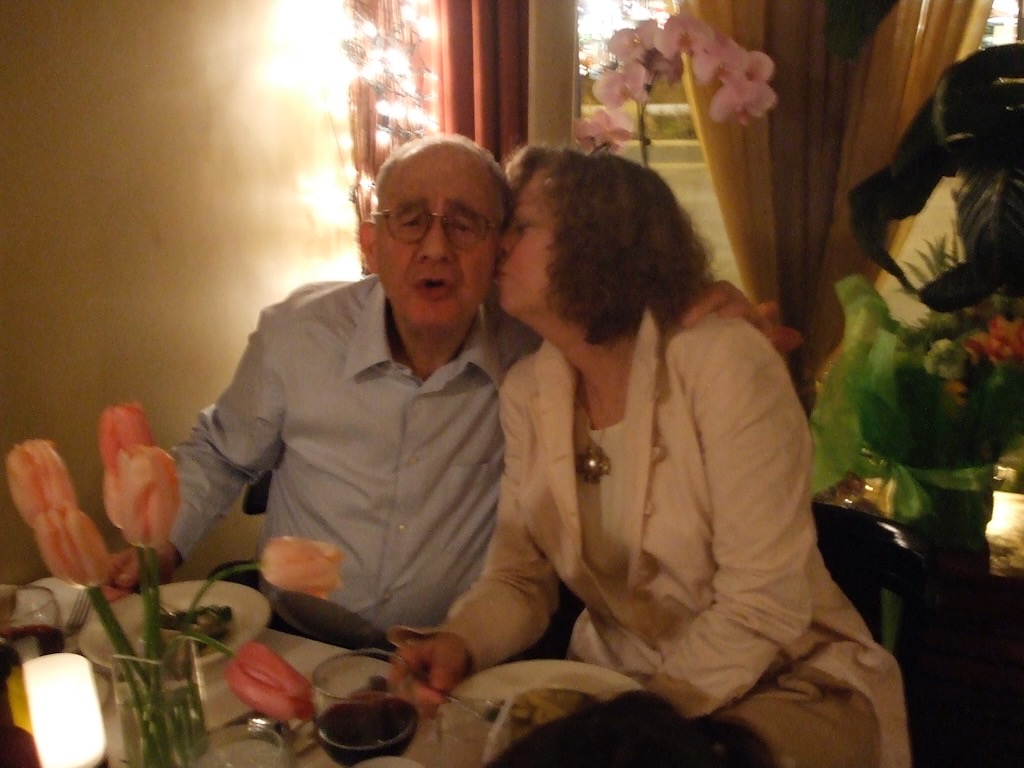
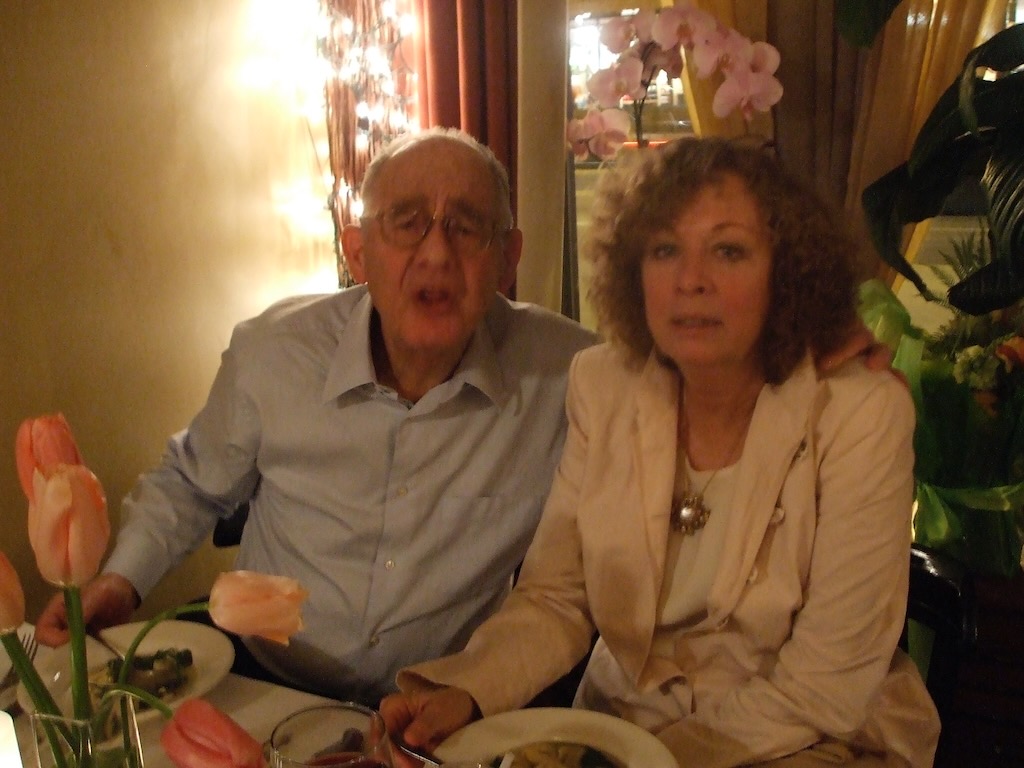
ted and marguerite

And so, of course, and ever since, Marguerite is the one to whom I turned with every garden question, and every delight as it bloomed. When Ted died not quite two years ago, I knew Marguerite’s heart was shattered. And there was no glue in the world to put it back together. But I didn’t know it would kill her. 

I now know that it did. For she died on Monday, and was buried on Tuesday. And ever since I’ve been strolling through my garden, stopping to marvel here, stooping to deadhead there. I’ve been shlepping my hose, and giving big drinks to each and every bloom bequeathed to me by my Marguerite. 

Marguerite will always bloom in my garden. Her longtime sidekick, David the cop, is coming soon to help me dream once again. There is a plot under the ornamental lilac and the row of burning bush, and I have named it Marguerite’s Garden, and I will be planting it before the month of her death turns to August. 

And it will be abundant in beauty. Because that’s what Marguerite taught me to grow. And that will never die.

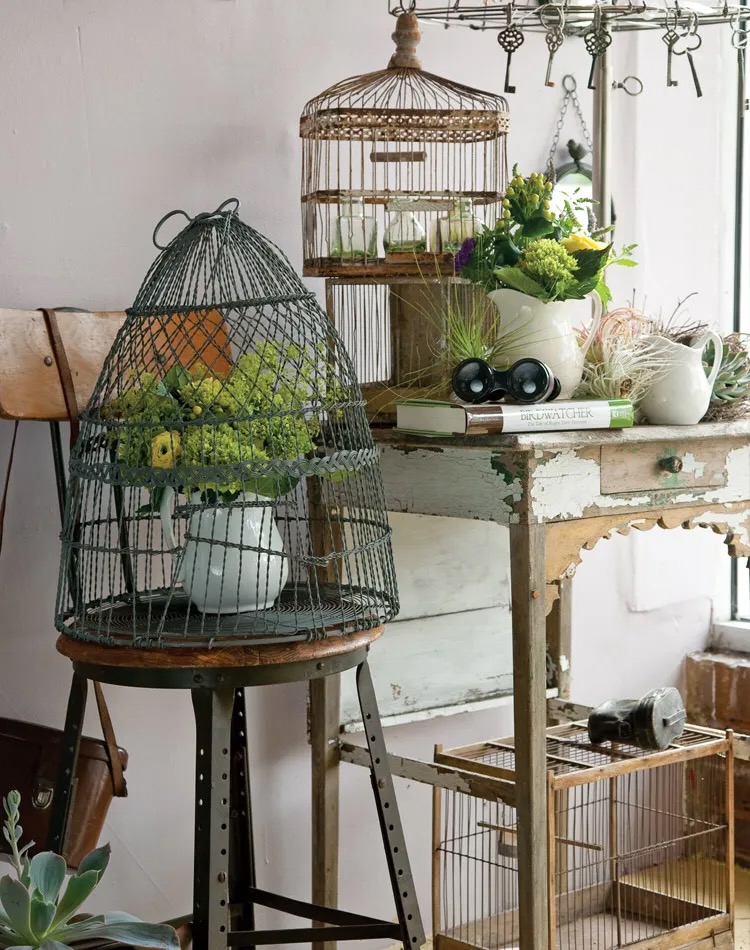
the jewel box of a flower shop: Marguerite Gardens (from Victoria Magazine)

Marguerite’s genius in the garden spread far beyond our little block of Wellington Avenue, 60657. When she couldn’t be contained, she launched a for-hire garden crew (a motley crew counting two cops, a U of C theology grad fluent in Mandarin Chinese, a commodities trader, a banker, and a pet photographer) with a seasons-long waiting list. She planted tulips by the thousands up and down Boul Mich, Chicago’s grand Magnificent Mile. She planted the city’s lushest rooftops and balcony gardens. She was a connoisseur of miniatures, and knew how to cram the most in the least. She opened a dream of a flower shop in Andersonville, aptly named Marguerite Gardens, and twice daily received imports from her beloved Netherlands. The shop, with the bell that tinkled as you walked in, held a European-style flower market, and was stuffed to the rafters with eighteenth-century antiques, from bird cages to terraria. Aptly, she was named for the daisy whose name means “pearl” in French, and is the bloom from which petals are plucked in the prognostication game, “he loves me, he loves me not.” Married for 43 years to the inimitable, unorthodox, Yale-educated rabbi and psychotherapist, Theodore Gluck, Marguerite died 656 days after Ted, three days short of what would have been his 95th birthday. Marguerite was 75.

**excerpt from pages 37 and 38, Marguerite’s star turn in The Book of Nature, in which i describe that first garden we planted and blessed together…

. . .That garden—where a priest, a rabbi, and a tight circle of people we love gathered for blessings shortly after the births of each of our boys; where baby bunnies and nestlings and goldfish were buried after premature deaths; where our stubbornly resistant house cat mastered the art of escape—that plat of earth became as sacred to me as any cloister garth.

Not only was it where I knelt to teach my firstborn the magic of tucking a spit-out watermelon seed into the loam and, each morning after, tracking its implausible surge. During seven long years of miscarriage after miscarriage, ectopic pregnancy and emergency surgery, and doctors finally telling us to give up hope, I dug and I dug in that garden, all but willing the tiniest bulbs and tenderest sprouts to beat impossible odds, refusing to let anything else die on my watch. And then, at the end of one summer, as the crab apples were starting to turn, a rabbi who lived down the block came by with his wife, whom I’d long called my fairy gardenmother for her magical ways and her unbroken guidance. Standing under the stars, the rabbi, his wife, and I, we blessed the garden itself, casting prayers and sprinklings of water. By that Christmas, I was pregnant, with nary a drop of medical intervention. Just shy of forty-five when that blessing of a baby arrived the next August, I’ve always wondered if maybe the rabbi mixed up the garden fertility prayers.

It’s all a holy whirl—that intricate and inseparable interweaving that is the cosmos.


one poem this week, from a bouquet of many i plucked:

Desiderata

Go placidly amid the noise and the haste, and remember what peace there may be in silence. As far as possible, without surrender, be on good terms with all persons.

Speak your truth quietly and clearly; and listen to others, even to the dull and the ignorant; they too have their story.

Avoid loud and aggressive persons; they are vexatious to the spirit. If you compare yourself with others, you may become vain or bitter, for always there will be greater and lesser persons than yourself…

Exercise caution in your business affairs, for the world is full of trickery. But let this not blind you to what virtue there is; many persons strive for high ideals, and everywhere life is full of heroism…

Take kindly the counsel of the years, gracefully surrendering the things of youth…

Beyond a wholesome discipline, be gentle with yourself. You are a child of the universe no less than the trees and the stars; you have a right to be here.

And whether or not it is clear to you, no doubt the universe is unfolding as it should. Therefore be at peace with God, whatever you conceive Him to be. And whatever your labors and aspirations, in the noisy confusion of life, keep peace in your soul. With all its sham, drudgery and broken dreams, it is still a beautiful world. Be cheerful. Strive to be happy.

by Max Ehrmann


and in extra case you’re extra curious, here’s a story i wrote for the chicago tribune back in may of 2000 about my friend marguerite and her garden crew: https://www.chicagotribune.com/2000/05/07/planting-away-again-in-marguerite-aville/

who taught you much of what you know about beauty and joy and free-flowing grace? might you tell us a bit of that story….

one last time: love story of a lifetime. ted + marguerite = forever and ever. amen.

musings on tenderness

of all the ways of love, tenderness is one i hold closest to my heart. it’s the lesson learned and practiced as a little girl, when my mother taught me to run for a shoebox, or little glass jar. to punch its lid with air holes. and to line it with grass and leaves, to bring the outdoors in for this space that would become an infirmary, whether the patient be a baby bird fallen from the nest, or one with a broken wing, or simply a ladybug or firefly who happened to straggle behind. 

i don’t remember signing up for the advanced class, but i do very much recall the village i (a kindergartener at the time) made for my singular ladybug, each edifice constructed of paper and cardboard, care and attention devoted to every adornment (a flower box under the paned window, a wiggly “flagstone” path to the house’s front door). the steeple for the ladybug church i recall being a particular construction challenge. (and i remember depositing said spotted-back bug into the church come sunday morning at 9, per clockwork familial custom.)

tenderness is love on its gentlest setting. tenderness is the heart pierced through with empathies, with quiet, with the barest wisp of touch. a touch so silken it breaks you out in chills down your spine, might make you audibly sigh. to be tendered is, well, to be buttered in love. it is a butterfly kiss of kindness. a heart petaled open, and dusted with golden-grained succors.

tenderness, maria popova tells us, “is the best adaptation we have to our existential inheritance as ‘the fragile species.’”

lewis thomas, the poet and physicist (the lives of a cell: notes of a biology watcher) who first named us “the fragile species,” gives context for why in a 1996 essay from his last such collection, published under the same title, in which he positions us in the context of the universe’s timeline:

“This is a very big place,” lewis begins, “and I do not know how it works, or how I fit in. I am a member of a fragile species, still new to the earth, the youngest creatures of any scale, here only a few moments as evolutionary time is measured, a juvenile species, a child of a species. We are only tentatively set in place, error-prone, at risk of fumbling, in real danger at the moment of leaving behind only a thin layer of our fossils, radioactive at that.”

olga tokarczuk

when olga tokarczuk, the polish psychologist turned poet and novelist, won the 2018 nobel prize in literature, she mused on the art of tenderness in her nobel banquet lecture, a lecture titled “the tender narrator,” and one widely regarded as nothing short of “magnificent.”

tokarczuk began by telling the story of a black-and-white photo of her mother that’s always haunted her, in a blessed way. it was a photo taken before olga was born, and i’ll let her words take it from here (emphasis mine throughout): 

“There’s nothing really happening in the picture—it’s a photograph of a state, not a process. The woman is sad, seemingly lost in thought—seemingly lost.

“When I later asked her about that sadness—which I did on numerous occasions, always prompting the same response—my mother would say that she was sad because I hadn’t been born yet, yet she already missed me.

“‘How can you miss me when I’m not there yet?’ I would ask.

“I knew that you miss someone you’ve lost, that longing is an effect of loss.

“‘But it can also work the other way around,’ she answered. ‘Missing a person means they’re there.’”

stopped by the tenderness of a mother telling her small daughter that she missed her even before she was born, popova comments, is “an astonishing gesture of love so total that it bends the arrow of time.

ponder that string of words, and the meaning behind it, before reading on. “an astonishing gesture of love so total that it bends the arrow of time.” may we all know such love…

tokarczuk picks up her telling from there: 

“This brief exchange, someplace in the countryside in western Poland in the late sixties, an exchange between my mother and me, her small child, has always remained in my memory and given me a store of strength that has lasted me my whole life. For it elevated my existence beyond the ordinary materiality of the world, beyond chance, beyond cause and effect and the laws of probability. She placed my existence out of time, in the sweet vicinity of eternity. In my child’s mind, I understood then that there was more to me than I had ever imagined before. And that even if I were to say, ‘I’m lost,’ then I’d still be starting out with the words ‘I am’—the most important and the strangest set of words in the world.

“And so a young woman who was never religious—my mother—gave me something once known as a soul, thereby furnishing me with the world’s greatest tender narrator.”

a good bit later in the speech, tokarczuk raises this next question, more than worth considering:

“….Have you ever wondered who the marvelous storyteller is in the Bible who calls out in a loud voice: ‘In the beginning was the word’? Who is the narrator who describes the creation of the world, its first day, when chaos was separated from order, who follows the serial about the origin of the universe, who knows the thoughts of God, is aware of his doubts, and with a steady hand sets down on paper the incredible sentence: ‘And God saw that it was good’? Who is this, who knows what God thought?

“Leaving aside all theological doubts, we can regard this figure of a mysterious, tender narrator as miraculous and significant. This is a point of view, a perspective from where everything can be seen. Seeing everything means recognizing the ultimate fact that all things that exist are mutually connected into a single whole, even if the connections between them are not yet known to us. Seeing everything also means a completely different kind of responsibility for the world, because it becomes obvious that every gesture ‘here’ is connected to a gesture ‘there,’ that a decision taken in one part of the world will have an effect in another part of it, and that differentiating between ‘mine’ and ‘yours’ starts to be debatable.”

and then toward the very end of her speech, tokarczuk turns to a literature of tenderness: 

“Tenderness is the art of personifying, of sharing feelings, and thus endlessly discovering similarities. Creating stories means constantly bringing things to life, giving an existence to all the tiny pieces of the world that are represented by human experiences, the situations people have endured and their memories. Tenderness personalizes everything to which it relates, making it possible to give it a voice, to give it the space and the time to come into existence, and to be expressed.

“Tenderness is the most modest form of love. It is the kind of love that does not appear in the scriptures or the gospels, no one swears by it, no one cites it. It has no special emblems or symbols, nor does it lead to crime, or prompt envy.

“It appears wherever we take a close and careful look at another being, at something that is not our ‘self.’

“Tenderness is spontaneous and disinterested; it goes far beyond empathetic fellow feeling. Instead it is the conscious, though perhaps slightly melancholy, common sharing of fate. Tenderness is deep emotional concern about another being, its fragility, its unique nature, and its lack of immunity to suffering and the effects of time. Tenderness perceives the bonds that connect us, the similarities and sameness between us. It is a way of looking that shows the world as being alive, living, interconnected, cooperating with, and codependent on itself.

“Literature is built on tenderness toward any being other than ourselves.”

and a short bit later, she closes her remarks with this:

“That is why I believe I must tell stories as if the world were a living, single entity, constantly forming before our eyes, and as if we were a small and at the same time powerful part of it.”

in a world emblazoned with harshness and cruelties for the sake of cruelty, i will joyfully devote my days to making a living case for tenderness as a way of being. those who have touched me most indelibly in my life are those who wove their way in through that very rare and breathtaking capacity, the one that comes on with a whisper not a bang, the one that quietly says i’ve been keeping close watch on your finest-grained threads, and i see where those threads are tattered or thinned, and i am here to tenderly, yet certainly, place my palm against the small of your back, to let you know you are not alone, you are not unloved, you are seen and beheld.


a modest selection of olga readings:

the whole of her 2019 Nobel Prize acceptance speech here…

and an excerpt from one of the works that won her the 2018 Nobel Prize in Literature, and for which the judges cited: “for a narrative imagination that with encyclopedic passion represents the crossing of boundaries as a form of life”

this one from Flights, her 2007 novel that twines fiction and non-fiction, and which james wood, the new yorker critic and harvard english professor, in 2018 described as tokarczuk’s “omnium-gatherum, a big book full of many peculiar parts: there are mini-essays on airports, hotel lobbies, the psychology of travel, guidebooks, the atavistic pleasures of a single Polish word, the aphorisms of E. M. Cioran. Some of these riffs, which themselves tend toward the aphoristic, are as short as a couple of sentences.”

HERE I AM

I’m а few years old. I’m sitting on the window sill, surrounded by strewn toys and toppled-over block towers and dolls with bulging eyes. It’s dark in the house, and the air in the rooms slowly cools, dims. There’s no one else here; they’ve left, they’re gone, though you can still hear their voices dying down, that shuffling, the echoes of their footsteps, some distant laughter. Out the window the courtyard is empty. Darkness spreads softly from the sky, settling on everything like black dew.

The worst part is the stillness, visible, dense – а chilly dusk and the sodium-vapour lamps’ frail light already mired in darkness just а few feet from its source.

Nothing happens – the march of darkness halts at the door to the house, and all the clamour of fading falls silent, makes а thick skin like on hot milk cooling. The contours of the buildings against the backdrop of the sky stretch out into infinity, slowly lose their sharp angles, corners, edges. The dimming light takes the air with it – there’s nothing left to breathe. Now the dark soaks into my skin. Sounds have curled up inside themselves, withdrawn their snail’s eyes; the orchestra of the world has departed, vanishing into the park.

That evening is the limit of the world, and I’ve just happened upon it, by accident, while playing, not in search of anything. I’ve discovered it because I was left unsupervised for а bit. I’ve clearly found myself in а trap now, and I can’t get out. I’m а few years old, I’m sitting on the windowsill, and I’m looking out onto the chilled courtyard. The lights in the school’s kitchen are extinguished; everyone has left. All the doors are closed, hatches down, blinds lowered. I’d like to leave, but there’s nowhere to go. My own presence is the only thing with а distinct outline now, an outline that quivers and undulates, and in so doing, hurts. And all of а sudden I know there’s nothing anyone can do now, here I am.
—Olga Tokarczuk

maybe you’ll want to add olga to your summer reading list. if you’ve a favorite passage that holds tenderness to the light for you, we’d love to read along here at the table….

who taught you tenderness or, rather, how did you learn of its ways?

blessed birthday today to becca who i love, and who is as wise and strong as woman as i am blessed to know….

Dear God, thank you.

Dear God,

Um, I hate to be so bold but we could have used him a little bit longer. (You undoubtedly already know that.) Things are pretty rough around here. Whole swaths of this holy earth, and the people who populate it, seem to have lost their minds. And maybe their souls. 

As You most certainly know, and definitely must have heard, his was the rare voice that could drown out the ungodly noise. The cacophonies of greed and grievance, the ugliness of sin and the Self that thinks it’s higher and mightier. He didn’t let up when it came to the terrible, terrible traumas of war—newborns bombed in hospital nurseries; toddlers drowning in turbulent seas, washing to shore, as if cast-aside flotsam; whole families entombed in the rubble of raining-down concrete and rebar in murderous twists.

He called it where he saw it: called out the avarice of modern capitalism and consumerism, diagnosed it as the fundamental root of the exploitation and suffering of the poor and the vulnerable. Named it “the Devil’s dung.”

He minced not a word in a letter to American bishops this February, when in the wake of the current administration’s drastic deportation campaign, he wrote that while nations have the right to defend themselves, “the rightly formed conscience cannot fail to make a critical judgment and express its disagreement with any measure that tacitly or explicitly identifies the illegal status of some migrants with criminality.”

He didn’t stop there: “The act of deporting people who in many cases have left their own land for reasons of extreme poverty, insecurity, exploitation, persecution or serious deterioration of the environment, damages the dignity of many men and women, and of entire families, and places them in a state of particular vulnerability and defenselessness.”

Il Papa, il mio papa!

Oh, dear God, thank you immensely for making his lifetime line up, at least for a while, with mine. I was starting to fall off the edge there, till the first puff of fumata bianca arose from the Vatican chimney back on March 13, 2013, and the bells from St. Peter’s rang through the city.

Dear Francis filled my lungs again. He preached the version of You that I’d long pressed to my heart, the One taught to me by my post-Vatican II Sisters of Loretto, they who puffed cigarettes behind the convent, traded in their flowy black habits for street clothes and lipstick, all while strumming guitars and singing kumbaya, and all while watching films like “The Red Balloon,” where we little Catholics were meant to evoke the godly meaning from the metaphor.

He was, far as I could tell, a walking-talking, put-your-money-where-your-mouth-is, “love as you would be loved” kind of a guy. He colored wildly outside the lines, as if to shake us out of our stupors, our thinking the ways of the world were the only ways there were. As if to remind that love, honestly, could shatter the worst kind of walls, break through to the tender core at the heart of us all—the one You nestled inside all of us when You breathed us into being. 

His time as the 266th charge of the Church was something of a Kodak carousel of indelible encounters, the ones you cannot forget because they sear you so soundly. (p.s. He was mighty fine with the pen, as well; at least one modern poet called him “the most literary pope of the modern Vatican.”)

He took on no airs. Which made his message all the more of a wallop. He seemed to be saying that we too, in our fumbling, bumbling, banged-up bodies, we too could reach for the heavens. 

His message, quite simply, was to remind that we’re all equipped and ready to cut a swath of radical love through this world. 

And what I really loved about the beloved Argentian Jesuit were the moments when he reached out his arms, and cradled the sobbing child, especially the little boy whose atheist papa had died, and the boy was so very worried about what would happen to his papa. When the little guy was all but choking on his sobs and the words to his question, “Is my dad in heaven?” Francis called out to the little boy, “Come, come to me, Emanuele. Come and whisper it in my ear.” And everyone sobbed, while Francis quelled the boy’s fears and spoke to the crowd: “What a beautiful witness of a son who inherited the strength of his father, who had the courage to cry in front of all of us,” Francis said. “If that man was able to make his children like that, then it’s true, he was a good man.”

Or the little ones born with an extra chromosome who sometimes wandered curiously right onto the altar in the middle of Mass, or a homily, and instead of shooshing the child away, he stood there beatifically smiling, clutching their soft little hand. And went right on with his papal business.

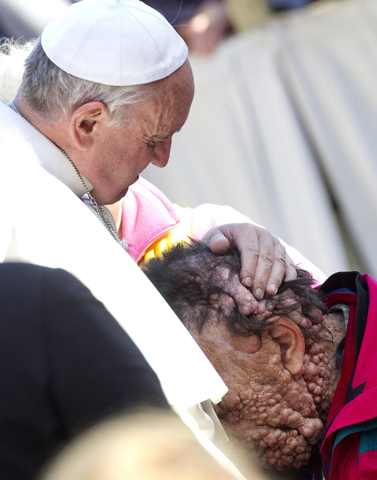
Pope Francis embraces Vinicio Riva, the man with neurofibromatosis.

Or that indelible image of Your Francis first kissing then cradling the man with the eruptions of leathery tumors curdled across his face, his scalp, and clear down his neck. 

And what struck me most, dear God, when I awoke Monday morning to the news that he’d died in the night, was the sudden stunning realization of how breathtakingly he had died—a lesson for us all, and surely for me. I believe he knew these were his last days on earth, when he insisted on leaving the hospital, and knew that until he breathed his last he would teach his last most lasting lessons. In the last week of his life, he visited with 70 prisoners in Rome’s Regina Coeli Prison, from a balcony overlooking St. Peter’s Square he blessed the crowds, and in his Easter Sunday sermon he begged for mercy for “the vulnerable, the marginalized, and the migrants.” He also sent an emissary to preach compassion to the nation’s second-highest ranking executive officeholder and fairly recent convert to Catholicism. 

And then, and only then, he breathed his last. 

I barely have words for the emptiness left in Francis’s wake. It’s rare these days to find a soul who’s proven her or himself worthy of speaking such penetrating truth that the whole world turns an ear to listen. 

We listened, and some of us shouted silent hallelujahs every time. 

We are a world with a spinning moral compass. Up seems down, and right and wrong are inside out and sideways. Hate is cloaked, too often, as a return to the old ways. Truth is chopped into bits and spit back out in bilious flows. 

Are we meant to be the collective voice to fill the new and jarring silence? Is that the point? He constructed the paradigm, handed us the blueprints, and now it’s us who must step to the line, to be brave now? 

Maybe it’s a blessing that much of the world is weeping. Maybe, if we follow our tears, we’ll dig down and rise up. Maybe, like Francis, we can look out at the battle field that is the world and make of ourselves the field hospital set to begin to stanch the bleeding, and work to heal some of the wounds. 

Anyway, God, we’re on it. And thank you, thank you, thank you.

Love, BAM

what memories or moments of Francis most lastingly speak to you?

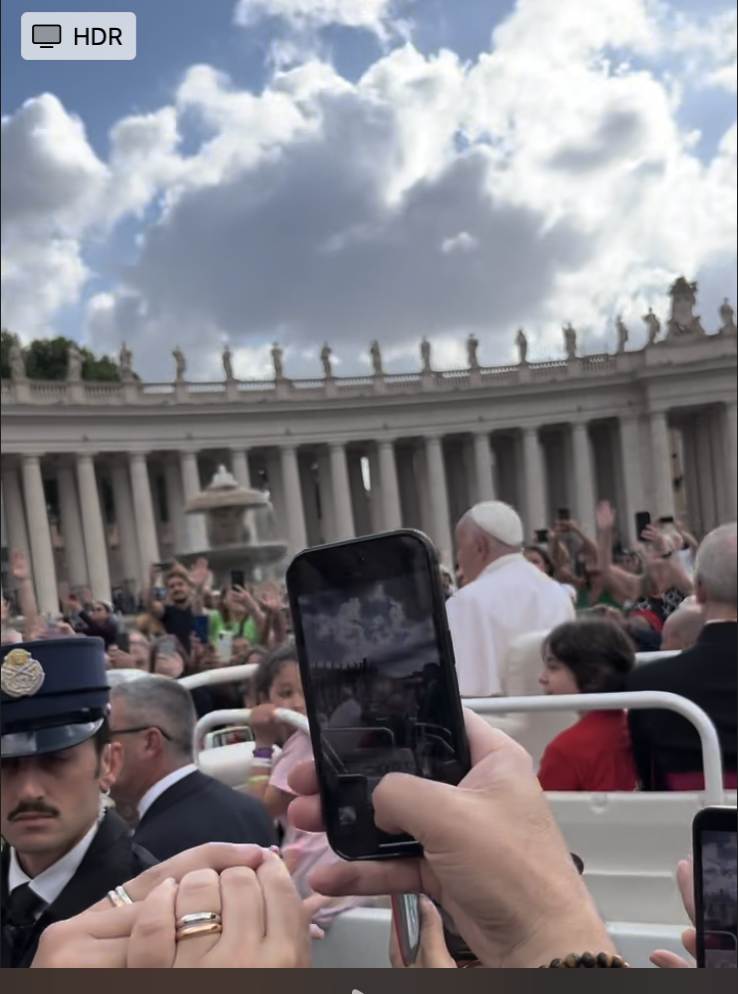
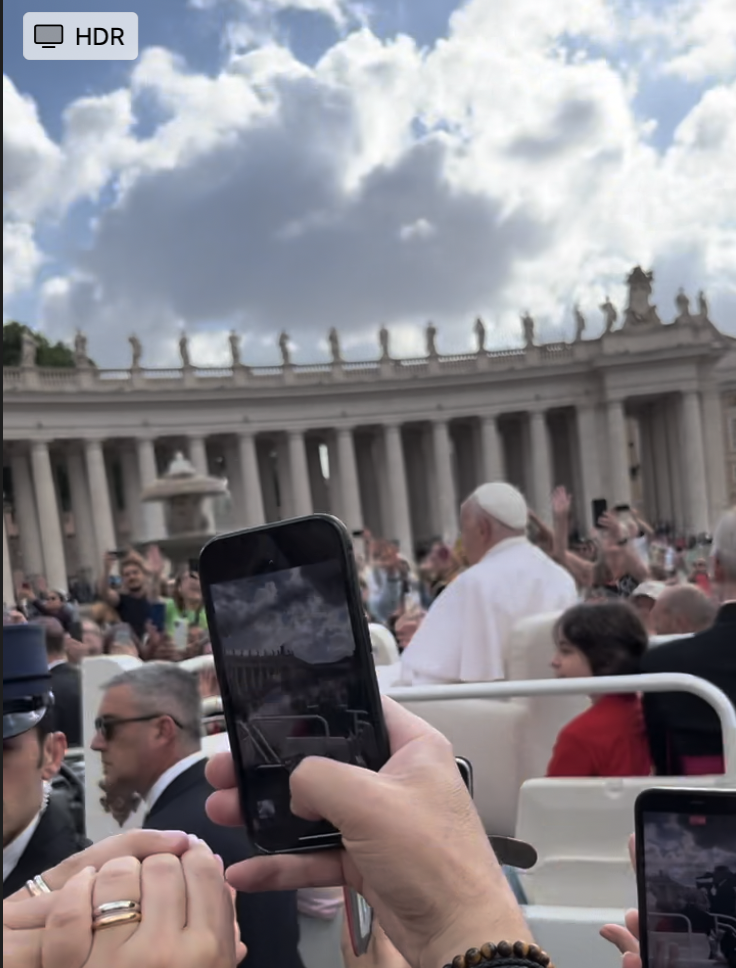
photo above is from the little video i managed to capture when i managed to all but stumble into the path of the oncoming PopeMobile this past summer in St. Peter’s Square….

and p.s.s. a letter to God, i figured, called for capitals. thus, i made rare use of the shift key this morning….

artisanal peace

closest i got to Il Papa, when i found myself accidentally at the barricades that clear the way for the Pope-mobile

sages are in short supply, it seems. certainly now, and certainly on the global scale. i scan where i can, ever on the lookout. and wasn’t my eye caught when i read the words “artisanal path” to “handmade peace.”

tell me more, my little heart shouted. 

though it sounded a bit like a recipe for earthy bread or hand-thrown plates, the sort that rise from the potter’s wheel, i sensed the subject here was far more urgent, and in dire need of replenishing. not what you’d find on any pantry shelf. 

hand-crafted peace, peace constructed with care and attention. peace that we at home can build, without scissors or glue or a potter’s spinning wheel.

i clicked on a duly-provided link, and wasn’t one iota surprised to find that Il Papa, our most beloved Francis, was the one who not only dared to raise his voice above the blather, but considered it a requisite of his job’s description.

he is, after all, shepherd to a farflung flock. but more than that, he’s a prophet, which, according to the definition i found in richard rohr’s brand-new the tears of things: prophetic wisdom for an age of outrage, means a radical change agent, teacher of a moral alternative, and deconstructor of every prevailing order. rohr reminds us of the prophets of ancient times, the ones described by isaiah and ezekiel, whose job it was to hold the powers that be “maddeningly honest.”

bring on the prophets, please.

in these times, francis, our dear pope who from his hospital bed in rome reached out to the suffering of gaza, is the rare voice to which all the world will sometimes listen. thank holy God, he speaks the language of love without condition, clause, or pause. there are those among us, in this age of outrage, who might do well to listen. especially when they claim to take instruction from the very same God who whispers to Il Papa

the new york times calls him “an increasingly lonely moral voice on the world stage.”

all the more reason to listen. and listen hard.

“peace is crafted; it is the work of our hands,” francis began at a prayer vigil in the central african republic back in 2015, “it is built up by the way we live our lives.” he was speaking to an audience of children, teens, and young adults in bangui, the capital of the central african republic, when that country was in the midst of a sectarian war between Christians and Muslims, and thousands had been killed, and more than a million displaced from homes, their properties looted or destroyed.

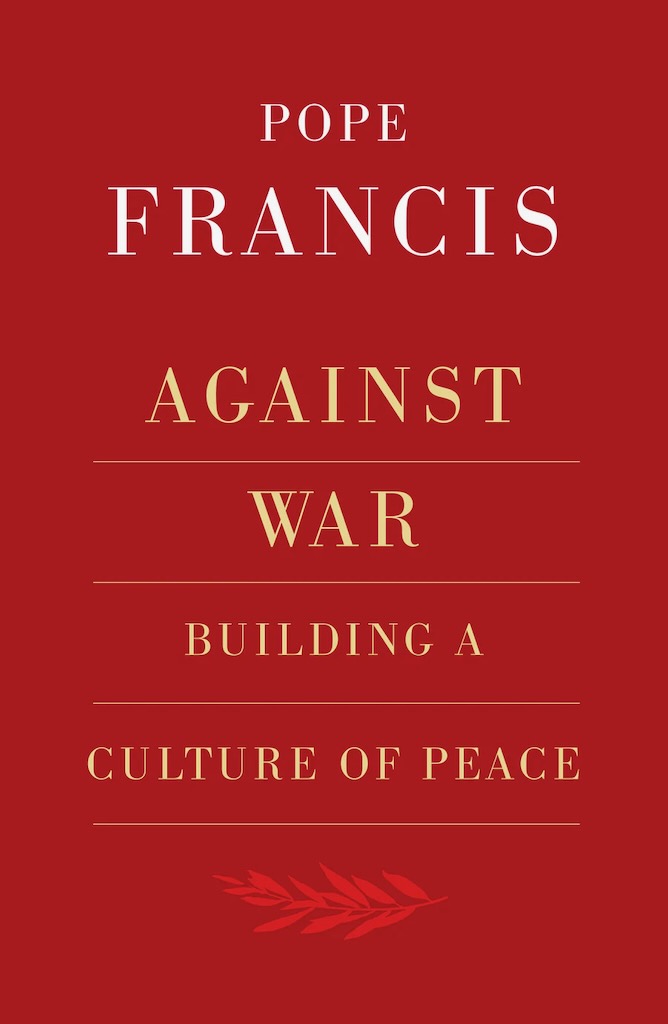
this artisanal path, “built up by the way we live our lives,” is spelled out, it turns out, in francis’s Against War: Building a Culture of Peace, a book i’ve ordered from my local bookstore, as it’s one with permanent claim to a slot on my bookshelf. 

it’s not that i think i can build a culture of worldwide peace, though once upon a time i dreamed of such things. the point here, from the wee bit i’ve read, is that peace is a sphere we build bit by bit, as we travel through space and time, and it’s built by even the most unassuming of gestures, attitudes, and actions.

what the pope is saying, and what the world ought listen to, is that the tiniest empathies and kindnesses matter: giving cuts in the grocery line, waving someone into your expressway lane; taking time to take the call, dropping the tupperware of soup on your neighbor’s stoop. biting your tongue when you’re tempted to snap, and, yes oh yes, turning the other cheek, a trait i’m told no longer belongs in a world of dog eat dog. 

what a game changer: here’s the head of a church that counts 1.39 billion baptized among its ranks, and he too concurs that we needn’t be rocket scientists in the art of magnanimous charitable persuasion to make a dent in the realm of ever-spreading goodness. 

for one thing, it’s fairly contagious. if you’re out-of-the-blue kind to me, if you take my breath away with some wonder act of yours, chances are i’m inclined to be a copy cat and try the same. if for no other reason than the pure joy of watching someone be surprised you’ve not just slammed the door in their sorry, sorry face. 

here’s where Il Papa begins his artisanal path to handmade peace, with this fulsome criticism of the futility of war: 

“war is not the solution, war is madness, war is a monster, war is a cancer that feeds off itself, engulfing everything!”

that’s all i needed to keep on reading. and what i found, and what you’ll find should you decide to play along, is a compendium of his most outstanding commentaries on war and peace during the first nine years of his pontificate. 

here are a few of the nuggets you just might choose to tuck in your peace-gathering pockets. 

because one can’t best the pope when it comes to eloquence and voice, i am quoting from the book, here on in, and plucking five that leap out the most….

1.) seeing the world as one human family living in one common home.

The stars in the sky shine down on every single person — from the beginning of time to today — and learning “to look at the stars” will be “the most effective vaccine for a future of peace,” he said in Ur, Iraq, in 2021.

“Anyone with the courage to look at the stars, anyone who believes in God, has no enemies to fight. He or she has only one enemy to face, an enemy that stands at the door of the heart and knocks to enter. That enemy is hatred,” the pope said.

“There will be no peace as long as we see others as them and not us,” he said. Humanity lives under one heaven, under the gaze of one God who desires his children to be “hospitable and welcoming” to each other on earth.

2.) reconciling with one’s enemies and embracing unity in diversity.

The pope told young people in the Central African Republic that the first step toward being a peacemaker was “never hate anyone. If someone wrongs you, seek to forgive.”

“We only win if we take the road of love,” he said, and, with love, “you will win the hardest battle in life” and find peace.

But “we need to pray in order to be resilient, to love and not to hate, to be peacemakers,” and “you must be courageous,” he added. “Courageous in love, in forgiveness, in building peace.”

3.) the difficult art of dialogue and listening, which can sometimes be as hard as building a bridge over an abyss.

Pride and arrogance must be eradicated from one’s own heart, he told young people at a congress of the educational project, “Scholas Occurrentes,” in 2016. “Our world needs to lower the level of aggression. It needs tenderness. It needs gentleness, it needs to listen, it needs to walk together.”

Dialogue is “the capacity to listen, not to argue immediately, to ask,” he said. “Everyone wins in dialogue; no one loses” because “it is about agreeing to proposals so as to move forward together.”

Dialogue is to put oneself in the other’s place, “to form a bridge” and “persuade with gentleness.”

4.) peace is a constant journey of “getting one’s hands dirty,” concretely working for the common good.

“Our path leads us to immersing ourselves in situations and giving first place to those who suffer,” he said in Assisi for the World Day of Prayer for Peace in 2016.

Feeling responsible for helping others and refusing to be indifferent cleanses the heart and requires the “purification” and conversion that can only come from God, he said in Irbil, Iraq, in 2021.

This new order must meet humanity’s desire for justice, equality and participation, he said in his World Day of Peace message in 2020. A democratic society recognizes everyone’s rights and one’s duties toward others, which can temper a harmful, unbridled understanding of freedom.

5.) living the beatitudes is to bring heaven––and peace––to earth.

In his homily in Baghdad in 2021, the pope said, “We do not need to become occasional heroes, but to become witnesses, day after day,” embodying the wisdom and love of Jesus.

Jesus changed history “with the humble power of love, with his patient witness. This is what we are called to do,” he said, and “that is how the world is changed: not by power and might, but by the beatitudes.”

People who live the beatitudes “are helping God to fulfill his promises of peace,” he said. “This is the way; there is no other.”


in these tumultuous times, i am turning hungrily to prophets and sages in the news and on my dusty bookshelves. i’m inclined to not fill this space with my own blather, but rather to bring any lights that might dapple our paths. it’s always a tug-of-war to quiet the chair or keep it going with whatever bits i find. this doesn’t seem like the time to turn to silence. so my aim is upped to break through blather and bring voices that will wedge open our hearts, and like a doorstop, keep it wedged till we get through to the other side….

what voices broke through to you this week?

iterations of love

the God of every religion tells us to do it. commands us: love thy neighbor as thyself. 

i’ve felt it in my own life, know it to be a force that transcends time, space, and matter. i’ve felt it all but align planets whose orbits were out of whack. i’ve felt it pierce through to the core of me, prompt me to reach down and seize a source, a muscle, i didn’t know that i had. it’s made me more than i ever imagined i could be. lured me out of mighty dark years. 

love, thank heaven, is patient. love is keenly perceptive. love, often, won’t take No for an answer.

i’ve felt it shrink distance, make the sound coming through the telephone as close as if we were sidled, thigh to thigh touching, on the seat of a couch in the very same room. 

i’ve heard it in barely audible whispers, and in shouts across the corridors of an airport, a hospital, a college campus––a sound so ebullient my heart leaps to quicken its pace. 

i’ve spent my life learning how to do it. keeping close watch on the ones i encounter who do it the best. the most emphatically. 

i’ve learned it from the little bent man who perched on a hydrant, befriending the pigeons. flocks and flocks of pigeons, he lovingly tended. even in the face of taunts and jeers from the cars passing by.

i’ve learned it from my first best friend who knew without asking how deeply it hurt, how tender it felt to be seen in shadow and light. 

i’ve learned it from my long-ago landlady, the one who would knock at my door, come dinnertime, and hand me a hot steaming bowl of avgolemeno, the egg-and-lemon-rich chicken-rice soup that serves as Greek penicillin, and cured what ailed me no matter how awful the day.

i’ve learned it from a 12-year-old girl who lay in a hospital bed, her legs unable to move, paralyzed from the waist down by a tumor lodged in her spine. i’ll never forget the glimmer in her eye, as she looked up and laughed, as she handed me her hand-made papier-mâché green pumpkin head, the one she’d made flat on her back, and with which she crowned me her Irish Pumpkin Queen of a hospital nurse.

i’ve learned it, and felt it: in the canyon of grief, in the vice hold of fear, and in long seasons of haunting despair. it’s the ineffable force with the power to pull us up off the ground, inch us just a little bit forward, and shake off the worries that freeze us in our tracks. 

my hunch is that someone at hallmark international invented today, the day in which pink paper hearts are soared hither and yon. or maybe it was the three catholic saints, all named valentine or valentinus, and, as was so often the story, all of whom were martyred for breaking some reason or rule. in the case of third century rome, a priest named valentine defied the emporer who’d ruled that single men made better soldiers than those with a wife, and thus outlawed marriage. valiant valentine, seeing the injustice in the loveless decree, kept about the business of marrying young sweethearts in secret. for this, he lost his head. 

earlier still, pagans seized the midpoint, or ides, of the month––february 15––as Lupercalia, a fertility festival dedicated to Faunus, the roman god of agriculture, and to Romulus and Remus, the founders of rome. a priestly order of roman pagans, the Luperci, gathered at the secret cave where Rom and Rem were thought to have been raised by she-wolves, to sacrifice a goat, which they then stripped of its hide, and sliced into strips. then, according to historians, “they would dip [the strips] into the sacrificial blood and take to the streets, gently slapping both women and crop fields with the goat hide.”* 

maybe pink paper hearts are, after all, a step in the right romantic direction. 

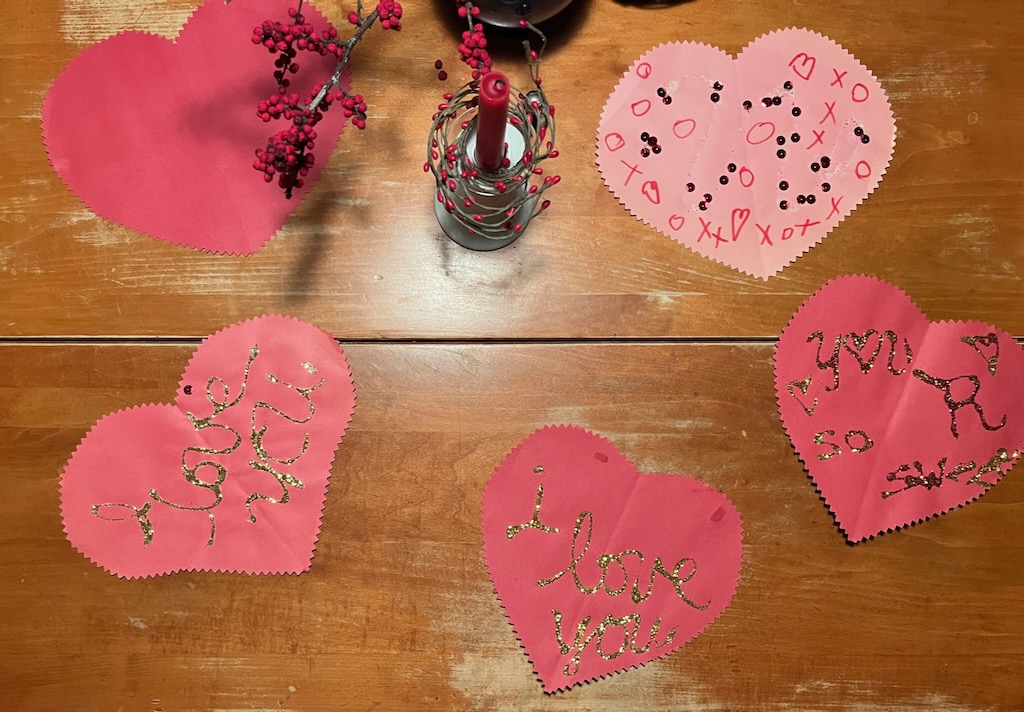
truth be told, 34 years in, it’s recycled hearts adorning someone’s place at the breakfast table…

*postscript on those slap-happy romans: far from being fearful of the bloody slaps, young roman women were said to welcome the mark of the bloody hides, for it was thought to make them more fertile in the year to come. 


lifting the day out of its purely-romantic framing, here are three takes on iterations of love, reminding us of the evolution of love across the decades of marriage, and the love of this one sacred Earth we’ve been given to tend:


first up, the sage from kentucky, farmer-poet-secular priest wendell berry, from a much longer poem, but i was drawn to these three parts, meditations on a long and deepening love…

excerpts from The Country of Marriage
by Wendell Berry

III.
Sometimes our life reminds me
of a forest in which there is a graceful clearing
and in that opening a house,
an orchard and garden,
comfortable shades, and flowers
red and yellow in the sun, a pattern
made in the light for the light to return to.
The forest is mostly dark, its ways
to be made anew day after day, the dark
richer than the light and more blessed,
provided we stay brave
enough to keep on going in.

IV.
How many times have I come to you out of my head
with joy, if ever a man was,
for to approach you I have given up the light
and all directions. I come to you
lost, wholly trusting as a man who goes 
into the forest unarmed. It is as though I descend
slowly earthward out of the air. I rest in peace
in you, when I arrive at last.

V.
Our bond is no little economy based on the exchange
of my love and work for yours, so much for so much
of an expendable fund. We don’t know what its limits are–
that puts us in the dark. We are more together
than we know, how else could we keep on discovering
we are more together than we thought?
You are the known way leading always to the unknown,
and you are the known place to which the unknown is always
leading me back. More blessed in you than I know,
I possess nothing worthy to give you, nothing
not belittled by my saying that I possess it.
Even an hour of love is a moral predicament, a blessing
a man may be hard up to be worthy of. He can only
accept it, as a plant accepts from all the bounty of the light
enough to live, and then accepts the dark,
passing unencumbered back to the earth, as I
have fallen tine and again from the great strength
of my desire, helpless, into your arms.


and the belle of amherst turns our attention to this world that keeps loving us, despite the ways we batter it, and ignore it…

This world is just a little place, just the red in the sky,
before the sun rises, so let us keep fast hold of hands,
that when the birds begin, none of us be missing.
— Emily Dickinson, in a letter, 1860


and finally, the late great naturalist and essayist Barry Lopez, on how to be awake to this still blessed world, from the foreword to Earthly Love, a 2020 anthology from Orion magazine. He is describing walking a vast landscape––a spinifex plain, or grassy coastal dunes, in North-Central Australia––for the first time, but the wisdom is how to attend to a deepening love:

My goal that day was intimacy — the tactile, olfactory, visual, and sonic details of what, to most people in my culture, would appear to be a wasteland. This simple technique of awareness had long been my way to open a conversation with any unfamiliar landscape. Who are you? I would ask. How do I say your name? May I sit down? Should I go now? Over the years I’d found this way of approaching whatever was new to me consistently useful: establish mutual trust, become vulnerable to the place, then hope for some reciprocity and perhaps even intimacy. You might choose to handle an encounter with a stranger you wanted to get to know better in the same way. Each person, I think, finds their own way into an unknown world like this spinifex plain; we’re all by definition naive about the new, but unless you intend to end up alone in your life, it seems to me you must find some way in a new place — or with a new person — to break free of the notion that you can be certain of what or whom you’ve actually encountered. You must, at the very least, establish a truce with realities not your own, whether you’re speaking about the innate truth and aura of a landscape or a person.

. . . I wanted to open myself up as fully as I could to the possibility of loving this place, in some way; but to approach that goal, I had first to come to know it. As is sometimes the case with other types of aquaintanceships, to suddenly love without really knowing is to opt for romance, not commitment and obligation.

and, later in the same essay, his call to attention for a world suffering from what he quite plainly calls, “a failure to love,” a message of urgency on a day in which love, in its many many iterations, is held up to the light.

EVIDENCE OF THE failure to love is everywhere around us. To contemplate what it is to love today brings us up against reefs of darkness and walls of despair. If we are to manage the havoc — ocean acidification, corporate malfeasance and government corruption, endless war — we have to reimagine what it means to live lives that matter, or we will only continue to push on with the unwarranted hope that things will work out. We need to step into a deeper conversation about enchantment and agape, and to actively explore a greater capacity to love other humans. The old ideas — the crushing immorality of maintaining the nation-state, the life-destroying beliefs that to care for others is to be weak and that to be generous is to be foolish — can have no future with us.

It is more important now to be in love than to be in power.

who were some of your great teachers of love?

love thy neighbor ain’t always easy but it’s where it begins

maybe my world is shrinking, or maybe pragmatism comes with creaky knees and hair turned pewter white. once upon a time i dreamed i might figure out a way to end world hunger. nowadays i spend my days worrying about how to make peace on the little block of houses where i live.

i’ve somehow shrunken my visionary zeal, realized i’m no melinda french gates and will never swipe the planet of those scourges — polio and TB and cluster bombs — that wreak a hardly-holy hell.

what consumes me nowadays is the hard task of human beings bumping up against each other with their curious quirks and rough spots. long ago, when i had my nose in books about saving the planet from the scourge of hunger, when i failed to set the dinner table cuz i was on the phone with a friend in tears, my mama used to drive me nuts with her refrain: “charity begins at home.” i thought that was just another way of getting me to mind my chores.

but, decades later, i get it. i get how hard it is to attend to the one simple command at the core of nearly every world religion: love thy neighbor.

yes, love the lady who shrieks out her window. love the guy whose dog barks through the night. love the ones who park their fancy car in the middle of the alley and don’t think they might be blocking your way.

it’s in the fine grain that we stumble. and that where the grit pits our knees.

it’s pie in the sky — and a cheap way out — to talk in platitudes. it’s a whole other thing to meet that someone on the sidewalk, to look into her eyes, and talk it out. to say i am so sorry you were hurt. to say, i’ll fix it. to invite someone in for coffee — after she’s made it clear she doesn’t much like the way you leave your christmas lights strung up till easter.

i’m not the one who’s in trouble at the moment. but i happen to know that of the eight houses on my side of the block, four are deep in scuffles. and it sickens me to know that in a single ZIP code we cannot find a way toward peace.

and it throws me back to that radical jesus, and maimonides not too long after, and buddha, and mahatma gandhi and mother theresa too, all of whom made it seem so clear, who gave us three words to live by: love thy neighbor.

work it out.

dig deep in your soul’s well, and pull up forgiveness. find compassion. try to imagine how deeply the hurt must be for someone to yell out their window to “mind your own ******’ business.”

this humanity is complicated stuff. not everyone seems to have read the same play book. and no matter how hard we wish, we cannot write the script, nor spew the lines for all to recite.

so how to be the instrument of peace? how oh how, is the question i ask over and over. i don’t have too many answers here. but i do know this: my one holy task, the one way i am choosing to spend my days, is to try. to wake up every morning with that code in mind. to catch myself in the rough spots, just before the fall. and to ask if there’s a kinder, gentler, humbler way to be.

it’s down here in the weeds of our own backyards where the hardest part comes. where it boils down to something more than everyday civility. where if someone’s house was burning, i might run toward the window to catch whatever was being thrown out the windows. where if someone fell on the sidewalk, bleeding, i’d run and hold her hand. wipe her tears. cradle her till the doctors came.

it’s not so hard to send off money to the middle east. what’s hard is walking down the sidewalk, or watering the garden, when someone turns the other way.

it’s in the squeeze of that human vise when we need call on our better, finer, wiser, kinder angels, to not only turn the other cheek, but to figure out a way to span the divide. to sow love where there is hurt. to be the living, breathing instrument of peace.

for that i pray. day after day after day.


diana butler bass, an author and historian who calls herself a public theologian, is someone whose voice i’ve been listening more intently to these past couple years. she points her focus on the intersection of modernday culture (often political culture) and religion and spirituality, and she scythes through any hint of hypocrisy and flat-out baloney. she stands, unflinchingly, for the good. this past week, she was writing about bread and wine and wisdom, and i stumbled into this one paragraph (bolded below) which held me for a long while. wisdom is something i look for, hope for, reach for. i love the way bass takes the hard turns in our lives and sets them as the building blocks upon which the wisdom rises. i love that “bad choices” is part of her mix of what might lead to wisdom. it’s not just that we’re the recipients, that bad things “just happen to us.” sometimes, she wisely puts it, we bring the dark times on. we can be culpable. we can stumble. and do dumb things. words we wish we could stuff back in our mouths. invitations we wish we didn’t turn down. chances we wish we were brave enough to have tried. she makes me wish i could turn back the clock of time just long enough across the arc of my life to tap little me on the shoulder to let me know the dark days i was stepping into were going to be the days that in the end would grow me into the wise old woman i’d long prayed i’d  become. here’s diana on hard-won wisdoms…

Central to bread and wine is the exact same principle: In order to become what they are, they must be transformed from one thing into another. When a leavening agent is introduced to flour and water, it becomes a dough that bakes into bread. When yeast consumes the sugar in juice, it ferments the fruit and turns it into wine. Wheat and fruit are, in effect, broken down and simplified by an outside agent, turning them into bread and wine. That’s what fermentation does.

But this process takes time. Bread must be worked, kneaded, left to rise, reworked, and baked. Wine is the result of weeks or months or even years of yeasts breaking down sugar and slowly turning fruit into alcohol. Bread and wine are staple foods for everyone, and yet they demand great patience of bakers and vintners. Neither happens immediately. One must learn the craft of these foods over time. They cannot be rushed. Staples, yes. Slow foods, absolutely. The best things to grace our tables — those things that sustain us and give us joy — result from an intentional and gradual undertaking.

Wisdom is like that, too. How does one pursue wisdom? Where do you find it? Perhaps it is like bread and wine. It begins as something else — an experience, a loss, suffering, bad choices. But when some leaven — like the Spirit — is introduced, these original ingredients are transformed into wisdom through a process of fermentation that takes time. Wisdom cannot be rushed. You learn, you craft, you wait. Eventually, what was becomes something else — something lasting and satisfying.


i didn’t mean for this to line up quite so charmingly, but another thing that utterly grabbed me this week was this bit of poetry sent by my beloved poet friend win. it’s a poem called “butter knife.” bread and butter, how perfect. but first a word about win, who this year started up a wisdom gathering she sends out every monday morning. it’s called metta monday, and in it she gathers up a bouquet that stirs me, fuels me, and often draws out a tear. her well is deep, and she harvests broadly, drawing on sages and poets and zen masters. i’m not quite sure how you’d sign up for it, but if you leave word here, i will be sure win finds you. she starts your week with a rocketblast of all you need to make it to the other side. . .

click here for butter knife, a poem by hollie mcNish about wonder, and specifically about the wonders and wizardry of the human body and the interplay between blood, sweat, tears and the soul….where “teardrops can be conjured out of thoughts…” it’s a beauty! we might all climb on the hollie mcNish train….

do you have a story to tell of watching love blossom and break through darkness?

summer reading: the writer who gave us spider webs and a little mouse, plus other wisdoms

elwyn brooks white, best known to those who loved him as “andy,” and best known to you and me alphabetically as “e.b.,” taught me as much about love as just about any author i’ve ever read. and that includes the sacred texts of just about any religion i’ve happened upon.

every time i’ve pored over the words of charlotte’s web, or stuart little, or “death of a pig,” among the most masterful essays put to paper, i’ve felt the walls of my heart widen, and the bottom go deeper. perched against pillows in the old four-poster bed where both our boys inhabited the dreamland of their youths, i recall the sobs coming in echoes––from the one who was reading and the one being read to––as i choked my way through the tear-blurred words at the top of a still-splotted page 171: “she knew he was saying good-bye in the only way he could. and she knew her children were safe.” (i can’t even type that last sentence now without the tears coming again, filling my sockets.) “. . . she never moved again.” and then “. . .no one was with her when she died.”

we are reading, of course, of a spider. a spider we have all come to love, named charlotte.

and any writer who could make me love with all my heart an arachnid is a writer about whom i can never ever know enough. so it was with purest, geyser-like joy that i turned the pages this week of the first-ever fully illustrated biography of the legendary elwyn brooks white.

part collage, part scrap book, with excerpts of e.b.’s letters, and sketches, and reprints of early drafts and revisions in his own handwritten manuscript, Some Writer! The Story of E.B. White, by the caldecott honor winner melissa sweet, is at heart a love story told of one of the great disciples of love in its quietest, most undeniable forms.

e.b.’s life’s work, as he saw it, and as he wrote in a letter to a reader of charlotte’s web, boils down, pretty much, to this:

love these days seems to be a commodity of which the world is running short. but andy, or e.b., set out to make us see it, and feel it deep in our bones, by telling us the stories, as he put it, “of the small things of the day, the trivial matters of the heart.” he calls those matters “the only kind of creative work which i could accomplish with any sincerity or grace.”

e.b. white

well, dear andy, my gratitude to you is etched on the chambers of my heart, a graffiti of the highest order. to teach a child that love comes in the corner of a barn or even atop the manure pile where wilbur the pig so merrily huddled, well, that’s a blessing pure and certain. and imperative, i’d argue. and too often missed, i’d add.

because he’s earned his post as ballast for my wobbly, sometimes-too-tender heart, wasn’t i delighted when i turned to page 132 in this charmed and charming illustrated biography, and found this excerpt from andy’s letters, which seemed to me a prescriptive for these hard times and the dark clouds under which we find ourselves:

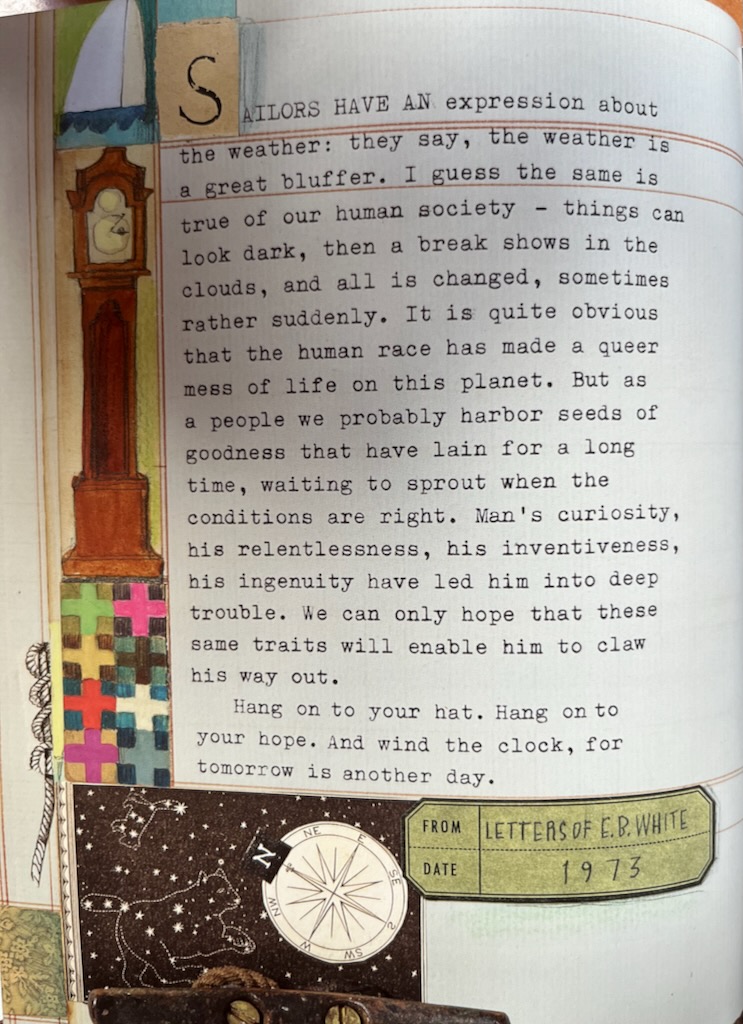
“things can look dark, then a break shows in the clouds, and all is changed, sometimes rather suddenly. it is quite obvious that the human race has made a queer mess of life on this planet. but as a people we probably harbor seeds of goodness that have lain for a long time, waiting to sprout when the conditions are right.

i’ll stop there with my old friend e.b., because that’s the line i want to consider, the line i want us to latch onto and live.

and so, what a curious thing that the next wise soul i wandered into this week was one olga jacoby, a german-jewish englishwoman and mother of four adopted children, who, in 1909 at age 35, had received a terminal diagnosis from her doctor, and sat down to write him a letter on the subject of living and dying without religion, but with moral courage, kindness, and a stunning receptivity to beauty. their correspondence would unfold until jacoby’s death four years later, and her letters, “by turns funny, touching, and intensely sad,” were published posthumously and anonymously by her husband in 1919.

in her first letter, to “my dear doctor,” she boiled down her belief to this:

“To leave a good example to those I love [is] my only understanding of immortality.”

and a year into her diagnosis she illuminated that notion:

“. . . More and more to me this simplest of thoughts seems right: Live, live keenly, live fully; make ample use of every power that has been given us to use, to use for the good end. Blind yourself to nothing; look straight at sadness, loss, evil; but at the same time look with such intense delight at all that is good and noble that quite naturally the heart’s longing will be to help the glory to triumph, and that to have been a strong fighter in that cause will appear the only end worth achieving. The length of life does not depend on us.”

and, she leaves us with this bedrock of lived truth:

“. . . Love, like strength and courage, is a strange thing; the more we give the more we find we have to give. Once given out love is set rolling for ever to amass more, resembling an avalanche by the irresistible force with which it sweeps aside all obstacles, but utterly unlike in its effect, for it brings happiness wherever it passes and lands destruction nowhere.”

who teaches you on the subject of love? what seeds of goodness harbor in you, and how will you coax them to sprout? and how might you put into practice the avalanche of irresistible force practiced by spiders and pigs alike (at least in the rich imagination of one e.b. white) and that, to the dying mother of four, was the most lasting thing that ever there was?

Some Writer! came to me, as so many of the best so-called children’s books do, by way of my best longest friend, auntie mullane, the children’s librarian, who prescribed it as the sure cure for summer blues, or any blues that might befall us in this dark-clouded era.

e.b. white on a rope swing, 1976

saved by the dust bunnies

dear reader, fear not. at last writing, as i bemoaned the absence of progeny in this old house, and awoke to the relative quietude of life as empty nester, i might have seeded worry. what will she do, that poor blithering mama, you might have wondered. will she clock her time staring out the window, awaiting the return of said progeny galloping in from distant plains, in need of laundry, grilled cheese, or any other assorted task for which a mother is distinctly schooled?

worry not: purpose has arrived.

yes, indeedy. in the form of unknown possibly invisible creatures lurking in the chamber where the recently departed (from this house, that is) now attempts to sleep. these invisible and invincible forces seem intent on making the boy rub his nose and eyes and sneeze. all night long. and well into the daylight.

and so, the call has come. i am (somewhat) needed. or, at least my vacuum is. and i, taking no such task lightly, i’ve equipped myself with a whole battery of dust-bunny-battling weaponry. just last night my friends at amazon delivered the air purifier deemed best in class by the folks at wirecutter, that band of trusty testers at the new york times. and i’ve a gallon jug of vinegar, a mop, and microfiber dust cloths, enough to wipe out legions of pesky mites.

dust buster am i.

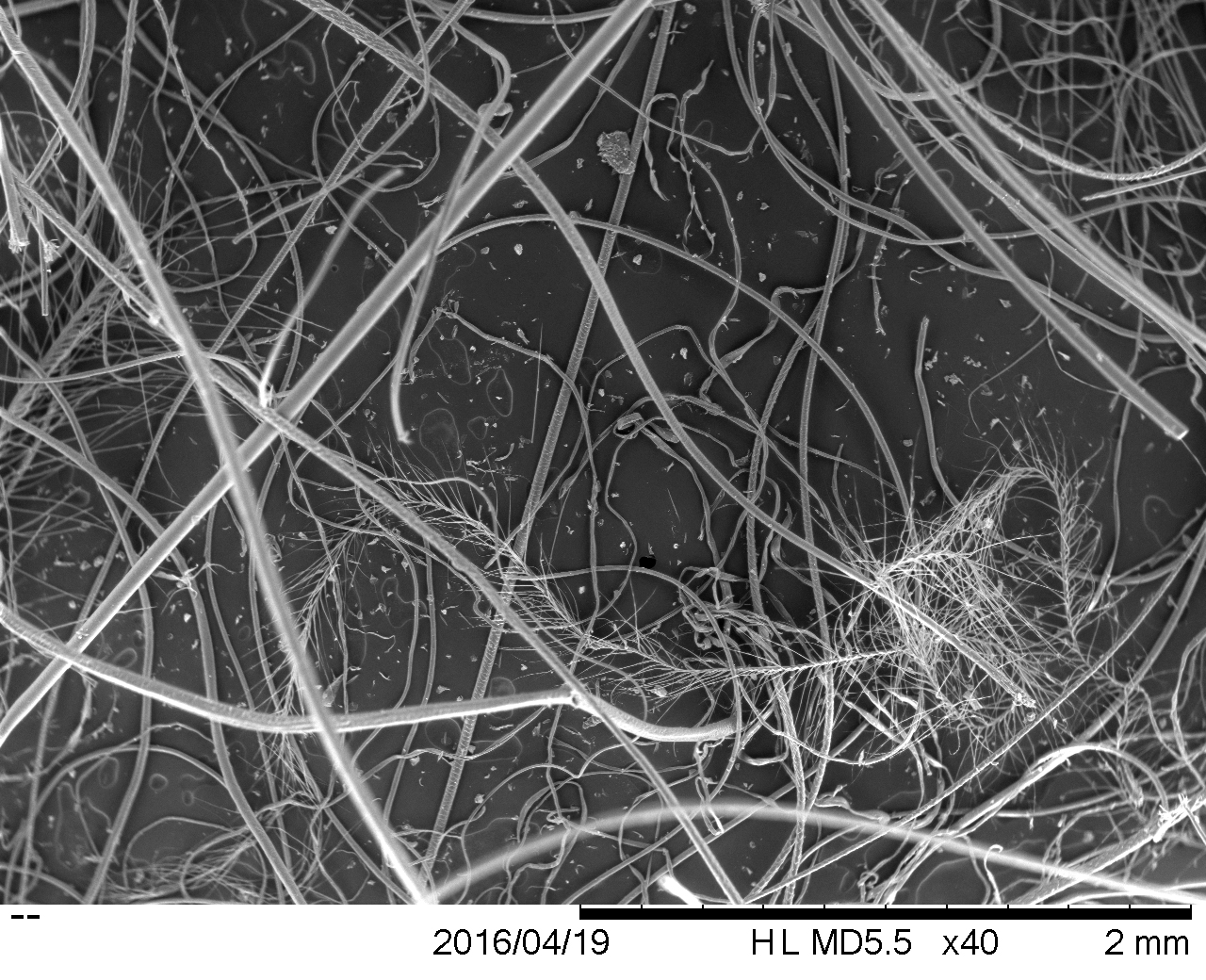
dust bunny under microscope: what we’re up against in the dust bunny challenge

all of which points to the foregone conclusion that ol’ mothers never ever pass their expiration dates. we are not sent off to distant pastures. our aprons and our mops, never really set out to dry. we do not wither on the vine. we are, if not invincible, indelibly anchored in the domestic equation.

why, just this week the kid who mostly dashed in and out of the house whilst he was living here, has seen fit to call me for instructions on: a.) how to work a wet mop; b.) what to take for allergies; c.) what else to take for allergies; and d.) all of the above.

it’s a reassuring thing to know the worry chambers of my mama brain need not turn off. i can still muster up a storm in there, scheming up the options, imagining the worst. and, then, as i’ve done since the first note of first pregnancy, i leap into action. if i can slay one dragon––be it lost mitten in the long ago, or dust mites under the bed today––i sidle one inch nearer to indispensability. or so i pretend.

the truth, as i’ve long known, is that love––in any form––does not subscribe to geographical or chronological bounds. i can love as fiercely and devotedly whether you’re under my roof or far far from here. ours is a world in which distance is a given. we are no longer a people of the shtetl or the lane. i only wish those i love lived nearby enough to rap at the door and sidle in for tea. or late night storytelling.

be it by the powers of imagination or a polished knack for empathy, the human heart is the inexplicable muscle with unbound capacity to stretch from here to eternity. and in so doing, we can fiercely and fine-grainedly love the ones too far away or the ones who are no longer, for their essence burns on and on as long as we are breathing. and, sometimes, in the uncanniest of ways: in reaching for my mother-in-law’s signature-red coffee mug on any morning, i can suddenly hear her singsong way of telling me her faith in me has never dulled. and she’s been gone now for nearly three years.

the resurrective powers of love are without rhyme or reason. and, indeed, they save us.

i’ve thought plenty in recent months about the muscularity of love. how it has propelled me up steep inclines, ones i might not have found the nerve to climb had i not felt some forcefield behind me. i’ve a never-ending fascination with this ineffability we know as love, not as valentine ephemera, but love as true physical force, love as divinely inspired. with the power to heal. the power to quell. and, sometimes, the power to slay a bunny made of dust.

your thoughts on the mystical powers of love welcome here:

foreverest friends and the incomparable lessons of the heart

my grandma lucille, me, and the Divine Ms M, easter circa 1977, in the house where i grew up

because this week paused to celebrate the glories of the ever-pulsing heart, and because i happened to board a jet plane and criss-cross the country, to land in the state of movie stars and swaying palms, where i am romping with my foreverest friend, i decided a love letter was the order of the day. . . and, besides, who ever grows old of lettres d’amour?

this is going to be a love letter to my very, very best forever-and-ever friend, yet it’s also a love letter to friends of the deepest-down sort. i call my forever-and-ever friend the Divine Ms M. and sometimes i call her Auntie M, because she is auntie to my bookends of boys. she lives 2,041 miles away, in sunny LA, which is far too far for afternoon mugs of tea, or long mornings side-by-side on a park bench, or those other indulgences of forever friendships. i’ve said that she saved my life. but what she really did was teach me how it feels to be loved in the deepest nooks and crannies of the heart, and she taught it in a way that felt so very very heavenly, so otherworldly, i’ve spent the rest of my life trying to love like she loves. 

it was second semester of my sophomore year of college, and suddenly there was a willowy blond-haired beauty with big big eyes and an even bigger heart who had moved onto our wing of the second floor of a mostly-sophomore dorm, a dorm with clunky elevators and skanky carpet ribboned along long dark hallways, a dorm that looked out over nothing so scenic as endless parking lot. this new someone, a brand-new freshman among us second years, carried herself with an elegance i spied miles away. in the thick of downtown milwaukee, a california girl is a rarity. 

right away i noticed her tender heart. maybe she noticed mine. 

we’d both suffered a few tough knocks, knocks still raw for both of us. not the sorts of things you say much about till you’ve sniffed around, made sure the coast is clear and you’re in a safe heart zone.  

it wasn’t long till we must have realized there was a certain pull that held us; it had been a long long time since i had a friend to whom i could safely hand my whole heart. but i knew she was just that friend. what i remember most emphatically is that, for a reason that long ago escaped me, she one day knocked on my dorm room door, and sat down beside me with a basket. every delicately-selected something in that basket was speaking to a different turn of the prism’s light. i seem to remember an apple. and a tea bag. but i don’t remember a single other thing. i do remember that little squares of folded-up paper explained each and every something. and i remember my breath was sucked away, because each and every something burrowed deeper and deeper into the heart of me. she had covered the whole expanse of a many-chambered heart with a few fine things tucked in a handled, wicker basket. 

we’ve shared hard years, and a few sweet rejoicings, over all these years. the sorts of years lifelong friends inevitably share: deaths, disease, weddings, births, worries, worries, more worries. 

and after almost 15 years of only phone calls, and emails, and brown paper packages mailed back and forth, and more recently the miracle of texting in real time (whether it be from an emergency room, or a surgical waiting room, or the children’s library where she enchants the kindergarteners), we have tumbled into each other’s real life arms. i hopped a plane and tagged along my bespectacled mate as he motors off to the california desert, and the oasis that is palm springs, to give a sunday talk. we decided to make it a hop, skip, and a jump trip. one that plopped us first in sunny LA, and then will find us out palm springs way.

for a million and one reasons, this visit is just what the doctor ordered. and it will upholster me (another word for plump me up, or cushion me) for the weeks to come. 

i hope and pray we all have a Divine Ms M in our lives, that rare someone whose hearing is so high-grade she or he can hear the words we utter without sound. whose sight is keen to the faintest of subtle twitches, the ones we try to hide deep inside the smiles we sometimes wear. i am blessed with a glorious handful of such friends. some make me laugh so hard i nearly choke on whatever’s in my mug. some set me straight with unabashed, unfiltered truth talk. some hold my hand so tight it forgets to tremble.some bowl me over with a brilliance and a sheaf of wisdoms that leave me gobsmacked.but there’s no one who goes so far back to what might be my new beginning, not long out from a hellhole of a dark, dark chapter in my early days. my LA girl brought me sunshine, and all these 46 years later, she still holds the secret wand to chase away whatever big gray cloud dares to scuttle in. 


in honor of friendship, and its miraculous healing powers that make us strongest in our broken places, here’s a beauty of a poem from jane hirschfield, a wunder poet and ordained practitioner of soto zen buddhism. 

For What Binds Us

There are names for what binds us:
strong forces, weak forces.
Look around, you can see them:
the skin that forms in a half-empty cup,
nails rusting into the places they join,
joints dovetailed on their own weight.
The way things stay so solidly
wherever they’ve been set down —
and gravity, scientists say, is weak.

And see how the flesh grows back
across a wound, with a great vehemence,
more strong
than the simple, untested surface before.
There’s a name for it on horses,
 when it comes back darker and raised: proud flesh,

as all flesh
is proud of its wounds, wears them
as honors given out after battle,
small triumphs pinned to the chest —

And when two people have loved each other
 see how it is like a
scar between their bodies,
stronger, darker, and proud;
how the black cord makes of them a single fabric
that nothing can tear or mend.

~ Jane Hirschfield ~
 (Of Gravity & Angels)

what are some of the ways you learned to love from someone you happened to tumble into in the hollows of your holy blessed life?

auntie m + me + our babies, her sweet girl and my beloved firstborn in sunny LA a long time ago…i think 1999, cuz we went to the not-yet-opened Legoland and i just checked when it opened, and voila march ’99.

of walls and bridges…

before: when sunlight had a place to play

been thinking a lot about walls and bridges this week, because it seems the only thing to do about a wall is to try to build a bridge. something of a wall––a six-foot-three-inch, solid-cedar wall––was dropped into our little world this week. it’s a wall i’d known was coming. a wall i’d been warned was on the wishlist all of three years ago. that’s a lot of breath-holding, spring to fall to summer, again and again and again. but held it i did. savored every drop of sunlight shafting in. counted my blessings in dapplings and plashes of sunshine’s incandescence, delighted in the way the light danced upon the wicker and the shingled walls of the little room we call “the summer house.” stood there just soaking in the breeze.

after…

it’s gone now.

and once i cried (the day i heard it’d been ordered, paid for, and soon to be arriving), once i dried those tears, i did what mightier folk than me have shown me what to do, and how to do it: how to build a bridge. starts with chin up, and turn the better cheek. if a wall was coming and i couldn’t stop it, i pretty much shrugged my shoulders and decided i’d take it like a grownup, take it with as open a heart as i could muster. and i’ve been mustering. all summer we’ve been gardening side by side, my next-door-neighbor friend and i. i dug up all the plants that wouldn’t grow in the dark at my house, and now they’re growing in the light at hers. on her side of the six-foot-three-inch fence.

since i’ve been at this digging thing for a few decades now, i’ve told her the few secrets and wise things i’ve learned the hard way. fact is, she’s smart as a whip and a whip-crack study, figures things out in a flash. and best of all she’s not afraid to get her hands muddy, or to spend a whole darn day on her hands and knees scrubbing. i’d say there’s grown genuine affection in our weeks of garden talk. we’ve sprouted something even a wall can’t eclipse.

and then this week the fence was no longer something i needed to picture in my head; it’s right outside, the whole long stretch of it. i wish it was a picket. i wish it let even a little dab of light through, but it doesn’t.

once the sun slides low, it gets dark out there. the light no longer plays.

so i got to work digging. dug myself a garden plot where before there’d been an isthmus of grassy lawn that stretched without end, it seemed. my old garden––along the western edge, a patch of peonies, an oak leaf hydrangea, some happy happy ferns––it’s pinched and stunted in mid-sentence it seems. things will need to be moved, and the few i moved already, to escape the metal posts being banged into the ground, they seem to have died in protest.

but i’ve a new garden now. one that will catch the morning sun. one i’ll delight in, once it starts to bloom. once the butterflies come in, and the birds nibble at the seed, and the bumblebees imbibe the succulence. and three years ago i bought myself a fantabulous bird house that will rise up on a bird-house post from somewhere in that garden, and it will be the pretty thing my eye is drawn to, the birds are drawn to. and i intend to come to love what i’ll pretend is my cloister garth. my place to soak in the sacred that animates this holy earth.

it’s not the only bridge i had to build this week, which got me to thinking hard about the ways i want to live my life. i will always always try to be the one to turn the other cheek. to search for the glowing heart of humanity –– or do i mean the sacred? the divinity? –– buried deep down inside, in the shadow of whatever hurts and scars have made it hard to see. i turned to thinking about the long line of blessed radicals, even the one whose name has been so deeply abused by so-called christians. i thought about the good samaritan. i thought about gandhi and martin luther king, jr. i thought about how, in the face of hurling hatreds, they listened only to the sound of love. how they always, always chose the bridge, and broke the walls.

what it really means to practice love is to do it when it’s hard. when things you dearly love are being taken away. when ones you love are sometimes even the ones doing the hurting. whatever are the million things that make it hard to muster, to offer, to model, to practice love.

we all need practice. it’s try and try and try again. stumble, skin your knees, and try again. the question is: will we try, or will we walk away, and leave a trail of hurt and hearts that only serve to harden?

and while i was thinking of all that, i stumbled on these words that fell right in line with all my thinking of walls and bridges…

SOMETIMES

we need a bridge and sometimes we are the
bridge. No one I know has escaped
troubled waters, rough seas and challenging,
scary days. There are times in our lives
when we could use a little help, and other
times when we are given the chance to be
that help for someone else. It really doesn’t
matter where you are right now. What
matters is that you remember we are
stronger together, and taking a hand is
just as important as offering one.

paul boynton

what bridges are begging to be built in your world this week? (a question for quiet contemplation….no self-disclosure needed…)

so far i’ve built a path of limestone stepping stones in what’s now a skinny gangway between garage and fence, but it’ll some day have a picket gate, and i plan to line that stretch of fence with avian residences (aka bird houses) and i need to find wee plants that don’t mind growing in the dark. and today, since my page proofs still aren’t here, i’m headed to the nursery to pluck myself some bushes that will bloom in spring and blossom into berries when the autumn comes. and there’s a long list of perennials i’ve always wished i had a place for, and now i do. so my bridge promises delight even in its earliest iterations.