in which we duck out from the horrors of this tinderbox world—for just a moment’s pause—to unfurrow our overworked brows, breathe out the voluminous tensions, and inject a brief interlude of jocularity into the day. in other words, to laugh a bit when we might otherwise weep, because even in—especially in—these times that try the soul, we must exercise the human capacity for humor. science now tells us (with tape recordings to prove it) that even baboons giggle and guffaw. though we might still be the only species who knows just how to tell a joke.
and sometimes life just makes you laugh…
thus, and herewith, i benevolently offer my linguistic services to those in the medical world whose lexicon is so severely lacking and ill-equipped in the adjectival realm. i beg consideration for my application to a most necessary, and clearly overlooked post: that of human medical thesaurus, aka thesaurian.
for your adjectives, dear doctor world, are limpid, frail, and just plain rude.
it’s come to my attention (abruptly so) that those who peer into our every sinew and synapse might well be adept at pinpointing our deficiencies and odd bits, but the lack of gentility in affixing descriptors to those diagnoses is so sub-par that we’re left gasping, listing toward the cold hard floor.
case in point: just yesterday morning, when word arrived that my latest bone scan report (after a year of monthly pokes in both arms, in hopes of building up my chalky bones into something more substantial), had been filed by the radiologist, and was ready for viewing, i opened said report and nearly toppled.
there, in black and white, the impolite and overwrought label they’d pinned to my condition: not only was i osteoporotic in the extreme, they went one descriptor further, dipping deep into their shallow pool and dubbed my affliction, senile osteoporosis.
senile? really? how ‘bout just plain forgetful (as if a bone, the ossification of calcium and protein, contained capacity for confusion)? i looked it up just now, and see that the term is applied to “a long-standing imbalance.” (it gets worse the deeper i dig….)
now, i might be daffy, and i might lose track of why i’ve walked to the pantry, or climbed down the basement stairs, but i’ve otherwise no hard evidence that i’ve been pushed into the realm of the senile. i can recite my name, birthdate, and at least four times out of seven i’m likely to know which day of the week it is. i’m older than i was (aren’t we all, all of us who can read these words), but am i now old enough to be objectively labeled senile in any way, shape, or bone form?
apparently so.
my bones, no longer merely osteoporotic; they’re now flimsy with a side of senility.
and, mind you, this is not my first go-round with doctors’ adjectival idiocy.
a quarter-century ago, when i found myself miraculously (though not immaculately) “with child” at 44, after eight years of futility, infertility, and heartbreak, the good obstetrician looked hard at the ghostly image from inside my womb, and confirmed my condition. but, no, she didn’t just proclaim me pregnant, plain and simple. oh no. she couldn’t leave well enough alone—this ebullient news that me and my last little egg had defied ALL odds and were forging ahead gestationally.
no, she and the medical world in all its lexicographic obsolescence tethered yet another adjective to my case. i was, forthwith and from that day on, the proud custodian of my very own “geriatric pregnancy.”
perhaps realizing the arthritic creak in those words, my beloved OB-gyne coined yet another way to phrase it, and every time she burst into the wee exam room, my belly bulging by the month, she greeted me as if borrowing from a swashbuckler’s or a swindler’s saltiest address: “you old mother!!” the words she swung my way.
in the journalism biz, the one in which i traded for some three roller-coaster decades, there’s a faulty maxim that if you can find two points and a draw a line between, you’ve got what’s called “a trend.” so let’s say we’ve got one here, one worthy of consideration and at least a dash of commentary.
the common tie between the two aforementioned adjectival assaults seems to be age, as in old age. as in a prejudicial slant not favoring those of us who’ve accumulated years.
as opposed to theologians and philosophers who seem at least cognizant of the wisdoms so acquired, the medical among us seem hellbent on shoving us into the aged cage. my futzy bones aren’t just futzy, they’re senile futzy. my pregnancy at 44 wasn’t purely gift from on high, its medical moniker inspired images of bent and wrinkled me shuffling into delivery, unable to hoist myself upon the bed, let alone shimmy into birthing hardware (aka those unforgiving cold metal stirrups).
i’d like to remind those in the naming department of medicine’s world headquarters that sometimes the assaults on our little old selves are plenty enough, without them playing pin-the-nasty-name-on-the-doddering-old-soul.
a bit of dignity is all we ask. slight consideration for how it might read to those of us who don’t fling such hard-edged modifiers willy-nilly and with abandon. discovering that all those shots did not one thing to make me stronger, nor lessen at all the chance that should i slip i’ll shatter, that alone was plenty sobering.
did you really need to top it off with a good fat dollop of senility?
next thing i know you’ll tell me i’m a geriatric mother. oh, wait, you told me that. . . twenty-five short years ago.
have you ever been pinned with a medical moniker that might do well with a spin through the softening machine? or, more broadly, did anything find you giggling this week, or simply, plainly amused?
i’ve been on rooster time for weeks now, though there’s no rooster pecking about the nearby yards. the rooster resides in my little noggin where it cock-a-doodle-doos round about four, and i patiently wait till five. as if the nuns have granted permission and at last i can dash out from under the bedsheets and into the playground that is my kitchen table at that early early hour.
ostensibly i’m up to write, to think, to edit. and i do get to that. i always do. but first i soften into morning turning pages. in other words: i read.
it sometimes seems my mission here is morphing into something more along the lines of slipping poets under your noses; writers, too. any weavers of wonder i happen to happen upon. this week i happened upon an astronomer poet, a brilliant soul who died too soon at 39. she spent her life mesmerized by the heavens, and hers was the gift of reaching into the stars, scooping up a glug of moon, and giving us a taste.
her name was rebecca elson (1960-1999), a canadian-american who at 16 began her studies at smith college, and would go on to earn her PhD from the university of cambridge, somehow fitting in years at radcliffe college and harvard teaching creative writing as well as an expository writing course on science and ethics. at cambridge’s institute of astronomy she was awarded an isaac newton studentship, meaning they paid for her to be there. it’s where she died, amid a field of star embers, i do hope.
her posthumously-published slim volume of poetries and extracts from her notebooks is titled a responsibility to awe (carcanet press, 2001). that title alone is poetry, and tells you all you need to know. in four short words, some might argue, it lays out our holy purpose. our one assignment while we’re here on planet earth, that little orb floating amid a universe of burning flecks of star dust and helter-skelter sky litter (though there’s nothing remotely litter-ish in even one celestial orb, from jupiter to milky way, to the not-yet-named planet L 98-59 f (identified just last month!, the fifth such planet in a splotch of far-off space unpoetically named L 98-59, a system of “remarkably diverse worlds.” little f is orbiting so close to its star, it’s possible liquid water might exist there, the scientists tell us.)
back to rebecca, known to those who loved her as becky. soon as i read the words astronomer and poet coupled in a pair, i was drawn magnet-like to snatch up a copy of her awe-struck works. it’s considered a contemporary classic, in the world of poetries. and not a line of it disappoints. among the pages that left me awe-struck: an ode to discovering zero; another asking what if there were no moon? (her reply: “there would be no months / a still sea / no spring tides / no bright nights / occulations of the stars / no face / no moon songs / terror of eclipse / no place to stand / and watch the Earth rise.”)
a mind as facile and deep as one that imagines darkest night, scans heavens for answers to questions others never even think to ask, is a mind i want to enter. to add my footprints to the paths that have traversed it. as if, in poring over her way of seeing, i too might see more vividly.
that rebecca/becky died too young of a cruel cancer (isn’t every one a cruel one?) added but another element to my quest to know her by her words. her masterwork is considered her six-stanza poem, “antidotes to fear of death.” she begins (as only a star-studier might): “sometimes as an antidote / to fear of death / i eat the stars.”
from there, extracts from her notebooks follow, and we almost watch a mind at work. as she cobbles poetries, we see the words struck out, the finer ones she chose instead. we see, in a swatch titled “origins,” her change of mind, in the line “shaken in the dark soil soul of space.” soil, a richer word (more unexpected) than soul here. we see adjectives get ditched, as she pares and pares her lines. titles of poems are revised. it’s a nimble mind, exercising in the gym, and we are peering through the windows.
two years after elson’s death, the economist, in 2001, named responsibility to awe (her one published poetry volume, though she published 56 scientific papers in her short life) a “book of the year,” writing “with great poignancy, she shows us the world through the eyes of a human being faced by her finite time.”
the bulletin of the american astronomical society, in their roster of supernovae gone dark, described the breadth of elson’s scientific research, her work ranging from “a search for stars in the halo of our own galaxy to regions of rapid star formation halfway across the Universe. She set strong limits on the contribution normal stars could make to the Milky Way’s dark matter halo, using counts from the Hubble Deep Field to rule out a significant stellar component.”
maria popova, who first pointed me to the poet-astronomer, calls her poem “antidotes to fear of death,” a “stunning cosmic salve for our creaturely tremblings of the heart.” she recorded a recitation of it, set against the mournful strains of cello, for her 2020 “universe in verse” extravaganza, popova’s “annual charitable celebration of the science and splendor of nature through poetry.”
elson, whose book now rests beside me, belongs in that rare constellation, a favorite of mine, of those who study the cosmos and, side-by-side the formulae and theorems, see the poetry, and draw it forth: loren eiseley, lewis thomas, robin wall kimmerer. they and their ilk (there are more and more) hold a sacred space on my bookshelves. without them, there are volumes i’d not see, musics i’d not hear.
the back jacket of responsibility to awe says it best, describing elson’s work as “a book of poems and reflections by a scientist for whom poetry was a necessary aspect of her research, crucial to understanding the world and her place in it, even as, having contracted terminal cancer (non-hodgkins lymphoma, diagnosed at 29), she confronted early death.” the text goes on to say that elson was an astronomer whose work took her “to the boundary of the visible and measurable.” isn’t that the space we’re all drawn to, meant to explore? isn’t that where theologians and mystics ply their minds? isn’t that where simple us might wonder too?
in the end, elson, like all who dare to ponder deep beyond the lunar surface, was “undeterred by knowing how little we can know.”
and thus we all now have our one assignment: to search undeterred for what we can. knowing there is majesty in the mystery, and beauty far beyond what we’ve yet glimpsed. our responsibility, of course, is always, always to awe.
where did you stumble into awe this week?
i’ll leave you with a page. . .
have a blessed, awe-filled week….
oh, i promised my dear friend wini i’d share this wonderment she is bringing to town (town being chicago, or the northern environs to be specific). wini is a poet, and she’s worked closely with, and had one of her poems judged “best in class” by the marvelous poet rosemerry wahtola trommer. wini, who makes things happen, invited her and now is inviting all of us for a day of poetries. part workshop, all wonder, it promises to be a day to remember. here are the details, courtesy of wini:
Come experience the gorgeousness of poet, teacher, and storyteller Rosemerry Wahtola Trommer. This event is about more than just poetry; it’s a chance to listen to what is true in your heart and open to “The all of it — the Beauty and Sorrow.”
It is beyond lovely to be in-person with Rosemerry, and truly what a treat to sit in community again with like-minded people, and to uplift and celebrate each other’s beauty and light.
I hope you’ll join us. It would be so lovely to see you again.
all you need do is glance toward the sky, eyes skimming over the players on high. sunlight and cumulus. sunlight and cirrus. sunlight and nimbostratus. sunlight and cloud ever in play, in duet, in doh-si-doh of shadow and light.
there’s a truth being told there, a universal and organizing principle of all creation. on the first day, in the second verse, there was darkness, darkness hovering over the deep. in the third verse, light. God commanded it. and God saw that it was good.
in our lives, the leitmotif is a given. light will come. shadow will follow. light will come again.
so it was in my reading this week, when first i tumbled deeply into a luminous shaft, a boreen* of writings from a norwegian bishop and monk, erik varden, whose power as a writer was pointed out to me by a poetry friend whose taste i know to be exquisite and deep. i swiftly realized the bishop’s thinking and writing are everything they were billed to be: rare. exquisite. deep. radiant.
but then, hours later, shadow: i began reading a string of sentences posted from the account of one of my lifeline poets, someone you might call a patron saint of heartbreak and healing, of being more alive than you’ve ever imagined. i started to read, as if it were just another brilliant post: “Whenever I leave this world, whether it’s sixty years from now, I wouldn’t want anyone to say I lost some battle. I’ll be a winner that day.” and then i got to these words: “Andrea Gibson was a winner today. On July 14th, at 4:16AM, Andrea Gibson died…” and my legs stopped moving, and my breath was caught in midstream, and i read and read again. and then my fingers started to tremble, and my knees too.
andrea gibson
andrea gibson, 49, colorado poet laureate in 2023, queer activist (they/them/their pronouns), who had been diagnosed with stage 4 ovarian cancer in 2021, not long after they’d started a newsletter titled “Things That Don’t Suck,” had many, many times pried open my heart, pulled out the unspoken words and the fears and set them soaring. when i too found out what it is to live with cancer as one of the nouns in my story, i drew andrea into my innermost circle. the ones who know, without you uttering a word, just what you’re thinking, you’re feeling, you’re praying. the ones who some days save you. because even though the cyberworld is distant and intangible, it works in mysterious ways, and someone with whom you’ve never breathed the same air can become someone whose voice you can hear as you flutter to sleep, and whose courage you conjure as they glide you into the sarcophagus that is your biannual CT scan.
light. shadow. light from shadow. shadow deepening light. it’s the dance of the duet, interminably entwined. one is always more beautiful because of the other’s presence, because the duet is perpetual.
first, this week’s light:
that monk on a bicycle, spotted cycling through the garth just beyond the cloister, is all it took for me to want to whisper my vows, and cycle along.
as i’m quick to do, i signed up for bishop varden’s website, coram fratribus, a name derived from his episcopal (meaning “of the bishop”) motto, coram fratribus intellexi, latin for “understanding with my brothers.” because the bishop is shepherd of a flock spread across 22,000 square miles in the north of norway, extending beyond the polar circle, he sees his site as a way to speak to the diaspora, to think aloud of those things he finds beautiful or challenging, to gather his flock into a communion of thought. specifically, i felt my heart quicken as i burrowed into the bishop’s collections of writings under the tabs “life illumined,” and the shorter jottings under “notebook,” which he describes thusly:
“To scribble in the margins of texts is an ancient practice. There are people, these days, who make an academic career out of studying ancient marginalia. Any exercise of reading is fundamentally conversational. The notes collected here are brief responses to impressions received not just through books, but also through encounters, art, music, and films.”
now you see why i, a marginalian of long practice, swoon?
before i get to the paragraph in “life illumined” that drew me deep into thought, let us pause to note why we see that little outline of an owl, in the upper right corner, and hovering over every page of the site. the good bishop describes that choice thusly (emphasis mine from here on in):
“The emblem of the site is an owl. The owl does not just wing you back to the front page. It has for centuries been a symbol of the monk. Why? Because it watches in the night, when most people sleep; because it is able to see in the dark, discerning movements and patterns, foundations of meaning, where the human eye perceives only vaguely. I am fond of this Italian doggerel:
“Sopra una vecchia quercia c’era un vecchio gufo: più sapeva e più taceva, più taceva e più sapeva.
“In an old oak tree there sat an old owl: the more it knew, the silenter it was; the silenter it was, the more it knew.”
what fluttered into my mailbox the other morning was a page of the monk’s notebook on the nightingale, complete with an ancient poem (from the early middle ages, written by alcuin of york, an adviser to charlemagne) mourning the absence of the wild creature and its delicate throat. a recitation in english and latin, and including a recording of the nightingale’s song. that alone was more than beautiful enough. and then my poking and peeking accelerated, and that’s how, under the “life illumined” tab, i found a break-me-open paragraph on learning to pray.
in an essay focused on the simplicity of jesus’s prayer, and the universal cry of all believers, “lord, teach us to pray,” varden paints the scene of 72 disciples who learned not simply by listening to the words of jesus in prayer, but in witness to his consuming attention to the ways and will of God. varden expounds:
“Jesus’s teaching on prayer amounted to more than the provision of a text for recitation, that is clear. It was the sight of Jesus praying that made the disciples wish to learn prayer. The words of prayer, which touch our reason and orient our will, point towards the breaking-open of our heart, the transformation of our being as we dare to aspire, even in this life, to ‘become participants of the divine nature’.”
it is the breaking open of the heart, indeed, where the truest serum of our souls pours out. only in the last couple years have i understood that as profoundly as i do now. and, yes, that breaking so often comes with pain, or in pain, or through pain. but i’ve learned now how it truly is the propellent, the force that pushes us deeper into sacred truths than we might otherwise venture. without the breaking open, we might cling to the safer and shallower waters.
the bishop goes on. takes us beyond merely the breaking, and makes the point of its purpose. be it through prayer or through living, the breaking open is the vehicle for those who dare to aspire, in the here and now, to become participants of the divine nature. to inch as close as we can in this lifetime to something akin to sacred. i found a redemptive resonance in that line because at heart, even for the quiet ones among us, we are a people of communion, and there is a heartening, an emboldening, that comes in finding that your purpose, your aim, is not yours alone, but shared in common understanding with at least some of your sisters and brothers.
let us be broken open, then, if it points us toward our holiest purpose. through the break in the clouds, the light comes.
and onto the shadow, the eclipsing shadow…
less than one month shy of her fiftieth birthday, andrea gibson, the poet who boldly faced the coming of her death, who has been amplifying wonder, making us see the unseen, relish the oft-overlooked, took her last breath in the wee hours of monday morning.
i have been relishing her, here and in my everyday, for years now. curiously, her presence in my life spans almost precisely the arc of time in which i’ve been in the company of my own cancer.
the month before my lung surgery, when the world felt overwhelmingly like the depths of a cave, i wrote of andrea and lines i’d inscribed on my heart:
thanks to a friend i love with my whole heart, i stumbled on another wise soul with buckets of beauty to grace the world. a poet-activist-performer named andrea gibson, now a cancer survivor whose words might take your breath away. andrea identifies as queer, and uses the pronoun “they;” and they are known for their trademark honesty and bare-naked vulnerability, traits i find irresistible and blessed beyond words. here are just a few lines i couldn’t keep from scribbling down:
when it comes to hearts i want always to be size queen…
i love you because we both showed up to kindness tryouts with notes from the school nurse that said we were too hurt to participate….
when your heart is broken, you plant seeds in the cracks and pray for rain.
before i die, i want to be somebody’s favorite hiding place, the place they can put everything they know they need to survive, every secret, every solitude, every nervous prayer, and be absolutely certain i will keep it safe. i will keep it safe.
yesterday, thursday, this slipped into my mailbox from andrea’s wife, meg:
A couple years ago, Andrea said, “Whenever I leave this world, whether it’s sixty years from now, I wouldn’t want anyone to say I lost some battle. I’ll be a winner that day.”
Whatever beast of emotion bucks or whimpers through you right now, I hope you can hold that line beside it: Andrea didn’t lose anything. If you had been here in our home during the three days of their dying—if you’d seen dozens of friends drift in to help, to say goodbye, to say thank you, to kiss their perfect face, if you’d felt the love that floored every hospice nurse—you would have agreed. Andrea won.
I won’t sugarcoat the fact that they desperately wanted more time on this planet that they loved so much. This planet of squirrels and romance and basketball and moonlight.
But the time they had was significant, prismatic, and wild. It was full of trampolines and mountain ranges, stage lights and pants-peeing laughter. In their words, they “juiced the sun for every holy drop.” One of the last things they said before dying was, “I fucking loved my life.” Their conviction stunned the room.
If Andrea’s life was a poem (and it was), could there be a better last line?
a little backstory, again from meg:
In 2021, before the diagnosis, Andrea announced they were writing a newsletter, titled Things That Don’t Suck. A few weeks later, we learned they had ovarian cancer.
At first, Andrea said, “What a terrible time to be committed to writing about what doesn’t suck.” Then, almost immediately, they shifted their perspective and said, “What a perfect time.”
And so, this space was born. Part journal, part poetry, part pep talk, part treasure hunt. It became an archive of Andrea’s ability to find beauty in unlikely places, to wring gratitude from even the hardest hours. A museum of how they danced through their diagnosis, always turning their compass toward joy. It fostered a community they deeply loved.
And Andrea wanted all of it to continue.
meg tells us it will. there are reams and reams of unpublished writings, lines scribbled under the silvery light of the moon on those nights when sleep wouldn’t come. pages poured into volumes tucked away. a memoir, unfinished. half-written poems. a documentary coming this fall.
and meg promises this:
And there are stories of our life, and of the last months, that I, as their partner, and as a writer, feel both lucky to carry and uniquely able to tell.
As gut-wrenching, impossible, and tear-soaked as this moment is, I’m grateful beyond measure that they were so prolific. Through their books, their reels, their interviews, their albums, Andrea’s incredible mind will reverberate for a century—I’m sure of that.
and so, in the presence of the bishop monk, and the absence of the poet prophet, we shall go on. awake in the light and the shadow. and the shadow that deepens the light.
in case you’re curious, a bit more about dear bishop varden:
it was only after absorbing so much of his writing that i circled back to learn a bit of his origin story.
varden was born into a non-practicing lutheran family in a small village in the south of norway, and would go on to earn a doctorate in theology and religious studies at the university of cambridge, and further study in rome. a convert to catholicism at 19, he was drawn to the monastic life, and joined the mount saint bernard abbey, a cistertian monastery, in charnwood forest, in leicestershire, england. he was called to rome to be a professor of syriac language, monastic history, and Christian anthropology. and two years later, returned to the abbey when he was named its eleventh abbot. and, in 2019, pope francis named him bishop of trondheim, a nearly 22,000-square-mile prelature north of the polar circle in norway.
mount saint bernard abbey, varden’s home monastery, is where the only Trappist beer is brewed in all of England, under the name Tynt Meadow English Trappist Ale. beer to the trappists is no earthly distraction. the belgian trappists have a saying: “Beer should be liquid bread, not coloured water.”
and here’s a morsel, this one on the theology of beer, as spoken at the blessing of the monk’s brewery on st. george’s day, 2018. from Dom Erik’s address:
“One of the fascinating things about beer, is that this (potentially) sophisticated beverage is made of the simplest ingredients. By being refined to manifest their choicest qualities; by being brought together in a favourable environment; by mingling their properties and so revealing fresh potential; by being carefully stored and matured, the humble malt, hops, yeast, and water are spirit-filled and bring forth something new, something nurturing and good, that brings joy to those who share it. Considered in this perspective, the brewery provides us with a parable for our monastic life, with the Lord as virtuoso brewmaster. The Scriptures favour wine as an image of the Gospel – but that is culturally conditioned; beer, it seems to me, is a much neglected theological symbol.”
*boreen, you might recall from a few weeks ago, is the old irish word for what we might call a pothole, a rabbit’s hole, but in ireland, an island etched with cowpaths, it’s a word derived from a meandering side path when the cow decides to venture off on her own….if language is a cumulative patchwork, boreen is a word now in my lexicon….
you’ll find a veritable font of andrea’s spoken word poems, and writings at their website, andrea gibson.org. spend some good time there.
annagh river at kildimo south, my ancestral land, as it flows toward the sea at spanish point
i don’t want to wash it off. instead, i am in that necessary liminal state of in-betweens, when a newfound knowing needs time and space and silence to seep in. when we’re wise to open wide our pores, to fill our lungs, to allow our synapses to affix to new neural pathways. to come to indelible understanding.
if that seems an odd way to describe an adventure, so be it. my days in ireland were so much more than a “trip,” a “vacation,” a “getaway”—banal descriptors for folderol and whimsy, with suitcase attached. instead, my days in dublin, cork, and county clare were something of a journey in its deepest form: a coming to know someone, some place, i’ve always known but not yet fully met. and that someone, in fact, was me. a deep-down part of me long stirring, long felt, but not yet seen in fine focus. as if untold parts of me longed to know from whence they came. and not just my affinity for cloudy days and wit and poetry. and why i feel the hand of God so profoundly in the morning’s mist, and the moonbeams’ amber glow.
or maybe it was propelled by a yearning never sated, a yearning my whole life long to know the people from whom i sprang. the grandmother whose stories have stirred me from the start. the father who spoke so little of his past, and whose answers to my questions died when he breathed his last in 1981.
maybe my search was a daughter’s reaching for the hem of her father’s cloak. to run my fingers along its nubby threads, to stitch in quilt squares where the cloth had worn too thin. maybe there is something of longed-for re-union in my diligent tracings of ancestral ties and tales. maybe my father is who i try still to reach.
and then there’s the radiant present, the crucible of time that amplifies the here and now, the intense knowing that each and every hour is a gift, and before it ends, i intend to magnify the time, to expand the boundaries of my heart, to leave tracings on the ones i love so that my imprint might not fade so quickly. so that some part of me forever lingers in the one place where it matters: their blessed hearts.
i remember, in the darkest turns of these past two years, and especially at the turning of my latest birthday, how deep the wish i made, when i closed my eyes and drew a deep, deep breath, one that filled my lung and a half. i wished with all my might for precious time with my boys, time huddled close, time punctuated with the percolations of laughter without end. time punctuated with the sort of silence that is sodden even its wordlessness, because you know each other so well, so adoringly, you’ve room for time inside the vault of your own thoughts.
my wishes, every one of them, came tumbling true in the trek we took these past eight days, returning to the homeland of my soul, my spirit, my way of being.
in that uncanny way we can reach across time, reach into a past that was not ours, i’ve long felt that tugging cord to my grandma anna mae, the kentucky schoolteacher whose papa, thadius shannon, hailed from the granite house at annagh bridge, in county clare, on the wedge of land squeezed between the confluence of the annagh and the kildimo rivers as they flow into the sea at spanish point.
annagh riverancestral home, the annagh bridge house built 1726, at kildimo south
to press my sole onto that soil, to walk the land and listen to the rush of water playing over rocks, to do so with my boys at my side, and my God shining down and through me, was to feel bathed and baptized in life as sweet as it allows.
it’s too soon, really, to step back and make sense of all of it, so at this just-home stage i’ve little but a mosaic of moments i’ll not forget, and which i’m scrambling to scribble onto the page in hopes of holding on for a good long while. among the litany i’m pressing to my heart, re-looping through the sleepless jet-lagged night, there are these:
awaking on a rain-sodden morning when the country lane was still puddled, and the branches dripping diamond-like droplets of morning drink, and stepping into the soundscape of magpie and rook and lowing cows and calves. the whir of the milking machines beginning to rumble before the roar.
arms that reached out to wrap me in the minute i knocked on the door and introduced myself as a long-lost cousin, no questions asked. the rounds of drink at the pub that night where we gathered to tell tales above the lilt of harp and fiddle. and the hilarity of the cousin who moaned, “oh jezus!” when i asked if they might have a prosecco. and when i leapt into the self-mockery right along with her, she continued on, “you’re in a pub in a wee town, jezus, what are ya thinkin’?” or words nearly to that effect.
harp and fiddle in the “snug” at friel’s pub in milltown malbayshannon cousins huddled at friel’s pub and fueled by pint
driving down country lanes that turned like corkscrews (in fact one set of directions included the name “corkscrew hill,” and i feared dear blair’s heart might skip a beat or two, if not pause altogether), and threaded through ancient arbors where branches on each side of the road reached out to join hands.
the plates of food that arrived with herbs from the sea and tendrils of sweet pea, the butter from cows who sleep in the fields, under stars and moon each night and chew the sweet grasses by day, the fish you imagine leapt from streams just beyond the kitchen where little more than heat was put to flesh.
the hilarity and wit. of just about everyone. from the taxi drivers in dublin to the tattoed and multi-pierced fellow clearing away your luncheon plates.
the charms of signs like: “matchmaking goat farm.” do they matchmake goats or give you a choice? a mate or a goat, your pick. (photo to come!)
the english food market in cork, a veritable labyrinth of fresh-from-the-earth-and-sea delicious. a butter chicken pie in a crust so flaky the only apt desciption, according to what i witnessed in the expressions of my boys, might be (excuse my language) “orgasmically delicous.”
a whole museum that heralds words, and language, poetry and wit, the Museum of Literature Ireland, where Copy Number One of Ulysses basks under glass, and whole rooms are filled with epigraph upon epigraph, one of those rare places on the globe where human language and its infinite configurations are held up as priceless treasure.
the straight-from-a-storybook propietor of the Dublin pharmacy, Sweny, where on page 88 of Ulysses, in the chapter “Lotus Eaters,” Leopold Bloom buys his lemon soap. the drippingly elegant gent who, upon barely-whispered request, broke into Gaelic song while sipping from his vat of burgundy wine on the eve of Bloomsday.
i’ll turn it over here to a bit of Joyce and his telling of Sweny’s:
“The chemist turned back page after page. Sandy shrivelled smell he seems to have. Shrunken skull. And old. Quest for the philosopher’s stone. The alchemists. Drugs age you after mental excitement. Lethargy then. Why? Reaction. A lifetime in a night. Gradually changes your character. Living all the day among herbs, ointments, disinfectants. All his alabaster lilypots. Mortar and pestle.”
seán of seán’s bookshop
the bookseller Séan in Milltown Malbay, the town from which my people hail, whose shelves near collapsed under the weight of thousands upon thousands of tomes, with that telltale musty smell of words embalmed in ancient ink, and dusts of time a welcome attribute.
the countless times we heard the sympathies for us pitiable americans who at the moment seem to find ourselves under the rule of the “feckin ijeet.” eye rolls every time only served to emphasize the point. one cousin told us they keep keen eye on news from america as if it’s real-time soap opera leaping from the daily news.
the infinitely comforting knowing that 45 years after my first and only other trek to the land of forty shades of green, it’s truly not too changed. sure, there are homes built bigger and sturdier than i’d seen before, but ancient thatched roofs are not a rarity, stone walls still scythe the hillsides, a geometric grid that bespeaks hard labor never shirked and an undying reliance on the old ways, and town centres present row after row of storefronts in kaleidoscopic colors, no pink too pink, no purple or orange too vivid. as one new friend, a poet and old irish professor, told us: in a land so gray, a language rife with wit, and a townscape of vivid palate is but necessity.
my friend Tadhg Ó Dúshláine, poet, writer, professor of Irish
and i shall let my poet and professor friend tadhg close us out here with these words sent to me upon our arrival home….
It’s just after 8.00 a.m. here in West Kerry, as I look out at the sun rising over the top of Mount Brandon, the holy mountain of the Navigator, across the bay of Smerwick Harbour (google Battle of Smerwick). The ebb and flow of the sea and the steadfast reassurance of the mountain reminds us that the flux, change, coming and going, restlessness, which is part of the human condition, is reflected in the sea; just as our eternal destiny is represented by the mountain, to which we lift up our eyes, in the awesome wonder of faith and hope. At times like this I embrace Isaiah’s vision: ‘… and they shall beat their swords into ploughshares’, le cúnamh Dé.
Bíodh lá maith agat agus fan slán.
Tadhg.
may you too take the necessary journeys of your heart and soul.
while away, i got notice from my little library that a book i’d requested was waiting on the “hold shelf,” and before i got back in the door, i began to read. it is so fine a read, i am leaving it here on the table should you be poking around for a summer wonder. a new read: raising hare: a memoir, by chloe dalton, described as “a moving and fascinating meditation on freedom, trust, loss, and our relationship with the natural world, explored through the story of one woman’s unlikely friendship with a wild hare.”
and whilst in the little town of milltown malbay (pop. 921), from where my people hail, we stumbled into Seán’s Bookshop, an emporium of well-read books all but falling off the shelves, and curated by a bookseller with twinkle in his eye, and tales to tell till midnight sundown. there, i plucked a tome from a poet i’ve read too sparsely till now. the book, rapture, by carol ann duffy, winner of the 2005 t.s. eliot prize, is aptly described (per the irish times): “brilliant, beautiful, and heart-aching.” here’s but one of its beauties:
p.s. happy blessed birthday this sunday to my most beloved firstborn, and law professor, will. soon to be teaching within a morning’s drive away, at the university of notre dame law school, another dream come true, prayer answered, and holy wonder for all time.
sweet will with one of ireland’s top barristers, brendan grehan, who shared his silks and wig for the occasion.
what journeys home have called to you, those taken or not yet taken?
and may the full sunlight of the solstice warm you and bring radiance to your soul….
I shan’t often begin with an image de moi but this is not usual time. This is unusual. As in extraordinary. As in pinch-me, this-could-be-heaven time.
Bliss would be a word for it. Bliss defined as when all variables in an equation perfectly align: three boys + one mama + Dublin, capital of the Land of 40 Shades of Green = Bliss. Then square it. And square it again. Getting close.
It’s only been a wee few days but oh what we’ve all squeezed in. Joyce (of course; we’re here for Bloomsday it turns out, and the city is teeming with folks dressed as if they’ve just stepped out of Ulysses, June 16, 1904) and O. Wilde, whom I bumped into on a city bench.
Oscar & me
Add to that pair, a stunning afternoon absorbing epigraphs at the Museum of Literature Ireland, miles and miles of strolls through greenswards like this:
And hilarities that come every other syllable in a land that flows with wit and gab.
It’s the gift of living in the crucible of time. You’re compelled by holy ordinance and keen attentiveness to squeeze each succulence from every blessed morsel.
And so I gulp and gulp. I whisper undying thanks and memorize the moment, pressing all this wonder, all this love, into the cockles of my heart.
Before I dive into another Dublin day, a short picture reel:
The Winding Stair Fish PlateMy Goodness, indeed.A word heard in abundance. I’m importing this new derivation.A peoples not averse to poking fun wherever possibility lies.
And I don’t even mention Evensong in St. Patrick Cathedral, nor the intoxicating tour of the Guinness Storehouse, nor fish and chips in Dublin’s most ancient pub (1198), nor the coterie of cabdrivers we now count among our friends.
But when I gulp the most—voraciously and with all my soul—is nothing more astounding than sitting round a table, or strolling hand in hand along a winding path with the boys who grew my heart as big as big could be.
May your day too be blessed in big big gulps or the sweetest sips to ever wet your lips.
i suffer from a common ailment. especially among a certain breed of bibliophile. i don’t finish. i start, enthusiasms drawing me in like ink to a blotter. pages are turned. pens pulled forth and margins scribbled with scrawl. and then another seductress comes along. another delectable enticement: author. idea. or merely a title.
and it happens all over again.
i’m talking books, of course. and my long-held habit of starting and stopping.
start. stop. rinse. repeat.
crack open the binding, turn pages, ink it all up. add to the pile. the towering, toppling, could-knock-me-out-if-it-fell pile of books.
there’s a name for the ailment: tsundoku. (積ん読)
it’s the japanese word meaning, quite literally, “reading pile.” nowhere in the definition—“the phenomenon of accumulating books but not reading them”—would you find evidence of the lethal nature of said phenomenon (ten books falling on your nose will leave a dent). nor the drip-drip-drip of guilt that accumulates every time one sashays past said pile and fails to move forward in a page-turning way.
so i’ve hatched a plan, an antidote to what ails me. i call it finishing school. i shall, in the summer months ahead, the months when the sun is strong and summer sounds abound, commit to a single purpose: one by one tracking my way toward the last sentence of at least some of the many books piled on my nightstand, my reading nook, my writing room floor, and most any other horizontal plane sturdy enough to hold a vertical biblio-ascension.
by virtue of this determination to see literary arcs through to the end, i shall be relieving all of you of the task of checking in on the chair to see what’s astir. i am intending to post mostly what leaps off the pages, as i plod along through plots, poetries, and otherwise paradisiacal paragraphs.
i envision something of a commonplace summer reading adventure, in which we all can chime in with any ol’ ‘graph or line that makes your heart thump, or your eyes fill with tears.
my summer’s focus will be more reading than writing, at least here.
the writing portion of my summer will apparently have me bent over the keyboard tapping out pages for a new project i’m not yet free to chat about. there’s an end-of-summer deadline, i do believe, so i’ll be burning up the keys to make that happen. and my refueling time will be spent deeply in reading. in finishing, specifically.
i plan to officially begin my finishing school with a book that’s tugged at me for years, one i started and loved, and truly need to wade deeper into. it’s etty hillesum: an interrupted life and letters from westerbork. begun in 1941, nine months after the netherlands fell to hitler, it’s the epistolary journal of a young dutch jewish woman who traces the darkening shadow of the nazi presence in her homeland as well as her own moral awakening before her death at auschwitz in november of 1943. it seems as essential a book in my stack as any there is. and i’m committing to etty.
back in 1986, in a review of the book in the new york times, michiko kakutani wrote this:
“All Holocaust writings, of course, must deal with the inadequacy of words in the face of events that defy the imagination, but while Miss Hillesum frequently speaks of her inability to convey the awful magnitude of events around her, she proves herself a most eloquent witness to history—a witness whose grave yet shining testimony attests to the resilience of the human spirit in the face of incalculable odds.”
it seems a book for this moment.
and even though the official starting bell hasn’t chimed, i tiptoed into my project this week by reading start-to-end not one but two magnificent poetry collections: water, by rumi, translated from the farsi by haleh liza gafori (new york review book classics), the second volume of gafori’s translations of the thirteenth-century persian poet (the first one, unfinished but in my pile, of course, was gold, acclaimed for its fluid rendering of rumi’s lyric ecstasies). water’s essence is Love, capital L, gafori writes in her introduction, in which she claims: “Love is a 360-degree embrace of creation, a compassionate acceptance of what it…Love is our unobscured essence, at the root of the root of all creation…Above all, Love is a practice.”
and but one line that took my breath away in the poems themselves, was this: “Come or go, Love told me, / I am here,closer to you than the vein in your neck.”
and the second collection of poems i gulped down, start to finish not once but twice, was a book i bumped into quite by accident and whose author immediately swooped into the inner circle of kindred spirits. it’s titled mending prayer rugs, poems by kathleen hirsch (finishing line press), and this collection mines the sacred amid the quotidian, with a particular focus on women of prayer, women whose wisdom is hard-won, be they women from the Bible, craftswomen, workers, wanderers or women we recognize from among our own generations.
in her opening poem, “prayer rug,” hirsch (a longtime journalist and spiritual director) writes in the voice of a woman i imagine with gnarled knuckles and fading eyesight, the cost of a lifetime spent pulling needle and thread through the tatters of prayer rugs for those who prostrate in prayer: “I bend in blessing toward all that breathes: / May each hour enlarge the pattern— / rose dawn, wind song, tender shoot of faith— / that I may see the weft of the hidden weaver.”
the weft of the hidden weaver. another name for the Unnameable One. it is the metaphors of poetry that catch the breath in our throats, and frame our seeing anew.
lines such as this, a line that had me choking back tears in a poem titled, “in the end”: “Kiss the light / before it dies / leave those you love / the heirlooms of your passion, your gratitude, your tears.”
i envision a magical summer.
straight through to the end.
will you read along?
a subtly transgressive little poem from the bard of the bluegrass state:
The Hidden Singer
The gods are less for their love of praise. Above and below them all is a spirit that needs nothing but its own wholeness, its health and ours. It has made all things by dividing itself. It will be whole again. To its joy we come together – the seer and the seen, the eater and the eaten, the lover and the loved. In our joining it knows itself. It is with us then, not as the gods whose names crest in unearthly fire, but as a little bird hidden in the leaves who sings quietly and waits, and sings.
+ Wendell Berry
p.s. a bit more on tsundoku: The term combines “tsunde-oku” (積んでおく), meaning “to pile up ready for later and leave,” with “dokusho” (読書), meaning “reading books”.
a note: i’m sensing we all need to shake off some of the routines of our lives that begin to feel too confining, and i don’t ever want the chair to feel that way. so my intention is to be a little bit looser about it, but still to leave faint tracings here on the table, should you happen by.summer for me has long been synonymous with reading, and thus a reading project. feel free to bring your favorites.
forty-four cakes. three-thousand-two-hundred-seventy-eight candles. that’s how many cakes and candles we’ve missed since my papa died in the winter of 1981. i counted it up because today would have been his 96th birthday. he didn’t make it past 52.
all these years later the second of august is still a day i remember.
i remember the sunny sunday mornings when honeydew melon and handmade cards were strewn at his place at the dining room table, birthday brunch a step-up from the requisite eggs, bacon, and toast after ten-o’clock mass. i remember, in the preambles to birthday dinner, the glistening of his pewter mug, summer’s sultry humidity meeting the cold of his ice cubes and tonic and gin. the quarter of lime floating canoe-like near the rim. eight-minute burgers on the grill, corn on the cob littering all of our chins.
i remember his laugh.
much, though, fades.
i can’t remember the sound of his voice. or the way he called me barbie. i remember a few lines, but not the ones my brothers often remember. i remember the time he told me he’d prayed and prayed and could not understand why he was driving me to the hospital. i remember the time, driving home from my college graduation, when he told me he’d felt his mother right beside him when they called out the names of those who, like him long before, were graduating with highest latin honors, and he watched me rise from my seat in the crowded arena.
i remember how one late summer’s afternoon he called me from the office and asked me to meet him for burgers on the outdoor cafe of a place called jerome’s in lincoln park, a place he deemed “kicky.” my papa liked things that were “kicky” or “cool.” my papa, born of a locomotive engineer and a country school teacher in little bitty paris, kentucky, never shed the marvel of being a big-city ad man in the heady era of Mad Men and martini lunches and sixty-second commercials whose jingles and cutlines stoked the soundtrack of america’s bell-bottomed woodstock-and-watergate age. my papa liked to travel the globe. to give speeches in sydney and meetings in munich. he liked his corporate apartment in mid-town manhattan. he loved new york city. a place he never wanted to move us; he’d moved his moptop crew too many times, he and my mama agreed. one more uprooting might do us in. so he more or less made a weekly commute to the big juicy apple.
and home base for all those years was the two-story colonial with all the big trees at the bend in the dead-end lane. he brought the “neat, keen, cool, fab, it’s a blast” to our dutch backdoor, and on in to the big oval table where, at 6:30 sharp each night of the week except for on sunday when we pushed it to 5:30, we sat down for dinner, all seven of us. if there was something new out there in the world, my papa wanted us to know. didn’t matter if it was a word or a box soon to be labeled “hamburger helper.” he was our conduit, our passport, to all that was grander and jazzier than our sleepy little burg one in from the lake.
those are the things, all these decades later, i still remember––like yesterday. i remember, too, the year after he died when i thought i might never stop crying. how there were nights when i wailed a wild-animal sort of a wail, and bit into my pillow to muffle the sound. i never thought i would know joy again.
i never thought the ache would stop aching.
but here we are: two kids, a long marriage, and a whole career later. my papa had no idea i––a nurse when he died––would take his and my shared love of words and make a life of it. but the first day i sat down in the chicago tribune newsroom and they told me i needed a password, i knew just what i’d type each time i needed to rev up my desktop computer: my papa’s initials and mine; he was a part of every start to every story. and i never dropped his last name, cuz i wanted my papa to stay in the news. and in print. day after day. byline by byline.
here’s where i fell short: no matter how many stories i’ve told my boys and the man i love the most, i have not come close to bringing my papa to life. and, believe me, i’ve tried. no story, no matter how animated, no matter the gleam in my eye, can ever, ever come close. the man was a human high-wattage bulb. he was known for his wit. but i remember the tenderest parts. i’ve tried to bring all of it forth over the years.
but all these years later, it fades. and the truth is, my papa fades too. there’s too much i cannot remember.
grief and time make for an odd, sometimes cruel calculus. yes, the aching abates most of the time. though the piercing can come and come strong. in a grocery aisle. when a certain song comes on. when you’re trying to tell––or to catch every word of––a particular story. (writing these words here this morning, the tears have come too. if i’ve wallowed in moments, in memories, here, it’s only to make it all last. to live in those moments again.)
as much as the gasping for air is no longer a part of the grief, so too the frames of a life reel on, and the erasing begins. after so, so many years, you sometimes forget the one who’s no longer there. not always, and not in those crucible moments, when time itself feels condensed and magnified all at once. i too have felt my papa beside me when my firstborn walked a graduation stage; when my firstborn became a professor of law (a profession my papa once yearned for). i’ve watched how tender my so-called “little one” is, especially to my papa’s widow (“grammy” to both of my boys), and i know my papa would melt. but, truth is, ordinary time mostly hurls by, and i don’t remember. and then i might catch myself with a twinge. or i might not catch myself at all. there’s an anesthesia in grief that i never saw coming. maybe it saves us. maybe it’s cruel.
maybe that’s why there are birthdays, even when the someone is gone. especially when someone is gone. they become remembering days. they are days without cakes and no candles. but, in the silent chambers of the heart and the mind and the soul where time knows no rules, those someones return.
my papa rumbles in me this morning. in the only way i know how, i just brought him back. and i didn’t need to close my eyes, or make a wish, or blow out candles to make it happen.
he’s here. right beside me. in each of these stories. i know it.
happy birthday, dear papa. i love you forever.
at our house, we have an august birthday parade, a 2-4-6-8 of celebrations. so most blessed of birthdays i wish for my brother david (4), my blair(6), my teddy(8). i love you each and all to the moon and mars and beyond.…
tell a story of any someone you miss. any story. any someone. we’ll make this a party.
She stretches from Sharon Olds’ Stag’s Leap to Christine Valters Paintner’s Dreaming of Stones on my bookshelf. Sixteen volumes in all. And that’s just the poetry. Doesn’t count her essays, housed on a whole other shelf. I am talking, of course, of the poet I call my “patron saint of paying attention.” Mary Oliver.
You might also say she’s the poet master of astonishment. She breaks me out in goosebumps and wonder. Line after line after line.
Oh, I’ve heard her poetries dismissed for their “surface simplicity and populist reach.” But when it comes to stirring my soul, I’ve no need for the critics. I side with those who, as was written in her New York Times obituary, find that “her poems, which are built of unadorned language and accessible imagery, have a pedagogical, almost homiletic quality.”
I call them holy.
Give me a writer who can write of the “uncombed morning,” or confess that “sometimes I am that quiet person down on my knees.” Or cobble together words into a stanza that reads: “All things are inventions of holiness / Some more rascally than others.” Give me that writer and I’ll hitch my starship any last day.
These days, this long hard season, I seek saving grace wherever it falls. I find it in an evening’s sky punctuated by dragonflies drifting and darting in parabola. I find it in any sentence that ends “unlikely distant metastasis.” And I most certainly find it in the poet who reminds me: “So quickly, without a moment’s warning, does the miraculous swerve and point to us, demanding that we be its willing servant.”
Count me willing.
Emily D. taught me to look for and love the slant, the wisdom that slides in on a steep-edged, improbable angle. Mary O does that every time. I am reading of a bluefish being washed at the water’s edge, and suddenly I am remembering to be on the lookout. To find God, the Holy, in all of creation. Or, as Emerson put it: “To attend all the oratorios, the operas, in nature,” in life, in the day upon day.
Mary O is the one who puts her ink to the sacred as it spills across creation’s page. How else to describe the one who, when writing of a lone seal pup found on a desolate beach, muses: “. . . maybe / our breathing together was some kind of heavenly conversation / in God’s delicate and magnifying language, the one / we don’t dare speak out loud, / not yet.”
Pay attention to how she places that very last line. The barbed last hook. The one that sticks in your craw just a little bit longer. Whispers a gossamer faith. Mary O was a theologian of the barest brushstroke. You’d barely know you were shaken, but then you quake through to your deepest marrow.
Mary Oliver’s birthday is September 10. She would have been 88.
And here, in her poem “Messenger,” she describes her life’s work:
My work is loving the world. Here the sunflowers, there the hummingbird— equal seekers of sweetness. Here the quickening yeast; there the blue plums. Here the clam deep in the speckled sand.
Are my boots old? Is my coat torn? Am I no longer young, and still half-perfect? Let me keep my mind on what matters, which is my work,
which is mostly standing still and learning to be astonished. The phoebe, the delphinium. The sheep in the pasture, and the pasture. Which is mostly rejoicing, since all the ingredients are here,
which is gratitude, to be given a mind and a heart and these body-clothes, a mouth with which to give shouts of joy to the moth and the wren, to the sleepy dug-up clam, telling them all, over and over, how it is that we live forever.
—by Mary Oliver
Seeing Not Looking
Celtic scholar Esther de Waal considers Thomas Merton’s practice of contemplative photography:
Thomas Merton was of course a writer and a teacher, and a poet, but he was also a photographer, and it is from his photographs that we learn much about how he saw the world, and how he prayed—and the two are of course intimately connected…. He handled a camera as an artist would, and used it as an instrument of delight and perception. It was in the later 1950s that the journalist John Howard Griffin [1920–1980] visited Merton in his hermitage. He had his camera with him and … let [Merton] keep it on extended loan. At first when Merton sent him the negatives, John Howard Griffin was puzzled, for [Merton’s] view was so different from that of most people. Merton photographed whatever crossed his path—a battered fence, a rundown wooden shack, weeds growing between cracks, working gloves thrown down on a stool, a dead root, a broken stone wall. He approached each thing with attention, he never imposed, he allowed each thing to communicate itself to him in its own terms, and he gave it its own voice.
Later on when he was out in the woods with a young friend, Ron Seitz, both with their cameras, Merton reprimanded him severely for the speed with which he approached things. He told him to stop looking and to begin seeing:
Because looking means that you already have something in mind for your eye to find; you’ve set out in search of your desired object and have closed off everything else presenting itself along the way. But seeing is being open and receptive to what comes to the eye…. [1]
He used his camera primarily as a contemplative instrument. He captured the play of light and dark, the ambience, the inner life. But above all he struggled towards an expression of silence through the visual image, so that his photographs show us that ultimately his concern was to communicate the essence of silence.
it’s the month of Elul in the Jewish calendar, a month for accounting of the soul before the high holidays, Rosh Hashanah, the new year, and Yom Kippur, the day of atonement. i’ve been deep in soulful accounting, and bring along this prayer from the blessed Rabbi Nachman, who taught that life should be lived with joy. and centered in prayer.
A Prayer of Rabbi Nachman of Bratslav (1772-1810)
Grant me the ability to be alone; may it be my custom to go outdoors each day among the trees and grass – among all growing things and there may I be alone, and enter into prayer, to talk with the One to whom I belong. May I express there everything in my heart, and may all the foliage of the field – all grasses, trees, and plants – awake at my coming, to send the powers of their life into the words of my prayer so that my prayer and speech are made whole through the life and spirit of all growing things, which are made as one by their transcendent Source. May I then pour out the words of my heart before your Presence like water, O God, and lift up my hands to You in worship, on my behalf, and that of my children!
hummingbird photo (above) by shelia zimmerman, sister of my beloved late friend mary ellen sullivan, may her memory be a blessing, (and it is. every day.)
happy blessed sunday birthday to a personal patron saint of mine, mark burrows.
looks like i was in the mood for capitals this morning, maybe just to prove i know how to find the shift key. hope you don’t mind the tall letters every once in a while. i do understand how it makes a sentence filled with proper nouns a bit easier to read…..
let’s play a bit of book group: what are some of your favorite Mary O lines, or words, or phrases?
p.s.s. i almost forgot: i’m taking The Book of Nature on the road this weekend. sunday afternoon, in fact, when i’ll be at Winnetka’s Book Stall at 2 p.m. for a book talk canceled last spring and now back on the calendar. problem is my little voice has gone missing again, and my vocal cord injections are on the books for tuesday, so it’ll be a bit squawky but the show must go on. it’s also Printers Row LitFest this weekend, so lots of getting pulled in several directions. wherever you are, have a lovely blessed almost-autumn weekend.
page from 19th-century commonplace book in which emily and charlotte bronte’s brother, patrick branwell, contributed four pages of poetry and sketches*
“commonplacely . . .”
that is to make an adverb of the adjective “commonplace,” as in “commonplace book,” a descriptive i’ve already tweaked into a transitive verb, “to commonplace,” to partake of the act of commonplacing. the commonplace book, you might recall, is a centuries-old literary tradition of squirreling away snippets and bits of esoterica and wonder, and tucking them into a common place, a journal or diary in days of old, or here on this rickety old laptop in the digital age.
it’s a habit i’ve taken to voraciously. i am a packrat of linguistic persuasion. or, as my beloved friend amy more poetically put it, as she described her incessant gathering of singular words or wisdoms as that of a magpie, that feathered species known for its “borrowing” proclivities, as it feathers its nest with an assemblage of freshly plucked (and pilfered) shiny objects and upholsteries.
in flicking my wand over the quaint coinage, commonplace, i’ve taken linguistic liberties to make it an adverb describing the ways i exercise my curiosities and enchantments. i commonplacely gather up bitlets––a wisdom here, a sigh-triggering superword there. and, with pure joy percolating in my heart, i scurry here to bring them to you.
in the house where i grew up, the only girl amid a huddle of brothers, with a mother who recited poetries as a way of waking us from our long night’s slumbers, and a father who punctuated all conversation with endless puns and wordplay, i come by my affinities maternally, paternally, and i imagine generationally (my grandma mae, a kentucky school teacher whose testing scores earned her a blue-ribbon blurb in the bourbon county news, certainly must have loved a succulent word––and, oh, that i would have known her to have basked in her starlight . . .).
and so, standing on the shoulders of all of them, i commonplacely bring you this wordly bouquet for your literary delight and soulful ponderings . . .
let us begin with a romp through a sandbox of little-used words, all of which deserve prompt and hearty resuscitation…
from Ounce Dice Trice:
a few fine words for times of day: day-peep (dawn), dimity (time of day when daylight dims), dayligone (twilight)
a smattering of “terms of venery” or “nouns of assembly,” collective nouns specific to certain kinds of animals, a tradition that traces its roots back to english hunting in the late middle ages:
a booing of buffaloes
a pioling of pelicans
a skulk of foxes
a smother of spiders
a trembling of goldfish
a scribbitch of papers
a tumbletell of church bells
a snigglement of string
and from a dear friend who might have been spuddling along:
spuddle: (17th century) to work feebly or ineffectively; to be very busy whilst achieving absolutely nothing.
and now let us turn from singular words to singular wisdoms….
visiting a cemetery atop a sacred mountain three hours from his home in japan, pico iyer, the british-born essayist known for his voluptuous and epiphanic travel writing, brings us this summons to attention, elicited by a ghostly walk amid the gravestones:
“The thought that we must die, I might have heard the two hundred thousand graves saying, is the reason we must live well.” — Pico Iyer
George Herbert, the English poet and priest, described prayer as “heart in pilgrimage.” (The Secret Gospel of Mark) (page 255)
this next one particularly struck me, as someone whose writing often references God, and who understands viscerally that the very name can stir a host of untapped responses. more and more i claim my ground as an ecumenicist, one who seeks out and sees the glory, wonder, and wisdom in myriad paths to the Sacred Source, and who stakes no single road as the sole salvation. God for me is a name of great comfort, but not all react quite that way. and so i understand why a writer might wrestle therein. and, as so often happens in my Russian doll school of reading, where one idea opens into another, one reference leads me on to another, stumbling upon the quote below introduced me to a writer i certainly should have known, and whose works i am now gathering from my ever-acquisitive neighborhood library.
so this, from Lyanda Lynn Haupt, naturalist, ecophilosopher, and author* of Mozart’s Starling, The Urban Bestiary, Crow Planet, Pilgrim on the Great Bird Continent, and Rare Encounters with Ordinary Birds: (*i’ve already put on library hold as many of her titles as i could find on the shelves)
“When the fraught name God comes up in conversation or reading, I always remind myself that whatever the source or language used, we are at root on common ground — invoking the graced, unnamable source of life, the sacredness that cradles and infuses all of creation, on earth and beyond. I know that prayer is the lifting of our hearts, our thoughts, and even our bodies in conversation, or contemplation, or remembrance, or supplication, or gratitude within this whole, requiring no dogma, only openness. Hildegard counseled, ‘To be alive is to give praise.'”
and from the late great david foster wallace, whose birthday was marked this week, on february 21:
“The really important kind of freedom involves attention, and awareness, and discipline, and effort, and being able truly to care about other people and to sacrifice for them, over and over, in myriad petty little unsexy ways, every day.”
– David Foster Wallace from This is Water
the season of lent began this week, with ash wednesday when we’re reminded through the smearing of burned bits of palm on our foreheads that our short swift lives are indeed bracketed, and that we’d best step up the pace toward whatever is our life’s holiest work. i scanned all week for a lenten offering to bring here, but didn’t find just the right one yet. if you’ve one you’d be inclined to leave here on the table, by all means, do.
and in the housekeeping department: remember that little gathering we’ve planned (march 21, 7 p.m. central time)for the “official launch” of The Book of Nature, my forthcoming adventure in publishing, well, i upgraded my zoom-i-ness this week, and we are no longer confined to 40 short minutes. we can gather for as long as 30 hours at a stretch. though i don’t think we’ll need quite that much time. if you’ve registered, you’ll be getting an email from EventBrite with the link to the event two days, two hours, and 10 minutes prior to the gathering. they work hard to make sure no one forgets.
*page from commonplace book with sketches and poetries of Patrick Branwell, among the many commonplaces found at the Harry Ransom Center atthe University of Texas.
next week the chair will post from the capital city, land of about-to-bloom cherry blossom, where i shall be deeply and joyfully ensconced in the project of helping my firstborn settle into his new book-lined apartment in the adams-morgan neighborhood, where he shall launch his professorial life in the weeks and months and years ahead….it never grows old, being there in the trenches, as my boys find their ways. it’s my holiest work, and i am so blessed to have it…..
what wonderments did you stumble upon whilst wandering this week?
my days these days are filled with simple verbs; staccato, monosyllabic verbs: chop. stir. turn. sigh.
in other words, i fill my hours tucked between the pages of tall stacks of books i am guzzling down as if to carry me across the frozen tundra out my window. i guzzled my way through january, and except for a few days in the air in february, i aim to do it all over again in this the shortest month.
i do rise on occasion from my butter-yellow-checked chair, mid-morning sometimes, to take my station at the chopping block, where my knife work begins. usually in the alliums, chopping onions to bits, mincing garlic buds, filling the room and my fingertips with the essence of under-earth. i glug olive-y oils into the big red pot, the one weighty enough to shatter my toes should i ever let it slip from my grip. i slow-cooked my way through the year’s first month: stews and soups and braises. more stews and soups and braises.
it’s the simple rhythms that put the hum in my day. sustenance, really. the exotic and the excitement––the sighs and the gasps––come in the pages i turn. the ones where i might find a sentence so lovely i all but haul out my scissors to make of it a shrine to the genius of human mind and soul that so sees the world in these breathtaking ways, and dares to combine words in ways we’ve never before imagined. or felt.
really, it’s all filling my tank for the weeks ahead when my little book will take its pirouette for a few short moments, and i will step beyond my shadows long enough to put voice to its birthing. those of us who tremble when stepping before a crowd, we need to store up a winter’s worth of quietude, of sustenance, so we’ve a reserve to dip into. to share abundantly.
these wintry months i am doing winter’s work: letting the roots seek deeper ground whilst on the surface all looks still.
and so my offerings here are leaning more than usual on the genius of those i gather round me. and my hope is that what punctuates and titillates my day might bring the same to you…
we begin with mary oliver, a little poem she wrote as part of a septet.
“So Every Day”
So every day I was surrounded by the beautiful crying forth of the ideas of God,
One of which was you.
—Mary Oliver
a beloved, beloved friend of the chair sent me this the other day. and i thought you too might want to tuck it in your drawer of special words (i could not for the life of me find its origins, only that it was tagged “healers” and so i share it thusly:
some will turn away when you show them your bleeding. some will stay. will press stars into the wounds. will hold your feet as you learn to walk again with the weight of a too-full heart pummeling your bones. (healers)
i mentioned last week that i’d tumbled my way into a poetry conversation between dante micheaux and a poet priest named spencer reece, whose story so intrigued me i ran to the library and found his magnificent, magnificent memoir, the secret gospel of mark: a poet’s memoir, which is hands down the most gasp-inspiring book i’ve read in a good long while. i couldn’t stop reading; inhaled 400-plus pages in two days. tried hard as i could to stay awake into the night to keep reading. but my old body refused. i saved it till the morrow. i wound up giving it five stars in an amazon review, and i wrote this:
In an age of binge-watching, this magnificent, tender, deeply vulnerable, and utterly breathtaking memoir from poet and Anglican priest Spencer Reece deserves to be binge-read. In one gulp, if you don’t need to sleep. I swallowed it whole in two sittings. And I couldn’t wait to get back to its pages when I had to put it down. Reece writes gloriously on multiple levels. He is at once raconteur and poet. A lifetime’s close read of poetry pours from the pages, as Reece takes us deep into his fluency in — and kinship with — Sylvia Plath, Elizabeth Bishop, Emily Dickinson, James Merrill, Mark Strand, George Herbert, and Gerard Manley Hopkins. Interwoven with his own sometimes wrenching, occasionally tragic, story — one that carries him through dark years as a closeted gay teen, and later an alcoholic who briefly finds himself on a psych ward, and ultimately stumbles into grace as a priest called to love with abundance — Reece writes that “poetry saved me more than the church.” The twinned lenses, funneling toward a holy and redemptive intersection of God and poetics, serve to make this a book I’ll long press close to my heart. As a longtime reviewer of Books for the Soul for the Chicago Tribune, this one counts among the rare few unforgettable treasures tucked on that bookshelf. It’s at turns bawdy, and funny, and crushing, and always, always crafted in sentences so beautiful, so crisp, and — yes — so poetic, they will leave you gasping in awe.
and from the pages of reece’s secret gospel come this week’s. . .
sentences of the week(in which i invite you into my commonplacing world and share some of the snippets that filled my notebook this week):
“The hint of night scratched at the edges of the day.” (372; Spencer Reece, Secret Gospel of Mark)
“foggy green lawn footnoted with hedgehogs” The Secret Gospel of Mark: A Poet’s Memoir, by Spencer Reece (“footnoted” as in splattered, punctuated with…(113)
“the land oozed God.” (and for the trifecta, it’s Spencer Reece once again…)
i often let my friends at the New York Review of Books point me toward what belongs on my shelves. and so it is, especially, in the children’s corner. i’ve long been mad for whimsical nearly obsolete words, words that need a puff of oxygen to keep their hearts still beating. and, so, i’m enchanted by this long-time favorite, which i’d not known before: Ounce Dice Trice, with words by Alastair Reid and illustrations by Ben Shahn. Ounce Dice Trice was the only children’s book ever illustrated by Shahn, and only one of two books Reid wrote for children.
NYBR says this: “Ounce Dice Trice operates as a haphazard, whimsical dictionary of words and word play. Reid, a Scottish-born poet and long-time correspondent for The New Yorker, provides list upon silly list of fantastic words, most of them real, some completely made-up. Shahn, the Lithuanian-born American artist known for his socially- and politically-informed art, provides hilarious drawings to accompany the words.” [see below, for a wee quickling of a peek. and be charmed, like me, by the name for a little pig. i suppose dear wilbur (of charlotte’s barnyard) was a tantony.]
and that, dear friends, is my week’s worth of sustenance. except for one thing: the big red pot. so here is but one of the many things that filled that pot this past week and this past month:
½ cup grated Parmesan cheese, more for serving, if desired ½ cup panko or other plain dried bread crumbs ¼ cup minced onion ¼ cup chopped chives or basil 2 garlic cloves, grated on a microplane or minced 1½ teaspoons kosher salt ½ teaspoon black pepper ½ teaspoon dried oregano Pinch red pepper flakes (optional) 1½ pounds ground turkey, very cold 1 large egg, beaten 3 tablespoons extra-virgin olive oil, more as needed 3 cups marinara sauce, more to taste*
PREPARATION Step 1 In a large bowl, combine cheese, bread crumbs, onion, chives, garlic, salt, pepper, oregano and red pepper flakes, if using, and mix well. Add turkey and egg and blend with your hands until well mixed. If you’ve got time, cover mixture and chill for an hour or up to 24 hours. These are easiest to form into balls while very cold. Form into 28 meatballs, each about 1¼-inches in diameter.
Step 2 Heat 2 tablespoons of the oil in a large sauté pan. When hot, add enough of the meatballs to fit in one layer without crowding, and brown on all sides, 5 to 8 minutes. Transfer to a plate, add another tablespoon of oil to pan and brown another layer of meatballs, transferring them to the plate as they brown. Repeat until all meatballs are browned, adding more oil to the pan as needed.
Step 3 When meatballs are all browned, add marinara sauce to pan and bring to a simmer, scraping up the browned bits on the pan bottom. Return meatballs and their juices to pan, shake pan to cover the meatballs with sauce, and lower heat. Partly cover pan and simmer until the meatballs are cooked through, 15 to 20 minutes.
Step 4 Serve hot, drizzled with more olive oil and sprinkled with more cheese, if you like.
*note: this week i super jazzed up the sauce with a shiny night-black eggplant: while the meatballs chilled in the fridge, i took my marinara up a couple notches: sautéed onions, garlic, and then eggplant. added fennel, red pepper flaks (a pinch), marjoram and oregano, salt and pepper. cook till browned and then relaxed. add splash red wine. jar of tomato basil marinara; let simmer a good half hour. (here’s where i added extra bowls: i scooped my simmered sauce into a bowl, and browned my meatballs in the big red pot; once browned, i poured back the sauce, and let it all get cozy, simmering for another while. at dinner time, they all arrived deliciously on our plates. (and this is why you’d best take your cooking instruction for a more precise cook!)
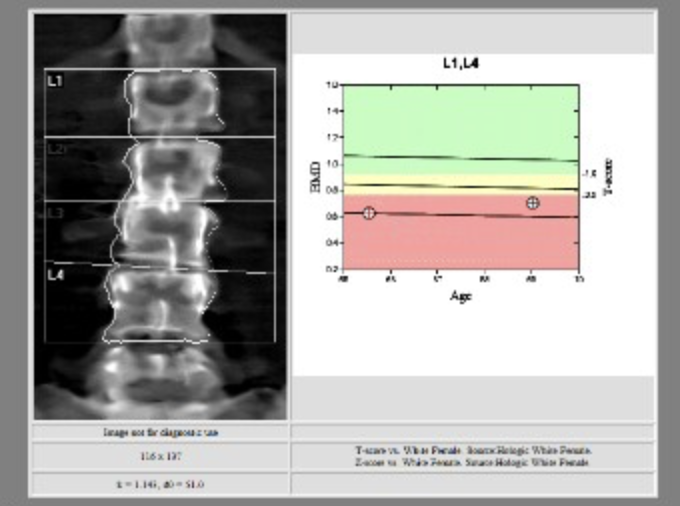



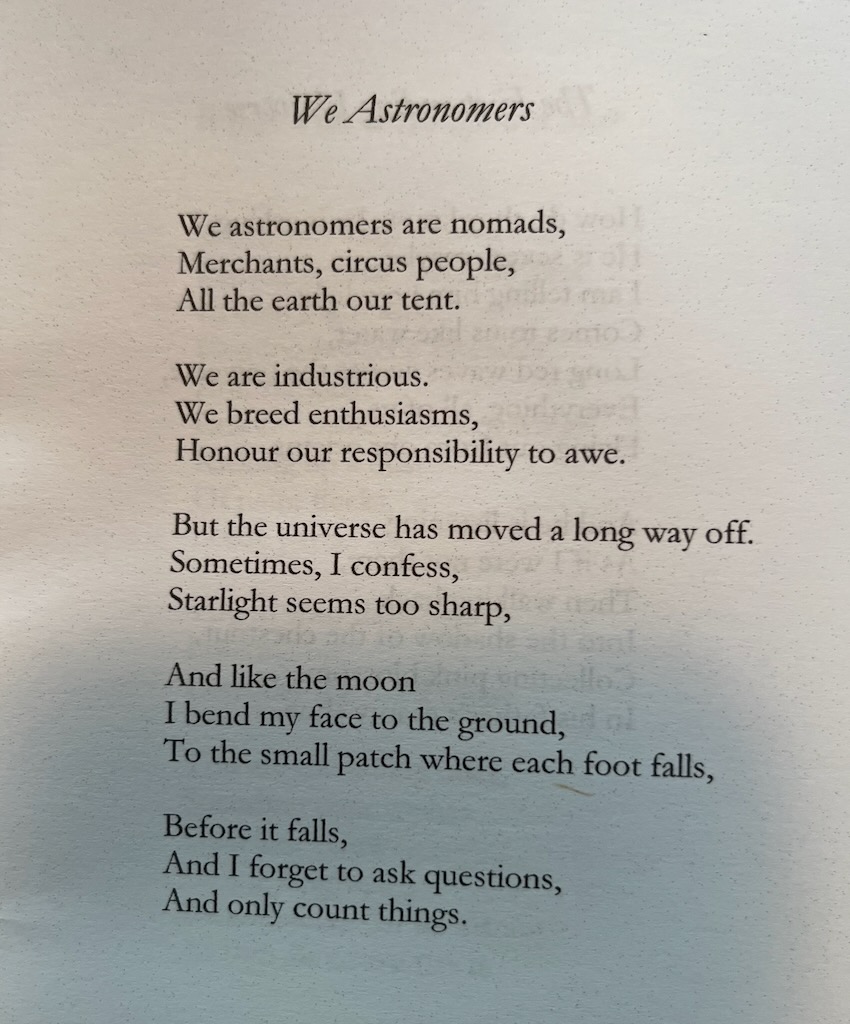


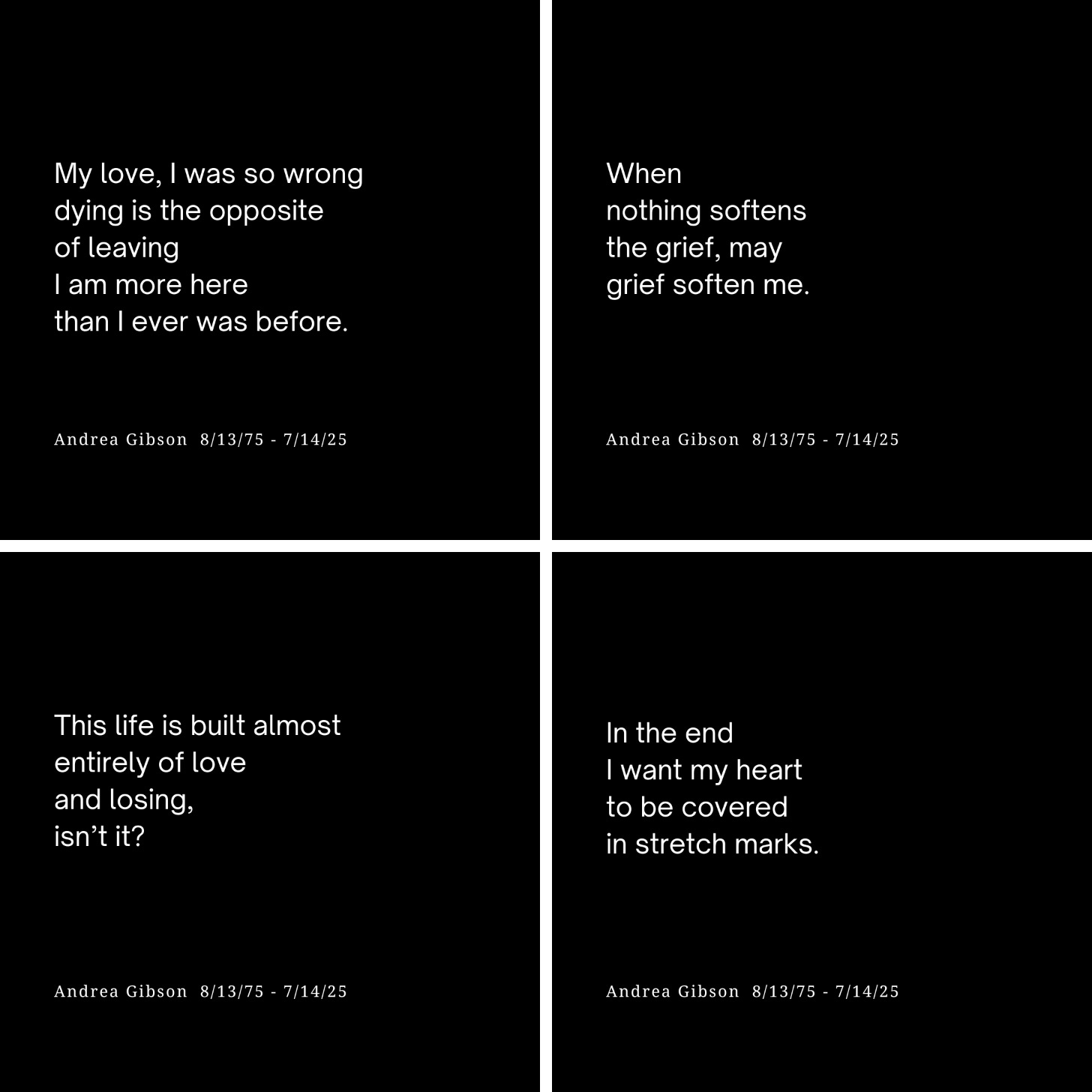

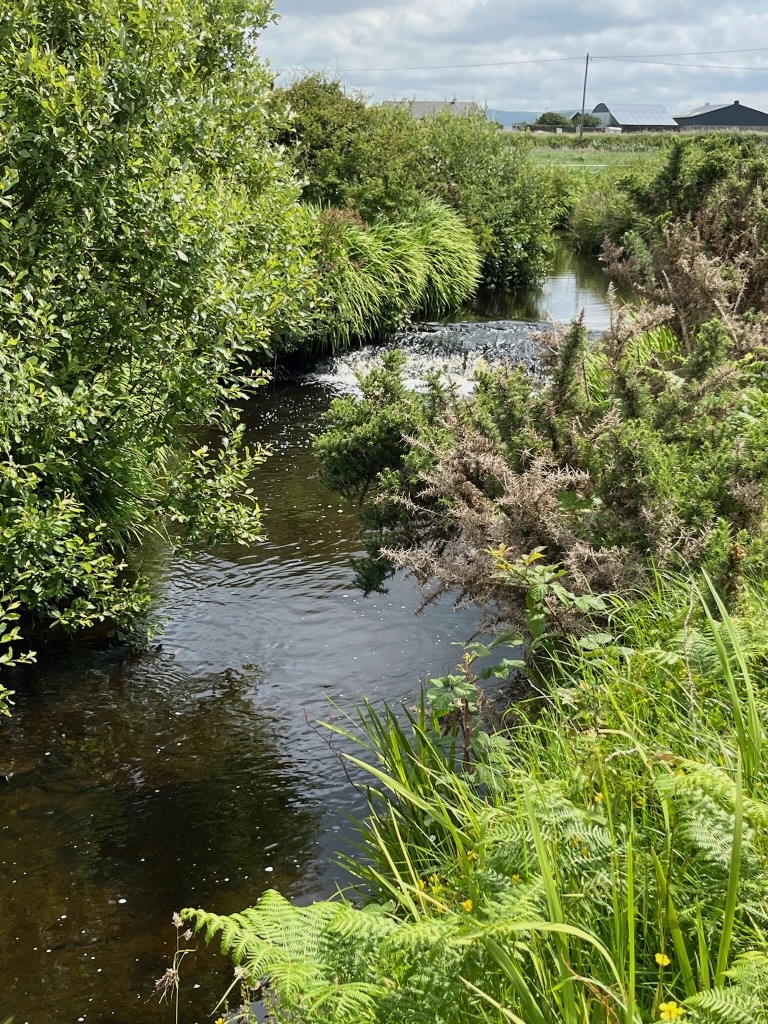

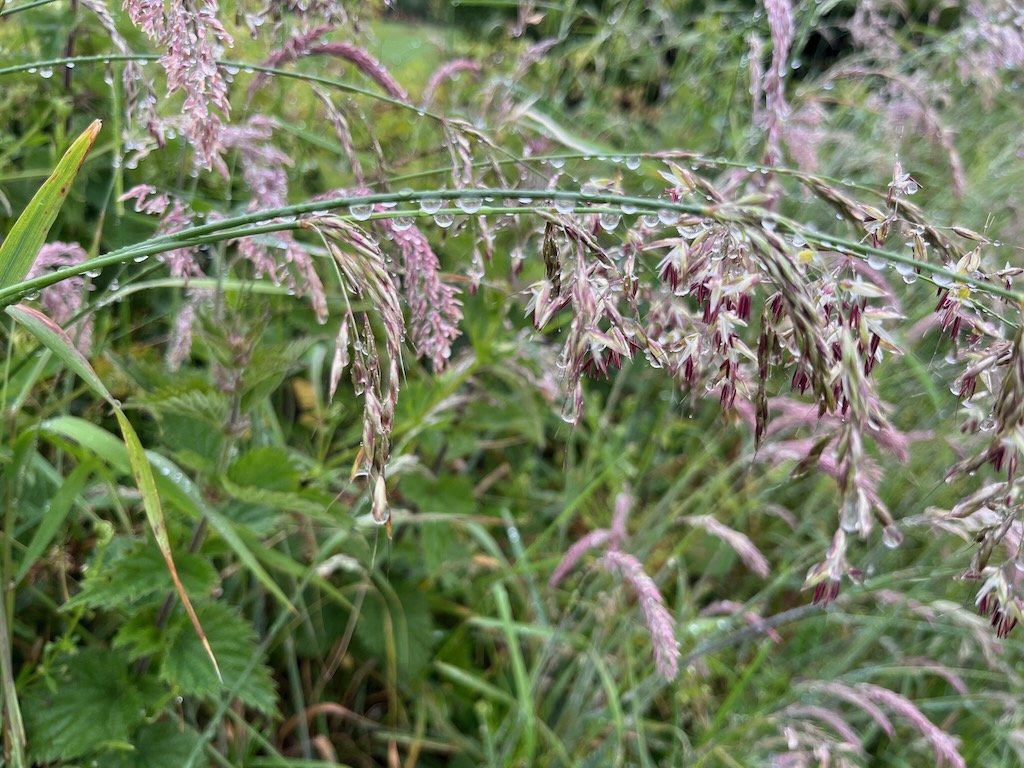
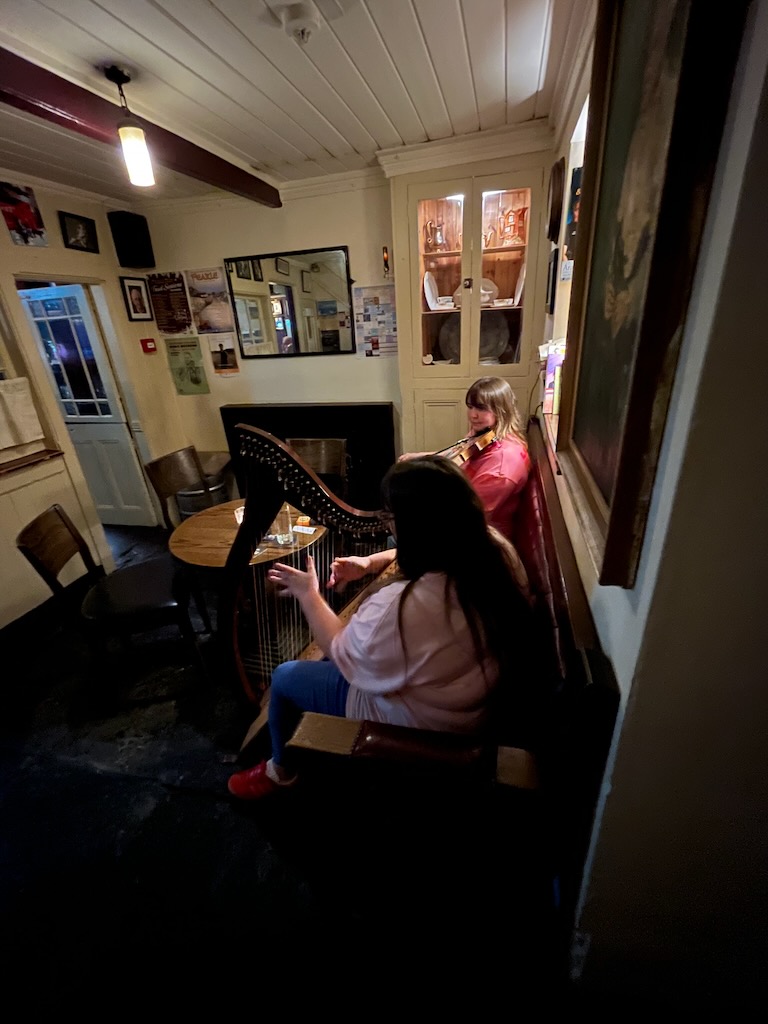


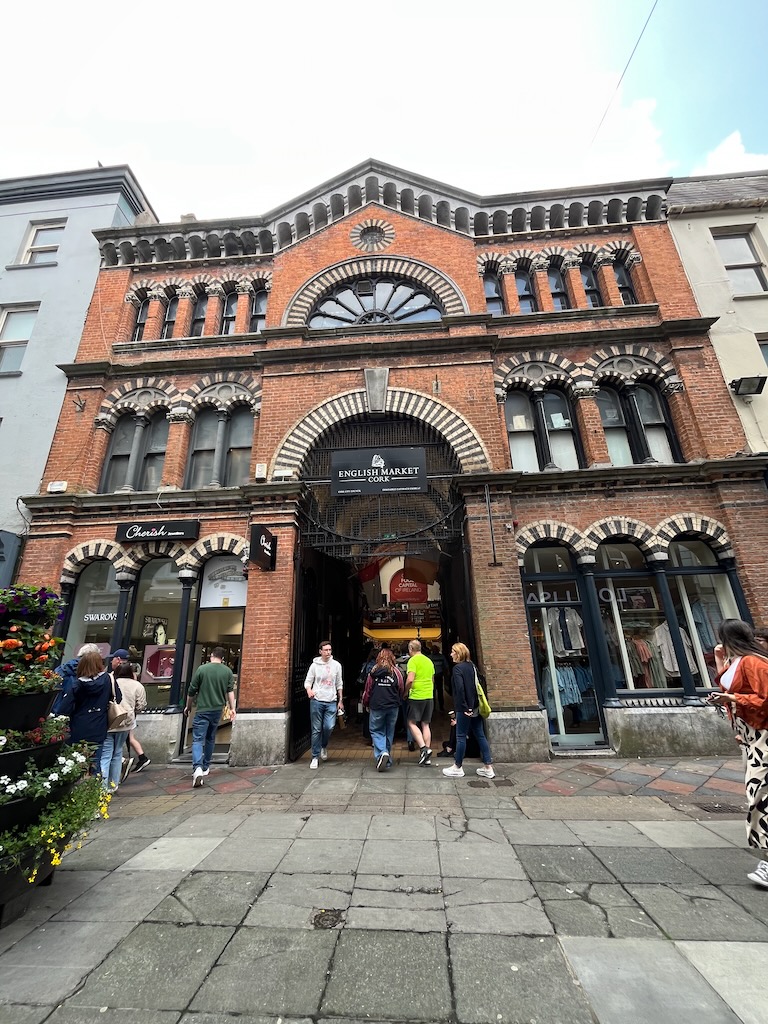


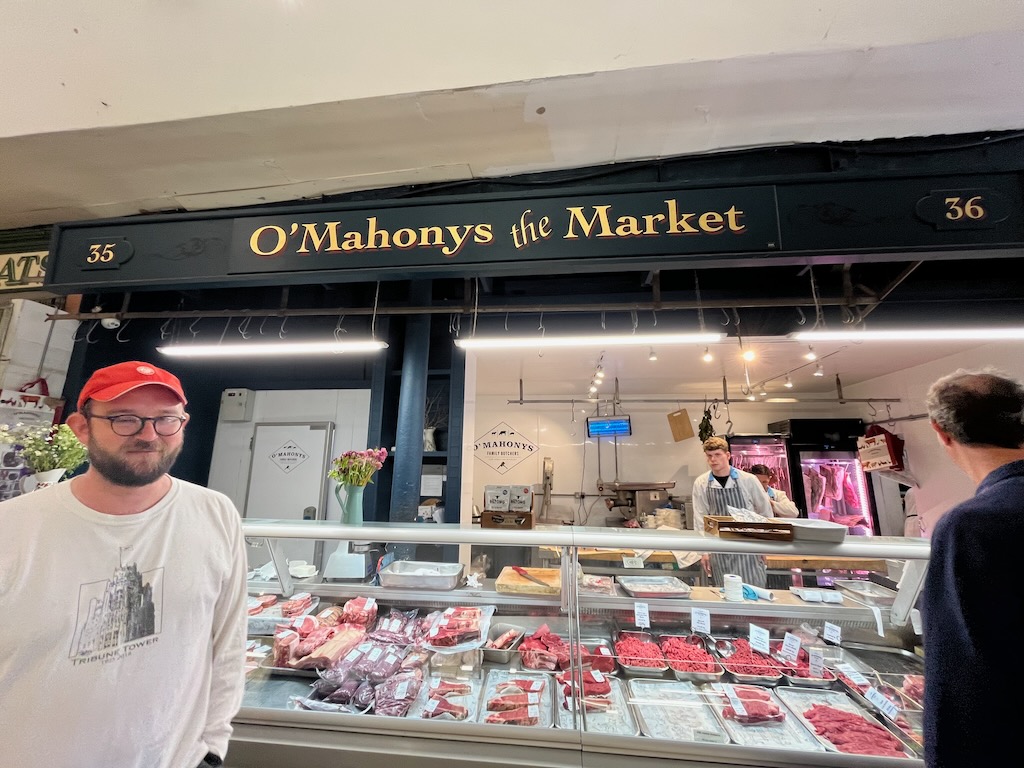
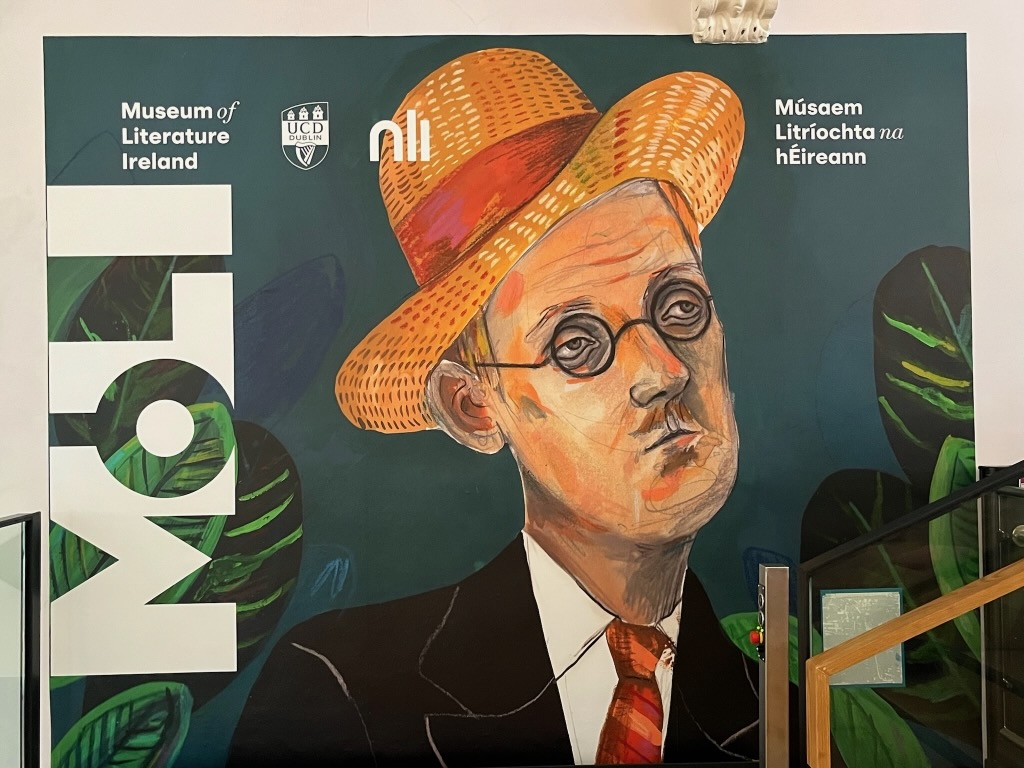

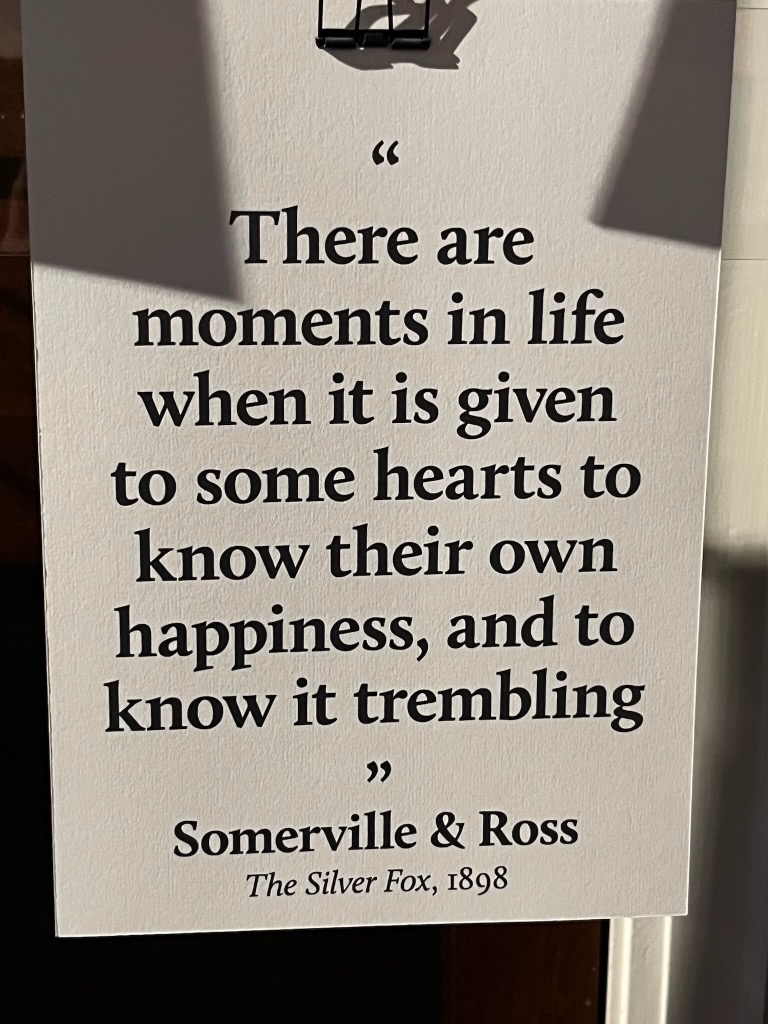


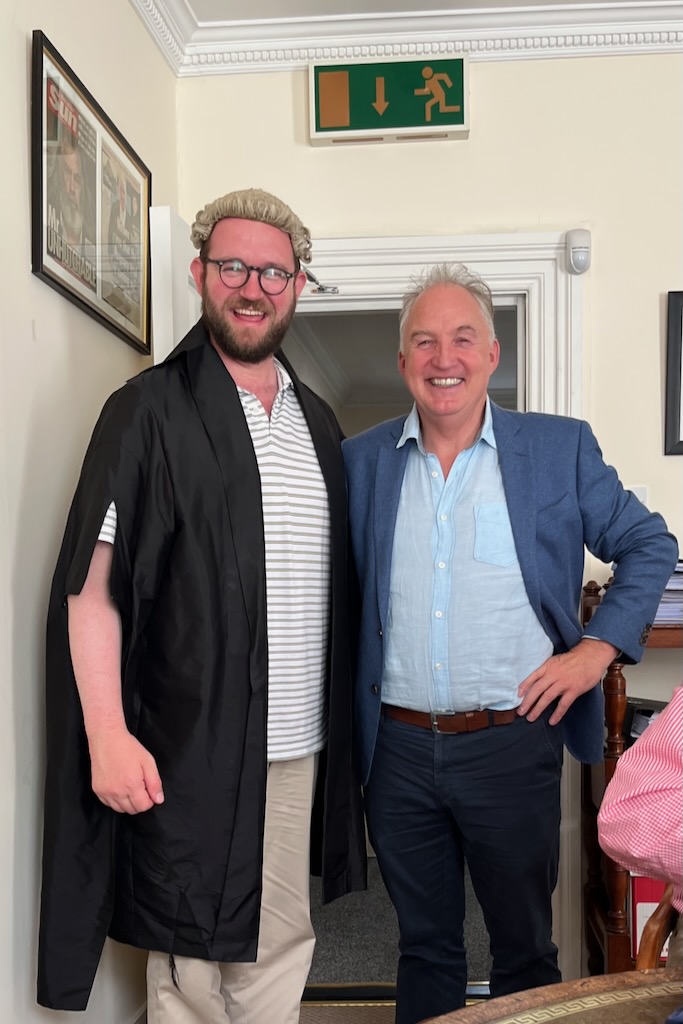

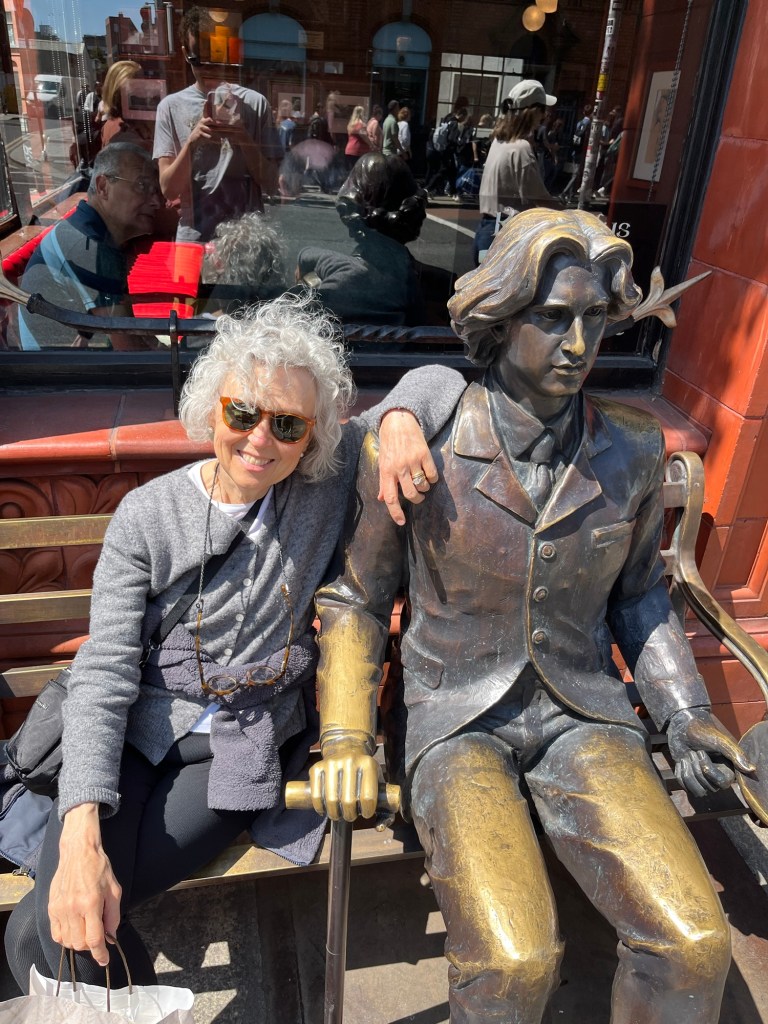


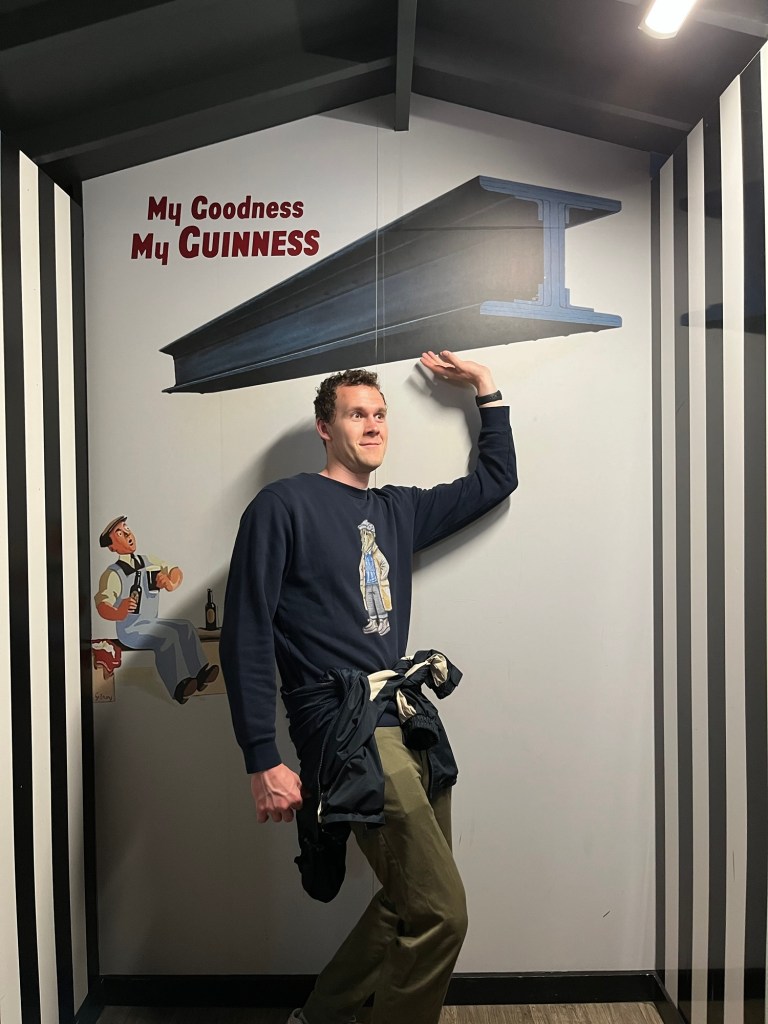

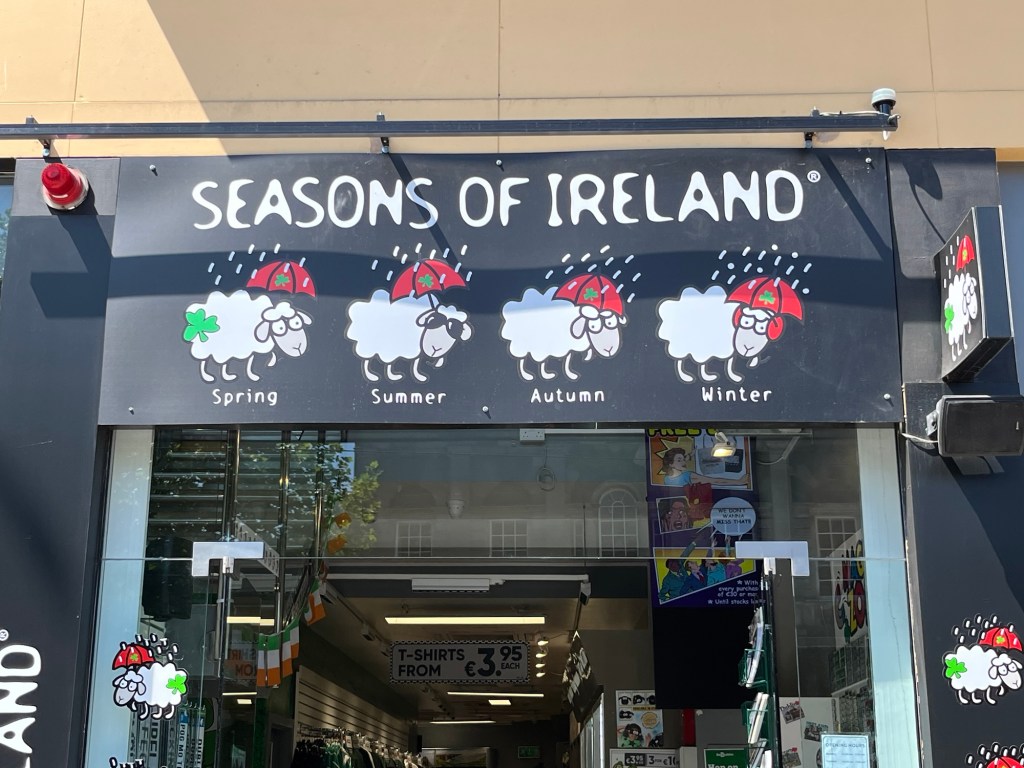
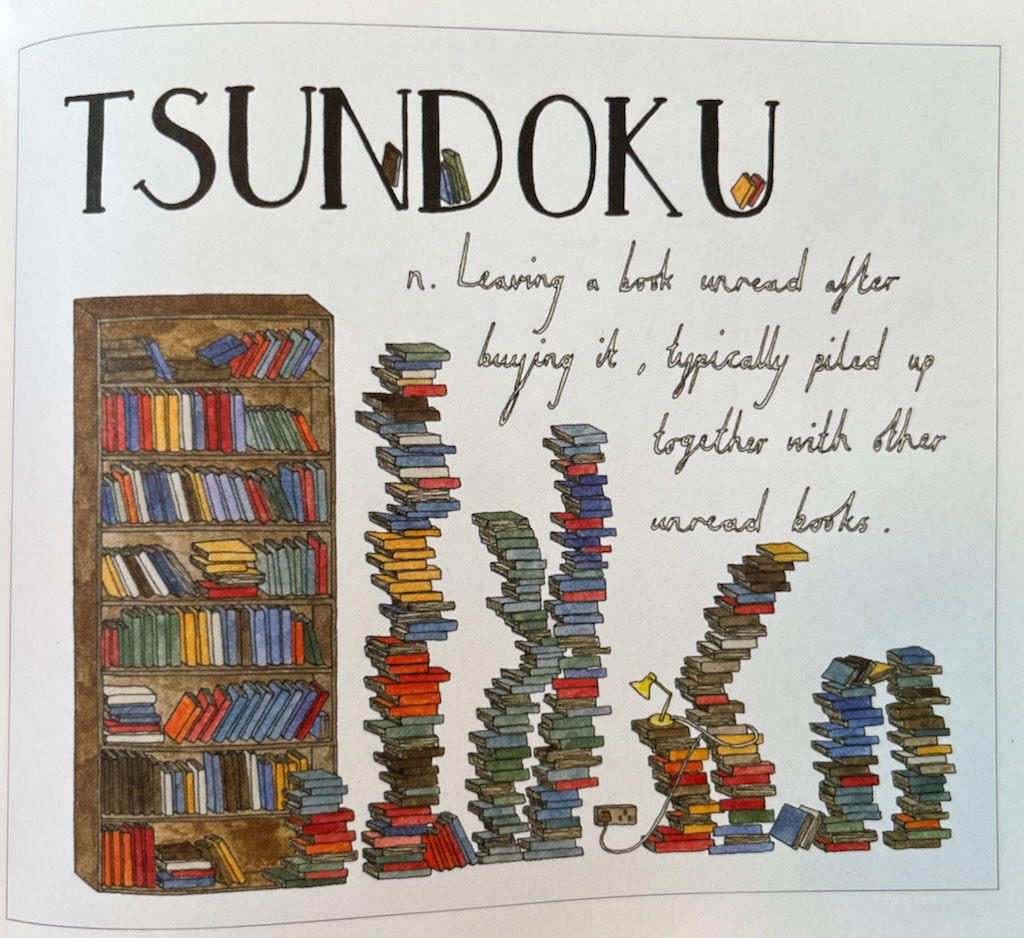
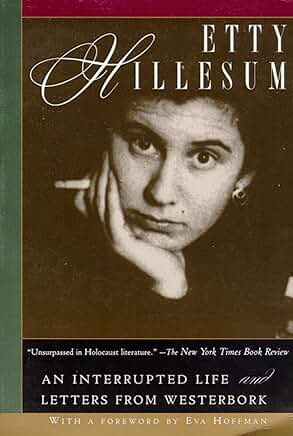
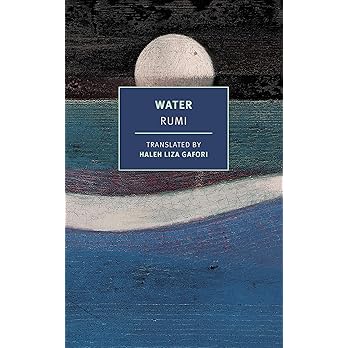
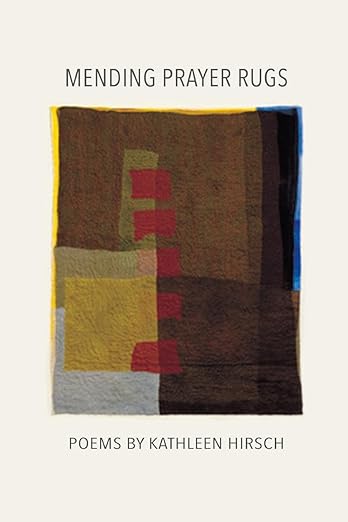


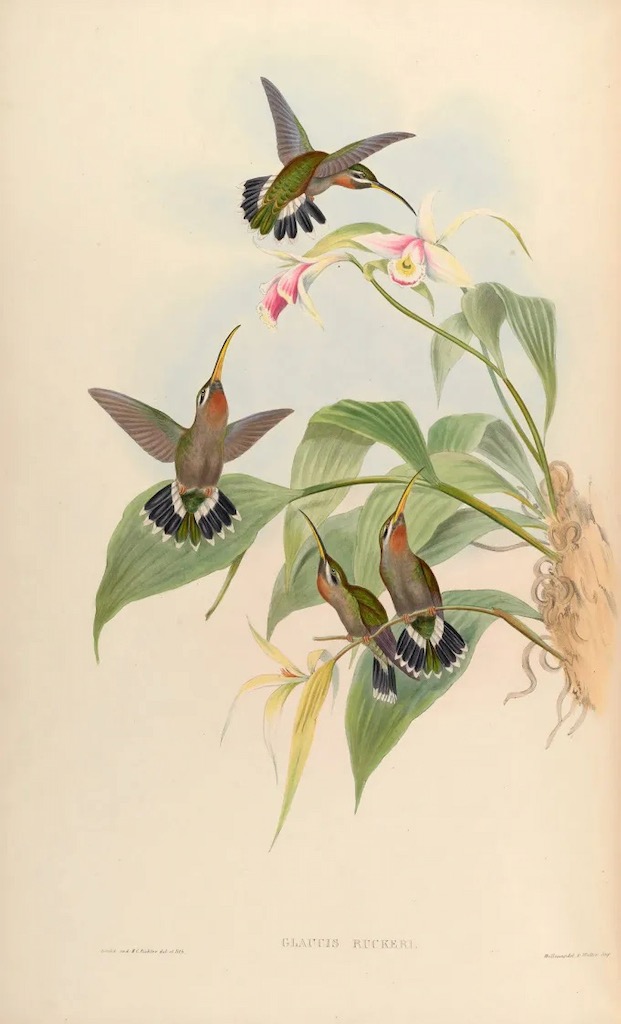

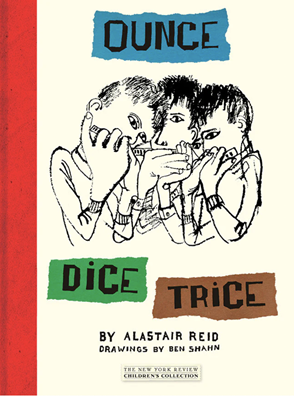

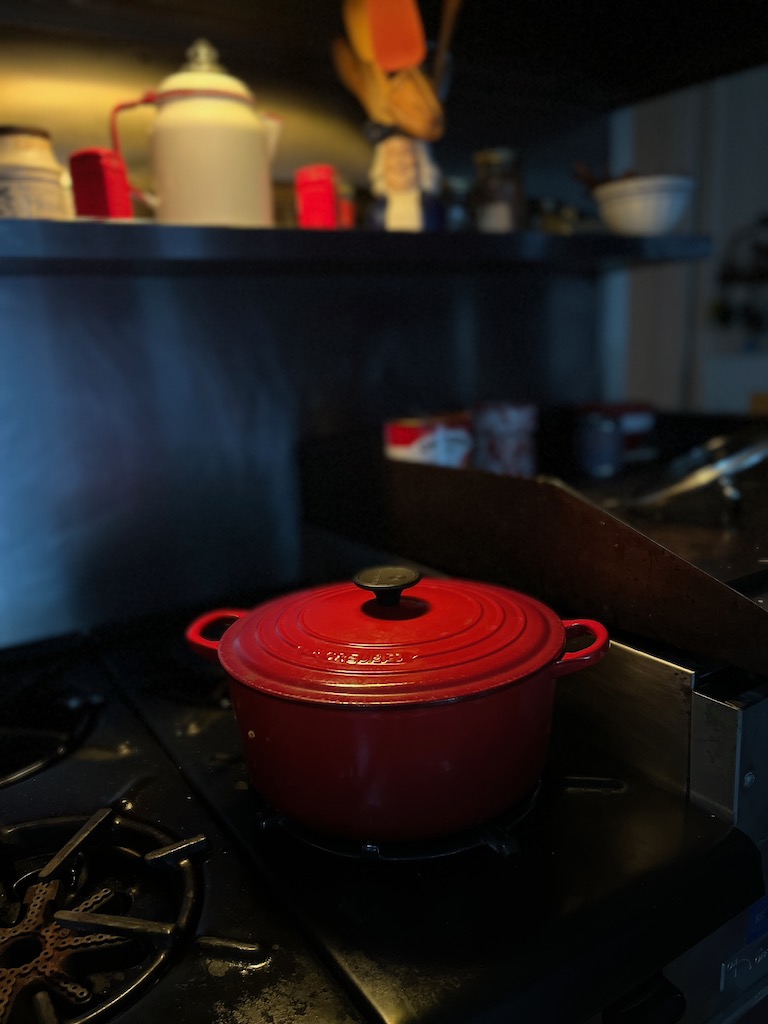


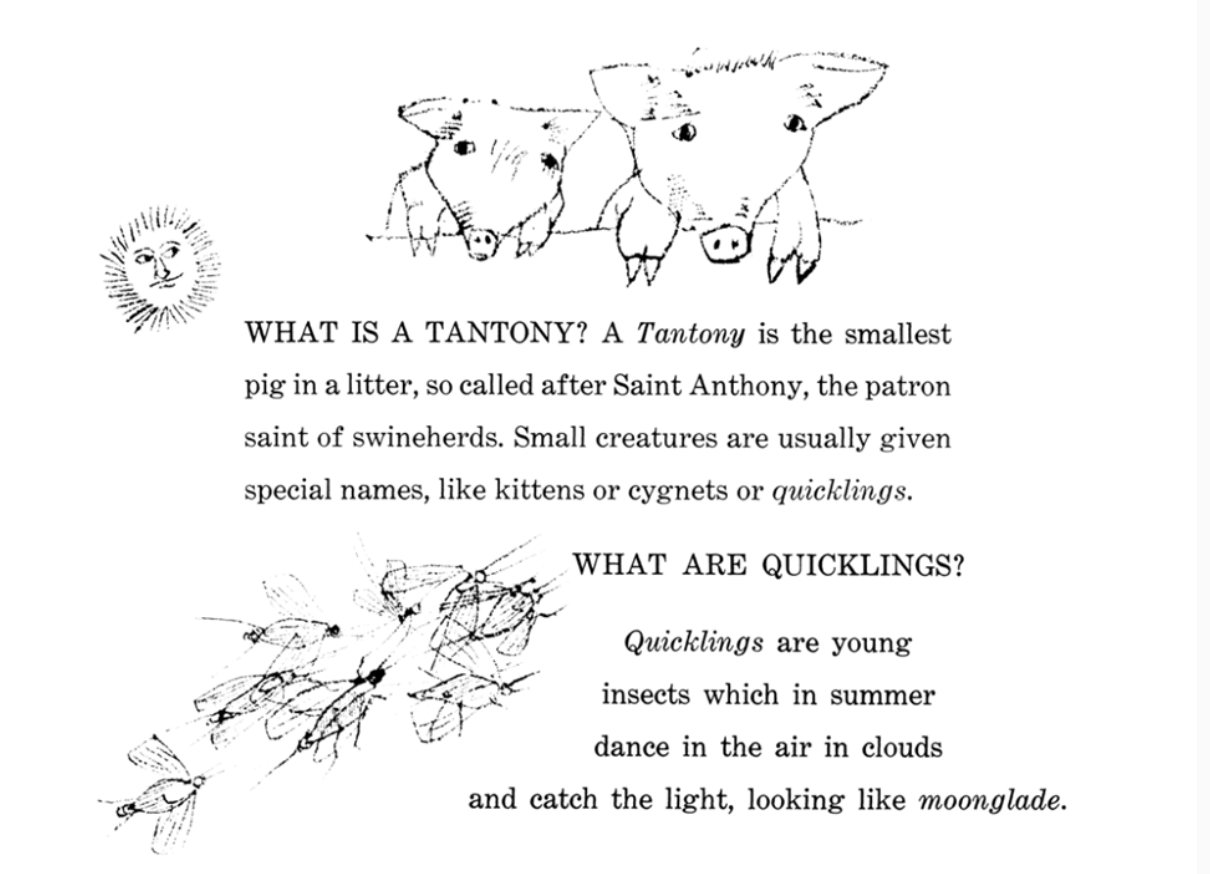

 pull up a chair